Tag: TATA Group

  • Adanis, Indigo rule Indian aviation as government agencies are getting elbowed out

    Adanis, Indigo rule Indian aviation as government agencies are getting elbowed out

    By Prabhjot Singh

    A lot has been said and written about air disasters in general, and the recent crash of AI 171, a flight from Ahmedabad to Gatwick (London), in particular. The flight was carrying 169 Indians, 53 Britons and seven Portuguese nationals in addition to a lone Canadian (a woman dentist).

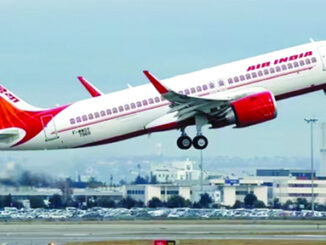
    The plane, a Boeing 787-8 Dreamliner, crashed just minutes after taking off from Ahmedabad International Airport.

    Going by the Aviation Safety Network database, it was the first crash of a Boeing 787 aircraft. It is not only Air India, the national flag carrier of India, that has Boeing 787-8 Dreamliners in its fleet; Air Canada has eight Boeing 787-8 aircraft in its fleet and 32 Boeing 787-9 Dreamliners. Another Canadian carrier, WestJet, has seven Boeing 787-9 Dreamliners in its fleet.

    Incidentally, the ill-fated Air India Dreamliner took off from Ahmedabad, one of the eight Indian airports maintained by Adani Airport Holdings Ltd (AAHL).  Of late,  the Indian aviation industry has quickly moved from the public sector to the public-private sector mode. These are not only the airports, but also the airlines that have witnessed a change in management and control. Air India was taken over by the Tata Group in 2022.

    Though the civil aviation sector has witnessed phenomenal growth in India, issues related to safety have at times been compromised.

    But has the growth of the aviation industry been supplemented by the trained staff, including pilots, cabin crew and ground staff? Both Indigo and Air India have been announcing their ambitious plans to expand their fleet. But are they getting a sufficient number of trained and experienced pilots to operate the new, sophisticated and technologically advanced aircraft?

    The issue was highlighted in one of my latest blogs, reproduced below:

    “Who is killing civilian pilots?”

    The death of a promising Air India pilot earlier this month (April)  has set in motion an animated debate about the health and well-being of pilots employed by national and international airlines. Did Captain Arman Singh Chaudhary have his promising career cut short due to the non-implementation of Flight Duty Time Limitations (FDTL)?

    Captain Arman Singh Chaudhary, an  Air India Express pilot,  reportedly died of a cardiac arrest shortly after landing a Srinagar – Delhi flight earlier this month.

    His death was not an isolated incident of its kind. There had been instances when pilots had died in distress while on duty. In August 2023, an IndiGo pilot, Manoj Balasubramanian, fell unconscious while on duty at Nagpur airport and passed away soon after. “He took ill at Nagpur airport and was rushed to the hospital where he unfortunately passed away,”  Indigo Airlines had said in a statement on August 17, 2023.

    A substantial percentage of air disasters are blamed on “human factors” or human failures. “Fatigue” or “overload” on pilots who fly more than the stipulations is equally important causes of air accidents.

    “Fatigue” or long hours at the wheel used to be the major factor for devastating accidents on roads, as poorly paid truck and bus drivers would doze off while at the wheel, leading to huge losses of human lives. Now, the same “fatigue” factor has come to worry the aviation sector.

    The deaths of pilots have been sending alarming signs for a long time. Intriguingly, little or no serious attention is paid to such “unnatural deaths” of an extremely scarce trained manpower. The question being asked in aviation circles is: How many pilots have lost their lives due to the non-implementation of FDTL rules as per standards of the Federal Aviation Administration (FAA) and the  European Union Aviation Safety Agency (EASA)?

    Pilot FDTL Rules are designed in favor of corporate airlines so that they can make more money at the expense of pilots. Since the issue has been a subject of judicial adjudication, there is a court direction that the new FDTL rules be implemented in a phased manner from July 1. The airlines, as the reports indicate, are reluctant to implement these directions as they would be forced to employ more and more pilots.

    Trained and experienced individuals are an asset for any airline. Though they are highly paid but they always carry a huge responsibility on their shoulders by flying hundreds of passengers across different destinations day in and day out.

    Pilots are assets as they are heavily paid. If civil aviation is considered one of the safest modes of travel or communication, it is because of the competence of pilots.

    Under the present rules, a commercial pilot is not supposed to travel more than 35 hours a week. But revenue crazy airlines are expanding their operations by flouting the FDTL regulations with impunity.

    The Pilots’ associations have been seeking the intervention of the courts. The corporate houses, as major airlines in India are,  just want profits and profits. Their appetite for more and more revenue is not getting satiated.

    While airlines want their cake to grow bigger, pilots are getting rubbed on the wrong side.. Prima facie, fatigue is killing pilots as they are overworked.

    Though the Director-General of Civil Aviation has ordered an investigation into the circumstances leading to the death of a young and bright pilot, Capt. Arman Singh Chaudhary. According to reports, he wanted to report on the fateful flight. But his plea was turned down, and he was made to fly. All these things are expected to come out when the Inquiry Committee set up by the Director-General of Civil Aviation comes out with its report in its stipulated six months.

    The aviation industry has its issues and problems. While the managements want more and more revenue, the deserved attention to the well-being and health of the crew and other stakeholders is compromised. This is supported by a statement made at a FAA symposium in 2016.

    “It has been estimated that 4-7% of civil aviation incidents and accidents can be attributed to fatigued pilots. “In the last 16 years, fatigue has been associated with 250 fatalities in air carrier accidents.” Robert Sumwalt, NTSB vice chairman, said at an FAA symposium in July 2016.

    The ball is now in the court of the Union Ministry of Civil Aviation as well as its front agency, the Director-General of Civil Aviation.

    Fingers have also been raised at the growing control of the private sector not only for the operation, management and development of airports but also on sensitive issues like security and safety of air travel. Some big players already have their own security teams in operational mode at important airports that are generally under the operational, management and maintenance control of private players. The role of the state agencies, including paramilitary forces, has been marginalized.

    Introduction of multiple layers of security has also been reportedly responsible for the growing incidence of “conflict of interest” between private agencies and the state paramilitary agencies. While the personnel of the State paramilitary forces are deployed at airports with proper training, the same cannot be said of the private agencies engaged by the private players given the mandate to operate, maintain and manage important airports.

    Going by its website, the Adani Group (AAHL)  claims that it made its maiden venture into the airports sector by emerging as the highest bidder for the operation, management, and development of six airports: Ahmedabad, Lucknow, Mangalore, Jaipur, Guwahati, and Thiruvananthapuram. It signed concession agreements with the Airports Authority of India for all six airports.

    AAHL also holds a 73% stake in Mumbai International Airport Ltd, which in turn holds a 74% stake in Navi Mumbai International Airport Ltd. With eight airports in its management and development portfolio, AAHL is India’s largest airport infrastructure company, accounting for 25% of passenger footfalls and 33% of India’s air cargo traffic.

    “The Adani Group is committed to offering best-in-class airport infrastructure to passengers, ensuring a seamless and secure airport experience. Through Adani Airports, it envisions redefining the city-airport relationship by building shared facilities that cater to the ever-evolving global travel, lifestyle, and work requirements,” claims the website.

    Other than airports, the most important component of the aviation sector is the airlines. The government-run or public sector airlines no longer hold sway. At present, the biggest player is Indigo as it has become one of the fastest-growing low-cost carriers in the world and the largest airline in India. Its success has been attributed to its unique business model, which reduces costs. According to Wikipedia, it operates a single type of aircraft, the Airbus A320 family, in a similar seating configuration, which simplifies crew training and maintenance. The airline strikes bulk deals with Airbus, reducing unit costs. The airline targets a quick, 20-minute turnaround time to prepare the aircraft for the next flight, ensuring planes fly about 12 hours per day. Employees share multiple roles, with a check-in staff doubling as baggage handlers.

    In July 2023, the Indian aviation controlling authority Directorate General of Civil Aviation, imposed a fine of  ₹30 lakh (US$35,000) on IndiGo for certain systemic deficiencies concerning documentation pertaining to operations, training, and engineering procedures. In March 2025, the Income Tax Department imposed a penalty of ₹944.20 crore (US$110 million) on InterGlobe Aviation, IndiGo’s parent company, for the assessment year 2021-22.

    With headquarters in Gurugram, Indigo has become the largest airline in India by passengers carried and fleet size, with a 64.1% domestic market share as of April 2025. It is the second largest Asian airline and one of the largest in the world in terms of passengers carried, with more than 31.9 million passengers carried in the fourth quarter of 2025. As of June 2025, IndiGo operates over 2,200 daily flights to 127 destinations – 91 domestic and 36 international. It operates cargo services under its subsidiary, IndiGo CarGo. Its primary hub is at the Indira Gandhi International Airport, Delhi. Its turnover is now touching 90,000 crore with a net profit after taxes past 8,000 crore.

    Established as a private company by Rahul Bhatia of InterGlobe Enterprises—an Indian multinational conglomerate based in Gurugram— and Rakesh Gangwal in 2005. It took delivery of its first aircraft in July 2006 and commenced operations a month later, on August 4, 2006. The airline became the largest Indian carrier by passenger market share in December 2012. The company went public in October 2015.

    Air India is the flag carrier of India with its main hub at Indira Gandhi International Airport in Delhi and secondary hubs at Kempe Gowda International Airport in Bengaluru and Chhatrapati Shivaji Maharaj International Airport, alongside several focus cities across India. Headquartered in Gurugram, Haryana,   India, the airline is owned by Air India Limited, which is owned by the Tata group   (74.9%) and Singapore Airlines   (25.1%). As of November 2024, the airline serves 102 domestic and international destinations, operating a variety of Airbus and Boeing aircraft and is the second-largest airline in India in terms of passengers carried after Indigo. Air India became the 27th member of Star Alliance on  July  11, 2014.

    Of all airlines in India, Air India has one of the worst track records of air and passenger safety.

    Some major air crashes involving India

    June 12, 2025

    Air India Flight 171

    A London-bound Air India Boeing 787-8 Dreamliner crashed into a residential area in Meghani Nagar shortly after take-off from Ahmedabad, with 242 people onboard. Several casualties are feared. The flight was piloted by Capt. Sumit Sabharwal and co-pilot Clive Kunder.

    August 7, 2020

    Air India Express Flight 1344

    During the COVID-19 pandemic, Air India Express Flight 1344 crashed while landing in heavy rain at Kozhikode airport. The repatriation flight overshot the tabletop runway, fell into a valley, and broke apart. Of the 190 on board, 21 people, including both pilots, died.

    May 22, 2010

    Air India Express Flight 812

    Air India Express Flight 812 overshot the runway while landing at the Mangalore International Airport in Karnataka. The Boeing 737-800, coming from Dubai, plunged into a gorge beyond the tabletop runway and burst into flames, killing 158 people.

    July 17, 2000

    Alliance Air Flight 7412

    Alliance Air Flight 7412 crashed into a densely populated residential area in Bihar’s Patna while attempting to land. The Boeing 737-200 experienced a stall at low altitude due to the reported improper handling during the final approach. Sixty people were killed, including five on the ground.

    November 12, 1996

    Charkhi Dadri mid-air collision

    India’s deadliest air disaster claimed 349 lives when Saudia Flight 763 and Kazakhstan Airlines Flight 1907 collided mid-air near Charkhi Dadri, Haryana. A communication lapse and the Kazakh aircraft’s descent below its assigned altitude caused the crash. The tragedy led to mandatory Traffic Collision Avoidance Systems (TCAS) installation on all commercial aircraft in India.

    February 14, 1990

    Indian Airlines Flight 605

    An Indian Airlines flight crashed while approaching Bengaluru’s HAL Airport, killing 92 of the 146 people on board. The Airbus A320, a relatively new aircraft in India at the time, descended too low and hit the ground short of the runway, skidding onto a golf course.

    October 19, 1988

    Indian Airlines Flight 113

    An Indian Airlines Flight 113, a Boeing 737-200, crashed on its approach to Ahmedabad Airport. The flight, arriving from Mumbai, struck trees and crashed short of the runway, killing 133 of the 135 people on board.

    January 1, 1978

    Air India Flight 855

    A Dubai-bound Air India flight, a Boeing 747, plunged into the Arabian Sea shortly after taking off from Mumbai, killing all 213 people on board. The crash took place in nighttime conditions over the sea, contributing to the crew’s spatial disorientation.

    May 31, 1973

    Indian Airlines Flight 440

    The Indian Airlines Flight 440 crashed during its approach to Delhi’s Palam Airport. The Boeing 737-200 encountered severe weather and struck high-tension wires just short of the runway. Of the 65 people on board, 48 died. Among the dead was prominent Indian politician Mohan Kumara Mangalam. The crash underscored the need for improved weather radar at Indian airports.

    (Prabhjot Singh is a senior journalist who writes with equal aplomb on sports and politics. He can be reached at prabhjot416@gmail.com)

  • Air India to hire over 1,000 pilots in a bid to expand its fleet

    Air India to hire over 1,000 pilots in a bid to expand its fleet

    Air India will hire more than 1,000 pilots, including captains and trainers, as the Tata Group-owned airline expands its fleet and network. The airline, which currently has more than 1,800 pilots, has placed orders for 470 aircraft with Boeing and Airbus, including for wide-body planes. The latest Airbus firm order comprises 210 A320/321 Neo/XLR and 40 A350-900/1000. The Boeing firm order comprises 190 737-Max, 20 787s and 10 777s.
    The carrier, which was taken over by the Tata Group in January last year, is hiring more than 1,000 pilots, according to an advertisement on Thursday. “We are offering multiple opportunities and accelerated growth across our A320, B777, B787 and B737 fleet for captains and first officers, as well as trainers,” it said, adding that more than 500 aircraft are joining its fleet. Meanwhile, pilots of Air India have raised concerns about the airline’s latest decision to revamp their salary structure and service conditions. On April 17, Air India rolled out a revamped compensation structure for its pilots and cabin crew, which has since been rejected by the two pilot unions – Indian Commercial Pilots Association (ICPA) and Indian Pilots Guild (IPG) – on grounds that the airline, in alleged violation of labour practices, did not consult them before finalising the new contracts. Tata Group has four airlines — Air India, Air India Express, AIX Connect and Vistara, which is a joint venture with Singapore Airlines. The group is in the process of merging Air India Express and AIX Connect as well as Vistara with Air India.

  • India must commit to net zero emissions

    India must commit to net zero emissions

    The country will need to take a stand on climate change action or risk being cast globally as an outlier

    By Patrick Suckling

    “The transition of the global economy to net zero emissions is the biggest commercial opportunity in history. In just the energy sector alone, an estimated $1.6 to $3.8 trillion of investment is required every year until 2050. China gets this, which is why it is investing heavily in gaining an advantage in the technologies of the new economy, be it renewable energy and storage, electric and hydrogen transport, low emissions industry, green cities or sustainable agriculture. India needs to be riding this wave.”

    Yet, in the end, India’s tryst with destiny rests in its own remarkable hands, as it always has been. In a land where the earth is called mother, and Mahatma Gandhi, major religions and the Constitution enshrine environmental care, commitment to net zero emissions by 2050 should almost be foretold. The world hopes we will see it soon.

    India is at the risk of being cast globally as an outlier on climate action, with a negative fallout. With over 50% of the global economy already committed to net zero emissions by 2050 — and China committing to be so before 2060 — this is not where you want to be.

    The pace and scale of climate action is only set to increase, with the recent Intergovernmental Panel on Climate Change (IPCC) report unequivocal on the need for urgent and stronger responses. Events around the world underline the point — towns washed away in Germany, subways turned into storm water drains in China, forests fried in the United States and so many more lives lost to flooding in India.

    Massive opportunities

    It is not only governments that are increasing climate action. The business world is too, not just to protect themselves against the risks of climate change but also to take advantage of the massive opportunities arising as the global economy shifts to net zero emissions. Last year, investors injected over $500 billion into climate transition. In my country, Australia, the number of major companies that have put in place a target of reaching net zero emissions by 2050 has more than trebled in the past year.

    The United Nations Climate Change Conference (COP26) in November in Glasgow is shaping up to be the most important climate meeting since the Paris Agreement in 2015. It is squarely focused on supercharging global ambition and action on climate change, as all countries, including India, agreed to do in the historic Paris Agreement.

    Over 100 countries have already committed to net zero emissions by 2050, with more expected at COP26. Two key holdouts are India and Australia. In the case of my country, under mounting pressure at home and internationally, the government is moving toward such an announcement and I am confident they will do so by or at COP26.

    I am not so confident about India. From what I hear through networks from my time as the Australian High Commissioner to India and as Australia’s Ambassador for the Environment, India is resolutely not committing to net zero by 2050, including on the basis that as a developing country, it needs to see significant support from developed countries for climate action as part of making any such commitment.

    Perhaps this is negotiating tactics. Either way, I fear India may shoot itself in the foot by resisting net zero by 2050.

    First, India itself has a national interest in ambitious global and national climate action. Like Australia, it is among the most vulnerable countries to climate change and, therefore, should be among the more active against the threats. India faces harmful impacts related to sea level rise, heat stress, drought, water stress and flooding, biodiversity and natural disasters. Climate change is not coming — it is here.

    Second, as a rising power, India naturally seeks stronger influence globally. Being an outlier on the global challenge facing our generation does not support this aim. India is already the third largest emitter in the world and is set to be the largest as the United States, China, and the European Union are all now signed up to net zero.

    This will become a significant drag on India’s international diplomacy. This applies not just to key relationships like with the U.S., where President Joe Biden’s administration is mainstreaming climate action into its economic, foreign and security policy, but also with much of the Group of 77 (G77) states, who are increasingly concerned to see climate action, and in multilateral groupings such as the United Nations and ASEAN-APEC.

    Finally, as the famous phrase goes, “it’s the economy, stupid”. There is no longer a trade-off between reducing emissions and economic growth. For example, the U.K. has reduced emissions over 40% and grown its economy over 70% since 1990. Solar energy costs have fallen 90% in recent years, providing the cheapest electricity in India ever seen. Also, given the negative impacts, addressing climate change in India’s economic development is now central to success, not an added luxury to consider. For example, agricultural policy that does not consider adaptive approaches to maximize productivity in the face of increased flooding and drought due to climate change is derelict.

    The report also said that if climate change is addressed and acted upon boldly and rapidly in the next decade, average global temperature rises can be limited to around 1.5° Celsius by 2050. File photo

    The transition of the global economy to net zero emissions is the biggest commercial opportunity in history. In just the energy sector alone, an estimated $1.6 to $3.8 trillion of investment is required every year until 2050. China gets this, which is why it is investing heavily in gaining an advantage in the technologies of the new economy, be it renewable energy and storage, electric and hydrogen transport, low emissions industry, green cities or sustainable agriculture. India needs to be riding this wave.

    It is not as if India is at a standing start. It is set to significantly exceed its Paris Agreement commitment of reducing the emissions intensity of its GDP by 33-35% below 2005 levels by 2030, providing ready room for higher ambition. India is impressing the world with its leading roll-out of renewable energy and target for 450GW by 2030, linked to its leadership on the International Solar Alliance and recent national hydrogen strategy. Indian corporates are also stepping up, with the Tata Group winning awards on sustainability, Mahindra committing to net zero by 2040 and Reliance by 2035. There is plenty on which to build.

    A low-carbon future through sector-led change

    And India should not be expected to build alone. India’s national interests on climate action are now engaged in ways that go significantly beyond waiting for donor support to drive ambition, notwithstanding reasonable arguments about historical responsibility, per capita emissions and equity. With growing wealth and stature, India is increasingly disinclined toward handouts. But that does not mean well-targeted donor investments and international partnerships should not be a factor in raising India’s climate ambition. In fact, they should be, as it is more and more obvious that the world needs to work together for success.

    This could come in many guises, from stronger political engagement and dialogue to policy support in areas of mutual challenge such as energy policy, carbon markets and post-COVID green economic recovery. Practical support and cooperation in areas like rolling out renewable energy and integrating it with the national grid, zero emissions transport, decarbonizing hard to abate sectors like steel, cement and chemicals and decarbonizing agriculture offer significant scope to raise ambition. As does working with India on innovative green financing for decarbonizing investments, including using donor support to mobilize private sector finance, green bonds and climate transition funds. Whichever it is, they need to be lasting partnerships that deliver results.

    Yet, in the end, India’s tryst with destiny rests in its own remarkable hands, as it always has been. In a land where the earth is called mother, and Mahatma Gandhi, major religions and the Constitution enshrine environmental care, commitment to net zero emissions by 2050 should almost be foretold. The world hopes we will see it soon.

    (Patrick Suckling was Australia’s High Commissioner to India and Ambassador for the Environment. He is a senior fellow at the Asia Society Policy Institute (ASPI) and senior partner in Pollination, a specialist climate advisory and investment firm. This oped draws from his recent paper for ASPI on Catalysing India’s Climate Ambition)

  • TATAS, ITC TO BATTLE IT OUT FOR DELHI’S TAJ MANSINGH

    TATAS, ITC TO BATTLE IT OUT FOR DELHI’S TAJ MANSINGH

    MUMBAI/KOLKATA (TIP): The Supreme Court’s order allowing e-auction of Taj Mansingh has paved the way for a fierce takeover battle between the house of Tatas, the country’s largest conglomerate, and ITC, the tobacco-to-hotels group, for the iconic property near India Gate in the capital.

    Y C Deveshwar-led ITC will make an aggressive bid for Taj Mansingh when its licensor New Delhi Municipal Corporation (NDMC) opens the bidding process for the five-star hotel in a few weeks. Tatas, too, will make a competitive offer for the long-term lease of the property, which has been a big revenue contributor to its hospitality arm, Indian Hotels Company (IHCL). IHCL has been managing the property since its opening in October 1978. The contract ended in October 2011 and thereafter several extensions were given by NDMC.

    The apex court has said that if Tatas lose out in the e-auction, then it would have to vacate the property within six months. If ITC wins the bid for the 292-room hotel, it will be the group’s fourth property in Delhi. IHCL confirmed that it will participate in the e-auction, while ITC declined to comment.

    Currently, the Tatas have five hotels in Delhi which includes Taj Mansingh, Taj Palace and three Vivanta properties -Ambassador, Dwarka and Surajkund.

    ITC runs ITC Maurya, Sheraton Delhi and Welcomhotel Dwarka.

    The five-star category in Delhi, comprising 2,700 rooms, saw an occupancy level of 70% and an average room rate of Rs 10,000 in fiscal 2017. ITC’s proposed move comes on the heels of two top officials of Tata Trusts, along with five other people, filing a public interest litigation in the Bombay high court for its direction to the central government to divest its stake in ITC. Currently, through five insurance companies and Special Undertaking of the Unit Trust of India (SUUTI), the government holds nearly a third of ITC’s equity, worth over Rs 1 lakh crore. The court will take up the case for admission on April 27.

    Tata Trusts and its arms, including its main holding company Tata Sons, control 39% of IHCL. Interestingly, construction major Shapoorji Pallonji Group, whose scion Cyrus Mistry is in a legal battle with the Tatas, is building two of ITC’s luxury hotels -ITC Kohinoor in Hyderabad and ITC Narmada in Ahmedabad.

    Source: TOI

  • JLR UNVEILS RATAN TATA’S PASSION PROJECT RANGE ROVER VELAR

    JLR UNVEILS RATAN TATA’S PASSION PROJECT RANGE ROVER VELAR

    LONDON (TIP): Tata Motors-owned Jaguar Land Rover has unveiled a new model at a grand ceremony here.

    Gerry McGovern, Land Rover Chief Design Officer, credited the final product to Tata Group chairman emeritus Ratan Tata. “I would like to thank Ratan Tata. Ever since he saw the first sketch of the Velar, he became a passionate advocate of it,” McGovern said at the function.

    “Design has the power to enrich people’s lives… this is a vehicle with emotionally charged DNA and unquestionable pedigree,” he added. Described as one of the “hottest products this year”, the Velar is now open to orders from around the world, including India.

    In a boost to British manufacturing, the company announced that the Velar will be built exclusively at JLR’s flagship Solihull plant in the West Midlands region of England.

    “The expansion of our product range and building this British designed and engineered car in the UK is a sign of our confidence in British manufacturing. We are leading the global premium car industry with our commitment to our home market and our heart, soul and headquarters will always be in the UK,” said JLR CEO Ralf Speth.

    The Range Rover brand has been heralded as Britain’s greatest luxury export since the 1970s and includes the Range Rover, Range Rover Sport and Range Rover Evoque.

    Together they have helped transform the fortunes of the UK’s largest vehicle manufacturer, accounting for 85% of all premium cars produced in Britain and contributing 10 billion pounds to the UK economy every year, JLR said.

  • NUSLI WADIA VOTED OUT FROM POSITION AS A TATA MOTORS DIRECTOR

    NUSLI WADIA VOTED OUT FROM POSITION AS A TATA MOTORS DIRECTOR

    NEW DELHI (TIP): Nusli Wadia was voted out of his position as an independent director of Tata Motors.

    More than 70% of Tata Motors shareholders voted in favour of the resolution to remove Wadia, The Economic Times (ET) reported.

    The voting took place on Thursday (December 22) at an Extraordinary General Meeting (EGM) in Mumbai that began at 3 pm. All the Nusli Wadia  board directors except Wadia were present.

    Ahead of the EGM, Tata Sons raised its up stake in Tata Motors buying 1.73% of the company at a premium to the market price in a Rs 2,500-crore block deal on December 13, ET said.

    Although Wadia wasn’t present at the meeting, he left a four page note, which was read out by the company secretary at the EGM.

    In the letter, he explained his absence from the EGM saying that that he has chosen to not attend the meeting as recent meetings by other Tata companies have been

    “inappropriately and shamefully stage managed” by controlling the entry into the hall as also in the selection and choice of speakers. This, Wadia wrote, has never been seen before in Indian corporate history.


  • Tata Steel sacks Cyrus Mistry, names OP Bhatt as chairman

    Tata Steel sacks Cyrus Mistry, names OP Bhatt as chairman

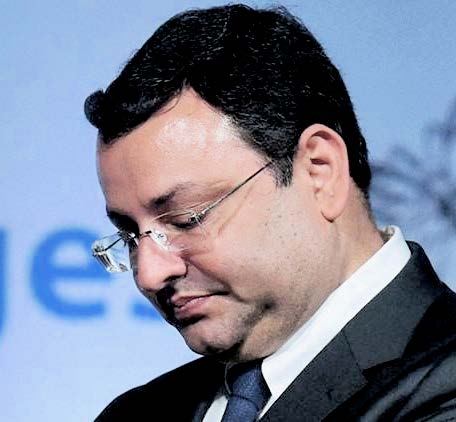
    MUMBAI (TIP): The Tata Steel board on Nov 25 replaced Cyrus Mistry with OP Bhatt, an independent director, as the company’s chairman with a majority of the members voting in favour of the resolution. The 110-year-old metal giant’s decision is a fallout of the parent Tata Sons ousting Mistry as its chairman last month.

    However, Mistry remains a director of Tata Steel. The company said Bhatt, who has been on its board for the last three years, will be the chairman till the outcome of the extraordinary general meeting (EGM) called on December 21 to remove Mistry as director.

    The Mistry camp slammed the latest move as yet “another example of the unprecedented erosion in core Tata values”, which has seriously dented the most respected Indian corporate brand.

    Six directors supported the resolution seeking Mistry’s removal as chairman, while three opposed it. Mallika Srinivasan, Ishaat Hussain, Adrew Robb, Jacob Schraven, D K Mehrotra and Bhatt backed Mistry’s removal. Nusli Wadia, chairman of Britannia and Bombay Dyeing, Subodh Bhargava, chairman emeritus of Eicher Group, and Mistry himself opposed the resolution.

    Srinivasan is chairman of Tractor and Farm Equipment, while Hussain, who is on the board of Tata Sons, recently replaced Mistry as chairman at TCS. Robb is chairman of Tata Steel Europe, Schraven is ex-deputy chairman of Corus and Mehrotra is the former chief of Life Insurance Corporation. Of the six independent directors, four — Srinivasan, Bhatt, Robb and Schraven — backed Mistry’s removal.

    This was the second board meeting of Tata Steel after Mistry was removed as chairman of Tata Sons last month

    Tata Steel is the third listed group company that has replaced Mistry as chairman, after Tata Consultancy Services (TCS) and Tata Global Beverages. At TCS and Tata Global, group veterans Hussain and Harish Bhat were installed as chairman.

    Tata Steel said that the board took note of the leadership changes at Tata Sons and had received a special notice from the principal shareholder to convene an EGM to remove Mistry as its director. “In view of the current situation”, the board, through a

    “circular resolution dated November 25” passed by majority consent, decided to replace Mistry as chairman “with immediate effect”, Tata Steel said in a regulatory filing.

    Tata Steel said that the board appointed Bhatt as chairman keeping in mind principles of good corporate governance and to provide impartial leadership to the company in its preparation and conduct of the EGM.

    Mistry continues to be the chairman of four listed group companies — Tata Chemicals, Tata Motors, Indian Hotels and Tata Power. He is expected to chair the board meeting of Tata Power next week when the members gather to consider the company’s second quarterly earnings.

    Five Tata Group companies have fixed EGM dates to remove Mistry from their boards (see graph). Tata Global Beverages and Tata Power are yet to announce EGM dates.

    Three companies — Tata Steel, Tata Motors and Tata Chemicals — have also proposed the removal of Wadia, a long-time independent director, from their boards for not supporting Tata Sons in its move to oust Mistry from group companies.

  • Tata JLR to create thousands of jobs in UK

    Tata JLR to create thousands of jobs in UK

    LONDON (TIP): In a major boost to Brexit-hit UK, Tata Motors’ owned Jaguar Land Rover today announced ambitious investment plans leading to the creation of thousands of jobs in the country as part of its efforts to double its output by 2020.

    JLR chief executive Ralf Speth confirmed the luxury car manufacturer’s aim of doubling its output to 1 million cars by 2020, which will include a big spike in the production of electric vehicles in Britain.

    “We have a greater ambition. Why should we challenge ourselves to build more than a million cars. If we double the volume of our cars we can double the workforce. We can only do this in partnership,” Speth said at an automotive sector meeting at Warwick University in the West Midlands region of England on Thursday night.

    He also indicated that the company was keen to bring the research and development and production of electric car batteries to Coventry and Warwickshire in the region.

    However, he called on the UK government to help create the framework of connected digital roads and also a reliable 5g network to enable cars to communicate.

    Speth said: “Germany is planning to be first and is planning the infrastructure as we speak. This is a race. We will be first or last.

    “There must be a hub, a smart city creating real life proof of concept. Bring the lab to the streets, a living lab around Coventry and Solihull.”

    UK Secretary of State Greg Clark, who was also present at the meeting, indicated the government was on board.

    “The story of JLR is one of the proudest points of success we have. We could not be more aligned in the opportunity and our intentions. The pace of this is quickening all the time and so is our commitment to it. This is a big moment,” he said.

    JLR currently has 40,000 staff employed in the UK. While the firm declined to put a precise figure on how many jobs will be added by producing electric vehicles in Britain, the impact on the UK economy is expected to be significant.

    Speth’s comment comes a week after the Tata Group firm had unveiled its new Jaguar I-Pace concept car simultaneously in London and Los Angeles.

  • SALE OF ASSETS, FALLING REVENUE WORRIED TATA TRUSTS, OLD TIMERS

    SALE OF ASSETS, FALLING REVENUE WORRIED TATA TRUSTS, OLD TIMERS

    NEW DELHI (TIP): The Tata Trusts were concerned over the falling revenues of the group since Cyrus Mistry took over the reins of the company and there was a growing divergence over values and ethics, people close to the Tata Group have revealed in interviews to a television channel.

    A day after the dramatic removal of Mistry, at least three people close to the Tata Group have spoken about the possible reasons for the dismissal of the former Tata Sons chairman.

    “Since Cyrus took over, there’s no formal link between trusts and Tata Group. The trusts are dependent for philanthropic activities on dividends on shares we hold. The performance of Tata Sons was becoming more and more dependent on just 2 cos — TCS & JLR,” V R Mehta, trustee at the Sir Dorabji Tata Trust, was quoted as saying by NDTV.

    “The trusts were concerned about falling revenue (since Mistry took over) — funds for charitable work were drying up. There’s been divergence since Mistry took over on values and ethics. The trusts’ concerns were a major factor in Cyrus’ removal. Probably, no choices were left,” Mehta was quoted as saying.

    Noted lawyer Harish Salve, who is a legal expert for the salt-to-software group, told NDTV that the “group felt its formidable international reputation was being compromised”. “I’m sure all the people concerned here know they are not fighting for a piece of land or property,” Salve was quoted as saying by the TV channel.

    He also said Mistry’s move to sell group assets to pare debt was also a factor which had worried Tata Group old timers. “Tata has a reputation for weathering storms,” Salve was quoted as saying by NDTV. He said Tata’s approach had been not to “ditch assets in difficult times….try to fix it before you dismantle”.

    Salve told the channel that the move to sell Tata Steel’s assets in UK was seen as reversing the acquisitions undertaken by Ratan Tata because when the group acquired those assets, “it was not just buying a business, it was buying into an institution”.

    The eminent lawyer said the decision to dismiss Mistry may not have been sudden and admitted that it had created some “bad blood”. “When it comes to governance of an institution, sometimes things don’t go right, there is hurt, there is disappointment, sometimes there is also a sense of humiliation,” Salve was quoted as saying by NDTV.

    Another eminent lawyer, Mohan Parasaran, who has advised the Tata Group on the Mistry issue, said Ratan Tata had met Mistry before the board meeting on Monday and had asked him to quit. “I was approached a month back and gave an opinion to them on this issue. I said the board was competent to appoint chairman following their articles of association. They will need to appoint a selection committee. But there’s no need of a selection committee for the removal. For that, a majority of directors is needed,” Parasaran was quoted as saying.

    “I was told that Ratan Tata and a board member came all the way from the US (Harvard Business School dean Nitin Nohria) to meet Cyrus to persuade him to step down. Mistry had his own views and refused — he is entitled to his views.”

  • Rajinikanth, Vinod Rai among list of probable Padma awardees for 2016

    Rajinikanth, Vinod Rai among list of probable Padma awardees for 2016

    NEW DELHI (TIP): The list of the prestigious Padma awardees is ready. As per practice, these awards are announced on Republic Day. These awards are given in three categories, viz., Padma Vibhushan, Padma Bhushan and Padma Shri.

    The award seeks to recognize distinguished and exceptional service in all fields such as art, literature and education, sports, medicine, social work, Science and engineering, public affairs, civil service, trade and industry etc.

    The current list contains 120 names across the three categories.

    List of probable awardees

    Vinod RaiVinod Rai – Retired IAS officer and former Comptroller and Auditor General of India, Vinod Rai is credited with being the face of the anti-corruption movement in India for his scathing reports on allocation of coal blocs and 2G licenses.

    R C Bhargava – R C Bhargava is the former CEO and current Chairman of Maruti Suzuki Ltd, one of India’s largest automobile manufacturers.

    Cherukuri Ramoji Rao – Ranoji Rao is head of the Ramoji Group which owns Ramoji Film City, Eenadu newspaper, ETV, Priya Foods and Ushakiran Movies.

    Ashok Malik – Ashok Malik is a New Delhi-based senior Indian media person and columnist. He holds a position as senior fellow at the Observer Research Foundation and writes for a number of national and international publications.

    Pushpesh Pant – A noted Indian academic, food critic and historian, he retired as a professor of International relations from the Jawaharlal Nehru University, Delhi and is one of India’s leading experts on International Relations.

    Sri Sri Ravi ShankarSri Sri Ravi Shankar – He is a humanitarian leader, a spiritual teacher, and an ambassador of peace. Her spreads his vision of a stress-free, violence-free society through The Art of Living.

    Pallonji Shapoorji Mistry – He is an Irish Indian construction tycoon and chairman of Shapoorji Pallonji Group. Forbes estimates his wealth at US$16.3 billion as of November 2015. With his 18.4% stake in Tata Sons, he is the single largest shareholder in the Tata Group.

    Dilip Sanghvi – Dilip Shanghvi is the founder and managing director of Sun Pharmaceuticals and one of the richest persons in India. As per the 2015 Forbes real time ranking, he is the richest Indian having surpassed Mukesh Ambani on the list.

    Mahesh Chandra Mehta – He is a public interest attorney and has been recognised for his persistent fight against pollution-causing industries in courts. He was awarded the Goldman Environmental Prize in 1996 and the Ramon Magsaysay Award for Asia for Public Service in 1997.

    Ujjwal Nikam – A lawyer by profession, Nikam is an Indian Public Prosecutor and has been involved in several high profile cases including the 1993 Bombay bombings, the Gulshan Kumar murder, the Pramod Mahajan murder and the 2008 Mumbai attacks.

    Barjinder Singh Hamdard – He is the managing editor of the Punjabi newspaper Daily Ajit. He has also been a member of India’s upper house, Rajya Sabha.

    Ram Vanji Sutar – A sculptor by profession and has created more than fifty monumental sculptures in the last forty years of his career. The government bestowed upon him the Padmashri Award in 1999.

    Jaya Jaitly – A politician, social worker and former president of the erstwhile Samata Party. Became active in politics after the 1984 Sikh riots and joined the Janata Party. Jaitly and George Fernandes later went on to form the Samata Party.

    Prof Panjab Singh – A noted academician, Professor Singh is a former vice-chancellor of the prestigious Banaras Hindu University.

    Dr. Praveen Chandra – A leading cardiologist and Chairman of Interventional Cardiology at Medanta – The Medicity, Gurgaon, India, he is proficient in a lot of new devices and technologies.

    Dr. Pradeep Chowbey – A pioneer in the cadre of laparoscopic surgeons in India, he was one of the first to perform Laparoscopic cholecystectomy in North India. He serves as Joint Managing Director, Chief – Surgery & Allied Surgical Specialities and Director – at Max Healthcare Institute Ltd.

    Prof. D S Gambhir – Considered an icon in the field of Clinical as well as Interventional Cardiology in India. He currently serves as the Group Director of Cardiology, Kailash Group of Hospitals, New Delhi & Noida, and Director of Cardiology, Kailash Hospital & Heart Institute, Noida.

    Piyush Pandey – India’s premiere adman, Piyush is an award-winning co-executive chairman and national creative director of Ogilvy & Mather India and vice-chairman of O&M Asia-Pacific. He has several successful ad campaigns to his credit.

    Dhirendra Nath Bezbaruah – A senior journalist and former President of The Editors’ Guild of India, Bezbaruah was Editor of ‘The Sentinel’, a popular newspaper of the northeast.

    Shri Tejomayananda – Swami Tejomayananda is the current Head of Chinmaya Mission Worldwide. He has been associated with the Chinmaya mission since 1993.

    RajinikanthRajinikanth – The Tamil movie star did not restrict himself to regional cinema. He debuted in the year 1975 with a Tamil movie and since then he has done movie in Bollywood, Telugu, Kannada, Malayalam, Hollywood and Bengali films as well. Apart from being a superstar whose movies run houseful, Rajinikanth philanthropic deeds prove why he is a real hero as well. Recently, on his 65th birthday on 12th December he called off celebrations to mourn the loss Chennai faced due to floods. He is likely to be honoured with the Padma Vibhushan.

    Anupam KherAnupam Kher – He will be conferred with the Padma Bhushan. Anupam Kher is one of the few acclaimed Bollywood actors who have made their mark across the globe. He has featured in many Hollywood movies. Apart from acting in plays and movies, Anupam is a strong voice of India. He is an active participant in political debates and quite recently took it upon him to narrate the plight of Kashmiri Pandits in almost every eminent news channel of the country.

    Priyanka ChopraPriyanka Chopra – Bollwyood’s desi girl Priyanka Chopra won lauds from every corner of the globe with her debut American TV series ‘Quantico’. With this thriller, Priyanka became the first Bollywood actress to play the protagonist in an American show. She bagged the People’s choice award for best debutant.

  • UK city of Coventry honours Ratan Tata

    LONDON (TIP): Leading Indian industrialist Ratan Tata has been felicitated by the city of Coventry with its highest award in recognition of his contributions to the West Midlands region of central England.

    The Tata Group Chairman Emeritus took oath as an Honorary Freeman of the City of Coventry, an award only 13 people have been conferred with since 1914.

    Tata, 77, was honoured alongside Indian-origin professor Lord Kumar Bhattacharyya, founder of the Warwick Manufacturing Group (WMG), at the University of Warwick in Coventry, at a special ceremony at Coventry Cathedral last week.

    “Recognising two people who have helped in the regeneration of the city is a way of celebrating all that is good about the city and its future,” said Coventry Lord Mayor, Councillor Michael Hammon.

    Earlier this year, Tata-owned Jaguar Land Rover (JLR) had reaffirmed its long term commitment to Coventry and the West Midlands with a confirmation of a further 600-million-pound investment to support product creation and advanced vehicle manufacturing.

    TATA group is also among key contributors to a new 150-million-pound National Automotive Innovation Centre under construction on the University of Warwick campus.

    Professor Sir Nigel Thrift, Vice Chancellor of the University of Warwick, said, “Coventry and much of the rest of our region has gained greatly through the vision of these two men. Mr Ratan Tata has transformed the fortunes of Jaguar Land Rover and part of that transformation has seen new jobs created for our city and region and strong new research partnerships pioneered with Professor Lord Bhattacharyya that are creating world leading engineering technologies”.

    Councillor Ann Lucas, Leader of Coventry Council, added, “The vision, leadership and commitment of Mr Tata and Professor Lord Bhattacharyya has been instrumental in placing Coventry on a world stage. Growing the city’s economy is fundamental to achieving our aim of becoming a top 10 city we are delighted to award Mr Tata and Professor Lord Bhattacharyya the highest honour in recognition of their impact on the city. We truly value their friendship”.

    The two men travelled to Coventry Cathedral from the city’s Council House in a 1955 Jaguar Mark VIIM, a car owned by Queen Elizabeth II’s late mother.

    “Mr Tata and Professor Lord Bhattacharyya have made a huge contribution to the British automotive industry, and even more significantly have planted some of the seeds for automotive research, innovation and advanced manufacturing in the future,” said JLR CEO Ralf Speth.

  • A Story of Courage and Determination | Arunima Sinha, the First Indian Amputee to Climb Mount Everest

    Ms Arunima Sinha of Lucknow (Uttar Pradesh) is the first Female Amputee of the world to climb Mount Everest. She is also the first Indian Amputee to climb Mount Everest. She reached the summit of Mount Everest on 21st May, 2013 at 10.55 hours after a hard toil of 17 hours, as a part of the Tata Group sponsored Eco Everest Expedition. She took 52 days to reach the summit.

    She was formerly a national level volleyball player. While traveling by train from Lucknow to New Delhi on 11th April, 2011, she was pushed out of the running train by the thieves wanting to snatch her bag and gold chain at about midnight. Her left leg below the knee was crushed. There were multiple injuries in her body. About 50 trains passed over her as she was lying between the two tracks in helpless condition. Next day morning she was rushed to Bareilley civil hospital with serious injuries. The doctors amputated her infected left leg below the knee to save her life. Then she was shifted to All India Institute of Medical Science, New Delhi. While she was undergoing treatment there for four months, she resolved to climb Mount Everest.

    When she was about one thousand feet away from the summit, her oxygen cylinder got almost empty. She was told to come back but she decided to take the risk of her life and marched forward and reached the summit. She placed the Indian flag on the top of the summit along with the flag of Tata Steel (sponsoring agency). Then she worshiped the photograph of Holy Trio (Swami Vivekananda, Bhagwan Shri Ramakrishna and the Holy Mother Sri Sarada Devi) and left it there for good. After the worship, she unexpectedly found an oxygen cylinder left by an Englishman, who had dropped one of the two cylinders as it was too heavy. This is how she survived and came back. She feels that she survived because of the grace of Holy Trio, therefore she has resolved to place the photos of Holy Trio on remaining six summits of the world, she has already placed the photographs on Mount Killmanaro of Africa (11 May, 2014 And Mt. Elbrus of Russia (24th July, 2014).

    She was felicitated by Dr. APJ Abdul Kalam, former President of India at Vadodra on August 10, 2013 during the international youth conference organized by Ramakrishna Mission, Vadodra. She was felicitated by Shri Narendra Modi, the then Chief Minister of Gujarat on January 11, 2014 at Mahatma Mandir, Gandhinagar in the presence of a large number of youths of India and abroad and a large number of dignitaries. She has received many prestigious awards from many reputed organizations — Salam India Award by India TV, Bharatiya Nari Shakti Award by India Today etc. The Vice-President of India Shri M. Hamid Ansari presented an ‘Amazing India Award’ instituted by Times Now channel on 6 Feb. 2014. The Governor of Rajasthan Mrs. Margret Alva presented International Vaish Federation Award .

    She has now dedicated herself to the social cause. She actively participated in Uttarakhand Relief Work. She is planning to start a Sports Academy for poor and differently abled people and is motivating thousands of youths throughout the country with her inspiring life story and the message of Swami Vivekananda. She has delivered many Motivational talks in educational institutions like IIM, Kolkata, IIM Ahmedabad, IIT, Kanpur and in international, national and regional level youth conventions organized by Ramakrishna Mission in various parts of India, and in many reputed companies. Both print media and electronic media have covered her life story in various ways and on various occasions which has inspired thousands of people throughout the country. A book on her life will be soon published by Penguin.

    She is now preparing herself for participating in Para Olympics, 2016 as a Blade Runner.

    Because of her extraordinary courage and self-confidence and inspiring speeches, she is now becoming a role model for modern youth. She is a living example of women Empowerment & Development. Her life story is at once thrilling and inspiring and practical demonstration of the power of faith.

  • Vistara airline to launch on January 9

    Vistara airline to launch on January 9

    MUMBAI (TIP): Tata Group is set to launch its full-service Vistara airline on 9 January, more than 60 years after the Indian government nationalised the group’s airline business and following two previous aborted attempts to start an airline. The airline said in a statement it will start accepting bookings for tickets from January 8 night. Vistara will start with the Mumbai-Ahemedabad route and expand to other cities later.

    The name Vistara comes from Vistaar in Sanskrit, which means limitless expanse, and draws inspiration from the brand’s domain—the limitless sky. Headquartered in New Delhi, Vistara will begin operations with its fleet of brand new Airbus A 320-200s with 148 seats. Vistara aircraft will have a three-class configuration with 16 business class seats, 36 premium economy class seats and remaining economy class.

    There will also be a frequent flyer programme—Club Vistara—based on money spent by passengers, not on miles. In 2000, Tata Sons and Singapore Airlines Ltd abandoned a joint attempt to buy a 40% stake in full service airline Air India—an airline which the group founded as Tata Airlines in the 1930s before it was nationalized in 1953. Political resistance and corporate rivalries were blamed for the Tata group abandoning the project. An earlier attempt by the two companies to start an Indian airline with 40%equity contribution by SIA was also aborted. On Monday, Vistara received the air operating permit from the Directorate General of Civil Aviation (DGCA), which was the last regulatory approval needed by Vistara to operate in India.

    TATA SIA Airlines Ltd, known by the brand name Vistara, is a joint venture between Tata Sons Ltd and Singapore Airlines with Tata Sons holding the majority stake of 51% in the company and SIA holding the remaining 49%. Tata Sons has an ongoing joint venture with AirAsia Bhd for a low-fare airline AirAsia India, which is already flying. Vistara’s takeoff comes at time when its potential rival airline SpiceJet Ltd had briefly ground its fleet owing to financial crisis. Early this week, as a temporary relief, the ministry of civil aviation had permitted SpiceJet to accept bookings till March-end, asked banks to give short-term working capital loans worth Rs.600 crore and requested state-owned oil companies to extend a credit line for jet fuel for two more weeks. With Delhi as its hub, Vistara will initially offer flights to Mumbai and Ahmedabad, Vistara said in a statement. Seats for all three classes are on sales and there will not be a separate fuel surcharge, the statement said. Phee Teik Yeoh, chief executive officer, Vistara, said, “I am very excited as this day is the culmination of many months of hard work. The activation of distribution channels is our first interface with our customer and with this, we embark on a journey to fulfill our brand promise of seamless travel experience”. Vistara’s technology partners—Tata Consultancy Services Ltd (TCS), Wipro Ltd and Amadeus—will be responsible for its customer support system and IT services, it added. Meanwhile on Thursday, India’s second largest airline by passengers carried Jet Airways (India) Ltd said it is introducing over 12 additional daily flights on domestic routes as part of its winter schedule effective 23 December 2014.

    Jet Airways capacity expansion comes at a time when rival SpiceJet Ltd cut its fleet by one-third and gave its airport slots to other airlines owing financial crisis. Naresh Goyal promoted Jet Airways said it will deploy wide body Airbus A330 and narrow body Boeing 737 aircraft to meet the heavy demand during the ensuing festive season. The airline is operating additional frequencies on the routes such as Delhi-Bengaluru, Chennai-Kochi, Delhi-Udaipur, Goa-Mumbai and Mumbai-Kolkata.

  • Jharkhand gets first non-tribal CM

    Jharkhand gets first non-tribal CM

    Ranchi (TIP): The Jharkhand BJP Legislature Party (BJPLP) on December 26 elected Raghubar Das as its leader, paving the way for the first non-tribal to become the chief minister of the state.

    Das’s name was announced in the presence of two central observers — Union Health Minister J P Nadda and BJP vice-president Vinay Sahasrabuddhe — who arrived here as Narendra Modi’s emissaries.

    The swearing-in will take place on December 28 at Morabadi ground here, which will be attended by the prime minister.

    Since its creation in November 2000, Jharkhand has seen five chief ministers in nine governments and was under President’s Rule three times.

    While Arjun Munda and Shibu Soren each served as the chief minister thrice, Babulal Marandi, Madhu Koda and Hemant Soren each were chief ministers once. Incidentally, all were tribals representing either Kolhan region or Santhal Parganas.

    Das, who began his career as an employee of Tata Group, and later as a trade union leader, has won the Assembly polls for the fifth consecutive time from Jamshedpur East this time.

    The 59-year-old OBC leader, who earlier served as deputy chief minister, had previously won from Jamshedpur East in 1995, 2000, 2005 and 2009. In 2014, he won from his bastion with the highest margin of 70,157 votes.

    In the good books of Modi and Shah, Das is presently the BJP vice-president and was an undeclared rival of Arjun Munda for the top job in the state.

    The defeat of Munda cleared the decks for him. On Friday, he promised “sabka saath, sabka vikas”.

    Deccan Herald was the first national newspaper to have carried a story last week how a non-tribal was likely to be sworn in as the chief minister.

    Senior BJP leader Saryu Roy who won from Jamshedpur West, is one of the contenders for the Speaker’s post. The MLA from Ranchi, C P Singh, who was earlier Assembly Speaker, is the other claimant for the top constitutional post.

    A small ministry is likely to be sworn in on December 28 when Das takes oath. His Cabinet may include Loius Marandi, the Christian BJP leader who defeated outgoing Chief Minister Hemant Soren in Dumka, besides Rajkishore Mahto.

    The All Jharkhand Students’ Union (AJSU), which contested the polls in alliance with the BJP and won five seats, on Friday gave a letter of support to the Jharkhand Governor, thereby taking the strength of the ruling BJP-led alliance to 42 (The BJP has won 37 seats in 81-member House).

    Since AJSU president Sudesh Mahto himself lost from Silli, the regional party elected Chandraprakash Choudhary as its legislature party leader. He, too, is likely to be sworn in as a minister in the Das government.

  • Ambani, Birla, Premji share their vision of ‘Make in India’

    Ambani, Birla, Premji share their vision of ‘Make in India’

    At the star-studded launch of Prime Minister Narendra Modi’s ambitious programme, attended by the likes of Reliance Industries Chairman Mukesh Ambani, Tata Group chief Cyrus Mistry and Aditya Birla Group’s Kumar Mangalam Birla, industry leaders said job creation and high growth would be possible only if the manufacturing sector gets into a high growth trajectory. These factors will include the buildup of critical infrastructure across the country supported by stable policies, transparent and competitive tax and duty structure, efficient and time-bound administration through the use of egovernance, cost effective and reliable energy coupled with logistics, critical for the competitiveness of industry,” Mistry added. Pledging his support to the initiative, Ambani said in order to succeed in this campaign, it was important to be open to capital and expertise from all over the globe, and implementation of GST will make India one market and strengthen overall Make in India programme. Ambani, who announced that Reliance Industries would create 1.25 lakh jobs in the next 12-15 months, further said it was also important for villages to stay connected to be a part of growth story.

    ICICI Bank Managing Director and CEO Chanda Kochhar said the ‘Make in India’ programme would become the next growth driver for the country. “Quite clearly in manufacturing we have lot of catching up to do. We need manufacturing to put the economy into a higher growth trajectory and to create millions of jobs,” Birla said “We need an educated workforce of thinkers to meet ‘Make in India’ vision. True success of manufacturing lies in being able to service global markets, said Azim Premji, Chairman, Wipro.

  • TATA GROUP IS INDIA’S MOST VALUABLE BRAND: STUDY

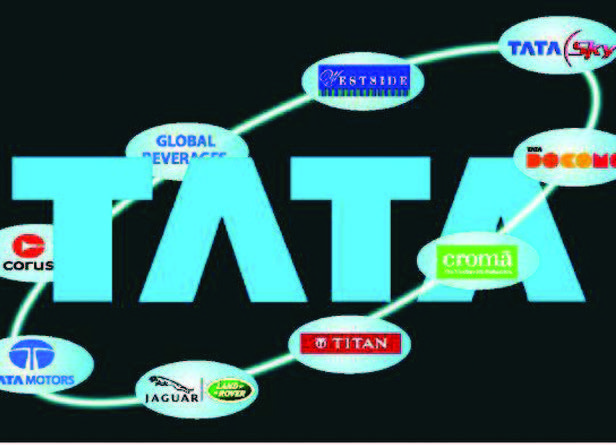
    TATA GROUP IS INDIA’S MOST VALUABLE BRAND: STUDY

    NEW DELHI (TIP): The Tata group has retained its place as the country’s most valuable brand at $21 billion, while the total worth of top-100 Indian brands now stands at $92.6 billion, says a new study. State-run insurance behemoth LIC is ranked second with a brand value of$4.1 billion, followed by public sector bank SBI ($4 billion), Bharti Airtel ($3.8 billion) and Reliance ($3.5 billion).

    The brand value of Tata group has risen by $3 billion in the past one year, primarily led by its international diversification strategy and the flagship firm TCS, as per consulting firm Brand Finance India’s annual study. “Despite the fact that some divisions within the group have been underperforming, the brand should benefit from the recently outlined plans to invest$35 billion over the next three years and should go some way towards meeting the goal of the Tata chairman, Cyrus Mistry to be amongst the 25 most admired brands globally,” it said.

    Brand value has increased among the top 50 by 10 per cent compared to 2013 with brands such as Tata, Godrej, HCL, and L&T leading the way, said the Brand Finance India 100 list that was released on August 7. Banking firms fared the worst collectively with majority of brands losing value or remaining stagnant due to generally poor governance and weak credit controls especially at the government-owned institutions, Brand Finance said.

    State Bank of India has seen its value drop by ($1.9 billion) as poorer revenue forecasts and bad-loans dampened earnings, it said. HCL Technologies has seen an increase in brand value of 51 per cent by$649 million as its successful strategy has seen the brand win 50 transformational engagements with contract values of$5 billion in the past year distributed across all service lines and geographies.

    “Indian brands have benefited from the rapid economic growth seen over the past ten years,” said Brand Finance’s Savio D’Souza. “Indian brands must take advantage of the improving business sentiment and invest in brand related activities like customer engagement, sponsorships, employee satisfaction and brand tracking to drive the next phase of growth in order for more Indian companies to join the global club of internationally recognised brands,” he added. The average brand value to enterprise value (BV/EV) for India’s top 100 brands is 12 per cent. However, some of the largest PSUs have an average ratio of 3 per cent. The BV/EV ratio shows the proportion of a company’s value accounted for by the brand.

  • JLR TO INVEST 100 MILLION POUNDS IN SAUDI ARABIA FOR NEW PLANT

    JLR TO INVEST 100 MILLION POUNDS IN SAUDI ARABIA FOR NEW PLANT

    LONDON (TIP):
    Tata Motors-owned Jaguar Land Rover (JLR) is planning to invest 100 million pounds into a new factory in Saudi Arabia to make 100,000 cars a year to meet the booming demand in the Middle East region. The UK-based luxury car maker is close to signing a deal with the Saudi government to build an assembly factory in the east of the country, according to ‘The Sunday Times’. The plant will initially make a new version of its popular Land Rover Discovery and is eventually expected to employ 4,000-5,000 people. It will be JLR’s third big foreign expansion after deals to open factories in China and Brazil were finalised. The Saudi government is also expected to invest in the plant as it seeks to develop its automotive industry.

    The company is likely to begin by assembling cars from components made in Britain, and progress to taking more parts from Saudi companies. The Middle East expansion will be another step in the car maker’s success story since being taken over by the Tata Group in 2008. A new 500 million pounds engine plant in the West Midlands is set to begin production next year. Jaguar confirmed a 240 million pounds agreement late last year to build a factory in Rio de Janeiro, and is also opening a plant in China in a 1 billion pounds joint-venture with the Chinese car maker Chery. The firm sold a record 425,006 vehicles in 2013, up 19 per cent on a year earlier, setting new sales records in 38 markets and recording strong growth across all the big regions.

  • Tata leads race to sell mini UAVs to Army

    Tata leads race to sell mini UAVs to Army

    NEW DELHI (TIP): The Tata Group is set to ink an agreement with the government to sell 1,200 trucks to the defence forces in a deal valued at close to Rs 1,000 crore.

    In addition, it has emerged as the lowest bidder for a contract for mini-unmanned aerial vehicles (UAV) from the Indian Army’s Northern Command, although the terms of the deal are yet to be finalized. The twin deals come at a time when the group is looking to ramp up its presence in the defence segment through several of its group companies and has managed to generate an order book of close to Rs 8,000 crore.

    The salt to software conglomerate saw revenues of close to Rs 1,700 crore during the last financial year and is expecting a growth of around 40% during the current financial year, Mukund Rajan, member – group executive council and brand custodian, Tata Sons told reporters.

    While Tata Motors is expected to sign the deal for the 6×6 trucks after Tatra was blacklisted over its alleged involvement in the irregularities, Tata Advanced Systems Ltd (TASL) is the top contender for the mini-UAV contract. TASL vice-president Sukaran Singh said that the company has been approached by several original equipment manufacturers (OEMs) work related to aircraft components.

  • British victim of Mumbai terror attacks sues Taj hotel owners

    British victim of Mumbai terror attacks sues Taj hotel owners

    LONDON (TIP): The UK high court here began a three-day hearing of a compensation claim case by a British man paralysed during the Mumbai terror attacks five years ago.Wheelchair-bound Will Pike is suing the owners of Mumbai’s iconic Taj Mahal Palace Hotel, the scene of a three-day terrorist siege in November 2008, over alleged negligence in providing security despite several warnings that an attack was imminent. “He did not choose to bring this claim lightly but only after long, anxious and careful thought,” the 33- year-old freelance filmmaker’s counsel Philip Havers told Justice Stewart in the court.

    Pike’s law firm, Leigh Day, is arguing against an attempt by the Indian Hotels Company Limited, owners of Taj Mahal Palace Hotel, to prevent the case being heard in a UK court. They have told the court that the case should be heard in London, where Pike lives and where the Tata Group firm has a substantial business presence – based around the Crowne Plaza London St James’ Hotel and the Taj Suites just a stone’s throw from Buckingham Palace. According to the legal team, the judgment in the case is likely to be “reserved” and not made immediately at the end of the hearing this week.

    “My aim in taking this legal action is to pay for the life-long care I now need and to help other victims of terrorist attacks abroad…I do not see why the British taxpayer should have to pay for the life-long care I need rather than those who I believe did not do enough to guarantee my safety and the safety of all those caught up in this atrocity,” said Pike, one of the many foreign tourists who were staying at the hotel at the time of the attack. Pike and his then girlfriend, Kelly Doyle – who is also bringing proceedings through the same law firm – claim they saw limited security checks with only one metal detector and cursory screening of guests when they checked in on November 26, 2008 – the day the siege began.

    They say they had not been given proper advice about emergency procedures and evacuation routes and, when they heard doors being kicked in and shots fired, had to break a window with furniture from their smoke-filled room and try to reach the ground using bedding and curtains knotted together. “Mr Pike’s only real hope of seeing justice is in a UK Court. The court in Mumbai simply isn’t geared up to deal with a claim of this kind,” said his lawyer Russel Levy, a partner at Leigh Day.

  • Ratan Tata, 8 Indian- Americans inducted in US engineering academy

    Ratan Tata, 8 Indian- Americans inducted in US engineering academy

    WASHINGTON (TIP): Leading Indian industrialist Ratan Tata has been inducted into the prestigious US National Academy of Engineering in the US for his “outstanding contributions to industrial development in India and the world”. Tata, chairman emeritus of the Tata Group, was inducted as one of 11 new foreign associates of the private, independent, nonprofit institution that provides independent advice to the US federal government on matters involving engineering and technology. Besides Tata, eight Indian- Americans were among 69 new elected members taking the total US membership to 2,250 and the number of foreign associates to 211. Addressing the annual meeting of the group on Sunday, NAE president CD Mote Jr lamented that talented engineering workforce was not being given desired priority attention in the US.

    At just four percent, the percentage of US engineering graduates among all its graduates is 1/3 of the European average (13 percent) and 1/6 of the Asian (India, Japan, China, Taiwan, South Korea, and Singapore) competitor average of 23%, he said. As part of its efforts to push its global reach, NAE has started bilateral “Frontiers of Engineering” programmes with India, Germany, Japan, China, and the EU and a new one with Brazil is scheduled for 2014, he said. The new Indian-American members are: Anant Agarwal, president, edX (online learning initiative of MIT and Harvard University) for contributions to shared-memory and multicore computer architectures. Murty P Bhavaraju, senior consultant, PJM Interconnection, Norristown, Pennsylvania for probabilistic reliability evaluation tools for large electric power systems. Ashok J Gadgil, director and senior scientist, environmental energy technologies division, Lawrence Berkeley National Laboratory for engineering solutions to the problems of potable water and energy in underdeveloped nations.

  • MOVERS & SHAKERS

    MOVERS & SHAKERS

    Famous Indian nuclear physicist Homi Jehangir Bhabha was born on 30 October 1909 in Mumbai. Bhabha played a key role in the development of the Indian atomic energy program. Widely referred to as the father of India’s nuclear weapons program, Bhabha had his education at the Elphinstone College and the Royal Institute of Science before obtaining his doctorate from the University of Cambridge in 1934.

    He was influenced greatly by the legendary Paul Dirac. Bhabha was a research scientist at the Cavendish Laboratories at Cambridge. When he was stranded in India as a result of the Second World War, he set up the Cosmic Ray Research Unit at the Indian Institute of Science, Bangalore under Nobel Laureate C. V. Raman in 1939. Dr. Bhabha is credited with establishing the Tata Institute of Fundamental Research(TIFR) with the help of eminent industrialist J. R. D. Tata.

    After India won independence from the British, Bhabha established the Atomic Energy Commission of India in 1948. He represented India in various international forums including the United Nations and his tenure represented a high in terms of the progress of India’s atomic energy programme. The climax of this programme came on May 18, 1974 when India exploded a nuclear device at Pokhran, Rajasthan joining a select club of nations.

    Ratan Tata
    Ratan Tata is one of the most well-known and respected Indian businessman. He served as the Chairman of the Tata Group from 1991 till 2012. As a Mumbaibased conglomerate, he is also a member of the prominent Tata family of Indian industrialists and philanthropists. Ratan Tata was born on December 28, 1937 in Mumbai. When he was a child his parents separated and he was brought up by his grandmother Lady Navajbai.

    He went to Campion School in Bombay, Bishop Cotton School in Shimla and finished his schooling from Cathedral and John Connon School in Mumbai. He graduated with a degree in Architecture and Structural Engineering from Cornell University in 1962 and also did the Advanced Management Program from Harvard Business School in 1975. He is also a member of the Alpha Sigma Phi fraternity of Yale University, United States. In 1962, Ratan Tata began his career in the Tata group.

    At first he used to work on the shop floor of Tata Steel, shoveling limestone and handling blast furnace. In 1991, JRD Tata stepped down as the chairman of Tata Industries and named Ratan Tata as his successor. Under Ratan’s stewardship, Tata Tea attained Tetley, Tata motors attained Jaguar Land Rover and Tata Steel attained Corus. These triumphs turned Tata from a large India-centric company into a global business with 65% revenues from abroad. He also contributed in the development of Indica and Nano.

    Ratan Tata has also served in various organizations in India and abroad. He is a member of the Prime Minister’s Council on Trade and Industry and he is also on the board of governors of the East-West Center, which is the advisory board of RAND’s Center for Asia Pacific Policy. He also serves on the program board of the Bill & Melinda Gates Foundation’s India AIDS initiative. He was awarded the Padma Bhushan by the Government of India in January 2000.

    He serves on the boards of several leading organizations, both in the public as well as the private sector in India. He is a member of the International Investment Council set up by the President of South Africa and serves on the programme board of the Bill & Melinda Gates Foundation’s India AIDS initiative. Ratan Tata is credited for leading Tatas’ successful bid for Corus, an Anglo-Dutch steel and aluminum producer, which was acquired for an estimated £6.7 billion by Tata Sons.

    N.R. Narayanamurthy
    N.R. Narayana Murthy, the founder of Infosys Technologies is one of the most famous personalities in India’s I-T sector. Born on August 20, 1946, he obtained a degree in electrical engineering from the National Institute of Engineering under University of Mysore in 1967 and went on to do his Masters from IIT Kanpur in 1969. He joined Patni Computer Systems in Pune. While at Pune, he met his wife Sudha Murty.

    In 1981, he founded Infosys alongwith with six otherpeople. He served as president of the National Association of Software and Service Companies, India from 1992 to 1994. Murthy was the CEO of Infosys for twenty years, and was succeeded by Nandan Nilekani in March 2002. He functioned as the Executive Chairman of the Board and Chief Mentor from 2002 to 2006.

    Dhirubhai Ambani
    Dhirajlal Hirachand Ambani was born on 28 December 1932, at Chorwad, Junagadh in Gujarat, When he was 16 years old, he moved to Aden,Yemen. Initially, Dhirubhai worked as a dispatch clerk with A. Besse & Co. Married to Kokilaben. Dhirubhai also worked in Dubai for sometime. He returned to India and founded the Reliance Commercial Corporation with an initial capital of Rs 15000.

    Dhirubhai set up the business in partnership with Champaklal Damani from whom he parted ways in 1965. Dhirubhai started his first textile mill at Naroda, near Ahmedabad in 1966 and started the brand “Vimal”. Dhirubhai Ambani is credited with having started the equity cult in India.With the passage of time, Dhirubhai diversified into petrochemicals and sectors like telecommunications, information technology, energy, power, retail, textiles, infrastructure services, capital markets, and logistics.

    Lakshmi Nivas Mittal
    Lakshmi Nivas Mittal was born on June 15, 1950 in Sadulpur, Rajasthan, India and is presently the CEO & Chairman of Arcelor Mittal. Lakshmi Nivas Mittal was listed in the Forbes List of Billionaires in 2006 as the the richest Indian and the fifth richest man in the world with an estimated wealth around of $25.0 billion and is the richest man in the United Kingdom. Young Lakshmi Nivas Mittal spent his first years in Sadulpur, before his father moved to Kolkata. Lakshmi graduated from St. Xavier’s College, Calcutta. He founded Mittal Steel in 1976, which soon became a global steel producer with operations on 14 countries. His success mantra lies in the identification, acquisition and turnaround of many loss making steel companies all across the world.

    Dr. A.P.J. Abdul Kalam
    Dr. A.P.J. Abdul Kalam, former President of India, graduated in aeronautical engineering from the Madras Institute of Technology in 1958 and joined the Defense Research and Development Organization (DRDO). In 1962, Kalam joined the Indian Space Research Organization (ISRO). In 1982, he rejoined DRDO as the Chief Executive of Integrated Guided Missile Development Programme (IGMDP). Dr. Kalam is credited with the development and operationalization of India’s Agni and Prithvi missiles.

    He worked as the Scientific Adviser to the Defence Minister and Secretary, Department of Defence Research & Development from 1992 to 1999. During this period, the Pokhran-II nuclear tests were conducted. Dr. Kalam held the office of the Principal Scientific Advisor to the Government of India from November 1999 to November 2001. Dr. Kalam has received a host of awards both in India and abroad. He was awarded the Padma Bhushan in 1981, Padma Vibhushan 1990 and the Bharat Ratna in 1997.

    He is of the view that we should work wholeheartedly to make India a developed nation by 2020. Besides being a bachelor, Kalam is a strict disciplinarian, a complete vegetarian and teetotaler. Among the many firsts to his credit, he became India’s first President to undertake an undersea journey when he boarded the INS Sindhurakshak, a submarine, from Visakhapatnam. He also became the first president to undertake a sortie in a fighter aircraft, a Sukhoi-30 MKI.

    Khushwant Singh
    One of the most prominent novelists and journalists of India, Khushwant Singh was born on 2 February 1915 in Hadali, presently in Pakistan. He writes a weekly column, “With Malice towards One and All”, published in several leading newspapers all over the country. He graduated from Government College, Lahore before studying law at King’s College, London. He has been the editor of Yojana, The Illustrated Weekly of India, The National Herald and the Hindustan Times.

    He also served as a member of the Rajya Sabha. Though he was awarded the Padma Bhushan in 1974, he returned it in 1984 to protest the siege of the Golden Temple by the Indian Army. He was awarded the Padma Vibhushan in 2007. Some of his notable works include: The Sikhs; Train to Pakistan; The Sikhs Today; Ranjit Singh: The Maharajah of the Punjab; Delhi: A Novel; Sex, Scotch and Scholarship: Selected Writings; Not a Nice Man to Know: The Best of Khushwant Singh; Paradise and Other Stories; Death at My Doorstep; The Illustrated History of the Sikhs etc.

    Amartya Sen
    Nobel Prize winner Amartya Sen was born on 3 November 1933 in Santiniketan, West Bengal. Besides being a worldrenowned economist, Amartya Sen is also a philosopher. He served as a Master at the Trinity College at Cambridge University, the first Asian academic to head an Oxbridge college. Currently the Lamont University Professor at Harvard University, Amartya Sen traces his roots to an illustrious lineage. His father, Ashutosh Sen, taught chemistry at the Dhaka University.

    Amartya completed his high-school education from Dhaka in Bangladesh in 1941. After his family migrated to India in 1947, Sen studied at the Presidency College, Kolkata and at the Delhi School of Economics before moving over to the United Kingdom to complete his higher studies. He earned his doctorate from the Trinity College, Cambridge in 1959. He has taught at various reputed Universities including the University of Calcutta, Jadavpur University, Oxford, London School of Economics, Harvard and many others. His works helped to develop the theory of social choice.

    In 1981, he published his famous work Poverty and Famines: An Essay on Entitlement and Deprivation, where he showed that famine occurs not only due to shortage of food, but from inequalities in the mechanisms for distributing food. He had personally witnessed the Bengal famine of 1943. He has done valuable work in the field of development economics, which has had a tremendous influence on the formulation of the United Nations Development Programme’s Human Development Report.

    Sabeer Bhatia
    Sabeer Bhatia-co-founder of Hotmail, is one among select group of people who have made it big in America’s Silicon Valley. Born in Chandigarh, Sabeer Bhatia did his schooling from St. Joseph’s Boys’ High School, Bangalore. He graduated from Caltech and went to Stanford to pursue his MS in Electrical Engineering. Sabeer attended many lectures by famous like Steve Jobs and was determined to make it big. After completing his Masters, he joined Apple computers. He left Apple soon after.

    He teamed up with his partner to create a web-based e-mail system Microsoft bought Hotmail on December 30th, 1997, for a reported sum of $400M. After the success of Hotmail, Bhatia in April 1999, he started another venture, Arzoo Inc, which however had to be shut down. In 2006, Arzoo was relaunched. Bhatia has won many awards. Among the notable ones include the “Entrepreneur of the Year” awarded by the venture capital firm Draper Fisher Jurvetson in 1997, the “TR100” award, presented by MIT to 100 young innovators expected to have the greatest impact on technology in the next few years. Besides, he was named by TIME magazine as one of the “People to Watch” in International Business in 2002.

    Indra Nooyi
    Indra Nooyi is the president and chief executive officer of PepsiCo and is the highest-ranking Indian-born woman in corporate America. She helped to start PepsiCo’s fast-food chains in 1997. After a Bachelor’s degree from Madras Christian College and a Post Graduate Diploma in Management from the Indian Institute of Management Kolkata, she moved on to the Yale School of Management.

    She started her career with The Boston Consulting Group (BCG), moving on to companies like Motorola and Asea Brown Boveri.She serves on the board of directors of several organizations. In August 2006, she succeeded Steve Reinemund as chief executive officer of PepsiCo. She has been named the Most Powerful Woman in Business in 2006 by Fortune Magazine. Her name was included in the Wall Street Journal’s list of 50 women to watch in 2005.

    Kiran Bedi
    The first woman to join the coveted Indian Police Service (IPS) in 1972, Kiran Bedi was born on 9 June 1949 in Amritsar, Punjab. Recently appointed as Director General of India’s Bureau of Police Research and Development, Kiran Bedi has had an illustrious career, earning widespread adulation for her no-nonsense attitude and devotion to work. She served as Police Advisor in the United Nations peacekeeping department and was honored with the UN medal for outstanding service. She earned the nickname ‘Crane Bedi’ for towing away the then Indian PM Indira Gandhi’s car for parking violation.

    Kiran Bedi graduated in English before securing a Master’s degree in Political Science from Punjab University, Chandigarh. This gutsy police officer went on to secure an LL.B degree in 1988 from Delhi University and a Ph.D. from the Indian Institute of Technology, New Delhi, even while she was in service. She was good at sports too, having been an all- India and all-Asian tennis champion.

    She has served creditably in a host of appointments ranging from Deputy Inspector General of Police, Mizoram, Advisor to the Lieutanent Governor of Chandigarh, Director General of Narcotics Control Bureau and many others.

    Rakesh Sharma
    The first Indian to fly into space, Rakesh Sharma was born on January 13, 1949 in Patiala, Punjab. He was a squadron leader with the Indian Air Force, when he flew into space in 1984 as part of a joint programme between the Indian Space Research Organisation (ISRO) and the Soviet Intercosmos space program.

    He spent eight days in space on board the Salyut 7 space station. He joined two other Soviet cosmonauts aboard the Soyuz T- 11 spacecraft which blasted off on April 2, 1984. He was awarded the Hero of Soviet Union award on his return from space. The Government of India honoured him with the Ashok Chakra. He retired with the rank of Wing Commander. He joined the Hindustan Aeronautics Limited in 1987 and served as Chief Test Pilot in the HAL Nashik Division until 1992, before moving on to Bangalore to work as the Chief Test Pilot of HAL. He retired from test flying in 2001.

    Dr. Verghese Kurien
    The “father of the white revolution” in India, Dr. Verghese Kurien is acknowledged worldwide as the brain behind the success of the largest dairy development programme in the world by the name of Operation Flood. Also known as the “Milkman of India”, he was the chairman of the Gujarat Co-operative Milk Marketing Federation Ltd. (GCMMF) and his name became synonymous with the Amul brand. Born on November 26, 1921 in Kozhikode, Kerala, he graduated in Physics from Loyola College, Madras in 1940 and pursued a B.E.(Mechanical) course from the Madras University. He was instrumental in the success story of AMUL.

  • Air Asia To Take Off With Three Aircraft

    Air Asia To Take Off With Three Aircraft

    CHENNAI (TIP): Getting the cost structure right will be the key to success of operating a low-cost airline in India, says Tony Fernandes, CEO, AirAsia, which is all set to launch a low-cost airline in association with the Tata Group this year according to a news item in The Hindu BusinessLine. “I cannot be clear on the launch. We are waiting for the No Objection Certificate and Air Operator Certificate, but things looks promising and moving in the right direction. Our hope is to start this year,” Fernandes told newspersons.

    “It is a perfect time to enter India because no one has done it (a low-cost airline offering) right. Wait and see for two years,” he said, asked about the entry into India when domestic travel is shrinking. “Our model is straight forward. We will charge as low as we can. If you want to add on things like bags, you will have to pay for it,” he said. Fundamentally, theirs (other operators’) are not true low-cost airlines, he said.

    “I said that for a long time. The closest was Air Deccan, which had the right fare but wrong cost structure. So, it was unsustainable,” he said. Running a low-cost airline is a tough and hard business. “People in India who started the low-cost airline looked at me, wearing a T-shirt and hat, said that if that guy can do it, we can do it. But it is hard and the key failure in the Indian aviation industry is cost management,” he said.

    The project is not delayed but moving pretty fast. Even the Tatas could not believe that the Foreign Investment Promotion Board clearance came so fast, he explained. “The hardest thing is to convince you guys (the media). You are the most skeptical people,” he said. Fernandes said the airline will start with three Airbus aircraft and add an aircraft every month. “I don’t know how many aircraft I will add,” he said.

    The low-cost airline, however, will not operate in airports where charges are high. “We do not have to go to all the airports. In some airports like Delhi and Mumbai, it is like going to a Taj Hotel, which the Tatas like while I like going to a budget hotel. GVK has got an expensive airport, and we won’t go there. It is too expensive for any market,” he said.

  • Tata Business Support Services Partners With Club Vantage Agora

    Tata Business Support Services Partners With Club Vantage Agora

    NEW YORK (TIP): Tata Business Support Services Limited (TBSS), a Tata Sons Group in Hyderabad, has entered into strategic partnership with Cleveland, Ohio-based CLUB VA (Vantage Agora) Enterprise, a social platform. According to the MoU, CLUB VA’s information centric platform will offer a secure enterprise-wide platform that connects TBSS employees at real-time across locations, empowers employees; enables and enhances customer centricity and operational excellence, all at the same time.

    The Platform makes contextual collaboration, a way-of-life in the organization enabling employees to work smarter. “Our strategic partnership with Vantage Agora is to provide a breakthrough collaboration platform for our associates that we believe, eventually will benefit our customers,” stated Sarajit Jha, Chief Operating Officer, Tata Business Support Services Limited in Hyderabad.

    TBSS, a Global Customer Experience Management company, is among the largest third party outsourcing service providers. TBSS is a wholly owned subsidiary of Tata Sons and part of the 142-year-old Tata Group. With state-of-the-art facilities across 18 delivery centers in 15 locations, TBSS employs over 11,000 PILOTS (Preparing Innovative Leaders of Tomorrow), and has the expertise to seamlessly transition and servicing global clients, through voice and nonvoice processes to integrate into a Oneview global delivery model across Telecom, Media and Entertainment, Automotive, Retail, CPG & eCommerce, Healthcare & Life science, Travel, Leisure and Hospitality.

    TBSSs’ ‘End to End’ Verticalized solutions reinforce its commitment to work with clients in developing winning strategies through “rightshoring” and “Take Over- Make Over- Turn Over” concept to provide a high ROI, Jha said. “TBSS focuses on global growth and customer care brings a unique addition to the CLUB VA platform,” stated Sudhir Achar, Vantage Agora’s CEO and Founder.

    “We welcome them as our new partner and look forward to furthering their commitment to collaboration and operational excellence through the use of the CLUB VA solution.” Sarajit Jha and Sudhir Achar attended the World BPO/ITO event in New York and strategized a joint go to market plan.

  • Renowned Indian American health expert Mukesh Hariawala to address India Leadership Conclave 2013

    Renowned Indian American health expert Mukesh Hariawala to address India Leadership Conclave 2013

    WASHINGTON (TIP): Renowned Indian American health expert Mukesh Hariawala will address the fourth edition of the India Leadership Conclave 2013 in Mumbai in June, 2013. Harvard trained and internationally acclaimed Indian American healthcare economist and cardiac surgeon Dr Mukesh Hariawala will deliver the keynote address with the theme ” President Barack Obama 2nd Term – Business Implications on Indian Healthcare “.

    This highly anticipated lecture is expected to attract an elite audience and will dispel negative myths that surround the hotly debated “Obamacare” – President Barack Obama’s Affordable Care Act (ACA), its implementation milestones, changing ecosystems in the US, but importantly its positive impact on the Indian healthcare industry. Dr.Hariawala spoke of the 100-billion dollar medical tourism revenue opportunity, increased IT contracts, generic drug company revenues and overseas insurance company investments in Indian healthcare sector facilitated by soft FDI policies of incumbent Prime Minister Manmohan Singh. The cumulative effect would accelerate the GDP trajectory from a limping five percent close to the earlier projected eight percent rate.

    This undoubtedly will help multiple industry augmented employment and improvement in living standards for a good portion of the Indian population with an overall tangential impact on the national BPL. Expectantly, this will be refreshing news for the Planning Commission of India and a boost in its implementation of the ambitious 12th – 5 year plan. Dr.Hariawala further added that ” Obamacare ” will also necessitate revamping of all the computing systems handling U.S. healthcare which would open a wide door of business opportunity for Indian IT companies. Purely for financial reasons, this will in all likelihood compel the U.S. Government to continue large outsourcing of software contracts. The key economic driver of “Obamacare” is to reduce the debt ridden trillion dollar healthcare burden on the U.S. exchequer.

    Global experts have suggested that Dr Hariawala’s lecture will shed new light and open up a wider debate, considering his deep-rooted intellectual insight of Indo-American business cultures. Over 300 iconic leaders, including Reliance Industries owner Mukesh Ambani and Tata Group ex-chairman Ratan Tata, will take part in the event, which has been organized by the Network 7 Media Group and the Ministry of Corporate Affairs.

    Top politicians, bureaucrats, other business tycoons, social reformers, media barons, diplomats and global dignitaries will attend one of Asia’s largest events to be held in Mumbai on June 21 at the Majestic Hall in the Lalit Intercontinental Hotel. The theme will be “New India – Agenda for Change”. Dr.Hariawala is widely regarded as an influential policy thinker, and is expected to elaborate on his popular concepts of ” Universal Patient Care ” and ” Womb to Tomb ” economical insurance models for all Indians across the entire spectrum of socio – economic classes.

  • An Overhaul Man Gobind Munjal

    An Overhaul Man Gobind Munjal

    Gobind Munjal, a successful Chartered Accountant and CPA by profession has worked as a Senior Vice President of Finance and Mergers & Acquisitions and served on the Board of Directors of the International Division of Tata Group of Hotels in the USA, totaling 30 years of professional services with the renowned Tata Group in various senior leadership positions. During his services with the Tata Group he saved millions of dollars for the company by way of efficient tax structuring of the deals and was recognized for his excellence in the Hospitality Merger & Acquisition field. In 2006 he started his own advisory and consultancy services. His involvement in community affairs and activities started since more than a decade ago when he joined what was then one of the fastest and largest growing not for profit Organizations on Long Island representing Indians in America, known as the India Association of Long Island (IALI).

    This Organization was about 20 years old then with a growing membership of Suffolk and Nassau County residents, which today numbers 1,600 strong. The aim of the Organization was primarily to promote the culture and heritage of India so that bridges may be crossed between Indians living in America and the local Americans to promote a better understanding of the two cultures. Mr. Munjal served on the Executive Board of IALI for seven of the fifteen years of his continuing membership, in various capacities climbing steadily to the very top :- 2006 – Member-at-Large; 2007 – Membership Chair; 2008-2009 – Secretary; 2010 – Treasurer; 2011 – President. He worked very hard in each of the positions that he held taking each position very seriously and elevating its standards to a much higher level. He brought ethics, professionalism and transparency in producing Minutes of Meetings and raised the standards of Financial Reporting and its presentation to a level that almost everybody in the Executive Council and Past Presidents expressed their overwhelming praise for his work and dedication.

    As President he did much to improve and raise the standards of IALI by bringing transparency, accountability and professionalism to the Association. As President of IALI Mr. Gobind Munjal’s goal and objectives was to bring back Unity, Harmony and Team Work within the Organization; bring back “INDIAFEST” IALI’s hallmark event which truly promotes and showcases India’s culture and traditions in mainstream America; build “INDIA CENTER” for the Indian community, a long cherished dream come true for the India Association of Long Island; encourage stronger participation of the youth and Seniors Group; involve more with the local American community; provide educational support to needy Indian students; build closer ties with local Senior Groups and National Indo-American Association for Senior Citizens (NIAASC); and increase participation and support for the Annual Food Drive to take it to a higher level.

    Growth of membership of IALI during Mr. Munjal’s presidency of one year has been exponential, with around a hundred new members added. A remarkable feat. Many of these objectives were remarkably achieved with the IALI having all successful, well attended month to month women, seniors and youth programs and major events for the year 2011. INDIAFEST turned out to be a BLOCKBUSTER of an event well received and well attended by many dignitaries, community leaders and scores of Americans who thoroughly enjoyed the high end Floor Shows with its sophisticated Fashion Show, a page out of Broadway, a wealth of scintillating performances and dances, mindblowing variety of delicious Indian cuisine and showcasing of the wide variety of arts and crafts and ethnic designer ware of India. Not giving up on the dream of having the INDIA CENTER a place India Association of Long Island has long wanted to call their very own Mr. Munjal has still persisted and today chairs the Ad Hoc Special Committee in IALI with a committed team set up for 2012 so that this dream become a reality.

    Mr. Gobind Munjal’s vision for the future of the Indian community is to see realize INDIA COMMUNITY CENTER and at the same time he also holds true his dream of some form of Housing and Assisted Living Facility for the Seniors. His involvement with India Home providing services for seniors of Indian origin, is testament to his commitment towards improving lives of seniors. He is relentlessly working towards achieving his goal of providing medical, social, and spiritual services for the aging Indian Seniors in Queens and Long Island. When his term as President of IALI concluded at the close of the year 2011, in spite of his tremendous popularity he did not seek reelection, rather made himself available upon invitation to give his services for others. His dedication and passion for community service did not diminish. This has resulted in his joining Indian American Forum (IAF) as Co-Chair of Indian American Night and Global Organization of People of Indian Origin (GOPIO) Long Island Chapter as Secretary. He has been invited to join the National Federation of Indian Americans (NFIA) and has twice participated in the Congressional Hearings and White House briefings in Washington DC.

    He is also a life member of Association of Indians in America (AIA) and Nargis Dutt Memorial Foundation (NDMF) and participates in their activities. He has received numerous Citations and Awards in his year as President of IALI, among them being the Certificate of Recognition from Hon. Kate Murray, Supervisor, Town of Hempstead and has been honored with a Citation by Nassau County Executive Hon. Ed. Mangano and NYS Comptroller Thomas Di Napoli together with Indian Consul General at New York Hon. Prabhu Dayal. During his professional career, he received Outstanding Professional Award from the America’s Registry of Outstanding Professionals. IALI events gained not only popularity but commanded a certain amount of respect among the community and administration. As a result, whereas community loved to associate itself with IALI events, lawmakers and administration officials looked upon these events as opportunities to gain support of the community. Mr. Munjal assiduously built bridges of understanding and cooperation between the Indian American community and the mainstream Americans.

    He took the IALI to the next stage of growth which is getting recognition for the community at the political level, a step in the right direction of empowering the community. The dignitaries that graced various IALI events included Ambassador Prabhu Dayal, Congresswoman Goosby, New York State Comptroller Tom DiNapoli, New York State Senator Tony Avella, Nassau County Executive Ed Mangano, Town of North Hempstead Supervisor Jon Kaiman, Town of Hempstead Supervisor Kate Murray and Mayor of Laurel Hollow Harry Anand and many more. Mr. Munjal’s work for the community is far from complete. On August 11th, 2012 he stood tall and proud with 5 other founder conveners of India Day Parade USA who put together Long Island’s First India Day Parade for Long Islanders in Hicksville, an event never before attempted, but successfully concluded. His involvement in India Day Parade USA started with bringing together of all Indian Organizations onto a single platform to participate in the first ever Parade in Hicksville, Long Island. This was concluded as more than 100 Indian Organizations came together as one for the very first time to participate and march in the India Day Parade USA in Hicksville Long Island.

    However, it is not just work all the time for Gobind. He and wife Suman who is in to Real Estate business and is often busy make it a point to take time off their work to travel and enjoy their vacation. The family has been to Europe, Far East, UAE, Mexico, Australia, New Zealand and seen much of North America. The latest has been a visit to China which has impressed Munjals much. They are all praise for China. They said they were impressed with the infrastructure there. The cleanliness that they witnessed was in total contrast with what they had been made to believe about China. And, above the human effort to give an impressive look to the country is the power of Nature which one sees in her abundant beauty and glory in the most populated country of the world. . Gobind Munjal lives happily in the Whitestone/Malba area with his wife Suman who is a professional in real estate with Prudential Douglas Elliman. He has two sons Gaurav and Kevin and daughter in law Iona with two cute grand-sons Sajin and Neilan, 4 years and 2 years respectively.