Tag: Tel Aviv

  • Iran-Israel war keeps world in suspense

    Iran-Israel war keeps world in suspense

    The situation in West Asia has become more volatile and holds dangerous implications

    “By attacking the Iranian consulate in Damascus — a protected facility under the international conventions — Israel sent a clear message to Iran that its aggressive actions would not go unpunished and that Tel Aviv would go to any extent to strike directly at Tehran. The latter had also avoided attacking Israel, fearful of America’s ‘ironclad’ support for Tel Aviv and the adverse impact of a large-scale conflict on its economy, which is reeling under high inflation, low economic growth, shortage of various commodities due to sanctions and domestic discontent. Iran was obliged to take this symbolic action to retain its credibility among its people, foreign proxies and other countries supporting it.”

    By Yogesh Gupta

    Iran reportedly fired about 350 missiles and drones at Israel on April 13 in response to Israel’s attack on its consulate in Damascus on April 1, which had resulted in the killing of seven senior military officials, including Gen Mohammad Reza Zahedi, who was handling Iran’s relations with the Hezbollah in Lebanon. About 115-130 missiles targeting Israel were intercepted by the Israeli and allied air defenses; others failed in flight and did not reach their target. Iran had alerted the Americans through Swiss, Iraqi, Turkish and Jordanian sources 72 hours in advance about the attack, though without specifying the exact time. Thus, there was no damage, except serious injuries to a seven-year-old Israeli girl. The attack was largely symbolic; the Iranians wanted to tell Israel that they had the capability to hurt it.

    It would be difficult for Israel to attack Iran without America’s support. Any direct assault by Israel on Tehran’s nuclear or military facilities can provoke it.

    Tel Aviv’s reaction was full of indignation, with the Israeli war cabinet favoring retaliation, though it was divided over the timing and scale of the response. US President Joe Biden told PM Benjamin Netanyahu that Israel had won by thwarting the missiles and that the US would not take part in any counter-offensive against Iran. Two senior Israeli ministers said Tel Aviv would not act alone and build a regional coalition against Iran. The Israeli attack indicated a change of strategy as it had in the past targeted the Iranian associates or proxies mostly in countries involved in supplying weapons or other support to the ‘resistance’ groups (except nuclear scientists in Iran). Tehran’s support for the Hamas in its audacious attack on Israel in October last year, continuous missile attacks by the Hezbollah in recent days and Houthi attacks on Israeli and American ships in the Red Sea indicated that Iran was feeling emboldened.

    By attacking the Iranian consulate in Damascus — a protected facility under the international conventions — Israel sent a clear message to Iran that its aggressive actions would not go unpunished and that Tel Aviv would go to any extent to strike directly at Tehran. The latter had also avoided attacking Israel, fearful of America’s ‘ironclad’ support for Tel Aviv and the adverse impact of a large-scale conflict on its economy, which is reeling under high inflation, low economic growth, shortage of various commodities due to sanctions and domestic discontent. Iran was obliged to take this symbolic action to retain its credibility among its people, foreign proxies and other countries supporting it.

    The Arab states were divided in their reaction to the Iranian attack. Saudi Arabia and the UAE reportedly passed on intelligence to the US on Iran’s plans to attack Israel, and it helped thwart the massive assault. Jordan actively participated in shooting drones heading to Israel. Several Arab countries allowed the use of their airspace to intercept the Iranian missiles and drones, and some even supplied their forces for assistance. Egypt called for restraint on both sides.

    As the Iranian attack became imminent, the US ordered the deployment of aircraft and missile defense systems in the region and coordinated actions between Israel and Arab governments. As per reports, the US operations center in Qatar tracked the missiles and drones launched by Iran through its radars in the Gulf countries. This information was sent to fighter jets, ships and missile defense systems operating in the region. As soon as the drones and missiles came within range, they were shot down mostly by American and Israeli fighters and some by British, French and Jordanian warplanes.

    Besides President Biden, leaders from the UK, Germany, France and other countries have appealed to Israel not to retaliate following the attack. India has asked both countries to go for immediate de-escalation, exercise restraint, step back from violence and return to the path of diplomacy. China expressed ‘deep concern’ and called on “influential countries (read the US) to play a constructive role in maintaining regional peace and stability”. Russia said, “all disagreements be resolved exclusively by political and diplomatic methods”. The UN Security Council held an emergency meeting on April 14 to discuss this subject but ended it without any further action.

    It would be extremely difficult for Israel to attack Iran directly without America’s support. Any direct attack by Israel on Iran’s nuclear or military facilities can provoke Tehran and its proxies to launch large-scale missile attacks against Tel Aviv, causing considerable devastation. Tehran has the ability to launch massive drone attacks against the US and allied ships in the Persian Gulf and disrupt the supply of oil and other maritime and air traffic between Europe and Asia. The Biden administration is not in favor of widening the conflict between Israel and Hamas. The Israeli offensive in Gaza has caused widespread devastation, which has angered several important groups in the US, whose support President Biden needs to secure his re-election in November.

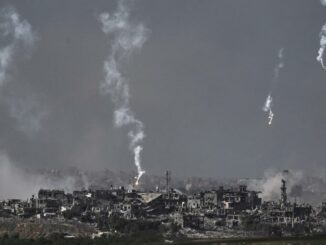
    The rivalry between Israel and Iran is turning more vicious as both sides are prepared to launch attacks at each other. Iran is looking more to China and Russia as its new allies and has lost interest in the revival of its cooperation with the West. It is not willing to accept the new political and economic framework of cooperation (Abraham Accords) being promoted by the US and wants to reshape the regional order as per its priorities (anti-Americanism, anti-Israelism and the triumph of the Islamic world over the West). The Netanyahu government has shown no inclination to accept the two-state solution to resolve the Palestinian issue. The conflict between Israel and Hamas continues, with no sign of a ceasefire as yet. The Iran-Israel clash is making the situation in West Asia more volatile and unpredictable, with dangerous implications for the world.
    (The author is a former ambassador)

  • First batch of Indian workers left for Israel; India urges Tel Aviv to ensure their safety

    First batch of Indian workers left for Israel; India urges Tel Aviv to ensure their safety

    NEW DELHI (TIP): India on Thursday said it has urged Israel to ensure safety of the Indian construction workers who have gone to the country this week under the framework of a bilateral agreement.

    Israeli Ambassador to India Naor Gilon said on Tuesday, April 2, that the first batch of over 60 Indian construction workers has left for Israel.

    “As you are aware, these (first batch) workers have gone to Israel as part of a government-to-government agreement that we have signed with the country,” External Affairs Ministry spokesperson Randhir Jaiswal said at his weekly media briefing.

    “This agreement predates the conflict. We are conscious of their safety. We have urged the Israeli authorities to ensure their safety and well-being,” he said.

    Jaiswal said around 18,000 Indian caregivers are currently employed in Israel and the Indian embassy in that country is in touch with them.

    “Our embassy is in touch with the Indians in Israel,” he said.

    On Tuesday, Gilon said the Indian workers are going to Israel under the framework of a government-to-government agreement and complimented India’s National Skill Development Corporation (NSDC) for the initiative.“Today we had a farewell event from the first batch of 60+ Indian construction workers going to Israel under the G2G agreement. This is an outcome of the hard work of many, including @NSDCINDIA,” he said.

    Following the Israel-Hamas conflict, there were media reports that said the Israeli construction industry is looking at recruiting 100,000 Indian workers to replace the 90,000 Palestinians.

    Last month, India said it is focusing on ensuring the safety and security of all its citizens in Israel in the wake of the death of an Indian in that country in a missile attack reportedly launched by Hezbollah.
    (Source: PTI)

  • Israel says Gaza combat has resumed; Talks are said to continue

    Israel says Gaza combat has resumed; Talks are said to continue

    TEL AVIV (TIP): Israel’s military said early Friday, December 1, it was resuming fighting because Hamas had violated the previously agreed-upon truce after a projectile was fired from Gaza in the final minutes of the cease-fire. International mediators said talks were continuing in the hopes of a breakthrough, reports the New York Times.

    The deadline for the weeklong truce between Israel and Hamas expired 7 a.m. Friday local time. Diplomatic talks had come down to the wire with indications earlier in the night that the negotiations may have broken down. Hamas did not immediately comment. Israel’s military said on the social media site X early Friday that it had intercepted a projectile fired from Gaza, before the pause had expired. That episode could not be independently confirmed, and there was no immediate report of injuries. It is a developing story.

  • Israel extradites sex-crime suspect to Oz after 13 years

    Tel Aviv (TIP): A former Australian school principal accused of sexually assaulting students was extradited to Australia on Monday under an order from Israel’s Supreme Court. Malka Leifer has denied the allegations against her. She had fled Australia in 2008 after the accusations surfaced. Reuters

    Earth’s ice loss increases at record speed, says study

    London (TIP): Earth has lost 28 trillion tonnes of ice between 1994 and 2017. A study, published on Monday in The Cryosphere journal, found that the rate of ice loss from the Earth has increased markedly within the past three decades, from 0.8 trillion tonnes per year in the 1990s to 1.3 trillion tonnes by 2017. PTI