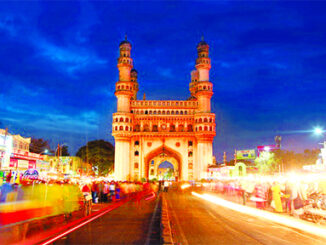
Telangana is a state in southern India. In the capital of Hyderabad, the Charminar is a 16th-century mosque with 4 arches supporting 4 towering minarets. The monument overlooks the city’s long-running Laad Bazaar. Once the seat of the Qutb Shahi dynasty, the sprawling Golconda Fort is a former diamond-trading center. In the city of Warangal, the centuries-old Warangal Fort features carved stone towers and gateways. Telangana was earlier part of the Hyderabad state from the end of 1948 to 1956. The youngest state in India is Telangana. It was formed as the ’29th state of India’.
The state has an area of 1,14,840 Sq Km and has a population of 3,52,86,757.
Telangana is situated on the Deccan Plateau, in the central stretch of the eastern seaboard of the Indian Peninsula. It covers 112,077 square kilometers (43,273 sq m). The region is drained by two major rivers, with about 79% of the Godavari River catchment area and about 69% of the Krishna River catchment area, but most of the land is arid. Telangana is also drained by several minor rivers such as the Bhima, the Maner, the Manjira, the Musi, and the Tungabhadra.
The annual rainfall is between 900 and 1500mm in northern Telangana and 700 to 900mm in southern Telangana, from the southwest monsoons. Telangana contains various soil types, some of which are red sandy loams (Chalaka), Red loamy sands (Dubba), lateritic soils, salt-affected soils, alluvial soils, shallow to medium black soils and very deep black cotton soils. These soil types allow the planting of a variety of fruits and vegetable crops such as mangoes, oranges, coconut, sugarcane, paddy, banana and flower crops.
Telugu one of the classical languages of India is the official language of Telangana and Urdu is the second official language of the state. About 75% of the population of Telangana speak Telugu and 12% speak Urdu. Before 1948, Urdu was the official language of Hyderabad State, and due to a lack of Telugu-language educational institutions, Urdu was the language of the educated elite of Telangana. After 1948, once Hyderabad State joined the new Republic of India, Telugu became the language of government, and as Telugu was introduced as the medium of instruction in schools and colleges, the use of Urdu among non-Hyderabadi Muslims decreased. Both Telugu and Urdu are used in services across the state, such as the Telangana Legislature website, with Telugu and Urdu versions of the website available, as well as the Hyderabad metro, wherein both languages are used on station names and signs along with English and Hindi. The Urdu spoken in Telangana is called Hyderabadi Urdu, which in itself is a dialect of the larger Dakhini Urdu dialects of South India.
Telangana is one of the fastest-growing states in India posing average annual growth rate of 13.90% over the last five years. Telangana’s nominal gross state domestic product for the year 2020-21 stands at Rs 13.59 lakh crore.
Agriculture also form a backbone of Telangana’s Economy. Two important rivers of India, the Godavari and Krishna, flow through the state, providing irrigation. Farmers in Telangana mainly depend on rain-fed water sources for irrigation. Rice is the major food crop. Other important local crops are cotton, sugar cane, mango and tobacco. Recently, crops used for vegetable oil production, such as sunflower and peanuts, have gained favor. There are many multi-state irrigation projects in development, including Godavari River Basin Irrigation Projects.
Tag: Telangana
-

Telangana: India’s youngest state
-
Time for the Congress party to reach out and work together for a united front to save democracy and the nation

George Abraham, Vice-Chair of IOCUSA I salute the victory in Telangana while blaming overconfidence and infighting for the losses in the other three states!
Telangana stands out as the shining light for the Congress party in the unfortunate defeats elsewhere in the just concluded state elections. Yet, the Congress Party should not give up the fight but rather garner all the energy and strengthen the INDIA alliance for the ultimate prize fight in 2024,” said George Abraham, Vice-Chairman of the IOCUSA and Global coordinator of the IT & Social media for IOC.
Instead of engaging in the so-called introspection exercise, the leadership should quickly move to clean up the INC Secretariat and engage people who might bring contrasting perspectives that would enrich the debate and arrive at well-thought-out solutions to resolve various issues confronting the party. Keeping Shashi Tharoor at arms-length or removing him as the chairman of the Professional Congress right in the middle of an election is not an intelligent strategy. It is not only a united leadership that may win an election but also using modern strategy and employing the latest technologies that make a difference.
There must be zero tolerance for groupism all across the party if it wishes to come back to power at the center again. The recent victory in Karnataka may have made some in the leadership a little cocky to the point where the ongoing talk on the INDIA alliance almost appeared to have come to a halt. Congress needs to be cognizant of the fact that fighting the Modi behemoth machine alone would not suffice; Congress may have to take a step back and reach a consensus. The ultimate aim for the next election must be the defeat of Modi but not the debate of who would be the Prime Minister.
A change of leadership in many state units with young and dynamic individuals with a new vision would go a long way for the party. The victory led by Mr. Revanth Reddy in Telangana is a case in point. The appetite for corruption is still quite rampant in some party circles, and it ought to be seriously checked. In Rajasthan, the simmering leadership dispute should have been brought to an end a long time ago. In Chhattisgarh, a tribal community was driven out of their own homes on allegations of conversions, and the state government closed its eyes for political expediency; in Madhya Pradesh, the leadership appeared to have been practicing soft-Hindutva rather than championing the Nehruvian vision and Ambedkar’s constitution. Why would anybody opt for duplicates when the original BJP, which practices Hindutva ideology, is readily available? It is also time to check the EVMs and make sure the systems are performing well and fulfilling its constitutionally assigned responsibilities.
It is time for the Congress party to reach out and work together for a united front to save democracy and the nation.
(The opinion expressed above is strictly personal) -

Challenge to Hindutva
- The clamour for a caste census can redefine political equations and alliances in the run-up to Lok Sabha polls
It’s premature to conjecture if caste is a robust counter to the BJP’s Hindutva. But the BJP’s strategy of employing religion to heighten a pan-Hindu identity among the non-upper castes might be past its shelf life, at least in the state elections.
“The belated wisdom of a national party such as the Congress plunging headlong into sectional politics discomfited some of its insiders, who believed that it should focus on the economy’s big picture, inflation and livelihood and leave matters like a caste count to the identity-wedded entities it is aligned with in the regions. Insiders said that would be more in keeping with the ‘character’ of these players, some of whom, incidentally, are products of the post-Mandal period.”

By Radhika Ramaseshan The upcoming Assembly elections in Madhya Pradesh, Chhattisgarh, Rajasthan and Telangana have got inextricably linked with three factors — the Bihar Government’s release of a comprehensive caste survey (CCS), the Congress’ promise to conduct a similar caste count if elected to power in these states and the BJP’s response to frame the discourse in a different idiom, featuring leitmotifs drawn from the Hindutva ideology. As the BJP garnered a little over 40 per cent of the OBC votes in the 2019 elections, largely by projecting Modi both as an OBC mascot and a Hindu icon, the Congress was bereft of any such attribute.
A little before and immediately after the Bihar CCS demonstrated the potential of resurrecting the issue of the empowerment of Other Backward Classes (OBCs) or backward castes, the Congress strongly advocated for a caste count. Former party president Rahul Gandhi described it as an ‘X-ray’ that would reveal the socioeconomic condition of the OBCs, Dalits and Adivasis and challenged Prime Minister Narendra Modi to lay bare the findings of a socioeconomic caste survey undertaken during then PM Manmohan Singh’s tenure. Rahul claimed that the Congress governments in Rajasthan and Chhattisgarh had initiated a process to carry out a CCS — brave words from the Congress, which belatedly recognized and acknowledged the seriousness of OBC empowerment in shaping the politics of the Hindi heartland. Successive Congress Prime Ministers — from Jawaharlal Nehru to Rajiv Gandhi — did not pursue the recommendations of the Kaka Kalelkar Commission, the first Backward Classes panel, which submitted its report in 1955. It identified 2,399 backward castes in the country, with 837 of them classified as ‘most backward’. The commission also recommended undertaking a caste-wise enumeration of the population during the 1961 census and establishing a connection between the social backwardness of a caste and its low position in the traditional caste hierarchy, among other suggestions.
The Congress ignored the Mandal Commission’s report mandated to identify the socially and educationally backward castes and adopt ameliorative measures to bring them on a par with the upper and intermediate castes. While the BJP was quick to grasp the political ramifications of the Mandal report and co-opted large OBC sub-groupings under the Hindutva umbrella, the Congress was convinced that its time-tested coalition of the upper castes, Muslims and Dalits/Adivasis would endure an epic churn. As it happened, the amalgam came apart and the party lost its base in the heartland, except in pockets. As the BJP garnered a little over 40 per cent of the OBC votes in the 2019 elections, largely by projecting Modi both as an OBC mascot and a Hindu icon, the Congress was bereft of any such attribute. Now, the party is making a concerted effort to position, front and center, its OBC Chief Ministers Siddaramaiah (Karnataka), Bhupesh Baghel (Chhattisgarh) and Ashok Gehlot (Rajasthan), despite the high command’s express misgivings about Gehlot.
The belated wisdom of a national party such as the Congress plunging headlong into sectional politics discomfited some of its insiders, who believed that it should focus on the economy’s big picture, inflation and livelihood and leave matters like a caste count to the identity-wedded entities it is aligned with in the regions. Insiders said that would be more in keeping with the ‘character’ of these players, some of whom, incidentally, are products of the post-Mandal period.
There is more than a grain of truth in this belief if the rejoinder coming from a regional party is an indication. Flagging the caste count issue in Telangana, Rahul contextualized his rationale with the alleged corruption by the Bharat Rashtra Samithi government, Chief Minister K Chandrashekar Rao and his family. A caste survey, Rahul claimed, would bring to light the extent to which the KCR clan had ‘looted’ Telangana. Can caste become a synonym for corruption, considering that the party of Lalu Prasad, whose household is enmeshed in graft charges, is a Congress ally and the Rashtriya Janata Dal draws its sustenance from identity politics? Can the RJD survive without its Muslim-Yadav support?
The Telangana Government was not in slumber. In 2014, it carried out a household survey of the OBCs which showed that they made up 51 per cent of its 3.6 crore population. With the Dalits and Adivasis, the figure went up to 85 per cent.
The Chief Minister is from the Velama community, a dominant caste of agriculturists, but in his two stints in office, he made space for OBCs such as the Gouds, Yadavs, Munnuru Kapu and Padmashali as ministers and Rajya Sabha MPs. Having been vociferous about a caste count, the Congress might be hoist by its own petard because its OBC leaders have clamored for three Assembly seats each in Telangana’s 17 Lok Sabha constituencies that add up to 51 OBC candidates in the 119 Assembly segments.
The Chhattisgarh Government’s OBC survey in 2022 puts their population at 43.5 per cent, while as per the Madhya Pradesh and Rajasthan Backward Classes Commissions, the figures stand at 48 per cent and 42 per cent, respectively. Confronted with the data, the three governments — Chhattisgarh and Rajasthan are Congress-ruled, while MP is BJP-helmed — have made OBCs the centerpiece of their policies and welfare initiatives.
Madhya Pradesh CM Shivraj Singh Chouhan set up dedicated welfare boards for specific sub-castes, as have Gehlot and Baghel. Rajasthan earmarked 64 per cent reservation in government employment and educational institutions with 16 per cent for the Dalits, 12 per cent for the Adivasis, 26 per cent for the OBCs and most backward castes and 10 per cent for the ‘economically weaker’ sections. In MP, despite the BJP high command’s manifest distrust of Chouhan, he was nominated again from his Budhni seat shortly after the caste census and the accent on OBC empowerment gained currency. Chouhan is from a backward caste. In Chhattisgarh, Baghel legislated an increase in the OBC reservation quota from 14 to 27 per cent and that of the Adivasis (a sizeable population) from 12 to 13 per cent in public employment and educational admissions.
It’s premature to conjecture if caste is a robust counter to the BJP’s Hindutva. But the BJP’s strategy of employing religion to heighten a pan-Hindu identity among the non-upper castes might be past its shelf life, at least in the state elections.
(The author is a Senior Journalist) -
‘Socialist’, ‘Secular’ missing from Preamble published on Telangana’s Class 10 textbook cover
The Telangana State Council of Educational Research and Training (SCERT) has got mired in a controversy following the publication of the Preamble of the Constitution on the cover page of a school textbook allegedly without the words ‘socialist’ and ‘secular’.
The SCERT, however, maintained that the error occurred due to oversight. The Telangana State United Teachers’ Federation (TSUTF) submitted a representation to the secretary of education department on Thursday, June 22, complaining that the words ‘socialist’ and ‘secular’ were “removed” from the Preamble published on the cover page of the class 10 social studies textbook published by the SCERT.
The two words were included in the Preamble through the 42nd Constitutional amendment, the TSUTF recalled.
However, the Preamble, including the two words, was published in the pages inside class 8 and 10 social studies books, it said.
At a time when there is a debate “across the globe” that secularism was in danger in India, the publication of the old Preamble “the way some people want it” instead of the one that is in force gives rise to several doubts, the Federation claimed. -

Indian-origin US based Sehgal Foundation shipping oxygen concentrators to 7 Indian states
DES MOINES (TIP): The Des Moines, Iowa, -based Sehgal Foundation said it was shipping out 200 oxygen concentrators to seven Indian states on May 6, 2021. The shipment of the medical equipment was made possible through donations from its individual supporters across the United States, the foundation said in a press release.
“Working in close coordination with local partners and government officials, the Sehgal Foundation team on the ground in India is ensuring that the equipment is directly reaching those who need it the most in public hospitals in villages across 7 states,” the release said. It added, “In the coming week, more oxygen cylinders, ventilators, personal protective equipment, rapid diagnostic tests, and therapeutics will be sent.”
Sehgal Foundation teams are working with district administrators and local partners in Andhra Pradesh, Bihar, Haryana, Maharashtra, Rajasthan, Telangana, and Uttar Pradesh, the release said. “To respond quickly during this catastrophic surge in Covid-19 cases in India, Sehgal Foundation has taken immediate action to reach the people in the greatest need,” the release said.
S.M. Sehgal Foundation, a Gurgaon, India, -based sister organization of the Sehgal Foundation operates in more than 1,000 villages, across 10 states, serving more than 2.5 million people. Areas it focuses on include food and water security, and good rural governance. Since a devastating second wave of Covid-19 surged in India, dozens of US-based organizations have sent medical equipment to India. Last week, the American Association of Physicians of Indian Origin (AAPI), which represents the 80,000-strong Indian American physician community in the US, airlifted the first batch of 1,000 of oxygen concentrators.
On May 3, pharmaceutical giant Pfizer announced it will donate more than $70 million worth of medicines to India.
Indiaspora, a nonprofit, raised $1 million raised through its private donor network of members.
-

All Four Hyderabad Rape accused killed in police encounter
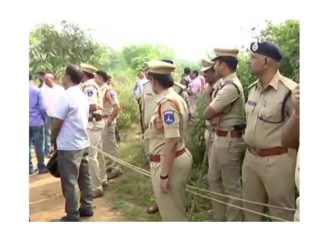
HYDERABAD (TIP): The four men accused of raping and murdering a veterinarian in Hyderabad were killed in an encounter in the early hours of Friday, December 6, Police Commissioner VC Sajjanar told PTI.
The encounter took place around 3.30 am, when the accused were trying to flee while being taken to the murder site to reconstruct the sequence of events, reported Hindustan Times. The accused allegedly snatched a weapon and fired at the police. They tried to run towards a deserted pathway, an unidentified official told The Indian Express.
“They fired upon the police team and we retaliated in self-defense,” unidentified officials told PTI. “Two of our men are also injured in the incident.”
The accused – Mohammed, Jollu Shiva, Jollu Naveen and Chintakunta Chennakeshavulu – were arrested on November 29 for allegedly raping and killing the woman by smothering her. They burned her body. The four were under judicial custody and lodged in high security cells in Cherlapally Central Prison.
The father of the veterinarian expressed his gratitude. “It has been 10 days to the day my daughter died,” he told ANI. “I express my gratitude towards the police and government for this. My daughter’s soul must be at peace now.”
(Source: PTI)
-

Indian American from California adopts village in Telangana
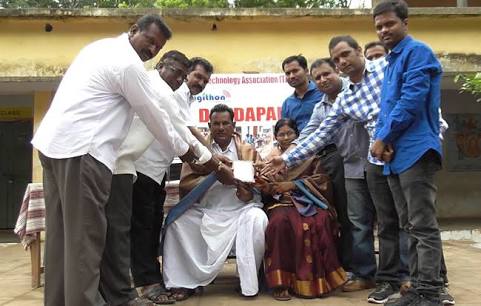
CALIFORNIA (TIP): Indian American Annapareddy Appi Reddy from California has adopted the remote Dondapadu village in Suryapet district as a part of Digithon Digital Village initiated by the Telangana Information Technology Association (TITA).
Till a few months ago, residents of the village believed a computer was just another gadget meant for students and the educated. But this initiative helps villagers understand banking, agriculture and even access anything beyond their village.
218 villagers are selected to be given basic computer training that equipped them to conduct digital transactions and be financially literate. The team selected participants who did not have access to a smartphone and trained them. They were introduced to E-Sage, an agriculture knowledge platform developed by the IIIT-Hyderabad, where they could learn new methods of farming and understand the market to sell their produce at apt prices.
While the team provided ground-level support, TITA president Sundeep Kumar Makthala said more than 40 NRIs responded to their call to adopt their villages under the Digithon programme.
TITA, a non-profit and non-governmental organisation working for the welfare of Telangana IT students, was started in 2013 by IT veterans who hail from Telangana region.