Tag: Tennis

  • FAREWELL SACHIN

    FAREWELL SACHIN

    A time line of Sachin Tendulkar’s 24-year-old illustrious career:

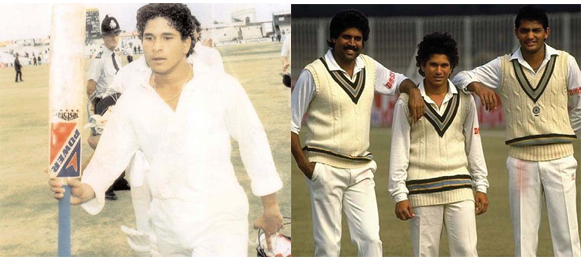
    Feb 23-25, 1988: Tendulkar (14) and Vinod Kambli (16) compile a 664-run unbroken partnership for Shardashram Vidya Mandir against St Xavier’s at Azad Maidan, Mumbai. Kambli remains ubeaten on 349 not out and Tendulkar scores 326 not out. It remains the highest partnership recorded in any form of cricket, until in November 2006. Dec 11, 1988: Makes First-Class debut at the age of 15 and scores an unebaten century against Gujarat at the Wankhede Stadium. Becomes youngest Indian to make a hundred on First-Class debut. Nov 15, 1989: Makes his Test debut in Karachi against Pakistan at the age of 16. Makes 15 on debut. Dec 14, 1989: Suffers a bloody nose in the last Test in Sialkot after being hit by Waqar Younis. Makes 57 in the innings. August 14, 1990: At the of 17 years and 112 days, becomes the then secondyoungest to score a Test century. He scores 119 not out against England at Old Trafford which helped India to get a draw.


    19

    April, 1992: Signs up for Yorkshire and becomes the first overseas signing for the English county. Nov 27-28, 1992: Becomes the youngest player to score 1,000 Test runs at the age of 19 years and 217 days after he scores 111 in India’s 227 in Johannesburg. Feb 11-12, 1993: Gets his first Test century (165) at home against England. Nov 24, 1993: The world saw the first glimpse of Tendulkar as a matchwinning bowler. Bowls India to sensational last-ball win against South Africa in the Hero Cup semi-final. South Africa needing six runs to win off the last over, Tendulkar gave them just three, and India a victory. March 27, 1994: Opens the innings for the first time in an ODI against the New Zealand. Scores 82 off 49 balls. October 1995: Becomes the richest cricketer in the world after he signs up a five-year contract worth Rs 31.5 crore with WorldTel. Feb-March, 1996: Plays his first World Cup at home and scores 523 runs at an average 87.16 and becomes the highest scorer. Aug 8, 1996: Becomes the Indian captain at the age of 23. Jan 2, 1998: Sacked from captaincy after a 15-month stint during which India won just three of 17 Tests. Feb-March, 1998:

    In the best of his form against Australia in a home Test series and also gets his maiden double hundred. He also scored two hundreds and a fifty in the three-Test series that India won 2-1. July 28, 1999: Gets back his captaincy after Mohammad Azharuddin is sacked for India’s failure to reach the semi-finals of the World Cup in England. March 20, 2001: Scores a thrilling century in the deciding Test in Chennai and denies Australia the “final frontier”. March 31, 2001: Becomes the first payer to score 10,000 runs in ODIs en route to his 139 against Australia in Indore. Nov 19, 2001: Fined by match referee Mike Denness for ball tampering. The decision was later overturned after an outcry by the Indian cricket board. Aug 22-23, 2002: Surpassed Don Bradman’s tally of 29 Test centuries. Misses double century by seven at Headingley, but India win by an innings and 46 runs. February-March, 2003: Scores 673 runs at 61.18 in the World Cup and also takes India to sniffing distance of winning the crown. His 98 against Pakistan was one of the best knocks played by Indians at World Cup. Australia are the champions, but Tendulkar is named the Man of the Series. Aug, 2003: Is presented with a Ferrari 360 Modena for going past Bradman’s 29 Test centuries.

    Jan 2-4, 2004: Scores 241 in Sydney, one of his best, even as Australia manage to hold on for a draw, and the series ends 1-1. Aug, 2004: Suffers from tennis elbow during the Videocon Cup in Holland. Misses the Champions Trophy in England, and then the first two home Tests against Australia. March 16, 2005: Scores 52 against Pakistan and becomes the fifth man to score 10,000 Test runs. Dec 10, 2005: Becomes the highest centurion in Test cricket as he overtakes Sunil Gavaskar’s 34 en route to his 109 against Sri Lanka in Delhi. March 19, 2006: Is booed at the Wankhede Stadium after he was dismissed for duck in 33 minutes against England in Mumbai. March, 2006: Again goes under the knife. This time for surgery on his right shoulder in England. May, 2007: For the first time in his career, Tendulkar is rested for the three-ODI series in Bangladesh. Jan 4, 2008: Scores an unbeaten 154, against a major Test playing nation in two years and 19 Tests, against Australia at the Sydney Cricket Ground. March 2, 2008: Sachin scores his first ODI century in Australia, in first of the CB Series final. Oct 17, 2008: Surpasses Brian Lara’s record of most Test runs against Australia at Mohali. Nov 5, 2009: Gets to 17,000 runs during his 175 off 141 balls in a 351-run chase against Australia in Hyderabad.

    India fall short by 19 runs. Feb 24, 2010: Becomes the first player in the history of the game to score 200 in a single innings in a One-Day International. He took 147 deliveries to power India to 401 and a 153-run win against South Africa. Oct 2010: Tendulkar bags his first ICC award, the Sir Garfield Sobers Trophy. Dec 19, 2010: Gets his 50th Test hundred against a difficult South African attack in Centurion. April 2, 2011: Realises his childhood dream of winning the World Cup that too at his home town of Mumbai and at the Wankhede. India beat Sri Lanka to win the World Cup for the second time. March 16, 2012: Gets the 100th international century, scoring 114 in an Asia Cup match against Bangladesh in Mirpur. But India lost the match. The century came after 34 innings and more than a year after scoring his 99th international hundred. Dec 23, 2012: Just minutes before the selectors were set to name the squad for the ODI series against Pakistan, Tendulkar announces his retirement from the format. Tendulkar finished with 18,426 ODI runs and 49 hundreds, well clear of any other batsman. Oct 10, 2013: Tendulkar announces his retirement from Test cricket.

  • Indian-American arrested in high school friend’s killing

    Indian-American arrested in high school friend’s killing

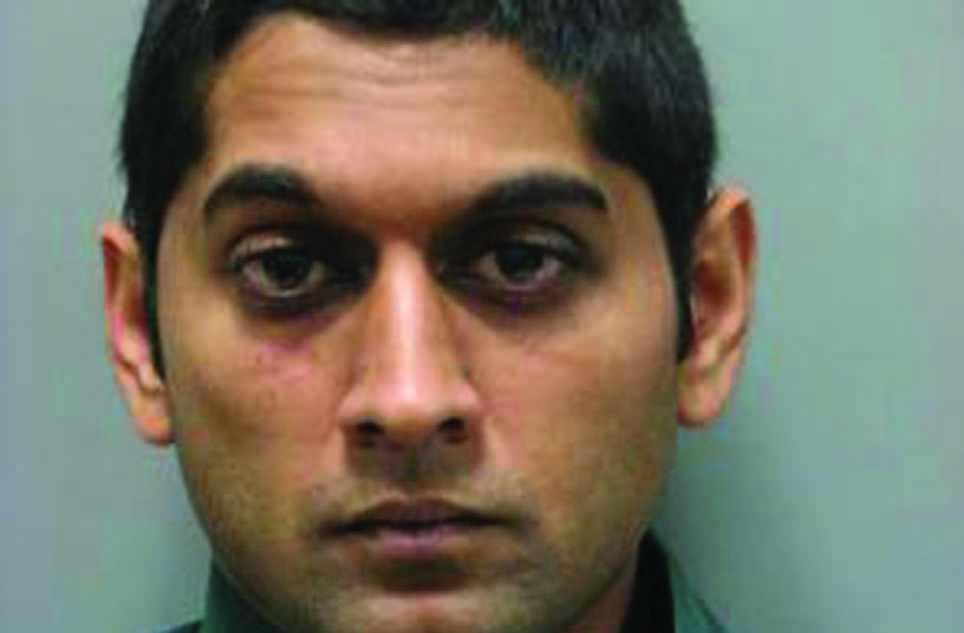
    WASHINGTON (TIP): Rahul Gupta, 24, is being held on $2 million bond after a night of drinking and birthday celebrating ended in a bloody stabbing of Mark Edward Waugh on Sunday, October 13 morning inside a high-rise apartment in Silver Spring, a Washington suburb in Maryland, the Washington Post reported. Gupta was pursuing a master’s degree in biomedical engineering at George Washington University. Waugh was in his first year of law school. According to police, a woman called 911 Sunday at 3.25am. When police arrived at the apartment, they found Waugh and Gupta inside. Police say they found Waugh suffering from cuts and he was unresponsive. It was later determined he was dead. Both Waugh and Gupta attended Langley High School in McLean, Virginia, where they took several advanced placement and honors classes together, the Post said. Waugh was in an afterschool robotics club. Gupta played on the varsity tennis team. Arrest records in the case paint a picture of several friends going out on Saturday to celebrate Gupta’s birthday, the newspaper said. But things later appear to have turned to alcohol-fuelled confusion and – at least based on the perception of one member of the party – a jealous rage, it said. “I walked in on my girlfriend cheating on me,” Gupta told the police, according to the charging papers cited by Post. “My girl and my buddy were cheating. My girl was cheating with my buddy. I walked in on them cheating and I killed my buddy,” Gupta said. Gupta later told a police officer he’d made a mistake and added that “he tried to kill me, though”, the arrest records cited by the newspaper recount him as saying.

  • MOVERS & SHAKERS

    MOVERS & SHAKERS

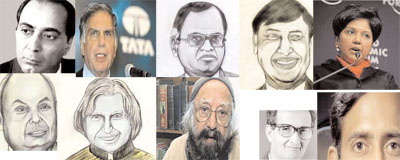
    Famous Indian nuclear physicist Homi Jehangir Bhabha was born on 30 October 1909 in Mumbai. Bhabha played a key role in the development of the Indian atomic energy program. Widely referred to as the father of India’s nuclear weapons program, Bhabha had his education at the Elphinstone College and the Royal Institute of Science before obtaining his doctorate from the University of Cambridge in 1934.

    He was influenced greatly by the legendary Paul Dirac. Bhabha was a research scientist at the Cavendish Laboratories at Cambridge. When he was stranded in India as a result of the Second World War, he set up the Cosmic Ray Research Unit at the Indian Institute of Science, Bangalore under Nobel Laureate C. V. Raman in 1939. Dr. Bhabha is credited with establishing the Tata Institute of Fundamental Research(TIFR) with the help of eminent industrialist J. R. D. Tata.

    After India won independence from the British, Bhabha established the Atomic Energy Commission of India in 1948. He represented India in various international forums including the United Nations and his tenure represented a high in terms of the progress of India’s atomic energy programme. The climax of this programme came on May 18, 1974 when India exploded a nuclear device at Pokhran, Rajasthan joining a select club of nations.

    Ratan Tata
    Ratan Tata is one of the most well-known and respected Indian businessman. He served as the Chairman of the Tata Group from 1991 till 2012. As a Mumbaibased conglomerate, he is also a member of the prominent Tata family of Indian industrialists and philanthropists. Ratan Tata was born on December 28, 1937 in Mumbai. When he was a child his parents separated and he was brought up by his grandmother Lady Navajbai.

    He went to Campion School in Bombay, Bishop Cotton School in Shimla and finished his schooling from Cathedral and John Connon School in Mumbai. He graduated with a degree in Architecture and Structural Engineering from Cornell University in 1962 and also did the Advanced Management Program from Harvard Business School in 1975. He is also a member of the Alpha Sigma Phi fraternity of Yale University, United States. In 1962, Ratan Tata began his career in the Tata group.

    At first he used to work on the shop floor of Tata Steel, shoveling limestone and handling blast furnace. In 1991, JRD Tata stepped down as the chairman of Tata Industries and named Ratan Tata as his successor. Under Ratan’s stewardship, Tata Tea attained Tetley, Tata motors attained Jaguar Land Rover and Tata Steel attained Corus. These triumphs turned Tata from a large India-centric company into a global business with 65% revenues from abroad. He also contributed in the development of Indica and Nano.

    Ratan Tata has also served in various organizations in India and abroad. He is a member of the Prime Minister’s Council on Trade and Industry and he is also on the board of governors of the East-West Center, which is the advisory board of RAND’s Center for Asia Pacific Policy. He also serves on the program board of the Bill & Melinda Gates Foundation’s India AIDS initiative. He was awarded the Padma Bhushan by the Government of India in January 2000.

    He serves on the boards of several leading organizations, both in the public as well as the private sector in India. He is a member of the International Investment Council set up by the President of South Africa and serves on the programme board of the Bill & Melinda Gates Foundation’s India AIDS initiative. Ratan Tata is credited for leading Tatas’ successful bid for Corus, an Anglo-Dutch steel and aluminum producer, which was acquired for an estimated £6.7 billion by Tata Sons.

    N.R. Narayanamurthy
    N.R. Narayana Murthy, the founder of Infosys Technologies is one of the most famous personalities in India’s I-T sector. Born on August 20, 1946, he obtained a degree in electrical engineering from the National Institute of Engineering under University of Mysore in 1967 and went on to do his Masters from IIT Kanpur in 1969. He joined Patni Computer Systems in Pune. While at Pune, he met his wife Sudha Murty.

    In 1981, he founded Infosys alongwith with six otherpeople. He served as president of the National Association of Software and Service Companies, India from 1992 to 1994. Murthy was the CEO of Infosys for twenty years, and was succeeded by Nandan Nilekani in March 2002. He functioned as the Executive Chairman of the Board and Chief Mentor from 2002 to 2006.

    Dhirubhai Ambani
    Dhirajlal Hirachand Ambani was born on 28 December 1932, at Chorwad, Junagadh in Gujarat, When he was 16 years old, he moved to Aden,Yemen. Initially, Dhirubhai worked as a dispatch clerk with A. Besse & Co. Married to Kokilaben. Dhirubhai also worked in Dubai for sometime. He returned to India and founded the Reliance Commercial Corporation with an initial capital of Rs 15000.

    Dhirubhai set up the business in partnership with Champaklal Damani from whom he parted ways in 1965. Dhirubhai started his first textile mill at Naroda, near Ahmedabad in 1966 and started the brand “Vimal”. Dhirubhai Ambani is credited with having started the equity cult in India.With the passage of time, Dhirubhai diversified into petrochemicals and sectors like telecommunications, information technology, energy, power, retail, textiles, infrastructure services, capital markets, and logistics.

    Lakshmi Nivas Mittal
    Lakshmi Nivas Mittal was born on June 15, 1950 in Sadulpur, Rajasthan, India and is presently the CEO & Chairman of Arcelor Mittal. Lakshmi Nivas Mittal was listed in the Forbes List of Billionaires in 2006 as the the richest Indian and the fifth richest man in the world with an estimated wealth around of $25.0 billion and is the richest man in the United Kingdom. Young Lakshmi Nivas Mittal spent his first years in Sadulpur, before his father moved to Kolkata. Lakshmi graduated from St. Xavier’s College, Calcutta. He founded Mittal Steel in 1976, which soon became a global steel producer with operations on 14 countries. His success mantra lies in the identification, acquisition and turnaround of many loss making steel companies all across the world.

    Dr. A.P.J. Abdul Kalam
    Dr. A.P.J. Abdul Kalam, former President of India, graduated in aeronautical engineering from the Madras Institute of Technology in 1958 and joined the Defense Research and Development Organization (DRDO). In 1962, Kalam joined the Indian Space Research Organization (ISRO). In 1982, he rejoined DRDO as the Chief Executive of Integrated Guided Missile Development Programme (IGMDP). Dr. Kalam is credited with the development and operationalization of India’s Agni and Prithvi missiles.

    He worked as the Scientific Adviser to the Defence Minister and Secretary, Department of Defence Research & Development from 1992 to 1999. During this period, the Pokhran-II nuclear tests were conducted. Dr. Kalam held the office of the Principal Scientific Advisor to the Government of India from November 1999 to November 2001. Dr. Kalam has received a host of awards both in India and abroad. He was awarded the Padma Bhushan in 1981, Padma Vibhushan 1990 and the Bharat Ratna in 1997.

    He is of the view that we should work wholeheartedly to make India a developed nation by 2020. Besides being a bachelor, Kalam is a strict disciplinarian, a complete vegetarian and teetotaler. Among the many firsts to his credit, he became India’s first President to undertake an undersea journey when he boarded the INS Sindhurakshak, a submarine, from Visakhapatnam. He also became the first president to undertake a sortie in a fighter aircraft, a Sukhoi-30 MKI.

    Khushwant Singh
    One of the most prominent novelists and journalists of India, Khushwant Singh was born on 2 February 1915 in Hadali, presently in Pakistan. He writes a weekly column, “With Malice towards One and All”, published in several leading newspapers all over the country. He graduated from Government College, Lahore before studying law at King’s College, London. He has been the editor of Yojana, The Illustrated Weekly of India, The National Herald and the Hindustan Times.

    He also served as a member of the Rajya Sabha. Though he was awarded the Padma Bhushan in 1974, he returned it in 1984 to protest the siege of the Golden Temple by the Indian Army. He was awarded the Padma Vibhushan in 2007. Some of his notable works include: The Sikhs; Train to Pakistan; The Sikhs Today; Ranjit Singh: The Maharajah of the Punjab; Delhi: A Novel; Sex, Scotch and Scholarship: Selected Writings; Not a Nice Man to Know: The Best of Khushwant Singh; Paradise and Other Stories; Death at My Doorstep; The Illustrated History of the Sikhs etc.

    Amartya Sen
    Nobel Prize winner Amartya Sen was born on 3 November 1933 in Santiniketan, West Bengal. Besides being a worldrenowned economist, Amartya Sen is also a philosopher. He served as a Master at the Trinity College at Cambridge University, the first Asian academic to head an Oxbridge college. Currently the Lamont University Professor at Harvard University, Amartya Sen traces his roots to an illustrious lineage. His father, Ashutosh Sen, taught chemistry at the Dhaka University.

    Amartya completed his high-school education from Dhaka in Bangladesh in 1941. After his family migrated to India in 1947, Sen studied at the Presidency College, Kolkata and at the Delhi School of Economics before moving over to the United Kingdom to complete his higher studies. He earned his doctorate from the Trinity College, Cambridge in 1959. He has taught at various reputed Universities including the University of Calcutta, Jadavpur University, Oxford, London School of Economics, Harvard and many others. His works helped to develop the theory of social choice.

    In 1981, he published his famous work Poverty and Famines: An Essay on Entitlement and Deprivation, where he showed that famine occurs not only due to shortage of food, but from inequalities in the mechanisms for distributing food. He had personally witnessed the Bengal famine of 1943. He has done valuable work in the field of development economics, which has had a tremendous influence on the formulation of the United Nations Development Programme’s Human Development Report.

    Sabeer Bhatia
    Sabeer Bhatia-co-founder of Hotmail, is one among select group of people who have made it big in America’s Silicon Valley. Born in Chandigarh, Sabeer Bhatia did his schooling from St. Joseph’s Boys’ High School, Bangalore. He graduated from Caltech and went to Stanford to pursue his MS in Electrical Engineering. Sabeer attended many lectures by famous like Steve Jobs and was determined to make it big. After completing his Masters, he joined Apple computers. He left Apple soon after.

    He teamed up with his partner to create a web-based e-mail system Microsoft bought Hotmail on December 30th, 1997, for a reported sum of $400M. After the success of Hotmail, Bhatia in April 1999, he started another venture, Arzoo Inc, which however had to be shut down. In 2006, Arzoo was relaunched. Bhatia has won many awards. Among the notable ones include the “Entrepreneur of the Year” awarded by the venture capital firm Draper Fisher Jurvetson in 1997, the “TR100” award, presented by MIT to 100 young innovators expected to have the greatest impact on technology in the next few years. Besides, he was named by TIME magazine as one of the “People to Watch” in International Business in 2002.

    Indra Nooyi
    Indra Nooyi is the president and chief executive officer of PepsiCo and is the highest-ranking Indian-born woman in corporate America. She helped to start PepsiCo’s fast-food chains in 1997. After a Bachelor’s degree from Madras Christian College and a Post Graduate Diploma in Management from the Indian Institute of Management Kolkata, she moved on to the Yale School of Management.

    She started her career with The Boston Consulting Group (BCG), moving on to companies like Motorola and Asea Brown Boveri.She serves on the board of directors of several organizations. In August 2006, she succeeded Steve Reinemund as chief executive officer of PepsiCo. She has been named the Most Powerful Woman in Business in 2006 by Fortune Magazine. Her name was included in the Wall Street Journal’s list of 50 women to watch in 2005.

    Kiran Bedi
    The first woman to join the coveted Indian Police Service (IPS) in 1972, Kiran Bedi was born on 9 June 1949 in Amritsar, Punjab. Recently appointed as Director General of India’s Bureau of Police Research and Development, Kiran Bedi has had an illustrious career, earning widespread adulation for her no-nonsense attitude and devotion to work. She served as Police Advisor in the United Nations peacekeeping department and was honored with the UN medal for outstanding service. She earned the nickname ‘Crane Bedi’ for towing away the then Indian PM Indira Gandhi’s car for parking violation.

    Kiran Bedi graduated in English before securing a Master’s degree in Political Science from Punjab University, Chandigarh. This gutsy police officer went on to secure an LL.B degree in 1988 from Delhi University and a Ph.D. from the Indian Institute of Technology, New Delhi, even while she was in service. She was good at sports too, having been an all- India and all-Asian tennis champion.

    She has served creditably in a host of appointments ranging from Deputy Inspector General of Police, Mizoram, Advisor to the Lieutanent Governor of Chandigarh, Director General of Narcotics Control Bureau and many others.

    Rakesh Sharma
    The first Indian to fly into space, Rakesh Sharma was born on January 13, 1949 in Patiala, Punjab. He was a squadron leader with the Indian Air Force, when he flew into space in 1984 as part of a joint programme between the Indian Space Research Organisation (ISRO) and the Soviet Intercosmos space program.

    He spent eight days in space on board the Salyut 7 space station. He joined two other Soviet cosmonauts aboard the Soyuz T- 11 spacecraft which blasted off on April 2, 1984. He was awarded the Hero of Soviet Union award on his return from space. The Government of India honoured him with the Ashok Chakra. He retired with the rank of Wing Commander. He joined the Hindustan Aeronautics Limited in 1987 and served as Chief Test Pilot in the HAL Nashik Division until 1992, before moving on to Bangalore to work as the Chief Test Pilot of HAL. He retired from test flying in 2001.

    Dr. Verghese Kurien
    The “father of the white revolution” in India, Dr. Verghese Kurien is acknowledged worldwide as the brain behind the success of the largest dairy development programme in the world by the name of Operation Flood. Also known as the “Milkman of India”, he was the chairman of the Gujarat Co-operative Milk Marketing Federation Ltd. (GCMMF) and his name became synonymous with the Amul brand. Born on November 26, 1921 in Kozhikode, Kerala, he graduated in Physics from Loyola College, Madras in 1940 and pursued a B.E.(Mechanical) course from the Madras University. He was instrumental in the success story of AMUL.

  • ANDY MURRAY BEATS NOVAK DJOKOVIC TO WIN WIMBLEDON

    ANDY MURRAY BEATS NOVAK DJOKOVIC TO WIN WIMBLEDON

    LONDON (TIP): ooking at the scorecard – a 6-4, 7-5, 6-4 win over world No. 1 Novak Djokovic – you might think that he did it the easy way. Three sets. No tie breaks. What could be simpler? Yet in all probability you watched at least some of the match – early reports suggest that more than 20million people did – and if so you will appreciate that it was an intense trial of nerve, skill and physical resilience.

    The final game, which swung this way and that like a hammock in a hurricane, contained as much tension as many a fivesetter. “Winning Wimbledon is the pinnacle of tennis,” said a softly spoken and still slightly bemused Andy Murray afterwads. “The last game almost increased that feeling. My head was kind of everywhere. I mean, some of the shots he came up with were unbelievable. Mentally, that last game will be the toughest game I’ll play in my career.” Everyone on Centre Court knew Djokovic’s reputation for bouncing back from lost causes.

    So even when Murray led by a two sets and a break, it never felt comfortable. Perhaps that was a good thing, because the anxious fans kept urging their man on, and played a full part in this historic occasion. When Murray fizzed down an ace to secure the second set, they gave him a standing ovation. When that crazy final game entered a labyrinthine sequence of tit-for-tat winners, they kept Murray going by chanting his name.

    Murray had come into the tournament pleading for a little more home bias around the elegantly landscaped grounds of Wimbledon. While the influence of the fans is hard to quantify, he definitely feeds off their energy. “The atmosphere was incredible for him,” said Djokovic afterwards. “For me not so much.” After a gracious acceptance of Murray’s superiority, he also admitted that “I wasn’t patient enough – there were many points where I should have waited for a better opportunity.”

    The trouble, from Djokovic’s perspective, was that he was getting so little change in the long, almost drill-like baseline rallies that made up the majority of the points. Murray was showing no holes in his defence as he lunged out wide for the forehand and then rushed across to play the defensive slice on the backhand side. The quality of that slice backhand, more than any other, was the difference between the players.

    The first point of the match set the tone: a 20-shot rally in which both players were shuttling so smoothly from side to side that they could have been on rails. As the sun beat down on the hottest day of the year, Murray’s saturated shirt was soon clinging to his body. Between points, he was slumping his shoulders and almost staggering back to his starting position like a puppet with faulty strings.

    But then, as soon as the ball toss went up, he skipped back onto his toes and started floating over the turf again. Murray endured a couple of wobbly moments on his serve in the first set. With the sun right in his eyes, he sent down successive double-faults at the start of one game. But he took control with a sequence of five successive clean winners – an ace, a smash, a forehand and two backhands – that emphasised just how complete his game has become.

    “The story of my career is that I had a lot of tough losses,” he said afterwards, “but the one thing I would say is that every year I always improved a little bit. They weren’t major improvements, massive changes, but every year my ranking was going in the right direction.” As the spectators fanned themselves furiously in this ever more torrid atmosphere, Murray dropped behind early in the second set. Feeling the urgency of his plight, Djokovic worked his counter-intuitive magic and became more assertive, more self-confident.

    Up in the player’s box, Ivan Lendl was slumping lower and lower in his seat, shielding himself behind the balcony wall like a man hiding behind the sofa. The match was already moving past the duration of the women’s final – 81 minutes – yet it felt like we were still in the first act. On Twitter, a watching Andy Roddick warned that “These guys are killing each other … they won’t be able to stand if they play five [sets].” Had the first two sets been split, it would have been ominous – for Murray lost the Australian Open final in January in exactly that scenario.

    Djokovic is built like a road-runner, so lean and efficient that he seems to grow stronger the longer a match goes on. But grass-court tennis favours attackers over defenders, and Djokovic was struggling to bring his endurance into play. He wanted to establish the retrieving rhythm he found against Juan Martin del Potro in Friday’s semi-final, where he slides into his wide shots and keeps getting one more ball back until his opponent self-destructs.

    But Murray was just too clinical, and those desperate lunges were finding only air. As that crucial second set drew to a close, Djokovic’s equanimity was disturbed by a series of close calls that went against him. He used up all his Hawk-Eye challenges and then started laying into Mohamed Lahyani, the chair umpire, when another Murray slice caught the tiniest sliver of the back of the line.

    To the line judges’ credit, this was a superbly officiated final and there was only one clear error in the whole match. While Djokovic raged, Murray pounced, reeling off a sequence of eight games out of nine that carried him to 2-0 up in the third set. On the BBC’s broadcast, Andrew Castle was convinced that Djokovic’s focus had evaporated. “I’m getting excited!” cried Boris Becker, having hitched his colours to the British flag for the day. Yet Djokovic has never been known to go quietly.

    Flicking through his vast database of options, he found one tactic he had yet to try – the drop shot. And he played it again and again for the next few games, like a golfer reduced to taking an iron off the tee because his driver is spraying the ball everywhere. The surprising thing was that it worked, at least for a while. Djokovic was out-Murraying Murray with these little deft touches, and Murray’s legs looked heavier and heavier as he now had to move forward and back as well as side to side.

    What to do? On the sixth or seventh time of asking, Murray took a leaf from Lendl’s book and drove the ball from close range at Djokovic’s throat – the throat of his racket, that is, from where it bounced harmlessly to the floor. That was the end of the dropshots, and now Murray was closing in on his target with cold-eyed intensity. As he served for the match, Murray maintained his mastery of that awkward yellow ball through everything that Djokovic threw at him.

    It would have been so easy to slip back from the brink at that moment, as the first three match points evaded him. But he kept the faith, rushing boldly to the net wherever possible. Finally, Djokovic netted a backhand on the fourth match point. The 77-year-wait was over, and Murray bounced around the back of the court with his teeth gritted in a grimace of delight. His greatest moment was also one of his hardest-won, which is exactly as it should be. That curly-headed 18-year-old had fulfilled his destiny.

    Marion Bartoli beats Sabine Lisickito win Wimbledon 2013 women’s singles final
    Marion Bartoli might be a kooky French fruit-loop, but there could be no disputing her calibre on a grass-court on Saturday as she swept aside an emotional Sabine Lisicki to clasp the Venus Rosewater Dish and realise, in an expression of utter bewilderment, that she was the Wimbledon champion. Seizing her first grand slam title with this dominant 6-1, 6-4 victory, and barrelling through the entire tournament without dropping a set, this oddity from the Auvergne was the worthiest of winners.

  • India Enter Final With Crushing Win

    India Enter Final With Crushing Win

    CARDIFF (TIP): The only glitches in India’s march into the final were two sets of pitch invaders running on to the field on two separate occasions. On a Cardiff surface with a lot of moisture, the ball seamed, bounced steeply and turned appreciably, and the Indian bowlers were all over Sri Lanka after winning the toss. In the afternoon, the Indian openers continued their run of impressive stands, adding 77 through some luck and some attractive shots, and India cruised home with 15 overs to spare.

    It would have reminded India of their first day of international cricket in South Africa on the 2010-11 tour, when they were inserted on a pitch that had absorbed a lot of rain and were bowled out for 136.Watching the first innings of this match, it seemed Sri Lanka had done well to not be rolled over for 136 themselves. The conditions were so juicy India’s three frontline quicks bowled the first 22 overs – even MS Dhoni had a bowl later – and India either beat the bat or hit edge on 68 occasions.

    The Sri Lankan batsmen couldn’t be blamed much, except for probably Kusal Perera. They had to dig in hard just to survive. They strived to – Kumar Sangakkara had left alone 12 out of his first 32 balls – but eventually the ball with your name arrived. However, what really foiled Sri Lanka’s plans was the assistance the pitch provided to spin, which they hadn’t budgeted for when they were batting out the quicks like it was a Test. The quicks went for 98 for four wickets in their 30 overs; the spinners took four wickets for 81 in their 20.

    The pitch might have been great help, but India exploited the toss advantage with impressive accuracy. The first extra came in the 20th over. Angelo Mathews, among others, fought the conditions, but like others he too fell the moment he became adventurous. It didn’t help that Sri Lanka had lost Dinesh Chandimal to injury before the match began and Tillakaratne Dilshan retired hurt in the fifth over.

    Kusal showed again that his game is not suited for these conditions as he followed a full and wide delivery to edge it for Suresh Raina to take one of his three catches at second slip. It was the seventh time in 12 matches that Buvneshwar Kumar had taken a wicket in his first spell, including five openers dismissed in single figures. Then Dilshan seemed to have pulled his calf while trying to keep out a sharply swinging delivery. He tried to bat on, but with the new no-runner regulations he had to leave the field. Sangakkara and Lahiru Thirimanne began to play it like the first morning of a Test, and justifiably so.

    India kept the pressure up with Bhuvneshwar bowling a nine-over spell, and Umesh Yadav and Ishant Sharma getting appreciable movement every time they landed the ball on the seam. Ishant got the ball to stick into the pitch and steep tennis-ball bounce too. Sangakkara began to take the odd risk at the end of the 13th over, but when he charged at Bhuvneshwar and square-drove him for the first boundary since the fourth over, the score had reached only 32.

    Around this time, Ishant was beginning to get balls to misbehave a lot. The batsmen had to start playing at balls sooner or later, and when they did it didn’t bring good news. The combination of that bounce and seam movement finally accounted for Thirimanne, who followed a short-of-a-length delivery and fended in front of his chest. Sangakkara provided a replay in case you had missed it. Raina had taken all three, and the score now was 41 for 3 after 18 overs. It was so inviting that when Dhoni finally took off a seamer after 22 overs, he gave up the pads and began to bowl the 24th over.

    During their 78-run stand in 18.1 overs, Mahela Jayawardene and Mathews successfully reviewed an lbw call each, and seemed to have put Sri Lanka back on track. With the ball turning thanks to the moisture, their plans unravelled. Jayawardene was bowled by a Jadeja skidder, and the batting Powerplay’s analysis read 5-2-12-1. Everyone who tried big hits in the remaining overs fell to the tricks of the pitch. Dilshan came back to bat for the last two overs. Sri Lanka, though, could manage just the 54 in the last 10. About an hour later, by when the Indian openers had seen off the Nuwan Kulasekara threat, it almost seemed the pitch had lost all its moisture.

    Shikhar Dhawan continued to drive and cut fearlessly, Rohit Sharma continued to provide the starts, and Virat Kohli added a fifty to four centuries in his last seven matches against Sri Lanka. Sri Lanka didn’t help themselves. They used Lasith Malinga – their best hope despite his poor record against India – only for three overs at the top and then when India had chugged along to 93 for 1. They dropped Dhawan thrice, first when he was on 18. India were not complaining, though.

  • Dev Ratnam-Integrity, Charity, Modesty Propel This Visionary

    Dev Ratnam-Integrity, Charity, Modesty Propel This Visionary

    I am passionate about doing well not only in career but also in my community. I won’t say it’s a passion but I am very keen on being an honorable member in our community. I believe in being a good representative of India. Whatever obligations I have with the government, banks, other financial institutions of US and other countries, I want to deal with them with honor. I never want to escape from that. I never want to fail India, or my state. Life will always force you to deal with breaks, be it good breaks or bad breaks. How you deal with it is your legacy.

    Dev Ratnam began his career as a scientist. But he never wanted to be master at just one trick. He wanted to explore all the opportunities around him before settling into one. He tells us, “In true spirit, I am an entrepreneur, so I try many businesses. Though my education and experience is as a scientist from Penn state in 1977, I still wanted to venture beyond my degrees.” Dev graduated from Indian Institute of Science, Bangalore in Engineering and completed Masters in Engineering from Queens University, Canada and got a Ph.D. in Solid State Science from Penn State University in 1971. Yet, his dream was to always go back to India and set up his own business there. He tried his true best to fulfill that dream. Dev explains, “I was planning to buy a factory from Australia. The agent from Melbourne belonged to a big family.


    img12

    He used to be the Governor of Maharashtra and his son was my partner. We wanted to buy that factory and bring it to Chennai and set it up in India. But somehow the politics played its part after I reached Melbourne. I realized that I would be a minority party. And I had to walk away from my dream of setting up business in India. Of course, I tried to buy a factory from here and take the technology and equipment to India, but that never materialized. But in that search for a factory, I found a company in Long Island called Poly Mag Ink.

    A couple of partners and me bought it, but unforeseen factors didn’t allow it to be a big company. It still exists and it does have big clients like GM, Kodak, etc. Perhaps the location in Long Island was a disadvantage.” While many would give up and try to move on to something else, Dev Ratnam never stopped believing in himself. He defines himself as an eternal optimist and does not think giving up is an option. “I just never wanted to give up. In my years of experience, I have come through all the time. Yes, I did not perhaps see bright successes all over.

    But I have seen spurts of success and it was good with me.” Never to give up, even Dev Ratnam had to let go his dream of establishing business in India. But the blame for that lies on the political system of India. “I don’t want to sound negative, but in 40 years I have never succeeded with one project in India. But in China, South Korea or United States, it is entirely different. That does not make India bad.

    But I cannot recall one fruitful project, be in charity or investment in India.” His passion is what perhaps distinguishes him the most. He is a firm believer in the thought that a successful man is only successful enough if he can give back to his community. Dev explains, “I am passionate about doing not only well in career but also in my community.

    I won’t say it’s a passion but I am very keen on being an honorable member in our community. I believe in being a good representative of India. Whatever obligations I have with the government, banks, other financial institutions of US and other countries, I want to deal with them with honor. I never want to escape from that. I never want to fail India, or my state. Life will always force you to deal with breaks, be it good breaks or bad breaks. How you deal with it, is your legacy.” Dev Ratnam’s dreams and ambitions are just as extraordinary. His dream of helping others has paved the way for success in many people’s lives. He is on the Board of Interfaith Nutrition Network since 1995; had been a voice on the board on behalf of Indian community.

    He charts out a few of his projects. “I just want to do good things in life at this point. I have seen a couple of charitable programs that I want to take up. There is one in particular called Shri Chakra, which is an organization that concentrates on providing electricity through bicycle pedaling. It is on hold for now, due to some real-estate issues, but it’s a temporary hold. I want to provide electricity to rural parts of countries such as India, Afghanistan, Nepal, etc.

    That is my dream for sure. I am working with many major organizations. I am also working on some projects in my village in India too. My daughter is running for the marathon in Rwanda to commemorate the victims of the Rwandan massacre. I am helping her in this project through Rotary Hicksville. So I have a couple of such projects that I am extremely involved in.” Dev Ratnam was born in West Godavari in a small village in Andhra Pradesh and was the eldest son in his family. His father was the biggest influence on his life.


    img13

    Dev explains, “My father’s upbringing had a great impact on me. When he was 14, he had bought a car for marriage. He was a socialist. He too was involved in many ventures. He moved to Chennai with us and I completed my education there. I got a scholarship and went to Canada. From there, I moved here to the US and finished my PhD at Penn State. My father also had a tremendous passion to help people. He never had a formal education.

    Yet he went to Chennai and learnt English and began helping people in many ways. When he came to the US, he hand-drew the map of the US with all the 50 states and began learning about each state. Even before he came here, he knew about Edgar Allan Poe, an American writer and poet most Indians living here now don’t know about.

    But his thinking is what inspired me. Besides being a Socialist, he was able to understand the land of opportunity that United States really is.” Dev Ratnam’s biggest passion after social causes is perhaps traveling. His wife and he share a common interest in visiting and paying homage to the ancient civilizations of the world. “I am a citizen of the world. My wife and I love to travel. We have explored civilizations in Turkey, Greece, Cambodia and other places. We love to go to those places.

    Recently we went to Greece for a vacation. It was astounding to see the civilization there. We stood there and marveled at how the human culture evolved. We paid homage to all these cultures.” Dev admits that his ventures have not been a continual forerunner in their field. He only wishes that he had done his due diligence before beginning the investments. “Do I regret anything I have done? Well, maybe I was not too thorough. My son is 25 and he works for a venture cap holding. And when I see his company work, the immaculate attention to detail, I believe I did not do my due diligence. I guess that is my only regret. But on the other hand, almost all the real estate companies and other companies did just as bad since 2006. So I don’t know if it was just my choices.” He has a lot of praise for our community and believes that there is just as much misconduct in our community as in any other.

    But he commends our community’s foresight and achievements too. “They all belong to different strata. The ones who came in 70s came through education. They got good jobs and earned very well. So they are well adjusted in US. The ones who came in 80s came as immigrants, who basically were brought into the country by mainly extended relatives. They began setting up businesses. Now the people who belong to this group are becoming the core Indian community. They are aggressive, motivated and passionate about their ventures and see them succeeding. I believe they are easily the more successful than any other group of Indian community. So I would say this for our community, that we have an impeccable foresight. We know what can make us prosperous.” Dev Ratnam has an outstanding family too. His wife Prof.

    Runi Mukerji Ratnam is a dynamic leader in academics at SUNY in the entire New York State and a leader in several professional and social organizations. His daughter Romola Ratnam is an NYU graduate and is well known in the sports marketing field in Manhattan. She has also initiated several charity programs much like her father. His son Basudev graduated from Brown University and is an excellent tennis player. Dev Ratnam had ambitions to make his son a national level tennis player but unfortunately Basudev suffered a few injuries that dissuaded him from playing on national levels.

    At present, Basudev is working with a private equity company in Manhattan. Before I take leave, I ask him if he still has plans to move to India and realize his long lost dream. And to that he replies. “No it’s too late now. This is our home now.” From all the readers of The Indian Panorama we wish Mr. Dev Ratnam success in all his professional and social ventures.

  • Delhi gangrape accused deny being in the bus on December 16

    Delhi gangrape accused deny being in the bus on December 16

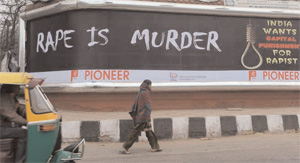
    NEW DELHI (TIP): Two of the accused in the Delhi gangrape case on April 11 claimed before a Special court that they were not in the bus in which a 23-year-old girl was brutally assaulted and raped by six persons on December 16 night. Accused Vinay Sharma in his application before Additional Sessions Judge Yogesh Khanna claimed he, along with co-accused Pawan Gupta, were not present in the bus in which the alleged incident took place. Vinay, who filed the application through his counsel A P Singh, said he has been falsely implicated in the case.

    The lawyer told the judge that the application was moved after Vinay informed him that his mobile has a videoclip, which allegedly shows that the two went to a music function in south Delhi. “Accused Vinay’s mobile contains a video recording and photos which can establish that he and Pawan were not in the bus on the night of incident,” he told the judge, while seeking permission to make a CD of the video. The court, however, said that they can make a CD out of the video recording as the matter was between the defence counsel and the accused, but, at present, it has nothing to do with the case. “It is very important defence for the accused, as the mobile contains some exclusive information, which can prove the innocence of my client,” the lawyer submitted before the court.

    He also said that now the police cannot state that the video was being planted as the said mobile phone was in police custody since the accused’ arrest in the case. ‘He (Vinay) has not played any role in the commission of the offence, as he was not in the bus nor was he part of the alleged incident. The police have falsely implicated Vinay in the case,’ Singh told the court. The counsel also said Vinay and Pawan went along with their friend to the music function at district park near R K Khanna Tennis Stadium in south Delhi. He said the friend of the two accused could be a crucial witness to prove their innocence in the case. Meanwhile, the court today directed counsel M L Sharma, appearing for accused Mukesh, to remain present before it tomorrow so that he can cross-examine the prosecution witnesses. Special Public Prosecutor Dayan Krishnan today raised objection over Sharma’s absence from the court, even after being specifically asked to come. Krishnan said that defence counsel (Sharma) is trying to completely derail the proceedings and is making a ‘deliberate attempt to delay the trial’.

    The judge said, ‘I am also concerned about it. Lets see from tomorrow.’ Till date 65 of the prosecution witnesses have deposed in the court. Initially, five accused in the case were facing trial for allegedly gangraping and assaulting the girl, who died in a Singapore hospital on December 29. With the proceedings against the main accused Ram Singh having abated after his death on March 11, the remaining four adult accused–Mukesh, Vinay, Akshay Singh and Pawan–are facing trial in the case for rape and murder of the girl. The sixth accused in the case is a juvenile who is facing trial before the Juvenile Justice Board here.

  • Building his dreams: Mihir Patel

    Building his dreams: Mihir Patel

    “Within our dreams and aspirations we find our opportunities”.
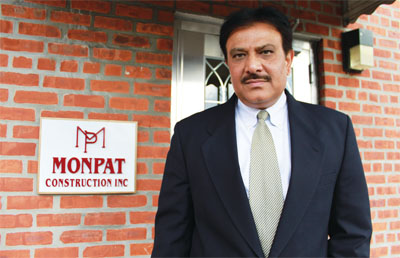
    Very few people truly love their jobs let it alone be a passion. But the just sworn in new President of the prestigious Society of Indo-American Engineers and Architects (SIAEA), Mihir Patel not only loves his job but works everyday with a burning passion. He is the President of Monpat Constructions Ltd., and a prominent member of the Indian American community. He spoke to The Indian Panorama correspondent Pooja Premchandran in an exclusive interview at his office in Flushing, New York. Mihir B. Patel is perhaps one of the wellestablished engineers in the Indian American community. A firm believer in the philosophy of ‘one life-live well’, Mihir Patel bats away the problems of his life and work. After a bit of struggling start, Patel has come a long way. “I am one of the founding members of Monpat Construction. The start to that hasn’t been easy but I sure am happy now. I came here and started working at a construction group. Currently we work on many New York City projects. Now I am the 15th President at SIAEA and that’s additional responsibility.


    img10

    But I am more than happy to take up this responsibility,” says a smiling Patel. Born in Mehsana, Gujarat, Mihir was always inclined towards doing Engineering. He set out to complete his Bachelors in Engineering from Birla Vishwakarma Mahvidyala in 1982. In 1986, he married Bhavana Patel and he now has a son, Priyank Patel, who is also an architect. Mohan Jetwani founded the Society of Indo-American Engineers and Architects or SIAEA in 1981. The Association immediately gained popularity among the Indian American engineers and architects who were continually looking for a larger umbrella to share their common goals. Patel is ready to further the valor of the organization. “They sowed the seed for this Association.

    Although it has blossomed already, my task is to make sure it remains that way. I need to carry its name and glory much further,” says Patel. Mihir also plans to get the Indian-American youth on board with SIAEA. He adds, “We plan to get many youngsters also inducted to our organization. We plan to provide them with scholarships to Engineering schools and once they graduate we will orient them to our organization.” Unlike many who see the seat of power as just another feather in their caps, Mihir resolves to change a few things within the SIAEA. He vows to accomplish a few of his own personal ambitions by using all the Presidential power that he is allotted to use. “My personal goal under this Presidency would be to open new chapters, facilitate grassroot level meetings, get more young engineers and architects involved. That would be priority. This was also the dream of Nayan Parikh, so now my task is to fulfill them,” Mihir stresses.

    In the midst of a housing crisis where the prices are sky-rocketing, Mihir has not lost all hope to provide housing for all. His personal ambition is to provide housing options to all sectors of the society. “My biggest ambition is to provide housing options for the society and not just specifically the Indian community. I think housing or shelter is a basic need for us all. I, along with the SIAEA have been trying to work on this need for the past six years. But we require continual monetary support for this. I am hoping that in these two years as the SIAEA President I will be able to bring us closer to fulfilling that dream,” says Mihir. He explains that he is relentlessly pursuing this aspiration and he hopes that it gets fulfilled. While most of us cannot handle just one job, Mihir eases through his role as President to two organizations. He attributes the successful organizing of his office and work projects to his brother. He explains, “Well my company is well organized and its very well established. I have my brother also helping me out and my staff does a wonderful job to settle things in a good way. So it gives me the motivation to come to a hassle free environment. As far as SIAEA is concerned, just being part of this group is an honor.

    I get all the respect and admiration I could ask for from SIAEA and in turn I strive to live up to the organizations dreams and valor.” Mihir also learnt long ago that all work and no play is not the way to go. He still remains a lively and active man despite the mounting economic crisis and additional work pressure. He explains that that he takes ‘the edge off’ by playing various sports. “I am most passionate about sports. I play cricket, tennis, golf and other active sports.

    I have made a small cricket pitch in my backyard. I had the fortune of having Mr. Kapil Dev come there and play once. It’s simple. With all the work you do, you need to find something that relaxes you. I need that relaxation after its 5 in the evening.” Mihir draws all his inspiration from his father. He recalls his father’s debacle when he was told that he couldn’t be an engineer. Since, then his father resolved to make Mihir an engineer.

    Mihir says, “My father easily is my mentor. When he was young, he aspired to be an engineer and run his own company in America. But sadly, my grandfather did not have the means to support him. So he always willed me to be an engineer and I did just that. Even today, I stress on the value of education. I always believe that education is the only way you can succeed in today’s world.” It usually takes a life changing experience for us to transform our manner of thinking and living.

    On being asked about Mihir’s life changing experience, he jokingly tells us, “I think ever since the 2009 recession I have been having life changing experiences. But seriously, initially we used to get regular work orders from agencies, but now we need to dig a little deeper to find work. Sadly though, the situation does not seem to be improving.” The 2009 recession has stunted many companies growth and many have given up. But Mihir Patel carries on due to his loving support from his family and friends. “See, problems will always come.

    It is never going to stop. I find that a good support from friends who are loyal and committed to you, it is easier to solve your problems,” he advises. In the last 20 years, Monpat Constructions have completed work worth $100 million. All his projects are close to his heart but two are very distinctive. “Currently, I am working on a project at the Otisville Correction facility. Although there are many other projects we are currently undertaking, the Otisville prison project or any other project that you do at the prison, deserves a special mention. Working at a prison is completely different.

    You get a bare minimum of 5 hours to work every day and you need to somehow complete your project by deadline. Also, there are strict rules on how many tools you can carry inside and how you can carry them. Even our Super’s presence and absence must be notified to authorities. So, construction around the prison is definitely a more challenging job for me,” Mihir adds.

    He also tell us about a second project called “Challenge America’ where the debris from the 9/11 tragedy was used to make the Houston park near FDR. Mihir explains, “This project was a joint effort of Erin Brokovich and Mayor Giuliani. We provided the roofing to this project. I decided to contribute to this project mainly because we all were overcome with the sense of needing to do something after the harsh 9/11 tragedy.” Like many other prominent members of our Indian American community, Mihir Patel also urges our community to grow stronger and stand united from within. “I find that the Gujarati community is very active and very well behaved. This is a group comprising of very well educated and very well established people. This is also true about the other Indian communities we have in the US. However, there is a problem with unity in our Indian society.

    Not only are we disunited but we also have the nature of being displeased when others succeed. I wish we could change that aspect.” But like any other Indian, family is the most important thing to him. “I only pray that in good or bad times, I have the support and presence of family and close friends. For me, family is of utmost importance. Everything else is secondary,” he concluded.

  • Nirmal Lifestyle Becomes First Indian Company to Sponsor U.S. Open

    Nirmal Lifestyle Becomes First Indian Company to Sponsor U.S. Open

    Major Indian Developer Partners With US Open to Promote Healthier Lifestyle

    NEW YORK (TIP): Nirmal Lifestyle, the leading developer of real estate in India, has become the first Indian company chosen to sponsor the US Open. the company has furthered its commitment to healthier living by introducing the first sports lifestyle apartment complex in affiliation with the US Open, the “Nirmal – US Open Apartments”.
    In becoming the first Indian company sponsoring the 2012 US Open, Nirmal Lifestyle has once more shown its commitment to health and physical fitness. None was more evident than the development of a lifestyle living complex dedicated to the US Open philosophy of showcasing the best of the best. Nirmal – US Open Apartments in Mumbai offers extensive fitness facilities including a hi-tech gymnasium, Olympic-sized tennis and basketball courts, jogging and cycling tracks and swimming pools. The complex is designed with the most state of the art amenities to ensure a healthy lifestyle.

    At a press conference attended by many prominent officials, Mr. Dharmesh Jain, Chairman and Managing Director for Nirmal, said, “We are proud to be the first Indian company sponsoring the US Open. Nirmal has always been committed to promoting healthier living through innovative design. Working with the US Open organization in developing the US Open Apartments in Mumbai reinforces Nirmal’s commitment in supporting a more active life for young and old. We look forward to continuing our partnership with the US Open in the years to come.”

    The US Open, held at the USTA National Tennis Center in Flushing, New York runs through September 9, 2012. For more information on Nirmal Lifestyle and the US Open Apartments, visit www.nirmallifestyle.com.

    About Nirmal Lifestyle

    Nirmal Lifestyle is a leading real estate company in India based in Mumbai, where it has been instrumental in developing Mulund as a preferred suburb of the city through its integrated development plan including developing retail spaces, residential apartments, office complexes and luxury hotels. The company has an exclusive alliance with US Open (USTA) and Discovery to bring world class sporting facilities of international standards to India.

    For More Information Contact: Walter Ocner, MediaMorphosis O: (718) 474-3700 C: (347) 475-7008
    walter@mediamorphosisinc.com

    (Press Release)

  • As i see it: Dollar Billionaires in Poor Countries India’s Philanthrocapitalism

    As i see it: Dollar Billionaires in Poor Countries India’s Philanthrocapitalism

    In this time of global financial crisis, when so many are suffering financial hardship, most countries have witnessed increases in their number of dollar millionaires. These ‘High Net-Worth Individuals’ (HNWI), according to a report by Capgemini and Merrill Lynch Wealth Management, have in recent years more than doubled in India. In 2008-09, India had 84,000 HNWIs. By 2010, it had risen by 50 per cent (126,700), the biggest increase of all countries.

    In the worldwide list of dollar billionaires for 2010, India ranked third with 69, behind China (128) and the US (403). Forbes states, however, that the wealthiest 100 Indians are collectively worth $276 billion, while their top 100 Chinese counterparts are worth $170 billion. The three richest Indians together had more wealth than the top 24 Chinese billionaires combined.

    You don’t have to look very far for evidence of their wealth, with more than 30 luxury skyscrapers springing up in Mumbai. For the rich occupants, the taller, the better, to escape from the reality of India below – the railway tracks, low-rise tenements, choking traffic and the 55 per cent of the city’s population who live in slums. People are paying nearly two million dollars for a designer apartment, built in complexes with private cinemas, swimming pools, floodlit tennis courts and high-level security. Developers believe each year Mumbai can absorb between 30,000 and 40,000 more homes in the one million dollar-plus category. (Another housing bubble in the making?)

    Such extreme wealth doesn’t go unnoticed. In the UK, people are questioning the decision to keep giving India some $460 million of aid annually, which makes India the largest single recipient of British aid. Many ordinary Brits are asking if it can be right that the downtrodden British taxpayer gives such sums to a nation that boasts such wealth (albeit highly concentrated).

    Siphoning off the country’s wealth

    Some of the most damning comments about India come from French author Dominique Lapierre, whose book royalties from ‘City of Joy’ fund projects for the underprivileged in India. He is frustrated by the greed and corruption that he encounters.

    Lapierre’s nonprofit organization, City of Joy Aid, runs a network of clinics, schools, rehabilitation centers and hospital boats. It operates 14 projects in India, most in the Sunderbans area. However, 90 per cent of free medicines get stolen in the journey from Delhi to Kolkata, and the project is thus forced to buy them at high prices from the market.

    A few years ago, Lapierre set up in Delhi a trust which offers a tax-deductible certificate for all donations. With more than a hint of disappointment, he notes the foundation still does not have any funds from affluent Indians who seem reluctant to help their fellow country-folk.

    Quite the opposite, it seems. Much of India’s wealth has been creamed off into Swiss banks, robbing ordinary folk of a quality of life they can now only but dream of. According to some estimates, it could be over Rs 7,280,000 crore (around $1.6 trillion). Data from the Swiss Banking Association in 2006 indicated that India had more black money than the rest of the world combined, or 13 times India’s total national debt. Global Finance Integrity notes this siphoning of wealth has served to widen the gap between rich and poor and asserts the main guilty parties have been private organizations and High Net Worth Individuals.

    By contrast, Global management and consulting firm Bain notes philanthropic donations amount to just 0.6 per cent of India’s GDP. This is not too good when compared to giving in the US and UK, for example, but is better than rates in other developing countries like Brazil and China. In the US, individuals and corporations are responsible for 75 per cent of charitable gifts, whereas in India individual and corporate donations make up only 10 per cent of charitable giving. Some 65 per cent comes from India’s central and state government, and the remaining gifts are provided by foreign organizations.

    In India, giving does not rise with income and education. As a percentage of household income, donations by the wealthy actually decrease. From an analysis of 30 HNWIs in India, Bain noted that they contribute, on average, just around one-fourth of one per cent of their net worth to social and charitable causes.

    All of this is not meant to imply that philanthropy is absent in India. Far from it. Vineet Nayyar’s Rs 30 crore gift (just under $7 million) to the Essel Social Welfare Foundation is a high-profile example of philanthropic giving. Over the years, Rohini Nilekani has donated $40 million to numerous causes that try to tackle the root causes of social problems and not merely the symptoms. Her biggest contribution has been to Arghyam, a Bangalore foundation that promotes clean water and hygiene, which now has projects in 800 villages. Philanthropy can and does positively impact people’s daily lives.

    Philanthrocapitalism: a plaster on a gaping wound

    What is really required, though, is a proper redistributive system of taxation, effective welfare provision and genuine economic democracy through forms of common ownership to help address inequality and poverty. In the absence of such things, wealthy philanthrocapitalists will have a major say in deciding which problems are addressed and how, and some will be highly selective.

    For instance, critics of Bill Gates say his foundation often ends up favoring his commercial investments. Instead of paying taxes to the state coffers, he donates his profits where it is favorable to him economically, such as supporting GM crops in Africa or high tech patented medicines. ‘Giving’ often acts as a smokescreen for channeling funds into pet projects and ‘business as usual’, with rich corporations receiving money to shape the world in their own image and ultimately for their own benefit. Apparent benevolence can have sinister motives, just like certain governments which provide money in the form of ‘development aid’ that is intentionally used to fund actions that serve geo-political self interest and ultimately undermine the recipient state.

    Philanthropy isn’t necessarily opposed to capitalism; it’s very much part of it. Capitalism is designed to ensure that the flow of wealth goes upwards and remains there via, among other things, the privatization of public assets, deregulation of the financial sector, the use of subsidies and tax policies that favor the rich, the legal obligation to maximize shareholder profits and the consistent downward pressures on labor costs.

    Professor Ha Joon Chang of Cambridge University says that economics isn’t a social science anymore, but adopts the role the Catholic Church played in medieval Europe. Essentially, economic neo liberalism is secular theology used to justify the prevailing system, with the hope that some drops of wealth will trickle down an extremely thin funnel to placate the mass of the population. Widening the funnel slightly by making benevolent donations will not address the underlying issues of a failed system.

    For example, consider that one in four people in India, is hungry and every second child is underweight and stunted. Environmentalist Vandana Shiva argues that hunger is a structural part of the design of the industrialized, globalize food system and of the design of capital-intensive, chemical-intensive monocultures of industrial agriculture. The long-term solution for hunger lies in moving away from and challenging the centralized, globalised food supply controlled by a handful of profiteering corporations.

    This type of built-in structural inequality, whether it concerns hunger, poverty, housing, income or health, is part and parcel of a development process that is skewed by elite interests in India and at the World Bank and by the corporations that pull the strings at the World Trade Organization, who have all succeeded in getting their ‘globalization’ agenda accepted. No amount of philanthropy, regardless of how well meaning it may be, will remedy the overall destructive effects of the type of capitalism (and massive corruption) being embraced by India’s economic and political leaders.

    (Originally from the northwest of England, Colin Todhunter has spent many years in India. He has written extensively for the Bangalore-based Deccan Herald, New Indian Express and Morning Star (Britain). His articles have also appeared in many other newspapers, journals and books. His East by Northwest site is at: http://colintodhunter.blogspot.com)

  • WE GAVE IT EVERYTHING Leander Paes after US open loss

    WE GAVE IT EVERYTHING Leander Paes after US open loss

    NEW YORK (TIP): He missed out on a third US Open men’s doubles title but Indian tennis star Leander Paes was far from dejected as he insisted that he and his Czech partner Radek Stepanek gave all that they had in the final clash against champions Mike and Bob Bryan.

    Fifth seeds Paes and Stepanek lost 6-3 6-4 to the second-seeded Bryan brothers in the summit clash Friday night. Paes was equally complimentary of both his partner and his opponent. “Even though we got beaten today by one of the greatest teams of all time, my team and Radek’s team came out and brought everything they had to this tournament,” Paes said.

    “I can guarantee you we will be giving it everything we have every single day for the rest of the year,” he added. Paes felt the Bryans produced a magical performance to clinch the title. “These guys always bring magic to the court,” said 39-year-old. “But we put it on the line today and we will come back and keep doing it.

    ” Paes has won two US Open men’s doubles title in 2006 (with Martin Damm) and 2009 (with Lukas Dlouhy), as well as a mixed doubles title in 2008 (with Cara Black). The win was a measure of revenge for the Bryans who lost to Paes-Stepanek in the finals of the Australian Open earlier this year. “I think they started really well,” Stepanek said.

    “They were all over our serve from the beginning and making life very difficult for us out there. They were the better team today, so they deserve the win.” The Bryan brothers won their previous US Open titles together in 2005, 2008 and 2010. In addition, Bob has won four US Open mixed doubles title while Mike has one to his name. The brothers will now head to Spain with the rest of the US Davis Cup team to do battle next weekend against David Ferrer and the rest of the Spanish Cup team in a semifinal tie.

  • Andy Murray Wins US Open: the first British male to win a major in 76 years

    Andy Murray Wins US Open: the first British male to win a major in 76 years

    Andy Murray of Great Britain lifts the US Open championship trophy after defeating Novak Djokovic of Serbia in the men’s singles final on September 10, 2012 at Arthur Ashe Stadium in Flushing, New York.

    NEW YORK (TIP): Andy Murray won his first ever Grand Slam on Monday, September 10 night, defeating Novak Djokovic, 7-6, 7-5, 2-6, 3-6, 6-2 in the 2012 U.S. Open at Arthur Ashe Stadium, Flushing, NY. After a heartbreaking loss at Wimbledon, Murray responded with a strong tournament in Flushing, N.Y., to become the first British male to win a major in 76 years.

    It had been 76 years since a British man won a Grand Slam singles championship and, at least as far as Murray was concerned, it was well worth the wait.
    Ending a nation’s long drought, and snapping his own four-final skid in majors, Murray finally pulled through with everything at stake on a Grand Slam stage, shrugging off defending champion Djokovic’s comeback bid to win 7-6 (10), 7-5, 2-6, 3-6, 6-2.

    “Novak is so, so strong. He fights until the end in every single match,” Murray said. “I don’t know how I managed to come through in the end.”

    Yes, Murray already showed he could come up big by winning the gold medal in front of a home crowd at the London Olympics last month. But this was different. This was a Grand Slam tournament, the standard universally used to measure tennis greatness — and the 287th since Britain’s Fred Perry won the 1936 U.S. Championships, as the event was known back then

  • Sri Chinmoy’s 81st Birth Anniversary Commemorated with World’s largest Tennis Racket

    Sri Chinmoy’s 81st Birth Anniversary Commemorated with World’s largest Tennis Racket

    Ashrita Furman, holder of the most Guinness records and a team of 20 disciples of Sri Chinmoy constructed the world’s largest (Sri Chinmoy birthday) Tennis Racket within ten days. Furman dedicated the racket to Sri Chinmoy (1931-2007), who would have been 81 on August 27th. A world peace dreamer and an avid tennis player Sri Chinmoy taught Furman meditation and inspired him for self-transcendence.

    For every birthday Furman wants to give “Gurudakshina” or a birthday gift to his Guru and joy to many in the form of a new significant Guinness World Record. Some of the previous records included world’s largest pencil (72 feet long), world’s largest lollipop.

    The old fashioned wood racket has a height of 50 feet (15.24 meters) and width of 16 feet (4.87 m.). It is a reproduction of the model named after legend Billie Jean King. Sri Chinmoy and President Michael Gorbachev presented together the World Athlete award to Billie Jean King in 2006. Sri Chinmoy met and played with many tennis players and had a close friendship with some of them such as India’s Leander Paes.

    Sri Chinmoy made many self-transcendence activities such as writing 1600 books, composing 21000 songs, drawing thousands of paintings in his lifetime and some short time records such as writing 700 poems in 24 hours. Inspired by his Guru, Furman started making Guinness World Records becoming No. 1 in the world. At present he has 151 world records to his credit. Furman says, “I am trying to show others that our human capacity is unlimited”. Furman has taken India’s ancient message ‘ Aham Brahmasmi (I am unlimited) to his heart.