Tag: Terror Attacks – Bomb Blasts – Terrorism

  • 41 dead in attack on Shia Cultural Center in Kabul

    41 dead in attack on Shia Cultural Center in Kabul

    KABUL (TIP): At least 41 persons were killed when an Islamic State suicide bomber struck a Shiite cultural center in Kabul, December 28

    An AFP report says that the attack may have targeted the pro-Iran Afghan Voice news agency housed in the two-story building. The Sunni extremists of IS view Shiite Muslims as apostates and have repeatedly attacked Afghanistan’s Shiite minority and targets linked to neighboring Iran.

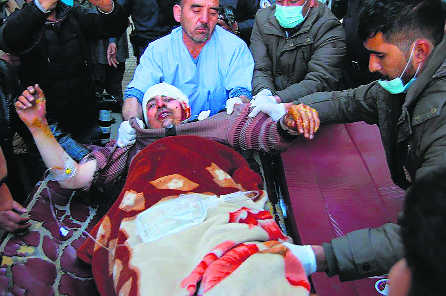
    The attack wounded more than 80 persons, many of whom suffered severe burns. The center was marking the anniversary of the 1979 Soviet invasion with a seminar about the event’s impact on the country.

    Local Shiite leader Abdul Hussain Ramazandada said the bomber slipped into an academic seminar at the center and blew himself up among the participants. More bombs went off just outside the center as people fled.

    The IS-linked Aamaq news agency said four bombs were used in the assault, one strapped to the suicide attacker. It said the center was funded by Iran and used to propagate Shiite beliefs.

    Ali Reza Ahmadi, a journalist with Afghan Voice, said he leaped from the window of his second-floor office after the first bomb went off and saw flames pouring from the basement.

    “I jumped from the roof toward the basement, yelling at people to get water to put out the fire,” he said. At nearby Istiqlal Hospital, Director Mohammed Sabir Nasib said the emergency room was overwhelmed. Additional doctors and nurses were called in to help. At the height of the crisis, more than 50 medics were working to save the wounded.

    By late afternoon, Health Ministry spokesman Wahid Mujro said 41 people were dead and 84 others wounded. The IS affiliate in Afghanistan, which emerged in 2014 at around the same time the group declared a caliphate in large parts of Syria and Iraq, has vowed to target Shiites.

    (Source: The Tribune)

  • Putin says Russia’s spy agencies prevented 60 terror attacks

    Putin says Russia’s spy agencies prevented 60 terror attacks

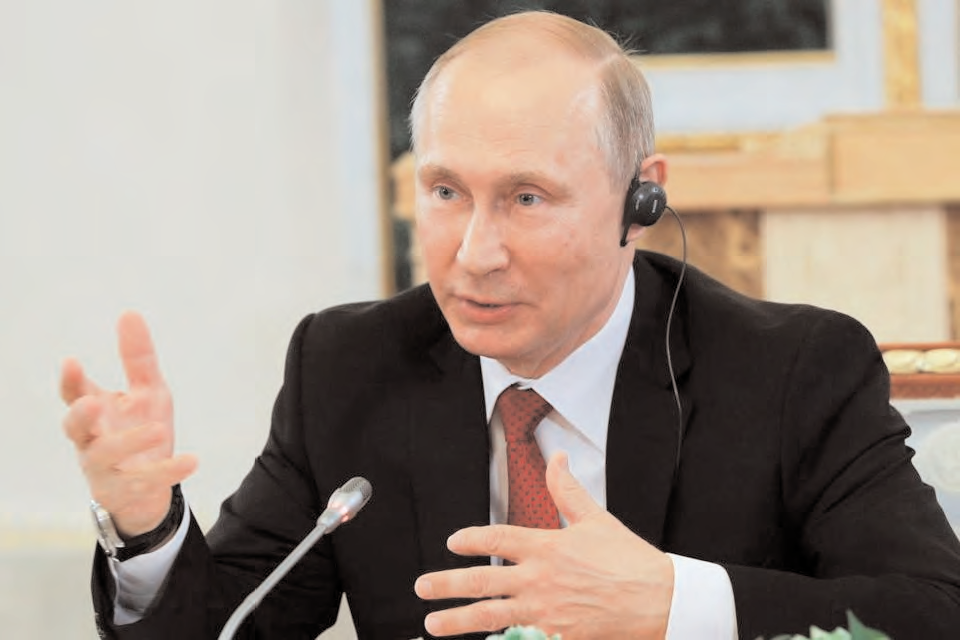
    MOSCOW (TIP): President Vladimir Putin says Russian security agencies have thwarted 60 terror attacks in the country this year.

    Russia marked its Day of Employees of State Security Agencies on Wednesday. Speaking to intelligence officers on their professional holiday, Putin said Russia would continue working to “destroy hotbeds of international terrorism” following its campaign in Syria.

    The Russian leader called US President Donald Trump on Sunday to thank him for a CIA tip that the Kremlin said helped prevent a series of bombings in St. Petersburg last weekend.

    The Kremlin’s account of the call was Russia’s first public assertion that information from the U.S. has helped prevent an attack.

    In his comments Wednesday, Putin nonetheless emphasized the need to counter foreign spies and block foreign attempts to meddle in Russia’s domestic politics.

    (AP)

  • 1993 MUMBAI BLASTS Abu Salem gets life term, 2 others get death sentence

    1993 MUMBAI BLASTS Abu Salem gets life term, 2 others get death sentence

    NEW DELHI (TIP): Extradited gangster Abu Salem was on Thursday sentenced to life imprisonment by a Terrorist and Disruptive Activities (TADA) court in Mumbai in the 1993 Mumbai serial blasts case.

    Special Judge G A Sanap pronounced the death verdicts on convicts Mohammed Taher Merchant and Feroze Khan for their role in the blasts, said Special Public Prosecutor Deepak Salve.

    Besides Salem, the special court awarded life sentence to Karimullah Khan and 10 years rigorous imprisonment to Riyaz Siddiqui.

    The Special Judge also slapped varying amounts of fines on the convicts after finding them guilty on various charges, including murder, conspiracy to hatch the blasts, supplying arms and ammunition, and other serious offences, Salve told media-persons after the ruling.

    A special TADA court had in June convicted six persons, including mastermind Mustafa Dossa and Salem, in the blasts case, 24 years after the attacks left 257 people dead in the country’s financial capital.

    It, however, let off accused Abdul Quayyum for want of evidence. Arguments over the degree of sentences continued after the conviction in June and concluded on August 10.

    All the accused were facing multiple charges of criminal conspiracy, waging war against the government, and murder of people.

    This was the second leg of the trial. In the first leg that concluded in 2007, the TADA court had convicted 100 accused in the case, while 23 people were acquitted.

    The court had earlier held that the prosecution had proved that Salem was one of the main conspirators and that he delivered three AK-56 rifles, ammunition, and hand grenades to actor Sanjay Dutt (convicted in the earlier phase of the trial under the Arms Act).

    Salem, who was close to (Dawood’s brother) Anees Ibrahim and Dossa, took it upon himself to bring a part of the arms and ammunition from Dighi to Mumbai, the court earlier said.

    This was “vital towards achievement of the conspiracy so that the weapons could be used to terrorise and torment innocent citizens of India,” the court had said.

    The trial of Salem, Mustafa Dossa, Karimullah Khan, Feroze Abdul Rashid Khan, Riyaz Siddiqui, Tahir Merchant, and Abdul Quayyum was separated from the main case as they were arrested subsequently.

    Dossa died of cardiac arrest at J J Hospital in Mumbai shortly after being convicted on June 28. The Mumbai blast of March 12, 1993, resulted in 257 fatalities and over 700 were injured. The attacks were planned by Dawood Ibrahim, India’s ‘most wanted’ fugitive, who also has his name prominently figuring on the ‘most wanted’ lists of the US and the Interpol.

  • Turkey detains 44 in anti terrorist operations including bomb attack planners

    Turkey detains 44 in anti terrorist operations including bomb attack planners

    ISTANBUL (TIP): Turkish police have detained 44 suspects in anti-terrorist operations, including the planners of two suicide bomb attacks in Istanbul last year, the city’s governor said on Thursday.

    Twin bombs — one planted in a car and the other strapped to a suicide bomber — exploded in an attack outside the stadium of Besiktas soccer club in central Istanbul on Dec. 10, killing 44 people and wounding 155.

    “One of the suspects detained in the operation had carried out reconaissance work before the December 2016 bombing, and had jumped and fled the car shortly before it was detonated,” Istanbul governor Vasip Sahin told reporters.

    The other suspect detained has been identified as the organizer of a July 2016 attack against a police bus that killed 11 people, including civilians and police officers, and left 36 people wounded.

    The Kurdistan Freedom Hawks (TAK), an offshoot of the militant Kurdistan Workers Party (PKK), claimed responsibility for both attacks. The PKK, listed as a terrorist organization by Turkey, the EU, and the US, has fought a three decades- old insurgency in Turkey in which more than 40,000 people have been killed. (Reuters)

  • 1993 MUMBAI BLASTS: ABU SALEM, FIVE OTHERS CONVICTED; 1 ACQUITTED

    1993 MUMBAI BLASTS: ABU SALEM, FIVE OTHERS CONVICTED; 1 ACQUITTED

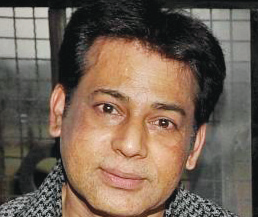
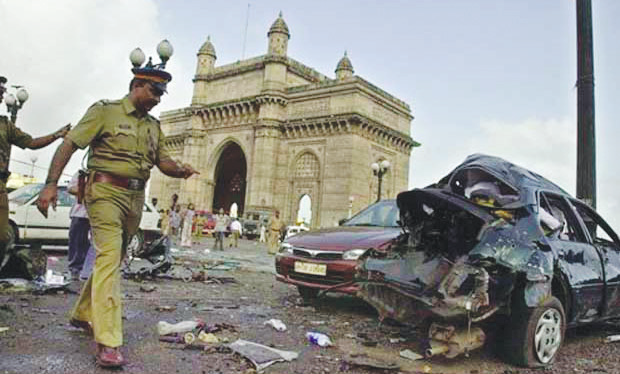
    MUMBAI (TIP): Twenty-four years after 12 blasts rocked the city killing 257 and leaving 713 grievously injured, a special Terrorist and Disruptive Activities (Prevention) Act court on Friday convicted six out of the seven accused, including Abu Salem and Mustafa Dossa. In the dock is a second batch of accused, tried by special judge Govind A Sanap, after the main trial of 123 accused ended in 2006 with the conviction of 100.

    The court has set the next hearing date on June 19 (Monday) to decide the date for argument on quantum of sentence.

    Others who were convicted include Feroz Khan, Taher Merchant, Riyaz Siddiqui, Karimulla Khan. The court pronounced the sentence after hearing arguments from the defence and the prosecution. Out of the six convicted by the Tada court, only five face the gallows. Riyaz Siddiqui will only attract life sentence as he is not held guilty of criminal conspiracy.

    Abdul Qayyum Shaikh who has been acquitted by the court had allegedly sent arms and ammunition from abroad which landed at Dighi Jerry. He also had allegedly sold a licensed revolver to Sanjay Dutt in September 1992.

    Special CBI counsel Deepak Salvi said trial for the seven, arrested between 2003 and 2010, had to be separated as they were nabbed after a substantial portion of the previous trial was completed.

    With no other accused currently in custody, the Friday verdict was the last in the case for now. Thirty-three accused are absconding, including key conspirators Dawood Ibrahim, his brother Anees Ibrahim, Mustafa’s brother Mohammed Dossa and Tiger Memon.

    Abu Salem

    Salem was extradited in November 2005 from Portugal. His confession led to the arrests of Siddiqui and Shaikh. Mustafa was named in 1995 by a coaccused and arrested in 2003 after he arrived in Delhi from Dubai.

    The CBI submitted the attacks were planned to avenge the demolition of the Babri Masjid on December 6, 1992, and the riots in its aftermath. The lesser known Taher (60) also has a predominant role. A resident of Kambekar Street in central Mumbai, he grew up with Dawood and his brothers and was said to be the don’s trusted aide.

    He allegedly motivated associates to arrange men from Mumbai for training in handling of arms and ammunition in Pakistan. Taher is also accused of collecting funds to procure arms and ammunition. He was extradited from Abu Dhabi in 2010. The 12 coordinated attacks between 1.30 pm and 3.40 pm on March 12, 1993, planned over 15 meetings across UAE and India, also destroyed property worth Rs 27 crore. Special CBI counsel Deepak Salvi told the court in his opening arguments that “this was the first ever terrorist attack in the world where RDX was used on such a large scale after the Second World War.”

    Special judge Sanap took over the trial in 2011 and the proceedings concluded in March this year.The trial was stayed after both the accused and the prosecution moved the apex court challenging various legalities.Dossa’s lawyer Rizwan Merchant challenged the applicability of the voluminous evidence of 686 witnesses from the previous trial.

  • Islamic State claims it killed two Chinese in Pakistan

    Islamic State claims it killed two Chinese in Pakistan

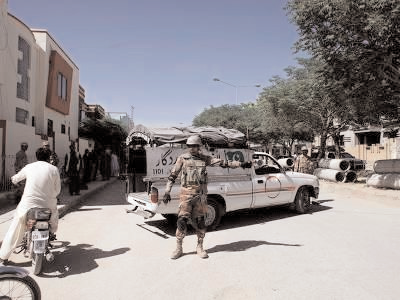
    CAIRO/QUETTA (TIP): Islamic State has killed two Chinese teachers it kidnapped in Pakistan’s southwestern Balochistan province last month, the militant group’s Amaq news agency said on June 8, in a blow to Islamabad’s efforts to safeguard Chinese workers. China’s foreign ministry said it was “gravely concerned” about the report and working to verify the information.

    Armed men pretending to be policemen kidnapped the two language teachers in the provincial capital, Quetta, on May 24. The kidnapping was a rare security incident involving Chinese nationals in Pakistan, where Beijing has pledged $57 billion for its “Belt and Road” plan.

    “Islamic State fighters killed two Chinese people they had been holding in Balochistan province, southwest Pakistan,” Amaq said. A Balochistan government spokesman said officials were in the process of confirming “whether the report is true”. China’s foreign ministry said it noted the report and expressed “grave concern”. “We have been trying to rescue the two kidnapped hostages over the past days,” the ministry said in a short statement.

    “The Chinese side is working to learn about and verify relevant information through various channels, including working with Pakistani authorities,” it said. “The Chinese side is firmly opposed to the acts of kidnapping civilians in any form, as well as terrorism and extreme violence in any form.”

    There was no immediate comment from Pakistan’s interior ministry or its foreign office. Islamic State, which controls some territory in neighbouring Afghanistan, has struggled to establish a presence in Pakistan. But it has claimed several major attacks, including one on the deputy chairman of the Senate last month in Balochistan, in which 25 people were killed.

    Earlier on Thursday, Pakistan’s military published details of a three-day raid on a militant hideout in a cave not far from Quetta, saying it had killed 12 “hardcore terrorists” from a banned local Islamist group and prevented Islamic State from gaining a “foothold” in Balochistan.

    China’s ambassador to Pakistan and other officials have often urged Islamabad to improve security, especially in Balochistan, where China is building a new port and funding roads to link its western regions with the Arabian Sea.

    The numbers of Pakistanis studying Mandarin has skyrocketed since 2014, when President Xi Jinping signed off on the China-Pakistan Economic Corridor, pledging to invest $57 billion in Pakistani road, rail and power infrastructure. Security in Balochistan has improved in recent years.

    However, separatists, who view the project as a ruse to steal natural resources, killed 10 Pakistani workers building a road near the new port of Gwadar this month, a key part of the economic corridor.

    China has also expressed concern about militants in Pakistan linking up with what China views as separatists in the far western Chinese region of Xinjiang, where hundreds have been killed in violence in recent years.

    (Reuters)

  • Paris attack: police officer and suspect shot dead on Champs Elysees in attack claimed by Islamic State

    Paris attack: police officer and suspect shot dead on Champs Elysees in attack claimed by Islamic State

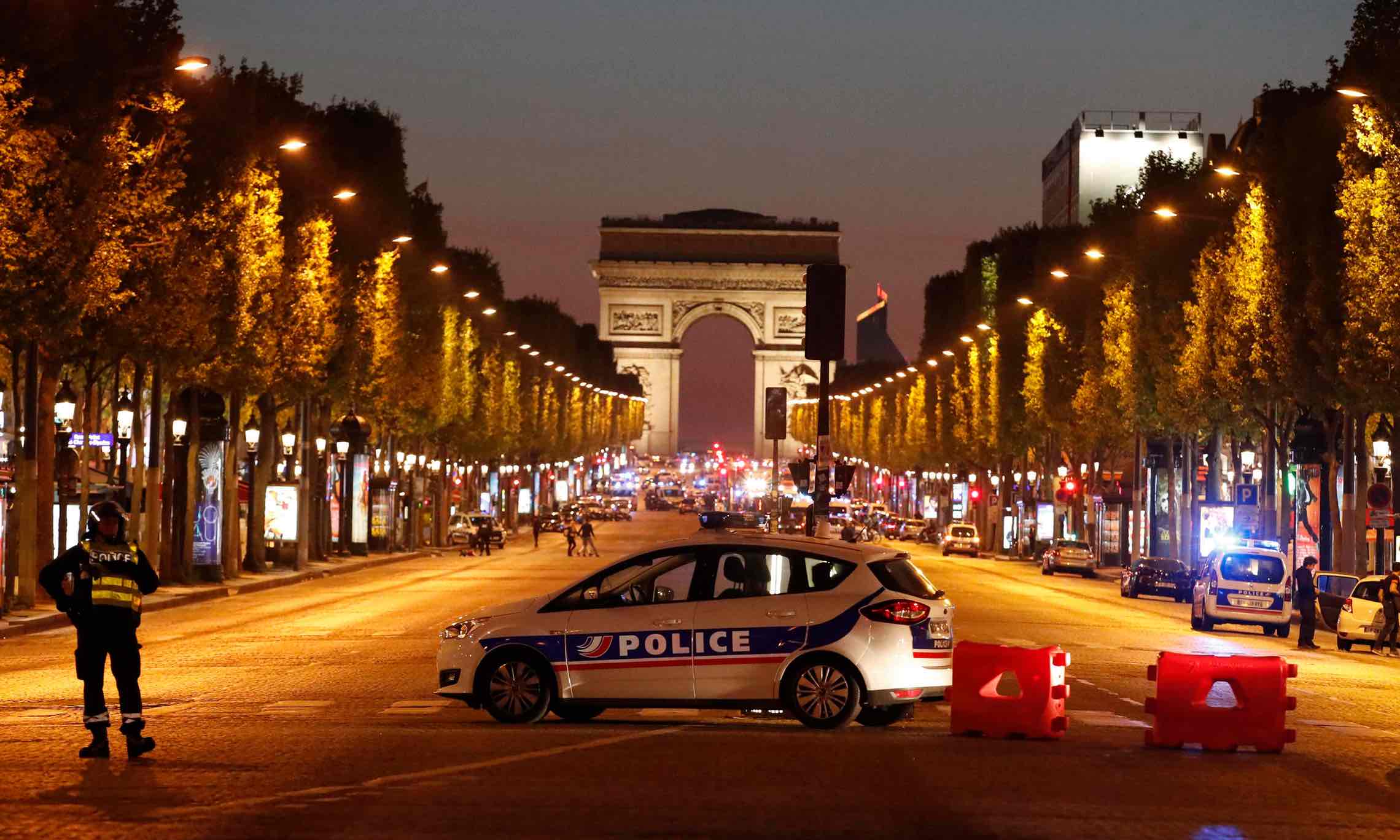
    PARIS (TIP): A lone gunman opened fire on police on Paris’ iconic Champs-Elysees boulevard Thursday night, killing one officer and wounding three people before police shot and killed him. The Islamic State group claimed responsibility for the attack, which hit just three days before a tense presidential election.

    Security already has been a dominant theme in the campaign, and the violence on the sparkling avenue threatened to weigh on voters’ decisions. Candidates canceled or rescheduled final campaign events ahead of Sunday’s first round vote.

    One officer was killed and two police officers were seriously wounded when the attacker emerged from a car and used an automatic weapon to shoot at officers outside a Marks & Spencer’s department store at the center of the Champs-Elysees, anti-terrorism prosecutor Francois Molins said.

    A female foreign tourist also was wounded, the officer said.

    Police and soldiers sealed off the area, ordering tourists back into hotels and blocking people from approaching the scene.

    Emergency vehicles blocked the wide Champs-Elysees, an avenue lined with boutiques and normally packed with cars and tourists that cuts across central Paris between the Arc de Triomphe and the Tuileries Gardens. Subway stations were closed off.

    The gunfire sent scores of tourists fleeing into side streets.

    French President Francois Hollande said he was convinced the circumstances of the attack in a country pointed to a terrorist act. Mr. Hollande held an emergency meeting with the prime minister on Thursday night and planned to convene the defense council on Friday morning.

    Speaking in Washington during a news conference with Italian Prime Minister Paolo Gentiloni, U.S. President Donald Trump said the shooting “looks like another terrorist attack” and sent condolences to France.

    Conservative contender Francois Fillon, who has campaigned against “Islamic totalitarianism,” said on France 2 television that he was canceling his planned campaign stops on Friday.

    Far-right candidate Marine Le Pen, who campaigns against immigration and Islamic fundamentalism, took to Twitter to offer her sympathy for law enforcement officers “once again targeted.” She canceled a minor campaign stop, but scheduled another.

    Centrist candidate Emmanuel Macron offered his thoughts to the family of the dead officer.

    Socialist Benoit Hamon tweeted his “full support” to police against terrorism.

  • 22 dead in fire at Senegal religious retreat

    22 dead in fire at Senegal religious retreat

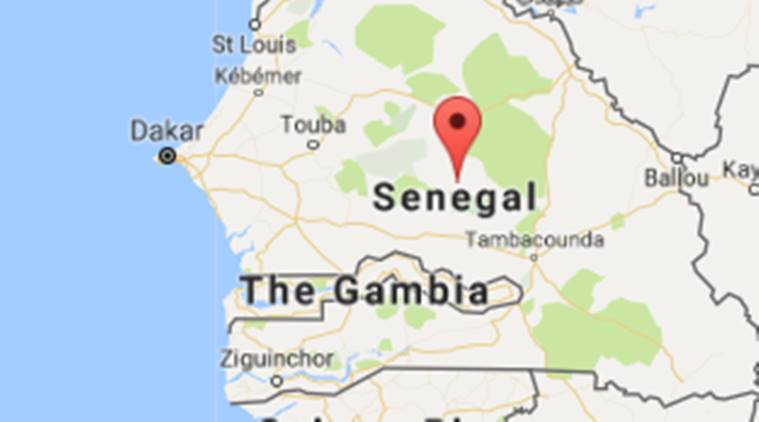
    DAKAR (TIP): A fire ripped through makeshift shelters at a Muslim religious retreat in Senegal, killing at least 22 people and triggering a stampede, firefighters said on Thursday.

    The blaze broke out on Wednesday as worshippers gathered in the town of Medina Gounass in the southeastern region of Tambacounda, a senior official with the firefighting service told AFP.

    The cause was as yet unknown, the official said.

    Images of billowing clouds of smoke, the charred corpses of animals and devastation at the site circulated online, testifying to the fire’s impact.

    While some victims were badly burnt, others were hurt in the panicked stampede triggered by the blaze, the firefighter added. (AP)

  • U.S. Drops ‘Mother of all Bombs’ on ISIS Target in Afghanistan

    U.S. Drops ‘Mother of all Bombs’ on ISIS Target in Afghanistan

    Militant caves in Afghanistan targeted

    GBU-43 bomb used for the first time in combat

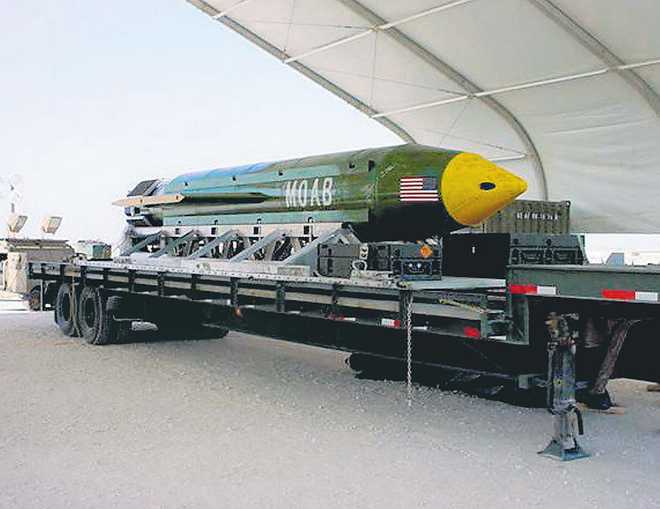
    WASHINGTON (TIP): The United States dropped a massive GBU-43 bomb, the largest non-nuclear bomb it has ever used in combat, in eastern Afghanistan on Thursday, April 13, against a series of caves used by Islamic State militants, the military said.

    It was the first time the United States has used this size of bomb in a conflict. It was dropped from a MC-130 aircraft in the Achin district of Nangarhar province, close to the border with Pakistan, a Pentagon spokesman said.

    Also known as the “mother of all bombs,” the GBU-43 is a 21,600 pound (9,797 kg) GPS-guided munition and was first tested in March 2003, just days before the start of the Iraq war. The security situation in Afghanistan remains precarious, with a number of militant groups trying to claim territory more than 15 years after the US invasion which toppled the Taliban government.

    General John Nicholson, the head of US and international forces in Afghanistan, said the bomb was used against caves and bunkers housing fighters of the Islamic State in Afghanistan, also known as ISIS-K. It was not immediately clear how much damage the device did.

    White House spokesman Sean Spicer opened his daily news briefing speaking about the use of the bomb and said, “We targeted a system of tunnels and caves that IS fighters used to move around freely, making it easier for them to target US military advisers and Afghan forces in the area.”

    Last week, a US soldier was killed in the same district as the bomb was dropped while conducting operations against Islamic State. “The United States takes the fight against ISIS very seriously and in order to defeat the group, we must deny them operational space, which we did,” Spicer said.

    He said the bomb was used at around 7 p.m. local time and described the device as “a large, powerful and accurately delivered weapon.” The United States took “all precautions necessary to prevent civilian casualties and collateral damage,” he said.

    US officials say intelligence suggests Islamic State is based overwhelmingly in Nangarhar and neighboring Kunar province.

    Estimates of its strength in Afghanistan vary. US officials have said they believe the movement has only 700 fighters but Afghan officials estimate it has about 1,500.

    Islamic State’s offshoot in Afghanistan is suspected of carrying out several attacks on minority Shi’ite Muslim targets. The Afghan Taliban, which is trying to overthrow the U.S.-backed government in Kabul, are fiercely opposed to Islamic State and the two group have clashed as they seek to expand territory and influence.

    Efforts to dismantle ISIS strongholds have been concentrated in Iraq and Syria. But a small stronghold of fighters made up of former Taliban members has grown in eastern Afghanistan since 2014. The group is known as Islamic State Khorasan, according to a U.S. Institute for Peace report released in November.

    “IS-K receives funding from the Islamic State’s Central Command and is in contact with leadership in Iraq and Syria, but the setup and day-to-day operations of the Khorasan province have been less closely controlled than other Islamic State branches such as that in Libya,” the report notes.

    President Donald Trump lauded the strike on Thursday, calling it “another very, very successful mission.” Just last week, he also approved a strike on a Syrian air base in the aftermath of a chemical weapon attack on Syrian civilians that killed almost 100 people.
    Trump, while advocating for a lessened U.S. role in international conflicts, also claimed he would “bomb the shit” out of the Islamic State during his presidential campaign.

    There is an anxious concern on US plans about North Korea. In view of the bombings carried out in Syria and Afghanistan, there is concern that US may translate its warning given by Nikki Haley, its ambassador to the UN that if the World Body failed to act against North Korea, US will act against the “rogue regime” on its own. And, quite obviously, member nations are concerned about the consequences of a US strike against North Korea.

  • Amid China’s stand on Masood Azhar ban, US says ‘Veto will not prevent us from acting’

    Amid China’s stand on Masood Azhar ban, US says ‘Veto will not prevent us from acting’

    UNITED NATIONS (TIP): The US said on Tuesday that countries using veto to scuttle sanctioning of terrorists will not “preclude” it from taking actions.

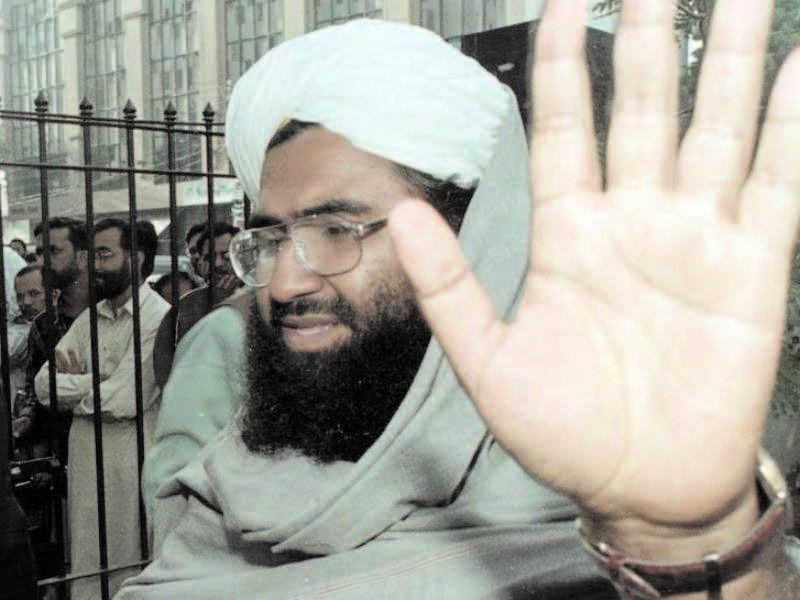
    The US remarks come amid continued Chinese opposition+ to efforts to get Pakistan-based JeM chief Masood Azhar banned by the UN.

    “The administration very much is looking at all of these avenues and some of the things we have talked about is sanctions and who is on the list and how we have managed that,” US’ envoy to the UN Nikki Haley told reporters here.

    “And that is part of what we are going to try and find our place with is that we do want to make sure that we are calling out those that we need to call out,” she said.

    Haley made the remarks while addressing a press conference after assuming role of President of the Security Council for the month of April.

    She was asked about efforts to get terrorists, particularly those in the South Asian region, sanctioned under UNSC’s sanctions list and how another permanent member scuttles these efforts+ by using its veto power, a veiled reference to China blocking moves to ban Jaish-e-Mohammed chief Masood Azhar+ . “Are we going to have people that veto certain issues? Yes. But that doesn’t preclude the US from acting and it certainly does not preclude us from trying to see if we can change that as well,” Haley said. “Our goal is to get more done together than we do separately. If we cannot get it done separately then we just move in another direction to still get the same things done,” she said.

    The US wants to make sure that it is leading towards a “result” and “not sitting back” and allowing things to happen. “I think you are obviously seeing a very aggressive administration because we feel like in order to lead we need to act and in order to act we need to make sure we have those conversations with the National Security Council and we are having those conversations with the National Security Council,” she said.

    Haley noted that a lot has happened in the last two months of her assuming the UN ambassador’s role under the Trump administration and a lot will continue to happen “but it is all about how we can make sure we are moving the ball”.

    Haley also described Syrian President Bashar al-Assad as a “war criminal”, saying what he has done to the people of his country is disgusting.

    Asked about US Secretary of State Rex Tillerson’s remarks in Ankara where he said that Assad’s status would be decided by the Syrian people, she said, “It’s that we don’t think the people want Assad anymore; we don’t think that he is going to be someone that the people want to have.”

    “We have no love for Assad. We’ve made that very clear. We think that he has been a hindrance to peace for a long time. He’s a war criminal. What he’s done to his people is nothing more than disgusting,” she said.

    Haley said that the goal of the Trump administration is to do what needs to be done to defeat ISIS.

    “I don’t know that our goal is to talk to Assad in doing that…Now that could change and the administration could think otherwise, but right now Assad is not our No.1 person to talk to,” said Haley. (PTI)

  • Somalia roadside bomb kills atleast 10 in minibus

    Somalia roadside bomb kills atleast 10 in minibus

    MOGADISHU (SOMALIA) (TIP): A roadside bomb exploded and killed at least 10 people in a minibus in Somalia’s Lower Shabelle region Thursday evening, a local official said.

    Five others were injured and the death toll could rise, Nur Abdullahi told The Associated Press.

    The massive bomb buried beside the road struck the vehicle near Gobweyn village, he said.

    The Somalia-based extremist group al-Shabab claims control over parts of the largely coastal Lower Shabelle region, which has been a focus of efforts to counter the group by a 22,000-strong multinational African Union force.

    Civilians often have been casualties in this long-chaotic Horn of Africa country. Now hundreds of thousands of Somalis are on the move as a drought threatens roughly half of the country’s population of 12 million.

    New Somali-American President Mohamed Abdullahi Mohamed, who was elected in February, has promised to make security a priority as the weak central government tries to assert itself beyond the capital and some other urban areas. (AP)

  • Hamas execute 3 Palestinians over Israel ties

    Hamas execute 3 Palestinians over Israel ties

    GAZA CITY (TIP): The Islamic militant Hamas group ruling the Gaza Strip says it has executed three Palestinians accused of `collaborating’ with Israel.

    Hamas says they were hanged at a police compound on Thursday morning as dozens of Hamas leaders and officials watched.

    Hamas has launched a local media campaign against those it suspects of spying for Israel after a militant, Mazen Faqha, was found dead in Gaza last month.

    Israel had sentenced him to nine life sentences for directing suicide bombings. He was freed along with more than 1,000 other Palestinian prisoners in exchange for a single Israeli soldier in 2011.

    Israel had sentenced him to nine life sentences for directing suicide bombings. He was freed along with more than 1,000 other Palestinian prisoners in exchange for a single Israeli soldier in 2011. (PTI)


  • Chemical attack kills 22 members of a single family in Syria

    Chemical attack kills 22 members of a single family in Syria

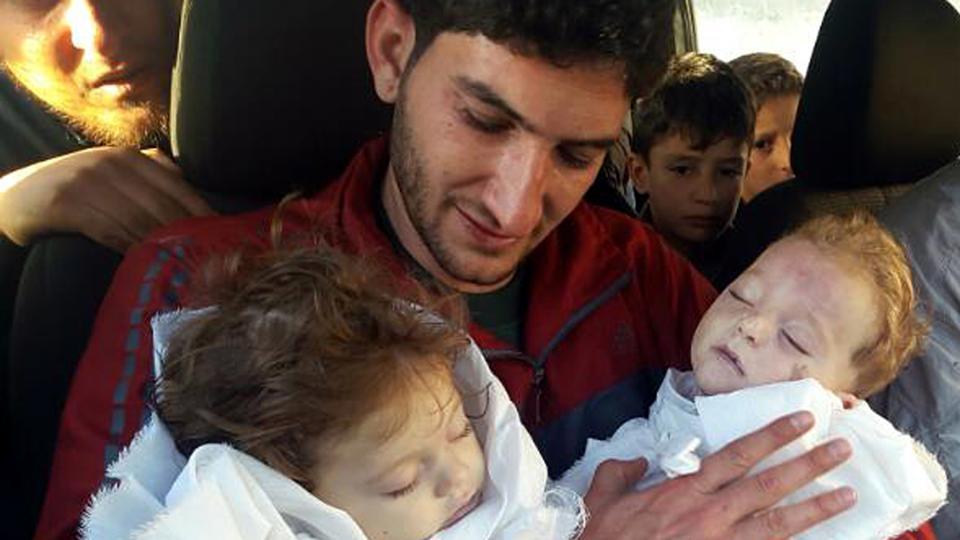
    BEIRUT (TIP): The grief-stricken father cradled his 9-month-old twins, Aya and Ahmed, each in the crook of an arm. Stroking their hair, he choked back tears, mumbling, “Say goodbye, baby, say goodbye” to their lifeless bodies.

    Then Abdel Hameed Alyousef took them to a mass grave where 22 members of his family were being buried. Each branch of the clan got its own trench.

    More than 80 people, including at least 30 children and 20 women, were killed in the chemical attack on the Syrian town of Khan Sheikhoun early Tuesday, and the toll could still rise. The Alyousef family, one of the town’s main clans, was hardest hit.

    Another member of the family, Aya Fadl, recalled running from her house with her 20-month-old son in her arms, thinking she could find safety from the toxic gas in the street. Instead, the 25-year-old English teacher was confronted face to face with the horror of it: A pick-up truck piled with the bodies of the dead, including many of her own relatives and students.

    “Ammar, Aya, Mohammed, Ahmad, I love you my birds. Really they were like birds. Aunt Sana, Uncle Yasser, Abdul-Kareem, please hear me,” Fadl said, choking back tears as she recalled how she said farewell to her relatives in the pile.

    “I saw them. They were dead. All are dead now.”

    The tragedy has devastated the small town. It also deepened the frustration felt by many Syrians in opposition-held areas that such scenes of mass death, which have become routine in the country’s 6-year-old civil war, bring no retribution or even determination of responsibility.

    The US and other Western countries accused President Bashar Assad of being behind the attack, while Syria and its main backer, Russia, denied it. Despite world condemnation, bringing justice is difficult in the absence of independent investigation of Syria’s chemical arsenal, which the government insists it has destroyed. (AP)

  • Pak court asks govt to explain detention of Hafiz Saeed

    Pak court asks govt to explain detention of Hafiz Saeed

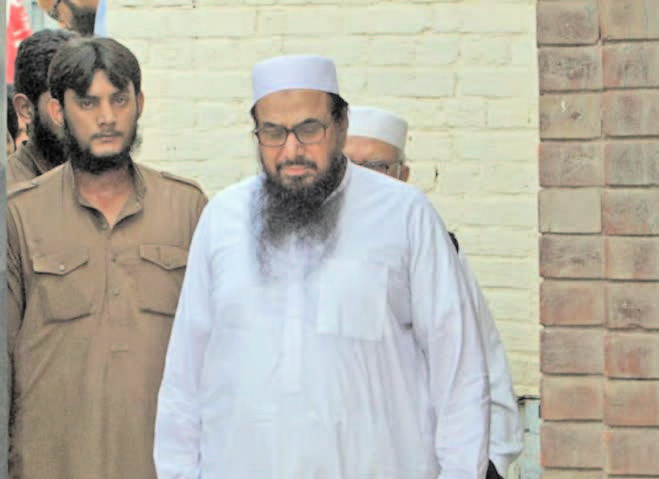
    LAHORE (TIP): A Pakistani court has asked the government to explain under what authority it has detained Jamaat-ud-Dawah chief Hafiz Saeed “without a trial”.

    A Lahore high court’s two-judge bench headed by justice Syed Kazim Raza Shamsi on Monday was hearing a petition of Saeed, his aides – Prof Malik Zafar Iqbal, Abdur Rehman Abid, Qazi Kashif Hussain and Abdullah Ubaid -who had challenged their detention under the anti-terrorism law.

    After hearing the arguments of advocate AK Dogar, counsel for Saeed, justice Shamsi observed the government should tell about its powers to detain a citizen like Saeed without trial.

    Referring to an Indian movie wherein Saeed was portrayed as a villain, the judge said the government should see if there is any “international conspiracy” against Pakistani citizens.

    Dogar concluded his arguments saying the government had detained the JuD leaders without any justification.

    Dogar also questioned the powers of the provincial government to include any citizen in the fourth schedule of the Anti-Terrorism Act (ATA). He said such powers were solely vested with the federal government.

    He said the government had detained him (Saeed) and others to please India and the US.

    He further argued that the UN resolution followed by the government action did not seek detention of any citizen. He said the detention of the JuD leaders is a case of mala fide intention and ulterior motive on part of the government. Dogar said the government had no evidence that the petitioners were a risk to security of Pakistan, and merely on the basis of UN resolutions their liberty could not be curtailed.

    The government on January 30 had put Saeed and the four leaders of JuD and Falah-e-Insaniat (FIF) under house arrest in Lahore under the country’s anti-terrorism act.

    The court adjourned the hearing till April 4. (PTI)

  • Suicide truck bombing kills 15 in Baghdad: Iraqi officials

    Suicide truck bombing kills 15 in Baghdad: Iraqi officials

    BAGHDAD (TIP): A suicide truck bomb targeted a police checkpoint in southern Baghdad on Wednesday night, killing 15 people and wounding 45, according to Iraqi officials.

    The bomber detonated the vehicle, an oil tanker laden with explosives, security and hospital officials said, speaking on condition of anonymity under regulations. Three policemen were among the dead while the rest were civilians, and a number of policemen were also wounded, the officials said.

    No one immediately claimed responsibility for the attack, but the Islamic State group has carried out similar attacks as their territorial hold in Iraq weakens.

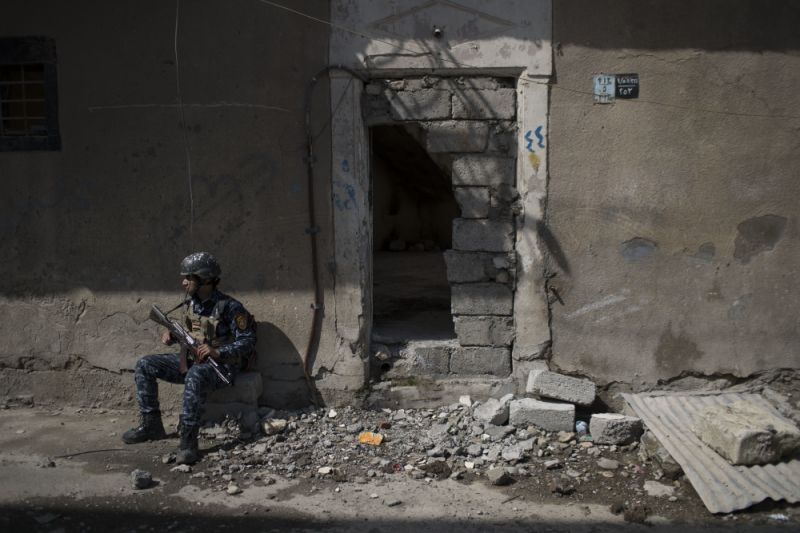
    Iraqi forces are fighting IS in western Mosul, where some 2,000 IS fighters are launching fierce counterattacks. After the beginning the operation to retake Mosul in October, Iraqi authorities in January declared they have liberated eastern Mosul, which is separated from the city’s western neighborhoods by the Tigris River.

    Western Mosul is densely populated and has proven to be a much more difficult fight for Iraqi and coalition forces, which have resorted to greater use of artillery and airstrikes to clear and hold territory.

    A number of airstrikes in western Mosul have resulted in high civilians casualties, according to residents interviewed by The Associated Press. The U.S.-led coalition says a strike in western Mosul on March 17 likely resulted in civilian casualties and is investigating the incident. Iraqi witnesses have said that airstrikes earlier this month killed scores of civilians. U.S. officials have said that the munitions used by the U.S.-led coalition that day should not have taken the entire building down, suggesting that militants may have deliberately gathered civilians there and planted other explosives that were detonated by airstrikes. (AP)

  • Several hurt in clashes at Turkey’s Brussels consulate

    Several hurt in clashes at Turkey’s Brussels consulate

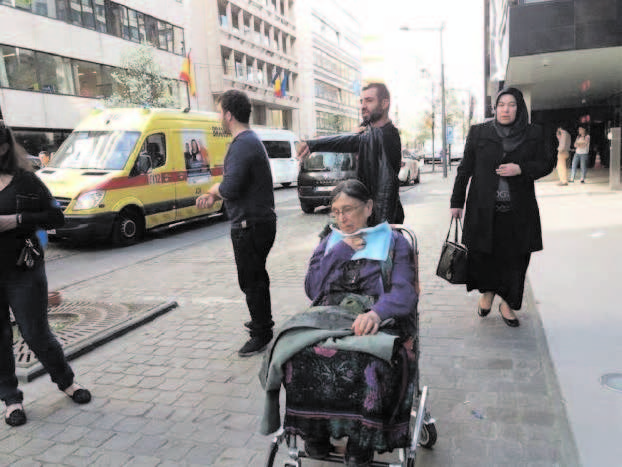
    BRUSSELS (TIP): Several people were injured and taken to hospital after supporters and opponents of the Turkish government clashed outside the country’s consulate in central Brussels on Thursday, Belgian police said.

    Belgian Prime Minister Charles Michel condemned the violence, which he linked to a forthcoming referendum in Turkey on increasing the powers of President Tayyip Erdogan.

    “The Belgian government has absolute zero tolerance for any spillovers from the Turkish referendum. I condemn the riots at the embassy in Brussels,” he said on Twitter.

    A police spokeswoman said she could give no further details on the number of people hurt or the nature of their injuries. The Turkish mission to Brussels could not be immediately reached for comment.

    Ties between Turkey and European Union states have deteriorated in recent weeks over Turkish government attempts to rally support for Erdogan among expatriate Turks.

    Erdogan reacted with fury after Germany and the Netherlands – which, like Belgium, have big Turkish minorities – moved to restrict political rallies on their soil in the run-up to the April 16 referendum.

    Kurdish news agency Firat said the Thursday incident took place as people arrived at the consulate in Brussels to cast early ‘no’ votes in the referendum. Reuters was not able to confirm that independently. (Reuters)


  • London shattered by terror attack after a decade

    London shattered by terror attack after a decade

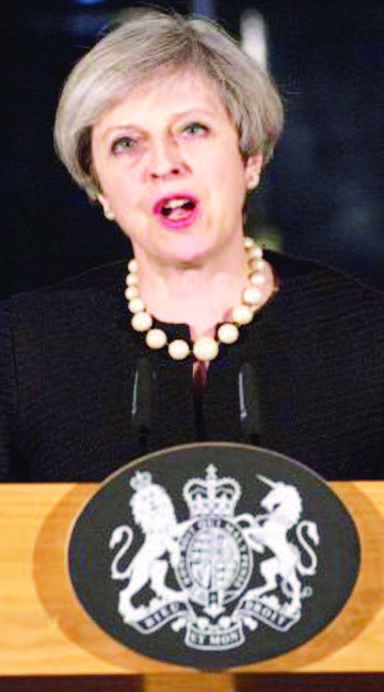
    “We will never give in to terror", British PM Theresa May said, following Westminster attack
    “We will never give in to terror”, British PM Theresa May said, following Westminster attack

    LONDON (TIP): Asolo assailant, identified by police as Khalid Masood, plowed a car into people on Westminster Bridge in London, near Parliament, killing two people and injuring many others, before crashing into a railing, March 22, 2017. Aysha Frade and US tourist Kurt Cochran, 54, were killed on the spot, while a 75-year-old man died on Thursday, March 23 evening.

    According to witnesses, the assailant had sped up, mounted the pavement, and began hitting pedestrians indiscriminately. After the car crashed into railings outside the Houses of Parliament, Masood, armed with a knife, left his car and ran towards Parliament, where he was confronted by police. PC Keith Palmer – who was not armed – was stabbed and killed. Masood was then shot dead by armed officers. Parliament was suspended and politicians, journalists and visitors to the buildings were locked inside for about five hours. Hundreds were also evacuated from Parliament to nearby Westminster Abbey for safety.

    Masood, 52, who was born as Adrian Elms in Kent,had a range of previous convictions for assaults, including grievous bodily harm, possession of offensive weapons and public order offenses. Prime Minister Theresa May told the House of Commons that the attacker had been investigated some years ago over violent extremism but was “peripheral” figure. “He was not part of the current intelligence picture,” she added.

    “There was no prior intelligence of his intent or the plot.”

    Three women and five men were arrested in London and Birmingham on suspicion of preparation of terrorist acts following March 22 attack.

    The Islamic State has claimed responsibility for the attack, calling the perpetrator a “soldier of the Islamic State” in a release from their Amaq news agency.

    US president Donald Trump spoke to Theresa May to offer Britain the full cooperation and support of the United States. He “pledged the full cooperation and support of the United States Government in responding to the attack and bringing those responsible to justice,” a White House statement said.

    In the summer of 2005, London was rocked by the worst single terrorist attack on British soil. On 7 July 2005, four men with rucksacks full of explosives attacked central London. The target was London’s transport system. Four bombs went off there – three on the London underground and one on a bus. More than 50 people had lost their lives and hundreds more were injured. The attacks became known as the 7/7 bombings.

  • Suicide attack kills 25 in Damascus court house

    Suicide attack kills 25 in Damascus court house

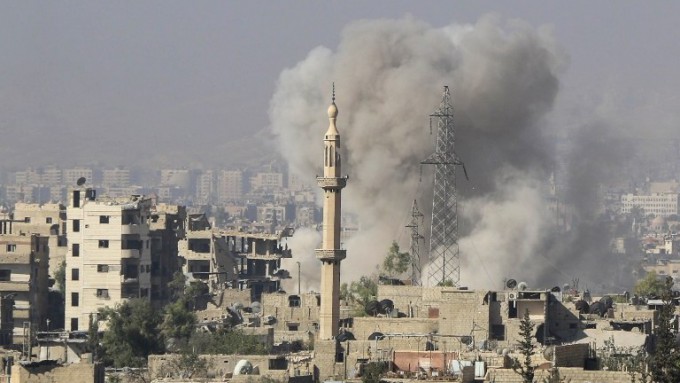
    BEIRUT: At least 25 people were killed in a suicide bomb attack at a court house in Damascus on Wednesday, state media reported, the second bomb attack in the Syrian capital in five days. The attack targeted the Palace of Justice in central Damascus not far from the Old City. State news agency SANA said there were a “number of wounded” in addition to the initial death toll of 25. The bomber set off his explosive device after the police tried to stop him from entering the building, Ahmed al-Sayyid, a senior state legal official told al-Ikhbariya TV.

    No further details were immediately available.

    On Saturday, scores of people, most of them Iraqi Shi’ite pilgrims, were killed in a double suicide attack in Damascus claimed by an alliance of jihadist groups known as Tahrir al-Sham.


  • Iraqi forces retake over a third of west Mosul: Commander

    Iraqi forces retake over a third of west Mosul: Commander

    MOSUL (TIP): Iraqi security forces have retaken more than a third of west Mosul from the Islamic State group since launching an assault on the area last month, a commander said today. “Around more than a third of the right bank (west Mosul) is under the control of our units,” Staff Major General Maan al-Saadi told AFP.

    Mosul is split by the Tigris River, and its eastern side is referred to as the left bank, while the western is known as the right back. Iraqi forces launched the operation to retake west Mosul — the most populated urban area still under IS control — on February 19, pushing up from the south.

    IS overran large areas north and west of Baghdad in 2014, but Iraqi forces backed by US-led air strikes and other support have since retaken most of the territory they lost. (AFP)

  • French school shooting: 4 shot, 10 hurt, student arrested

    French school shooting: 4 shot, 10 hurt, student arrested

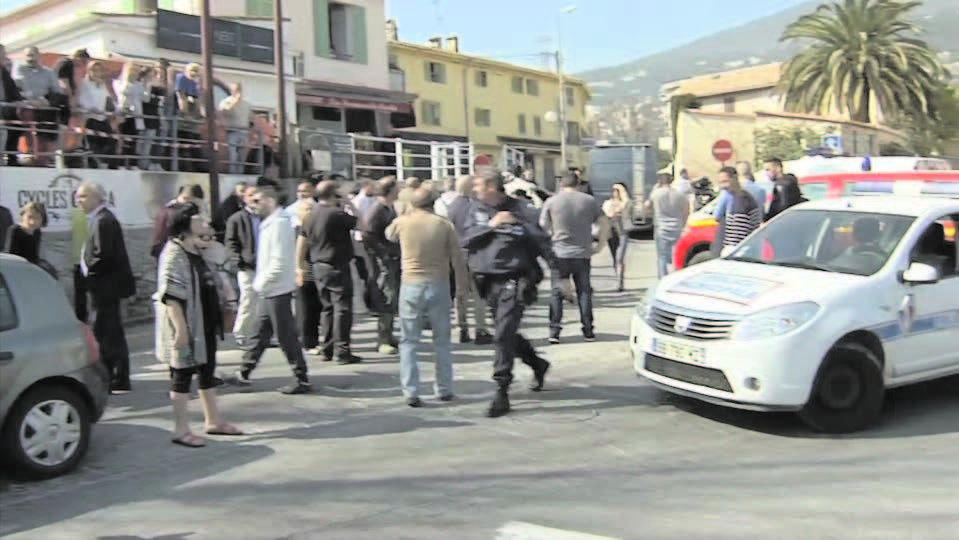
    PARIS (TIP): A 16-year-old student who had troubled relations with his peers opened fire at a high school in southern France on March 16, wounding three other students and the principal who tried to intervene, officials said.

    Police moved into the Alexis de Tocqueville school in the town of Grasse— the country’s picturesque perfume capital — and quickly arrested the still-armed suspect, identified by the Interior Ministry spokesman as Killian Barbey.

    The government minister for victims’ affairs, Juliette Meadel, told BFM television there were 4 people shot —three students and the high school principal — and 10 other victims.

    The Grasse prosecutor said some of the victims were suffering from “emotional shock.” None of the injuries was considered life threatening.

    Prosecutor Fabienne Atzori said the young man — armed with a rifle, several pistols and a small grenade — entered a classroom then left, “not finding the person or people he was searching for.”

    “The motivation of the student appears linked to bad relations with other students in this high school in which it appears he had some difficulty integrating,” Atzori said.

    She said there was no reason to suspect the shootings were terrorism-related, “whatever the origin of the terrorist enterprise.” A national police official said earlier there did not appear to be any other suspects.

    Investigators were now trying to find out where did the suspect get the arms, she said.

    Officials variously gave 16 and 17 as the age of the suspect. His Facebook page indicates he is 16.

    After the suspect started shooting, students alerted the principle, who was wounded while “courageously” intervening, the prosecutor said. Some students only discovered shrapnel in their bodies once home, she said.

    Education Minister Najat Vallaud-Belkacem, who visited the school Thursday, called it “the crazy act of a fragile young man fascinated by firearms … We just missed the worst.”

    The suspect’s Facebook is filled with violent or gory images.

    During the attack, some students hid at the school and others were evacuated. A police helicopter circled overhead in what is normally a relatively quiet corner of France.

    Police cordoned off the area and worried residents gathered outside in the town, which is 40 kilometers (25 miles) from the southern city of Nice, site of last year’s Bastille Day terror attack that killed 86 people.

    The president of the region, Christian Estrosi, said the principal suffered an arm wound and told him that after being alerted to the presence of the armed student, “he tried to interpose … to try to calm him, and unfortunately he didn’t succeed.”

    Student Charlotte Camel, 18, told The Associated Press she was in the school library when “a teacher ran into the room shouting, `There’s someone with a gun, go hide!’ That’s what we did from the very beginning.”

    “We all very much panicked. I thought a lot about the other students in my class who were in class and I wandered if they were ok. I thought about my friends and the teachers too,” Camel said.

    The attack came amid France’s state of emergency, a response to a string of deadly Islamic extremist attacks over the past two years.

    While no terrorism link has been identified, “all this justifies the state of emergency,” President Francois Hollande said, adding that it would remain in place until July 15, as planned.

    The government sent out an alert warning of an attack after police reported that shots were fired, but later lifted it. The alert is part of a system implemented by the government after the deadly November 2015 attacks in Paris. (AP)

  • Britain says 13 terror attack plots foiled since 2013

    Britain says 13 terror attack plots foiled since 2013

    LONDON (TIP): Security services have foiled 13 potential terror attacks in Britain since 2013, its most senior counter-terrorism policeman said Monday, with more than 500 active investigations at any one time.

    Mark Rowley, assistant commissioner of London’s Metropolitan Police, said incidents inspired by the Islamic State group were a “large part” of the problem although al-Qaida remained a significant threat, while the far-right was also an issue.

    He was speaking at the launch of a campaign for more community involvement in combating terrorism, and revealed that one-third of the most high-risk investigations had been helped by information from the public.

    “Together, the UK intelligence community and police have disrupted 13 UK terrorist attack plots since June 2013,” Rowley said.

    “The threat is becoming more varied and the move towards low-tech attacks on crowded places, like those we have seen in major European cities and beyond, makes it even more important everyone remains vigilant.”

    He added: “We’ve got over 500 investigations at any one stage.”

    A study from the Henry Jackson Society, a conservative think tank, found Islamic-inspired terror offences almost doubled, from 12 each year between 1998 and 2010 to 23 each year in the following five years.

    An analysis of 269 such offences since 1998 also found most perpetrators were British or dual nationals and a disproportionately high number were Muslim converts.

    Women are also increasingly involved, accounting for four percent of incidents between 1998 and 2010, but 11 percent between 2011 and 2015.

    The threat level for international terrorism in Britain has been “severe”, meaning an attack is considered highly likely, since August 2014.

    Islamist attackers killed 52 people in suicide bombings on the London transport system in July 2005 and there have been isolated incidents since. (AFP)

  • 2 killed in shooting at Swiss café, attackers at large

    2 killed in shooting at Swiss café, attackers at large

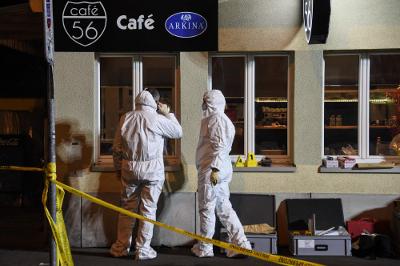
    GENEVA (TIP): Two men shot dead two people and seriously injured a third on March 9 at a cafe in Basel, north-west Switzerland, police said as they hunt for the suspects.

    “Two men came into Cafe 56” around 8.15 pm local time (1915 GMT) “and fired several rounds of shots,” police said in a statement, without providing information on a possible motive.

    “Two customers were killed. Another is in a critical condition.”

    The assailants were on the run following the shooting, according to police, who said they had headed in the direction of the railway station after the attack.

    “The reason behind the attack is not yet known and will be investigated,” the Basel prosecutor’s office said in a statement. Police have asked anyone with information regarding the incident to come forward.

    The road next to the cafe has been cordoned off and traffic redirected.

    A bullet hole was visible in one of the windows of the establishment, a small cafe in a residential neighbourhood. An AFP photographer at the scene saw police dressed in white forensic garb collecting evidence at the site.

    “Cafe 56 doesn’t have a bad reputation,” a neighbourhood resident told local newspaper Basler Zeitung.

    “It was previously an establishment known for its links to the drug world, but since the owner changed several years ago it became an ordinary cafe,” the paper quoted another resident as saying. Gun crime is infrequent in Switzerland, even though the country has one of the highest rates of firearm ownership in the world.

    Citizens are allowed to keep their army-issue weapons at home outside periods of mandatory military service. This right has been controversial as sometimes weapons are used at home in domestic incidents.

    The number of weapons held at home is believed to be two million for a population of eight million, according to Swiss press. In January, a man clad in military clothing shot and injured two police officers as they searched his home in northeast Switzerland for a suspected cannabis plantation. (AFP)

  • Islamic State planning attacks in Britain: Anti- terrorism lawyer

    Islamic State planning attacks in Britain: Anti- terrorism lawyer

    LONDON (TIP): Islamic State militants are planning “indiscriminate attacks on innocent civilians” in Britain on a scale similar to those staged by the Irish Republican Army 40 years ago, the head of the country’s new terrorism watchdog said.

    In an interview with the Sunday Telegraph published on Sunday, Max Hill, the lawyer tasked with overseeing British laws on terrorism, said the militants were targeting cities and posed “an enormous ongoing risk which none of us can ignore”.

    “In terms of the threat that’s represented, I think the intensity and the potential frequency of serious plot planning – with a view to indiscriminate attacks on innocent civilians of whatever race or colour in metropolitan areas – represents an enormous ongoing risk that none of us can ignore,” he said.

    “So I think that there is undoubtedly significant ongoing risk which is at least as great as the threat to London in the 70s when the IRA were active on the mainland.”

    The IRA abandoned its armed struggle for an end to British control of Northern Ireland and unification with Ireland in a 1998 peace deal. More than 3,600 people were killed, including more than 1,000 members of the British security forces, during a sectarian conflict that began in the late 1960s.

    British security officials have repeatedly said that Islamic State militants, who are losing ground in Iraq and Syria, will target Britain. (Reuters)

  • 7 dead, 20 injured in bomb attack in Pakistan’s Lahore

    7 dead, 20 injured in bomb attack in Pakistan’s Lahore

    LAHORE (TIP): At least seven persons were killed and 20 others injured on Feb 23 in a powerful explosion that ripped through a building in a defence locality in this Pakistani city, the latest in a series of terror attacks in the country.

    Panic gripped the area a little before noon when the loud explosion resonated across Z-Block in Defence Housing Authority area in Lahore.

    “Seven persons have been killed and 20 suffered injuries,” officials said.

    The nature of the blast is yet to be determined and bomb disposal squad and forensic expert are collecting evidences from the spot.

    “It appears to be a planted device,” Punjab police spokesman Niyab Haider told PTI.

    The Z-block market houses restaurants frequented by young couples.

    Several vehicles were also damaged in the blast. The injured are being shifted to different city hospitals.

    The latest blast came as security has been tightened across Pakistan after a recent wave of terrorist strikes killed more than 100 people.

    On February 16, a suicide bomber killed 88 people at a famed Sufi shrine in Sindh province. Following the attack, the army launched an offensive against militants and claimed to have killed more than 130 terrorists across the country.

    Earlier on 13 February, at least 14 people were killed in a suicide bombing near the Punjab Assembly.

    – PTI

  • UN To Create Counter-Terrorism Office; India’s Syed Akbaruddin Welcomes move

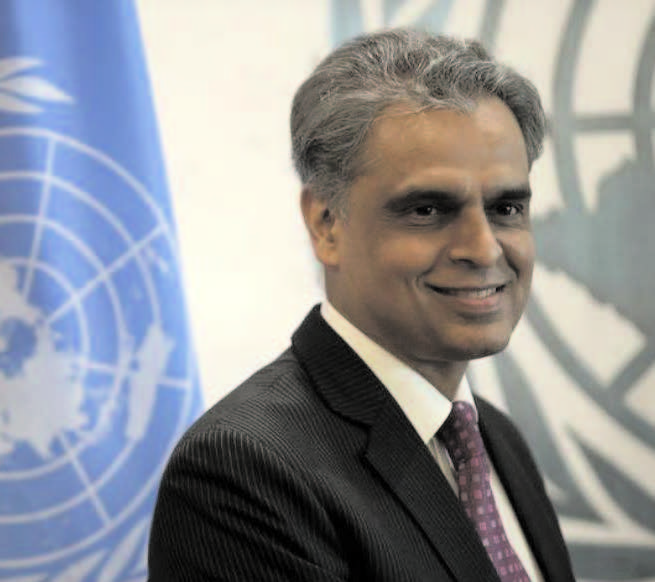
    UN To Create Counter-Terrorism Office; India’s Syed Akbaruddin Welcomes move

    India has welcomed an initiative by UN Secretary General Antonio Guterres to create a new office for counter-terrorism and stressed the nations should not allow “turf battles” to “hobble” the proposal.

    “Every day our collective conscience is being ravaged by terrorists in some part of the world or other. It is in this background of growing concerns, that we greatly appreciate the Secretary General’s initiative to promptly address the need to enhance coordination of the UN’s Counter-Terrorism efforts,”

    India’s Permanent Representative to the UN Ambassador Syed Akbaruddin said and appreciated SG’s initiative to promptly address the need to enhance coordination of the UN’s CT efforts.

    Akbaruddin quoted Bill Gates’s speech at the Munich Security Conference where the latter drew attention to how unprepared we were to a new kind of terrorism – bio-terrorism. According to Gates, epidemiologists say that a fast moving air borne pathogens could kill more that 30 million people in less than a year.

    Guterres mooted the proposal to move the Counter-Terrorism Implementation Task Force (CTITF) Office and the UN Counter-Terrorism Centre out of the Department of Political Affairs and create a new office for counter-terrorism.

    This office would be headed by a new Under-Secretary-General. The UN Chief said the only objective of the new body is to improve efficiency in combating terrorism and not to change the different mandates in the field of counter-terrorism.

    Akbaruddin said India welcomes the initiative and fully supports the proposal for creation of the Office of Counter-Terrorism, assuring all possible support in taking the proposal to its fruition. He however said that nations should not let differences impact the initiative and dent its credibility.

    “So, let us not allow turf battles to hobble this initiative, if we have to maintain its credibility,” he said during an informal meeting on strengthening of the capability of the UN system in implementing Global Counter-Terrorism Strategy here yesterday.

    “As terrorism thrives on and is sustained by its trans-boundary networks for ideology, recruitment, propaganda, funding, arms, training and sanctuary, no single nation alone can tackle this menace decisively. There is no stronger case for more multilateral action, more coordination and more cooperation on any matter amongst all stakeholders than on terrorism,” he said.

    Akbaruddin said India envisages the Under-Secretary General for Counter-Terrorism to be able to take positions and speak on behalf of “all of UN” and develop a comprehensive narrative on terrorism including on all issues relating to counter-terrorism. He added that there are differing mandates of various UN bodies and if the counter-terrorism coordinator is to have credibility, the individual needs to be seen as the UN’s voice on counter-terrorism issues.

    “Such differentiation of mandates is only known to those in this room or those who use this building as work space. It will never be comprehensible to the ordinary people at large,” the Indian envoy said.