Tag: Terror Attacks in India

  • Want a piece of Dawood? 6 of his properties up for grabs

    Want a piece of Dawood? 6 of his properties up for grabs

    MUMBAI (TIP): A month after Thane police arrested Dawood Ibrahim’s brother Iqbal Kaskar in a case of alleged extortion, the ministry of finance has issued an auction notice seeking bids for six properties belonging to the underworld don in Mumbai and Aurangabad.This is part of the government’s continuing efforts to curb Ibrahim’s operations in India.

    The properties include flat numbers 18-20, 25,26 and 28 of the Damarwala Building, and houses 34-40 on Pakmodia Street and Yakub Street, where Iqbal Kaskar and his late sister Haseena Parkar used to reside. The properties are up for auction at a reserve price of Rs 1.55 crore. Another property listed by the government is the Shabnam Guest House, a double-storied building on Yakub Street with a reserve price of Rs 1.21 crore.

    The finance ministry had listed Hotel Raunaq Afroz on Pakmodia Street for auction at a reserved price of Rs 1.18 crore, and put it under the hammer along with seven other properties in 2015. A former journalist raised the highest bid of Rs 4.28 crore, but was unable to deposit the sum in the requisite time frame.

    In September, Iqbal was asked to vacate two dilapidated buildings in Mumbai on the grounds that they were illegally acquired. A notice under the Smugglers and Foreign Exchange Manipulators (Forfeiture of Property) Act-1976, asking tenants to vacate the premises, was pasted outside the Damarwala building.

    Various agencies have tried to auction Ibrahim’s properties three times in nearly two decades (2001, 2013 and 2015), but found no takers. The dearth of buyers largely stems from their fear of the gangster, who is now said to be in Pakistan.

    Ibrahim is the main accused in the 1993 serial bomb blasts case in Mumbai. The British government had earlier frozen his UK assets. Source: HT

  • Script to unlearn Kashmir begins with sad lessons

    Script to unlearn Kashmir begins with sad lessons

    In the absence of any initiative to begin a dialogue process, separatists hone their skills to influence people

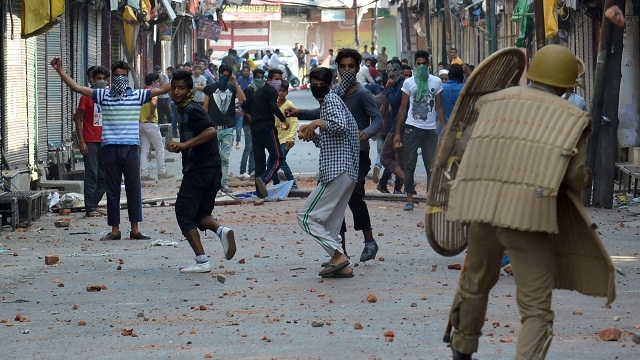
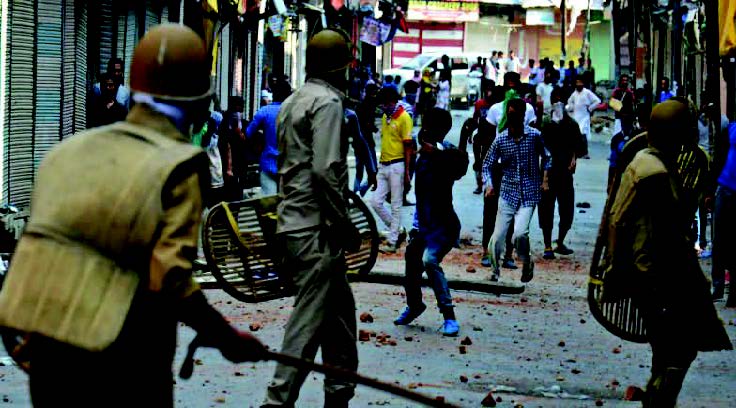
    There is a lot to unlearn from a recent video clip gone viral on social media. A CRPF man carrying EVMs keeps walking nonchalantly even as he is pushed, heckled and abused by a group of youths shouting anti-India slogans, — a predictive ranting tirade. The clip protagonists seemed to expect some elisions reflected in that part of Kashmir:

    a) security forces are used to such gimmickry of protestors; and
    b) most youths in the Valley are downright separatists whose writ runs so wantonly.

    For outsiders, a message went out: Kashmir is as bad as it has been in last three decades — a perception repeatedly reinforced by a series of violent events. The last year’s post – Burhan Wani’s killing and the death of over 80 people in its wake bear it out. It all climaxed in the lowest voter turnout on Thursday in Budgam, under Srinagar parliamentary constituency, where a re-poll was ordered after April 9’s poor voting figures amid large-scale violence leading to the death of eight people.

    “Maybe all sides — mainstream political parties, separatists and those sitting in Delhi and Islamabad — want to tire each other out before realizing the futility of it all,” says a youth in Srinagar, refusing to identify himself.

    “The frustration stems from people’s perception of betrayal and the anger is because no dialogue process is initiated — either with Pakistan or with the people’s representatives,” says Junaid Mattu, spokesperson for the National Conference.

    The separatists have their own take that essentially revolves around Pakistan. “It is not the fight for votes or power. This is the fight against the betrayal of Indian government for not fulfilling the promises made with the Kashmiri people. It is time to ease tension and ensure stability by settling all disputes,” says Abdul Gani Bhat, executive member in moderate faction of Hurriyat Conference.

    The separatists’ poll boycott call was reported from mosques’ loudspeakers, phone calls, WhatsApp and text messages. And despite several requests by the mainstream parties to postpone the polls, the Election Commission deemed it fit to hold elections. “In such an environment, genuine voters would obviously feel frightened,” said an NC activist.

    Development a ‘non-issue’

    During his recent visit to Udhampur, Prime Minister Narendra Modi asked the people, particularly Kashmiri youth, to choose “tourism over terrorism”. “Had the people of Kashmir devoted the past 40 years to development of tourism, the Valley would have been blessed with numerous benefits,” Modi said at a rally organized to mark South-East Asia’s biggest tunnel along the Jammu-Srinagar Highway.

    The separatists were quick to reject the assertion. “Construction of tunnels and roads is futile and won’t succeed to lure us,” said a joint Hurriyat Conference statement.

    The failure of the ‘development mantra’ was, in fact, clear from the election manifestoes of all parties during the assembly polls. Predominant issues were: a dialogue with Pakistan, opening new routes along the LoC, restoration of autonomy, demilitarization and revocation of the Armed Forces Special Powers Act. This explains why, after over a year of assembly polls, the separatist camp’s slogans of ‘azadi’ strongly influence the Kashmiri youth.

    Poor showing
    A senior government officer, who wished not to be named, throws light on areas of concern. “Our education is in a shambles. Out of the 96 degree colleges functioning in the state, at least 31 colleges —some of them sanctioned about nine years back – function from makeshift accommodations. We have poor health infrastructure. Hundreds of villages don’t have electricity and road connectivity. We have the highest number of unemployment in North India. But we have restricted our thought process to unnecessary issues,” he says.

    Nawang Rigzin Jora, Congress Legislature Party leader and MLA from Leh, rues that politics has taken over everything else. “There is no commonality among the people of three regions — Jammu, Kashmir and Ladakh. We have to have a binding force, which is not there.”

    Mahesh Koul, a research scholar, says by relegating areas of human development, “the government has handed a long leash to the subversives who want the state to waste time in conflict management.”

    The situation has come to such a pass, says Prof Hari Om, a Jammu-based historian, that leaders in Kashmir don’t want development. “The three regions — Jammu, Kashmir and Ladakh — are pulling in different directions. And the Indian state simply watches on.”

    (Source: Tribune, Chandigarh) – British English

  • Amid China’s stand on Masood Azhar ban, US says ‘Veto will not prevent us from acting’

    Amid China’s stand on Masood Azhar ban, US says ‘Veto will not prevent us from acting’

    UNITED NATIONS (TIP): The US said on Tuesday that countries using veto to scuttle sanctioning of terrorists will not “preclude” it from taking actions.

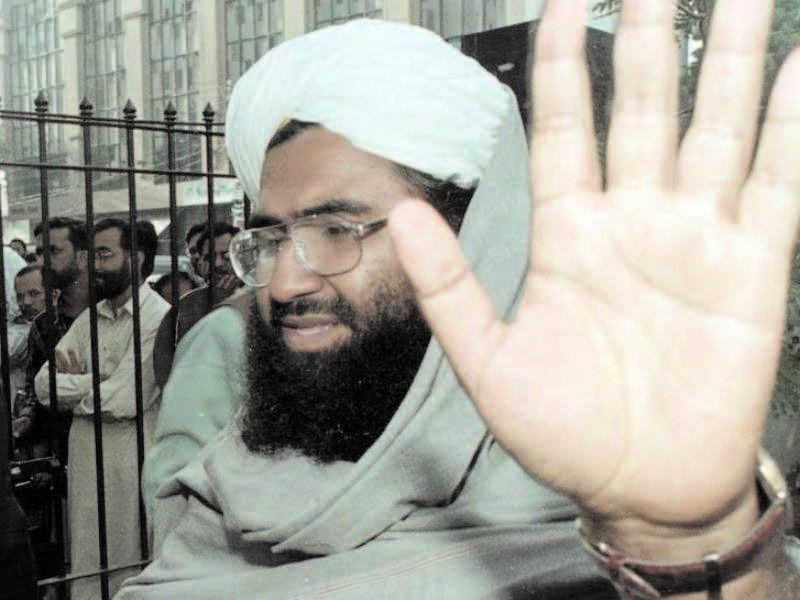
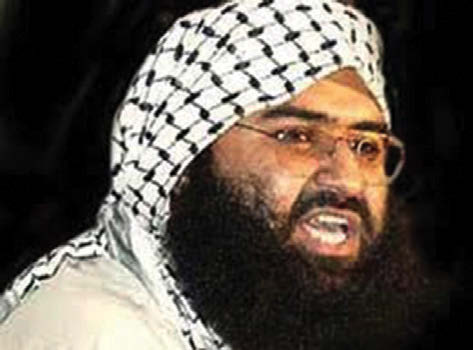
    The US remarks come amid continued Chinese opposition+ to efforts to get Pakistan-based JeM chief Masood Azhar banned by the UN.

    “The administration very much is looking at all of these avenues and some of the things we have talked about is sanctions and who is on the list and how we have managed that,” US’ envoy to the UN Nikki Haley told reporters here.

    “And that is part of what we are going to try and find our place with is that we do want to make sure that we are calling out those that we need to call out,” she said.

    Haley made the remarks while addressing a press conference after assuming role of President of the Security Council for the month of April.

    She was asked about efforts to get terrorists, particularly those in the South Asian region, sanctioned under UNSC’s sanctions list and how another permanent member scuttles these efforts+ by using its veto power, a veiled reference to China blocking moves to ban Jaish-e-Mohammed chief Masood Azhar+ . “Are we going to have people that veto certain issues? Yes. But that doesn’t preclude the US from acting and it certainly does not preclude us from trying to see if we can change that as well,” Haley said. “Our goal is to get more done together than we do separately. If we cannot get it done separately then we just move in another direction to still get the same things done,” she said.

    The US wants to make sure that it is leading towards a “result” and “not sitting back” and allowing things to happen. “I think you are obviously seeing a very aggressive administration because we feel like in order to lead we need to act and in order to act we need to make sure we have those conversations with the National Security Council and we are having those conversations with the National Security Council,” she said.

    Haley noted that a lot has happened in the last two months of her assuming the UN ambassador’s role under the Trump administration and a lot will continue to happen “but it is all about how we can make sure we are moving the ball”.

    Haley also described Syrian President Bashar al-Assad as a “war criminal”, saying what he has done to the people of his country is disgusting.

    Asked about US Secretary of State Rex Tillerson’s remarks in Ankara where he said that Assad’s status would be decided by the Syrian people, she said, “It’s that we don’t think the people want Assad anymore; we don’t think that he is going to be someone that the people want to have.”

    “We have no love for Assad. We’ve made that very clear. We think that he has been a hindrance to peace for a long time. He’s a war criminal. What he’s done to his people is nothing more than disgusting,” she said.

    Haley said that the goal of the Trump administration is to do what needs to be done to defeat ISIS.

    “I don’t know that our goal is to talk to Assad in doing that…Now that could change and the administration could think otherwise, but right now Assad is not our No.1 person to talk to,” said Haley. (PTI)

  • Pak court asks govt to explain detention of Hafiz Saeed

    Pak court asks govt to explain detention of Hafiz Saeed

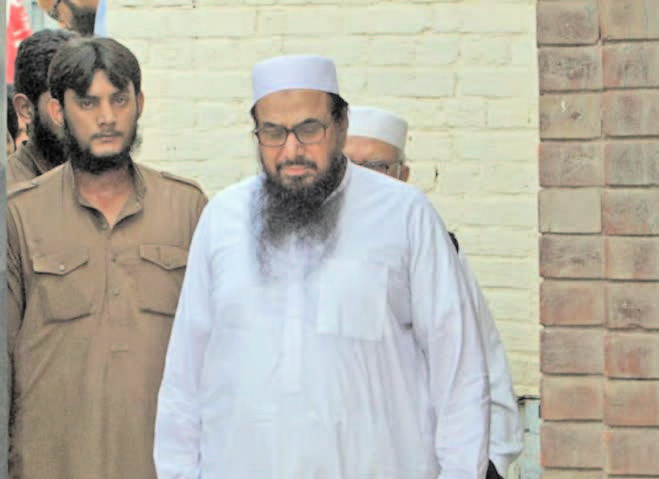
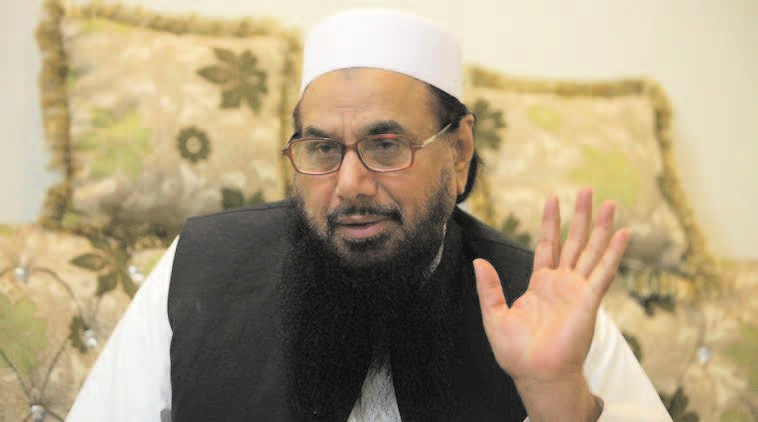
    LAHORE (TIP): A Pakistani court has asked the government to explain under what authority it has detained Jamaat-ud-Dawah chief Hafiz Saeed “without a trial”.

    A Lahore high court’s two-judge bench headed by justice Syed Kazim Raza Shamsi on Monday was hearing a petition of Saeed, his aides – Prof Malik Zafar Iqbal, Abdur Rehman Abid, Qazi Kashif Hussain and Abdullah Ubaid -who had challenged their detention under the anti-terrorism law.

    After hearing the arguments of advocate AK Dogar, counsel for Saeed, justice Shamsi observed the government should tell about its powers to detain a citizen like Saeed without trial.

    Referring to an Indian movie wherein Saeed was portrayed as a villain, the judge said the government should see if there is any “international conspiracy” against Pakistani citizens.

    Dogar concluded his arguments saying the government had detained the JuD leaders without any justification.

    Dogar also questioned the powers of the provincial government to include any citizen in the fourth schedule of the Anti-Terrorism Act (ATA). He said such powers were solely vested with the federal government.

    He said the government had detained him (Saeed) and others to please India and the US.

    He further argued that the UN resolution followed by the government action did not seek detention of any citizen. He said the detention of the JuD leaders is a case of mala fide intention and ulterior motive on part of the government. Dogar said the government had no evidence that the petitioners were a risk to security of Pakistan, and merely on the basis of UN resolutions their liberty could not be curtailed.

    The government on January 30 had put Saeed and the four leaders of JuD and Falah-e-Insaniat (FIF) under house arrest in Lahore under the country’s anti-terrorism act.

    The court adjourned the hearing till April 4. (PTI)

  • Stay away from sites of encounters, Kashmir youths told

    Stay away from sites of encounters, Kashmir youths told

    J&K top cop says bullets don’t see who they hit

    WhatsApp groups with Pak admins entice stone pelting, mislead Kashmir youth: DGP

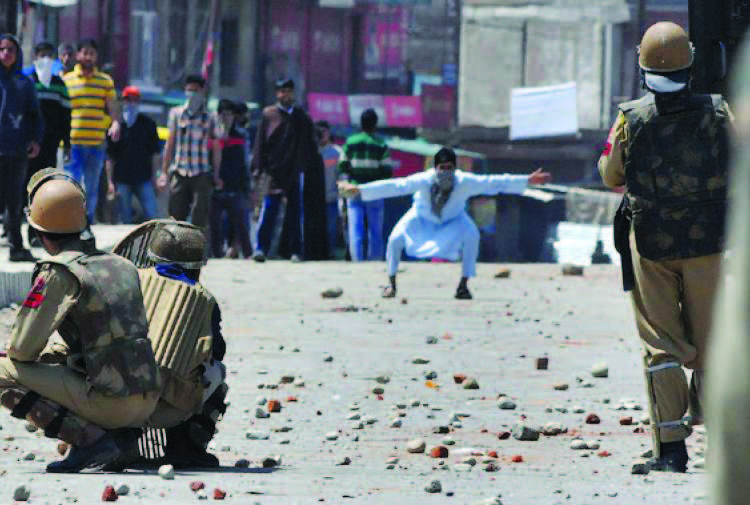
    SRINAGAR (TIP): Stating that civilians who march towards the encounter sites were “committing suicide”, Jammu and Kashmir Director General of Police S P Vaid on March 30, Thursday, said bullets don’t see who they hit.

    “A bullet does not see who is coming or who it will hit. Youths should stay at homes. Those coming to the encounter site are committing suicide,” the DGP said in the backdrop of the recent killing of three youths in Budgam area of central Kashmir during a stone-pelting protest.

    He said even security forces take cover of a vehicle or house to avoid being hit by bullets. The police chief blamed Pakistan’s spy agency for trying to instigate and provoke innocent boys to reach the site of exchange of fire.

    “As per the inputs received, ISI is trying to instigate and provoke innocent young boys to come out of their houses and reach the site of exchange of fire,” an official statement quoting the DGP said.

    “There are also recorded messages indicating that as soon as an encounter begins, the Pakistan propaganda mill immediately gets into action.”

    The state government has issued advisories on encounters several times asking people to stay away from gun battle sites to avoid collateral damages during anti-militancy operations.

    The police have imposed a ban on assembly of people within a radii of 3 km of an encounter site and advised people to stay indoors and not peep out of their windows to avoid being hit by stray bullets.

    Army chief General Bipin Rawat had last month warned of tough action against those attacking security forces. However, people in large numbers, especially youth, come out of their houses and chant pro-azadi slogans on seeing security forces arriving in their area to take on militants.

  • PRO-ISLAMIC STATE GROUP WARNS OF ATTACK ON TAJ MAHAL

    PRO-ISLAMIC STATE GROUP WARNS OF ATTACK ON TAJ MAHAL

    Security agencies say about 75 Indians have joined the IS. This includes 45 who went from India, mostly from Maharashtra, Kerala and Karnataka.(Site Intelligence Group)

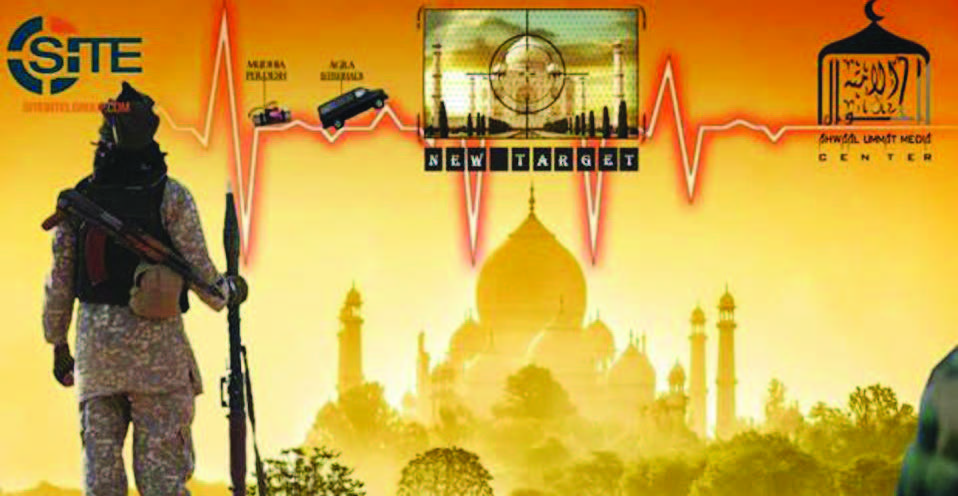
    NEW DELHI (TIP): A pro-Islamic State media group has warned of attacks in India and published a graphic depicting the Taj Mahal as a possible target.

    The graphic by the Ahwaal Ummat Media Center was posted on a channel of Telegram, the encrypted communication app, on March 14, according to Site Intelligence Group, which tracks jihadi activity on the web.

    The graphic features a fighter in combat fatigues and black headgear armed with an assault rifle and a rocket-propelled grenade standing near the 17th century monument to love in Agra.

    An inset in the graphic features another image of the Taj Mahal within crosshairs with the words “New target” below it. There is also an image of a van with the Arabic text “Agra istishhadi” (Agra martyrdom-seeker) written in English, implying the threat of a suicide attack.

    This is not the first time a pro-IS group has threatened attacks in India. After terror suspect Saifullah was killed by police in Lucknow on March 8, another pro-IS channel on Telegram had incited attacks in India.

    That channel had also posted a photo of Saifullah and described him as a “soldier of the Khilafah from India”.

    Indian security officials have said they are yet to procure proof that Saifullah was directly linked to the IS. They noted the photo of Saifullah posted on the Telegram channel was one released by Uttar Pradesh Police and not an image procured by the group before his death. They also said Saifullah was “self-radicalised”. According to security agencies, some 75 Indians have so far joined IS. This includes 45 who went from India, mostly from Maharashtra, Kerala and Karnataka, while the remainder were Indians living abroad. About 37 more were apprehended while they were making their way from India to territories controlled by IS. Security agencies have stepped up efforts to prevent the radicalisation and recruitment of youngsters via the internet and communication apps, which are extensively used by the IS. The US state department too has noted the threat to India from IS. Source: HT

  • The terror Frankenstein: ISI-nurtured terror groups have come to haunt Pakistan

    The terror Frankenstein: ISI-nurtured terror groups have come to haunt Pakistan

    With Pakistan on the back foot, the time has come for New Delhi to make use of the aversion for jihadi groups in Pakistan over the Sehwan outrage. A carefully crafted approach to relations with Pakistan needs to be adopted. New Delhi should remain firm on issues of terrorism by reiterating that there can be no question of reverting to business as usual till our concerns on Pakistan-sponsored terrorism in India and Afghanistan are addressed”, says the author – G Parthasarathy.

    Pakistan’s founder Muhammad Ali Jinnah, an Ismaili Shia by birth, proudly proclaimed, just prior to Pakistan’s independence, that the country he founded on the basis of religion would not discriminate against any of its citizens on the basis of religion. While the eastern half of his country was divided on the basis of ethnicity in 1971, what remains of what he initially called a “moth-eaten” Pakistan, is now finding that religion could indeed tear the country apart. Born into a Shia family, Jinnah could well be regarded as a “kaffir” by many in today’s Pakistan. Extremist Wahhabi-oriented groups, who since the days of Gen Zia-ul-Haq have received extensive support from the army, regularly target and kill those who are Shias, or even Sunnis, who are Sufi in orientation.

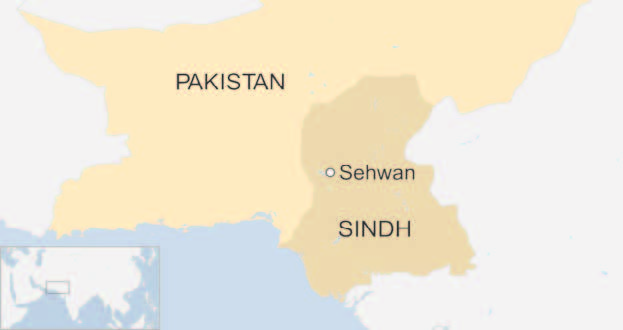
    The most revered Sufi shrine in Pakistan, where thousands of people of all sects and religions congregate and worship, is the shrine of Lal Shahbaz Qalandar at Sehwan, in northern Sindh. The shrine, built in 1356, was established in memory of the 13th century Sufi, Saint Syed Usman Marwandi, popularly known as Lal Shahbaz Qalandar, whose ancestors were devotees of the Imam Hussein, the Prophet’s grandson. Reza Shah Pahlavi, the last Shah of Iran, donated the shrine’s gold-plated main gate. For today’s jihadis in Pakistan, especially from groups like the Jaish-e-Mohammed, the Lashkar-e-Jhangvi and the Tehrik-e-Taliban Pakistan (TTP), that have received, or continue to receive ISI support, Sufi shrines are heretical, with its worshipers fit targets for elimination. This is precisely what happened on February 16, when a fanatical suicide bomber entered the shrine in the midst of prayers and triggered explosives, killing 88 devotees and wounding over 250.

    Not surprisingly, Pakistan reacted by passing the blame to others for its incredible follies in strengthening “militant Islam”, ever since the days of the anti-Soviet jihad. This policy was followed by its backing of the Taliban in Afghanistan and the use of its “non-state actors” for its jihad in J&K and elsewhere in India. The TTP was a tool of the ISI used to wage jihad against the Americans and pro-government forces in Afghanistan, post 9/11. The situation in Pakistan changed when the army, led by the ubiquitous Gen Raheel Sharif, saw the TTP establishing a presence over large areas beyond its traditional habitat and launched large-scale operations against it. This was done without General Sharif’s bothering to secure parliamentary approval. These operations led to escalating violence and displacement of nearly a million Pashtuns from their tribal homes, with many seeking refuge in Afghanistan. Thus, while the ISI continues to back the Afghan Taliban, the army is bogged down in a continuing conflict with the TTP, some of whose cadres operate across the disputed Durand Line, separating Pakistan and Afghanistan.

    The fact that Pakistan is still living in a world of delusion was evident from the reaction both by the government and the army chief, Gen Qamar Javed Bajwa, to the Sehwan attack. In an effort to establish that no Pakistani groups were involved, the ISIS and then an allegedly Afghanistan-based group – Jamat-ul-Ahrar – were blamed by Pakistan for the outrage. Indiscriminate attacks against alleged terrorist locations in Punjab, Sindh and Balochistan immediately followed the attack. Over 100 alleged “terrorists” were killed within hours, with the army also mounting attacks on alleged terrorist “hideouts” along the border. Officials from the Afghan embassy in Islamabad were summoned to the army’s GHQ and given a list of 76 “terrorists” said to be living in Afghanistan.

    General Bajwa also called the American commander in Afghanistan, Gen John Nicholson, warning that continuing attacks across the border were testing Pakistan’s policy of “cross-border restraint”. PM Nawaz Sharif’s adviser, Sartaj Aziz, spoke in similar terms to Afghanistan’s National Security Adviser Hanif Atmar. A logical question would be whether Pakistan has done anything to prevent its jihadis, including the Taliban, LeT and the Jaish-e-Mohammed, crossing the Durand Line, the LoC in Kashmir, or the International Border with India? Is it not a fact that groups once nurtured by the ISI are executing terrorist attacks within Pakistan?

    With Pakistan on the back foot, the time has come for New Delhi to make use of the aversion for jihadi groups in Pakistan over the Sehwan outrage. A carefully crafted approach to relations with Pakistan needs to be adopted. New Delhi should remain firm on issues of terrorism by reiterating that there can be no question of reverting to business as usual till our concerns on Pakistan-sponsored terrorism in India and Afghanistan are addressed. The cross-LoC strikes in September last year have set the precedent for India to appropriately respond to attacks on its soil by crossing established borders. Pakistan should be left in no doubt that it can no longer take Indian forbearance for granted.

    The recent invitations to India and Iran from Russia to attend talks in Moscow, along with China, Pakistan and Afghanistan, on promoting political reconciliation in Afghanistan suggest that there is growing realization that appeasing Pakistan on any proposed “Afghan led” peace process is counterproductive. India would do well to use these developments for stepping up economic and military assistance to Afghanistan and expediting the operationalization of the Chabahar Port. Moreover, it would only be logical for adequate time to be given to the Trump administration to evolve its policies on dealing with Pakistan-sponsored terrorism in Afghanistan and India.

    Pakistan should be reminded that it has not fulfilled its commitment made by PM Sharif at Ufa for talks between DGMOs of the two armies to address issues of cross-border terrorism. The growing sentiments in Pakistan against the attack on its most revered Sufi shrine should be taken note of. The existing agreements with Pakistan on group tourism and visits to shrines could be utilized to promote visits of Pakistani pilgrims to Sufi shrines in India, together with visits by musical troupes devoted to Sufi music. New Delhi has done well to facilitate participation by Indian writers in the Karachi Literary Festival. Reaching out to people getting disillusioned with Wahhabi extremism and violence in Pakistan, while standing firm on terrorism, enhances our credibility internationally.

    (The author is a career diplomat. He was High Commissioner of India to Pakistan in 1998-2000)

  • Pakistan’s Karachi is Anti-India Hub for Jihadis ~ International Crisis Group

    Pakistan’s Karachi is Anti-India Hub for Jihadis ~ International Crisis Group

    In a major setback to Pakistan’s claim making efforts against use of it terrain for terror activities, a Brussels based think-tank, International Crisis Group has deemed port city Karachi as the hub of anti-India Jihadist groups.

    The report also said that these groups and criminals often enjoy support of Pakistan Army.

    Pakistan port city of Karachi is a hub of anti-India jihadist groups and criminals who often enjoy the support of the Pakistani army, says a report released by the Brussels-based think tank, International Crisis Group.

    Terrorist groups like Lashkar-e-Taiba, its parent organisation Jamaat-ud-Dawa, Maulana Masood Azhar led Jaish-e-Mohammad and anti-Shia group Lashkar-e-Jhangvi have umbilical links with Karachi’s large, well-resourced madrassas, claimed the report.

    It also says that Pakistan’s most dangerous groups actively contest Karachi’s turf and resources. These outfits operate madrassas and charity fronts with no hindrance from Pakistani law enforcement authorities.

    ICG’s report titled “Pakistan: Stoking the fire in Karachi”, talks about how ethnic, political and sectarian rivalries and a jihadist influx are turning the largest and wealthiest city of Pakistan, into a pressure cooker.

    It mentioned that during a crackdown on jihadists and criminal gangs, Pakistan Rangers have spared many areas in Karachi and its outskirts of the city, known as the redoubts of “good” jihadists like LeT-JuD and Jaish-e-Mohammed.

  • Resetting ties: Pakistan may appoint new India envoy

    Resetting ties: Pakistan may appoint new India envoy

    NEW DELHI (TIP): India and Pakistan are likely to press the reset button in bilateral relations with Islamabad looking to appoint a new high commissioner to India, top diplomatic sources said.

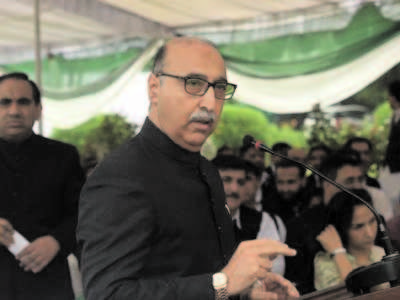
    Pakistan’s high commissioner to India Abdul Basit will complete three years here next month and he has been recalled in yet another sign that Pakistan PM Nawaz Sharif is in complete control of foreign policy.

    “Pakistan will announce the name of the new high commissioner in a few days,” said a diplomatic source on condition of anonymity.

    One of the names being considered is that of Sohail Mahmood, a career diplomat of 1985 batch. He has earlier served in Washington, New York and Ankara. Basit was said to be a certainty for the position of Pakistan’s foreign secretary but was pipped by Tehmina Janjua, Pakistan’s permanent representative to the UN in Geneva.

    Janjua is said to be the choice of Pakistan PM Nawaz Sharif. The fact that Basit was seen as taking a hawkish position on most contentious issues with India is said to have gone against him in Islamabad’s choice of foreign secretary.

    Sharif in the past few months, or more specifically since the retirement of former army chief Raheel Sharif, has been keen to reach out to India. This has reflected in some of the steps taken by his government, including the release of Indian fishermen in December on his birthday and later also in the release again of an Indian soldier who was said to have “inadvertently” crossed over into Pakistan territory the day India carried out its surgical strikes across LoC.

    While the house arrest of JuD chief Hafiz Saeed probably has more to do with the change in US administration, the timing has only lent credence to the perception that Sharif is serious about improving ties with India. As has been reported earlier by this newspaper from Islamabad, the fact that Sharif could conveniently ignore Basit’s claim to the foreign secretary’s post only shows his growing clout after the departure of Raheel Sharif. (PTI)

  • Pakistan to file FIR against Hafiz Saeed

    Pakistan to file FIR against Hafiz Saeed

    A top official of the Pakistan government said on Wednesday that an FIR would soon be lodged against Jamaat-ud-Dawa (JuD) chief Hafiz Muhammad Saeed, currently in house arrest under an anti-terrorism law.

    The crackdown on the Mumbai attack mastermind and others was described as “cowardly” by assorted terror and militant groups, with Hizbul Mujahideen chief Syed Salahuddin saying it was “painful”. Minister Khurram Dastagir Khan said all state institutions were on board before action was taken against Saeed, adding, “The charges against him will be known in a few days.”

    Punjab law minister Rana Sanaullah said more activists of JuD and its front Falaha-i-Insaaniyat (FIF) would be booked soon. “We’re monitoring the activities of JuD and FIF workers. More activists will be detained under the fourth schedule of the anti-terrorism law,” Sanaullah said, telling reporters that Saeed’s Kashmir policy was at variance with Pakistan’s. “We won’t compromise on our national interest. Our policy on Kashmir is different from JuD’s,” the minister said.

    Syed Salahuddin issued a statement saying the arrest not only sent “a negative and disappointing message” to the people in “India-held Kashmir”, but also showed “Pakistan’s weak role in the ongoing freedom struggle” of Kashmiris. He urged the Pakistani government to revoke the detention, which led to a few pro-JuD demonstrations in Muzaffarabad in Pakistan Occupied Kashmir.

    “Kashmir’s freedom movement demands the Pakistani leadership rise above compulsions and fears and take a firm position. Saeed has always called the international community to break its criminal silence on Kashmir,” said Salahuddin, who also heads the United Jihad Council (UJC), a conglomerate of 12 terror groups.

    Pakistan army, which allegedly used Saeed and his militant outfits for years as proxies against India, has said his arrest was in national interest. October last, the Sharif government had informed the military leadership of Pakistan’s growing international isolation over failure to curb terrorists, and sought consensus on several key actions against non-state actors. Foreign secretary Aizaz Ahmed Chaudhry had then said that the principal international demands were for action against Masood Azhar and Jaish-e-Mohmmad, Hafiz Saeed and Lashkar-e-Taiba, and the Haqqani network.

  • EIGHT YEARS AFTER 26/11, RAILWAYS AND COAST REMAIN VULNERABLE

    EIGHT YEARS AFTER 26/11, RAILWAYS AND COAST REMAIN VULNERABLE

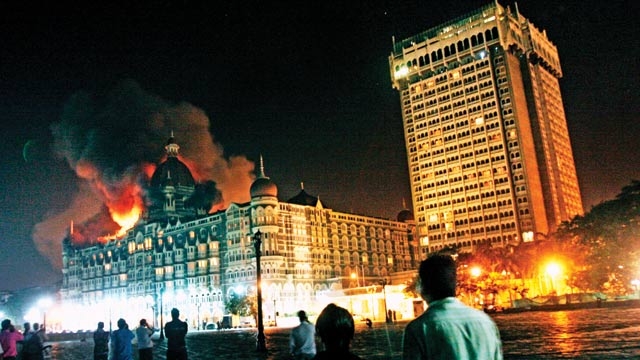
    MUMBAI (TIP): Eight years after the November 26, 2008 Mumbai terror attacks, in which 164 people were killed and about 308 injured, the railways and coastal areas remain vulnerable. The strengthening of the intelligence and counter-intelligence apparatus and training of police personnel, especially  constables attached to the anti-terrorism cells, is yet to gather momentum. The cells were set up in over 100 police stations across Greater Mumbai. The nation observes the 8th anniversary of the attacks on Saturday.

    A two-member committee headed by former Governor and Union Home Secretary R D Pradhan had been appointed to examine the government’s response to terror attacks. Among other things, the committee had suggested steps to strengthen coastal security through better monitoring and modernisation of police with automatic arms and ammunition.

    While the government has undertaken to set up 12 coastal police stations, in a bid to strengthen the coastal security, as on date only two are operational –one in the island city the other in the western suburbs. However, both lack infrastructure. Besides, the establishment of police chowkies still remains on the paper while the development of a jetty has been caught in red tape. Of the 30-plus speed boats, some are either anchored at the bay and or can otherwise not be used by security personnel to conduct vigils, for want of adequate fuel.

    Security at the Mumbai railway stations and key junctions have been caught in administrative and policy logjams. More than seven million commuters travel on central, western and harbour railway lines, but deployment of adequate security personnel has yet to happen.

    State Anti-Terrorism Squad chief Atulchandra Kulkarni informs that the implementation of the Ram Pradhan committee report is being made in phases. “A lot of changes have been made in the functioning of the ATS and its jurisdiction. ATS units are functional in all key regions of the state. The police force is equipped with modern arms and weapons,” he says.

    Further, a state home department official said chief minister Devendra Fadnavis recently launched Mumbai’s city-wide CCTV network, which is expected to strengthen the surveillance system stronger. A total of 4,717 CCTV cameras across 1,510 locations, covering almost 80 per cent of the city have been installed. Apart from fixed cameras, five  mobile surveillance vans will also start patrolling the city. The project had been proposed during the NCP-Congress regime, on a recommendation of the Ram Pradhan Committee report but it was delayed because private sector companies did not submit tenders despite bids being invited four times. Security expert Shirish Inamdar says the installation of CCTV cameras is not adequate and upgradation of intelligence machinery is need of the hour. “Higher level and lower level police personnel should interact with each other on a regular basis and those assigned with the job of intelligence gathering should be further trained. Though anti-terror cells have been established in every police station in Greater Mumbai, the personnel deployed there lack adequate training in intelligence and counter-terrorism. Adequate attention needs to be paid on this aspect,” he says. Source: Business Standard

  • US warns its citizens in India of IS attack

    US warns its citizens in India of IS attack

    WASHINGTON (TIP): The enhanced threat perception India currently faces could affect foreign visitor inflow as the peak travel season begins in the country. The US Embassy in New Delhi issued on Nov 2 a terror alert for its citizens in India, warning of increased threat of Westerners being targeted in India.

    Titled ‘security message for US citizens’, the alert says: “The US Embassy warns of an increased threat to places in India frequented by Westerners, such as religious sites, markets and festival venues. All US citizens are reminded to maintain a high level of vigilance and take appropriate steps to increase their security awareness.”

    The embassy has also mentioned increased risk from “ISIL aka Da’esh” (Islamic State terror group) and asked its citizens to refer to the “worldwide caution” issued by the US state department less than two months ago.

    Regarding India specifically, the US state department caution issued on September 9, 2016, says: “India continues to experience terrorist and insurgent activities which may affect US citizens directly or indirectly. Anti-western terrorist groups active in India include Islamist extremist groups such as Harkat-ul-Jihad-i-Islami, Harakat ul-Mujahidin, Indian Mujahideen, Jaish-e-Mohammed, and Lashkar-e-Taiba.”

    The caution was issued nine days before the Uri attack and since then India is on the highest possible alert. The US embassy warning comes at a time when inbound tourism season is starting. “The heightened tensions between India and Pakistan; the war-like situation on the line of control in Kashmir and overall enhanced security across India.

    (PTI)

  • Pak freezes accounts of 5,100 terror suspects, including JeM Chief

    Pak freezes accounts of 5,100 terror suspects, including JeM Chief

    Islamabad, Oct 24 (TIP) : Pakistani authorities have frozen multiple bank accounts of suspects whose names were listed in the Fourth Schedule under the Anti-Terrorism Act, 1997.

    These accounts carried net amount worth over Rs 400 million, revealed the officials, adding that names of around 1,200 suspects whose accounts were frozen by the State Bank of Pakistan (SBP) were listed in category ‘A*’ of the ATA, 1997, a term used for terrorists put on exceptional risk or high risk.

    The name of Jaish-e-Muhammad (JeM) chief Masood Azhar has also been included in the list’s top suspects whose accounts were frozen by the SBP, officials of the Ministry of Interior and SBP said.

    Masood Azhar’s name was also listed in category ‘A*’ of the 4th Schedule, revealed the officials who sought anonymity on the gravity of the issue. It happened since the government put the JeM chief under “protective custody” of security agencies after terrorists attacked the Pathankot Airbase, part of the Western Air Command of the Indian Air Force, they further revealed.

    “Following a request of the Ministry of Interior, we have frozen accounts of all top suspected terrorists, including Masood Azhar, son of Allah Bux,” confirmed a senior official of the SBP who is part of a team monitoring the progress pertaining to this matter.

    The interior ministry sent three different lists of thousands of suspects, including kingpins of some proscribed organisations, The News quoted the official as saying.

    Around 1,200 suspects whose accounts were frozen by SBP were listed in category A of the Anti-Terrorism Act, 1997, a term used for terrorists put on exceptional risk or high risk, the paper reported.

    Azhar has been included in the lists top suspects whose accounts were frozen by the SBP, said officials of the Ministry of Interior and SBP.

    After the attack on the airbase in Pathankot in January, India had in February written to the UN calling for immediate action to list Azhar under the UN Sanctions Committee.

    The National Counterterrorism Authority (Nacta) sent around 5,500 names to the SBP earlier this month, they said.

    National Coordinator Nacta Ihsan Ghani confirmed that over 5,000 accounts of suspects have been frozen by the SBP.

    “These accounts hold net amount worth Rs 400 million,” he said. About Azhars accounts, Ghani said he would revert with latest updates later this week.

    “More than 3,078 accounts of suspects whose accounts were frozen belonged to Khyber Pakhtunkhwa and Fata, 1,443 from Punjab, 226 from Sindh, 193 from Balochistan, 106 from Gilgit-Baltistan and 27 from the Islamabad Capital Territory,” the paper said, adding that 26 suspects belonged to Pakistan-occupied Kashmir.

    Accounts of other suspects such as cleric of Islamabad?s Lal Masjid Maulana Aziz, Ahle Sunnat Wal Jamaat leaders Maulvi Ahmed Ludhianvi and Aurangzeb Faroogi, Matiur Rehman of al-Qaeda, Mansoor alias Ibrahim of Tehreek-e-Taliban and Qari Ehsan alias Ustad Huzaifa and Ramzan Mengal of Lashkar-e- Jhangvi were also frozen, the paper added.

  • Nawaz Sharif warns Pak army not to shield militants

    Nawaz Sharif warns Pak army not to shield militants

    ISLAMABAD (TIP): Facing international isolation, Pakistan prime minister Nawaz Sharif has warned the powerful military not to shield banned militant groups and has directed authorities to conclude the Pathankot terror attack probe and the 2008 Mumbai attack trial, a leading Pakistani daily reported on October 6.

    Sharif’s orders came after a series of meetings between military and civilian leaders, Dawn newspaper said. The government delivered a “blunt, orchestrated and unprecedented warning” to the military leadership and sought consensus on several key actions, including action against banned militant groups, the paper quoted unnamed individuals, who were involved in the meetings.

    However, the spokesman of Pakistan Prime Minister’s Office strongly rejected the Dawn report. “The spokesman has termed the contents of the story not only speculative but misleading and factually incorrect. It is an amalgamation of fiction and half truths which too are invariably reported out of context,” an official statement said.

    “The fact that the report itself states that none of the attributed statements were confirmed by the individuals mentioned in the story, clearly makes it an example of irresponsible reporting,” it said. The PMO spokesman said, “It is imperative that those demanding the right to information at par with the international best practices, also act in a manner which is at par with international reporting norms and standards.”

    The Pakistan Foreign Office termed the report as “speculative”. Asked about the report, Pakistan foreign office spokesman Nafees Zakaria said, “The story you are referring to is purely speculative and as the author himself acknowledged that ‘none of the attributed statements were confirmed by the individuals mentioned’.”

  • China rescues JeM chief Masood Azhar at UN; Motive unknown!!!

    China rescues JeM chief Masood Azhar at UN; Motive unknown!!!

    China once again blocked India’s bid at United Nations to get Pakistan-based JeM chief Masood Azhar designated as a terrorist.

    However, the government sources say that India will continue with its effort to ban Masood Azhar.

    China’s technical hold was set to lapse on Monday, and had it not raised further objection, the resolution designating Azhar as a terrorist would have been passed automatically. The hold has now been extended and it can continue for upto three months more.

    “Terrorism is like a poisonous snake, which has always bitten the ones underplaying it. China should take a lesson from history,” said BJP National Secretary Shrikant Sharma.

    Stating that China has had taken pro-Pakistan stance in the past as well, former RAW officer Col RSN Singh urged Indians to not worry.

    On March 31 this year, China, a veto-wielding permanent member of the UN Security Council, had blocked India’s move to put a ban on the JeM leader and Pathankot terror attack mastermind under the Sanctions Committee of the Council. China was the only member in the 15-nation UN organ to put a hold on India’s application with all other 14 members of the Council supporting New Delhi’s bid to place Azhar on the 1267 sanctions list that would subject him to an assets freeze and travel ban.

  • India ‘launches surgical strikes against militants’ in POK: Uri avenged

    India ‘launches surgical strikes against militants’ in POK: Uri avenged

    NEW DELHI (TIP): Mounting a swift counter-terror operation across the Line of Control in Jammu and Kashmir, the Indian Army announced, September 29 that it had neutralized terrorists waiting to infiltrate. The brave military man oeuvre has been hailed across the country.

    The operation was aimed at preventing attacks being planned by Pakistan-based militants, a senior army official said.He said “significant casualties have been caused to the terrorists and those who are trying to support them”.

    At a joint press briefing by the army and the foreign ministry, officials said the “motive of the operation was to hit out at terrorists who were planning to infiltrate into our territory”.

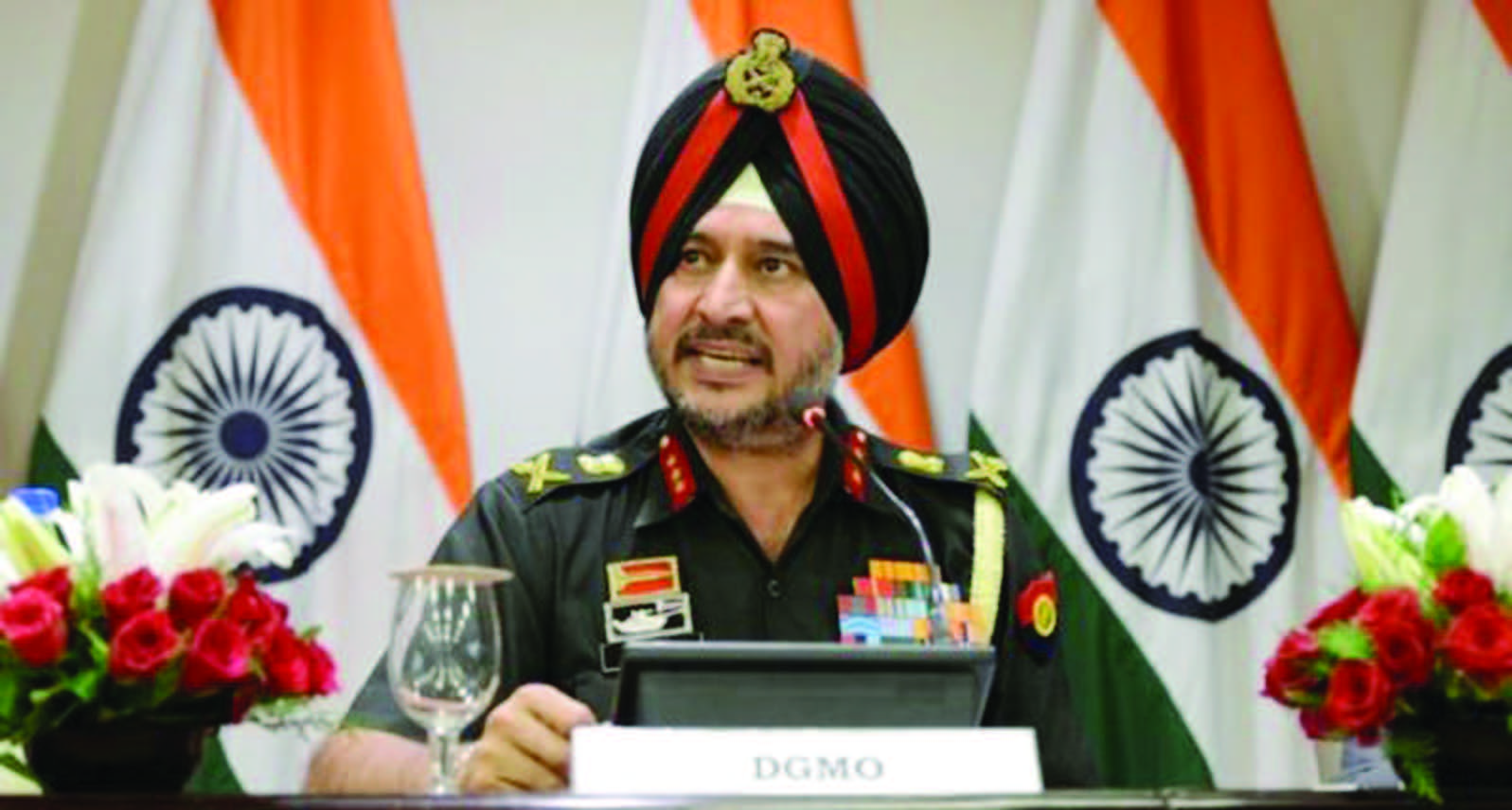
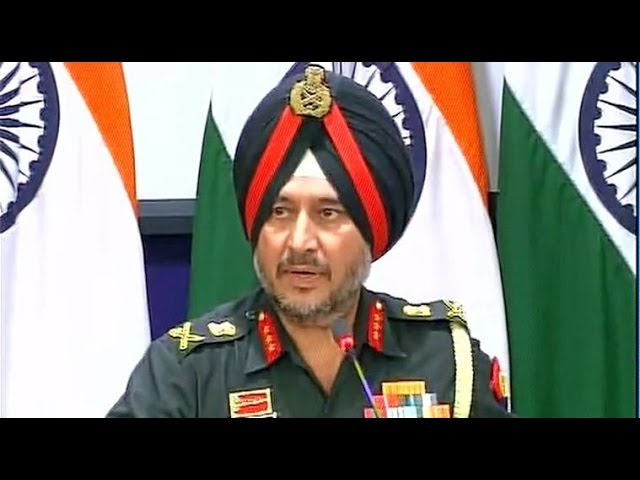
    India’s Director General of Military Operations, Lt Gen Ranbir Singh, also blamed Pakistan for “being unable to control terror activities in territories under its control”.

    “Based on receiving specific and credible inputs that some terrorist teams had positioned themselves at launch pads along the Line of Control to carry out infiltration and conduct terrorist strikes inside Jammu and Kashmir and in various metros in other states, the Indian army conducted surgical strikes at several of these launch pads to pre-empt infiltration by terrorists,” a statement said.

    It said the “surgical strikes” had caused “significant damage to terrorists”.

    The Press Trust of India quoted sources saying the operation took place between midnight and 04:30 local time on Thursday, September 29, that it was a combination of helicopter and ground forces, and seven militant “launch pads” had been targeted.

    Some unconfirmed Indian media reports said more than 30 militants had been killed in the operation.

    The entire operation was monitored for the entire night by Defence Minister Manohar Parrikar, Army chief General Dalbir Singh Suhag, and National Security Advisor Ajit Doval from the Army headquarters in New Delhi.

    Narendra Modi’s BJP government swept to power promising a tough line on Pakistan, so it has been under tremendous pressure to retaliate after the 18 September attack on the army base in Uri in Indian-administered Kashmir. The raid was the deadliest of its kind for years.

    “I assure the nation that those behind this despicable attack will not go unpunished,” Mr. Modi declared just hours after the base was attacked.

    There was also much talk of whether India should continue with its doctrine of “strategic restraint” against Pakistan.

    The response in India has been predictably supportive of the army. The Indian Panorama received reports of ecstatic celebrations of the Indian military strike in various parts of India. All political parties, regardless of differences with the ruling BJP have expressed total approval of the military action. That is the strength of democracy in India.

    Pakistan prime minister, Nawaz Sharif, criticized the “unprovoked and naked aggression of Indian forces” and said his military was capable of thwarting “any evil design to undermine the sovereignty of Pakistan”.

    Islamabad says India’s stance is a “blatant attempt” to deflect attention from human rights abuses in the region.

    Meanwhile, nations across the world are watching the situation. Britain on Thursday asked India and Pakistan to exercise restraint in the wake of surgical strikes by Indian troops across the Line of Control, while China said it was in touch with both countries to reduce tensions.

    A spokeswoman for Britain’s Foreign Office said: “We are monitoring the situation closely following reports of strikes carried out by the Indian Army over the LoC in Kashmir. We call on both sides to exercise restraint and to open dialogue.”

    In Beijing, foreign ministry spokesman Geng Shuang told a media briefing that China was in “communication with both sides through different channels” and hoped Indian and Pakistan “can enhance communication, properly deal with differences and work jointly to maintain peace and security”.

    Shuang was responding to questions on whether tensions between India and Pakistan after the terror attack in Uri had figured in the first anti-terror dialogue between New Delhi and Beijing earlier this week.

    A foreign ministry statement issued on Wednesday had said China values Pakistan’s position on Kashmir but hopes Islamabad and New Delhi will resolve the issue through dialogue and “maintain regional peace and stability by joint efforts”.

    India has “all legal and internationally accepted rights” to respond to any attack on her sovereignty and territory, Iqbal Chowdhury, advisor to Bangladesh Prime Minister Sheikh Hasina, said after the surgical strikes.

    Chowdhury said there had been a “violation from the other side andBangladesh always believes that any aggression or attack on the sovereignty…and legal right of a country is not acceptable”. He appealed for “restraint” from all sides to ensure peace in the region.

    There was no immediate reaction from the US to the surgical strikes. Hours before India announced it had carried out the strikes, US National Security Advisor Susan Rice called on Pakistan to “combat and delegitimize” terror groups operating from its soil, including Jaish-e-Muhammad, which Indian blamed for the attack in Uri that killed 18 soldiers.

    Rice condemned the “cross-border attack” on an Indian Army camp in Uri and highlighted the “danger that cross-border terrorism poses to the region” during a phone call to her Indian counterpart Ajit Doval. She said the US expects Pakistan to take “effective action to combat and delegitimize United Nations-designated terrorist individuals and entities, including Lashkar-e-Taiba, Jaish-e-Muhammad, and their affiliates”.

    This was seen as a major snub for Pakistan after Prime Minister Nawaz Sharif’s attack on India in his speech at the UN General Assembly.

    “It were as if Rice was rebutting Sharif here,” said an Indian diplomat obviously pleased with the US response, which some in India had perceived as insipid so far, given the context of terrorism being a shared challenge.

    Rice’s comments were also seen as significant against the backdrop of the foreign policy crisis in South Asia over India’s boycott of the South Asian Association for Regional Cooperation (Saarc) Summit in Islamabad.

    Rice’s remarks, reaffirming President Barack Obama’s “commitment to redouble our efforts to bring to justice the perpetrators of terrorism throughout the world”, were seen as an endorsement of India’s position. The US had not named Pakistan in its first reaction to the Uri attack.

    The statement also tapped into a growing sense of dissatisfaction and frustration with Pakistan, a non-NATO ally and a major beneficiary of US financial aid and arms supplies.


  • India Responds with Surgical Strikes Across Line Of Control in PoK on Terror Camps

    India Responds with Surgical Strikes Across Line Of Control in PoK on Terror Camps

    In a direct action on rising terror attacks launched from Pakistan into Indian Kashmir, The army has carried out surgical strikes in Pakistan occupied Kashmir to prevent Pakistani terrorists who had “positioned themselves at launch pads with the aim to carry out strikes in Jammu and Kashmir and other metros,” said the army today, Sep 29.

    “India conducted surgical strikes last night across the LoC to safeguard our nation, the Defence Ministry said on Thursday. Significant casualties have been caused to terrorists and those trying to shield them. We don’t have a plan to further conduct such strikes. India has spoken to Pakistan,” DGMO Lt Gen Ranbir Singh said while addressing the media.

    “There were launch pads at the LoC where terrorists were present waiting to infiltrate the nation and attack areas in Kashmir and metros across the country,” the DGMO said. No Indian casualties occurred during the surgical strikes that were carried out last night by the Indian Army.

    “We have recovered items including GPS which have Pakistani markings. Captured terrorists hailing from PoK or Pakistan have confessed to their training in Pakistan or in Pakistan controlled region,” Singh said.

    “I spoke to the Pak DGMO, shared our concerns and told him that we conducted surgical strikes last night: DGMO Singh said.

    The army also said Pakistan was informed – in keeping with protocol – of the cross-border strike and that the action came after escalating violations of the 2003 ceasefire. The army added that recently captured terrorists have confessed to their training and arming in Pakistan and Global Positioning Systems recovered from them further established their firm Pakistani connect.

    A surgical strike is “a calculated maneuver to ensure you deliver maximum damage which gives a big surprise to your adversary,” explained former air chief Fali Major, praising last night’s operation for its execution.

    PM Narendra Modi had informed President Pranab Mukherjee, Vice President and former Prime Minister Mahmohan Singh on the surgical strikes. Jammu and Kashmir Governor and CM Mehbooba Mufti have also been informed about the surgical strike.

    The press conference was jointly conducted by the Ministry of External Affairs and the Ministry of Defence.

    Meanwhile, Pakistan, in a statement issued has said: At least two Army men were killed as Indian and Pakistani troops exchanged fire over the Line of Control in “Azad Jammu and Kashmir”. The exchange of fire began at 2:30am, ISPR said, and continued till 8:00am. “Pakistani troops befittingly responded to Indian unprovoked firing on the LoC in Bhimber, Hotspring Kel and Lipa sectors,” the statement said.

  • India calls Pakistan a terrorist state in furious Right of Reply at UN

    India calls Pakistan a terrorist state in furious Right of Reply at UN

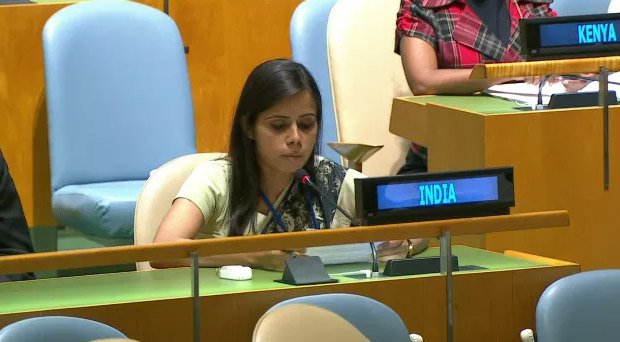
    WASHINGTON: Replying to Nawaz Sharif’s statement at the General Debate of 71st UNGA,  India’s First Secretary Eenam Gambhir (Follow her on Twitter @ Eenam Gambhir @eenamg)  directly took on Pakistan calling it a terrorist state and a global epicenter of terrorism.

    “The worst violation of human rights is terrorism. When practiced as an instrument of state policy it is a war crime,” said Gambir in India’s right of reply to Prime Minister Nawaz Sharif’s speech, in which he had raised the human rights situation in Jammu and Kashmir.

    Gambhir’s response to what she described as Pakistan’s “long tirade” about the situation in J and K, expressed earlier in a speech by the country’s prime minister Nawaz Sharif, was short, furious, and unprecedented in its intensity and descriptions.

    It also indicated a new Indian resolve to have Pakistan formally designated a nuclear proliferating terrorist state based on Islamabad’s use of terrorism as state policy and evidence of its nurturing of terror groups.

    Reminding the UN of how so many terrorist attacks, including that on 9/11 in U.S., led to Pakistan, she said, “The land of Taxila, one of the greatest learning centres of ancient times, is now host to the Ivy League of terrorism.” There was a specific reference to the hunt for Osama bin Laden leading to Abbottabad, Pakistan, where he was found and killed next to a Pakistan military garrison. Several other major terrorists including Mullah Omar, Ramzi Yousef, and Khalid Shaikh Mohammed, not to speak of numerous foot soldiers, including last week’s New York bomber, have found refuge and inspiration in Pakistan.

    “It attracts aspirants and apprentices from all over the world. The effect of its toxic curriculum are felt across the globe,” Gambhir explained, as India for the first time brought to the world’s attention the fallout of Pakistan’s nurturing of terrorist groups that the U.N itself has recorded and proscribed.

    “It is ironical therefore that we have seen today the preaching of human rights and ostensible support for self-determination by a country which has established itself as the global epicentre of terrorism,” she added in a reference to Sharif’s remarks on Jammu and Kashmir.

    More humiliation followed as Gambhir also raised the issue of the international aid to Pakistan being diverted for terrorism, raising the possibility that New Delhi will now begin a campaign to cut off assistance on which Islamabad subsists.

    IMF Chief Christine Lagarde is expected to go to Pakistan shortly in what will be the first visit by a top executive in a decade as Pakistan’s economy spirals down.

    “What we see in Pakistan, Mr. President, is a terrorist state, which channelizes billions of dollars, much of it diverted from international aid, to training, financing and supporting terrorist groups as militant proxies against it neighbors,” the Indian Rep told the UN, many of whose members give aid that enables Pakistan to survive.

    “Terrorist entities and their leaders, including many designated by the UN, continue to roam its streets freely and operate with State support. With the approval of authorities, many terrorist organizations raise funds openly in flagrant violation of Pakistan’s international obligations,” Gambhir told them.

    India also took aim at the internal tensions in Pakistan, calling it a “country with a democracy deficit.”

    “In fact it practices terrorism on its own people. It extends support to extremist groups, it suppresses minorities and women and denies basic human rights including through draconian laws,” Gambhir told UN delegates, in what is just a warm-up to External Affairs Minister Sushma Swaraj’s speech expected later in the week.

    In one short sentence, the Indian representative told the U.N, including many OIC and Arab monarchies and dictatorships that profess support to Pakistan on the Kashmir issue, but are also victims of terrorism: “As a democracy India is firmly resolved to protect all our citizens from all acts of terrorism in Jammu and Kashmir. We cannot and will not allow terrorism to prevail.”

    She also reminded them that India’s (and Pakistan’s) neighbors (which include Muslim-majority Afghanistan, Bangladesh, and Iran) suffer the consequence of Pakistan’s state-sponsored terrorism, even as its consequence had spread well beyond the region.

    Terrorists inspired, facilitated, and trained in Pakistan have struck throughout the world, including in New York, London, San Bernardino, and Brussels, among other cities.

    The Indian representative also ridiculed Sharif’s talk of nuclear restraint and peace, reminding the U.N that Pakistan’s “nuclear proliferation record is marked by deception and deceit.”

    Click here to read the statement made in its entirety (Courtesy –  Permanent Mission of India to the UN)

  • The deadly #URI Ambush | India blames Pakistan

    The deadly #URI Ambush | India blames Pakistan

    At least 17 troops were killed in a pre-dawn ambush by militants in Kashmir on Sep 18.

    An attack of a suicidal nature, sponsored and launched from across the LoC was expected any time before the Pakistan prime minister’s speech at the UN General Assembly.

    Heavily armed militants crossed the “line of control” with Pakistan before launching an early Sunday raid on the Indian army’s 12th brigade infantry base housing hundreds of soldiers in Uri, west of the region’s main city of Srinagar.

    Indian General Ranbir Singh said all four gunmen were “foreign terrorists” and that initial information suggested they were part of militants group Jaish-e-Mohammed, which is based in Pakistan. He added that the gunmen were carrying “some items that had Pakistani markings.”

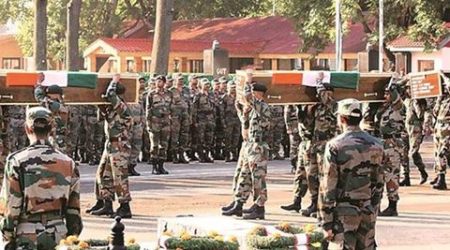
    The assailants were killed, but there were more casualties on the Indian side. “We salute the sacrifice of 17 soldiers who were martyred in the operation,” the army said in a statement. It said 25 troops were injured, some of them airlifted for medical treatment.
    The garrison was hosting more troops than usual, as one battalion was in the process of handing over field duties to another one. As a result, a large number of soldiers were accommodated in tents and temporary shelters. Most of the victims of the Sunday raid died when their tents caught fire.
    Pakistan’s Role Evident: Indian Home Minister Rajnath Singh called an emergency meeting of top defense officials and blamed Pakistan for the attack.

    “I am deeply disappointed with Pakistan’s continued and direct support to terrorism and terrorist groups,” he said.

    The minister also canceled a diplomatic trip to Russia and the United States that was due to start on Monday.

    “Pakistan is a terrorist state, and it should be identified and isolated as such,” Singh said on Twitter.

    Islamabad denied involvement in the attacks.

    “India immediately puts blame on Pakistan without doing any investigation. We reject this,” Pakistani Foreign Ministry spokesman Nafees Zakaria told the Reuters news agency.

  • #URIATTACK – World Reacts

    #URIATTACK – World Reacts

    Sep 18, The United Kingdom in strong words today condemned the terrorist attack on J&K’s Uri which claimed the lives of 20 soldiers and injured 27 and came out in support of India.

    “I offer my deepest condolences to the victims and their families and friends. The UK condemns all forms of terrorism, and stands shoulder to shoulder with India in the fight against terrorism, and in bringing the perpetrators to justice,” stated Boris Johnson, Foreign Secretary in a statement.

    US strongly condemns terrorist attack

    The United States condemned the terrorist attack at the Army administrative base in Jammu and Kashmir’s Uri which killed 17 soldiers.

    “The United States strongly condemns the terrorist attack on an Indian army base in Kashmir during the early morning of September 18,” read the statement.

    The US came out in support of India stating, “The United States is committed to our strong partnership with the Indian government to combat terrorism”.

    “We extend our condolences to the victims and their families,” the State Department Spokesman John Kirby said.

    Meanwhile, the US Ambassador to India Richard Verma also tweeted condemning the attack.

    Heavily armed terrorists today stormed a battalion headquarters of the Army in North Kashmir’s Uri town, killing 17 jawans and injuring 19 others. Four terrorists were killed by the security forces. Combing operations are underway at the base.

  • UN Secy Gen Ban Ki-moon condemns Uri attack

    UN Secy Gen Ban Ki-moon condemns Uri attack

    United Nations Secretary General Ban Ki-moon has condemned the terrorist attack on Uri in Jammu & Kashmir.

    The response comes in the middle of the 71st United Nations General Assembly (UNGA) at the UN headquarters in New York.

    A statement issued by the United Nations stated, “The Secretary-General condemns today’s militant attack in Uri, Jammu and Kashmir. He expresses his deepest sympathy and condolences to the families of the soldiers who lost their lives and to the Government of India. He wishes a speedy recovery to those injured. The Secretary-General hopes that the perpetrators of this crime will be identified and brought to justice.”

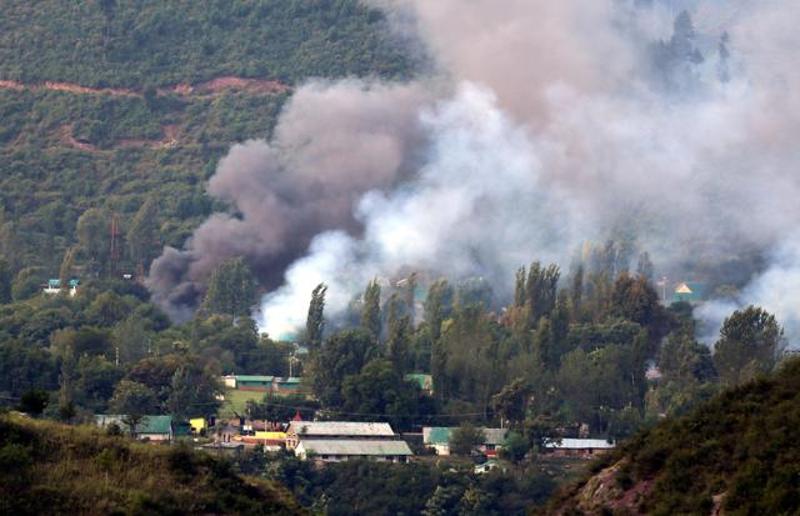
    smoke-rises-from-the-uri-brigade-camp-during-the-september-18-2016-terror-attackuri-attack-uri-terror-attack-uri-jawans-killed-uri-jawans-uri-jawansThe attack has claimed the lives of 18 soldiers and injured 19 others.

    The attack stared at 4:30 am September 18.


  • #Uri attack:Punjab traders talk of severing trade ties with Pak

    #Uri attack:Punjab traders talk of severing trade ties with Pak

    Chandigarh, Sep 19 (TIP) Punjab traders dealing in import and export of goods with Pakistan today sought a fitting reply in the aftermath of Uri attack, threatening to end Rs 3,000 crore worth of trade with the neighbouring country for the “heinous act”.

    “Time has come for India to take strict and swift action against Pakistan which is responsible for the Uri terror attack that left our several soldiers dead,” Amritsar-based trader and President of Federation of Dry Fruit and Haryana Commercial Association, Anil Mehra, told PTI today.

    “The Modi government should suspend all sorts of ties with Pakistan in response to the terror attack unleashed on Indian soil,” Mehra suggested.

    Noting that there is a great amount of anger against this terror attack, which left 18 soldiers dead, Mehra said traders in Punjab are ready to end trade ties with Pakistan through the Attari-Wagah land route.

    “We urge the Centre to even stop trade with Pakistan through Attar-Wagah land route. We are ready for ending trade ties with the neighbouring country, which is responsible for such an attack. For us, the country comes first and then comes trade. We will do something else for our livelihood,” said Mehra.

    Traders asserted that it is Pakistan which is the most dependent on India for import of goods like vegetables, including tomatoes, ginger, garlic and spices, cotton yarn and the like.

    Pakistan exports cement, gypsum and dry fruits to the country via the Attari-Wagah land route.

    “If we today stop sending tomatoes which has been the major export item to Pakistan, they will face immense shortage of this perishable commodity. Moreover, if we do not import dates from Pakistan, they will not find buyers for this,” he added.

    Traders further said Pakistan had not even allowed export of onions to India last year when the country was facing shortage. India then imported onions from Afghanistan.

    Pakistan allows import of 137 items from India through Attari-Wagah.

    As per estimates, the total volume of trade between the two nations via Attari-Wagah is estimated at Rs 3,000 crore per annum.

    India and Pakistan had resumed cross-border movement of trucks in October 2007 after a gap of sixty years from Attari check post at Amritsar in India to Wagah border in Pakistan.

    An integrated check-post was set up on the Attari-Wagah border in 2012 at an estimated cost of Rs 150 crore for smooth movement of traffic.

  • Uri attack: India to declare Pakistan state sponsor of terror, may launch punitive strikes

    Uri attack: India to declare Pakistan state sponsor of terror, may launch punitive strikes

    Hardening its stance on terrorism in the wake of Sunday’s attack on an Indian Army base in Uri, India is actively considering imposition of material damage on Pakistan. There may even be a punitive strike in response to ceasefire violations and infiltration.

    Based on Prime Minister Narendra Modi’s instructions, Defence Minister Manohar Parrikar, NSA Ajit Doval and Army chief Gen Dalbir Singh sat down together in South Block to discuss the ground operations that can be launched by the Army Special Forces.

    Highly placed sources in the national security apparatus confirmed that very soon results on ground would be seen and felt but no loud announcements would be made.

    The PM held several meetings in the morning today with the Cabinet Committee for Security attended by all top ministers including home minister Rajnath Singh, finance minister Arun Jaitley and NSA which discussed all diplomatic and offensive options.

    Talking about the measures deliberated upon at the meeting, top sources in the government told India Today that diplomatic talks with Pakistan may now be off the table. There may not be any dossier diplomacy.

    Sources also said PM Modi has given his nod to diplomatically isolate Pakistan at every international grouping in the wake of the Uri attack.

    MoS Defence Subhash Bhamre has attacked Pakistan army and said that it is to be blamed for Uri attacks. He said, “Jaish-e-Mohammad couldn’t have operated without Pakistan army’s support.”

    He said, “We will call for diplomatic isolation of Pakistan on international stage.”

    The action plan is as follows:

    1. Declare Pakistan a state sponsor of terror

    2. Scale down diplomatic ties with Pakistan

    3. Scale down economic ties with Pakistan

    4. Punish Pakistan along the LoC for infiltration and ceasefire violation

    5. There is likely to be bombing of Pakistani posts along the LoC, but not immediately

    The government feels all political parties are united on teaching Pakistan a lesson. Hence, executing the plan to make Pakistan bleed may not be a hindrance, the sources said.

    “DEFENCE, INTERNAL SECURITY TOP PRIORITY”

    Defence and internal security will be top priority of the government. The Pakistani posts that aid infiltration will be punished.

    The Ministry of Home Affairs will strengthen internal security grid across Jammu and Kashmir for operations to be carried out. In fact, the government will launch a simultaneous diplomatic and economic offensive against Pakistan.

    Deliberations also took place on India declaring Pakistan a terror sponsor state. India will work on UN and other world bodies to declare Pakistan a state sponsor of terror.

    These options are at a discussion stage. A final decision is likely to be taken very shortly, the sources said.

  • Kashmir Remains Paralyzed For 69th Consecutive Day

    Kashmir Remains Paralyzed For 69th Consecutive Day

    For 69th consecutive day and after violence has claimed over 80 lives in the Valley, life remained paralyzed.

    In view of the continuing protest in Srinagar, the authorities made heavy deployment of the security forces in the city today, Sep 15.

    A senior police official said: “Heavy deployments of police and paramilitary forces have been made in Srinagar and other district headquarters of the valley to maintain law and order today (Thursday)”.

    The separatists continued their protest shutdown because of which public transport, main markets and other businesses have remained shut.

    All schools, colleges and universities remained closed along with train services between Baramulla town and Jammu’s Bannihal town also suspended.

    Internet facilities since Monday was down in the Valley. Calling was only allowed on BSNL postpaid.

    All the separatists leaders were placed in the preventive detention in Srinagar.

    forces to restore traffic always resulted in clashes between them.

    A total of 86 persons were killed and 11,500 injured in the ongoing unrest that started on July 9 a day after Hizbul Mujahideen commander Burhan Wani was killed.

    Blow to Mehbooba Mufti as PDP MP Tariq Hamid Karra resigns from party, Lok Sabha 

    Adding fuel to fire, senior Peoples Democratic Party (PDP) leader and Lok Sabha member Tariq Hamid Karra on Thursday, Sep 15, resigned both from the party and the Parliament in a clear no confidence sign in the BJP-PDP alliance government in Jammy & Kashmir.

    Karra tendered his resignation citing the government’s failure to deal with the violence that engulfed the state following the killing of Hizbul Mujahideen militant Burhan Wani on July 8.

    “I have resigned from the primary membership of PDP and Parliament,” Karra was quoted as saying by the ANI.

    Karra, who served as the state’s Finance minister in the PDP government led by Mufti Mohammad Sayeed in 2002, was against the alliance between PDP and Bharatiya Janata Party in J&K.

  • Pakistan drops charges against 26/11 accused, says no proof

    Pakistan drops charges against 26/11 accused, says no proof

    ISLAMABAD (TIP): Pakistan’s Federal Investigation Agency (FIA) has dropped charges against an accused in the 26/11 Mumbai attack case citing a lack of evidence.

    Local media reported on Thursday that FIA submitted a chargesheet before an anti-terrorism court (ATC) and placed the suspect, Sufiyan Zafar+ , in the second column, which means that no evidence was found against him. But the prosecution told the court that Zafar, a suspected financier of the Mumbai attack, is still being investigated and ordered FIA to submit a separate challan to the court on September 22.

    Zafar was arrested last month on a charge of financing the 26/11 Mumbai attacks in November, 2008. FIA documents revealed that Zafar, a former activist of the now banned Lashkar-e-Taiba+ , had provided financial assistance to other suspects in the case.

    The chargesheet against him mentioned that he had transferred Rs 14,800 into a suspect’s account.

    He was declared a proclaimed offender in 2011 when the ATC indicted seven people, including Zakiur Rehman Lakhvi, a key planner, facilitator and executor of the Mumbai attacks.

    Waseem Ranjha, FIA’s deputy director (legal), informed the court that they were interrogating Zafar in Rawalpindi’s Adiala Jail. (AP)