Tag: Terror Attacks in India

  • WILL ONLY DISCUSS CROSS-BORDER TERROR, INDIA TELLS PAK

    WILL ONLY DISCUSS CROSS-BORDER TERROR, INDIA TELLS PAK

    NEW DELHI (TIP): India is ready to hold talks with Pakistan only on the issue of terrorism emanating from the territory of the neighbouring country and affecting the entire region.

    Foreign Secretary S Jaishankar on Wednesday wrote to his Pakistani counterpart,

    A A Chaudhry, stating that New Delhi was willing to discuss with Islamabad only issues concerning cross-border terrorism, which remained its “core concern”.

    Jaishankar’s letter to Chaudhry also mentioned that terror emanating from Pakistan was targeting not only India, but also other nations in the region.

    India’s reference to cross-border terrorism being sponsored from Pakistan and affecting other countries in the region came to public domain on a day when Afghanistan charged that Wednesday’s attack on the American University in Kabul had been “organised and orchestrated from the other side of the Durand Line (Pakistan)”. Thirteen people were killed and 45 injured in the terror attack.

    Jaishankar’s letter was in response to a communiqué from Chaudhry, who on August 19 had invited his counterpart in New Delhi to travel to Islamabad “by the end of this month to discuss the Jammu and Kashmir dispute with a view to finding a fair and just solution as per the United Nations Security Council resolutions and aspirations of the people of Jammu and Kashmir”.

    The foreign secretary’s letter was delivered to his counterpart in the Pakistan government through diplomatic channels on Wednesday.

    New Delhi’s latest communiqué to Islamabad also stressed that Pakistan should immediately vacate the territories it had been illegally occupying in Jammu and Kashmir, which had been and would always remain an integral part of India, sources told DH.

    India, last week, set clear terms for talks with Pakistan — outlining a five-point agenda and asking the neighbouring country to stop exporting terror and inciting violence in Jammu and Kashmir.

  • Burhan’s ‘successors’ surface on social media

    Burhan’s ‘successors’ surface on social media

    SRINAGAR (TIP): For the first time after the killing of Hizbul Mujahideen commander Burhan Wani, a video of the group has surfaced on social media featuring two militants one of whom is likely his successor.

    In the over one-minute video Sabzar Ahmad and Zakir Rashid Bhat are seen in Army fatigues at an undisclosed forest area in south Kashmir. While the video is being circulated through social networking sites, there is no audio message in it.

    After the killing of Burhan, Hizbul Mujahideen had named Mehmood Ghaznavi as the new commander of the outfit and police and intelligence agencies were trying to ascertain his identity. They, however, suspect that that one of the two Sabzar or Zakir, both residents of Tral, may have replaced Burhan.

    In the video, Sabzar in Army fatigues along with other associates is seen waving to the camera. Zakir is seen playing on his mobile phone. One of the militants, whose identity is yet not known, in the video is seen handling his gun.

    Both Sabzar and Zakir are among the new crop of young militants who were close confidantes of Burhan, and whose death triggered a massive unrest and has kept the Valley on the edge for the past three weeks. “Sabzar and Zakir are also technology-savvy and they know that Burhan owed his ‘popularity’ and ‘status’ among youth, largely to social media, so they will also follow his footsteps. This first video after the death of Burhan, showing both Sabzar and Zakir is a hint towards their future strategy,” said a security official, adding that were trying to ascertain the identity of other militants in the video.

  • BSF, PAKISTAN RANGERS HOLD TALKS IN LAHORE TO DISCUSS BORDER ISSUES

    BSF, PAKISTAN RANGERS HOLD TALKS IN LAHORE TO DISCUSS BORDER ISSUES

    NEW DELHI (TIP): Ahead of home minister Rajnath Singh’s visit to Pakistan for SAARC interior minister and home minister conference, the Border Security Force and Pak Rangers met in Lahore for three days — from July 25 to July 28 — to discuss several issues related to ceasefire violations, infiltration and drugs smuggling.

    The BSF delegation was led by Director General K K Sharma and the Pakistan delegation was led by Director General Pakistan Rangers (Punjab), Major General Umar Farooq Burki.

    A BSF statement said that “the meeting was held in a cordial atmosphere and with a spirit of cooperation. It was agreed that since the last such meeting in Delhi in September 2015, there has been a greater adherence to ceasefire along the International border.”

    K K Sharma stressed during the meeting the importance of vigilance against cross border infiltration to prevent terrorist activities and check smuggling in narcotics.

    Both sides discussed ways to strengthen measures to coordinate border patrolling on their respective sides of the border and address each other’s concerns in a time bound manner.

    The Joint Record of Discussion charting a future route map of cooperation between the two border guarding forces was also signed on Thursday.

    BSF has invited DG Pakistan Rangers (Punjab) to visit India for the next round of the bi-annual talks.

    “The talks ended on an optimistic note with both sides agreeing on constant endeavor to maintain peaceful and tranquil borders,” said a BSF statement.

  • US, India conspiring against Pakistan, says Hafiz Saeed at Eid prayers in Lahore

    US, India conspiring against Pakistan, says Hafiz Saeed at Eid prayers in Lahore

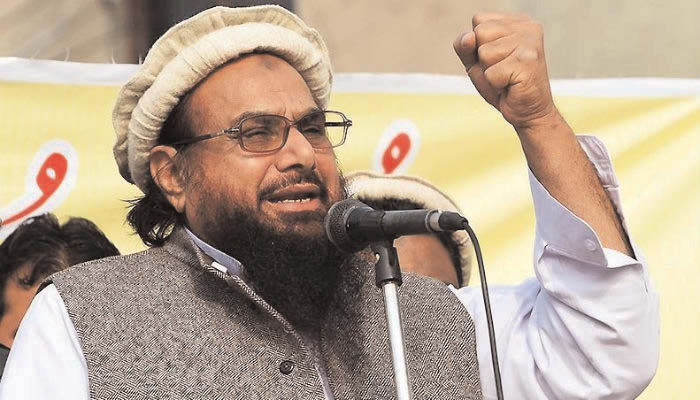
    LAHORE (TIP): JuD chief and Mumbai attack mastermind Hafiz Saeed on July 6 led Eid-ul-Fitr prayers in the city where he sought to whip up hysteria, saying the US and India are signing agreements against Pakistan and there are preparations for a “big war”.

    Addressing a large gathering at the Gaddafi Stadium, the Lashkar-e-Taiba founder called for unity among Muslim community “to fail the design of infidels”.

    He said international players are conspiring against Pakistan’s nuclear programme.

    “The United States and India are signing agreements against Pakistan and there has been a preparation of a big war”, he said, alleging “drones are parked at Indian airports and our rulers are engaged in a fight with opposition.”

    Saeed, on whose head the US has put a bounty of $10 million, termed Pakistan and Saudi Arabia’s growing distance with the US as a “blessing in disguise”.

    “It is a blessing in disguise that Pakistan and Saudi Arabia are getting distanced from America. This will lay foundation of the Islamic Union which is the need of the hour for the Islamic world,” he said.

    He condemned the terror attack in Saudi Arabia and alleged the involvement of “foreign hands” in destabilising the Muslim world.

    A large number of people offered their prayer behind Saeed amid tight security with police personnel and JuD security wing members deployed in and outside the stadium. Saeed has been leading the Eid prayers at Gaddafi Stadium for the last many years.

    India has repeatedly asked Pakistan to bring Saeed to justice for masterminding the 2008 Mumbai attacks. He has often been seen addressing anti-India rallies in Pakistan. Islamabad says it has no proof against the Jamat-ud-Dawa chief. A total of 166 people were killed in the attack orchestrated by the LeT in November 2008. (PTI)

  • India using Pathankot attack to derail talks: Pakistan

    India using Pathankot attack to derail talks: Pakistan

    ISLAMABAD (TIP): Pakistan on June 9 accused India of using the Pathankot terror attack as an “excuse” to derail the bilateral dialogue process and said that talks are the best way forward to resolve outstanding issues, including “mutual concerns” related to terrorism.

    Pakistan Prime Minister’s Advisor on foreign affairs Sartaj Aziz said that peaceful neighbourhood was part of the government’s policy.

    He said Pakistan and India had agreed to start the dialogue in December 2015 when Indian foreign minister Sushma Swaraj visited Pakistan.

    “But before the foreign secretaries could meet and finalise a schedule for resuming the Comprehensive Dialogue, the Pathankot incident of 2 January 2016 gave India an excuse to postpone the resumption of the dialogue,” he said.

    “Pakistan believes that dialogue is the best way forward to resolve outstanding issues, including mutual concerns related to terrorism,” he said.

    He said Pakistan sent a joint investigation team to India and has already initiated the required investigation against those alleged to be involved.

    The India-Pakistan talks were was stalled after the January 2 attack on Pathankot airbase in which seven Indian security personnel were killed.

    India has accused Pakistan-based terror group Jaish-e-Mohammed for the attack and has linked the resumption of the dialogue process to the action taken by Pakistan against the group.

    Aziz addressed the media here to highlight achievements of Prime Minister Nawaz Sharif ‘s government.

    To a question, Aziz said that Pakistan would continue to support Kashmiris’ struggle for the right of self-determination at bilateral level in talks with India as well as at multilateral forums like the UN.

    Aziz reiterated that US drone attack on May 21 which killed Afghan Taliban leader Mullah Mansour damaged the efforts for peace and reconciliation in Afghanistan.

    “The recent drone attack in Balochistan in which the Taliban leader Mullah Akhtar Mansour was killed, has breached our sovereignty, caused a serious setback to the peace efforts and intensified hostilities in Afghanistan. The drone strike must, therefore, be condemned by all stakeholders,” he said.

    He said Pakistan’s relations with the US have improved since Sharif took over but the main issue affecting the ties is American indifference towards security needs of Pakistan.

    “In our interactions, we firmly conveyed to the US that maintaining effective nuclear deterrence is critical for Pakistan’s security and only Pakistan itself can determine how it should respond to the growing strategic and conventional imbalances in South Asia,” he said.

    (PTI)

  • Hafiz Saeed Threatens India With Nuclear-Powered Drone

    Hafiz Saeed Threatens India With Nuclear-Powered Drone

    The alleged mastermind of 26/11 Mumbai terror attacks and Jamaat-ud-Dawah (JuD) chief Hafiz Saeed has threatened India of dire consequences if it shows aggression against Pakistan.

    He warned that Pakistan would not mind to use nuclear bombs if India attacks.

    Hafiz Saeed took to Twitter and posted: “If any drone or any aggression takes place against Pakistan from Indian bases, we have enough drones for whole India.”

    Earlier this year, reportedly the JuD chief had launched a mass recruitment drive of terrorists to execute its anti-India plans. Also, reports state that Saeed had visited various launching pads near the Indo-Pakistan border from where terrorists are being infiltrated to India.

    Recenlty, India India erected latest Laser walls at the International Border for full-proof security. Saeed stayed near border for two days and he had made provocative speeches in around 10 villages.

  • NIA approaches FBI, other agencies to track cyber footprints

    NIA approaches FBI, other agencies to track cyber footprints

    The National Investigation Agency (NIA) has approached probe agencies of some foreign countries, including the US’ Federal Bureau of Investigation (FBI), in connection with its probe into the Pathankot terror attack.

    The help of the agencies is being sought even as Central probe agencies still await a formal response from Pakistan for allowing a NIA team to that country for a thorough investigation.

    Official sources said today that the help of some of the agencies, including the FBI, had been sought for tracking some of the cyber footprints that had been left by handlers of Pakistan-based terror outfit Jaish-e-Mohammed (JeM) in the aftermath of the attack on the strategic IAF base at Pathankot on the intervening night of January 1 and 2.

    Immediately after the attack, Abdul Rauf, brother of Jaish chief Maulana Masood Azhar, was seen on a video taking responsibility on a website ‘alqalam.com’ and ‘rangonoor.com’ which were hosted by a US-based domain service provider.

    While ‘alqalam’ was shut down before the arrival of Pakistan’s Joint Investigation Team (JIT) to India last week, the other one remains hosted but the video has been removed.

    The payments for the same website have been routed through a European country and NIA has sought details of the persons who made the payments and was subsequently renewing the contract with the domain provider, the sources said.

    The NIA has also approached other international agencies regarding the weapons and other equipment seized after the 80-hour gunbattle with the terrorists at Pathankot.

    NIA has conveyed to the Pakistani JIT which was headed by Additional Inspector General of Police, Counter Terrorism Department, Muhammad Tahir Rai and also including ISI’s Lt Col Tanvir Ahmed, that the cooperation was extended in accordance with terms of reference mutually agreed on the basis of reciprocity and that it was waiting for a permission to visit that country.

    The NIA has also sent a Letters Rogatory to Pakistan for which a response was still awaited.

    The sources said NIA has provided all the evidence to the Pakistani JIT on the basis of written requests submitted by them to the central probe agency.

    The terrorists entered the air base and mounted the brazen assault on the intervening night of January 1 and 2. In the fierce encounter that ensued, seven security personnel besides four terrorists were killed.

  • PAKISTAN ACCEPTS INVOLVEMENT OF ITS NATIONALS IN PATHANKOT ATTACK

    PAKISTAN ACCEPTS INVOLVEMENT OF ITS NATIONALS IN PATHANKOT ATTACK

    NEW DELHI (TIP): In a major boost to the Indian probe into the Pathankot case, Pakistan has admitted the involvement of its nationals in the terror attack. It came in the form of the Pakistani joint investigation team (JIT)’s written request to the national investigation agency (NIA) for sharing evidence in the case. The request was made under Section 188 of the Pakistani CrPC, which applies to Pakistani nationals who commit crime outside the country, according to NIA officials.

    “The JIT submitted a written request to the NIA for sharing evidence in the Pathankot case , only then a process for providing them documents, witness statements and other information was started on Wednesday,” said a senior NIA official requesting anonymity.

    Section 188 of the Pakistani criminal procedure code applies for prosecuting those Pakistani nationals in Pakistan who have committed crime outside its jurisdiction. It is a formal acceptance of involvement of Pakistani nationals in the airbase attack,” said the official.

    The process of sharing evidence that began on Wednesday continued on Thursday as well with the JIT examining 13 witnesses in the case including Punjab’s superintendent of police Salwinder Singh, his cook Madan Gopal and jeweler friend Rajesh Verma.

    Singh, Gopal and Verma were travelling together in Punjab police official’s vehicle on the intervening night of December 31 and January 1 when four attackers overpowered them and snatched their vehicle to reach the airbase. Eight persons including seven security personnel were killed in the attack.

    A five-member JIT, including an officer of Pakistani spy agency ISI, has in India for the last five days to interact with the NIA officials who conducting probe here.

    “Examination of Salwinder happened in the presence of two officials each from the NIA and the JIT. Salwinder is being treated as witness in the case,” said another official of the NIA who also spoke on the condition of anonymity given the sensitive nature of case. The official added that the NIA probe converges with the investigation carried out in Pakistan at some place. The JIT has accepted that the attackers came from Pakistan. “The NIA and the JIT are probing same set of accused,” said the official. India probe has revealed that at least four attackers, who captured Salwinder Singh’s vehicle, had come from Pakistan after a conspiracy hatched by terror outfit Jaish-e-Mohammad, headed by Maulana Masood Azhar.

  • Former Pakistan PM Gilani visited my house after father’s death: Headley

    Former Pakistan PM Gilani visited my house after father’s death: Headley

    Yousuf Raza Gilani, who was Pakistan’s Prime Minister in 2008, had visited David Coleman Headley’s home within weeks after the 26/11 Mumbai terror attacks, the Lashkar terrorist told a Mumbai court today, giving a new twist to his testimony.

    “It is not correct to say that the then Prime Minister of Pakistan–Yousuf Raza Gilani– had attended the funeral of my father who passed away a month after the Mumbai terror attacks on 26/12/2008. Infact, he (Gilani) visited our house (in Pakistan) a few weeks thereafter,” the Pakistani-American terrorist told special judge G A Sanap, who is hearing the case against Abu Jundal in the sessions court here.

    Deposing for the third day after his cross-examination began on Wednesday, Headley said his father, who was a Director General with Pakistan Radio, knew about his links with with LeT.

    “My father was aware of my association with LeT and he was not happy about it,” he said.

    When asked was it true that his half-brother Daniel knew about his LeT connection, Headley just said that he (Daniel) was not living in the same city (in Pakistan).

    Headley, who has been convicted in the US, for his role in the November 2008 attacks, also denied using Daniel’s mobile phone during his visit to Pakistan before the dastardly strikes in Mumbai.He is serving a 35 year jail term in the US.

    During his deposition, Headley said,”Saulat Rana, my friend in Pakistan, was aware of my connection with LeT and my visit to Mumbai prior to the 26/11 attacks.”

    “Rana neither objected nor encouraged me,” he told the court.

    On whether Rana was associated to LeT, Headley said, “No”. When asked whether he (Headley) toured Pakistani locations with Rana before the Mumbai attacks, he replied in the negative and wondered why he would go around in Pakistan when the target was India.

    Headley also told the court that he had no knowledge of any women cell and suicide bomber cell in LeT.

    He denied that NIA suggested to him to name Ishrat Jehan (in the case). He also refuted meeting special public prosecutor Ujjwal Nikam and Joint Commissioner of Police, (Crime) in USA before his deposition in February this year.

    When asked if he was treated for any mental illness, Headley replied in the negative and chuckled, “Yeh kya kya cheeze mere khaate mein daal rahe hain Wahab Sahab. Nahin, aisa koi wakya nahin hua (Wahab Sahab, what all things are you ascribing to me…nothing of this sort happened).”

    Headley also said that he does not know about who decided the date for the first attack (failed one in Mumbai).

    Earlier in the day, Headley told the court that he had “arranged” a fund-raising programme for the Shiv Sena in the US and had planned to invite the then party supremo Bal Thackeray to the event.

  • Hated India Since School Was Bombed In 1971:  Headley

    Hated India Since School Was Bombed In 1971: Headley

    MUMBAI (TIP): David Headley spoke coolly as he told a stunned Mumbai court on March 25 that he has hated India since childhood and wanted to inflict “maximum loss and damage” here.

    “Since childhood I hate India and Indians and wanted to cause maximum loss and damage to India,” said Headley, who is serving a 35-year prison term in the US for his role in the 26/11 Mumbai terror attack that killed 166 people in 2008.

    Responding to questions on Day 3 of his cross-examination, Headley’s voice betrayed no emotion as he explained his hatred, “My school was bombed on December 7, 1971. My school was destroyed and the people who worked there died,” Headley claimed.

    He did not mention it, but the reference was to the India-Pakistan war fought in December 1971. 55-year-old Headley would have been 11 years old then.

    At another time, when the judge advised Headley not to lose his patience on being asked the same questions repeatedly by a defence lawyer, the terrorist said in English, “I am not losing my patience,” and then switched to Hindi, saying, “Main bohot kharab insaan hoon (I am a very bad person). Maine maan liya hai (I have admitted it). I have pleaded guilty. Phir maan leta hoon (Let me admit it again). But I thought I was a government witness.”

    Public prosecutor Ujjwal Nikam had objected saying Headley had already answered questions being posed to him today and he was apprehensive that Headley may lose his patience and insult the the defence lawyer.

    Headley – who had recced sites for the Mumbai terror attacks on multiple visits before 10 Lashkar terrorists struck the city on November 26, 2008 – was arrested in 2009 in the US, which guaranteed he will not face the death penalty or be extradited in exchange for his disclosing information about the terror group.

    In December last year, Headley agreed to turn approver or witness for the prosecution in the 26/11 case being heard in Mumbai, in exchange for a pardon.

  • Reworking Ties with US

    Reworking Ties with US

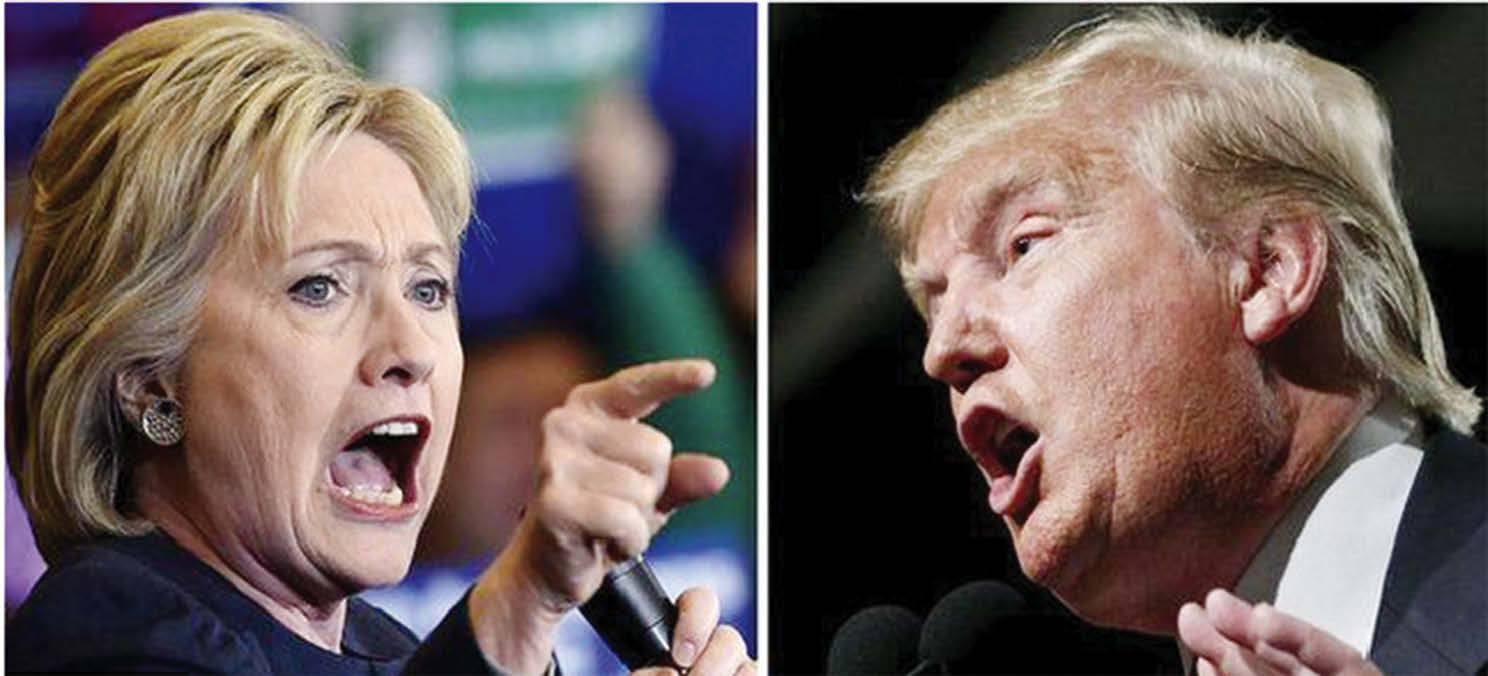
    The front runners -Republican Donald Trump and Democratic Hillary Clinton.Irrespective of who wins, the tilt is towards India
    The front runners -Republican Donald Trump and Democratic Hillary Clinton.Irrespective of who wins, the tilt is towards India

    American presidential elections get international attention because of worldwide interest in who is going to become the most powerful leader on the international stage. The US presidential elections in 2012 were less exciting than usual, because of the widespread belief that President Obama would be re-elected. We are now witnessing party primary elections, in which a flamboyant billionaire with a mercurial temperament, Donald Trump, has captured worldwide attention. Trump, a property baron, owns a network of hotels, casinos, golf courses and other properties. He has, paradoxically, struck a chord among blue-collared workers, who feel their jobs threatened by immigrants. His populist response has been to advocate building a wall across the US-Mexico border and banning immigration of Muslims, whom he labels collectively as terrorists.

    Hillary Clinton’s primary opponent, former Senator Bernie Sanders, has likewise, espoused the cause of ending free trade arrangements and called for tighter control over Wall Street. Sanders alleges that unemployed and blue-collar workers suffer, because of excessive trade liberalization and the unholy nexus between politicians (including Hillary) and the financial, business and industrial barons of Wall Street. The tactics Trump and Sanders have adopted have won huge support from insecure blue-collar workers, making life difficult and the competition unexpectedly tough, for Clinton. Despite this, Hillary is expected to win the Democratic Party nomination, unless she encounters difficulties, because of alleged misdemeanors during her tenure as Secretary of State. Trump could likewise sail through as the candidate of the Republican Party. A word of caution on the upcoming elections is called for. The Republican Party could land itself in a mess, if its establishment chooses to ignore the political verdict and nominates an eminent party politician to replace Trump as its presidential candidate.

    Trump has moved far away from the Republican Party in his views on several foreign policy issues. He has criticized military intervention in Iraq, Syria and Libya and voiced his opposition to such military intervention abroad. He remains ambivalent on his approach to Israel, though he will inevitably fall in line with conventional thinking on the Jewish state. Interestingly, Trump vows to build bridges with President Vladimir Putin, while Hillary remains steadfastly hostile to the Russian leader. Both Hillary and Trump have suspicions and misgivings about China, with Trump repeatedly asserting that China got rich at the cost of American industry and its working class. The two frontrunners hold opposing views on liberalizing trade, with Trump claiming that liberalization damages the livelihood of American workers.

    While Trump has expressed serious misgivings and suspicions about the Islamic world in general, he has expressed specific reservations about the behavior of Pakistan. Quite unexpectedly, Trump has answered his critics on their charge that he is anti-immigrant and racist by suggesting that he has great admiration for Indians, who are hardworking, intelligent and innovative. He has suggested that Indian students who come for studies in US universities should be allowed to stay on and work.

    The eight years of the Clinton presidency included some of the worst years in India-US relations. The Clinton administration turned the heat on India to give up its nuclear program. It pressured Russia to end space cooperation with India. It promoted a worldwide effort to cripple our economy after our nuclear tests and failed. In its early years, the Clinton administration even made overtures to the Hurriyat in Kashmir. On the other hand, the George Bush presidency saw a remarkable turnaround in India-US relations. American pressure after 9/11 forced the Musharraf dispensation to sue for a ceasefire in J&K and end cross-border infiltration in the state. This continued till the last days of the Bush presidency. Global nuclear sanctions against India ended, as the Bush administration used all its persuasive powers to get the 45-member Nuclear Suppliers Group to end sanctions on India. Shortly thereafter, at US initiative, India was welcomed into new global economic forums, like the G20.

    While President Obama had pledged to strengthen the US-India strategic partnership, his approach to India has been largely transactional, seeking greater Indian purchases of US weapons, while doing very little to turn the squeeze on Pakistan to end terrorism targeting India and Afghanistan. Intelligence sharing with India has been episodic and sometimes duplicitous, given the delay and reluctance with which intelligence information on the revelations of David Headley was shared with us. More importantly, the US is actively partnering Pakistan and China to bring about “reconciliation” with the Taliban in Afghanistan. Well-placed Afghans complain bitterly of the pressures they are facing from this US-China-Pakistan axis, to keep making concessions to the Taliban. Interestingly, even some in the Obama administration are concerned about what is transpiring.

    The world is now seeing an opportunistic move by the Obama administration to persuade India to back US efforts to rein in the Chinese in the Western Pacific, given China’s expanding maritime border claims on South Korea, Japan, Taiwan, Vietnam, the Philippines, Malaysia, Brunei and Indonesia. At the same time, the Obama administration is joining China and turning a blind eye to Pakistan-sponsored terrorism in Afghanistan. What the Obama administration is thereby doing, is to seek India’s support to curb Chinese maritime claims in the Asia-Pacific, even as its colludes with China to determine the future of Afghanistan, in a manner that furthers Pakistan’s regional ambitions. There has been much talk, but little action by the Obama administration to curb Pakistan-sponsored terrorism.

    Hillary has taken a personal interest in relations with India. Unlike her husband, and John Kerry, her viscerally anti-Indian successor, as Secretary of State, Hillary did respond in a friendly manner to India’s concerns and policies across both its eastern and western land and maritime borders. This was evident in her approach to India’s role in the ASEAN Regional Forum. She chose to call a spade a spade when it came to Pakistan-sponsored terrorism leading to the emergence of extremist outfits that threated Pakistan itself, with the words: “You cannot nurture vipers in your backyard and expect that they will bite only your neighbor”. In these circumstances, we can expect a more mutually beneficial relationship with the US, after the coming presidential elections.


    ParthasarathyBy G Parthasarathy – (The author is a former diplomat)

  • Ishrat Jahan case: Uproar in Parliament; SC rejects plea to quash case against Gujarat police

    Ishrat Jahan case: Uproar in Parliament; SC rejects plea to quash case against Gujarat police

    NEW DELHI (TIP): Replying to a Calling Attention in the Lok Sabha on alleged alteration of affidavit relating to Ishrat Jahan case, Union Home Minister Rajnath Singh said, March 9,” No politics should be done on the issue of terrorism. Whether it is Ishrat Jahan or any other case, there should not be flip-flop by any government. “A terrorist is a terrorist. Terror has no caste or religion.”  He said:” I am pained to say that previous government made flip flop decisions on the Ishrat Jahan encounter case and new dimensions were given to all facts.”

    The minister added that the previous UPA government made an attempt to tone down the fact that Ishrat was a LeT operative. However, in the first affidavit by the UPA government, it was stated that Ishrat was a LeT operative. Terrorist David Coleman Headley, in his testimony, had also confirmed that Ishrat was a terrorist, the Minister said. In view of the statement made by 26/11 conspirator David Coleman Headley on Ishrat Jahan, the Supreme Court on March 11 rejected the plea seeking to quash the criminal case against the Gujarat policemen who were involved in the case.

    In his deposition last month, Headley had claimed that Mumbra resident Ishrat Jahan was a suicide bomber for Pakistan-based terror outfit LeT.

    “The operation was about shooting the police at some naka. One woman LeT named Ishrat Jahan was involved. Muzammil Bhatt was the head of our group before Sajid Mir,” he told the court via video conferencing.

    In June 2004, Ishrat Jahan, Javed Sheikh, Zeeshan Johar and Amjad Ali Rana were shot dead by the Gujarat police on the outskirts of Ahmedabad.

    The police had alleged that Ishrat and her associates were LeT operatives involved in a plot to assassinate Narendra Modi who was the chief minister of Gujarat.

    After a long investigation, in 2009, an Ahmedabad Metropolitan court ruled that the encounter was staged.

    Meanwhile, the Congress Party downplayed Union Home Minister Rajnath Singh’s criticism of the former UPA regime with regard to the Ishrat Jahan case and said that his so called ‘political statement’ holds no significance.

    Former home secretary G.K. Pillai had earlier alleged that former home minister P. Chidambaram ‘bypassed him’ and rewrote an affidavit submitted to a court on Ishrat Jahan, the 19-year-old student killed in an encounter in 2004.

    Referring to the change in the Home Ministry’s affidavit in the Ishrat Jahan case that did not refer to her as Lashkar-e-Taiba operative, Union Finance Minister Arun Jaitley while intervening in the motion of thanks for the President’s address to Parliament told the Rajya Sabha, “In the process you unbarred the entire security apparatus of India because you wanted to fix a political leader. Someday an investigation will take place on how internal security was played with.

  • ISI trains LeT, Jaish terrorists, Pervez Musharraf says

    ISI trains LeT, Jaish terrorists, Pervez Musharraf says

    ISLAMABAD (TIP): Former Pakistan President, Pervez Musharraf, confirmed to an Indian TV channel something Indian security establishment always knew, that “Inter-Services Intelligence (ISI) trains Jaish-e-Mohammad (JeM) and Lashkar-e-Taiba (LeT) terrorists.”

    While describing Masood Azhar of JeM as a “terrorist”, Musharraf said Hafiz Saeed of LeT was nothing short of a national hero in Pakistan. “LeT is not involved in terror in Pakistan”. He also accused India’s intelligence agency RAW for carrying out attacks in Pakistan.

    Despite this, Musharraf said India was responsible for stalling the peace process. “India derailed peace process every time and the country only wants to discuss terrorism,” Musharraf said.

    Speaking on David Coleman Headley, Musharraf said,” I don’t believe anything that Headley had said… Pakistan intelligence should interrogate Headley.”

    Officially Pakistan has denied their involvement with LeT, but it has been known for years that LeT is a fully-owned subsidiary of the ISI-Army conglomerate.

    Musharraf ‘s remarks also corroborate the Indian stand that ISI trained JeM operatives to conduct the Pathankot attack.

    (PTI)

  • 6 FIDAYEEN BEHIND PATHANKOT ATTACK: NSG CHIEF

    6 FIDAYEEN BEHIND PATHANKOT ATTACK: NSG CHIEF

    NEW DELHI (TIP): National Security Guard (NSG) chief RC Tayal said there were six fidayeen behind the Pathankot attack as two terrorists, armed with weapons and explosives, could be heard conversing through a wall radar placed outside the airmen’s barrack, after four others had been neutralised.

    “According to us, there were four plus two (terrorists). But it is for NIA to investigate and come up with factual details,” the NSG director general told reporters here on the sidelines of an international seminar on the menace of improvised explosive devices.

    The NSG chief’s claim comes amid confusion over the number of terrorists who struck at Pathankot airbase last month. Only four bodies and four AK-47s were recovered by the agencies. Though exchange of fire resumed a day later and several explosions were heard, no additional bodies or weapons were recovered after the operation was called off. This led to speculation that the bodies and arms may have “melted up” when the terrorists’ hideout was blown up by the forces.

  • ISI, LeT funded terror operations in India: Headley

    ISI, LeT funded terror operations in India: Headley

    MUMBAI (TIP): Making fresh disclosures on the brazen 26/11 attacks, Pakistani-American terrorist David Coleman Headley on February 11 exposed how ISI and LeT majorly funded terror operations in India and financed him from time to time and that Pakistan native Tahawwur Rana visited Mumbai before the terror strikes.

    Resuming his deposition before a court here today via video-link after a day’s break due to a technical glitch at the US end yesterday, the LeT operative also said that RBI has turned down a request to open a bank account for their office in India.

    Giving details of his funding, he said, “Before coming to India in September 2006, he received USD 25,000 from ISI’s Major Iqbal.”

    “I also got 40,000 in Pakistani currency from LeT operative Sajid Mir between April and June 2008,” he told the court, adding that Major Iqbal used to regularly sent him money in instalments.

    Also, Major Iqbal gave me counterfeit Indian currency once or twice in 2008, he said.

    Besides Abdul Rehman Pasha, also from ISI, gave me Rs 80,000, Headley said.

    “Tahawur Rana (Headley’s associate and a Pakistani native who operated a Chicago-based immigration business) used to send me money from the US in September 2006 when I came to India to do intelligence work on instructions of LeT,” he told the court.

    The 55-year-old, who recently turned approver in the case, also said that “it was my idea to open an office in India. It was a part of my cover (as an immigration consultant). I had discussed about this with Major Iqbal and Sajid Mir and they both agreed to it.”

    “I also told Rana that Major Iqbal had asked me to do intelligence work in India. Iqbal told me that if Rana was reluctant to be associated with this (Headley’s India operations) then he (Headley) should appeal to his
    (Rana’s) sense of patriotism towards Pakistan,” he testified.

    “But Rana was not reluctant and he agreed readily for me to go to India,” Headley said.

    Headley also revealed that Rana had visited Mumbai before the terror attacks.

    “I advised Rana to leave India before the attacks as I was afraid that he would be in danger,” he told the court.

    Headley also disclosed that Rana had asked Raymond Sanders (who ran an immigrant law centre in Chicago) to submit an application to the RBI to open a bank account for their office in India.

    However, RBI turned down the request, he said.

    Later, in January 2009, Major Iqbal told Headley to close down his office in India, the court was told.

    Earlier on Tuesday, Headley had told the court that terror outfits like LeT, Jaish-e-Mohammad and Hizbul Mujahideen were given moral, financial and military support by the Pakistani intelligence agency besides making fresh revelations including about an aborted plan to target Indian defence scientists and famous Siddhivinayak temple here.

    He said he was working for ISI besides LeT (Lashkar-e-Taiba) and that he knew about ISI official Brigadier Riyaz being the handler of LeT’s top commander Zaki-ur-Rehman Lakhvi, who was the mastermind of the November 26, 2008 attacks in Mumbai.

    He named three officials of the Pakistan army and ISI –Colonel Shah, Lt Colonel Hamza and Major Samir Ali- besides retired army officer Abdul Rehman Pasha who was closely working with LeT and Al-Qaeda.

    Headley said his assessment was that ISI and LeT were coordinating with each other.

    “ISI provides financial, military and moral support to terror outfits Jaish-e-Mohammed, LeT and Hizbul Mujaideen,” he said, even though he claimed that his opinion was formed on the basis of hearsay.

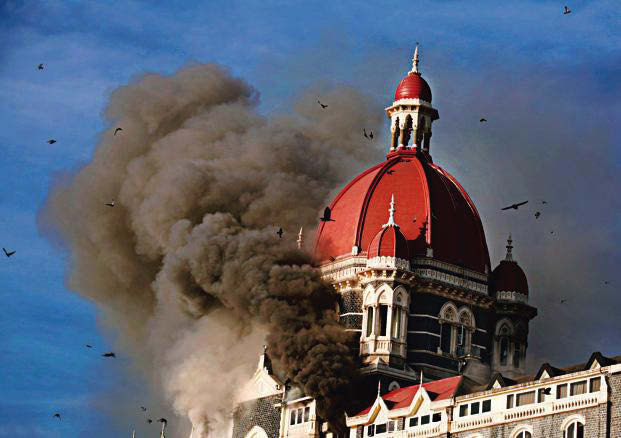
    Headley, who had visited Mumbai seven times to scout for targets, revealed that plans to harm the metropolis had started over a year before the attacks in 2008 and that LeT initially wanted to attack a conference of Indian defence scientists at Taj Mahal Hotel for which even a dummy of the hotel was prepared.

    But the plan to target scientists was dropped because of logistical reasons, like difficulty in smuggling in weapons and personnel and lack of details about the schedule of the meet, he said.

    The LeT operative had said he had also conducted a recce of the famous Siddhivinayak Temple and Naval air station.

    He said the LeT group as a whole is responsible for the terror attacks in India and it can be speculated that all orders come from Lakhvi since he is its “top commander”.

    He had also told the court that he was a “true follower” of LeT, and said that ISI official Brigadier Riyaz was the handler of Zaki-ur-Rehman Lakhvi. When shown a photograph of Lakhvi, the LeT operative had identified him.

    The LeT operative said he had been asked by Pakistan’s ISI to recruit Indian armymen to spy for them.

    About plan to target Siddivinayak Temple, Headley said, “Sajid Mir
    (Headley’s handler in LeT) specifically asked me to make a “video” of it.

    Prior to November 2007, he said, the targets in Mumbai had not been decided.

    Source: PTI

  • Headley Confirms Ishrat Jahan Was Let Operative

    Headley Confirms Ishrat Jahan Was Let Operative

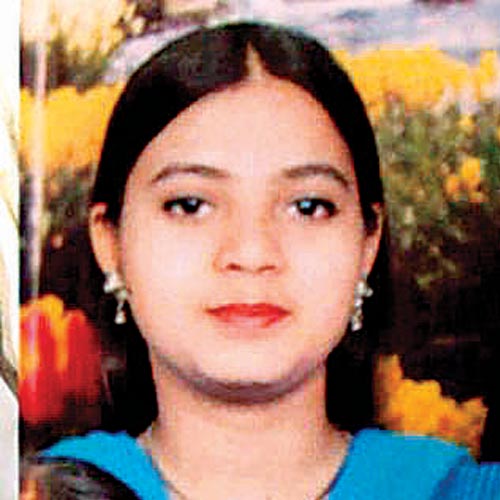
    MUMBAI – Pakistani-American terrorist-turned-informant David Coleman Headley Feb. 11 said Thane collegian Ishrat Jahan, shot dead in an alleged shootout with police in 2004, was a Lashkar-e-Taiba member and hinted that she could have been a potential suicide bomber.

    “Jahan was an LeT member,” Headley said in his sensational disclosure while deposing before Special Terrorist and Disruptive Activities Court Judge A. Sanap, via video-conferencing from a US jail.

    Headley said the 2008 Mumbai attack mastermind Zakiur Rehman Lakhvi told him about “a botched up operation in India” of shooting at the police at a check-post in Gujarat.

    A LeT woman operative was involved, said Headley identifying her as Thane college student Ishrat Jahan, out of the three names: Noorjehan Begum, Ishrat Jahan and Mumtaz Begum, given by Special Public Prosecutor Ujjwal Nikam.

    Muzammil Bhatt was the head of their group before Sajid Mir took over, Headley said, replying to questions by Nikam.

    The revelation came when Nikam asked whether there was a women’s wing of the LeT to which Headley replied in the positive and said its female head (whose name he did not know) was the mother of an LeT operative Abu Aiman.

    Reacting to the deposition, former Gujarat Deputy Inspector General of Police D.G. Vanzara told media persons that Headley’s testimony on Ishrat is “very important” and proved his contention it was “a genuine encounter.”

    “She was from the LeT and the Gujarat Police knew it in 2004. She was a LeT suicide bomber; it has been told in the open court,” said the 62-year-old IPS officer who is facing allegations of ‘extra-judicial’ killings in the case.

    On June 15, 2004, Ishrat Jahan and three persons accompanying her – Javed Sheikh alias Pranesh Pillai, Zeeshan Johar and Amjad Ali Rana – were shot dead on a road near Kotarpur on Ahmedabad’s outskirts.

    The police team was led by Vanzara, who was later jailed for his alleged involvement in the Sohrabuddin Sheikh case.

    The police then claimed that Jahan and her associates were LeT operatives plotting to assassinate the then Gujarat chief minister Narendra Modi.

    Subsequently, investigations revealed in 2009 that the Jahan shootout case was staged.

  • David Headley Deposes To Indian Court Two LeT Attempts To Attack Mumbai Before 26/11 Failed

    David Headley Deposes To Indian Court

    Two LeT Attempts To Attack Mumbai Before 26/11 Failed

    In the first deposition on a terror act from foreign soil, Pakistani-American LeT operative David Headley on Monday told a court via video-link that Pakistani terrorists attempted to attack Mumbai twice before the 26/11 strikes that killed 166 people but failed both times.

    In his deposition which began at 7 AM, Headley said that he was a “true follower of LeT” and came to India eight times–seven before the terror attack on November 26, 2008 and once after that.

    Headley, who was made an approver in the 26/11 case, said that his main contact in LeT was Sajid Mir, also an accused in the case.

    He told the court that LeT made two unsuccessful attempts to carry out terror attacks before finally striking in November 2008, once in September and another in October.

    Headley said that he joined LeT after being “influenced” by its head Hafeez Saeed and took his first “course” with them in 2002 at Muzaffarabad.

    Headley, who is currently serving 35 years prison sentence in the US for his role in the terror attacks, also said he changed his name from Dawood Gilani to David Headley in 2006 so that he could enter India and set up some business.

    “I applied for change in name on February 5, 2006 in Philadelphia. I changed my name to David Headley to get a new passport under that name. I wanted a new passport so that I
    could enter India with an American identity.

    “After I got a new passport I disclosed it to my colleagues in LeT of which one of them was Sajid Mir, the person with whom I was dealing with. The objective for coming to India was to set up an office/business so that I can live in India. Before the first visit, Sajid Mir gave me
    instructions to make a general video of Mumbai,” Headley told the court here.

    Headley also said that in his Indian visa application he had furnished all “wrong” information “to protect his cover”.

    He reportedly visited India many times between 2006 and 2008, drew maps, took video footage and scouted several targets for the attacks including the Taj Hotel, Oberoi Hotel
    and Nariman House.

    His reconnaissance provided vital information for the 10 LeT terrorists and their handlers, who launched the attack.

    Speaking to reporters, Headley’s lawyer Mahesh Jethmalani said has “he (headley) has confirmed that he joined LeT after being influenced by Hafeez Saeed. He told the court that two unsuccessful attempts to carry out terror attacks were also made before 26/11″. He has not explained the role of LeT in attacks”.

    The court is currently trying key plotter Sayed Zabiuddin Ansari alias Abu Jundal, who is facing trial for his alleged role in the terror attacks, which held the city to ransom for three days.

    The deposition of Headley, assumes significance as it may unravel the conspiracy behind the brazen terror strike, which left 166 people dead.

    The court had on December 10, 2015, made Headley an approver in the case and directed him to depose before the court on February 8.

    He had then told Special Judge GA Sanap that he was “ready to depose” if granted pardon.
    Judge Sanap had then made Headley an approver, subject to certain conditions and granted him pardon.

    Last year, the Mumbai Police had on October 8 moved an application before the court saying that Headley deserves to be tried by this (Mumbai) court together with 26/11 key plotter Abu Jundal in the case as both of them are conspirators and abettors behind the dastardly act.

    In the application, the Mumbai Police said that from the judgement passed by the US court against Headley, it was clear that he was a member of LeT and he had played an active role
    in the criminal conspiracy in the terror attack.

    The application also said that Headley had entered into a plea agreement with US in 2010 and thereby willingly and voluntarily agreed that he had conspired.

    It is evident, the police had said, that Headley has committed the offences of conspiring with LeT for committing illegal acts in India; waging war against the government of India and offences under the Unlawful Activities (Prevention) Act.

    He has also been accused of intentionally aiding and abetting the LeT in Pakistan for committing illegal acts in Mumbai, mischief by fire with intent to destroy Hotel Taj,
    Oberoi and Nariman House, offences under Explosives Act and Explosives Substances Act as also under the Prevention of Damage to Public Property Act.

    “This is for the first time in the Indian legal history that a ‘foreign terrorist’ will appear before an Indian court and testify,” Special Public Prosecutor Ujjwal Nikam had said yesterday.

  • HAFIZ SAEED CALLS FOR MORE ATTACKS ON INDIA

    HAFIZ SAEED CALLS FOR MORE ATTACKS ON INDIA

    MUZAFFARABAD (TIP): Jamaat-ud-Dawa (JuD) chief Hafiz Saeed, the mastermind of the 2008 Mumbai attacks, on Wednesday praised last month’s terror attack at Indian Air Force’s base in Pathankot and encouraged similar attacks against India.

    Addressing a rally of around one thousand people in the Pakistan-occupied Kashmir, Saeed said: “800,000 Indian troops are committing genocide on Kashmiris. Don’t they have a right to carry out Pathankot-style attacks for their defence?”

    Saeed also lauded Kashmiri militant leader Sayed Salahuddin, who heads the United Jihad Council (UJC) that has claimed responsibility for the attack.

    “You have only seen one attack on Pathankot. Matters could easily escalate.”

    Crowds at the rally shouted slogans including “The war will continue until the liberation of Kashmir” and “We are ready for jihad”.

    Strategic analyst Ayesha Siddiqa said Saeed’s praise of Salahuddin could be part of a “deflection strategy” to steer blame away from JeM, and by extension Pakistan, where it is based.

    The airbase attack occurred just a week after Prime Minister Narendra Modi paid a surprise visit to Lahore, raising hopes for peace between the two countries.

    Seven security personnel were killed and several others were injured when six militants, suspected to owe allegiance to Pakistan-based Jaish-e-Mohammad, stormed the Pathankot air base in first week of January.

    Further planned talks between the top diplomats of both countries that had been due in mid-January were subsequently postponed.

    (Agencies)

  • NIA sniffs link between Dinanagar, Pathankot terror attacks

    NIA sniffs link between Dinanagar, Pathankot terror attacks

    NEW DELHI (TIP): The National Investigation Agency (NIA) has found similarities in the Pathankot terror attack and last year’s July 27 Dinanagar attack in which militants had attacked a police st-ation. To probe it further, the agency has asked the Punjab police to provide details of the Dinanagar case.

    Three heavily-armed militants in Army fatigues, believed to have infiltrated from Pakistan, had on July 27 last year sprayed a moving bus with bullets and stormed a police station in Dinanagar, Gurdaspur, killing eight people, including a superintendent of police, before being killed in the counter-offensive. The case is being probed by the Punjab police.

    Punjab’s deputy chief minister Sukhbir Singh Badal had refused to hand over the Dinanagar case to the NIA, which is probing the Pathankot attack.

    Terrorists had attacked the Pathankot Indian Air Force base on the intervening night of January 1 and 2.

    They were killed in a counter-operation by Indian forces that lasted for about three days and also claimed the lives of seven security personnel.

    The federal investigative agency may again seek to take over the Dinanagar probe as well since there has not been much headway in the investigation conducted by the Punjab police.

    Meanwhile, Gurdaspur SP Salwinder Singh is reportedly giving conflicting statements about his abduction after which it has been decided that he will be confronted with his cook Madan Gopal and Somraj, the caretaker of the Panj Peer dargah which Salwinder said he had visited on the day of his kidnapping.

    The sources said that the confrontation was necessitated after conflicting statements were emerging from all the three and added that a final decision on whether to conduct a polygraph (lie detector) test on Salwinder or the others will be done after Friday’s questioning. While Salwinder has been questioned for the last four days, Gopal and Somraj recorded statements for the first time.

  • India – Pakistan Foreign Secretary Level Meeting Called Off

    India – Pakistan Foreign Secretary Level Meeting Called Off

    NEW DELHI (TIP): India and Pakistan agreed to re-schedule diplomatic talks between the officials slated for Jan 15 after a militant attack on the Pathankot air base.

    India accused Pakistan-based group Jaish-e-Mohammad of carrying out the assault in which seven Indian troops and six militants were killed. On Wednesday, January 13, Pakistan said it had arrested several members of the group.

    On Thursday, January 14, India said arrangements were being made for a meeting between foreign secretaries of both countries.

    Hopes for Delhi-Islamabad detente were raised in late December after Indian Prime Minister Narendra Modi paid an unscheduled visit to his counterpart Nawaz Sharif on his way back from Afghanistan, and the two sides announced plans to resume peace talks.

    The attack has set back the peace initiative. Howeverboth sides said the talks remained on the agenda.

    India’s MEA spokesperson Vikas Swarup said “both foreign secretaries agreed to meet in the very near future”.

    Mr. Swarup said India was happy with the steps Pakistan had taken so far to arrest some Jaish-e-Mohammad members.

    “The action against members of Jaish-e-Mohammed is a positive step. We welcome the step,” he said.

    His Pakistani counterpart Qazi Khalilullah said talks would not be held on Friday, January 15 and that a new date was being considered.

    India has also agreed to host a team from Pakistan to investigate the Pathankot attacks.

    “We look forward to the visit of Pakistan SIT [Special Investigation Team] and our investigative agencies will extend all necessary cooperation,” Swarup said.

    Both Mr. Swarup and Mr. Khalilullah did not confirm the arrest of Jaish-e-Mohammad chief Maulana Masood Azhar – a key demand from India.

    Although Pakistan did not name those arrested, media reports from India and Pakistan suggest Masood Azhar was among those detained.

    The assault on the Pathankot air force base in Punjab, close to the Pakistan border, started on 2 January, when a group of gunmen – wearing Indian army uniforms -entered residential quarters on the air base.

    The United Jihad Council – a coalition of more than a dozen militant groups fighting against Indian rule in Kashmir – claimed the attack.

    The claim was met with skepticism – the UJC’s core members are not known to have mounted attacks outside Indian-administered Kashmir.

    Indian security officials instead blamed Jaish-e-Mohammed, an Islamist militant group based in Pakistan.

    Started by Masood Azhar, Jaish-e-Mohammed has been blamed for attacks on Indian soil in the past, including one in 2001 on parliament in Delhi which took the nuclear-armed rivals to the brink of war.

    Here are five facts about the terror chief:

    1. Azhar was arrested in Kashmir in 1994 while traveling on a forged Portuguese passport. India freed him and two other jailed Pakistani militants in 1999 in return for 155 passengers held hostage in an Indian Airlines aircraft IC814 that was hijacked to Kandahar in Southern Afghanistan.
    2. After his release, Azhar set up the Jaish to fight Indian forces in Kashmir. India has long accused Pakistan’s powerful spy agency, the Inter-Services Intelligence (ISI), of close links with hardline groups like Jaish.
    3. Azhar was named by India as a prime suspect in the 2001 attack on the Parliament – nine people were killed as terrorists drove into the parliament complex and opened fire. The five terrorists were also shot dead. At the time, Pakistan refused to hand over Azhar to India.
    4. The portly cleric for some years was mostly confined to a compound in his home city of Bahawalpur in Pakistan’s Punjab province for years after that, but in 2014, Indian intelligence officers warned that his aides could try to hijack a plane. The Delhi Metro, which is used by lakhs of commuters, was also put on alert. The intelligence came as Azhar addressed a huge rally via telephone, asking supporters to
      “resume jihad, or holy war, against India”.
    5. Indian intelligence analysts have said that Pakistan’s military establishment is bringing militants like Azhar out of cold storage, with the promise of helping them fight India, while trying to stamp out the radicals they can’t control.
  • PATHANKOT ATTACK: ARMY CALLS ANTI-TERROR OPS ‘COMPLETE SUCCESS’, MILITARY ANALYSTS SAY ALMOST A ‘FIASCO’

    PATHANKOT ATTACK: ARMY CALLS ANTI-TERROR OPS ‘COMPLETE SUCCESS’,
    MILITARY ANALYSTS SAY ALMOST A ‘FIASCO’

    PATHANKOT (TIP): The Indian Army countered growing criticism of the NSG-led operation against the terrorist infiltration and attack at a Pathankot airbase with the the GOC-in-C, Western Command, Lt Gen Kamal Jit Singh Wednesday calling the operation a “complete success” but both local and global headlines tell a different story.

    Military analysts weighing in on the Pathankot attack are calling India’s response to the attack “amateurish” and a “near fiasco”.

    “Four days to neutralise no more than five or six militants is unacceptable in a confined open space where there is little or no scope of any civilian collateral damage,” the BBC quotes a military analyst as saying.

    The Indian Express nuances the criticism on time cost, saying that forces elsewhere in the world have taken longer to terminate operations in smaller areas. The glaring holes, though are in planning, command, training and equipment, says the report. The Express report signs off on a chilling note: “In practice, that meant all potential targets in Pathankot were expected to ensure their own perimeter was secure until they were assaulted by terrorists, in the kind of dramatic frontal assaults fidayeen units have often staged elsewhere in the country. This assumption was where things went wrong.” For his part, Lt Gen Kamal Jit Singh told a media briefing in Chandi Mandir that the decision to deploy NSG was a multi-pronged one. “There was NSG, Air force, Garud commandos. Application of NSG was a joint decision taken at an appropriate level which included service chiefs,” He said that the operation was a “complete success” which saw “synergy” between the NSG, Army and Air Force.

    There has been criticism of the decision to deploy the NSG personnel flown from Delhi on Saturday morning in the air force base in Pathankot when a larger number of army commandos were available in nearby garrison in the border city itself. Army’s special forces commandos were said to be better equipped to deal with the siege.

    Lt Gen Singh said terrorists holed up in buildings in the air force station took “advantage” of that location which took time in eliminating them.

    He said they also wanted to avoid a hostage situation as a large number of families and foreign trainees were residing inside the base.

    “The buildings in the air force base station are such that which are located close to family quarters. The final group of two terrorists were in a two-storeyed structure where in the first our own troops were there. They (the families) had to be evacuated first and we had to avoid hostage situation because of that it took time.

    “I also want to tell you that within these barracks, which are MES constructions they are covered with steel doors. It is like sitting inside a bunker and so the terrorists took advantage of it. The final body was recovered from inside of this structure,” said Lt Gen Singh.

    Lt Gen Singh said “excessive” firepower was not used because of the presence of families in the quarters and civilians pockets in the area.

    “The basic concept is to safeguard the strategic assets. We also follow a principle of calibrated use of force. We have too much fire power which cannot be used in this operation because there were family quarters and civilian pockets outside the air force base. This is why we used that much fire power which was required in that condition.

    “For that we had to take risks. It took time….We had to localise them (terrorists) to a very small area and finally eliminated them. We were under instructions and it was our concept to avoid unnecessary casualties. We took calculated risks so as not to have unnecessary casualties,” he said.

    “There are strategic assets here and there can be hostage situations as there are 11,000 people live here and 3,000 families, and above all, foreign trainees and had there been any hostage situation, it is NSG which is specially trained to rescue them,” he said.

    Lt General said that it was the success of this operation that the Air force station was operational. Had there been any damage to the airport, how could we have brought NSG here?” he asked. “NSG was brought in because firstly strategic assets were over here. Secondly there can be hostage situation. People were living inside the campus which could have taken hostage…NSG are special troops (to handle such situation).” “We got information on 1 January during the afternoon. It was a serious alert as we were told that six-eight (terrorists were there),” he said.

    To a question about the source of the alerts, Lt Gen Singh said, “We got alert from Punjab Police also and from Central agencies.”

    He said the alert issued by Punjab Police on 30 December was very general which said that 15 militants had entered into the Indian territory. On reports about Punjab Police’s lapse in Pathankot terror attack, he said, “I will not comment on it. It is a subject matter of inquiry.”

    “We had initially report of four-six militants and then we made contact with six of them and all of them were eliminated,” he said.

    Asked whether there could be any local support to terrorists, Lt Gen said, “Some localised support cannot be absolutely ruled out. It will all be looked into. NIA will look into it. All aspects of this case will be looked into.”

    Asked why terrorists struck at the air force base, Lt Gen said, “It is strategically important. Imagine the kind of publicity you can gain that you have targeted strategic air base. Secondly it is in the vicinity. It is easy to reach here. It is only 25 km from the area.”

    On asked about potential hostage situation when terrorists attacked Pathankot air force base station, he said, “It could have developed into a hostage situation. In any case, all along the operation, there was a great possibility of taking a hostage situation because there are air men living in those barracks/residential area. “They were brought out by army columns, NSG officials. They were brought down from the windows,” he said to a question how two of militants were eliminated.

    When asked whether army started any combing operation between the period of getting first alert and attack by terrorists, he said, “Combing of those areas was the primary the responsibility of police. We had to ensure security to our strategic assets. Area was checked out and QRT was in place. Air Force also carried out searching for terrorists,” he said. To a question on militants’ bodies, he said, “There are four bodies of militants. Two have been cooked up. Some parts of bodies were scattered around there which are being forensically examined. The other four bodies which are recovered a call will be taken whether to destroy them or not because they were carrying explosives.” Asked about the cordoning off of Tibri in Gurdaspur, he said, “There is some information. Police and army were looking into it. Every day there are two or three cases of such information…it is being checked out.” “There was no collateral damage during the operation. We all must take into account that there are a large number of civilian pockets in that area. No collateral damage was caused to civilians pocket and villages which is in its vicinity (of air force base station).

    “More importantly there were 23 foreign trainees from four friendly countries at air force base station. No one was harmed,” he said, adding that this operation was a “complete success”.

    The foreign trainees are from Myanmar, Nigeria, Sri Lanka and Afghanistan.

    “After getting alert about terrorists, a large number of pre-empt action were taken. We sounded red alert. QRT were sent to important places. That is because our reactions were timely (to the attack) and after immediate contact with terrorists, they were localised,” GOC-IN-C Western Command said.

    “We even side stepped some resources. Some specialised resources like specialized forces, mine-protected vehicles. They were centrally located and they were side stepped,” he said.

    “Now combing operations and sanitization are currently on and after sanitization is over, the assets will be handed over to the air force,” he informed.

    He said out of nine columns of the Army, seven were used inside the air force station while two were kept outside. “A bomb disposal team, a dog squad and there were nine mine-protected vehicle were there,” he said.

    “Such operations require turnover. You are under a live situation, so a turnover was carried out and due rest was given.

    “Currently, we have two columns, two mine-protected vehicles and bomb disposal teams is inside the station which is helping the combing and sanitization operation,” he said, adding.

  • Pathankot terror attack: NSG LT COL AMONG SEVEN CASUALTIES

    Pathankot terror attack: NSG LT COL AMONG SEVEN CASUALTIES

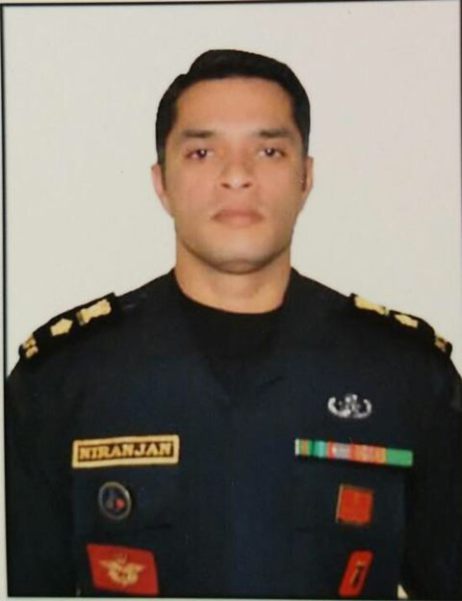
    A Lieutenant Colonel heading the National Security Guards’ (NSG) bomb disposal squad was among the seven fatalities in the terrorist attack on the Pathankot Air Force station. Five NSG commandos were among the 20 who sustained injuries.

    The high number of casualties and injuries despite “specific Intelligence inputs” is being viewed in security circles with concern. Particularly a senior officer of an elite counter-terrorist force losing his life during sanitisation operations. A commando from the IAF’s Garud special force, Gursevek Singh, was also killed.

    Lt Col Niranjan E Kumar
    Lt Col Niranjan E Kumar

    Lt Col Niranjan E Kumar was commissioned into 10 Engineer Regiment in 2004 and moved to the NSG on deputation in May 2014. He leaves behind his wife and an 18-month-old daughter.

    The last rites are scheduled to be performed at his hometown, Palakkad in Kerala, tomorrow.

    The mortal remains would be airlifted to Bengaluru and thereafter ferried by road.

    A tweet by the Home Minister, Rajnath Singh, stated that the officer was killed in “mopping-up operations”.

    Reports suggested that the NSG casualties occurred due to an explosion from either an IED that the terrorists were carrying or a booby-trapped body that was moved by them.

    One of the NSG jawans, Bhoop Singh, who sustained serious head injuries, has been airlifted to Chandigarh.

    Hailing from Ambala, IAF commando Gursevak had been hit during the initial gunfire. He carried on fighting and later succumbed to his injuries. He got married a month ago.

    Most of the other fatalities were from the Defence Security Corps (DSC), a branch comprising retired armed forces personnel who are reemployed for undertaking guard duties at military establishments. They included 51-year-old national shooting champion Subedar Fateh Singh and Hav Kulwant Singh, both of whom were from Gurdaspur, and jawans Jagdish Singh and Sanjiv Kumar.

    One of the DSC jawans had chased a terrorist and killed him with the terrorist’s own weapon before falling to fire from the other intruders.


    Pathankot Operation Continues: Government denies security lapse

    NEW DELHI — A shootout between Indian security forces and armed gunmen stretched into its second day on Sunday, January 3, at the Pathankot air force base in Punjab, near India’s border with Pakistan. At least seven Indian personnel and at least four terrorists have been killed in the fighting so far, as per statements released by officials in media.

    Operations to clear the Pathankot air base continue as at least two gunmen were still holding out against the security forces on Sunday, Jan 3, said Rajiv Mehrishi, home secretary, in a televised news conference in New Delhi, while admitting that they came to know about the two more terrorist only on Sunday morning when the duo started firing during the cleaning exercise.

    “We are sure that still there are at least two more terrorists as firing has come from two different places,” Mr. Mehrishi said.

    The gunmen have also wounded eight air force personnel and 12 members of the National Security Guard, he said.

  • Pathankot Operation Continues: Government denies security lapse

    Pathankot Operation Continues: Government denies security lapse

    NEW DELHI — A shootout between Indian security forces and armed gunmen stretched into its second day on Sunday, January 3, at the Pathankot air force base in Punjab, near India’s border with Pakistan. At least seven Indian personnel and at least four terrorists have been killed in the fighting so far, as per statements released by officials in media.

    Operations to clear the Pathankot air base continue as at least two gunmen were still holding out against the security forces on Sunday, Jan 3, said Rajiv Mehrishi, home secretary, in a televised news conference in New Delhi, while admitting that they came to know about the two more terrorist only on Sunday morning when the duo started firing during the cleaning exercise.

    “We are sure that still there are at least two more terrorists as firing has come from two different places,” Mr. Mehrishi said.

    The gunmen have also wounded eight air force personnel and 12 members of the National Security Guard, he said.

  • PAK CONDEMNS PATHANKOT ATTACK

    PAK CONDEMNS PATHANKOT ATTACK

    January 2: Pakistan condemned the terror strike at an Air Force base in Pathankot by heavily-armed Pakistani terrorists and asserted that building on the goodwill created during the recent high level contacts, it remained committed to partner India in tackling terrorism.

    Read More : Pathankot Terror Attack: All 5 Terrorists Neutralized | Jaish-E-Mohammed Blamed

    “Pakistan condemns the terrorist incident in Pathankot, India, today, in which many precious lives have been lost. We extend heartfelt condolences to the government and people of India and the bereaved families and wish the wounded speedy and full recovery,” a Pakistan Foreign Office statement said.

    The attack by terrorists, suspected to belong to Jaish-e-Mohammed outfit, took place at around 3.30 AM and three security personnel, including a Garud commando of the IAF, were killed in it. Four terrorists were also killed by the security forces.

    “Building on the goodwill created during the recent high level contacts between the two countries, Pakistan remains committed to partner with India as well as other countries in the region to completely eradicate the menace of terrorism afflicting our region,” the Foreign Office statement said.

    The attack came just a week after Prime Minister Narendra Modi made an unscheduled visit to Pakistan and met Prime Minister Nawaz Sharif with an aim of improving ties and also ahead of the talks between the foreign secretaries of the two countries here on January 15.

    Pathankot terror attack: Calls between terrorists and handlers accessed

    Details of the calls made between the terrorists and their handlers in Pakistan have been reported by TIMES NOW.

    Four calls took place between the attackers and the handlers between 12-30 AM and 2-30 AM on the intervening night of January 1 and January 2.

    The conversations were made in Punjabi and Multani language where the handlers briefed locations to the attackers.

    Heavily-armed Pakistani terrorists today attempted to storm the Air Force base in Pathankot, triggering a day-long gunbattle in which three securitymen and all the five infiltrators were killed, days after Prime Minister Narendra Modi’s surprise stopover in Lahore.

    Read More : Pathankot Terror Attack: All 5 Terrorists Neutralized | Jaish-E-Mohammed Blamed

  • Pathankot terror attack: Calls between terrorists and handlers accessed

    Pathankot terror attack: Calls between terrorists and handlers accessed

    Details of the calls made between the terrorists and their handlers in Pakistan have been reported by TIMES NOW.

    Four calls took place between the attackers and the handlers between 12-30 AM and 2-30 AM on the intervening night of January 1 and January 2.

    The conversations were made in Punjabi and Multani language where the handlers briefed locations to the attackers.

    Heavily-armed Pakistani terrorists today attempted to storm the Air Force base in Pathankot, triggering a day-long gunbattle in which three securitymen and all the five infiltrators were killed, days after Prime Minister Narendra Modi’s surprise stopover in Lahore.

    Read More : Pathankot Terror Attack: All 5 Terrorists Neutralized | Jaish-E-Mohammed Blamed

    Pak condemns Pathankot attack

    January 2: Pakistan condemned the terror strike at an Air Force base in Pathankot by heavily-armed Pakistani terrorists and asserted that building on the goodwill created during the recent high level contacts, it remained committed to partner India in tackling terrorism.

    “Pakistan condemns the terrorist incident in Pathankot, India, today, in which many precious lives have been lost. We extend heartfelt condolences to the government and people of India and the bereaved families and wish the wounded speedy and full recovery,” a Pakistan Foreign Office statement said.

    The attack by terrorists, suspected to belong to Jaish-e-Mohammed outfit, took place at around 3.30 AM and three security personnel, including a Garud commando of the IAF, were killed in it. Four terrorists were also killed by the security forces.

    “Building on the goodwill created during the recent high level contacts between the two countries, Pakistan remains committed to partner with India as well as other countries in the region to completely eradicate the menace of terrorism afflicting our region,” the Foreign Office statement said.

    The attack came just a week after Prime Minister Narendra Modi made an unscheduled visit to Pakistan and met Prime Minister Nawaz Sharif with an aim of improving ties and also ahead of the talks between the foreign secretaries of the two countries here on January 15.