Tag: Terror Attacks – Bomb Blasts – Terrorism

  • The terror Frankenstein: ISI-nurtured terror groups have come to haunt Pakistan

    The terror Frankenstein: ISI-nurtured terror groups have come to haunt Pakistan

    With Pakistan on the back foot, the time has come for New Delhi to make use of the aversion for jihadi groups in Pakistan over the Sehwan outrage. A carefully crafted approach to relations with Pakistan needs to be adopted. New Delhi should remain firm on issues of terrorism by reiterating that there can be no question of reverting to business as usual till our concerns on Pakistan-sponsored terrorism in India and Afghanistan are addressed”, says the author – G Parthasarathy.

    Pakistan’s founder Muhammad Ali Jinnah, an Ismaili Shia by birth, proudly proclaimed, just prior to Pakistan’s independence, that the country he founded on the basis of religion would not discriminate against any of its citizens on the basis of religion. While the eastern half of his country was divided on the basis of ethnicity in 1971, what remains of what he initially called a “moth-eaten” Pakistan, is now finding that religion could indeed tear the country apart. Born into a Shia family, Jinnah could well be regarded as a “kaffir” by many in today’s Pakistan. Extremist Wahhabi-oriented groups, who since the days of Gen Zia-ul-Haq have received extensive support from the army, regularly target and kill those who are Shias, or even Sunnis, who are Sufi in orientation.

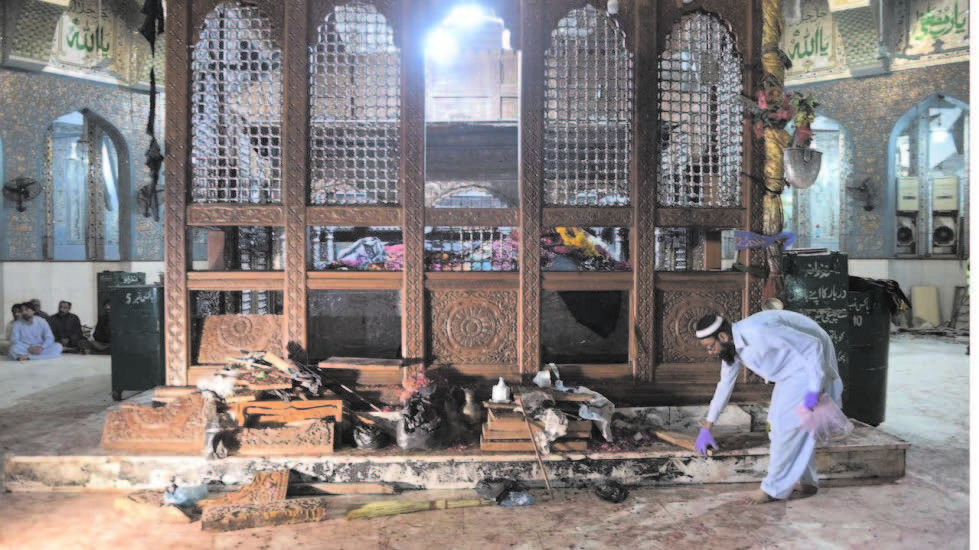
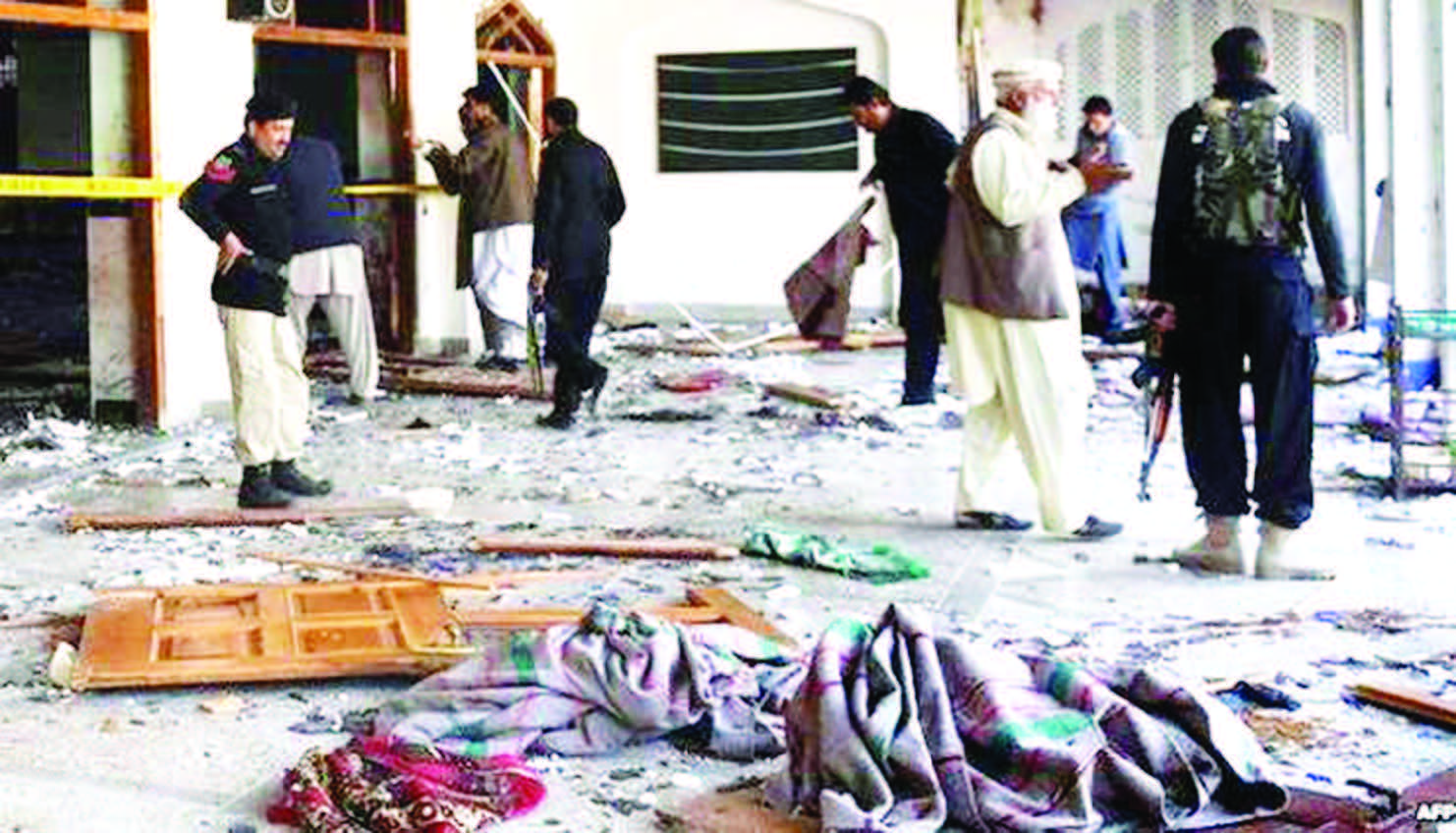
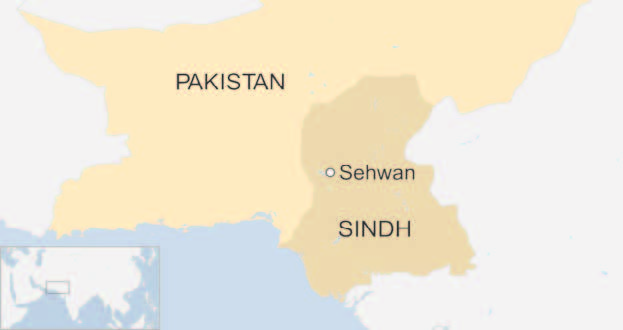
    The most revered Sufi shrine in Pakistan, where thousands of people of all sects and religions congregate and worship, is the shrine of Lal Shahbaz Qalandar at Sehwan, in northern Sindh. The shrine, built in 1356, was established in memory of the 13th century Sufi, Saint Syed Usman Marwandi, popularly known as Lal Shahbaz Qalandar, whose ancestors were devotees of the Imam Hussein, the Prophet’s grandson. Reza Shah Pahlavi, the last Shah of Iran, donated the shrine’s gold-plated main gate. For today’s jihadis in Pakistan, especially from groups like the Jaish-e-Mohammed, the Lashkar-e-Jhangvi and the Tehrik-e-Taliban Pakistan (TTP), that have received, or continue to receive ISI support, Sufi shrines are heretical, with its worshipers fit targets for elimination. This is precisely what happened on February 16, when a fanatical suicide bomber entered the shrine in the midst of prayers and triggered explosives, killing 88 devotees and wounding over 250.

    Not surprisingly, Pakistan reacted by passing the blame to others for its incredible follies in strengthening “militant Islam”, ever since the days of the anti-Soviet jihad. This policy was followed by its backing of the Taliban in Afghanistan and the use of its “non-state actors” for its jihad in J&K and elsewhere in India. The TTP was a tool of the ISI used to wage jihad against the Americans and pro-government forces in Afghanistan, post 9/11. The situation in Pakistan changed when the army, led by the ubiquitous Gen Raheel Sharif, saw the TTP establishing a presence over large areas beyond its traditional habitat and launched large-scale operations against it. This was done without General Sharif’s bothering to secure parliamentary approval. These operations led to escalating violence and displacement of nearly a million Pashtuns from their tribal homes, with many seeking refuge in Afghanistan. Thus, while the ISI continues to back the Afghan Taliban, the army is bogged down in a continuing conflict with the TTP, some of whose cadres operate across the disputed Durand Line, separating Pakistan and Afghanistan.

    The fact that Pakistan is still living in a world of delusion was evident from the reaction both by the government and the army chief, Gen Qamar Javed Bajwa, to the Sehwan attack. In an effort to establish that no Pakistani groups were involved, the ISIS and then an allegedly Afghanistan-based group – Jamat-ul-Ahrar – were blamed by Pakistan for the outrage. Indiscriminate attacks against alleged terrorist locations in Punjab, Sindh and Balochistan immediately followed the attack. Over 100 alleged “terrorists” were killed within hours, with the army also mounting attacks on alleged terrorist “hideouts” along the border. Officials from the Afghan embassy in Islamabad were summoned to the army’s GHQ and given a list of 76 “terrorists” said to be living in Afghanistan.

    General Bajwa also called the American commander in Afghanistan, Gen John Nicholson, warning that continuing attacks across the border were testing Pakistan’s policy of “cross-border restraint”. PM Nawaz Sharif’s adviser, Sartaj Aziz, spoke in similar terms to Afghanistan’s National Security Adviser Hanif Atmar. A logical question would be whether Pakistan has done anything to prevent its jihadis, including the Taliban, LeT and the Jaish-e-Mohammed, crossing the Durand Line, the LoC in Kashmir, or the International Border with India? Is it not a fact that groups once nurtured by the ISI are executing terrorist attacks within Pakistan?

    With Pakistan on the back foot, the time has come for New Delhi to make use of the aversion for jihadi groups in Pakistan over the Sehwan outrage. A carefully crafted approach to relations with Pakistan needs to be adopted. New Delhi should remain firm on issues of terrorism by reiterating that there can be no question of reverting to business as usual till our concerns on Pakistan-sponsored terrorism in India and Afghanistan are addressed. The cross-LoC strikes in September last year have set the precedent for India to appropriately respond to attacks on its soil by crossing established borders. Pakistan should be left in no doubt that it can no longer take Indian forbearance for granted.

    The recent invitations to India and Iran from Russia to attend talks in Moscow, along with China, Pakistan and Afghanistan, on promoting political reconciliation in Afghanistan suggest that there is growing realization that appeasing Pakistan on any proposed “Afghan led” peace process is counterproductive. India would do well to use these developments for stepping up economic and military assistance to Afghanistan and expediting the operationalization of the Chabahar Port. Moreover, it would only be logical for adequate time to be given to the Trump administration to evolve its policies on dealing with Pakistan-sponsored terrorism in Afghanistan and India.

    Pakistan should be reminded that it has not fulfilled its commitment made by PM Sharif at Ufa for talks between DGMOs of the two armies to address issues of cross-border terrorism. The growing sentiments in Pakistan against the attack on its most revered Sufi shrine should be taken note of. The existing agreements with Pakistan on group tourism and visits to shrines could be utilized to promote visits of Pakistani pilgrims to Sufi shrines in India, together with visits by musical troupes devoted to Sufi music. New Delhi has done well to facilitate participation by Indian writers in the Karachi Literary Festival. Reaching out to people getting disillusioned with Wahhabi extremism and violence in Pakistan, while standing firm on terrorism, enhances our credibility internationally.

    (The author is a career diplomat. He was High Commissioner of India to Pakistan in 1998-2000)

  • Islamic State suicide bombing at Pakistan shrine kills 75

    Islamic State suicide bombing at Pakistan shrine kills 75

    An Islamic State suicide bomber struck inside a famed shrine in southern Pakistan on Thursday, killing at least 75 people in the deadliest attack in the country in more than two years.

    The bomber entered the main hall of the shrine of Lal Shahbaz Qalandar in Sehwan and detonated his payload amid dozens of worshippers, according to three security officials, who said at least 20 women and nine children were among the dead.

    The officials spoke on condition of anonymity because they were not authorized to brief reporters. Fazal Palejo, a senior health official in Sindh province, confirmed the toll.

    The Islamic State group claimed the attack in a statement circulated by its Aamaq news agency, saying it had targeted a “Shiite gathering.” The Sunni extremist group views Shiites as apostates and has targeted Pakistan’s Shiite minority in the past. It views Sufi shrines like the one targeted Thursday as a form of idolatry.

    Raja Somro, who witnessed the attack, told a local TV network that hundreds of people were performing a spiritual dance known as the Dhamal when the bomber struck.

    “I saw bodies everywhere. I saw bodies of women and children,” he said.

    Local TV showed graphic footage of the aftermath of the blast, with wounded worshippers crying out for help and the floors covered with shoes, blood and body parts. Women cried and beat their chests in grief.

    Ghazanfar Shah, the custodian of the site, said security was lax at the shrine, which is entered through two gold-plated doors.

    Prime Minister Nawaz Sharif vowed that security forces would track down the perpetrators of the attack, according to Pakistani state TV.

    “Each drop of the nation’s blood shall be avenged, and avenged immediately,” Pakistan’s army chief, Gen. Qamar Javed Bajwa, said in a statement. “No more restraint for anyone.”

    The US State Department condemned the attack and offered its support to Pakistan in bringing the perpetrators to justice. “We stand with the people of Pakistan in their fight against terrorism and remain committed to the security of the South Asia region,” said a statement by acting State Department spokesman Mark Toner.

    Thursday’s attack was the deadliest in Pakistan since December 16, 2014, when militants assaulted an army-run school in Peshawar, killing 154 people, mostly schoolchildren.

    Pakistan has been at war with the Taliban and other extremist groups for more than a decade. In recent years it has launched major offensives against militant strongholds in the tribal regions along the border with Afghanistan, but insurgents have continued to carry out attacks elsewhere in the country.

    The Islamic State group has been expanding its presence in Pakistan in recent years and has claimed a number of deadly attacks, including a suicide bombing at another shrine in November 2016 that killed more than 50 people.

    The government has downplayed the IS affiliate, insisting that only a small number of militants have pledged allegiance to the group.

    Afghanistan and Pakistan have long accused each other of failing to crack down on militants who operate along the porous border.

    The army spokesman, Maj. Gen. Asif Ghafoor, said acts of terrorism were being carried out “from hostile powers and from sanctuaries in Afghanistan,” without elaborating. Pakistan closed the main Torkham border crossing with Afghanistan shortly after the attack.

  • Car blast kills 51 in Iraq, scores wounded Islamic State claims responsibility

    Car blast kills 51 in Iraq, scores wounded Islamic State claims responsibility

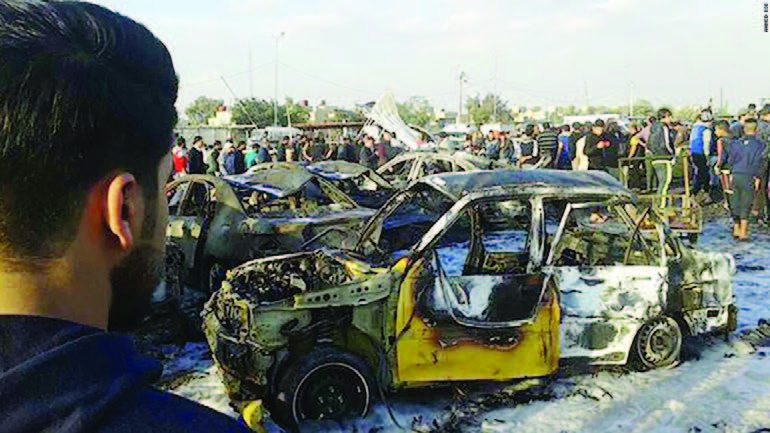
    BAGHDAD (TIP): A car packed with explosives blew up on Thursday, February 16, in southern Baghdad, killing at least 51 people and wounding 55, security and medical sources said, in the deadliest such attack in Iraq this year, says a Reuters report. Islamic State, which is on the defensive after losing control of eastern Mosul to a US-backed Iraqi military offensive, claimed responsibility for the bombing in an online statement.

    As it cedes territory captured in a 2014 offensive across northern and western Iraq, the ultra-hardline group has stepped up insurgent strikes on government areas, particularly in Baghdad. Security sources said the vehicle which blew up on Thursday was parked in a crowded street full of garages and used car dealers, in Hayy al-Shurta, a Shi’ite district in the southwest of the city.

    The death toll could climb further as many of the wounded are in critical condition, a doctor said.

    The bombing is the second to hit car markets this week, suggesting the group has found it easier to leave vehicles laden with explosives in places where hundreds of other vehicles are parked. (Reuters)

  • Pakistan to file FIR against Hafiz Saeed

    Pakistan to file FIR against Hafiz Saeed

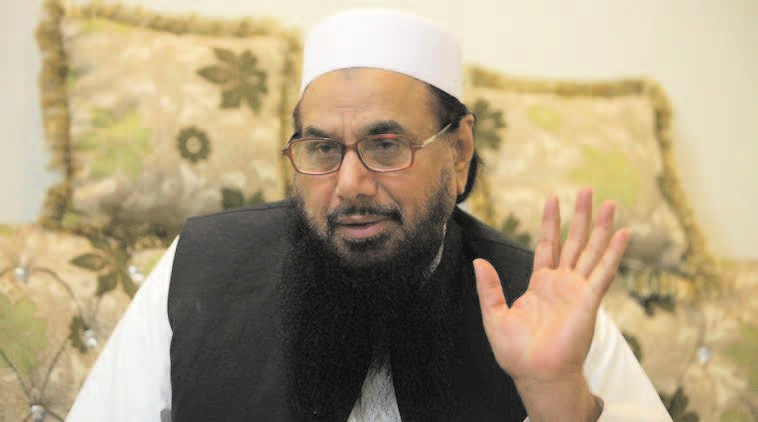
    A top official of the Pakistan government said on Wednesday that an FIR would soon be lodged against Jamaat-ud-Dawa (JuD) chief Hafiz Muhammad Saeed, currently in house arrest under an anti-terrorism law.

    The crackdown on the Mumbai attack mastermind and others was described as “cowardly” by assorted terror and militant groups, with Hizbul Mujahideen chief Syed Salahuddin saying it was “painful”. Minister Khurram Dastagir Khan said all state institutions were on board before action was taken against Saeed, adding, “The charges against him will be known in a few days.”

    Punjab law minister Rana Sanaullah said more activists of JuD and its front Falaha-i-Insaaniyat (FIF) would be booked soon. “We’re monitoring the activities of JuD and FIF workers. More activists will be detained under the fourth schedule of the anti-terrorism law,” Sanaullah said, telling reporters that Saeed’s Kashmir policy was at variance with Pakistan’s. “We won’t compromise on our national interest. Our policy on Kashmir is different from JuD’s,” the minister said.

    Syed Salahuddin issued a statement saying the arrest not only sent “a negative and disappointing message” to the people in “India-held Kashmir”, but also showed “Pakistan’s weak role in the ongoing freedom struggle” of Kashmiris. He urged the Pakistani government to revoke the detention, which led to a few pro-JuD demonstrations in Muzaffarabad in Pakistan Occupied Kashmir.

    “Kashmir’s freedom movement demands the Pakistani leadership rise above compulsions and fears and take a firm position. Saeed has always called the international community to break its criminal silence on Kashmir,” said Salahuddin, who also heads the United Jihad Council (UJC), a conglomerate of 12 terror groups.

    Pakistan army, which allegedly used Saeed and his militant outfits for years as proxies against India, has said his arrest was in national interest. October last, the Sharif government had informed the military leadership of Pakistan’s growing international isolation over failure to curb terrorists, and sought consensus on several key actions against non-state actors. Foreign secretary Aizaz Ahmed Chaudhry had then said that the principal international demands were for action against Masood Azhar and Jaish-e-Mohmmad, Hafiz Saeed and Lashkar-e-Taiba, and the Haqqani network.

  • Indian American Balwinder Singh pleads guilty to Khalistan terror movement involvement

    Indian American Balwinder Singh pleads guilty to Khalistan terror movement involvement

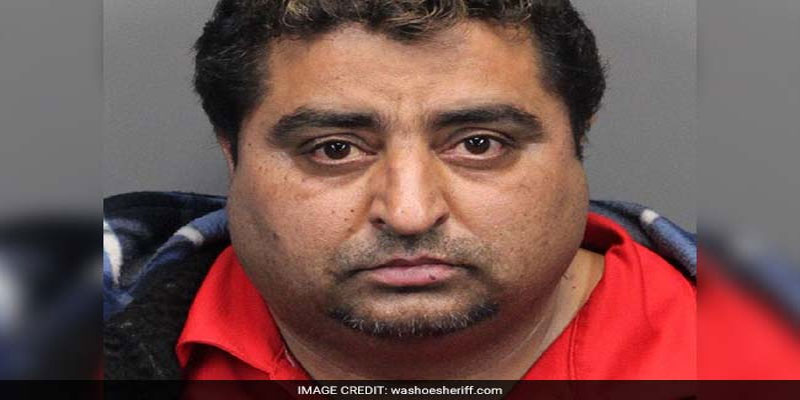
    NEW YORK (TIP):  42 Year old Balwinder Singh, a resident of Nevada, pleaded guilty before US District Judge Larry Hicks to one count of conspiracy to provide material support to terrorists, knowing and intending that such support would be used to carry out terrorist attacks overseas, Acting Assistant Attorney General for National Security Mary McCord said, November 29.

    “Singh attempted to provide material support and resources to terrorists to create violence and disruption abroad,” McCord said.

    “Identifying, thwarting and holding accountable individuals who pursue international terrorism is a top priority of the Department of Justice,” she said.

    A citizen of India and permanent US resident, Singh went by the aliases of “Jhaji”, “Happy” and “Baljit Singh” and has been detained and charged since his arrest in December 2013.

    He faces the statutory maximum penalty of 15 years in prison and deportation following his release. His sentencing was set for February 27.

    His indictment says that Singh obtained asylum in San Francisco using a false identity.

    According to the court filed documents and admissions made in connection with the plea agreement, between September and December 2013, Singh conspired with others to support terrorist attacks in India as part of a movement to create an independent Sikh state.

    Singh communicated with co-conspirators by telephone to discuss these plans and agreed to provide material support by facilitating a co-conspirator’s travel to and within South Asia, providing funding and materials necessary to carry out an overseas attack.

    In October 2013, Singh and the co-conspirators agreed that one of them would travel to India in 2013 and carry out “likely an assassination or maiming of an Indian governmental official.” The final target would be determined after the co-conspirator arrived in South Asia.

    Singh purchased two sets of night-vision goggles, gave them to a co-conspirator who was going to carry out the planned attack.

    In December 2013, the co-conspirator attempted to board a flight from the San Francisco International Airport to Thailand in order to carry out the attack, but was prohibited by the US law enforcement from boarding the flight.

    As a result, the planned attack was never executed.

    After this, Singh and his co-conspirators continued to discuss and plan terror attack in India until he was arrested.

    The defense attorney noted that a clause in the plea agreement would allow Singh to ask to be sent to a third country, not India, under the US Convention Against Torture.


  • At least five killed, 27 wounded in Afghan triple bombing

    At least five killed, 27 wounded in Afghan triple bombing

    JALALABAD, AFGHANISTAN (TIP): At least five people were killed and 27 others wounded in a triple bombing in eastern Afghanistan’s Nangarhar province Nov 26, provincial officials said.

    There was no claim of responsibility for the three bombings in Jalalabad, the capital of Nangarhar province, which is a hotbed of IS militancy.

    “Five people were martyred in three explosions in different parts of Jalalabad of Nangarhar province this morning,” provincial spokesperson Ataullah Khogyani told AFP.

    Khogyani said the first blast was a roadside bomb which detonated outside the house of a senior prison official, Abdul Hakim, killing him and a child and wounding six others.

    The second blast came outside the fire brigade office –from where the first rescuers are usually dispatched after an attack — killing three and wounding 21.

    Khogyani said the third blast came as people gathered at Hakim’s house after the first blast, but there were no casualties.

    Dr Najib Kamawal, director of the Nangarhar civil hospital confirmed the toll.

    The IS group appears to be intensifying attacks against the government and civilians as Afghan forces, backed by NATO air strikes, step up operations against them in Nangarhar.

    Last week IS claimed a massive suicide blast targeting Shiites in Kabul that killed at least 27 people.

    In late October, a suicide bomber killed at least six people at a gathering of tribal elders seeking aid for war-displaced families in Jalalabad.

    As well as the emerging threat from IS loyalists, who are making gradual inroads across Afghanistan, Taliban fighters are active in Nangarhar. (AFP)

  • 4 militants, 2 Pakistani soldiers killed in attack on mosque

    4 militants, 2 Pakistani soldiers killed in attack on mosque

    ISLAMABAD (TIP): Pakistan’s military and officials say a group of militants have attacked a mosque at an army facility in northwest Pakistan, triggering a shootout in which four insurgents and two soldiers were killed.

    The army in a statement said 14 troops were also wounded in Saturday’s suicide attack on Ghalani Camp in Mohmand tribal region bordering Afghanistan.

    It said the attackers wanted to enter the camp and started firing after they reached the mosque, where residents and a large number of recruits were present. It said the attackers were “contained in the outer courtyard” of the mosque, and subsequently all four died.

    Two security officials also confirmed the account and said a search operation is underway to trace and arrest any accomplices of the attackers. (AP)

  • EIGHT YEARS AFTER 26/11, RAILWAYS AND COAST REMAIN VULNERABLE

    EIGHT YEARS AFTER 26/11, RAILWAYS AND COAST REMAIN VULNERABLE

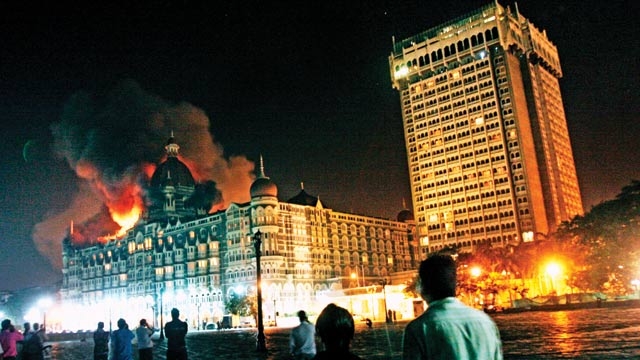
    MUMBAI (TIP): Eight years after the November 26, 2008 Mumbai terror attacks, in which 164 people were killed and about 308 injured, the railways and coastal areas remain vulnerable. The strengthening of the intelligence and counter-intelligence apparatus and training of police personnel, especially  constables attached to the anti-terrorism cells, is yet to gather momentum. The cells were set up in over 100 police stations across Greater Mumbai. The nation observes the 8th anniversary of the attacks on Saturday.

    A two-member committee headed by former Governor and Union Home Secretary R D Pradhan had been appointed to examine the government’s response to terror attacks. Among other things, the committee had suggested steps to strengthen coastal security through better monitoring and modernisation of police with automatic arms and ammunition.

    While the government has undertaken to set up 12 coastal police stations, in a bid to strengthen the coastal security, as on date only two are operational –one in the island city the other in the western suburbs. However, both lack infrastructure. Besides, the establishment of police chowkies still remains on the paper while the development of a jetty has been caught in red tape. Of the 30-plus speed boats, some are either anchored at the bay and or can otherwise not be used by security personnel to conduct vigils, for want of adequate fuel.

    Security at the Mumbai railway stations and key junctions have been caught in administrative and policy logjams. More than seven million commuters travel on central, western and harbour railway lines, but deployment of adequate security personnel has yet to happen.

    State Anti-Terrorism Squad chief Atulchandra Kulkarni informs that the implementation of the Ram Pradhan committee report is being made in phases. “A lot of changes have been made in the functioning of the ATS and its jurisdiction. ATS units are functional in all key regions of the state. The police force is equipped with modern arms and weapons,” he says.

    Further, a state home department official said chief minister Devendra Fadnavis recently launched Mumbai’s city-wide CCTV network, which is expected to strengthen the surveillance system stronger. A total of 4,717 CCTV cameras across 1,510 locations, covering almost 80 per cent of the city have been installed. Apart from fixed cameras, five  mobile surveillance vans will also start patrolling the city. The project had been proposed during the NCP-Congress regime, on a recommendation of the Ram Pradhan Committee report but it was delayed because private sector companies did not submit tenders despite bids being invited four times. Security expert Shirish Inamdar says the installation of CCTV cameras is not adequate and upgradation of intelligence machinery is need of the hour. “Higher level and lower level police personnel should interact with each other on a regular basis and those assigned with the job of intelligence gathering should be further trained. Though anti-terror cells have been established in every police station in Greater Mumbai, the personnel deployed there lack adequate training in intelligence and counter-terrorism. Adequate attention needs to be paid on this aspect,” he says. Source: Business Standard

  • One by one, ISIS social media experts are killed as result of FBI program

    One by one, ISIS social media experts are killed as result of FBI program

    WASHINGTON (TIP): In the summer of 2015, armed US drones over eastern Syria stalked Junaid Hussain, an influential hacker and recruiter for the Islamic State.

    For weeks, Hussain was careful to keep his young stepson by his side, and the drones held their fire. But late one night, Hussain left an internet cafe alone, and minutes later a Hellfire missile killed him as he walked between two buildings in Raqqa, Syria, the Islamic State’s de facto capital.

    Hussain, 21, from Birmingham, England, was a leader of a band of English-speaking computer specialists who had given a far-reaching megaphone to Islamic State propaganda and exhorted online followers to carry out attacks in the West. One by one, US and allied forces have killed the most important of roughly a dozen members of the cell, which the FBI calls “the Legion,” as part of a secretive campaign that has largely silenced a powerful voice that led to a surge of counterterrorism activity across the US in 2015 as young men and women came under the influence of its propaganda.

    US military, intelligence and law enforcement officials acknowledge that the Islamic State still retains a sophisticated social media arm that could still inspire attacks like those in San Bernardino, California, and in Orlando, Florida, and remains a potent foe suspected of maintaining clandestine cells in Europe. But they point to the coordinated effort against the Legion as evidence of the success the US has had in reducing the Islamic State’s ability to direct, enable or inspire attacks against the West.

    Initially the threat posed by the Legion was primarily seen as a problem for law enforcement officials. But as the threat worsened last year, and the FBI stepped up the monitoring of terrorism suspects around the country, the bureau pressed the military to focus on the group, according to current and former US officials.

    While US and British forces conducted a series of drone strikes on members of the group, the FBI sifted through thousands of the Legion’s followers on social media to figure out who had actually been inspired to take action. In the last two years, it has arrested nearly 100 people in cases involving the terrorist group.

    Several of the arrests were of people who had direct contact with the Legion. Many of the others were “folks who first came on our radar because we became aware of them” through their connections with Hussain and Reyaad Khan, also a British citizen, who was another leader of the group, according to Andrew McCabe, deputy director of the FBI.

    Hussain wore a number of hats, including that of a hacker. He was linked to the release of personal information on more than 1,300 US military and government employees. In March 2015, his group posted the names and addresses of service members with instructions: “Kill them in their own lands, behead them in their own homes, stab them to death as they walk their streets thinking they are safe.”

    More important were Hussain’s efforts as an online recruiter. According to court records, Hussain communicated with at least four men in four states, imploring them to initiate attacks or help spread the Islamic State’s message. (PTI)

  • Suicide bomber kills 4 in Kabul: Officials

    Suicide bomber kills 4 in Kabul: Officials

    KABUL (TIP): Afghan security officials have confirmed that at least four security forces were killed when their vehicle was attacked by a suicide bomber in the capital Kabul.

    The security officials, who did not want to be named as the investigation into the attack is still underway, said Wednesday that 11 others were wounded in the attack which took place in Puli Mohmood Kahn area near the Afghan defense ministry compound.

    They said it is not clear if the bomber was on foot or on a motorbike when he attacked the forces.

    No any group has claimed responsibility for the attack, but Taliban insurgents have recently increased their attacks against Afghan security forces across the country.

  • Terror-hit Dhaka bakery returned to property owner

    Terror-hit Dhaka bakery returned to property owner

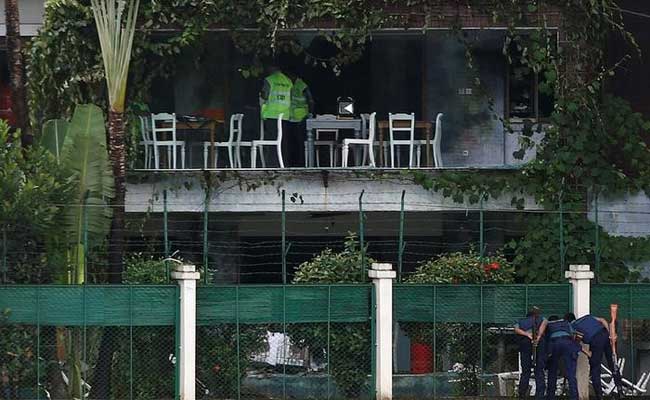
    DHAKA (TIP): Four-months after Bangladesh’s worst terror attack on an upscale cafe here in the capital’s diplomatic enclave, authorities have returned the eatery where 22 people, including an Indian girl, were killed during a bloody siege by Islamist militants.

    Police handed over the Holey Artisan Bakery to the owner of the plot, Samira Ahmed, on Sunday, following a court order, DMP Deputy Commissioner Masudur Rahman said.

    Samira’s husband along with his friends had started the Holey Artisan Bakery in 2014, bdnews24.com reported.

    The cafe in Dhaka’s diplomatic district was popular with foreigners because of its food, lakeside view and sprawling grass-lawn.

    The cafe was attacked by a group of militants on July 1, who took around 30 people, mostly foreigners, hostage in the cafe.

    The militants killed 20 hostages, including 17 foreigners, before the army stormed the cafe early next morning, and killed five militants to free the remaining hostages.

    Indian girl Tarishi, 18, who was among the hostages was also killed by the attackers.

    Two police officers were also killed in the operation. The police took control of the cafe to preserve the evidence in the aftermath of the attack.

    Later, questions were raised over the illegal commercial use of the property.

    Housing and Public Works Minister Mosharraf Hossain had warned that the owner of the cafe would have to face action for opening it illegally. (PTI)

  • Bangladesh arrests killer of secular blogger, publisher

    Bangladesh arrests killer of secular blogger, publisher

    DHAKA: An Islamist militant leader, the prime suspect in the brutal murders of a secular blogger and a publisher in Bangladesh, has been arrested from the national capital, police said today.

    Khairul Islam alias Fahim, a leader of intelligence wing of the outlawed Ansar al-Islam also known as Ansarullah Bangla Team, was arrested from Kamlapur Rail Station area in Dhaka last night, said Masudur Rahman, Deputy Commissioner of the Detective Branch of Police.

    Khairul, 24, was believed to be involved in the murders of Jagriti Prakashani publisher Faisal Arefin Dipan and secular activist Niladri Chatterjee Niloy, besides scores of deadly attacks on secular activists and foreigners.

    Khairul participated in the murders of Dipan and Niloy, Joint Commissioner Detective Branch of Police Abdul Baten was quoted as saying by ‘Dhaka Tribune’.

    Baten said Khairul admitted his involvement in the killings during primary interrogation. He said Khairul had joined the group in 2013 and the next year he met its senior leader Sayed Ziaul Haque, a sacked army major for his involvement in a failed coup in December 2011.

    Khairul had started to collect information about the duo since January 2015 and provided it to the outfit’s Askari section (armed wing) to carry out the killings, he added.

    “Seeing CCTV footage, Khairul has identified four people involved in blogger and secular writer Avijit’s killing and we are analysing the information,” Baten said. Dipan was hacked to death at his office in Dhaka’s Shabagh area in broad daylight on October 31, 2015. The group had claimed responsibility for the murder. (PTI)

  • 5 dead after tram derails in London

    5 dead after tram derails in London

    LONDON (TIP): Five people were killed and more than 50 injured when a tram derailed in south London during an early morning rainstorm Nov 9, police said.

    Emergency workers were still at the scene of the derailment in Croydon more than six hours after the crash, trying to free two people trapped in the wreckage of the two-carriage tram that tipped on its side next to an underpass. It appeared to have come off the rails on a bend.

    British Transport Police said they had arrested a man _ reportedly the tram’s driver _ and rail accident investigators were probing the cause of the derailment.

    The force said that “five people have sadly died following this incident,” and more than 50 others were taken to local hospitals with injuries.

    Liam Lehane of the London Ambulance Service described many of those hurt as “walking wounded” but said others suffered serious injuries.

    London’s fire department said eight fire engines and four specialist rescue units were at the scene. The rescue units, which are used in complex incidents, are equipped with heavy lifting and cutting tools, together with longer duration breathing apparatus and floodlighting.

    Emergency services called to the Sandilands tram stop at around 6:10 a.m. “I heard a massive crash at about 6.15 a.m., then heard shouting, then the emergency services arrived,” said resident Hannah Collier, 23. “They started bringing up the casualties, some very seriously injured.”

    Fire Brigade station manager Joe Kenny said “firefighters have released a number of people and two people remain trapped.” The British capital’s only tram network operates in the southern end of the city, serving 27 million passengers in the last year. (AP)


  • Taliban insurgents abduct, kill 26 Afghan civillians

    Taliban insurgents abduct, kill 26 Afghan civillians

    KABUL (TIP): Taliban insurgents on Oct 26 killed 26 Afghan civilians after abducting them in the remote central province of Ghor the previous day, officials said, the latest brutal attack targeting the local population on one of the country’s most lawless areas.

    The slain civilians were from a group of 33 taken by the militants near the provincial capital of Ferozkoh, according to Ziauddin Saqib, the deputy provincial police chief. Earlier reports suggested 20 were killed but the death toll rose later in the day.

    The abductions took place while battles were underway between the Taliban and Afghan security forces on Tuesday that saw two militant commanders killed, Saqib added.

    Both commanders were infamous figures in Ghor and were involved in many anti-government activities, Saqib also said, adding that the “cowardly insurgents killed innocent civilians in revenge for their commanders killed by security forces.”

    There was no immediate statement from the Taliban on the incident in the largely lawless Ghor.

    However, Abdul Hai Khateby, the spokesman for the provincial governor, said he is convinced the militants behind the attacks and abductions were a renegade Taliban group that had sworn allegiance last year to Afghanistan’s Islamic State affiliate.

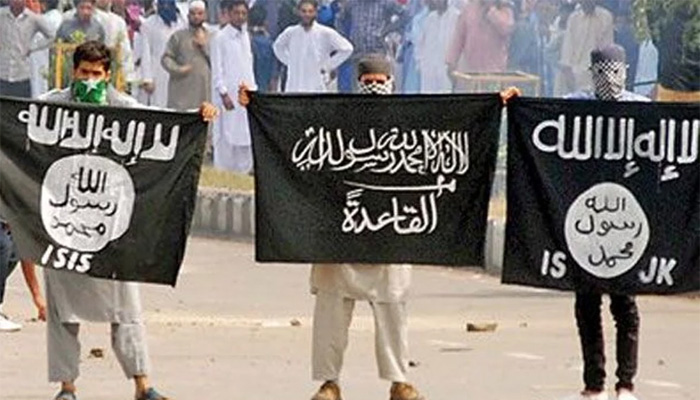
    “The group is former Taliban who just a year ago announced their support to their Islamic State group and changed their white flag to black,” Khateby told The Associated Press, speaking over the telephone from Ghor.

    The two different statements could not immediately be reconciled. Khateby also said he believed the abductions and killings were in revenge for the deaths of the two commanders.

    The civilians who were abducted are all poor people from the area, mainly villagers and shepherds, and there were even children among those taken, said Khateby.

    He said that the victims’ families and relatives, along with other residents ofGhor, held a protest rally near the governor’s office in Ferozkoh, the provincial capital, later on Wednesday.

    The demonstrators denounced the government, which they said cannot protect the local population.

    “The locals were so angry and they were throwing stones toward the governor’s building,” he said. No one was hurt in the protest, which later ended with the help of tribal leaders who mediated between the crowd and the authorities.

    Ghor is one of Afghanistan’s poorest and least developed provinces, with many areas outside Ferozkoh believed to be under Taliban control.

    In a report from eastern Paktika province, 17 people, including two children, were wounded when a bomb went off on Wednesday at a marketplace in the provincial capital of Sharan, according to local officials.

    Dr Wali Gul Kharoti, head of the public health department, said there were also two military personals among the wounded. He said all of the wounded were ins table condition.

    Abdul Raouf Massoud, deputy police chief in Paktika, said the explosive was “placed inside a shop at the city market” in an attack obviously meant to target civilians. No one immediately claimed responsibility for the attack.

    The Taliban have in recent months stepped up attacks across Afghanistan, taking advantage of the warm weather to wage war against the Kabul government. Many civilians have been caught in the cross-fire and also targeted by roadside bombs, which are among the insurgents’ weapons of choice.

    Recently, the Taliban have attacked Afghan security forces in northern Kunduz province, briefly taking control of a district headquarters. The militants have also overrun a district in northern Baghlan province and in eastern Paktia province.

    Meanwhile, in eastern Nangarhar province, Taliban militants have fought pitched battles with security forces. Afghanistan’s Ministry of Defense says its forces are waging operations in 15 provinces.

    In July, Kabul was shaken by a massive suicide bombing that struck a peaceful rally by Afghanistan’s minority ethnic Hazara community, killing more than 80 people and wounding hundreds. That attack was claimed by the Islamic State group, which emerged last year in Afghanistan as an affiliate of the militant group fighting in Iraq and Syria. Analysts believe the Islamic State affiliate in the country is mostly made up of disenfranchised Taliban fighters.

    The Hazara attack was the IS Afghan branch’s first assault in the country’s capital and the deadliest attack in Kabul since the US-led invasion to oust the Taliban regime in 2001. (PTI)

  • Pak freezes accounts of 5,100 terror suspects, including JeM Chief

    Pak freezes accounts of 5,100 terror suspects, including JeM Chief

    Islamabad, Oct 24 (TIP) : Pakistani authorities have frozen multiple bank accounts of suspects whose names were listed in the Fourth Schedule under the Anti-Terrorism Act, 1997.

    These accounts carried net amount worth over Rs 400 million, revealed the officials, adding that names of around 1,200 suspects whose accounts were frozen by the State Bank of Pakistan (SBP) were listed in category ‘A*’ of the ATA, 1997, a term used for terrorists put on exceptional risk or high risk.

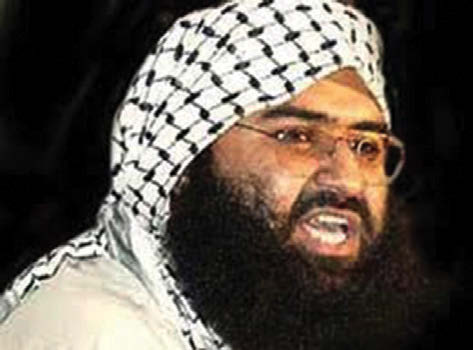
    The name of Jaish-e-Muhammad (JeM) chief Masood Azhar has also been included in the list’s top suspects whose accounts were frozen by the SBP, officials of the Ministry of Interior and SBP said.

    Masood Azhar’s name was also listed in category ‘A*’ of the 4th Schedule, revealed the officials who sought anonymity on the gravity of the issue. It happened since the government put the JeM chief under “protective custody” of security agencies after terrorists attacked the Pathankot Airbase, part of the Western Air Command of the Indian Air Force, they further revealed.

    “Following a request of the Ministry of Interior, we have frozen accounts of all top suspected terrorists, including Masood Azhar, son of Allah Bux,” confirmed a senior official of the SBP who is part of a team monitoring the progress pertaining to this matter.

    The interior ministry sent three different lists of thousands of suspects, including kingpins of some proscribed organisations, The News quoted the official as saying.

    Around 1,200 suspects whose accounts were frozen by SBP were listed in category A of the Anti-Terrorism Act, 1997, a term used for terrorists put on exceptional risk or high risk, the paper reported.

    Azhar has been included in the lists top suspects whose accounts were frozen by the SBP, said officials of the Ministry of Interior and SBP.

    After the attack on the airbase in Pathankot in January, India had in February written to the UN calling for immediate action to list Azhar under the UN Sanctions Committee.

    The National Counterterrorism Authority (Nacta) sent around 5,500 names to the SBP earlier this month, they said.

    National Coordinator Nacta Ihsan Ghani confirmed that over 5,000 accounts of suspects have been frozen by the SBP.

    “These accounts hold net amount worth Rs 400 million,” he said. About Azhars accounts, Ghani said he would revert with latest updates later this week.

    “More than 3,078 accounts of suspects whose accounts were frozen belonged to Khyber Pakhtunkhwa and Fata, 1,443 from Punjab, 226 from Sindh, 193 from Balochistan, 106 from Gilgit-Baltistan and 27 from the Islamabad Capital Territory,” the paper said, adding that 26 suspects belonged to Pakistan-occupied Kashmir.

    Accounts of other suspects such as cleric of Islamabad?s Lal Masjid Maulana Aziz, Ahle Sunnat Wal Jamaat leaders Maulvi Ahmed Ludhianvi and Aurangzeb Faroogi, Matiur Rehman of al-Qaeda, Mansoor alias Ibrahim of Tehreek-e-Taliban and Qari Ehsan alias Ustad Huzaifa and Ramzan Mengal of Lashkar-e- Jhangvi were also frozen, the paper added.

  • Iraqi special forces join Mosul offensive against IS

    Iraqi special forces join Mosul offensive against IS

    KHAZER (TIP): Iraqi special forces joined the Mosul offensive on Oct 20 with a pre-dawn advance on a nearby town held by the Islamic State group, encountering heavy fire.

    Major general Maan al-Saadi said the elite Counterterrorism Forces advanced on the town of Bartalla with the aid of US-led coalition airstrikes and heavy artillery on the fourth day of a massive operation to retake Iraq’s second-largest city.

    The special forces are expected to lead the way into Mosul, where they will face fierce resistance in an urban landscape where IS militants are preparing for a climactic battle.

    The offensive is the largest operation launched by Iraqi forces since the 2003 US-led invasion. It is expected to take weeks, if not months.

  • Nawaz Sharif warns Pak army not to shield militants

    Nawaz Sharif warns Pak army not to shield militants

    ISLAMABAD (TIP): Facing international isolation, Pakistan prime minister Nawaz Sharif has warned the powerful military not to shield banned militant groups and has directed authorities to conclude the Pathankot terror attack probe and the 2008 Mumbai attack trial, a leading Pakistani daily reported on October 6.

    Sharif’s orders came after a series of meetings between military and civilian leaders, Dawn newspaper said. The government delivered a “blunt, orchestrated and unprecedented warning” to the military leadership and sought consensus on several key actions, including action against banned militant groups, the paper quoted unnamed individuals, who were involved in the meetings.

    However, the spokesman of Pakistan Prime Minister’s Office strongly rejected the Dawn report. “The spokesman has termed the contents of the story not only speculative but misleading and factually incorrect. It is an amalgamation of fiction and half truths which too are invariably reported out of context,” an official statement said.

    “The fact that the report itself states that none of the attributed statements were confirmed by the individuals mentioned in the story, clearly makes it an example of irresponsible reporting,” it said. The PMO spokesman said, “It is imperative that those demanding the right to information at par with the international best practices, also act in a manner which is at par with international reporting norms and standards.”

    The Pakistan Foreign Office termed the report as “speculative”. Asked about the report, Pakistan foreign office spokesman Nafees Zakaria said, “The story you are referring to is purely speculative and as the author himself acknowledged that ‘none of the attributed statements were confirmed by the individuals mentioned’.”

  • China rescues JeM chief Masood Azhar at UN; Motive unknown!!!

    China rescues JeM chief Masood Azhar at UN; Motive unknown!!!

    China once again blocked India’s bid at United Nations to get Pakistan-based JeM chief Masood Azhar designated as a terrorist.

    However, the government sources say that India will continue with its effort to ban Masood Azhar.

    China’s technical hold was set to lapse on Monday, and had it not raised further objection, the resolution designating Azhar as a terrorist would have been passed automatically. The hold has now been extended and it can continue for upto three months more.

    “Terrorism is like a poisonous snake, which has always bitten the ones underplaying it. China should take a lesson from history,” said BJP National Secretary Shrikant Sharma.

    Stating that China has had taken pro-Pakistan stance in the past as well, former RAW officer Col RSN Singh urged Indians to not worry.

    On March 31 this year, China, a veto-wielding permanent member of the UN Security Council, had blocked India’s move to put a ban on the JeM leader and Pathankot terror attack mastermind under the Sanctions Committee of the Council. China was the only member in the 15-nation UN organ to put a hold on India’s application with all other 14 members of the Council supporting New Delhi’s bid to place Azhar on the 1267 sanctions list that would subject him to an assets freeze and travel ban.

  • Pakistan police indicted in New Human Rights Watch Report for torture, extrajudicial killings

    Pakistan police indicted in New Human Rights Watch Report for torture, extrajudicial killings

    Police are responsible for custodial torture and other serious human rights violations, a new report by Human Rights Watch has said. The report comes amid growing allegations of rights abuses by Pakistan’s army.

    The document released on Monday detailed problems faced by the police in reprimanding criminals and human rights violations by law enforcers in Pakistan. “Public surveys and reports of government accountability and redress institutions show that the police are one of the most widely feared, complained against, and least trusted government institutions in Pakistan,” the report said.

    There were several reported cases of police killing criminal suspects outside the legal system, torturing detainees for confession and harassing and demanding money from individuals wanting to file criminal cases.

    Fake encounters and torture

    Several officers spoke to Human Rights Watch, admitting that the force undertook fake “encounter killings,” in which police staged an armed exchange to kill suspects. These operations were often launched because of pressure from a local landowner or other influential people.

    According to the Human Rights Commission of Pakistan, over 2,000 people were killed in 2015 in armed encounters with the police. Most of these incidents took place in the province of Punjab. HRW quoted a police officer as saying that an “encounter killing is a way of ensuring that a known criminal does not escape justice because of lack of evidence and witnesses.”

    HRW also discovered that custodial beatings with batons and strips of leather, sexual violence, and forcing criminals to witness torture were commonly used by police. Suspects were tortured “to obtain confessions or other information, to coerce bribes or because of pressure from local politicians or landowners.”

    Poor, women at a disadvantage

    Members of downtrodden sections of Pakistani society also raised concerns with HRW about not being able to file a report with the police because of its “financial cost,” which referred to bribe-taking or the fear of harassment or threat.

    Female victims of sexual assault found it particularly difficult to report the crime committed against them because of “misogynist and biased attitude” of state institutions, the report said. In many cases, women who were sexually attacked were often blamed for bringing it upon themselves.

    Problems faced by the police

    Police said that maintaining law and order was an arduous task in the country, considering threats posed by armed extremist groups, local drug wars and land-grabbing. Insufficient infrastructure, lack of financial resources and interference from external sources contributed to the force’s performance.

    “Elite elements within Pakistani society – be they politicians, landowners or members of civil and military bureaucracy – exercised outsized and improper control over law enforcement,” the report’s authors wrote. Appointments to important positions were also made on the basis of “political” links.

    The report demanded that the government introduce effective systems to ensure police accountability and redress people’s grievances. The government also needed to remove laws that increased the police’s tendency towards impunity.

    The latest allegations come as Pakistan’s military is accused of massive rights violations in the southwestern province of Balochistan, where many people have gone missing amid a government crackdown on insurgents.

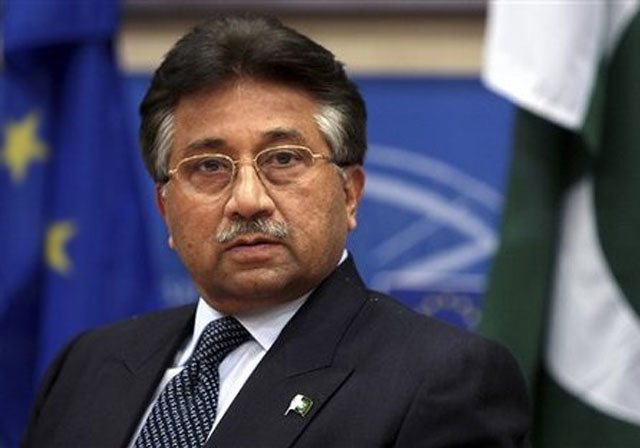
  • ‘Pakistan WEAK,’ admits Former President Pervez Musharraf

    ‘Pakistan WEAK,’ admits Former President Pervez Musharraf

    As the world unites against Islamabad terror agenda following the Uri terror attack, former Pakistan President Pervez Musharraf admitted that Pakistan has been isolated globally.

    He went on to blame PM Nawaz Sharif for his “wrong policies” that have tarnished Pakistan’s image.

    While Islamabad is getting marginalized globally, Musharraf added that Prime Minister Sharif is getting no love from his countrymen either. The former President said that anger against Pakistan is growing every day.

    “These things happen when we are internally weak, when external policies are not good, when there is mismanagement then such things happen. These are our weaknesses, said former Pakistan President Pervez Musharraf.

    Additionally, Musharraf accepted the fact that India is garnering more support and growing stronger than Pakistan internationally. He warned the Sharif administration of serious consequences if the country doesn’t counter India’s growing support across the globe.

    Talking about Pakistan-US relationship, Musharraf revealed that it has turned sour over the past few years. And, immediate measures need to be taken.

    “Our relations with America during my regime do not exist anymore. America is upset with us. Under such circumstances, a nation becomes weak. It becomes internationally weak,” said Musharraf.

    The comments from Pervez Musharraf came in after Pakistan-sponsored terrorists carried out attacks in Uri and Baramulla, and India intensified its military and diplomatic offensive against Pakistan.

  • India ‘launches surgical strikes against militants’ in POK: Uri avenged

    India ‘launches surgical strikes against militants’ in POK: Uri avenged

    NEW DELHI (TIP): Mounting a swift counter-terror operation across the Line of Control in Jammu and Kashmir, the Indian Army announced, September 29 that it had neutralized terrorists waiting to infiltrate. The brave military man oeuvre has been hailed across the country.

    The operation was aimed at preventing attacks being planned by Pakistan-based militants, a senior army official said.He said “significant casualties have been caused to the terrorists and those who are trying to support them”.

    At a joint press briefing by the army and the foreign ministry, officials said the “motive of the operation was to hit out at terrorists who were planning to infiltrate into our territory”.

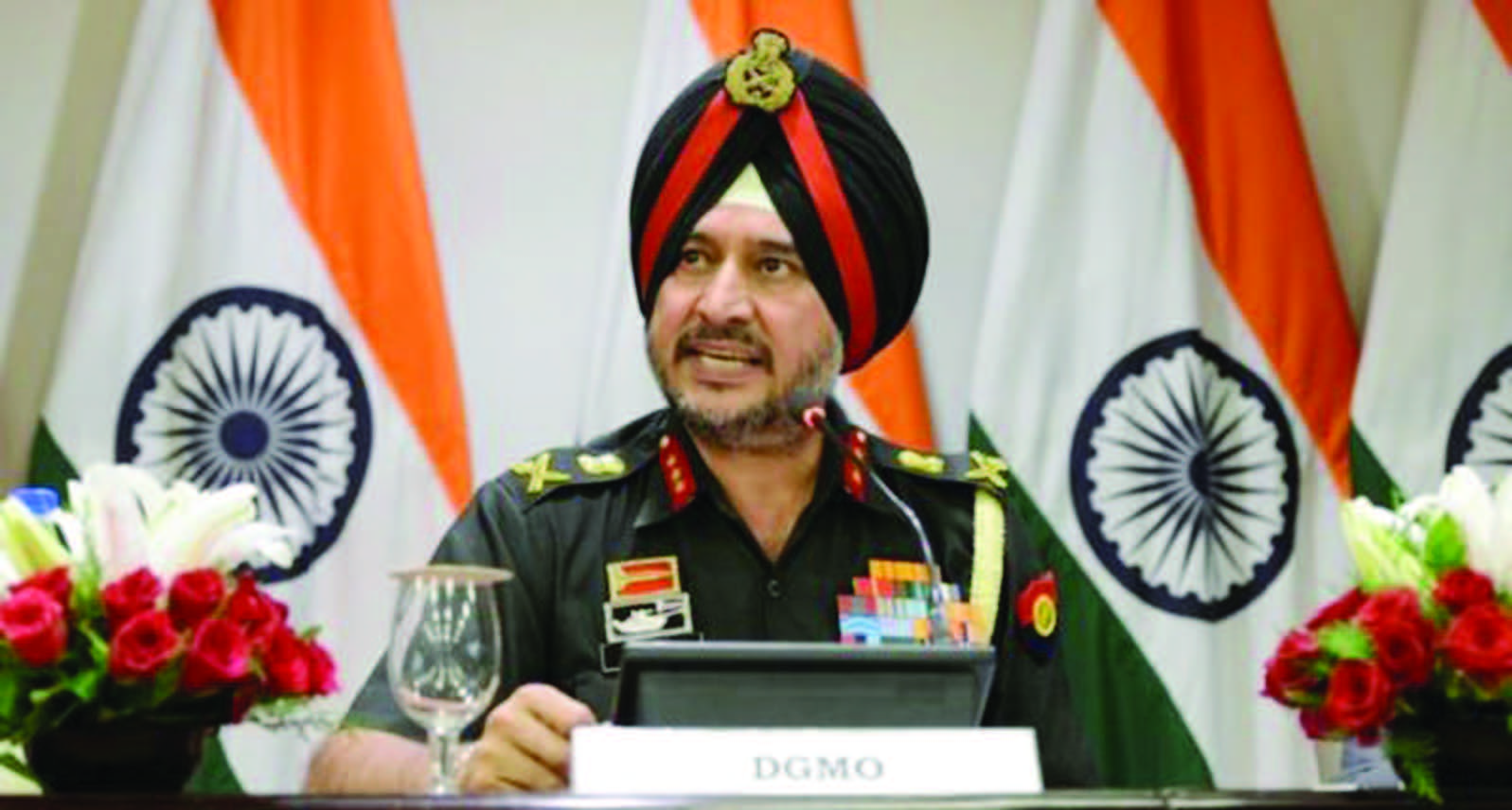
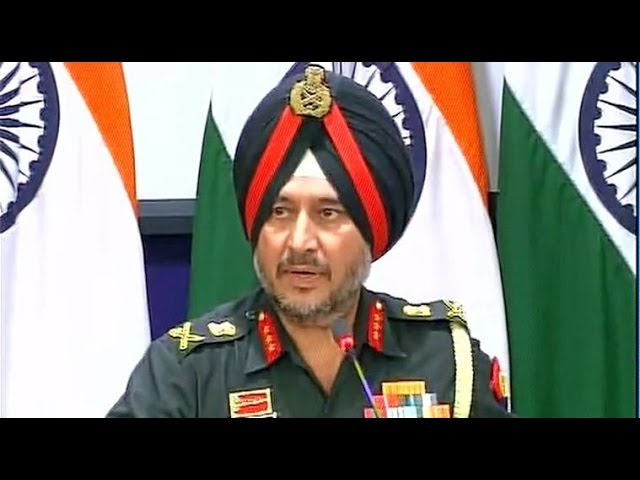
    India’s Director General of Military Operations, Lt Gen Ranbir Singh, also blamed Pakistan for “being unable to control terror activities in territories under its control”.

    “Based on receiving specific and credible inputs that some terrorist teams had positioned themselves at launch pads along the Line of Control to carry out infiltration and conduct terrorist strikes inside Jammu and Kashmir and in various metros in other states, the Indian army conducted surgical strikes at several of these launch pads to pre-empt infiltration by terrorists,” a statement said.

    It said the “surgical strikes” had caused “significant damage to terrorists”.

    The Press Trust of India quoted sources saying the operation took place between midnight and 04:30 local time on Thursday, September 29, that it was a combination of helicopter and ground forces, and seven militant “launch pads” had been targeted.

    Some unconfirmed Indian media reports said more than 30 militants had been killed in the operation.

    The entire operation was monitored for the entire night by Defence Minister Manohar Parrikar, Army chief General Dalbir Singh Suhag, and National Security Advisor Ajit Doval from the Army headquarters in New Delhi.

    Narendra Modi’s BJP government swept to power promising a tough line on Pakistan, so it has been under tremendous pressure to retaliate after the 18 September attack on the army base in Uri in Indian-administered Kashmir. The raid was the deadliest of its kind for years.

    “I assure the nation that those behind this despicable attack will not go unpunished,” Mr. Modi declared just hours after the base was attacked.

    There was also much talk of whether India should continue with its doctrine of “strategic restraint” against Pakistan.

    The response in India has been predictably supportive of the army. The Indian Panorama received reports of ecstatic celebrations of the Indian military strike in various parts of India. All political parties, regardless of differences with the ruling BJP have expressed total approval of the military action. That is the strength of democracy in India.

    Pakistan prime minister, Nawaz Sharif, criticized the “unprovoked and naked aggression of Indian forces” and said his military was capable of thwarting “any evil design to undermine the sovereignty of Pakistan”.

    Islamabad says India’s stance is a “blatant attempt” to deflect attention from human rights abuses in the region.

    Meanwhile, nations across the world are watching the situation. Britain on Thursday asked India and Pakistan to exercise restraint in the wake of surgical strikes by Indian troops across the Line of Control, while China said it was in touch with both countries to reduce tensions.

    A spokeswoman for Britain’s Foreign Office said: “We are monitoring the situation closely following reports of strikes carried out by the Indian Army over the LoC in Kashmir. We call on both sides to exercise restraint and to open dialogue.”

    In Beijing, foreign ministry spokesman Geng Shuang told a media briefing that China was in “communication with both sides through different channels” and hoped Indian and Pakistan “can enhance communication, properly deal with differences and work jointly to maintain peace and security”.

    Shuang was responding to questions on whether tensions between India and Pakistan after the terror attack in Uri had figured in the first anti-terror dialogue between New Delhi and Beijing earlier this week.

    A foreign ministry statement issued on Wednesday had said China values Pakistan’s position on Kashmir but hopes Islamabad and New Delhi will resolve the issue through dialogue and “maintain regional peace and stability by joint efforts”.

    India has “all legal and internationally accepted rights” to respond to any attack on her sovereignty and territory, Iqbal Chowdhury, advisor to Bangladesh Prime Minister Sheikh Hasina, said after the surgical strikes.

    Chowdhury said there had been a “violation from the other side andBangladesh always believes that any aggression or attack on the sovereignty…and legal right of a country is not acceptable”. He appealed for “restraint” from all sides to ensure peace in the region.

    There was no immediate reaction from the US to the surgical strikes. Hours before India announced it had carried out the strikes, US National Security Advisor Susan Rice called on Pakistan to “combat and delegitimize” terror groups operating from its soil, including Jaish-e-Muhammad, which Indian blamed for the attack in Uri that killed 18 soldiers.

    Rice condemned the “cross-border attack” on an Indian Army camp in Uri and highlighted the “danger that cross-border terrorism poses to the region” during a phone call to her Indian counterpart Ajit Doval. She said the US expects Pakistan to take “effective action to combat and delegitimize United Nations-designated terrorist individuals and entities, including Lashkar-e-Taiba, Jaish-e-Muhammad, and their affiliates”.

    This was seen as a major snub for Pakistan after Prime Minister Nawaz Sharif’s attack on India in his speech at the UN General Assembly.

    “It were as if Rice was rebutting Sharif here,” said an Indian diplomat obviously pleased with the US response, which some in India had perceived as insipid so far, given the context of terrorism being a shared challenge.

    Rice’s comments were also seen as significant against the backdrop of the foreign policy crisis in South Asia over India’s boycott of the South Asian Association for Regional Cooperation (Saarc) Summit in Islamabad.

    Rice’s remarks, reaffirming President Barack Obama’s “commitment to redouble our efforts to bring to justice the perpetrators of terrorism throughout the world”, were seen as an endorsement of India’s position. The US had not named Pakistan in its first reaction to the Uri attack.

    The statement also tapped into a growing sense of dissatisfaction and frustration with Pakistan, a non-NATO ally and a major beneficiary of US financial aid and arms supplies.


  • India Responds with Surgical Strikes Across Line Of Control in PoK on Terror Camps

    India Responds with Surgical Strikes Across Line Of Control in PoK on Terror Camps

    In a direct action on rising terror attacks launched from Pakistan into Indian Kashmir, The army has carried out surgical strikes in Pakistan occupied Kashmir to prevent Pakistani terrorists who had “positioned themselves at launch pads with the aim to carry out strikes in Jammu and Kashmir and other metros,” said the army today, Sep 29.

    “India conducted surgical strikes last night across the LoC to safeguard our nation, the Defence Ministry said on Thursday. Significant casualties have been caused to terrorists and those trying to shield them. We don’t have a plan to further conduct such strikes. India has spoken to Pakistan,” DGMO Lt Gen Ranbir Singh said while addressing the media.

    “There were launch pads at the LoC where terrorists were present waiting to infiltrate the nation and attack areas in Kashmir and metros across the country,” the DGMO said. No Indian casualties occurred during the surgical strikes that were carried out last night by the Indian Army.

    “We have recovered items including GPS which have Pakistani markings. Captured terrorists hailing from PoK or Pakistan have confessed to their training in Pakistan or in Pakistan controlled region,” Singh said.

    “I spoke to the Pak DGMO, shared our concerns and told him that we conducted surgical strikes last night: DGMO Singh said.

    The army also said Pakistan was informed – in keeping with protocol – of the cross-border strike and that the action came after escalating violations of the 2003 ceasefire. The army added that recently captured terrorists have confessed to their training and arming in Pakistan and Global Positioning Systems recovered from them further established their firm Pakistani connect.

    A surgical strike is “a calculated maneuver to ensure you deliver maximum damage which gives a big surprise to your adversary,” explained former air chief Fali Major, praising last night’s operation for its execution.

    PM Narendra Modi had informed President Pranab Mukherjee, Vice President and former Prime Minister Mahmohan Singh on the surgical strikes. Jammu and Kashmir Governor and CM Mehbooba Mufti have also been informed about the surgical strike.

    The press conference was jointly conducted by the Ministry of External Affairs and the Ministry of Defence.

    Meanwhile, Pakistan, in a statement issued has said: At least two Army men were killed as Indian and Pakistani troops exchanged fire over the Line of Control in “Azad Jammu and Kashmir”. The exchange of fire began at 2:30am, ISPR said, and continued till 8:00am. “Pakistani troops befittingly responded to Indian unprovoked firing on the LoC in Bhimber, Hotspring Kel and Lipa sectors,” the statement said.

  • Ahmad Khan Rahami trained at Pakistan by Taliban?

    Ahmad Khan Rahami trained at Pakistan by Taliban?

    Suspect in New York and New Jersey bombings spent three weeks in 2011 at Kaan Kuwa Naqshbandi madrassa, source says, amid questions of terrorism links

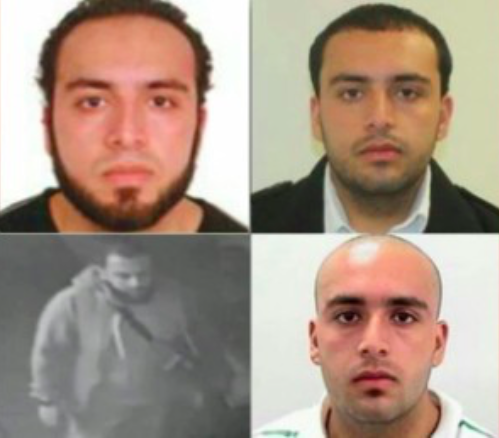
    Ahmad Khan Rahami, the man suspected of placing bombs in New York and New Jersey last weekend, spent time in a religious seminary in Pakistan closely associated with the Afghan Taliban, according to a government official.

    The 28-year-old, who was born in Afghanistan but became a US citizen, spent time at the Kaan Kuwa Naqshbandi madrasa on his two visits to Pakistan, a security official working for the government of Balochistan province told the Guardian.

    Rahami spent three weeks in 2011 receiving “lectures and Islamic education” at the school in Kuchlak, a dusty cluster of villages 20km north of Quetta, the provincial capital of Balochistan, he said.

    Kuchlak is a well-known hub for the Taliban, the Islamist movement that has waged a 15-year insurgency against local and Nato forces in nearby Afghanistan. It is home to many madrasas, the seminaries intimately linked with the Taliban, originally a movement of religious students.

    US officials have revealed basic details about Rahami’s two visits to Pakistan, the first in 2011 when he spent a couple of months in Quetta and got married and almost a year in 2013 when he also made a car journey to Afghanistan.

    But very little information has emerged from inside Pakistan about what Rahami did during his visits.

    The government official, who did not wish to be named because he was speaking about a highly sensitive subject, said Pakistani security agencies have tried to “hide all the details of his visits to Quetta” and keep as much information as possible out of the media.

    Rahami, he said, also visited other sensitive areas in the province, including Surkhab and Nushki, where former Taliban leader Mullah Akhtar Mansoor was killed by a US drone in May.

    ‘He got more religious’: neighbors share their views on Ahmad Khan Rahami
    Pakistan has long been accused of playing a “double game” with the US, both supporting the Nato counterinsurgency in Afghanistan and allowing the Taliban to use its territory a vital rear base.

    A western expert on the Taliban said Abdul Samad, the Afghan owner of the Kuchlack madrasa, was an important local figure.

    “The madrasa is a place where you have multiple Afghan Taliban going there and hanging out in [Samad’s] court, as well as active ISI officers,” he said, referring to the Inter-Services Intelligence (ISI) directorate, an army-run spy agency.

    “Samad is the kind of person who should have been shut down long ago but enjoys a high degree of protection,” he said.

    Despite being part of the mystical, Sufi strain of Islam, which many hardliners abhor, Samad is highly respected by the movement, he said.

    A Karachi-based cleric told the Guardian the school was a sizeable operation, with more than 200 students.

    Despite several attempts to reach Samad for comment, the Guardian was unable to make contact with the madrasa.

    Although the Taliban’s leadership is often described as the “Quetta Shura” many analysts consider Kuchlak to be the actual command centre for many senior members of the movement.

    The Taliban’s white flags have been reportedly seen flying in the town’s graveyards and Shahbaz Taseer, a Pakistani kidnapped by militants in Lahore in 2011 and held for more than four years, was released in Kuchlak in March by the Taliban.

    Rahami’s father Mohammad Rahami has said his son had grown increasingly interested in Islamist movements, watching Taliban and al-Qaida videos, and listening to their poetry. Rahami had also shown sympathy towards the Taliban, a former employer said.

    Given the Taliban has long avoided entanglement in international jihad, insisting it is interested only in forcing foreign troops out of Afghanistan, it is unlikely Rahami was operating under instruction when he planted his bombs. A notebook found on Rahami when he was captured after a shootout on Monday suggests he may have been inspired by the Islamic State group.

    But the claim Rahami attended an important Taliban-sympathising madrasa could be embarrassing for Pakistan at a time the country is under intense international criticism, not least from India, which accused Pakistan this week of hosting “the Ivy League of terrorism”.

    Anwar-ul-Haq Kakar, a spokesman for the Balochistan government, said that because more than 1 million Afghan refugees lived in the province it was “difficult to know what sort of activity is being conducted by some individuals”.

    “Filtering out the terrorist influences in such a huge community is a very difficult task,” he said.

    Nor could the government be expected to be aware of a US traveller such as Rahami, who has “deep links in the host community”.

    “If he was not spotted by the CIA and FBI or Homeland Security, then this shows that it is really global problem,” he said.

  • India calls Pakistan a terrorist state in furious Right of Reply at UN

    India calls Pakistan a terrorist state in furious Right of Reply at UN

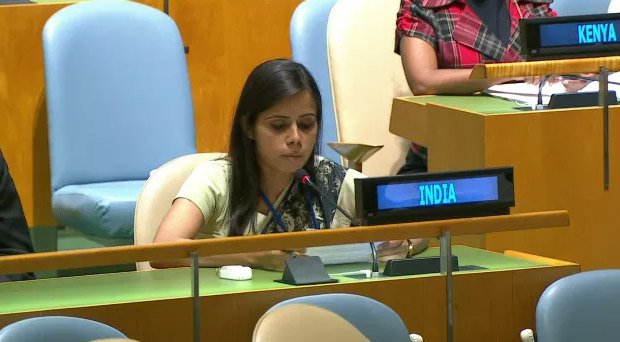
    WASHINGTON: Replying to Nawaz Sharif’s statement at the General Debate of 71st UNGA,  India’s First Secretary Eenam Gambhir (Follow her on Twitter @ Eenam Gambhir @eenamg)  directly took on Pakistan calling it a terrorist state and a global epicenter of terrorism.

    “The worst violation of human rights is terrorism. When practiced as an instrument of state policy it is a war crime,” said Gambir in India’s right of reply to Prime Minister Nawaz Sharif’s speech, in which he had raised the human rights situation in Jammu and Kashmir.

    Gambhir’s response to what she described as Pakistan’s “long tirade” about the situation in J and K, expressed earlier in a speech by the country’s prime minister Nawaz Sharif, was short, furious, and unprecedented in its intensity and descriptions.

    It also indicated a new Indian resolve to have Pakistan formally designated a nuclear proliferating terrorist state based on Islamabad’s use of terrorism as state policy and evidence of its nurturing of terror groups.

    Reminding the UN of how so many terrorist attacks, including that on 9/11 in U.S., led to Pakistan, she said, “The land of Taxila, one of the greatest learning centres of ancient times, is now host to the Ivy League of terrorism.” There was a specific reference to the hunt for Osama bin Laden leading to Abbottabad, Pakistan, where he was found and killed next to a Pakistan military garrison. Several other major terrorists including Mullah Omar, Ramzi Yousef, and Khalid Shaikh Mohammed, not to speak of numerous foot soldiers, including last week’s New York bomber, have found refuge and inspiration in Pakistan.

    “It attracts aspirants and apprentices from all over the world. The effect of its toxic curriculum are felt across the globe,” Gambhir explained, as India for the first time brought to the world’s attention the fallout of Pakistan’s nurturing of terrorist groups that the U.N itself has recorded and proscribed.

    “It is ironical therefore that we have seen today the preaching of human rights and ostensible support for self-determination by a country which has established itself as the global epicentre of terrorism,” she added in a reference to Sharif’s remarks on Jammu and Kashmir.

    More humiliation followed as Gambhir also raised the issue of the international aid to Pakistan being diverted for terrorism, raising the possibility that New Delhi will now begin a campaign to cut off assistance on which Islamabad subsists.

    IMF Chief Christine Lagarde is expected to go to Pakistan shortly in what will be the first visit by a top executive in a decade as Pakistan’s economy spirals down.

    “What we see in Pakistan, Mr. President, is a terrorist state, which channelizes billions of dollars, much of it diverted from international aid, to training, financing and supporting terrorist groups as militant proxies against it neighbors,” the Indian Rep told the UN, many of whose members give aid that enables Pakistan to survive.

    “Terrorist entities and their leaders, including many designated by the UN, continue to roam its streets freely and operate with State support. With the approval of authorities, many terrorist organizations raise funds openly in flagrant violation of Pakistan’s international obligations,” Gambhir told them.

    India also took aim at the internal tensions in Pakistan, calling it a “country with a democracy deficit.”

    “In fact it practices terrorism on its own people. It extends support to extremist groups, it suppresses minorities and women and denies basic human rights including through draconian laws,” Gambhir told UN delegates, in what is just a warm-up to External Affairs Minister Sushma Swaraj’s speech expected later in the week.

    In one short sentence, the Indian representative told the U.N, including many OIC and Arab monarchies and dictatorships that profess support to Pakistan on the Kashmir issue, but are also victims of terrorism: “As a democracy India is firmly resolved to protect all our citizens from all acts of terrorism in Jammu and Kashmir. We cannot and will not allow terrorism to prevail.”

    She also reminded them that India’s (and Pakistan’s) neighbors (which include Muslim-majority Afghanistan, Bangladesh, and Iran) suffer the consequence of Pakistan’s state-sponsored terrorism, even as its consequence had spread well beyond the region.

    Terrorists inspired, facilitated, and trained in Pakistan have struck throughout the world, including in New York, London, San Bernardino, and Brussels, among other cities.

    The Indian representative also ridiculed Sharif’s talk of nuclear restraint and peace, reminding the U.N that Pakistan’s “nuclear proliferation record is marked by deception and deceit.”

    Click here to read the statement made in its entirety (Courtesy –  Permanent Mission of India to the UN)

  • Indian Bar Owner Helped Catch New York Bombing Suspect Ahmad Khan Rahami

    Indian Bar Owner Helped Catch New York Bombing Suspect Ahmad Khan Rahami

    An Indian bar owner helped catch Afghani American Ahmad Khan Rahami, the man accused in the weekend bombings in New York and New Jersey in which 29 people were wounded.

    Harinder Bains helped police capture Ahmad Rahami who is a suspect in New York bombing
    Harinder Bains helped police capture Ahmad Rahami who is a suspect in New York bombing

    Indian-American attorney Ravi Batra told Media: “It turns out that the Chelsea Pressure Cooker Bomber suspect, a naturalised citizen, is caught by another immigrant, an Indian-American hero Sikh.”

    Harinder Bains saw Rahami sleeping in the doorway of his bar in New Jersey around 9 am on Monday, a hoodie pulled over his head.

    Mr Bains said he thought it was “some drunk guy” but when he woke him, he recognized him as the man whose face had been flashed on repeat as the bombing suspect.

    The businessman had just seen Rahami while watching TV news on his laptop. He walked to his other store across the street and called the police.

    “I’m just a regular citizen doing what every citizen should do. Cops are the real heroes, law enforcement are the real heroes,” said Mr Bains, who, news reports said, was being praised as a “#hero“.

    Ahmad Khan Rahami
    Ahmad Khan Rahami

    When the police came, Rahami pulled out a gun and started firing, shooting an officer in the chest. Rahami made a dash for it and shot at a police car, leaving another policeman injured.

    The chase ended when the 28-year-old suspect was shot multiple times. He was taken away on a stretcher.

    Mr Bains’s bar is about 5 km from where the New Jersey police had found a backpack containing bombs.

    Indian-American attorney Ravi Batra told the Press Trust of India: “It turns out that the Chelsea Pressure Cooker Bomber suspect, a naturalised citizen, is caught by another immigrant, an Indian-American hero Sikh.”


    Ahmad Khan Rahami connection to the bombings

    • Investigators first identified Rahami Sunday afternoon through a fingerprint, according to a senior law enforcement official. A cell phone connected to the pressure cooker also provided some clues, the official said.
    • Investigators “directly linked” Rahami to devices from New York and from Saturday’s explosion in New Jersey, FBI Assistant Director in Charge William Sweeney said Monday, sep 19. He declined to provide details about the evidence, citing the ongoing investigation.
    • According to multiple officials, investigators also believe Rahami is the man seen on surveillance video dragging a duffel bag near the site of the New York explosion, and the location where police eventually found a suspicious pressure cooker four blocks away.
    • Rahami’s last known address was in Elizabeth, New Jersey, the FBI says. That’s the same city where a backpack with multiple bombs inside was found Sunday night, but so far authorities haven’t publicly said whether they believe Rahami is linked to those explosives. Sources say they believe he is.


    Who is Ahmad Khan Rahami 

    • The 28-year-old was born in Afghanistan and is a naturalized US citizen, according to the FBI.
    • He traveled to Afghanistan multiple times, according to law enforcement sources. He was questioned every time he returned to the United States, as is standard procedure, but was not on the radar as someone who might have been radicalized, one official said. Another official said Rahami traveled overseas a good bit, visiting other countries.
    • Rahami spent several weeks in Kandahar, Afghanistan, and Quetta, Pakistan in 2011, according to a law enforcement official who reviewed his travel and immigration record. Quetta is considered a stronghold of the Taliban. While there he married a Pakistani woman, in July 2011.
    • Upon his return to the United States, he had to go through secondary screening because he visited an area of Pakistan known for its Taliban presence, according to the official. At that time, he told immigration officials he was visiting family and attending his uncle’s wedding and renewing his Pakistani visa.
    • Two years later, in April 2013, Rahami went to Pakistan and remained there until March 2014, the official said. Two other law enforcement officials confirmed to CNN that Rahami went to Pakistan for approximately a year.
    • His brother Mohammad traveled to Pakistan around the same time. Mohammad posted on Facebook at the time that while in Quetta they had heard seven bomb blasts over 24 hours at one point, according to CNN’s review of the page. Another posting during the trip is a photo of his brother Ahmad.
    • During that time the official says Ahmad traveled by car to Afghanistan as well. When he returned to the United States he was once again taken into secondary questioning and told officials he was visiting his wife, as well as his uncles and aunts. The official said each time he was taken to secondary screening, he satisfied whatever concerns immigration officials had.
    • The official says he was petitioning to bring his wife to the United States. He filed the paperwork in 2011 and it was approved in 2012. But the official said it was unclear if she ever came to the United States.
    • In 2014 Rahami contacted Congressman Albio Sires’ office from Islamabad, Pakistan saying he was concerned about his wife’s passport and visa. It turned out her Pakistani passport had expired and the consulate wouldn’t give her an immigrant visa until the passport was renewed, Sires said.
    • Once the passport was renewed she found out she was pregnant and they told her they wouldn’t give a visa until she had the baby, Sires said. They also told her when she had the baby they had to get an immigrant visa for the baby. At point Rahami claims the consulate told him to go back to Karachi, but he claimed it was too dangerous to go there. The congressman doesn’t know what happened after that.
    • Investigators are looking into whether he was radicalized overseas before returning to the United States in 2014, according to the official. On Monday, law enforcement said so far there is no indication he was on their radar before the weekend.
    • The law enforcement official says Ahmad Rahami became a naturalized US citizen in 2011. He first came in January 1995, several years after his father arrived seeking asylum. The official says Rahami was given a US passport in 2003, while a minor, and again in 2007 after he said he lost his first one.

    School and family in the United States

    • He majored in criminal justice at Middlesex County College in Edison, New Jersey, school spokesman Tom Peterson said. Rahami attended the college from 2010-2012 but did not graduate.
    • Rahami’s family lives above First American Fried Chicken in Elizabeth, the city’s mayor says. The family has a history of clashes with the community over the restaurant, which used to be open 24 hours a day, Mayor Chris Bollwage said. Investigators searched the building Monday, Bollwage said.
    • The Rahami family alleged discrimination and harassment in a lawsuit filed against the city and its police department in 2011, arguing that officials conspired against them by subjecting them to citations for allegedly violating a city ordinance on hours of operation.
    • The suit alleged that police officers and city representatives had said “the restaurant presented a danger to the community.” It also accused a neighboring business owner of saying, “Muslims make too much trouble in this country” and “Muslims don’t belong here.” The defendants, including police officers and city officials, denied the allegations.>
    • Bollwage said Monday the 2012 ruling on the case favored the city, adding that the family’s restaurant was “disruptive in the city for many, many years.”
    • In a Facebook post Monday, a family member asked for privacy.

    “I would like people to respect my family’s privacy and let us have our peace after this tragic time,” wrote Zobyedh Rahami, who’s believed to be Ahmad Rahami’s sister.

    A photo of the pressure cooker police found in New York.
    A photo of the pressure cooker police found in New York.