Tag: Terror Attacks – Bomb Blasts – Terrorism

  • British Member of Parliament Shot dead Suspect Arrested

    British Member of Parliament Shot dead Suspect Arrested

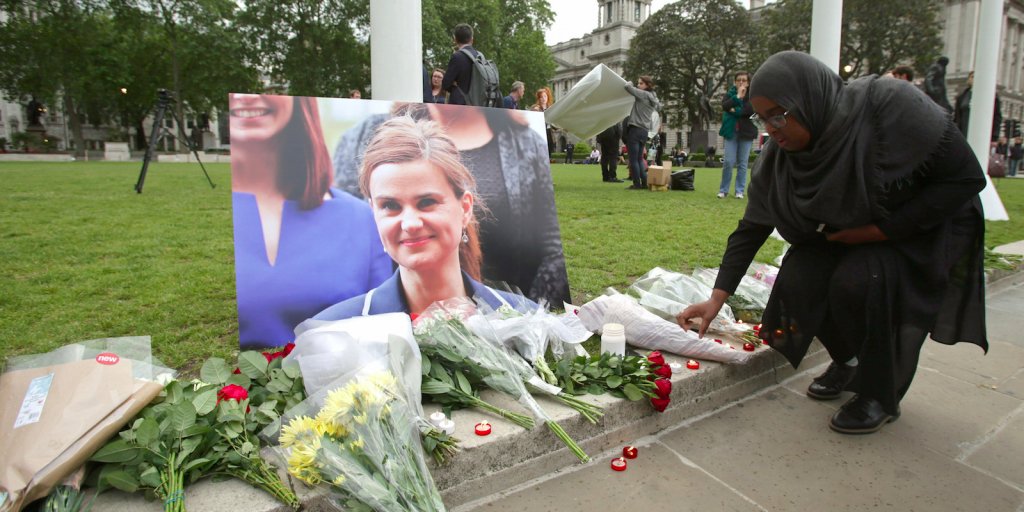
    LONDON (TIP): The 41-year-old Labour politician was attacked earlier Thursday, June 16 in the village of Birstall, within the region she represents, and later died of her injuries.

    The BBC reports that Cox was both stabbed and shot in the attack. The broadcaster says a man has been arrested and police are not looking for any other suspects.

    A second person, a man, was also injured in the attack and is expected to survive, The Associated Press reports, citing West Yorkshire Police.

    Jo Cox, a member of the British parliament, has died after being shot in a village near Leeds
    Jo Cox, a member of the British
    parliament, has died after being shot in a village near Leeds

    Cox held a regularly-scheduled drop-in session where her constituents could meet with her, The Guardian reports, and the stabbing and shooting occurred nearby.

    Police have not commented on a motive for the attack. The U.K is currently preparing for a high-stakes, hotly contested referendum next week.

    Voters will choose whether to stay in the European Union or leave it – the so-called “Brexit.”

    In the wake of the attack on Cox, the intense campaigning over the issue has been suspended.

    Cox was campaigning for the “remain” side, the AP reports, while noting that it’s unclear if the attack was related to the EU debate.

    Before being elected to Parliament last year, Cox was an aid worker and charity campaigner, The Financial Times reports.

    Cox, who had a working-class background and went to Cambridge, was a head of policy at Oxfam, an adviser to the Bill and Melinda Gates foundation and an adviser to an anti-slavery campaign.

    Voters will decide on the “Brexit” question in a June 23 referendum. Postal voting forms are available ahead of time.

    In Parliament, she was vocal about the need to find an end to the Syrian Civil War and advocated greater British military involvement to protect civilians in that conflict. Colleagues knew her as personable and independent-minded, the FT writes.

    In her first speech on the Parliament floor last year, Cox celebrated immigration and diversity, praised her home community as a picturesque manufacturing hub and said she looked forward to passionately championing continued EU membership. She closed by saying, “I am proud that I was made in Yorkshire and I am proud of the things we make in Yorkshire. Britain should be proud of that, too. I look forward to representing the great people of Batley and Spen here over the next five years.”

    Cox leaves behind a husband and two young children.

  • MASSACRE AT ORLANDO ~ World Mourns for Victims

    MASSACRE AT ORLANDO ~ World Mourns for Victims

    ORLANDO, FL (TIP): The world stood shocked and reminded of terrorist attacks in various parts of the world when the news of the worst mass shooting in the history of America broke out. A lone wolf gunman killed 49 at Pulse club, a popular gay night bar in Orlando, on Sunday, June 12, 2016. Another 53 were injured; either because of the gunshot injuries or because of the stampede that followed the gunman’s opening fire. It may be recalled that the earlier worst shootings in the US had taken placeat Virginia Tech in 2007 and Sandy Hook Elementary School in 2012, claiming 32 and 27 lives.

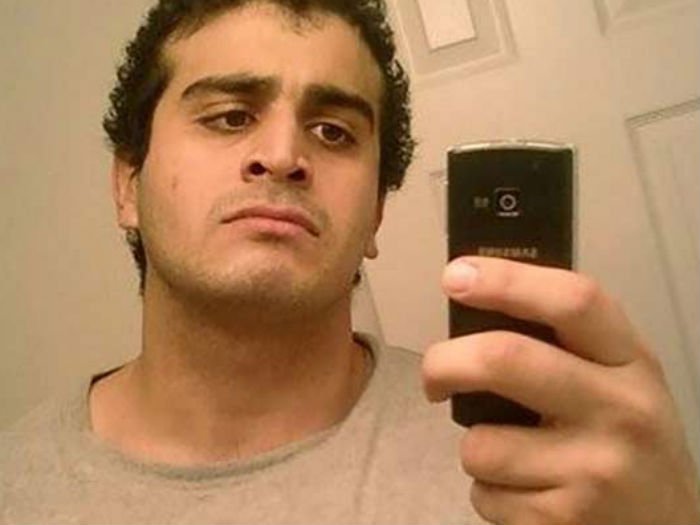
    The gunman who was also killed has been identified as Omar Seddique Mateen, a U.S. citizen of Afghan descent.The suspect, 29 is from Fort Pierce, Florida. Mateen worked as a private security guard. He rented a car and drove to Orlando to carry out the attack, as reported by a TV channel.

    “It appears he was organized and well-prepared,” Orlando Police Chief John Mina said early Sunday. The shooter had an assault-type weapon, a handgun and “some type of (other) device on him.”

    The whole world, from Australia and New Zealand to San Francisco has shared the grief of the victims’ families and mourned for the victims of the carnage.

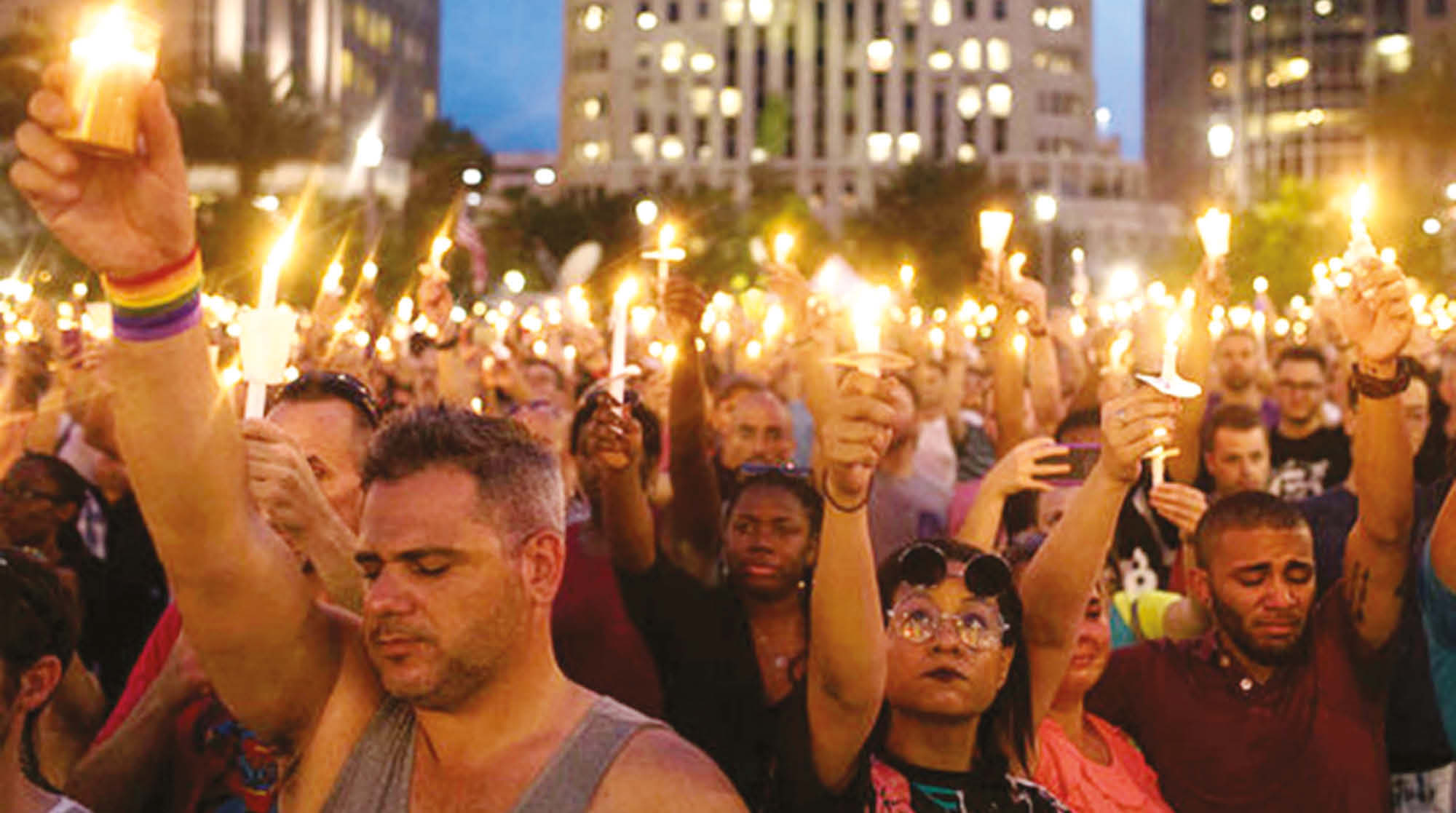
    Memorials, candlelight vigils and moments of silence were observed in cities around the globe as the world stopped to reflect on the violence that unraveled Sunday early morning at Orlando’s Pulse nightclub.

    We bring to our readers glimpses of mourning in the form of prayers and vigil in various parts of the world. On Monday, June 13 evening, thousands of Londoners came out in solidarity for an Orlando shooting vigil in the historically gay neighborhood of Soho.

    Crowds gathered in and around gay bars on Old Compton Street, an LGBTQ thoroughfare.

    A deluge of photos and videos from Monday evening’s gathering was shared on Twitter.

  • Orlando Shooting Suspect’s Father Hosted A Political TV Show And Even Tried To Run For The Afghan Presidency

    Orlando Shooting Suspect’s Father Hosted A Political TV Show And Even Tried To Run For The Afghan Presidency

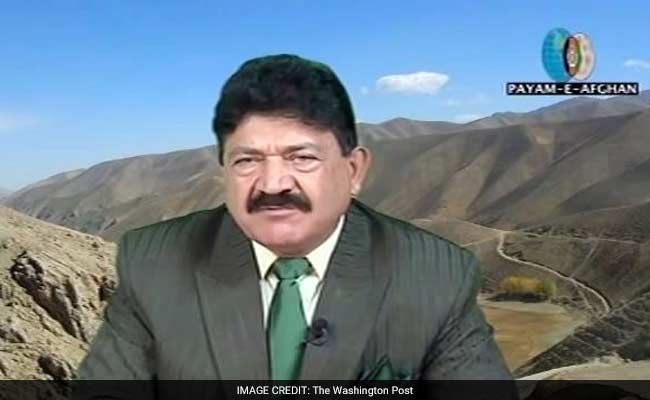
    The father of Omar Mateen, identified by police as the man behind the carnage at an Orlando nightclub early Sunday morning, is an Afghan man who holds strong political views, including support for the Afghan Taliban.

    Seddique Mateen, who has been referred to as Mir Seddique in early news reports, hosted a television show called Durand Jirga on a channel called Payam-e-Afghan, which broadcasts from California. In it, the elder Mateen speaks in the Dari language on a variety of political subjects. Dozens of videos are posted on a channel under Seddique Mateen’s name on YouTube. A phone number and post office box that are displayed on the show were traced back to the Mateen home in Florida. Mateen also owns a non-profit organization under the name Durand Jirga which is registered in Port St. Lucie, Florida.

    In one video, Mateen expresses gratitude towards the Afghan Taliban, while denouncing the Pakistani government.

    “Our brothers in Waziristan, our warrior brothers in Taliban movement, and national Afghan Taliban are rising up,” he says.

    “Inshallah the Durand line issue will be solved soon.”

    The “Durand line issue” is a historically significant one, particularly for members of the Pashtun ethnic group, whose homeland straddles the border between Afghanistan and Pakistan. The Durand line is that border. It is not clear whether the Mateens are Pashtun. The Afghan Taliban is mostly made up of Pashtuns.

    The line was drawn as a demarcation of British and Afghan spheres of influence in 1893. The British controlled most of subcontinental Asia at the time, though some parts, like what is now Afghanistan and northwest Pakistan, were only loosely held. The line was inherited as a border by Pakistan after its independence. Since it splits the Pashtun population politically, it is seen as a cause for their marginalization. Pashtuns are the largest ethnic group in most of eastern Afghanistan and northwestern Pakistan.

    Pashtuns are also sometimes referred to as Pakhtuns, or Pathans.

    The most recent video on Mateen’s YouTube channel shows him declaring his candidacy for the Afghan presidency. The timing of the video is strange, as it came a year after presidential elections were held in Afghanistan. Mateen appears incoherent at times in the video, and he jumps abruptly for topic to topic.

    On Sunday morning, Mateen told NBC News that his son’s rampage “has nothing to do with religion.” Instead, he offered another possible motive. He said his son got angry when he saw two men kissing in Miami a couple of months ago. He said his son was especially enraged because the kissing took place in front of his own young son.

    “We are saying we are apologizing for the whole incident. We weren’t aware of any action he is taking. We are in shock like the whole country,” Mateen said.

    Mateen could not be reached for comment by The Washington Post. His cellphone has been switched off.

  • Orlando Shooting: IS Claims Responsibility; Shooter’s Father Apologises, Obama Calls It ‘Act Of Hate’

    Orlando Shooting: IS Claims Responsibility; Shooter’s Father Apologises, Obama Calls It ‘Act Of Hate’

    Islamic State (IS) terrorist group has claimed the responsibility for the shootings in which at least 50 people were killed and 53 others injured when a “lone wolf” gunman opened fire early on Sunday in a gay nightclub in Orlando, Florida, where a state of emergency has been declared.

    In a message published on the group’s semi-official news agency, Amaq, it described gunman Omar Mateen as a “soldier of the caliphate”, The Telegraph (UK) reported.

    Although the statement did not clarify Mateen’s relation to the group, but the language appeared to suggest he was viewed as a lone wolf attacker.

    The gunman Omar Mateen, 29, was killed by a SWAT team after he took hostages at Pulse, a popular gay night club.

    It is believed that the suspect, who was a US citizen from the Florida town of Port St Lucie and was of Afghan descent, was not on a terrorism watch list, although he was being investigated for an unrelated criminal act, BBC reported.

    Officials said the killings were likely to be ideologically motivated, though there was no information that the gunman was associated with a particular group.

    He was armed with an assault rifle, a handgun and an unspecified “device”, said officials.

    “It appears he was organised and well-prepared,” Orlando Police Chief John Mina said.

    The shooter’s father told NBC News: “This has nothing to do with religion.”

    Mir Seddique said Omar Mateen had been angry when he saw two men kissing in Miami recently.

    “We are saying we are apologising for the whole incident. We weren’t aware of any action he is taking. We are in shock like the whole country,” Seddique told NBC News .

    US President Barack Obama was briefed on the mass shooting, which police described as an act of terrorism.

    “Our thoughts and prayers are with the families and loved ones of the victims. The President asked to receive regular updates as the FBI, and other federal officials, work with the Orlando Police to gather more information,” said a statement by Barack Obama’s press secretary.

    US Congressman Alan Grayson said it was “no coincidence” the attack happened in a gay club.

    Relatives were gathering at local hospitals desperate for news of their loved ones.

    Many had received calls and texts from loved ones inside the club as the siege began, and some have heard nothing since.

    The death toll given by Mayor Dyer means that the Orlando attack surpasses the 2007 massacre at Virginia Tech which left 32 people dead.

    “Today we are dealing with something that we never imagined and is unimaginable,” he said, adding that there was “an enormous amount of havoc” and “blood everywhere”.

    “Because of the scale of the crime I’ve asked the [Florida] governor to declare a state of emergency,” he said.

    “We’re also issuing a state of emergency for the city of Orlando so that we can bring additional resources to bear to deal with the aftermath.”

  • Orlando Nightclub Attack: What We Know about the Worst U.S. Mass Shooting

    Orlando Nightclub Attack: What We Know about the Worst U.S. Mass Shooting

    Orlando, Florida (TIP): In the worst of mass shootings in the history of America, a lone wolf gunman killed 50 at Pulse club, a popular gay night bar in Orlando, on Sunday, June 12, 2016

    Another 53 were injured; either because of the gunshot injuries or because of the stampede that followed the gunmen’s opening fire.

    It may be recalled that the earlier worst shootings at Virginia Tech in 2007 and Sandy Hook Elementary School in 2012, with 32 and 27 killed.

    The incident is being investigated according to sources as one related to Islamic terrorism.

    The gunman who was also killed has been identified as Omar Saddiqui Mateen, a U.S. citizen of Afghan descent.

    The suspect, 29 is from Fort Pierce, Florida, as per the official briefing. A law enforcement source told that Mateen worked as a private security guard. He rented a car and drove to Orlando to carry out the attack, as reported by CNN.

    “It appears he was organized and well-prepared,” Orlando Police Chief John Mina said early Sunday. The shooter had an assault-type weapon, a handgun and “some type of (other) device on him.”

    Orlando Mayor Buddy Dyer said he had declared a state of emergency for the city and has requested the governor do the same for the state.

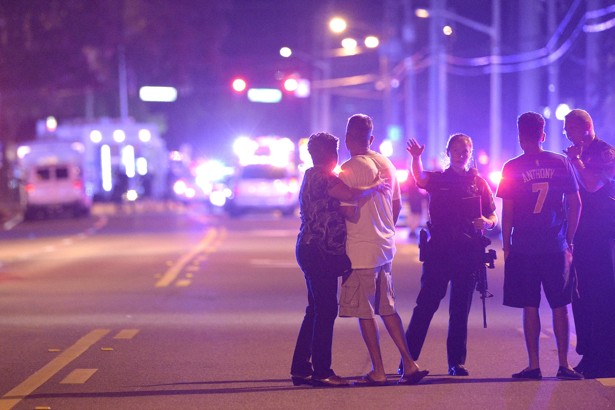
    Orlando Police responding to the Shootout
    Orlando Police responding to the Shootout

    The incident began at about 2 a.m. ET and ended at about 5 a.m.

    President Obama is expected to make a statement at 1:30 p.m. ET, the White House says. Vice President Joe Biden has also canceled his planned appearance at a campaign fundraiser in Florida tonight.

    The presumptive Republican and Democratic presidential nominees shared their thoughts:

    How the shooting began and led to a hostage situation…

    The shooting began around 2 a.m., and an officer who was working at the club responded, Mina said. The officer engaged in a shootout outside the club, after which the gunman ran into the club.

    “That turned into a hostage situation,” Mina said.

    Authorities were getting calls from people inside the club but away from the gunman, the chief said.

    pulses_nightclub“There were just bodies everywhere… in the parking lot, they were tagging them – red, yellow – so they knew who to help first and who not to. Pants down, shirts cut off, they had to find the bullets. Just blood everywhere,” an eyewitness told IANS.

    CCTV camera footage from the scene showed dozens of emergency vehicles at the scene and people being treated on the pavements.

    Some of the injured were reportedly brought to the Orlando Regional Medical Center in police pick-ups.

    Some witnesses said they heard as many as 40-50 gunshots as the incident unfolded.

    More than 100 people were reported to have been enjoying a Latin-themed night in the club, which calls itself the hottest gay bar in the city, when the attack began.

    Hours before the shooting, the club urged partygoers to attend its “Latin flavor” event Saturday night. After the shooting began, the club posted a terse warning on its Facebook page: “Everyone get out of Pulse and keep running.”

    The shooter opened fire at around 02.00 a.m. (local time) as the club night was coming to a close.

    “We heard rapid fire go off. In the room I was in, people went down to the floor. I wasn’t able to see the shooter or people get hurt, at some point, there was a brief pause, and a group of us got up and went to the exit that leads to the patio area outside. We found an exit and after that… I just ran,” Anthony Torres, an eyewitness said.

    He also heard people screaming that others in the nightclub were dead.

    According to the Mass Shooting Tracker, there were 372 mass shootings — defined as a single incident that kills or injures four or more people — in the US in 2015. Some 475 people were killed and 1,870 wounded.

    The latest incident comes as Orlando is still reeling from the fatal shooting on Friday night of 22-year-old singer Christina Grimmie following a concert in the city.

    She was signing autographs when she was shot by 26-year-old Kevin James Loibl, who then killed himself. It is not clear what Loibl’s motive was.

    Video from the scene of crime / Youtube / Social Media


  • India using Pathankot attack to derail talks: Pakistan

    India using Pathankot attack to derail talks: Pakistan

    ISLAMABAD (TIP): Pakistan on June 9 accused India of using the Pathankot terror attack as an “excuse” to derail the bilateral dialogue process and said that talks are the best way forward to resolve outstanding issues, including “mutual concerns” related to terrorism.

    Pakistan Prime Minister’s Advisor on foreign affairs Sartaj Aziz said that peaceful neighbourhood was part of the government’s policy.

    He said Pakistan and India had agreed to start the dialogue in December 2015 when Indian foreign minister Sushma Swaraj visited Pakistan.

    “But before the foreign secretaries could meet and finalise a schedule for resuming the Comprehensive Dialogue, the Pathankot incident of 2 January 2016 gave India an excuse to postpone the resumption of the dialogue,” he said.

    “Pakistan believes that dialogue is the best way forward to resolve outstanding issues, including mutual concerns related to terrorism,” he said.

    He said Pakistan sent a joint investigation team to India and has already initiated the required investigation against those alleged to be involved.

    The India-Pakistan talks were was stalled after the January 2 attack on Pathankot airbase in which seven Indian security personnel were killed.

    India has accused Pakistan-based terror group Jaish-e-Mohammed for the attack and has linked the resumption of the dialogue process to the action taken by Pakistan against the group.

    Aziz addressed the media here to highlight achievements of Prime Minister Nawaz Sharif ‘s government.

    To a question, Aziz said that Pakistan would continue to support Kashmiris’ struggle for the right of self-determination at bilateral level in talks with India as well as at multilateral forums like the UN.

    Aziz reiterated that US drone attack on May 21 which killed Afghan Taliban leader Mullah Mansour damaged the efforts for peace and reconciliation in Afghanistan.

    “The recent drone attack in Balochistan in which the Taliban leader Mullah Akhtar Mansour was killed, has breached our sovereignty, caused a serious setback to the peace efforts and intensified hostilities in Afghanistan. The drone strike must, therefore, be condemned by all stakeholders,” he said.

    He said Pakistan’s relations with the US have improved since Sharif took over but the main issue affecting the ties is American indifference towards security needs of Pakistan.

    “In our interactions, we firmly conveyed to the US that maintaining effective nuclear deterrence is critical for Pakistan’s security and only Pakistan itself can determine how it should respond to the growing strategic and conventional imbalances in South Asia,” he said.

    (PTI)

  • ISIS nuclear attack in Europe is a real threat, say experts

    ISIS nuclear attack in Europe is a real threat, say experts

    LONDON (TIP): The threat of a terrorist attack using nuclear material is the highest since the end of the Cold War, with ISIS actively trying to acquire weapons of mass destruction, according to a leading international think-tank on proliferation.

    “ISIS has already carried out numerous chemical weapons attacks in Syria; we know it wants to go further by carrying out a nuclear attack in the heart of Europe. This, combined with poor levels of security at a host of nuclear research centres in the former Soviet Union mean the threat of a possible ‘dirty-bomb’ attack on a Western capital is high,” said Moshe Kantor, the president of the International Luxembourg Forum.

    The warning from the organisation, whose members include former government ministers and senior officials from Russia and the West, comes amid deep apprehension that jihadists will attempt to carry out atrocities during the impending Euro 2016 football championship in France. The forum is not suggesting that a terrorist nuclear attack is likely to take place during the tournament, but Dr Kantor pointed out that the Islamist cell which carried out the Brussels attacks two months ago were believed to be monitoring workers and security arrangements at a Belgian nuclear facility.

    “Their previous documented attempts to gain access to a nuclear power station in Belgium are evidence of their intent,” he stated at an international conference in Amsterdam. “The terrorists don’t necessarily have to use a ‘dirty bomb’. We are not just talking about stolen nuclear material, using conventional explosives in a nuclear plant, such as smuggling in a bomb, would have catastrophic consequences.”

  • Hafiz Saeed Threatens India With Nuclear-Powered Drone

    Hafiz Saeed Threatens India With Nuclear-Powered Drone

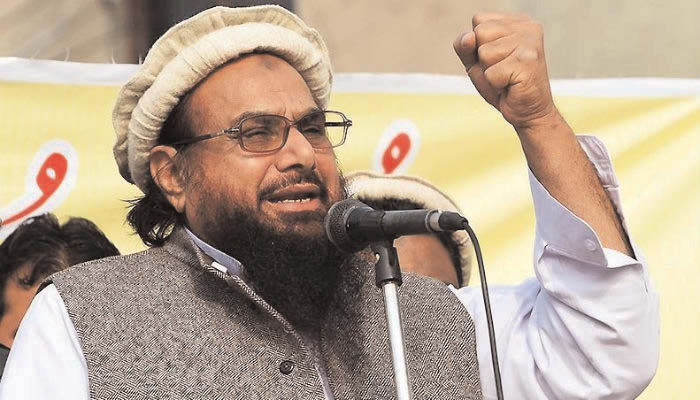
    The alleged mastermind of 26/11 Mumbai terror attacks and Jamaat-ud-Dawah (JuD) chief Hafiz Saeed has threatened India of dire consequences if it shows aggression against Pakistan.

    He warned that Pakistan would not mind to use nuclear bombs if India attacks.

    Hafiz Saeed took to Twitter and posted: “If any drone or any aggression takes place against Pakistan from Indian bases, we have enough drones for whole India.”

    Earlier this year, reportedly the JuD chief had launched a mass recruitment drive of terrorists to execute its anti-India plans. Also, reports state that Saeed had visited various launching pads near the Indo-Pakistan border from where terrorists are being infiltrated to India.

    Recenlty, India India erected latest Laser walls at the International Border for full-proof security. Saeed stayed near border for two days and he had made provocative speeches in around 10 villages.

  • Obama confirms Taliban leader Mullah Akhtar Mansour’s death in US strike

    Obama confirms Taliban leader Mullah Akhtar Mansour’s death in US strike

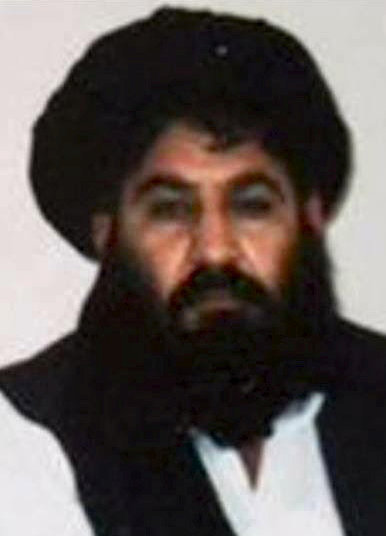
    President Barack Obama confirmed Taliban chief Mullah Akhtar Mansour was killed in a US air strike, hailing his death as an “important milestone” in efforts to bring peace to Afghanistan — but the strike was also an illustration of the tangled relationship between Washington and Islamabad.

    Saturday’s bombing raid, the first known American assault on a top Afghan Taliban leader on Pakistani soil, marks a major blow to the militant movement, which saw a new resurgence under Mansour.

    “He is an individual who as head of the Taliban was specifically targeting U.S. personnel and troops inside of Afghanistan who are there as part of the mission I have set to maintain a counterterrorism platform and provide assistance,” Mr. Obama said during a news conference in Hanoi, Vietnam. Killing Mullah Mansour, Mr. Obama said, sent a message that “we’re going to protect our people.”

    “We have removed the leader of an organisation that has continued to plot against and unleash attacks on American and Coalition forces, to wage war against the Afghan people, and align itself with extremist groups like Al-Qaeda,” the US president said in a statement.

    To many outside experts, it sent an equally powerful message to Pakistan.
    “The administration is no longer worried about blowing up anything,” said Vali Nasr, a former State Department official who worked on Pakistan. “This is literally carrying out an operation, not against an Arab terrorist leader, but against a Pashtun ally of Pakistan, inside Pakistani territory.”

    On Monday, May 23, the Pakistani Foreign Ministry summoned the American ambassador, David Hale, to lodge a protest for what it said was a “violation of Pakistan’s sovereignty.” The killing would obstruct multiparty efforts to negotiate a settlement between the Taliban and the Afghan government, it said.

    Obama, who is on a three day visit to Vietnam, said Mansour had rejected efforts “to seriously engage in peace talks and end the violence that has taken the lives of countless innocent Afghan men, women and children.”

    He called on the Taliban’s remaining leadership to engage in peace talks as the “only real path” to ending the attritional conflict.

    Mansour was elevated to the leadership of the Taliban in July 2015 following the revelation that the group’s founder Mullah Omar had died two years earlier.

    He was killed on Saturday near the town of Ahmad Lal in Pakistan’s south western Balochistan province, when missiles fired from a drone struck the car he was travelling in.

    It was believed to be the first time the United States has targeted a senior Taliban figure in Pakistan.


  • Islamic State kills 17 Iraqi soldiers with suicide truck bombs

    Islamic State kills 17 Iraqi soldiers with suicide truck bombs

    BAGHDAD (TIP): Islamic State insurgents killed at least 17 Iraqi soldiers with suicide truck bombs on May 12 in a major attack on government forces that recaptured the western city of Ramadi in December, military officials said.

    The jihadist group also killed two policemen and wounded eight others in two suicide bombings in Abu Ghraib outside Baghdad, a day after killing at least 80 people in bombings at an outdoor market and two checkpoints inside the capital.

    The attacks near Ramadi dealt one of the heaviest blows to the army since it drove Islamic State out of the western city five months ago.

    An army colonel told Reuters that militants killed at least 17 soldiers with suicide truck bombs in Jarayshi, 10 km (6 miles) north of Ramadi. They also surrounded an army regiment, seized a bridge and cut a key supply route linking Ramadi to the Thirthar district further north, army sources said.

    Air strikes by a U.S.-led coalition later allowed government forces to regain control of the supply route. But despite army reinforcements, the militants had dug into northern residential areas by nightfall and were lobbing mortars at government positions across the Euphrates river.

    An officer said the Islamic State attack appeared designed to delay an expected army offensive that would have completely severed militant supply routes to Falluja on the western approaches to Baghdad, which Iraqi forces have ringed for more than six months.

    As Islamic State has been pushed out of key towns and cities it seized in 2014, it has resorted increasingly to guerrilla-style attacks in civilian areas under nominal Iraqi government control.

    The toll from Wednesday’s three suicide bombings in Baghdad made it the deadliest day in Baghdad so far this year.

    Police sources said Thursday’s bombers approached a police station in Abu Ghraib from two directions before detonating their explosives. Baghdad Operations Command, one of the security organs charged with protecting the capital, said a third assailant was killed on approach to the police station.

    Amaq news agency, which supports Islamic State, said two militants had clashed with police at al-Zeidan station before setting off their explosives-filled vests.

    Sunni Muslim militant violence against security forces and Shi’ite Muslim civilians has persisted since Baghdad became the target of almost daily bombings a decade ago following the U.S.-led invasion in 2003 that toppled Saddam Hussein.

    A recent surge in bombings has heightened criticism of Prime Minister Haider al-Abadi as he grapples with a political crisis over his attempts to overhaul his cabinet to weed out corruption and mismanagement. (AP)

  • D13, Block 4, Clifton, Karachi: TV sting confirms Dawood’s address

    D13, Block 4, Clifton, Karachi: TV sting confirms Dawood’s address

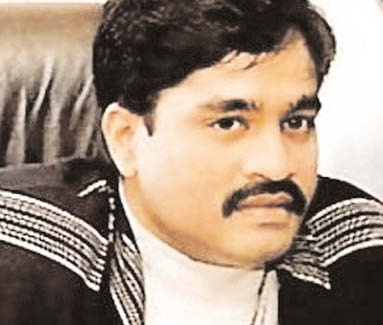
    NEW DELHI (TIP): A sting operation by a national TV channel claimed to confirm that underworld don Dawood Ibrahim indeed lives in Karachi’s posh Clifton area.

    The video shows the address of Dawood’s bungalow as D 13, Block 4, Clifton, Karachi, an address which has been shared by India with Pakistan on several occasions.

    The channel, on the basis of interviews of guards and locals, claimed that everyone in the area knew that Dawood lived there.

    Reacting to the TV report about Dawood’s presence in Pakistan, the government on Thursday said that it will continue to pursue its case that Pakistan hand over the 1993 Mumbai blasts mastermind back to India.

    “The news reports referred only corroborates the facts that were already available with us. We will continue to pursue this matter and we expect Pakistan to hand over this international terro rist to us,” MEA spokesperson Vikas Swarup told reporters at a media briefing.

    The official said India had in the past shared details of Dawood, including his possible locations in Pakistan with Islamabad. “Dawood Ibrahim is a UN-designated global terrorist and a fugitive from Indian law, at several point of time his details have been shared by the Indian government with the govern ment of Pakistan,” he added.

    The sting operation shows Dawood’s house flanked by a cricket stadium on one side and the Clifton Marquee, a popular wedding and banquet hall on the other.The compound has threemetre high walls, barricades leading up to the entrance and private security guards manning it 24×7. It claimed that Dawood’s presence there was confirmed by locals.

    Dawood is wanted in India for the past 23 years and Pakistan has always denied his presence there despite irrefutable evidence provided by Delhi.

  • PAKISTAN ACCEPTS INVOLVEMENT OF ITS NATIONALS IN PATHANKOT ATTACK

    PAKISTAN ACCEPTS INVOLVEMENT OF ITS NATIONALS IN PATHANKOT ATTACK

    NEW DELHI (TIP): In a major boost to the Indian probe into the Pathankot case, Pakistan has admitted the involvement of its nationals in the terror attack. It came in the form of the Pakistani joint investigation team (JIT)’s written request to the national investigation agency (NIA) for sharing evidence in the case. The request was made under Section 188 of the Pakistani CrPC, which applies to Pakistani nationals who commit crime outside the country, according to NIA officials.

    “The JIT submitted a written request to the NIA for sharing evidence in the Pathankot case , only then a process for providing them documents, witness statements and other information was started on Wednesday,” said a senior NIA official requesting anonymity.

    Section 188 of the Pakistani criminal procedure code applies for prosecuting those Pakistani nationals in Pakistan who have committed crime outside its jurisdiction. It is a formal acceptance of involvement of Pakistani nationals in the airbase attack,” said the official.

    The process of sharing evidence that began on Wednesday continued on Thursday as well with the JIT examining 13 witnesses in the case including Punjab’s superintendent of police Salwinder Singh, his cook Madan Gopal and jeweler friend Rajesh Verma.

    Singh, Gopal and Verma were travelling together in Punjab police official’s vehicle on the intervening night of December 31 and January 1 when four attackers overpowered them and snatched their vehicle to reach the airbase. Eight persons including seven security personnel were killed in the attack.

    A five-member JIT, including an officer of Pakistani spy agency ISI, has in India for the last five days to interact with the NIA officials who conducting probe here.

    “Examination of Salwinder happened in the presence of two officials each from the NIA and the JIT. Salwinder is being treated as witness in the case,” said another official of the NIA who also spoke on the condition of anonymity given the sensitive nature of case. The official added that the NIA probe converges with the investigation carried out in Pakistan at some place. The JIT has accepted that the attackers came from Pakistan. “The NIA and the JIT are probing same set of accused,” said the official. India probe has revealed that at least four attackers, who captured Salwinder Singh’s vehicle, had come from Pakistan after a conspiracy hatched by terror outfit Jaish-e-Mohammad, headed by Maulana Masood Azhar.

  • Former Pakistan PM Gilani visited my house after father’s death: Headley

    Former Pakistan PM Gilani visited my house after father’s death: Headley

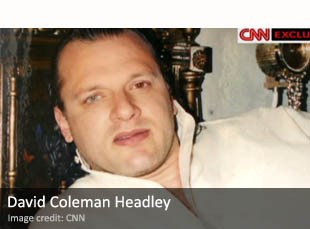
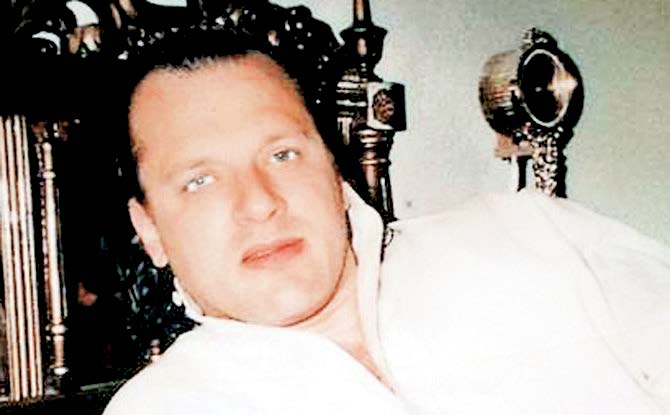
    Yousuf Raza Gilani, who was Pakistan’s Prime Minister in 2008, had visited David Coleman Headley’s home within weeks after the 26/11 Mumbai terror attacks, the Lashkar terrorist told a Mumbai court today, giving a new twist to his testimony.

    “It is not correct to say that the then Prime Minister of Pakistan–Yousuf Raza Gilani– had attended the funeral of my father who passed away a month after the Mumbai terror attacks on 26/12/2008. Infact, he (Gilani) visited our house (in Pakistan) a few weeks thereafter,” the Pakistani-American terrorist told special judge G A Sanap, who is hearing the case against Abu Jundal in the sessions court here.

    Deposing for the third day after his cross-examination began on Wednesday, Headley said his father, who was a Director General with Pakistan Radio, knew about his links with with LeT.

    “My father was aware of my association with LeT and he was not happy about it,” he said.

    When asked was it true that his half-brother Daniel knew about his LeT connection, Headley just said that he (Daniel) was not living in the same city (in Pakistan).

    Headley, who has been convicted in the US, for his role in the November 2008 attacks, also denied using Daniel’s mobile phone during his visit to Pakistan before the dastardly strikes in Mumbai.He is serving a 35 year jail term in the US.

    During his deposition, Headley said,”Saulat Rana, my friend in Pakistan, was aware of my connection with LeT and my visit to Mumbai prior to the 26/11 attacks.”

    “Rana neither objected nor encouraged me,” he told the court.

    On whether Rana was associated to LeT, Headley said, “No”. When asked whether he (Headley) toured Pakistani locations with Rana before the Mumbai attacks, he replied in the negative and wondered why he would go around in Pakistan when the target was India.

    Headley also told the court that he had no knowledge of any women cell and suicide bomber cell in LeT.

    He denied that NIA suggested to him to name Ishrat Jehan (in the case). He also refuted meeting special public prosecutor Ujjwal Nikam and Joint Commissioner of Police, (Crime) in USA before his deposition in February this year.

    When asked if he was treated for any mental illness, Headley replied in the negative and chuckled, “Yeh kya kya cheeze mere khaate mein daal rahe hain Wahab Sahab. Nahin, aisa koi wakya nahin hua (Wahab Sahab, what all things are you ascribing to me…nothing of this sort happened).”

    Headley also said that he does not know about who decided the date for the first attack (failed one in Mumbai).

    Earlier in the day, Headley told the court that he had “arranged” a fund-raising programme for the Shiv Sena in the US and had planned to invite the then party supremo Bal Thackeray to the event.

  • Hated India Since School Was Bombed In 1971:  Headley

    Hated India Since School Was Bombed In 1971: Headley

    MUMBAI (TIP): David Headley spoke coolly as he told a stunned Mumbai court on March 25 that he has hated India since childhood and wanted to inflict “maximum loss and damage” here.

    “Since childhood I hate India and Indians and wanted to cause maximum loss and damage to India,” said Headley, who is serving a 35-year prison term in the US for his role in the 26/11 Mumbai terror attack that killed 166 people in 2008.

    Responding to questions on Day 3 of his cross-examination, Headley’s voice betrayed no emotion as he explained his hatred, “My school was bombed on December 7, 1971. My school was destroyed and the people who worked there died,” Headley claimed.

    He did not mention it, but the reference was to the India-Pakistan war fought in December 1971. 55-year-old Headley would have been 11 years old then.

    At another time, when the judge advised Headley not to lose his patience on being asked the same questions repeatedly by a defence lawyer, the terrorist said in English, “I am not losing my patience,” and then switched to Hindi, saying, “Main bohot kharab insaan hoon (I am a very bad person). Maine maan liya hai (I have admitted it). I have pleaded guilty. Phir maan leta hoon (Let me admit it again). But I thought I was a government witness.”

    Public prosecutor Ujjwal Nikam had objected saying Headley had already answered questions being posed to him today and he was apprehensive that Headley may lose his patience and insult the the defence lawyer.

    Headley – who had recced sites for the Mumbai terror attacks on multiple visits before 10 Lashkar terrorists struck the city on November 26, 2008 – was arrested in 2009 in the US, which guaranteed he will not face the death penalty or be extradited in exchange for his disclosing information about the terror group.

    In December last year, Headley agreed to turn approver or witness for the prosecution in the 26/11 case being heard in Mumbai, in exchange for a pardon.

  • Reworking Ties with US

    Reworking Ties with US

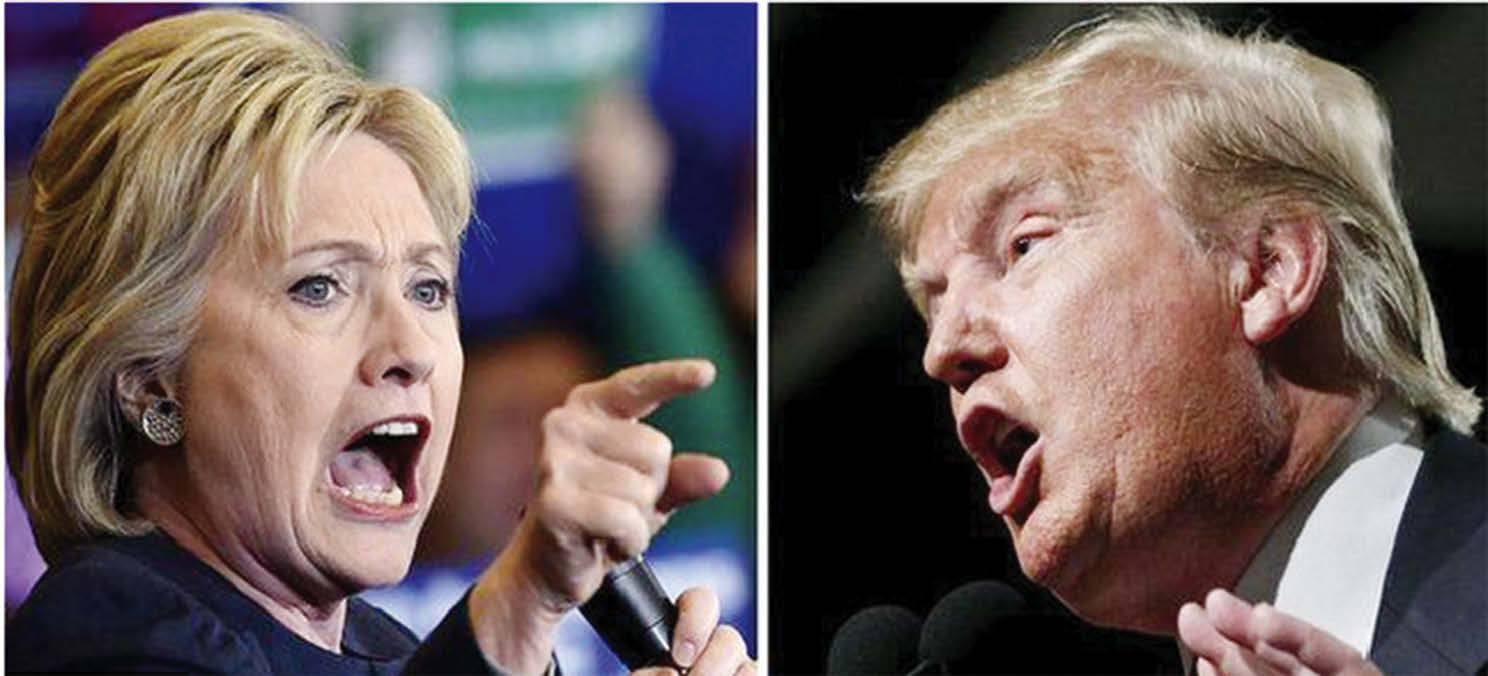
    The front runners -Republican Donald Trump and Democratic Hillary Clinton.Irrespective of who wins, the tilt is towards India
    The front runners -Republican Donald Trump and Democratic Hillary Clinton.Irrespective of who wins, the tilt is towards India

    American presidential elections get international attention because of worldwide interest in who is going to become the most powerful leader on the international stage. The US presidential elections in 2012 were less exciting than usual, because of the widespread belief that President Obama would be re-elected. We are now witnessing party primary elections, in which a flamboyant billionaire with a mercurial temperament, Donald Trump, has captured worldwide attention. Trump, a property baron, owns a network of hotels, casinos, golf courses and other properties. He has, paradoxically, struck a chord among blue-collared workers, who feel their jobs threatened by immigrants. His populist response has been to advocate building a wall across the US-Mexico border and banning immigration of Muslims, whom he labels collectively as terrorists.

    Hillary Clinton’s primary opponent, former Senator Bernie Sanders, has likewise, espoused the cause of ending free trade arrangements and called for tighter control over Wall Street. Sanders alleges that unemployed and blue-collar workers suffer, because of excessive trade liberalization and the unholy nexus between politicians (including Hillary) and the financial, business and industrial barons of Wall Street. The tactics Trump and Sanders have adopted have won huge support from insecure blue-collar workers, making life difficult and the competition unexpectedly tough, for Clinton. Despite this, Hillary is expected to win the Democratic Party nomination, unless she encounters difficulties, because of alleged misdemeanors during her tenure as Secretary of State. Trump could likewise sail through as the candidate of the Republican Party. A word of caution on the upcoming elections is called for. The Republican Party could land itself in a mess, if its establishment chooses to ignore the political verdict and nominates an eminent party politician to replace Trump as its presidential candidate.

    Trump has moved far away from the Republican Party in his views on several foreign policy issues. He has criticized military intervention in Iraq, Syria and Libya and voiced his opposition to such military intervention abroad. He remains ambivalent on his approach to Israel, though he will inevitably fall in line with conventional thinking on the Jewish state. Interestingly, Trump vows to build bridges with President Vladimir Putin, while Hillary remains steadfastly hostile to the Russian leader. Both Hillary and Trump have suspicions and misgivings about China, with Trump repeatedly asserting that China got rich at the cost of American industry and its working class. The two frontrunners hold opposing views on liberalizing trade, with Trump claiming that liberalization damages the livelihood of American workers.

    While Trump has expressed serious misgivings and suspicions about the Islamic world in general, he has expressed specific reservations about the behavior of Pakistan. Quite unexpectedly, Trump has answered his critics on their charge that he is anti-immigrant and racist by suggesting that he has great admiration for Indians, who are hardworking, intelligent and innovative. He has suggested that Indian students who come for studies in US universities should be allowed to stay on and work.

    The eight years of the Clinton presidency included some of the worst years in India-US relations. The Clinton administration turned the heat on India to give up its nuclear program. It pressured Russia to end space cooperation with India. It promoted a worldwide effort to cripple our economy after our nuclear tests and failed. In its early years, the Clinton administration even made overtures to the Hurriyat in Kashmir. On the other hand, the George Bush presidency saw a remarkable turnaround in India-US relations. American pressure after 9/11 forced the Musharraf dispensation to sue for a ceasefire in J&K and end cross-border infiltration in the state. This continued till the last days of the Bush presidency. Global nuclear sanctions against India ended, as the Bush administration used all its persuasive powers to get the 45-member Nuclear Suppliers Group to end sanctions on India. Shortly thereafter, at US initiative, India was welcomed into new global economic forums, like the G20.

    While President Obama had pledged to strengthen the US-India strategic partnership, his approach to India has been largely transactional, seeking greater Indian purchases of US weapons, while doing very little to turn the squeeze on Pakistan to end terrorism targeting India and Afghanistan. Intelligence sharing with India has been episodic and sometimes duplicitous, given the delay and reluctance with which intelligence information on the revelations of David Headley was shared with us. More importantly, the US is actively partnering Pakistan and China to bring about “reconciliation” with the Taliban in Afghanistan. Well-placed Afghans complain bitterly of the pressures they are facing from this US-China-Pakistan axis, to keep making concessions to the Taliban. Interestingly, even some in the Obama administration are concerned about what is transpiring.

    The world is now seeing an opportunistic move by the Obama administration to persuade India to back US efforts to rein in the Chinese in the Western Pacific, given China’s expanding maritime border claims on South Korea, Japan, Taiwan, Vietnam, the Philippines, Malaysia, Brunei and Indonesia. At the same time, the Obama administration is joining China and turning a blind eye to Pakistan-sponsored terrorism in Afghanistan. What the Obama administration is thereby doing, is to seek India’s support to curb Chinese maritime claims in the Asia-Pacific, even as its colludes with China to determine the future of Afghanistan, in a manner that furthers Pakistan’s regional ambitions. There has been much talk, but little action by the Obama administration to curb Pakistan-sponsored terrorism.

    Hillary has taken a personal interest in relations with India. Unlike her husband, and John Kerry, her viscerally anti-Indian successor, as Secretary of State, Hillary did respond in a friendly manner to India’s concerns and policies across both its eastern and western land and maritime borders. This was evident in her approach to India’s role in the ASEAN Regional Forum. She chose to call a spade a spade when it came to Pakistan-sponsored terrorism leading to the emergence of extremist outfits that threated Pakistan itself, with the words: “You cannot nurture vipers in your backyard and expect that they will bite only your neighbor”. In these circumstances, we can expect a more mutually beneficial relationship with the US, after the coming presidential elections.


    ParthasarathyBy G Parthasarathy – (The author is a former diplomat)

  • The Idea of Europe is Dead

    The Idea of Europe is Dead

    Brussels Airport attacks by Jihadists again bring to life challenge faced by Europe as we know. Europe of Mozart and Goethe and Schopenhauer and Sartre and Beethoven is dead.

    The cultured European having his wine and enjoying concerts and Opera is passé.

    Today Every European walks with his eyes turned on his back and ears listening to any changes.

    In small towns new neighbors are looked at with suspicion and old neighbors are expected to behave. The sound of screeching cars at night makes them awake and sirens and cops are normal scene.

    The Radical Islam is not fighting Christianity -which anyhow is dead in Europe-but it is fighting the modernity. Islam is frightened of modernity destroying their religion and culture how so ever unacceptable it may be to European liberals. It is concerned about pre-marital sex /contraception / homosexuality / adultery / “unprotected” women etc.

    Europe does not know how to handle it. The rise of right-wing forces -le Pen in France and PEGIDA in Germany-is going to lit the fires of newer European conflicts. Europe thought- a la Merkel- that they can buy peace with radical Islam by “requesting” them to integrate. But integrate with what? Integrate with “immoral” Europe where women are exhibited as “open meat” [in the words of the Australian Imam] who are “poisonous”

    Europe has seen Crusades and 100 years wars-between Christianity and Islam. But never has it had seen a conflict of this nature between “modernity” and Islam. The ongoing tussle in Turkey enlarges the conflict in the underbelly of Europe. Already Europe has 50% unemployment among youth groups and everyday 10000 are marching in the name of refugees. Remember some 200 years before entire Spain and up to the gates of Vienna it was Andalusia Empire and thousands of mosques were converted to Churches after Europe was “cleansed” of Islam.

    This time the Europe which is facing crisis is different. It is not the Pews and Stained glasses but concert halls and swimming pools and whole night parties opposed by Radicals.

    The issue is regarding life style and one likes it or not radical Islam is “Global moral policeman”. He knows the place of women in society and also the place of Europeans.

    Unfortunately, Europe has lost the will to fight and stand for whatever are its values. Its own idea of “freedom” is going to devour it when it is offered to Radical Islamists. Europe as we know is dead. Amen.


    Perspective by Prof R. Vaidyanathan (The author is Professor of Finance at the Indian Institute of Management, Bangalore. He can be reached at vaidya@iimb.ernet.in)

  • Brussels Terror Attack: 34 Dead, Several Injured | ISIS Claims responsibility

    Brussels Terror Attack: 34 Dead, Several Injured | ISIS Claims responsibility

    At least 34 people were killed on Tuesday, March 22, as two deadly explosions rocked the Zaventem airport in the Belgian capital and a more powerful blast ripped through a train coach at a metro station in the heart of Brussels in the worst terror attack in Europe in four months.

    Key Points

    1.  At least 31 people killed in attacks on Brussels airport and a central metro station
    2.  Two blasts at Zaventem airport – one probably a suicide bomber, officials say
    3.  Airport blasts kill 10, official says
    4.  At least 20 people killed and 106 injured in Maelbeek metro station bombing
    5.  Prime Minister Charles Michel appeals for calm and solidarity
    6.  The blasts come days after the capture of Salah Abdeslam, the main fugitive in the Paris attacks in November
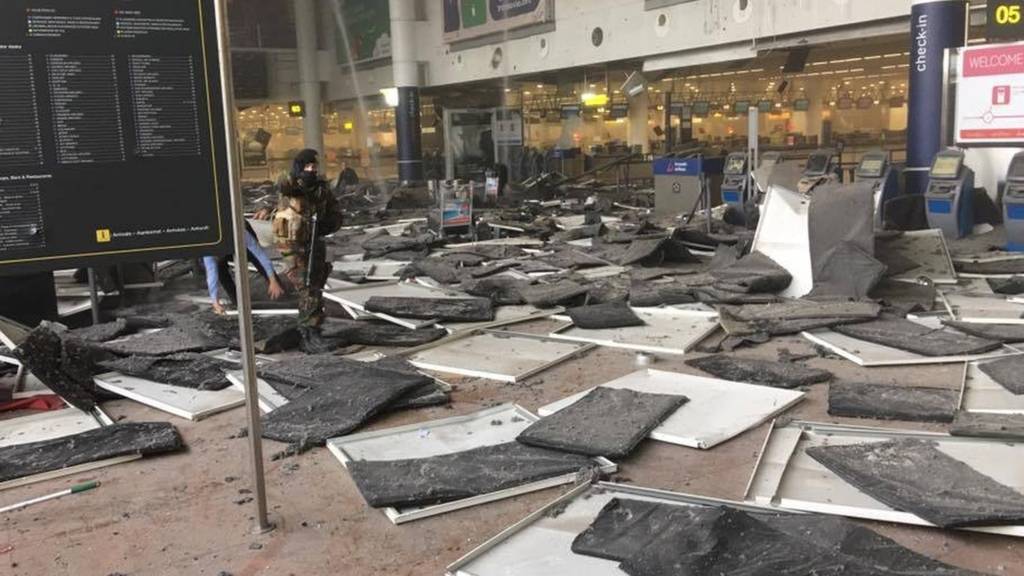
    A soldier stands near broken windows after explosions at Zaventem airport near Brussels, Belgium, March 22, 2016.
    A soldier stands near broken windows after explosions at Zaventem airport near Brussels, Belgium, March 22, 2016.

    Fourteen people were killed as two quick explosions took place in the country’s biggest airport just before 8 a.m. in a departure area, breaking windows, furniture and machinery, leaving it looking like a war zone.

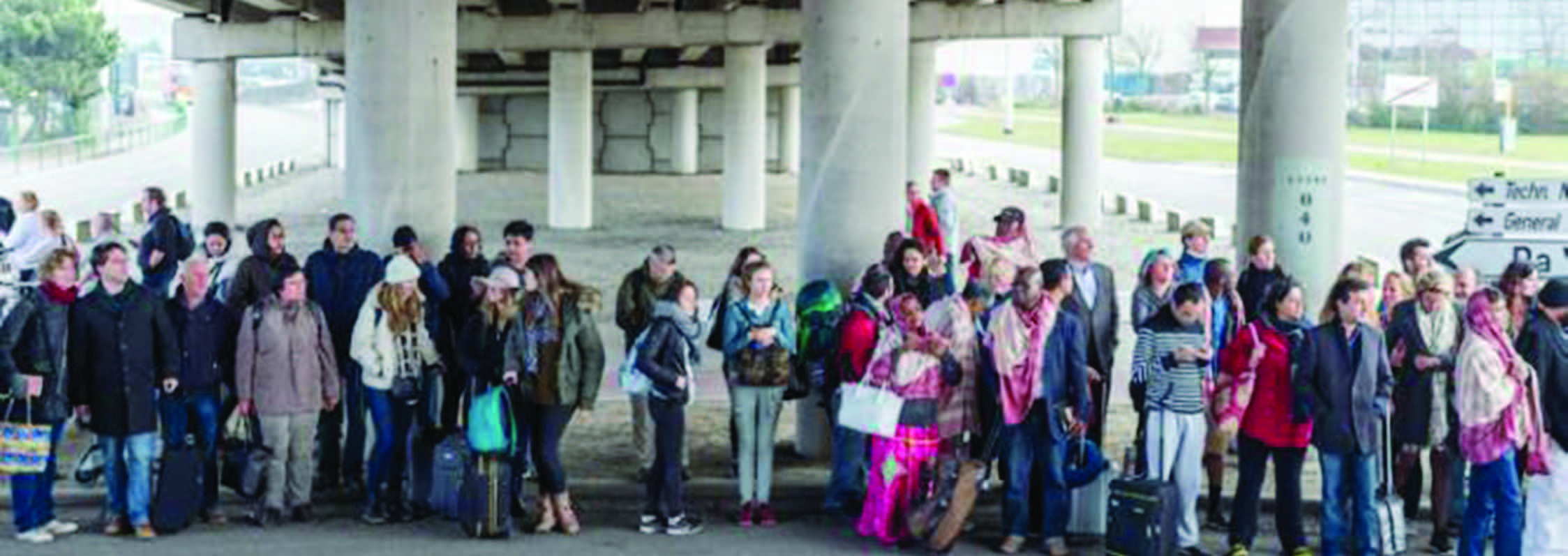
    Over 80 people were injured in the huge blasts, which triggered a panic run by hundreds of stunned passengers and staff from the airport building. Authorities said a suicide bomber was to blame for one explosion and that someone was heard shouting in Arabic and open fire moments earlier.

    A Kalashnikov was later found near the body of a dead man.

    An hour later, another explosion shattered the middle of a three-coach train car at the Maalbeek Metro station, leaving the carriage in a heap of mangled wreck with 20 dead and 55 injured, 16 of them critically.

    US presidential candidates respond to Brussels attacks

    US Republican presidential front runner Donald Trump said the attacks showed the need for a much tougher Western response to jihadist violence.

    Democratic candidate and former US secretary of state Hillary Clinton said: “Today’s attacks will only strengthen our resolve to stand together as allies and defeat terrorism and radical jihadism around the world.”

    Ted Cruz, currently lying second in the race for the Republican nomination, said the attacks were not “isolated incidents” and said the West was “at war with radical Islam”.

    Joint statement from EU leaders on attacks


    As the global community, India included, rallied in solidarity with Belgium, Prime Minister Charles Michel called it a “moment of tragedy” and blamed it on “blind, violent and cowards”.

    He declined to link the bloodbath with the March 18 arrest in Brussels of Salah Abdeslam, the suspect in the Paris terrorist attack which killed 130 people in November last year.

    The injured included two employees of the privately-owned Indian airline Jet Airways. A Slovenian diplomat, said to be a man, was also injured, although the authorities did not release his name.

    Indian Prime Minister Narendra Modi said the terror attacks were “disturbing” and “condemnable”.

    Jet Airways said it quickly moved guests and staff on the landside at Brussels airport away from the terminal and transit guests in the terminal building to hangers in coaches.

    Prime Minister Michel said: “We were already fearing attacks. That has happened now.” He said Belgium was determined to deal with the situation, and that a suicide bomber was involved in the airport attack.

    The airport and all public transport were shut down after the bloodbath. So was the European Union headquarters, near the Maalbeek station where 20 people died. Belgium’s nuclear plant in Huy town was evacuated.

    “The Metro was leaving Maelbeek station for Schuman when there was a really loud explosion,” Alexandre Brans, 32, told the media, wiping blood from his face. “It was panic everywhere.”

    An intern working at the airport told Al Jazeera: “When I heard the first explosion, lots of people started screaming and running. When I heard the second explosion, which was about 30 seconds after the first, everything got chaotic. I could see panic on everyone’s face, blood on their bodies.”

    Hundreds of people fled the airport building, some with blood on their faces. First reports said the blasts were centred at the American Airlines check-in desk. The false ceiling in the building came crashing down.

    TV footages showed a number of Indian passengers being evacuated from the airport. Two Jet Airways planes had arrived earlier in the day from Mumbai and Delhi.

    Pictures showed the terminal windows blown out from the force of the explosion and plumes of smoke rising high into the sky. Video also showed terrified passengers running for their lives out of the terminal.

    Sky News Middle East correspondent Alex Rossi, who was at the airport, told the channel: “I could feel the building move.”

    CNN quoted a tourist, Anthony Barrett, as saying that he heard the explosions from his hotel across the terminal building. “When I opened the curtains and looked out, I could see people fleeing,” he said.

    Barrett said he saw luggage trolleys being used to transport the wounded.

    French President Francois Hollande said: “Terrorists struck Brussels but it was Europe that was targeted and all the world that is concerned. Today it is Belgium, yesterday it was France.”

    France is seeking Abdeslam’s extradition so that he stands trial for his alleged role in the November rampage of gunfire and suicide bombings which killed 130 people in Paris.

  • US says ISIS committing genocide in Iraq, Syria

    US says ISIS committing genocide in Iraq, Syria

    WASHINGTON (TIP): US secretary of state John Kerry on Thursday determined that the Islamic State group is committing genocide against Christians and other minorities in Iraq and Syria, as he acted to meet a congressional deadline.

    Kerry’s finding does not obligate the United States to take additional action against ISIS jihadists and does not prejudge any prosecution against its members.

    A day after the state department said Kerry would miss the deadline, Kerry said he had completed his review and determined that Christians, Yazidis and Shia groups are victims of genocide and crimes against humanity by ISIS militants. The house earlier this week passed a nonbinding resolution by a 393-0 vote condemning ISIS atrocities as genocide.

    “In my judgment Daesh is responsible for genocide against groups in territory under its control” Kerry said, using the Arabic acronym for the Islamic State group.

    He outlined a litany of atrocities that he said the jihadists had committed against people and religious sites, as well as threats. “Daesh is genocidal by self-acclimation, by ideology and by practice.”

    Saying that he was “neither judge nor prosecutor nor jury,” Kerry added that any potential criminal charges against the extremists must result from an independent international investigation. Kerry said the US would continue to support efforts to collect evidence and document atrocities.

    While his determination does not carry such weight, Kerry said he hoped that groups he cited as being victimized would take some comfort in the fact that the “the United States recognizes and confirms the despicable nature of the crimes committed against them.”

    Lawmakers and others who have advocated for the finding had sharply criticized the State Department’s initial disclosure Wednesday that deadline would be missed. US officials said Kerry concluded his review just hours after that announcement and that the criticism had not affected his decision.

    On Thursday, representative Jeff Fortenberry, the author of the bill, commended Kerry’s decision.

    “The United States has now spoken with clarity and moral authority,” Fortenberry, said in a statement. “I sincerely hope that the genocide designation will raise international consciousness, end the scandal of silence, and create the preconditions for the protection and reintegration of these ancient faith communities into their ancestral homelands. Christians, Yezidis, and others remain an essential part of the Middle East’s rich tapestry of religious and ethnic diversity.”

  • Ishrat Jahan case: Uproar in Parliament; SC rejects plea to quash case against Gujarat police

    Ishrat Jahan case: Uproar in Parliament; SC rejects plea to quash case against Gujarat police

    NEW DELHI (TIP): Replying to a Calling Attention in the Lok Sabha on alleged alteration of affidavit relating to Ishrat Jahan case, Union Home Minister Rajnath Singh said, March 9,” No politics should be done on the issue of terrorism. Whether it is Ishrat Jahan or any other case, there should not be flip-flop by any government. “A terrorist is a terrorist. Terror has no caste or religion.”  He said:” I am pained to say that previous government made flip flop decisions on the Ishrat Jahan encounter case and new dimensions were given to all facts.”

    The minister added that the previous UPA government made an attempt to tone down the fact that Ishrat was a LeT operative. However, in the first affidavit by the UPA government, it was stated that Ishrat was a LeT operative. Terrorist David Coleman Headley, in his testimony, had also confirmed that Ishrat was a terrorist, the Minister said. In view of the statement made by 26/11 conspirator David Coleman Headley on Ishrat Jahan, the Supreme Court on March 11 rejected the plea seeking to quash the criminal case against the Gujarat policemen who were involved in the case.

    In his deposition last month, Headley had claimed that Mumbra resident Ishrat Jahan was a suicide bomber for Pakistan-based terror outfit LeT.

    “The operation was about shooting the police at some naka. One woman LeT named Ishrat Jahan was involved. Muzammil Bhatt was the head of our group before Sajid Mir,” he told the court via video conferencing.

    In June 2004, Ishrat Jahan, Javed Sheikh, Zeeshan Johar and Amjad Ali Rana were shot dead by the Gujarat police on the outskirts of Ahmedabad.

    The police had alleged that Ishrat and her associates were LeT operatives involved in a plot to assassinate Narendra Modi who was the chief minister of Gujarat.

    After a long investigation, in 2009, an Ahmedabad Metropolitan court ruled that the encounter was staged.

    Meanwhile, the Congress Party downplayed Union Home Minister Rajnath Singh’s criticism of the former UPA regime with regard to the Ishrat Jahan case and said that his so called ‘political statement’ holds no significance.

    Former home secretary G.K. Pillai had earlier alleged that former home minister P. Chidambaram ‘bypassed him’ and rewrote an affidavit submitted to a court on Ishrat Jahan, the 19-year-old student killed in an encounter in 2004.

    Referring to the change in the Home Ministry’s affidavit in the Ishrat Jahan case that did not refer to her as Lashkar-e-Taiba operative, Union Finance Minister Arun Jaitley while intervening in the motion of thanks for the President’s address to Parliament told the Rajya Sabha, “In the process you unbarred the entire security apparatus of India because you wanted to fix a political leader. Someday an investigation will take place on how internal security was played with.

  • Pakistan’s Hand in the Rise of International Jihad

    Pakistan’s Hand in the Rise of International Jihad

    Resident Ashraf Ghani of Afghanistan has warned in several recent interviews that unless peace talks with Pakistan and the Taliban produce results in the next few months, his country may not survive 2016. Afghanistan is barely standing, he says, after the Taliban onslaught last year, which led to the highest casualties among civilians and security forces since 2001.

    “How much worse will it get?” Mr. Ghani asked in a recent television interview. “It depends on how much regional cooperation we can secure, and how much international mediation and pressure can be exerted to create rules of the game between states.”

    What he means is it depends on how much international pressure can be brought to bear on Pakistan to cease its aggression.

    Critics of the Afghan leadership say it’s not Pakistan’s fault that its neighbor is falling apart. They point to the many internal failings of the Afghan government: political divisions, weak institutions, warlords and corruption.

    But experts have found a lot of evidence that Pakistan facilitated the Taliban offensive. The United States and China have been asking Pakistan to persuade the Taliban to make peace, but Afghanistan argues that Islamabad has done nothing to rein in the Taliban, and if anything has encouraged it to raise the stakes in hopes of gaining influence in any power-sharing agreement.

    This behavior is not just an issue for Afghanistan. Pakistan is intervening in a number of foreign conflicts. Its intelligence service has long acted as the manager of international mujahedeen forces, many of them Sunni extremists, and there is even speculation that it may have been involved in the rise of the Islamic State.

    The latest Taliban offensive began in 2014. United States and NATO forces were winding down their operations in Afghanistan and preparing to withdraw when Pakistan decided, after years of prevarication, to clear Taliban and Al Qaeda fighters from their sanctuary in Pakistan’s tribal area of North Waziristan.

    The operation was certainly a serious endeavor – Taliban bases, torture chambers and ammunition dumps were busted, town bazaars were razed and over one million civilians were displaced.

    But the militants were tipped off early, and hundreds escaped, tribesmen and Taliban fighters said. Many fled over the border to Afghanistan, just at the vulnerable moment when Afghanistan was assuming responsibility for its own security. Ninety foreign fighters with their families arrived in Paktika Province that summer, to the alarm of Afghan officials.

    Further along the border in Paktika Province, Taliban fighters occupied abandoned C.I.A. bases and outposts. A legislator from the region warned me that they would use the positions to project attacks deeper into Afghanistan and even up to Kabul. Some of the most devastating suicide bomb attacks occurred in that province in the months that followed.

    Meanwhile, in Pakistan, the Haqqani network, the most potent branch of the Taliban, moved from North Waziristan into the adjacent district of Kurram. From there it continues to enjoy safe haven and conduct its insurgency against American, international and Afghan targets.

    Pakistan regards Afghanistan as its backyard. Determined not to let its archrival, India, gain influence there, and to ensure that Afghanistan remains in the Sunni Islamist camp, Pakistan has used the Taliban selectively, promoting those who further its agenda and cracking down on those who don’t. The same goes for Al Qaeda and other foreign fighters.

    Even knowing this, it might come as a surprise that the region’s triumvirate of violent jihad is living openly in Pakistan.

    First, there’s Sirajuddin Haqqani, the leader of the Haqqani network, and second in command of the Taliban. He moves freely around Pakistan, and has even visited the Pakistani intelligence headquarters of the Afghan campaign in Rawalpindi.

    Then there is the new leader of the Taliban, Mullah Akhtar Muhammad Mansour, who has openly assembled meetings of his military and leadership council near the Pakistani town of Quetta. Since he came to power last year, the Taliban has mounted some of its most ambitious offensives into Afghanistan, overrunning the northern town of Kunduz, and pushing to seize control of the opium-rich province of Helmand.

    Finally, Al Qaeda’s leader, Ayman al-Zawahri, enjoys sanctuary in Pakistan – one recent report placed him in the southwestern corner of Baluchistan. He has been working to establish training camps in southern Afghanistan. In October, it took United States Special Operations forces several days of fighting and airstrikes to clear those camps. American commanders say the group they were fighting was Al Qaeda in the Indian Subcontinent, a new franchise announced by Mr. Zawahri that has claimed responsibility for the killings of bloggers and activists in Karachi and Bangladesh, among other attacks.

    Pakistan denies harboring the Taliban and Al Qaeda, and points out that it, too, is a victim of terrorism. But many analysts have detailed how the military has nurtured Islamist militant groups as an instrument to suppress nationalist movements, in particular among the Pashtun minority, at home and abroad.

    Perhaps most troubling, there are reports that Pakistan had a role in the rise of the Islamic State.

    Ahead of Pakistan’s 2014 operation in North Waziristan, scores, even hundreds, of foreign fighters left the tribal areas to fight against President Bashar al-Assad in Syria. Tribesmen and Taliban members from the area say fighters traveled to Quetta, and then flew to Qatar. There they received new passports and passage to Turkey, from where they could cross into Syria. Others traveled overland along well-worn smuggling routes from Pakistan through Iran and Iraq.

    The fighters arrived just in time to boost the sweeping offensive by ISIS into Iraq and the creation of the Islamic State in the summer of 2014.

    If these accounts are correct, Pakistan was cooperating with Qatar, and perhaps others, to move international Sunni jihadists (including 300 Pakistanis) from Pakistan’s tribal areas, where they were no longer needed, to new battlefields in Syria. It is just another reminder of Pakistan’s central involvement in creating and managing violent jihadist groups, one Pakistani politician, who spoke on the condition of anonymity when talking about intelligence affairs, told me.

    This has been going on for more than 30 years. In 1990, I shared a bus ride with young Chinese Uighurs, Muslims from China’s restive northwest, who had spent months training in Pakistani madrasas, including a brief foray into Afghanistan to get a taste of battle. They were returning home, furnished with brand-new Pakistani passports, a gift of citizenship often offered to those who join the jihad.

    Years later, just after Osama bin Laden was found and killed in Pakistan, I interviewed a guerrilla commander from the disputed region of Kashmir who had spent 15 years on the Pakistani military payroll, traveling to train and assist insurgents in Bosnia, Chechnya, Kashmir and Afghanistan.

    In 2012 I came across several cases where young clerics, fresh graduates from the Haqqania madrasa in Pakistan, returned to their home villages in Afghanistan, flush with cash, and set about running mosques and recruiting and organizing a band of Taliban followers.

    I visited that madrasa in 2013. It is the alma mater of the Afghan Taliban, where many of the leaders of the movement were trained. The clerics there remained adamant in their support for the Taliban. “It is a political fact that one day the Taliban will take power,” Syed Yousuf Shah, the madrasa spokesman, told me. “We are experts on the Taliban,” he said, and a majority of the Afghan people “still support them.”

    The madrasa, a longtime instrument of Pakistani intelligence, has been training people from the ethnic minorities of northern Afghanistan alongside its standard clientele of Pashtuns. The aim is still to win control of northern Afghanistan through these young graduates. From there they have their eyes on Central Asia and western China. Pakistani clerics are educating and radicalizing Chinese Uighurs as well, along with Central Asians from the former Soviet republics.

    No one has held Pakistan to account for this behavior. Why would Pakistan give it up now?

  • India writes to UN to include Masood Azhar on terrorist list

    India writes to UN to include Masood Azhar on terrorist list

    NEW DELHI (TIP): India has submitted a formal request to the United Nations Committee 1267, seeking inclusion of the name of Jaish-e-Mohammed chief Masood Azhar on the sanctions’ list, said government sources.

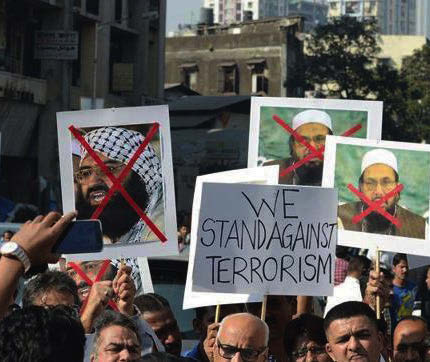
    “I can also confirm to you that we will be moving the 1267 Committee to also include the name of Masood Azhar on the sanctions list. It is a great anomaly that the organization Jaish-e-Mohammad is listed but not its leader,” said Vikas Swarup, Official Spokesperson of the Ministry of External Affairs, on Thursday.

    “We have already given a list of terrorists affiliated to Al Qaeda, Taliban and other terrorist groups to the 1267 Committee. At this stage it would not be prudent to disclose anything further as to the names of these people because, as you know, this is a part of a process now,” he added.

    Previously, India’s move to get Masood Azhar banned by the UN was scuttled by China.

    More on “Counter Terrorism” – Former CIA Director Confirms ISI Involvement In Mumbai Attacks

    Source: ANI

  • Former CIA director confirms ISI involvement in Mumbai attacks

    Former CIA director confirms ISI involvement in Mumbai attacks

    Soon after the 2008 Mumbai terror attack the then chief of Pakistan’s ISI conceded that some of the powerful spy agency’s retired members were engaged in training those involved in the heinous crime but refused to take action, a former CIA chief has said in a new book.

    Soon after the 2008 Mumbai terror attack the then chief of Pakistan’s ISI conceded that some of the powerful spy agency’s retired members were engaged in training those involved in the heinous crime but refused to take action, a former CIA chief has said in a new book.

    Playing to the Edge, Michael Hayden 1In his latest book Playing to the Edge, Michael Hayden, the former CIA Director, expressed his deep frustration of the “duplicity” of the Pakistani leadership when it came to taking action against terrorist groups in particular al Qaeda, Taliban, LeT and the Haqqani network.

    Arguing that the Pakistan Army is built to fight against India and not terrorists, the top leadership in the country, in particularly those from its military in the past one decade, have repeatedly expressed its inability to take on the terrorist groups in the tribal regions as desired by the US, he wrote.

    Referring to the Mumbai terrorist attack, Hayden, who was the CIA chief till 2009, said it was very clear that there seemed to be so many Pakistani fingerprints on the atrocity.

    “I began routinely harassing my counterpart in Pakistan, now Ahmed Shuja Pasha (the former director general of Military Operations, the Pakistan army’s top operational post), on the phone, urging him to get to the bottom of the attack and to discuss it frankly with us,” he wrote.

    “We had no doubt that the attack was the work of LeT, and there was mounting evidence that preparation for and direction of the attack took place from within Pakistan, where LeT enjoyed the protection and support of ISI,” Hayden said.

    Pasha, who had come to ISI only a few weeks earlier and had no previous intelligence experience, came to the US on Christmas Day and spent most of the next afternoon in his office.

    “He worked carefully from notes. His investigation had revealed that some former ISI members were involved with Lashkar-e-Taiba (no surprise there). Pasha admitted that these unspecified (and still uncaptured) retirees may have engaged in some broad training of the attackers, but he was characteristically vague about any detailed direction the attackers had gotten during the attack via cell phone from Pakistan,” Hayden wrote in the book.

    “I took to passing sufficiently sanitised intelligence to Pasha on what we believed was going on in order to try to goad him into action. If he knew that we knew…perhaps we could get some movement. We didn’t have a whole lot of success,” Hayden wrote.

    Narrating an incident when the then Pakistani president Pervez Musharraf refused to fill up gas in the airplane that flew him to Islamabad, where he had gone to press him to take action against terrorists, Hayden wrote: “One more bit of evidence that these guys really were the ally from hell”.

    The crew had forgotten their government credit card- you cant make this stuff up- and the Pakistanis wouldn’t budge, he wrote.

    Musharraf refused to take action, despite some crucial evidence being provided to him.

  • 9 policemen, 7 terrorists killed in Pakistan

    9 policemen, 7 terrorists killed in Pakistan

    PESHAWAR (TIP): At least nine tribal police personnel and seven terrorists were killed in three separate incidents at a tribal agency in Pakistan’s restive northwestern region bordering Afghanistan.

    The first incident occurred at Karpa Latri camp area in Lower Mohmand Agency where some unidentified terrorists armed with automatic weapons opened indiscriminate fire on a security picket, killing seven Tribal Police personnel also known as Khasadars, on the spot.

    According to officials, the victims were stationed at the security picket when militants ambushed them early this morning.

    The second incident was reported from Darwaz area in the same agency where two Khasadar personnel were killed when unknown militants opened fire, killing them on the spot.

    The victims were guarding a solar-powered tube well in the area when militants struck.

    Security officials rushed to the spot and launched a search operation. The terrorists, however, managed to escape. The bodies of the deceased were shifted to a nearby hospital.

    Later, security forces conducted an operation in the area and killed seven terrorists.

    (PTI)

  • Pervez Musharraf confirms ISI trains LeT, JeM terrorists | says terror attacks will not stop

    Pervez Musharraf confirms ISI trains LeT, JeM terrorists | says terror attacks will not stop

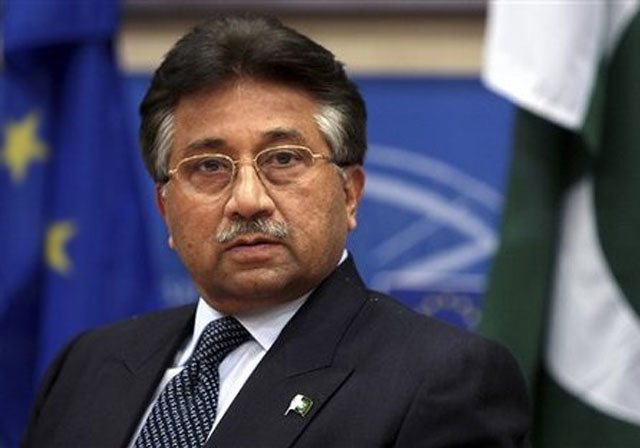
    Pakistan’s former military ruler Pervez Musharraf on Thursday said ISI trains LeT and Jaish militants and terror attacks in India will not stop until New Delhi addresses the “core” issue of Kashmir.

    “Inter-Services Intelligence (ISI) trains Jaish-e- Mohammad (JeM) and Lashkar-e-Taiba (LeT) terrorists,” said Musharraf.

    “Pakistan army is not training civilians. Intelligence organisation on our side as well as on your side is involved,” he said in an interview to India Today TV.

    When asked if he sees any progress in the India-Pak peace process, Musharraf said, “Everything will stop if you address the core issue. The unfortunate terrorists acts and the militancy will continue unless we address the core issue. That is what you don’t want to do,” he said.

    “Kashmir continues to arouse sentiments in Pakistan,” the 72-year-old former president said as he defended terrorist activities in India.

    “Anyone who is fighting in Kashmir is a freedom fighter,” he said.

    “I don’t think we will move forward on the core issue. You don’t want. You want to bulldoze us, you want to bully us and you want to dominate us. You only want to talk about issues concern you like terrorism, Mumbai and Pathankot. So I don’t feel, core issues are moving forward,” he said when asked to comment on foreign secretary-level talks that were postponed after Pathankot attack.

    Speaking on Pakistani-American terrorist David Headley, who is currently deposing before a Mumbai court in connection with the 26/11 attack case, Musharraf said, “I don’t believe anything that Headley had said … Pakistan intelligence should interrogate Headley.”

    When asked about JeM chief Masood Azhar, who was involved in two attacks against Musharraf himself, the former military general said, “Anyone who is doing any other act in Pakistan like, I know that he attacks me, is a terrorist certainly. Therefore I call him a terrorist.”

    “LeT and Hafiz Saeed are not involved in terror activities in Pakistan,” he said.

    He said India derailed peace process every time and wants to discuss only terrorism.

    “You create hysteria in your country against Pakistan. Whenever we try to speak ….You want to bulldoze us to whatever is your point of view.

    He also accused India’s intelligence agency RAW for carrying out attacks in Pakistan from Afghanistan.

  • 6 FIDAYEEN BEHIND PATHANKOT ATTACK: NSG CHIEF

    6 FIDAYEEN BEHIND PATHANKOT ATTACK: NSG CHIEF

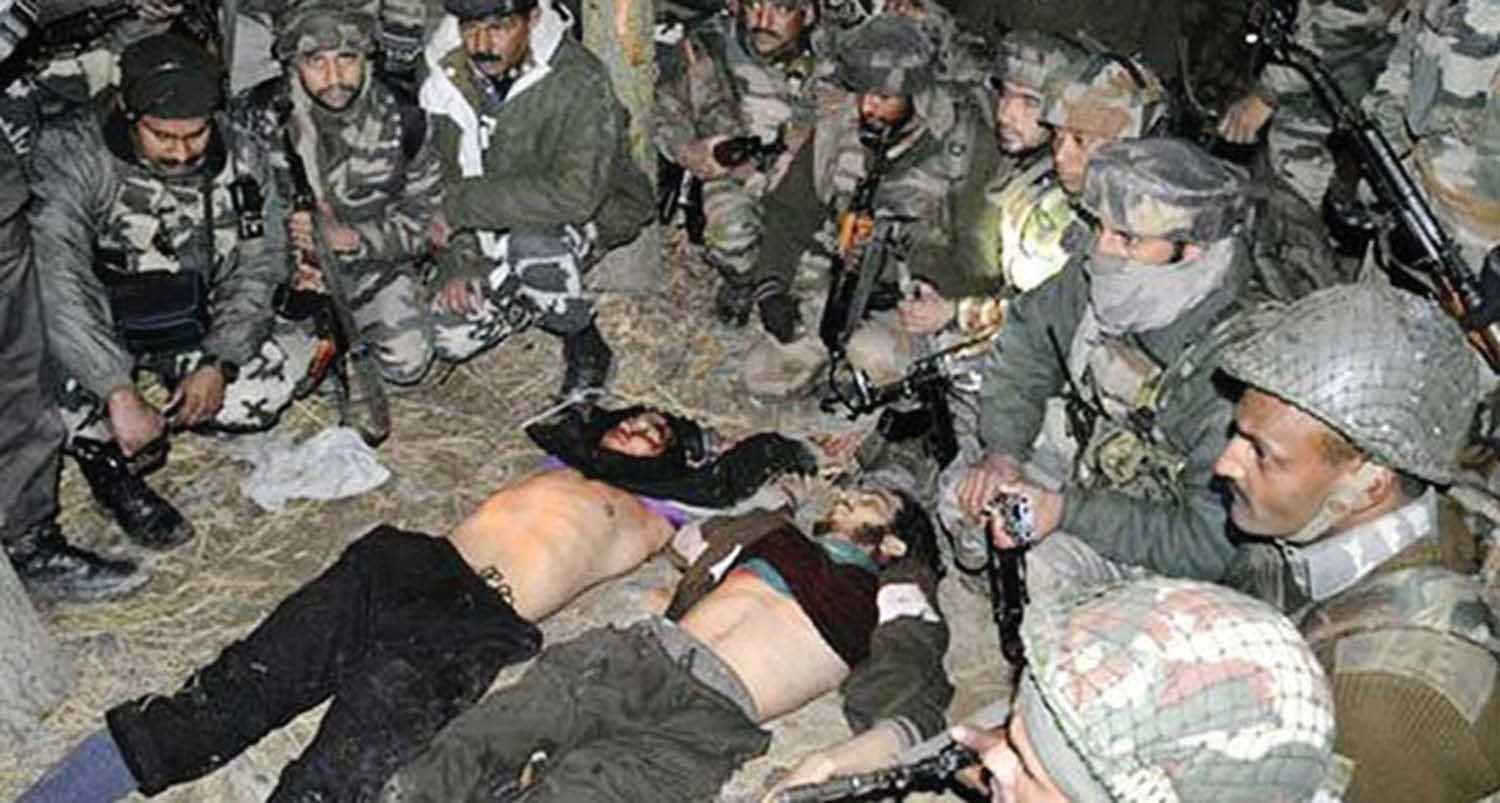
    NEW DELHI (TIP): National Security Guard (NSG) chief RC Tayal said there were six fidayeen behind the Pathankot attack as two terrorists, armed with weapons and explosives, could be heard conversing through a wall radar placed outside the airmen’s barrack, after four others had been neutralised.

    “According to us, there were four plus two (terrorists). But it is for NIA to investigate and come up with factual details,” the NSG director general told reporters here on the sidelines of an international seminar on the menace of improvised explosive devices.

    The NSG chief’s claim comes amid confusion over the number of terrorists who struck at Pathankot airbase last month. Only four bodies and four AK-47s were recovered by the agencies. Though exchange of fire resumed a day later and several explosions were heard, no additional bodies or weapons were recovered after the operation was called off. This led to speculation that the bodies and arms may have “melted up” when the terrorists’ hideout was blown up by the forces.