Tag: Texas

  • Massive winter storm spanning 40 states threatens US with snow, extreme cold

    Massive winter storm spanning 40 states threatens US with snow, extreme cold

    • 235 million brace for weekend winter weather; Travel disruptions inevitable
    • More than 8000 flights canceled; Air India cancels New York, Newark flights

    DALLAS/ NEW YORK (TIP): Freezing rain fell in parts of Texas on Friday , January 23, as a huge, days long winter storm began a trek that threatened to bring snow, sleet, ice, bone-chilling temperatures and extensive power outages to about half the US population. Forecasters warned that catastrophic damage, especially in areas pounded by ice, could rival that of a hurricane.

    Schools in Chicago and other Midwestern cities called off classes, airlines cancelled thousands of weekend flights, churches moved Sunday services online and the Grand Ole Opry in Nashville, Tennessee, decided to hold its Saturday night radio performance without fans. Carnival parades in Louisiana were cancelled or rescheduled.

    At least 182 million people were under watches or warnings for ice and snow, and more than 210 million were under cold weather advisories or warnings. In many places those overlapped.

    Utility companies braced for power outages because ice-coated trees and power lines can keep falling long after a storm has passed.

    “It’s going to be a big storm,” Maricela Resendiz said as she picked up chicken, eggs and pizzas at a Dallas store to get her, her 5-year-old son and her boyfriend through the weekend. Her plans: “Staying in, just being out of the way.”

    Freezing rain slickened roads in Lubbock, Texas, in the afternoon as temperatures dropped.

    After sliding into the South, the storm was expected to move into the Northeast, dumping about a foot (30 centimeters) of snow from Washington through New York and Boston, the National Weather Service predicted.

    Arctic air was the first piece to fall in place
    Frigid air that spilled down from Canada prompted the cancellations of classes at schools throughout the Midwest. Wind chills as low as minus 40°F (minus 40 Celsius) meant that frostbite could set in within 10 minutes, making it too dangerous to walk to school or wait for the bus.

    Despite the bitter cold, a protest over an immigration crackdown went on as planned in Minnesota, with thousands demonstrating in downtown Minneapolis.

    Nationwide, more than 1,000 flights were delayed or cancelled Friday, with well over half of them in Dallas, according to the flight tracking website FlightAware. About 2,300 were called off for Saturday.

    In Oklahoma, Department of Transportation workers treated roads with salt brine, the Highway Patrol cancelled troopers’ days off and National Guard units were activated to help stranded drivers.

    The federal government put nearly 30 search and rescue teams on standby. Officials had more than 7 million meals, 600,000 blankets and 300 generators placed throughout the area the storm was expected to cross, according to the Federal Emergency Management Agency.

    President Donald Trump said via social media that his administration was coordinating with state and local officials and “FEMA is fully prepared to respond.” Ice could take down power lines and pipes could freeze After the storm passes, it will take a while to thaw out. Ice can add hundreds of pounds to power lines and branches and make them more susceptible to snapping, especially if it’s windy. In at least 11 Southern states from Texas to Virginia, a majority of homes are heated by electricity, according to the US Census Bureau.

    A severe cold snap five years ago took down much of the power grid in Texas, leaving millions without power for days and resulting in hundreds of deaths. Gov Greg Abbott vowed that it will not happen again, and utility companies were bringing in thousands of employees to help keep the lights on.

    Northeast braces for possibly heaviest snow in years
    Boston declared a cold emergency through the weekend, and Connecticut was working with neighboring New York and Massachusetts in case travel restrictions are needed on major highways.

    Connecticut Gov Ned Lamont urged people to go grocery shopping now and “stay home on Sunday.”

    Philadelphia announced schools would be closed Monday. Superintendent Tony B Watlington Sr told students, “It’s also appropriate to have one or two very safe snowball fights.”
    (Agencies)

  • US House passes tax and immigration bill, sends it to President Trump

    US House passes tax and immigration bill, sends it to President Trump

    Legislation to extend tax cuts and fund border and defense programs would increase the national debt by close to $4 trillion over the next decade.

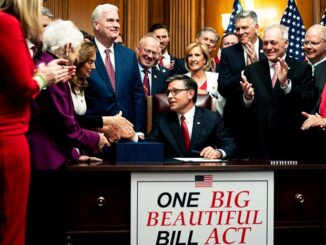
    WASHINGTON, D.C. (TIP): Republicans on Thursday notched the first major legislative victory of President Donald Trump’s second term, a mammoth tax and immigration agenda the GOP hopes will reshape the U.S. economy and unwind many of the Biden administration’s accomplishments, a Washington Post report says. The House, in a 218 to 214 vote, passed Trump’s so-called “One Big Beautiful Bill,” a $3.4 trillion measure to extend tax cuts from Trump’s first term and implement new campaign promises — such as eliminating income taxes on tips and overtime wages — while spending hundreds of billions of dollars on immigration enforcement and defense. It raises the country’s borrowing cap by $5 trillion, staving off a debt default that the Treasury was weeks away from breaching.

    The House’s approval sends the bill to Trump’s desk to be signed into law in time to beat a self-imposed July 4 deadline. The Senate passed its edition of the legislation Tuesday.

    “Any of these individual achievements would be historic victories for a Republican Congress or any Congress. And today we’re delivering on all of them in one big, beautiful bill. That’s what Americans can count on when we pass this legislation,” House Speaker Mike Johnson (R-Louisiana) said on the House floor.

    To offset the cost of the bill, the legislation cuts about $1 trillion from Medicaid, the federal health insurance program for low-income individuals and people with disabilities, and other health care programs. It reduces spending on anti-hunger programs, including SNAP, the Supplemental Nutrition Assistance Program formerly known as food stamps, by $185 billion.

    Nearly 17 million people will lose health care coverage or health care subsidies over the next decade if the bill becomes law, according to the nonpartisan Congressional Budget Office, and the bill would add roughly $4 trillion to the debt over the next decade, when factoring in debt service payments.

    The vote came after Minority Leader Hakeem Jeffries (D-New York) held the House floor for nearly nine hours to protest the measure, setting the record for the longest remarks by a party leader in the history of the lower chamber.

    “This bill is a deal with the devil,” Rep. Alexandria Ocasio-Cortez (D-New York) said earlier during the debate on the House floor. “It explodes our national debt. It militarizes our entire economy and it strips away health care and dignity of the American people.”

    Republicans heralded the legislation as a boost for the working class coalition that swept the party to victory in November’s elections, giving it unified control of Congress and the White House.

    “It is the principal vehicle for advancing President Trump’s America First agenda, unleashing a rising tide of prosperity, securing our border, modernizing our national defense and supercharging energy, agriculture, all the sectors of our economy that our government has kept in a choke hold for too long,” Budget Committee Chair Jodey Arrington (R-Texas) said during debate.

    As talks dragged on, leaders left open two votes for over five hours — a sign of the Republican conference’s dysfunction and also the furious backroom dealing to get Trump’s agenda over the finish line by an arbitrary July 4 deadline.

    Lawmakers spent Wednesday into the wee hours Thursday shuttling between talks with party leaders, Trump administration lieutenants and the president himself at the White House.

    But as Wednesday turned into Thursday morning, Johnson was still working to convince 10 lawmakers to vote to advance the bill. Republicans opened debate on the measure after 3 a.m.

    Holdouts said the prospect of forthcoming executive orders from the White House and another Republican budget bill helped ease some concerns.

    “The president is the most gifted and skilled negotiator and whip,” said Ways and Means Committee Chair Jason T. Smith (R-Missouri), one of the lead negotiators.

    Trump’s proposal to end taxes on tips — up to $25,000 — came from a Nevada restaurant server, the president bragged on the campaign trail. He often speaks about ending taxes on overtime during political events with production line workers. Trump pledged to exempt Social Security benefits from taxes; instead, Republicans passed a $6,000 bonus to the standard deduction for seniors.

    The GOP borrowed a Democratic proposal to launch savings accounts for newborns seeded with $1,000 of taxpayer money; Republicans in earlier versions of the legislation called them “Trump accounts.”

    “No one puts a deal together like President Trump. He’s a master. But I think one of the other persuasive things was just looking at the Democrats’ reaction to it,” said Rep. Warren Davidson (R-Ohio), who voted against an earlier iteration of the package. “Maybe the bill is better than I thought.”

    But for the lowest-income Americans the benefits of those provisions are wiped out by the cuts to social safety net programs, according to independent analyses of the bill, and its gargantuan debt impact could slow the U.S. economy.

    Republican Reps. Thomas Massie (Kentucky) and Brian Fitzpatrick (Pennsylvania) joined Democrats to vote against the measure.

    By 2033, the bottom 60 percent of U.S. taxpayers would be worse off because of the measure, the University of Pennsylvania’s Wharton Budget Model reported. The top 0.1 percent of taxpayers — those earning at least $5.1 million — would be more than $83,000 better off.

    “This bill is a middle finger to working people,” Rep. Jim McGovern (D-Massachusetts) said on the House floor.

    Republicans, citing their own rosy economic growth projections, insist that it would improve those household’s fortunes, and hundreds of billions of dollars of homeland security and defense spending would goose job-creating industries. Nearly $170 billion in the bill funds the Trump administration’s border and immigration crackdown and it would impose $69 billion in fees on immigrants and visitors to the country. An additional $160 billion would flow to the Defense Department, partially for Trump’s proposed “Golden Dome” continental missile defense system.

    The legislation would make permanent a trio of corporate tax deductions that make it easier for companies to invest in research and purchase new equipment while rescinding more than half a trillion dollars in clean energy programs from President Joe Biden’s 2022 Inflation Reduction Act.

    Many of the tax proposals changed as the bill pinged between the two chambers of Congress. The House passed legislation in May that had a smaller debt impact while cutting less from Medicaid.

    The Senate swiftly overhauled the measure, making it simultaneously more expensive and more punitive toward Medicaid. Republicans used the budget reconciliation process to bypass a Democratic filibuster in the Senate; that meant when the upper chamber sent its approved legislation back to the House, the lower chamber was unable to alter it and still beat Trump’s deadline. Amendments would have restarted many of the cumbersome processes needed to pass tax legislation on party lines.

    The Senate made the corporate tax cuts more generous and temporarily preserved some of the climate credits. On health care, it imposed strict limits on taxes that states charge medical providers as a roundabout way of collecting more federal Medicaid dollars.

    That prompted concern among some lawmakers about the fate of rural hospitals, which rely heavily on Medicaid patients.

    The Senate’s changes managed to frustrate both ends of the House’s GOP conference. From the center, moderates raged about the approach to health care spending.

    “I’m not happy with it at all,” raged Rep. Greg Murphy (R-North Carolina), a practicing physician. “That’s horrible policy.”

    From the right, lawmakers grumbled about the bill’s debt effects. A group of budget hawks in April extracted a promise from House Speaker Mike Johnson (R-Louisiana) that the amount in tax cuts would not exceed the amount of spending the bill cut.

    “It wasn’t achieved. It was failed,” harrumphed Rep. Chip Roy (R-Texas). “The Senate failed.”

    Members of the archconservative House Freedom Caucus circulated a three-page memo with a list of nearly two dozen deficiencies with the legislation at a Wednesday meeting at the White House.

    “Leave it to the Senate to find a way to aggravate both the moderates and the conservatives in the Freedom Caucus,” said Rep. Jeff Van Drew (R-New Jersey), who had concerns about cuts to health care programs. “That’s extraordinary that they did that. That is a real art and science to be able to aggravate everyone in the House. We had a really good bill, a good work product, got everybody on board, and they just had to play with it.” That White House meeting, though, seemed to be enough to unify Republicans.

    (Source: Washington Post)

  • Millions across the US  protest Trump’s policies in ‘No Kings’ demonstrations

    Millions across the US protest Trump’s policies in ‘No Kings’ demonstrations

    Governors across the US had urged calm and vowed no tolerance for violence, while some mobilized the National Guard ahead of marchers’ gathering

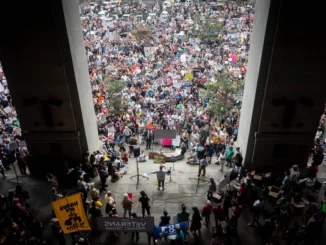
    NEW YORK (TIP): Masses of demonstrators packed into streets, parks and plazas across the US on Saturday to protest President Donald Trump, marching through downtowns and small towns, blaring anti-authoritarian chants mixed with support for protecting democracy and immigrant rights.

    Organizers of the “No Kings” demonstrations said millions had marched in hundreds of events. Governors across the US had urged calm and vowed no tolerance for violence, while some mobilized the National Guard ahead of marchers’ gathering.

    An activist imitates President Trump as a “cowardly lion” during a theatrical performance called “Three Ring Circus”, part of the No Kings Day protests in Fargo, North Dakota. REUTERS
    Confrontations were isolated. But, police in Los Angeles, where protests over federal immigration enforcement raids erupted a week earlier and sparked demonstrations across the country, used tear gas and crowd-control munitions to clear out protesters after the formal event ended. Officers in Portland also fired tear gas and projectiles to disperse a crowd that protested in front of a US Immigration and Customs Enforcement building well into the evening.

    And in Salt Lake City, Utah, police were investigating a shooting during a march downtown that left one person critically injured. Three people were taken into custody, including a man believed to be the shooter, who also suffered a gunshot wound, according to Police Chief Brian Redd.

    Redd said it was too early to tell if the shooting was politically motivated and whether those involved knew each other. The shooter appeared to be walking alongside the group of thousands who were marching, he added. Video feeds showed demonstrators running for safety as gunshots rang out.

    Huge, boisterous crowds marched, danced, drummed, and chanted shoulder-to-shoulder in New York, Denver, Chicago, Austin and Los Angeles, some behind “no kings” banners. Atlanta’s 5,000-capacity event quickly reached its limit, with thousands more gathered outside barriers to hear speakers in front of the state Capitol. Officials in Seattle estimated that more than 70,000 people attended the city’s largest rally downtown, the Seattle Times reported.

    Trump was in Washington for a military parade marking the Army’s 250th anniversary that coincides with the president’s birthday. About 200 protesters assembled in northwest Washington’s Logan Circle and chanted “Trump must go now” before erupting in cheers. A larger-than-life puppet of Trump — a caricature of the president wearing a crown and sitting on a golden toilet — was wheeled through the crowd.

    In some places, organizers handed out little American flags while others flew their flags upside down, a sign of distress. Mexican flags, which have become a fixture of the Los Angeles protests against immigration raids, also made an appearance at some demonstrations Saturday. In Culpepper, Virginia, police said one person was struck by an SUV when a 21-year-old driver intentionally accelerated his SUV into the crowd as protesters were leaving a rally. The driver was charged with reckless driving.

    The demonstrations come on the heels of the protests over the federal immigration enforcement raids that began last week and Trump ordering the National Guard and Marines to Los Angeles, where protesters blocked a freeway and set cars on fire.

    “Today, across red states and blue, rural towns and major cities, Americans stood in peaceful unity and made it clear: we don’t do kings,” the No Kings Coalition said in a statement Saturday afternoon after many events had ended.

    Philadelphia

    Thousands gathered downtown, where organizers handed out small American flags and people carried protest signs saying, “fight oligarchy” and “deport the mini-Mussolinis.”

    Karen Van Trieste, a 61-year-old nurse who drove up from Maryland, said she grew up in Philadelphia and wanted to be with a large group of people showing her support. “I just feel like we need to defend our democracy,” she said. She is concerned about the Trump administration’s layoffs of staff at the US Centers for Disease Control and Prevention, the fate of immigrant communities and Trump trying to rule by executive order, she said.

    A woman wearing a foam Statue of Liberty crown brought a speaker system and led an anti-Trump sing-along, changing the words “young man” in the song “Y.M.C.A.” to “con man.” ”I am what the successful American dream looks like,” said C.C. Téllez, an immigrant from Bolivia who attended the protest. “I’ve enjoyed great success here in the United States, and I’ve also contributed heavily to my community. And if there was space for me, I think there’s a way for everybody else to belong here as well.”

    Los Angeles

    Thousands gathered in front of City Hall, waving signs and listening to a Native American drum circle before marching through the streets. As protesters passed National Guard troops or US Marines stationed at various buildings, most interactions were friendly, with demonstrators giving fist bumps or posing for selfies. But others chanted “shame” or “go home” at the troops.

    Amid signs reading “They fear us don’t back down California” and “We carry dreams not danger, ” one demonstrator carried a 2-foot-tall (60-centimeter) Trump pinata on a stick, with a crown on his head and sombrero hanging off his back. Another hoisted a huge helium-filled orange baby balloon with blond hair styled like Trump’s.

    A few blocks from City Hall, protesters gathered in front of the downtown federal detention center being guarded by a line of Marines and other law enforcement. It was the first time that the Marines, in combat gear and holding rifles, have appeared at a demonstration since they were deployed to city on Friday with the stated mission of defending federal property.

    Peter Varadi, 54, said he voted for Trump last November for “economic reasons.” Now, for the first time in his life, he is protesting, waving a Mexican and US combined flag.

    “I voted for Donald Trump, and now I regret that, because he’s taken this fascism to a new level,” Varadi said. “It’s Latinos now. Who’s next? It’s gays. Blacks after that. They’re coming for everybody.” Even after the formal event ended, the downtown streets were packed with a jubilant crowd as people danced to salsa music and snacked on hot dogs and ice cream bought from vendors, many of whom are Latino immigrants. But the previously calm demonstration turned confrontational as police on horseback moved into the crowd and struck some people with wood rods and batons as they cleared the street in front of the federal building.

    New York City

    Marchers in the crowd that stretched for blocks along Fifth Avenue had diverse reasons for coming, including anger over Trump’s immigration policies, support for the Palestinian people and outrage over what they said was an erosion of free speech rights. But there were patriotic symbols, too. Leah Griswold, 32, and Amber Laree, 59, who marched in suffragette white dresses, brought 250 American flags to hand out to people in the crowd.

    “Our mothers who came out, fought for our rights, and now we’re fighting for future generations as well,” Griswold said. Some protesters held signs denouncing Trump while others banged drums. “We’re here because we’re worried about the existential crisis of this country and the planet and our species,” said Sean Kryston, 28.

    Minnesota

    Governor Tim Walz and law enforcement encouraged people not to attend rallies “out of an abundance of caution” following the shootings of the Democratic state lawmakers.

    Dozens of events were canceled, but tens of thousands still turned out for demonstrations in Duluth, Rochester and St Paul, which included a march to the state Capitol. Walz canceled his scheduled appearance at the St Paul event.

    Authorities said the suspect had “No Kings” flyers in his car and writings mentioning the names of the victims as well as other lawmakers and officials, though they could not say if he had any other specific targets.

    Seda Heng, 29, of Rochester, said she was heartbroken by the shootings, but still wanted to join the rally there. “These people are trying to do what they can for their communities, for the state, for the nation,” Heng told the Minnesota Star-Tribune.

    North Carolina

    Crowds cheered anti-Trump speakers in Charlotte’s First Ward Park before marching, chanting “No kings. No crowns. We will not bow down.” Marchers stretched for blocks, led by a group of people holding a giant Mexican flag and bystanders cheering and clapping along the way.

    Jocelyn Abarca, a 21-year-old college student, said the protest was a chance to “speak for what’s right” after mass deportations and Trump’s deployment of the National Guard in Los Angeles.

    “If we don’t stop it now, it’s just going to keep getting worse,” she said.

    Naomi Mena said she travelled an hour to demonstrate in Charlotte to represent her “friends and family who sadly can’t have a voice out in public now” to stay safe.

    Texas

    A rally at the Texas Capitol in Austin went off as planned despite state police briefly shutting down the building and the surrounding grounds after authorities said they received a “credible threat” to Democratic state lawmakers who were to attend.

    Dozens of state troopers swarmed through the grounds about four hours before the event, but the area was later opened and the rally started on time. The building remained closed.

    The Department of Public Safety later said one person was taken into custody “in connection with the threats made against state lawmakers” after a traffic stop in La Grange, Texas, about 65 miles (105 kilometers) east of Austin. State police did not detail the threat or immediately identify the person, but said there was no additional active threat.

    Mississippi

    A demonstration of hundreds of people opened to “War Pigs” by Black Sabbath playing over a sound system on the state Capitol lawn in Jackson.

    “A lot of stuff that’s going on now is targeting people of color, and to see so many folks out here that aren’t black or brown fighting for the same causes that I’m here for, it makes me very emotional,” said Tony Cropper, who travelled from Tennessee to attend the protest.

    Some people wore tinfoil crowns atop their heads. Others held signs inviting motorists to “Honk if you never text war plans.” Melissa Johnson said she drove an hour-and-a-half to Jackson to protest because “we are losing the thread of democracy in our country.”

    Portland

    Earlier in the day, thousands of protesters lined the streets in downtown Portland for several blocks, waving signs as passing cars honked in support. They marched around the city draped in American flags to the beat of drums and music.

    By late afternoon, a small group of demonstrators amassed across the river to protest in front of an ICE office where three people were arrested Wednesday night after starting a small fire against the building, police said.

    Federal immigration officers fired tear gas, flash bangs and rubber bullets in an effort to clear out the remaining protesters in the evening. Some protesters threw water bottles back and tended to each other’s wounds. The police department wrote on X that the event was declared a riot.

    At least two people were detained and taken inside the federal immigration building.

  • A Night of Verse and Solidarity: Chicago’s Urdu Mushaira Unites Hearts

    A Night of Verse and Solidarity: Chicago’s Urdu Mushaira Unites Hearts

    • Echoes of Peace: Urdu Mushaira Lights Up Chicago with Love and Verse
    • Heartstrings and Ghazals: A Night of Urdu Elegance and Solidarity in United State of America

    CHICAGO, IL (TIP): On the evening of May 3, 2025, the National India Hub in Schaumburg transformed into a vibrant tapestry of poetry, culture, and unity as it hosted An Evening of Unity – Urdu Mushaira & Cultural Night. This soul-stirring event, bought by the host Iftekhar Shareef was organized by Ashfaq Sharief, Khurram Syed, and Mohammed Hafeez, drew a diverse crowd to celebrate the timeless beauty of Urdu poetry while fostering a powerful message of peace and solidarity. From evocative verses to heartfelt tributes, the night resonated with the spirit of community, transcending borders and beliefs.

    The evening was graced by Chief [Host] Guest: Iftekhar Shareef, First Overseas Citizen of India, Guest of honor Ausaf Sayeed, a prominent community leader, and former Consul General of India in Chicago. The event, which commenced at 7:00 PM, was a houseful affair, with attendees eagerly awaiting performances by luminaries such as Imran Pratapgarhi, a celebrated poet and Member of Parliament from India, and Lata Haya, a poetic powerhouse from Bombay. Joining them were international guest Sohail Zarrar from London, UK, Dr Noor Amrohvi from Dallas, Texas, and local Chicago poets, including Nazar Naqvi, Kashif Haidar, Dr. Lateef Saif, Mehboob Ali, and Fahad Khan.

    Amplifying this call for peace, Shareef addressed the persistent scourge of terrorism, particularly India’s enduring struggle. “We’ve gathered to condemn the terrorist act in Kashmir last week,” he declared. “Terrorism has no place in the world, regardless of the country. India has faced this for over 70 years, and we earnestly plead: this must not recur. We urge governments, the global community, and the President of the United States to denounce such acts.” Highlighting Imran Pratapgarhi’s presence, Iftekhar Shareef praised the poet’s dynamic leadership in joining this unified stand against violence, elevating the mushaira’s message to a global stage.

    The event was emceed by Ashfaq Sharief. Dr. Noor Amrohvi and Ashar Mehdi did the Nezamat for the poets.

    The mushaira began with a poignant moment of silence, led by Ashfaq Sharief, to honor the victims of a recent terrorist attack in Pahalgam, Kashmir. Followed by the U.S. and Indian National Anthem. This solemn tribute set the tone for the evening, as poets and attendees united in condemning terrorism and advocating for peace. Iftekhar Shareef emphasized, “Urdu is a language for everyone, irrespective of religion Hindu, Muslim, Christian, Sikh. It bridges hearts through Bollywood songs, poetry, and shared culture.” His words echoed the event’s theme of unity, highlighting Urdu’s universal appeal.

    Imran Pratapgarhi, a star of the night, captivated the audience with his powerful nazms and ghazals. His poem Lab Pe Aati Hai Dua reimagined Allama Iqbal’s classic, weaving a heartfelt prayer for peace in conflict-torn regions like Palestine. “When bullets fly anywhere, it is humanity that dies,” he declared, urging the world to embrace love over hatred. His Lal Qila personifying the Red Fort as a witness to India’s history, stirred patriotic fervor, earning thunderous applause. Pratapgarhi’s ability to blend social commentary with poetic finesse left the audience spellbound.

    Lata Haya’s soulful recitations added a lyrical charm, while Sohail Zarrar brought an international flair, reflecting Urdu’s global resonance. Local poet Fahad Khan opened the mushaira with verses like, “We tried enmity with ourselves again / Tired of life, we tried suicide,” striking a chord with their raw emotion. The performances, moderated by Ashar Mehdi, flowed seamlessly, with each poet contributing to the evening’s rich mosaic of thought and feeling.

    Dr. Ausaf Sayeed, reflecting on his deep connection to Urdu, shared, “My father and uncle were renowned poets in Chicago. Urdu is not just a language; it’s a legacy of unity.” He praised the organizers for creating a platform that celebrates cultural diversity, noting Chicago’s growing prominence as a hub for Urdu literature. The event also acknowledged the contributions of Asian Media USA, whose media coordination ensured widespread coverage, amplifying the mushaira’s message.

    Dr. Noor Amrohvi is A Literary Icon and Community Leader in Dallas. He is a distinguished poet and businessman originally from India, has emerged as one of the most prominent literary figures in the Dallas, Texas area. As the chairman of Al-Noor International, he has made significant contributions to Urdu literature and culture, organizing acclaimed international events like “An Evening for Peace and Unity.” Known for his popular poetry, prestigious awards, and widely attended mushairas, Dr. Noor continues to be a celebrated voice for the Urdu-Hindi speaking community.

    Beyond poetry, the evening was a cultural feast, with delectable food available to complement the soulful ambiance. The audience, a vibrant mix of ages and backgrounds, remained engaged despite a delayed start due to traffic challenges. Organizers apologized for the inconvenience, promising an even grander event in the future to accommodate Pratapgarhi’s massive fan base, which sold out tickets in just days.

    The mushaira concluded with a standing ovation for the poets and organizers, followed by the national anthems of the USA and India, symbolizing the shared values of both nations. Flowers were presented to the guest poets, and Minhaj Akhtar, President of the IOC Committee – Midwest region, joined in honoring the performers. Iftekhar Shareef’s closing remarks reiterated the event’s commitment to fostering peace and cultural harmony, leaving attendees inspired and uplifted.

    This mushaira was more than an evening of poetry; it was a movement of hearts united for peace and humanity. Asian Media USA is proud to support such initiatives that showcase the power of Urdu to bridge communities. Events like these remind us of our shared heritage and the urgent need to stand against division and violence. We congratulate Iftekhar Shareef, the organizers, and the poets for creating a night that will resonate in Chicago’s cultural landscape for years to come.” Mr. Suresh Bodiwala, Chairman and Founder of Asian Media USA.

    This unforgettable evening not only celebrated Urdu’s lyrical legacy but also reinforced its role as a beacon of unity in a fractured world. As attendees left the National India Hub, they carried with them the echoes of verses that spoke of love, resilience, and hope—proof that poetry can indeed change hearts and minds.

    (Photograph and press release by Asian Media USA)


  • Indian American Harry Kumar named by Trump as Assistant Secretary of Commerce

    Indian American Harry Kumar named by Trump as Assistant Secretary of Commerce

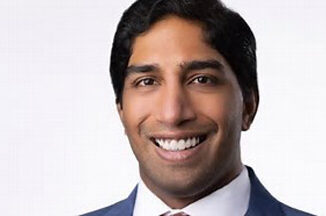
    WASHINGTON, D.C. (TIP) : President Donald Trump has nominated Indian American official Harry Kumar, serving as Director of Government Relations in the Department of Commerce for the last four years, as Assistant Secretary of Commerce. Kumar’s name was announced by the White House in a broad list of nominees for diplomatic, defense, and administrative roles sent to the Senate for confirmation.
    He previously served as Associate Director for Legislative Affairs from November 2019 to Jan 2021 during Trump’s first term. Prior to that he worked as Legislative Assistant at the U.S. Senate (Mar. 2017- Nov. 2019) and as Legislative Counsel at the U.S. House of Representatives (Apr. 2015- Mar, 2017).
    Earlier, he also worked as Legislative & Policy Aide at HBW Resources LLC in Houston, Texas, where he did direct legal research and analyses on various congressional and regulatory energy initiatives affecting oil, natural gas, land-use and emissions.
    Before working as an attorney at Steven S. Toeppich & Associates, PLLC, in Houston, Texas, Kumar focused on oil and energy. On a Public Policy Fellowship with Consumer Energy Alliance in Texas, he directed efforts to research and develop an assessment of Florida energy policies and assisted with legal research and analyses of Congressional energy initiatives affecting oil, natural gas, land-use and emissions.
    Trump also nominated Janet Dhillon of Virginia, for the position of Director of the Pension Benefit Guaranty Corporation for a five-year term.
    Dhillon, who is married to Uttam Dhillon, an American attorney and law enforcement official, previously served as Chair of the Equal Employment Opportunity Commission (EEOC), a position she was nominated for by Trump in 2019. She remained in that role until January 2021 and continued as a commissioner until her resignation in November 2022.

  • Diwali in US gains official holiday status in Pennsylvania, Texas, New York

    Diwali in US gains official holiday status in Pennsylvania, Texas, New York

    NEW YORK (TIP): As the glow of Diwali approaches, this festival of lights is gaining unprecedented recognition in the United States, showcasing the nation’s commitment to celebrating cultural diversity. With states like Pennsylvania leading the initiative, Diwali is being officially acknowledged, reflecting its growing significance in American society.

    In a historic move, Pennsylvania has become the first state in the US to officially declare Diwali as a public holiday. This decision underscores the state’s commitment to inclusivity and cultural appreciation. The recognition of Diwali not only honors the festival’s significance but also celebrates the diverse communities that partake in its festivities.

    Following Pennsylvania’s lead, Texas has also announced Diwali as an official public holiday. The state’s lively celebrations reflect the importance of the festival, inviting residents to engage in activities that promote hope and goodwill. Texas’s acknowledgment of Diwali exemplifies the growing appreciation for diverse cultural practices across the nation.

    New Jersey has joined the ranks of states celebrating Diwali, showcasing a commitment to fostering cultural diversity. The recognition of this festival of lights in New Jersey highlights the state’s dedication to creating an inclusive environment for its residents and embracing the rich tapestry of cultures that contribute to its identity.

    In New York, known for its cultural diversity, Diwali has been embraced as an official holiday. This recognition allows communities from various backgrounds to come together in joyous celebrations, fostering cultural exchange and unity. New York’s vibrant Diwali events reflect the importance of the festival in bringing people together to share in the spirit of togetherness.

    The celebration of Diwali extends beyond the United States, with numerous countries recognizing it as a public holiday.

    Nations such as Fiji, Malaysia, Mauritius, Nepal, Sri Lanka, Singapore, South Africa, and Trinidad and Tobago honor the festival’s significance and the universal values it represents, showcasing its global appeal and message of light triumphing over darkness.

  • Nicole Kidman’s daughter Sunday Rose makes rare red carpet appearance in Paris

    Nicole Kidman’s daughter Sunday Rose makes rare red carpet appearance in Paris

    Nicole Kidman’s daughter Sunday Rose made a rare public appearance with her at a recent event in Paris. As per a report by Page Six, the 16-year-old walked along with her mother for Omega’s Her Time event in Paris. The duo posed for pictures and were seen smiling on the red carpet.
    For the event, Nicole looked radiant in an all white ensemble, as she paired a white cropped short-sleeved top along with a white tea-length skirt. Meanwhile, her daughter wore a gray cropped top with matching gray pants. Both Nicole and Sunday held hands and made goofy faces at each other as they walked the red carpet and posed for photographers.
    Nicole shares two daughters with her husband Keith Urban- Sunday, and 13-year-old Faith Margaret. Meanwhile Nicole shares daughter Isabella, 31, and son Connor, 29, with her ex-husband Tom Cruise. Back in April this year, when Nicole was honoured with the AFI Lifetime Achievement Award, she brought her entire family along with her and posed happily on the red carpet.
    During her acceptance speech, she also made sure to give a shoutout to her daughters and said, “There’s an enormous amount of luck in my life, but there’s also the most important thing — love, big, big love. Right there is the love of my life and the loves of my life. My daughters have never been anywhere publicly with me on a red carpet, tonight was their first night, so they’re here, Sunday and Faith. This is all because of you and I love you so much. There’s no place like home, as they say, click click. You’re my home.” Nicole was last seen in the romantic comedy A Family Affair, which also starred Joey King and Zac Efron. She will be seen next in the Netflix series The Perfect Couple, which also stars Bollywood actor Ishan Khatter in a supporting role.
    Nicole Kidman reveals her
    favourite Olympic sport
    “I love sport and the Olympics,” she exclusively told News Corp.
    “I’m here to cheer on the Aussies and the Americans and actually everyone because there’s something about the hope (of it) right now that’s really important.”
    Her highlight so far is the gold medal haul from the female swimmers.
    Kidman even joked that it would have been her sport had she ever been an athlete.
    “I did swim at school and I did bring home a ribbon for breaststroke so maybe I would’ve been a breaststroker,’’ she said.
    “I brought home a blue ribbon, it was the only ribbon I ever won at the school carnival.”
    The actor will next be seen at the volleyball and gymnastics before heading back to Texas where she is filming TV series Lioness.
    She plans to stay up to date with all the Australian results, particularly in track and field.

  • The US Supreme Court upholds access to a widely available abortion pill

    The US Supreme Court upholds access to a widely available abortion pill

    WASHINGTON, D.C. (TIP): The Supreme Court on Thursday, June 13, maintained access to a widely available abortion pill, rejecting a bid from a group of anti-abortion organizations and doctors to undo the Food and Drug Administration’s approval of the drug.

    In a unanimous decision, written by Justice Brett M. Kavanaugh, the court held that the anti-abortion groups lacked a direct stake in the dispute, a requirement to challenge the F.D.A.’s approval of the pill, mifepristone.

    “The plaintiffs do not prescribe or use mifepristone,” Justice Kavanaugh wrote. “And F.D.A. is not requiring them to do or refrain from doing anything.”

    He added, “A plaintiff ’s desire to make a drug less available for others does not establish standing to sue.”

    The case originally sought to erase the F.D.A.’s approval of mifepristone. But by the time it reached the Supreme Court, the question had been narrowed to whether the agency had acted legally in 2016 and 2021, when it broadened distribution of the pill, eventually including telemedicine and mail options.

    The ruling handed a muted victory to abortion rights groups. Even as they praised the decision for averting severe restrictions on the availability of the pill, they warned that the outcome could be short-lived. Anti-abortion groups vowed to press ahead, promising that the fight was far from over and raising the possibility that other plaintiffs, states in particular, would mount challenges to the drug.

    The ruling did not affect separate restrictions on the pill in more than a dozen states that have passed near-total bans on abortion since the court eliminated a constitutional right to the procedure in Dobbs v. Jackson Women’s Health Organization. (The bans do not distinguish between medication and surgical abortion.)

    Access to abortion remains broadly popular, and ever since the court overturned Roe v. Wade two years ago, prompting some states to swiftly enact bans, the issue has been a major focus of political campaigns. Democrats have succeeded in galvanizing voters to defeat anti-abortion measures and plan to highlight abortion rights in the November elections.

    By dodging a ruling on the substance of the case, the justices avoided delivering a clear, substantive win to either political party or a decision they could use to motivate their base.

    President Biden said in a statement that the “decision does not change the fact that the fight for reproductive freedom continues.”

    He added, “It does not change the fact that the Supreme Court overturned Roe v. Wade two years ago, and women lost a fundamental freedom.”

    The Biden campaign also raised concerns that the ruling would not be enough to protect access to abortion medication if former President Donald J. Trump wins a second term, saying his administration would move to enforce new restrictions through executive action.

    Mr. Trump had wrestled with what position to take on abortion access after the Supreme Court, whose conservative supermajority he appointed, overturned the Roe v. Wade landmark abortion-rights case. Several weeks ago, he said it was up to states to set their own policies.

    His campaign suggested he staked out a similar position on the abortion pill ruling, without addressing how his administration would handle regulation of the drug. “The Supreme Court has unanimously decided 9-0; the matter is settled,” Danielle Alvarez, a Trump spokeswoman, said.

    Abortion rights groups cautioned that the ruling only maintained the status quo.

    “The anti-abortion movement sees how critical abortion pills are in this post-Roe world, and they are hell bent on cutting off access,” Nancy Northup, the president of the Center for Reproductive Rights, said in a statement.

    Erin Hawley, senior counsel for Alliance Defending Freedom, the conservative legal organization that represented the plaintiffs, suggested that the case could be revived through three Republican-led states, Idaho, Kansas and Missouri, which had intervened as plaintiffs at the lower court level.

    “We are grateful that three states stand ready to hold the F.D.A. accountable for jeopardizing the health and safety of women and girls across this country,” Ms. Hawley said in a statement.

    Mifepristone, part of a two-drug regimen, is used in nearly two-thirds of abortions in the United States. Many studies have found the pill to be safe, and years of research have shown that serious complications are rare.

    After the F.D.A. loosened restrictions on the drug’s availability during the pandemic, allowing for it to be prescribed online or sent by mail, its use only increased. A rising number of medication abortions are prescribed by telemedicine. By one count, about one in six abortions, or around 14,000 a month, happened via telehealth from July through September 2023.

    Medication abortion has become a practical form of abortion for women in states where the procedure is banned. Clinicians, protected by so-called shield laws in several states where abortion is legal, have mailed pills to women based in states with bans.

    Justice Kavanaugh focused part of the majority opinion on why the justices disagreed with rulings by lower courts, which all determined the groups had standing to bring the case.

    Citing Justice Antonin Scalia, Justice Kavanaugh wrote that to bring a suit, a plaintiff first must answer a basic question: “What’s it to you?”

    Plaintiffs must show “a predictable chain of events leading from the government action to the asserted injury,” Justice Kavanaugh wrote.

    In this instance, he wrote, the doctors and medical associations trying to challenge F.D.A.’s regulation failed to show an actual injury because the plaintiffs did not include people actually involved with the pill, such as doctors who prescribed mifepristone or pregnant women who took it.

    The plaintiffs’ claims that they have “sincere legal, moral, ideological, and policy objections to mifepristone being prescribed and used by others” do not meet the threshold of standing to sue, Justice Kavanaugh wrote.

    The justices also rejected an argument by the anti-abortion doctors that they had standing to sue because they could be required to provide emergency abortions against their conscience.

    Federal conscience laws already protect doctors from being required to perform abortions or other treatment that violates their consciences, and none of the doctors had shown otherwise, Justice Kavanaugh wrote.

    In a concurring opinion, Justice Clarence Thomas noted that he supported the decision “in full,” but cautioned that the court should take a limited view of when to allow organizations to claim standing on behalf of their members.

    The case returned the issue of abortion to the Supreme Court, even as the conservative majority had declared, in overturning Roe v. Wade, that it would cede the question of access “to the people and their elected representatives.”

    Its decision on Thursday appeared to vindicate that promise, although the court will soon decide another major case on abortion, involving a clash between federal law and tightened state restrictions.

    The abortion pill case, F.D.A. v. Alliance for Hippocratic Medicine, reflected a new front in the fierce fight over abortion.

    In the fall of 2022, an umbrella group of anti-abortion medical organizations, along with several doctors, challenged the F.D.A.’s approval of mifepristone more than two decades ago. In a preliminary ruling, a federal judge in Texas, Matthew J. Kacsmaryk, said that the F.D.A.’s approval of the drug should be suspended, removing mifepristone from the market.

    Judge Kacsmaryk, a Trump appointee, joined the federal bench after years litigating at a conservative religious freedom firm, First Liberty Institute.

    An appeals court, in New Orleans, overturned the part of Judge Kacsmaryk’s ruling that invalidated the F.D.A.’s approval of the pill, but it imposed certain restrictions on its distribution. Those restrictions included prohibiting the medication from being sent by mail or prescribed by telemedicine.
    (Source: New York Times)

  • Ex-Pakistan PM Nawaz Sharif’s sons’ arrest warrants in Panama Papers scandal-linked cases cancelled

    Ex-Pakistan PM Nawaz Sharif’s sons’ arrest warrants in Panama Papers scandal-linked cases cancelled

    Islamabad (TIP): In a major relief to ex-Pakistan prime minister Nawaz Sharif’s family, an anti-corruption court on March 14 cancelled the permanent arrest warrants against his two sons, who recently returned from the UK after a seven-year self-imposed exile. Hassan Nawaz and Hussain Nawaz left the country in 2018 after they were named in the 2016 Panama Papers scandal.
    They faced charges in three corruption cases related to the Panama Papers but never appeared before the courts, which declared them absconders.
    The brothers returned to Pakistan on Tuesday after an Islamabad anti-corruption court on March 7 suspended the perpetual arrest warrants against the two until Thursday, clearing the last hurdle for their safe return to the country.
    On Thursday, Hassan and Hussain appeared at the Islamabad-based Accountability Court, which, after hearing the arguments, cancelled the permanent arrest warrant issued in the Flagship, Al-Azizia and Avenfield corruption cases.
    The court also approved their bail against a surety bond worth Rs 50,000 each.
    Both sons of the former prime minister also applied for exemption from attending court on the next hearing. The court adjourned the hearing till Friday.
    The brothers, who are British nationals, were implicated in the cases in 2018 along with their father, Nawaz Sharif, sister Maryam Nawaz and her husband, Muhammad Safdar.
    Nawaz Sharif, Maryam and Safdar were convicted in the Avenfield while the three-time former premier was also convicted in the Al-Azizia cases and acquitted in the Flagship case.
    All of them separately challenged convictions in the Islamabad High Court. Maryam and Safdar were the first to get relief in 2022 when they were acquitted while Nawaz Sharif was still living in London. Last year, he returned and, after brief proceedings, was acquitted in all cases.
    After their acquittal, only the two brothers were required to face the courts, as they were not formally tried due to their absence. Like their father, the two brothers are likely to get acquitted in all three cases as the National Accountability Bureau (NAB), which had instituted these cases against them, has given them a clean chit.
    Since the Sharif family and their party—the Pakistan Muslim League-Nawaz (PML-N)—are being patronage by the current military establishment, all the cases against them have either been closed or acquitted.
    In October last year, Nawaz Sharif returned to Pakistan after a four-year self-imposed exile in the UK, and after brief proceedings, he was acquitted in all cases.
    His younger brother, Shehbaz Sharif, was elected as Pakistan’s prime minister for a second time after the PML-N and the Pakistan Peoples Party agreed on a power-sharing deal to form a coalition government.
    Maryam, the 50-year-old daughter of Nawaz Sharif, took oath as the first-ever woman chief minister of Pakistan’s most populous and politically crucial Punjab province on February 26. (Reuters)

  • Nepal PM wins trust vote in Parl for third time

    Kathmandu (TIP): Nepal Prime Minister Pushpa Kamal Dahal ‘Prachanda’ on March 14 secured a vote of confidence in Parliament, as the Himalayan country struggled to maintain political stability.
    Prachanda, 69, a former guerilla leader of the Communist Party of Nepal (Maoist Centre) — the third largest party
    in the House of Representatives — got 157 votes in the 275-member lower house. He needed 138 votes to win the trust vote, his third since December 2022. (PTI)

  • 21 Indians arrested in Sri Lanka for working illegally while on tourist visa: Report

    Colombo (TIP): Sri Lankan authorities have arrested 21 Indian nationals for illegally operating an online marketing centre in the island nation, violating the relaxed tourist visa norms, a media report said on Wednesday.
    The 21 Indian men in the age group of 24 to 25, who were in Sri Lanka on tourist visas, were taken into custody on March 13 by the Department of Immigration and Emigration, the Daily Mirror newspaper reported.
    After a preliminary inquiry, the department raided a rented house in Negombo city, where those arrested were found operating an online marketing centre. The house had been converted into an office space where computers and other devices had been installed, the report said.
    Under Sri Lanka’s law, those who visit the island nation on tourist visas are prohibited from engaging in any paid or unpaid work.
    The Indian nationals had used the free-of-charge visa condition that Sri Lanka has granted to a set of countries till March 31 as part of an ongoing pilot project to promote tourism in the cash-strapped country.
    They had arrived in Sri Lanka in February and March on tourist visas, a senior immigration official told the newspaper. The arrested Indian nationals were transferred to the department’s detention centre in Welisara on the orders of relevant authorities, the report said. (PTI)
    Al-Qaida’s Yemen branch says leader Khalid al-Batarfi dead in unclear circumstances
    DUBAI (TIP): : The leader of Yemen’s branch of al-Qaida is dead, the militant group announced late March 11, without giving details.
    Khalid al-Batarfi had a $5 million bounty on his head from the U.S. government over leading the group al-Qaida in the Arabian Peninsula over years that saw him imprisoned, freed in a jailbreak and governing forces in Yemen amid that country’s grinding war.
    Though believed to be weakened in recent years due to infighting and suspected U.S. drone strikes killing its leaders, the group known by the acronym AQAP has long been considered the most dangerous branch of the extremist group still operating after the killing of founder Osama bin Laden.
    Al-Qaida released a video showing al-Batarfi wrapped in a white funeral shroud and al-Qaida’s black-and-white flag.
    Militants offered no details on the cause of his death and there was no clear sign of trauma visible on his face. Al-Batarfi was believed to be in his early 40s.
    The leader of Yemen’s branch of al-Qaida is dead, the militant group announced Sunday, March 10, 2024, without giving details.
    An attack by al-Qaida-allied group in northwest Syria kills, wounds dozens of troops, activists say
    The group made the announcement on the eve of Ramadan, the Muslim holy fasting month that Yemen will begin Monday.
    In the announcement, the group said Saad bin Atef al-Awlaki would take over as its leader. The U.S. has a $6 million bounty on him, saying al-Awlaki “has publicly called for attacks against the United States and its allies.”
    “Although in decline, AQAP remains the most effective terrorist group in Yemen with intent to conduct operations in the region and beyond,” a recent United Nations report on al-Qaida said.
    Estimates provided to the U.N. put AQAP’s total forces as numbering between 3,000 and 4,000 active fighters and passive members. The group raises money by robbing banks and money exchange shops, as well as smuggling weapons, counterfeiting currencies and ransom operations, according to the U.N.
    Al-Batarfi took over as the head of the branch in February 2020. He succeeded leader Qassim al-Rimi, who was killed by a U.S. drone strike ordered by then-President Donald Trump. (AP)

  • Rio police release 17 hostages from gunman on a bus, 2 people wounded

    Rio De Janeiro (TIP): Brazilian police said on March 12 they released 17 hostages from a gunman that took over a crowded bus in Rio de Janeiro and wounded at least two people.
    Rio police said in its social media channels that all hostages aboard a bus parked at one of the city’s main terminals had been freed “after a successful work of negotiation” led by its elite squad.
    The man’s motive remains unclear, Police Col Marco Andrade said in an interview on TV news channel Globo News. “We have children and older people inside the bus,” Andrade said, adding that very little was known at this stage.
    The bus was parked at the Sao Cristovao terminal in the city centre and was scheduled to head to the neighboring state of Minas Gerais.
    Police cars and ambulances could be seen waiting near the bus, while thousands of passengers were stranded waiting for information on scheduled travel.
    People interviewed on TV said they heard several gunshots, causing panic inside the crowded terminal.
    One wounded person was sent to a nearby hospital, police said. (AP)

  • Rare protest by Chinese official media against police crackdown on coverage of deadly blast

    Beijing (TIP): In a rare show of defiance, Chinese media on March 14 protested against the attempts by police to block the coverage of a suspected gas leak explosion at an eatery in the country’s north, which killed seven persons and injured 27. The blast that rocked a fried chicken shop in Yanjiao township in the city of Sanhe, near Beijing, on Wednesday is suspected to have been caused by a gas leak.
    As Chinese official media and foreign journalists rushed to cover the explosion, which killed two people and injured 27 others, they were forcibly prevented by local authorities from the scene, raising a rare controversy over the country’s press restrictions.
    A journalist with state broadcaster CCTV was interrupted while reporting live from the scene of the blast. The journalist was seen surrounded by several uniformed police officers who blocked the camera and shouted about the potential danger at the scene, according to a video that circulated online.
    The video of the report was no longer available on CCTV’s website as of Thursday, the Hong Kong-based South China Morning Post newspaper reported.
    In another video, reporters were seen surrounded by a group of uniformed police officers asking them to leave the scene.
    A reporter with state-run China Media Group, of which CCTV is a division, was heard saying, “We three reporters are shoved by a dozen people”.
    The state-run All China Journalists Association objected to the official crackdown, saying that officials should not “simply and brutally obstruct journalists in the normal performance of their duties for the sake of controlling public opinion”. The association urged officials to make it easier for media to conduct on-site interviews when reporting emergencies.
    The police crackdown against media was seen as an attempt by the local officials to downplay the coverage, fearing reprisals as last month, Chinese President Xi Jinping ordered steps to curb occurrences of recurring incidents of building fires due to various causes and protect people’s lives and property and social stability.
    As the videos of media protests went viral on the Chinese social media platform Weibo, akin to X, local authorities on Thursday issued a statement saying they were “deeply remorseful” and apologised to the journalists, the Post report said.
    The media protest against the official crackdown also figured in the Chinese foreign ministry briefing, as many foreign journalists were reportedly prevented from covering the evening.
    When questioned on restrictions imposed on journalists, Foreign Ministry spokesperson Wang Wenbin said local officials have issued a statement on the incident.
    China welcomes foreign journalists conducting reporting activities under the law and is willing to facilitate if the media faces any problems, Wang said.
    Fire and gas explosions have been taking place almost every month, prompting President Xi to order the concerned agencies to take pre-emptive measures. (PTI)

  • Plan to install new leaders in Haiti appears to crumble after political parties reject it

    PORT-AU-PRINCE, HAITI (TIP): A proposal to install new leadership in Haiti appeared to be crumbling March 13 as some political parties rejected the plan to create a presidential council that would manage the transition.
    The panel would be responsible for selecting an interim prime minister and a council of ministers that would attempt to chart a new path for the Caribbean country that has been overrun by gangs. The violence has closed schools and businesses and disrupted daily life across Haiti.
    Jean Charles Moïse, an ex-senator and presidential candidate who has teamed up with former rebel leader Guy Philippe, held a news conference Wednesday to announce his rejection of the proposed council backed by the international community.
    Moïse insisted that a three-person presidential council he recently created with Philippe and a Haitian judge should be implemented.
    “We are not going to negotiate it,” he said in a loud voice as he wiped his forehead with a handkerchief. “We have to make them understand.”
    His ally, Philippe, who helped lead a successful revolt in 2004 against former President Jean-Bertrand Aristide and was recently released from a United States prison after pleading guilty to money laundering, said no Haitian should accept any proposal from the international community.
    It was not immediately clear who be awarded a position on the council if it was rejected by certain political parties. (AP)

  • Ukraine fires missiles at poll-bound Russia

    Moscow (TIP): Ukraine fired at least eight missiles at Russia’s Belgorod border region, killing one person and wounding six, local officials said March 14, as Kyiv’s forces apparently kept up their efforts to rattle the Kremlin on the eve of Russia’s presidential election.
    Also, in Russia’s Kursk border region, Ukrainian forces attempted a cross-border raid that was repelled, according to local authorities. It was not possible to independently verify the Russian claims.
    The Ukrainian assaults on Russian territory in recent days, including long-range drone attacks and alleged incursions by Ukraine-based Russian proxies, have come as President Vladimir Putin heads for near-certain reelection. Putin has sought to persuade Russians to keep him in power against a backdrop of what he says are foreign threats to the country. — AP

  • UK redefines extremism to counter hate crime, radicals

    UK redefines extremism to counter hate crime, radicals

    London (TIP): The UK government on March 14 issued a new, “more precise” definition of extremism in response to increased threats since the October 2023 Hamas terror attacks in Israel and to protect liberal democratic principles against extreme right-wing and Islamist extremists.
    Extremism in the UK is now defined as the promotion or advancement of an ideology based on violence, hatred or intolerance, that aims to negate or destroy the fundamental rights and freedoms of others; undermine, overturn or replace the UK’s system of liberal parliamentary democracy and democratic rights; or intentionally create a permissive environment for others to achieve the results in the first two categories.
    PM flagged issue
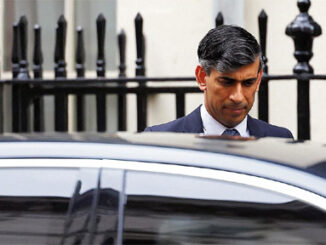
    Earlier this month, Prime Minister Rishi Sunak warned that Britain’s multi-ethnic democracy was being deliberately undermined by both Islamist and far-right extremists, and more needed to be done to tackle the problem
    Antisemitic incidents rose by 147% in 2023, fuelled by the October 7 attacks, according to Community Security Trust, a Jewish safety watchdog
    The previous definition, introduced in 2011 under the government’s Prevent strategy, defined extremism as “vocal or active opposition to fundamental British values, including democracy, the rule of law, individual liberty and mutual respect and tolerance of different faiths and belief”.
    UK Levelling Up and Communities Secretary Michael Gove said the update was needed to safeguard the UK as a multi-national, multi-ethnic, multi-faith democracy “success story”, which is stronger because of its diversity.
    “But our democracy and our values of inclusivity and tolerance are under challenge from extremists. In order to protect our democratic values, it is important both to reinforce what we have in common and to be clear and precise in identifying the dangers posed by extremism,” said Gove.
    The minister said the new measures would ensure that the government does not inadvertently provide a platform to those setting out to subvert democracy and deny other people’s fundamental rights. He also indicated it marks the first in a series of measures to tackle extremism and protect British democracy. The new definition is not statutory, does not create new powers and has no effect on the existing criminal law of the country.
    It will be used by ministerial departments and officials alongside a set of engagement principles to ensure they are not “inadvertently” funding or legitimising groups or individuals who attempt to advance extremist ideologies. — PTI

  • Kremlin says Putin didn’t threaten to use nuclear weapons, US took him out of context

    Kremlin says Putin didn’t threaten to use nuclear weapons, US took him out of context

    Moscow (TIP): The Kremlin said on March 14 that comments on nuclear weapons that Russian President Vladimir Putin made in an interview with state media did not constitute a threat to use them, and accused the US of deliberately taking the remarks out of context.
    Putin said in the interview published on Wednesday that Russia was technically ready for nuclear war and that if the US sent troops to Ukraine, it would be considered a significant escalation of the conflict.
    Commenting on Putin’s words, White House spokesperson Karine Jean-Pierre told reporters that Washington understood that the Russian leader was restating Moscow’s nuclear doctrine, but accused Russia of deploying “reckless and irresponsible” nuclear rhetoric throughout the Ukraine conflict.
    Kremlin spokesman Dmitry Peskov said on Thursday that Putin had merely been answering a journalist’s questions on the subject and restating the already well known circumstances in which Russia would theoretically be forced to use nuclear weapons.
    Peskov also drew attention to the fact that Putin had said in the same interview that the idea of using tactical nuclear weapons in Ukraine had never crossed his mind.
    Asked about the White House comments, Peskov said: “This was deliberately taking something out of context. Putin made no threats about the use of nuclear weapons in this interview. The president was just talking about the reasons that could make the use of nuclear weapons inevitable.”
    “These are the reasons that are stated in our relevant documents, which are well known throughout the world. Moreover, everyone in the West deliberately failed to notice his words that it had never occurred to him to use tactical nuclear weapons (in Ukraine), despite the various situations that have developed in the course of the fighting. This is a deliberate distortion of the context and an unwillingness to hear President Putin,” he added. (Reuters)

  • Israeli jets hit more Hezbollah targets in Lebanon’s Bekaa

    Israeli jets hit more Hezbollah targets in Lebanon’s Bekaa

    BEIRUT (TIP): Israeli warplanes struck deep into Lebanon for a second consecutive day on March 13, hitting a facility belonging to Hezbollah in the Bekaa Valley and killing at least one member of the Iran-backed group, sources in Lebanon said.
    Ship carrying aid to Gaza leaves Cyprus
    A ship carrying 200 tonnes of aid for Gaza left Cyprus on Tuesday in a pilot project to open a sea route to deliver supplies to a population aid agencies say is on the brink of famine
    Aid groups say it is nearly impossible to deliver aid in much of the territory because of Israeli restrictions and ongoing hostilities. The US has also announced plans to construct a sea bridge near Gaza in order to deliver aid
    The Israeli military said its fighter jets had “struck two Hezbollah military command centres” in the Baalbek area, in response to Hezbollah rocket launches towards northern Israel earlier in the day.
    The violence marked an uptick of the conflict between Hezbollah and Israel which has been fought in parallel to the Gaza war and fuelled fears of an all-out conflict between the heavily armed adversaries.
    Hezbollah said in a statement it had fired more than 100 Katyusha rockets at 7 am (0500 GMT), targeting several Israeli military posts, in response to Israeli shelling of the Bekaa Valley region on Monday night.
    At least one civilian was killed and several others were wounded in Monday’s strikes by Israel, one of which hit the southern entrance to the city of Baalbek, about 2 km (1.2 miles) from its ancient Roman ruins, two security sources in Lebanon and the Baalbek governor, Bashir Khader, said.
    The Israeli military said in response to Monday’s rocket launches, its fighter jets had struck sites in the Baalbek area which Hezbollah used to store “significant assets used to strength its weapons arsenal”.
    “A military compound in the area of Khiam and terrorist infrastructure in the area of Bint Jbeil were also struck,” the Israeli military added.
    The Hezbollah member was killed and several more were wounded in an airstrike in the Bekaa Valley village of Nabi Chit, said one of the Lebanese sources. The targeted region is a stronghold of the Shi’ite Islamist group near the Lebanese-Syrian border. — Reuters

  • Scary sight: Japan’s 1st private-sector rocket explodes seconds after launch

    Tokyo (TIP): A rocket that was supposed to become Japan’s first from the private sector to put a satellite into orbit exploded shortly after takeoff on March 13, a livestreamed video showed.
    Online video showed the rocket called Kairos blasting off from Wakayama Prefecture, in central Japan, a mountainous area filled with trees, but exploding midair within seconds.
    A huge plume of smoke engulfed the area, and flames shot up in some spots. The video then showed spurts of water trying to put out the blaze.
    There were no reports of injuries, and the fire has been brought under control, according to the fire department in Kushimoto city, Wakayama.
    Tokyo-based startup Space One, behind the rocket launch, did not immediately respond to a request for comment.
    Live footage on public broadcaster NHK relayed a voice announcing to the crowd gathered to watch the takeoff from a safe distance. NHK showed debris scattering from the sky, and later charred pieces strewn about on the ground. The cause of the problems was still under investigation, according to NHK.
    The launch was already delayed several times, with the last postponement coming on Saturday, after a ship was spotted in a risk area, according to Japanese media reports.
    If it had succeeded, Space One would have been the first private company to put a rocket into orbit.
    Tokyo-based Space One was set up in 2018, with investments from major Japanese companies, including Canon Electronics, IHI, Shimizu and major banks. (AP)

  • Four, including three Indians, arrested while entering US illegally from Canada

    Four, including three Indians, arrested while entering US illegally from Canada

    WASHINGTON, D.C. (TIP): Three Indian nationals are among four people arrested in Upstate New York after they jumped off a moving freight train coming from Canada in their bid to enter the US illegally.

    US Border Patrol agents arrested the four, including a woman, on March 12. The investigation concluded that all four people were undocumented non-citizens.

    Border Patrol agents assigned to the Buffalo Station spotted four people jumping off a moving freight train on the International Railroad Bridge in the city of Buffalo.

    The men left the woman who became immobile due to an injury and were caught shortly after a foot pursuit. The injured woman received first aid from Erie County Sheriff’s deputies and U.S. Customs and Border Protection officers (CBP). After treatment, the woman was transported by ambulance to a local medical centre.

    Border Patrol agents were able to identify that the woman and two men were from India and the third man was from the Dominican Republic. The three men are being processed for removal and detained in Batavia Federal Detention Facility awaiting a deportation hearing for charges under Sections 212 and 237 of the Immigration and Nationality Act, a media release said.

    The woman remains at a local medical centre awaiting further medical treatment. This is a great example of how our Border Patrol agents, CBP officers and law enforcement partners work tirelessly to protect the Western New York area,” said Chief Patrol Agent Thomas G. Martin, US Border Patrol Buffalo Sector.

  • Virginia State Senate commends Indian origin journalist  for his “dedication to journalism and foreign policy.”

    Virginia State Senate commends Indian origin journalist for his “dedication to journalism and foreign policy.”

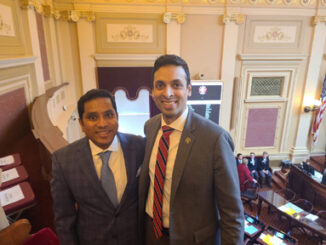
    RICHMOND, VA (TIP): On March 8, 2024, the Virginia State Senate approved a formal resolution with a voice vote commending Washington Bureau Chief of News India Times, T. Vishnudatta Jayaraman, for his “dedication to journalism and foreign policy.” The resolution was introduced by Indian-American Virginia State Senator, Suhas Subramanyam, who is also a Democratic candidate for US Congress from Virginia’s 10th Congressional district. Introducing Jayaraman in the Senate gallery, on March 4th, Senator Subramanyam referred to him “as the recipient of the prestigious Ashoka Award for social change,” while commending his dedication to journalism and foreign policy.

    He further said, on January 27th, Jayaraman “received a Distinguished Service Award ‘for advancing media coverage for the Indian diaspora and fostering US-India relations’ from the Indian Ambassador to United States Taranjit Sandhu and of course, you Madam President,” referring to Lieutenant Governor of Virginia and President of the Senate, Winsome Sears.

    The National Council of Asian Indian Associations hosted the event to commemorate India’s 75th Republic Day Celebrations on January 27th in McLean, Virginia.

    Accepting a request from Senator Subramanyam “to give him [Jayaraman] a warm Senate welcome and recognition of all that he’s accomplished in the field,” Lieutenant Governor Sears expressed, “Part of a democracy and I think probably the very first part is that the media be free. And we are so glad that you are there to help remind us of that. Hence, all the accolades that you’ve received, we can congratulate you. And thank you for coming. Senators, let us give him the warm welcome of our Senate.”

    On February 28th, Kannan Srinivasan, the first Indian-American immigrant elected to the Virginia House of Delegates, also presented a commendation to Jayaraman on the House Floor for having received the Distinguished Service Award.

    The Ashoka Award was presented to Jayaraman by the former Governor of Arunachal Pradesh and 22nd Chief of Army Staff of Indian Army, General J. J. Singh, and former India’s Minister of Home Affairs and Tourism, Subodh Kant Sahay in New Delhi on December 17, 2023. The event was organized by The Charles Walters Council/Society for Innovation & Research, India. Born in Chennai, Tamil Nadu, Jayaraman, also known as J. T. Vishnu, previously worked with Hindustan Times, The Tribune, and The Sunday Observer in New Delhi. He also worked at the Department of Public Information at the United Nations Headquarters in New York, and contributed to publications including UN Yearbook and UN Chronicle.

    Jayaraman has an undergraduate degree from Loyola College, Chennai. He has a Master’s Degree in Journalism and Mass Communication, and a PhD in International Administration and the United Nations from the University of Madras. He also has a Master’s degree in Diplomacy and International Relations from Seton Hall University, New Jersey.

  • India-US security cooperation will become even more important in the years ahead: Richard Verma

    India-US security cooperation will become even more important in the years ahead: Richard Verma

    WASHINGTON, D.C. (TIP): India-US security cooperation will become even more important in the years ahead and the work of the two countries on emerging technologies will take on even more promise, a top American diplomat said on Thursday, March 14, reiterating the remarks of President Joe Biden that this is the defining partnership of the 21st century.

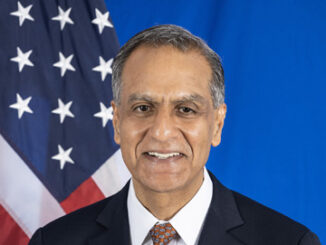
    “As both President Biden and Prime Minister Modi have said, our impact on each other is important, but what we can do for the world is even more important. Whether it’s addressing food insecurity or battling the next pandemic or connecting millions to the digital economy, there is so much we can do together,” Deputy Secretary of State for Management and Resources, Richard Verma, wrote in a blog post in his recent return from India.

    Verma is the highest-ranking Indian-American ever in the State Department. He was also the first ever Indian-American to serve as the US Ambassador to India.

    “So, where are we headed?” Verma wrote as he described in detail the significant growth in the India-US relationship over the last few decades.

    He identified defense, democracy and technology as three key areas of cooperation between the two countries.

    “Our security cooperation will become even more important in the years ahead. The threats we face are real, but building our collective capabilities, increasing sharing of information, and improving maritime domain awareness and interoperability will ensure India continues to be a provider of net security across the Indo-Pacific region and beyond,” Verma wrote. “Our work on protecting, preserving, and strengthening democracy will continue to be even more important, with the rise of authoritarian leaders and movements. This includes continuing to strengthen a global rules-based order architecture, ensuring we bridge the divide on income inequality, and battling mis and disinformation. Democracy must continue to deliver for our peoples,” he said.

    “Our work on emerging technologies will take on even more promise. New and emerging technologies offer tremendous opportunities for economic growth and development. At the same time, recent disruptive cyber attacks, carried out by criminals and nation states, demonstrate the risk that cyber vulnerabilities can pose to global peace and security,” said the top American diplomat.

    “We must work together to tackle data privacy issues, such as identity theft, by exchanging knowledge on data protection issues. Through the Digital Connectivity and Cybersecurity Partnership, the US is working closely with India to build and maintain internet infrastructure and strengthen cybersecurity protections. From semiconductors to critical minerals to space exploration and innovation in clean energy, battling climate change, and so much more, this is about economic and physical security,” Verma wrote.

  • Indian American indicted in a Ponzi scheme

    Indian American indicted in a Ponzi scheme

    WASHINGTON, D.C. (TIP): An Indian-American has been indicted by a grand jury in a Ponzi scheme with the FBI urging victims of the investment adviser in Texas to come forward. Siddharth Jawahar, 36, has been ordered imprisonment until sentencing by the court. The FBI on Wednesday, March 13 said it is seeking potential Miami-area victims of Jawahar who has been accused of running a multimillion-dollar Ponzi scheme.

    According to the indictment, from July 2016 through roughly December 2023, Jawahar took in more than $35 million from Swiftarc investors but spent about $10 million on investments in companies.

    Jawahar used the money from new investors to repay older investors and to fuel an extravagant lifestyle that included flights on private planes, stays at luxury hotels and expensive outings at lavish restaurants, the indictment says. In 2015, Jawahar began investing the majority of client funds in a single investment, Philip Morris Pakistan (PMP), the indictment says, and eventually, 99 per cent of client funds were consolidated into the PMP investment. Jawahar did not tell investors of a dramatic decline in the value of PMP, instead misled investors about the share price and their profits. The indictment says Jawahar also did not tell investors when the Texas State Securities Board revoked Swiftarc Capital’s authority to conduct investment activities on June 7, 2022, and ordered Jawahar to cease from engaging in fraud. Jawahar continued to fraudulently solicit and receive investor funds, including $1 million from an investor weeks after the state board’s order, the indictment says.

    The wire fraud charges are each punishable by up to 20 years in prison and a $250,000 fine, or both.

    The investment adviser fraud charge is punishable by up to five years in prison and a $10,000 fine, or both.

  • US says it is concerned about CAA and closely monitoring its implementation

    US says it is concerned about CAA and closely monitoring its implementation

    WASHINGTON, D.C. (TIP): The United States on Thursday, March 14 said it is concerned about the notification of the Citizenship (Amendment) Act in India and is closely monitoring its implementation.

    “We are concerned about the notification of the Citizenship (Amendment) Act on March 11,” State Department Spokesperson Matthew Miller told reporters at his daily briefing.

    “We are closely monitoring how this act will be implemented. Respect for religious freedom and equal treatment under the law for all communities are fundamental democratic principles,” Miller said in response to a question.

    The Indian government implemented the Citizenship (Amendment) Act 2019 on Monday, paving the way for the grant of citizenship to undocumented non-Muslim migrants from Pakistan, Bangladesh and Afghanistan who came to India before December 31, 2014. The government also came out with a press statement to say that Indian Muslims need not worry as the CAA will not impact their citizenship and has nothing to do with the community which enjoys equal rights as their Hindu counterparts. The Indian government has maintained that the CAA is about granting citizenship and that no citizen of the country will lose citizenship.

  • US House passes bill to ban TikTok

    US House passes bill to ban TikTok

    WASHINGTON, D.C. (TIP): The US House of Representatives on Wednesday passed a bill to ban Chinese social media app Tiktok, which is very popular among kids, in the United States.

    India was the first country to ban TikTok in 2020 after it became public knowledge that the popular Chinese social media platform was being used for gathering personal data and spying on others.

    Passed by the House by 352 to 65 votes, the bill now heads to the US Senate for it to be sent to the White House for the President to sign it into law. While 197 Republican lawmakers voted for the measure and 15 against, on the Democratic side, 155 voted for the bill and 50 against. The bill, “Protecting Americans From Foreign Adversary Controlled Applications Act”, was co-authored by Indian American Congressman Raja Krishnamoorthi, a Democrat, and Congressman Mike Gallaghe from the Republican party.

    “This bill is not a ban and it is not about TikTok. It is about ByteDance…a 100 per cent owner of TikTok. ByteDance is controlled by the Chinese Communist Party. In fact the editor-in-chief of ByteDance is the secretary of the Chinese Communist Party cell embedded at the very highest ranks of the company,” Krishnamoorthi said.

    He said the bill ensures that ByteDance divests itself of the vast majority of the ownership at TikTok. “Our intention is for TikTok to continue to operate but not under the control of the CCP,” Krishnamoorthi said.

    Former vice president Mike Pence said the passage of this legislation demonstrates that appeasement to Communist China is over, allowing TikTok to continue operating in the United States while under CCP control is simply unacceptable. “The Senate must take up this legislation as soon as possible and send it to President Biden’s desk. AAF will never falter in our commitment to confronting China at home and abroad, the American government must not falter now,” he demanded.

    Former House Speaker Nancy Pelosi said the overwhelming and bipartisan passage of the bill is a strong statement of the Congress’s commitment to the security of the country and privacy of the data. “Let me be clear: this legislation is not a ban on TikTok. I join my colleagues in recognising the platform’s entertainment, educational and entrepreneurial value, especially among younger people. Instead, this legislation would strengthen TikTok: keeping Americans’ data and control of the algorithm out of the hands of a foreign adversary.

    “In doing so, we protect against surveillance and influence operations that are hallmarks of the Chinese Communist Party (CCP),” she said.

    Repressed communities in China – from the Uyghurs to Tibetans to the people of Hong Kong, and others – are telling us that their stories of their suffering are being blocked or misrepresented on TikTok, Pelosi said.

    “At the same time, the CCP is spreading propaganda to cover up its heinous abuses. We cannot allow Beijing to bury the truth of its abysmal record on human rights,” Pelosi said, and urged the Senate to bring companion legislation to a vote as quickly as possible.

    “The Senate will review the legislation when it comes over from the House,” said Senate Majority Leader Chuck Schumer. House Foreign Affairs Committee Chairman Michael McCaul said CCP-controlled TikTok is an enormous threat to US national security and young Americans’ mental health. “This past week demonstrated the Chinese Communist Party is capable of mobilising the platform’s users to a range of dangerous, destabilising actions. The Senate must pass this bill and send it to the president’s desk immediately,” he said.

    Senate Select Committee on Intelligence Chairman Mark R Warner and Vice Chairman Marco Rubio said they are united in their concern about the national security threat posed by TikTok – a platform with enormous power to influence and divide Americans whose parent company ByteDance remains legally required to do the bidding of the Chinese Communist Party.

    “We were encouraged by today’s strong bipartisan vote in the House of Representatives, and look forward to working together to get this bill passed through the Senate and signed into law,” the two Senators said.