Tag: Thailand

  • Bopanna to get Davis Cup Commitment Award

    Bopanna to get Davis Cup Commitment Award

    BANGALORE (TIP): Indian tennis player Rohan Bopanna will be presented the Davis Cup Commitment Award during the World Group play-off tie against Serbia which begins here tomorrow. The International Tennis Federation (ITF) will present the Awards through its national associations during the Davis Cup World Group and Zone Group matches on Saturday.

    Former Grand Slam champions Lleyton Hewitt of Australia and Gustavo Kuerten of Brazil will also be awarded after their respective games. “The Davis Cup Commitment Award reflects the dedication by players for more than a century to represent their country in this prestigious competition.

    These players have continued to rise to the unique challenge of competing in a team environment in front of their home fans, and we believe that it is fitting to recognise their efforts,” said ITF President Francesco Ricci Bitti.

    List of players to be awarded: Australia: Lleyton Hewitt, Brazil: Carlos Kirmayr, Gustavo Kuerten, Luiz Mattar, Cassio Motta, Jaime Oncins, Canada: Frank Dancevic, Chinese Taipei: Ti Chen, France: Pierre Darmon, India: Rohan Bopanna Romania: Victor Hanescu, Russia: Andrei Chesnokov, Andrei Olhovskiy, Thailand: Sanchai Ratiwatana, Sonchat Ratiwatana, Danai Udomchoke, Ukraine: Sergiy Stakhovsky.

  • Thailand’s junta chief appointed PM by hand-picked House

    Thailand’s junta chief appointed PM by hand-picked House

    BANGKOK (TIP):
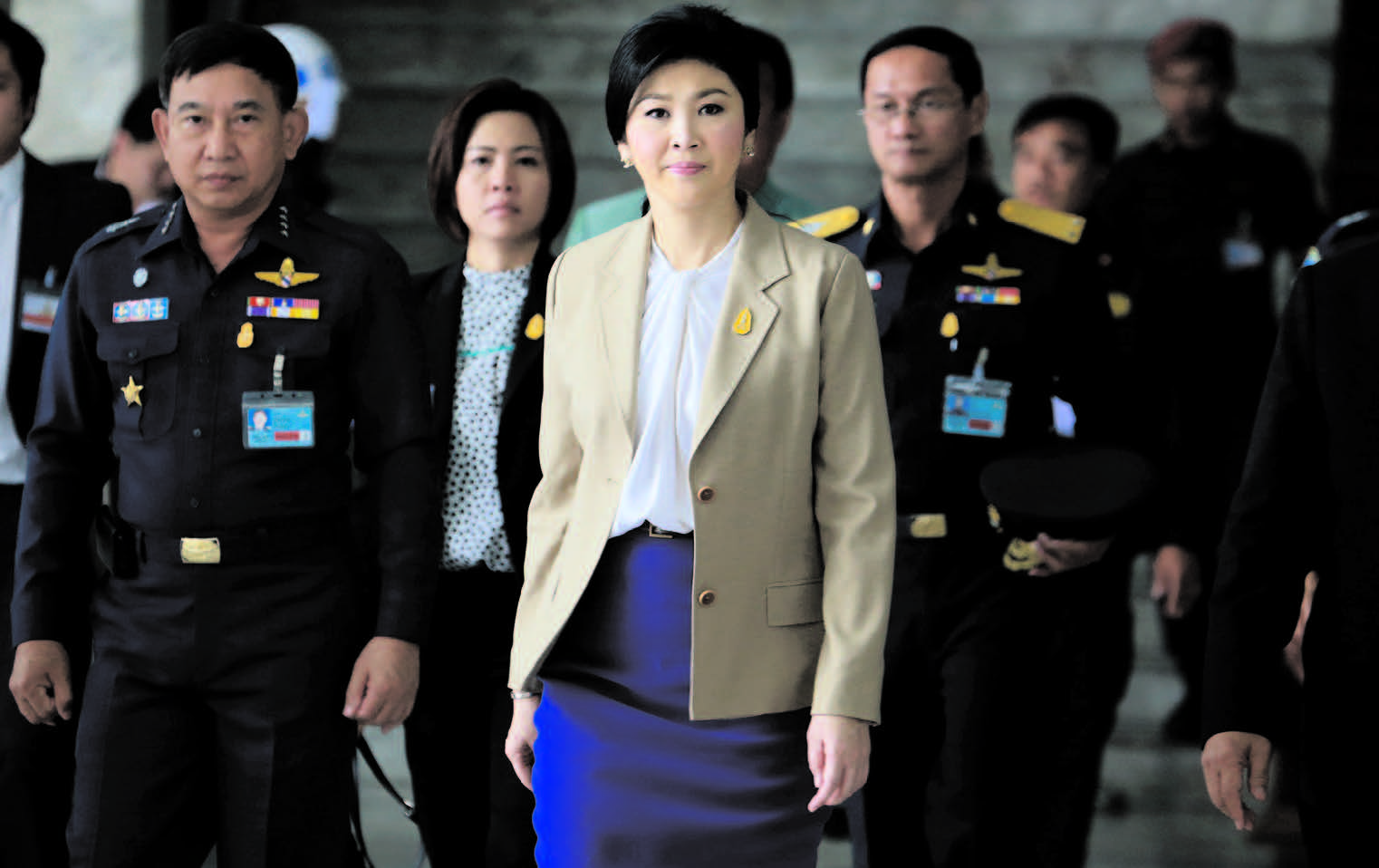
    Thailand’s coup leader General Prayuth Chan-ocha was appointed prime minister on August 21 by a legislature he hand-picked, giving the army chief a veneer of legitimacy even while the military presses on with efforts to silence its critics. The army seized power on May 22 in a bloodless coup following six months of street protests that contributed to the ousting of Yingluck Shinawatra, whose government was opposed by the Bangkok royalist establishment.

    Although Prayuth’s appointment paves the way for an interim government to be set up in the coming weeks, power will remain in the junta’s hands. The general has said he plans to press ahead with a year of political reforms before a new election takes place by late 2015. “It is designed to give him the power to run the country according to the law.

    The premier position will give him legal power in the Thai governance system,” Gothom Arya, a lecturer in human rights studies at Mahidol University, said. The nomination comes as no surprise – the National Legislative Assembly that chose Prayuth, 60, is largely considered a rubber stamp parliament tasked with enacting sweeping reforms under the army’s watch. Prayuth will retire as army chief in September but will stay on as head of the junta, formally known as the National Council for Peace and Order. reuters

  • KERRY EYES US-CHINA partnership despite tensions

    KERRY EYES US-CHINA partnership despite tensions

    HONOLULU(TIP):
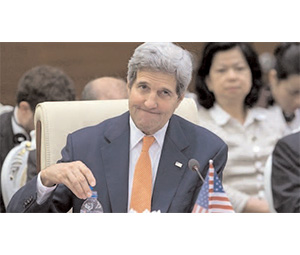
    Improving US cooperation with China is critical to maintaining stability and security in the Asia-Pacific as well as combating the effects climate change, US secretary of state John Kerry said. Wrapping up an eight-day, around-theworld diplomatic trip and his sixth visit to Asia as America’s top diplomat, Kerry on Wednesday outlined renewed priorities for much of the Obama administration’s much-touted “pivot to Asia” during its final 2 years, including a focus on strengthening US-Chinese partnership in areas of agreement and bridging gaps in areas of contention.

    “One thing I know will contribute to maintaining regional peace and stability is a constructive relationship between the United States and China,” Kerry said in an address to the East-West Center think tank in Honolulu. “The United States welcomes the rise of a peaceful, prosperous and stable China: one that plays a responsible role in Asia and the world and supports rules and norms on economic and security issues.”

    “We are committed to avoiding the trap of strategic rivalry and intent on forging a relationship in which we broaden our cooperation on common interests and constructively manage our differences and disagreements,” he said. Kerry arrived in Hawaii after stops in Afghanistan, Myanmar, Australia and the Solomon Islands during which tensions between China and its smaller neighbors over competing territorial claims in the South China Sea were a major subject of discussion.

    At a Southeast Asia regional security forum in Myanmar over the weekend, Kerry formally unveiled a US proposal for a voluntary freeze on provocative actions by all claimants, including the Chinese. The US says that it has no position on the competing claims but does regard stability in the South China Sea as a national security issue, given the region’s role as one of the world’s busiest maritime shipping zones. “We do care about how those questions are resolved, we care about behavior,” Kerry said.

    “We firmly oppose the use of intimidation, coercion or force to assert a territorial or maritime claim by anyone. And we firmly oppose any suggestion that freedom of navigation and overflight and other lawful uses of the sea and airspace are privileges granted by big states to small ones. All claimants must work together to solve the claims through peaceful means. These principles bind all nations equally, and all nations have a responsibility to uphold them.” While welcomed in general by the 10 members of the Association of Southeast Asian Nations, China took a dim view of Kerry’s proposal and suggested it would not agree.

    In an apparent nod to such disagreements, Kerry said that building better ties with Beijing will not be easy or inevitable. “Make no mistake: This constructive relationship, this `new model,’ is not going to happen simply by talking about it,” he said. “It’s not going to happen by engaging in slogans or pursuing spheres of influence. It will be defined by more and better cooperation on shared challenges. It will be defined by a mutual embrace of the rules, norms and institutions that have served both our nations and the region so well.”

    Kerry said he was pleased at some areas of current US-China cooperation, including multination talks on Iran’s nuclear program, a shared interest in denuclearizing North Korea and promoting calm in South Sudan. In addition, on climate change, which he regularly describes as the biggest threat facing Earth, Kerry hailed US-Chinese initiatives to reduce greenhouse gas emissions and deforestation as well as working on sustainable, clean energy options.

    At the same time, he noted that the US and China, along with other Asian nations, routinely disagree on human rights. Kerry pointed out backsliding in rights protection and democratic principles in Myanmar and Thailand and repression in North Korea but said the United States would not relent in its drive to improve conditions. “We will continue to promote human rights and democracy in Asia, without arrogance but also without apology,” he said.

  • Nepal ex-prince arrested for drugs in Thailand

    Nepal ex-prince arrested for drugs in Thailand

    BANGKOK (TIP): Former Nepalese crown prince Paras Shah has been arrested on drugs charges in Thailand for a second time and could face up to five years in prison, police said on July 16. Shah was detained with about 13 grams (0.5 ounces) of marijuana at a hotel in Bangkok, according to an officer at Thonglor police station who did not want to be named. “He borrowed a flash drive from hotel security and when the security guard entered his room to get his flash drive back he saw marijuana on the counter so he told police,” the officer told AFP.

    He said Shah, who is visiting Thailand on a tourist visa, had admitted illegal drug possession and was remanded in custody. It is not the first time the former royal has been in trouble with the law in Thailand. Shah, who as crown prince was unpopular for his playboy lifestyle, was arrested for possession of about three grams of marijuana on the island of Phuket in October 2012. He was detained again later the same year for smashing property at a luxury apartment in Bangkok.

    In February 2013 Shah was admitted to intensive care in Thailand after suffering a heart attack. Shah became heir to the throne in 2001 after his cousin Crown Prince Dipendra killed nine members of his family including the king and queen in a drink-and-drugs-fuelled rampage, before apparently turning his gun on himself.

  • THAI MILITARY JUNTA SUMMONS LEADERS DEPOSED IN COUP

    THAI MILITARY JUNTA SUMMONS LEADERS DEPOSED IN COUP

    BANGKOK (TIP): Thailand’s military summoned the deposed cabinet and rulingparty leaders to report May 23 to a new junta that seized power a day earlier in a coup which has triggered US-led international censure. Claiming to act to halt months of deadly political turmoil, a new military regime under the tough-talking army chief declared a nationwide night-time curfew, curbs on civil liberties, and ordered masses of rival demonstrators off Bangkok’s suddenly hushed streets.

    The junta headed by General Prayut Chan- O-Cha suspended most of the constitution, drawing rebukes from Washington, Europe, and the UN Secretary-General, who all called for civilian control to be restored. Members of the now ousted Cabinet, along with leaders of the Puea Thai party that had been in power, were told to report to the military in central Bangkok at 10am (0300 GMT) Friday. Prayut had said Thursday the coup was staged “in order for the country to return to normal quickly.”

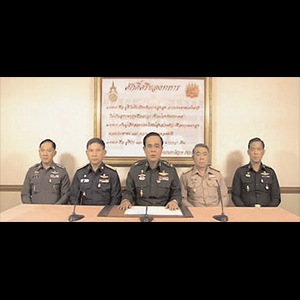
    “All Thais must remain calm and government officials must work as normal,” he said in a brief televised address announcing the takeover, flanked by top military and police officials. It remained unclear what awaited members of the ousted government if they turned up. But moments before the coup, leaders of Puea Thai and their Democrat Party foes along with each side’s rival protest leaders were taken away by the military from Bangkok talks called by Prayut to bridge their differences.

    Their whereabouts remained unknown early Friday. US Secretary of State John Kerry said there was “no justification” for a coup that would have “negative implications” for US relations. He called for “early elections that reflect the will of the people,” while the Pentagon said it was reviewing military cooperation with its Southeast Asian ally.

    Thailand has been locked in a nearly decade-long political crisis since a 2006 military coup that deposed controversial tycoon-turned-politician Thaksin Shinawatra as premier. Since then, a power bloc centred on Thaksin’s family has battled for primacy with a Bangkok-based royalist camp closely tied to the powerful military. Thailand’s democratic development has now been interrupted by 19 actual or attempted coups since 1932, interventions that traditionally require the monarchy’s approval.

    It was unclear whether the palace had blessed Prayut’s coup. Some observers see the crisis as a struggle to decide who will run the country when the more than six-decade reign of ailing, 86-year-old King Bhumibol Adulyadej eventually ends. Backers of the royalist elite have engaged in several months of escalating confrontation with the democratically elected government that saw Thaksin’s younger sister Yingluck dismissed as premier earlier this month by a controversial court ruling.

    Yingluck and three of Thaksin’s other relatives were among those told to report to military authorities Friday morning. Thaksin lives in exile after a corruption conviction, but his camp retains strong support particularly in rural northern Thailand, and has won every general election since 2001, to the dismay of its military-allied rivals. Experts at the Siam Intelligence Unit, a Bangkok-based think-tank, expect an interim premier to be named and the junta to rule for up to two years and draft a “draconian” new constitution.

    Some fear more turmoil. “The coup is not a solution at all to end the crisis. This will become the crisis,” said Pavin Chachavalpongpun of the Centre for Southeast Asian Studies at Japan’s Kyoto University. “It shows the military has never learned the lesson from 2006,” he said, referring to the cycle of instability stemming from Thaksin’s overthrow. Violence related to nearly seven months of anti-Thaksin protests have left at least 28 dead and hundreds wounded.

    Caretaker premier Niwattumrong Boonsongpaisan was among ministers ordered to report to the army. His whereabouts were unknown. But Chalerm Yubamrung, a Thaksin insider and labour minister until recently, was detained Thursday by the military, his son Doung Yubamrung said. Prayut declared martial law on Tuesday, giving the military draconian powers.

    With the coup, all television and radio stations including foreign broadcasters were ordered to air only a steady stream of army announcements and the junta warned it would block social media platforms that carry anti-coup content. UN Secretary-General Ban Ki-moon was “seriously concerned,” his spokesman said. He urged a return to “constitutional, civilian, democratic rule.” Prayut gave no indication how long the military would rule. It kept the reins for more than a year after the 2006 coup. Anti-Thaksin protesters had demanded the removal of the government and the his clan’s influence in politics, alleging deep corruption. It was not immediately clear how the pro- Thaksin “Red Shirt” protesters would respond.

    Its leaders had said a coup could trigger civil war, but there were no immediate reports of unrest. The coup — which sent commuters scurrying to get home before Thursday’s 10 pm curfew — elicited jubilation from opposition protesters and dismay from government supporters. “Our country has been chaotic and has had no solutions for a long time,” said office worker Arnusit Chenruk, 39, calling the coup a “good” thing.

  • SAINA NEHWAL’S ANGELS SCRIPT UBER CUP HISTORY

    SAINA NEHWAL’S ANGELS SCRIPT UBER CUP HISTORY

    NEW DELHI (TIP): ‘Raising the bar’ has been Saina Nehwal’s calling card for years. The Hyderabadi diehard and her team of gutsy shuttlers made Uber Cup history on May 22, taking India into the semifinals for the first time in modern era of the tournament with a 3-0 win over Indonesia. India now face Japan – who beat Denmark – in the semifinals to be played at the Siri Fort Complex on Friday.

    The Indian captain paved the way for her team’s triumph, winning the first match against Lindaweni Fanetri. Her understudy , 18-year-old PV Sindhu, survived a scare and an attack of nerves to get the better of Bellartrix Manuputty to make it 2-0. The pair of Jwala Gutta and Ashwini Ponnappa then gave the finishing touches to a campaign which will be remembered for years.

    Saina came to know about her QF opponents well past midnight on Wednesday. Indonesia and its top singles player Fanetri were not going to give the Indian captain a sleepless night. “Following the victory over Ratchanok Intanon (World No. 4 from Thailand), there was nothing much to think about,” a confident Saina said moments after knocking out Fanetri 21-17, 21-10. The vociferous, partisan crowd realized that history was being created when Sindhu saved two match points in the third game to finally emerge bruised but not beaten.

    She got past Bellartrix Manuputty (world No. 24) 21-16, 10-21, 25-23. Jwala and Ashwini (ranked 36th) punched much above their weights against the ninth ranked Indonesian pair of Greysia Polii/Nitya Krishinda Maheswari to assure India at least a bronze with their 21-18, 21-18 win. Fanetri, ranked 23rd, was off the blocks faster than Saina expected and opened up an eight-point (15-7) lead in the first game.

    The drift was working to Saina’s disadvantage as she failed to control the backline. A couple of simple smashes, which should have been put away , were buried into the net. “I kept my focus and went for the rallies. At one point I stopped looking at the score,” said Saina. She did much more. Reading Fanetri’s game rather astutely , Saina kept spreading the bird all across the court. Fanetri was running ragged. “I could feel she was getting tired,” Saina said.

    In the second singles, Sindhu, untroubled till the quarters, suddenly started erring on the side of caution. Winning the first game, she went into a shell to lose the second against Manuputty , playing with a heavily strapped knee. In the third, when aggression was supposed to be the key word, Sindhu chose to wait for her opponent to make errors and clinched the battle of nerves to make it a sweet success story.

  • Thailand: Military plane with defense chief crashes

    Thailand: Military plane with defense chief crashes

    BANGKOK (TIP): A Laos air force plane carrying about 20 people including the country’s defense minister and other senior officials crashed on May 17, Thailand’s Foreign Ministry said. There was no immediate word on casualties, said the Foreign Ministry spokesman, Sek Wannamethee.

    The plane took off from the capital, Vientiane, early Saturday morning and crashed in the northeastern province of Xiangkhoung, about 470 kilometers (290 miles) away. The aircraft was carrying Lao Defence Minister Douangchay Phichit, who is also a deputy prime minister, and several other high-ranking officials, including the governor of Vientiane.

    They were heading to an official ceremony for the Ministry of Defense, said Sek, who was informed of the crash by authorities in neighboring Laos. He did not immediately have any other details, and there was no official statement on the crash from authorities in Laos, which is ruled by a secretive Communist Party. In October, a Lao Airlines ATR-72 turboprop crashed during a heavy storm as it approached Pakse Airport in southern Laos, killing all 49 people on board.

  • Thai protesters rally to ‘sweep’ away Thaksin regime

    Thai protesters rally to ‘sweep’ away Thaksin regime

    BANGKOK (TIP): Thousands of royalist protesters fanned out across Thailand’s capital on May 9 to try to bring down a caretaker government after a court threw Prime Minister Yingluck Shinawatra out of office and an anti-graft agency indicted her for negligence. The interim government is hoping to organise a July 20 election that it would probably win, but the protesters want the government out, the election postponed and reforms to end the influence of Yingluck’s brother, former premier Thaksin Shinawatra. Protest leader Suthep Thaugsuban, speaking to supporters in a city park, urged them to rally outside parliament, the prime minister’s offices and five television stations to prevent them being used by the government.

    “We will sweep the debris of the Thaksin regime out of the country,” said Suthep, a former deputy premier in a government run by the proestablishment Democrat party. Thaksin is vilified by his enemies as a corrupt crony capitalist. But he won the unswerving loyalty of legions of rural and urban poor with populist polices when he was prime minister from 2001 until he was ousted in a 2006 coup. He lives in exile to avoid a 2008 jail sentence for abuse of power but has been the guiding hand behind his sister’s government.

    Tens of thousands of his “red shirt” supporters, angered by Yingluck’s ousting, are also on their way to Bangkok for a rally on Saturday. They are clinging to the hope that the interim government will win the July election and bring the Shinawatras’ party back to power.

    The prospect of rival protesters in the capital over the weekend has raised fears of trouble. Both sides have armed activists in their ranks. Twenty-five people have been killed since the anti-government protests began in November and more turmoil could further unsettle Southeast Asia’s second-largest economy.

    POPULIST POLICIES

    Thailand is already teetering on the brink of recession amid weak exports, a year-long slump in industrial output and a drop in tourism, presided over by a caretaker government with curtailed powers. Consumer confidence fell to its lowest level in more than 12 years in April as the crisis took its toll. The anti-graft agency indicted Yingluck for negligence on Thursday – a day after the Constitutional Court threw her out of office – in connection with a rice-subsidy scheme under which the state paid farmers way above market prices for their crops.

    The scheme, a flagship policy of Yingluck’s administration, was aimed at helping her rural supporters. But the government could not sell much of the rice it quickly stockpiled and was unable to pay many farmers. “Thaksin’s lackeys have exploited populist policies to win over voters before betraying them,” Suthep told his supporters late on Thursday. “The rice scheme is a clear example of this.”

    If Yingluck is found guilty of negligence by the Senate, she could be banned from politics for five years. Several other members of the family and about 150 of Thaksin’s other political allies have been banned for five-year terms since 2007. Yingluck dissolved parliament in December and called a snap election but the main opposition party boycotted it and antigovernment activists disrupted it so much it was declared void.

    Yingluck and the Election Commission agreed last week a new ballot should be held on July 20, but the date has not been formally approved. Thaksin or his loyalists have won every election since 2001. The anti-government protesters say Thaksin buys elections. They want to change the electoral rules before new polls to try to stop his party winning again.

  • Sant Chatwal appoints Danziger president and CEO of Hampshire group

    Sant Chatwal appoints Danziger president and CEO of Hampshire group

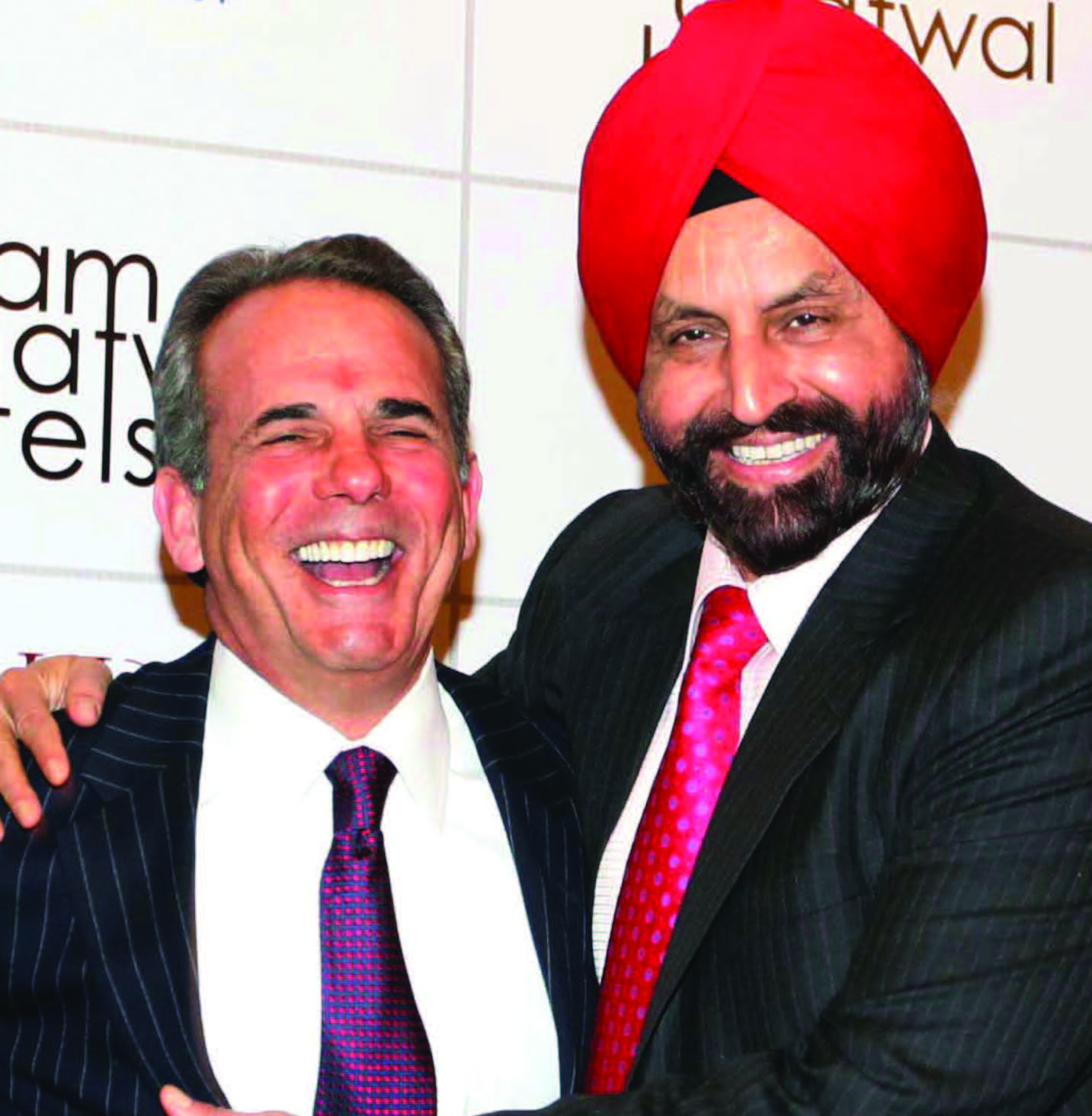
    Sant Chatwal (right) chairman of Hampshire Hotels & Resorts, appointed industry veteran Eric Danziger (left) president and CEO of Hampshire group, the New York-based hospitality group, which manages brands like Dream Hotels, Night Hotels and The Chatwal in New York, Miami, the United Kingdom, Thailand and India.

    Danziger, the former president and CEO of Wyndham Hotel Group, has 40 years experience in the hotel industry, and in his new role, will focus on growing the group’s third party management and asset management portfolios, in addition to expanding the firm’s proprietary Dream and Night lifestyle brands in the US as well as globally.

  • Feds and Dallas police bust 10 massage parlors, arrest 21 foreign nationals

    Feds and Dallas police bust 10 massage parlors, arrest 21 foreign nationals

    DALLAS (TIP): A local police task force has raided 10 Dallas massage parlors suspected of prostitution and arrested 21 foreign nationals on immigration charges, federal authorities said. The North Texas Trafficking Task Force served search warrants Wednesday at businesses located in the 11300 block of Emerald Street and the 2100 block of North Northwest Highway.

    The businesses also are suspected of harboring illegal immigrants, according to U.S. Immigration and Customs Enforcement. ICE’s Homeland Security Investigations division and Dallas police took part in the bust, in which 18 women from Thailand were arrested for immigration violations along with three from South Korea.

    One of the women was also charged with possessing methamphetamine. The Dallas County District Attorney’s Office will decide whether to bring additional charges related to running an illegal sex-oriented business. Search warrants also were served at the Irving home of a business owner.

    Federal agents seized about $640,000 in cash, along with computers, cell phones and documents. Authorities are cracking down on the sex industry to rescue victims of human trafficking and arrest those responsible, said David M. Marwell, special agent in charge of HSI Dallas. “However, the best way of attacking human trafficking is by increasing public awareness of this crime,” he said. Dallas police vice officers have made numerous prostitution cases during the investigation, ICE said.

    Investigators want to know whether women were forced into working at the massage parlors. The investigation “revealed a revolving door of owners and female workers” in the 10 massage parlors, which have different owners, ICE said. “The employees are often rotated throughout the United States to work in other massage parlors and prostitution establishments,” ICE said. The owners only visited the massage parlors to pick up money and make bank deposits, according to ICE. The task force is made up of 17 law enforcement agencies whose mission is to prosecute human traffickers and rescue their victims.

  • Thai prime minister faces graft charges as standoff slips out of control

    Thai prime minister faces graft charges as standoff slips out of control

    BANGKOK (TIP): Thailand’s anticorruption agency is to bring charges of negligence against Prime Minister Yingluck Shinawatra on Thursday as antigovernment protesters demand her ouster in a violence-pocked standoff that is slipping out of control.

    Intermittent bursts of gunfire and grenade blasts have become routine at night in a conflict that has taken a heavy toll on tourism in the capital, famous for its golden temples and raunchy bars. Guitarist Eric Clapton has pulled out of Bangkok concert on Sunday because of the deteriorating security.

    About 200 Yingluck supporters, who have become more boisterous in recent days, padlocked the gates of the National Anti- Corruption Commission on Thursday, demanding all members quit and setting the scene for a possible confrontation. But the caretaker prime minister was in the northern city of Chiang Mai, her family’s hometown, on Wednesday and was not expected to attend the hearing.

    The charges relate to a disastrous rice subsidy scheme that paid farmers above the market price but has proved ruinous to the budget, adding to the government’s woes as unpaid rural workers demand their money. The protesters, whose disruption of a general election this month left Thailand in paralysis, want to topple Yingluck and erase the influence of her brother, ousted premier Thaksin Shinawatra, seen by many as the real power in the country.

    They want to set up a “people’s council” of unspecified good and worthy people to spearhead political reform before new elections are held and have blocked key intersections in Bangkok for weeks to press their case. The protests have been marked by occasional small bomb blasts and gunfire in which 21 people have been killed and more than 700 wounded since the crisis began in November.

    The crisis pits the mainly middle-class and southern anti-government demonstrators, who are backed by the royalist establishment, against the largely rural supporters of Yingluck and Thaksin in the north and northeast. Both sides have armed activists and some pro-government leaders have called for Thailand to be divided in two, along north-south political lines, prompting talk of a possible civil war.

    “As of now, there is no clear sign that (civil war) will happen,” national security chief Paradorn Pattanatabutr told Reuters. “There are those who think differently and respect the law who can no longer tolerate this … The government must do everything it can to avoid confrontation and to prevent each side setting up stages or rallies near each other.

    If they can do that, there should be no incidents.” The stand-off also raises the question of whether the military will step in, as they have many times before, most recently in 2006 to remove Thaksin, although the army chief has ruled out intervention this time. Thaksin’s enemies say he is a corrupt, crony capitalist who manipulates the masses with populist handouts and is a threat to the monarchy, which he denies.

  • ‘INDIA BIGGEST MARKET FOR BIZ JETS IN ASIA PACIFIC’

    ‘INDIA BIGGEST MARKET FOR BIZ JETS IN ASIA PACIFIC’

    MUMBAI (TIP): India has emerged as the biggest fleet owner of business aircraft in the Asia Pacific surpassing China with business houses and high net worth individuals (HNIs) acquiring aircraft. Even during the economic slowdown period of 2008- 12, Indian businessmen purchased 38 per cent more aircraft than the previous five years as per estimates by Beechcraft Corporation.

    According to Beechcraft, a leading manufacturer of business aircraft, India has a fleet of 254 business aircraft as compared to 213 in China, 192 in Japan, 150 in Hong Kong, 66 in Malaysia, and 53 in Thailand, making it the biggest fleet owner in Asia Pacific with 15 per cent market share. As per latest data from Beechcraft, 65 business aircraft were delivered in India between 2008 and 2012, up from 47 in the previous five years. This was compared to 119 delivered in China, 19 in Japan, 47 in Hong Kong and 10 in South Korea.

    Quoting Knight Frank Wealth Report 2013, Beechcraft said the number of wealthy businessmen (HNIs) in India would double from 8,481 in 2012 to 17,032 in 2022. During the same period, the number of HNIs in China will grow 137 per cent from 10,849 to 25,660. “Our survey of senior executives from around the world, and fund managers based in London, revealed that 96 per cent of global professional investors and senior business executives forecast growth for the Indian economy over the next five years and 41 per cent of respondents stated that this growth would be ‘significant’. About 53 per cent believe that the business aviation sector in India will grow significantly over the coming decade,” Beechcraft said.

    Considering this, Beechcraft has identified India as one of the most attractive markets in the world for business aviation and has committed significant investments. “The country continues to be an exciting market for us. With significant growth in deliveries over the past decade, the country continues to show huge potential for future growth. This is why we have decided to make a significant investment in increasing our presence in India,” said Richard Emery, President, APAC and EMEA, Beechcraft, at a press conference in Mumbai.

  • DESI CARAVANS FROM PCP MOTORS TO HIT ROAD SOON

    DESI CARAVANS FROM PCP MOTORS TO HIT ROAD SOON

    NEW DELHI (TIP):
    PCP Motors, a division of Kolkata-based Paracoat Products, is gearing up for a plunge into the fledgling caravan or motor home market in the country with the launch of its Terra Home Car, the first ever locally-made recreation vehicle (RV), which typically includes bathroom, kitchen and sleeping facilities. The first set of vehicles is expected to be rolled out in Rajasthan or Gujarat in the next few months. RVs are defined as either motor vehicles or tow-able trailers, and are primarily intended for a group of people or a family while holidaying.

    “With changing preferences of people, we decided to develop a compact vehicle for a family of 5-6, and the vehicle is a result of our tie-ups with Japan-based Vantech, a popular name for camping cars, and Siam Motohome Ltd. (for customisation),” Rajesh Poddar, Director- Business Development, PCP Motors, told The Hindu at the Auto Expo 2014. The company showcased a prototype from Thailand at the Auto Expo 2012, and last year, the company showcased it to travel agents and tour operators. In 2013, it started working with ARAI (Automotive Research Association of India) to create a category of motor home for vehicle registration.

    Last month, ARAI created the same. Terra Home Car, which will be manufactured at the company’s Bhiwadi unit in Rajasthan, will hit the road after the clearance from ICAT (International Centre for Automotive Technology). PCP intends to focus on tourism industry, and will initially concentrate on states such as Rajasthan and Gujarat. It has commenced the process of setting up dealerships in these states. . “Considering the immense land area and the multitude of landscapes in India, Caravans and Caravan Parks are sure to add an exciting new facet to tourism. The initial demand in this niche segment is expected to come from domestic tourists and then from inbound tourists,” said a document of Indian Tourism Department.

  • GAINING INDEPENDENCE FROM ILLITERACY

    GAINING INDEPENDENCE FROM ILLITERACY

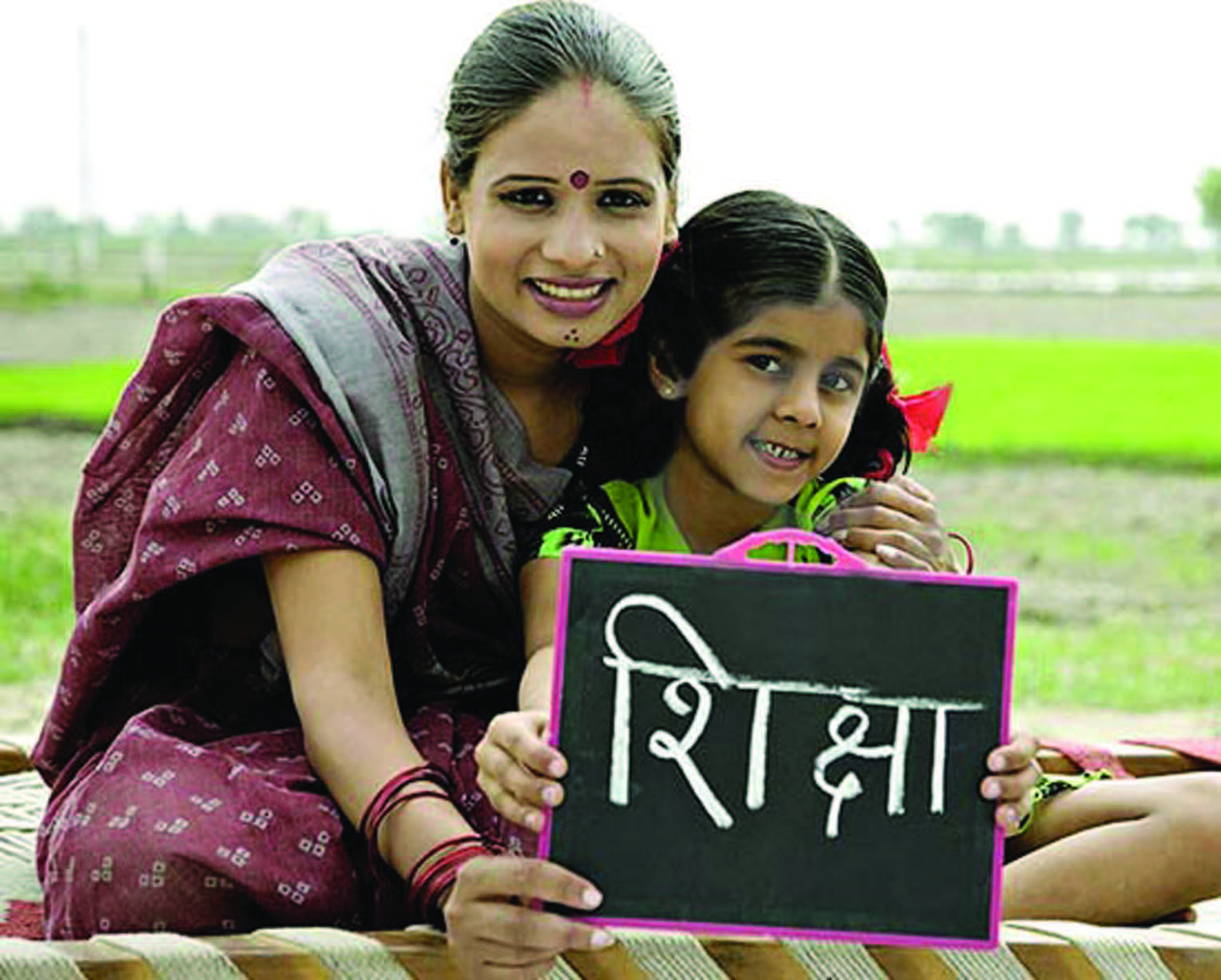
    Statistics mentioned above indicate that while progress has been made, measures have been far from adequate. We therefore need to upgrade our education system so that illiteracy can be completely uprooted from India. No matter how hard we try to fight the problem, it simply seems to persist.

    That even after 66 years of independence we have to lay stress on this issue is a shamebut at least it’s better than brushing it under the carpet. India, the land of Vedas, where we have learnt over the years that culture flourishes with literature, is one of the nations with highest illiteracy rates. Even underdeveloped countries like Sri Lanka, Myanmar, Vietnam and Thailand have achieved higher literacy levels in shorter time.

    In his India Development Report 2002, Kirit S. Parikh pointed out, “With a literacy rate of 65, we have 296 million illiterates, age seven years and above, as per the 2001 census. The number of illiterates today exceeds the population of the country of around 270 million at Independence, age seven and above.” Our society faces several challenges in the form of poverty, unemployment, child labour, female feticide, overpopulation etc. But all of them evolve from illiteracy which is actually the mother of most our problems. A high literacy rate can contribute to valuable social and economic participation by the people which will go a long way in human development and poverty eradication.

    Spread of education is necessary for modernization, urbanization, industrialization, communication and commerce. You name an issue and literacy will be a prerequisite for its solution. Illiteracy in India can be easily characterized by the wide gaps between the urban and rural populations. The urban population is more educated and therefore desires a life of comfort and luxury. On the other hand, the rural population depends on agriculture for their survival. They are the food providers of our country, who work for basic necessities and thus feel no need for education in their lives. Children in rural areas drop out of schools for a variety of reasons: some leave because of a sheer lack of interest; others quit so that they can work in fields or elsewhere, while some have no other choice due to inaccessibility and lack of school teachers.

    In villages, a large percentage of the dropouts are females. Forced by their parents, they are limited to performing household chores. They are married at a very early age and are taught since birth that what is important for them is their family and the looking after the house. Education is not even a secondary item on their to-do lists. Inadequate number of teachers and their absence in schools across the country is another roadblock towards complete literacy. A large number of teachers refuse to teach in rural areas and those who do, are usually under-qualified. Many teachers lack the necessary enthusiasm because of their meagre salaries. In one of his research papers, Nobel laureate Amartya Sen has mentioned, ‘Absenteeism of comparatively well-paid teachers, particularly where bulk of the students come from scheduled castes and tribes, poses a major problem.

    Students are circumstantially forced to go in for private tuitions. Sometimes the very institutions that were created to overcome disparities and barriers tend to act as reactionary influences in reinforcing inequality.’ Lack of infrastructure like buildings, benches, books etc is a widespread problem too. Some schools are located in warehouses while others in small thatched rooms which are of little use during rains. Many rural schools operate without electricity. The distribution of government funds is another major hindrance in the reform of our educational system. According to World Bank, ‘30 % of the total educational funding goes toward higher educational institutions.’ What with announcements of quota in higher education and an increase in the number of IIMs & IITs, the government clearly cares little for primary education. Even private institutions are seen to be a hindrance in the progress of children. In such schools, the children from poor households are seen as lowly, below average and thus not fit to sit and study with the children of upper caste or class.

    Untouchability has been abolished but this new rift between rich and poor students continues to take its toll on the country’s fortunes. Our education system is more or less a remnant of the long gone colonial system of the British Empire. No emphasis is ever laid on vocational courses, which can provide many job opportunities. “We are bumbling along with this out modeled system of elementary education, which is a real shame,” says Krishna Kumar, director of the Central Institute of Education in New Delhi. Reservation is yet another problem. Though it exists in other countries as well, reservation in India has a totally different approach. Our government grants reservations on the basis of caste when the correct basis of granting quotas must be the economic standards of the people. As a result, even better off backward caste students seek to get an entry in venerable institutions like the AIIMS through petty quotas. Quality be damned, seems to be the motto of such policies.

    Amidst this gloom, a recent welcome measure has been the passage of the Right to Education bill, during this session of Parliament. Its guidelines are like this: – Compulsory education for children between 6-14 yrs – Rs 10,000 fine if any child prevented from going school – No selection and screening process to choose preference over candidates – No physical punishments – States need to plan techniques to monitor advancements in the program – Roping in private schools to keep 25% seats reserved at entry level – Banning capitation fees It is a commitment that has taken decades to get fulfilled, but more efforts will be needed to implement it properly. As we have seen all these years, only directions and guidelines cannot resolve any crisis in the country. Various organizations and schemes have been fighting this problem.

    In 2003, the Magsaysay Award was awarded to Shantha Sinha in recognition of her work to end child labour, a major reason for illiteracy. The Supreme Court, in 1993, ruled that children had a fundamental right to free education. The Sarva Siksha Abhiyan launched in 2001 was to ensure that all children in the age group 6–14 years attend school and complete eight years of schooling by 2010. District Primary Education Programme launched in 1994 has so far started more than 160,000 new schools, including almost 84,000 alternative schools. The National Literacy Mission, launched in 1988 aimed at attaining a literacy rate of 75% by 2007. India is developing but at a very slow rate and one of the main reasons is the low level of literacy.

    Literacy enables a person to think rationally- for himself and others around him. A literate person is aware of all his fundamental rights and duties. It is a kind of panacea to fight problems like communalism, terrorism and under development. Not only the government, but also every literate citizen should contribute in battling the demon of illiteracy. Each one should teach one if we are to become a superpower. Mahatma Gandhi once said, ‘Be the change you want to see in the world.’ So let us enlighten the world by bringing this change into our and everybody’s lives.

    EDUCATION AS A DRIVER OF GROWTH
    India’s need for an enormous skilled work force that can drive its growth story forward is now a well accepted fact. But developing and honing these skills is where the real challenge lies. The first-ever Education Investment Conclave, 2013, in London, backed by India Inc, explored some of the complex issues linked with meeting the country’s educational demands. India is poised for its much-talked-about demographic dividend to kick in, which roughly translates into a requirement of around 200 million graduates and 500 million skilled people by 2022 – by which time nearly 25 per cent of the global work force will come out of the country.

    The Literacy rate of India has shown as improvement of almost 9 percent. It has gone up to 74.04% in 2011 from 65.38% in 2001, thus showing an increase of 9 percent in the last 10 years. It consists of male literacy rate 82.14% and female literacy rate is 65.46%. Kerala with 93.9% literacy rate is the top state in India. Lakshadweep and Mizoram are at second and third position with 92.3% and 91.06% literacy rate respectively. Bihar with 63.08% literacy rate is the last in terms of literacy rate in India. The Government of India has taken several measures to improve the literacy rate in villages and towns of India. State Governments has been directed to ensure and improve literacy rate in districts and villages

  • FY14 marine product exports set to rise 23% to Rs 26,750 crore

    FY14 marine product exports set to rise 23% to Rs 26,750 crore

    CHENNAI (TIP): Export of marine products is expected to touch $4.3 billion (Rs 26,750 crore) in 2013-14, an increase of 23 per cent compared to a year ago. The increase comes despite the US, Canada and Japan’s stringent regulations in recent months. One major contributor to growth is new markets and another value-added products, said an officer at the Marine Products Export Development Authority, under the commerce ministry. After announcing the 19th edition of the Indian International Seafood Show, January 10-12, in Chennai, Chairman Leena Nair said the Indian seafood sector had grown 20-22 per cent in three years, despite major hurdles.

    In the last two years, the sector saw the countervailing and anti-dumping duty by the US, as well as quality regulation from Canada and Japan.N Ramesh, director, marketing, added the $4.3-billion goal during the current financial year was achievable. Value-added products are gaining momentum, said Nair. These were five per cent of the seafood exports three years ago, but now are 17 per cent. The target is to increase it to 30 per cent and then 50 per cent in three-five years, said Ramesh. Abraham J Tharakan, president, Seafood Exporters Association of India, said over the years the sector had added capacity to export value-added products. India has been exporting these to China and Thailand, where they are converted into ready-to-eat and ready-to-cook products.Ramesh said in two-three years the sector had entered markets such as Africa, Commonwealth of Independent States and southeast Asia. These form 16 per cent of the export turnover.

  • Mexico finds stolen radioactive material amid dirty bomb fear

    Mexico finds stolen radioactive material amid dirty bomb fear

    VIENNA/MEXICO CITY (TIP): Mexican police have found dangerous radioactive medical material stolen by thieves that the United Nations said could provide an ingredient for a “dirty bomb,” the country’s national nuclear safety commission CNSNS said on Wednesday. The truck was found on Wednesday close to where it was stolen outside Mexico City. The thieves removed the radioactive material from a protective case, exposing them to dangerous levels of radiation then dumped it less than a mile away.

    The truck was stolen on Monday while it was taking cobalt-60 from a hospital in the northern city of Tijuana to a radioactive waste-storage center, Mexican officials and the UN agency said earlier. “Both the container and the radioactive source have been located,” said Mardonio Jimenez Rojas, an official at the commission, told Reuters. “The radioactive source was removed from its container and was found a kilometer away.” “The thieves were exposed to radiation,” he added, saying those exposed to the material could die. Experts were working on how to secure the radioactive material in a protective container, he said.

    The vehicle was seized when the driver stopped at a gas station in the town of Temascalapa, 35 km (22 miles) northeast of Mexico City. Truck hijacking is common in Mexico and the theft occurred in the State of Mexico, which is not a drug cartel stronghold. “Our suspicion is that they had no idea what they had stolen. This is a area where robberies are common,” Fernando Hidalgo, spokesman for the Hidalgo state prosecutor, said earlier. Mexico’s national nuclear safety commission published photographs of the cargo as it was being prepared for shipment, showing a reinforced case containing the medical device, which holds the radioactive material and which looks like part of a car axle.

    The box is marked with the hospital’s name and “radioactive materials.” Apart from peaceful medical and industrial applications, experts say, cobalt-60 can also be used in a dirty bomb in which conventional explosives disperse radiation from a radioactive source. The International Atomic Energy Agency, which has stepped up calls on member states to tighten security to prevent nuclear and radioactive materials from falling into the wrong hands, made no mention of any such risk in its statement on Wednesday. The IAEA also did not give details on how much radioactive material was in the vehicle when it was seized.

    Inside a teletherapy device, cobalt-60 is used to treat cancer. “At the time the truck was stolen, the (radioactive) source was properly shielded. However, the source could be extremely dangerous to a person if removed from the shielding, or if it was damaged,” the IAEA said in a statement. Cobalt-60, the most common radioactive isotope of the metal, has many applications in industry and in radiotherapy in hospitals. It is also used for industrial radiography to detect structural flaws in metal parts, according to the U.S. Environmental Protection Agency. The EPA said exposure to gamma radiation from cobalt-60 results in an increased risk of cancer.

    Dirty bomb could cause ‘mass panic’ In 2000, three people died in Thailand after a cobalt-60 teletherapy unit was sold as scrap metal and ended up on a junkyard. About 1,870 people living nearby were exposed to “some elevated level of radiation,” according to an IAEA publication. About the same time in Mexico, homes built with metal rods that had been contaminated by stolen cobalt were destroyed, a spokesman for the attorney general’s office said. “Cobalt-60 has figured in several serious accidents, some of them fatal,” said nuclear expert Mark Hibbs of the Carnegie Endowment for International Peace thinktank.

    “If dispersed, cobalt-60 or other radioactive source material could cause radiation poisoning locally.” More than 100 incidents of thefts and other unauthorised activities involving nuclear and radioactive material are reported to the IAEA annually, the U.N. agency said this year. It is rare, however, that it makes any such incident public. Because radioactive material is regarded as less hard to find and the device easier to make, experts say a dirty bomb is a more likely threat than a nuclear bomb in a terrorist attack.

    Experts say a dirty bomb carries more potential to terrorise than cause a large loss of life. At a nuclear security summit in 2012, IAEA Director General Yukiya Amano specifically singled out cobalt-60 among radioactive sources that could be used for such bombs. “A dirty bomb detonated in a major city could cause mass panic, as well as serious economic and environmental consequences,” Amano said, according to a copy of his speech.

  • 2 million Google, Facebook, Twitter passwords stolen

    2 million Google, Facebook, Twitter passwords stolen

    BOSTON (TIP): Security experts have uncovered a trove of some 2 million stolen passwords to websites including Facebook, Google, Twitter and Yahoo from internet users across the globe. Researchers with Trustwave’s SpiderLabs said they discovered the credentials while investigating a server in the Netherlands that cybercriminals use to control a massive network of compromised computers known as the “Pony botnet.”

    The company said that it has reported its findings to the largest of more than 90,000 websites and internet service providers whose customers’ credentials it had found on the server. The data includes more than 3,26,000 Facebook accounts, some 60,000 Google accounts, more than 59,000 Yahoo accounts and nearly 22,000 Twitter accounts, according to SpiderLabs. Victims’ were from the United States, Germany, Singapore and Thailand, among other countries. Representatives for Facebook and Twitter said the companies have reset the passwords of affected users. A Google spokeswoman declined comment.

    Yahoo representatives could not be reached. SpiderLabs said it has contacted authorities in the Netherlands and asked them to take down the Pony botnet server. An analysis posted on the SpiderLabs blog showed that the most-common password in the set was “123456,” which was used in nearly 16,000 accounts.

    Other commonly used credentials included “password,” “admin,” “123” and “1.” Graham Cluley, an independent security expert, said it is extremely common for people to use such simple passwords and also re-use them on multiple accounts, even though they are extremely easy to crack. “People are using very dumb passwords. They are totally useless,” he said.

  • CELEBRATIONS AROUND THE WORLD

    CELEBRATIONS AROUND THE WORLD

    Diwali is also celebrated outside of India mainly in Guyana, Fiji, Malaysia, Nepal, Mauritius, Myanmar, Singapore, Sri Lanka, Trinidad & Tobago, Britain, Indonesia, Japan, Thailand, Africa, Australia and the US among the Hindus across the world.

    Britain
    The Indians are the second largest ethnic minority in Britain. To get rid of the feeling of missing their homeland, especially during festival times, the Indians here celebrate most of the festivals. The occasion is marked by visit to the local temple to worship the shrine of Lakshmi, which they have made for Diwali. Eating special sweets, burning of incense sticks, lighting the home and surroundings and the blowing of the conch shell follows the prayer session in the Lakshmi temple. The festival here is celebrated according to the Hindu solar calendar hence it falls in the months of October-November, amongst the cold, damp and windy months in Britain. Still the enthusiasm of the festival celebration makes the task of leaving small lamps on windowsills or by open doorways possible ignoring the chill. The lamps and diyas play their part in maintaining the atmosphere of Diwali at home.

    Guyana
    Guyana, formerly known as British Guiana, is located on the northeast coast of South America. Guyana is 82,978 square miles in area and has a population of about 7,70,000. Hindus constitute 33% of Guyana’s total population. The Co-operative Republic of Guyana in Southern America celebrates Diwali according to the Hindu Solar calendar. The day of the festival is declared as a national holiday in the official calendar of Guyana. The tradition of celebrating the festival is believed to have been brought to Guyana in the year 1853 by the first indentured people from India.

    The legends related to the festival are similar to that of India. The celebration of the festival includes, distribution of sweets, illuminating the inside and outside of the house, exchange of greetings, cleaning of houses and wearing of new clothes. The celebrations hold special significance for the people of Guyana. The distribution of sweet signifies the importance of serving and sharing whereas exchange of greeting cards denotes the goodwill of each other.

    The sweets distributed mainly consist of pera, barfi, and kheer. The tradition of wearing new cloth for the people of Guyana is significant especially in this festival. They believe that wearing new cloth is the symbol of healthy souls in healthy bodies. Cleaning of their homes and keeping them well illuminated in and outside is a practice meant to illuminate the road for Goddess Lakshmi so that while goddess Lakshmi visits their home she faces no problem of light as the Diwali night is regarded as the darkest night of the year.

    Indonesia
    The name Indonesia came from two Greek words: “Indos” meaning Indian and “Nesos” meaning islands. The majority of population follows Islam. Hindus constituent about 2% of Indonesia’s total population. However, the Indonesian island of Bali is famous for celebrating the festival of Diwali, as a majority of the population here is that of Indians. It is one of the most revered festivals of the locals here. The celebration and rituals of the festival is mostly similar to that celebrated by their counterparts in India.

    Malaysia
    Fascinating in its diversity, Malaysia has many mesmerizing charms and attractions. With a population of about 20 million, comprising of a harmonious multi-ethnic mix of Malays, Malaysia promises a colorful potpourri of cultural traditions. Most are based on the various religious practices, beliefs and traditions influencing the costumes, festivals, ceremonies and rituals. The Hindu community of Malaysia constitutes about 8% of its total population .The community celebrates Diwali as a symbol of triumph of good over evil. The Malaysian people call Diwali as Hari Diwali.

    This festival is celebrated during the 7th month of the Hindu solar calendar. The south Indian traditional of oil bath precedes the festivities. The celebration includes visits to temples and prayers at household altars. Small lamps made from clay and filled with coconut oil and wicks are a common sight to signify the victory of Lord Rama, the hero of the Hindu epic Ramayana, over the demon king Ravana. Diwali is celebrated almost all over the Malaysia except in Sarawak & Federal Territory of Labuan.

    Mauritius
    Mauritius is an island in the Indian Ocean that lies to the east of Madagascar. This beautiful landmass is full of picturesque landscapes and enchanting spots. Mauritius accounts a 63% of Indian majority of which 80% follow Hinduism. Hence, celebration of almost all the Hindu festivals in this island is a common phenomenon. In Mauritius, Diwali celebration is an age-old tradition. It holds special significance for the natives, who believe that Diwali has been celebrated even long before the return of Lord Rama from 14 years of exile and his coronation as the king. The festival is marked by lightening of earthen lamps in rows making images out of the rows. Lakshmi is worshiped as the goddess of wealth and crackers are burnt to scare away evil spirits.

    Nepal
    Nepal is a landlocked country nestled in the foothills of the Himalayas. Nepal, a multi-ethnic and multi-lingual society is the only Hindu Kingdom of the world. Diwali is celebrated here with the usual Hindu festivities and rituals. Diwali in Nepal is known as Tihar. Just like most places in India Diwali is celebrated here to honor the goddess of wealth and god of prosperity Lakshmi and Ganesh respectively. The festival of light falls in the months of October or November on the day of Amavasya – the darkest day of the year. The festival here continues for five days. Every day has its special significance. The first day is dedicated to cows as they cook rice and feed the cows believing that goddess Lakshmi comes on cows. The second day is for Dogs as the Vahana of Bhairava.

    Preparation of delicious food especially meant for the dog is a typical characteristic of the day. Lights and lamps are lit to illuminate the entire surrounding and some of the specialty items are prepared to mark the third day of the festival. Fireworks, Lamps and crackers are widely used. The fourth day is dedicated to Yama, the Hindu God of Death. He is prayed for long life. The fifth final day is Bhhaya Dooj dedicated for the brothers who are wished long life and prosperity by their sisters.

    South Africa
    South Africa is located at the southern tip of the continent of Africa. It is a mix of cultures and has one of the largest immigrant Indian communities in the world. The country has almost one million immigrant Indians. Most of these Indian immigrants are concentrated in the eastern regions of Natal and Transvaal of the country. About 65% of Hindus, 15% of Muslims and 20% of Christians live in this area. Due to the majority of the Hindu population, a number of Hindu festivals are celebrated here. Diwali also holds an important place in the festival calendar of the region. The celebration is more or less same to that in India. Most of the Hindus here are from Gujarat and Tamil Nadu and continue to follow their regional variations of Hinduism.

    Trinidad & Tobago
    Trinidad is the most southern of the Caribbean islands, lying only seven miles off the Venezuelan coast, is one of the most exciting, colorful islands of the West Indies. Considered as the land of the Humming Bird, Trinidad and Tobago has a good number of Indian population. For that reason, Hindu festivals, customs, traditions and observances forms an integral part of the society, which comprises the unique beauty of the twin island state. The Diwali celebration has a unique flavor here in the Caribbean island nation. Here 43 per cent of the 1.3 million populations are ethnic Indians. The Diwali celebrations are usually marked as an occasion to unify the nation that consists of Hindus, Muslims, Christians, Indo-Trinidadians and Afro- Trinidadians.

    The festival day is regarded as a national holiday. The festival is also marked by scores of functions besides the usual rituals of the festivity. The functions and celebrations also have an official imprint as the Ministers of the Government also participate in the celebrations sometimes. The belief behind the festival is same as of India, which is, prevalence of good over evil. The celebrations continue for over a week and the headquarters of the National Council of Indian Culture at Diwali Nagar becomes the focal point.

    America
    Diwali is one of the biggest Hindu festivals celebrated among many people and communities in the United States. Many schools, community groups, Hindu associations, Indian organizations and corporate businesses get involved in celebrating Diwali. Politicians, including governors and past presidents, previously made public announcements expressing their greetings and well wishes to Hindus on Diwali. Many Indian stores sell jewelry and traditional outfits, such as chiffon saris, as well as statues of Hindu deities and incent sticks used in prayer around this time of the year. Many women and girls use mehendi, which is a temporary henna decoration, on their palms. It is also common to wear fine jewelry and silk outfits to celebrate this joyous festival.

  • CELEBRATIONS AROUND THE WORLD

    CELEBRATIONS AROUND THE WORLD

    Diwali is also celebrated outside of India mainly in Guyana, Fiji, Malaysia, Nepal, Mauritius, Myanmar, Singapore, Sri Lanka, Trinidad & Tobago, Britain, Indonesia, Japan, Thailand, Africa, Australia and the US among the Hindus across the world.

    Britain
    The Indians are the second largest ethnic minority in Britain. To get rid of the feeling of missing their homeland, especially during festival times, the Indians here celebrate most of the festivals. The occasion is marked by visit to the local temple to worship the shrine of Lakshmi, which they have made for Diwali. Eating special sweets, burning of incense sticks, lighting the home and surroundings and the blowing of the conch shell follows the prayer session in the Lakshmi temple. The festival here is celebrated according to the Hindu solar calendar hence it falls in the months of October-November, amongst the cold, damp and windy months in Britain. Still the enthusiasm of the festival celebration makes the task of leaving small lamps on windowsills or by open doorways possible ignoring the chill. The lamps and diyas play their part in maintaining the atmosphere of Diwali at home.

    Guyana
    Guyana, formerly known as British Guiana, is located on the northeast coast of South America. Guyana is 82,978 square miles in area and has a population of about 7,70,000. Hindus constitute 33% of Guyana’s total population. The Co-operative Republic of Guyana in Southern America celebrates Diwali according to the Hindu Solar calendar. The day of the festival is declared as a national holiday in the official calendar of Guyana. The tradition of celebrating the festival is believed to have been brought to Guyana in the year 1853 by the first indentured people from India. The legends related to the festival are similar to that of India. The celebration of the festival includes, distribution of sweets, illuminating the inside and outside of the house, exchange of greetings, cleaning of houses and wearing of new clothes. The celebrations hold special significance for the people of Guyana. The distribution of sweet signifies the importance of serving and sharing whereas exchange of greeting cards denotes the goodwill of each other. The sweets distributed mainly consist of pera, barfi, and kheer. The tradition of wearing new cloth for the people of Guyana is significant especially in this festival. They believe that wearing new cloth is the symbol of healthy souls in healthy bodies. Cleaning of their homes and keeping them well illuminated in and outside is a practice meant to illuminate the road for Goddess Lakshmi so that while goddess Lakshmi visits their home she faces no problem of light as the Diwali night is regarded as the darkest night of the year.

    Indonesia
    The name Indonesia came from two Greek words: “Indos” meaning Indian and “Nesos” meaning islands. The majority of population follows Islam. Hindus constituent about 2% of Indonesia’s total population. However, the Indonesian island of Bali is famous for celebrating the festival of Diwali, as a majority of the population here is that of Indians. It is one of the most revered festivals of the locals here. The celebration and rituals of the festival is mostly similar to that celebrated by their counterparts in India.

    Malaysia
    Fascinating in its diversity, Malaysia has many mesmerizing charms and attractions. With a population of about 20 million, comprising of a harmonious multi-ethnic mix of Malays, Malaysia promises a colorful potpourri of cultural traditions. Most are based on the various religious practices, beliefs and traditions influencing the costumes, festivals, ceremonies and rituals. The Hindu community of Malaysia constitutes about 8% of its total population .The community celebrates Diwali as a symbol of triumph of good over evil. The Malaysian people call Diwali as Hari Diwali. This festival is celebrated during the 7th month of the Hindu solar calendar. The south Indian traditional of oil bath precedes the festivities. The celebration includes visits to temples and prayers at household altars. Small lamps made from clay and filled with coconut oil and wicks are a common sight to signify the victory of Lord Rama, the hero of the Hindu epic Ramayana, over the demon king Ravana. Diwali is celebrated almost all over the Malaysia except in Sarawak & Federal Territory of Labuan.

    Mauritius
    Mauritius is an island in the Indian Ocean that lies to the east of Madagascar. This beautiful landmass is full of picturesque landscapes and enchanting spots. Mauritius accounts a 63% of Indian majority of which 80% follow Hinduism. Hence, celebration of almost all the Hindu festivals in this island is a common phenomenon. In Mauritius, Diwali celebration is an age-old tradition. It holds special significance for the natives, who believe that Diwali has been celebrated even long before the return of Lord Rama from 14 years of exile and his coronation as the king. The festival is marked by lightening of earthen lamps in rows making images out of the rows. Lakshmi is worshiped as the goddess of wealth and crackers are burnt to scare away evil spirits.

    Nepal
    Nepal is a landlocked country nestled in the foothills of the Himalayas. Nepal, a multi-ethnic and multi-lingual society is the only Hindu Kingdom of the world. Diwali is celebrated here with the usual Hindu festivities and rituals. Diwali in Nepal is known as Tihar. Just like most places in India Diwali is celebrated here to honor the goddess of wealth and god of prosperity Lakshmi and Ganesh respectively. The festival of light falls in the months of October or November on the day of Amavasya – the darkest day of the year. The festival here continues for five days. Every day has its special significance. The first day is dedicated to cows as they cook rice and feed the cows believing that goddess Lakshmi comes on cows. The second day is for Dogs as the Vahana of Bhairava. Preparation of delicious food especially meant for the dog is a typical characteristic of the day. Lights and lamps are lit to illuminate the entire surrounding and some of the specialty items are prepared to mark the third day of the festival. Fireworks, Lamps and crackers are widely used. The fourth day is dedicated to Yama, the Hindu God of Death. He is prayed for long life. The fifth final day is Bhhaya Dooj dedicated for the brothers who are wished long life and prosperity by their sisters.

    South Africa
    South Africa is located at the southern tip of the continent of Africa. It is a mix of cultures and has one of the largest immigrant Indian communities in the world. The country has almost one million immigrant Indians. Most of these Indian immigrants are concentrated in the eastern regions of Natal and Transvaal of the country. About 65% of Hindus, 15% of Muslims and 20% of Christians live in this area. Due to the majority of the Hindu population, a number of Hindu festivals are celebrated here. Diwali also holds an important place in the festival calendar of the region. The celebration is more or less same to that in India. Most of the Hindus here are from Gujarat and Tamil Nadu and continue to follow their regional variations of Hinduism.

    Trinidad & Tobago
    Trinidad is the most southern of the Caribbean islands, lying only seven miles off the Venezuelan coast, is one of the most exciting, colorful islands of the West Indies. Considered as the land of the Humming Bird, Trinidad and Tobago has a good number of Indian population. For that reason, Hindu festivals, customs, traditions and observances forms an integral part of the society, which comprises the unique beauty of the twin island state. The Diwali celebration has a unique flavor here in the Caribbean island nation. Here 43 per cent of the 1.3 million populations are ethnic Indians. The Diwali celebrations are usually marked as an occasion to unify the nation that consists of Hindus, Muslims, Christians, Indo-Trinidadians and Afro- Trinidadians. The festival day is regarded as a national holiday. The festival is also marked by scores of functions besides the usual rituals of the festivity. The functions and celebrations also have an official imprint as the Ministers of the Government also participate in the celebrations sometimes. The belief behind the festival is same as of India, which is, prevalence of good over evil. The celebrations continue for over a week and the headquarters of the National Council of Indian Culture at Diwali Nagar becomes the focal point.

    America
    Diwali is one of the biggest Hindu festivals celebrated among many people and communities in the United States. Many schools, community groups, Hindu associations, Indian organizations and corporate businesses get involved in celebrating Diwali. Politicians, including governors and past presidents, previously made public announcements expressing their greetings and well wishes to Hindus on Diwali. Many Indian stores sell jewelry and traditional outfits, such as chiffon saris, as well as statues of Hindu deities and incent sticks used in prayer around this time of the year. Many women and girls use mehendi, which is a temporary henna decoration, on their palms. It is also common to wear fine jewelry and silk outfits to celebrate this joyous festival.

  • Thailand’s former prime minister says will fight indictment

    Thailand’s former prime minister says will fight indictment

    BANGKOK (TIP): A former Thai prime minister and his deputy vowed on October 29 to fight any legal charges against them for their alleged role in the death of anti-government demonstrators during a bloody 2010 crackdown. Ex-premier Abhisit Vejjajiva told reporters that he and former deputy prime minister Suthep Thaugsuban are innocent in part because a Bangkok civil court ruled at the time that the protest, which had shut down a vast swath of downtown Bangkok for more than two months, was unlawful. “We will not run away. We are confident in our innocence,” Abhisit said. On Monday, Thai prosecutors announced they would indict the pair for their alleged role in the death of some of the 90 people, mostly protesters, who were killed during the “Red Shirt” rallies in Bangkok three years ago. The rallies saw tens of thousands of people camp out in the heart of the city in a bid to try to force Abhisit to call early elections. Most of the protesters were supporters of another former premier, Thaksin Shinawatra. Thaksin was ousted in a military coup in 2006 and lives in exile to avoid a conviction on corruption charges he says were politically motivated. His sister Yingluck Shinawatra now holds the prime minister’s post. The move to indict Abhisit and his deputy follows a controversy surrounding the draft of a law that could grant amnesty to those involved in the political conflict that has marred the country for almost a decade. The draft has been criticized by opponents — including Abhisit — who say it would whitewash Thaksin’s crimes and pave the way for his return to Thailand. The draft would also give immunity to Abhisit and Suthep for any involvement in the 2010 crackdown, however, and there is speculation the indictment is being used to pressure Abhisit and his opposition party to approve the bill.

  • Somdet Phra Nyanasamvara, Thai Buddhism’s supreme patriarch, dies at 100

    Somdet Phra Nyanasamvara, Thai Buddhism’s supreme patriarch, dies at 100

    BANGKOK (TIP): Thai doctors say the supreme patriarch, the head of the country’s Buddhist monks, has died. He was 100. Chulalongkorn hospital doctors say Somdet Phra Nyanasamvara died on October 23 from an infection in his blood vessels. He was the 19th supreme patriarch of Thailand and led the nation’s monks since 1989. The patriarch had battled health problems and had been hospitalized since 2002. He had undergone surgery earlier this month. His inability to perform his duties in recent years has led to speculation about his successor. A senior Buddhist monk who worked on his behalf since 2004 also died this year. Thailand is the world’s most heavily Buddhist country. More than 90 per cent of its 67 million people are members of the religion.

  • India progressing well on ASEAN partnership

    India progressing well on ASEAN partnership

    JAKARTA (TIP): India has made significant progress on its proposed plan of action for expanding partnership with the 10-nation ASEAN grouping in areas of economic, political, security and socio-cultural cooperation, and the two sides are on track to meet $100 billion trade by 2015. The assessment has been made in an executive report on the progress in the implementation of the projects and activities under the Plan of Action to Implement the ‘ASEANIndia Partnership for Peace, Progress and Shared Prosperity (2010-15)’. Prime Minister Manmohan Singh last night arrived here in Indonesia, a key ASEAN country, for a bilateral visit after attending ASEAN summits in another South East Asian nation Brunei from October 9-10. Besides attending the ASEAN and East Asia Summits, Singh also held bilateral meetings with various government leaders on the sidelines in Brunei and would hold bilateral talks with Indonesian leaders here. The key members of ASEAN block include Brunei, Cambodia, Indonesia, Myanmar, Singapore, Thailand, Philippines and Vietnam. Singh also announced that India would set up a separate mission for ASEAN with a full time ambassador, who would be based in Jakarta where the ASEAN Secretariat is also located.

    The report highlighted that the past three years have “witnessed remarkable progress” in the implementation of the Plan of Action. “The successful conduct of a large number of activities and collaborative projects in a range of sectors covering all three pillars — political security, economic and sociocultural — was made possible through concerted efforts by both ASEAN Member States and India, and efficient coordination by Brunei Darussalam, Cambodia, and the ASEAN Secretariat,” it said. The Mid-Term review would be undertaken by the Committee of Permanent Representatives to ASEAN and the Ambassador of India to ASEAN. On the economic front, volume of trade and investment flows between ASEAN and India has increased considerably, but remains relatively low compared with other dialogue partners of ASEAN. The bilateral trade grew by 4.6 per cent from $68.4 billion in 2011 to USD 71.6 billion in 2012. ASEAN’s exports were valued at $43.84 billion and imports from India amounted to $27.72 billion in 2012. The target has been set at $100 billion by 2015 for ASEAN-India trade.

  • Medical Tourism to India: The Next Services Industry Revolution

    Medical Tourism to India: The Next Services Industry Revolution

    India ranked third in the world in medical tourism in 2012, with Thailand leading and Hungary in the second position. The hallmark of medical tourism in India is care. The author underscores this aspect: “India is still a caring society – though this is fast going.

    As many patients, both American and European have noted, this adds a subtle and intangible value added factor to the quality of medical care in India.” “Man does not live by bread alone. We have had in recent years super specialty hospitals rise where cutting-edge care is given at a pittance to the indigent. These are largely staffed by disciples of the leading gurus of India with a strong spiritual bent. For them medicine is now more a calling rather than a vocation”, says the author.


    img6

    Starting sometime in the early 1990s the IT revolution took off in India which has revolutionized many aspects of Indian industry. It led to the rise of Indian global IT giants and world class firms Infosys, Tata Consultants,Wipro and a host of others. Now in the 21st century it is the turn of the global medical industry to take advantage of world class quality and ultra-competitiveness of Indian medical services. There are estimates of 20% to 25% compounded annual growth in medical tourism to India for at least the foreseeable future.


    img7

    The first wave from SAARC (South Asian Association for Regional Cooperation) commenced some time ago. The second wave from the advanced European countries began not too long ago. With the rise of Obamacare it will now be the turn of the medical tourism rush from the US and Canada. In some ways it should be easier for the medical tourism industry to draw clients from the US since many of India’s leading doctors of today trained in the US and are intimately familiar with the culture, procedures and standards in the US. They dominate in several medical fields in the US at the leading research institutions. That apart there is a subtle factor.

    India is still a caring society – though this is fast going. As many patients, both American and European, have noted this adds a subtle and intangible value added factor to the quality of medical care in India. Plus there is the image of Indians in the US as being the most advanced and affluent immigrant community. In math, science, medicine, R&D and the teaching professions the reputation of Indians is unrivalled. More important Indians are not viewed as a hegemonistic / imperialistic threat anywhere in the world – our excessive non-violence (ahimsa) fetish has some use after all, vis a vis for example the Chinese.


    img8

    The other great civilization out of Asia is viewed with deep suspicion as monolithic, mercantilistic, hegemonistic all over the world. Now to speak in a larger context. Whether this medical tourism boom and the resulting affluence of the medical sector will lead to the improvement of general medical care for the vast impoverished masses of India is the real issue. One hopes that it will. The second factor is whether it will lead to the growth of cutting edge medical R&D establishments in India which will advance the frontiers of medical care. Once some 2000+ years ago in the time of Charaka and Susruta, c.f. Charaka Samhita and Ashtanga Hridayam, India nee Bharatavarsha led the world in the sophistication of its medical AND SURGICAL care theory and practice.

    With the wholesale destruction of the native culture through the millennia of Islamic conquest, rapine and genocide much of this vanished. Then it was the turn of the English for about 200 years. There has to be pride in one’s cultural heritage and a resolve / samkalpa to bring about a cultural renaissance where such services and arts will rise to the top again. We have been successful in the IT industry; it is true. But some 25 years after the boom began we have still not advanced as far as we could / should have to rise above the cyber coolie image.

    There is not as much real cutting edge IT innovation and research taking place in India as would have been possible. The cutting edge work is still being done in the US and Israel. As someone who worked in the consulting industry in a senior capacity, I have seen that the level of professionalism and training in even the best Indian IT firms is far below what it is at the elite global consulting firms out of the US / UK / France. The low level work was taken up by India / Indians.

    Now that India is being priced out the work is moving to Vietnam, Laos, Bangladesh and elsewhere. One hopes there will be more thoughtful and professional planning and assistance at the central government level for the medical services industry. There is an inherent advantage here which was not there in the case of the IT industry. Many of the medical professionals involved are wealthy to start with having been for decades in the US. They have the top level socio-political contacts. The issue is how much of a pro bono orientation will guide their actions. Man does not live by bread alone.

    We have had in recent years super specialty hospitals rise where cutting-edge care is given at a pittance to the indigent. These are largely staffed by disciples of the leading gurus of India with a strong spiritual bent. For them medicine is now more a calling rather than a vocation. With the rampant growth of materialism and conspicuous consumption aping the West, will much / any of the old values which made Indian Hindu society a survivor for some 5,000 years continue? That is the real question. Let us hope and pray and all do our bit to ensure that the age old values flourish in the India of today and the future. (The author is based in New York and can be reached at nagendrasrao@gmail.com)

  • INDIA, CHINA TO SIGN COOPERATION PACT IN ROAD SECTOR

    INDIA, CHINA TO SIGN COOPERATION PACT IN ROAD SECTOR

    NEW DELHI (TIP): India and China are set to sign an agreement for cooperation in the road and transport sector when Prime Minister Manmohan Singh visits Beijing in October. One of the areas would be cooperation in sharing of information on transport infrastructure. Government sources said the transport ministries of both sides have approved the details of the proposed agreement.

    Sources said the identified areas of cooperation include sharing best practices in road and bridge building technologies, policies, intelligent traffic system besides road-related issues. China has taken huge strides in building world class highways, and has built over 60,000 km of expressways. Plans are afoot to build around 18,000 km of expressways in India. China has also made a mark in speedy implementation of infrastructure projects, particularly road and rail. “Once we have technology sharing, it will help us push the pace of construction. They have also improved their record in reducing road deaths in the past sixseven years.

    Cooperation will open a window of opportunity for both the countries,” an official said. Around half-a-dozen road projects are being built with participation of Chinese companies. Sources said all these projects were bagged by private entities in which Chinese firms had a share. Sources said no project has been identified that can be taken up under this cooperation. “This is just a beginning. As we progress, projects will be identified,” the official said. The other major area of cooperation will in the electronic mode of collecting toll (ETC).

    China is way ahead of India in this sector. India also plans to bring all toll plazas on national highways under ETC so that people can pass through all plazas using a single smart card. India and China will also cooperate in the field of intelligent traffic system, vehicle specifications and their certification. While India is likely to benefit from Chinese sharing of information and knowledge, China will learn from India’s success in implementing public-private-partnership projects.

    Last year, former highways minister C P Joshi had reached out to Chinese infrastructure companies to invest in the road sector. He had said around 40 road construction projects were being undertaken by companies from China, Russia, the UK, Dubai, Singapore, Italy, South Korea, Malaysia, Spain and Thailand.

  • Indians Across World Celebrate Independence Day With Gusto

    Indians Across World Celebrate Independence Day With Gusto

    BEIJING/MELBOURNE (TIP): Indians across the globe on August 15 donned patriotic colours as they celebrated the country’s 67th Independence Day, unfurling the national flag and organising cultural events to mark the occasion. India’s ambassador to China S Jaishankar hoisted the tri-colour at the embassy premises in Beijing to celebrate the Independence Day.

    A large gathering of Indian expatriates working in Beijing attended the ceremony. Jaishankar read out President Pranab Mukharjee’s national address and later hosted a reception on the occasion. The national tricolour also fluttered proudly across southeast Asia, as Indians and friends of India thronged to witness the unfurling of the flag by Indian envoys in the region to mark India’s 67th Independence Day. In Bangkok, India’s ambassador to Thailand Anil Wadhwa unfurled the flag and read out the President’s speech.

    School children sang patriotic songs while 14 dancers from Arunachal Pradesh’s Tawang district performed the Snow Lion dance much to the delight of hundreds of Indians present at the Embassy. The tricolour was also unfurled by Indian envoys in neighbouring Myanmar, Singapore, Laos, Indonesia, Malaysia, the Philippines, Cambodia and Vietnam. In Tokyo, India’s ambassador to Japan Deepa Wadhwa unfurled the national flag. About 300 Indians and friends of India attended the function. Patriotic songs were sung by school children from two Indian schools in Tokyo.

    In Singapore, India’s high commissioner Vijay Thakur Singh led more than 500-strong Indian community in celebrating the Independence Day. Singh read out the President’s message which was followed by three hours of cultural performances and singing of patriotic songs. Students from Indian schools in Singapore also performed during the cultural events. Singh hosted a morning reception for the Indian community and businessmen in Singapore.

    In Australia, Indian diaspora celebrated the 67th Independence Day by organising flag hoisting ceremonies across the country followed by gala dinners and events. Speaking on the occasion, India’s high commissioner to Australia Biren Nanda extended greetings to Indian nationals and persons of Indian origin in the country. He said India’s relations with Australia have grown from strength to strength since the establishment of a strategic partnership between the two countries in 2009. “Our bilateral trade has reached $20 billion. There has been a very significant growth in two-way investment.

    Indian companies have invested significantly in the resources sector and have propelled our economic relationship to the strategic level,” he said. Nanda further took note of Indian companies which have established joint ventures in Australia in the manufacturing sector in areas like auto components, aircraft manufacture, the manufacture of tractors and refining of vegetable oils. “The Free Trade Agreement that we are now negotiating will diversify and deepen our economic engagement,” Nanda said.

    Indian government is organising Regional Pravasi Diwas this year in Sydney which is expected to be attended by over 1000 participants across the region. In the southern Chinese city of Guangzhou, consul general K Nagaraj Naidu hoisted the tricolour and read the President’s address to the nation at the Indian Consulate.