Tag: Thailand

  • INDIA’S HIGHS AND THE LOWS

    INDIA’S HIGHS AND THE LOWS

    The transition of India from a British colony to a sovereign, secular, and democratic nation was indeed historical. It was a long journey of around two decades that started with the conceptualisation of the dream in 1930 to its actual realization in 1950. A look into the journey that led to the birth of Indian Republic will make our celebrations more meaningful.

    Lahore Session of the Indian National Congress The seeds of a republican nation were sowed at the Lahore session of the Indian National Congress at the midnight of 31st December 1929. The session was held under the presidency of Pt. Jawarhar Lal Nehru. Those present in the meeting took a pledge to mark January 26 as “Independence Day” in order to march towards realizing the dream of complete independence from the British. The Lahore Session paved way to the Civil Disobedience movement.

    It was decided that January 26, 1930 would be observed as the Purna Swaraj (complete Independence) Day. Many Indian political parties and Indian revolutionaries from all over the country united to observe the day with honour and pride.

    Indian Constituent Assembly Meetings
    The Indian Constituent Assembly, which was constituted as a result of the negotiations between the Indian leaders and members of the British Cabinet Mission, had its first meeting on December 9, 1946.The Objective of the Assembly was to give India a constitution, which would serve a lasting purpose and hence appointed a number of committees to thoroughly research the various aspects of the proposed constitution. The recommendations were discussed, debated and revised many times before the Indian Constitution was finalized and officially adopted three years later on November 26, 1949.

    Constitution came into force
    Though India became a free nation on August 15, 1947, it enjoyed the true spirit of Independence on January 26, 1950 when the Constitution of India finally came into force. The Constitution gave the citizens of India the power to govern themselves by choosing their own government. Dr. Rajendra Prasad, took oath as the first President of India at the Durbar Hall in the Government House and this was followed by the Presidential drive along a five-mile route to the Irwin Stadium, where he unfurled the National Flag.

    Ever since the historic day, January 26 is celebrated with festivities and patriotic fervor all around the country. The day owes its importance to the constitution of India that was adopted on this day. On this Republic Day, read what the great Constitution of India, that propounds liberal democracy, has in its store. Let’s also feel proud in pronouncing what the Preamble to our Constitution (External website that opens in a new window) says.

    1971 Indo Pak War As in the 1965 Indo-Pak War, the main battles in 1971 between armoured formations was relegated to Chamb and Shakargarh sectors – located in the Western Theatre. Sporadic tank battles took place in the East Theatre, but these were one-sided battles weighed heavily in India’s favour. No action had taken place in the Punjab sector, but the South-Western sector in Rajasthan did see much activity. An offensive by the Pakistanis was blunted here solely on the use of air power.

    The Indian Army had two armoured regiments and three independent armoured squadrons supporting Lieutenant General Jagjit Singh Aurora’s Eastern Command’s thrust into East Pakistan. India had one T-55 tank regiment in the northern sector supporting the XXXIII Corps’ offensive in the Hilli-Bogra area, with one PT-76 regiment in the western area supporting the II Corps’ thrust.

    Finally three independent armoured squadrons (one PT-76, one AMX- 13 and one Ferret armoured car) were supporting the IV Corps’ offensive from the east. Opposing them were a Pakistani armoured force of a regiment of M-24 Chafees in the Bogra area, countering India’s T-55 regiment and two squadrons of Chafeee tanks supporting the west and Dacca sectors.

    When full scale hostilities began, half the tanks were either knocked out or captured by the time the Indian troops were on the outskirts of Dacca. After which the rest of the tanks were finally accounted for, as part of the surrender deal. In it’s offensive, Indian losses were heavy. At least thirty PT-76 tanks were destroyed or damaged, another four T-55s had their tracks blown up over mines.

    The high loss rate among the PT-76 tanks was due to the fact that this type of tank had very thin armour plating to help assist its amphibious capabilities and was an easy target for mines. However all, but eleven, of the PT-76s were repaired after the war. The AMX-13s did not see much action and the Ferrets had no battle casualties. One very interesting situation, had the tank squadron of the 7th Light Cavalry recovering one of their own tanks lost to the Pakistan Army during the 1965 War, which was displayed at the East Bengal Regimental Center as a war trophy.

    The tank was then handed to the Army Ordnance Corps, which in turn handed it back to the East Bengal Regimental Center! The Battle of Basantar took place during the 1 Corps’ offensive in the Shakargarh Sector. India employed two armoured brigades to support its offensive by three infantry divisions and the Pakistani reaction was swift. On December 16th and 17th, when Indian infantry captured certain villages at the River Basantar, Pakistan sent in an armoured brigade.

    The 17 Poona Horse equipped with the Centurion tank, blunted the Pakistani armoured offensive. One particular action at Barapind saw one lone tank troop (three tanks) of the 17 Poona Horse – Indian Army take on an entire squadron of Pattons of the 13th Cavalry – Pakistan Army. When one of the tanks was hit & disabled and another tank’s gun was jammed, the troop commander, Captain V Malhotra gave the order for the last remaining tank to withdraw.

    But this tank led by Second Lieutenant Arun Khetarpal, stuck to its position and kept firing at the Pattons till the last moment when Second Lieutenant Khetarpal was hit and killed. These three tanks accounted for more than the ten tanks out of the squadron. So impressed were the Pakistanis with this action, that the Squadron Commander of Pakistan’s 13 Cavalry – Major Nissar came over to the Indian lines after the ceasefire to talk to the tank commanders who had blunted his offensive.

    At the end of which, 66 Pakistani tanks were claimed as destroyed. Indian casualties were about 23 tanks, however the efforts of the EME (Electrical & Mechanical Engineers) saw to that all, but 10 of the tanks, were back on the road again.

    Period of Liberalization
    The arrival of the East India Company in India caused a huge strain to the Indian economy and there was a twoway depletion of resources.The British would buy raw materials from India at cheaper rates and the finished goods were sold at higher than normal price in Indian markets. During this phase India’s share of world income declined from 22.3% in 1700 AD to 3.8% in 1952. Post Colonial Indian Economy: After India got independence from colonial rule in 1947, the process of rebuilding the economy started. For this various policies and schemes were formulated. First five year plan for the development of Indian economy came into implementation in 1952.

    These Five Year Plans, started by Indian government, focused on the needs of the Indian economy. If on one hand agriculture received the immediate attention on the other hand the industrial sector was developed at a fast pace to provide employment opportunities to the growing population and to keep pace with the developments in the world. Since then the Indian economy has come a long way.

    The Gross Domestic Product (GDP) at factor cost, which was 2.3 % in 1951-52 reached 6.5 in the financial year 2011-2012 Trade liberalization, financial liberalization, tax reforms and opening up to foreign investments were some of the important steps, which helped Indian economy to gain momentum. The Economic Liberalization introduced by Man Mohan Singh in 1991, then Finance Minister in the government of P V Narsimha Rao, proved to be the stepping-stone for Indian economic reform movements.

    To maintain its current status and to achieve the target GDP of 10% for financial year 2006-07, the Indian economy has to overcome many challenges. Challenges before Indian economy: Population explosion:The rising population is eating into the success of India. According to 2011 census of India, the population of India has crossed one billion and isgrowing at a rate of 2.11% approx. Such a vast population puts lots of stress on economic infrastructure of the nation.

    Thus India has to control its burgeoning population. Poverty:As per records of National Planning Commission, 36 crore people are living below the poverty line in India in 2012. Unemployment:The increasing population is pressing hard on economic resources as well as job opportunities. Indian government has started various schemes such as Jawahar Rozgar Yojna, and Self Employment Scheme for Educated Unemployed Youth (SEEUY). But these are proving to be a drop in an ocean. Rural Urban Divide:It is said that India lies in villages, even today when there is lots of talk going about migration to cities, 70% of the Indian population still lives in villages.

    There is a very stark difference in pace of rural and urban growth. Unless there isn’t a balanced development Indian economy cannot grow. These challenges can be overcome by the sustained and planned economic reforms. These include: Maintaining fiscal discipline Orientation of public expenditure towards sectors in which India is faring badly such as health and education. Introduction of reforms in labour laws to generate more employment opportunities for the growing population of India. Reorganization of agricultural sector, introduction of new technology, reducing agriculture’s dependence on monsoon by developing means of irrigation. Introduction of financial reforms including privatization of some public sector banks.

    Scams That Rocked India
    Ever since India has achieved her freedom, she has also been known as a corrupted land. The extend of corruption has increased to such an extend that, any person joining political parties does have an intention of making easy and fast money within the shortest period of time. If all the amounts that have been disclosed, for every scam till date is pooled up, I guess , India is most richest country and the power and strength She holds could not be compared with any other.

    However, since people are getting more and more selforiented, when it comes to progress and wiping away poverty, nobody is least bothered. A few of the top scams that have taken place since the year 1947 is discussed here, just to bring to the notice of the public where we stand and how things are working. Let us get from the latest to the oldest.
    1. The Indian Coal Allocation Scam: This is one among the latest scams that has occurred concerning the Indian government’s allocation of the nation’s coal deposits to public sector entries and private companies. According to the CAG (Comptroller and Auditor General of India), the Indian Government was accused of allocating coal blocks, in an in-efficient manner during the period 2004-2009.

    The reason for this allegation was because, the Government had the authority to check on the allocation of coal blocks by a process of competitive bidding, but they failed to do so, resulting in lower payment by the public sector enterprises and the private firms. According to the CAG report, an amount of near to Rs. 185,591 crore (USD $ 35.08 billion) was lost to the government because of this improper screening in procedures, which might have happened due to bribery is what studies says. Whatever it may be, loosing such a huge amount by the Government is a fall from the Governments side.
    2. The 2G Spectrum Scam: This scam was one which involved the politicians and government officials equally. The scam involved in issuing frequency allocation licenses by the telephone companies in re-creating 2G subscriptions for cell phones. When valued by the Comptroller and Auditor General ( CAG ) of India about the money composed from the 2G licenses , the defeat for the exchequer was Rs. 176,369 crore ( USD $ 39.16 billion ). The issuing of licenses began in 2008; however it came to public attention when the Indian Income tax Department conducted an investigation on the political campaigner Niira Radia.

    The Supreme Court on February 2012 declared cancellation of all licenses issued in 2008 during the tenure of A. Raja, who was the minister of telecom then. There were about 122 licenses that were cancelled. The actual plan for awarding the licenses was on a first come first served policy. However, A. Raja manipulated the rules and instead pf the first who applied for the licenses, it was first who tipped Raja got the license. 3.

    Commonwealth Games Scam:
    This was a scam that was harshly criticized by several well-known social activists and politicians as billions of dollars were being spent on sporting event, although the fact that we have the leading concentration of poor people. Some of the other major problems that was being highlighted was grave corruption by the games organizing committee, delay in the erection of the main Games venues, and infrastructural compromise. Indian businessman Azim Premji called the Commonwealth games a “drain on the public funds” and also said that hosting such an expensive game event was not the priority for India, and India had other priorities to look into like education, public health and infrastructure.

    4. Satyam Scam:
    In the history of the corporate, Satyam Computer Services Scandal is biggest ever and the chairman, Ramalinga Raju confessed that the company’s accounts were falsified. For near to a decade, Raju kept the accounts details in the dark by pumping up revenues and earning up figures of Satyam. He confessed that , as per the balance sheet of 30th September 2008, the company had exaggerated figures for cash and bank balances of Rs. 5040 crore ( USD $ 1.12 billion ) as next to Rs. 5361 Crore ( USD $ 1.19 billion ) in the book thus acquiring an interest of Rs. 376 Crore , which was not existing.This scam was in tune of near to Rs. 14000 Crore.

    5. Bofors Scam:
    This scandal is also known as the hallmark of Indian Corruption. This was a most important corruption during the 1980`s where the then Prime Minister Rajiv Gandhi and quite a few others which also includes a powerful NRI family named the Hindujas were accused of receiving bribe from Bofors AB for engaging a proposal to supply India’s 155 mm field howitzer. The scale of the corruption was so worse that it led to the crush of Gandhi’s ruling in the Indian national Congress party.

    It was hypnotized that the level of the scandal was tuned to be about Rs. 400 million. The middle man who was associated with this scandal was an Italian businessman named Ottavio Quattrocchi and who also represented the petrochemicals firm, Snamprogetti. Quattrocchi was very intimate to the family and emerged as a influential broker in the 1980`s between big business and the Government of India. Despite the controversy, the Bofor gun was used extensively during the Kargil War with Pakistan and gave India ‘an edge’ over Pakistan according to battlefield comrades.

    6. The Fodder Scam:
    This scam involved the misappropriation of about Rs. 950 crore (USD $ 179.55 million) from the government treasury, of Bihar. The scheme involved the manufacture of ‘vast herds of invented stock’ for which food, medicines and animal husbandry equipment was apparently acquired. In this scam even the Chief Minister of Bihar, Laloo Prasad Yadav was included then which finally led to his resignation. The scam had its origins in small scale by some government employees by submitting false expense reports, which grew in magnitude and drew additional elements over a period of time which ultimately led to the forming of a mafia. This scam still continues to be exposed by the media due to the widespread links between tenured bureaucrats, elected politicians and businesspeople involved.

    7. The Hawala Scandal:
    This was an Indian political scandal, which involved payments allegedly acknowledged by politicians through four hawala brokers, mostly the Jain brothers. It was about $ 18 million bribery humiliation. In an arrest linked to the militants in Kashmir is what gave way to the raid of the hawala brokers and the scandal through them, which revealed large scale payments to national politicians.

    8. The IPL Scam:
    Cricket is a game where lot of commotions occur and there hare many hurdles to cross over and the IPL (Indian Premier League) is no better at it. The BCCI (Board of Control for Crocket in India) has found itself in the middle of many conflicts with the coming of IPL. The IPL had set forth many terms at many occasions, which were not accepted and had to be terminated. There were conflicts with the Cricket Club of India, with the England and Wales Cricket board, with Cricket Australia and many more. The IPL chairman Lalit Modi was suspended in 2010 for alleged act of individual transgression by the BCCI. There was also spot fixing among the players during the IPL in 2012.

    9. Harshad Mehta Scam:
    Mehta was a famous stockbroker of his time. He was well known for his high record breaking profits from the stock market and trading and later was involved in the scandal worth Rs. 5000 crore ( USD $ 945 million) in Bombay Stock Exchange. He had a great way in convincing the public that through the banking system he could finance his buying. Two small and little known banks helped him in this and he made a great fraudulent price hikes in the stock markets. By the time the scandal came to limelight, many banks were left blank and in fact Managers from two reputed banks committed suicide.

    10. Kinetic Finance Limited Scam:
    In this scam, various banks lost about Rs. 200 crore (USD $ 37.8 million). The promoters of kinetic finance limited borrowed about Rs. 145 crore from an association of banks led by SBI, and Bank of Baroda. After borrowing the money, they used it for other purposes of the Kinetic group and eventually the promoters resigned and the firm was renamed in another name. A special Investigation Audit was conducted and based on the report it was found that about five banks filed criminal cases against the promoters.

    11. Adarsh Housing Scam
    In this scam, land was allotted to the war widows of Kargil war and also for the retired personal of The continued on page 48 Defense Services. Over a period of 10 years, the top politicians and bureaucrats bend several rules and commit various acts of commission and omission to have the building in order and finally they got themselves allotted with flats at the premium locality at a much cheaper cost. This scam is noticeable as it took keen planning and almost 10 years to execute this kind of brutality to the poor and left alone in the defense.

    12. Citibank Fraud:
    This was a fraudulent done by the bank employee by promoting false promises to the customers. Shivraj Puri, the Relationship manager of Gurgaon branch had convinced his customers to invest in a fake scheme that gave high interests. He made forged circulars from SEBI. He opened joint accounts in several names and made customers deposit into those accounts and he invested in places of his interests. This was bought to lime light when customers started complaining about being asked to invest in a scheme that was not available to the bank.

    13. Madhu Koda Scandal:
    Madhu Koda is the ex-chief Minister of Jharkhad. He was bought to limelight by the IT department by charging for laundering money for about Rs. 4000 crore and other disproportionate income. Almost five currency counting machines were seized from his residence. The amount was used to purchase hotels, mines, and companies, in foreign countries like Thailand, Liberia, Dubai and many other places. With this kind of laundering and investments, he builds an empire, but bigger to the most successful businessmen within a short period of time.

    14. Barak Missile Scandal:
    This is a case of alleged defense corruption which was related to the purchase of Barak 1 Missile Systems by India from Israel. The contracts have been signed by the Indian government to procure seven Barak systems at a total cost of Rs. 199.50 million. This was done despite objections raised by several groups, including members of the team that had actually visited Israel to observe the performance of the missile.

    15. Kargil Coffin Scam:
    This is one of a kind of scam, where even the coffins for the soldiers who died in the Indo-Pak war, were bought for low quality and at higher price. The government had paid about $2500 per coffin, which was earlier purchased for $172 per coffin. And moreover the quality was very poor. This led to range among the public and led to the resignation of the defense minister.

    16. Mining Scam in India:
    This scam is related to the ore-rich states of India and has generated controversies in India which spans encroachment of forest areas, underpayment of government royalties, and conflict with tribal regarding land-rights.

    17. Sukh Ram Telecom Scam:
    Sukh Ram is a former union communication minister in Indian National Congress Government. He was the telecom Minister during the P.V. Narasimha Rao`s cabinet. He was caught with allegations regarding irregularities in awarding a telecom contract. The CBI seized around Rs. 3.6 crores from his residence. He has been imprisoned for the fraud that he has done.

    18. SNC Lavalian Scam:
    This is a financial scam related to the government with a Canadian company. A loss of about Rs. 374.50 crores, for the renovation and modernization of the hydroelectric power stations at Pallivasal, Sengulam, and Panniar (The PSP Project as it is called) at the Idduki district in Kerala.

    19. Belekeri Port Scam:
    This scam relates to about 3.5 million of sequester iron ore that was exported illegally from Belekeri Port in Karnataka. This scam is said to be worth about Rs. 60,000 crore (USD $ 12 billion). The iron ore was illegally mined after giving a minimal pay to the government.

    20. Telgi Scandal: The Telgi scandal is after the great Abdul Karim Telgi who issued counterfeit stamp papers. Had appointed about 300 people as agents to sell these counterfeit stamp papers to bulk purchasers like banks, insurance companies, and share broking firms. The size of the scam is about 20,000 crores (USD $3.78 billion). In this scam, many high ranked governmental officials were also recorded.

  • ISUZU TO ASSEMBLE SUV, TRUCK AT HM PLANT

    ISUZU TO ASSEMBLE SUV, TRUCK AT HM PLANT

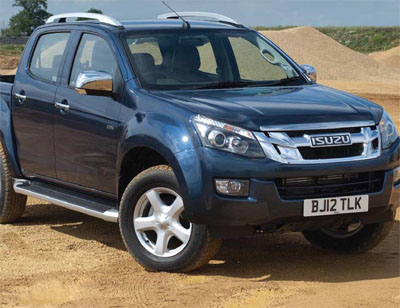
    KOLKATA (TIP): Japanese automobile manufacturer Isuzu Motors’ local subsidiary Isuzu Motors India entered into an agreement with Hindustan Motors (HM) on Friday for contract manufacturing of Isuzu sports utility vehicles (SUVs) and pickup trucks. According to the agreement, the components for producing these vehicles will be imported by Isuzu Motors from Thailand and assembled in HM factory at Thiruvallur, near Chennai.

    The move is expected to help the Japanese major increase sales of its recently launched MU-7 SUV and DMAX pickup truck even before its proposed plant in Andhra Pradesh becomes operational, an Isuzu official said. “The collaboration with Hindustan Motors will support us by carrying out assembly of our products at Thiruvallur, which is about 70 km from Sri City, Andhra Pradesh, where our own local manufacturing facility is planned to come up,” said Takashi Kikuchi, president of Isuzu Motors India.

    He said the company is confident about the growth prospects of the SUV and LCV markets in India, notwithstanding the current slowdown, and is also very happy with the positive feedback of the market to its MU7 SUV and DMAX pickup trucks. These products were launched in Coimbatore and Hyderabad in March by importing them as CBUs from Thailand. “With this agreement, we can advance the scope of our sales operations and increase the scale of supply volumes without waiting for our local manufacturing facility to be ready,” he added.

    HM Managing Director Uttam Bose said the contract manufacturing agreement will enable HM to optimally utilise its spare capacity at its Thiruvallur plant, which rolls out Mitsubishi Motors’ SUVs. “The move makes business sense, especially at a time when the Indian economy and the automobile industry, in particular , are passing through trying times. The agreement with Isuzu is a strategic move to keep HM on the growth path,” he added.

    Incidentally, HM has decided to demerge and transfer its Chennai car plant manufacturing premium Mitsubishi passenger vehicles as a going concern to its fully owned subsidiary, Hindustan Motor Finance Corporation (HMFC). Asked if HM would induct Isuzu as a partner for the demerged entity, Bose refused to comment on the issue. It may be noted that the media statement was silent on the volumes that HM would assemble for Isuzu Motors India or the duration of the agreement

  • Eight Soldiers Killed In Thai South: Army

    Eight Soldiers Killed In Thai South: Army

    BANGKOK (TIP): Eight soldiers were killed by a roadside bomb in the restive Thai south early on June 29 morning, an army spokesman said. Another four people — two soldiers and two civilians — were wounded in the blast in Krongpinang district of the Muslim-majority Yala province. The soldiers had been on duty all night at their base and were returning to their residence in a military truck when the roadside bomb went off.

    “It was a very powerful bomb that completely destroyed the truck,” Colonel Pramote Promin told AFP by phone. “Ten soldiers were in the truck. Eight died and two were wounded,” he said, adding that two villagers had also been injured in the blast. There was no immediate claim of responsibility, but Islamic terrorist groups have carried out similar attacks in the past. A nine-year-old insurgency has claimed more than 5,500 lives in the Muslim-dominated south, where many local people complain of a long history of discrimination by Thai authorities in the Buddhistmajority nation.

    Security personnel and those connected with the government are regularly targeted in the attacks, as well as Muslims perceived to be collaborating with the authorities. Thailand held its first official talks with representatives of one of the main rebel groups, the Barisan Revolusi Nasional (BRN), earlier this year, but failed to reach an agreement and the daily violence continues. Two Muslim men, including a village headman, were shot dead in Narathiwat province in separate incidents on Friday afternoon, the police said in their daily update.

  • India fourth biggest market for Sony with Rs 8,000 crore sales

    India fourth biggest market for Sony with Rs 8,000 crore sales

    NEW DELHI (TIP): Despite weak demand in the industry, Sony India has managed to break into the top five markets in the Japanese giant’s global operations, riding on healthy sales of televisions. The upsurge — to the fourth position — has been quick for the Indian subsidiary that till two years ago was a distant ninth in Sony’s global markets. Sony India finished last fiscal (2012-13) with a 27% growth at overall revenue of Rs 8,000 crore.

    With this, India is ahead of many of Sony’s key markets like Brazil, Russia, Germany and Britain. India now trails US (top market for the company), China and Japan. Kenichiro Hibi, MD of Sony India, said that televisions and mobile phones (under the Xperia range) remain among the fastest-growing segments for the company. Hibi, however, expressed concern over weakening demand in line with the slowdown of the Indian economy. “The market situation is difficult and there are pressures,” Hibi told TOI after launching the premium ‘4K’ Bravia TV range that is priced upwards of Rs 3 lakh.

    Hibi said that the retail end was under stress and things at the ground are “not easy”. However, new launches as well as expectations of a turnaround towards the latter part of the year make the company confident as it expects to maintain the previous year’s growth in this fiscal as well. But despite witnessing growth in India, Sony India does not have any immediate plans to start manufacturing operations here.

    The company currently imports its product line-up from a clutch of countries like China, Malaysia, Japan and Thailand. Hibi said TV sales will continue to lead the charge for the company and it expects to sell 13 lakh units this fiscal against 11 lakh units in the previous year. Televisions contribute around 35% to Sony India’s revenues.

  • India hopes inflation-linked bonds can curb gold buys

    India hopes inflation-linked bonds can curb gold buys

    MUMBAI (TIP): India will sell inflation-linked bonds next week – something it tried unsuccessfully more than a decade ago – in the hope that eventually they will catch on enough to help wean millions of Indians off gold, their favoured hedge against rising prices. Next auction by the Reserve Bank of India of Rs 10 billion of so-called linkers will be the first in a series, with the government planning to sell up to 150 billion rupees worth in the fiscal year ending in March, 2014.

    The likely buyers are buy-and-hold investors such as insurers seeking long-term investments, and banks looking to include them as part of securities that must be set aside to meet regulatory requirements. Pricing and liquidity concerns could dull their appeal initially, however.

    Investors expect India will offer effective returns between 1.25 per cent to 2 per cent on Tuesday’s initial auction of the 10-year inflation-linked bonds, according to a Reuters poll of 10 banks, primary dealers and mutual funds. That would make returns – the measure investors are using to price the debut debt – lower than equivalent nominal government bonds, which have returned an average of around 2.5 per cent over a five-year period.

    The expected low returns could dent demand next week from banks and foreign investors. Before building up holdings of linkers, these investors would also need more liquidity than the small size of the auctions can initially provide, as they would want the comfort of being able to exit positions easily. “It is a good product, but it has to develop a critical mass.

    Given a lower inflation trend, this is a time when nominal bonds are preferred over real bonds,” said Vivek Rajpal, a rates strategist for Nomura in Mumbai. Ultimately, the government hopes the linkers will provide some alternative to gold, reducing demand for imports of the precious metal that have helped push India’s current account deficit to worryingly high levels. India is looking at these auctions to professional investors as a way to settle on the right pricing before directly selling them to local households later this year.

    The government has indexed both the coupon and interest payments to inflation, making the debt far more appealing than in 1997 when only the principal was linked. That should make these bonds appealing over the long-term, but only if liquidity is built around the debt instrument. In emerging Asia, only Thailand and South Korea have issued linkers, but investors are likely to wait and see how the Indian market for the instruments develops before jumping in.

  • Eye on Dawood aide, India inks extradition treaty with Thailand

    Eye on Dawood aide, India inks extradition treaty with Thailand

    BANGKOK (TIP): In a “major boost” to bilateral security cooperation, India and Thailand today signed the muchawaited extradition treaty after 20 years of intense negotiations, with New Delhi eyeing to bring back a key aide of underworld don Dawood Ibrahim.

    The two countries also firmed up a pact to effectively deal with money laundering, terror financing and ratified a treaty on the Transfer of Sentenced Persons, enabling both sides to swap prisoners after they have served a portion of their prison terms. The two sides signed seven agreements, including cooperation in space technology and education after wide ranging talks between Prime Minister Manmohan Singh and his Thai counterpart Yingluck Shinawatra.

    An MoU between India’s Financial Intelligence Unit and Thailand’s Anti Money Laundering Organization on cooperation in the exchange of intelligence related to money laundering and terrorism financing was also signed. “Our growing security cooperation received a major boost today. The Extradition Treaty, concluded after two decades of negotiations, and a memorandum on cooperation in anti-money laundering send a major signal of our shared commitment to combating terrorism, organised crime, drug trafficking and counterfeiting,” Singh said.

    Thailand has long been a refuge for underworld dons and outlawed groups. India is seeking the extradition of Munna Zingada, a Dawood aide, who is wanted in several cases by the Mumbai Police. He has been in a Bangkok prison for about a decade with both India and Pakistan claiming him. Zingada attacked Chhota Rajan in 2001 on the orders of Chhota Shakeel. Rajan was severely injured, but escaped from a hospital here to avoid deportation to India.

    The cooperation between Thai and Indian law-enforcing agencies had led to the arrest of Santosh Shetty, Rajan’s close aides here in 2011. Naga insurgent outfit National Socialist Council of Nagalim (Isak-Muivah) too maintained an office at Chiang Mai. ULFA leaders and other northeastern insurgent outfits too used Thailand as a safe haven.

  • The Golden Temple or Sri Darbar Sahib?

    The Golden Temple or Sri Darbar Sahib?

    Avast majority of the Sikh community is very progressive and forward looking. They have most admirably adopted new professions and cutting edge technologies. But there are some Sikhs, who want to generate controversies even on nonissues. Of late some Sikhs are advocating that we should call our most revered heritage shrine only as Sri Darbar Sahib. They contemplate a complete ban on the alternate name of this holy place “The Golden Temple”. I strongly contend that this is a non issue and we should concentrate our energies on some other real life issues. Most popular things are generally known by several names. Alexander the Great was called Sikandar in oriental civilizations. Egypt is known as “Misr” in the Arabic and Persian speaking countries. The West calls one of our neighbors Thailand, but its neighbors call it Siam.World’s most popular name is “God”. Millions of people all around the world question even the very existence of “God” and they are within their rights to believe so. The Hindus call “God” using several names like “Ishwar”, “Parmatma”, “Bhagwan”, “Vidhata” etc. The Mohammedans address “God” as “Allah” in the Arabic countries and as “Khuda” in Persian, Uzbek, Tajik, Dari, Pashton, Baloch, Sindhi and Punjabi speaking people. All these people believe that there is one God. All fathers and mothers love their daughters and they call them by several names. When Hazrat Mian Mir laid the foundation stone of “Sri Darbar Sahib”, it had, of course only one name. As the time passed, there came about a proliferation of names for it. Some people started calling it “Hari Mandir Sahib”. Some simplified it as “Harmander Sahib”. At one time the forces of Ahmed Shah Abdali not only ransacked the “Darbar Sahib”, they even damaged the shrine quite extensively.When the Sikh Misls became powerful in the second half of the eighteenth century, they rehabilitated the structure with the original materials- bricks and lime mortar. On annexation of Amritsar by the Sikh Emperor Maharaja Ranjit Singh in the first quarter of the nineteenth century, the emperor wanted to develop this home of “God” into a distinctly unique structure.

    Although the rules of historic preservation call for keeping the heritage structures in the same condition, in which those structures were originally constructed, but the Sikh custodians of religion believe in replacing the ancient structures with magnificent marble structures. Of course, Emperor Ranjit Singh also had the same beliefs as the other custodians of the Sikh heritage.

    He may not have altered the structure of the sanctum sanctorum in the “Darbar Sahib”, but he completely covered its interior and exterior with gold leaves. From the point of view of historic preservation, gold plating of the structure was wrong. But it has gone through two hundred years ago, under orders of the Sikh emperor Ranjit Singh.

    What the present Sikh generation inherited from Emperor Ranjit Singh was a beautiful shrine in white marble and gold. The Imperial British Indian Forces, after defeating the Imperial Sikh Army in 1949 occupied Amritsar along with Lahore. Those British officers, who actually visited “Sri Darbar Sahib” were dazzled by its ambience and the peace of mind that it gives. In order to acquaint the occidental world with the magnificence of this amazing place of worship, the British rulers of India gave it their own name “The Golden Temple”. It could also be called the “Gold and Marble Temple”, but that was too unwieldy name and the British were known to dislike long names. So the new name Golden Temple clicked with the world and it has become a shrine of the world. Some of our Sikh brethren want the world to know this place only as the “Darbar Sahib”. They want all the signs in Amritsar to change to reflect the old name.We sometimes forget that Guru Nanak was the social reformer for the entire world and not for a tiny community.

    This home of Guru Nanak is for the entire world and the world longs to pay their respect to this sacred place. Everyone is welcome and should be welcome in this home of God. It should not hurt any person’s sentiments, if this great place is known by more than one name. That is how I think, I may be wrong. In case you think, I am wrong, please forgive me for this transgression

  • Nepalese Ex-Prince Suffers Heart Attack In Thailand

    Nepalese Ex-Prince Suffers Heart Attack In Thailand

    BANGKOK (TIP): Former Nepalese crown prince Paras Shah is inintensive care in Thailand after suffering a heart attack, the Nepaleseembassy in Bangkok said Wednesday.Shah, 42, who had been living in Thailand, was admitted to hospitallate Tuesday, acting Ambassador Dornath Aryal said.”Doctors said his condition is improving and he needs a fullexamination,” he said.

    Bangkok’s Samitivej Hospital confirmed thatShah had been admitted but declined to discuss his condition.Shah, who as crown prince was unpopular for his playboy lifestyle,was arrested for cannabis possession on the Thai resort island ofPhuket in October. He was detained again in December for smashingproperty at a luxury apartment in Bangkok. On both occasions hedenied the charges and was released on bail.

  • Chinese New Year 2013

    Chinese New Year 2013

    Chinese Spring Festival, also called Lunar New Year,has more than 4,000 years of history. Being one ofthe traditional Chinese festivals, it is the grandestand the most important festival for Chinese people. It isalso the time for the whole families to get together, which issimilar with Christmas Day to the westerners. Originatingduring the Shang Dynasty (about 17th – 11th century BC),Spring Festival, which celebrates family reunion, is full ofrich and colorful activities, and new hopes with the adventof spring and flowers blossoming. People from differentregions and different ethnic groups celebrate it in theirunique ways.

    Festival Time
    The Spring Festival comes on the first day of Chineselunar calendar and lasts for almost half of a month. But infolk custom, this traditional holiday lasts from the 23rd dayof the twelfth month to the 15th day of the first month(Lantern Festival) in the lunar calendar. Among these days,the New Year’s Eve and the first day of the New Year is thepeak time of the festival. The exact days are different inevery year according to the lunar calendar. Schedule ofSpring Festival in recent years is offered in the followingtable.Chinese New Year begins according to the Chinesecalendar which consists of both Gregorian and lunar-solarcalendar systems. Because the track of the new moonchanges from year to year, Chinese New Year can beginanytime between late January and mid-February.

    Below isa chart that shows the beginning day of Chinese New Yearand the animal sign for that year.Chinese New Year is the longest and most importantfestivity in the Chinese calendar. The origin of ChineseNew Year is itself centuries old and gains significancebecause of several myths and traditions. Chinese New Yearis celebrated in China and in countries and territories withsignificant Chinese populations, including Hong Kong,Macau, Singapore, Thailand, Indonesia, Malaysia, Taiwan,Mauritius, Philippines, and also in Chinatowns elsewhere.Chinese New Year is considered a major holiday for theChinese and has had influence on the lunar new yearcelebrations of its geographic neighbors.Within China, regional customs and traditionsconcerning the celebration of the Chinese new year varywidely.

    People will pour out their money to buy presents,decoration, material, food, and clothing. It is alsotraditional for every family to thoroughly cleanse thehouse, in order to sweep away any ill-fortune and to makeway for good incoming luck. Windows and doors will bedecorated with red color paper-cuts and couplets withpopular themes of “good fortune” or “happiness”, “wealth”,and “longevity.” On the Eve of Chinese New Year, supper isa feast with families. Food will include such items as pigs,ducks, chicken and sweet delicacies. The family will endthe night with firecrackers. Early the next morning,children will greet their parents by wishing them a healthyand happy new year, and receive money in red paperenvelopes.

    The Chinese New Year tradition is to reconcile,forget all grudges and sincerely wish peace and happinessfor everyone.Although the Chinese calendar traditionally does not usecontinuously numbered years, outside China its years areoften numbered from the reign of the Yellow Emperor. Butat least three different years numbered 1 are now used byvarious scholars, making the year beginning in 2012 AD the”Chinese Year” 4710, 4709, or 4649.Every family does a thorough house cleaning andpurchases enough food, including fish, meat, roasted nutsand seeds, all kinds of candies and fruits, etc, for thefestival period. Also, new clothes must be bought,especially for children. Red scrolls with complementarypoetic couplets, one line on each side of the gate, are pastedat every gate. The Chinese character ‘Fu’ is pasted on thecenter of the door and paper-cut pictures adorn windows.

    Taboos
    The Spring Festival is a new start for a new year, so it isregarded as the omen of a new year. People have manytaboos during this period. Many bad words related to”death”, “broken”, “killing”, “ghost” and “illness” or”sickness” are forbidden during conversations. In someplaces, there are more specific details. They consider itunlucky if the barrel of rice is empty, because they thinkthey will have nothing to eat in the next year. Takingmedicine is forbidden on this day, otherwise, people willhave sick for the whole year and take medicine constantly.

    Festival Food
    Food during this festival has its characteristics, which isthe representative of Chinese festival food culture.Dumplings and the reunion dinner are indispensable atthis time. Cold and hot dishes are all served. Fish is alwaysan important dish then, which expresses people’s hope ofhaving a wealthy new year.

    History
    It is said that the custom of Spring Festival started inwhen people offered sacrifice to ancestors in the last monthof Chinese lunar calendar. At that time, people preparedthe sacrifice by doing thorough cleaning, having bathesand so on. Later, people began to worship different deitiesas well on that day. It is the time that almost all the farmworks were done and people have free time. The sacrificingtime changed according to the farming schedule and wasnot fixed until the Han Dynasty (202BC-220AD). Thecustoms of worshipping deities and ancestors remainseven though the ceremonies are not as grand as before. It isalso the time that spring is coming, so people held all kindsof ceremonies to welcome the spring.

    Legends
    There are many legends about the festival in Chineseculture. In folk culture, the Spring Festival is also called”guonian” (meaning “passing a year”). It is said that the “nian”(year) was a strong monster which was fierce and cruel andate one kind of animal including human being a day. Humanbeings were scared about it and had to hide on the eveningwhen the “nian” came out. Later, people found that “nian” wasvery scared about the red color and fireworks. So after that,people use red color and fireworks or firecrackers to driveaway “nian” every year. As a result, the custom of using redcolor and setting off fireworks remains.

    Festivities Schedule
    Preparing the New Year starts 7 days before the NewYear’s Eve. According to Chinese lunar calendar, peoplestart to clean the house on Dec. 24, butcher on Dec. 26th andso on. People have certain things to do on each day. Thesefestival activities will end Jan. 15th of the lunar calendar.

  • Foreign Tourist Arrivals To Kerala Plummet

    Foreign Tourist Arrivals To Kerala Plummet

    KOTTAYAM,INDIA (TIP): Asharp decline inarrival of foreigntourists to Keralais causing concernin the tourismindustry. Thedeclining trendthat started a fewyears agocontinuesunabated.T. Damu,director of Taj group of hotels and resortsin Kerala, said that foreign tourist arrivalshave declined considerably because ofrecession, escalating air fare andcontinuous rains during tourist seasons.

    Peak season
    Major hotels that accommodateforeigners in Kumarakom said that thepeak season begins in October-November.They hoped that something positive wouldhappen to bring in more tourists this year.Tourism agencies and houseboat ownersare unanimous that there is already a lullin tourist activities mainly because of thedelay in issuing visa for internationaltourists and consequent cancellation oftours. Many foreign tourists coming toIndia have rescheduled their visits toneighboring countries such as Sri Lanka,Singapore, Malaysia, Thailand etc.The exorbitant rent for suites in starhotels, unethical and unaffordable taxi andauto rickshaw charges and above all themisconduct of touts and miserable hygieneproblems are theother reasons fortheir absence inGod’s own country.If a foreigner isspotted on theroad, autorickshaw driverscompete with oneanother to fleecethem.

    Domestic arrivals
    Domestic tourist arrivals are alsosagging. Usually at the beginning of theseason, the domestic visitors arrive fromother States. This year, though the seasonhas already started, the arrivals ofdomestic visitors are yet to pick upmomentum. The poor inflow is affectingthe houseboat sector.Of about 1,000 houseboats atPunnamada, only around 150 are earningthe minimum to meet the daily expenses,said Mr Anil Kumar, owner of a newhouseboat based at Kumarakom.Houseboat owners have already incurredheavy losses because of stagnation intourism sector.Another impact is reported to be the ‘goslow’ in the sale of properties at primelocations in tourist spots where large areashave been bought by leading realtors, filmstars and others, hoping for big profits laterat the time of resale. In Kumarakom, manycelebrities have bought plots for setting upholiday homes.

  • Saina Nehwal faces elimination from Super Series Finals

    Saina Nehwal faces elimination from Super Series Finals

    HYDERABAD (TIP): After her second straight loss Saina Nehwal is on the brink of elimination from the BWF World Super Series Finals in Shenzhen (China).

    Saina was outplayed by Ratchanok Intanon of Thailand 13- 21, 16-21 in her Group B second round robin league match on Thursday. The only hope for Saina is if Tine Baun – who lost to Juliane Schenk on Thursday 21-14, 16-21, 8-21 – loses to Ratchanok on Friday and Saina defeats Juliane in her last Group B match. In that case, Ratchanok will top Group B and qualify for the semifinals and the player with a better game average (difference between total number of games won and lost) among the other three will advance to the next stage.

    Saina was listless on Thursday, probably not having fully recovered from the shock loss against Tine on Wednesday. The 22-year-old, who enjoyed a 4-1 career record against the Thai teen before that contest, never looked to be in the game. Ratchanok started with a 7-2 lead in the first game and did not look back.

    Trialing 4-14, Saina came up with an eight-point burst but failed to maintain the tempo as Ratchanok hit back with six successive points from 15-13 to wrap up the game. Saina looked better in the second game and even she caught up with Ratchanok at 6-6. However, Ratchanok, who is known for her unorthodox strokes, notched up five straight points from 16-16 to leave Saina shattered.

  • Thai PM Yingluck Shinawatra Survives No-Confidence Vote

    Thai PM Yingluck Shinawatra Survives No-Confidence Vote

    BANGKOK (TIP): Thai Prime Minister Yingluck Shinawatra on Wednesday easily survived a noconfidence vote orchestrated by her opponents in parliament who accused her of failing to crack down on graft. Yingluck, Thailand’s first female premier, won 308 of the 467 votes, securing support even from outside her six-party coalition which commands about three-fifths of the seats in the lower house.

    The former businesswoman took office in August 2011 after a decisive election victory by her Puea Thai party which has close links to her brother, ousted former premier Thaksin Shinawatra. “Parliament has voted for Prime Minister Yingluck to continue her work,” house speaker Somsak Kiatsuranont announced after the vote, which followed three days of debate by MPs.

    Deputy Prime Minister Chalerm Yubumrung, defence minister Sukumpol Suwanatat and deputy interior minister Chat Kuladilok also survived censure motions. Yingluck was accused by the main opposition Democrat Party of overseeing corruption — particularly in a controversial government rice purchase scheme — and of being the puppet of her brother. Thaksin was toppled by royalist generals in a coup in 2006.

    He lives overseas to avoid a jail sentence imposed in his absence for corruption charges that he contends were politically motivated. His overthrow unleashed years of rival political street protests. Two months of mass rallies against the previous government in 2010 by “Red Shirt” Thaksin supporters sparked a deadly military crackdown that left about 90 people dead and nearly 1,900 wounded. Thaksin’s opponents staged their own antigovernment protests in Bangkok on Saturday, sparking clashes with the police.

  • U.S. to pursue stable, constructive relationship with China: White House

    U.S. to pursue stable, constructive relationship with China: White House

    WASHINGTON (TIP): The U.S. government will pursue a stable and constructive relationship with China, as part of its strategy of rebalancing to Asia, in order to address diplomatic and economic challenges in today’s world, a senior White House official said on November 15 Speaking at the think tank Center for Strategic and International Studies, Tom Donilon, national security advisor to U.S. President Barack Obama, outlined the reasons and goals of the U.S. Pivot to Asia that the Obama administration began implementing during his first term. Donilon said the rebalancing is a sustained mutli-dimensional strategy, and “a long-term effort to better position ourselves for the opportunities and challenges we’re most likely to face in this century.” Pursuing a stable and constructive relationship is one of the essential elements of the strategy aimed at advancing U.S. national security interests, he said, citing “there are few diplomatic and economic challenges that can be addressed in the world without having China at the table: from North Korea (the DPRK), to Iran, to Syria, to global economic rebalancing and climate change.” “Getting the U.S.-China relationship right is a long-term effort, and we will continue to make this a priority in President Obama’s second term,” he said.

    Noting that there are elements of both cooperation and competition in the U.S.-China ties, Donilon said the U.S. policy has been to seek to balance these two elements in a way that increases both the quantity and quality of its cooperation with China as well as its ability to compete. “At the same time, we seek to manage disagreements and competition in a healthy – and not disruptive – manner,” he added. Donilon said through highlevel consultations with Beijing, such as the Strategic and Economic Dialogue, the U.S. approach toward China has yielded important results that advance U.S. national security interests

    The U.S. has elicited “significant and sustained Chinese cooperation regarding Iran’s and North Korea’s (DPRK) nuclear and missile programs.” On the economic front, the U.S. coordinated with China to jump start the global economic recovery in 2009 and to build the G20 into the leading global economic institution, while the U.S.-China military relations have been gaining momentum, he said. While urging Beijing to assume responsibilities commensurate with its growing global impact and its national capabilities, Donilon said one of U.S. policy goals is “to work with China to strengthen institutions … and enhance the ability of these institutions to address regional and global challenges.” During his speech, Donilon also explained the reasons why Obama chose southeast Asia as the destination of his first foreign trip since winning reelection last week. Obama is set to visit Thailand, Myanmar and Cambodia on Nov. 17-20, during which he will also hold talks with leaders of the Association of Southeast Asian Nations (ASEAN) and attend the East Asia Summit. “His decision to travel to Asia so soon after his re-election speaks to the importance that he places on the region and its centrality to so many of our national security interests and priorities,” he said.

  • With top brass under scrutiny, Pentagon chief orders ethics review

    With top brass under scrutiny, Pentagon chief orders ethics review

    BANGKOK (TIP): Defense secretary Leon Panetta has ordered the US military’s top brass to look for any gaps in ethics training as he lamented lapses in judgment by officers that could “erode public confidence in our leadership,” a Pentagon spokesman said on Thursday

    Questions over the conduct of US generals has come into sharp focus over the past week as retired General David Petraeus lost his job as CIA director over an affair and General John Allen, who leads the Afghan war effort, was placed under investigation for potentially inappropriate emails with a Florida socialite.

    A Pentagon spokesman told reporters travelling with Panetta in Thailand that development of the defense secretary’s initiative pre-dated the latest scandals. Lesser-known US military leaders have come under scrutiny recently, with one general demoted by Panetta for wasting taxpayer money and another facing accusations including forcible sodomy of a subordinate. “The vast majority of our senior officers takes this responsibility (of leadership) seriously and acts in accord with ethics regulations and training,” Panetta said in a memo to the chairman of the joint chiefs of staff, General Martin Dempsey. “Yet, as has happened recently, when lapses occur, they have the potential to erode public confidence in our leadership. … Worse, they can be detrimental to the execution of our mission to defend the American people.” Panetta, in the memo dated Nov. 14, called on Dempsey to work with other military leaders to review existing ethics training programs “to determine if they are adequate to address the concerns I have identified.” He said he would present President Barack Obama an interim report by December 1 with initial results of the review and any recommendations developed by that time. The memo did not list any specific lapses but on Wednesday Panetta announced he was demoting retiring Army General William Ward and would seek to recoup $82,000 in expenses from him.

    Ward was accused of misconduct in travel, misuse of military aircraft and misuse of staff. In one case, Ward took his official plane to Bermuda for an overnight refuelling stop with his wife, investigators found. In another case, Brigadier General Jeffrey Sinclair, a 27-year Army veteran based at Fort Bragg in North Carolina, is accused of 26 violations of military law including forcible sodomy, wrongful sexual conduct, possessing pornography while deployed and conduct unbecoming of an officer.

    The charges stem from allegations of inappropriate behaviour toward four female subordinates and a civilian over the past five years. Sinclair is also accused of claiming more than $4,000 in personal travel as military business expenses.

    Panetta said he knows of no other military officials beyond Allen drawn into the investigation of Petraeus.Panetta said in his memo that the Pentagon has strong rules in place setting standards for personal conduct “and prohibit misuse of taxpayer resources.” He said it is not enough to merely comply with rules, saying military leaders also need to exercise sound judgment. “An action may be legally permissible but neither advisable nor wise,” he wrote.

  • KUSHINAGAR A serene Buddhist destination

    KUSHINAGAR A serene Buddhist destination

    Welcome to the land of the Buddha. A breather from most other religious destinations, which, ironically, reel under chaos, Kushinagar – the place where Gautam Buddha breathed his last – is a place where you can pray in peace or simply soak in the beauty of the architectural marvels and the natural surrounding. Situated 51 km east of Gorakhpur in Uttar Pradesh, Kushinagar is one of the four important religious destinations for Buddhists.

    This is the place where the Buddha delivered his last sermon, and died. The other three important destinations are Lumbini, Bodh Gaya and Sarnath. It’s of little surprise then that the place, which is well endowed with greenery, is flocked by tourists – both domestic and foreign – through the year, but especially so in the cooler months between October and April. It is estimated that nearly two million tourists visit Kushinagar every year. “Many tourists come to Kushinagar to pray and to pay their respect to the place where Lord Buddha delivered his last sermon and finally rested in peace. From among foreign countries, we mainly have people coming from Thailand, Japan, China, Korea, Sri Lanka and Myanmar,” said Bhadant Choudhury, a Buddhist monk at the Mahaparinirvana temple. One of the main attractions of the place, the Niravana Chaitya or the Main Stupa, was excavated by Carlleyle in 1876 and stands at a height of 2.74 metres.

    A copper vessel was unearthed at this site and it bore an inscription in ancient Brahmi, which stated that Lord Buddha’s remains had been deposited there. The Stupa was restored and its chamber was ceremoniously closed in 1927, in the presence of 16 Buddhist priests. Several gold, silver and copper plateinscriptions were deposited inside, recording the facts of discovery and identification of the monument. Right in front of the Nirvana Stupa is the Mahaparinirvana temple, which you wouldn’t want to miss – not just for religious purposes but also for the grandeur of a 6.10 metre-long statue of the Buddha in a reclining position which dates back to the fifth century and was also excavated in 1876. While it looks as if it was made of gold, the statue, which represents the dying Buddha, is made of monolith red sandstone.

    “One of the amazing things about the statue is that the facial expression of Lord Buddha seems to change when you look from different positions. If you stand in front, from an angle, it looks like he is smiling; from behind his head, it looks like he is thinking; and from his feet, it looks like he is dying,” explained Amit Kumar, a resident of Kushinagar. Sitting on the steps of the temple, Choudhury motioned to the beeline of devotees to wait for some time until a Thai delegation of 20 people inside were done with their chanting. “The foreigners travel great distances to reach this place and that too for a few days. So it doesn’t make much of a difference if the rest of us wait for a few minutes…and people really don’t mind. Everyone is patient,” he said, as other devotees sat on the steps with him, chatting with the monks. One of those waiting, Lakshmi Devi, from the neighbouring state of Bihar, said: “It’s all right if we have to wait for a little while for the foreigners…they have, after all, come from so far and are our guests. My family and I wanted to pay our respects to Lord Buddha, and we are here. What will we get by creating a fuss?” Considering the heavy flow of foreign tourists, many neighbouring countries have built their own temples near the Mahaparinirvana temple.

    Their temple complexes also have guest houses to accommodate their citizens and are again a must-see for the sheer beauty of their architecture. The Watt Thai temple, for instance, is a huge temple complex built in the Thai- Buddhist architectural fashion. The Japanese temple has a beautiful Ashta Dhatu (eight metal) statue of the Buddha which has been brought from Japan. The Linth Son Chinese temple, Myanmar temple and the Korean temple, among others, are also some must visits. Just about 400 yards from the Nirvana Stupa is the Matha Kuar shrine which has a colossal statue of the Buddha in the ‘Bhumi Sparsh Mudra’ (earth touching posture) under the ‘Bodhi tree’, carved out of a single block of stone. The inscription at the base dates it to the 10th-11th century. Also on the itinerary should be a visit to the Ramabhar Stupa which is the cremation ground of the Buddha.

    Although there is no air or rail link right to Kushinagar, it is well connected to Gorakhpur, which in turn has a railway station and an air strip. Food and accommodation are not a problem with numerous guest houses and restaurants with, predictably, names like Vipassana and Nirvana! So pack your bags for a few days of nirvana in Kushinagar!

  • Japanese auto parts maker sets up unit at Sri City SEZ

    Japanese auto parts maker sets up unit at Sri City SEZ

    HYDERABAD (TIP): Automotive components maker Piolax India, a subsidiary of Piolax of Japan, inaugurated its first Indian facility at the Sri City multi-product special economic zone in Andhra Pradesh. The plant is slated to commence commercial production shortly. Piolax is a global manufacturer of auto parts such as industrial fasteners, coil springs, flat springs and compact units. It has facilities in the US, the UK, China and Thailand. Sri City, located some 55 km from Chennai, already has about 80 units from 23 countries. Built on the worklive- learn-play concept and designed by Jurong Consultants of Singapore, it has well demarcated industrial zones, including automotive, engineering, logistics & warehousing, aerospace, electronics, biotech/pharma, IT and renewable energy. “We are happy that out of the 12 Japanese firms setting up units at Sri City, Piolax will be the third to commence production, with the remaining in various stages of construction,” said Ravindra Sannareddy, Managing Director of Sri City. The unit is expected to hire 200 people. Sri City is also setting up country-specific enclaves to offer specific and exclusive facilities to companies from these countries, a company statement said