

Every year, as autumn paints the American landscape in shades of gold, orange and red, families across the United States come together to celebrate Thanksgiving, one of the country’s most cherished national holidays. Observed on the fourth Thursday of November, Thanksgiving falls on November 26 in 2026, bringing with it a day dedicated to gratitude, family reunions, traditional food and community spirit.
More than just a holiday, Thanksgiving represents an opportunity to pause amid the demands of everyday life and appreciate the people, experiences and blessings that make life meaningful. Homes are filled with the aroma of roasted turkey, freshly baked pies and seasonal dishes, while family members travel long distances to share a meal and reconnect with loved ones.
Although Thanksgiving is deeply rooted in American history, its central message of gratitude and generosity has a universal appeal. The occasion encourages people to look beyond material achievements and acknowledge the importance of relationships, kindness, compassion and sharing.
The story behind Thanksgiving
The origins of the modern American Thanksgiving tradition are commonly traced to 1621, when English settlers, known as Pilgrims, celebrated a successful autumn harvest at Plymouth Colony in present-day Massachusetts.
Having endured a difficult first winter after arriving in North America in 1620, the settlers faced hunger, disease and unfamiliar agricultural conditions. Their survival and eventual harvest were aided by members of the Indigenous Wampanoag community, who shared their knowledge of local crops, fishing and farming practices.
Following their first successful corn harvest, the settlers organized a three-day celebration. The Wampanoag people, including their leader Massasoit, joined the gathering. Historical accounts suggest that the feast included wild fowl and venison, along with locally available foods.
The 1621 gathering is widely remembered as America’s first Thanksgiving, although harvest celebrations and days of giving thanks existed in different communities long before it. It is also important to recognize that the relationship between European settlers and Indigenous communities subsequently became marked by conflict, displacement and dispossession. For many Native Americans, Thanksgiving is therefore also a day of remembrance and reflection on this painful history.
Over the following decades, days of thanksgiving were observed periodically in different American colonies, often to mark successful harvests, military victories or moments of collective relief.
A significant development came in 1789, when President George Washington issued a proclamation declaring November 26 a national day of thanksgiving and prayer. It was the first Thanksgiving observed under the newly established US Constitution.
However, the holiday did not immediately become an annual national observance.
Its establishment as a regular national tradition was largely influenced by writer and magazine editor Sarah Josepha Hale, who campaigned for a nationwide Thanksgiving celebration for many years. In 1863, during the American Civil War, President Abraham Lincoln issued a proclamation calling upon Americans to observe the last Thursday of November as a day of thanksgiving.
Lincoln’s decision was particularly significant because it came at a time when the country was deeply divided. He hoped that a shared day of gratitude would encourage national unity and healing. In 1941, Congress formally established Thanksgiving as a federal holiday to be observed on the fourth Thursday of November. This arrangement continues today.
How Thanksgiving is celebrated
Thanksgiving is traditionally a family-oriented holiday. For millions of Americans, the celebrations begin days in advance, as households prepare special meals, decorate their homes and make travel arrangements to reunite with relatives.
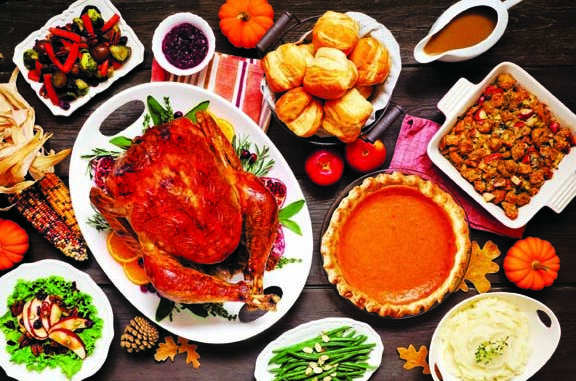
The Thanksgiving dinner is the centerpiece of the occasion. Roast turkey, often served with stuffing, gravy and cranberry sauce, is the most recognizable dish associated with the festival. Other popular preparations include mashed potatoes, sweet potatoes, green bean casserole, cornbread and seasonal vegetables.
Desserts are equally important, with pumpkin pie, pecan pie and apple pie being among the most popular choices. Recipes are frequently passed down through generations, making the Thanksgiving meal an expression of family heritage and tradition.
The celebration is not limited to food. Families use the occasion to express gratitude, share memories and reflect on the events of the year. In many homes, people take turns mentioning something for which they are thankful. Some families begin their meal with a prayer, while others observe the day through informal conversations and family activities.
More than just a holiday, Thanksgiving represents an opportunity to pause amid the demands of everyday life and appreciate the people, experiences and blessings that make life meaningful. Homes are filled with the aroma of roasted turkey, freshly baked pies and seasonal dishes, while family members travel long distances to share a meal and reconnect with loved ones.
Although Thanksgiving is deeply rooted in American history, its central message of gratitude and generosity has a universal appeal. The occasion encourages people to look beyond material achievements and acknowledge the importance of relationships, kindness, compassion and sharing.
The story behind Thanksgiving
The origins of the modern American Thanksgiving tradition are commonly traced to 1621, when English settlers, known as Pilgrims, celebrated a successful autumn harvest at Plymouth Colony in present-day Massachusetts.
Having endured a difficult first winter after arriving in North America in 1620, the settlers faced hunger, disease and unfamiliar agricultural conditions. Their survival and eventual harvest were aided by members of the Indigenous Wampanoag community, who shared their knowledge of local crops, fishing and farming practices.
Following their first successful corn harvest, the settlers organized a three-day celebration. The Wampanoag people, including their leader Massasoit, joined the gathering. Historical accounts suggest that the feast included wild fowl and venison, along with locally available foods.
The 1621 gathering is widely remembered as America’s first Thanksgiving, although harvest celebrations and days of giving thanks existed in different communities long before it. It is also important to recognize that the relationship between European settlers and Indigenous communities subsequently became marked by conflict, displacement and dispossession. For many Native Americans, Thanksgiving is therefore also a day of remembrance and reflection on this painful history.
Over the following decades, days of thanksgiving were observed periodically in different American colonies, often to mark successful harvests, military victories or moments of collective relief.
A significant development came in 1789, when President George Washington issued a proclamation declaring November 26 a national day of thanksgiving and prayer. It was the first Thanksgiving observed under the newly established US Constitution.
However, the holiday did not immediately become an annual national observance.
Its establishment as a regular national tradition was largely influenced by writer and magazine editor Sarah Josepha Hale, who campaigned for a nationwide Thanksgiving celebration for many years. In 1863, during the American Civil War, President Abraham Lincoln issued a proclamation calling upon Americans to observe the last Thursday of November as a day of thanksgiving.
Lincoln’s decision was particularly significant because it came at a time when the country was deeply divided. He hoped that a shared day of gratitude would encourage national unity and healing. In 1941, Congress formally established Thanksgiving as a federal holiday to be observed on the fourth Thursday of November. This arrangement continues today.
How Thanksgiving is celebrated
Thanksgiving is traditionally a family-oriented holiday. For millions of Americans, the celebrations begin days in advance, as households prepare special meals, decorate their homes and make travel arrangements to reunite with relatives.
The Thanksgiving dinner is the centerpiece of the occasion. Roast turkey, often served with stuffing, gravy and cranberry sauce, is the most recognizable dish associated with the festival. Other popular preparations include mashed potatoes, sweet potatoes, green bean casserole, cornbread and seasonal vegetables.
Desserts are equally important, with pumpkin pie, pecan pie and apple pie being among the most popular choices. Recipes are frequently passed down through generations, making the Thanksgiving meal an expression of family heritage and tradition.
The celebration is not limited to food. Families use the occasion to express gratitude, share memories and reflect on the events of the year. In many homes, people take turns mentioning something for which they are thankful. Some families begin their meal with a prayer, while others observe the day through informal conversations and family activities.
Volunteering and charitable initiatives are also an important part of Thanksgiving. Community organizations, religious institutions and charities arrange free meals for people experiencing homelessness, low-income families and senior citizens. Volunteers distribute food baskets, organize community dinners and contribute to food banks.
The spirit of giving is particularly visible during this period, as many Americans make donations and participate in activities aimed at supporting vulnerable members of society.
Parades, football and the holiday spirit
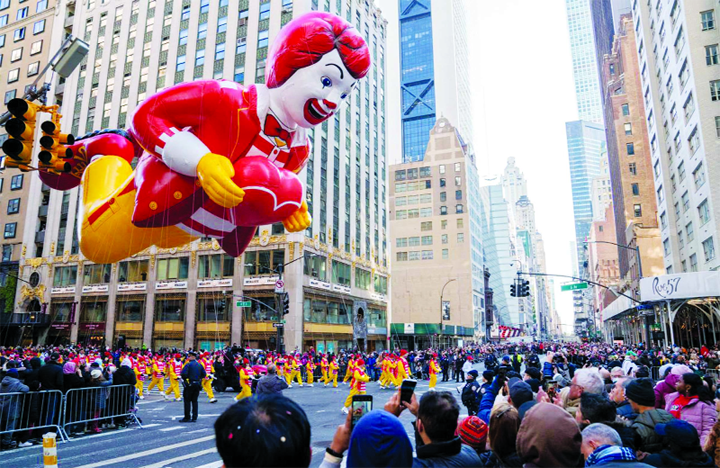
One of the most recognizable Thanksgiving traditions is the Macy’s Thanksgiving Day Parade in New York City. First organized in 1924, the parade has become a major attraction, featuring enormous character balloons, elaborate floats, marching bands, musical performances and celebrity appearances.
Millions of people watch the spectacle along the streets of Manhattan, while millions more follow it on television. The parade’s giant balloons, featuring popular cartoon and entertainment characters, have become an enduring symbol of the holiday.
American football is another important part of Thanksgiving. Professional football games have been associated with the holiday for generations, with families often gathering around television screens after their traditional meal. The games add a sporting dimension to the celebrations and are an integral part of the day’s entertainment.
For children, the holiday also marks the beginning of the excitement surrounding the Christmas season. Streets and shopping centres begin displaying festive decorations, Christmas music becomes more prominent and households start preparing for the celebrations ahead.
A day of remembrance
for Native Americans
While Thanksgiving is widely celebrated as a festival of gratitude, its history is also viewed differently by Indigenous communities.
The arrival of European settlers and the subsequent expansion of colonial settlements brought profound changes to Native American societies. Indigenous communities experienced the loss of ancestral lands, disease, violence and displacement.
For this reason, some Native Americans observe Thanksgiving as a day of mourning rather than celebration. The National Day of Mourning, organized by the United American Indians of New England, has been observed in Plymouth, Massachusetts, since 1970. It provides an opportunity to remember Indigenous ancestors, recognize historical injustices and draw attention to the continuing concerns of Native communities.
Acknowledging these perspectives offers a more complete understanding of Thanksgiving and its complicated historical legacy.
Black Friday: The shopping rush begins
Thanksgiving also marks the beginning of one of the busiest shopping periods in the United States. The day after Thanksgiving is popularly known as Black Friday, which falls on Friday, November 27, in 2026.
Retailers offer substantial discounts on electronics, clothing, home appliances, toys and other products, attracting shoppers looking for bargains ahead of Christmas and the New Year.
The term Black Friday became widely associated with the post-Thanksgiving shopping rush during the second half of the 20th century. One popular explanation is that it refers to retailers moving from financial losses, traditionally recorded in red ink, to profits, recorded in black ink. However, the term had earlier associations with the heavy traffic and crowds that accompanied the shopping period in Philadelphia.
Over the years, Black Friday has evolved from a largely in-store shopping event into a major online retail phenomenon. Many retailers now announce discounts well before Thanksgiving, extending promotional campaigns across several weeks.
For consumers, the day offers an opportunity to purchase gifts and household products at reduced prices. For businesses, it represents an important start to the holiday shopping season.
Cyber Monday takes shopping online
Following Black Friday comes Cyber Monday, which falls on Monday, November 30, in 2026.
Introduced in 2005, Cyber Monday was developed to encourage online shopping and has grown into one of the biggest e-commerce events of the year. It traditionally takes place on the Monday after Thanksgiving, offering consumers another opportunity to take advantage of special deals without visiting physical stores.
Electronics, fashion, beauty products, home furnishings and travel-related services are among the categories commonly promoted during the event. Online retailers use the occasion to attract customers through exclusive digital offers, limited-period discounts and promotional campaigns.
The distinction between Black Friday and Cyber Monday has become less pronounced as shopping habits have changed. Many retailers now offer similar discounts both online and in physical stores throughout the Thanksgiving weekend.
Together, Thanksgiving, Black Friday and Cyber Monday have become closely connected to the American holiday season, combining family traditions with modern consumer culture.
Thanksgiving beyond America’s borders
Although Thanksgiving is primarily an American holiday, its influence extends beyond the United States. American communities living abroad often organize Thanksgiving dinners, cultural gatherings and charitable activities to maintain their connection with home.
In Canada, Thanksgiving is celebrated on the second Monday of October, reflecting the country’s own harvest traditions and history. Other countries also have harvest festivals and days of gratitude, although their customs and dates differ.
For the Indian diaspora in the United States, Thanksgiving has become an opportunity to bring together family and friends, irrespective of cultural or religious backgrounds. Indian households often add their own culinary traditions to the Thanksgiving table, serving dishes such as biryani, curries and traditional desserts alongside the customary turkey dinner.
The occasion also highlights the multicultural character of modern American society, where people from different communities share food, traditions and experiences.
A reminder to be grateful
In an increasingly fast-paced world, Thanksgiving offers a valuable reminder of the importance of gratitude. Its significance lies not merely in a lavish meal or a day away from work, but in the opportunity to reconnect with loved ones, appreciate life’s blessings and extend kindness to those who need support.
Whether celebrated around a family dining table, through a community meal, by watching a parade or by helping someone in need, Thanksgiving carries a message that transcends geographical and cultural boundaries.
As Americans gather on November 26 this year, the occasion will once again bring families and communities together. And as the celebrations give way to Black Friday and Cyber Monday, the holiday season will gather momentum.
Ultimately, Thanksgiving is about remembering that happiness is not measured only by what people possess, but also by what they appreciate, share and give to others.


Be the first to comment