Tag: Thanksgiving Day

  • Why Is Thanksgiving Day So Special to Indian Communities in the USA?

    Why Is Thanksgiving Day So Special to Indian Communities in the USA?

    Thanksgiving Day is much more than a harvest festival in the USA, it’s become a powerful symbol of unity, gratitude, and family bonds. For the Indian diaspora living here, Thanksgiving is evolving into a unique cultural touch point that blends American traditions with Indian values. This post will try and discuss  the significance of Thanksgiving Day in the American context, how it’s embraced by Indian families, and why it has grown to mean so much to us beyond the usual turkey and pumpkin pie.

    The Origins and Cultural Importance of Thanksgiving Day

    Thanksgiving Day started as a 1621 harvest celebration between Pilgrims and Native Americans. Today, it is a national holiday symbolizing gratitude for the blessings of the year. It falls on the fourth Thursday of November, considered the official kickoff of the holiday season in the US. Americans across all states come together to celebrate family, food, and thankfulness, highlighting the importance of reflecting on life’s abundance even amid challenges.

    For us, as a globally diverse community, understanding this history enriches our appreciation of the holiday. It’s a moment when cultural stories converge, reminding us how gratitude and togetherness are universal themes shared across traditions.

    Thanksgiving’s Growing Popularity Among Indian Americans

    The adoption of Thanksgiving Day by Indian families in the USA has grown consistently as the diaspora expands, especially in metropolitan areas like New York, Chicago, and San Francisco. A recent survey by the Pew Research Center noted that over 75% of Indian American households now observe Thanksgiving in some form, marking it as an important cultural integration milestone.

    For many Indian Americans, Thanksgiving presents an opportunity to gather extended family members who may be scattered due to studies or work. It fosters a sense of belonging while also allowing space to maintain Indian cultural values through food, prayers, and storytelling.

    How Indian Families Make Thanksgiving Their Own

    Indian families bring their warmth, spice, and hospitality to Thanksgiving celebrations, turning them into vibrant fusions of cultures. You might find a classic turkey on the table alongside fragrant biryani or samosas, or palak paneer sharing space with mashed potatoes. Festivities often include cultural performances, informal Rangoli decorations, and prayers that honor both tradition and new beginnings.

    This blend symbolizes a journey of maintaining roots while embracing new identities. It’s common for children to help cook traditional dishes that carry decades of history alongside American classics. These experiences create lifelong memories tied to both old and new worlds.

    Thanksgiving Food, Festivities, and Community Connections

    Food is undeniably the heart of Thanksgiving for Indian Americans. Many community centers and temples host potlucks that showcase fusion dishes reflecting our diversity. These gatherings provide occasions to meet neighbors, make friends, and build bonds beyond cultural lines.

    Many Indian restaurants also offer special Thanksgiving menus, blending traditional flavors with popular American dishes, making festive dining accessible for those who prefer restaurant celebrations. The holiday season also features charity events supporting less privileged community members, helping us imbed a spirit of giving and compassion.

    Balancing Traditions: What Thanksgiving Means to Us

    Thanksgiving reminds us of the power of gratitude, something deeply rooted in Indian philosophy as well. It challenges us to pause amidst busy lives and appreciate our journeys and collective achievements. It also marks the successful blending of cultures in our scarcer but cherished times together.

    For many, it’s a chance to teach younger generations about respect, thankfulness, and inclusion. Whether through shared meals, prayers, or storytelling, Thanksgiving offers rich opportunities for cultural education and community cohesion.

    What’s In for Us?

    At Indian Panorama, we cherish how Indian Americans turn global celebrations like Thanksgiving into their own unique moments of joy and reflection. It’s a testament to our community’s resilience, maintaining heritage while embracing new ways to express gratitude and togetherness.

    Our role is to highlight these evolving narratives authentically, empowering our readers to celebrate confidently, connect meaningfully, and honor both their past and present. Thanksgiving Day, seen through our lens, becomes more than a holiday, it transforms into a fusion of traditions worth cherishing year after year.

    People Also Ask

    Q1: What is the history behind Thanksgiving Day?
    A1: Originated as a 1621 harvest feast between Pilgrims and Native Americans.

    Q2: How do Indian families celebrate Thanksgiving in the USA?
    A2: By mixing traditional Indian dishes with classic Thanksgiving foods and cultural activities.

    Q3: Is Thanksgiving popular among Indian Americans?
    A3: Yes, over 75% of Indian American households celebrate it in some way.

    Q4: What community events happen around Thanksgiving?
    A4: Potlucks, charity drives, cultural performances, and special restaurant menus.

    Q5: Where can I get reliable information about Indian diaspora events?
    A5: Indian Panorama offers trustworthy, up-to-date coverage on community news and cultural celebrations.

  • Thanksgiving Day

    Thanksgiving Day

    Thanksgiving Day is annual national holiday in the United States and Canada celebrating the harvest and other blessings of the past year. This year, the day falls on Thursday, November 23. Americans generally believe that their Thanksgiving is modeled on a 1621 harvest feast shared by the English colonists (Pilgrims) of Plymouth and the Wampanoag people. The American holiday is particularly rich in legend and symbolism, and the traditional fare of the Thanksgiving meal typically includes turkey, bread stuffing, potatoes, cranberries, and pumpkin pie. With respect to vehicular travel, the holiday is often the busiest of the year, as family members gather with one another.
    Plymouth’s Thanksgiving began with a few colonists going out “fowling,” possibly for turkeys but more probably for the easier prey of geese and ducks, since they “in one day killed as much as…served the company almost a week.” Next, 90 or so Wampanoag made a surprise appearance at the settlement’s gate, doubtlessly unnerving the 50 or so colonists. Nevertheless, over the next few days the two groups socialized without incident. The Wampanoag contributed venison to the feast, which included the fowl and probably fish, eels, shellfish, stews, vegetables, and beer. Since Plymouth had few buildings and manufactured goods, most people ate outside while sitting on the ground or on barrels with plates on their laps. The men fired guns, ran races, and drank liquor, struggling to speak in broken English and Wampanoag. This was a rather disorderly affair, but it sealed a treaty between the two groups that lasted until King Philip’s War (1675–76), in which hundreds of colonists and thousands of Native Americans lost their lives.
    The New England colonists were accustomed to regularly celebrating “Thanksgivings,” days of prayer thanking God for blessings such as military victory or the end of a drought. The U.S. Continental Congress proclaimed a national Thanksgiving upon the enactment of the Constitution, for example. Yet, after 1798, the new U.S. Congress left Thanksgiving declarations to the states; some objected to the national government’s involvement in a religious observance, Southerners were slow to adopt a New England custom, and others took offense over the day’s being used to hold partisan speeches and parades. A national Thanksgiving Day seemed more like a lightning rod for controversy than a unifying force.
    Thanksgiving Day did not become an official holiday until Northerners dominated the federal government. While sectional tensions prevailed in the mid-19th century, the editor of the popular magazine Godey’s Lady’s Book, Sarah Josepha Hale, campaigned for a national Thanksgiving Day to promote unity. She finally won the support of President Abraham Lincoln. On October 3, 1863, during the Civil War, Lincoln proclaimed a national day of thanksgiving to be celebrated on Thursday, November 26.
    The holiday was annually proclaimed by every president thereafter, and the date chosen, with few exceptions, was the last Thursday in November. President Franklin D. Roosevelt, however, attempted to extend the Christmas shopping season, which generally begins with the Thanksgiving holiday, and to boost the economy by moving the date back a week, to the third week in November. But not all states complied, and, after a joint resolution of Congress in 1941, Roosevelt issued a proclamation in 1942 designating the fourth Thursday in November (which is not always the last Thursday) as Thanksgiving Day.
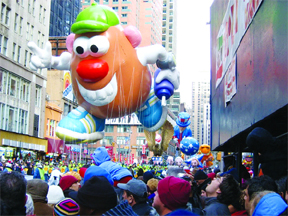
    As the country became more urban and family members began to live farther apart, Thanksgiving became a time to gather together. The holiday moved away from its religious roots to allow immigrants of every background to participate in a common tradition. Thanksgiving Day football games, beginning with Yale versus Princeton in 1876, enabled fans to add some rowdiness to the holiday. In the late 1800s parades of costumed revelers became common. In 1920 Gimbel’s department store in Philadelphia staged a parade of about 50 people with Santa Claus at the rear of the procession. Since 1924 the annual Macy’s parade in New York City has continued the tradition, with huge balloons since 1927. The holiday associated with Pilgrims and Native Americans has come to symbolize intercultural peace, America’s opportunity for newcomers, and the sanctity of home and family.
    Days of thanksgiving in Canada also originated in the colonial period, arising from the same European traditions, in gratitude for safe journeys, peace, and bountiful harvests. The earliest celebration was held in 1578, when an expedition led by Martin Frobisher held a ceremony in present-day Nunavut to give thanks for the safety of its fleet. In 1879 Parliament established a national Thanksgiving Day on November 6; the date has varied over the years. Since 1957 Thanksgiving Day has been celebrated in Canada on the second Monday in
    October.
    Thanksgiving is the most popular and well-known American holiday. Each year on the fourth Thursday of November, Americans gather to eat a traditional meal of turkey and pies, and spend time with family and friends. In fact, the Wednesday before Thanksgiving is the biggest travel day of the year in the country, as Americans drive and fly to go meet family.
    The holiday has become so much more than a simple day of thanks. With parades, TV specials, and more, Thanksgiving is seen as the kickoff of the holiday season. The Friday following the holiday has been dubbed “Black Friday” – a day that shoppers lineup early in the morning to get the best sales and discounts for their holiday shopping.
    Thanksgiving Day food
    Turkey has become all but synonymous with the holiday. According to the National Turkey Federation, nearly 90 per cent of Americans eat the bird — whether roasted, baked or deep-fried — on Thanksgiving Day. Other traditional foods include stuffing, mashed potatoes, cranberry sauce and pumpkin pie.
    Pardoning of turkey ceremony
    Since the beginning of the mid-20th century, the president of the United States has “pardoned” one or two Thanksgiving turkeys each year, sparing the birds from slaughter and sending them to a farm for retirement.
    Other countries that celebrate Thanksgiving Day holiday
    Canada has its own Thanksgiving Day, on the second Monday in October, and Liberia celebrates Thanksgiving on the first Thursday of November.
    Black Friday sale
    A month-long shopping season for the winter holidays begin after Thanksgiving, with Black Friday kicking off the season.