
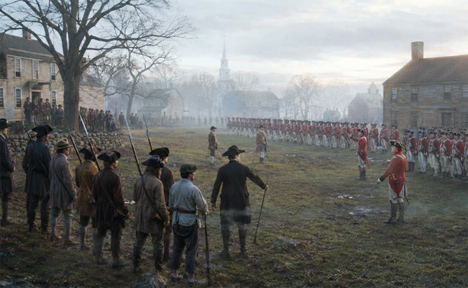

By early 1775, Massachusetts resistance had become organized and armed. Provincial leaders gathered military supplies at Concord; militia companies trained as minutemen. General Thomas Gage, the royal governor, received orders to enforce imperial authority and sent British regulars to seize the stores. Before dawn on April 19, riders including Paul Revere, William Dawes and Samuel Prescott spread warning that the regulars were advancing. At Lexington, a small militia company assembled on the green. An unidentified shot was fired. British troops opened fire, killing eight colonists. At Concord’s North Bridge, militia confronted the regulars and fired back. During the British retreat to Boston, militia attacked from roadsides, fields and buildings. No one on Lexington Green issued a declaration of independence. Many colonists still hoped reconciliation might be possible. But blood had been shed, armed New Englanders surrounded Boston, and the Second Continental Congress would soon assume the responsibilities of a government at war.
“The argument had become a rebellion. The rebellion had not yet become independence.”

Be the first to comment