Tag: Tibet

  • Only Dalai Lama can decide his successor, says India

    Only Dalai Lama can decide his successor, says India

    New Delhi (TIP)- In a terse message to China, India asserted on Thursday, July 3,  that the right to pick the 14th Dalai Lama’s successor rests with the incumbent and the institution, a day after Beijing said that his reincarnation must have its approval.

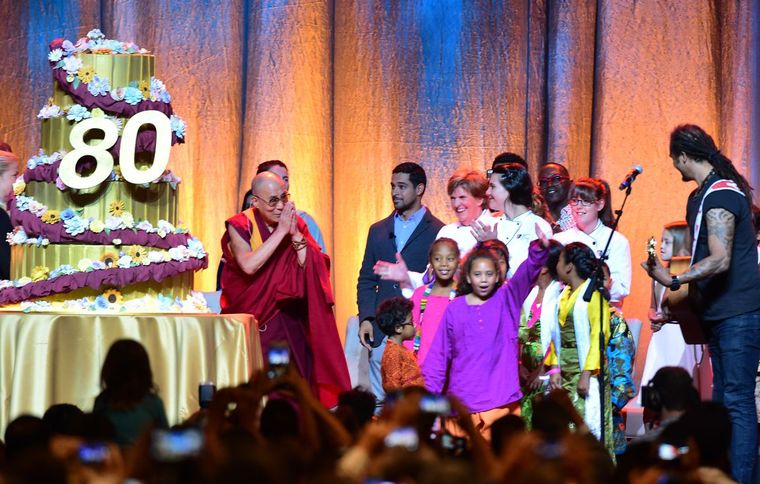
    India added that Union ministers Kiren Rijiju (BJP) and Rajiv Ranjan Singh (JDU), Arunachal Pradesh chief minister Pema Khandu and Sikkim CM Prem Singh Tamang will attend the Dalai Lama’s 90th birthday celebrations in Dharamshala on July 6.

    On Thursday, Rijiju said that the institution of the Dalai Lama is the most important and defining institution for Tibetans not just in Tibet but across the world. “And all those who follow the Dalai Lama feel that the Incarnation is to be decided by the established convention and as per the wish of the Dalai Lama himself… Nobody else has the right to decide it except him and the conventions in place,” Rijiju said. The minister said the Indian government’s decision to depute two senior ministers to attend the celebrations is not a political issue.

    India has for long stated that the process of naming the successor is a long standing tradition that the Dalai Lama undertakes and no third party has a role to play here.

    The Dalai Lama said on Wednesday that the 600-year-old institution of spiritual head of Tibetan Buddhists will continue after his death and a trust created by him will be the sole authority to recognise his reincarnation, effectively shutting out any role for China in choosing his successor.

    Speculation has swirled about the future of the institution since the Nobel laureate head of Tibetan Buddhism said in 2011 that he would decide on his 90th birthday – which falls on July 6 this year – whether the position should continue. His Wednesday announcement, which clarifies matters, came at a Tibetan religious conference in McLeodganj, near Dharamshala, that is part of a week of celebrations to mark his birthday.

    Hours later, an irate Beijing, which describes the Dalai Lama as a “separatist”, countered that the spiritual leader’s reincarnation “must be approved by the central (Chinese) government”.

    Chinese foreign ministry spokeswoman Mao Ning told a regular news briefing, “The reincarnation of the Dalai Lama, the Panchen Lama and other great Buddhist figures must be chosen by drawing lots from a golden urn, and approved by the central government.”

    “The Chinese government implements a policy of freedom of religious belief, but there are regulations on religious affairs and methods for managing the reincarnation of Tibetan living Buddhas,” she added.           Source: HT

  • MEA refutes China’s ‘6-point consensus’ claim

    MEA refutes China’s ‘6-point consensus’ claim

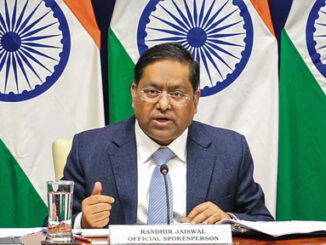
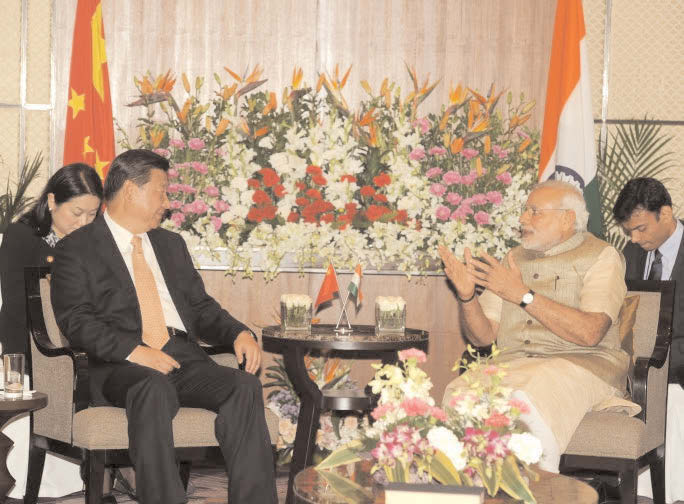
    NEW DELHI (TIP): Two days after China issued a statement giving its version on the outcome of the 23rd round of Special Representative talks in Beijing, the Ministry of External Affairs today said, “we stand by our statement’. The statement by China’s Foreign Ministry was at divergence from India’s statement describing the outcome of the talks conducted on December 18.

    The MEA spokesperson, Randhir Jaiswal, today, while answering questions on the differences in the two statements said “We stand by our statement. Our release gives a perspective on what happened in SR-level talks”. The statement by China’s Foreign Ministry was at divergence from India’s statement on the outcome of the December 18 talks.
    The Chinese ministry had said both sides reached a ‘six-point consensus’
    It mentioned putting the border issue in an ‘appropriate position’ and harked back to an agreement the two sides reached in 2005
    India had not mentioned any of these aspects in its statement
    The Chinese statement further added, “Both sides agreed to further refine the management rules for the border areas and strengthen confidence-building measures”
    The Indian statement did not mention anything to ‘refine’ border management rules
    The Chinese Foreign Ministry had said both sides reached a ‘six-point consensus’. It mentioned putting the border issue in an ‘appropriate position’ in bilateral relations and harked back to an agreement the two sides had made in 2005. India had not mentioned any of these aspects in its statement issued late on Dec 18.

    Answering a question on ‘six-point consensus’, Jaiswal said “our statement gives a perspective on what was discussed. We can speak for our press release only”.

    Meanwhile, sources on the Indian side said the phrase ‘six-point consensus’ is misplaced. These were points of ‘discussions’ between the two Special Representatives (SRs) — National Security Adviser Ajit Doval and Chinese Foreign Minister Wang Yi.

    For China, the ‘appropriate position’ of the border issue is to treat the matter as, one among, the many issues, sources said and added for India, a resolution of the pending boundary issue is a prime security concern and top-most priority. The Indian statement reflected it in as many words saying “reiterated the importance of maintaining a political perspective of the overall bilateral relationship while seeking a fair, reasonable and mutually acceptable framework for settlement of the boundary question and resolved to inject more vitality into this process”.

    The Chinese statement had a different take. It said “both sides reaffirmed their commitment to continuing to seek a fair, reasonable, and mutually acceptable package solution to the border issue in accordance with the political guiding principles agreed upon by the two countries’ special representatives in 2005”.

    The Chinese statement further added, “Both sides agreed to further refine the management rules for the border areas, strengthen confidence-building measures”. The Indian statement did not mention anything to ‘refine’ border management rules. It said, “Drawing on the learnings from the events of 2020, they discussed various measures to maintain peace and tranquility on the border and advance effective border management”. On expected lines, the two statements had a rather expected divergence. The Chinese side mentioned “promoting the resumption of pilgrimages by Indian pilgrims to Xizang”. Xizang is the name China uses to refer to Tibet.

    The Indian side just mentioned the resumption of the Kailash Mansarovar Yatra in its statement. Also, China mentioned resumption of trade via the Nathu La Pass in Sikkim. India remained silent on the issue.
    (Source: TNS)

  • Guru Nanak: The eternal traveler

    Guru Nanak: The eternal traveler

    By Navtej Sarna

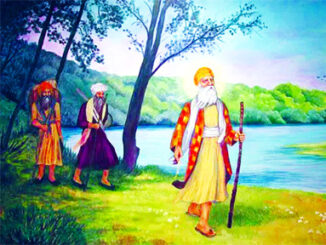
    In a unique example of spiritual wanderlust, Guru Nanak spent more than 20 years on the road, spreading his message of love, compassion and equality of man. At a time when there were no quick or sophisticated means of travel, he undertook four long journeys, called udasis, signifying detachment. Though scholars have laid out detailed routes that he may have used, concrete evidence of the exact order of his travels is difficult to find. Indications of the places he visited as well as his experiences are contained in the janam-sakhis, written some decades after his passing. Some details can also be discerned from Guru Nanak’s own hymns as well as in the writings of Bhai Gurdas, the scholar and amanuensis who first inscribed the Adi Granth in Guru Arjan’s presence. Bhai Gurdas’s poetic vision describes Nanak’s immense travels thus: Babe tare char chak/ nau khand prithvi sacha dhoa (The Baba traversed the nine regions of the earth, as far as the land stretched).
    It is believed that Guru Nanak certainly travelled as far as Assam in the east, present-day Sri Lanka in the south, Mount Kailash in the north and Mecca-Medina in the west. Some speculative accounts take Nanak even further afield. His mission took him to snowy heights and across burning deserts, through little villages and mighty capitals, among the ordinary as well as learned, to fairs, festivals, to temples, mosques, khanaqahs. These travels gave him an opportunity to observe the workings of the religions of the day in actual practice and to debate and discuss these matters of the spirit with sages and seers and also to dispel ignorance and blind ritualism, of which there was no dearth. Bhai Gurdas puts it thus: Dithe Hindu Turaki sabhi pir paikambari kaumi katele/ Andhi andhe khuhe thele (I saw Hindus and Muslims, holy men of all kinds/ The blind pushing the blind into a well).
    Today, gurudwaras and shrines mark Nanak’s travels to these far-flung places; local legends further establish the fact that the Guru indeed travelled extensively. Nanak was accompanied by Mardana on his travels, who carried and played the rabab, and also became an interesting protagonist of the many sakhis that are attached to these travels. One cycle of janam-sakhis and several illustrations show another companion, Bhai Bala.
    According to some sources, Guru Nanak dressed in strange clothes that could not be identified with any sect and symbolised the universality of his message. He wore a loose long shirt of a Muslim dervish but of brownish-red colour of the Hindu sanyasi. Around his waist he wore a white cloth belt like a fakir. A short turban Babe bhek banaia udasi ki riti chalai/ Charhia sodhan dharth lukai (The Baba donned robes, and in the tradition of detachment/ Went to put humanity on the right path) partly covered a qalandar’s conical cap in the manner of Sufi wanderers. His slippers were often of two different colours and designs. Sometimes it is said he wore a garland of human bones around his neck. As Bhai Gurdas wrote: Guru Nanak’s first journey took him to the east, as far as Assam and Dhaka. On the way, he visited places of pilgrimage, including Haridwar, Ayodhya, Varanasi, Kedarnath, Badrinath and Gaya. The janam-sakhis tell several tales of his discourses with learned yogis.
    He also visited the Jagannath temple in Puri in Orissa. This temple is known for its annual procession when the idol is mounted on a huge chariot and the multitudes that gather vie with each other for the privilege of pulling the chariot. Here is one version of what happened there: when Guru Nanak and Mardana camped near the temple, their hymns and music attracted several devotees on their way to the temple, annoying the priests. One day, the chief priest came to Nanak and invited him to join the aarti (evening prayer) in the temple and Guru Nanak readily accompanied him. It was a beautiful ceremony, conducted at dusk. The priest placed earthen lamps filled with ghee on a bejeweled salver decorated with flower petals and sweet incense. They lit the wicks and swung the salver pendulum-like in front of the image while the congregation sang hymns, blew conches and tolled the bells. Nanak sat unmoved through the ceremony, and when the priests expressed their anger and surprise, he responded with a song now part of the Granth Sahib.
    The song describes the celestial aarti in which the sky, the sun, the moon, the stars, the wind, the forests and the unstruck music pay obeisance to the great Creator. This, according to Nanak, was the true aarti that could be offered to God:
    The sky the salver, the sun and moon the lamps, The stars studding the heavens are the pearls
    The fragrance of sandal is the incense Fanned by the winds, all for thee The great forests are the flowers
    What a beautiful aarti is being performed For you, O destroyer of fear.
    The second journey took Guru Nanak south, to present-day Sri Lanka. He was accompanied by two Jat followers: Saido and Gheho.
    The third udasi of Guru Nanak was to the north. He travelled widely in the Himalayas—several scholars have traced his steps to Himachal Pradesh, J&K, Uttar Pradesh, Sikkim, Ladakh and even Nepal and Tibet. The central event of this northern udasi is the visit to Mt Sumer, recorded in all the janam-sakhis and also by Bhai Gurdas—Mt Sumer is said to be none other than Mt Kailash, the abode of Shiv and Parvati. There took place his meeting with 84 siddhas, among them the ancient souls Goraknath, Machendranath and Charpat Nath, or perhaps their spiritual successors, who had meditated long and deep and possessed great power and wisdom.
    In Bhai Gurdas’s version of the meeting, the siddhas express amazement at seeing Nanak: O youthful one! What power brings you to these heights? Who is that you worship? And Guru Nanak replied: the eternal Lord alone.
    The siddhas ask him how the world below fared. Guru Nanak made no secret of what he felt. He said darkness, sin and injustice had taken over the world. Corruption was rampant; the fence itself had begun to eat the crop.
    Sidh chhapi baithe parabati kaunu jagat kau par utara (The wise siddhas have escaped into the remote caves and mountains—who will then redeem the world?)
    Guru Nanak had several meetings with siddhas and yogis, in particular with those of the kanphata (split-eared) sect. His discourse with these holy men, in question-and-answer form, is contained in his Siddha
    Gosht, comprised of 73 verses in the Granth Sahib. The entire discourse is conducted in a spirit of humility, intellectual inquiry and tolerance. In this discourse, the siddhas argue that it was not possible to be part of the world and follow the path of meditation and spirituality. Nanak replied that one had to be as a lotus or a duck—to stay in the water but still remain dry. One had to be part of the world and yet be unaffected by it through meditation on His name. The fourth udasi took Guru Nanak to the west and to Islamic countries and important centres such as Mecca and Baghdad. It is said that he dressed in a blue robe in the manner of a Haji and carried a book, a staff and a small carpet for saying his prayers.
    Phir Baba gaia Baghdad no bahari kia asthana/ Ik baba akal rupu duja rababi Mardana (Then Baba went to Baghdad and camped outside the city/ He himself one with the Timeless, and his rabab player Mardana).
    Baghdad was then a great centre of Islamic learning, art and culture. On the outskirts of the city, in a graveyard, Mardana strummed the strings of his rabab in holy melody and Nanak sang hymns. When this was reported to the Pir-e-dastgir of Baghdad as being against the teachings of Islam, he came out to meet Nanak and inquired: Puchhia phirikai Dastgir kaun phakir kis ka ghariana (What faith do you belong to, and what sect of fakirs do you come from)? Mardana replied: Nanak kal vich aia rab phakir iko pahichana/ Dharth akash chahudis jana (Nanak has come to this world in kalyug/ He has rejected all fakirs except the Supreme Being, who is all pervasive—in the heavens, the earth and all four directions).
    During his stay in Baghdad, the Guru also met another pir known as Bahlol who had several discourses with him. Finally, Bahlol and his son became followers of Nanak, who then stayed there for about four months. A shrine in Baghdad, also known as the tomb of Bahlol, marks the visit of Guru Nanak and his association with Bahlol.
    After these four long journeys, Guru Nanak settled down at Kartarpur on the banks of the river Ravi. He discarded his travelling robes and put on the garb of a householder. It was time to give practical shape to his ideals and to show that true salvation lies in righteous living in this world, not in renunciation. A community of men of all faiths and callings, high and low, gathered around him. Several important traditions, including those of spiritual gatherings to listen to the praise of the Creator and the langar, or communal kitchen, were born here. It was here too that Guru Nanak gave up his body in 1539 after anointing Lehna, or Guru Angad, as his spiritual successor. (Navtej Sarna is a former ambassador of India to the US and author of several books, including The Book of Nanak)
    Source: India Today

  • Buddha Purnima

    Buddha Purnima

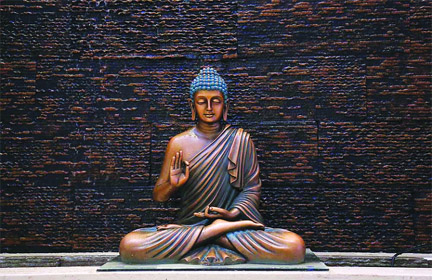
    Also known as Buddha Jayanti or Vaisakhi Buddha Purnima or Vesak, the festival of Buddha Purnima is based on the Asian lunisolar calendar and marks the birth of Gautama Buddha. It is celebrated with great fervour in India, Sri Lanka, Nepal, Bhutan, Tibet and numerous other South East Asian countries including Thailand, Tibet, China, Korea, Laos, Vietnam, Mongolia, Cambodia and Indonesia.
    he birthday of Gautam Buddha, the founder of Buddhism, is celebrated as Buddha Purnima across the world since he was born as Prince Siddhartha Gautama on the Purnima Tithi (full moon day) in 563 BC in Lumbini (modern day Nepal). In Hinduism, Buddha is considered as the ninth avatar of Lord Vishnu hence, this day is commemorated by Buddhists and Hindus all over the world.
    In Theravada Buddhism, it is also observed as the day when Buddha, born as Prince Siddhartha Gautama (c. 563-483 BCE) attained Nirvana (salvation) under the Mahabodhi tree at Bodh Gaya, Bihar, as well as his death anniversary. Gautama Buddha preached Dharma (duty), non violence, harmony and kindness. He left his worldly possessions and princedom at the age of 30 to lead a life searching for the truth, seeking penance in the hopes of liberating himself from suffering (duhkha).
    Devotees of Buddha visit temples, light candles and incense sticks, pray and offer sweets and fruits before the statue of Lord Buddha. Sermons on the life and teachings of Buddha are held and attended by followers all over. People usually dress in white, do not consume non-vegetarian food and distribute kheer, as according to Buddhist lore, on this day a woman named Sujata had offered Buddha a bowl of milk porridge.
    Many followers also free caged birds on this day as a symbol of empathy and compassion for all living beings, one of the most important teachings of Lord Buddha. In India, a large fair takes place in Sarnath, Uttar Pradesh, a major Buddhist pilgrimage site where Buddha is said to have delivered his first sermon after attaining enlightenment.
    Celebrations around the world
    Japan
    The festival in Japan is based on a different legend that says, a dragon appeared in the sky on Buddha’s birthday and poured soma over him, which is a Vedic ritual drink. In the modern arena, Japan celebrates Vesak by pouring amacha, a sweet tea on statues.
    Nepal
    Nepal is home to Lumbini-birthplace of Buddha, and Swayambhu-the holy temple for Buddhists also known as the Monkey Temple. The main door of Swayambhu is opened only on this day; hence, people from all over Kathmandu valley are stimulated by the event. Pilgrims across the world gather in thousands to celebrate Buddha’s birthday at his birthplace.
    Sri Lanka
    Sri Lanka celebrates Vesak for about one week! During this time, the selling of alcohol and fresh meat is prohibited with abattoirs also being closed. The celebrations here include giving of alms and erection of pandals wherein each pandal illustrates a story from the Jataka Tales. Food stalls are set up by Buddhist devotees that provide eatables and drinks to passersby. Also birds, insects and animals are released by the thousands in what is known as a ‘symbolic act of liberation’; of giving freedom to those who are in captivity, imprisoned, or tortured against their will.
    Apart from these, other Asian countries like Korea, Vietnam, Malaysia, Indonesia, and Singapore also participate in processions and prayers by monks and make this day a true symbol of spirituality.
    What Do People Do?
    Many Buddhists visit temples on Vesak to listen to monks give talks and recite ancient verses. Devout Buddhists may spend all day in one or more temples. Some temples display a small statue of Buddha as a baby. The statue is placed in a basin filled with water and decorated with flowers. Visitors to the temple pour water over the statue. This symbolizes a pure and new beginning.
    Many Buddhists pay special attention to Buddha’s teachings during Vesak. They may wear white robes and only eat vegetarian food on and around Vesak. Many people also give money, food or goods to organizations that help the poor, the elderly and those who are sick. Caged animals are bought and set free to display care for all living creatures, as preached by Buddha.
    Government offices, post offices and banks are closed in India on Vesak. Stores and other businesses and organizations may be closed or have reduced opening hours. Transport is usually unaffected as many locals travel for religious celebrations.
    Background
    Gautama Buddha was a spiritual teacher in India. Many scholars are uncertain when he lived. It is believed that Buddha was born at some time between sixth and fourth centuries BCE. Opinions among scholars are generally divided between those who place Buddha’s death about 480 BCE and those who place it as much as a century later.
    Buddha was an influential spiritual teacher during and after his lifetime. Many Buddhists see him as the Supreme Buddha. Festivals to honor Buddha were held for many centuries. The decision to celebrate Vesak as the Buddha’s birthday was formalized at the first conference of the World Fellowship of Buddhists. This conference was held in Colombo, Sri Lanka, in May, 1950. The date was fixed as the day of the full moon in May. Different Buddhist communities may celebrate Vesak on different dates in years when there are two full moons in May. This is because the Buddhist lunar calendar can be interpreted in different ways.
    Symbols
    The dharmacakra or dharma wheel is a symbol often seen during Vesak. It is a wooden wheel with eight spokes. The wheel represents Buddha’s teaching on the path to enlightenment. The eight spokes symbolize the noble eightfold path of Buddhism.

  • AS I SEE IT -“Our Nation Is like None Other; President Trump Is like None Other; Our Election Was like None Other; and 2020 Civil War Continues, As China Grabs Lands and Assets.”

    AS I SEE IT -“Our Nation Is like None Other; President Trump Is like None Other; Our Election Was like None Other; and 2020 Civil War Continues, As China Grabs Lands and Assets.”

    By Ravi Batra

    The Presidential Election on November 3, 2020 between Donald Trump and Joe Biden, in a perverse way, was somewhat akin to 9/11 – albeit, the conflict was internal – as our Republic was convulsing, our divisions deep

    and open, and the very fabric of our nation laid bare and in conflict. Despite being the

    preeminent nation of laws in human history, Law & Order was unwelcome to too many of our neighbors and fellow Americans. And a nation that was inhabited by those who abandoned a society encrusted with landed gentry for one that defined “fate” and “destiny” on the wings of “merit” alone – and called it the American Dream – was now seriously flirting with Communism’s more appealing sibling, Socialism – where all get what they need and want, by just taking it from those who got ahead. Sweet and Godly “compassion,” however, is not Socialism. Thrown in the dustbin created by hubris, these new American Leaders, like the Evil Queen in “Snow White” asking the “mirror,” “who is the fairest of them all,” these new Leaders – elected or community loud mouths – fancy themselves “perfect,” and issue mandates for removal of Monuments – even of George Washington; my favorite, Thomas Jefferson; the scoundrel, Alexander Hamilton; and even Abraham Lincoln, the Great Emancipator. And then there are folks who have no chance like General Robert E. Lee, who honorably accepted defeat in our great Civil War, or John Newtown, a slave-trader, who found God, became a Preacher, authored “Amazing Grace,” and helped cause slavery to be outlawed in Great Britain. Amazing Grace today defines hope itself. You need not be a devout Christian to know that Judas, who in a singular act of betrayal, gave up Jesus to the Romans and caused Him to be crucified, and, later became the well-loved “Saint Jude” – the Saint, who helps you find things you lost. Indeed, we are lost – in materiality, ego and self, which Mother Nature, heated up by global warming, is ready to eradicate humanity to save the planet – which many leaders fight about what started the fire, when every firefighter knows first “put out the fire,” then look for arsonists.   I know that hubris comes easily to the ignorant or the wicked. For our cherished Republic, a gift from Founders like Ben Franklin, either do harm; both together, are an existential threat – which about eighty (80) million Biden Voters and seventy-four (74) million Trump Voters have tasted together.  It is now the American Spring, in full blossom – in ways similar to the Arab Spring, and yet, in answer to it.

    President Donald J. Trump at a MAGA Rally

    The Great Disrupter – has achieved much good, from Criminal Justice Reform to kick-starting Middle East Peace to Warp Speed Vaccine for a battle-weary population, and our fiscal house anemic and bleeding jobs and souls. But his cadre of disruption-amplifiers, from Steve Bannon, Steve Miller, and our own Rudy Giuliani, are headed for positions – personal and policy – that are  more distant from “honor” and “truth,” but closer to the always sought-after “loyalty,” which weaves a path to the ever-attractive “consolidated power” – the very concept, and a goal – our cherished and honorable Founders deemed un-American, as it devalues American Exceptionalism – built, as it is, on the genius of purposefully separating “power,” by constitutional design, at every turn, and then again for benefits of redundancy – so as to deny “tyranny” a residence in these united States of America (“united,” being the humble lower case, yet more powerful, as an “adjective” always is over the proud and useless “noun.” Our original name was lower-case; our current, a noun).

    To not concede the election, and to even block the Biden Transition from full access to government resources, as federal law mandates, is pure Trumpian joy to his base. By that simple statement, we have upon us a new Civil War, where slavery is not the bone of contention – for there can be no proponents of that economic model, even as slavery was not originally racist, but an aftermath of victory in war: pillage & plunder. As slaves could be of the same race. It is later, about 500 years ago that slave-trading, like Blood Diamonds, became an evil enterprise in, and with, Africa. Indeed, the bronze door knocker to my office in Manhattan is of William Wilberforce – the enlightened soul who successfully campaigned to abolish the African Slave Trade in England, supported as he was, by John Newton. Sadly, not a single person has recognized that Great Abolitionist door-knocker in my office..

    This 2020 Civil War – is about Law & Order, and keeping the American Dream. They say, “[p]olitics makes strange bedfellows.”  Well, no one can truly argue that Joe Biden is against Law & Order, or isn’t a great supporter of the American Dream, even as New York State Attorney General Tish James and New York County District Attorney Cy Vance Jr. appear to not only argue, but are in court dealing with President Trump, for his actions as a civilian. Of course, POTUS’ Attorney General Bill Barr has until 11:59a.m. January 20, 2021 to do likewise to President Barack Obama and inter alia, then-Vice President Joe Biden, for their official acts, etc. We are in a Twilight Zone, in more ways that desirable.

    President-elect Joe Biden at a campaign rally

    There is no doubt that Joe Biden will be sworn in on January 20, 2021, and Kamala Harris, as an African-American woman (and situationally, also Indian-American) as our President and Vice President, respectively. The world leadership has collectively let go and breathe deeply – independent of Eric garner and George Floyd who made that act famous, as each came loaded with baggage – as normalcy, defined by centuries of wisdom embedded in protocols, will re-emerge, an state secrets will again separate policy errors from policymakers, and leave public “respect,” at maximum strength as a calibrated tool, all the way to public “insult,” leaving “private insult” to be candidly used, with the percussion effect of a table smacked in anger for emphasis. But, I write to issue a “Surgeon General’s Warning” to the body politic here at home, and across the world: Donald J. Trump may have come down the escalator almost alone on June 15, 2015 to throw his hat in the ring to be POTUS 45, but on January 20, 2021 he takes with him almost 75 million Trump Voters, and 88.9 million Twitter followers. Poetically, I note that Trump-the-POTUS has 32.8 million Twitter followers. All prior Presidents over last 50 years or more, have largely remained silent and kept quiet after leaving the White House, and declining, in the main, to opine on their successor.

    “Normalcy,” at Least Political and Geopolitical, Is Now Consigned to History.

    Well I hate to say this, but President-Elect Joe Biden and leaders across the world, buckle up!

    As Donald J. Trump, to the great delight of his large and effusive base, will not go quietly into the night and instead, will opine even more freely on matters big and small, public and private. Republicans, let alone Mitch McConnell and Kevin McCarthy, also are not free to go back to “normalcy,” as Trump “owns” the Republican party’s base.

    We are now blessed with an activated citizenry, which makes governance more transparent, and responsive. That, used to be good. It still will be, not because we, as Americans are better than other human beings, but because we live in a nation that our Founders created with an architectural design that exceeds the Pyramids, Parthenon, Colosseum, Great Wall of China, and the Taj Mahal. America is designed to harness competing and ambition-driven energy for self-gain, and turn it into enhancing the public good. Pure alchemy.

    Politicians who wish to be shepherds of quiet and distracted sheep, as before, will have to be on top of their game, to figure out where the public wants to go, and then get there first, so as to lead. Perhaps, Lincoln’s Gettysburg recipe, Government of, by and for the people, will finally pay dividends to the most elusive of that trilogy: “for the people.”

    The lab of global suffering -The Wuhan Lab

    The great battle upon us is: Can Americans be safe without the Police, and can the merit-based American Dream co-exist with Socialism? And, in addition, another battle rages: Social Media, be it Big Tech or individual users, will they destroy representative democracy, as they did the media, and render it into merely Mob Rule, aka direct democracy – the one that killed the great Socrates in Athens for being a “nag” and asking the question, “why.” And, then, there is yet another battle that will render the above two irrelevant: the Chinese Communist Party (CCP) Chairman Mao, a mastermind and globally under-estimated, created a 100 year plan, that included their “Golan Heights” (well before Golda Meir, born in Kyiv, seized it in 1973, and Bibi Netanyahu recently renamed, Trump Heights), with the secret 1949 Karachi Agreement land acquisition, the size of which would leave one breathless; followed up, by swallowing Tibet in 1958, etc.; and reviving Chinese’s Ming Dynasty’s Tribute System – as opposed to Western Nations’ Feudalism – is Commercial favoritism and tributes paid to China, the superior nation. Their OBOR, BRI, and inter alia, AIIB, has weaponized money-giving into land-grabbing in exchange for non-payment of debt – converting unpaid loans to seizure of land and assets that a traditional war could not achieve for China. Having weaponized debt, they weaponized reefs, as in Mischief Reef, and since late last year, they weaponized Viruses by lab-engineering them to bypass human auto-immune system with a “master key,’ the spike glycoprotein, a Trojan Horse, and gave it a deceptively harmless name of coronavirus or Covid-19, and used it to start an undeclared war against us, and the rest of the world.

    Unleashing this Virus is a crime against humanity. It’s like a Bond movie, where they are playing for the world. Well, sadly and infuriatingly, 250,000 Americans have died, and more will in CCP’s Undeclared War on all of us. And yet, we do nothing, other than try to find a vaccine and accuse each other of not fighting the virus correctly. Leaving China unpunished and worse, un-stopped. I tried, and failed, to get Trump as president to cancel China’s debt here, as well as globally, just to offset, in part, the damage and injury China caused. War reparations can only occur – if we are willing to stand up – or will we profit our way into slavery, Ming Style?

    The recent election was a fraud on the Voters. They were told we are fighting “an invisible enemy” (or “we were not fighting the Virus correctly”) No we are not. The virus is invisible; the enemy isn’t. Indeed, look at any map – from 1949 – and all of us can all find it. Show me a current map issued by China, aside from its breathless growth, partially, illegally, it is hard to miss.Hat tip to Marcus Aurelius: Neville Chamberlain Was an Honorable and Reasonable Man.

    Finally, Neville Chamberlain was the epitome of normal leadership, and saw in Hitler, our own mistakes that created the disastrous Weimar Republic and gave birth to the Third Reich. He dealt with him, in a calibrated way. He lost. Churchill begged FDR to get involved, joined up with Stalin, no angel, and faced Hitler down. Chairman Mao, and his hand-picked successors, an unbroken line of the faithful High Priests of Maoism, with President Xi Jinping being an exceptional leader worthy of not only rejuvenating the Ming Tribute system, but a reincarnation of Chairman Mao in a Brooks Brothers Business Suit.

    POTUS Must Do More.

    President Trump – will you ignore the Trademarks given to you and the lovely Ivanka – and use your remaining days as America’s fiduciary and defend us – as FDR did after Pearl harbor – when we have now suffered more deaths than 100 Pearl Harbors?

    Wolf Warriors Stay at Home and Safe, While Virus Kills Relentlessly.

    President-Elect Joe Biden – will you stand up and defend us from the Wolf Warriors that stay comfortably at home, as their Virus does its damage unrelentingly, including, Denmark’s recent discovery of a mutant strain, Cluster 5, which the WHO says is drug resistant. That means the current vaccines – Pfizer’s and Moderna’s 95% effective –  are not effective against it.

    We are on the precipice of an Armageddon, death-by-virus and starvation-by-lockdown, while China seizes property and assets in exchange of “debt” for  “equity.” Exactly what we didn’t teach the Russians after the Berlin Wall came down, which our CPAs and Attorneys know so well to keep the capital markets robust for capitalism to work, China created a different system, just as they are creating at every level, including, making our use of sanction-capacity as a punishment irrelevant. Just ask Russia, Iran and China how they do business, and settle the business accounts outside of “SWIFT”.

    n God We Trust

    Time to heal – may be premature – unless, President Biden can assure 74 million Trumpers that Law & Order is necessary for Public Safety, which is even more important than Public Health, and that the American Dream – meritocracy – is what our cherished separated-powers regime aimed to achieve in perpetuity. And, then, and only them, will E Pluribus Unum be a fact, instead of a slogan.

    (The author is an eminent  attorney based in New York. He can be reached at   ravi@ravibatralaw.com            Twitter @RaviBatra)

  • China setting up world’s highest-altitude data centre in Tibet

    China setting up world’s highest-altitude data centre in Tibet

    Beijing/Lhasa (Tibet) (TIP): China is building the world’s highest-altitude cloud computing data centre in Tibet that will meet the data storage needs of the country and South Asian nations like Nepal, Bangladesh and Pakistan, official media reported On Thursday. The data centre is situated in a high-tech zone of the Tibetan regional capital city of Lhasa and located at an altitude of around 3,656 metres, making it the highest-altitude data centre in the world, state-run Xinhua news agency reported. With a total planned investment of 11.8 billion yuan (over USD 1.80 billion), the project will provide services in areas such as video rendering, autonomous driving, distance-learning data backup, among others, according to its Lhasa-based operator, the Ningsuan Technology Group. It is expected to provide those services to major Chinese provinces and cities, as well as Nepal, Bangladesh, Pakistan and part of Southeast Asia, said the company. The first phase of the project is expected to be put into operation in 2021, said the report. After the completion of phase one, the data centre will have 10,000 machine cabinets and an annual revenue of 1.5 billion yuan (about USD 223.5 million), meeting the data storage needs of key clients in the country and in South Asia. Wang Jun, Ningsuan’s vice president and chief marketing officer, said as Lhasa pushes forward with the construction of a regional bureau for stepping up international communications services, Tibet will become a big-data industrial base. PTI

  • Beijing sends conciliatory signals after Doval’s first meeting with his Chinese counterpart Yang Jiechi

    Beijing sends conciliatory signals after Doval’s first meeting with his Chinese counterpart Yang Jiechi

    BEIJING (TIP): In the first official meeting between top Indian and Chinese officials since the Doklam stand-off+ became public, national security adviser Ajit Doval met state councillor Yang Jiechi here on July 27, offering the possibility of serious diplomatic efforts to deescalate the confrontation.

    Yang, who as China’s state councillor overseeing foreign affairs occupies a powerful position in the state council, is the Chinese nominee in the India-China special representative level dialogue with Doval. An influential post, the state councillor is a member of the state council.

    Indications of how the bilateral meeting went could be gleaned by the commentary released by the official Xinhua news agency which sent out a conciliatory signal before Doval is expected to meet Chinese president Xi Jinping on Friday. It spoke of the need to enhance mutual trust as the two countries are “not born rivals”.

    The comments released by the official Xinhua news agency made a strong plea to avoid the possibility of a war. “Most economies, including those in the West, will find themselves negatively affected by an India-China war in a globalised and intertwined world today,” it said. In Delhi, the Indian government reminded China of the agreements on peace and tranquility that go back to 1993.

    Yang also held separate meetings with security officials of three other countries on the sidelines of a security dialogue of BRICS nations comprising Brazil, Russia, India, China and South Africa.

    He discussed issues concerning bilateral relations, international and regional issues and multilateral affairs with the visiting security officials, the official Xinhua news agency said.

    The remarks are a contrast to the hectoring tone in the comments published in publications like Global Times that are seen to reflect the views of the government.

    China’s official spokespersons have accused India of trespassing into Chinese territory, ignoring India’s protests that the face-off near the Sikkim-Tibet-Bhutan trijunction has been caused by unilateral attempts by China to alter the ground position.

    There are signs that the two neighbours might be able to scale down tensions that have spiked due to the military muscle flexing over China’s bid to build a road through a plateau in Bhutanese territory.

    This is the first time in weeks that the official media ran a commentary without demanding withdrawal of Indian troops from the disputed Doklam region. China has so far been insisting that troop withdrawal is a pre-condition to a “meaningful dialogue”.

    Doval reached Beijing on Thursday ahead of his planned meetings with Chinese President Xi Jinping and state counsellor Yang Jiechi on Friday. “The recent border issue between the two countries shows a lack of strategic trust on the Indian side,” Xinhua said.

    It is not China but a set of problems common to all developing countries like corruption, a lack of quality education and healthcare that is holding back India.

    “India must understand that China wishes what’s good for the Indian people and would love to see a strong India standing shoulder by shoulder with China,” Xinhua, which reflects the government’s thinking said, giving an emotional touch to the vexed relationship.

    Doval’s formal purpose of visiting Beijing is to attend a security dialogue of BRICS nations. He is expected to discuss the border standoff with Chinese leaders in separate meetings. Chinese foreign ministry has said that bilateral meetings are usually held during BRICS meetings and indirectly confirmed meetings on the border issue with Doval.

    “Instead of being rivals, India and China have much more common ground, common interests and common aspirations. Both as developing countries, the two need to work together on important issues like fighting climate change, protectionism and the financial privileges of Washington,” Xinhua said.

    It further said, “Hopefully, wisdom will guide the two countries to common prosperity. There is more than enough room for them to co-exist and thrive in Asia and in the world”.

    “Both China and India need to enhance communication and nurture trust between them, first by recognizing that the two are not born rivals and that harboring ill will against each other is dangerous,” Xinhua added.

  • China steps up warning to  Botswana over Dalai Lama visit

    China steps up warning to Botswana over Dalai Lama visit

    BEIJING (TIP): China stepped up its warning to Botswana on July 27 over a planned visit by exiled Tibetan spiritual leader the Dalai Lama next month, demanding the African nation respect China’s core interests.

    The Dalai Lama, reviled by Beijing as a dangerous separatist, is expected to address a human rights conference in the capital, Gaborone, on August 17-19 and will also meet Botswana’s president. China is a major investor in Botswana’s economy.

    China has already “clearly” expressed its point of view about the Dalai Lama’s visit, Foreign Ministry spokesman Lu Kang told a daily news briefing. “Issues relating to Tibet concern China’s sovereignty and territory integrity. We demand the relevant country earnestly respect China’s core interests and make the correct political decision on this matter,” Lu said, using stronger language than before on the issue.

    “China will not interfere in other countries’ internal affairs, but will certainly not tolerate another country doing anything that harms China’s core interests,” he added, without elaborating.

    The Dalai Lama, who fled from Tibet into exile in India in 1959 following a failed uprising against Chinese rule, has long been at loggerheads with China, which sent its troops into Tibet in 1950.

    The Dalai Lama, who won the Nobel Peace Prize in 1989, denies he is seeking independence for his Himalayan homeland. He says he is merely seeking greater rights, including religious freedom and genuine autonomy. Visits by the Dalai Lama to foreign countries infuriate China. (Reuters)

  • Nepal in talks with China to build $8 bn cross-border rail link

    Nepal in talks with China to build $8 bn cross-border rail link

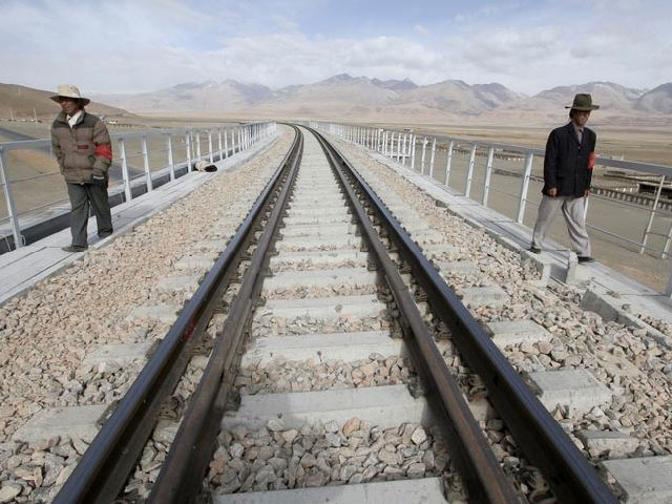
    BEIJING (TIP): Nepal is in talks with China to build a cross-border rail link that may cost up to $8 billion, and funding could be expected after Nepal formally signed up to Beijing’s Belt and Road initiative, a Nepali finance ministry official said on May 14.

    Yug Raj Pandey, an under-secretary at Nepal’s ministry of finance, told Reuters the proposed 550 kilometre-long railway would connect China’s western Tibet region to Nepal’s capital of Kathmandu and will carry goods and passengers.

    The Himalayan nation officially signed an agreement two days ago to be part of President Xi Jinping’s ambitious plan to build a new Silk Road, he said on the sidelines of the Belt and Road Forum in Beijing.

    “Now we are a member of (the initiative) we can get some specific project assistance from China’s government. We expect it for the railway,” he said. “Once we connect by railway then we can increase our trade and invite more tourists to Nepal.”

    Pandey said the two countries had been in discussions for the past five months about the project, which could cost $7-8 billion and take up to eight years to complete.

    He said Nepal planned to start preparing a detailed project report for the railway, and that they had yet to decide how much funding they will seek from China.

    The railway will travel over 400 kilometres in China to the Nepal border, and then about another 150 kilometres from the Nepali border to Kathmandu, he said.

    (Reuters)

  • UTTARAKHAND Nestled in the lap of the Himalayas

    UTTARAKHAND Nestled in the lap of the Himalayas

    UTTARAKHAND

    Nestled in the lap of the Himalayas

    Uttarakhand is one of the most beautiful northern states of India located on the southern slope of the Himalayan range. Mighty Himalayan peaks and glaciers are on its north where it borders Tibet. Nepal is on its east, Indian state of Uttar Pradesh is on south and Himachal Pradesh lies on its west and northwest. 65% of its area is covered by dense forests that are home to Royal Bengal tiger, leopards and many other endangered animal and plant species. The glaciers of two of the most important rivers—Ganga and Yamuna— are located here.

    It has something to offer to every kind of traveller. For wildlife lovers, Jim Corbett National Park—the oldest national park of the Indian subcontinent is a must visit. Many rare Himalayan birds can also be spotted here besides Pangot and Sattal. For adventure seekers there are some of India’s best trekking trails like Valley Of Flowers, Roopkund, and Chopta-Chandrashila. It also provides immense opportunities for adventure sports, such as skiing at Auli and white water rafting at Shivpuri. Popularly known as the ‘Land of Gods’, it is home to numerous holy places like Gangotri, Yamnotri, Kedarnath, Badrinath, Rishkesh and Haridwar. Therefore, thousands of pilgrims throng the state every year. Amazing hill stations like Chakrata, Mukteshwar, Dhanaulti and Munsiyari make Uttarakhand a sought after tourist destination for leisure trips. Here’s a list of destinations in Uttarakhand that every nature lover would love to visit.

    CHAKRATA

    Having breakfast with the view of snow covered Himalayan peaks on a lazy morning while soft rays of winter sun embrace your body and soul while cool breeze kisses you is something city people always crave for. Chakrata located at a distance of 330 km from Delhi, is a tiny hamlet which is a perfect place to do so. There are two routes to drive from Delhi to Chakrata, one is via Panipat and Kurukshetra and the second one is via Loni and Saharanpur, which supposedly is more beautiful and has less traffic.

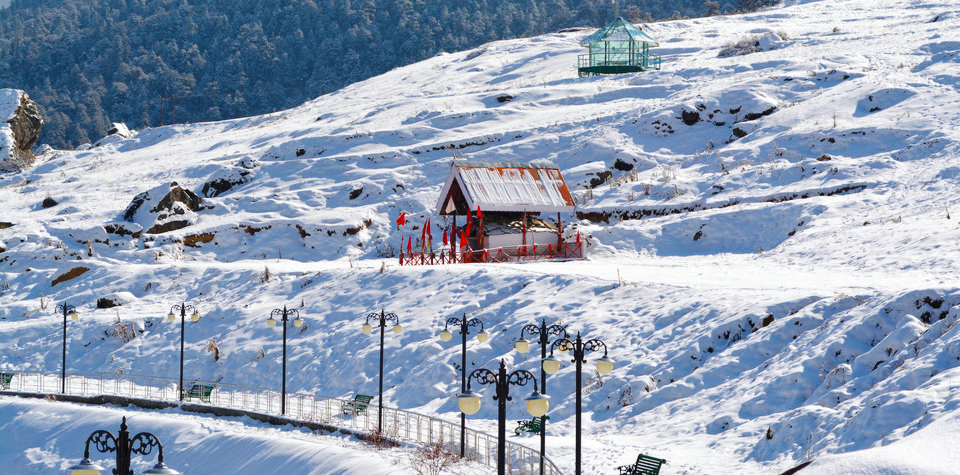
    Chakrata is a small cantonment town in Dehradun district resting at an elevation of about 7500 ft. The town gets a magnificent view of the snow covered Himalayas and is covered in deodar, Himalayan oak and rhododendron forest. Many day trips to places like Deoban, Koti, Kanasar can be done with Chakrata as base. There are some easy treks also around Chakrata that your hotel guys can arrange for you. There are not many hotels in the area so make sure to book your accommodation inadvance. Chakrata is a year round destination; the winter season is perfect to experience snow, greenery is at its best during the monsoon season and the summer season too is quite pleasant.

    AULI 

    Auli is one of the most beautiful places of Uttarakhand. Bordered by snow-covered Himalayan peaks, Auli is enveloped in dense golden oak and pine forest with green meadows and slopes ranging from a height of 2519 m to 3049 m. It is considered to be a world-class spot for skiing. GMVN winter resort here provides skiing facility, besides ski training for aspirants. Almost from everywhere in Auli, you can enjoy stunning views of the lofty mountain ranges—Nanda Devi, Mana Paravat and Kamat.

    The golden rays of sun on the snow-laden peaks fill the atmosphere with a divine glow. The 3rd highest peak of the world—Nanda Devi gleams like the crown of the region. There is an open cable-car to go up to the spot where skiing is done. Even if you do not want to ski, you have plenty of things to do. Climb up the slopes, play with snow, ride a sledge and who knows you might feel like trying skiing too. The best time to visit Auli is in between December and March.

    CORBETT

    Spread across an area of 520.8 sq km, Jim Corbett National Park is located in Nainital district of Uttarakhand. It is the oldest national park, and is named after Jim Corbett who was the main person behind this establishment. The park is divided in 5 zones—Bijrani, Jhirna, Durgadevi, Dhikala, Sitavani—and is inhabited by royal Bengal tiger, leopard, jungle cat, barking deer, hog deer, cheetal, sloth bears, otters, Himalayan goral, Indian pangolins, langur and many other wild animals.

    Many rare birds can also be spotted in the region. Gorgeous Corbett National Park is one of the favourite destinations equally for wildlife lovers and weekenders. It is just 235 km away from capital city and can be reached in couple of hours. It features splendid landscapes and offers a good amalgam of hills, rivers, forests, marshlands and grasslands. The park is open from the months of November through June. The park is kept closed in the monsoon season as the roads inside the park get washed away due to rain. After the monsoon season, repair work starts and ends only by November.

    TEHRI DAM

    A beautiful uphill drive through the hills covered in pines and small villages will take you to this dam. It is built on the Bhagirathi River in Uttarakhand and is the tallest dam in India. It is counted amongst 5 highest dams in the world, with 855 ft high rock and earth-fill embankment that makes it an engineering marvel. Its length is 1886 ft, crest width is 66 ft and base width is 3701 ft and generates 2400 MW of power. There is a viewpoint near the Bhagirathipuram bus stop from where you can have a majestic view of the entire dam. During the construction of the Tehri Dam, a huge water body was created. The tourism department has developed this 44 sq km artificial lake, as a tourist spot with arrangements of various water sports like jetski, kayaking, canoeing, boating, diving, snorkelling etc on the lake. You can also visit the botanical garden, located at New Tehri, that features a range of beautiful flowers.

    MUKTESHWAR

    Staying in middle of fruit orchards in tents and eating garden fresh meals while looking at the Himalayan peaks covered in fresh snow are a few of the many beautiful memories I have of Mukteshwar. You can walk through the dense pine forest and enjoy stunning views of the mighty mountains. Situated at an altitude of 7500 ft in the lap of Kumaon hills, Mukteshwar is an ideal nature get away from Delhi. It just takes 7 hrs from Delhi to reach Mukteshwar via Gajraula, Rampur, Haldwani and Bhowali. Summer months (March to July) are the best months to visit Mukteshwar. If you want to experience snow, visit during Jan or Feb when the whole area is covered in snow and looks stunningly beautiful. If you happen to visit this place around the month of June, the harvesting season, you’d find many fruits like peaches, plum and apricot. And if you still did not have your fill, Mukteshwar has many fruit orchards and you might get lucky to get offered the fruits just plucked from the trees by villagers.


  • Tibetan lama gives up monkhood to marry childhood friend

    Tibetan lama gives up monkhood to marry childhood friend

    NEW DELHI (TIP): A senior Tibetan lama based in India, who is one of the claimants to the title of Karmapa Lama, has married a childhood friend and abandoned monkhood, his office announced on Marck 30, Thursday.

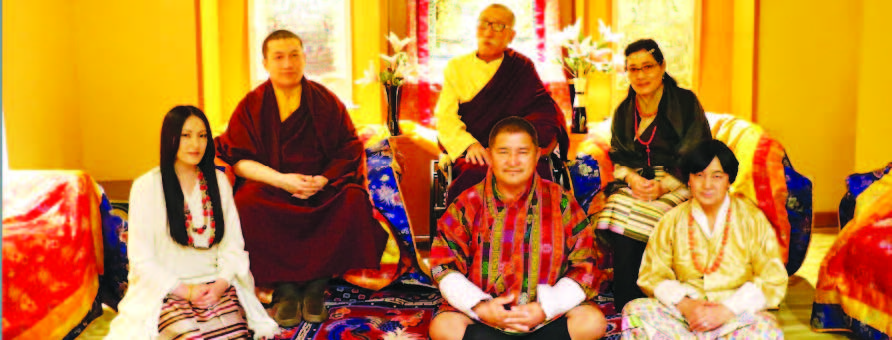
    Thaye Dorje, 33, married Rinchen Yangzom, 36, in a private ceremony attended by close family members in New Delhi on March 25. His office described the couple as “close childhood friends” who have known each other for more than 19 years.

    “I have a strong feeling, deep within my heart, that my decision to marry will have a positive impact not only for me, but also for the lineage,” Thaye Dorje was quoted as saying in a statement posted on his website.

    “Something beautiful, something beneficial will emerge, for all of us.”

    Rinchen Yangzom, whose Tibetan name means “precious prosperity gathered”, was born in Thimphu and was educated in India and Europe. Thaye Dorje proposed to her according to Tibetan traditions on January 19. A spokesman for Thaye Dorje said that he will no longer be a monk but will continue “as the lineage lama and as the Karmapa, including by offering teachings and blessings to students around the world”.

    The statement said Thaye Dorje “appreciates that the news of his marriage will come as a surprise to many, and has faith that his students will understand his wish to have kept private this personal element of his very public life”. He and his wife will make their first public appearance together in Bodhgaya in December this year.

    Thaye Dorje has claimed since childhood to be the reincarnation of the Karmapa Lama, the 12th century leader of one of the four major schools of Tibetan Buddhism.

    Ogyen Trinley Dorje, another monk who fled from Tibet to India in 1999, is recognised by many followers of the Karma Kagyu school as the Karmapa Lama. He is also recognised by the Dalai Lama.

    The spokesman said Thaye Dorje has been the “Karmapa from birth” and will “continue his activities as the Karmapa”. He added, “He will hold meditation sessions and will continues his travels, including a European tour that will take him to countries such as Sweden and Spain.”

    The 15-day period following the wedding is a “sacred time” and Thaye Dorje and his wife will spend this time with their extended families, the spokesman said.

    Thaye Dorje was born in Tibet and his father was a high lama while his mother was descended from Tibetan nobility. According to his official biography, he was one-and-a-half years old when he started telling people that he was the Karmapa Lama.

    The Karmapa Lama is not the only senior Tibetan Buddhist title to be disputed.

  • MUST-VISIT DESTINATIONS IN #UTTARAKHAND

    MUST-VISIT DESTINATIONS IN #UTTARAKHAND

    Uttarakhand is one of the most beautiful northern states of India located on the southern slope of the Himalayan range. Mighty Himalayan peaks and glaciers are on its north where it borders Tibet. Nepal is on its east, Indian state of Uttar Pradesh is on south and Himachal Pradesh lies on its west and northwest. 65%of its area is covered by dense forests that are home to Royal Bengal tiger, leopards and many other endangered animal and plant species. The glaciers of two of the most important rivers—Ganga and Yamuna—are located here.

    It has something to offer to every kind of traveller. For wildlife lovers, Jim Corbett National Park—the oldest national park of the Indian subcontinent is a must visit. Many rare Himalayan birds can also be spotted here besides Pangot and Sattal. For adventure seekers there are some of India’s best trekking trails like Valley Of Flowers, Roopkund, and Chopta-Chandrashila. It also provides immense opportunities for adventure sports, such as skiing at Auli and white water rafting at Shivpuri. Popularly known as the ‘Land of Gods’, it is home to numerous holy places like Gangotri, Yamnotri, Kedarnath, Badrinath, Rishkesh and Haridwar. Therefore, thousands of pilgrims throng the state every year. Amazing hill stations like Chakrata, Mukteshwar, Dhanaulti and Munsiyari make Uttarakhand a sought after tourist destination for leisure trips. Here’s a list of destinations in Uttarakhand that every nature lover would love to visit.

    CHAKRATA

    Having breakfast with the view of snow-covered Himalayan peaks on a lazy morning while soft rays of winter sun embrace your body and soul while cool breeze kisses you is something city people always crave for. Chakrata located at a distance of 330 km from Delhi, is a tiny hamlet which is a perfect place to do so. There are two routes to drive from Delhi to Chakrata, one is via Panipat and Kurukshetra and the second one is via Loni and Saharanpur, which supposedly is more beautiful and has less traffic.

    uttarakhandChakrata is a small cantonment town in Dehradun district resting at an elevation of about 7500 ft. The town gets a magnificent view of the snow covered Himalayas and is covered in deodar, Himalayan oak and rhododendron forest. Many day trips to places like Deoban, Koti, Kanasar can be done with Chakrata as base. There are some easy treks also around Chakrata that your hotel guys can arrange for you. There are not many hotels in the area so make sure to book your accommodation in advance. Chakrata is a year round destination; the winter season is perfect to experience snow, greenery is at its best during the monsoon season and the summer season too is quite pleasant.

    AULI

    Auli is one of the most beautiful places of Uttarakhand. Bordered by snow-covered Himalayan peaks, Auli is enveloped in dense golden oak and pine forest with green meadows and slopes ranging from a height of 2519 m to 3049 m. It is considered to be a world-class spot for skiing. GMVN winter resort here provides skiing facility, besides ski training for aspirants. Almost from everywhere in Auli, you can enjoy stunning views of the lofty mountain ranges—Nanda Devi, Mana Paravat and Kamat.

    The golden rays of sun on the snow-laden peaks fill the atmosphere with a divine glow. The 3rd highest peak of the world—Nanda Devi gleams like the crown of the region. There is an open cable-car to go up to the spot where skiing is done. Even if you do not want to ski, you have plenty of things to do. Climb up the slopes, play with snow, ride a sledge and who knows you might feel like trying skiing too. The best time to visit Auli is in between December and March.

    CORBETT

    Spread across an area of 520.8 sq km, Jim Corbett National Park is located in Nainital district of Uttarakhand. It is the oldest national park, and is named after Jim Corbett who was the main person behind this establishment. The park is divided in 5 zones—Bijrani, Jhirna, Durgadevi, Dhikala, Sitavani—and is inhabited by royal Bengal tiger, leopard, jungle cat, barking deer, hog deer, cheetal, sloth bears, otters, Himalayan goral, Indian pangolins, langur and many other wild animals. Many rare birds can also be spotted in the region.

    Gorgeous Corbett National Park is one of the favourite destinations equally for wildlife lovers and weekenders. It is just 235 km away from capital city and can be reached in couple of hours. It features splendid landscapes and offers a good amalgam of hills, rivers, forests, marshlands and grasslands. The park is open from the months of November through June. The park is kept closed in the monsoon season as the roads inside the park get washed away due to rain. After the monsoon season, repair work starts and ends only by November.

    MUKTESHWAR

    Staying in middle of fruit orchards in tents and eating garden fresh meals while looking at the Himalayan peaks covered in fresh snow are a few of the many beautiful memories I have of Mukteshwar. You can walk through the dense pine forest and enjoy stunning views of the mighty mountains. Situated at an altitude of 7500 ft in the lap of Kumaon hills, Mukteshwar is an ideal nature get away from Delhi. It just takes 7 hrs from Delhi to reach Mukteshwar via Gajraula, Rampur, Haldwani and Bhowali. Summer months (March to July) are the best months to visit Mukteshwar. If you want to experience snow, visit during Jan or Feb when the whole area is covered in snow and looks stunningly beautiful. If you happen to visit this place around the month of June, the harvesting season, you’d find many fruits like peaches, plum and apricot. And if you still did not have your fill, Mukteshwar has many fruit orchards and you might get lucky to get offered the fruits just plucked from the trees by villagers. The taste of crunchy fresh peaches plucked from a road side tree of an orchard that belonged to a generous local who gladly offered us to pluck as many as we want, is still fresh in my mouth. Mukteshwar has recently got very popular among those looking for holidays in offbeat destinations and hence there is a wide range of options to stay starting from camps to budget hotels to boutique hotels.

    KAUSANI

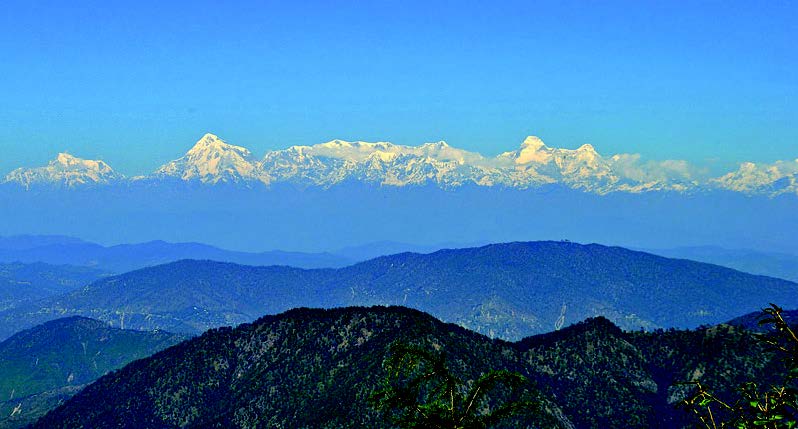
    Kausani is a quiet little town in the Kumaon region of Uttaranchal, 420 km away from Delhi. It offers breathtaking panoramic views of the snow-capped peaks of Panchchuli, Nandakot, Nanda Devi, Trishul, Nanda Gunti and Chaukhamba. If weather is favorable you might witness the best sunrise of your life here with soft golden light of morning sun creating magic over the peaks. This can be best witnessed from the GMVN guesthouse some 2 km away from the main town. There are many attractions close by of which Anasakti Ashram, Tea Estate and factory, Rudhradhari Falls and caves, and Burha Pinnath are the prominent ones.

    Gandhiji stayed at Anasakti Ashram for 2 weeks. It is also known by the name Gandhi Ashram and is just 1 km away from the main town. It is basically a simple cottage engrossed with the teachings of the Mahatma. A part of this ashram offers accommodation too. The Tea Estate and factory is only 3 km away from Kausani towards Baijnath.

  • Chinese military equips all ground forces with new attack helicopters

    Chinese military equips all ground forces with new attack helicopters

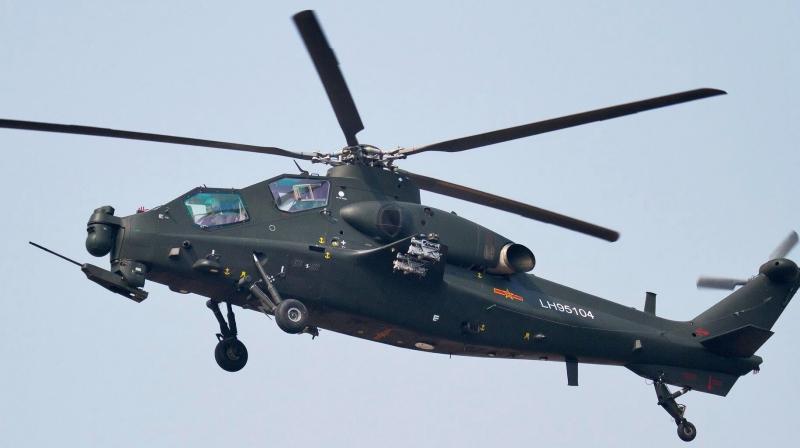
    BEIJING (TIP): China’s military has equipped all of its ground forces with advanced WZ-10 combat helicopters which will be used to target battle tanks and air-to-air combat missions, a strategic move which could have implications for India .

    Several WZ-10s have been delivered to an aviation brigade of the PLA’s 13th Group Army under the Western Theatre Command, the People’s Liberation Army’s TV news channel reported.

    This means that all of the Army’s aviation units now have this advanced attack helicopter, state-run China Daily reported.

    Senior Colonel Xu Guolin, deputy chief of the PLA Army’s Aviation Equipment Bureau, told the news channel that all of the group armies will have at least one aviation brigade or regiment.

    The helicopter was designed primarily for anti-tank missions, but now has a secondary air-to-air combat capability.

    Wu Peixin, an aviation analyst in Beijing, said the PLA Army now has a strong force of dedicated combat helicopters thanks to the service of the WZ-10 and WZ-19, another attack helicopter that is less powerful than the WZ-10. “The Army now needs more medium-lift, multipurpose helicopters such as the US Army’s Sikorsky UH-60 Black Hawk,” he said.

    “This helicopter is capable of performing both combat operations and transport tasks.”

    Gao Zhuo, a military observer in Shanghai, said the PLA Army needs at least 3,000 helicopters, especially heavy-lift transport types and multipurpose models.

    Meanwhile, the Chinese military has discounted media reports that China’s stealth fighter J-20, currently undergoing trials, will be deployed in Tibet along the India-China border.

    Reacting to reports that J-20 spotted at the Daocheng Yading Airport in Tibet, an article in the PLA website said that J-20 will be put into service soon but the ‘China-India border is apparently not the ideal place for its deployment’.

    “In addition, the world’s highest airport there does not have a complete set of supporting facilities and such shortage will impede the function of J-20,” it said.

    “J-20 will not be deployed in Daocheng Yading airport as the airport is too close to the border, and it is vulnerable to India’s first wave hit. If India is to deploy BrahMos missile on the China-India border, then the Daocheng Yading airport will likely to become its target,” it said.

  • Supporting India’s Entry to the Nuclear Suppliers Group

    Supporting India’s Entry to the Nuclear Suppliers Group

    The Nuclear Suppliers Group (NSG) is a 48-nation exclusive export control regime dedicated to curbing nuclear arms proliferation while promoting safe international nuclear commerce for civil nuclear energy. After receiving a country-specific waiver for the India-United States Civil Nuclear Agreement from the NSG in 2008, most western nations advocated for India’s inclusion into the NSG, even Russia has expressed unconditional support for India. The sole outlier for the major powers remains China, though China could benefit from supporting India’s membership.

    Instead, China has spearheaded a diplomatic campaign to thwart India’s entry into the NSG. Doubling down on efforts to link India with China’s all-weather friend Pakistan, China has grasped at rationales to prevent India’s NSG membership.

    China has articulated three main pseudo-arguments against India’s entry into the NSG. The first is that India is not a signatory to the Treaty on the Non-Proliferation of Nuclear Weapons (Non-Proliferation Treaty, or NPT) of 1968 and allowing India to join does not comport with the greater non-proliferation agenda. Also, India’s entry might disturb the strategic balance in the Indian sub-continent, further encouraging Pakistan to take more desperate measures to seek strategic parity with India. Lastly, China argues that the NSG should be based on specific criteria, rather than selectively choosing suitable nations for entry.

    On all three counts, China is using clever sophistry to block India’s long overdue entry into the NSG. Whereas the roots of China’s obstructionist view stems from China’s strategic insecurity and fears of another rising Asian nation in the international geo-political theatre.

    Let us discuss China’s pseudo-arguments point by point. France’s NSG membership, in 1975, despite not being a signatory of the NPT until 1992, thus creating precedence for a non-signatory of NPT becoming a member of the NSG. China’s second argument, again fallacious, attempting to adjoin Pakistan’s nuclear program with that of India. Pakistan’s aggressive assertions regarding the potential use of tactical nuclear weapons against India, is a vast departure from India’s peaceful and defensive nuclear posture. Particularly considering India’s need for nuclear energy to support a burgeoning economy and population, and to minimize the use of fossil fuels to support current climate change initiatives.

    In addition to France, there are only four countries that are non-signatories to the NPT: India, Israel, Pakistan and South Sudan. North Korea, having withdrawn from NPT is obviously not a candidate for NSG. Israel and South Sudan are not seeking NSG membership, leaving just India and Pakistan. India and Pakistan have starkly contrasting non-proliferation records. Pakistan and China’s nuclear cooperation lacks a great deal of transparency, and is obviously a mix of civilian AND military applications, which should be cause for alarm.

    China worried about growing India-U.S. strategic cooperation, sees Pakistan as a mechanism to contain India in a perpetual regional conflict. China provided Pakistan with 50 kg of free weapons grade HEU and allowed Pakistan to test its first nuclear weapon of Chinese design in 1990 at China’s own Lop Nor nuclear test range.

    Essentially, China is a rising hegemon that can not countenance a rising India, systematically placing roadblocks to India’s entry into the diplomatic world, commensurate with India’s size and economic maturity. The time has come for the 5th generation leadership of communist to do the prudent thing by diplomatically supporting India’s entry into the NSG. China should remember that India had supported communist China’s entry into the UNSC as a permanent member in 1971 despite having bilateral border issues. Diplomatic hegemony by China cannot arrest a rising India’s entry to NSG, UNSC, APEC or any other international body. Continued attempts to limit India’s participation in the international community will actually cause China harm rather than goodwill

    China was a brotherly country to India until the occupation, and eventual annexation, of Tibet. The following attack on India in 1962 is still ingrained in the minds of the international community. India’s industrial base and growing economy is on pace to rival that of both the United States and China. If China wants the 21st century to be remembered as an Asian century, China must learn to recognize and accept India’s vital role.

    China as a nation must do some self-introspection regarding its hegemonic behavior and expansionist policies since 1949. China has no allies worth naming on the twin issues of its imperialistic behavior in the East and South China Seas. Peoples’ Republic of China can gain immense goodwill from a peaceful and rising India if it stops obstructing India’s entry into the NSG on June 24th 2016 in Seoul, South Korea.

    (The author is the President of the Council for Strategic Affairs, New Delhi, India)

  • MUSSOORIE

    MUSSOORIE

    A charming hill station cocooned at an altitude of 1880 m in the Garhwal hills, Mussoorie is the ideal getaway for city-dwellers. If you’re in a rush with only 24 hours to spare, we help you manoeuvre through the day without missing out on the highlights. From stocking up on some deliciously prepared local goodies and strolling along the Mall, to walking through green, misty environs on the outskirts, gorging on spicy Tibetan food and soaking in the serenity of a Buddhist Tibetan temple—there’s so much you can do in so little time.

    SIGHTSEEING 

    KEMPTY FALLSThese vertical waterfalls are one of the most popular spots for tourists visiting Mussoorie. The water cascades down from a height of 40 feet and crashes against the boulders below before splitting into five streams. Plunging from a mountain placed at about 1,364 metres above sea level, the Kempty Falls are usually crowded with tourists, so the best way to take them by is by picking a picnic spot at a vantage point and observing them from a distance. The more adventurous can also take a dip in its cool water.

    DHANAULTI At a height of 2286 m, Dhanaulti is becoming increasingly popular with tourists, especially city-dwellers who want to escape to the quiet for a weekend. Located on the road from Mussoorie to Chamba, Dhanaulti is devoid of the thronging tourists, commercial mall, cramped hotels and noisy cacophony that is synonymous with its more commercial counterpart, Mussoorie. A small and sleepy hill town nestled within thick forests of deodars, rhododendron and silver oak, there’s very little to do here, other than take in the stunning views and absorb the calm.

    Infuse your sleepy vacation with a touch of activity by visiting Surkhanda Devi, a 13th century temple perched atop a hill, best approached by a steep climb up from Kadu Khal. It’s said that Shiva passed through this spot carrying Sati’s dead body and accidently dropped her remains at this spot. A little lower down, make your way to View Point, which offers you panoramic views of the sprawling Doon valley below, and the Himalayas rising high in the distance. There’s also the Eco Park to discover. Established by the forest department, this protected forest has narrow pathways and trekking trails running through it, perfect for a leisurely evening walk. Accommodation in the area is limited, although there are a few mid-range hotels close by, and the government guest house (GMVN) is also an option.

    SHEDUP CHOEPELLING TEMPLE Also known as the Tibetan Buddhist temple, this was set up by the Tibetan population in Mussoorie and is located on the Happy Valley road close to the IAS Academy. The Dalai Lama took refuge in Mussoorie after he escaped from Tibet, before the Tibetan community was granted refuge in Dharamshala. The temple has a serene vibe and is especially suitable for those seeking a bit of tranquillity amidst the madness. Housing many Tibetan literature and books, the temple is adorned with clay lamps and colourful prayer flags.

    THE MALL The Mall in Mussoorie is the chief shopping shopping hub in the hill station. Jam-packed with people at any given time, you might have to wrestle your way through the crowds to get a spot of shopping done here, but for shopaholics in need for a fix, this is the best place to pick up a wide range of stuff. Comprising of one main street with a few off-shoots along the way, there’s nothing you can’t get here—from woollens, handicrafts, and the famous Ladakhi shawls, to freshly baked biscuits and boxes of cherries—a stroll along Mall Road will tick all the items off your shopping list.

  • NELONG VALLEY: LADAKH IN UTTARAKHAND HIMALAYAS

    NELONG VALLEY: LADAKH IN UTTARAKHAND HIMALAYAS

    The spectacular Nelong Valley – a cold desert like area – tucked in the Uttarakhand Himalayas, close to the Indo-China border, was opened to tourists earlier this year after 53 years of remaining out of bounds post the 1962 War. While the state government opened it with much enthusiasm in May, it failed to promote the destination as a result less than 200 tourists visited the valley in the last six months.

    The valley, which has a similar landscape as that of Ladakh, is not only rich in natural beauty but also houses remnants of the treacherous Indo-China trade route – like a hand-built wooden bridge – that was used for centuries by the locals prior to the war.

    LADAKH IN UTTARAKHAND1About Nelong Valley

    The valley, situated at an altitude of around 11,000 feet above the sea level, falls under the Gangotri National Park in Uttarkashi district, is around 315 km from Dehradun. It is also only 23 kms away from Bhaironghati, a place just eight kms ahead of the famous Gangotri shrine.

    Entry to this restricted area perched close to the China border had remained forbidden for civilians after the 1962 war. The arid region was thrown open in May and closed for the season in November.

    Regulated tourism

    The government has put a cap on the number of vehicles entering the valley per day, which is maximum six with only four occupants in each. A permit letter from the sub-divisional magistrate is required to visit the area while entry of foreigners is banned. Though the government had opened the destination with high hopes, only 184 tourists visited the valley in six months.

    Manoj Jagudi an engineering graduate visiting the valley said, “This place is like a hidden treasure in the Himalayas but little is known about it outside the state.”

    Potential of Nelong Valley 

    Experts say the picturesque valley holds a tremendous potential to be developed into a niche tourism destination, just like the world-famed Valley of Flowers in Chamoli district of Uttarakhand that attracts thousands of tourists and nature enthusiasts every year.

    Retired senior bureaucrat SS Pangtey, considered an authority in Uttarakhand tourism, says the region is an untapped asset of natural splendor that could turn into a major attraction for domestic tourists if publicized properly.

    “It is a remote, virgin area which has a huge potential to become an adventure tourism hotspot if only the state is able to publicise it amply,” Pangtey says.

    He said regulated tourism (to prevent disturbance to local ecology) is alright “but even that will happen only when they get to know about the valley in the first place”.

    Arun Puri, an Uttarkashi-based tour operator, says that the “permit process should be simplified and a single window information system should be put in place in the state capital to facilitate tourists”.

    LADAKH IN UTTARAKHAND#Local heritage

    In the wake of the 1962 War, locals of the Rongba (Bhotiya) tribe residing in the valley were forced to shift to Bagori and Dunda villages in Uttarkashi district. Re-opening of the valley has brought much joy to them.

    “Prior to the war, trade with Tibet was the economic mainstay of the villagers in the valley. Few remnants of the trade route – the most prominent one being a narrow wooden bridge along the gorge – still remains intact. This valley could thus be highlighted as a heritage site,” said Jot Singh, a native of Nelong valley and now a farmer living in Bagori village.

    Vinod Panwar, a local from Uttarkashi, said Nelong Valley will make for an “added attraction” to tourism circuit in the region, thereby improving the local economy.

    Source: HT

  • KALPA: UNTOUCHED BEAUTY IN THE LAP OF HILLS

    KALPA: UNTOUCHED BEAUTY IN THE LAP OF HILLS

    Huddled under a blanket, a drowsy opening of the eyes as the curtain is pulled back: and there stands the mighty Kinnaur Kailash mountain range in Himachal Pradesh – in one word, breathtaking!

    The mountain range, wrapped in a white sheet of snow, appeared no less than a fairy tale land. As the sun rose from behind the range, kissing its peaks, its rays cast a magical spell on the small village of Kalpa, located in the lap of nature, surrounded by hills.

    KALPA- UNTOUCHED BEAUTY 1One would not be mistaken in believing mother nature had adopted the tiny village and nurtured its natural beauty.

    This enchanted village of Kalpa is located at 9,711 feet above sea level in Kinnaur district of Himachal Pradesh on NH-22, also known as the Hindustan-Tibet Road.

    Known for its apple orchards, it’s an abode of nature’s beauty. Since it is not a popular tourist destination, the village has maintained its natural untouched beauty.

    But the journey to Kalpa is not for comfort-seeking travellers, no less than a roller coaster ride from Himachal capital Shimla. It’s probably one of the most dangerous roads in the state. If you ignore the rough and rugged landslide-prone terrain and soak in the pine and spruce trees, the tranquil Baspa river and the mighty Himalayan snow-covered range, nature will amaze you with its awesome beauty.

    KALPA- UNTOUCHED BEAUTY 2The journey is hectic and physically tiring. But it is the beauty of nature that keeps the eye glued to the window of the bus.

    The moment one reaches Kalpa, the soothing silence of the valley and its virgin charm energise, taking you to an imaginative world far away from your chaotic city schedule.

    The chants from a Buddhist monastery, the Buddhist flags waving as the cold breeze whistles across the pine and spruce woods creating a wind symphony: that’s how the morning greets you at Kalpa.

    Though there are no tourist spots to visit, the ecstatic charm and uninhibited feel of the village will mesmerize you. A small walk across the village covers it all within a day.

    While talking a walk along the narrow hilly lanes in the area, the dead maple leaves crunching below my feet, the lines of Robert Frost from his poem “The Mountain” came to mind: The mountain stood there to be pointed at/Pasture ran up the side a little way/And then there was a wall of trees with trunks/ After that, only tops of trees and cliffs.

    KALPA- UNTOUCHED BEAUTY#The village is an amalgamation of Hindus and Buddhist residents. Take out time to seek solace at the Buddhist Hu-Bu-Lan-Khar monastery or blessing at the Hindu Durga temple.

    Kalpa also provides a treat for your taste buds if you are looking for Tibetan food. Taste some authentic Tibetan food at restaurants run by locals; slurp on thukpas, chomp on mutton momos and noodles and sip some hot tea on a cold wintry evening; pluck apples from the orchards; visit the Roghi village – and the day is gone!

    As the sun sets behind one of the hills, it leaves behind a majestic view of the Kinnaur Kailash range – probably one of the the best scenic appearances. The sky gets enveloped in a reddish hue and the snow-capped peaks get ornamented in red, making the way for moon-kissed night.

    Away from the cacophony of bustling city life, Kalpa is a pure scenic bliss that one can never get enough of.

    FAQs:

    • Getting there: Buses are available from Shimla to Reckong Peo. Cabs and buses are available from Reckong Peo to Kalpa. Cabs usually charge Rs.400 from Reckong Peo and around Rs.5,000 from Shimla (one-way).
    • Time taken: It takes around 9-10 hours to reach Kalpa from Shimla depending upon road conditions.
    • Where to stay : There is a Himachal Pradesh Tourism Development Corporation hotel at Kalpa. There are also many hotels at Kalpa that provide a picture-perfect view of the mountain ranges.
    • Where to eat: Most hotels have restaurants. Also there are innumerable local restaurants.
  • ESCAPE TO DHARAMSALA AND MCLEODGANJ

    ESCAPE TO DHARAMSALA AND MCLEODGANJ

    Who says you can’t escape to the hills when winter hits? After all, what better place to escape the smog and the crowd of the Capital than the quaint mountains and valleys of Himachal Pradesh?

    While popular tourist spots in the region, like Shimla and Manali, may be bustling with vacationers now, places like Dharamsala offer you the opportunity to leave the crowds behind, and instead, visit -monasteries, volunteer at community centres, and check out all the sights in a relaxed manner.

    Dharamkot

    Dharamkot is a small, quaint village to the north of McLeodganj. It offers a host of upbeat cafés, retreats and Ayurvedic massage centres. Most -importantly, we found a view to kill for, with the entire Kangra Valley in front of us. Also, as yoga retreats gain momentum, most tourists these days hike to Dharamkot to enrol themselves in the Vipassana meditation centre here. Homestays are also easily available.

    HPCA Cricket Ground

    Amid a picturesque canopy of Deodar woods and green meadows, Himachal Pradesh Cricket Association’s ground stands tall with the snow-capped Dhauladhar range providing a formidable backdrop. This is also the fourth-highest stadium in the world, located at an altitude of 1,457m. Although smaller than, say Mumbai’s famous Wankhede Stadium, visitors will not be disappointed with it at all. Although tourists are not allowed inside the pavilion, the postcard view from the stands more than makes up for it.

    One-stop shop

    Do not believe people who tell you that Dharamsala is as commercial as Shimla or Dalhousie. It is not. It is a small town that you can probably explore by foot in a day. However, McLeodganj is vibrant and bustling, especially McLeodganj Square (as it is popularly called), with two parallel boulevards of retail outlets. Here, you can steal deals on almost everything — from handicrafts and winter wear to musical instruments and accessories — by bargaining hard.

    DHARAMSALATsuglagkhang Complex

    This is reportedly the biggest Tibetan monastery outside Tibet. Close to McLeod Square — the main market area, tourists can attend sermons by the Dalai Lama here. His residence is also on the premises of this magnificent temple. With the sounds of holy chants filling the air, the spacious meditation hall -resonates with serenity. However, you can’t use your cell phone here or talk loudly. So, keep your decibel levels in check. At the entrance, one will also spot pillars dedicated to the Tibetan martyrs.

    The Tibetan Museum, also located here, may not be extraordinary, but has a massive collection of photographs documenting Tibetan history, heritage and culture.

    St John in the Wilderness

    DHARAMSALA1This Anglican church is located at a walkable distance from both Dharamsala and McLeodganj, at a place called Forsythganj. The church has a cemetery on its premises, and gives an eerie feeling, especially since it’s situated almost in the middle of nowhere. The beautiful Neo-Gothic structure is ornamented with intricate Belgian-stained glass panes. Built in 1852, the then–viceroy of the country, Lord Elgin, was buried here in 1863.

    Good food

    There are countless cafés across Dharamsala and McLeodganj serving a range of cuisines, including Chinese, Tibetan, Kashmiri and Israeli. Giving them stiff competition are the roadside stalls with their steamed momos, fried baklebs (tiny Tibetan-styled samosas) and filling thukpas (thick noodle soup with vegetables, boiled chicken pieces and egg slices).

    Community service

    There are a bunch of places where you can contribute during your stay here. We enrolled ourselves for a couple of hour-long conversation sessions at Tibet World in McLeodganj. Here, we conversed in English with locals to boost their proficiency in the language. To register, submit a passport or stamp-sized photo of yourself, and fill a form with your contact details.

    Triund: A trekkers’ paradise

    DHARAMSALA2Triund, situated at an elevation of nearly 2,900 m above sea level, lies between the Kangra valley and the lofty Dhauladhar range of the Himalaya in Himachal Pradesh. You can get there by a pleasant trek of 9-10 km from the hill town of McLeod Ganj (about 2080 m), known as the Little Lhasa for it houses the headquarters of the Tibetan Government in Exile and its spiritual leader His Holiness the 14th Dalai Lama.

    The trail to Triund is also one of the old routes followed by the Gaddi shepherds of Chamba and Kangra valleys. Two trails lead to Triund from McLeod Ganj: one via Bhagsu, which is a bit roundabout, and the other one through Dharamkot, which is 2 km uphill from McLeod Ganj. From Dharamkot, you can choose either a motorable road or an amazing walk through an alpine forest-covered short cut to reach Gulu Devi temple in upper Dharamkot.

    The breathtaking trail to Triund starts here. After the first moderate half of the trek, you will come across two two small but fully loaded shops to reenergize yourself. Snacks, Maggi noodles, energy drinks, cold drinks and tea — everything is available. But the bigger attraction here is the serene view of the valley below. Hence the names: Magic View Café and Best View Café. They do absolute honour to their names. The peace, the calmness and the purity seem so special; it’s not only rare, it’s out-of-this-world. There is nothing more revitalising than a hot bowl of Maggi and a hot sip of strong tea as clouds float around you to carry away your grogginess. A relaxing break here is helpful before you walk the much steeper and more tiring second half of the trail.

    The greenery of the surroundings, the misty mountain top, the crisp and pure breeze, various Himalayan flowers and the constant chirping of birds will divert your mind from the strenuous walk uphill. On reaching the top, you have plenty of options to continue ahead. Triund is only the gateway to a number of longer treks deep into the Dhauladhar range. Rooms are available in a guesthouse maintained by the Forest Department (you need prior permission to stay here as it has only six rooms). You can also hire a tent — highly recommended for the unforgettable experience of spending the night atop a hill without electricity. Only nature prevails. There are three shops, or cafes, as they are commonly known, to provide you with food and drinks. Considering the transportation cost, the expensive food will seem reasonable. The tranquillity of the place is indescribable. Just a few hours here will wash away your worries.

    To be surrounded by larger-than-life mountains makes you realise the futility of worldliness and leave you feeling that you are merely part of a grander design.

    How to reach

    1 Dharamsala is a 30-minute drive from Gaggal Airport (also known as Kangra Airport).

    2 Alternatively, board a train to Pathankot. Dharamsala is a two-and-a-half hour journey via road from there.

    3 McLeodganj is situated 5km away from Dharamsala.

    4 You can use cabs or choose to walk.

  • China’s Ocean Hegemony and Implications for India

    China’s Ocean Hegemony and Implications for India

    The fifth generation of CCP leadership under Xi Jinping has de facto abandoned the Deng doctrine of keeping low profile internationally. China has become more ambitious of becoming a superpower and has been extending its sovereignty claims on the land and the sea. As a rising hegemon, China has started to challenge the existing international strategic order. China has been in the news recently for building artificial islands with air-landing strips in the South China Sea. It has demanded 12 nautical miles exclusive economic zone around these artificial, man-made reefs. China is a signatory to the law of the Seas (UNCLOS). Chinese attempts to claim the bulk of the South China Sea goes against both the letter and the spirit of the law of the sea. Beijing will invoke its EEZ for its own economic benefits while denying the same rights to other claimants. Brushing aside the ASEAN Code of Conduct in the SCS, China claims sovereignty over all of the SCS which is disputed by Vietnam, the Philippines, Malaysia, Brunei and Taiwan.

    For the last several years, Chinese official media has been harping on safeguarding China’s “Ocean Sovereignty”. The PLA navy’s goal is to have a “Thousand Ships Navy”. This stated “TSN” Goal is to further Chinese supremacy in the Indo-Pacific region and exploit the mineral & hydrocarbon wealth in the international sea-beds. PLAN has been entrusted to fight future wars for China’s security as per the former President Hu Jintao. On December 6th 2011, while addressing the PLA Navy, Hu Jintao pronounced that PLAN should make “extended preparations for warfare in order to make greater contributions to safeguard national security”. China unilaterally declared an air-defense identification zone in the East China Sea in November 2013. Recently, a Chinese admiral declared similar intentions of setting up an air defense identification zone in the future above the disputed areas of the South China Sea if Beijing thought it was facing a strategic threat.

    China has created not only facts on the ground but also facts on the Ocean in a very predictable manner of claiming sovereignty with the “Chinese Characteristics”. China always makes maximalist claims against other countries, disputes sovereignty, and alters the facts on the grounds of medieval history or economic reasons, bullies the smaller adversaries into submission, demands mutual concessions while later on sending its armed forces. China has constructed a couple of lighthouses in the South China Sea to provide a fig-leaf for its naked hegemony and sea-resources grabbing activities. China has successfully converted the South China Sea into a virtual private lake affecting the freedom of navigation for the entire world. India has vital maritime interests in the South China Sea. 55% of Indian maritime trade passes through the South China Sea. China has objected vehemently to ONGC’s oil drilling in collaboration with Vietnam in the South China Sea and PLAN ships have started to harass the Indian drilling rigs.

    Once the heat of the South China Sea is gone and Beijing has de facto acquired the marine resources of the South China Sea, the dragon will spread its strategic tentacles into the Indian Ocean. Warning bells are already ringing in the Indian Ocean. PLAN started its naval forays in Indian Ocean up to the Gulf of Aden in 2010 under the garb of anti-piracy operations to control Somali pirates. China’s string of pearl initiative got absorbed in the 21st Century Maritime Silk Road. China did acquire significant naval facilities in Hambantota, Chittagong, Maldives, and listening & communication facilities in the Coco Islands in Myanmar besides building the naval port in Gwadar. Incidentally, India has gifted the Coco islands to Myanmar in Nehru’s realm. Gwadar port was offered to India by Oman but Nehru declined and Pakistan became the owner and the beneficiary. China also acquired naval facilities for recuperation and re-fueling in Seychelles in December 2011. China has already signed an agreement with the UN backed International Seabed Authority to gain exclusive rights to explore poly-metallic sulfide ore deposits in 10,000 square-kilometers of international seabed in Indian Ocean for 15 years. China has been sending nuclear powered submarines to Sri Lanka and Pakistan. Pakistan will receive eight Chinese nuclear powered submarines effectively neutralizing the Indian second strike capabilities in case of a nuclear attack on India. China plans to buy an island from the Maldives for $ 1 billion under the current Maldivian Government of President Abdulla Yameen.

    China’s response to Malabar naval exercises in 2007 when trilateral format included Japan was very negative leading to non-invitation to Japan later on after 2007. India plans to invite Japan in the upcoming Malabar exercises and Chinese reaction would be worth watching. China remains very paranoid about the US “Pivot to Asia” doctrine. Chinese paranoia about the Asian Quadrilateral led to Australia pulling out of that mechanism for maritime cooperation in the Indo-Pacific.

    China had sent trial balloons to US for a G2 condominium by which US will take over the Atlantic Ocean whereas China will have rights over the Pacific Ocean. Unlike Tibet, Indo-Pacific is too important to be given to China on a platter. As a trading nation with vital economic and maritime interests, India will have to safeguard the sea-lanes of communication, ensure freedom of navigation and take the strategic ownership of her maritime interests.

    China’s foreign exchange reserves were at the peak of almost $4 trillion in June 2014. Despite a recent decline in Chinese economy, China’s foreign exchange reserves totaled $3.514 trillion at the end of September 2015. China still has the largest foreign exchange reserves in the world. China will continue to extend its strategic footprints under the much enlarged One Belt, One Road (OBOR) project because it has plenty of spare cash. China also proposes to use the Beijing sponsored AIIB as the financing arm for the OBOR which will ultimately require $ 1.4 trillion in investments. China has already sanctioned$46 billion on China-Pakistan Economic corridor as part of the OBOR connectivity without taking India’s sensitivities about CPEC passing through the POK. While India has cooperated with China in the BCIM (Bangladesh, China, India, and Myanmar) Corridor project, the GOI has been deliberately silent about any synergistic cooperation with the 21st Century Maritime Silk Road project.

    read-more

  • 2000-year-old Ashoka stupa restored in China

    2000-year-old Ashoka stupa restored in China

    NANGCHEN (TIP): A 2000-year-old lost stupa, one of the 19 built with Lord Buddha’s relics sent by Emperor Ashoka to China, has been renovated and restored with religious rites by an Indian monk in this remote Tibetan town, making it a symbol of the advent of Buddhism from India to China.

    The renovated stupa and Ashoka pillar along with a huge golden statue of Buddha was consecrated by Gyalwang Drukpa, the spiritual head of Drukpa lineage of Buddhism based in Ladakh, on Tuesday in China’s Qinghai province, located adjacent to Tibet Autonomous Region.

    Legend has it that over 2,500 years ago, Buddha’s disciples retrieved one skull bone, two scapulas, four teeth and 84,000 pearl-like sariras (relics) after Lord Buddha’s body was cremated.

    According to Buddhist records, Emperor Ashoka collected all of Sakyamuni’s sarira, stored them in pagoda-shaped shrines before sending them to different parts of the world.

    China is believed to have received 19 of them including the one in Nangchen but most of them have collapsed due to natural wear and tear as well as negligence.

    Three more such stupas were discovered in Chinese cities of Xian, Nanjing and near Ayuwang in Zhejiang Province.

    The Nangchen stupa is the first to be discovered in the Tibetan region. The fate of the other 15 sent by Ashoka to China is unknown.

    While the advent of Buddhism to China were well chronicled since 68 AD when first Buddhist temple White Horse was built in Luoyang by Chinese monk Xuanzan after a 17-year-long voyage to India, the Stupa signify efforts by Ashoka to spread the religion around the world.

    In the new temple here, the pillar with a stone containing an original inscription was prominently placed between a renovated structure and the Stupa, remnants of which according to monks was preserved by the locals from the ravages of invasions of Mongols and the Cultural Revolution of Mao Zedong.

    The parts of the original Stupa was preserved by locals by making them into hundreds of small stupas which were preserved in the new temple, one monk said. Over 300 tiny stupas were displayed around the main stupa of the temple.

    It was restored amid a big throng of Tibetan Buddhist monks and local population, signifying the revival of the Buddhist religious links between India and China in the Himalayan region strained after the Dalai Lama fled to India in 1959.

    “The inauguration of the Ashoka stupa in Nangchen is a historic moment for followers of Buddha everywhere. It is a testament to the greatness of Emperor Ashoka who is considered to be the architect of Buddhism in the world,” Gyalwang Drukpa said.

    “For India and China, this is represents a new area of informal engagement after the initiatives indicated by Prime Minister Modi and the positive response he has received from the Chinese leadership,” he said.

  • Dalai Lama’s 80th birthday at Southern California summit

    Dalai Lama’s 80th birthday at Southern California summit

    The Dalai Lama celebrated his 80th birthday last weekend in Southern California, with hundreds of well-wishers attending a three-day Global Compassion Summit to mark the exiled Tibetan spiritual leader’s big day, with events being held at Anaheim’s Honda Center and the University of California, Irvine.

    During his remarks Sunday, the Dalai Lama spoke of “awakening compassion” and the “transformative power of creativity and art,” India’s Economic Times reported.

    The world renowned peace advocate drew cheers and even some protests during his Southern California stop.

    “On this very special birthday we will have a chance to celebrate his accomplishments in many areas and hear his exciting view for the years to come,” said Venerable Lama Tenzin Dhonden, founder of the Friends of the Dalai Lama. “This milestone occasion is a joyous opportunity for people to come together in celebration of His Holiness’ life and achievements.”

    Plans for the festivities included an 8-foot-tall birthday cake complete with maroon-and-gold frosting — the colors of the Dalai Lama’s Tibetan robes.

    The Dalai Lama, known the world over for his peace crusade, remains a controversial figure wherever he goes. The Chinese government accuses him of trying to separate Tibet and labels him “a wolf in sheep’s clothing.”

    The Nobel Peace Prize winner also attended discussions at the University of California-Irvine. He arrived in Southern California after spending time with former president George W. Bush in Texas.

  • 4 moderate tremors jolt Nepal

    4 moderate tremors jolt Nepal

    KATHMANDU (TIP): Four moderate earthquakes with magnitudes between 4 and 5.2 jolted Nepal early on June 17, taking the total number of aftershocks to 320 after the devastating earthquake struck the country on April 25. The first aftershock of 4.4 magnitude was recorded at 5.58 am (local time) with epicenter at Ramkot, 7 kilometers west of the capital Kathmandu.

    The aftershock was strong enough to get people out of their houses. A 5.2 magnitude tremor recorded at 6.14 am (local time) with epicenter at Sindhupalckowk district was shortly followed by another aftershock of magnitude 4 with epicenter in the same area. The fourth tremor of 5.1 magnitude was recorded at 8 am (local time) with epicenter at Sindhupalchowk-Tibet border area.

    Nepal is still recovering from two major quakes and several aftershocks that have killed 8,800 people and left a trail of destruction.

  • OFF THE BEATEN TRACK – ROMANTIC GETAWAYS FOR COUPLES

    OFF THE BEATEN TRACK – ROMANTIC GETAWAYS FOR COUPLES

    Goa, Shimla, Lonavala – trying to plan a trip with your partner, but stuck with these names in your head? Go beyond the usual, and explore some beautiful locations across the country that can serve as great options for your romantic escape. From the riverside view of Majuli in Assam to the snow-capped mountains of Tawang in Arunachal Pradesh, let your wanderlust take you places.

    [quote_center]Lachen, Sikkim[/quote_center]

    Located 9,600 feet above sea level, at the confluence of Lachen and Lachung rivers, this picturesque town commands a panoramic view of the Himalayan range. The best time to visit the place is from November to June.

    On your itinerary

    • Thangu, a small village, not very far from Lachen, makes for a spectacular view.
    • Mountain treks.
    • Yumthang Valley is popularly known as the Valley of Flowers.
    • Gurudongmar Lake – one of the highest lakes in the world.

    [quote_center]Auli, Uttarakhand[/quote_center]

    Located in the Chamoli district, Auli has a generous population of coniferous and oak forests, and also offers a panoramic view of the Himalayas. With its moderate temperature during the summer months, it serves as a great vacation spot in the hot season.

    On your itinerary

    • Day hike to Gorson Meadows that provides scenic views.
    • A ride on one of the longest cable cars (Gondola) in Asia.
    • Chattrakund, a man-made lake close to Auli.

    [quote_center]Tawang, Arunachal Pradesh[/quote_center]

    This hill station is situated in the north-west part of Arunachal Pradesh. It shares its border with the Sela range in the east, Tibet in the north and Bhutan in the south-west. Away from the maddening buzz of a big city, Tawang serves as a quiet vacation spot.

    On your itinerary

    • Tawang Monastery is the largest monastery in India.
    • Jang Waterfalls are famous for its beauty.
    • Sela Pass remains covered with snow for most part of the year.
    • Tawang Handicrafts Centre promotes small-scale industries for local handicraft.

    [quote_center]Dhankar Gompa, Himachal [/quote_center]

    Dhankar Gompa is a village and also a Gompa (meditation room in urban Buddhist centres) in the district of Lahaul and Spiti in Himachal Pradesh. Gurgling rivers and crystal clear lakes dot the highlands of Lahaul, while an ancient civilisation has survived for nearly a thousand years, and has preserved its culture against the onslaught of modernity in Spiti.

    On your itinerary

    • Dhankar Monastery.
    • Dhankar Lake, which is a 1.5 km trek up from the monastery.
    • Nearby villages of Kaza, Key, Kibber and Tabo.

    [quote_center]Kovalam, Kerala[/quote_center]

    This small town in Kerala consists of three separated parts of three beaches – Hawah, Samudra and Light House. The largest among these is the Light House beach, which is a must-visit. It is close to Thiruvananthapuram.

    On your itinerary

    • Boating in the Karamana river provides spectacular views of the backwaters
    • Sunset at Edakkal.
    • Vizhinjam Rock Cut Cave temple has ancient sculptures on display.
    • Valiyathura Pier offers an amazing view of the coastline of Kovalam.

    [quote_center]Khajjiar, Himachal Pradesh[/quote_center]

    Often referred to as the ‘Mini Switzerland of India’, Khajjiar is a beautiful hill station in the Chamba district of Himachal Pradesh. It has thick deodar forests covering the slopes, and a breathtaking snow-line that rests above these woods.

    On your itinerary

    • Exciting hikes through the deodar thickets of the Dhauladhar Mountains.
    • 12th century temple dedicated to Khajji Nag that houses life-size wooden images of the Pandav brothers.
    • Several equestrian sports, paragliding and horse riding.

    [quote_center]Majuli, Assam[/quote_center]

    This is a large river island, nestled amidst the Brahmaputra in the upper region of Assam. Majuli is considered as one of Assam’s most well-kept and unexplored secrets, which leaves visitors awestruck with its natural beauty. To explore the island, travellers can either book a motorised private boat or travel like the locals in a ferry. The cultural exhibitions, exotic Assamese cuisine and the friendly local population make Majuli a picture-perfect destination to spend time with your loved ones.

    On your itinerary

    • Several Satras or monasteries like Daksinpath, Garamur and Auniati.
    • Mask-making workshops.
    • Raja Maidam, which has a vault of King Purandar Sinha. The monument was built as a tribute to the king.

    ROMANTIC GETAWAYS2[quote_center]Wayanad, Kerala[/quote_center]

    This district-town was formed by extracting areas from the Kozhikode and Kannur districts. The rugged terrain of the Western Ghats is its main attraction. It is situated at the tip of the Deccan Plateau, and shares borders with Karnataka and Tamil Nadu.

    On your itinerary

    • Neelimala, a great trekking destination, located in the southeastern part of the region.
    • Meenmutty Falls, the largest waterfall in the district.
    • Caves in Pakshipathalam.
  • GANGTOK: A FRIENDLY HILL STATION

    GANGTOK: A FRIENDLY HILL STATION

    Wreathed in clouds, Gangtok, the capital city of Sikkim is located on a ridge at a height of 5500 feet. With a spectacular view of the Khangchendzonga, the town provides the perfect base for travel through the state. Once an important transit point for traders traveling between Tibet and India, it is today a busy administrative and business centre and presents an interesting mix of cultures and communities.

    Gangtok is a cosmopolitan town which offers the tourist all possible amenities. Hotels are available in a range of prices along with a variety of eateries serving cuisine for all tastes. Shopping complexes, cyber cafes, night clubs and pool parlours abound for those so inclined.

    MG Marg, the main street of Gangtok town is a great place to chill out. The countrys first litter and spit free zone, no vehicular traffic is allowed into the marg. You can sit at the Titanic Park or at the various benches stretched across the mall and take in the carnival like atmosphere, especially during the tourist season. The Mall is lined with shops on both sides of the road so shopping becomes an added pleasure.

    MG Marg is also the venue for the annual Gangtok Food and Culture festival held in December each year when Sikkims multi-cultural cuisine, along with music and dance performances are showcased. This event attracts a large number of locals and tourists each year.

    GANGTOK - Travel TramFor a birds eye view of Gangtok take a ride on the bi-cable Zig-back ropeway. The one kilometre ride from Deorali to Tashiling Secretariat costs Rs. 30 one way and is completed in 7 minutes. Each cabin has the capacity to ferry 25 people at a time. The ropeway has been fitted with fully computerized modern safety mechanism of international standards. On clear weather the ride offers a great view of the Khangchendzonga range apart from an overview of Gangtok town and the valley below. After you get off at Tashiling Secretariat you can walk to the Ridge Park and soak in the beautiful surroundings as well as visit the ongoing Flower Festival held just below the park.

    For a view of Gangtok and all its surrounding, one can got to Ganest Tok situated on a ridge at a distance of 7 kms from Gangtok. From this Spot one can get a view of sprawling Gangtok town, while across the hills Mt. Khang-chen-Dzonga and Mt. Siniolchu loom over the horizon. A cafeteria serves hot tea, coffee and snacks. The view from here is truly breathtaking with snow peaks providing the perfect backdrop for a panoramic view of Gangtok town.

    GANGTOK - Travel Hill Spot

    Hanuman Tok, a temple dedicated to Lord Hanuman, is situated at an altitude of 7200 feet at a distance of about nine kilometres uphill from Gangtok on a blissfully calm and quiet hilltop. The location is completely free from the pollution of city life. Apart from the clear view of the peaks surrounding Mount Khangchendzonga, some portions of Gangtok town, one also gets a bird’s eye view of the Selep water works, which supplies drinking water to Gangtok. Adjacent to this area is Lukshyama, the royal cremation ground having stupas and chortens. Here the mortal remains of the erst-while royal family members of Sikkim are cremated.

    Namgyal Research Institute of Tibetology is the most prestigious research institute of its kind in the world, NIT is a treasure of vast collection of rare Lepcha, Tibetan and Sanskrit manuscripts, statues and rare Thankas (colourful tapestries used in Buddhist liturgy). Apart from an attractive museum, it has over 200 Buddhist icons and other prized objects of art. As far as its collections are concerned, it is only next to an institute in Tibet. Today it is renowned world wide centre for study of Buddhist philosophy and religion. The institute was established in 1958 to promote serious study and research on Buddhism.

  • A FORTHRIGHT MODI IN CHINA

    A FORTHRIGHT MODI IN CHINA

    During his China visit, Prime Minister Modi has been unusually forthright in speaking about the problems that hold back the India-China relationship. He probably feels that his desire to strengthen ties with China being so clear, he has earned the confidence of the Chinese leaders enough to be able to pinpoint India’s concerns about some aspects of China’s policies that we find difficult to digest. This is a new approach Modi has fashioned. Our earlier approach has been to soft pedal differences, avoid airing them in public and pretend they are more manageable than they actually are. There has been a tendency also to explain China’s behaviour to ourselves by becoming their spokespersons to our own people, and in the process accept some of the blame for the problems that endure.

    Modi is following a different tack, that of creating consciousness in the Chinese public that China has a responsibility of addressing outstanding issues if it wants the bilateral relationship to move forward and bring about the Asian century that its leadership visualises. This is a more self-confident approach. Whether this more robust attitude will produce the results we want is not certain. China is used to such exhortations by the US, which, unlike our case, are also backed by US power. Yet, China both bends and defies to the degree necessary to manage the relationship with the US, but without changing its fundamental course of building its national power and commensurately raising the level of its strategic challenge to the US. In other words, China does not get cowed down, nor is willing to yield on essentials even when its policies do not make sense always in the light of its own self-interest as seen by external observers.

    Prime Minister Modi interacts with people at the India China business forum  (Photo courtesy: Twitter/PIB)
    Prime Minister Modi interacts with people at the India China business forum (Photo courtesy: Twitter/PIB)

    Whatever the caveats, Modi is moving the Chinese out of their present comfort zone and dealing with China with greater self-assurance which cannot but have some impact on how it treats India in the future. This is a new balance that Modi is establishing between leveraging economically the China connection for India’s development and not losing politically by diffidence in mentioning differences that endure. There are some indications that China believes that of all the partners that India is wooing for investments, it is the one best placed to meet India’s needs, especially in modernising its poor infrastructure. In other words, India’s choices are limited and this gives China a strong hand to play even in the economic field. Modi is implicitly making China reexamine its assumptions

    By choice or consequence, Modi is linking the economic to the political by his double messaging in Beijing. On the one hand, the joint statement issued during the visit explicitly says that outstanding differences, including on the boundary question, should not be allowed to come in the way of continued development of bilateral relations. On the other, Modi stressed in his joint press conference with Chinese premier Li Keqiang that China needed to “reconsider its approach on some of the issues that hold us back from realising the full potential of our partnership” and “take a strategic and long term view of our relations”. This suggested that the long term relationship could be either jeopardised or impeded if China continued with its present approach. It is interesting that in asking China to think long term he summarily debunked the widely accepted myth that China thinks not years but decades ahead in policy making. Standing alongside Li Keqiang, Modi reiterated the “importance of clarification of the Line of Actual Control”, a point he had made in Xi’s presence during the latter’s September visit to India, and “tangible progress on issues relating to visa policy (stapled visa issue, no doubt) and trans-border rivers”. He also alluded to “some our regional concerns” (undoubtedly China’s policies in our neighbourhood, especially in Pakistan). It is clear that Modi raised all these issues in his private conversations with Xi and Li Keqiang, as otherwise publicly mentioning them in the latter’s presence would have seen as a form of political ambush by the Chinese premier. Modi’s intention was obviously to make public his political expectations from China in the years ahead.

    Modi expatiated further on these points in his address at the Tsinghua University. He put more pressure on the Chinese government by stating publicly that if the two countries “have to realise the extraordinary potential of our relationship, we must also address the issues that lead to hesitation and doubts, even distrust, in our relationship”. This is extraordinary plain speaking. He spoke of trying “to settle the boundary question quickly” in a way that does “not cause new disruptions”- an allusion no doubt to China’s unreasonable demands in the eastern sector. This amounts to, again, asking the Chinese publicly to rethink its posture on the package deal on the border. To remove “a shadow of uncertainty” that “hangs over the sensitive areas of the border region” because “neither side knows where the Line of Actual Control is in these areas”, he recalled his proposal to resume the process of clarifying the LAC
    “without prejudice to our position on the boundary question”. This is a via media he is seeking between, on the one hand, stabilising the border and eliminating periodic stand-offs that damage the political relationship and make headway in other areas that much more difficult and, on the other, a permanent solution to the boundary question. It is doubtful whether China would accept this option that was always open. indeed, China was committed to this process but abandoned it favour of the Special Representatives (SR) mechanism. It is unclear, moreover, how the LAC clarification process and the SR mechanism can proceed simultaneously.

    Voicing concerns about China’s increased engagement “in our shared neighbourhood”, Modi, in his Tsinghua address, called for “deeper strategic communication to build mutual trust and confidence” so as to “ensure that our relationships with other countries do not become a source of concern to each other”. In talking of “shared neighbourhood” Modi is talking about South Asia and not the western Pacific, and this is significant. To strengthen our international cooperation, he frontally sought China’s support for India’s permanent membership of the UN Security Council and India’s membership of export control regimes like the Nuclear Suppliers Group. This was unusual as such a public appeal does not normally come from his elevated position. A prime Minister should not seen as a supplicant. Anyhow, by stating all this, Modi has, in a sense, laid out the political agenda of the relationship in the years ahead from his side, which if not achieved in some measure in a reasonable time frame can become a source of criticism and could even make the economic agenda with China even more controversial as a one-sided strategic compromise.

    The joint statement and the Tsinghua speech contain some notable formulations, omissions and iterations, some curious, many positive and a few negative. If the India relationship was for president Obama a defining one for the 21st century, the joint statement notes, as a rhetorical balance, that the “India-China relations are poised to play a defining role in the 21st century in Asia and, indeed, globally”. A China that supposedly rejects an equal status for India accepts in the joint statement that the two countries are “major poles in the global architecture”. On the boundary question, the old, cliched language is repeated and the emphasis remains on improved border management. No mention is made to China’s self-serving One Road One Belt
    (OBOR) initiative to which Xi attaches much importance, and which figured prominently in his recent Pakistan visit. Our neighbours like Sri Lanka and Nepal would have particularly noted this omission. Significantly, the joint statement contains no reference to security in the Asia-Pacific region, unlike in September 2014, which suggests a failure to agree on language on this sensitive issue. Maritime cooperation too does not figure in it, which suggests difficulties in drafting the joint statement.

    We have again thanked China’s Foreign Ministry and the government of “the Tibetan Autonomous Region of the People’s Republic of China” for facilitating the Kailash Manasarovar Yatra. It would have been sufficient to have simply thanked “China” in September 2014 and now, but the Chinese obviously press us to include formulations that recognise TAR as part of the PRC in our joint statements- a practice that was discontinued by the UPA government in the face of China’s increasingly strident claims on Arunachal Pradesh. These offensive claims unfortunately continue and therefore do not justify such politically one-sided gestures by us. Maybe we think this is too sensitive a subject for us to reticent about and to keep the relationship on even keel we feel we can keep giving China comfort over Tibet even when China cynically uses Tibet to make outlandish territorial claims on us. This gesture could also have been a quid pro quo for the stronger formulation on terrorism in the joint statement that could not have pleased Pakistan (though it should be noted that the statement refers not to “cross-border terrorism” which is a formulation India uses to accuse Pakistan, but to “cross border movement of terrorists” which has a different connotation), as well as the separate joint statement on Climate Change that fully reflects India’s position and assumes importance in the context of the Climate Change summit in Paris where the effort would be to isolate India and use the US-China agreement to that end. The question though remains how India will reconcile its commitment to work closely with the US to make the Paris Conference a success with the enunciation of a common position with China which conflicts with the basic US approach.

    The reference in the joint statement to the “commonalities” in the approach of the two countries to global arms control and nonproliferation is puzzling as it conflicts with reality and whitewashes China’s historical and current proliferation activities in Pakistan. To have China in return “note” our aspirations to join the NSG, is an altogether insufficient reason to make this concession and lose a political card against China and Pakistan. Opening ISRO to China through a Space Cooperation Outline (2015-2020) Cooperation may also seem premature to some, given the actual state of India-China relations.

    In his Tsinghua speech, Modi noted pointedly that while both countries seek to connect a fragmented Asia, “there are projects we will pursue individually”, which implies cold shouldering China’s idea of linking our Mausam and Spice Route projects with OBOR. Progress in the BCIM (Bangladesh, China, India, Myanmar) Economic Corridor is mentioned in the joint statement, despite the danger of opening up our inadequately nationally integrated northeast to more economic integration with China. Why Modi mentioned this corridor again in his university speech is unclear, but then, having participated in the joint working group discussions on the project for some time now, it might have been tactically difficult to close the door on it abruptly.

    That Modi himself announced at the last minute at Tsinghua the grant of e-visas to the Chinese after the Foreign Secretary had told the media earlier that no decision had been taken, raises questions about policy making, especially as the stapled visa issue remains unresolved. Of course, enhanced economic engagement requires easier visas and to that extent such a decision can be seen as pragmatic, but we have given up a valuable card touching upon sovereignty issues without sufficient return. No wonder the Chinese Foreign Minister was delighted by this gift from the Prime Minister.

    The driving force behind Modi’s wooing of China being trade and investment, the progress achieved on that front was of principal interest in terms of outcomes. Here, the results have been less than expected. In a sense this was to be expected as too little time had elapsed between Xi’s visit to India and Modi’s visit to China to produce dramatic results. The $20 billion of investment five years promised by Xi would take time to materialise under any circumstances, but more so in the case of China as it has so far invested little in the country, its investors have limited experience of working in India, its leaders are looking for preferential treatment and want a better understanding of the legal conditions. The joint statement largely repeats what was said in September 2014 during Xi’s visit on taking joint measures to alleviate the problem of deficit and cooperate in providing Indian products more market access in China. The language is very noncommittal and it is left to the India-China Joint Economic Group to work on these issues. It was agreed that the next meeting of the Strategic Economic Dialogue, co-chaired by Vice Chairman of NITI Aayog of India and Chairman of NDRC of China, will be held in India during the second half of 2015. On the other hand, China’s economic interests in India are treated more concretely, with satisfaction expressed with the progress achieved in the Railway sector cooperation including the projects on raising the speed on the existing Chennai-Bengaluru-Mysore line, the proposed feasibility studies for the Delhi-Nagpur section of high speed rail link, the station redevelopment planning for Bhubaneswar & Baiyappanahalli, heavy haul transportation training and setting up of a railway university.

    Although 24 agreements were signed during the visit and the number is impressive, in reality the most significant one relates to the opening of our respective consulates in Chengdu and Chennai and space cooperation. There is no economic agreement of note that figures in the list. Surprisingly, the joint statement contains no reference to the two industrial parks that China will be setting up in India, even if it were to merely record some progress in implementing this initiative. Even the figure of $20 billion of Chinese investments in India in the next 5 years- if nothing but for its positive optical effect- is not mentioned this time. No doubt 26 “agreements” were signed during the visit to Shanghai- mostly MOUs involving the private sector that have no binding value- in the areas of renewable energy, power, steel etc. These are sectors in which China is either already strongly present in India or is a global player as in the case of solar power. Its aim would be to capture the Indian market in what would be a highly fecund area for Chinese business given India’s massive plans in developing the solar power sector. A point to consider is whether the unfettered entry of Chinese firms would suffocate Indian enterprise in the renewable industry sector as has happened in the power and telecom sectors. Even financing of private Indian companies by Chinese banks has been put on the positive ledger in projecting the results of Modi’s visit, even though all that is meant is that China will lend money to Indian companies to buy more Chinese products and only add to the burgeoning trade deficit between the two countries. That these MOUs, if and when implemented ( many are in the form of intentions only) are potentially worth $ 22 billion is a PR exercise, which all countries resort to in order to embellish the economic “success” of visits by their leaders abroad, and can therefore be excused as standard diplomatic practice.

    All in all, the China challenge for India has not been reduced by Modi’s visit. On the contrary, Modi has highlighted the political challenges ahead, as China has remained reticent on the points raised by him. Modi is to be commended for largely making the right points during the visit. There were some slippages, but this was perhaps inevitable because China holds the stronger hand. The attempt always is to enlarge the areas of real or potential convergences rather than get bogged down over contentious issues and create a situation where it becomes difficult to issue any meaningful joint statement. The problem in the India-China case is that we are not strategic partners in reality and yet claim that we are. At the end of the day, making the right points and winning them the are two different things.

    As for personal chemistry between Xi and Modi, it would have been better if Xi too had avowed publicly that the two had a “plus one” friendship, otherwise the psychological advantage is with the side that remains silent. Let us also note personal chemistry can have a short shelf life in the face of hard political and strategic realities. Obama and Xi have had a shirtsleeves meeting in Palm Springs in California in 2013, Bush read Putin’s soul in Slovenia in 2001 and Obama had hamburgers with Medvedev in Washington in 2010, but these get-to-know informal meetings intended to create a personal rapport do not help resolve issues beyond a point. It remains though that both Xi and Li Keqiang made unprecedented personal gestures to Modi.

    (The author is a former Foreign Affairs Secretary and Dean, Centre for International Relations and Diplomacy, Vivekananda International Foundation. He can be reached at sibalk@gmail.com)

    (British English)