Category: TIP GALA

  • The Indian Panorama: Serving the Indian community for 18 years

    The Indian Panorama: Serving the Indian community for 18 years

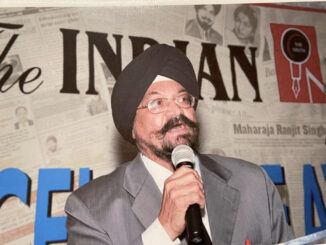
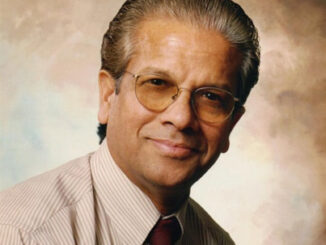
    The Gratitude Gala, says Prof Indrajit Singh Saluja, The Indian Panorama’s Founding Editor and Publisher, is to say our heartfelt thanks to our readers, friends, patrons and advertisers for their love and support.
    The Indian Panorama is a labor of love for its Founding Editor and Publisher, Prof Indrajit Singh Saluja. The weekly paper is also an expression of his love for India as well as a platform to project the rich South Asian culture and how our successful community has made a place in the melting pot of America.
    Started 18 years ago from New York, The Indian Panorama is a premier English weekly newspaper. It serves mainly the Indian community in the New York tristate area and Dallas-Fort Worth, from where it has an edition. Its digital edition, of course, reaches the Indian diaspora in the US as well as Indian readers wherever they live.
    The Indian Panorama has been a leading Indian community paper in the USA. Its editorial content is a reader-friendly mix of community news, as well as Indian and American current affairs news and commentary.
    ‘Ever Truthful’ is the paper’s motto as displayed on its masthead. Which means, as long as The Indian Panorama is helmed by Prof Saluja, neither fear nor favor can interfere with its editorial policy and choice of news stories.
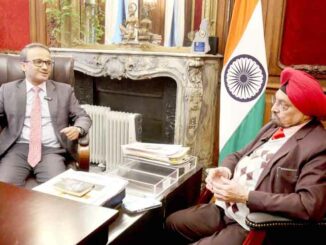
    The Indian Panorama and Prof Indrajit Saluja have become synonymous in the eyes of the reading public. He is not only an eminent editor, but he has also emerged as a community leader. He has been able to work closely with the Indian Consulate in New York and the Permanent Mission of India to take their voice to his readers, and take his readers’ concerns and issues to the Indian authorities.
    Even as he is considered a leader by his own community, the Sikhs, he has built enduring relationships with organizations and people identifying with other religions and regions of India. To top it all, he is sought after by American lawmakers and leaders as well.

    Front pages of The Indian Panorama over the years.

    A multilingual, Prof. Saluja also writes in Hindi and Punjabi, and has launched newspapers in these languages from New York. A pleasing personality blessed with the gift of the gab, he has also hosted talk shows on major South Asian TV channels and gets invited as a keynote speaker at conferences and major events.
    Indefatigable, energetic, and unputdownable, Prof Saluja’s spirit and intensity of work are undimmed by his years. He tries to be ahead of the curve, as he displayed by making The Indian Panorama digital before Covid taught that lesson to other publishers.
    Prof Saluja and The Indian Panorama have been appreciated, commended, and honored by many institutions, organizations and individuals. Last year, he was felicitated with the ‘Jewel of India’ award.
    ‘Professor’ that prefaces his name is not an appellation. He taught English Literature for 40 years in leading colleges in India. Having educated, lived, and worked in various states rounded out his personality. Even before coming to America, he founded and published for many years a prominent monthly magazine titled ‘Punjab Beat’.

    Age is just a number, says Prof Saluja, celebrating his 80th, and quotes Robert Frost’s immprtal words: “The woods are lovely, dark and deep, but I have miles to go before I sleep.”

  • The Indian Panorama at 18: A Chronicle of Perseverance and Triumph

    The Indian Panorama at 18: A Chronicle of Perseverance and Triumph

    Prof Saluja greeting Manmohan Singh at the White House reception for the Indian Prime Minister

    As The Indian Panorama marks its 18th year of publication, it is a moment of reflection and celebration. The journey of this periodical has been akin to that of a determined soldier, navigating through the initial hiccups with resilience and evolving into a formidable force in the media landscape. While acknowledging the achievements, it is crucial to recognize that this milestone is not the culmination but a checkpoint in the ongoing crusade for truth and journalistic excellence.

    The Genesis: Initial Hiccups and Challenges

    Eighteen years ago, The Indian Panorama embarked on its journalistic odyssey, fueled by the passion for truth and a commitment to providing a comprehensive view of Indian affairs. Like any nascent venture, the publication faced its share of initial hiccups. Limited resources, a competitive media environment, and the challenge of establishing credibility were formidable hurdles.

    The publication encountered skepticism and doubt, but it weathered the storm, recognizing that the path to success is often paved with challenges. The formative years were a testing ground for the resilience and determination that would come to define The Indian Panorama’s character.

    Vaisakhi at the Consulate organized by Prof. Saluja
    Jewels of India Award for Prof Saluja

    The Determined Soldier: Overcoming Adversities

    Much like a determined soldier pushing forward despite the odds, The Indian Panorama navigated through the intricacies of the media landscape. It adapted to changing technologies, evolving reader preferences, and the demands of a dynamic news cycle. The team behind the publication demonstrated a commitment to journalistic integrity, delving into stories with depth and presenting a nuanced perspective on the events shaping the nation.

    The early struggles became stepping stones, shaping the identity of The Indian Panorama. The publication began to carve its niche, distinguishing itself through insightful reporting, balanced analysis, and a commitment to presenting the truth, even when it was uncomfortable.

    With Amb. Manoja K. Mohapatra, VConsul General of India in Guatemala.
    Prof. Saluja speaking at the Bal Divas at the Consulate General of India in New York on December 26, 2022

    Capturing the Post: Milestones and Achievements

    As the years unfolded, The Indian Panorama captured significant milestones, much like a soldier conquering strategic posts. The publication gained recognition for its investigative journalism, incisive editorials, and coverage of issues often overlooked by mainstream media. It became a trusted source of information, earning the respect of readers and peers alike.

    The expansion into digital platforms and the embrace of multimedia storytelling further fortified The Indian Panorama’s presence. Social media became a battleground for disseminating accurate information, engaging with a wider audience, and challenging misinformation. The publication demonstrated an ability to adapt to the changing media landscape while staying true to its core values.

    Prof. Saluja interacts with S.M. Krishna, the then External Affairs Minister of India
    Prof. Saluja with Comptroller New York John Liu and the Sikh communityNew York John Liu 

    The ongoing crusade: More Posts to Conquer

    As The Indian Panorama stands at the threshold of its 18th year, it acknowledges the milestones achieved but remains cognizant that the journey is far from over. In the dynamic realm of journalism, there are always more posts to conquer, more stories to unearth, and more truths to bring to light.

    The evolving landscape of media presents new challenges and opportunities. The rise of digital journalism, the need for responsible reporting in the age of fake news, and the continuous quest for relevance in an ever-changing readership landscape are all frontiers that demand exploration.

    The commitment to truth, accuracy, and ethical journalism remains unwavering. The Indian Panorama understands that each milestone reached is not an endpoint but a checkpoint in the ongoing crusade for journalistic excellence. The publication looks forward to the future with optimism, ready to face new challenges head-on and to continue providing a panoramic view of the div

    Preity Zinta presented the FIA award to Prof. Saluja

    erse and dynamic landscape of India and the US, in particular, and the world, in general.

    As I reflect on the journey that brought The Indian Panorama to its present standing, I am compelled to acknowledge the integral role played by the pillars that upheld its foundation – the unwavering support of patrons, the crucial backing of advertisers, the invaluable contributions of readers and contributors, and the steadfast encouragement from friends and family. These collective forces have been instrumental in shaping the narrative and fortifying the publication’s commitment to its motto, “EVER TRUTHFUL.”

    Admirable Advertisers: Financial Backbone

    The unyielding journey of The Indian Panorama would not have been possible without the vital support of our advertisers. They provided more than just financial backing; they became the backbone of our operations. Their belief in the publication’s mission and the power of its reach fueled our ability to bring stories to light. The symbiotic relationship between The Indian Panorama and its advertisers has been crucial in sustaining the publication’s growth and influence.

    Presenting a copy of The Indian Panorama to Meera Shankar, India’s Ambassador to the US

    Devoted Readers: Strength in Numbers

    The strength of any publication lies in its readership, and The Indian Panorama has been fortunate to have a community of devoted readers. Their commitment to seeking truth, staying informed, and engaging with diverse perspectives has fueled the publication’s relevance. The readership’s unwavering support has been a driving force, inspiring the team to continually strive for excellence in journalism. The bond between The Indian Panorama and its readers is a testament to the publication’s impact on its audience.

    Receiving award from Ambassador Arun Kumar Singh and AIA officials

    Invaluable Contributors: Enriching the Narrative 

    A publication is only as strong as the material it presents, and The Indian Panorama owes a debt of gratitude to its contributors. Their diverse perspectives, insightful analyses, and compelling narratives have enriched the reading experience for our audience. Whether seasoned journalists, emerging writers, or subject matter experts, each contributor has played a pivotal role in shaping the depth and breadth of The Indian Panorama’s content.

    Prof Saluja with India’s tennis legend Vijay Amrithraj

    Steadfast Support: Friends and Family

    Behind every endeavor, there is a network of support that provides the emotional fortitude needed to weather challenges. In the case of The Indian Panorama, friends and family have been the bedrock of encouragement. Their unwavering belief in the never-say-die spirit, the courage to go forward, and the commitment to staying true to the motto “EVER TRUTHFUL” have been the driving force behind the publication’s resilience.

    Sustaining the Never-Say-Die Spirit

    The journey of The Indian Panorama has been a tapestry woven with the threads of collective support. As a leader and advocate for truth, I couldn’t have sustained the never-say-die spirit without the robust backing of these pillars. Adversities were met with determination, fueled by the belief that the pursuit of truth is a collective responsibility.

    In each challenge faced, be it financial hurdles, content creation demands, or the need for emotional resilience, the patrons, advertisers, readers, contributors, friends, and family stood steadfast. Their support became the driving force propelling The Indian Panorama forward.

    Prof. Saluja acted in the film ‘On Golden Years’, declared the best film at a New York Film Festival, with cast and crew

    Staying True to ‘EVER TRUTHFUL’

    Amid the storms and victories, The Indian Panorama has remained true to its motto, “EVER TRUTHFUL.” This commitment is not just a slogan but a guiding principle, a promise to our readers, and a testament to the collective effort that sustains the publication.

    The media club – Prof. Saluja with HR Shah of TV Asia, Dr Sudhir Parih of Desi Talk and ITV Gold, and Rajeev Bhambri of India Abroad
  • Purnima Desai – The True Cultural Ambassador of India

    Purnima Desai – The True Cultural Ambassador of India

    A multitalented personality, Purnima Desai is the founder of Shikshayatan Cultural Center and Sriniketan Foundation based in New York.

    • By Bidisha Roy

    A motivating and dedicated teacher in vocal and instrumental music, dance, languages, and Indian philosophy, Purnima A. Desai is the Founder and President of Shikshayatan Cultural Center and Sriniketan Foundation, based in New York.
    The two philanthropic organizations, instrumental in encouraging and supporting Indian culture through music and art, promote the beauty, goodwill, and tranquility of Indian art and culture through educational workshops teaching children and women Hindi, violin, dance, poetry, and painting.

    Purnima was born in a Gujarati Brahmin family in Calcutta in 1949. She studied at Shri Shikshayatan School and College there. Her father, D.P. Desai, was a lawyer who retired as a legal advisor to The Times of India group.

    Purnima Ji on stage with other artists at an event organized by her.

    Calcutta, her love
    “Calcutta played a major role in my life. I started my cultural journey from there. At Shikshayatan, I learnt Bharatanatyam, Manipuri and Kathak. I wanted to sing also but could not afford a harmonium. Instead, my parents got me a Hawaiian guitar. I learned many Bengali songs.”

    After she graduated with honors in Education, her family moved to Delhi in 1968 because of the Naxalite movement. While doing her MBA there, she continued with her cultural activities, choreographed dance dramas, and became a popular face on the campus.

    In 1972 she got married to Ashok C. Desai, a pharmacist by profession. For a while she worked with Sahu Jain’s Jaipur Udyog Limited as a management trainee. After a year in Bombay, she moved with her family to New York in 1973.

    Raising family in New York
    In New York, Purnima worked briefly for two top banks – CITI and Chase before taking a break to bring up her three daughters: Kaveeta, Komal and Tejal. Then, she opted for the real estate business so she could work from home.
    Returning to her passion for the arts, she joined the Gujarati Samaj of New York, where her kids would perform. Purnima also started performing there and choreographing as well. She also joined Bharatiya Vidya Bhavan and became its executive committee member.
    In 1988 Purnima founded her cultural organization – Shikshayatan, which means house of learning. She named it after her alma mater in Calcutta. Such an organization was needed to impart knowledge about Indian culture to the young generation here who are deprived of the rich Indian heritage.
    Shikshayatan is open to all nationalities to come together for peace, harmony, and team spirit. It has been offering lessons in vocal and instrumental music, providing a stage for young and old performers alike. She started in the basement of her home in Flushing, Queens. Initially, she taught pro bono, but had to charge a nominal fee after she started hiring teachers.

    Role played by Shikshayatan
    By now Shikshayatan has trained several loyal and dedicated students who have supported her organization by giving performances in churches, temples, community events, at South Street Seaport Deepavali celebrations, public libraries and schools. Shikshayatan has a faculty of highly educated, multitalented and professional artists. Pandit Kamal Mishra has been a great asset to the organization since 1989 and has proved his multiple talents through teaching and as a performing artist.

    “I’m fortunate to have had the opportunity to acquire the best from both India and the United States,” says Purnima. “My gratitude for both is infinite. Now I proudly guide our young generation to balance their life and remain peaceful and profoundly connected to both cultures.”
    Each year Shikshayatan showcases the talent of internationally renowned artists and recognizes their talent, contributions, and dedication to preserving the heritage of Hindustani Classical Music. At its Sangeet Mahotsav 2023, over 47 artists performed for 12 hours nonstop with a mesmerizing experience of healing ragas and Indian classical dances.

    Service through Sriniketan Foundation
    In 2015, Purnima started Sriniketan Foundation to fulfill the dream of her late father. “After the death of my mother, he was alone. So, he told me to do something for seniors so that they don’t feel lonely.”
    Sriniketan Foundation’s objective is ‘Building Awareness on the Importance of Happy, Heavenly, Progressive, Peaceful and Blissful Living Style through Mind, Body and Soul Evolution.’ The Foundation promotes spiritual growth by organizing lectures, discourses, seminars, workshops, concerts, fun fairs, competitions, comedy shows and creative outlets. “My heartfelt purpose is keeping people healthy physically and spiritually and to help the less fortunate people,” says Purnima.
    She attributes many of her qualities to her close association with her grandfather, L.K. Desai, and grandmother, Mani Desai. “My grandfather was highly educated, and he worked with Sardar Patel.”
    Money, name, or fame – she wants nothing, just wants to work selflessly. She elaborates, “I don’t want to ask for money for Sriniketan or Shikshayatan. They should earn on their merit. If I get some funds unasked from genuine people, then I am blessed. I have organized free musical programs for senior citizens.”

    Purnima has celebrated many festivals of India, and anniversaries of saints, sages, and patriotic leaders to disseminate knowledge about India. She has been blessed by spiritual masters like Mata Amritanandamayi, Morari Bapu; dignitaries and diplomats including Hillary Clinton and Dr Karan Singh; and renowned artists such as Sonal Mansingh, Padmini Ramachandran, Archana Joglekar, Pt Ramesh Narayan; astrologers and healers like Swami Chakradhari and Shakuntala Devi.

    Accomplished artiste and impresario
    Purnima is an acknowledged vocalist who has many music albums to her credit. She has authored many books – a Children’s book, a book of patriotic songs, and another that contains spiritual songs. She is a scriptwriter, producer and director of short plays – Apna Desh Apne Tyohaar and Bal Ramayan for Bharatiya Vidya Bhavan, NY. As a program director of cultural events, Purnima has produced and directed more than a thousand cultural programs. She is also a painter and publisher-editor of Abhyudaya magazine in Hindi and English. She also completed her training in Reiki under Dr. N.K. Sharma and Dr. Savita Sharma of Reiki Healing Foundation, the world’s largest Reiki organization based in New Delhi. She is now Kriya Acharya Reiki Grand Master.

    Purnima Desai introduced her work to Prime Minister Narendra Modi.
    Purnima is an acknowledged vocalist who has many music albums to her credit.

    Though Purnima Desai is an institution by herself, she has been bestowed several honors and awards. She is a recipient of Dharma Kalyaan Jyoti Madalsa Award by Maa Yog Shakti. All Brahmin Convention 2001 held by Brahmin Samaj of USA honored her.
    World Business Forum presented her with two awards in 2006: “Person of the Year” and “Woman of the Era”. In 2009 she received a citation from NYC Council and in 2011 “Ambassador for Peace” award from Universal Peace Foundation. A true cultural ambassador of peace and harmony, Purnima has emerged as one of the most respected Indians in the USA.

    Purnima with her late husband Ashok C. Desai (left) and their three daughters Kaveeta Chandrani, Dr Komal Naik, and Tejal A. Desai.
  • Role of Diplomacy in International Affairs: From General Douglas MacArthur to Qin Gang

    Role of Diplomacy in International Affairs: From General Douglas MacArthur to Qin Gang

    • Diplomacy is the “lines of communications” that sovereign nations use to engage in sovereign intercourse – across a wide array of menu items that arise – be it during peace or war.

    by Ravi Batra, Esq.
    Chair, National Advisory Council South Asian Affairs

    From time immemorial, Emperors and Kings have engaged in the comity of nations through their ambassadors passing official messages, and responses, back and forth. That practice has continued, even after 1776 and the birth of the great American Experiment.
    Sovereign nations can either trade with each other, or wage war upon the other. Diplomacy, then, is a core governmental function that is necessary to assist in enhancing bilateral trade or to secure additional rights in lieu of war being engaged in futuro. Diplomacy is the “lines of communications” that sovereign nations use to engage in sovereign intercourse – across a wide array of menu items that arise – be it during peace or war.
    Indeed, diplomats are issued special passports by their sending-nation state, and credentials for the welcoming-nation state. Every nation state welcoming an ambassador accepts the credentials of such ambassador, and by so doing, the two-way official lines of communication are set.
    Recently, Qin Gang, the father of “Wolf Warrior” diplomacy was dishonorably retired – as he should have been – by President Xi Jinping, as he structurally violated the basic tenet of diplomacy: to make love or war, with equal sobriety, and passion for accurate reporting bilaterally. Indeed, while our President nominates ambassadors to 193 nations around the world, it is our Senate Foreign Relations Committee that holds hearings, and if approved, the Senate confirms with its “advise and consent” power. Only after that, does our Secretary of State, much like a corporate secretary, issue credentials to the confirmed-ambassador, which will then be presented to the Head of State or Government of the receiving nation-state.

    While anyone can be diplomatic, only persons representing their nation – be it a democracy, theocracy, autocracy or monarchy – is a diplomat, officially engaging in diplomacy. It is true that private persons – such as Bill Richardson, former U.S. Permanent Representative to the UN and governor of New Mexico – can engage in “fringe diplomatic” efforts that, hopefully, assist in resolving a thorny issue between two or more nation-states. For example, Bill Richardson helped to secure the freedom of hostages from Iran, Libya, Myanmar and inter alia Russia. The list included basketball player Brittney Griner, journalist Danny Fenster, U.S. Marine veteran Trevor Reed, and inter alia Osman Khan. Khan was freed with the help of the State Department and the Richardson Center in October 2022 along with six others in exchange for two relatives of Venezuelan President Nicolas Maduro jailed in the United States.
    The Osman Khan episode is an example of hybrid­ diplomacy, but the most famous example is in the movie – Bridge of Spies – wherein Tom Hanks portrays a private lawyer, James Donovan, who secured the release of hostages from then-East Germany, and years later, President John F. Kennedy, after the Bay of Pigs, again looked to James Donovan to seek the release of a few American hostages, and Donovan, well in excess of his mandate, secured the release of all Americans held by Cuba, then within USSR’s core sphere of influence. A nation so close to Miami that we ought to create a process to resolve all issues, including: property claims, and the so-called “Havana Syndrome.” Then, and only then, will the Monroe Doctrine be properly effectuated.

    Diplomats are granted inviolability in the nation they are credentialed to, but are not above the rule of law in the nation they are sent by. That means no law enforcement can arrest them or stop them for any reason, and they have full “freedom of movement” in the nation they are accredited to.
    In the tragic times of pre-World War II period of appeasement, which was driven by the strategic failure of the Great Powers to unite, Neville Chamberlain, then Prime Minister of the great British Empire, made a Peace Deal on behalf of Europe with Hitler’s Third Reich – the First Reich being the medieval Holy Roman Empire, which lasted until 1806; and the Second Reich included the German Empire from 1871-1918 – by gifting Czechoslovakia to Hitler, without any right or any consent of said nation to be so subjugated! This was followed up by USSR’s Stalin’s Foreign Minister Vyacheslav Molotov negotiating into the wee hours of August 23, 1939 with Hitler’s Foreign Minister Joachim von Ribbentrop to create the Molotov-Ribbentrop Pact, with secret protocols that became public during the Nuremberg Trials, to ensure peace between Hitler and Stalin, with each of them agreeing to fight and create agreed-to future-spheres of influence. On September 1, 1939, a week later, Hitler attacked western Poland, on September 17th Stalin invaded eastern Poland, and on September 22nd the Soviet and Nazi militaries held a joint military parade in Brest-Litovsk. The USSR-Nazi joint-war effort was short-lived, and Stalin’s USSR fought Nazi Germany and suffered the largest number of casualties at over 26 million dead to defeat fascist Nazis.

    Diwali Stamp – Power of One Awards, called the Oscars of Diplomacy, were instituted by Ranju Batra in 2017 to honor diplomats who uphold the spirit of Diwali. At the last awards event at the UN in December 2023, former UN Secretary General Ban Ki-moon was one of the honorees.

    It was Winston Churchill’s “we will never surrender,” and our Franklin D. Roosevelt, after Pearl Harbor, that the West, as we know it, was formed and was “united,” still, sadly, a term of art. Later, in early and cold February 1945, FDR, Churchill and Joseph Stalin met for over a week – the Yalta Conference – in a resort in Crimea, and negotiated the shape of the postwar world. This, too is diplomacy, albeit, by and between the principals themselves guided by their “fears” and “wants.”
    So long as deception exist in human conduct – aka “fraud” in civil context – to aid and abet the vices that can reside in many an ambitious human heart which the great General Sun Tzu and Nico Machiavelli are masters of explaining, let alone Mark Twain’s hilarious rendition in his “Prince and the Pauper,” where walnuts are cracked with the Great Seal of England.
    Diplomacy, then, is a vehicle that can enhance peace, start a war, or end it on terms negotiated poorly – as after World War II – that led to the Weimar Republic’s hyperinflation and Hitler’s rise to power – or well, as our General Douglas MacArthur, Supreme Commander of the Allied Forces, on September 2, 1945 did in accepting the Instrument of Surrender from Japan on the teak deck of the USS Missouri, with full honors and respect so as to help create a new prosperous and democratic Japan and everyday Japanese wishing to be a forever-American Ally.
    Those who enjoy “insult” – as in the Alaska Summit at Anchorage on March 18, 2022 – will forever be mired in conflict, and even in a war that was avoidable. And those who harness the power of “respect,” especially for an adversary, as General MacArthur proved, will find a durable peace and friendship. Until then the United Nations Charter is our best hope for a more perfect world, and why the UN is the Vatican of Hope, and the Permanent Representatives Arch-Angels.

  • Ranju Batra: Securing Diwali Stamp and launching Oscars of Diplomacy

    Ranju Batra: Securing Diwali Stamp and launching Oscars of Diplomacy

    The ideals of Diwali are the ideals of the UN Charter. The Power of One awards, Ranju says, honor diplomats whose work away from the public eye can make a difference between war and peace.

    A historic number of 24 nations, led by Belarus and India as co-organizers, and United States Postal Service, came together in December 2016 at the United Nations to celebrate “Small Stamp for a Big Festival” and to honor Mrs. Ranju Batra for spearheading the seven-year-long campaign to secure the release of the Diwali Forever stamp by USPS.

    Ranju Batra addressing Diwali Stamp – Power of One Awards ceremony 2022

    Ranju felt the honor was for her journey for the Diwali Stamp seen as a metaphor for peace and harnessing its power to promote excellence in diplomacy. In fact, the ideals of Diwali are the ideals of UN Charter. Speaking to The Indian Panorama, she recalled that one diplomat dubbed her singular achievement the ‘power of one’. That inspired her to launch the ‘Diwali Stamp – Power of One’ awards to honor exceptional diplomats.
    Under the aegis of the Diwali Foundation USA that she chairs, these awards are presented every year since 2017 (barring the Covid years) to exceptional world class diplomats at the UN.
    Says Ranju about honoring diplomats, “They work hard every day away from the public eye but the public needs to know that what they do is important as that could be the difference between war and peace.”
    The ‘Diwali Stamp – Power of One’ awards are supported multilaterally. For example, in 2023 the awards were co-organized and co-sponsored by over 70 member states and the European Union. The Permanent Mission of India at the UN has, of course, supports the ceremony every year.

    Ranju Batra with the honorees and others at the Diwali Stamp – Power of One Awards ceremony 2022.

    Since 2017, 25 awards have been given to esteemed ambassadors. The honorees have included Lakshmi Puri, former Executive Director of the UN Women, former UK Ambassador to the UN Matthew Rycroft, former Permanent Representative of Georgia to the UN Kaha Imnadze, and former Permanent Representative of Grenada to the UN Keisha McGuire.
    The most high-profile diplomat to be honored to date has been the UN Secretary-General (2007-2016) Ban Ki-moon. He was honored last December along with former Permanent Representative of Bosnia and Herzegovina to the UN Amb. Mirsada Colakovic, former Permanent Representative of South Korea to the UN Amb. Kim Sook and 72nd UN General Assembly President and EU Special Representative for the Belgrade-Pristina Dialogue Miroslav Lajcak.
    In his acceptance speech at the event attended by UN diplomats, envoys, civil society members and policy experts, Ban commended the work and “forward-thinking vision” of the Diwali Foundation USA “for advancing vital light in a world of increasing darkness”. He said the world today “seems fractured like never before” as he cited the COVID-19 pandemic, climate crisis and regional crisis seen in the Middle East and Ukraine.
    India’s Ambassador to the UN Ruchira Kamboj said that Diwali is a celebration that holds a special place in the hearts of over a billion Indians across the globe. Diwali “is more than just a festival. It is a sentiment that embodies the triumph of light over darkness, knowledge over ignorance and hope over despair”, she said.
    Sri Lanka’s Ambassador to the UN Mohan Pieris said “Deepavali has become truly a secular festival in the world, since its message is not exclusively restricted to any religious creed.”
    Ravi Batra, the eminent Indian-American attorney, and Chair of National Advisory Council South Asian Affairs, and moderator of the award ceremony, said the UN transcends borders and boundaries.
    The Power of One award is given to a former permanent representative or former high-level member of UN secretariat or member state, or soon-to-be former, who has worked selflessly to help form a more perfect, peaceful, and secure world for all. Assuming eminence, these awards have come to be called the ‘Oscars of Diplomacy’.
    The Diwali Foundation, USA’s mission is to support the UN Charter of multilateralism and enhance peace and security around the world by promoting excellence in diplomacy.
    The Diwali Stamp triumph
    Ranju’s campaign for the Diwali Stamp was fervently followed and supported by Indians in America. It was backed by many Congress members and Indian diplomats in the US. She took it up as President of the Association of Indians in America (AIA)-New York during its Silver Anniversary year, 2011-12. The entire Indian community celebrated with her when on October 5, 2016, USPS officially dedicated the stamp at the Indian Consulate in New York. Ranju’s personal sale of over 170,000 stamps for First Day made the “Diwali Stamp” the best seller in USPS’ over 200 years history.
    Looking back, Ranju says, “The Diwali stamp issued by the USPS is equivalent to the US government issuing a passport to Diwali itself and supporting light over darkness, knowledge over ignorance.” Diwali is now part of Americana. Since the Diwali stamp was issued as a Forever stamp, USPS is required to issue it annually.
    Since September 2021, Ranju is an Advisor for Legal and Humanitarian Affairs to the Permanent Mission of Georgia to the UN, having previously served as an Advisor to the Permanent Mission of Ukraine from 2015.
    Since 1990, she has been the Administrator of The Law Firm of Ravi Batra, founded by her husband.

    Former UN Secretary General Ban Ki-moon was presented the Power of One Award in 2023 by Ranju Batra, accompanied by Ravi Batra.
  • Lotus webmag to be felicitated  at the Indian Panorama gala

    Lotus webmag to be felicitated at the Indian Panorama gala

    Souvenir Editor
    The Indian Panorama’s Gratitude Gala Souvenir has been edited by Parveen Chopra, Founder and Editor of ALotusInTheMud.com

    New York: ALotusInTheMud.com, the premier wellness and spirituality web magazine founded by seasoned journalist Parveen Chopra, is celebrating its first anniversary after it was launched at the Indian Consulate in New York in January 2023.
    Prof Indrajit Saluja will felicitate Lotus and his longtime friend, Mr Chopra at the Gratitude Gala of ‘The Indian Panorama’ on February 25 in Hicksville, Long Island.
    Mr Chopra, who has specialized in the body-mind-spirit genre of journalism, says about the content mix of Lotus, “We tap diverse religious and spiritual traditions, particularly from India, for wisdom as well as draw from the latest scientific research to present helpful articles for people to be fully productive and yet be healthy, happy, and centered.”
    The variety of articles in his web magazine has ranged from ‘I took Finland’s Masterclass of Happiness, so you don’t have to’, and ‘How to heal a broken heart – Valentine’s Day special’ to ‘The new university for your child’s education – Mother’s womb!’
    Among highlights of one year of Lotus, Mr Chopra cites launching a biweekly newsletter ‘The Lotus Bloom’ last June, covering Parliament of the World’s Religions in Chicago in August, organizing a discourse in September on Kashmir Shaivism by Virendra Qazi, a top expert on the subject.
    Explaining the unusual name, Mr Chopra says that ‘Lotus in the mud’ is a key concept in Buddhism and Hinduism, signifying that we may get muddled by problems, but each one of us has the inherent capability to emerge as full bloom lotus in body, mind, and spirit. He claims that he conceived Lotus roused by the Covid desolation to do something helpful for society.
    Lotus web magazine is published by the American Center for Wellness and Spirituality Inc (ACWS), a 501(c)(3) not-for-profit corporation. ACWS is a social enterprise that also plans to do offline activities. Among its objectives is fostering interfaith and inter-cultural harmony as well as world peace.
    Mr Chopra is an editor-entrepreneur focused on wellness, personal growth, and spirituality. A trained teacher of meditation, he started ‘Life Positive’, India’s first body-mind-spirit print magazine, in 1996 from New Delhi. He has worked for ‘India Today’ and has contributed to magazines like ‘Yoga Journal’. Moving to the US in 2007, he edited ‘The South Asian Times’ for over a decade and ‘One World Under God’ interfaith journal.
    He is growing his team in the US and India, and plans to launch Lotus’s India edition later this year from New Delhi.

    A screenshot of ALotusInTheMud.com website

  • Harry Singh Bolla: Striking Gold with Vision and Strong Work Ethic

    Harry Singh Bolla: Striking Gold with Vision and Strong Work Ethic

    Oil became gold for Harry Singh. Bolla Market founded by him has become the most recognized fuel and convenience store chain in the New York region. He is also giving back to the community through the Bolla Charity Foundation.

    Harry Singh is the Founder and CEO of Bolla Oil Corp, a billion-dollar gas station and convenience store business. His is an exemplary immigrant success story.
    He emigrated to the United States from India in 1983. Six years later, he founded Bolla Oil Corp with a single gas station in Brooklyn, NY. Harry’s entrepreneurial vision, indefatigable work ethic, and passion for excellence fueled Bolla’s impressive growth. Bolla Market is now one of the largest, and most recognized retail fuel and convenience store chains in the region.
    Bolla is consistently recognized by the major gasoline brands for best-in-class facilities, marble restrooms, unparalleled retail standards, and customer service.
    Bolla Market operates under major fuel brands – Exxon, Mobil, Sunoco, Bolla, Gulf, Valero, Shell, and its proprietary, upscale Bolla Market convenience stores.
    Bolla operates co-branded food offerings, including Burger King, Tim Hortons, Pizza Hut, Moe’s Southwest Grill, and Red Mango.

    Giving back to the community
    From its inception, Bolla has had a philanthropic mission. Harry, his wife, Kamljit and children Jay and Tarnjit, care deeply about giving back to the communities Bolla serves. Witnessing firsthand the tragic events of 9/11 and assisting first responders by converting a downtown gas station into a 24-hour aid station, Harry and Kamljit developed a steadfast commitment to help first responders and veterans.
    In 2013, the couple founded the Bolla Charity Foundation. It provides funding to numerous charities and holds events to benefit non-profit groups.
    The Foundation was an early contributor to a building on the 7-acre First Responders Memorial Recreational Field in Islandia, NY. It also supports Toys for Tots and the Nassau County Police Department Memorial Run, raising funds for scholarships in honor of fallen officers. In 2022, the Foundation renovated a group home for 6 veterans in Levittown and renovated a 100-year-old Victorian home for 12 veterans in Freeport in 2023.

    Besides, Bolla Charity runs permanent projects to help the needy in India.

    Box item/accompanying story, or continue with a subhead
    The veteran pic can come with this

    News 12 Profiles Harry Singh’s Billion-Dollar Empire

    The Singh family created the Bolla Charity Foundation to give back to the community. It donated a house to a disabled veteran on Long Island.

    News 12, the main TV channel on Long Island, ran a program in May 2021 on Harry Singh’s business success. The documentary-style program including an interview with him was broadcast as part of the Asian Pacific American Heritage Month. Singh came to the US in 1983 with nothing more than a dream of a better life, the narrator started. “Today he runs a billion-dollar gas station business headquartered in Garden City.”
    The program then proceeded to talk about his work ethic that helped him achieve his American Dream. Bolla Market has become a popular pit stop for many motorists, their customers testify. One woman said, “The food is very good here– they have everything from breakfast, and lunch to dinner.”
    Harry Singh says humbly in the documentary, “I am a worker, I love what I do. I have a passion for it.” The narrator goes on to add that his passion is rooted in the cultural values of his native place in Punjab. And that at age 21, he traded his small village for the Big Apple. It was to make life better, says Harry Singh. His wife, Kamljit, a nurse, shared his vision.
    Singh took the opportunities that came his way, and in 1989 opened his first gas station. He shares his simple philosophy thus, “You get up in the morning, you say thank God, it is another great day in our life. Let us go and make a difference and let us make today better than yesterday.”
    Singh did feel discriminated against at times for his looks, and for who he was. “But I never let it take me down,” he tells the News 12 reporter resolutely. Today Bolla Oil employs 1,800 people at over 250 sites, including gas stations, convenience stores, and fuel distribution centers.
    “Work hard and you get rewarded,” Singh says. The narrator adds that Singh and his wife are now reaping the reward of their 33 years of hard work – a magnificent mansion in Old Westbury and a collection of exquisite cars.
    While the Singhs enjoy the fruits of their labor, they believe there is more to life than material things. That is why they found a way to give their wealth a richer meaning. Elaborates Singh, “I believe God gave me a blessing to give, not take.”
    The Singh family created the Bolla Charity Foundation to benefit people in need. It donated a $600,000 house in 2018 to a disabled veteran named Lance Cpl. Billy Ventura,  in Selden, NY. “We should share. We can all make this world a better place to live.” Singh still works seven days a week with passion and gratitude, says the narrator. “It has been an amazing ride,” Singh concludes.

  • Blitz India: Pioneering development news

    Blitz India: Pioneering development news

    Blitz India is the world’s first chronicler of development news. Launched in 2022 by veteran media person Mr Deepak Dwivedi, the news weekly gives sustained coverage to the ideas, policies, programs and activities that deal with the improvement of people’s lives. It provides a fair, accurate, and contextualized picture of today’s India and the world, without hyping the negatives.
    Under Mr Dwivedi, Chairman and Editor-in-Chief, Blitz India offers constructive suggestions on what best can be done to ensure that no one is left behind in the development process, as professed in the transformative motto of Agenda 2030 of the United Nations in the form of 17 Sustainable Development Goals (SDGs), adopted by all UN Member States. Blitz India provides an effective platform to channel all efforts in India towards SDGs’ implementation through its social foundation.
    The English edition of Blitz India was launched in February 2022 in New Delhi by Mr Amitabh Kant, the then-CEO of Niti Aayog. In September 2022, Blitz India saw the Mumbai launch. Its Hindi edition was started the same year. The launch of the online UK edition of Blitz India in London in June 2023 attracted the who’s who of Britain and India. The speakers included Gopichand Hinduja, Chairperson, Hinduja Group, and Tushar Mehta, Solicitor General of India. Lord Swaraj Paul sent a congratulatory video message.
    Blitz India has become a must-read for policymakers, thinkers, and the intelligentsia. Its development journalism has been welcomed by the readers, inspiring editions from all major cities in India and international editions.
    The India of the 21st century has given rise to a new kind of politics and a new governance agenda, to shape a new nation. Blitz India acts as a catalyst in this transformational process and lends momentum to it. The weekly directs its efforts towards ‘building a new nation’, as proclaimed in its tagline.
    Mr Dwivedi started his three-decade-long journalism career with Blitz, a weekly tabloid with focus on investigative journalism, where he worked closely with the founder Mr R.K. Karanjia.
    Mr Sandeepp Saxena is Group CEO Blitz India Media. He has media industry experience of over two decades, including a stint at the Indian Express Group, and part of the launch team of Financial Express, Chandigarh Edition.
    Sandeepp Saxena is also

    • President RCGP 23-24 | Rotary International Distt 3011 India

    • Global Convenor SDG Choupal, a flagship initiative of the Nagrik Foundation (Philanthropy arm of Blitz India Media)

    • Country Director, Eye Foundation of America

    • Founder Blitz Edu Initiatives

  • Dr V.K. Raju: On a mission to eliminate childhood blindness from the world

    Dr V.K. Raju: On a mission to eliminate childhood blindness from the world

    Founded by eye surgeon and humanitarian Dr V.K. Raju, the Eye Foundation of America has spread its work to 30 developing countries, training medical personnel to serve the needy, and spreading education on preventive eye care. 

    World-renowned eye surgeon with a specialization in corneal transplant surgery, and humanitarian Dr Vadrevu K. Raju is diligently and passionately pursuing his mission to rid the world of childhood blindness. His Eye Foundation of America (EFA) has set up eye camps in 30 developing countries, training medical personnel to serve the needy, and spreading education on preventive eye care and healthy lifestyle choices.
    For the past four decades, Dr. Raju and his foundation have been working to eliminate avoidable blindness in areas plagued by poverty and poor access to medical care. This is done under the guiding principles of service, teaching, and research. It is accomplished through eye camps and brick-and-mortar hospitals in developing countries, training of medical personnel to serve the needy.
    EFA’s reach extends to 30+ developing countries and the USA. The Foundation has served 4 million patients and performed 350,000+ vision-saving surgeries, with over 25,000 surgeries performed on children.
    Since its inception in 1979, the EFA has facilitated 600+ physician exchanges and trained 200+ ophthalmologists, equipping these medical practitioners with the tools to join the global fight against blindness.
    Dr Raju has helped to build two hospitals in rural India: the Srikiran Eye Institute and the Goutami Eye Institute. Goutami has a wing dedicated exclusively to children.
    The EFA has plans to build a service and research eye hospital in India where no child will be denied treatment and children from around the world can come to receive services.

    Dr Raju was presented Excellence in Medicine award by GOPIO (Global Organization of People of Indian Origin), Virginia chapter in 2021.

    But Dr Raju’s impact goes beyond mere numbers. He understands that true empowerment lies in education. EFA’s programs equip patients with knowledge about eye health and hygiene, enabling them to make informed choices and prevent future complications. This ripple effect extends beyond the individual, as patients become agents of change, sharing their knowledge within their communities.
    Dr Raju has also focused on preventing a lifetime of blindness in premature babies. When a baby is prematurely born, its body is not fully developed, the eyes included. ROP or retinopathy of prematurity happens when there is an abnormal development of retinal blood vessels on the retina.  ROP has to be treated during the window of 3 weeks to 3 months.

    Dr V.K. Raju doing eye screenings at a school in Delhi.

    Dr. Raju was born in Rajahmundry, Andhra Pradesh in India. He earned his medical degree from Andhra University and completed an ophthalmology residency and fellowship at the Royal Eye Group of Hospitals in London. He is board-certified in ophthalmology and is a Fellow of the Royal College of Surgeons (FRCS) and the American College of Surgeons. and Fellow of the American College of Surgeons (FACS).
    He has resided in Morgantown, West Virginia since 1976, where he is currently a Clinical Professor of Ophthalmology at West Virginia University.

    In West Virginia, Dr. Raju accepts patients who do not have medical insurance and performs surgical procedures that are not covered, often pro bono. This allows many of these patients to remain functional members of society.

    Dr Raju has received many honors and awards, including 26 distinguished awards and 17 gold medals. In his adopted home state of West Virginia, he was awarded the Lions Club International (Morgantown) Jarrett Award. Morgantown Rotary honored him for community service in 2000. The award he is most proud of is the Martin Luther King Jr. Achievement Award from West Virginia University.

    Dr V.K. Raju delivered a lecture at Apollo Hospital in Delhi.

    The American Academy of Ophthalmology (AAO) has awarded Dr. Raju four times for his teaching and research contributions, including the Outstanding Humanitarian Award in 2002 for $1 million of his own money that went into building hospitals in India, teaching, and providing services to needy patients.
    The American Association of Physicians of Indian Origin (AAPI) awarded Dr. Raju with their prestigious Distinguished Community Service Award in 2007. President Barack Obama conferred on him the 2016 President’s Lifetime Achievement Award.

    The University of Toledo in Ohio inducted him into the Global Medical Missions Hall of Fame in 20017.

    Dr. Raju has authored hundreds of papers and publications and is the co-author of Musings on Medicine, Myth, and History: India’s Legacy, along with his daughter, Leela V. Raju
    Dr. Leela Raju, his daughter and fellow ophthalmologist, is the EFA’s Secretary and Coordinator for Education and actively participates in its mission.

    Dr Raju and Mrs Rani Raju with their daughter Dr Leela Naidu, son Ashok Raju and his family.
  • With Today’s Technology, Eliminating Childhood Blindness is not too Ambitious: Dr V.K. Raju

    By Indrajit Singh Saluja 
    The Indian Panorama is conferring Life Achievement Honor on the world-renowned eye surgeon and humanitarian Dr V.K. Raju. In the run-up to the Gratitude Gala of  the weekly paper, he gave an exclusive interview to Prof Indrajit Singh Saluja, its Chief Editor and Publisher. Excerpts:

    Indrajit Saluja, Chief Editor, The Indian Panorama: Rotary International secured a world without polio. Now you and your Eye Foundation of America are working to eliminate needless childhood blindness in the world. But isn’t it an ambitious mission?

    Dr V.K. Raju:  With today’s technology and resources, it is not ambitious. Let me tell you why I have chosen to focus on childhood blindness. Let’s say a 67-year-old becomes blind. He or she has only a few years to live. But if a child becomes blind, he lives for seven decades without vision. We can catch them early and treat them and make them productive members of society for decades.

    As per the World Bank, 80% of our learning is through vision. Nelson Mandela said education is the greatest equalizer. But for want of a pair of glasses, which costs Rs 200-300 in India, the kids’ learning is affected and they become a burden to themselves, the family, and society as a whole.

    Malnutrition is said to be one of the causes of childhood blindness in developing countries.  

    Dr Raju: On this front, India has done incredibly well in the last 30-40  years. But still, overall nutrition is not good among rural people of low socio-economic strata, especially children. So, if you want to see a world without childhood blindness, first you have to tell the governments in the world to provide proper nutrition to children.

    What inspired you to start the Eye Foundation of America?

    Dr Raju: I was working in London and went to India for a holiday. A farmer came to show me his eyes. I did not have any equipment then. So, in 1977, I held my first eye camp in Vijayawada. After seeing so many children born with congenital cataracts, next year I took along a surgical instrument (Ocutome), but faced problems with the customs. On advice of friends, we started Eye Foundation of America for credibility.

    India gave me a stellar medical education almost for free and paying back like this is no big deal. We are fortunate to do this work.

    Each award and honor, Dr Raju says, means more opportunity to do even more work and serve people.

    Being a Rotarian, do you think you can bring Rotary International to support your mission?

    Dr Raju: They already are great supporters of my foundation and our hospitals in Andhra Pradesh. More and more people and Rotary clubs would join in South India and in Vijayawada where I work year after year. Leadership and cooperation are the road to success, as President Jimmy Carter said in his book ‘Global Health’ and whom I have fortunately met.

    Tell us about your Goutami eye hospital.

    Dr Raju:  Goutami is in Rajahmundry district in Andhra Pradesh. It is the flagship of the Eye Foundation of America with about 14 peripheral centers. Outreach is very important in India, where 65% of people still live in villages.  Goutami has a wing exclusively for children. At Goutami, we never turn down a patient. Our model is, we see 60% of the patients  almost for free or subsidized and 40% are paying patients. 

    Besides India, which other countries have you gone in?

    Dr Raju: We have worked in 30 countries, most recently in Guatemala. In some places we supply educational material, in some, we do clinical work, in still others we support their programs as in Ghana. This year-end we are going to South Africa.

    Guatemala is the 30th country to which Dr Raju has spread his work. His visits there were facilitated by India’s Consul General to the country, Manoj Kumar Mohapatra (extreme right in group photo) and Prof Indrajit Saluja.

    What led you to Guatemala?

    Dr Raju: Prof Saluja, you are the one who made that project happen through the Indian Consul General there, Amb. Manoj Kumar Mohapatra. You were there when we screened the patients in Guatemala City. We went back with another colleague of mine last November and performed eye surgeries. Amb. Mohapatra was very helpful.

    I saw you examine 500 people at five locations in Guatemala. How many screenings and surgeries EFA has done so far?

    Dr Raju: Almost 4 million people have been screened as outpatients in the peripheral hospitals and clinics and at least 350,000 operations have been done already.

    For this colossal work, how are you able to manage funds?

    Dr Raju: For the first 16 years, our Foundation did not have a fundraiser. Now we do. Last year we raised $800,000. Here I must tell the story of Srinu Maddula. I brought him here from Vijayawada for a corneal transplant about 35 years ago when he was a toddler. He went on to finish his doctorate in pharmacy from Rutgers. Now he feels that what the eye foundation did for him, he should do more for it.

    For community service projects, help comes unexpectedly. You introduced me to Blitz India editor Deepak Dwivedi and Sandeepp Saxena and they introduced me to Lord Swaraj Paul and Lord Loomba in England. I was honored at the House of Lords, and we set up a chapter of our foundation there. 

    What are the main causes of blindness?

    Dr Raju: The most common visual problem is cataract, which is clouding of the lens of the eye. Cataract is not a disease. It can develop with age. Left untreated, cataract leads to blindness. Today very easy and successful surgeries are available to remove cataracts. You don’t need to stay in the hospital, you go home the same day.

    The other eye problem is glaucoma. It is caused by high eye pressure damaging the nerve connecting the eye to the brain. So, one should get checked for glaucoma every two years after the age of 40.

    With diabetes, if you get regular eye exams, you won’t lose sight.

    What is your advice to my readers about keeping eyes in good condition?

    Dr Raju: If your general health is good, your eye health will be good too. So, eat right, exercise, and do everything in moderation. Protect the eyes with sunglasses when you spend a lot of time outdoors. Cataract development, if at all, will be slow then.

     Is your daughter Dr. Leela Raju, your natural successor?

    Dr Raju: Absolutely. She is very much part of the foundation work and capable of running the show once I’m gone.

    Dr Leela Raju, also an ophthalmologist, accepted the award last year from AIA (Association of Indians in America), NY chapter, on behalf of her father. She is fully invested in his work.

    You have been conferred so many awards and honors, now another one by The Indian Panorama, how do you feel?

    Dr Raju:  Each honor means more opportunity to continue and do even more work and serve people. Yet, as we say in the Indian ethos, I am only nimitta matra (a medium) for whatever good I am able to do.

    Dr Raju learnt from President Jimmy Carter that leadership and cooperation are the road to success. He has also interacted with US Senator Joe Manchin from his state, West Virginia.