Tag: TMC

  • Surprises galore in Assembly elections and by polls

    Surprises galore in Assembly elections and by polls

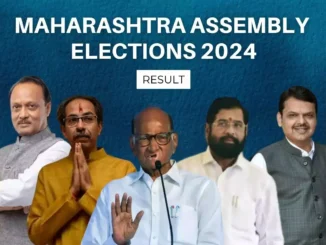
    BJP-led Mahayuti to retain power in Maharashtra; Hemant Soren-led alliance all set to retain power in Jharkhand

    • I.S. Saluja

    November 23, 2024 updated at 5 AM (ET)

    NEW YORK (TIP): Even though the election results are many hours away yet,  the trends  do give an indication of the  possible outcome. The  Assembly elections, in particular, in Maharashtra and Jharkhand, attracted keen contests. In both the States , political parties fought the elections  as the battle for survival.

    At the time of writing this report (5 AM ET) , the reports coming in are placing the BJP-led Mahayuti in a comfortable position to retain power in Maharashtra. Hemant Soren-led alliance is all set to retain power in Jharkhand. Interestingly, in both the states the incumbency factor did not work. The news reports coming in suggest that the BJP-led Mahayuti alliance is on course to retain power in Maharashtra, and winning nine seats so far and was leading in 217 of the 288 Assembly seats, as per the latest figures of the counting process in the November 20 elections.

    After the certainty of the poll outcome, the focus has now shifted to BJP leader Devendra Fadnavis, the architect of his party’s stunning victory. Political circles are abuzz with reports that the state’s second Brahmin to become the CM will don the post for the third time.

    As per the latest figures from the Election Commission, the BJP has so far won nine seats and is leading in 125, the Shiv Sena has won three and is ahead in 53 seats, while the NCP has won two and is leading in 37 seats.

    In the MVA, the Nationalist Congress Party (Sharadchandra Pawar) candidates were leading in 11 seats, Congress in 20 and Shiv Sena (Uddhav Balasaheb Thackeray) in 19 seats.

    The opposition Maha Vikas Aghadi has suffered a crushing defeat, with its candidates leading in just 50 seats, a far cry from the boasts – till this morning – by many of its senior leaders that the combine will trounce the Mahayuti.

    JHARKHAND ASSEMBLY ELECTIONS

    Jharkhand Chief Minister Hemant Soren during a public meeting. (File photo : PTI)

    In Jharkhand, Hemant Soren’s JMM-led alliance was all set to retain Jharkhand as it was leading in at least 50 seats in the 81-member state Assembly on Saturday, as per the Election Commission data.

    The performance of the BJP-led NDA, which was seen as confident about its prospects in the state after an aggressive campaign, was poorer than its expectations. It was leading in only 29 seats.

    The BJP’s poll plank was driving out “infiltrators” from the Santhal Parganas region, but it seemed to have fallen flat in front of the ‘Adivasi’ card played by the JMM, which also sought  people’s sympathy over the arrest of Chief Minister Hemant Soren.

    BENGAL BYPOLLS

    Bengal Chief Minister and TMC chief Mamata Banerjee

    In  Bengal Bypolls, Chief Minister Mamata Banerjee’s TMC has taken a massive lead, and the party  eyes a clean sweep.

    Ruling Trinamool Congress (TMC) candidates have taken an unassailable lead in the bypolls held in the six Assembly constituencies in West Bengal, with counting underway since 8 am on Saturday.

    These results are drawing significant attention, especially in light of the ongoing protests related to the RG Kar Medical College incident, which has sparked public outcry in the state.

    The bypolls were held in Naihati, Haroa, Medinipur, Taldangra, Sitai (SC), and Madarihat (ST), following the resignation of sitting MLAs who had secured victories in the 2024 Lok Sabha elections, thus vacating their assembly seats.

    These elections are seen as an important political test for the state’s ruling party.

    DEVELOPING STORY

  • Rift within INDIA

    TMC-Congress tussle bodes ill for the bloc

    Two major constituents of the Opposition’s INDIA bloc, the Congress and the Trinamool Congress (TMC), are at loggerheads over seat-sharing in West Bengal for the Lok Sabha elections. Reacting to reports that the TMC would spare only two seats for the Congress, state Congress president Adhir Ranjan Chowdhury has said that the grand old party would not ‘beg for seats’. His statement has elicited a sharp response from the Mamata Banerjee-led TMC, which has asserted that ‘badmouthing alliance partners and seat-sharing can’t go hand in hand’.

    In the 2019 Lok Sabha elections, the TMC bagged 22 seats and was followed closely by the BJP (18). The Congress, which had won two seats, now wants a bigger piece of the pie. The party needs to adjust its aspirations to the ground reality. The Congress had drawn a blank in the 2021 West Bengal Assembly elections, which saw the Trinamool retaining power with a thumping majority. In March last year, the Congress had won the Sagardighi bypoll; Left-supported candidate Bayron Biswas had stormed the ruling party’s bastion. The victory had prompted Chowdhury to comment that the Trinamool and Banerjee were not invincible in the state. However, Biswas had later switched over to the TMC. The INDIA bloc was formed a few months after the bypoll, but the Congress and the TMC continue to work at cross-purposes.

    The Congress’ apparent reluctance to take its allies along was cited as a major reason by the TMC for the former’s poll debacle in the Hindi heartland states last month. The Congress might be the biggest party within INDIA in terms of Lok Sabha seats, but its shrinking national footprint in recent years has considerably weakened its standing. The party should engage pragmatically with its partners to finalize seat-sharing at the earliest. Prolonged bickering and one-upmanship will only play into the hands of the BJP.

    (Tribune, India)

  • Sense of consensus eludes INDIA

    Sense of consensus eludes INDIA

    At core of predicament is Congress’s inability to mold itself into a leader of a heterogeneous bloc

    “What do the circumstances portend for the Opposition’s coalition? The constituents of INDIA met in New Delhi on December 19, apparently to clear the air of disunity that had begun to cloud the coalition after its earlier sessions and following the differences over seat-sharing between the Congress and the Samajwadi Party, Janata Dal (United) and the Rashtriya Lok Dal before the recent state elections. A sense of cooperation and consensus among the parties —which included a Shiv Sena faction headed by Uddhav Thackeray, the Mandalised bloc from Uttar Pradesh and Bihar, the DMK and its allies and the Aam Aadmi Party — continued to be elusive. It still isn’t clear if the participants were out to score an own-goal by flagging issues that were earlier deemed as ‘irrelevant’ or quite happy to articulate their contradictions.”

    By Radhika Ramaseshan

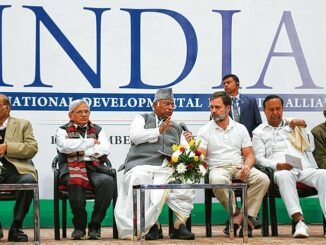
    To see the glass as half full or half empty depends on how buoyant or cynical an observer is. Since its inception in June, the Indian National Developmental Inclusive Alliance (INDIA), comprising 28 parties, has envisaged roping in as many Opposition forces as it can mobilize in a joint front to fight the BJP in the 2024 General Election. The formation of the bloc, in which the Congress is as important an investor as the regional parties, was an admission on the part of the Gandhis that their political legacy was no longer remarkable enough to take on the BJP single-handedly. The series of meetings INDIA held iterated the Congress’s position as an equal and not a first among equals. It still isn’t clear if the participants were out to score an own-goal by flagging issues that were earlier deemed as ‘irrelevant’ or quite happy to articulate their contradictions.

    Ideally, recent events ought to have underscored the need for such a front even more deeply, especially for the Congress, because the favorable atmospherics that prevailed during INDIA’s first congregation at Patna had dissipated. Seven months before that, there was a sense of hope. Rahul Gandhi had completed his marathon Bharat Jodo Yatra, which went some way in reimagining popular perception of the leader who had been seen as a reluctant and naive politician. The Congress scored an impressive win over the BJP in Karnataka and decimated the Janata Dal (Secular), which went on to seek refuge in the NDA’s fold.

    With 2023 nearing its end, the scenario has turned depressing for the Opposition. The BJP swept the elections in three states in the Hindi heartland in a direct faceoff with the Congress. The Congress now exists in slivers in this region. In the ongoing winter session of Parliament, the BJP has reasserted its near-hegemonic position amid projections of a comeback in 2024. It has pulverized the Opposition, which had sought a statement from the government regarding the security breach in Parliament but was rebuffed. Not only did the government reject the suggestion of being accountable to elected MPs, it also passed Bills with far-reaching implications for data security and amendments in the criminal laws without debate and discussion. After the mass suspension of MPs, the Opposition’s presence in the Lok Sabha and Rajya Sabha has shrunk alarmingly. The picture which both Houses presented marked the culmination of a long-cherished RSS project to install an overbearing Centre with the states orbiting around it like satellites.

    What do the circumstances portend for the Opposition’s coalition? The constituents of INDIA met in New Delhi on December 19, apparently to clear the air of disunity that had begun to cloud the coalition after its earlier sessions and following the differences over seat-sharing between the Congress and the Samajwadi Party, Janata Dal (United) and the Rashtriya Lok Dal before the recent state elections. A sense of cooperation and consensus among the parties —which included a Shiv Sena faction headed by Uddhav Thackeray, the Mandalised bloc from Uttar Pradesh and Bihar, the DMK and its allies and the Aam Aadmi Party — continued to be elusive. It still isn’t clear if the participants were out to score an own-goal by flagging issues that were earlier deemed as ‘irrelevant’ or quite happy to articulate their contradictions.

    Mamata Banerjee of the Trinamool Congress and AAP’s Arvind Kejriwal proposed Congress president Mallikarjun Kharge’s name as INDIA’s prime-ministerial candidate. It seemed as if they had only discussed the matter among themselves, believing they could persuade their associates that the time was ripe to raise the pitch for India’s first Dalit PM and counterbalance the BJP’s strategy of consolidating the Other Backward Classes (OBCs). Although JD(U) leader and Bihar CM Nitish Kumar consistently maintained that he did not aspire for the PM’s post, his latent ambitions surfaced through statements by his colleagues in the past. A structured discussion on the PM candidate never took off, especially after Kharge scotched the idea, although some reports quoted him talking about his long years in public service and his conduct as a ‘fighter’ to mean that he was not averse to handling the Mamata-Kejriwal googly. Uddhav stressed that the question of electing a PM arose only if the coalition brought in enough MPs and what INDIA needed immediately was a convener to hold the grouping together.

    Certain red lines, accentuating the existence of a regional cleave and intra-state pinpricks, were drawn. When TR Baalu, a senior DMK representative, sought a translation of Nitish’s speech, he was snubbed by the Bihar CM, who demanded that Baalu should learn Hindi, a ‘national’ language. By juxtaposing the north-south divide that was displayed in Tuesday’s meeting with the BJP’s persistent attempts to shed the tag of being a Hindi-belt party, visible in Prime Minister Narendra Modi’s overtures to Tamil Nadu and Kerala, it becomes clear who — the NDA or INDIA — has the big picture in front and what correctives need to be made.

    While there was a general agreement that the seat-sharing process should be completed by the year-end, where do things stand now? Samajwadi leader Ram Gopal Yadav made it clear that his party would quit INDIA if there was a proposal to accommodate the Bahujan Samaj Party. As Mamata pitched for a year-end deadline, there was no indication from her of wanting to forge a broader alliance involving the TMC, the Left Front and the Congress. Given the mutual antagonism on the ground, it seems unlikely the idea would take off. In Maharashtra, it appears that while Uddhav’s Sena and Sharad Pawar’s Nationalist Congress Party have their terrain mapped out, the Congress is in a quandary over its strong areas, if indeed there are any.

    At the core of the predicament faced by INDIA is the Congress’ inability to mold itself into the leader of an admittedly heterogeneous formation, struggling for a helmsman and a narrative. While everybody conceded the need for a shared agenda and holding collective meetings that didn’t seem unwieldy, the question is: Who will hold the baton for INDIA?
    (The author is a senior journalist)

  • BJP on a roll, Opposition needs to regroup

    BJP on a roll, Opposition needs to regroup

    • The least resilient among the INDIA members are in danger of disappearing from the political scene

    “PM Modi’s most urgent task is to lift millions of his countrymen from the poverty in which they are mired. The affluent are certainly much better off since 2014. The stock market is booming. Those who have invested in stocks will become even richer if he is re-elected in 2024. The freebies now given away to the rural poor will eventually have to be stopped. The youth of those poor households, belonging mainly to the lower castes, must be equipped with skills to enable them to fend for themselves. Industrialists and entrepreneurs, who have prospered in the last 10 years, should be motivated to enter less-profitable segments of the economy so that jobs are created for our unemployed youth.”

    By Julio Ribeiro

    I write this piece as a member of a minority community — just 2 per cent of the country’s population. In a ‘first past the post’ system of electing people’s representatives, the BJP has swept the Assembly polls in the Hindi heartland. The Congress lost the tribal and women’s votes. The shift in votes from the Congress to the BJP catapulted the latter to power in Madhya Pradesh, Rajasthan and Chhattisgarh.

    ‘Sabka Saath, Sabka Vikas, Sabka Vishwas’ needs to be put into practice instead of being merely parroted every now and then.

    The difference in the overall vote share of the BJP and the Congress was roughly 2 percentage points in Rajasthan and 4 in Chhattisgarh. It was 8 percentage points in Madhya Pradesh, where the winner garnered 48 per cent of the votes as against 40 per cent by the Congress.

    It was a resounding victory for the BJP and Modi in particular. Not even his bitterest critic can say that he is not the most popular and charismatic of all political leaders in the country. It looks certain that he will be elected for a third term. The Hindi heartland is with him and that should tilt the scales in his favor. The South is not with him, but the West is his for the taking. What is in store for the country after the 2024 Lok Sabha elections? In the past decade, India has been divided on communal lines. The consolidation of the Hindu vote was what the Hindutva forces strived for. It succeeded to the extent of ensuring the BJP’s poll victories. Muslims and Christians together make up just 16 per cent of the population. The Sikhs account for less than 2 per cent.

    After the 2024 polls, the forward castes in the Hindu fold will be the chosen ones, like the Christian Brahmins and Kshatriyas were in Goa during the Portuguese rule. The BJP under Modi, influenced by the RSS, will placate the OBCs and the Scheduled Castes/Scheduled Tribes, counting them within the 80 per cent whose pride in being Hindu has to be ‘created’.

    The Muslims were in the doghouse in Modi’s first two terms. Beef-related lynchings, ‘love jihad’ accusations and the fear generated by the CAA-related NRC had stifled their quest for equality as citizens of India. Now, I envisage that they and the Christians, who are next in line on the extremists’ hit list, will have to adjust to second-class citizenship like Hindus and Christians in Pakistan have done in that religion-influenced country.

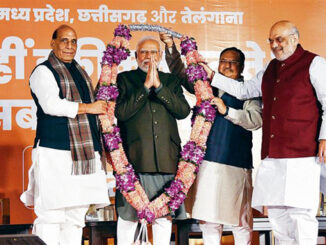
    Delivering his victory speech at the BJP’s headquarters in Delhi, PM Modi mentioned ‘appeasement’, besides corruption and dynastic politics, as the evils that he has been fighting. I do not know what he means by ‘appeasement’. If he is referring to the Muslims, it is only the mullahs who were appeased by the Congress, and that too in religious matters. That is not the mandate of a democratically elected government. Muslims should be ‘appeased’ like all poor communities, such as the Scheduled Castes and the Scheduled Tribes, in terms of education and healthcare. Religious issues should be sorted out by the community itself or by the courts.

    Extremist elements in the Hindutva camp have consistently railed against the Muslim minority. There have even been calls to exterminate Muslims and boycott their traders selling vegetables and fruits in Hindu localities. Modi should rein in these extremists by ordering penal action against them as ordained by law. He hesitates to do that for fear of losing their support. They, in turn, misinterpret this silence as tacit approval.

    PM Modi’s most urgent task is to lift millions of his countrymen from the poverty in which they are mired. The affluent are certainly much better off since 2014. The stock market is booming. Those who have invested in stocks will become even richer if he is re-elected in 2024. The freebies now given away to the rural poor will eventually have to be stopped. The youth of those poor households, belonging mainly to the lower castes, must be equipped with skills to enable them to fend for themselves. Industrialists and entrepreneurs, who have prospered in the last 10 years, should be motivated to enter less-profitable segments of the economy so that jobs are created for our unemployed youth.

    The possible re-election of Modi and the BJP in 2024 will consolidate the right-wing economic trend in the country. All left-of-center parties, like the Congress, TMC and the AAP, should come together to form an effective Opposition. If they fail to do so, the least resilient among the INDIA members are in danger of disappearing from the political scene. Many leaders of those parties, such as Arvind Kejriwal, will find themselves targeted by the ED, the CBI and other Central agencies with ruthless precision just before the elections.

    Nearly a century ago, writer-philosopher Aldous Huxley, in his futuristic work Brave New World (1932), prophesied: “By means of ever more effective methods of mind manipulation, the democracies will change their nature; the quaint old forms — elections, parliaments, Supreme Courts and all the rest — will remain. The underlying substance will be a new kind of non-violent totalitarianism. Democracy and freedom will be the theme of every broadcast and editorial… Meanwhile, the ruling oligarchy and its highly trained elite of soldiers, policemen, thought-manufacturers and mind-manipulators will quietly run the show as they see fit.” Does that ring a bell? An Opposition-mukt democracy is no democracy.

    PM Modi has often stated: “India is the mother of democracy.” If he really believes what he says, we, members of the minority in our own land, will be reassured if ‘Sabka Saath, Sabka Vikas, Sabka Vishwas’ is put into actual operation instead of being merely parroted every now and then.
    (The author is a highly decorated Indian Police Service (IPS) Officer and a former governor)

  • 14 political parties move SC against ‘misuse’ of CBI, ED

    Alleging misuse of central probe agencies against political rivals, 14 political parties, including the Congress, Rashtriya Janata Dal, DMK, TMC and Bharat Rashtra Samiti, on Friday moved the Supreme Court seeking pre-arrest and post-arrest guidelines. A Bench led by CJI DY Chandrachud agreed to take it up on April 5 after senior advocate AM Singhvi mentioned it for urgent listing and hearing. Alleging that 95 per cent of the cases were against opposition leaders, Singhvi said, “We’re asking for pre-arrest and post-arrest guidelines to be followed by the prosecuting agencies and courts.” He, however, clarified, “We’re not trying to affect the existing investigations.” The 14 political parties represented 42% spectrum, Singhvi said, adding that the petitioners were saying that democracy was in peril. The petition comes at a time when several leaders of the political parties — which have moved the top court — are facing CBI and Enforcement Directorate probes in corruption and money-laundering cases.


  • Opposition unity remains a bridge too far

    Opposition unity remains a bridge too far

    Sisodia’s arrest has profound national implications for the direction the Opposition will eventually pursue. After tarring the TMC and AAP with the corruption taint, it is inconceivable that the Congress could include the Opposition in its anti-corruption blitzkrieg. That’s expecting too much. The core of its 2024 blueprint has only one strategy, and that is to position Rahul as Modi’s sole adversary.

    “Refusing to reconcile with the reality that its pre-eminence as the Grand Old Party might be dated by now, Congress president Mallikarjun Kharge qualified his imploration to the Opposition with the caveat that the exercise would follow the UPA template with the Congress heading the coalition because it was the only party that had never done business with the BJP. It’s a fact few would dispute, but should the Congress grandstand at every opportunity on its ‘unsullied’ ideological ‘credentials’? Can parties such as the SP be labelled as BJP’s accomplices even as the subject of whether their campaigns against Hindutva were sufficiently robust should be debated? Has the Congress scored over other non-BJP entities on this marker? If the Congress’s pro-secular, pro-minority credentials were impeccable, why did Thiruvananthapuram MP Shashi Tharoor intervene at the AICC plenary to emphasize that his party could have been ‘more vocal’ on the release of Bilkis Bano’s rapists in Gujarat, the attacks on churches, lynchings in the name of cow vigilantism and the bulldozing of Muslim homes.”

    By Radhika Ramaseshan

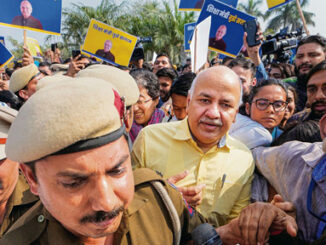
    The ruling BJP could be sanguine in the belief that the country’s attention has been deflected from the Hindenburg-Adani row by the arrest of Delhi minister and Aam Aadmi Party’s backbone Manish Sisodia.

    The development has profound national implications for the direction the Opposition will eventually pursue. The early indications augur well for the BJP because the arrest has reopened the fault lines running through the Congress and the regional parties, some of which it is counting on as its allies in the prelude to the 2024 General Election.

    Delhi offers only seven parliamentary states. It is a quasi-state that is partially governed by the Centre, which has increasingly shrunk the space for the exercise of powers by the Arvind Kejriwal government after the BJP lost the 2015 and 2020 Assembly polls to the AAP.

    Delhi is significant for the BJP because the seeds of the downfall of the Congress-helmed United Progressive Alliance (UPA) government were sown in the national capital in a long-drawn-out protest against the UPA’s ‘corruption’ and ‘misrule’; Kejriwal was then closely associated with the anti-corruption movement piloted by Anna Hazare. The India Against Corruption stir became a launch pad for Kejriwal’s political career, which was carefully camouflaged by his ‘activism’ with a moral underpinning. The Congress was the principal casualty of the protests and the BJP the eventual gainer.

    The arrest of Sisodia, a founding member of the AAP, provoked strong reactions from regional forces, but invited the Congress’s endorsement. KT Rama Rao, working president of the Bharat Rashtra Samithi (BRS), accused the BJP of “resorting to stealth politics by inciting Central agencies against Opposition parties in states where it can’t come to power (on its own).” For the BJP, BRS-ruled Telangana is analogous to Delhi. The party’s exertions have not fructified into tangible political gains. At best, the BJP can hope to unseat the Congress as the main Opposition party in Telangana, unless the ground situation dramatically changes. Samajwadi Party (SP) chief Akhilesh Yadav lauded Sisodia’s record in making quality education accessible to Delhi’s underprivileged children and remarked, “The BJP proved that it is not only against education, but also against the future of Delhi’s children.”

    The approval by the Congress’s Delhi unit stood out all the more against the backdrop of the party’s call for forging ‘Opposition unity’ before the next Lok Sabha battle at its just-concluded plenary in Raipur. Refusing to reconcile with the reality that its pre-eminence as the Grand Old Party might be dated by now, Congress president Mallikarjun Kharge qualified his imploration to the Opposition with the caveat that the exercise would follow the UPA template with the Congress heading the coalition because it was the only party that had never done business with the BJP. It’s a fact few would dispute, but should the Congress grandstand at every opportunity on its ‘unsullied’ ideological ‘credentials’? Can parties such as the SP be labelled as BJP’s accomplices even as the subject of whether their campaigns against Hindutva were sufficiently robust should be debated? Has the Congress scored over other non-BJP entities on this marker? If the Congress’s pro-secular, pro-minority credentials were impeccable, why did Thiruvananthapuram MP Shashi Tharoor intervene at the AICC plenary to emphasize that his party could have been ‘more vocal’ on the release of Bilkis Bano’s rapists in Gujarat, the attacks on churches, lynchings in the name of cow vigilantism and the bulldozing of Muslim homes? “If we don’t speak out in such cases, we are only surrendering our core responsibility of standing up for India’s diversity and pluralism, which should be central to the Congress’s core message,” Tharoor had stated.

    More evidence followed to demonstrate that the Congress was unwilling to cede the leadership position to a leader from a prospective ally. Addressing a meeting in Shillong, Rahul Gandhi aggressively engaged with the Trinamool Congress (which fought the Meghalaya elections solo) and listed the violence in West Bengal, the Saradha scam and the alleged profligacy exhibited by the TMC in the Goa elections as proof of its ‘tradition’ and its propensity to ‘help’ the BJP and defeat the Congress. Meghalaya’s last Congress Chief Minister Mukul Sangma had crossed over to the TMC with a dozen legislators. At the same time, at a rally in Nagaland, Kharge made it amply clear that the Congress would lead the Opposition alliance that will come to power at the Centre in 2024. “The Congress will lead. We are talking with other parties. Because otherwise, democracy and the Constitution will go,” claimed the Congress president.

    Secularism apart, it is apparent that the Congress has acquired a sense of proprietorship over the public articulation and projection of corruption, exemplified in the Centre’s alleged patronage to Adani and its silence on the questions raised by Rahul in Parliament. In his speech at the Raipur session, Rahul compared the Adani conglomerate with the East India Company and said, “History is being repeated.” “The Independence struggle was against the East India Company. That was also a company, the company that took away India’s wealth, infrastructure, ports….” he stressed.

    After tarring the TMC and AAP with the corruption taint, it is inconceivable that the Congress could include the Opposition in its anti-corruption blitzkrieg. That’s expecting too much. The core of its 2024 blueprint has only one strategy, and that is to position Rahul as Narendra Modi’s sole adversary.

    (The author is a senior journalist)


  • The Hindenburg Report on Adani conglomerate –

    The Hindenburg Report on Adani conglomerate –

    Uproar in Parliament, Opposition seeks JPC probe: Houses adjourned without transacting business

    • RBI asks banks for details of exposure to Adani Group
    • Boris Johnson’s brother quits linked firm; B’desh questions ‘expensive’ power deal

    I.S. Saluja

    NEW DELHI (TIP): The Hindenburg-Adani issue rocked Parliament with both Houses adjourned for the day without transacting any substantial business. The Congress-led Opposition raised allegations of irregularities against the Adani Group, demanding a probe into the matter by a Joint Parliamentary Committee (JPC) or by a sitting judge of the Supreme Court.

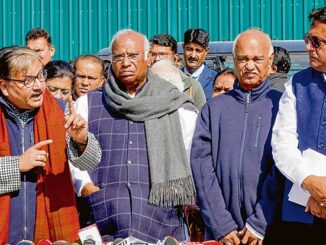
    Both Houses were adjourned until 2 pm after presiding officers of the Lok Sabha and the Rajya Sabha rejected calls for deferment of proceedings to discuss the matter, prompting the Congress-led Opposition to demand a JPC probe or a day-to-day judicial probe headed by a Supreme Court judge. When the two Houses again met at 2 pm, the ruckus over the issue did not abate, and Parliament was adjourned for the day, a Tribune News Service report said. Leader of the Opposition in Rajya Sabha and Congress president Mallikarjun Kharge led the demand for the JPC or a Supreme Court-monitored probe, with the DMK, TMC, SP, JD(U), Shiv Sena (Uddhav), CPI(M), CPI, NCP, IUML, NC, AAP and Kerala Congress joining the issue. The decision to press for an investigation came after a meeting at Kharge’s chambers in the morning which was attended by opposition parties. Rajya Sabha Chairman Jagdeep Dhankhar had earlier said the notices were not in order, but Opposition leaders vowed to keep raising the matter till they were allowed a discussion. Kharge later told reporters that nine party leaders, including him, had given notices for adjournment of proceedings in the Rajya Sabha to discuss the issue but the proposal was rejected by Dhankhar.

    Derek O’Brien of the TMC said: “Opposition leaders are being continuously harassed for no reason by the ED and the CBI. Now, the government must take action against the perpetrators of this monumental scam and ensure that they do not flee the country. The hard-earned money of millions of Indians is in peril.”

    Ram Gopal Yadav of the SP said the matter was very serious as “people were being sent home by the SBI in several districts, saying that there’s no money.”

    The Opposition has been alleging that public money of the LIC and SBI invested in Adani firms is in danger of sinking.

    AAP’s Sanjay Singh asked: “Why is the government silent on this mega scandal? Adani is the scandal kingpin and the treasurer of the BJP. He has formed shell companies abroad, overvalued his shares and looted people’s money.”

    Keshav Rao of the BRS questioned the RS Chairman’s rejection of the adjournment notices. “The Chairman says the notices are not in order. There’s no pro forma as far as adjournment notices are concerned,” he noted.

    Shiv Sena (Uddhav) MP Priyanka Chaturvedi and DMK’s Kanimozhi also demanded a probe.

    Meanwhile, Parliamentary Affairs Minister Pralhad Joshi said, “We have to run the House smoothly. A good Budget has been presented under the guidance of PM Modi. If they have constructive suggestions about the President’s Address, they should give. I urge them to run the House smoothly and put forth their arguments.”

    Congress: Why govt mum?

    Modi govt is maintaining silence on the Hindenburg report. We will not remain quiet if you cheat Indian investors, consisting of 29 crore LIC policy holders and 45 crore SBI account holders.

    Meanwhile, the RBI has asked  banks for details of exposure to Adani Group.

    As the Reserve Bank of India (RBI) on Thursday, February 2,  sought details about lenders’ exposures to the Adani Group, chairman Gautam Adani cited market volatility for the decision to withdraw the follow-on public offer (FPO) of its flagship firm Adani Enterprises. His companies continued to lose on the stock market with the cumulative rout nearing USD 108 billion in a week — one of the biggest wipeouts in India’s history.

    The RBI is seeking details both from private and public banks with the total exposure to the group estimated at Rs 75,000 crore. It has also sought to know special arrangements extended to the companies such as collaterals in the form of bonds.

    The National Stock Exchange (NSE) too has put shares of three group companies under the additional surveillance mechanism (ASM). The move indicates the company’s shares are in trouble and require special monitoring. In a media message, Adani claimed the fundamentals of the company were strong.

    A day after Swiss lender Credit Suisse stopped accepting bonds by Adani Group companies as collaterals for margin lending, Norges Bank Investment Management from Norway followed suit. Citigroup also stopped extending margin loans against securities of the group.

    Boris Johnson’s brother quits linked firm

    Meanwhile, Lord Jo Johnson, younger brother of former British PM Boris Johnson, quit his non-executive directorship of a UK-based investment firm linked with the Adani Group’s now-withdrawn FPO. Johnson junior had taken the position in June last year and said he sat on the board after having been assured that the company “is compliant with its legal obligations and in good standing with regulatory bodies”.

    Bangladesh questions ‘expensive’ power deal

    Bangladesh too has sought a revision of a 2017 power purchase agreement with Adani Power after local media said the price was high and the issue had been earlier raised by PM Sheikh Hasina. The Bangladesh power company is seeking a 40 per cent downward revision in the price.

    (Source: Agencies)


  • Calcutta HC orders CBI probe into Birbhum killings case

    Calcutta HC orders CBI probe into Birbhum killings case

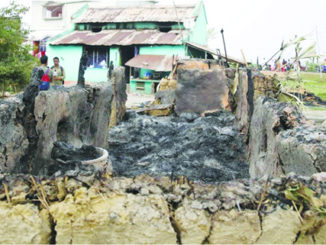
    Kolkata (TIP)- The Calcutta High Court on Friday, March 25,  ordered a CBI investigation into Birbhum violence that claimed eight lives earlier this week. The court directed an SIT formed by the West Bengal government to hand over case papers and accused persons arrested by it to the central probe agency.

    A division bench comprising Chief Justice Prakash Shrivastava and Justice R Bharadwaj directed the Central Bureau of Investigation (CBI) to file a progress report by April 7, the next date of hearing of the matter. The bench said that the CBI probe was being ordered in the interest of justice.

    Eight people, including two children, were charred to death in Bogtui village of Bengal’s Birbhum district in the suspected fallout of a TMC panachayat official’s murder.

    The bench had suo motu taken up the case of the gruesome incident.

    A set of PILs seeking CBI or NIA probe into the incident were also taken up for hearing by the court along with the suo motu petition.

    On Thursday, West Bengal Chief Minister Mamata Banerjee visited Bogtui village, where she ensured “speedy justice” to the victims and offered monetary compensation. However, Opposition leaders have accused the Bengal government of a ‘cover up’ and ‘fabrication’.

    Congress leader Adhir Chowdhary, whose car was allegedly stopped more than once before reaching Bogtui, alleged that several bodies had disappeared from the site of violence. He said, “She (CM) alleged a big conspiracy behind this incident and that is why she has instructed the police to take strict action. The bodies of two children have gone missing. The CM is trying to suppress the facts.”

    Meanwhile, after local residents complained to CM that local Trinamool Congress block president Anarul Hussain had hatched the conspiracy to set the houses ablaze, she ordered the DGP to arrest him. However, Leader of Opposition Suvendu Adhikari tweeted, “Can someone instruct an investigating agency to fabricate a case? Rather than directing the investigating agency to conduct a fair investigation and gather evidence that incriminates the real perpetrators, @MamataOfficial is pronouncing & dictating who are at fault. (sic)”.

    ‘Mamata govt fabricating case’: BJP

    The BJP on Thursday slammed the Mamata Banerjee-led Trinamool Congress (TMC) government in West Bengal for allegedly “fabricating a case” over the Birbhum killings.

    The statement came after the police arrested TMC’s Rampurhat block president Anarul Hossain in connection with the case at the instruction of Chief Minister Mamata Banerjee.s

  • With an Eye on 2024, 19 Opposition parties decide to hold nationwide protest

    With an Eye on 2024, 19 Opposition parties decide to hold nationwide protest

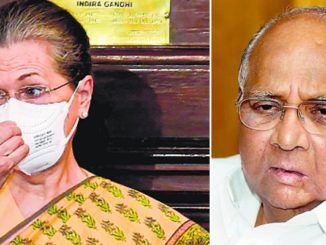
    NEW DELHI (TIP): Leaders of 19 Opposition parties, on August 20,2021 announced a joint agitation plan from September 20 to 30 after Congress president Sonia Gandhi urged them to rise above political compulsions to defeat the BJP in the 2024 Lok Sabha elections.

    It’s time to rise above political compulsions — Sonia Gandhi, Congress

    All secular, democratic forces must join hands — Sharad Pawar, NCP

    Mamata proposes core committee to steer fight against BJP

    Tejaswi Yadav seeks ‘driving seat’ for regional parties

    In a signed statement, Opposition stalwarts, including NCP’s Sharad Pawar, TMC’s Mamata Banerjee, DMK’s MK Stalin, Shiv Sena’s Uddhav Thackeray and JMM’s Hemant Soren, called upon the people of India to defend “the secular, democratic, republican order with all their might”.

    11 demands

    • Augment production and ensure free vaccination
    • Give Rs7,500 a month to families outside income tax bracket
    • Reduce prices of fuel
    • Repeal three farm laws & guarantee MSP to farmers
    • Pegasus probe under SC
    • Release political prisoners, including those in Bhima Koregaon case, anti-CAA protests
    • Restore J&K’s full statehood
    • Stop, reverse privatization
    • Revive MSMEs
    • Expand MGNREGA

    Jabs for teachers, pupils

    “Save India today, so that we can change it for a better tomorrow,” they said listing 11 demands, including restoration of full statehood and elections in Jammu and Kashmir, repeal of three farm laws and institution of an SC-led inquiry into the Pegasus snooping row.

    The statement followed a major Opposition outreach in which Sonia Gandhi said, “Our ultimate goal is the 2024 Lok Sabha poll for which we have to begin planning systematically with the single-minded objective of giving to our country a government that believes in the values of the freedom movement and in the principles and provisions of our Constitution. This is a challenge, but together we can and must rise to it because there is simply no alternative to working cohesively together. We all have our compulsions, but clearly, a time has come when the interests of our nation demand that we rise above them.”

    Bengal CM Mamata Banerjee proposed the formation of a core group of Opposition leaders to chalk out joint programs. The like-minded parties “needed to unite to defeat the BJP”, she said.

    The meeting was attended by leaders of the TMC, NCP, DMK, Shiv Sena, JMM, CPI, CPM, NC, RJD, AIUDF, VCK, Loktantrik Janta Dal, JDS, RLD, RSP, Kerala Congress Mani, PDP and IUML. The BSP, AAP and SP skipped the event, but the Congress claimed SP chief Akhilesh Yadav had intimated about his absence.

    In the meeting, symbolically organized on the birth anniversary of her husband and late Prime Minister Rajiv Gandhi, Sonia blamed the government for the recent Parliament washout.

    (Agencies)

  • Why House panel wants govt to implement one farm law

    Why House panel wants govt to implement one farm law

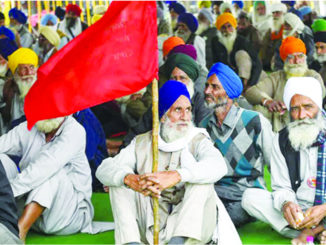
    The Standing Committee on Food, Consumer Affairs and Public Distribution has asked the government to implement in “letter and spirit” the Essential Commodities (Amendment) Act, 2020, one of the three farm laws against which the farmers are protesting at the borders of Delhi for the last 116 days.

    What is the law?

    The Essential Commodities (Amendment) Act, 2020 is one of the three contentious farm laws. It was enacted on September 26, 2020 by amending the Essential Commodities Act, 1955. Under the amended law, the supply of certain foodstuffs — including cereals, pulses, oilseeds, edible oils, potato — can be regulated only under extraordinary circumstances, which include an extraordinary price rise, war, famine, and natural calamity of a severe nature. In effect, the amendment takes these items out from the purview of Section 3(1), which gave powers to the central government to “control production, supply, distribution, etc., of essential commodities.”

    Through the Essential Commodities Act, 2020, the government has inserted sub-section I(A) in the Section 3 of the Essential Commodities Act, 1955. The new sub-section states, “the supply of such foodstuffs, including cereals, pulses, potato, onion, edible oilseeds and oils, as the Central Government may, by notification in the Official Gazette, specify, may be regulated only under extraordinary circumstances which may include war, famine, extraordinary price rise and natural calamity of grave nature…”

    The new law also specifies conditions when the stock limits can be imposed.

    The Parliamentary Standing Committee on Food, Consumer Affairs and Public Distribution, headed by TMC member Sudip Bandyopadhyay, has recommended to the government to implement, “in letter and spirit,” the Essential Commodities (Amendment) Act, 2020. In its report on ‘Price Rise of Essential Commodities- Causes and Effects,’ the committee has given reasons for the implementation of the law.

    “The Committee note that although the country has become surplus in most agricultural commodities, farmers have been unable to get better prices due to lack of investment in cold storage, warehouses, processing and export as entrepreneurs stated to be get discouraged by the regulatory mechanisms in the Essential Commodities Act, 1955,” says the report of the committee.

    How is an ‘essential commodity’ defined?

    There is no specific definition of essential commodities in The Essential Commodities Act, 1955. Section 2(A) states that an “essential commodity” means a commodity specified in the Schedule of the Act. The Act gives powers to the central government to add or remove a commodity in the Schedule. The Centre, if it is satisfied that it is necessary to do so in public interest, can notify an item as essential, in consultation with state governments. According to the Ministry of Consumer Affairs, Food and Public Distribution, which implements the Act, the Schedule at present contains seven commodities — drugs; fertilisers, whether inorganic, organic or mixed; foodstuffs including edible oils; hank yarn made wholly from cotton; petroleum and petroleum products; raw jute and jute textiles; seeds of food-crops and seeds of fruits and vegetables, seeds of cattle fodder, jute seed, cotton seed.

  • BJP announces 157 candidates for West Bengal assembly polls, turncoats rewarded

    Kolkata (TIP):  The BJP on Thursday, March 18,  announced its list of 157 candidates for the last four phases of assembly election in West Bengal, rewarding around 22 turncoats and fielding party heavyweights Mukul Roy and Rahul Sinha. The candidate list also features 17 Muslim faces, including women. The party is facing protests and resignations as many of its aspiring old-timers did not find their names in the list of candidates.

    Roy’s son Subranghshu, a sitting TMC MLA, state BJP Mahila Morcha president Agnimitra Paul, Bengali film personalities Rudranil Ghosh, Srabanti Chattopadhyay and Parno Mitra were among those given tickets by the saffron party.

    Roy, BJP national vice-president and former union minister, is back in the electoral fray after a gap of two decades.

    He will contest from the Krishnanagar Uttar seat, which is dominated by the Matua community. He had unsuccessfully contested election on a TMC ticket in 2001.

    The BJP, which has emerged as the main opposition in the state, has also fielded sports personalities and a scientist for the high stakes battle in the state.

    Despite protests over recruits getting more importance than old-timers in the candidates’ list, the party gave nominations to 22 turncoats, including several former TMC MLAs like Arindam Bhattacharya who has been fielded in Jagatdal and Jitendra Tiwari in Pandaveswar.

    However, in some cases, the saffron party has not given nominations to turncoats from their home seats to avoid dissent.

    The list also has 19 women candidates, which is more than its previous two lists.

    The party continued with its strategy of fielding personalities from different walks of life and sitting MPs.

    It named folk artiste Ashim Sarkar from Haringhata assembly seat and scientist Gobhardhan Das from Purbasthali Uttar.

    It has fielded its former state unit chief Rahul Sinha, who is yet to taste success in any of the elections he has contested so far, from Habra against the state Food Supplies Minister Jyotipriyo Mullick.

    The BJP has nominated party MP Jagannath Sarkar for the Santipur seat. The party has so far announced names of five sitting MPs, including Union minister Babul Supriyo, as its candidates for the state election.

  • Political row escalates after  Mamata suffers bone injuries in Nandigram ‘attack’

    Political row escalates after  Mamata suffers bone injuries in Nandigram ‘attack’

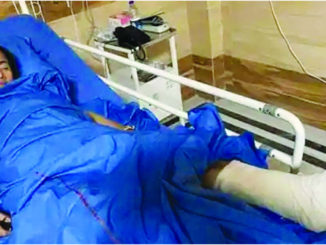
    Kolkata (TIP): West Bengal Chief Minister Mamata Banerjee, who was allegedly pushed by unknown miscreants while campaigning for West Bengal assembly elections in Nandigram, has suffered severe bone injuries in her left ankle and foot, right shoulder, forearm and neck, a senior doctor of the state-run SSKM hospital said in a medical bulletin issued late on Wednesday, March 10,  night. A day later, a political row escalated on  as the Trinamool Congress (TMC) and the Bharatiya Janata Party (BJP) traded charges, and large-scale protests rocked the poll-bound state.

    Doctors in Kolkata said Banerjee, 66, suffered severe “bony injuries” in her left ankle and foot, besides injuries in right shoulder, forearm and neck. Her supporters blocked roads, burnt tyres and performed prayers in temples and mosques across the state. In several districts, clashes were reported between BJP and TMC workers.

    Banerjee went to the high-profile seat of Nandigram on Wednesday to file her nomination but, in the evening, alleged that some people deliberately attacked and injured her. A preliminary investigation by the police and a section of the eyewitnesses hinted that the injuries may be the result of an accident, and not a deliberate conspiracy.

    The issue quickly snowballed into a political slugfest with the state’s ruling party blaming the BJP for the injuries and the latter accusing Banerjee of orchestrating the incident for sympathy.

    Images of Banerjee being carried by her security personnel and later, lying on a hospital bed with her leg in a plaster, dominated the airwaves and popular discussion, roughly three weeks before elections kick off for the 294-member assembly. “I appeal to my party cadres, supporters, activists and common people to maintain peace and calm. It is true that I was badly hurt last night and felt severe pain in the chest and head… I hope to be back on the field in the next few days,” Banerjee said in a video message filmed from her hospital bed in a government-run facility in Kolkata. Banerjee, who is seeking a third consecutive term as chief minister, said she would not cancel any scheduled meetings and use a wheelchair if needed. She didn’t repeat her allegation that four-five men had deliberately attacked her.

    The TMC said it will hold silent protest across the state and wear black bands to condemn the incident. “The only woman chief minister in the country was injured and attacked. The Prime Minister and the Union home minister, however, didn’t show the courtesy to call up. We condemn this,” said Saugata Roy, TMC parliamentarian.

    Other TMC leaders invoked previous attacks on Banerjee – the politician popularly known as didi was hit on the head during a rally in 1990 and images of her bloodied body made her a national figure – and it will be a major campaign issue.

    The BJP condemned the TMC’s stance and sought a Central Bureau of Investigation (CBI) probe. The party, which is looking to dislodge the TMC and come to power for the first time in the state, demanded that pictures of the incident be made public.