TOKYO (TIP): Japan’s age of consent was raised from 13, among the world’s lowest, to 16 years old on June 16 as lawmakers passed key reforms to sex crime legislation. The reforms, which also clarify rape prosecution requirements and criminalise voyeurism, cleared parliament’s upper house in a unanimous vote.
Campaigners welcomed the reforms, with the Tokyo-based group Human Rights Now calling them “a big step forward”.
The lifting of the age of consent in particular will “send a message to society that sexual violence by adults against children is unacceptable”, the group said in a statement. The age of consent — below which sexual activity is considered statutory rape — is 16 in Britain, 15 in France, and 14 in Germany and China.
Japan’s had been unchanged since 1907, with children aged 13 and above deemed capable of consent.
In practice however, across many parts of the country regional ordinances banning “lewd” acts with minors were sometimes seen as effectively raising the age of consent to 18. Under the new law, teen couples no more than five years apart in age will be exempt from prosecution if both partners are over 13. Japan last revised its criminal code on sexual offences in 2017, for the first time in more than a century, but campaigners said the reforms were insufficient.
And in 2019, a string of acquittals in rape cases triggered nationwide rallies.
Under the previous law, prosecutors had to prove victims were incapacitated due to violence and intimidation.
Critics argued that requirement effectively blamed victims for not resisting enough.
Criminalising voyeurism
The bill that passed Friday contains a list of examples under which rape prosecutions can be made.
These include victims being under the influence of alcohol or drugs, being frightened and perpetrators taking advantage of social status. A justice ministry official told AFP earlier this year that the clarifications were not “meant to make it easier or harder” to secure rape convictions, but “will hopefully make court verdicts more consistent”.
The bill also contains a new “visitation request offence”, according to the justice ministry.
It means that people who use intimidation, seduction or money to coerce children under 16 to meet for sexual purposes will face a prison sentence of up to a year or a fine of 500,000 yen ($3,500). The reforms also include language that for the first time criminalises voyeurism, which had only been regulated by regional ordinances before.
A penalty of up to three years’ imprisonment or a fine of up to three million yen will be imposed for secretly filming private body parts, underwear or indecent acts without a justifiable reason.
Tokyo resident Sohei Ikeda, 39, welcomed the reforms but said he felt “Japan is quite late”.
But Natsuki Sunaga, a 22-year-old student, said she was skeptical that the reforms would stop people secretly filming others. (AFP)
Tag: Tokyo
-

Japan raises age of consent from 13 to 16 years old
-

Three dead in central Japan after being attacked by man carrying rifle, knife
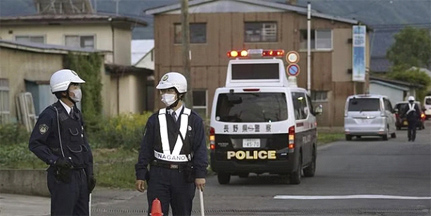
TOKYO (TIP): Three people including two police officers were killed in Nagano in central Japan on May 25 and a suspect with a rifle and knife was holed up inside a building, according to police and media reports.
A witness told NHK public television that a woman fell while being chased by the suspect, who then stabbed her with a knife and shot at two police officers as they arrived at the scene in a patrol car in Nakano city in Nagano prefecture.
The witness said he asked the suspect why he attacked her, and he replied that he wanted to kill her, NHK said.
The three victims were taken to a nearby hospital, where the woman was later pronounced dead, police said. The two police officers also died, according to NHK. A fourth person who was injured could not be rescued because he was near the suspect, Kyodo News agency reported.
Video on NHK showed police wearing bulletproof vests and carrying shields, with an ambulance nearby. The area is in a quiet farming neighborhood.
Police described the suspect as a man wearing a camouflage outfit, a hat, a mask and sunglasses, Kyodo News said. City officials urged those in the area to stay home.
No other details, including about the suspect and the motive, were immediately known.
Violent crimes are rare in Japan. It has strict gun control laws and only a handful of gun-related crimes annually. But in recent years, there have been some high-profile cases involving random knifings on subways and arson attacks, and there is growing concern about homemade guns and explosives. (AP) -
August 6 New York & Dallas E – Edition
[vc_row][vc_column][vc_column_text]
[/vc_column_text][/vc_column][/vc_row][vc_row][vc_column width=”2/3″][vc_custom_heading text=”Dual Edition” font_container=”tag:h2|text_align:center” google_fonts=”font_family:Istok%20Web%3Aregular%2Citalic%2C700%2C700italic|font_style:700%20bold%20regular%3A700%3Anormal” link=”url:https%3A%2F%2Fwww.theindianpanorama.news%2Fwp-content%2Fuploads%2F2021%2F08%2FTIP-August-6-Dual-Edition.pdf|||”][vc_single_image image=”112787″ img_size=”full” add_caption=”yes” alignment=”center” onclick=”custom_link” link=”https://www.theindianpanorama.news/wp-content/uploads/2021/08/TIP-August-6-Dual-Edition.pdf”][/vc_column][vc_column width=”1/3″][vc_single_image image=”82828″ img_size=”medium” alignment=”center” onclick=”custom_link” link=”https://www.theindianpanorama.news/advertising-media-kit-portal-indian-panorama/”][vc_single_image image=”82829″ img_size=”medium” alignment=”center” onclick=”custom_link” link=”https://www.theindianpanorama.news/advertising-media-kit-portal-indian-panorama/”][/vc_column][/vc_row][vc_row][vc_column width=”2/3″][vc_custom_heading text=”Lead Stories This Week” font_container=”tag:h2|text_align:center” google_fonts=”font_family:Istok%20Web%3Aregular%2Citalic%2C700%2C700italic|font_style:700%20bold%20regular%3A700%3Anormal” link=”url:https%3A%2F%2Fwww.theindianpanorama.news%2F%20|||”][/vc_column][vc_column width=”1/3″][vc_widget_sidebar sidebar_id=”mh-sidebar”][/vc_column][/vc_row]
-
Tokyo 2020 President Mori to resign over sexist comments
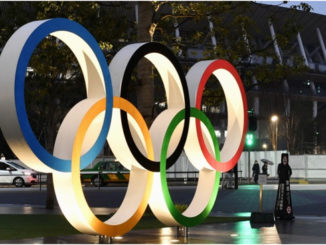
Tokyo (TIP): Yoshiro Mori, president of the Tokyo 2020 Olympics organising committee, is set to step down over sexist remarks he made that women talked too much, the Fuji News Network reported on Thursday. The comments, made at a Japanese Olympic Committee board meeting in the first week of February, set off a firestorm at home and abroad and could become the latest obstacle to the 2020 Summer Games, already postponed for a year due to the coronavirus pandemic. Mori is likely to express his intention to step down on Friday when organisers of the Tokyo Olympics will hold a gathering of executive board members, the Mainichi daily newspaper reported. The meeting was organised over Mori’s remark. At a hastily called news conference on Feb. 4, Mori, 83, retracted his remarks and said they were “inappropriate” and against the Olympic spirit, but he declined, at that point, to resign.
When pressed on whether he really thought women talked too much, he said: “I don’t listen to women that much lately, so I don’t know”. A former prime minister whose tenure was marred by gaffes and blunders, Mori’s comments drew sharp comments on social media and in parliament, with opposition lawmakers demanding his resignation.
The Tokyo Games had overcome several obstacles, including ballooning costs and a plagiarism scandal involving the official logo, before being postponed by the coronavirus pandemic.
Nearly 80 per cent of the Japanese public are opposed to holding the Summer Games as scheduled this year due to concerns about the coronavirus, recent polls show.—Reuters
-
Japan scientists study source of high heat on asteroid
Tokyo (TIP): Japanese space experts said they are examining soil samples brought back from a distant asteroid in an attempt to find the source of heat that altered the celestial body, in their search for clues to the origin of the solar system and life on Earth. A preliminary examination of 5.4-gram soil, which the Hayabusa2 spacecraft brought in December, has already been done. Agencies
-

‘No Plan B’: Japan’s sponsors shelve ads as mood sours over Olympics
Tokyo (TIP): Japan’s Olympic sponsors are scaling back advertising campaigns and delaying marketing events for this year’s Summer Games, concerned that public sentiment toward the event is souring amid a fresh wave of COVID-19.
Sponsors also worry that organisers have not told them what contingency plans there are in case the pandemic derails the Games again this year. That uncertainty over the Olympics marks a fresh blow to domestic sponsors, including many of Japan’s biggest companies, such as Canon Inc and Japan Airlines Co Ltd, who have collectively pitched in more than $3 billion to support the event.
Assurances by both the Japanese government and the International Olympic Committee this month that the Games would begin as scheduled on July 23 have not quelled concerns.
In interviews with two dozen sponsors, organisers and officials, sources described deepening uncertainty and frustration as national infection numbers hit record highs in January, turning the public mood against the event.
Nearly 80 per cent of the public now believes the Games should be cancelled or delayed further, according to a January survey by Kyodo. Fears that an extended emergency declaration could further erode public confidence in the Games was also a worry, at least 11 of the sources said.
“We’re asking ourselves, ‘Are we really going to do this?’” said a person seconded by his company to the Olympic organising committee. The person, who like most of those interviewed, declined to be named as he is not allowed to speak to the media, said even raising the topic of a “Plan B” was discouraged.
Canon’s chief financial officer Toshizo Tanaka told reporters on Thursday the company was working under the assumption that the event would go ahead as planned. “But we are considering internally how to respond just in case it can’t be held,” he said.
In response to Reuters questions about sponsors altering their ad and marketing strategy, the Tokyo organising committee said it was working closely with all of its stakeholders towards the success of the Games and said it was receiving their full support.
The committee also said it expects a series of measures implemented by Japan’s government, Tokyo, and other prefectural authorities to improve the virus situation.
For some local sponsors, the perks of supporting the Tokyo Olympics have long since faded. Six sources at sponsor companies said they were still waiting on details from organisers so they could finalise preparations and roll out advertising campaigns. Several said they had held back out of fear of alienating the public.
“It’s a little hard to say ‘we support Tokyo 2021’ when the government is under so much criticism,” said a source who works for a financial institution that is also a games sponsor.
Though Japan has contained the spread of the virus better than many other countries, hospitals are still besieged by patients and the public has been advised to stay indoors as much as possible.
Prime Minister Yoshihide Suga, who has pledged to hold the Olympics this year, has seen his support slide in recent weeks over the handling of the pandemic.
Asahi Group Holdings, the holding company of beer maker Asahi Breweries, a top-tier Olympics partner, postponed some of the ads it had planned to air last year, after the Games were delayed, said a company official on condition of anonymity, as it waits for more clarity on the schedule.
A spokesman for Asahi confirmed it postponed some of its advertisements after the Games were delayed.
Five sources at separate sponsor companies said they were also delaying ads and reconsidering marketing events. But many sources said they saw the Olympics as a “national project” that they must support.
Source: Reuters