Tag: Trade War

  • US-China trade war escalates as new tariffs come in

    US-China trade war escalates as new tariffs come in

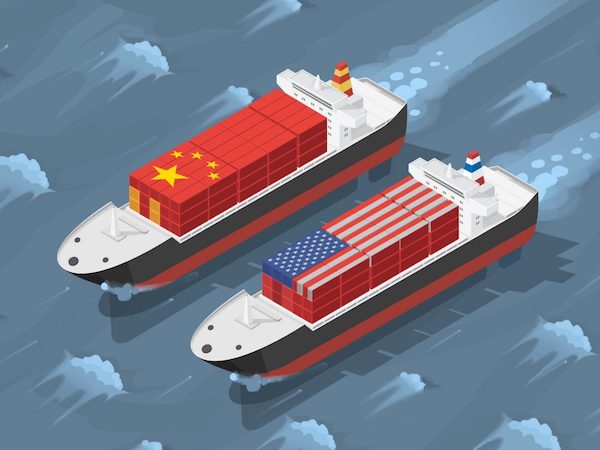
    BEIJING / WASHINGTON(TIP): The United States and China escalated their acrimonious trade war on Thursday, August 23, implementing punitive 25 percent tariffs on $16 billion worth of each other’s goods, even as mid-level officials from both sides resumed talks in Washington.

    The world’s two largest economies have now slapped tit-for-tat tariffs on a combined $100 billion of products since early July, with more in the pipeline, adding to risks to global economic growth.

    China’s Commerce Ministry said Washington was “remaining obstinate” by implementing the latest tariffs, which kicked-in on both sides as scheduled at 12:01 p.m. in Beijing (0401 GMT).

    “China resolutely opposes this, and will continue to take necessary countermeasures,” it said in a brief statement.

    “At the same time, to safeguard free trade and multilateral systems, and defend its own lawful interests, China will file suit regarding these tariff measures under the WTO dispute resolution mechanism,” it said.

    President Donald Trump has threatened to put duties on almost all of the more than $500 billion of Chinese goods exported to the United States annually unless Beijing agrees to sweeping changes to its intellectual property practices, industrial subsidy programs and tariff structures, and buys more U.S. goods.

    That figure would be far more than China imports from the United States, raising concerns that Beijing could consider other forms of retaliation, such as making life more difficult for American firms in China or allowing its yuan currency to weaken further to support its exporters.

    ‘We have more bullets’

    Trump administration officials have been divided over how hard to press Beijing, but the White House appears to believe it is winning the trade war as China’s economy slows and its stock markets tumble.

    “They’re not going to give that up easily. Naturally they’ll retaliate a little bit,” US Commerce Secretary Wilbur Ross said on CNBC on Wednesday at a Century Aluminum smelter in Hawesville, Kentucky, which is restarting idled production lines due to Trump’s aluminum tariffs.

    “But at the end of the day, we have many more bullets than they do. They know it. We have a much stronger economy than they have, they know that too,” Ross said.

    Economists reckon that every $100 billion of imports hit by tariffs would reduce global trade by around 0.5 percent.

    They have assumed a direct impact on China’s economic growth in 2018 of 0.1-0.3 percentage points, and somewhat less for the United States, but the impact will be bigger next year, along with collateral damage for other countries and companies tied into China’s global supply chains.

    The tariffs took effect amid two days of talks in Washington between mid-level officials from both sides, the first formal negotiations since US Commerce Secretary met with Chinese economic adviser Liu He in Beijing in June.

    Business groups expressed hope that the meeting would mark the start of serious negotiations over Chinese trade and economic policy changes demanded by Trump.

    However, Trump on Monday told Reuters in an interview that he did not “anticipate much” from the talks led by US Treasury Under Secretary David Malpass and Chinese Commerce Vice Minister Wang Shouwen.

    Trump’s hard line has rattled Beijing and spurred rare criticism within the highest levels of China’s ruling Communist Party over its handling of the trade war, sources have said.

    Beijing has denied US allegations that it systematically forces the unfair transfer of U.S. technology and has said that it adheres to World Trade Organization rules.

    The official Xinhua news agency said in a commentary on Thursday that China approached the latest round of talks in good faith, but that Washington remains vague about what it wants.

    “As US President Donald Trump said in his book on making deals, ‘the point is that you can’t be too greedy.’ The two sides would hence be advisable to define their top concerns in this round of talks and outline a roadmap, in a bid to find a way out of the current impasse and towards the final settlement of the issues.”

    Washington’s latest tariffs apply to 279 product categories including semiconductors, plastics, chemicals and railway equipment that the Office of the US Trade Representative has said benefit from Beijing’s “Made in China 2025” industrial plan to make China competitive in high-tech industries.

    China’s list of 333 US product categories hit with duties includes coal, copper scrap, fuel, steel products, buses and medical equipment.

    Though it is too early for the trade battle to show up in much economic data as yet, tariffs are beginning to increase costs for consumers and businesses on both sides of the Pacific, forcing companies to adjust their supply chains and pricing, with some U.S. firms looking to decrease their reliance on China.

    One executive at a major US manufacturer in China told Reuters the uncertainty about the duration of the trade conflict was more damaging than the tariffs themselves because it made business planning difficult.

    (Source: Reuters)

    If the tariffs are in place for long, there will come a point at which the company would begin moving some sourcing and production out of China, a process that would be irreversible for several years once set in motion, the executive said, declining to be identified due to the sensitivity of the matter. Reuters

  • The New Trade Order

    The New Trade Order

    By Philip I. Levy

    Since the start of the year, U.S. President Donald Trump has lashed out at allies and adversaries alike on trade. Often, as with India, the U.S. has pushed for enhanced security cooperation at the same time it declared trade relations a national security threat. The belligerence has left many baffled.

    Some pointers

    A first question is why the Trump administration is launching its trade wars. There are at least three possible explanations worth considering: an actual casus belli, as with complaints about Chinese practices; a phantom casus belli, as in the preoccupation with meaningless bilateral trade deficits; or, finally, it might just be a straightforward desire to block trade.

    The evidence seems to point to the last possibility — simple protectionism. While the U.S. has significant concerns about Chinese economic practices, such as China’s aggressive approach to acquiring intellectual property from American businesses, the administration has been unable to focus its demands on these practices. When, a year ago, China offered a deal to address its steel overcapacity, Mr. Trump reportedly rejected the deal in favor of pursuing tariffs. Nor has the White House been able to prioritize among its global trade concerns. The discord with trading partners such as the European Union and Canada has undercut the possibility of presenting a united front on China complaints.

    Further, the Trump administration’s tariff justifications can shift rapidly. In May-June, the Trump administration extended steel and aluminum tariffs to Canada, among other countries. Ostensibly, the rationale was a threat to U.S. national security. Yet, at the G7 meetings later that month, Mr. Trump seemed to explain the aggressive U.S. stance by citing Canada’s protective dairy regime.

    There is ample evidence that Mr. Trump places a high priority on bilateral trade deficits, which he seems to equate with profit and loss statements. In May, hoping to assuage the President’s concerns, Chinese Vice-Premier Liu. He came to Washington to offer increased Chinese purchases of U.S. goods as a means of resolving the looming tariff threat. The Trump administration initially struck a deal, then reversed it roughly a week later. Countries with which the U.S. runs a trade surplus have also not been immune from trade attacks; Canada is a prime example.

    This then leaves the simpler explanation that Mr. Trump is fond of tariffs and believes that American industry will do better behind a wall of protection. He has been neither coy nor inconsistent about such feelings. When he first announced his intention to apply steel and aluminum tariffs in March, his press secretary was asked about the surprise policy move. She replied, “This is something, frankly, the President has been talking about for decades.”

    Within the system

    The U.S. prides itself, however, on its political system of checks and balances. Even with a protectionist President, how can one individual recraft a country’s long-standing trade position so dramatically? The puzzle deepens when one looks at the U.S. Constitution, which assigns the power to apply tariffs to Congress. And where are international protections against capricious protectionism?

    Domestically, Congress has tried to shift responsibility for trade on to the Executive Branch ever since it engaged in an ill-fated bout of protectionism in 1930. The underlying presumption was that individual members of Congress were more likely to succumb to protectionist pressures from their narrower constituencies, while the President was more likely to consider the broader national interest. Most domestic legislative safeguards, therefore, protected against a president being more liberal than Congress might desire; there are relatively few protections against a President who is more protectionist. Over the years, the legal authorizations for a President to apply protection accumulated, largely unused. Thus, the steel and aluminum tariffs were justified under an obscure provision of the Trade Expansion Act of 1962, a law granting national security powers from the midst of the Cold War. The upshot is that a protectionist President has ample tools at hand.

    Turning to the global trading system, the burgeoning trade war demonstrates its limitations. The General Agreement on Tariffs and Trade and World Trade Organization were never designed to block a major world power from running amok. They relied, instead, on the principal players in global trade respecting the system. Trade disputes were anticipated, of course, but they were intended to be sincere cases of disagreement about rules and acceptable practices. The WTO Dispute Settlement Mechanism cannot act quickly enough to address the mounting spats about trade protectionism emanating from the U.S., a major reason why countries around the world have not waited for verdicts from their WTO complaints and have instead proceeded with retaliation.

    What lies ahead

    Finally, we can ask: what comes next for the global trading system? In the near term, we are likely to see escalation. U.S. tariffs on $34 billion of imports from China took effect on July 6. China has promised equivalent retaliation. Mr. Trump has promised to retaliate against that retaliation.

    The Trump administration also announced its intention to use its national security justification for tariffs on the auto sector. There are reports that Mr. Trump wants such tariffs in place before the U.S. mid-term elections in early November. While such a move would be qualitatively similar to the action against steel and aluminum trade, it would be quantitatively much more significant, given the magnitude of the autos trade. Europe has threatened retaliatory tariffs worth $300 billion should the auto tariffs proceed.

    There is little sign that Mr. Trump will be turned from his protectionist path by earnest explanations of the virtues of trade, though there have been valiant attempts both from the private sector and from members of Congress. If there is to be a change in the U.S. position, it is likely to come from an active reassertion of congressional authority over trade policy. At the moment, that still appears unlikely, but the pressures are mounting.

    Even if the President has trumpeted his passion for protection for years, many in the U.S. assumed he was exaggerating. It is only in the last month or two that the effects of both protection and retaliation have begun to be felt. While some businesses have been helped, many more have been hurt. For example, while there are roughly 140,000 Americans who work in steel production, there are about 2 million who work in industries that use steel as a major input. Those latter industries are beginning to cry for help, along with farmers who are seeing sales lost to retaliatory barriers. Stories such as the relocation of production of Harley-Davidson motorcycles have called into question the President’s claim that protection would revive American manufacturing.

    All this has led to a deeply conflicted Republican Party, which holds a majority in both houses of the legislature. Traditionally, Republicans have been the more pro-business, pro-trade party and members of Congress running for re-election this November were planning to mount a campaign based on unity, tax cuts, and good stewardship of the economy.

    Now those candidates need to decide whether or not to act against their President’s trade measures. If they choose to, they have the power to legislate and block the President’s trade belligerence, at the cost of enraging him. If they choose not to, they will likely disappoint their constituents. Their choice is likely to determine the next turn in Mr. Trump’s trade war.

    (The author is a Senior Fellow at the Chicago Council of Global Affairs and adjunct Professor at the Kellogg School of Management, U.S.)


  • Trade War- US slaps more tariffs on $200b Chinese goods

    Trade War- US slaps more tariffs on $200b Chinese goods

    WASHINGTON(TIP): Escalating the US-China trade war, the Trump administration on Wednesday, July 11, announced 10 per cent tariffs on an additional $200 billion worth of Chinese imports, prompting Beijing to warn of “counter measures” to safeguard its interests.

    The Trump administration’s move comes after the US imposed 25 per cent tariffs on Chinese goods worth $34 billion last Friday. Beijing immediately responded with its own tariffs on US goods worth $34 billion. The retaliatory tariffs that China enacted Friday targeted US cars and major agricultural goods, such as soybeans and meat.

    US Trade Representative Robert Lighthizer released a list of thousands of additional goods that could face 10 per cent tariffs after a public comment period. It includes fruit and vegetables, handbags, refrigerators, rain jackets and baseball gloves.

    (Source: PTI)

  • Can the 3 Ms save Iran deal?

    Can the 3 Ms save Iran deal?

    By Arun Kumar

    The Macron-Merkel-May trio hopes to bear upon Trump to keep pact

    Besides the Europeans, the looming May 12 deadline also has India worried, as since the end of sanctions, it has greatly strengthened its bilateral relations and economic partnership with Iran. During Rouhani’s visit, the two countries signed nine agreements, including a crucial one on connectivity via the strategic Chabahar Port. India has also committed itself to completing the Chabahar- Zahedan rail link to provide an alternative route to Afghanistan, completely bypassing Pakistan, say the author.

    French President Emmanuel Macron has just ended a glitzy visit with President Donald Trump. German Chancellor Angela Merkel came calling today and British Prime Minister Theresa May has been burning the phone across the Atlantic. Their mission: to persuade the mercurial occupant of the White House not to tear up the Obama era 2015 landmark Iran nuclear deal as he threatened on the campaign trail.

    The wily Donald is not telling anyone what he would do on May 12 when he must either sign a fresh waiver on Western sanctions against Iran or walk away from what Trump has decried as an “insane” and “ridiculous” deal signed by P5+1 — the US, Russia, China, UK, France and Germany — world powers with Tehran to end its nuclear weapons program.

    But swept off his feet by what the American media called “Le Bromance” unleashed by Trump at the first State dinner of his presidency, Macron ended up calling for a new “big deal” with the old one limiting Iran’s uranium enrichment for 15 years serving as one of its four pillars.

    Or did the suave Frenchman charm the Manhattan mogul into buying these side deals he Merkel and May have been working on to convince Trump to stay on in the Iran deal? European leaders are also said to be crafting a “Plan B” to continue without the US. But Iran is unlikely on come on board without the US.

    The three new pillars that Macron suggested in Washington would rework the sunset clause in the accord to ensure there is no nuclear activity by Iran in the long run, as feared by the critics who have accused Europeans, particularly Germany, of putting business before security.

    The Macron proposal would also seek to limit Tehran’s ballistic missile program and curb its “regional influence” by ceasing support for militant groups across the Middle East, particularly Yemen and Syria.

    Even as he declined to show his hand, Trump suggested: “I think we will have a great shot at doing a much bigger maybe deal, maybe not deal” built on solid foundations. In an escalating war of words, he also cautioned Iran against restarting its nuclear program, warning it may “have bigger problems than they have ever had before.”

    Iranian President Hassan Rouhani, who during his February visit to India — the first by an Iranian head of state in 10 years — had dismissed Trump as a “haggler”, was quick to heap fresh insults on “a tradesman” with no understanding of diplomacy. Western powers, he asserted, had no right to make changes in the deal now.

    Earlier in February, Iranian deputy foreign minister Abbas Araqchi had assured that Iran’s commitment to not seek nuclear weapons is permanent and that there was no sunset clause in the deal.

    Besides the Europeans, the looming May 12 deadline also has India worried, as since the end of sanctions, it has greatly strengthened its bilateral relations and economic partnership with Iran. During Rouhani’s visit, the two countries signed nine agreements, including a crucial one on connectivity via the strategic Chabahar Port. India has also committed itself to completing the Chabahar- Zahedan rail link to provide an alternative route to Afghanistan, completely bypassing Pakistan.

    Chabahar Port, Rouhani declared, can serve as a bridge connecting India to Afghanistan, Central Asia and Eastern Europe.

    India, which backs “full and effective implementation” of the Iran nuclear deal, could use Afghanistan as a bargaining chip at the next India-US two plus two dialogue between Trump’s incoming Secretary of State Mike Pompeo and Defense Secretary James Mattis and their Indian counterparts, Sushma Swaraj and Nirmala Sitharaman. The dialogue earlier set for April 18-19 in New Delhi was postponed with the unceremonious dismissal of Trump’s previous chief diplomat Rex Tillerson.

    Pompeo, currently CIA Director, who is set to join Trump’s equally hawkish new National Security Adviser John Bolton, assured the Congress during his confirmation hearings that he would work to fix the “terrible flaws” in the Iran nuclear deal even if Trump walks away from it.

    Unlike Tillerson, who favored a somewhat softer approach towards Pakistan, Pompeo, Bolton and Mattis are all for ramping up US pressure on Pakistan to roll up its terrorism infrastructure to allow India to engage in institution building in Afghanistan.

    Trump’s declaration of a virtual trade war against friends and foes alike has sent diplomats across the world scrambling for new options. India and China, too, are coming closer with Chinese foreign minister Wang Yi declaring that the upcoming informal summit between Indian PM Narendra Modi and Chinese President Xi Jinping would be a “new starting point in relationship.” The two have, for long, put their vexed boundary dispute on the back burner to let their trade relations bloom. China has emerged as India’s largest trading partner with an 18 per cent growth, taking bilateral trade to $84 billion.

    The fate of the Iran deal would certainly cast a shadow on the upcoming nuclear summit between Trump and North Korean leader Kim Jong-un. If Trump tears up the Iran accord, can Kim trust him to keep his word on a peace pact with Pyongyang?

    Would the author of “The Art of the Deal”, who looks at every issue as a transaction, risk a legacy building landmark accord with Kim after bringing him to the negotiating table with threats of “fire and fury”?

    Not likely, as after a secret preparatory visit by Pompeo, a la Henry Kissinger, the legendary architect of Richard Nixon’s opening to China, he now sees Kim whom he once dismissed as the “Little Rocket Man” as “very open and very honorable.”

    At their joint presser, Macron declared that “together US and France would defeat terrorism, curtail weapons of mass destruction in North Korea and Iran and act together on behalf of the planet.” The last bit was seen as a hint that Trump may be open to revisiting the Paris Climate accord too.

    Earlier in January, Trump declared that he would reconsider joining the “terrible” Trans Pacific Partnership if the US got a “substantially better deal.”

    At his presser with Macron, Trump declared in a conspiratorial tone: “Nobody knows what I am going to do on the 12th (of May), although Mr President, you have a pretty good idea.” Macron responded with just a wink.

    It would, indeed, be hazardous to guess what Trump would or would not do. But given that he is open to revisiting every “terrible” deal in search for a “better” one, it may be safe to presume that the Iran accord will live another day.

    (The author is an expert on international affairs)

  • President Trump speaks of hitting China with $100 billion in tariffs

    President Trump speaks of hitting China with $100 billion in tariffs

    WASHINGTON(TIP): In a marked escalation of a trade war with China, President Trump said Thursday, April 5, that he will consider hitting China with an additional $100 billion in tariffs, on top of the $50 billion the White House has already authorized.In a statement late Thursday, President said that he was responding to China’s “unfair retaliation” against the United States, which this week outlined hundreds of Chinese products, like flat-screen TVs and medical devices, that could be subject to American tariffs. The Chinese, in response, detailed their own list of $50 billion worth of American products, like soybeans and pork, that would be hit with levies.

    “Rather than remedy its misconduct, China has chosen to harm our farmers and manufacturers,” Trump said, adding that he has instructed the United States trade representative to determine if another $100 billion in tariffs were warranted and, “if so, to identify the products upon which to impose such tariffs.”

    The story was first broken by New York Times.