Tag: Trump

  • CAPAC Chair Meng Calls on Trump Administration to Reverse Visa Suspensions for 75 Countries

    CAPAC Chair Meng Calls on Trump Administration to Reverse Visa Suspensions for 75 Countries

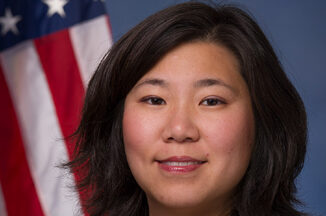
    NEW YORK (TIP): Chair of the Congressional Asian Pacific American Caucus (CAPAC) Rep. Grace Meng (NY-06) joined 74 of her colleagues in calling on Secretary Marco Rubio and Secretary Kristi Noem to reverse course on their decision to indefinitely halt immigrant visa processing for 75 countries.

    On January 21, the Trump administration suspended immigrant visa processing for applicants from 75 countries, including more than a dozen countries in Asia. The U.S. visa suspension affects immediate relatives of U.S citizens as well as all family-sponsored, employer-sponsored, religious worker, diversity, and returning resident visas. 44 percent of Asian immigrant visa holders—over 135,000 individuals—will be affected by this policy change.

    “The Trump administration’s decision to halt visas for nearly 40 percent of the world is ignorant and xenophobic. They have the audacity to tell immigrants to come here the ‘right way,’ while deliberately closing legal pathways that make that possible,” said Rep. Grace Meng, Chair of the Congressional Asian Pacific American Caucus. “This cruel policy leaves immigrants—who have been thoroughly vetted and have waited years to lawfully enter the United States—stuck in limbo. I join my colleagues in demanding that the administration reverse this decision immediately.”

    The indefinite pause will block nearly half of all legal immigrants from entering the U.S. over the next year. Individuals from the affected countries represent 40 to 45 percent of all immigrant visas. With no clear timeline for resuming processing, the suspension will undoubtedly separate families, prohibit individuals who have completed the necessary steps to legally come to the U.S., and harm small businesses by stifling their growth.

    The State Department justified the move by claiming foreign nationals from the impacted countries may be more likely to seek federally funded public benefits in the United States and become a “public charge,” despite longstanding restrictions that already prohibit immigrant visa recipients from accessing said benefits.

    This decision is part of a broader and intensifying crackdown on legal immigration pathways by the Trump administration. Some of the countries targeted by the new immigrant visa ban, including Afghanistan, Laos, and Myanmar, already face partial or full restrictions on nonimmigrant visas. Other Asian and Pacific Islander nations were recently added to the expanded visa bond program that requires recipients of nonimmigrant visas, such as tourists and business travelers, to pay up to $15,000 to secure their visa. These financial barriers will make it nearly impossible for relatives overseas to visit family members in the United States.

    In September, the Trump administration abruptly announced a $100,000 fee on new H-1B skilled worker visa applications, disproportionately impacting Indian professionals who make up the majority of H-1B holders and leaving many scrambling to return to the U.S from visiting family. The administration has since moved to expand social media screening for H-1B and H-4 applicants, extending visa stamping delays through 2027 and leaving thousands of Indian workers and families stuck overseas.

    The administration has also revoked more than 100,000 visas, attacked birthright citizenship, halted all asylum decisions, and even canceled naturalization ceremonies for those on the verge of gaining U.S. citizenship.

    The letter was signed by 75 Members of Congress, including CAPAC Chair Grace Meng, Congressional Black Caucus Chair Yvette Clarke, Reps. Ritchie Torres, Yassamin Ansari; Gabe Amo; Wesley Bell; Shontel M. Brown; André Carson; Greg Casar; Sean Casten; Kathy Castor; Sheila Cherfilus-McCormick; Gilbert Ray Cisneros, Jr.; Jim Costa; Danny K. Davis; Debbie Dingell; Diana DeGette; Rosa L. DeLauro; Mark DeSaulnier; Nanette Diaz Barragán; Adriano Espaillat; Veronica Escobar; Dwight Evans; Sylvia R. Garcia; Al Green; Adelita S. Grijalva; Jimmy Gomez; Pablo José Hernández; Jahana Hayes; Chrissy Houlahan; Eleanor Holmes Norton; Robin L. Kelly; Jonathan L. Jackson; Raja Krishnamoorthi; Sydney Kamlager-Dove; Zoe Lofgren; George Latimer; LaMonica McIver; Sarah McBride; April McClain Delaney; Betty McCollum; Gregory W. Meeks; Kweisi Mfume; Gwen S. Moore; Kevin Mullin; Jerrold Nadler; Eleanor Holmes Norton; Alexandria Ocasio-Cortez; Chellie Pingree; Brittany Pettersen; Mark Pocan; Ayanna Pressley; Jimmy Panetta; Mark Pocan; Seth Moulton; David Scott; Brad Sherman; Halley M. Stevens; Darren Soto; Suhas Subramanyam; Eric Swalwell; Rashida Tlaib; Shri Thanedar; Dina Titus; Lori Trahan; Marc A. Veasey; Juan Vargas; Debbie Wasserman Schultz; Nydia M. Velázquez; and Bonnie Watson Coleman.
    For Full text of the letter, visit www.theindianpanorama.news

  • Former CNN Anchor Don Lemon Arrested

    Former CNN Anchor Don Lemon Arrested

    MINNESOTA(TIP): The Trump administration charged former CNN anchor Don Lemon and eight others with civil rights violations, after he and other reporters covered a protest at a church where an ICE official is a pastor. The journalist’s lawyer said he was taken into custody in Los Angeles overnight, adding that his work covering the protest “was no different to what he has always done.” He faces two charges of conspiracy to deprive rights and interfering with First Amendment rights, a Department of Homeland Security spokesperson told AFP, referencing the constitutional protection for freedom of expression, including religion.

    Political figures and media advocates condemned Lemon’s arrest, with Democratic House Minority Leader Hakeem Jeffries calling for his immediate release.

    “This is an egregious attack on the First Amendment and on journalists’ ability to do their work,” said Committee to Protect Journalists CEO Jodie Ginsberg.

    Lemon was released from custody after a short court hearing in Los Angeles, media reported. His next hearing is in Minneapolis on February 9.

  • When the Fourth Pillar Is Shackled: Don Lemon’s Arrest and the Alarming Erosion of American Democracy

    When the Fourth Pillar Is Shackled: Don Lemon’s Arrest and the Alarming Erosion of American Democracy

    By Prof. Indrajit S Saluja
    By Prof. Indrajit S Saluja

    The arrest of Don Lemon, a former CNN anchor and one of the most recognizable faces of American broadcast journalism, is far more than an isolated legal episode involving an individual reporter. It is a moment of deep national reckoning. It forces Americans to confront an uncomfortable but unavoidable question: Is the United States drifting away from its foundational commitment to free speech and press freedom?

    In a democracy, free speech is not merely a right, it is the very strength of the nation. The Founding Fathers understood this with remarkable clarity. That is why the First Amendment to the United States Constitution, adopted in 1791, begins not with conditional language but with an unequivocal command: “Congress shall make no law… abridging the freedom of speech, or of the press.” These words were written not to protect agreeable speech, but to safeguard dissent, criticism, and voices that question those in power.

    The arrest of a journalist in this context—particularly one engaged in reporting on public protest—cuts to the heart of that constitutional promise.

    Journalists as the Conscience Keepers of the Nation

    In every functioning democracy, journalists serve as the conscience keepers of society. They are entrusted with the responsibility of informing the public, scrutinizing authority, exposing injustice, and amplifying voices that would otherwise remain unheard. This role is neither optional nor ornamental. It is essential.

    A free press does not exist to please governments. It exists to question them.

    When journalists analyze policies, investigate abuses, or report from sites of protest and dissent, they do so in service of the people. That is precisely why the media has often been described as the Fourth Pillar of democracy—standing alongside the Legislature, the Executive, and the Judiciary as a guardian of accountability. When that fourth pillar is weakened or intimidated, the entire democratic structure begins to wobble.

    The criminalization of journalistic work, whether overt or veiled in legal technicalities, sends a dangerous signal. It tells reporters that certain subjects are best avoided, that certain truths come with a cost, and that dissent may invite punishment. The chilling effect of such actions spreads far beyond one individual. It seeps into newsrooms, editorial meetings, and ultimately into public discourse itself.

    Free Speech Muzzled: The First Sign of Fascist Drift

    History offers sobering lessons. Democracies rarely collapse overnight. They erode gradually—through the normalization of extraordinary measures, through the selective application of law, and through the steady silencing of critical voices. One of the earliest and most reliable indicators of authoritarianism is the suppression of free speech, especially the silencing of independent media.

    When an administration begins to view journalists not as watchdogs but as adversaries to be subdued, alarm bells must ring. When the machinery of the state is turned against the press, the danger is no longer hypothetical, it is real and immediate.

    The arrest of a journalist for doing his professional duty fits a troubling global pattern. Around the world, authoritarian regimes routinely cloak repression in the language of law and order, public safety, or national interest. Democracies must be held to a higher standard. When America, the nation that once lectured the world on press freedom—begins to resemble those it once criticized, the consequences are profound.

    Trump’s Second Term and the Shadow of Authoritarianism

    The second term of President Donald Trump has been marked by an unmistakable hardening of attitudes toward dissent, criticism, and institutional independence. While the rhetoric of “law and order” is invoked frequently, its application has too often appeared selective and politically charged.

    Domestically, America has witnessed increasing pressure on the media, legal harassment of critics, and an atmosphere in which journalists are portrayed as enemies rather than participants in a democratic system. Internationally, the United States has displayed a troubling tendency toward bullying—coercing allies, undermining international institutions, and favoring forceful unilateralism over diplomacy and consensus.

    Such behavior is not merely unbecoming of a democratic leader; it is dangerous to the democratic fabric itself. America has long been regarded as the epitome of the free world beacon whose moral authority rested not on military might alone, but on its constitutional values. When those values are compromised, America’s global standing weakens, and its credibility erodes.

    Why This Moment Demands Vigilance from Citizens 

    The Founding Fathers did not design democracy as a self-sustaining machine. They assumed vigilance. They expected citizens to guard their rights zealously, to challenge overreach, and to resist the concentration of unchecked power.

    What is at stake today is not only the freedom of one journalist, but the future of free expression in the United States. If journalists can be arrested for covering protests, if commentary can be reframed as criminality, then the boundaries of permissible speech will continue to shrink.

    Americans must remember that rights lost are rarely regained easily. Silence today becomes precedent tomorrow.

    This vigilance must extend beyond partisan loyalties. The defense of free speech cannot depend on whether one agrees with the speaker. The First Amendment protects conservatives and liberals, critics and supporters alike. Once its protections are weakened for one group, they are weakened for all.

    The Danger of Normalizing Repression

    Perhaps the greatest danger lies not in any single arrest, but in the temptation to normalize it. Democracies die not only through coups and revolutions, but through apathy—when citizens accept the unacceptable as routine.

    When journalists are arrested and the public shrugs, democracy suffers quietly but deeply. When fear replaces debate, when caution replaces courage, the marketplace of ideas begins to close. And when that happens, the nation envisioned by America’s Founding Fathers—bold, free, argumentative, self-correcting—begins to fade.

    The United States was imagined as a republic where power fears the people, not the other way around. Any administration that seeks to invert that relationship undermines the republic itself.

    It Must Stop—Before the Damage Is Irreversible

    The arrest of Don Lemon should serve as a wake-up call. It must compel Americans to ask whether the country is still faithful to its constitutional soul. Free speech is not an inconvenience to be managed; it is the lifeblood of democracy.

    The intimidation of the press, the silencing of dissent, and the misuse of state power against journalists are hallmarks of authoritarian regimes—not of free societies. If America is to remain true to its founding ideals, such tendencies must be confronted and reversed.

    This is a moment for citizens, lawmakers, judges, and institutions to reaffirm that no administration, no matter how powerful, stands above the Constitution. The freedoms guaranteed by the First Amendment are not gifts from the government; they are inalienable rights entrusted to the people.

    For the sake of this generation—and those yet to come—this slide toward repression must stop. Now. God Bless America!

  • EU has ‘serious doubts’ about Trump’s ‘Board of Peace’

    European leaders have serious doubts about the scope of President Donald Trump’s “Board of Peace” but are ready to work with the United States and the newly founded body in Gaza, EU chief Antonio Costa said Friday, January 23.
    “We have serious doubts about a number of elements in the charter of the Board of Peace related to its scope, its governance and its compatibility with the UN Charter,” the European Council president said after an EU leaders’ summit in Brussels.
    “We are ready to work together with the US on the implementation of the comprehensive Peace Plan for Gaza, with a Board of Peace carrying out its mission as a transitional administration”.
    The founding charter of Trump’s body for resolving international conflicts has a $1 billion price tag for permanent membership.
    Although originally meant to oversee Gaza’s rebuilding, the board’s charter does not seem to limit its role to the Palestinian territory and appears to want to rival the United Nations.
    Spanish Prime Minister Pedro Sanchez told reporters after the summit that his country had “declined” the invitation to participate in the body.
    Police seek man wanted in fatal shootings of 3 in small Australian town
    Police urged people in a small Australian town to stay indoors Friday as they looked for the man suspected of killing three people in a domestic violence-related shooting.
    Julian Ingram, 37, was out on bail after being charged with domestic violence-related crimes, and a restraining order had been issued in December to protect one of the victims in Thursday’s shooting, Sophie Quinn, who was 25 and pregnant.
    The others shot to death in the isolated town of Lake Cargelligo in New South Wales state were Quinn’s friend, John Harris, 32, and her aunt, Nerida Quinn, 50. A 19-year-old man who also was shot was hospitalized in serious but stable condition.
    Ingram had a long criminal history including domestic violence and police had checked on him multiple times while he was out on bail, state Police Assistant Commissioner Andrew Holland said.

  • Trump’s Peace Board raises old questions

    Trump’s Peace Board raises old questions

    As India ponders Trump’s invite to join the Board of Peace, here’s a recall of Vajpayee’s refusal to send troops in support of Iraq invasion.

    “Trump is far more ambitious than Bush, a different creature altogether. Diplomacy has no place in his narcissistic schemes. It is not too late for India to find its voice, just as the Vajpayee government did two decades ago, to stand up to Trump and say no to his new plan to reshape the world in his image. In doing so, India may even inspire others to call out the plan for what it is and decline the invitation categorically.”

    By Nirupama Subramanian

    The Board of Peace established by US President Donald Trump has so far found few takers. Invitations have reportedly gone out to 60 countries, asking them to join “an international organization that seeks to promote stability, restore dependable and lawful governance, and secure enduring peace in areas affected or threatened by conflict.” Quite clearly, it is not the same Board of Peace that was envisaged in Trump’s facile 20-point Gaza peace plan. That one was to be a transitional body, headed by Trump, to supervise a proposed interim, technocratic Palestinian committee for the day-to-day running of Gaza. The UNSC endorsed the idea and gave the Board a two-year mandate.

    This one is entirely different. Trump sees it as a free-range body, unrestricted by national boundaries or questions of sovereignty, to intervene in situations of conflict around the world, all under his leadership. With his offer of “permanent seats” to countries that will pay a membership fee of $1 billion, Trump does not see the body as bound by any UN rules, much less the UNSC’s two-year mandate that is due to end in November 2027.

    France has let on that it does not intend to join this latest of Trump’s many unilateral moves to reshape the world in his image. Canada’s PM Mark Carney has said he was prepared to consider it “on principle”, but he will not pay for membership.

    India has received the invitation, too, and is reported to be weighing its options, like most other nations facing this googly. It is worth remembering that this is not the first time that India has been invited to join a US-led coalition to carry out the agenda of the president-in-office at the time.

    The pressure the US brought to send soldiers to Iraq in 2003 is no secret. Admittedly, today’s US under its current President is unrecognizable from the one 22 years ago, and the geopolitics is far more complex today. But then, so was India not half the country it is today, nor did its leadership flaunt itself as Vishwaguru. The story of how Delhi held its nerve during those tense months serves as a useful reminder of a time when Raisina Hill was able to stiffen its back and hold its own in tough circumstances.

    When George W Bush invaded Iraq on the double lie that Saddam Hussein had weapons of mass destruction and that he was in cahoots with Osama bin Laden, the US-India romance was in its early stages.

    On March 19, 2003, without explicit authorization from the Security Council, the US and the UK carried out what they called a “pre-emptive” attack on Iraq. Earlier, in an effort to build an international “coalition of the willing” for the war, the US had asked 50 countries — India was not in this list — to assist it in the endeavor, hoping in this way to build international legitimacy.

    Only 30 responded, and apparently 15 others wanted their names to not be listed publicly. Britain sent 45,000 troops, while Australia and Poland also sent small numbers of ground forces. Others gave assistance in a non-combat capacity.

    It was only weeks after Bush declared in May 2003 that the US mission in Iraq had been accomplished that the US approached India for a division of troops (around 18,000 soldiers) to work under the overall command of the two occupying powers, the US and the UK, and help “stabilize” the situation.

    The Indian Parliament had “deplored” (rather than the stronger “condemned’) the invasion of Iraq and called the US military action “unacceptable”. The Vajpayee government’s response to the US request for assistance — that it had good relations with both the US and Iraq, and therefore would take the “middle path” — saw US diplomacy swing into action.

    The US envoy in India, Robert Blackwill, who enjoyed enormous goodwill and access in Delhi, and other especially dispatched Bush emissaries worked on the government. In an interview to The Hindu, Blackwill spoke of a “major role” for India on the “inner board of directors” that would be in charge of security in Iraq during its transition to democracy. Blackwill projected that India’s role on the security side would also give it influence on the political and diplomatic aspects of the transition.

    When Home Minister LK Advani visited the US in early June, President Bush and Secretary of Defense Donald Rumsfeld spoke to him on the subject of India sending soldiers to Iraq. Advani made no commitment. His visit was followed by the arrival of Pentagon officials in India. The strategic community was divided. Those who supported sending troops said it would help India break out of its “South Asia box” and increase its standing in the world.

    The late B Raman, who retired as head of the counter-terrorism division of the Research and Analysis Wing, warned of dire consequences. “Indian troops will get sucked into a bloody counter-insurgency operation as the surrogates of the U.S., losing whatever goodwill India had earned in Iraq and the rest of the Arab world in the past,” Raman wrote warning that “a new breed of jehadi terrorists born out of the Iraq war” would start targeting India, making the domestic counter-terrorism challenge even tougher.

    Finally, on July 14, 2003, India announced it would not send troops to Iraq without a UN mandate. “The Government of India has given careful thought to the question of sending Indian troops to Iraq. Our longer term national interest, our concern for the people of Iraq, our long-standing ties with the Gulf region as a whole, as well as our growing dialogue and strengthened ties with the US have been key elements in this consideration.

    India remains ready to respond to the urgent needs of the Iraqi people for stability, security, political progress and economic reconstruction. Were there to be an explicit UN mandate for the purpose, the Government of India could consider the deployment of our troops in Iraq.”

    India refused to send troops even after the October 2003 UNSC Resolution 1511, “authorizing a multinational force under unified command to take all necessary measures to contribute to the maintenance of security and stability in Iraq.” Delhi said it could not send troops due to the situation in Kashmir, but pledged $10 million for Iraqi reconstruction.

    Trump is far more ambitious than Bush, a different creature altogether. Diplomacy has no place in his narcissistic schemes. It is not too late for India to find its voice, just as the Vajpayee government did two decades ago, to stand up to Trump and say no to his new plan to reshape the world in his image. In doing so, India may even inspire others to call out the plan for what it is and decline the invitation categorically.
    (Nirupama Subramanian is a senior journalist)

  • The ‘Donroe doctrine’, a broken international order

    The ‘Donroe doctrine’, a broken international order

    It is a mixed bag as far as the global outlook for 2026 is concerned, marked by an updated version of the U.S.’s ‘shock and awe’ tactics

    By M K Narayanan

    The new year began with a stark reminder that the over 200-year-old ‘Monroe Doctrine’ is not merely alive but has been given a fresh dimension, in keeping with the personality of United States President Donald Trump. In a swift operation as 2026 unfolded, U.S. airborne troops abducted Venezuelan President Nicolás Maduro and his wife and incarcerated them in the U.S. on charges of undermining the security of the U.S. This action is being sanctified as the new ‘Donroe Doctrine’.

    Actions under the Trump administration

    Protests worldwide against the U.S.’s action in violating the sovereignty of Venezuela have, however, been rather muted. This seems to convey the belief that the post-1945 international order is dead, and what exists now is a ‘free for all’ in the global commons. Voices are also being heard ‘sotto voce’, that the latest action by the U.S. might well become a prelude for similar actions by nations such as China and Russia to lay claim to countries and regions falling within their zone of influence — China’s claim to Taiwan being one.

    The action carried out has been characterized by Mr Trump himself as a modern version of the (1823) Monroe Doctrine, viz., that the U.S. is the sole guarantor of security in the Western Hemisphere and would not brook any interference by powers outside the Hemisphere. A careful reading of President Trump’s latest U.S. National Security Strategy, or NSS (November 2025) — which unequivocally states that after years of neglect, the U.S. expects to reassert its pre-eminence in the Western Hemisphere, denying non-Hemispheric competitors the ability to position forces or threaten U.S. vital assets in the Hemisphere — would suggest that the Venezuelan operation was a carefully thought through maneuver, and an updated 21st century version of ‘US shock and awe’ tactics. There is even an implicit threat of actions similar to Venezuela against Cuba, Colombia and Mexico. There is again an implicit reference to taking control of Greenland which is viewed by the U.S. as a security necessity.

    From a U.S. perspective, it would seem that 2026 could see significant changes in different regions of the globe. Europe, for instance, which has come in for sharp criticism in the NSS document, has been excoriated on the ground that it had lost most, if not all, its sheen, alongside the suggestion that the U.S. could help Europe regain its former greatness if it backed patriotic European parties and ‘genuine democracy’. The NSS document wants Europe to assume ‘primary responsibility for its own defense’, alongside a veiled reference to achieving strategic stability with Russia.

    Going beyond Mr. Trump’s NSS, realistically speaking, it would seem that the conflict in Ukraine, which appears stalemated at present, could move toward resolution, but which could be unsatisfactory to both sets of antagonists. The alternative, according to U.S. policymakers, appears to be that otherwise, it could lead to further escalation, alongside fears that it would engulf more regions of Europe.

    The situation closer to India

    The situation in West Asia, it would seem, is beginning to resemble the proverbial curate’s egg, good in parts. Israel’s pogrom has come to an end for the present, but peace in the regime remains highly elusive. The situation in Gaza, in particular, remains highly sensitive and violence seems for the most part just round the corner.

    Meantime, the growing violence and unrest that have engulfed Iran and the Khamenei regime is acting as a catalyst for a fresh round of conflict in and across the region. Iran is witnessing widespread internal violence, and the declared that it is “fighting on four fronts, viz., an economic war, a psychological war, a military war against the US and Israel, and ‘a war on terrorism’”. The West has responded with warnings of imposing additional sanctions on Iran. Implicit in all this, is that both Israel and the U.S. see an opportunity to complete the unfinished conflict of 2025, and ensure that it reaches a ‘satisfactory conclusion’ in undermining the Khamenei regime in Iran.

    Northwest Asia, specially Afghanistan, is meanwhile, set to confront more troubles this year. The Tehreek-e-Taliban and other Afghan terrorist groups appear, of late, to have gained a fresh lease of life, and this spells problems for Pakistan as well. The Afghanistan-Pakistan border will, hence, continue to remain troubled during much of this year. So, 2026 is again, not likely to be a good year for democracy in Pakistan, with the military taking firmer control of the country’s affairs and Field Marshal Asim Munir eclipsing the importance of Prime Minister Shehbaz Sharif, striking another blow to the country’s democratic trajectory. However, Pakistan does appear to have gained a fresh lease of life, with the U.S. embracing it as an ally, promising a fresh tranche of state-of-the-art weapons, and in some ways being perceived as ‘the most favored nation of the US’ in this part of the world. Meantime, uncertainty about the future of democracy will continue to prevail in the highly troubled state of Bangladesh, notwithstanding the promise of fresh elections and restoration of an elected government.

    For China, 2025 seemed like a good year. While China-U.S. rivalry appeared to intensify, Beijing successfully withstood the tariff barrage unleashed by Mr. Trump, and even seemed to turn it to its advantage. China raised the value of its manufacturing and also demonstrated its hold over global supply chains.

    China’s restrictions on rare earth exports in the tussle with the U.S., seemed to enhance its ability to not only withstand U.S. pressures but also to convert the situation in its favor. While there were few opportunities for a trial of strength in the Pacific, China’s growing presence in Southeast Asia is adding to China’s importance in Asian and world affairs. It is increasingly becoming apparent as well that the Eastern Pacific is no longer a U.S. bailiwick. China’s presence in the Indian Ocean is also growing and represents not only a major threat to nations bordering the Indian Ocean but, more importantly, also a challenge to U.S. supremacy here.

    Notes for New Delhi

    As 2026 progresses, India appears to stand at the crossroads, unsure as to where it stands. There has been no letup in Mr. Trump’s tirade against India for continuing to import subsidized Russian oil, notwithstanding the fact that India is inclined to side with the U.S. on most matters. An implicit coldness in India-U.S. relations seems to be affecting India’s relations with many other countries, resulting in New Delhi’s relative isolation when it comes to conflict zones such as West Asia. Mr. Trump’s public endorsement of Field Marshal Munir and the lifting of restrictions on arms supplies to Pakistan is also not helping. Despite this, there have been some positive developments with regard to an expansion of India-U.S. cooperation in some areas. Several mini-lateral initiatives, such as the I2U2 (India, Israel, the U.S., the UAE) and the India–Middle East–Europe Economic Corridor appear to be progressing.

    As of now, Washington’s foreign policy calculus and Beijing’s disinterested approach to India are putting India at a disadvantage in political and economic terms, especially the latter. China’s tactical advantage in trade and tariff disputes leaves little room or scope for India to hedge against U.S. threats to further raise tariffs on trade, thus aggravating current anxieties. For India, there is again little room for comfort in the fact that China’s economic growth has not picked up of late, or that its domestic consumption remains stagnant. All this is notwithstanding an improvement in India-China ties following the Tianjin meeting of Prime Minister Modi and President Xi Jinping in 2025. A further stabilization of India-China ties does not, however, appear likely in 2026.

    Overall, 2026 may not have any great prospects for India. It may not, however, face any major terror attack during the year, but terrorism will remain an ever-present reality. West Asia having just undergone a sustained military campaign by Israel may be spared major terror attacks, but the upheaval in Iran and the attempt by Israel and the U.S. to wade into troubled waters could instigate some terror attacks. The Islamic State and al Qaeda seem better positioned in Africa as of now, but this is no reason to let one’s guard down, as, overall, more attacks by insurgent and terrorist entities can be anticipated in Asia, West Asia and Africa. Terrorism could, hence, be regarded as a critical national security threat during 2026.

    (M.K. Narayanan is a former Director, Intelligence Bureau, a former National Security Adviser, and a former Governor of West Bengal)

  • Venezuela’s Machado presented her Nobel Peace Prize to Trump during their meet

    Venezuela’s Machado presented her Nobel Peace Prize to Trump during their meet

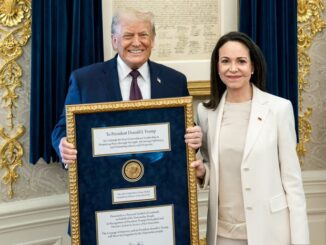
    WASHINGTON, D.C. (TIP): Venezuelan opposition leader María Corina Machado said she presented her Nobel Peace Prize medal to President Donald Trump at the White House on Thursday, January 15, even as he has questioned her credibility to take over her country after the US ousted then-President Nicolás Maduro, reports AP.

    The Nobel Institute has said Machado could not give her prize to Trump, an honor that he has coveted. Even if it the gesture proves to be purely symbolic, it was extraordinary given that Trump has effectively sidelined Machado, who has long been the face of resistance in Venezuela. He has signaled his willingness to work with acting President Delcy Rodríguez, who had been Maduro’s second in command.


    “I presented the president of the United States the medal, the Nobel Peace Prize,” Machado told reporters after leaving the White House and heading to Capitol Hill. She said she had done so “as a recognition for his unique commitment with our freedom.” Trump confirmed later on social media that Machado had left the medal for him to keep, and he said it was an honor to meet her.

    “She is a wonderful woman who has been through so much. María presented me with her Nobel Peace Prize for the work I have done,” Trump said in his post. “Such a wonderful gesture of mutual respect. Thank you María!” Trump has raised doubts about his stated commitment to backing democratic rule in Venezuela, giving no timetable on when elections might be held. Machado indicated that he had provided few specifics on that front during their discussion.

    After the closed-door meeting, Machado greeted dozens of cheering supporters waiting for her near the White House gates, stopping to hug many.

    “We can count on President Trump,” she told them without elaborating, prompting some to briefly chant, “Thank you, Trump.” Before her visit to Washington, Machado had not been seen in public since she traveled last month to Norway, where her daughter received the peace prize on her behalf. She had spent 11 months in hiding in Venezuela before she appeared in Norway after the ceremony.

    The jubilant scene after her meeting with Trump stood in contrast to political realities in Venezuela. Rodríguez remains in charge of day-to-day government operations, along with others in Maduro’s inner circle. In her first state of the union speech Thursday, the interim president promoted the resumption of diplomatic ties between the historic adversaries and advocated for opening the state-run oil industry to more foreign investment after Trump pledged to seize control of Venezuelan crude sales.

    Trump has said it would be difficult for Machado to lead because she “doesn’t have the support within or the respect within the country.” Her party is widely believed to have won 2024 elections rejected by Maduro.

    White House press secretary Karoline Leavitt called Machado “a remarkable and brave voice” but also said the meeting didn’t mean Trump’s opinion of her changed, calling it “a realistic assessment.” Leavitt told reporters that Trump supported new Venezuelan elections “when the time is right” but did not say when he thought that might be.

    A frank and positive discussion’ about Venezuela

    Leavitt said Machado had sought the face-to-face meeting without setting expectations for what would occur. She spent about two and a half hours at the White House.

    “I don’t think he needs to hear anything from Ms. Machado,” the press secretary said while the meeting was still going on, other than to have a ”frank and positive discussion about what’s taking place in Venezuela.” After leaving the White House, Machado went on to a closed-door meeting with a bipartisan group of senators.

    Sen. Chris Murphy, D-Conn., said Machado told them that “if there’s not some progress, real progress towards a transition in power, and/or elections in the next several months, we should all be worried.” “She reminded us that Delcy Rodríguez is, in many ways, worse than Maduro,” he added.

    Asked if Machado had heard any commitment from the White House on holding elections in Venezuela, Murphy said, “No, I don’t think she got any commitment from them.” Sen. Bernie Moreno, an Ohio Republican, was exultant following the meeting, saying Machado “delivered a message that loud and clear: What President Trump did was the most important, significant event in Latin America. That getting rid of Maduro was absolutely essential.” Machado’s Washington stop coincided with US forces in the Caribbean Sea seizing another sanctioned oil tanker that the Trump administration says had ties to Venezuela. It is part of a broader US effort to take control of the South American country’s oil after US forces captured Maduro and his wife less than two weeks ago at a heavily guarded compound in the Venezuelan capital of Caracas and brought them to New York to stand trial on drug trafficking charges.

    Leavitt said Venezuela’s interim authorities have been fully cooperating with the Trump administration and noted that Rodríguez’s government said it planned to release more prisoners detained under Maduro. Among those released were five Americans this week.

    Trump said Wednesday that he had a “great conversation” with Rodríguez, their first since Maduro was ousted.

    Machado doesn’t get the nod from Trump

    Just hours after Maduro’s capture, Trump said of Machado that “it would be very tough for her to be the leader.” Machado had steered a careful course to avoid offending Trump, notably after winning the peace prize, and had sought to cultivate relationships with him and key administration voices like Secretary of State Marco Rubio.

    The industrial engineer and daughter of a steel magnate, Machado began challenging the ruling party in 2004, when the nongovernmental organization she co-founded, Súmate, promoted a referendum to recall then-President Hugo Chávez. The initiative failed, and Machado and other Súmate executives were charged with conspiracy.

    A year later, she drew the anger of Chávez and his allies again for traveling to Washington to meet President George W Bush, whom Chávez considered an adversary.

    Almost two decades later, she marshaled millions of Venezuelans to reject Chávez’s successor, Maduro, for another term in the 2024 election. But ruling party-loyal electoral authorities declared him the winner despite ample credible evidence to the contrary. Ensuing anti-government protests ended in a brutal crackdown.

  • Trump sets a perilous precedent

    Trump sets a perilous precedent

    The use of force by the US in Venezuela raises doubts about the legitimacy of its actions

    “The fact that the US action flouts international law related to state sovereignty and humanitarian rights protocols has been highlighted worldwide and even within the US — but to little avail. The Trump doctrine (Donroe is specific to Latin America) boils down to bludgeoning any interlocutor who does not toe the “Donald line”, and the use of tariffs as a weapon is all too familiar.”

    By C Uday Bhaskar

    The outcome of the UN Security Council’s emergency meeting on the US military operation, which resulted in the outrageous abduction of Venezuelan President Nicolas Maduro and his wife, was predictable. Strategic timidity in the face of the intimidation unleashed by US President Donald Trump is the dominant orientation of the global community. The famed horseshoe table did not issue any statement. Given that the spotlight was on the US, with its veto power as a permanent member of the UNSC, Washington would not have allowed any censure of its Operation Absolute Resolve.

    Panama was subjected to a similar action in 1989. There are notable parallels between the US capture of Panamanian leader Manuel Noriega on January 3, 1990, and the kidnapping of the Venezuelan President on the same day in 2026. The latter is the most direct US military intervention in Latin America since the Panama operation.

    In both cases, heads of state — sitting (Maduro) and de facto (Noriega) — have been indicted on federal drug trafficking charges; Noriega for racketeering and cocaine smuggling, and Maduro for narco-terrorism and related conspiracies that were deemed inimical to US national security. This action is being interpreted as the first step to implement the new doctrine unveiled by President Trump that builds on the 1823 Monroe doctrine and has been dubbed the Donroe doctrine.

    However, notwithstanding Trump’s assertion that Latin American affairs are now a top US security priority and that he would authorize military action and intervention at will, rumblings of dissent were evident at the UNSC’s January 5 meeting.

    The deliberations reflected the widespread international condemnation of the US action as a violation of international law, sovereignty and the UN Charter’s prohibition on the use of force against a state’s territorial integrity or political independence. Despite the distinctive backdrop, UN Secretary-General António Guterres was not present at the meeting; his statement, which was read out by an official, emphasized that “the power of the law must prevail” and called for inclusive democratic dialogue respecting human rights and Venezuela’s sovereignty. To his credit, Guterres was the first to condemn the US action and voiced the overwhelming global shock and anguish.

    At the UNSC meeting, two of the permanent members, Russia and China, along with Brazil, Colombia (which made a request for the meeting), Cuba and Mexico denounced the operation as an act of aggression, armed attack or “imperialist” intervention. Some demanded Maduro’s immediate release and rejected unilateral actions.

    Even US allies such as France and Denmark criticized the move for undermining the principles of international order, though some acknowledged Maduro’s repressive rule and the need to address drug trafficking and human rights issues through lawful means.

    In response, Mike Waltz, US Ambassador to the UN, defended the action as a “surgical law enforcement operation” against indicted “narco-terrorists”, not an act of war or occupation, and stated that the US had no plans to occupy Venezuela. This was not accepted by the global community. It is instructive that no nation, except Argentina and Ecuador, has unambiguously endorsed the belligerent US action against Maduro.

    The fact that the US action flouts international law related to state sovereignty and humanitarian rights protocols has been highlighted worldwide and even within the US — but to little avail. The Trump doctrine (Donroe is specific to Latin America) boils down to bludgeoning any interlocutor who does not toe the “Donald line”, and the use of tariffs as a weapon is all too familiar.

    Hence, most nations have chosen prudence in response to the US military operation. India, Japan and many other countries have issued anodyne statements that do not directly condemn the US action or uphold any normative principle of international law.

    The operation has raised disturbing questions. If the US arrogates unto itself the right to abduct/kidnap the head of another state for perceived transgression of American laws, is any global leader safe from such predatory action? Will leaders attending the UN General Assembly meeting in New York be sanguine about their own safety?

    The use of force by the US in Venezuela raises doubts about the legitimacy of its actions. At least 115 deaths were reported from US military strikes on alleged drug-smuggling boats (including go-fast boats and semi-submersibles) in the months leading to Operation Absolute Resolve.

    These strikes were part of a campaign that began in early September 2025 and targeted vessels primarily in the Caribbean Sea and eastern Pacific Ocean. A total of 36 vessels were struck on the suspicion of carrying drugs. Should the US military have been part of such an operation against unarmed small vessels? The January 3 operation itself reportedly caused 70-80 fatalities, mostly Venezuelan and Cuban personnel tasked to protect Maduro.

    There is little doubt that the US has an impressive array of trans-border military capability that includes delivery of lethal precision-guided ordnance, pinpoint surveillance accuracy, strategic airlift and overwhelming cyber capabilities. All this was demonstrated both in Abbottabad (the killing of Osama bin Laden in 2011) and in the audacious capture of President Maduro. But Trump’s resolve to discipline Venezuela will remain tainted for blurring the Weberian dictum about the legitimacy of the use of military force.

    More such resolute actions have been mooted — Colombia, Cuba, Iran and even Mexico have been threatened by Trump. Fall in line or else face US ire. Greenland may provide the ultimate Alice in Wonderland scenario. If the next Trump move is to ‘acquire’ Greenland, and Denmark invokes Article VI of the NATO provisions, it is possible that troops of the US military will defend a NATO ally against the occupying US forces!

    Welcome to Trumpland, and all hail Emperor Donroe!

    (C Uday Bhaskar is Director, Society for Policy Studies)

  • Why is Trump interested in Greenland? Look at the thawing Arctic ice.

    Why is Trump interested in Greenland? Look at the thawing Arctic ice.

    By Gaby Hinsliff

    Forecasts suggest that global heating could create a shortcut from Asia to North America, and new routes for trading, shipping – and attack.

    Another week, another freak weather phenomenon you’ve probably never heard of. If it’s not the “weather bomb” of extreme wind and snow that Britain is hunkering down for as I write, it’s reports in the Guardian of reindeer in the Arctic struggling with the opposite problem: unnaturally warm weather leading to more rain that freezes to create a type of snow that they can’t easily dig through with their hooves to reach food. In a habitat as harsh as the Arctic, where survival relies on fine adaptation, even small shifts in weather patterns have endlessly rippling consequences – and not just for reindeer.

    For decades now, politicians have been warning of the coming climate wars – conflicts triggered by drought, flood, fire and storms forcing people on to the move, or pushing them into competition with neighbors for dwindling natural resources. For anyone who vaguely imagined this happening far from temperate Europe’s doorstep, in drought-stricken deserts or on Pacific islands sinking slowly into the sea, this week’s seemingly unhinged White House talk about taking ownership of Greenland is a blunt wake-up call. As Britain’s first sea lord, General Sir Gwyn Jenkins, has been telling anyone prepared to listen, the unfreezing of the north due to the climate crisis has triggered a ferocious contest in the defrosting Arctic for some time over resources, territory and strategically critical access to the Atlantic. To understand how that threatens northern Europe, look down at the top of a globe rather than at a map.

    By the early 2040s, forecasts suggest global heating could have rendered the frozen waters around the north pole – the ocean separating Russia from Canada and Greenland – almost ice-free in summer. That potentially opens a new shortcut from Asia to North America, not around the planet’s middle but over the top, creating new routes for trading, shipping, fishing – and, more ominously, for attack.

    A new theatre of conflict is consequently emerging from under the melting ice, and China, Russia and the US are increasingly locked in a battle for dominance over it. Meanwhile as rising temperatures turn the high north into an autocrat’s chessboard, territories unlucky enough to be in the way – from Greenland to Canada to the Norwegian archipelago of Svalbard, long coveted by Russia – risk becoming pawns.

    Almost as dangerous for these countries as the threats exposed by a thawing pole are, in a way, the opportunities. Why on earth does the US think it needs to annex friendly Greenland in order to defend this critical Arctic frontier? After all, they’ve had troops stationed on this autonomous Danish territory since the second world war, and Denmark has obligingly made clear they’re more than welcome to bring more. The one benefit that does come uniquely with ownership, interestingly, is rights to the underground riches that could be unlocked as this frozen country heats up.

    Greenland is a rare, untapped source not just of oil and gas but of the rare earth minerals used to make everything from electric car batteries to datacenter processors – which are to US hopes of winning a technological race with China as rubber from Malaya or cotton from India were to the old colonial economies. Though it’s often a mistake to read too much logical method into the apparent presidential madness, there is no shortage of ideologues and tech bros in Trump’s orbit capable of putting all this together and selling it to him. And while mining the Arctic might not be economically viable for many years yet, Trump’s grumbles this week about Greenland being “full of Chinese and Russian ships everywhere” suggests someone has convinced him that he can’t let rivals beat him to a valuable potential development opportunity, a concept any former real estate mogul can grasp. After all, in Ukraine, Trump sought rights to mine rare earths in exchange for security guarantees, and in Gaza he mused about building hotels on its bombed-out ruins: why not seek to make a quick buck from environmental catastrophe?

    And while to Britons all this looks like a new age of empire, for the Maga faithful perhaps there’s an echo of a much more American story, that of settlers making their fortune by joining the wagon trail west, pushing the nation’s frontiers endlessly outwards, staking their claim to Indigenous people’s lands and holding grimly on to them through a brutal mix of trade and violence. The aim isn’t to invade Greenland, US secretary of state Marco Rubio explains, but to buy it, or at least rent exclusive military access. It’s a mark of how fast the relationship between the US and its former allies has collapsed – in just over a year – that this is meant to be reassuring: hey friends, we just want to exploit you, not kill you!

    Given the president’s legendarily short attention span, it’s difficult to know what fate awaits Greenland. Maybe he’ll simply get bored and move on, especially once the midterms are over and there is less need for drama abroad to distract from failures at home. Or maybe the White House will borrow instead from the Putin playbook, exploiting Greenlanders’ yearning for independence from Denmark to foment the kind of domestic unrest that is so easily whipped up in the age of social media – before pitching the US as a benign savior riding into town to keep them safe and make them rich.

    But either way, we had better get used to the idea this is the beginning, not the end, of the conflicts that may come as global heating redraws our maps, unpicks old alliances, and creates new deadly rivalries for land, water and natural resources.

    Of course, it will be worse for those already living on the edge of sustainability, in deserts too parched for anything to grow or in coastal towns already struggling with rising sea levels, or in places too poor to protect themselves from increasingly violent storms, than it will for lucky old temperate Europe. And of course, these risks could always be better managed by collaborative governments treating events like the unfreezing of the north as a collective challenge for humans to face together, rather than a deadly race for national advantage.

    But in the week Trump announced he would be pulling the US out of a raft of international climate initiatives, that clearly isn’t the world we live in. So if nothing else, let poor beleaguered Greenland be a reminder that the climate crisis will have geopolitical consequences we have barely yet begun to understand, and that whatever we can still do to cap the rising temperature or mitigate its effects still matters. Even, or maybe especially, if we can’t yet undo the damage that has already been so willfully done.

    (Gaby Hinsliff is a Guardian columnist)


  • The US Has Yet to Notify the UN About Washington’s Withdrawal From Entities

    The US Has Yet to Notify the UN About Washington’s Withdrawal From Entities

    WASHINGTON, D.C. (TIP): The United Nations says that beyond the social media announcement from the United States government on Jan. 7 about its withdrawal from 66 international and UN entities, the information has not been officially communicated to the world body. Washington has also not followed the legal process required for a country to dissociate from binding international treaties it has signed and ratified, such as the UN Framework Convention on Climate Change.

    “I checked with our legal counsel earlier today, we had not received any official letter,” Stéphane Dujarric, the spokesperson for UN Secretary-General António Guterres, told journalists on Jan. 8. “We have not received any further official communication beyond what was posted on the White House website.”

    Washington announced in the evening of Jan. 7 on social media that it is withdrawing from a broad slate of international organizations and UN bodies, substantiating the threat by President Trump to separate with UN bodies that do not serve his country’s interests or that the US considers a waste of Americans’ taxpayer money.

    The decision by the US to cut ties to 66 international organizations, treaties and UN entities was apparently a result of a review conducted under Executive Order 14199, one of the wide-ranging executive orders signed by Trump in February 2025. The review could be a prelude to the US Congress releasing more funding to the UN general operating budget now that the review is done.

    UN reacts

    On Jan. 8, when the UN released its first official response to the news, Guterres expressed “regrets” over the US announcement but added that “all United Nations entities will go on with the implementation of their mandates as given by Member States.”

    “The United Nations has a responsibility to deliver for those who depend on us,” the statement, conveyed from Dujarric by email to the media, continued. “We will continue to carry out our mandates with determination.”

    Of the 66 organizations, 31 are linked to the UN. They include the Department of Economic and Social Affairs, an organ led by a Chinese national; various regional economic and social commissions; the Office of the Special Representative of the Secretary General for Children in Armed Conflict and the Office of the Special Representative of the Secretary-General on Sexual Violence in Conflict; the UN Framework Convention on Climate Change; and peace-building agencies as well as others that promote international law, sustainable environmental practices and gender rights, such as UN Women. The UN Population Fund, also listed, was severed by the US in early 2025. (A list of the UN bodies and their roles is explained at the end of this story.)

    Since the Trump administration has taken the reins in 2025, the US has turned its back on matters at the UN related to gender equality, climate change, diversity/equity/inclusion as well as the Sustainable Development Goals.

    Vanessa Frazier, who leads the office on children and armed conflict, which aims to protect children’s rights amid war, said in a post on X that “ it is quite unfortunate that the US now seems to be of the opinion that children being collateral of war is OK”

    According to the US, “withdrawal” from UN entities is defined as ceasing participation and/or funding to the extent permitted by law.

    “Poorly run”

    US Secretary of State Marco Rubio said in a statement on Jan. 7, as the White House released the list of 66 entities it was cutting off, the organizations were “redundant, mismanaged, unnecessary, wasteful, or poorly run,” and in some cases “captured by the interests of actors advancing agendas contrary to US national interests.” He added that continued participation in such bodies was incompatible with American sovereignty and prosperity.

    The move marks a major escalation in Washington’s shift from multilateral engagement, prompting concern and bewilderment across diplomatic, legal and academic communities. Trump pulled out of some high-profile UN agencies during his first term and again in the beginning of his second term, such as the Human Rights Council and the World Health Organization, but the Jan. 7 actions are more far reaching in scale. And the moves will worsen the dire financial crisis the organization is struggling to manage.

    The US released $2 billion at the end of 2025 to fund UN-coordinated humanitarian aid for a select list of countries as the US is still withholding at least two years of mandated dues to the organization’s regular budget, totaling approximately $1.3 billion.

    It is unclear whether the withdrawals from UN bodies will impact the US paying its assessed contribution — if it does so — but Dujarric said Washington is obligated to pay regardless of unilateral withdrawal from a UN agency or program.

    Many of those the US said it would withdraw from are funded by UN assessed contributions paid by member states. Dujarric said some of the agencies rely on funding from “the regular budget, with the vast majority of their work then being funded voluntarily.”

    “Member states who signed on, joined this club have to pay the dues,” he said. “We can, we can, the Charter is not à la carte, as we said, and . . . we know we’re not going to renegotiate the Charter. The UN is an organization of 193 member states, two observer states [the Holy See and Palestine]. It is in the interest of all these member states and the two observers to defend the principles that they themselves have created.”

    According to Article 19 of the UN Charter, a member state risks losing its vote in the 193-member General Assembly if its arrears equal or exceed the amount due for the previous two years, but it is unclear what happens in the Security Council when a permanent member runs afoul of Article 19. A European diplomat told PassBlue, however, that even small US contributions to certain entities over the last few years could mean it is meeting some level of its legal financial obligations.

    Picking and choosing

    Ronny Patz, an independent analyst on the UN, said that while US engagement with the UN peace-building architecture has historically been limited, the departure of a permanent member of the Security Council from peace-building work represents a symbolic, practical setback for collective conflict-prevention efforts.

    Patz warned that the move risks normalizing what he described as “à la carte multilateralism,” whereby states choose which international organizations to support. “Once selective disengagement is tolerated,” Patz said in a post on LinkedIn, “all member states could refuse to fund or participate in the parts they dislike, weakening the UN’s role as a multipurpose organization built on cross-domain compromise.”

    Theodoros Rousopoulos, president of the Parliamentary Assembly of the Council of Europe, expressed concern over the withdrawal from the Council’s Venice Commission, an advisory body on constitutional matters, as the rule of law is pressured globally.

    In the US, Democratic members of the House Foreign Affairs Committee criticized the Trump decision, saying that participation in international organizations allows Washington to shape global norms, strengthen alliances and counter adversaries. “America first = America alone,” the committee posted on its X page.

    Ben Saul, the UN specialist on human rights and counterterrorism, said that the withdrawal from the International Law Commission “weakens efforts to forge cooperative global solutions to common human challenges.”

    He added: “The US will weaken global counterterrorism efforts by withdrawing from the Global Counterterrorism Forum and the International Institute for Justice and the Rule of Law.”

    Dujarric summed up Guterres’s attitude despite the latest US setbacks, saying on Jan. 8: “I spent quite a time with him this morning, and he is determined as ever to continue his work and continuing to defend the Charter and continuing to defend this international institution.”

    What the UN organizations do

    Department of Economic and Social Affairs (DESA): Acts as the UN’s policy engine on global development, producing data and analysis on population trends, inequality, sustainable development goals and public administration. Governments rely on its statistics and guidance to shape domestic policy.

    Economic Commission for Africa (ECA): Supports African governments with research and policy advice on economic growth, industrialization, trade integration and climate resilience, often shaping regional development strategies.

    Economic Commission for Latin America and the Caribbean (ECLAC): Known for its economic research, ECLAC analyzes inequality, growth and fiscal policy in Latin America and the Caribbean and advises governments on development planning.

    Economic and Social Commission for Asia and the Pacific (ESCAP): Works on inclusive growth, infrastructure, disaster risk reduction and digital connectivity across the Asia-Pacific, the world’s most populous region.

    Economic and Social Commission for Western Asia (ESCWA): Focuses on development challenges in the Arab world, including economic reform, social protection, water scarcity and post-conflict recovery.

    International Law Commission: A body of legal experts tasked with developing and clarifying international law, including treaties governing diplomacy, state responsibility and the laws of war.

    International Residual Mechanism for Criminal Tribunals: Handles remaining legal responsibilities from the Rwanda and former Yugoslavia war crimes tribunals, including appeals, witness protection and sentence enforcement.

    International Trade Centre (ITC): Helps small businesses and exporters in developing countries access global markets, providing technical assistance on trade rules, quality standards and supply chains.

    Office of the Special Adviser on Africa: Advises the UN Secretary-General on political, security and development trends in Africa and helps coordinate international support for the continent.

    Office of the Special Representative for Children in Armed Conflict: Documents and advocates against the recruitment, abuse and killing of children in war zones, pressing governments and armed groups to comply with international law.

    Office of the Special Representative on Sexual Violence in Conflict: Works to prevent sexual violence used as a weapon of war, supporting survivors and pushing for accountability in conflict and post-conflict settings.

    Office of the Special Representative on Violence Against Children: Addresses violence against children beyond conflict zones, including abuse, exploitation and harmful practices, often working with national governments on child-protection laws.

    Peacebuilding Commission: Brings together donors, governments and regional actors to support countries emerging from conflict, aiming to prevent relapse into violence.

    Peacebuilding Fund: Provides rapid, flexible funding for peacebuilding efforts in fragile states, often filling gaps where traditional aid is too slow.

    Permanent Forum on People of African Descent: An advisory body focused on addressing racism, discrimination and development challenges faced by people of African descent worldwide.

    UN Alliance of Civilizations: Promotes dialogue across cultures and religions, aiming to counter extremism and reduce polarization through education, media and youth programs.

    UN Programme on Reducing Emissions from Deforestation and Forest Degradation (REDD+): Helps developing countries protect forests by linking conservation to climate finance and sustainable land use.

    UN Conference on Trade and Development (UNCTAD): Provides research and policy advice on trade, debt, investment and technology, often advocating for fairer global economic rules for developing nations.

    UN Democracy Fund: Finances grassroots projects that support democratic participation, civil society and human rights, particularly in fragile democracies.

    UN Energy: Coordinates the UN’s work on access to affordable, reliable and clean energy, aligning agencies around global energy goals.

    UN Entity for Gender Equality and the Empowerment of Women (UN Women): Leads UN efforts on women’s rights, gender equality and violence prevention, advising governments and supporting programs on the ground.

    UN Framework Convention on Climate Change (UNFCCC): The treaty body that oversees global climate negotiations, including the Paris Agreement, and tracks countries’ emissions commitments.

    UN Human Settlements Programme (UN-Habitat): Focuses on sustainable urban development, housing policy and slum upgrading as cities grow rapidly worldwide.

    UN Institute for Training and Research (UNITAR): Trains diplomats, civil servants and emergency responders, particularly from developing countries, on governance, diplomacy and crisis management.

    UN Oceans: Coordinates UN action on ocean conservation, fisheries management and marine pollution across multiple agencies.

    UN Population Fund (UNFPA): Works on reproductive health, maternal care and population data, often operating in fragile or humanitarian settings.

    UN Register of Conventional Arms: Encourages transparency in international arms transfers to build confidence and reduce the risk of conflict escalation.

    UN System Chief Executives Board for Coordination: Brings together the heads of UN agencies to align strategy, budgets and policy priorities across the system.

    UN System Staff College: Provides professional training for UN staff and partners, focusing on leadership, coordination and complex crises.

    UN Water: Coordinates global efforts on freshwater access, sanitation and water management across UN agencies.

    UN University: A network of research institutes producing academic work on peace, sustainability, technology and development, often advising governments and the UN itself.
    (Source: Pass Blue)

  • Trump, top Iranian officials exchange threats over protests roiling Iran

    Trump, top Iranian officials exchange threats over protests roiling Iran

    Trump warns Iran against killing peaceful protesters as demonstrations enter sixth day, escalating tensions after US strikes on Iranian nuclear sites

    WASHINGTON, D.C. (TIP): US President Donald Trump and top Iranian officials exchanged dueling threats on Friday, January 2, as widening protests swept across parts of the Islamic Republic, further escalating tensions between the countries after America bombed Iranian nuclear sites in June, reports AP.

    At least eight people have been killed so far in violence surrounding the demonstrations, which were sparked in part by the collapse of Iran’s rial currency but have increasingly seen crowds chanting anti-government slogans.

    The protests, now in their sixth day, have become the biggest in Iran since 2022, when the death of 22-year-old Mahsa Amini in police custody triggered nationwide demonstrations.

    However, the protests have yet to be as widespread and intense as those surrounding the death of Amini, who was detained over not wearing her hijab, or headscarf, to the liking of authorities.

    Trump post sparks quick Iranian response

    Trump initially wrote on his Truth Social platform, warning Iran that if it “violently kills peaceful protesters,” the United States “will come to their rescue.”

    “We are locked and loaded and ready to go,” Trump wrote, without elaborating.

    Ali Larijani, a former parliament speaker who serves as the secretary of Iran’s Supreme National Security Council, alleged that Israel and the US were stoking the demonstrations. He offered no evidence to support the allegation, which Iranian officials have repeatedly made during years of protests sweeping the country.

    “Trump should know that intervention by the US in the domestic problem corresponds to chaos in the entire region and the destruction of the US interests,” Larijani wrote on X, which the Iranian government blocks.

    “The people of the US should know that Trump began the adventurism. They should take care of their own soldiers.”

    Larijani’s remarks likely referenced America’s wide military footprint in the region. Iran in June attacked Al Udeid Air Base in Qatar after the US strikes on three nuclear sites during Israel’s 12-day war on the Islamic Republic. No one was injured, though a missile did hit a structure there.

    As of Friday, no major changes had been made to US troop levels in the Middle East or their preparations following Trump’s social media posts, said a US official, who spoke on condition of anonymity to discuss sensitive military plans.

    In a letter late Friday to United Nations Secretary-General António Guterres and the UN Security Council, Iran’s envoy asked the world body to condemn the rhetoric and reaffirm the country’s “inherent right to defend its sovereignty, territorial integrity, and national security, and to protect its people against any foreign interference.”

    “The United States of America bears full responsibility for any consequences arising from these unlawful threats and any ensuing escalation,” said Amir Saeid Iravani, Iranian ambassador to the UN.

    Ali Shamkhani, an adviser to Supreme Leader Ayatollah Ali Khamenei who previously was the council’s secretary for years, separately warned that “any interventionist hand that gets too close to the security of Iran will be cut.”

    US signals support for protesters
    Trump’s online message marked a direct sign of support for the demonstrators, something other American presidents have avoided out of concern that activists would be accused of working with the West. During Iran’s 2009 Green Movement demonstrations, President Barack Obama held back from publicly backing the protests — something he said in 2022 “was a mistake.”

    But such White House support still carries a risk.

    “Though the grievances that fuel these and past protests are due to the Iranian government’s own policies, they are likely to use President Trump’s statement as proof that the unrest is driven by external actors,” said Naysan Rafati, an analyst at the International Crisis Group.

    “But using that as a justification to crack down more violently risks inviting the very US involvement Trump has hinted at,” he added.

    Iran’s Foreign Ministry spokesperson Esmail Baghaei recently cited a list of Tehran’s longtime grievances regarding US intervention, including a CIA-backed coup in 1953, the downing of a passenger jet in 1988 and the strikes in June.

    Protests continue on Friday
    Protests continued Friday in various cities in the country, even as life largely continued unaffected in the capital, Tehran. Demonstrations have reached over 100 locations in 22 of Iran’s 31 provinces, the US-based Human Rights Activists News Agency reported. It said the death toll in the demonstrations rose to eight with the death of a demonstrator in Marvdasht in Iran’s Fars province.

    Demonstrators took to the streets in Zahedan in Iran’s restive Sistan and Baluchestan province on the border with Pakistan. The burials of several demonstrators killed in the protests also took place on Friday, sparking marches.

    Videos purported to show mourners chasing off security force members who attended the funeral of 21-year-old Amirhessam Khodayari. He was killed Wednesday in Kouhdasht, over 400 kilometers (250 miles) southwest of Tehran in Iran’s Lorestan province.

    Footage also showed Khodayari’s father denying his son served in the all-volunteer Basij force of Iran’s paramilitary Revolutionary Guard, as authorities claimed. The semiofficial Fars news agency later reported that there were now questions about the government’s claims that he served. Iran’s civilian government under reformist President Masoud Pezeshkian has been trying to signal it wants to negotiate with protesters.

    However, Pezeshkian has acknowledged there is not much he can do as Iran’s rial has rapidly depreciated, with USD 1 now costing some 1.4 million rials. That sparked the initial protests.

    The protests, taking root in economic issues, have heard demonstrators chant against Iran’s theocracy as well. Tehran has had little luck in propping up its economy in the months since the June war.

    Iran recently said it was no longer enriching uranium at any site in the country, trying to signal to the West that it remains open to potential negotiations over its atomic program to ease sanctions. However, those talks have yet to happen as Trump and Israeli Prime Minister Benjamin Netanyahu have warned Tehran against reconstituting its atomic program.

  • Marriage to a US citizen no longer guarantees Green Card

    Marriage to a US citizen no longer guarantees Green Card

    While spouses of American citizens are eligible to apply as immediate relatives, officials now focus on whether the marriage is genuine and entered into in good faith

    NEW YORK (TIP): Marriage to a US citizen no longer guarantees a Green Card, as US immigration authorities are applying stricter scrutiny to marriage-based applications. While spouses of American citizens are eligible to apply as immediate relatives, officials now focus on whether the marriage is genuine and entered into in good faith.

    Immigration experts stress that cohabitation is a key factor, and couples who do not live together face a higher risk of investigation or denial, regardless of the reason for living apart. These measures are part of broader efforts to tighten US immigration policies and prevent marriage fraud.

    Below are the key points

    Marriage alone is not enough to secure a US Green Card, warns immigration attorney Brad Bernstein.

    Spouses of US citizens are classified as “immediate relatives” and are eligible to apply, but approval is not automatic.

    USCIS is applying stricter scrutiny to marriage-based Green Card applications under the Trump administration.

    Genuine marriage is the main focus, not just legal documentation.

    Cohabitation is crucial: Couples are expected to live together full-time as husband and wife.

    Living separately raises red flags, even if separation is due to work, education, or financial reasons.

    US immigration officers do not consider reasons for living apart, only whether the couple actually shares a home.

    Marriages without daily cohabitation are more likely to face investigations, tough interviews, or denial.

    USCIS evaluates the “totality of the relationship” to determine if the marriage was entered in good faith.

    Legally valid marriages can still be denied if officials believe the intent was to bypass immigration laws.

    Broader immigration tightening includes suspension of the Diversity Visa Lottery and reduced work permit duration.

    Married couples living apart are advised to seek legal guidance before filing a Green Card application.

    Homeland Security Secretary Kristi Noem said: “At President Trump’s direction, I am immediately directing USCIS (United States Citizenship and Immigration Services) to pause the DV1 program to ensure no more Americans are harmed by this disastrous program.”


  • Mamdani vows to “govern as a democratic socialist”

    Mamdani vows to “govern as a democratic socialist”

    Revokes executive orders issued after former mayor Eric Adams had been indicted on corruption charges

    • I.S. Saluja

    NEW YORK CITY (TIP): Zohran Mamdani was formally sworn in as New York City’s 112th Mayor in a private ceremony held just moments into the New Year in an old subway station here. The 34-year-old Indian-descent Queens state assemblyman became the first South Asian and Muslim elected to helm the largest city in the US. Mamdani was sworn in at the old City Hall subway station at a private ceremony attended only by his family and close advisers, held around the stroke of midnight as the city ushered in the New Year.

    He was sworn in on a Quran as the city’s 112th mayor — and its second-youngest — by state Attorney General Letitia James on Thursday, January1 morning below City Hall Park in a grand, abandoned old subway stop with his wife, artist Rama Duwaji, by his side.

    On the choice of the old subway station as the venue for his historic swearing-in, the New York Times quoted Mamdani as saying that when the Old City Hall Station first opened in 1904 — one of New York’s 28 original subway stations — “it was a physical monument to a city that dared to be both beautiful and build great things that would transform working people’s lives.” “That ambition need not be a memory confined only to our past, nor must it be isolated only to the tunnels beneath City Hall: it will be the purpose of the administration fortunate enough to serve New Yorkers from the building above.”

    The New York Public Library announced on Wednesday that Mamdani will use a Quran from the collections of the Schomburg Centre for Research in Black Culture to take the oath of office at the midnight swearing-in ceremony on New Year’s Eve.

    “This marks a significant moment in our city’s history, and we are deeply honored that Mayor-elect Mamdani has chosen to take the oath of office using one of the Library’s Qurans,” said Anthony W. Marx, President and CEO of The New York Public Library.

    “This specific Quran, which Arturo Schomburg preserved for the knowledge and enjoyment of all New Yorkers, symbolizes a greater story of inclusion, representation, and civic-mindedness.”

    NYPL termed the selection of the Quran by the incoming administration as highly symbolic, both because of its connection to one of NYC’s most groundbreaking scholars and for its simple, functional qualities.

    “The black and red ink, as well as the small, portable size, indicate this Quran was intended for an ordinary reader and everyday use. Although neither dated nor signed, the Quran’s minute naskh script and its binding, featuring a gilt-stamped medallion filled with a floral composition, suggest it was produced in Ottoman Syria in the 19th century,” it said.

    After working part of the night in his new office, Mamdani returned to City Hall in a taxicab around midday Thursday, January 1, for a grander public inauguration where US Sen Bernie Sanders, one of the mayor’s political heroes, administered the oath for a second time.

    “Beginning today, we will govern expansively and audaciously. We may not always succeed, but never will we be accused of lacking the courage to try,” Mamdani told a cheering crowd.

    “To those who insist that the era of big government is over, hear me when I say this: No longer will City Hall hesitate to use its power to improve New Yorkers’ lives,” he said.

    Throngs turned out in the frigid cold for an inauguration viewing party just south of City Hall on a stretch of Broadway known as the “Canyon of Heroes,” famous for its ticker-tape parades. Mamdani wasted little time getting to work after the event.

    He revoked multiple executive orders issued by the previous administration since September 26, 2024, the date federal authorities announced former mayor Eric Adams had been indicted on corruption charges, which were later dismissed following intervention by the Trump administration.

    Then he visited an apartment building in Brooklyn to announce he is revitalizing a city office dedicated to protecting tenants and creating two task forces focused on housing construction.

    ‘I will govern as a democratic socialist’

    Throughout the daytime ceremony, Mamdani and other speakers hit on the theme that carried him to victory in the election: Using government power to lift up the millions of people who struggle with the city’s high cost of living.

    Mamdani peppered his remarks with references to those New Yorkers, citing workers in steel-toed boots, halal cart vendors “whose knees ache from working all day” and cooks “wielding a thousand spices.”

    “I was elected as a democratic socialist and I will govern as a democratic socialist,” Mamdani said. “I will not abandon my principles for fear of being deemed radical.’”

    Before administering the oath, Sanders told the crowd that most of the things Mamdani wants to do — including raising taxes on the rich — aren’t radical at all.

    “In the richest country in the history of the world, making sure that people can live in affordable housing is not radical,” he told the crowd. “It is the right and decent thing to do.”

    Mamdani was accompanied on stage by his wife, Rama Duwaji. Adams was also in attendance, sitting near another former mayor, Bill de Blasio.

    Actor Mandy Patinkin, who recently hosted Mamdani to celebrate Hannukah, sang “Over the Rainbow” with children from an elementary school chorus. The invocation was given by Imam Khalid Latif, the director of the Islamic Center of New York City. Poet Cornelius Eady read an original poem called “Proof.” In addition to being the city’s first Muslim mayor, Mamdani is also its first of South Asian descent and the first to be born in Africa. At 34, Mamdani is also the city’s youngest mayor in generations.

    Mamdani insisted in his inaugural address that he will not squander his opportunity to implement the policies he promised in his election campaign.

    “A moment like this comes rarely. Seldom do we hold such an opportunity to transform and reinvent. Rarer still is it the people themselves whose hands are on the levers of change. And yet we know that too often in our past, moments of great possibility have been promptly surrendered to small imagination and smaller ambition,” he said.

    In his speech, Mamdani acknowledged the task ahead, saying he knows many will be watching to see whether he can succeed.

    “They want to know if the left can govern. They want to know if the struggles that afflict them can be solved. They want to know if it is right to hope again,” he said. “So, standing together with the wind of purpose at our backs, we will do something that New Yorkers do better than anyone else: We will set an example for the world.”
    Mamdani was born in Kampala, Uganda, the son of filmmaker Mira Nair and Mahmood Mamdani, an academic and author. His family moved to New York City when he was 7, with Mamdani growing up in a post-9/11 city where Muslims didn’t always feel welcome. He became an American citizen in 2018.

    He worked on political campaigns for Democratic candidates in the city before he sought public office himself, winning a state Assembly seat in 2020 to represent a section of Queens.

    Now that he has taken office, Mamdani and his wife will depart their one-bedroom, rent stabilized apartment in the outer-borough to take up residence in the stately mayoral residence in Manhattan.

    The new mayor inherits a city on the upswing, after years of slow recovery from the COVID-19 pandemic. Violent crime has dropped to pre-pandemic lows. Tourists are back. Unemployment, which soared during the pandemic years, is also back to pre-COVID levels.

    Yet deep concerns remain about high prices and rising rents.

    In opening remarks to the crowd, U.S. Rep. Alexandria Ocasio-Cortez praised New Yorkers for choosing “courage over fear.”

    “We have chosen prosperity for the many over spoils for the few,” she said.

    During the mayoral race, President Donald Trump threatened to withhold federal funding from the city if Mamdani won and mused about sending National Guard troops to the city.

    But Trump surprised supporters and foes alike by inviting the Democrat to the White House for what ended up being a cordial meeting in November.

    “I want him to do a great job and will help him do a great job,” Trump said.

    Still, tensions between the two leaders are almost certain to resurface, given their deep policy disagreements, particularly over immigration.

    Several speakers at Thursday’s inauguration criticized the Trump administration’s move to deport more immigrants and expressed hope that Mamdani’s City Hall would be an ally to those the president has targeted.

    Mamdani also faces skepticism and opposition from some members of the city’s Jewish community over his criticisms of Israel’s government.

    Still, Mamdani supporters in Thursday’s crowd expressed optimism that he’d be a unifying force.

    “There are moments where everyone in New York comes together, like when the Mets won the World Series in ‘86,” said Mary Hammann, 64, a musician with the Metropolitan Opera. “This feels like that — just colder.”
    (With inputs from PTI, AP)

  • A multipolar world with bipolar characteristics

    A multipolar world with bipolar characteristics

    The three great powers understand that the world is no longer organized around a single center of authority

    By Stanly Johny

    As 2025 draws to a close, a highlight is that the United States has undertaken its largest troop mobilization in the Caribbean in decades. Its Navy has deployed its most advanced aircraft carrier, along with fighter jets, amphibious vessels, attack submarines and tens of thousands of troops, as it intensifies its pressure on Venezuela in an effort to force President Nicolás Maduro from power.

    The Trump administration’s National Security Strategy (NSS), released in early December 2025, identifies Latin America and the Caribbean as a strategic priority. Reviving the 19th century Monroe Doctrine, the document asserts that the U.S. must deny influence or control by outside powers (read China) in Latin America and ensure that the Western Hemisphere remains under American political, economic and military influence.

    The push to reinforce American primacy in Latin America coincides with U.S. President Donald Trump’s waning interest in Europe, another long-standing U.S. sphere of influence. Since the end of the Second World War, the U.S. has served as Europe’s primary security guarantor. If Washington kept western Europe together through a tightly knit alliance during the Cold War, it expanded this security umbrella to eastern Europe after the disintegration of the Soviet Union, creating a large transatlantic bloc. Under Mr. Trump, however, the U.S. is no longer interested in shouldering the burden of European security — a position explicitly articulated in the NSS. Why is America, at a moment when Russia and China are seeking to overturn the U.S.-built and U.S.-led security and economic order, stepping back from Europe while moving to consolidate its influence in the Western Hemisphere?

    It is difficult to discern a cohesive doctrine in Mr. Trump’s foreign policy, marked by the President’s impulses and unpredictability. Yet, even these impulses, this unpredictability and his ideological orientation rooted in Christian nationalism and America’s might cannot ignore the structural shifts reshaping the international order. Mr. Trump is not the ‘President of peace’ that he claims to be — he has already bombed six countries, even if he has stopped short of a full-scale war.

    At the same time, Mr. Trump, despite his rhetoric about American military and economic dominance, recognizes that he no longer lives in a unipolar world. His reluctant aggression and strategic recalibration are reflections of the changes now taking shape in the global balance of power.

    Three great powers

    When the Soviet Union disintegrated in 1991, a new order emerged with the U.S. at its center. There was no other great power positioned to challenge American primacy. The unipolar moment, however, has since passed. While future historians may better identify the precise point of rupture, one such moment was Russia’s annexation of Crimea in 2014. The ensuing conflict in eastern Ukraine, the tepid western response, and Russia’s ability to endure despite sanctions reinforced the limits of the ‘rules-based order’.

    The end of unipolarity, however, does not mean the end of American dominance. The U.S. remains, and will remain, for the foreseeable future, the world’s pre-eminent military and economic power. What has changed is that Washington is no longer the sole great power shaping geopolitical outcomes. China and Russia now occupy that space as well, deepening what Realist thinkers describe as the inherently anarchic nature of the international system.

    During the Cold War, the Soviet Union was America’s principal rival, and in the 1970s, Washington reached out to China to exploit fissures within the communist bloc. Today, the U.S. identifies China as its principal and systemic challenger. This, in turn, leaves open the possibility of a reset in ties with Russia — an idea embraced by Mr. Trump’s MAGA (Make America Great Again) ideologues, who frame Russia as part of a shared ‘Christian civilization’.

    The reigning power versus the rising power

    The U.S. faces a unique challenge in China. The Soviet economy, in its prime in the early 1970s, reached about 57% of the U.S. GDP, before it began slowing down. China’s economy, now the world’s second largest, already amounts to about 66% of the U.S. economy. China continues to grow at a faster pace, steadily narrowing the gap.

    As China’s economic power expands, it is being converted into military capability (it has already built the world’s largest Navy, by number of ships). Like other great powers, Beijing is seeking to establish regional hegemony and global dominance. So, a prolonged contest between the U.S., the reigning power, and China, the rising power, appears unavoidable. The situation is comparable to 19th century Europe, when a rising imperial Germany threatened to upstage Britain during Pax Britannica, unsettling the ‘Concert of Europe’.

    Russia is the weakest link among the three powers. It is a relatively smaller economy with a shrinking sphere of influence. But Russia’s nuclear arsenals, expansive geography, abundant energy and mineral resources and its demonstrated willingness to use force to achieve its strategic objectives keep it in the great power constellation. From Moscow’s perspective, the country drifted into the wilderness in the 1990s before announcing its return in 2008 with the war in Georgia. Since then, it has sought to rewrite the post-Soviet security architecture in Europe. As the West, having expanded the North Atlantic Treaty Organization into the Russian sphere of influence, responded to Vladimir Putin’s war in Ukraine with sweeping sanctions on Russia and military support for Kyiv, Moscow moved ever closer to China. Russia and China have found common ground in opposing the western ‘rules-based order’ — Russia thinks that the order denies it its rightful place in the world and seeks to revise it accordingly, while China, by contrast, as Rush Doshi argues in The Long Game, wants to replace it with a China-centric order. 

    Fluid multipolarity

    All three great powers today understand that the world is no longer organized around a single center of authority. In that sense, the world is already multipolar. But unlike the post-Second World War and post-Cold War transitions, the structures of the new order have yet to fully emerge. During the Cold War, the world was divided into two ideological blocs and two largely separate economic systems. Today, China lacks the kind of satellite state networks that characterized the 20th century superpowers, while the U.S. is reassessing the sustainability of its alliance frameworks, including its commitment to Europe.

    Russia, with its own great power ambitions, is wary of being seen as a Chinese ally irrespective of its close strategic partnership with Beijing. This opens a window for a Washington-Moscow reset. But the war in Ukraine remains a stumbling block. Russia may not want to challenge America’s global leadership, but it certainly wants to re-establish its primacy in its sphere of influence.

    Thus, there are three great powers with divergent interests that are pulling the global order in different directions, rendering the emerging multipolarity fluid rather than as a structured system akin to the post-Second World War order. This also means that middle powers, including superpower allies such as Japan and Germany, and autonomous actors such as India and Brazil, would continue to hedge their bets.

    Mr. Trump wants Europe to shoulder greater responsibility for its own security, reset relations with Russia and reassert American primacy in its immediate neighborhood even as Washington prepares for a prolonged great power competition with China. The idea is to return to the classic offshore balancing. Even if Mr. Trump fails in executing it, future American Presidents may not be able to ignore the shifts that he has initiated. Russia, for its part, seeks to carve out a sphere of influence. China aims to preserve its close strategic partnership with Russia to keep the Eurasian landmass within its orbit, while establishing regional hegemony in East and Southeast Asia — moves that would cement its status as a long-term superpower, much as the U.S. did by asserting its hegemony in the Western Hemisphere in the 19th century, and across the Atlantic in the 20th century. In this fluid landscape, Russia has emerged as the new ‘swing great power’ between the two superpowers, paradoxically lending the emerging multipolar order a distinctly bipolar character.

    (Stanly Johny is editor with The Hindu. Article republished courtesy The Hindu) 

  • America’s Easter at 250: 2026 resurrects 1776 TRUMP REVIVES AMERICA

    America’s Easter at 250: 2026 resurrects 1776 TRUMP REVIVES AMERICA

    Our Declaration of Independence In Congress, July 4, 1776

    By Ravi Batra

    The unanimous Declaration of the thirteen united States of America, When in the Course of human events, it becomes necessary for one people to dissolve the political bands which have connected them with another, and to assume among the powers of the earth, the separate and equal station to which the Laws of Nature and of Nature’s God entitle them, a decent respect to the opinions of mankind requires that they should declare the causes which impel them to the separation.
    We hold these truths to be self-evident, that all men are created equal, that they are endowed by their Creator with certain unalienable Rights, that among these are Life, Liberty and the pursuit of Happiness.-That to secure these rights, Governments are instituted among Men, deriving their just powers from the consent of the governed, –That whenever any Form of Government becomes destructive of these ends, it is the Right of the People to alter or to abolish it, and to institute new Government, laying its foundation on such principles and organizing its powers in such form, as to them shall seem most likely to effect their Safety and Happiness. Prudence, indeed, will dictate that Governments long established should not be changed for light and transient causes; and accordingly all experience hath shewn, that mankind are more disposed to suffer, while evils are sufferable, than to right themselves by abolishing the forms to which they are accustomed. But when a long train of abuses and usurpations, pursuing invariably the same Object evinces a design to reduce them under absolute Despotism, it is their right, it is their duty, to throw off such Government, and to provide new Guards for their future security.–Such has been the patient sufferance of these Colonies; and such is now the necessity which constrains them to alter their former Systems of Government. The history of the present King of Great Britain is a history of repeated injuries and usurpations, all having in direct object the establishment of an absolute Tyranny over these States. To prove this, let Facts be submitted to a candid world.
    He has refused his Assent to Laws, the most wholesome and necessary for the public good. He has forbidden his Governors to pass Laws of immediate and pressing importance, unless suspended in their operation till his Assent should be obtained; and when so suspended, he has utterly neglected to attend to them.
    He has refused to pass other Laws for the accommodation of large districts of people, unless those people would relinquish the right of Representation in the Legislature, a right inestimable to them and formidable to tyrants only.
    He has called together legislative bodies at places unusual, uncomfortable, and distant from the depository of their public Records, for the sole purpose of fatiguing them into compliance with his measures.
    He has dissolved Representative Houses repeatedly, for opposing with manly firmness his invasions on the rights of the people.
    He has refused for a long time, after such dissolutions, to cause others to be elected; whereby the Legislative powers, incapable of Annihilation, have returned to the People at large for their exercise; the State remaining in the mean time exposed to all the dangers of invasion from without, and convulsions within. He has endeavoured to prevent the population of these States; for that purpose obstructing the Laws for Naturalization of Foreigners; refusing to pass others to encourage their migrations hither, and raising the conditions of new Appropriations of Lands.
    He has obstructed the Administration of Justice, by refusing his Assent to Laws for establishing Judiciary powers.
    He has made Judges dependent on his Will alone, for the tenure of their offices, and the amount and payment of their salaries. He has erected a multitude of New Offices, and sent hither swarms of Officers to harrass our people, and eat out their substance.
    He has kept among us, in times of peace, Standing Armies without the Consent of our legislatures. He has affected to render the Military independent of and superior to the Civil power.
    He has combined with others to subject us to a jurisdiction foreign to our constitution, and unacknowledged by our laws; giving his Assent to their Acts of pretended Legislation:

    For Quartering large bodies of armed troops among us:

    For protecting them, by a mock Trial, from punishment for any Murders which they should commit on the Inhabitants of these States: For cutting off our Trade with all parts of the world:

    For imposing Taxes on us without our Consent:

    For depriving us in many cases, of the benefits of Trial by Jury:

    For transporting us beyond Seas to be tried for pretended offences:

    For abolishing the free System of English Laws in a neighbouring Province, establishing therein an Arbitrary government, and enlarging its Boundaries so as to render it at once an example and fit instrument for introducing the same absolute rule into these Colonies: For taking away our Charters, abolishing our most valuable Laws, and altering fundamentally the Forms of our Governments: For suspending our own Legislatures, and declaring themselves invested with power to legislate for us in all cases whatsoever. He has abdicated Government here, by declaring us out of his Protection and waging War against us.

    He has plundered our seas, ravaged our Coasts, burnt our towns, and destroyed the lives of our people. He is at this time transporting large Armies of foreign Mercenaries to compleat the works of death, desolation and tyranny, already begun with circumstances of Cruelty & perfidy scarcely paralleled in the most barbarous ages, and totally unworthy the Head of a civilized nation.
    He has constrained our fellow Citizens taken Captive on the high Seas to bear Arms against their Country, to become the executioners of their friends and Brethren, or to fall themselves by their Hands.
    He has excited domestic insurrections amongst us, and has endeavoured to bring on the inhabitants of our frontiers, the merciless Indian Savages, whose known rule of warfare, is an undistinguished destruction of all ages, sexes and conditions. In every stage of these Oppressions We have Petitioned for Redress in the most humble terms: Our repeated Petitions have been answered only by repeated injury. A Prince, whose character is thus marked by every act which may define a Tyrant, is unfit to be the ruler of a free people.

    Nor have We been wanting in attentions to our Brittish brethren. We have warned them from time to time of attempts by their legislature to extend an unwarrantable jurisdiction over us. We have reminded them of the circumstances of our emigration and settlement here. We have appealed to their native justice and magnanimity, and we have conjured them by the ties of our common kindred to disavow these usurpations, which, would inevitably interrupt our connections and correspondence. They too have been deaf to the voice of justice and of consanguinity. We must, therefore, acquiesce in the necessity, which denounces our Separation, and hold them, as we hold the rest of mankind, Enemies in War, in Peace Friends.

    We, therefore, the Representatives of the united States of America, in General Congress, Assembled, appealing to the Supreme Judge of the world for the rectitude of our intentions, do, in the Name, and by Authority of the good People of these Colonies, solemnly publish and declare, That these United Colonies are, and of Right ought to be Free and Independent States; that they are Absolved from all Allegiance to the British Crown, and that all political connection between them and the State of Great Britain, is and ought to be totally dissolved; and that as Free and Independent States, they have full Power to levy War, conclude Peace, contract Alliances, establish Commerce, and to do all other Acts and Things which Independent States may of right do. And for the support of this Declaration, with a firm reliance on the protection of divine Providence, we mutually pledge to each other our Lives, our Fortunes and our sacred Honor.” This is why Thomas Jefferson is my favorite Founding Father Hero.

    America’s Best is Yet to Come!

    HAPPY 250TH BIRTHDAY, AMERICA!


  • Trump administration moves to void thousands of asylum claims

    Trump administration moves to void thousands of asylum claims

    WASHINGTON, D.C. (TIP): The Trump administration has launched a nationwide campaign to invalidate the asylum claims of thousands of people with active cases in U.S. immigration courts by arguing that they can be deported to countries other than their own, CBS News reported on Tuesday, December 30. Another report says that U.S. could deny migrants access to asylum on the grounds they present a public health risk under a newly finalized regulation drafted during the COVID-19 pandemic in President Donald Trump’s first term.
    The regulation, effective on Wednesday, December 31, allows U.S. authorities to bar asylum based on “emergency public health concerns generated by a communicable disease,” according to a copy posted in the Federal Register on Monday, December 29. Reuters said it could not immediately independently confirm the report.

  • Trump administration could strip some naturalized Americans of their citizenship

    Trump administration could strip some naturalized Americans of their citizenship

    WASHINGTON, D.C. (TIP): The Trump administration is looking at plans to strip some naturalized Americans of their citizenship, the latest in a series of efforts undertaken by President Donald Trump to crack down on immigration. A report in the New York Times cited new internal guidance issued on Tuesday, December 16, to US Citizenship and Immigration Services field offices, asking them to “supply Office of Immigration Litigation with 100-200 denaturalization cases per month” in fiscal year 2026.

    While federal law provides for stripping naturalized Americans of their citizenship if they committed fraud while applying for citizenship or in a handful of other situations, the new guidance “would represent a massive escalation of denaturalization in the modern era,” said the report.

    It added that such a move could impact people who had made honest mistakes on their citizenship paperwork and “sow fear among law-abiding Americans.”

    The guidance is the latest in a series of measures announced by Trump in his second term in the White House as part of an intensified crackdown on immigration, both illegal and legal. The NYT report added that there are about 26 million naturalized Americans in the country, citing Census Bureau data. USCIS estimates show that more than 800,000 new citizens were sworn in last year, most of whom were born in Mexico, India, the Philippines, the Dominican Republic or Vietnam.

    “It’s no secret that US Citizenship and Immigration Services’ war on fraud includes prioritizing those who’ve unlawfully obtained US citizenship — especially under the previous administration,” USCIS spokesman Matthew Tragesser said in the NYT report.

    “We will pursue denaturalization proceedings for those individuals lying or misrepresenting themselves during the naturalization process. We look forward to continuing to work with the Department of Justice to restore integrity to America’s immigration system.”

    Former agency officials have voiced concern over such guidelines.
    “Imposing arbitrary numerical targets on denaturalization cases risks politicizing citizenship revocation,” former USCIS official Sarah Pierce said.

    “And requiring monthly quotas that are 10 times higher than the total annual number of denaturalization’s in recent years turns a serious and rare tool into a blunt instrument and fuels unnecessary fear and uncertainty for the millions of naturalized Americans.”

    The NYT report said the new guidance was part of a document outlining USCIS priorities for the 2026 fiscal year, which began in October and listed goals such as “provide employee feedback opportunities”, “strengthen management of high-risk cases” and “pursue denaturalization.”

    The Justice Department has also said it would make denaturalization a priority this year. In a memo earlier this year, officials said they would target individuals in an array of categories beyond committing fraud in obtaining citizenship.

    “Categories of eligible people include gang members, those who committed financial fraud, individuals connected to drug cartels and violent criminals,” the NYT report said.

  • Trump suspends green card lottery programme that let Brown University, MIT shootings suspect into U.S.

    Trump suspends green card lottery programme that let Brown University, MIT shootings suspect into U.S.

    WASHINGTON, D.C. (TIP): President Donald Trump suspended the green card lottery programme on Thursday, December 18, 2025, that allowed the suspect in the Brown University and MIT shootings to come to the United States.

    Homeland Security Secretary Kristi Noem said in a post on the social platform X that at Mr. Trump’s direction she is ordering the United States Citizenship and Immigration Services to pause the programme. “This heinous individual should never have been allowed in our country,” she said. The diversity visa programme makes up to 50,000 green cards available each year by lottery to people from countries that are little represented in the United States, many of them in Africa.

    Nearly 20 million people applied for the 2025 visa lottery, with more than 131,000 selected when including spouses with the winners. After winning, they must undergo vetting to win admission to the United States. Portuguese citizens won only 38 slots.

  • What’s going on with Donald Trump’s health?

    What’s going on with Donald Trump’s health?

    The president’s appearance and schedule have sparked speculation – perhaps fueled in part by his political fortunes

    “Now, questions about Trump’s own health and fitness for office are beginning to simmer. Trump revealed that he received an MRI in October, though he declined to elaborate on what his physicians were looking for, or what they found. “I have no idea what they analyzed,” he asserted to reporters on Air Force One. “But whatever they analyzed, they analyzed it well, and they said that I had as good a result as they’ve ever seen.” The president’s physician said in a letter that the scan was used to image Trump’s heart and abdomen, and that it was “preventative”. But experts countered that an MRI would not typically be used as preventative care, saying that the kind of scan that Trump received would usually be requested to monitor existing heart conditions or another underlying disease.”

    By Moira Donegan

    Recently, he’s looked tired. His famous fake tan is a bit more sallow than usual and seems painted on more thickly and clumsily than it was before. He appears to nod off in front of cameras more and more often, including in cabinet meetings and press events in the Oval Office. His public schedule is light: he is often at his golf clubs, has traveled around the country less frequently than at this point in his first term, and now only rarely holds the stadium rallies that once defined his preferred style of politics. He tends to sit, even when others are standing, and has shortened his daily schedule, often not conducting official duties before noon. A New York Times report found that his public appearances have declined by nearly 40% compared to his first year in office. He sometimes disappears from public view for days as he did in the late summer, and he and his administration have released unclear and conflicting information about his health. His right hand seems to be experiencing frequent injury or discoloration – it will often be covered with a band-aid or smeared with makeup; the White House has claimed, implausibly, that he is bruised from shaking too many hands. In some images, his ankles are visibly swollen.

    Trump, at 79, is the oldest man to ever be elected to the presidency. And he ascended to the office after making his own harsh criticisms of Joe Biden, whose age became the subject of scandal after stiff, stumbling, and incoherent public appearances provoked speculation that his staff were concealing the extent of his decline. In 2024, Trump made Biden’s age and infirmity into a symbol of the inadequacy of the Democratic party, and the Washington elites’ unwillingness to combat America’s backward slide. When he took office early in 2025, he placed a picture of an autopen – the device that became a stand-in for Biden’s incapacity in the rightwing imagination – in the place where Biden’s official portrait would have been on the “presidential walk of fame” that Trump installed. The notion was that Biden, too old to hold the office, was out to lunch, running the administration on autopilot – a kind of virtual stand-in rather than a responsible wielder of power.

    Now, questions about Trump’s own health and fitness for office are beginning to simmer. Trump revealed that he received an MRI in October, though he declined to elaborate on what his physicians were looking for, or what they found. “I have no idea what they analyzed,” he asserted to reporters on Air Force One. “But whatever they analyzed, they analyzed it well, and they said that I had as good a result as they’ve ever seen.” The president’s physician said in a letter that the scan was used to image Trump’s heart and abdomen, and that it was “preventative”. But experts countered that an MRI would not typically be used as preventative care, saying that the kind of scan that Trump received would usually be requested to monitor existing heart conditions or another underlying disease.

    Trump also offered that “I took a cognitive test and I aced it.”

    It’s not clear that anything is specifically wrong with Trump’s health, and it would be irresponsible to attempt to diagnose him here. But the speculation about his age and physical decline reflect a reality of his regime: that Trump is mortal, and that he is old. His reign—as the president, as the head of the Republican party, and as the gravitational center of American politics—is going to end.

    It is possible that Trump’s health would not have become the subject of so much speculation if his polling was better. The president has experienced a dramatic cratering in the public’s esteem; recent polls show him underwater in a majority of states and with almost every demographic. The shock-and-awe first months of his second term, in which he made sweeping changes to the federal bureaucracy and attempted to use the force of the executive branch to impose huge cultural changes at universities, corporations and other institutions reliant on government funding, has given way to a more tepid era, in which Trump’s power has diminished as it becomes clear how shallow much of his support really is. People are more willing to push back on him when his approval rating is in the toilet, and this pushback in turn makes him seem less mighty, less effective.

    If Trump seems weak physically, then, it might in part be because he is at his weakest politically. The changing winds of public opinion have now seemed to quiet Trump’s ambitions to seek an unconstitutional third term, at least for the time being: Republicans are less willing to stick their necks out to help Trump attempt something so obviously illegal when his own ability to pull it off seems so slim. And with that change has come a broad recognition that Trump is a lame duck.

    US democracy – or what remains of it – is not safe. It would not be safe if Trump was still at his most formidable, and it would not be safe if he vacated his office tomorrow. But his increasingly obvious mortality is beginning to change everyone’s calculations. Even, it seems, his own. Trump seems increasingly ponderous and reflective in his old age, and lately, he’s been talking about death more often. “I think I’m not maybe heaven-bound,” he said in October. “I’m not sure if I’m going to be able to make heaven.”

    (Moira Donegan is writer in residence for the Clayman Institute, Stanford University)

  • The Trump NSS, Europe’s existential crisis

    The Trump NSS, Europe’s existential crisis

    With the Trump Administration’s National Security Strategy making it clear that American support to Europe is now faint, it remains to be seen how Europe responds

    By Priyanjali Malik

    Hope is not a strategy. For most of this year, European leaders have hoped that the Trump Administration has not actually meant its President’s oscillating support for the North Atlantic Treaty Organization (NATO), its Vice-President’s berating his European hosts in Munich over their liberal values and immigration policies, President Donald Trump’s tirade against migration at the United Nations, and of course his mercurial support for Ukraine. The hope was that, all things considered, America would ultimately stand with Europe.

    The Trump Administration’s National Security Strategy — a 33 page document that spends much time congratulating the President for saving America from apparently terminal decline as it charts an unapologetically MAGA-esque America-first mercantilist position — appears not to notice Africa, Australia and New Zealand. It sweeps by Asia as it focuses strongly on perceived trade imbalances with China and lands squarely on a defense of the ‘Western Hemisphere’ according to American interests while lamenting the decline of Europe. Europe is a problem, not an ally.

    The stand on Europe

    In ‘Promoting European Greatness’, the NSS warns of Europe’s ‘civilizational erasure’, precipitated by the European Union (EU)’s policies on migration and freedom of speech, ‘the suppression of political opposition’, and the ‘loss of national identities and self-confidence’. In case there was any doubt about which migrants were unwelcome, the NSS declares that if Europe continues on its present trajectory, ‘within a few decades … certain NATO members will become majority non-European.’ The U.S. will help Europe regain its ‘former greatness’ by choosing ‘patriotic European parties’ to promote what this administration views as ‘genuine democracy’ and ‘unapologetic celebrations of European nations’ individual character and history’. To most Europeans, at best this reads as a meddling in the internal politics of sovereign nations, and at worst as regime change.

    Europe, the NSS states, needs to stand on its own feet, assume ‘primary responsibility for its own defense’ and re-establish ‘strategic stability with Russia’. NATO ‘cannot be a perpetually expanding alliance’, a warning of course to Ukraine, but also an interesting glossing over of Sweden and Finland’s accession to the alliance after Russia invaded Ukraine in 2022. In this document, the threat is not Russia and its invasion of a sovereign nation, but Europe’s cultural decay. The tramp of the jackboots of 1930s Europe echoes with every mention of civilizational decline.

    Of course, an administration’s national security strategy is not policy, but a guide to its thinking. They can and have been over-ridden by events, most notably George H.W. Bush’s 1990 NSS, which was overtaken by the fall of the Berlin Wall, German reunification and the first Gulf War. Observers could chart the evolution of the administration’s thinking in the two subsequent iterations of 1991 and 1993.

    As a high-level document, the NSS often provides the lens through which to interpret an administration’s foreign policy goals and is assumed to set the tone for the administration’s national defense strategy, its Quadrennial Defense Review and national military strategy. Mr. Trump’s famously mercurial nature might caution against viewing it as declared policy. However, given that this is a Congress-mandated document, it is more than just a rhetorical exercise: while it should not be taken literally, it should be taken seriously.

    What Europe’s response could be

    As the dust settles, Europe now faces three options in responding: it can ignore the NSS and hope that it will go away; its leaders can dial up their flattery of Mr. Trump in the hope that he will change his mind on Europe; or Europe can face up to the prospect that Mr. Trump’s America is not a reliable ally and that they will need to fend for themselves.

    Europe tried a mixture of the first two strategies after J.D. Vance’s outburst at the Munich Security Conference. After some tepid talk of needing to pull together to see off Russian President Vladimir Putin’s ‘imperialist’ ambitions in trying to ‘rewrite history’ or the need for Europe to wean itself off U.S. dependence, Europe doubled down on doing whatever it would take to keep America in NATO and Europe. Britain flattered Mr. Trump with an invitation for an unprecedented second state visit. Germany’s Friedrich Merz forgot about his observations of February this year as Chancellor-in-waiting that his ‘absolute priority will be to strengthen Europe … so that … we can really achieve independence from the USA’.

    Germany has since abandoned half-explored plans of developing European capabilities and ordered more American military kit, which is dependent on American intelligence to work. NATO’s Hague Summit of June this year will be remembered as much for European states agreeing to raise their military spending to 5% of GDP as for Secretary-General Mark Rutte’s calling Mr. Trump ‘Daddy.’

    The third option will not be easy. Europe has never defended itself as an entity and there is no concept of integrated European defense. Even limited projects of joint development of military kit tend not to get very far, as the stalled Franco-German project on sixth generation fighter jets demonstrates. If the U.S. pulls American troops out of Europe — as this administration has periodically hinted it might do — then Europe will have a serious manpower problem that experiments in ‘voluntary’ conscription will not even begin to address. Then there is the question of nuclear deterrence and Britain’s uneasy post-Brexit relationship with the EU and Europe. 

    The state of the world order

    How Europe responds will have implications beyond the continent. Mr. Trump’s NSS, with its attack on transnational institutions (that he insists ‘undermine political liberty and sovereignty’), its dismantling of the post-war trading order in favor of a mercantilist America-first policy; and the signaling of a U.S. retreat into its own ‘Hemisphere’ (however that might be defined, and with the implication that China and Russia are free to carve up the rest of the world as long as they do not impinge on America’s trading footprint) have profound implications for the rest of the world. The post-war world order that America helped shape and uphold is imperfect and crumbling. The power imbalances at the United Nations and the Bretton Woods Institutions that help anchor expectations of peace, security, development and trade reflect an outdated world order. But, however imperfect this rules-based system might be, it is still a bulwark against a descent into a Hobbesian free-for-all, where might makes right.

    The debate about this National Security Strategy is, therefore, not about a document that might shed light on an administration’s thinking. It is about whether Europe chooses to defend a rules-based liberal order or defers to a President whose transactional and racist view of the world will have consequences that stretch far beyond his borders.

    (Priyanjali Malik writes on nuclear politics and security)

  • Trump-MbS summit – $1 trillion among friends

    Trump-MbS summit – $1 trillion among friends

    The exceptional amity heralds new domains of strategic cooperation, with the potential to anchor bilateral, regional and global developments in a more consequential manner

    By Mahesh Sachdev

    As adrenaline-high at the Saudi-American Summit last week demonstrated, the 80-year-old bilateral alliance remains perhaps the oldest transactional deal still going strong. It predates the establishment of post-Second World War global architectures such as the United Nations, the North Atlantic Treaty Organization (NATO) and the Bretton Woods Institutions. It was conceived as a secret “oil-for-security” strategic partnership signed on Valentine’s Day 1945 between U.S. President Franklin D. Roosevelt and King Abdul Aziz bin Abdul Rehman al-Saud on the USS Quincy in the Suez Canal Area. Originally intended to last 60 years, it was renewed in 2005.

    Thanks to the exceptional amity between U.S. President Donald Trump and Saudi Crown Prince Mohammed bin Salman (MbS), this arrangement is currently being reset to the new domains of strategic cooperation, with the potential to anchor bilateral, regional and global developments in a more consequential manner.

    The trajectory of ties

    During the past 80 years, U.S.-Saudi ties have not always had smooth sailing. First, thanks to shale technology, the U.S. has become the world’s largest producer of crude and a significant exporter. While this has reduced the commercial content of the relationship, the U.S.’s exports have remained steady, leading to a decline in the bilateral merchandise trade and a balance swinging in America’s favor. As Saudi Arabia’s trading partner, the U.S. now ranks below China and India.

    Historically, the ties came under strain during the Ramadan War of 1973, when Saudi Arabia joined an Arab oil embargo. In the mid-1980s, the Saudis surprised the Americans by buying intermediate-range ballistic missiles from China, a country they did not even recognize then. There have been tensions as the American military supplies were staunched during the Yemen war, affecting Saudi offensive and defensive capabilities against the Houthis.

    The assassination of Jamal Khashoggi, a prominent Saudi commentator working with The Washington Post, in the Saudi consulate in Istanbul in October 2018 jolted ties, and the Biden presidency initially decided to keep MbS at arm’s-length. The friction pushed the Saudis into diversifying their ties with China and Russia.

    In December 2022, China’s President Xi Jinping visited Riyadh and held three separate summits with the leaders of Saudi Arabia, Arab and Muslim countries, respectively. Later, Beijing also facilitated the resumption of diplomatic ties between Saudi Arabia and Iran. Since late 2023, the U.S. support for Israel’s brutal military campaign in Gaza has also made it difficult for Riyadh to turn a new page in bilateral ties.

    The Saudis have resisted U.S. pressure to formally recognize Israel, pre-conditioning it on the creation of a pathway to Palestinian statehood, which Israel has ruled out.

    New contours under the Trump presidency

    There has been a positive sea change in bilateral ties since Mr. Trump took over the U.S. presidency this year. His first visit of his second term abroad was to Saudi Arabia in May 2025, where an agreement to supply $142 billion worth of military equipment was secured. The new contours of this new relationship were in evidence at the no-holds-barred state visit. It included a moving guard of honor, a fly-past, a private lunch and a 300-guest banquet, both hosted by Mr. Trump, who also attended the investment forum at which deals worth $270 billion were signed.

    On his part, MbS readily agreed to raise the promised Saudi investments in the U.S. economy from $600 billion to $1 trillion without a fixed time frame. The amount is nearly as big as the country’s GDP and the entire corpus of the Kingdom’s Public Investment Fund (PIF), which already has 40% of its foreign investments in the U.S. economy. The groundbreaking Strategic Defense Agreement was signed, formally designating Saudi Arabia as a “major non-NATO ally” and committing the U.S. to actively assist Saudi Arabia if it came under an attack.

    The two sides also made tangible progress towards collaboration in civil nuclear energy and the supply of state-of-the-art Artificial Intelligence (AI) chips. Given the Trumpian propensity for “truthful hyperbole” and Saudi economic stringency, observers are skeptical about all key promises made during the visit being fully realized.

    Moreover, the bilateral differences on basic issues such as the global oil glut, Riyadh-Tel Aviv reconciliation, Iran, and the Kingdom’s drive towards strategic autonomy were papered over during the Summit, which was conspicuous by the absence of any final communiqué. The visit can, nevertheless, be considered as a qualified bilateral success, particularly as it managed to bury the past ghost issues.

    The robust revival of the U.S.-Saudi ties in Trump 2.0 is bound to have a regional impact. Under MbS, Saudi Arabia, the Arab world’s largest economy, has abandoned its low-key diplomatic profile, adopting a more assertive and visible pursuit of national interests. This process has accelerated after the two-year-long Israeli military campaign that has subdued Iran, the Kingdom’s long-standing rival in the region and the Islamic world.

    MbS has already persuaded Mr. Trump to drop sanctions against Syria’s new regime and has asked for stronger American intervention to end the Sudanese civil war. Even the Iranian President has sought the MbS facilitation of the resumption of nuclear talks with Washington. The robust endorsement by the White House during the recent visit would further empower MbS, who at 40 years could be around for decades, making him an indispensable, long-term U.S. interlocutor as the region’s geopolitical architecture gets reconfigured.

    While the visit was silent on global issues, there are signs of subterranean bilateral coordination. Although oil has largely disappeared as the driver for bilateral economic synergy, the Saudi economy continues to be highly dependent on oil export revenues. Moreover, as recent U.S. sanctions against the two Russian oil majors demonstrated, Washington intends to continue its dominance of the global oil market. Both Saudis and Americans want the oil price to be at a moderate, sustainable level. The concerted American actions on sanctions against Iran, Venezuela and two Russian oil majors can only help stem the emerging supply-side oil glut, shore up the price and create market space for higher exports by both Saudi Arabia and the U.S. For the U.S., reinforced ties with Saudi Arabia would also stave off the recent encroachments by China and Russia on its turf, and complement its regional Pax Americana.

    Impact on India

    The Washington Summit does have several implications for India. First, it may provide advanced U.S. military equipment access to Pakistan, with which Riyadh concluded a strategic mutual defense agreement in September 2025, apparently with the U.S. nod-and-wink.

    Second, although India, as the world’s third-largest oil importer, would prefer oil prices to be low, moderation and stability in the oil market may still be preferable as it navigates for alternative sources to Russian supplies.

    Third, soaring Saudi ambitions for its post-oil Vision-2030, such as AI data centers, may create economic opportunities for India.

    Fourth, curbing China’s foray into Saudi Arabia may open the door wider for India. India also needs to prioritize entering into a Comprehensive Economic Partnership Agreement with Saudi Arabia.

    Lastly, the emerging modus vivendi with Israel may also facilitate the work on the India-Middle East-Europe Economic Corridor, which transits through Saudi Arabia. At a different level, White House’s differential treatment of MbS shows that its single-minded pursuit of economic transactions continues to trump all previous qualms, such as human rights and proliferation concerns, may light India’s pathway to an economic peace with the Americans.

    The evident MbS-Trump bonhomie during the White House Summit signals the U.S. reclaiming primacy in Riyadh. The locus of the relationship has, nevertheless, shifted from the past “oil-for-security” paradigm. As the new, more nebulous drivers congeal and Saudi Arabia asserts its sovereign autonomy, the alliance enters an uncharted territory. While much may remain unaltered, it would, nevertheless, be fascinating to watch its progression.

    (Mahesh Sachdev is a retired Indian Ambassador, specializing in the Arab world and oil issues)

  • Trump dismisses US intelligence, defends Saudi prince over 2018 killing of Khashoggi

    Trump dismisses US intelligence, defends Saudi prince over 2018 killing of Khashoggi

    The US President derided journalist Jamal Khashoggi as “extremely controversial”

    WASHINGTON, D.C. (TIP): President Donald Trump on Tuesday, November 18, dismissed US intelligence findings that Crown Prince Mohammed bin Salman likely had some culpability in the 2018 killing of Washington Post journalist Jamal Khashoggi as Trump warmly welcomed the de facto ruler of Saudi Arabia on his first White House visit in seven years.

    The US-Saudi relationship had, for a time, been sent into a tailspin by the operation targeting Khashoggi, a fierce critic of the kingdom. But seven years later, the dark clouds over the relationship have been cleared away. And Trump is tightening his embrace of the 40-year-old crown prince, who he said is an indispensable player in shaping the Middle East in the decades to come.

    Trump in his defense of the crown prince derided Khashoggi as “extremely controversial” and said, “a lot of people didn’t like that gentleman.” Prince Mohammed denies involvement in the killing of Khashoggi, who was a Saudi citizen and Virginia resident.

    “Whether you like him or didn’t like him, things happen,” Trump said of the international incident when asked about it by a reporter during an Oval Office appearance with Prince Mohammed. “But (Prince Mohammed) knew nothing about it. And we can leave it at that. You don’t have to embarrass our guest by asking a question like that.”

    But US intelligence officials determined that the Saudi crown prince likely approved the killing by Saudi agents of US-based journalist inside the Saudi consulate in Istanbul, according to US findings declassified in 2021 at the start of the Biden administration. Trump officials, during his first administration, refused to release the report.

    Prince Mohammed said Saudi Arabia “did all the right steps” to investigate Khashoggi’s death.
    “It’s painful and it’s a huge mistake,” he said.

    Trump, who said the two leaders have become “good friends,” even commended the Saudi leader for strides made by the kingdom on human rights without providing any specific detail.

    “What’s he done is incredible in terms of human rights and everything else,” Trump said.

    New investment from Saudis
    The crown prince for his part announced Saudi Arabia was increasing its planned investments in the US to USD 1 trillion, up from USD 600 billion that the Saudis announced they would pour into the United States when Trump visited the kingdom in May.

    Echoing rhetoric that Trump likes to use, the crown prince used the moment to flatter the Republican leader by calling the US the “hottest country on the planet” for foreign investment. “What you’re creating is not about an opportunity today. It’s also about long term opportunity,” Prince Mohammed said.

    Trump’s family has a strong personal interest in the kingdom. In September, London real estate developer Dar Global announced that it plans to launch Trump Plaza in the Red Sea city of Jeddah.

    It’s Dar Global’s second collaboration with the Trump Organization, the collection of companies controlled by the US president’s children, in Saudi Arabia.

    Trump pushed back on suggestions that there could be a conflict of interest in his family’s dealings with the Saudis.

    “I have nothing to do with the family business,” Trump said.

    Trump’s comments about Khashoggi’s and defense of his family’s business in Saudi Arabia were blasted by human rights and government oversight activists.

    Human rights groups say Saudi authorities continue to harshly repress dissent, including by arresting human rights defenders, journalists, and political dissidents for criticism against the kingdom. They also note a surge in executions in Saudi Arabia that they connect to an effort to suppress internal dissent.

    “President Trump has Jamal Khashoggi’s blood on his hands,” said Raed Jarrar, advocacy director for DAWN, a US-based group advocating for democracy and human rights in the Arab world that was founded by Khashoggi. Jarrar added, “Trump has made himself complicit in every execution and imprisonment MBS has ordered since.”

    Rolling out the red carpet
    Trump warmly received Prince Mohammed when he arrived at the White House Tuesday morning for a pomp-filled arrival ceremony that included a military flyover and a thundering greeting from the US Marine band.

    Technically, it’s not a state visit, because the crown prince is not the head of state. But Prince Mohammed has taken charge of the day-to-day governing for his father, King Salman, 89, who has endured health problems in recent years.

    Trump showed the prince the newly-installed Presidential Walk of Fame that features gold-framed images of past presidents along the West Wing colonnade and a photo of an autopen signing the name of Biden in place of the Democrat’s official portrait.

    Later, Trump and first lady Melania Trump welcomed the crown prince for a black-tie dinner in the White House East Room. The boldface names who attended included Nvidia CEO Jensen Huang, tech entrepreneur Elon Musk and soccer star Cristiano Ronaldo.

    Trump at the dinner announced he was designating Saudi Arabia as a major non-NATO ally as the administration aims to elevate the two nations’ military relationship. The designation, while largely symbolic, provides foreign partners with certain benefits in the areas of defense, trade and security cooperation.

    Trump and Prince Mohammed will attend an investment summit at the Kennedy Center on Wednesday that will include the heads of Salesforce, Qualcomm, Pfizer, the Cleveland Clinic, Chevron and Aramco, Saudi Arabia’s national oil and natural gas company, where even more deals with the Saudis could be announced.

    Fighter jets and business deals
    On the eve of Prince Mohammed’s arrival, Trump announced he has agreed to sell the Saudis F-35 fighter jets despite some concerns within the administration that the sale could lead to China gaining access to the US technology behind the advanced weapon system. The White House announced the two leaders formalized the F-35 agreement Tuesday as well as a deal for the Saudis to purchase nearly 300 tanks from the US.

    They also signed agreements signifying closer cooperation on capital markets and critical minerals markets, as well as efforts against money laundering and terrorist financing.

    Trump’s announcement on the fighter jets was surprising because some in the Republican administration have been wary about upsetting Israel’s qualitative military edge over its neighbors, especially at a time when Trump is depending on Israeli support for the success of his Gaza peace plan.

    Abraham Accord talks
    The visit comes at a moment when Trump is trying to nudge the Saudis toward normalizing relations with Israel.

    The president in his first term had helped forge commercial and diplomatic ties between Israel and Bahrain, Morocco and the United Arab Emirates through an effort dubbed the Abraham Accords.

    Trump sees expansion of the accords as essential to his broader efforts to build stability in the Middle East after the two-year Israel-Hamas war in Gaza. Getting Saudi Arabia — the largest Arab economy and the birthplace of Islam — to sign on would spur a domino effect, he argues.

    But the Saudis have maintained that a path toward Palestinian statehood must first be established before normalizing relations with Israel can be considered. The Israelis remain steadfastly opposed to the creation of a Palestinian state.

    “We want to be part of the Abraham Accords, but we want also to be sure that we secure a clear path of a two-state solution,” Prince Mohammed said.

  • Trump characterizes his meeting with Mamdani as “positive”; says “one thing in common: we want this city of ours that we love to do very well.”

    Trump characterizes his meeting with Mamdani as “positive”; says “one thing in common: we want this city of ours that we love to do very well.”

    WASHINGTON, D.C. (TIP): US President Donald Trump extended a notably cordial welcome to New York City Mayor-elect Zohran Kwame Mamdani during their first face-to-face meeting at the White House on Friday, November 21, signaling a marked change in a relationship previously defined by public disagreements. The Friday meeting, which Mamdani had requested, suggested that both sides were prepared to explore common ground.

    Mamdani, a democratic socialist who gained national attention after his unexpected victory earlier this month, sought the meeting to raise concerns about affordability and public safety in New York City.

    Their private discussion appeared to prompt a more favorable response from Trump than many had anticipated.

    After the meeting, Trump told reporters he was “surprised” by how much the two agreed. “We had a meeting today that actually surprised me. He wants to see no crime. He wants to see housing being built. He wants to see rents coming down. All things that I agree with,” he said, suggesting their priorities overlapped more than expected.

    Trump acknowledged differences in how to approach rising rents but said the goal was mutual. “One of the things I really gleaned very, very much today — he’d like to see them come down ideally by building a lot of additional housing. That’s the ultimate way… He agrees with that and so do I,” he said, noting that both saw housing expansion as essential. Challenging media narratives of a strained relationship, Trump said, “If I read the newspapers and the stories, I don’t hear that. But I heard him say it today and I think that’s a very positive step… I expect to be helping him, not hurting him,” adding, “I want New York City to be great. I love New York City. It’s where I come from.”

    The President also commended Mamdani’s successful run for mayor, describing it as an “incredible race against some very tough people, very smart people.”

    He added that “we agreed on a lot more than I thought,” stressing that both shared “one thing in common: we want this city of ours that we love to do very well.”

    Mamdani echoed this tone of cooperation, calling the meeting “productive.” He said their discussion centered on shared affection for the city and on the need to improve affordability. It was, he said, “focused on a place of shared admiration and love, which is New York City, and the need to deliver affordability to New Yorkers.”

    Trump, for his part, said he was prepared to support the incoming mayor. “The better he does the happier I am,” he said, signaling a willingness to set aside previous friction. The display of warmth stood in contrast to the months of pointed criticism the two had exchanged on issues such as immigration and New York’s financial challenges, marking a significant shift in tone during their White House meeting.

    Standing beside the president, Mamdani echoed Trump’s assessment, describing the discussion as highly productive and focused on urgent cost-of-living challenges facing New Yorkers.

    “I appreciated the meeting with the president, as he said, it was a productive meeting focused on a place of shared admiration and love, New York City,” Mamdani said, according to CNN.

    The mayor-elect added that they discussed issues driving residents out of the city, including rising rent, groceries and utilities. “We spoke about rent, we spoke about groceries, we spoke about utilities. We spoke about the different ways in which people are being pushed out. I appreciated the time with the president, I appreciated the conversation, and I look forward to working together to deliver that affordability for New Yorkers,” Zohran Mamdani said as per CNN.

    This meeting may not eliminate the vast differences between Trump and Mamdani. Nor will it erase their respective political narratives—narratives that define them as opposite poles of American political life. But it does show that leadership sometimes requires the willingness to sit down with one’s ideological opposite, acknowledge a shared problem, and search, however tentatively, for shared ground.
    In a time of polarization so acute that even dialogue feels exceptional, the Trump–Mamdani meeting stands out not merely because the two men are “strange bedfellows,” but because their conversation reflected a rare and increasingly valuable political instinct: the instinct to prioritize the needs of the people over the demands of political branding.
    If New York’s affordability crisis becomes the issue that brings together such unlikely partners, it may yet be the beginning of a new, more pragmatic chapter in the city’s political story.
    (With input from various agencies)

  • Donald Trump shakes up the global nuclear order

    Donald Trump shakes up the global nuclear order

    The U.S. has been the most significant player in shaping the global nuclear order. It would be ironic if Mr. Trump’s actions now become the catalyst for its demise. The reality is that the present global nuclear order was shaped by the geopolitics of the 20th century. The challenge today is to craft a new nuclear order that reflects the fractured geopolitics of the 21st century while ensuring that the taboo against their use remains intact.

    By Rakesh Sood

    Today, the global nuclear order offers a curious contradiction — since the bombing of Hiroshima and Nagasaki in August 1945, nuclear weapons have not been used during the last 80 years. The global nuclear arsenals have come down from a high of 65,000 bombs in late 1970s to less than 12,500 today. And, despite concerns in the 1960s that by 1980, there may be at least two dozen states with nuclear weapons, the total today remains nine — five (the United States, Russia, the United Kingdom, France and China) are permanent members of the United Nations Security Council who had tested before the Nuclear Non-Proliferation Treaty (NPT) came into being while four more developed their nuclear arsenals later (Israel, Pakistan, India and North Korea).

    Looking back, these would seem to be impressive achievements but nobody is celebrating. In fact, the prevailing sentiment is that the global nuclear order is under strain and the recent announcements by U.S. President Donald Trump may weaken all three elements of the global nuclear order.

    Resumption of ‘nuclear tests’

    On October 30, 2025, on his way to a meeting with China’s President Xi Jinping in Busan, Mr. Trump announced on Truth Social, “Because of other countries testing programs, I have instructed the Department of War to start testing our Nuclear Weapons on an equal basis. That process will begin immediately.” He added, “Russia is second, China is a distant third, but will be even within 5 years.”

    While it was clear that the message was directed at Russia and China, it was unclear whether Mr. Trump was referring to ‘nuclear explosive testing’ or the testing of nuclear weapon systems. Second, the nuclear labs (Los Alamos, Lawrence Livermore, and Sandia) and the Nevada testing facilities fall under the Department of Energy and not the Department of War.

    It is no secret that China, Russia, and the U.S. are designing and developing new nuclear weapons. In late October, Russia tested a nuclear-powered cruise missile (Burevestnik) that travelled 14,000 kilometers, following a week later, with a test of an underwater nuclear-powered torpedo (Poseidon). China has been testing hypersonic missiles and, in 2021, tested a nuclear capable hypersonic glide vehicle carried on a rocket, capable of orbiting the earth before approaching its target from an unexpected direction that was passed off as a satellite launcher.

    The U.S. is producing new warheads — a variable yield B61-13 gravity bomb, a low yield W76-2 warhead for the Trident II D-5 missile, while working on a new nuclear armed submarine launched cruise missile.

    Yet, they have refrained from explosive testing. Russia’s last explosive test was in 1990 while the U.S. declared a moratorium on tests in 1992. In 1993, the U.S. created a Stockpile Stewardship and Management Programme under the National Nuclear Security Administration to work on warhead modernization, life extension and development of new safety protocols in warhead design. U.S. President Bill Clinton also took the lead in pushing negotiations in Geneva for a Comprehensive Test Ban Treaty (CTBT). China and France concluded their tests in 1996, six months before the negotiations ended.

    Why the CTBT lacks a definition

    Twenty-nine years later, the CTBT has not entered into force despite 187 countries signing it. Among the necessary ratifications, the U.S., China, Israel, Egypt, and Iran have not done so, Russia did and withdrew its ratification in 2023, and India, Pakistan and North Korea have neither signed nor ratified it. India and Pakistan tested in 1998 and have since observed a voluntary moratorium, and North Korea conducted six tests between 2006 and 2017. Given today’s geopolitics, the prospects for the CTBT entering into force appear bleak.

    Second, the CTBT obliges states “not to carry out any nuclear weapon test explosion or any other nuclear explosion”. The U.S. was opposed to defining the terms, and instead, worked out private understandings with Russia and China on ‘zero-yield-tests’; this permitted hydro-nuclear tests that do not produce a self-sustaining supercritical chain reaction.

    The U.S. had conducted over a thousand nuclear tests and Russia 727 tests, giving them an adequate data base. China, with only 47 tests, also went along with this understanding. Thus, the CTBT delegitimized only nuclear-explosive testing, not nuclear weapons, the reason why India never joined it.

    In 2019-20, the U.S. State Department assessed that Russia and China “may have conducted low yield nuclear tests in a manner inconsistent with the U.S. zero-yield standard” though this was negated by the CTBT organization that declared that their monitoring network with over 300 monitoring stations spread over 89 countries had not detected any inconsistent activity.

    In a TV interview on November 2, Mr. Trump doubled down on resuming nuclear testing, this time including Pakistan and North Korea among the countries testing. A clarification came the same day from U.S. Secretary of Energy Chris Wright on Fox News, calling the U.S. tests ‘systems-tests’. “These are not nuclear explosions. These are what we call noncritical explosions,” he said. However, Mr. Trump’s intention remains unclear.

    The new low-yield warheads being designed make them more usable and the new systems (hypersonics, cruise and unmanned systems) are dual capable systems, leading to renewed research for missile defenses such as the U.S. ‘golden dome’. Meanwhile, doctrinal changes are being considered to cope with new technological developments in cyber and space domains. This raises doubts about the nuclear taboo in the coming decades.

    The sole surviving U.S.-Russia arms control agreement, the New Strategic Arms Reduction Treaty (New START) that limits the U.S. and Russian strategic forces to 700 launchers and 1,550 warheads is due to expire on February 4, 2026 with no prospects of any talks on the horizon. China is not a party to any arms control and its nuclear arsenal that had remained below 300, is undergoing a rapid expansion, estimated at 600 today, and likely to exceed 1,000 by 2030. An incipient nuclear arms race was already underway; a resumption of explosive testing will just take the lid off.

    Russia and China have denied Mr. Trump’s allegations regarding clandestine tests, but will follow if the U.S. resumes explosive testing. China will be the biggest beneficiary because with only 47 tests (compared to over 1,000 by the U.S.), resumed tests will help it to validate new designs and accumulate data.

    India has been observing a voluntary moratorium. But if explosive testing resumes, India will certainly resume testing to validate its boosted fission and thermonuclear designs, tested only once in 1998. Undoubtedly, Pakistan will follow but given its growing strategic linkages with China witnessed during Operation Sindoor, this need hardly adds to India’s concerns.

    Though the CTBT is not in force, it did create a norm. But a resumption of explosive testing will lead to its demise. It will also tempt the nuclear wannabes to follow and mark the unravelling of the NPT led non-proliferation regime.

    The taboo against use must remain intact

    The U.S. has been the most significant player in shaping the global nuclear order. It would be ironic if Mr. Trump’s actions now become the catalyst for its demise. The reality is that the present global nuclear order was shaped by the geopolitics of the 20th century. The challenge today is to craft a new nuclear order that reflects the fractured geopolitics of the 21st century while ensuring that the taboo against their use remains intact.

    The United Nations Secretary General has cautioned that “current nuclear risks are already alarmingly high” and urged nations “to avoid all actions that could lead to miscalculation or escalation with catastrophic consequences.” But is anyone listening?

    (Rakesh Sood is a former diplomat and is currently Distinguished Fellow at the Council for Strategic and Defense Research (CSDR)

  • Trump’s advice to Mamdani after stunning NYC win: “He should be nice to me”

    Trump’s advice to Mamdani after stunning NYC win: “He should be nice to me”

    MIAMI, FL (TIP): US President Donald Trump has termed New York City Mayor-elect Zohran Mamdani’s victory speech on election night a “very angry” address, saying he is off to a bad start and doesn’t have a chance of succeeding if he is not respectful of Washington.

    “Yeah, I thought it was a very angry speech, certainly angry toward me, and I think he should be very nice to me. You know, I’m the one that sort of has to approve a lot of things coming to him. So he’s off to a bad start,” Trump said in an interview to Fox News in Miami on Wednesday, November 5, when asked about Mamdani’s victory speech.

    In his fiery address, Mamdani challenged Trump and heralded the toppling of “political dynasty”.

    Amid Trump’s crackdown on immigration, Mamdani said New York will be powered by immigrants and after his historic victory, it will be “led by an immigrant”.

    “After all, if anyone can show a nation betrayed by Donald Trump how to defeat him, it is the city that gave rise to him. And if there is any way to terrify a despot, it is by dismantling the very conditions that allowed him to accumulate power,” Mamdani said to thunderous applause.

    “This is not only how we stop Trump; it’s how we stop the next one. So, Donald Trump, since I know you’re watching, I have four words for you: Turn the volume up.

    “We will hold bad landlords to account because the Donald Trumps of our city have grown far too comfortable taking advantage of their tenants. We will put an end to the culture of corruption that has allowed billionaires like Trump to evade taxation and exploit tax breaks.

    “We will stand alongside unions and expand labor protection because we know, just as Donald Trump does, that when working people have ironclad rights, the bosses who seek to extort them become very small indeed.

    “New York will remain a city of immigrants: a city built by immigrants, powered by immigrants and, as of tonight, led by an immigrant,” Mamdani said. “So hear me, President Trump, when I say this: To get to any of us, you will have to get through all of us,” he added.

    When asked how he would respond to Mamdani’s tirade against him, Trump said it is a “very dangerous statement for him to make actually”.

    “And you know, you talk about danger, I think it’s a very dangerous statement for him to make. He has to be a little bit respectful of Washington, because if he’s not, he doesn’t have a chance of succeeding,” the president said.

    Trump added that he doesn’t want to make Mamdani succeed but “I want to make the city succeed, and we’ll see what happens”. When asked if he would reach out to him, Trump said that Mamdani “should reach out to us really”.

    “I think he should reach out. I’m here. We’ll see what happens. But I would think that it would be more appropriate for him to reach out to us.”

    Trump added that he is “so torn, because I would like to see the new mayor do well, because I love New York. I really love New York”.

    Trump, who calls Mamdani a “communist”, said that for thousands of years, communism has not worked. “Communism or the concept of communism has not worked. I tend to doubt it’s going to work this time,” he said.