Tag: Trump

  • ‘PM Modi a great man’: Trump says he ‘could’ visit India next year

    ‘PM Modi a great man’: Trump says he ‘could’ visit India next year

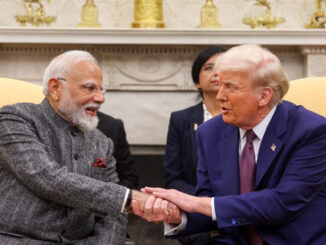
    WASHINGTON, D.C. (TIP): US President Donald Trump has said he could travel to India next year and noted that talks with India are “going good”. “It’s great, going good. He (Prime Minister Narendra Modi) stopped… Largely he stopped buying oil from Russia,” Trump said at the Oval Office in response to a question on how talks with Modi and trade discussions with India are progressing.

    “He’s a friend of mine, and we speak… He wants me to go there. We’ll figure that out. I’ll go. I had a great trip there with Prime Minister Modi, he’s a great man. And I’ll be going,” Trump said.

    When asked if he is planning to go to India next year, Trump said, “It could be, yeah.”

    India will host leaders from Australia, Japan, and the United States for the Quad summit in New Delhi after the 2024 summit was held in Wilmington, Delaware.

    However, the dates for the summit in India are yet to be announced. In his remarks before the press, Trump reiterated his claim that he stopped the war between India and Pakistan in May using trade.

    “Of the eight wars I ended, I would say five or six were ended because of tariffs. I’ll give you an example. If you take a look at India and Pakistan, they started to fight, they are two nuclear nations… They were shooting each other. Eight planes were shot down. It was seven. Now it is eight, because the one that was sort of shot down is now abandoned. Eight planes were shot down.

    “And I said, ‘Listen, if you guys are going to fight, I’m gonna put tariffs on you’. And they both went, you know, they were not happy about that. And within 24 hours, I settled the war. If I didn’t have tariffs, I wouldn’t have been able to settle that war,” Trump said. The president also termed tariffs a “great national defense”.
    (Source: PTI)

  • Whose America is it? In US, Indians face the heat

    Whose America is it? In US, Indians face the heat

    “Suddenly, a community once celebrated as a shining example of immigrant success finds itself caught in the crossfire of America’s immigration wars. On social media, questions about loyalty to the US are raised with increasing frequency. Recently, a Florida city councilman posted on X: “There’s not a single Indian that cares about the United States” and “Deport every Indian immediately.” Even public celebrations of Indian festivals — long encouraged by cities and states as symbols of cultural diversity — are now being recast by critics as signs of “otherness.”

    By Frank F Islam

    Resentment against immigrants, particularly those from poorer parts of the world, has long shaped Western politics.
    In the wake of Trump’s H-1B visa crackdown, a troubling backlash against the Indian American community is gaining momentum. What began as anonymous grumbling online has now spilled into the open, with racist comments voiced publicly and unapologetically.

    The Indian American community has risen in political influence too. With six members of Congress, numerous statewide officeholders, and even a former vice president of Indian descent, Indian Americans are more visible than ever before. (AFP)
    The Indian American community has risen in political influence too. With six members of Congress, numerous statewide officeholders, and even a former vice president of Indian descent, Indian Americans are more visible than ever before. (AFP)

    Suddenly, a community once celebrated as a shining example of immigrant success finds itself caught in the crossfire of America’s immigration wars. On social media, questions about loyalty to the US are raised with increasing frequency. Recently, a Florida city councilman posted on X: “There’s not a single Indian that cares about the United States” and “Deport every Indian immediately.” Even public celebrations of Indian festivals — long encouraged by cities and states as symbols of cultural diversity — are now being recast by critics as signs of “otherness”.

    For decades, Indian Americans were widely regarded as a model minority. Both Democratic and Republican leaders regularly extolled the community’s achievements. Addressing a rally of more than 100,000 people in Ahmedabad in 2020, President Donald Trump declared: “In America, we have come to know the splendor of Indian culture personally, through the four million Indian Americans living in the United States as our wonderful friends, colleagues, and neighbors… They are truly spectacular people. Indian Americans enrich every aspect of our national life. They are titans of business; the biggest, the best pioneers of science; masters of the art; and innovators of technology like few people have been able to see anywhere in this universe.”

    Five years earlier, President Barack Obama was equally effusive. In his 2015 “Address to the People of India” at Siri Fort Auditorium in New Delhi, he reminded the audience: “The United States has the largest Indian diaspora in the world, including some three million proud Indian Americans. They make America stronger, and they tie us together — bonds of family and friendship that allow us to share in each other’s success.”

    For decades, Indian Americans have been among the most successful immigrant groups in the US. Since the introduction of the H-1B visa programme in 1992, Indian professionals — particularly in technology — have powered Silicon Valley, driven innovation, and transformed industries. Today, Indian American households have a median income nearly twice that of the national average, reflecting not only their prominence in technology and science but also growing success in hospitality, health care, and entrepreneurship. The community has risen in political influence too. With six members of Congress, numerous statewide officeholders, and even a former vice president of Indian descent, Indian Americans are more visible than ever before in US public life.

    Yet, because of recent initiatives and events, as the community’s visibility and success have grown, so too has resentment. The same H-1B visa programme that created pathways for thousands of Indian engineers and scientists is now being cast as a symbol of unfair competition. More than 70% of H-1B visas go to Indian nationals. As a result, attacks on the programme have become shorthand for attacks on Indian immigrants themselves.

    This hostility is not new. Resentment against immigrants, particularly those from poorer parts of the world, has long shaped Western politics. In Europe, refugees and immigrants are often accused of diluting local cultures or draining welfare systems. In the US, the narrative has shifted with each wave of arrivals — Irish, Italians, Chinese, Mexicans, and now Indians. What makes today’s climate distinct is the political machinery amplifying these sentiments. The “Make America Great Again” (MAGA) movement, created and led by Trump, has tapped into economic anxieties to paint immigrants as scapegoats.

    While the US macro economy has grown strongly post-Covid, inflation, high interest rates, and soaring housing costs have left many Americans struggling. In addition, the disruptive effects of artificial intelligence (AI) and other transformative technologies are causing unemployment among recent graduates and young professionals, broadening and increasing economic insecurity. In this atmosphere, restrictions on H-1B visas are not only tolerated but endorsed by many.

    Even some Silicon Valley leaders, long reliant on immigrant talent, have cautiously supported calls to rethink the H1-B programme. Their alleged concern is framed as protecting American jobs, but the subtext is clear: Indian immigrants, more than any other group, are caught in the line of fire.

    The shift is stark and startling. Within just a few years, Indian Americans have gone from being praised for enriching “every aspect of national life” to being cast as disloyal outsiders. Sadly, at its core, this backlash is about more than visas or economics. It reflects a broader struggle over identity, over what it means to be American in an era of evolving demographic change.

    Old-fashioned nationalism has re-emerged, and the idea of America as a diverse pluralistic society is being openly challenged. For MAGA loyalists, “taking America back” means rolling back diversity and inclusion and reinstating a restrictive definition of who belongs.

    Indian Americans today occupy a paradoxical place in American society — celebrated for their success, yet targeted for the very same reason. Their story highlights both the promise and precariousness of immigrant life in the US today in which a community that has scaled great heights has become vulnerable to shifting political winds.

    The attacks on Indian Americans, framed through the H-1B debate, are not just about visas. They are about belonging, about whether a nation built by immigrants will continue to see newcomers as contributors or as threats. For Indian Americans, the challenge now is to push back against this narrowing vision of America by continuing to lead, to innovate, and to demonstrate that they do indeed enrich every aspect of American life.

    (Frank F Islam is an entrepreneur, civic leader and thought leader based in Washington DC.)

  • Trump celebrates Diwali with the Indian American community at the White House

    Trump celebrates Diwali with the Indian American community at the White House

    • By Staff Reporter

    WASHINGTON, D.C. (TIP): President Donald Trump hosted a Diwali reception to India’s Ambassador to the US Vinay Kwatra and a few members of the Indian American community that included prominent Indian American business figures, IBM CEO Arvind Krishna, Palo Alto Networks CEO Nikesh Arora, Adobe CEO Shantanu Narayen and Micron Technology CEO Sanjay Mehrotra, and  Prem Parameswaran, Managing Director and member of the Capital Markets team at Stone Point Capital, and a former member of Advisory Commission on Asian Americans and Pacific Islanders.

    A number of Trump administration officials attended the event, including FBI Director Kash Patel, Director of National Intelligence Tulsi Gabbard and White House Deputy Press Secretary Kush Desai.

    During his opening address, the president said: “On behalf of all Americans, let me also extend our warmest wishes to the people of India. I just spoke to your prime minister today. We had a great conversation. We talked about trade. We talked about a lot of things.”

    Earlier, President Trump lighted the ceremonial lamp.

    President Trump lights the traditional Diwali lamp. Seen to Trump’s right is India’s Ambassador to the US, Vinay Kwatra

    Ambassador Vinay Kwatra wrote on X that he was “deeply honoured to join President Donald J. Trump at the White House today to celebrate Diwali.

    Wished him on behalf of Prime Minister Narendra Modi a Happy Diwali and thanked him for this beautiful gesture. Warm Diwali greetings to all celebrating, especially the vibrant 5 million-strong Indian diaspora in the U.S.”

    Diwali, the Hindu festival of lights, celebrates Lord Rama’s return to Ayodhya after a 14-year exile and his victory over the demon king Ravana, symbolizing the triumph of good over evil. It also honors the goddess Lakshmi, the deity of wealth and prosperity, whom devotees worship for blessings in the coming year. The lighting of lamps and candles represents the victory of light over darkness and the renewal of spiritual faith.

  • Israeli Cabinet approves ‘outline’ of deal to release hostages held by Hamas

    Israeli Cabinet approves ‘outline’ of deal to release hostages held by Hamas

    The sides appeared closer than they have been in months to ending a war that has killed tens of thousands of Palestinians, reduced much of Gaza to rubble, brought famine to parts of the territory and left dozens of hostages, living and dead, in Gaza

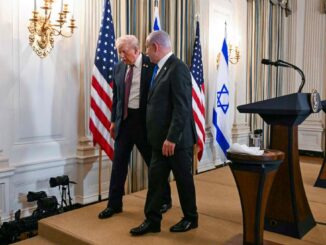
    NEW YORK (TIP): Israel’s Cabinet early on Friday, October 9, 2025,  approved President Donald Trump’s plan for a ceasefire in the Gaza Strip and the release of all the remaining hostages held by Hamas, a key step toward ending a ruinous two-year war that has destabilized the Middle East, AP reports.

    A brief statement from Prime Minister Benjamin Netanyahu’s office said the Cabinet approved the “outline” of a deal to release the hostages, without mentioning other aspects of the plan that are more controversial.

    The broader ceasefire plan included many unanswered questions, such as whether and how Hamas will disarm and who will govern Gaza. But the sides appeared closer than they have been in months to ending a war that has killed tens of thousands of Palestinians, reduced much of Gaza to rubble, brought famine to parts of the territory and left dozens of hostages, living and dead, in Gaza.

    The war, which began with Hamas’ deadly attack on Israel on October 7, 2023, has also triggered other conflicts in the region, sparked worldwide protests and led to allegations of genocide that Israel denies.

    Some 1,200 people were killed in the Hamas-led assault, and 251 were taken hostage. In Israel’s ensuing offensive, more than 67,000 Palestinians have been killed in Gaza and nearly 170,000 wounded, according to Gaza’s Health Ministry, which doesn’t differentiate between civilians and combatants but says around half of the deaths were women and children.

    In the hours leading up to the Israeli Cabinet’s vote, Israeli strikes continued. Explosions were seen on Thursday in northern Gaza, and a strike on a building in Gaza City killed at least two people and left more than 40 trapped under rubble, according to the Palestinian Civil Defense.

    At least 11 dead Palestinians and another 49 who were wounded arrived at hospitals over the past 24 hours, Gaza’s Health Ministry said.

    An Israeli military official who spoke on the condition of anonymity in line with military guidelines said Israel was hitting targets that posed a threat to its troops as they reposition. Hamas blasted Israel over the strike, saying Netanyahu was trying to “shuffle the cards and confuse” efforts by mediators to end the war in Gaza.

    A senior Hamas official and lead negotiator made a speech Thursday laying out what he says are the core elements of the ceasefire deal: Israel releasing around 2,000 Palestinian prisoners, opening the border crossing with Egypt, allowing aid to flow and withdrawing from Gaza.

    Khalil al-Hayya said all women and children held in Israeli jails will also be freed. He did not offer details on the extent of the Israeli withdrawal from Gaza.

    Al-Hayya said the Trump administration and mediators had given assurances that the war is over, and that Hamas and other Palestinian factions will now focus on achieving self-determination and establishing a Palestinian state.

    “We declare today that we have reached an agreement to end the war and the aggression against our people,” Al-Hayya said in a televised speech Thursday, October 9  evening.

    In other developments, US officials announced that they would send about 200 troops to Israel to help support and monitor the ceasefire deal as part of a broader, international team. The officials spoke on condition of anonymity to discuss details not authorized for release. In the southern Gaza city of Khan Younis, reactions to the announcement of a ceasefire were relatively muted and often colored by grief.

    “I am happy and unhappy. We have lost a lot of people and lost loved ones, friends and family. We lost our homes,” said Mohammad Al-Farra. “Despite our happiness, we cannot help but think of what is to come. … The areas we are going back to, or intending to return to, are uninhabitable.”

    In Tel Aviv, families of the remaining hostages popped champagne and cried tears of joy after Trump announced the deal.

    Under the terms, Hamas intends to release all living hostages in a matter of days, while the Israeli military will begin a withdrawal from the majority of Gaza, people familiar with the matter told The Associated Press. They spoke on condition of anonymity to discuss details of an agreement that has not been fully made public. Some 20 of the 48 hostages still in captivity are believed to be alive.

    In a short video posted by US Commerce Secretary Howard Lutnick, Mr. Trump was seen speaking by phone to a group of elated hostage families.“They are all coming back on Monday,” said Trump, who is expected to visit the region in the coming days.

    Tom Fletcher, the UN humanitarian chief, told reporters Thursday that officials have 170,000 metric tons of medicine, aid and other supplies ready for transport into Gaza when they are given a green light.

    The deal, which was expected to be signed in Egypt, will include a list of prisoners to be released and maps for the first phase of an Israeli withdrawal to new positions in Gaza, according to two Egyptian officials briefed on the talks, a Hamas official and another official.

    Israel will publish the list of the prisoners, and victims of their attacks will have 24 hours to lodge objections.

    The withdrawal could start as soon as Thursday evening, said the officials, who spoke on condition of anonymity because they were not authorized to be publicly named speaking about the negotiations. The hostage and prisoner releases are expected to begin Monday, the officials from Egypt and Hamas said, though the other official said they could occur as early as Sunday night.

    What is behind Trump’s Gaza plan?

    Five border crossings would reopen, including the Rafah crossing between Gaza and Egypt, the Egyptian and Hamas officials said. The Trump plan calls for Israel to maintain an open-ended military presence inside Gaza, along its border with Israel. An international force, comprised largely of troops from Arab and Muslim countries, would be responsible for security inside Gaza. The US would lead a massive internationally funded reconstruction effort.

    The plan also envisions an eventual role for the Palestinian Authority — something Netanyahu has long opposed. But it requires the authority, which administers parts of the West Bank, to undergo a sweeping reform program that could take years.

    The Trump plan is even more vague about a future Palestinian state, which Mr. Netanyahu firmly rejects.

    What comes next for Netanyahu

    The days ahead could be politically tricky for Mr. Netanyahu, who has been shadowed by an ongoing corruption trial as he navigated the Gaza war. His grip on power has been largely contingent on the support of hard-line, far-right coalition partners who have urged him to continue operations against Hamas until the group is eliminated.

    But Mr. Trump on Thursday, October 9,  suggested Mr. Netanyahu’s political standing has been bolstered by the ceasefire and hostage deal.

    “He’s much more popular today than he was five days ago,” Mr. Trump said. “I can tell you right now, people shouldn’t run against him. Five days ago, might not have been a bad idea.”

  • Beyond proposed $100,000 mandatory filing US

    Beyond proposed $100,000 mandatory filing US

    NEW YORK (TIP): The Donald Trump administration is moving forward with plans to significantly overhaul the H-1B visa programme, aiming to impose stricter rules on how employers can use the visa and who qualifies for it.

    Beyond the proposed $100,000 mandatory filing fee, new immigration restrictions are also being considered.

    The US Department of Homeland Security (DHS) has listed a proposed rule in its regulatory agenda titled “Reforming the H-1B Nonimmigrant Visa Classification Program.” The proposal includes a range of changes, such as:

    Reviewing eligibility for cap exemptions

    Increased scrutiny of employers who have violated programme rules

    Tighter regulations on third-party placements

    Enhanced oversight and compliance mechanisms

    According to the DHS, these reforms aim to “improve the integrity of the H-1B program and better protect US workers’ wages and working conditions.” The proposed rule is expected to be published in December 2025, as per the Federal Register.

    Earlier reports indicated the Trump administration is also considering replacing the current H-1B lottery system with a wage-based selection process, favoring higher-paid roles to ensure that only top-tier foreign talent is prioritized.

    Why H-1B visa is important

    The H-1B visa, established under the 1990 Immigration Act, allows US employers to temporarily hire highly skilled foreign workers in specialty occupations, particularly in science, technology, engineering, and mathematics (STEM) fields. It serves as a key pathway for skilled professionals—especially from India—to work and eventually seek permanent residency in the US

    The annual cap is set at 65,000 visas, with an additional 20,000 reserved for individuals with a U.S. master’s degree or higher. These are typically distributed through a lottery system, although certain employers such as universities and nonprofits are exempt from the cap.

    According to the Pew Research Center, nearly 75 per cent of H-1B approvals in 2023 were granted to Indian nationals. Since 2012, at least 60 per cent of all approved H-1B applications have been for computer-related occupations. However, the visa is also widely used by sectors like healthcare, finance and academia.

    Despite criticism of the programme, research shows that H-1B workers often earn equal or higher wages compared to their American counterparts with similar qualifications. US law mandates that employers must pay H-1B workers the higher of either the actual wage paid to comparable US workers or the prevailing wage in the occupation, in addition to paying government fees exceeding $6,000 in many cases.

    If the proposed changes go into effect, they could significantly impact thousands of Indian students and professionals seeking to work in the US.

  • The course ahead for Trump’s Gaza ceasefire plan

    The course ahead for Trump’s Gaza ceasefire plan

    The plan can be seen in two ways – as a statement of intentions on how to end the Gaza war, or an instrument of surrender

    By T.S. Tirumurti

    Shortly before the second anniversary of Hamas’s attack on Israel (October 7, 2023), United States President Donald Trump unveiled his 20-point plan for a Gaza ceasefire. Hamas has reacted positively but has indicated that it will need to renegotiate parts of the plan. This has set the cat among the pigeons. Mr. Trump has hailed this as an opportunity to bring peace to West Asia while Israel is unhappy with the conditions attached to Hamas’ acceptance. Skepticism over progress on the plan is understandable given what happened in January this year when the ceasefire that was negotiated by U.S. Special Envoy Steve Witkoff, which was detailed, sequenced and agreed to by both sides, was torn up unilaterally by Israel after the first step. But this time around, all the major players, including Mr. Trump, want this plan to succeed as a last chance for peace in Gaza — except perhaps the Israel government.

    In a nutshell

    The 20 points include everything that the U.S. would like to see happen in Gaza in the foreseeable future; and, no, the Palestinian state is not one of them. The plan is at best a statement of intentions on how to end the Gaza war and bring normalcy to Palestinians in their destroyed land — and at worst, an instrument of surrender.

    Except for one solitary timeline, where Israeli hostages would be released by Hamas within 72 hours of the ceasefire, everything else needs fleshing out to become a road map. The details of what should be done by the Palestinian side are spelt out — hostages (release within 72 hours); Hamas (disarm and/or quit Gaza); Palestinian Authority (reform or perish); governance of Gaza (deradicalization, demilitarization and technocrats’ rule under an International Board of Peace headed by Mr. Trump), and security (international destabilization force in Gaza). However, there are a few details of Israeli obligations (when does fighting stop), territory (how much will remain with Israel and till what time), and the future role of the Israeli Defense Forces (IDF) (no timelines for withdrawal from Gaza). Of course, the plan is silent on the West Bank.

    The plan is designed to capitalize on the war fatigue of the Palestinians and pressure Hamas. Whether one agrees with its content or not, it covers aspects relating to security, economic development, governance and international involvement. Ethnic cleansing of Gaza has been ruled out. An international stabilization force could be a positive factor if the mandate is clear and regional and the other players involved play a committed role. Israel will get its security with a demilitarized Gaza and a disarmed and deradicalized Hamas.

    Unfortunately, a lack of clarity on timelines and sequencing converts the framework into a mere statement of disjointed intentions rather than a credible pathway for withdrawal of Israel from Gaza and restoring normalcy. It is not even a full ceasefire deal since, under the plan, fighting can continue side by side with the implementation. This is what Hamas has serious reservations about. This infirmity could be fatal if the U.S. and major regional players do not do the heavy lifting vis-à-vis Israel. This is why Mr. Trump’s call to Israel to stop the bombing of Gaza is important. Of course, it is not as if Israel has listened to the U.S. now or in the past.

    To state the obvious, the focus of the plan has been on the release of all Israeli hostages, dead or alive, since Israel’s Prime Minister Benjamin Netanyahu has been under tremendous domestic pressure to get them released. Once that is done within 72 hours of the ceasefire, the only arbiters of Palestinian destiny become the U.S. and Israel, which is incidentally the reality now. Every progress, or the lack of, by the Palestinians towards fulfilling the conditionalities will be decided by these two. There is no monitoring mechanism.

    Further, while the release of 250 Palestinian life prisoners and 1,700 Palestinian detainees in exchange for Israeli hostages is welcome, with the revolving door policy of Israel to arrest, imprison and release Palestinians at will, this stipulation in the plan may not have any practical value on the ground. To get a sense of this equation, at least 18,000 Palestinians have been arrested by Israel only in the West Bank since October 7, 2023.

    Burden shifts to Hamas, the Palestinians

    Given the above, this plan removes the international pressure on Israel on its daily killings in Gaza, by shifting the burden of stopping the war to the implementation of the plan by Hamas and the Palestinians. If they are seen not to implement it, then Israel’s continued presence in Gaza is legitimized and its continued attacks will be justified. When Mr. Netanyahu has declared that the IDF will remain in Gaza, entrusting Israel to decide on its exit from Gaza is a non-starter.

    Effectively, the plan puts governance and security under international control through its Board of Peace and International Stabilization Force. This can be a potential stop-gap arrangement provided the regional players remain committed and, where necessary, not hesitate to use their clout with the U.S. to stop Israeli violations. So far, the involvement of the Gulf countries in the Gaza war has been minimal since they have given priority to diminishing the threat of Iran and its proxies, which Israel helped them achieve. They are equally reluctant to compromise their larger interests in the region i.e., the Abraham Accords, their military ties with the U.S. and a newfound Syrian bonhomie, on the altar of an elusive two-state solution.

    Once Gaza comes under international control, the plan does not chart out any pathway to elections or to a representative governance structure except a possible reformed Palestinian Authority’s role sometime in the future. Ironically, the last legislative elections in the occupied territories, in 2006, were won by Hamas, which secured 44.45% of the vote share and 74 out of 132 seats, while Fatah won 41.43% and 45 seats. This led to a division in the Palestinian leadership and the eventual disconnect between Gaza and the West Bank. Now, the plan envisages a technocratic committee with ‘Palestinian and international experts’, with municipal jurisdiction working under international governance and a security framework, directly under Mr. Trump. Hamas had agreed to step aside from the governance of Gaza and to a Palestinian technocratic committee. But under this plan, the Palestinians will not control their future. Hamas has called this unacceptable and said that a decision on governance should be taken by broader Palestinian consensus in which Hamas will also participate.

    More a rehashed ‘Riviera’ plan

    The self-styled ‘Trump’ economic plan is possibly a rehash of the idea to make a ‘Riviera’ out of the Gaza seafront and build ‘modern miracle cities’ to pull 2.3 million Palestinians in Gaza out of poverty, while thousands in the West Bank are being uprooted from their cities, land and livelihood and driven to poverty.

    Earlier, one had argued that process usually trumped substance for negotiating a Palestinian state. This time there is not even a process except a solitary reference to self-determination in the plan which, both the U.S. and Israel know, is a point so distant that it may never be reached. Mr. Netanyahu has sworn never to concede a Palestinian state. His far-right partners have sworn to annex the West Bank this year. Therefore, it is no surprise that the plan does not base itself on international law or United Nations Security Council resolutions or even the recent International Court of Justice judgment on the 1967 borders to establish a Palestinian state. In fact, it goes in the opposite direction.

    Consequently, how long will the ceasefire hold after the exchange of hostages? If it does not, how much capital will the U.S. and Gulf players spend to restrain Israel from further attacks? The larger question of the Palestine state has been set aside — as it has been time and again. The rapidly changing ground realities in the West Bank, with marauding Israeli settlement construction and eviction of Palestinians from their land, is now out of the syllabus.

    [T.S. Tirumurti was Ambassador/Permanent Representative of India to the United Nations, New York (2020-22) and the first Representative of India to the Palestinian Authority in Gaza (1996-98)]

  • Trump Announces New Tariffs on Heavy Trucks, Drugs and Kitchen Cabinets

    Trump Announces New Tariffs on Heavy Trucks, Drugs and Kitchen Cabinets

    The reason for this is the large-scale flooding of these products into the United States by other outside Countries, says President Donald Trump

    WASHINGTON, D.C. (TIP): U.S. President Donald Trump on Thursday , September 25, 2025, announced a new round of tariffs, saying the United States will impose a 100% tariff on imported branded drugs, 25% tariff on imports of all heavy-duty trucks and 50% tariff on kitchen cabinets.

    Mr. Trump also said he would start charging a 30% tariff on upholstered furniture next week.

    He said the new heavy-duty truck tariffs were to protect manufacturers from “unfair outside competition” and said the move would benefit companies such as Paccar-owned Peterbilt and Kenworth and Daimler Truck-owned Freightliner. Mr. Trump has launched numerous national security probes into potential new tariffs on a wide variety of products.

    He said the new tariffs on kitchen, bathroom and some furniture were because of huge levels of imports which were hurting local manufacturers.

    “The reason for this is the large scale “FLOODING” of these products into the United States by other outside Countries,” Mr. Trump said, citing national security concerns about U.S. manufacturing.

    The U.S. Chamber of Commerce urged the department not to impose new tariffs, noting the top five import sources are Mexico, Canada, Japan, Germany, and Finland “all of which are allies or close partners of the United States posing no threat to U.S. national security.”

    Mexico is the largest exporter of medium- and heavy-duty trucks to the United States. A study released in January said imports of those larger vehicles from Mexico have tripled since 2019.

    Higher tariffs on commercial vehicles could put pressure on transportation costs just as Trump has vowed to reduce inflation, especially on consumer goods such as groceries.

    Tariffs could also affect Chrysler-parent Stellantis which produces heavy-duty Ram trucks and commercial vans in Mexico. Sweden’s Volvo Group is building a $700 million heavy-truck factory in Monterrey, Mexico, due to start operations in 2026.

    Mexico is home to 14 manufacturers and assemblers of buses, trucks, and tractor trucks, and two manufacturers of engines, according to the U.S. International Trade Administration.

    The country is also the leading global exporter of tractor trucks, 95% of which are destined for the United States.

    “We need our Truckers to be financially healthy and strong, for many reasons, but above all else, for National Security purposes!,” Trump added.

    Mexico opposed new tariffs, telling the Commerce Department in May that all Mexican trucks exported to the United States have on average 50% U.S. content, including diesel engines.

    Last year, the United States imported almost $128 billion in heavy vehicle parts from Mexico, accounting for approximately 28% of total U.S. imports, Mexico said.

    The Japanese Automobile Manufacturers Association also opposed new tariffs, saying Japanese companies have cut exports to the United States as they have boosted U.S. production of medium- and heavy-duty trucks.

  • Ex-FBI director James Comey indicted on two charges as Trump pushes to prosecute political enemies

    Ex-FBI director James Comey indicted on two charges as Trump pushes to prosecute political enemies

    WASHINGTON, D.C. (TIP): James Comey, the former FBI director and one of Donald Trump’s most frequent targets, was indicted on Thursday on one count of making a false statement to Congress and one count of obstruction of a congressional proceeding, the latest move in the president’s retribution campaign against his political adversaries.

    The indictment, filed in federal district court in Alexandria, Virginia, shows Comey’s charges centered on whether he lied and misled lawmakers during testimony in September 2020 about the Russia investigation.

    While the precise details were not clear in the sparse, two-page indictment, it appeared to reference Comey’s testimony that he had never authorized someone at the FBI to leak to the news media about the Trump or Hillary Clinton investigations – a claim prosecutors alleged was false.

    “No one is above the law. Today’s indictment reflects this Department of Justice’s commitment to holding those who abuse positions of power accountable for misleading the American people,” Pam Bondi, the US attorney general, said in a statement on Thursday.

    The indictment followed Trump’s instruction to Bondi to “move now” to prosecute Comey and other officials he considers political foes, in an impatient and extraordinarily direct social media post trampling on the justice department’s tradition of independence.

    It also came less than a week after Lindsey Halligan was installed as the top federal prosecutor in the eastern district of Virginia, after Trump fired her predecessor, Erik Siebert, after he declined to bring charges against Comey over concerns there was insufficient evidence.

    Halligan, most recently a White House aide and former Trump lawyer who has no prosecutorial experience, was also presented with a memo earlier this week laying out why charges should not be brought. But the justice department still pushed it through, people familiar with the matter said.

    Responding to the indictment, hours after it was filed, Comey said in a video statement posted on Instagram that he was innocent and welcomed a trial.

    “My family and I have known for years that there are costs to standing up to Donald Trump, but we couldn’t imagine ourselves living any other way. We will not live on our knees, and you shouldn’t either,” Comey said.

    Referencing the farewell email his daughter, Maureen, sent after she was fired from her job as a federal prosecutor in New York, Comey said: “Somebody that I love dearly recently said that fear is the tool of a tyrant. And she’s right. But I’m not afraid. And I hope you’re not either.

    “I hope instead you are engaged. You are paying attention, and you will vote like your beloved country depends upon it. My heart is broken for the Department of Justice, but I have great confidence in the federal judicial system and I’m innocent. So let’s have a trial. And keep the faith.” Prosecutors had also sought a third charge against Comey, but grand jurors rejected the request, court documents show.

    Ensconced at the White House, Trump celebrated the charges in a post on Truth Social, writing: “JUSTICE IN AMERICA! One of the worst human beings this Country has ever been exposed to is James Comey, the former Corrupt Head of the FBI.

    “Today he was indicted by a Grand Jury on two felony counts for various illegal and unlawful acts. He has been so bad for our Country, for so long, and is now at the beginning of being held responsible for his crimes against our Nation. MAKE AMERICA GREAT AGAIN!”

    Comey was expected to surrender and have his initial appearance in federal district court on Friday morning, according to a person familiar with the matter. Comey is expected to be represented by Patrick Fitzgerald, a former US attorney for the northern district of Illinois.

    He faces up to five years in prison if convicted, but legal experts suggested the case may be difficult to prove.

    Many current and former justice department officials condemned the filing of charges on Thursday night, criticizing what they viewed as weak evidence for the case.

    “This is a sad day for the rule of law. Trump’s comments, along with the musical chairs at the US attorney’s office, make a mockery of prosecutorial discretion. The president has teed this case up for a dismissal on the grounds of selective prosecution,” said Barbara McQuade, a former US attorney for the eastern district of Michigan.

    Comey’s son-in-law, Troy Edwards, resigned from his job as a federal prosecutor in the US attorney’s office in Virginia minutes after the former FBI director was indicted. Edwards wrote in his resignation letter that he was quitting “to uphold my oath to the Constitution and the country”.

    Mark Warner, a Democratic senator from Virginia, condemned the charges.

    “Donald Trump has made clear that he intends to turn our justice system into a weapon for punishing and silencing his critics,” he said in a statement. “This kind of interference is a dangerous abuse of power. Our system depends on prosecutors making decisions based on evidence and the law, not on the personal grudges of a politician determined to settle scores.”

    In social media posts on Saturday, Trump claimed that Comey, Letitia James and a third political opponent, Democratic senator Adam Schiff, were “guilty as hell” and that his supporters were upset that “nothing has been done”.

    “We can’t delay any longer, it’s killing our reputation and credibility,” Trump posted. They impeached me twice, and indicted me (5 times!), OVER NOTHING. JUSTICE MUST BE SERVED, NOW!!!”

    Trump’s contempt for Comey stretches back to the early days of his first term, when according to Comey, Trump sought to secure a pledge of loyalty from the then FBI director, who refused. At the time, Comey was leading the criminal investigation into Russian meddling in the US election. Trump dismissed Comey in May 2017.

  • Prospects of a deal

    Prospects of a deal

    By Prabhu Dayal

    High-level trade talks between India and the United States resumed in New Delhi on 16 September 2025, after a recent thaw in tensions and positive public statements from both President Donald Trump and Prime Minister Narendra Modi. The latest round of discussion was led by the US delegation’s chief negotiator, Assistant U.S. Trade Representative Brendan Lynch, and his Indian counterpart, Special Secretary in the Department of Commerce Rajesh Agrawal. A key outcome of the “positive and forward-looking” meeting was the mutual agreement to “intensify efforts” toward an early conclusion of a trade agreement.

    Relations strained considerably after President Trump imposed new 50 per cent tariffs on Indian exports in August 2025. This move was partly a penalty for India’s continued purchases of Russian oil amidst the Ukraine conflict. The tariffs significantly impacted trade, with Indian exports to the US falling from $8.01 billion in July to $6.86 billion in August. A breakthrough in the diplomatic stalemate occurred in September 2025 after President Trump posted optimistically about the ongoing negotiations on his social media platform, Truth Social. In response, Prime Minister Modi echoed the sentiment on X, expressing confidence in the bilateral trade discussions.

    This exchange followed a period of hostile public comments from some US officials. Peter Navarro, a trade adviser in the Trump administration has made repeated critical comments about India, primarily regarding its trade relations with Russia and its high tariffs against the United States. Navarro called India the “Maharaja of Tariffs” and accused it of unfair trade practices. Navarro has also accused India of being an “oil money laundromat for the Kremlin” by importing cheap Russian oil, refining it, and then exporting fuel at a premium. He has repeatedly stated that India’s purchase of discounted Russian crude oil provides Moscow with funds for the war in Ukraine.

    He has even referred to the conflict as “Modi’s war”. The Indian Ministry of External Affairs officially rejected Navarro’s statements. The MEA spokesperson called the comments “inaccurate and misleading” and stated that India’s focus remains on bilateral relations based on mutual respect and shared interests. India has defended its purchase of Russian crude oil, stating that its energy procurement is driven by national interests and market dynamics to keep energy prices stable. In early September 2025, Navarro sparked significant backlash for saying that “Brahmins” were “profiteering at the expense of the Indian people” from the Russian oil trade. The remark was widely condemned in India as casteist and culturally insensitive, drawing criticism from across the political spectrum. Some observers noted that Navarro may have been alluding to “Boston Brahmins,” a U.S. metaphor for entrenched elites.

    However, the invocation of caste, even in this context, was met with strong condemnation in India. Recently, on September 13, U.S. Commerce Secretary Howard Lutnick was asked during an interview whether the US is mismanaging “very valuable relationships” with “important allies” like India, Canada and Brazil with the tariffs imposed on these countries. In response, he questioned why India, with its large population, refuses to buy American products, such as corn. He also said that it must reduce its tariffs or face business difficulties with the U.S. Thus, one should not think that the US has softened its position. Significant challenges persist, with India pushing for the removal of the 25 per cent oil-linked penalty tariff.

    India has also repeatedly stated its reluctance to open up its protected agriculture and dairy sectors, citing the livelihood of its millions of farmers as a “red line” issue. Having said that, it is a good sign that both nations have agreed to continue negotiations, including virtual meetings, following the latest in-person talks in New Delhi. The goal is to move forward with the Bilateral Trade Agreement (BTA), with the Indian Commerce Minister indicating a potential deal by November 2025. While President Trump has softened his tone on social media, he has not yet removed the punitive oil-linked tariffs, which remain a major obstacle to a breakthrough.

    To secure a trade deal with the US, India may make concessions in several areas, though it has historically resisted opening sensitive domestic markets. Ongoing trade discussions involve renewed efforts to overcome persistent disagreements, especially concerning tariffs, agriculture, and intellectual property. India has previously signaled it is open to lowering tariffs on a range of industrial products, a move that would please US exporters. Gradual tariff reductions on certain US goods, such as automobiles, premium dairy products, and alcoholic beverages, have been previously discussed. Moreover, India may address concerns about its use of Quality Control Orders (QCOs), which the US views as non-tariff barriers that slow down trade and require US products to be certified by Indian labs. The US feels that the complex and non-transparent nature of India’s QCOs restricts market access for American companies. This issue has recently become a flashpoint in ongoing bilateral trade negotiations. Besides, India may face pressure to lower tariffs and ease regulatory hurdles for US medical devices and patented drugs. India has previously offered to increase its purchases of US liquefied natural gas (LNG) and other energy products. Above all, expanding defense purchases from the US could also be part of a broader deal to address strategic and economic concerns. Despite pressure from the US, India has maintained firm resistance on several fronts.

    India has consistently refused to grant full market access to US agricultural and dairy products, citing the need to protect the livelihoods of millions of small-scale Indian farmers. India has pushed back against US demands to halt its purchase of Russian oil, which led the US to impose punitive tariffs in August 2025. These remain the key sticking points and have strained negotiations. Moreover, while a bilateral MOU on Intellectual Property Rights (IPRs) was signed in 2020, disagreements persist over issues such as patent protections for pharmaceutical and agrochemical products. India has a different approach to patents to ensure access to affordable medicines for its population. What, then, are the prospects of reaching an India-US trade deal?

    Despite renewed talks in mid-September 2025, prospects for a US-India trade deal remain uncertain, primarily due to recent punitive tariffs imposed by the Trump administration and long-standing differences on key issues. While both nations have agreed to “intensify efforts,” significant hurdles remain. The current prospects for a comprehensive US-India trade deal are low, particularly under the pressure of recent US tariffs. Progress is unlikely until the US rolls back its punitive tariffs. While recent meetings were described as “positive and forward looking,” India noted that the discussions were not a formal negotiation round but a way to take talks forward. If the core disagreements over Russian oil and market access for agricultural products are not resolved, the trade relationship could deteriorate further. The ongoing challenges suggest that negotiators may need to consider a phased or “mini-deal” approach to secure incremental progress rather than a sweeping agreement.

    (The writer, a retired IFS officer, served as India’s Ambassador to Kuwait and Morocco and as Consul-General in New York)
    (First published in The Statesman)

  • The interpretation of the law in Trumpland

    The interpretation of the law in Trumpland

    The formula is to avoid legal culpability and, at the same time, to activate, deflect or weaponise the law at all levels

    By Arjun Appadurai

    There are more than 1.3 million lawyers in the United States, of whom more than 2,50,000 are criminal defense lawyers. Prosecuting attorneys at the State level are about 35,000 in number and about 90 are federal prosecutors. There are more than 4,00,000 law firms in the country, that range from solo practices to large legal firms. The top 30 corporate law firms employ anywhere between 1,000 and 4,000 lawyers each.

    What weaves these facts together are some patterns. First, that the top lawyers have large salaries and assets. Second, among this top rank of wealthy attorneys, there is a disproportionate number of revolving door veterans, who have monetized skills and networks gained in one sector (typically, the government) to make enormous sums in another sector (typically, corporate law). Third, many of the most successful beneficiaries of the revolving door are attorneys who are willing to take up controversial criminal defense cases, and to become highly visible in political controversies and causes. These patterns have helped U.S. President Donald Trump to avoid legal culpability repeatedly and at the same time to activate, deflect or weaponize the law at all levels.

    All these lawyers are personally wealthy, have moved through numerous revolving doors during their careers, and have monetized their ties to one another and to other influence-brokers, lobbyists and to elected politicians, not least to Mr. Trump. Any sociogram of their public roles in the last decade would make Mr. Trump the nodal figure of their power, and thus the object of their unreserved loyalty.

    The unfinished tactical skirmishes between the White House, the Congress, the Department of Justice and the attorneys working on behalf of Ghislaine Maxwell, and the growing chorus of Jeffrey Epstein and Maxwell’s victims and their advocates, are lapping dangerously close to the toes of Donald and Melania Trump, and the whole Trump family.

    Integral to the Trump strategy

    Mr. Trump’s currently active legal praetorian guard continues a long history in which lawyers have been a vital part of his wealth accumulation and risk mitigation strategies, hired to shield, protect and burnish the vital links between his brand-polishing, his near-fraudulent business tactics, his aversion to taxes, and his obsession with money. The law and lawyers are the medium in which Mr. Trump has been swimming for three decades.

    In his career since the 1990s, Mr. Trump, either personally or through one of his companies, has engaged in over 4,000 suits, ranging from defamation to breach of contract, from tax fraud to unmet contractual obligations, from sexual exploitation to inciting mass violence.

    The thread that links these hundreds of suits is that they amount to a business strategy for Mr. Trump, which is founded on a mix of bullying, gambling, evading negative court rulings and enforcing settlements. Indeed, Mr. Trump believes in the law as the main means for making adversarial deals out of court. Courts for Mr. Trump are not tools for obtaining equity, justice or compensation. They are a path to Deals. I have argued elsewhere that Mr. Trump’s obsession with deal-making is not about contracts, markets or even about business. It is about winning, either monetarily, reputationally or politically. His completely chaotic approach to tariffs is a clear index of the complete absence of any rational economic calculus in his tariff roller coaster. In the end, tariffs on Brazil and massive extortion from Columbia, Harvard and many other universities belong to the same family of deal-making, which is proudly promoted in the title of Mr. Trump’s 1987 book.

    Mr. Trump’s reckless misuse of the Constitution and his open cynicism about the law as the glue of contractual stability and social reciprocity are grounded in his view of his lawyers as his weapons. We do not know how many of Mr. Trump’s 4,000-plus deals he won or lost. But there is ample evidence that many of them were settled “out of court”, with optimal money gains for Mr. Trump and minimum concessions of guilt on his side.

    These hired legal revolvers are the tools of Mr. Trump’s assault on most democratic institutions and their liberal foundations, in which the sabotage and subversion of the law have been a consistent feature. American universities have been ravaged by new readings of the laws that govern civil rights, affirmative action and racial discrimination. The Congress has been effectively neutered as an organ for overseeing the powers of the executive. The idea of precedent has been cynically suborned by mining it for obscure justifications of tyrannical policies towards migrants, aliens and tourists. The Constitution has been given renewed vitality in the protection of felons, sex offenders and thieves but has been leashed in matters of academic speech, immigrant rights and press freedom. Impunity in the face of the law is the calling card of the Trump regime.

    Beyond letter and spirit

    Yet, the law has been the primary recourse of any principled effort to resist Mr. Trump. From Mahmoud Khalil to E. Jean Carroll, from Harvard to The Wall Street Journal, from Maurene Comey to Gavin Newsom, the law is the frontline and the foundation of most efforts to delegitimize Mr. Trump. But it is hard to deny that Mr. Trump’s multiple efforts to subvert the Constitution through its most vulnerable parts appears to be doing vastly better than those of its opponents. How has this been accomplished?

    One argument for Mr. Trump’s legal victories in law has pointed to his willingness to sacrifice the spirit of the law in favor of the letter. This theory too is not entirely satisfactory, since it overlooks Mr. Trump’s cherry-picking of the letter of the law to favor his preferred versions of its spirit.

    The truth is that Mr. Trump is equally capricious about both the letter and spirit of the law, and typically subordinates them to any goal which serves his interests. Hence, the idea that he values the letter over the spirit of the law gives him too much credit for some sort of principle.

    Another tool in Mr. Trump’s subversion of the law to advance his personal pride, prejudice and pocketbook is his success in seducing the Congress, especially The House of Representatives, into his personal dominion. The ruling icon of Congressional subservience to Mr. Trump is MAGA Mike Johnson, the Speaker of the House.

    The creation of a complex machinery

    As far as the law is concerned, this last factor, the principles of reasonable doubt, the presumption of innocence and the right to avoid self-incrimination have been steadily converted from protections for the innocent into the privileges of scofflaws. The biggest such scofflaw is Mr. Trump himself who has escaped massive indictments by one or other loophole designed for more exalted purposes. But he has set the pace for numerous others to escape the full force of the law by turning the fine points of a legal criminal defense into a complex machinery for minimizing, delaying or eliminating punishment for criminal wrongdoing.

    The sobering fact is that 90% of criminal cases in the U.S. are settled by plea bargains, arrangements (often with no public disclosure of their negotiating background) between prosecutors and defense lawyers, blessed by judges, to save time, reduce legal costs and prevent massive logjams in court dockets. This pragmatic motivation combines with the more exalted doctrine of the presumption of innocence, to help someone such as Mr. Trump, who exploits the weaknesses of the judicial system. His commitment to a winning deal, in every aspect of his life, is realized by recruiting lawyers who can get him to a favorable deal as independently of the law as he can manage. The Letter of the Law, for Mr. Trump, is just a springboard to the Spirit of the Deal.

    (Arjun Appadurai is Emeritus Professor of Media, Culture and Communication at New York University, and lives in Berlin)

    (First published in The Hindu)

  • Federal judge tosses Trump’s defamation lawsuit against New York Times

    Federal judge tosses Trump’s defamation lawsuit against New York Times

    TAMPA, FL (TIP): A federal judge in Florida on Friday, September 19, 2025, tossed U.S. President Donald Trump’s $15 billion defamation lawsuit against New York Times.

    The lawsuit named a book and an article written by Times reporters Russ Buettner and Susanne Craig that focuses on Mr. Trump’s finances and his pre-presidency starring role in television’s “The Apprentice”.

    Mr. Trump said in the lawsuit that they “maliciously peddled the fact-free narrative” that television producer Mark Burnett turned Mr. Trump into a celebrity — “even though at and prior to the time of publications defendants knew that President Trump was already a mega-celebrity and an enormous success in business”.
    (Source: AP)

  • Trump signs Executive Order Imposing $100K Annual Fee for H-1B Visa Applications

    Trump signs Executive Order Imposing $100K Annual Fee for H-1B Visa Applications

    The Trump administration also plans to launch a $1 million gold card visa for wealthy foreigners

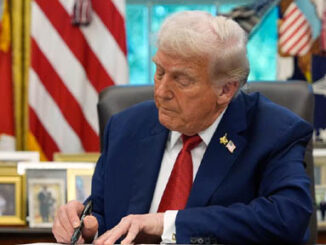
    WASHINGTON, D.C. (TIP): In a move that could adversely impact Indian professionals on visas in the U.S., President Donald Trump on Friday, September 19, 2025, signed a proclamation that will raise the fee for H1-B visas to a staggering $1,00,000 annually, the latest in the administration’s efforts to crack down on immigration.

    White House staff secretary Will Scharf said the H-1B non-immigrant visa programme is one of the “most abused visa” systems in the country’s current immigration system, and it is supposed to allow highly skilled laborers, who work in fields that Americans don’t work in, to come into the United States.

    The Trump administration said that the $1,00,000 fee is aimed at ensuring that the people being brought into the country are “actually very highly skilled” and do not replace American workers.

    The move is aimed at protecting American workers while ensuring that companies have a pathway to hire “truly extraordinary people” and bring them to the United States. Companies pay to sponsor H-1B applicants.

    “We need workers. We need workers. We need great workers, and this pretty much ensures that that’s what’s going to happen,” Mr. Trump said, as he signed the proclamation in the Oval Office in the presence of Commerce Secretary Howard Lutnick.

    Mr. Lutnick said that historically, the employment-based Green Card programme let in 2,81,000 people a year, and those people earned $66,000 a year on average and were five times more likely to participate in assistance programs of the government.

    “So we were taking in the bottom quartile, below the average American. It was illogical; it was the only country in the world that was taking in the bottom quartile,” Mr. Lutnick said.

    “We are going to stop doing that. We’re going to only take extraordinary people at the very top, instead of those trying to take jobs from Americans. They’re going to create businesses and create jobs for Americans. And this programme will raise more than $100 billion for the treasury of the United States,” he added.

    Mr. Trump said that the country will use that amount to cut taxes and pay down debt. “We think it’s going to be very successful,” he said.

    Mr. Lutnick added that the fee of $1,00,000 will be charged annually.

    The move is going to significantly impact Indian technology workers who are hired by tech companies and others on H1-B visas. The visas are valid for three years and can be renewed for another three years.

    If a company sponsors an employee for the Green Card, the visas can be renewed till the permanent residency comes through. However, Indians on work visas in the U.S. are caught in a decades-long wait for Green Cards and the new move could have an impact on whether they can continue to stay in the US if their companies decide not to pay the $1,00,000 fee annually now required to retain the visas.

    “So the whole idea is, no more will these big tech companies or other big companies train foreign workers. They have to pay the government $1,00,000, then they have to pay the employee. So it’s just not economic. If you’re going to train somebody, you’re going to train one of the recent graduates from one of the great universities across our land, train Americans. Stop bringing in people to take our jobs. That’s the policy here. And all of the big companies are on board. We’ve spoken to them about it,” Mr. Lutnick said.

    Mr. Trump said that the tech companies “love it. They really love it. They really love it. They need it”.

    “The main thing is, we’re going to have great people coming in.” Mr. Trump also signed an executive order entitled ‘The Gold Card’, aimed at setting up a new visa pathway for foreigners of extraordinary ability who are committed to supporting the United States.

    Under the Gold Card programme, individuals who can pay $1 million to the U.S. Treasury, or $2 million if a corporation is sponsoring them, will get access to expedited visa treatment and a path to a Green Card in the country.

    “We’re taking in hundreds of billions of dollars. The Gold Card will be taking in hundreds of billions of dollars, and companies will be able to keep some people they need. They need people of expertise, great expertise. I think it’s going to be a fantastic thing, and we’re going to take that money and we’re going to reduce taxes, we’re going to reduce debt,” Mr. Trump said.

    When asked if the new $1,00,000 fee will apply to the H1-B visa holders already in the country, to renewals or to those applying for the first time from abroad, Mr. Lutnick said, “Renewals, first times, the company needs to decide. Is that person valuable enough to have $1,00,000-a-year payment to the government, or they should head home and go hire an American.

    “It can be a total of six years, so $1,00,000 a year. So either the person is very valuable to the company and America, or they’re going to depart and the company is going to hire an American. That’s the point of immigration — hire Americans and make sure the people coming in are the top, top people. Stop the nonsense of letting people just come into this country on these visas that were given away for free. The President is crystal clear. Valuable people only for America. Stop the nonsense,” Mr. Lutnick said.

    On whether the technology CEOs, who hire foreign workers on H1-B visas, are concerned about the new move, Mr. Trump said they’re going to be very happy.

    “Everyone’s going to be happy. And we’re going to be able to keep people in our country that are going to be very productive people. And in many cases, these companies are going to pay a lot of money for that, and they’re very happy about it,” he said.
    (Source: PTI)

  • US attorney Erik Siebert under pressure to charge New York AG Letitia James in mortgage fraud case is resigning, say sources

    US attorney Erik Siebert under pressure to charge New York AG Letitia James in mortgage fraud case is resigning, say sources

    WASHINGTON, D.C. (TIP): Erik Siebert, a federal prosecutor in Virginia whose monthslong mortgage fraud investigation into New York Attorney General Letitia James has not resulted in criminal charges, is resigning under pressure from the Trump administration, two people familiar with the matter told The Associated Press on Friday, September 19.

    Siebert is leaving his position amid a push by Trump administration officials to bring charges against James, a perceived adversary of the president who has successfully sued him for fraud. The people who confirmed his plans to resign spoke on the condition of anonymity because they were not authorized to discuss the matter.

    It was not immediately clear Friday afternoon who would replace Siebert, who was nominated by Trump to the top job in the office after having worked there for more than a decade.

    It comes shortly after Trump said Siebert should be removed as head of the prestigious Eastern District of Virginia U.S. office. Siebert’s top deputy, Maya Song, is also leaving her position as first assistant U.S. attorney and will work as a line prosecutor, one of the people familiar with the matter said.

    Trump administration officials have been aggressively pursuing allegations against James arising from alleged paperwork discrepancies on her Brooklyn townhouse and a Virginia home. The Justice Department has spent months conducting the investigation but has yet to bring charges, and there’s been no indication that prosecutors have managed to uncover any degree of incriminating evidence that could support bringing an indictment.

    James has long been a particular source of outrage for Trump, in part because of a lawsuit she filed against him and his company that resulted in a massive financial penalty. That penalty was thrown out last month by an appeals court that narrowly upheld a judge’s finding that Trump had engaged in fraud by exaggerating his wealth for decades.

    The case has taken a series of unorthodox turns. It emerged last month that Ed Martin, who helms the Justice Department’s Weaponization Working Group and is helping coordinate the investigation, had sent a letter urging James to resign from office “as an act of good faith” after starting his mortgage fraud investigation of her. He later turned up outside James’ Brooklyn townhouse in a “Columbo”-esque trench coat. A New York Post writer at the scene observed him tell a neighbor: “I’m just looking at houses, interesting houses. It’s an important house.”

    James’ lawyer, Abbe Lowell, told Martin in a letter that the request for James’ resignation defied Justice Department standards and codes of professional responsibility and legal ethics.

    The Justice Department “has firm policies against using investigations and against using prosecutorial power for achieving political ends,” Lowell wrote. “This is ever more the case when that demand is made to seek political revenge against a public official in the opposite party.”

    A former District of Columbia police officer, Siebert joined the Eastern District of Virginia, an elite Justice Department prosecution office with a history of sophisticated national security and criminal cases, in 2010. He was nominated to the role of U.S. attorney by Trump this year with the backing of the state’s two Democratic senators, Mark Warner and Tim Kaine.
    (With inputs from AP )

  • Zohran Mamdani likely to be New York’s next mayor unless 2 of his opponents quit race: Trump

    Zohran Mamdani likely to be New York’s next mayor unless 2 of his opponents quit race: Trump

    US President denies encouraging any candidates to drop out but says the race is winnable if it is one-on-one

    WASHINGTON, D.C. (TIP): US President Donald Trump has said he thinks Democrat Zohran Mamdani is likely to become New York City’s next mayor unless two of the three major candidates running against him drop out of the race.

    But the Republican didn’t say which two candidates he’d like to see quit. Trump said “No” when he was asked by a reporter on Thursday, September 4  night if he’d urged or encouraged any of the candidates in the race to drop out, but went on to say he would like to see that happen.

    “I don’t think you can win unless you have one-on-one, and somehow he’s gotten a little bit of a lead,” Trump said of Mamdani.

    “I have no idea how that happened.”

    The president, who spoke as he hosted a dinner at the White House with tech executives, went on, “I would like to see two people drop out and have it be one-on-one, and I think that’s a race that could be won.”

    Mamdani, a 33-year-old democratic socialist, has been the presumptive favorite in the election since soundly beating former governor Andrew Cuomo in the Democratic primary in June.

    But Cuomo is still on the ballot as an independent, as is incumbent Mayor Eric Adams. Joining those three Democrats in the field is Republican Curtis Sliwa, the founder of the Guardian Angels crime patrol group.

    Recently, intermediaries for Trump reached out to people close to Adams to talk about whether he would consider abandoning his reelection campaign to take a federal job, according to people familiar with those conversations who spoke to The Associated Press on condition of anonymity because of the private nature of the talks.

    On a recent trip to Miami, Adams met with Steve Witkoff, a former real estate developer in New York who is now one of Trump’s main diplomatic envoys in Washington, according to one of the people briefed on the discussions.

    Adams acknowledged meeting with “several political figures” on his Florida trip, which he said was to “deal with some personal issues.” But he has repeatedly insisted he won’t quit.

    Adams reiterated his intention of staying in the race Thursday, adding that he wasn’t bothered by growing calls for him to end his campaign.

    “No pressure, no diamonds,” Adams told reporters at an event touting an endorsement from some Muslim leaders.

    “Just because people yell at you and call your names, and just because a number of people ask you to step down or don’t do what you believe, you’re supposed to succumb to that? That’s not what I do.”       Adams’ campaign was deeply wounded when he was indicted on corruption charges last year, then developed a warm relationship with Trump that bothered many Democrats in one of the country’s most liberal cities.

    There was further backlash from Democrats after the Justice Department said it was dropping the case so that Adams could assist with Trump’s immigration crackdown.

    At a news conference on Thursday, September 4,  Cuomo called on Adams to drop out. “If Mamdani is the existential threat, if you believe that, then at a point you should defer to the strongest candidates,” Cuomo said.

    Sliwa, meanwhile, has cast himself as the best candidate to take on Mamdani.

    “The assumption here is that Eric Adams’ voters, if he does drop out, are all going to jump to Cuomo. That ain’t happening,” Sliwa said in an interview.

    “There’s a lot of anger toward Cuomo. They’ve been going back and forth like two scorpions in a brandy glass.”

    Sliwa added that he also isn’t quitting, and said no one from the Trump administration had reached out yet to urge him to do so.

    “I can assure you for 9,852nd time in this campaign I’ve had to answer this: I’m not dropping out. I’m in it until November 4,” he said.

    “I don’t care if people drop out. I’d encourage them to stay in. Let people decide. That’s what democracy is about, a vote.”

  • Impact of U.S. Tariffs on India’s IT Sector and STEM Employment

    Impact of U.S. Tariffs on India’s IT Sector and STEM Employment

    “The imposition of steep U.S. tariffs on Indian goods in 2025 marks a new chapter in bilateral trade tensions. While the tariffs primarily target labor-intensive goods such as textiles, gems, and leather, technology services—which underpin India’s STEM workforce—remain exempt. The broader risks to Indian IT professionals arise from tightening U.S. visa policies, macroeconomic uncertainty, and automation trends. India’s growing domestic technology ecosystem, along with market diversification and the expansion of Global Capability Centers (GCCs), provides resilience. Long-term challenges, however, include skills mismatches and an oversupply of graduates.”

    By H S Panaser

    In August 2025, the United States imposed a 50% tariff on a wide range of Indian goods, citing India’s continued purchases of Russian oil. Although pharmaceuticals and technology services were exempt, the move strained relations between the two democracies.

    India–U.S. trade in 2024 stood at $212.3 billion, with goods trade totaling $128.9 billion and services trade at $83.4 billion. The U.S. goods deficit with India rose to $45.8 billion in 2024, while services trade remained roughly balanced. Against this backdrop, tariffs represent both an economic and geopolitical flashpoint.

    Key Impacts

    Trade & Economy

    • Tariffs on Indian goods increase costs for American companies in labor-intensive sectors, potentially reducing discretionary spending on IT services.
    • Indian exports in textiles, leather, and gems face near-term declines, with ripple effects on employment in those industries.

    STEM Employment in India

    • Direct impact on IT jobs is limited, as technology services are exempt from tariffs.
    • Indirect effects include slower growth in IT projects due to weaker U.S. business sentiment.
    • Global Capability Centers (GCCs) remain strong, with American firms continuing to hire aggressively in India.

    STEM Employment in the U.S.

    • The larger challenge comes from tightening H-1B visa policies, which could increase wage requirements and prioritize higher-paying roles.
    • Indian IT professionals face rising competition in a saturated U.S. job market, along with layoffs in major tech firms.
    • Automation and AI adoption threaten entry-level coding jobs, shifting demand toward advanced roles in AI integration, cloud computing, and cybersecurity.

    Visa & Policy Issues

    • H-1B restrictions add uncertainty for Indian students and graduates in the U.S.
    • Some Indian professionals may increasingly turn to Canada, the U.K., or Australia, which offer more favorable immigration policies.

    Opportunities for India

    • Domestic Technology Growth: India’s IT sector is expanding rapidly, with government initiatives like Digital India and foreign investment in AI and semiconductor hubs.
    • Market Diversification: New trade agreements with the U.K., UAE, Australia, and talks with the EU reduce reliance on the U.S. market.
    • Global Capability Centers: GCCs remain the biggest source of new tech jobs, offering global exposure and competitive salaries.
    • Upskilling Momentum: Industry-led reskilling programs are addressing gaps in AI, machine learning, and cybersecurity.

    Challenges & Risks

    • Skills Mismatch: Despite producing millions of STEM graduates annually, many lack high-demand skills in data science, AI, and advanced analytics.
    • Oversupply of Graduates: The volume of STEM graduates far exceeds immediate demand, pushing many to seek opportunities abroad.
    • Geopolitical Uncertainty: U.S.–India trade frictions could worsen, creating long-term instability in cross-border tech collaboration.
    • Automation Pressure: Rapid adoption of AI reduces demand for routine IT jobs, forcing constant adaptation.

    Impact of AI on IT Job profiles in India and the U.S

    India

    • Massive job displacement underway—India’s IT and BPO sector, which employs millions, faces major disruption. Up to 30% of roles in writing, coding, and imaging may be impacted by AI by 2030, including around 640,000 low‑skilled service jobs, while growth in higher-skilled roles will lag behind.(Wikipedia)
    • Acute skills shortage—For every 10 generative AI roles, there’s just one qualified engineer in India, highlighting a yawning gap between demand and talent.(The Times of India)
    • Call center transformations—AI tools like accent-correcting software and co-pilot assistants are enhancing efficiency, but also displacing entry-level roles. Industry leaders stress reskilling in empathy and communication to preserve human-centric value. (The Washington Post)
    • TCS takes action—Tata Consultancy Services (TCS) has formed a dedicated AI & Services Transformation Unit, signaling a strategic pivot toward AI-driven solutions even as the firm clusters layoffs.(Reuters)
    • HCL Tech’s approach—HCL is employing AI to augment rather than replace jobs, investing heavily in upskilling: 217,000 employees completed 8.6 million training hours to stay relevant in an AI-first world. (The Times of India)

    United States

    • Entry-level job losses—A Stanford study found that young U.S. workers (ages 22–25) in software development and support roles saw nearly a 20% drop in employment by mid-2025, while older professionals saw gains—highlighting AI’s uneven impact across age and skill levels. (TechRadar)
    • Salesforce slashes support jobs—Salesforce cut 4,000 customer support roles (~45% of its team), as AI agents took over routine tasks, though human oversight remains essential.( The Times of India and San Francisco Chronicle)
    • AI complementing, not replacing—U.S. labor leadership stresses AI is a tool—not a threat. Workforce training initiatives under initiatives like “America’s AI Action Plan” emphasize reskilling and AI literacy to prepare workers. (New York Post)
    • Skill demand shifting—Recent research highlights a surge in demand (and wage premiums) for AI‑complementary skills like digital literacy, teamwork, and resilience—while purely routinized roles face decline. (arXiv)
    • Generative AI boosts productivity—but raises concern—A study shows 97% of IT staff use tools like ChatGPT, which significantly boosts productivity—but also correlates strongly with growing job security anxiety. (arXiv)

    In both countries, AI is aggressively transforming job profiles—eliminating routine roles while creating a premium on AI‑integrated, human‑intensive skills. Upskilling is key to survival and success.

    Conclusion & Recommendations

    The U.S.–India tariff dispute is unlikely to directly reduce India’s STEM employment, as technology services remain exempt. However, the real risks lie in tightening U.S. visa policies, weaker client spending, and automation.

    India can mitigate these challenges by:

    • Accelerating upskilling programs in AI, cloud, and cybersecurity.
    • Expanding domestic digital projects to absorb STEM graduates.
    • Strengthening alternative export markets to reduce reliance on U.S. demand.
    • Encouraging companies to leverage GCCs as hubs of innovation, not just cost centers.

    By focusing on resilience, diversification, and skills development, India can turn trade friction into an opportunity for long-term leadership in global technology.

    References

    • Office of the U.S. Trade Representative (2025)
    • NDTV, Times of India, Al Jazeera (2025)
    • Center for Strategic and International Studies (CSIS), Newsweek (2025)

    (As a columnist, H.S. Panaser brings a wealth of experience in global business, technology, and trade. He is the Chair of the Global Indian Trade and Cultural Council and President of the Global Indian Diaspora Alliance, with a deep understanding of the U.S.-India relationship. His expertise as a consultant in Global Business Development, Pharmaceuticals, and AI in Healthcare provides a unique and informed perspective on current events. Gitcc.USA@gmail.com)

  • PM Modi to skip UNGA session in  September; Jaishankar to address the world body

    PM Modi to skip UNGA session in September; Jaishankar to address the world body

    NEW DELHI / NEW YORK (TIP): Prime Minister Narendra Modi will not address the General Debate at the annual high-level session of the United Nations General Assembly later this month, according to a revised provisional list of speakers issued in United Nations. The 80th session of the U.N. General Assembly will open on September 9. The high-level General Debate will run from September 23-29, with Brazil as the traditional first speaker of the session, followed by the U.S.

    U.S. President Donald Trump will address world leaders from the iconic UNGA podium on September 23, his first address to the UN session in his second term in the White House.

    According to a revised provisional list of speakers for the high-level General Debate of the 80th session of the General Assembly released on Friday, September 5, 2025, India will be represented by a ‘Minister’.

    External Affairs Minister S Jaishankar will address the session on September 27.

    According to a previous provisional list of speakers issued in July, Mr. Modi was scheduled to address the General Debate on September 26. The heads of government of Israel, China, Pakistan and Bangladesh are scheduled to address the UNGA General Debate on September 26.

    The UNGA list of speakers for the General Debate is provisional and there is always possibility of changes in schedules and speakers ahead of the commencement of the high-level week. Considered the “busiest diplomatic season” of the year at the United Nations Headquarters, the high-level session opens in September annually.

    The session this year comes amid the continued Israel-Hamas war as well as the Ukraine conflict. The theme for the 80th session is ‘Better together: 80 years and more for peace, development and human rights’.

    The session will open with a meeting to ‘Commemorate the 80th Anniversary of the United Nations’ on September 22.

    Marking the 30th anniversary of the Fourth World Conference on Women, the UN General Assembly will convene a high-level meeting centered on the theme “Recommitting to, resourcing and accelerating the implementation of the Beijing Declaration and Platform for Action to achieve gender equality and the empowerment of women and girls”.

    The meeting will reflect on progress since the landmark 1995 conference in Beijing and highlight achievements, best practices, gaps, and ongoing challenges in advancing gender equality worldwide, the UN said.

    U.N. Secretary-General Antonio Guterres will convene a Climate Summit on September 24 to serve as a platform for world leaders to present their new national climate action plans and seize the benefits of the new clean energy era.

    Other high-level meetings to be held during the week include Summit for a Sustainable, Inclusive and Resilient Global Economy; Noncommunicable Diseases and Mental Health and Well-being; 30th Anniversary of the World Programme of Action for Youth; Launch of the Global Dialogue on AI Governance; International Day for the Total Elimination of Nuclear Weapons; and Situation of Rohingya Muslims and other minorities in Myanmar.

    (Source: PTI)

  • Trump names Sergio Gor as the next U.S. ambassador to India

    Trump names Sergio Gor as the next U.S. ambassador to India

    WASHINGTON, D.C. (TIP): President Donald Trump said on Friday, August 22, he would nominate Sergio Gor, one of his closest aides, to be the next U.S. ambassador to India, where he will oversee frosty relations that have worsened with the planned doubling of U.S. tariffs on India next week.

    Mr. Gor, who is currently the director of the White House Presidential Personnel Office, would also serve as a special envoy for South and Central Asian affairs.

    Mr. Trump said in a post on his Truth Social account that Mr. Gor would remain in his current position until he is confirmed for the India post by the U.S. Senate.

    “Sergio is a great friend, who has been at my side for many years. He worked on my Historic Presidential Campaigns, published my Best-Selling Books, and ran one of the biggest Super PACs, which supported our Movement,” Mr. Trump said, lauding Mr. Gor’s work in hiring staff for his second term.

    “For the most populous Region in the World, it is important that I have someone I can fully trust to deliver on my Agenda and help us, MAKE AMERICA GREAT AGAIN,” Mr. Trump wrote.

    U.S.-India ties have been strained by Mr. Trump’s trade war, with talks on lower tariff rates collapsing after India, the world’s fifth-largest economy, resisted opening its vast agricultural and dairy sectors. Bilateral trade between the two countries is worth more than $190 billion.

    Mr. Trump first imposed additional tariffs of 25% on imports from India, then said they would double to 50% from August 27 as punishment for New Delhi’s increased purchases of Russian oil. Trump has not imposed similar tariffs on China, the biggest purchaser of Russian oil.

    U.S. Treasury Secretary Scott Bessent on Tuesday, August 19, accused India of profiteering from its sharply increased purchases of Russian oil during the war in Ukraine and said Washington viewed the situation as unacceptable.

  • Trump confirms plans for ‘economically severe’ sanctions if Russia doesn’t move on Ukraine

    Trump confirms plans for ‘economically severe’ sanctions if Russia doesn’t move on Ukraine

    WASHINGTON, D.C. (TIP): President Trump says Russia needs to show willingness to seriously talk about the end of the war in Ukraine, as he travels to his meeting with Putin in Anchorage, Alaska. Trump also confirms his earlier threat of “severe” consequences for Russia if it fails to show willingness to seriously talk about the end of war in Ukraine.

    He says:
    “Economically severe. It will be very severe.

    I’m not doing this for my health, okay, I don’t need it. I’d like to focus on our country, but I’m doing this to save a lot of lives.

    Yeah, very severe.”

    He ends the briefing here.

    Meanwhile, ‘Time to end the war. We are counting on America,’ Zelenskyy says, as he hopes for a trilateral summit with Trump, Putin.
    Ukrainian president Volodymyr Zelenskyy has just posted on social media, saying he expects to get a report from the Ukrainian intelligence services today “on the current intentions of the Russian side and its preparations for the meeting in Alaska.”

    Directly responding to Trump’s earlier comments, he then says:
    Indeed, high stakes.
    He adds:
    “The key thing is that this meeting should open up a real path toward a just peace and a substantive discussion between leaders in a trilateral format – Ukraine, the United States, and the Russian side.

    It is time to end the war, and the necessary steps must be taken by Russia.

    We are counting on America. We are ready, as always, to work as productively as possible.”
    (Agencies)

  • Trump announces US will develop ‘massive’ oil reserves in Pakistan, says they might sell to ‘India some day’

    Trump announces US will develop ‘massive’ oil reserves in Pakistan, says they might sell to ‘India some day’

    WASHINGTON, D.C. (TIP): Hours after announcing 25 per cent tariffs with additional penalties on India, US President Donald Trump on Wednesday, July 30, announced a trade deal with Pakistan, touting a joint initiative to develop oil reserves in India’s terror-harboring neighbor and even floated the idea that “some day” Islamabad might sell oil to New Delhi. In a post on Truth Social, Trump stated that the United States and Pakistan are currently in the process of selecting the oil company for the partnership.

    “We have just concluded a Deal with the Country of Pakistan, whereby Pakistan and the United States will work together on developing their massive Oil Reserves. We are in the process of choosing the Oil Company that will lead this Partnership. Who knows, maybe they’ll be selling Oil to India some day!” Trump stated.

    The remarks came after Trump announced a 25 per cent tariff and additional penalty on Indian imports starting August 1, citing Washington’s trade deficit with New Delhi and its purchase of Russian oil.

    Trump, in his post, further stated that he had conversations on trade deals with leaders of many countries, noting “all of whom want to make the United States extremely happy.”

    “We are very busy in the White House today working on Trade Deals. I have spoken to the Leaders of many Countries, all of whom want to make the United States “extremely happy.” I will be meeting with the South Korean Trade Delegation this afternoon. South Korea is right now at a 25% Tariff, but they have an offer to buy down those Tariffs. I will be interested in hearing what that offer is,” the post read.

    He also noted that many countries are currently making offers to the US for “Tariff reduction.”

    “Likewise, other Countries are making offers for a Tariff reduction. All of this will help reduce our Trade Deficit in a very major way. A full report will be released at the appropriate time. Thank you for your attention to this matter. MAKE AMERICA GREAT AGAIN!” it further read.
    (Source: ANI)

  • Canadian PM Mark Carney breaks silence on US tariffs

    Canadian PM Mark Carney breaks silence on US tariffs

    • Prabhjot Singh in Toronto

    OTTAWA (TIP): August 1 would be marked as a watershed day in the bilateral relations between two strong neighbors—Canada and the USA. While the USA President Donald Trump has announced to increase the tariffs on those Canadian exports that are not covered under one of the world’s second largest free trade agreements—the Canada-United States-Mexico Agreement (CUSMA)—from 25 percent to 35 percent, the Canadian Prime Minister, Mark Carney, in a statement issued shortly after midnight, has not only expressed his government’s disappointment over the US move but has also firmly reiterated his country’s commitment to be its own best customer.

    Canada’s refusal to bow to tariff diktats has come after the federal and provincial governments have generally, by cutting across their political affiliations, come together to fight the US tariffs unitedly. This is the second major action of the Mark Carney government after it decided to recognize Palestine, which appears to have prompted the US president to issue an executive order on Thursday night imposing heavier tariffs on Canadian imports.

    In his statement, Mark Carney made it clear that while Canada would continue to negotiate with the USA on “our trading relationship, the Canadian government is less focused on what we can control, building Canada strong. The federal government, provinces, and territories are working together to cut down trade barriers to build one Canadian economy. We are developing a series of major nation-building projects with provincial, territorial, and indigenous partners. Together, these initiatives have the potential to catalyze over half a trillion dollars of new investments in Canada.

    “Canadians will be our own best customers, creating more well-paying careers at home, as we strengthen and diversify our trading partnerships throughout the world. We can give ourselves more than any foreign government can ever take away by building with Canadian workers and by using Canadian resources to benefit all Canadians,” Mark Carney said in his statement.

    The statement has evoked mixed reactions from various quarters in Canada. Most of the critics of the new Liberal government have lauded Prime Minister Mark Carney for his bold stand, by hailing his statement. Of late, Canada has been gradually moving away from the shadow of the US on various contentious and important issues, including its defense build-up and its fast-growing friendly policies towards the European Union.

    Mark Carney’s statement also says that “the US application of CUSMA means that the US average tariff rate on Canadian goods remains one of its lowest for all its trading partners. Other sectors of our economy—including lumber, steel, aluminum, and automobiles—our export markets are, however, heavily impacted by US duties and tariffs. For such sectors, the Canadian government will act to protect Canadian jobs, invest in our industrial competitiveness, buy Canadian, and diversify our export markets.

    While reacting to the US president’s allegation that Canada has done little to check the smuggling of fentanyl across the borders, Mark Carney’s statement stated, “The United States has justified its most recent trade action based on the cross-border flow of fentanyl, even though Canada accounts for only 1 percent of the US fentanyl imports and has been working intensely to further reduce these volumes. Canada’s government is making historic investments in border security to arrest drug traffickers, take down transnational gangs, and end migrant smuggling. These include thousands of new law enforcement and border security officers, aerial surveillance, intelligence and security operations, and the strongest border legislation in our history. We will continue working with the United States to stop the scourge of fentanyl and save lives in both countries,” the statement said.

  • US Tariff Threats and Geopolitical Penalties on India: Strategic, Economic, and Diplomatic Implications

    US Tariff Threats and Geopolitical Penalties on India: Strategic, Economic, and Diplomatic Implications

    By H S Panaser

    The recent pronouncements by the United States regarding the potential imposition of a 25% tariff on all Indian imports, coupled with an unspecified “penalty” tied to India’s energy purchases from sanctioned countries like Russia or Iran, signal a significant shift in bilateral relations. This aggressive stance carries profound strategic, economic, and diplomatic implications for both nations. This analysis delves into the potential gains and losses, supported by market data and strategic considerations.

    For India: Potential Losses and Mitigating Factors

    The direct economic impact of a 25% tariff on India’s exports to the U.S., which stood at approximately $87 billion in 2024, cannot be overstated.

    1. Export Disruption and Economic Headwinds:
    • Reduced Competitiveness: A 25% tariff would immediately erode the price competitiveness of Indian goods in the U.S. market. Sectors particularly vulnerable include:
      • Textiles and Apparel: India is a major exporter of textiles, and a tariff would disadvantage its products against those from countries with lower or no tariffs, potentially leading to job losses in this labor-intensive sector.
      • Pharmaceuticals: India is globally recognized as the “pharmacy of the world,” supplying 20% of global generic medicines by volume and 40% of generic demand in the United States. With the U.S. accounting for over 30% of India’s pharma exports, the inclusion of pharmaceuticals in the tariff bracket would be particularly damaging. Disruption here could not only impact India’s export earnings but also global drug supply chains. Presently this segment seems to be out of tariff list.
      • Gems and Jewelry: This sector relies heavily on the U.S. market, and tariffs could significantly reduce demand.
      • Auto Parts: As part of global automotive supply chains, Indian auto parts exports would face competitive challenges.
      • IT Services: While less directly impacted by goods tariffs, broader trade tensions could affect outsourcing contracts and investor sentiment in India’s IT sector.
    • GDP Impact: Economists at ICRA have indicated that such a tariff, being higher than previously anticipated, is “likely to pose a headwind to India’s GDP growth.” While specific percentage points are hard to predict without the exact scope and duration, significant disruption to a major trading partner would undoubtedly exert downward pressure on economic expansion.
    • Job Losses: Export-oriented industries, especially labor-intensive ones, would likely face contraction, leading to potential job losses.
    1. Investor Confidence Erosion:
    • Trade instability and escalating diplomatic tensions can deter foreign direct investment (FDI) into India. Investors seek predictability and stable policy environments, and recurring tariff threats undermine this confidence. This could impact not only new investments but also expansions by existing foreign companies in India.
    1. Energy Security Penalties and Geopolitical Constraints:
    • Disruption of Energy Contracts: The “penalty” linked to energy purchases from sanctioned nations like Russia and Iran directly targets India’s energy security strategy. India’s reliance on Russian oil has surged dramatically, now accounting for 35-40% of total crude imports, up from a mere 0.2% before the Russia-Ukraine war. This surge was primarily driven by attractive discounts (e.g., Urals crude trading at a substantial discount to Brent). Penalties could disrupt long-term contracts, forcing India to seek more expensive alternative sources, thus increasing its energy import bill and inflationary pressures.
    • Risk of Secondary Sanctions: The U.S. has a history of imposing secondary sanctions on entities dealing with sanctioned countries. While India has largely navigated these, an explicit “penalty” suggests a more direct attempt to curtail these purchases, potentially impacting Indian refiners like Nayara Energy (which has already faced EU sanctions-related challenges).
    • Limited Strategic Autonomy: U.S. pressure to conform to Western sanctions, particularly on energy, could be perceived as an attempt to limit India’s strategic autonomy in foreign policy and energy diplomacy. This is a sensitive point for India, which champions a multi-aligned foreign policy. 

    Potential Gains (Mitigating Factors & Strategic Shifts):

    1. Assertion of National Autonomy:
    • Maintaining its stance on diverse energy sourcing, despite U.S. pressure, reinforces India’s image as a sovereign decision-maker. This could resonate domestically and with other nations seeking to resist external pressures.
    1. Accelerated Diversification of Export Markets:
    • The tariff threat serves as a strong catalyst for India to intensify efforts to diversify its export markets. This strategy is already underway with ongoing negotiations for Free Trade Agreements (FTAs) with regions like the UK (where the India-UK FTA is expected to significantly boost agricultural exports) and the EU, alongside a focus on Southeast Asian and African markets. This proactive diversification would reduce over-reliance on any single market. Indian electronic contract manufacturers, for instance, are already expanding globally through acquisitions to capitalize on supply chain shifts away from China, aiming to broaden their client base beyond the U.S.
    1. Boost to Domestic Industry and “Make in India”:
    • Reduced access to the U.S. market could prompt Indian producers to focus more on domestic demand, fostering the “Make in India” initiative. This could strengthen local supply chains and industrial capabilities.
    • The Indian government’s “Production Linked Incentive (PLI)” schemes for various sectors, including pharmaceuticals and electronics, are already designed to boost domestic manufacturing and reduce import dependency, aligning with this potential shift.

    For the United States: Potential Gains and Losses

    The U.S. seeks to use these measures as leverage but faces significant risks to its broader strategic objectives.

    1. Potential Gains:
    • Diplomatic Leverage and Policy Alignment: The tariff threats serve as a powerful diplomatic tool to pressure India into closer alignment with U.S. foreign policy objectives, particularly regarding sanctions against Russia and Iran.
    • Protectionist Objectives: Higher tariffs could offer short-term protection to specific U.S. domestic industries, such as textiles or chemicals, from Indian competition. This aligns with a broader protectionist trade agenda.
    • Geopolitical Messaging: A strong stance against India’s energy purchasing decisions sends a clear message to other allies and partners about the potential consequences of defying U.S. sanctions or strategic priorities. This reinforces the perception of U.S. leadership in global economic governance.
    1. Potential Losses:
    • Damage to Bilateral Relations and Strategic Alliance: Imposing tariffs and penalties risks significantly straining the strategic partnership between the U.S. and India. At a time when the U.S. is actively seeking to counterbalance China’s influence in the Indo-Pacific, alienating a key partner like India could undermine its regional strategy and the Quad alliance.
    • Retaliatory Tariffs: India has historically responded to U.S. trade actions with its own tariffs. While Indian officials have indicated caution, retaliatory tariffs on U.S. agricultural exports (e.g., almonds, apples), Harley-Davidson motorcycles, or technology firms (like Amazon, Apple, Google, which have significant investments in India) are a real possibility. This could hurt U.S. exporters and consumers.
    • Economic Backlash for U.S. Companies: Major U.S. companies with substantial investments and market presence in India could face significant regulatory hurdles, public backlash, or reduced demand. This includes tech giants, e-commerce platforms, and fast-food chains.
    • Supply Chain Disruptions: India is an integral part of several global supply chains, particularly in pharmaceuticals and IT services. Disruptions caused by tariffs could negatively impact U.S. importers of Indian goods and services, potentially leading to increased costs and supply shortages. For instance, India accounts for a significant portion of the U.S.’s generic drug supply, and tariffs could lead to higher drug prices or availability issues.
    • Increased Inflation for U.S. Consumers: As noted by economists, a 25% tariff means that U.S. importers will likely pass on a significant portion of these increased costs to American consumers, leading to higher prices for a range of goods. The Washington Center for Equitable Growth analysis suggests such policies could raise US manufacturers’ costs by 2% to 4.5%, ultimately passed on to consumers.

    Strategic Outlook and Market Analysis

    The current threat of tariffs and penalties is widely perceived as a negotiating tool rather than a definitive policy. The August 1st deadline set by the U.S. appears to be a lever to expedite a bilateral trade agreement with India, which has been under negotiation for months. Indian Commerce and Industry Minister Piyush Goyal has stated that India’s priority is to protect national interests, particularly those of farmers, entrepreneurs, and MSMEs, and that India will not negotiate under deadlines.

    • India’s Resilience: India’s cautious approach to trade negotiations, learning from challenges in U.S. agreements with Japan and other nations, indicates a commitment to securing beneficial terms rather than rushing a deal. India’s recent success in finalizing the Comprehensive Economic and Trade Agreement (CETA) with the UK demonstrates its capability to strike significant trade deals.
    • U.S. Strategic Imperatives: The U.S. faces a critical balancing act. While seeking to exert influence over India’s energy choices and trade policies, it must weigh the significant cost of alienating India, a burgeoning economic power and a crucial strategic partner in its Indo-Pacific strategy aimed at countering China. The U.S. also stands to gain from India’s growing energy demand, with U.S. LNG exports to India reaching a record 19% of India’s total LNG imports in 2024.
    • Bilateral Trade Imbalance: The U.S. ran a $45.7 billion trade deficit in goods with India last year, importing more than it exported. This imbalance is a key driver behind the U.S.’s protectionist stance.
    • Temporary Measure? Indian government sources anticipate that any imposed tariffs would be a temporary measure, given the progress of ongoing trade talks, with a U.S. delegation expected in Delhi by mid-August for further discussions. The aim remains a comprehensive bilateral trade agreement by October-November.

    In conclusion, while the immediate threat of tariffs creates uncertainty and potential economic headwinds for India, both nations have significant incentives to de-escalate tensions and reach a mutually beneficial trade agreement. The broader geopolitical landscape, particularly the need for a strong Indo-Pacific alliance, will likely steer the U.S. towards a resolution that avoids a severe and lasting rupture in relations. India, meanwhile, continues to strategically diversify its trade and energy partners, strengthening its resilience against external pressures.

     (H S Panaser: Chair, Global Indian Trade and Cultural Council,  Consultant Business Development: Pharmaceuticals, IT, Healthcare and AI, EDP  Project Management,  President, Global Indian   Diaspora Alliance,  Prof. Harkishan Singh Foundation,  Columnist) 

  • Trump announces 35% tariffs on Canada

    Trump announces 35% tariffs on Canada

    WASHINGTON, D.C. (TIP): The United States will impose a tariff of 35 percent on goods imported from Canada starting Aug. 1, President Donald Trump said Thursday in a letter to Canadian Prime Minister Mark Carney posted on social media, injecting fresh turmoil into an already strained bilateral relationship.

    The announcement marked a setback in Carney’s efforts to negotiate a new economic partnership with the United States ahead of his self-imposed July 21 deadline. Canadian officials have been seeking a deal that would lift tariffs already imposed by the U.S. In a social media post late Thursday, July 10, Carney said he would work toward a “revised” deadline.

    “Throughout the current trade negotiations with the United States, the Canadian government has steadfastly defended our workers and businesses,” the prime minister said. “We will continue to do so as we work towards the revised deadline of August 1.” Trump’s missive is the latest in a series of tariff announcements, delays and reversals that have created uncertainty in international trade for much of the year. On Monday, Trump threatened tariffs of between 25 percent and 40 percent on imports from 14 countries, including Japan and South Korea.

    Few countries are more exposed to Trump’s tariffs than Canada, which sends more than three-quarters of its exports to the U.S. Since his return to the White House, Trump has put Canada in his crosshairs, imposing several sets of tariffs that are weighing on its economy and threatening to use “economic force” to annex the country.

    In February, Trump announced a 25 percent tariff on Canadian goods — as well as those from Mexico — that went into effect the following month. Soon afterward, he exempted goods covered under the United States-Mexico-Canada Agreement. Canadian energy and potash were hit with a lower tariff of 10 percent.

    Trump’s Thursday letter did not specify whether the exemption would continue to apply under the new tariff rate. The White House did not immediately respond to a request for clarification.

    The new tariff rate is separate from those imposed or threatened on specific sectors, such as automobiles, copper, steel and aluminum, all of which the U.S. imports from Canada. Should Canada impose new tariffs on U.S. goods, then the U.S. will increase its tariffs that same amount added to the 35 percent rate, Trump said. Canada has imposed retaliatory tariffs on many U.S. goods, though it later rolled some of them back. Carney last month said he could adjust counter tariffs against U.S. steel and aluminum products “consistent with progress made” in the trade negotiations. He did not rule out retaliatory measures.

    Trump again insisted that tariffs levied on Canada are a response to the flow of fentanyl into the U.S., though there is little evidence that traffickers are smuggling the drug across the northern border in significant quantities. Less than 1 percent of fentanyl seized at or near U.S. land borders in the 2024 fiscal year came from Canada, according to data from U.S. Customs and Border Protection.

    “If Canada works with us to stop the flow of fentanyl, we will, perhaps, consider an adjustment,” Trump wrote. Canada has taken several steps to mollify Trump and address his concerns about fentanyl, even as it has stressed that the country is not a significant source of the drug. In December, the government unveiled a nearly $950 million plan to tighten security at the U.S.-Canada border and this year appointed a “Fentanyl Czar” to focus on the issue. Canadian officials have said they are not sure what more the Trump administration wants them to do.

    “Canada has made vital progress to stop the scourge of fentanyl in North America,” Carney said in social media post Thursday. “We are committed to continuing to work with the United States to save lives and protect communities in both our countries.”

    Trump has listed several other — and, at times, contradictory — justifications for the tariffs on Canada. These include the U.S. trade deficit with its northern neighbor, which he frequently overstates by more than $100 billion, and the country’s supply management system for dairy. His letter to Carney mentioned both grievances.

    Late last month, Canada rescinded a planned digital services tax on large tech companies that would have impacted firms such as Apple and Meta, after Trump called the levy a “blatant attack” on the U.S. and threatened to pull out of trade talks.

    Carney, a former central banker, was elected prime minister in April. He cast himself as the person best placed to handle Trump and the dramatic rupture in bilateral ties spurred by the president’s tariffs and annexation threats, and promised an “elbows up” approach to dealing with Trump, a hockey term describing a method of protection from an opposing player.

  • US House passes tax and immigration bill, sends it to President Trump

    US House passes tax and immigration bill, sends it to President Trump

    Legislation to extend tax cuts and fund border and defense programs would increase the national debt by close to $4 trillion over the next decade.

    WASHINGTON, D.C. (TIP): Republicans on Thursday notched the first major legislative victory of President Donald Trump’s second term, a mammoth tax and immigration agenda the GOP hopes will reshape the U.S. economy and unwind many of the Biden administration’s accomplishments, a Washington Post report says. The House, in a 218 to 214 vote, passed Trump’s so-called “One Big Beautiful Bill,” a $3.4 trillion measure to extend tax cuts from Trump’s first term and implement new campaign promises — such as eliminating income taxes on tips and overtime wages — while spending hundreds of billions of dollars on immigration enforcement and defense. It raises the country’s borrowing cap by $5 trillion, staving off a debt default that the Treasury was weeks away from breaching.

    The House’s approval sends the bill to Trump’s desk to be signed into law in time to beat a self-imposed July 4 deadline. The Senate passed its edition of the legislation Tuesday.

    “Any of these individual achievements would be historic victories for a Republican Congress or any Congress. And today we’re delivering on all of them in one big, beautiful bill. That’s what Americans can count on when we pass this legislation,” House Speaker Mike Johnson (R-Louisiana) said on the House floor.

    To offset the cost of the bill, the legislation cuts about $1 trillion from Medicaid, the federal health insurance program for low-income individuals and people with disabilities, and other health care programs. It reduces spending on anti-hunger programs, including SNAP, the Supplemental Nutrition Assistance Program formerly known as food stamps, by $185 billion.

    Nearly 17 million people will lose health care coverage or health care subsidies over the next decade if the bill becomes law, according to the nonpartisan Congressional Budget Office, and the bill would add roughly $4 trillion to the debt over the next decade, when factoring in debt service payments.

    The vote came after Minority Leader Hakeem Jeffries (D-New York) held the House floor for nearly nine hours to protest the measure, setting the record for the longest remarks by a party leader in the history of the lower chamber.

    “This bill is a deal with the devil,” Rep. Alexandria Ocasio-Cortez (D-New York) said earlier during the debate on the House floor. “It explodes our national debt. It militarizes our entire economy and it strips away health care and dignity of the American people.”

    Republicans heralded the legislation as a boost for the working class coalition that swept the party to victory in November’s elections, giving it unified control of Congress and the White House.

    “It is the principal vehicle for advancing President Trump’s America First agenda, unleashing a rising tide of prosperity, securing our border, modernizing our national defense and supercharging energy, agriculture, all the sectors of our economy that our government has kept in a choke hold for too long,” Budget Committee Chair Jodey Arrington (R-Texas) said during debate.

    As talks dragged on, leaders left open two votes for over five hours — a sign of the Republican conference’s dysfunction and also the furious backroom dealing to get Trump’s agenda over the finish line by an arbitrary July 4 deadline.

    Lawmakers spent Wednesday into the wee hours Thursday shuttling between talks with party leaders, Trump administration lieutenants and the president himself at the White House.

    But as Wednesday turned into Thursday morning, Johnson was still working to convince 10 lawmakers to vote to advance the bill. Republicans opened debate on the measure after 3 a.m.

    Holdouts said the prospect of forthcoming executive orders from the White House and another Republican budget bill helped ease some concerns.

    “The president is the most gifted and skilled negotiator and whip,” said Ways and Means Committee Chair Jason T. Smith (R-Missouri), one of the lead negotiators.

    Trump’s proposal to end taxes on tips — up to $25,000 — came from a Nevada restaurant server, the president bragged on the campaign trail. He often speaks about ending taxes on overtime during political events with production line workers. Trump pledged to exempt Social Security benefits from taxes; instead, Republicans passed a $6,000 bonus to the standard deduction for seniors.

    The GOP borrowed a Democratic proposal to launch savings accounts for newborns seeded with $1,000 of taxpayer money; Republicans in earlier versions of the legislation called them “Trump accounts.”

    “No one puts a deal together like President Trump. He’s a master. But I think one of the other persuasive things was just looking at the Democrats’ reaction to it,” said Rep. Warren Davidson (R-Ohio), who voted against an earlier iteration of the package. “Maybe the bill is better than I thought.”

    But for the lowest-income Americans the benefits of those provisions are wiped out by the cuts to social safety net programs, according to independent analyses of the bill, and its gargantuan debt impact could slow the U.S. economy.

    Republican Reps. Thomas Massie (Kentucky) and Brian Fitzpatrick (Pennsylvania) joined Democrats to vote against the measure.

    By 2033, the bottom 60 percent of U.S. taxpayers would be worse off because of the measure, the University of Pennsylvania’s Wharton Budget Model reported. The top 0.1 percent of taxpayers — those earning at least $5.1 million — would be more than $83,000 better off.

    “This bill is a middle finger to working people,” Rep. Jim McGovern (D-Massachusetts) said on the House floor.

    Republicans, citing their own rosy economic growth projections, insist that it would improve those household’s fortunes, and hundreds of billions of dollars of homeland security and defense spending would goose job-creating industries. Nearly $170 billion in the bill funds the Trump administration’s border and immigration crackdown and it would impose $69 billion in fees on immigrants and visitors to the country. An additional $160 billion would flow to the Defense Department, partially for Trump’s proposed “Golden Dome” continental missile defense system.

    The legislation would make permanent a trio of corporate tax deductions that make it easier for companies to invest in research and purchase new equipment while rescinding more than half a trillion dollars in clean energy programs from President Joe Biden’s 2022 Inflation Reduction Act.

    Many of the tax proposals changed as the bill pinged between the two chambers of Congress. The House passed legislation in May that had a smaller debt impact while cutting less from Medicaid.

    The Senate swiftly overhauled the measure, making it simultaneously more expensive and more punitive toward Medicaid. Republicans used the budget reconciliation process to bypass a Democratic filibuster in the Senate; that meant when the upper chamber sent its approved legislation back to the House, the lower chamber was unable to alter it and still beat Trump’s deadline. Amendments would have restarted many of the cumbersome processes needed to pass tax legislation on party lines.

    The Senate made the corporate tax cuts more generous and temporarily preserved some of the climate credits. On health care, it imposed strict limits on taxes that states charge medical providers as a roundabout way of collecting more federal Medicaid dollars.

    That prompted concern among some lawmakers about the fate of rural hospitals, which rely heavily on Medicaid patients.

    The Senate’s changes managed to frustrate both ends of the House’s GOP conference. From the center, moderates raged about the approach to health care spending.

    “I’m not happy with it at all,” raged Rep. Greg Murphy (R-North Carolina), a practicing physician. “That’s horrible policy.”

    From the right, lawmakers grumbled about the bill’s debt effects. A group of budget hawks in April extracted a promise from House Speaker Mike Johnson (R-Louisiana) that the amount in tax cuts would not exceed the amount of spending the bill cut.

    “It wasn’t achieved. It was failed,” harrumphed Rep. Chip Roy (R-Texas). “The Senate failed.”

    Members of the archconservative House Freedom Caucus circulated a three-page memo with a list of nearly two dozen deficiencies with the legislation at a Wednesday meeting at the White House.

    “Leave it to the Senate to find a way to aggravate both the moderates and the conservatives in the Freedom Caucus,” said Rep. Jeff Van Drew (R-New Jersey), who had concerns about cuts to health care programs. “That’s extraordinary that they did that. That is a real art and science to be able to aggravate everyone in the House. We had a really good bill, a good work product, got everybody on board, and they just had to play with it.” That White House meeting, though, seemed to be enough to unify Republicans.

    (Source: Washington Post)

  • ‘Not scared’, says Zohran Mamdani after Trump threatened to ‘arrest’ and ‘strip’ his citizenship

    ‘Not scared’, says Zohran Mamdani after Trump threatened to ‘arrest’ and ‘strip’ his citizenship

    NEW YORK (TIP): Trump said Mamdani should be arrested if he tries to stop US immigration agents (ICE) from doing their job in the city. He also called Mamdani a “communist” and questioned if he is even a legal US citizen.

    Mamdani responded strongly, saying: “The President of the United States just threatened to have me arrested, stripped of my citizenship, put in a detention camp and deported. Not because I have broken any law but because I will refuse to let ICE terrorize our city. His statements don’t just represent an attack on our democracy but an attempt to send a message to every New Yorker who refuses to hide in the shadow: if you speak up, they will come for you. The Democrat also attacked Trump for praising New York’s current Mayor, Eric Adams, “in his authoritarian threats”. He said Trump’s praises for Adams–who was elected in 2021 as a Democrat but is running as an independent–are unsurprising, “but highlights the urgency of bringing an end to this Mayor’s time in City Hall. At the very moment when MAGA (make America great again) Republicans are attempting to destroy the social safety net, kick millions of New Yorkers off of healthcare and enrich their billionaire donors at the expense of working families, it is a scandal that Eric Adams echoes this President’s division, distraction and hate. Voters will resoundingly reject it in November,” he said.

    Trump spoke at an immigration event and said Mamdani is a “true communist” and “crazy.” He also claimed Mamdani might not be in the country legally and that he would keep a close watch on him.

    “We don’t need a communist running New York,” Trump said. “Maybe we’ll have to arrest him.” Some Republicans are now trying to cancel Mamdani’s citizenship, even though he legally became a citizen seven years ago.

    Polls show Mamdani is currently leading in the race for mayor, ahead of both Eric Adams and Republican candidate Curtis Sliwa. The general election will be held in November.

    Mamdani says his campaign is winning because it focuses on helping working people and immigrant communities and not fear or hate.

    “We proved that when we give people something real to vote for, they will come back. We surprised everyone — even ourselves,” he said.

  • Trump issues travel ban for 12 countries

    Trump issues travel ban for 12 countries

    WASHINGTON, D.C. (TIP): President Trump issued a proclamation Wednesday, June 3, restricting the entry of people from a dozen countries into the U.S., citing national security concerns.

    Trump’s order states that he has decided to “fully restrict and limit” entry from Afghanistan, Myanmar, Chad, Republic of the Congo, Equatorial Guinea, Eritrea, Haiti, Iran, Libya, Somalia, Sudan and Yemen.

    He is also partially restricted and limited entry of nationals from seven countries: Burundi, Cuba, Laos, Sierra Leone, Togo, Turkmenistan, and Venezuela. “These restrictions distinguish between, but apply to both, the entry of immigrants and nonimmigrants,” the order states. Driving the news: The order that was made moments before he directed an investigation into President Biden, goes into effect Monday, per the proclamation.

    It includes exceptions for lawful permanent U.S. residents, existing visa holders, other special visas, adoptions, and for athletes traveling for the World Cup, Olympics or other major sporting events.
    Exceptions will be made “case-by-case for individuals for whom the Secretary of State finds, in his discretion, that the travel by the individual would serve a United States national interest,” the order states.
    What he’s saying: “The recent terror attack in Boulder, Colorado, has underscored the extreme dangers posed to our country by the entry of foreign nationals who are not properly vetted,” Trump said in a video posted on Truth Social Wednesday evening.

    “We don’t want ’em,” the president said, blaming his predecessor, Biden, for “his open door policies.”
    Trump added, “We cannot have open migration from any country where we cannot safely and reliably vet and screen those who seek to enter the United States.”
    Context: The proclamation comes after Trump issued an executive order on Jan. 20 directing the State Department, Homeland Security and the Director of National Intelligence to draft a report on whether there’s a national security risk posed by entry to the U.S. from certain countries.

    Flashback: Trump issued a similar executive order during his first term, banning travel to the U.S. by citizens of predominantly Muslim countries, including Iraq, Iran, Libya, Somalia, Sudan, Syria and Yemen.

    The order, often referred to as a “Muslim ban,” was highly controversial and was met with legal challenges. The administration was forced to revise the order and the Supreme Court ultimately upheld a version of it.

    Biden rescinded the ban on his first day in office.

    President Trump is again prioritizing travel bans, furthering his administration’s crackdown on unauthorized immigration.

    Trump’s first term travel bans caused immediate confusion, humanitarian concern and were slammed as discriminatory.