Tag: Trumpcare

  • US House passes Bill to repeal Obamacare with 217 Ayes and 213 Nays

    US House passes Bill to repeal Obamacare with 217 Ayes and 213 Nays

    Next test of strength in the Senate


    The rich to benefit from new Republican Healthcare plan

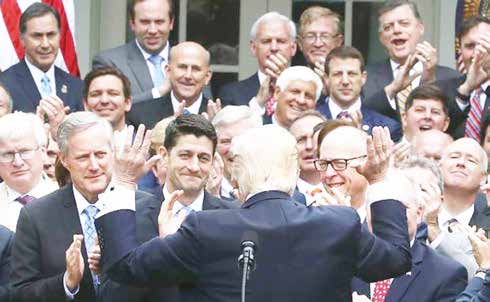
    In what could be seen as arare victory on the domestic turf for President Trump, the US House of Representatives approved a Bill on Thursday, May 4, to repeal major parts of Obamacare and replace it with a Republican healthcare plan. The passage of the Bill which Republican leadership has been struggling with and having met with disappointment earlier, is the legislative victory for President trump and House Speaker Paul Ryan.

    With the 217-213 vote, Republicans obtained just enough support to push the legislation through the House, sending it to the Senate for consideration. No Democrat voted for the Bill. The Bill’s passage represented a step toward fulfilling a top Trump campaign pledge and a seven-year Republican quest to dismantle Democratic former President Barack Obama’s signature healthcare law.

    But the effort now faces new hurdles in the Senate, where the Republicans have only a 52-seat majority in the 100-seat chamber and where just a few Republican defections could sink the Bill.

    Thursday’s vote was also a political victory for House Speaker Paul Ryan, demonstrating his ability to pull together a fractured Republican caucus after two failed attempts this year to win consensus on the healthcare law.

    Democrats are hoping that the Republicans’ vote to repeal Obamacare will spark a voter backlash in next year’s midterm congressional poll.

    Some 20 million Americans gained healthcare coverage under Obama’s 2010 Affordable Care Act, which has recently gathered support in public opinion polls. But Republicans have long attacked it, seeing the program as government overreach and complaining that it drives up healthcare costs.

    The Republican Bill, known formally as the American Health Care Act, aims to repeal most Obamacare taxes, including a penalty for not buying health insurance.

    But, the battle is not over yet. It is over to senate now. Though the Bill’s passage represented a seven-year Republican quest to dismantle former President Barack Obama’s signature healthcare law, the American Health Care Act now faces new hurdles in the Senate

    The Republicans have only a 52-seat majority in the 100-seat chamber and just a few Republican defections in the Senate could sink the Bill. The Democratic senators remain firmly unified against any repeal of Obamacare

    The new Bill repeals the individual mandate requiring those who can afford it to have health insurance. Those have who been without coverage for more than two months would face a 30% surcharge for new policy

    It repeals Obamacare’s requirement for companies with 50 or more staff to provide insurance coverage for employees

    Meanwhile, reactions to the bill passed in the House on May 4 are pouring in. Generally, hospitals, doctors, health insurers and some consumer groups, with few exceptions, are speaking with one voice and urging significant changes to the Republican health care legislation.

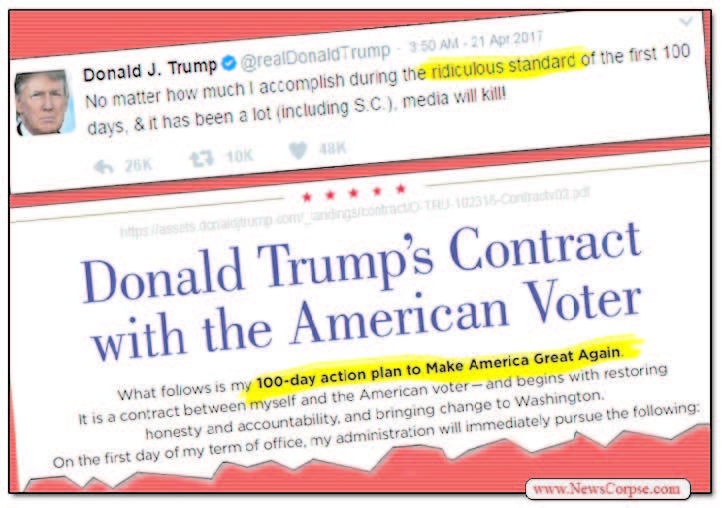
  • Trump’s first hundred days; Democratic voices have slowed presidential recklessness down

    Trump’s first hundred days; Democratic voices have slowed presidential recklessness down

    The American presidency remains undoubtedly the most powerful office in the world. The man who sits in the Oval Office can mug anyone of his happiness. The relief, if any, of these first hundred days is Trump has not been allowed to be reckless. Institutional constraints, liberal pieties and a vigorous media have combined to subject him to the rites of scrutiny and accountability. And, this should be a matter of enormous satisfaction to democratic voices and forces even beyond the United States”, says the author – Harish Khare.

    April 29 is Donald Trump’s 100th day in the White House. When on November 8 last year he got himself elected to the office of President of the United States, the rest of the world wondered how could have the Americans opted for this man; how could America – the land of Harvard and Yale, Princeton and MIT, the New York Times, Washington Post, the New Yorker – elect a man who is gratuitously boorish, determinedly anti-intellectual, and just a greedy businessman, with no record whatsoever of any public service? Well, democracies do sometimes produce false and flawed results. Donald Trump assumed charge on January 20th this year. Has he dismantled and destroyed the United States as his detractors feared; or, has he created the kind of global chaos that the world capitals had apprehended?Perhaps the first hundred days may be too short a period to allow any definitive conclusions, but it is feasible to believe that the fears of an American meltdown were vastly exaggerated. The curative power of democracy has had its impact.

    Though Donald Trump won the Presidency in November 2016 he did not win the popular vote. Those who did not vote for him thought they had a right to deny him the kind of honeymoon the Presidents are normally granted. The first hundred days have been full of confrontation and cock-ups. Washington’s in-crowd resents him, as it resents anyone who is seen as an outsider, just as it had scorned the Jimmy Carters and the Bill Clintons. On his part, the cantankerous and quarrelsome Trump is not the one to turn the other cheek. He has, in fact, not passed up any chance to throw a brick through his rivals’ glass window.

    Trump is an aberration. The Americans’ sense of disappointment can be traced to the simple fact that these last eight years the United States and the world had got used to a substantive, and at times searing, presidential rhetoric. Nobody has yet accused Trump of eloquence. A distinct sense of shoddiness emanates from the fact that unlike his predecessor, who was often suspected of being too professorial, Donald Trump has positioned himself as a street brawler. And, he has lived up the part, using Twitter as a knuckle-duster, throwing 140-letter punches at rivals at home and abroad.

    Authority in Washington, as per the American constitutional arrangements, is a divided proposition. Presidential effectiveness invariably depends on the White House’s ability to work with different groups, build up consensus, lead a coalition almost on every issue; despite his self-belief as a wonderful deal-maker, Trump has yet to demonstrate the skills and the attitudes needed to work with other institutional players in Washington. Consequently, the others keep snipping at his heels; and, he is happy to bark back. The last hundred days have seen unhappy departures from good presidential manners. This constant brawling and an itch for confrontation have necessarily deprived the President of an aura of respectability.

    Democracies look for a sense of moral authenticity and gravitas in their leaders; there is an implicit need to have confidence in their leaders and to believe that they are being led by an exemplary personality of virtuosity and moral luster. Citizens need to respect their leaders. But Donald Trump refuses to climb on to the pedestal.

    Because he came to office tapping the resentments and frustrations of the American voters with the so-called elites and at the foreigners who had taken away jobs out of the United States, Trump feels he needs to keep his legions’ anger simmering. Unsurprisingly, his very first executive decisions were directed against the immigrants, at least the undocumented ones, but he found himself having to deal with judicial challenges. As if the sense of confrontation with the judicial branch was not enough, the President has thoughtlessly engaged the media in a hit-and-run campaign. All this has not helped the President garner any kind of respectability at home.

    The Americans remain unsure whether the President has satisfactorily insulated his office from his complicated and not-so-honorable business interests; they are definitely not amused that the Trump Family seems to be acquiring so much say in the day-to-day functioning of the presidency. The President remains unconcerned; perhaps his obduracy stems from the fact that he never had a political office before and therefore remains uneducated in the leader’s obligation to appreciate and respect public sensibilities.

    Because Trump has put in place a new culture of disruptive disagreement in the domestic discourse, it is bound to have implications in the United States’ relationship with the world. A President who is not respected at home finds it difficult to earn applause abroad. The domestic combativeness means that President Trump cannot be relied upon to provide and articulate any kind of ideological or political global leadership, an obligation that the American Presidents since Franklin D Roosevelt have invariably discharged.

    Trump came to the Oval Office after accusing the external forces – the Chinese, the Mexicans, the Europeans -of being unfair to the United States and being a cause, direct or indirect, of American economic decline. He promised protectionism and isolationism. He promised to stay at home, refusing to play the global sheriff; he declared himself unimmured of the so-called global architecture; his preference, he declared, would be for bilateral deals and duels.

    Much to the relief of the globalists on the east coast, he, as President, seems inclined to hew the conventional line. He has not stayed home. He has gone and dropped the mother of all bombs in Afghanistan; fired missiles at Syria because the Assad regime was being bad boys; and, this week sent his Vice-President to do a bit of macho-posturing against North Korea.

    The Chinese seem to have sorted Trump out. Demonstrating diplomatic dexterity, they have refused to be provoked but have expressed themselves strongly when it was felt necessary to do so; they have baffled him, practicing simultaneously confrontation, cooperation and cooption.

    The Europeans are no longer alarmed by Trump’s isolationism; he has found some merit in NATO. They realize that they have to put their own house in order and they are relieved that they do not have to deal with Trump’s disruption of the European project. The Russians, on the other hand, are happy to take him for a ride, too.

    The American presidency remains undoubtedly the most powerful office in the world. The man who sits in the Oval Office can mug anyone of his happiness. The relief, if any, of these first hundred days is Trump has not been allowed to be reckless. Institutional constraints, liberal pieties and a vigorous media have combined to subject him to the rites of scrutiny and accountability. And, this should be a matter of enormous satisfaction to democratic voices and forces even beyond the United States.

    (The author is editor-in – chief of Tribune group of publications)


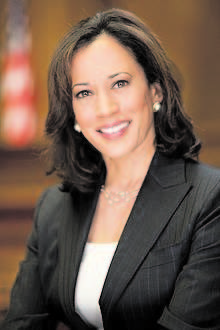
  • Indian American Senator Harris Urges President Trump to Abandon ACA Repeal Efforts

    Indian American Senator Harris Urges President Trump to Abandon ACA Repeal Efforts

    WASHINGTON (TIP): U.S. Senator Kamala D. Harris joined colleagues in sending a letter to President Trump urging him and his administration to abandon their efforts to repeal the Affordable Care Act and undermine the United States health care system so they can work in a bipartisan fashion to improve the law and lower the costs of health care for all Americans.

    The letter, signed by 44 Senate Democrats, also requests – as a first step – that the Trump Administration rescind the executive order signed on January 20th, 2017 which severely undermined the Affordable Care Act and sparked the efforts to unravel the law thereby undermining the health care system and increasing costs, hurting patients, providers and families. Senate Democrats also expressed concern with President Trump’s recent statement indicating it would be a good thing to make the ACA “explode”, despite the fact that would mean hurting millions of Americans.

    “Members of the Democratic caucus remain ready and willing to work with you on policies that would improve the stability of the individual insurance market. We ask that you begin the work of improving health care for millions of Americans by rescinding your January 20th executive order”, reads the letter.

    Earlier, Harris spoke on the floor of the Senate in opposition to the American Health Care Act on the anniversary of the signing of the Affordable Care Act.