Tag: Trump’s Policies

  • US House passes Bill to repeal Obamacare with 217 Ayes and 213 Nays

    US House passes Bill to repeal Obamacare with 217 Ayes and 213 Nays

    Next test of strength in the Senate


    The rich to benefit from new Republican Healthcare plan

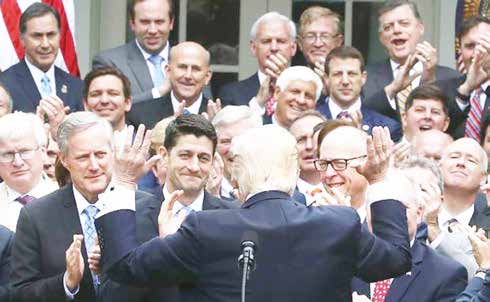
    In what could be seen as arare victory on the domestic turf for President Trump, the US House of Representatives approved a Bill on Thursday, May 4, to repeal major parts of Obamacare and replace it with a Republican healthcare plan. The passage of the Bill which Republican leadership has been struggling with and having met with disappointment earlier, is the legislative victory for President trump and House Speaker Paul Ryan.

    With the 217-213 vote, Republicans obtained just enough support to push the legislation through the House, sending it to the Senate for consideration. No Democrat voted for the Bill. The Bill’s passage represented a step toward fulfilling a top Trump campaign pledge and a seven-year Republican quest to dismantle Democratic former President Barack Obama’s signature healthcare law.

    But the effort now faces new hurdles in the Senate, where the Republicans have only a 52-seat majority in the 100-seat chamber and where just a few Republican defections could sink the Bill.

    Thursday’s vote was also a political victory for House Speaker Paul Ryan, demonstrating his ability to pull together a fractured Republican caucus after two failed attempts this year to win consensus on the healthcare law.

    Democrats are hoping that the Republicans’ vote to repeal Obamacare will spark a voter backlash in next year’s midterm congressional poll.

    Some 20 million Americans gained healthcare coverage under Obama’s 2010 Affordable Care Act, which has recently gathered support in public opinion polls. But Republicans have long attacked it, seeing the program as government overreach and complaining that it drives up healthcare costs.

    The Republican Bill, known formally as the American Health Care Act, aims to repeal most Obamacare taxes, including a penalty for not buying health insurance.

    But, the battle is not over yet. It is over to senate now. Though the Bill’s passage represented a seven-year Republican quest to dismantle former President Barack Obama’s signature healthcare law, the American Health Care Act now faces new hurdles in the Senate

    The Republicans have only a 52-seat majority in the 100-seat chamber and just a few Republican defections in the Senate could sink the Bill. The Democratic senators remain firmly unified against any repeal of Obamacare

    The new Bill repeals the individual mandate requiring those who can afford it to have health insurance. Those have who been without coverage for more than two months would face a 30% surcharge for new policy

    It repeals Obamacare’s requirement for companies with 50 or more staff to provide insurance coverage for employees

    Meanwhile, reactions to the bill passed in the House on May 4 are pouring in. Generally, hospitals, doctors, health insurers and some consumer groups, with few exceptions, are speaking with one voice and urging significant changes to the Republican health care legislation.

  • US to seek social media details from certain visa applicants

    US to seek social media details from certain visa applicants

    WASHINGTON (TIP): The US state department wants to review social media, email addresses and phone numbers from some foreigners seeking US visas, as part of the Trump administration’s enhanced screening of potential immigrants and visitors.

    The department, in a notice published on Thursday in the Federal Register, said it was seeking public comment on the requirement. But it also said is requesting a temporary go-ahead from the White House budget office so the plan can take effect for 180 days, beginning May 18, regardless of those public comments.

    The proposed requirements would apply to visa applicants identified for extra scrutiny, such as those who have traveled to areas controlled by terrorist organizations. The state department said it estimates that the rules would affect about 0.5 percent of total US visa applicants, or roughly 65,000 people.

    Affected applicants would have to provide their social media handles and platforms used during the previous five years, and divulge all phone numbers and email addresses used during that period. US consular officials would not seek social media passwords, and would not try to breach any privacy controls on applicants’ accounts, according to the department’s notice.

    Since last year, immigration officials have sought social media information from some foreigners arriving at US border checkpoints, but that information had not previously been required on visa applications.

    The new rules also would require applicants to provide 15 years of travel and work history and the names and dates of birth of all siblings, children and current and former spouses or partners. Visa applicants are now generally asked for only five years of travel and work history and are not asked for information about their siblings. The state department said it wanted the additional information “in order to more rigorously evaluate applicants for terrorism or other national security-related visa ineligibilities.”

    The proposal follows a March directive from the state department for all US embassies and consulates to draw up criteria for “population sets” needing extra scrutiny before receiving US visas.

    Social media snags

    Immigration lawyers and advocates say the request for 15 years of detailed biographical information, as well as the expectation that applicants remember all their social media handles, is likely to catch visa applicants who make innocent mistakes or do not remember all the information requested.

    They also question whether the time-consuming screening can achieve its intended goal of identifying potential terrorists. “The more effective tactics are the methods that we currently use to monitor terrorist organizations, not just stumbling into the terrorist who is dumb enough to post on his Facebook page ‘I am going to blow up something in the United States,’” said John Sandweg, a former senior official at the department of homeland security, or DHS.

    Because reviewing social media information is so labor intensive, several pilot programs have experimented with automation. But a DHS inspector general report concluded in February that the technology has so far proven flawed and required humans to ensure accuracy, leaving most of the checks to be done manually.

    Applicants may not necessarily be denied a visa if they fail to provide all the information if it is determined they can provide a “credible explanation”, the notice said.

    Secretary of state Rex Tillerson first introduced similar measures in a March cable to American consular officers that outlined questions officers should now ask in order to tighten vetting of US visa applicants.

    But Tillerson had to withdraw that guidance in a cable just days later, writing to officers worldwide that the OMB had not approved those specific questions.

    The state department estimated that the additional screening measures would take approximately an hour per applicant, meaning an additional 65,000 additional hours of work per year.

    Tillerson’s cables anticipated delays as a result of their implementation.

    “Somebody’s got to do the work,” said Greg Siskind, an immigration attorney in Memphis. “It’s going to cause operations at a lot of consulates slow to a crawl.” (Agencies)

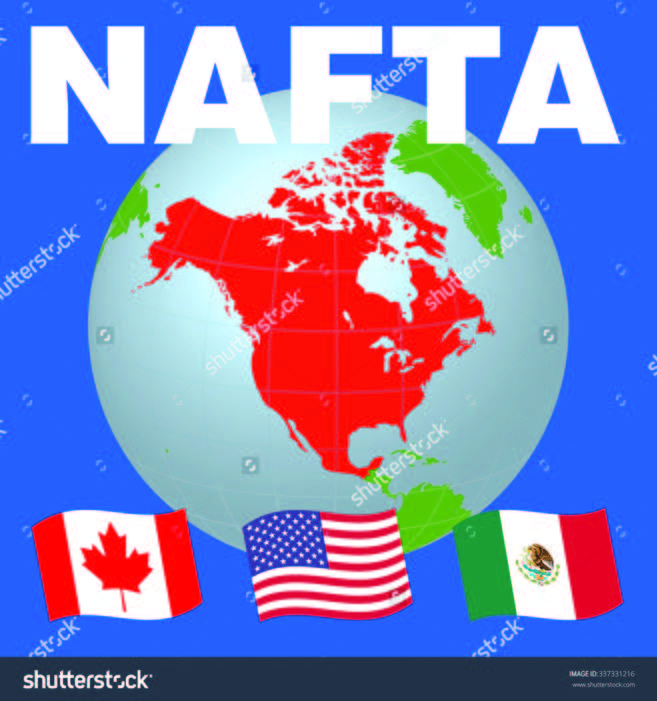
  • Not Terminating NAFTA, for Now:  President Trump

    Not Terminating NAFTA, for Now: President Trump

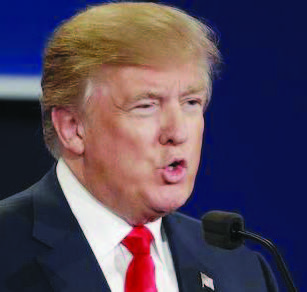
    WASHINGTON (TIP): In an apparent reversal of his stated position on NAFTA, U.S. President Donald Trump told the leaders of Canada and Mexico on Wednesday, April 26, that he will not terminate the NAFTA treaty at this stage, but will move quickly to begin renegotiating it with them, the White House said.

    President Donald Trump said he has told the leaders of Mexico and Canada that he will not pull out of the North American Free Trade Agreement at this time, but could still withdraw if he concludes a renegotiated pact is not “a fair deal for all.”

    Trump tweeted early Thursday, April 27, that he has agreed to remain a partner in the much-discussed trade agreement in calls he received from Mexican President Enrique Pena Nieto and Canadian Prime Minister Justin Trudeau. The White House released a statement late Wednesday saying only that Trump had assured the two leaders in phone conversations that the U.S. would not withdraw from NAFTA at this time.

    In his Twitter post, Trump called America’s relationships with the two hemispheric neighbors “very good” and said the prospects of a renegotiated deal are “very possible.” But he also said that his consent to remaining in NAFTA for now is “subject to the fact that if we do not reach a fair deal for all, we will then terminate NAFTA.”

    Speaking to reporters Thursday, April 27, before a White House meeting with Argentine President Mauricio Macri, Trump that he’d been planning to “terminate NAFTA as of two or three days from now,” but had been persuaded to reconsider, which he acknowledged “would be a pretty big, you know, shock to the system.”

    Trump added, “Now, if I’m unable to make a fair deal, if I’m unable to make a fair deal for the United States, meaning a fair deal for our workers and our companies, I will terminate NAFTA. But we’re going to give renegotiation a good, strong shot.”

    He later said renegotiation was “starting today.”

    The statement came hours after administration officials said Trump was considering a draft executive order to withdraw the U.S. from the deal – though administration officials cautioned it was just one of a number of options being discussed by the president and his staff.

    Some saw the threat as posturing by Trump to gain leverage over Mexico and Canada as he tries to negotiate changes to the deal. Trump railed against the decades-old trade deal during his campaign, describing it as a “disaster.”

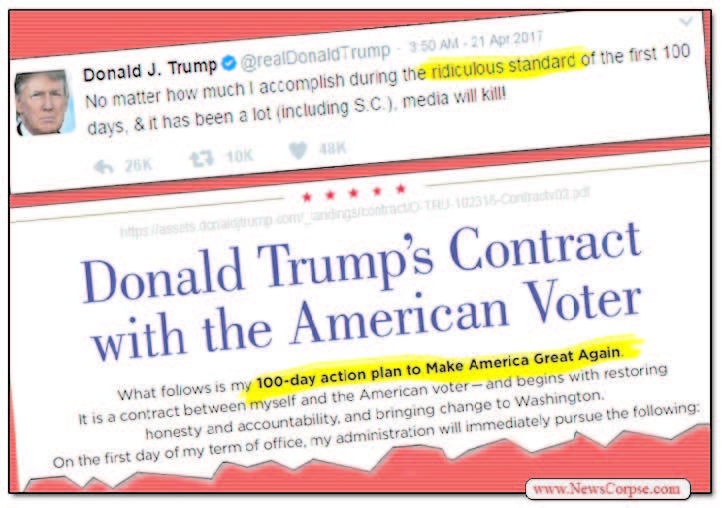
    Senior White House officials had spent recent days discussing steps that could be taken to start the process of renegotiating or withdrawing from NAFTA before the end of Trump’s first 100 days in office, according to a person familiar with the president’s thinking. But the person, along with an administration official, said a number of options remained on the table, and stressed discussions are ongoing about the best way to proceed.

    Trump could withdraw from NAFTA – but he would have to give six months’ notice. And it is unclear what would happen next. The law Congress passed to enact the trade pact might remain in place, forcing Trump to wrangle with lawmakers and raising questions about the president’s authority to raise tariffs on Mexican and Canadian imports.

    The moves came days after the administration announced it would slap hefty tariffs on softwood lumber being imported from Canada. Trump has also been railing against changes in Canadian milk product pricing that he says are hurting the American dairy industry.

    Trump told The Associated Press in an interview last week that he planned to either renegotiate or terminate NAFTA, which he and other critics blame for wiping out U.S. manufacturing jobs because it allowed companies to move factories to Mexico to take advantage of low-wage labor.

    “I am very upset with NAFTA. I think NAFTA has been a catastrophic trade deal for the United States, trading agreement for the United States. It hurts us with Canada, and it hurts us with Mexico,” he said.

  • Missouri State University Announces $5,000 Scholarship for Indian Students

    Missouri State University Announces $5,000 Scholarship for Indian Students

    NEW DELHI (TIP): The Missouri State University (MSU) in the US announced $5,000 scholarship for Indian students. The university will grant the scholarship on the basis of GPA scores — the students’ cumulative scores in 10th, 11th and 12th class — and their SAT scores.

    “We have always welcomed Indian students and averaged a 120-130 of them till recently… Their current number is 55 and we would want this to grow, ” Stephen Robinette, Associate Vice President, International Program, MSU, told the media. There is no limitation on the number of scholarships and it can be extended to any number of students, he said.

    Another university official tried to allay the fears of deportation or denial of visa, which have increased now in the light of President Donald Trump’s ban on immigrants from six countries and strict curbs on the H-1B visa holders.

    “There has been no instance till date where applicants to MSU were denied visa… The Trump order is not on Indian students and the H-1B visa policy only applies to those who come to work here in professional capacity and not to those who study here and then continue to work,” Prateek Gujaral, Regional Head, South and Southeast Asia, MSU, said.

  • Trump’s first hundred days; Democratic voices have slowed presidential recklessness down

    Trump’s first hundred days; Democratic voices have slowed presidential recklessness down

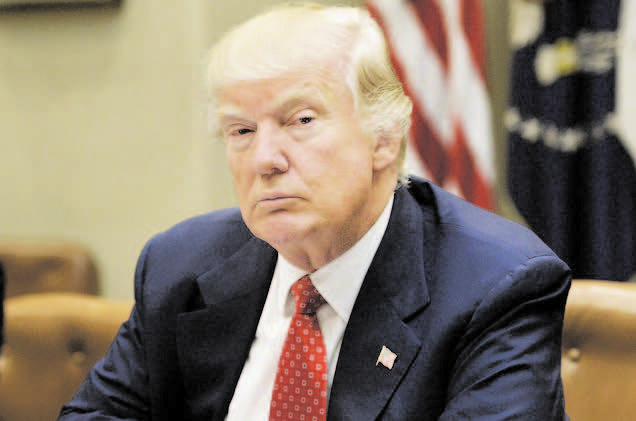
    The American presidency remains undoubtedly the most powerful office in the world. The man who sits in the Oval Office can mug anyone of his happiness. The relief, if any, of these first hundred days is Trump has not been allowed to be reckless. Institutional constraints, liberal pieties and a vigorous media have combined to subject him to the rites of scrutiny and accountability. And, this should be a matter of enormous satisfaction to democratic voices and forces even beyond the United States”, says the author – Harish Khare.

    April 29 is Donald Trump’s 100th day in the White House. When on November 8 last year he got himself elected to the office of President of the United States, the rest of the world wondered how could have the Americans opted for this man; how could America – the land of Harvard and Yale, Princeton and MIT, the New York Times, Washington Post, the New Yorker – elect a man who is gratuitously boorish, determinedly anti-intellectual, and just a greedy businessman, with no record whatsoever of any public service? Well, democracies do sometimes produce false and flawed results. Donald Trump assumed charge on January 20th this year. Has he dismantled and destroyed the United States as his detractors feared; or, has he created the kind of global chaos that the world capitals had apprehended?Perhaps the first hundred days may be too short a period to allow any definitive conclusions, but it is feasible to believe that the fears of an American meltdown were vastly exaggerated. The curative power of democracy has had its impact.

    Though Donald Trump won the Presidency in November 2016 he did not win the popular vote. Those who did not vote for him thought they had a right to deny him the kind of honeymoon the Presidents are normally granted. The first hundred days have been full of confrontation and cock-ups. Washington’s in-crowd resents him, as it resents anyone who is seen as an outsider, just as it had scorned the Jimmy Carters and the Bill Clintons. On his part, the cantankerous and quarrelsome Trump is not the one to turn the other cheek. He has, in fact, not passed up any chance to throw a brick through his rivals’ glass window.

    Trump is an aberration. The Americans’ sense of disappointment can be traced to the simple fact that these last eight years the United States and the world had got used to a substantive, and at times searing, presidential rhetoric. Nobody has yet accused Trump of eloquence. A distinct sense of shoddiness emanates from the fact that unlike his predecessor, who was often suspected of being too professorial, Donald Trump has positioned himself as a street brawler. And, he has lived up the part, using Twitter as a knuckle-duster, throwing 140-letter punches at rivals at home and abroad.

    Authority in Washington, as per the American constitutional arrangements, is a divided proposition. Presidential effectiveness invariably depends on the White House’s ability to work with different groups, build up consensus, lead a coalition almost on every issue; despite his self-belief as a wonderful deal-maker, Trump has yet to demonstrate the skills and the attitudes needed to work with other institutional players in Washington. Consequently, the others keep snipping at his heels; and, he is happy to bark back. The last hundred days have seen unhappy departures from good presidential manners. This constant brawling and an itch for confrontation have necessarily deprived the President of an aura of respectability.

    Democracies look for a sense of moral authenticity and gravitas in their leaders; there is an implicit need to have confidence in their leaders and to believe that they are being led by an exemplary personality of virtuosity and moral luster. Citizens need to respect their leaders. But Donald Trump refuses to climb on to the pedestal.

    Because he came to office tapping the resentments and frustrations of the American voters with the so-called elites and at the foreigners who had taken away jobs out of the United States, Trump feels he needs to keep his legions’ anger simmering. Unsurprisingly, his very first executive decisions were directed against the immigrants, at least the undocumented ones, but he found himself having to deal with judicial challenges. As if the sense of confrontation with the judicial branch was not enough, the President has thoughtlessly engaged the media in a hit-and-run campaign. All this has not helped the President garner any kind of respectability at home.

    The Americans remain unsure whether the President has satisfactorily insulated his office from his complicated and not-so-honorable business interests; they are definitely not amused that the Trump Family seems to be acquiring so much say in the day-to-day functioning of the presidency. The President remains unconcerned; perhaps his obduracy stems from the fact that he never had a political office before and therefore remains uneducated in the leader’s obligation to appreciate and respect public sensibilities.

    Because Trump has put in place a new culture of disruptive disagreement in the domestic discourse, it is bound to have implications in the United States’ relationship with the world. A President who is not respected at home finds it difficult to earn applause abroad. The domestic combativeness means that President Trump cannot be relied upon to provide and articulate any kind of ideological or political global leadership, an obligation that the American Presidents since Franklin D Roosevelt have invariably discharged.

    Trump came to the Oval Office after accusing the external forces – the Chinese, the Mexicans, the Europeans -of being unfair to the United States and being a cause, direct or indirect, of American economic decline. He promised protectionism and isolationism. He promised to stay at home, refusing to play the global sheriff; he declared himself unimmured of the so-called global architecture; his preference, he declared, would be for bilateral deals and duels.

    Much to the relief of the globalists on the east coast, he, as President, seems inclined to hew the conventional line. He has not stayed home. He has gone and dropped the mother of all bombs in Afghanistan; fired missiles at Syria because the Assad regime was being bad boys; and, this week sent his Vice-President to do a bit of macho-posturing against North Korea.

    The Chinese seem to have sorted Trump out. Demonstrating diplomatic dexterity, they have refused to be provoked but have expressed themselves strongly when it was felt necessary to do so; they have baffled him, practicing simultaneously confrontation, cooperation and cooption.

    The Europeans are no longer alarmed by Trump’s isolationism; he has found some merit in NATO. They realize that they have to put their own house in order and they are relieved that they do not have to deal with Trump’s disruption of the European project. The Russians, on the other hand, are happy to take him for a ride, too.

    The American presidency remains undoubtedly the most powerful office in the world. The man who sits in the Oval Office can mug anyone of his happiness. The relief, if any, of these first hundred days is Trump has not been allowed to be reckless. Institutional constraints, liberal pieties and a vigorous media have combined to subject him to the rites of scrutiny and accountability. And, this should be a matter of enormous satisfaction to democratic voices and forces even beyond the United States.

    (The author is editor-in – chief of Tribune group of publications)


  • Donald Trump: ‘Major, major’ conflict with North Korea possible

    Donald Trump: ‘Major, major’ conflict with North Korea possible

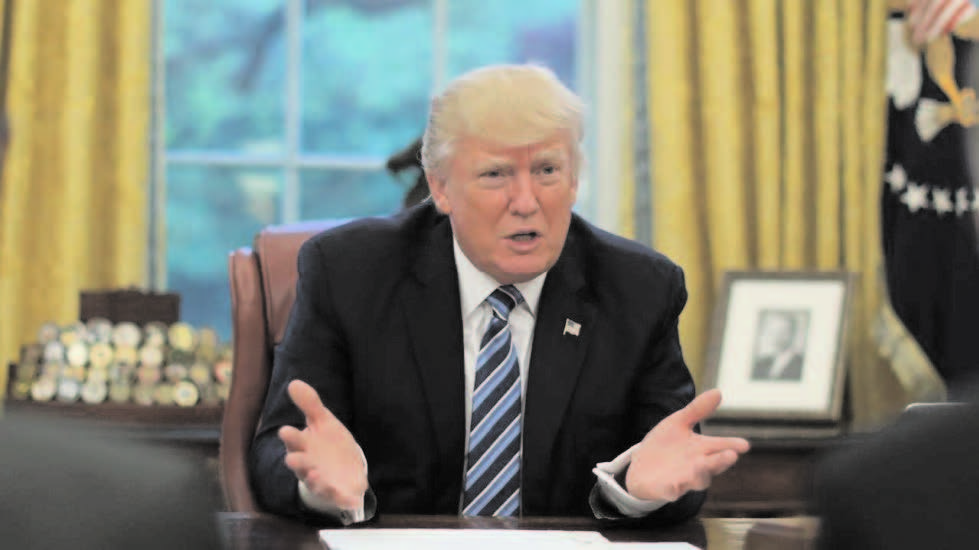
    WASHINGTON (TIP): US President Donald Trump said on April 27 a major conflict with North Korea is possible in the standoff over its nuclear and missile programs, but he would prefer a diplomatic outcome to the dispute.

    “There is a chance that we could end up having a major, major conflict with North Korea. Absolutely,” Trump told Reuters in an Oval Office interview ahead of his 100th day in office on Saturday.

    Nonetheless, Trump said he wanted to peacefully resolve a crisis that has bedeviled multiple US presidents, a path that he and his administration are emphasizing by preparing a variety of new economic sanctions while not taking the military option off the table.

    “We’d love to solve things diplomatically but it’s very difficult,” he said.

    In other highlights of the 42-minute interview, Trump was cool to speaking again with Taiwan’s president after an earlier telephone call with her angered China. He also said he wanted South Korea to pay the cost of the US THAAD anti-missile defense system, which he estimated at $1 billion. He said he intended to renegotiate or terminate a US free trade pact with South Korea because of a deep trade deficit with Seoul.Trump said he was considering adding stops to Israel and Saudi Arabia to a Europe trip next month, emphasizing he wanted to see an Israeli-Palestinian peace. Trump said North Korea was his biggest global challenge. He lavished praise on Chinese President Xi Jinping for Chinese assistance in trying to rein in Pyongyang. The two leaders met in Florida earlier this month. “I believe he is trying very hard. He certainly doesn’t want to see turmoil and death. He doesn’t want to see it. He is a good man. He is a very good man and I got to know him very well.

    “With that being said, he loves China and he loves the people of China. I know he would like to be able to do something, perhaps it’s possible that he can’t,” Trump said.

    ‘I hope he’s rational’ : Trump spoke just a day after he and his top national security advisers briefed US lawmakers on the North Korean threat and one day before Secretary of State Rex Tillerson will press the United Nations Security Council on sanctions to further isolate Pyongyang over its nuclear and missile programs.

    The Trump administration on Wednesday declared North Korea “an urgent national security threat and top foreign policy priority.” It said it was focusing on economic and diplomatic pressure, including Chinese cooperation in containing its defiant neighbor and ally, and remained open to negotiations.

    US officials said military strikes remained an option but played down the prospect, though the administration has sent an aircraft carrier and a nuclear-powered submarine to the region in a show of force. Any direct US military action would run the risk of massive North Korean retaliation and huge casualties in Japan and South Korea and among US forces in both countries.

    Trump, asked if he considered North Korean leader Kim Jong Un to be rational, said he was operating from the assumption that he is rational. He noted that Kim had taken over his country at an early age.

  • US judge blocks Trump order to restrict funding for ‘sanctuary cities’

    US judge blocks Trump order to restrict funding for ‘sanctuary cities’

    SAN FRANCISCO (TIP): A US judge on April 23 blocked President Donald Trump’s executive order that sought to withhold federal funds from so-called sanctuary cities, dealing another legal blow to the administration’s efforts to toughen immigration enforcement.

    The ruling from US District Judge William Orrick III in San Francisco said Trump’s Jan. 25 order targeted broad categories of federal funding for sanctuary governments and that plaintiffs challenging the order were likely to succeed in proving it unconstitutional.

    The Republican president’s moves on immigration have galvanized legal advocacy groups, along with Democratic city and state governments, to oppose them in court. The administration suffered an earlier defeat when two federal judges suspended executive orders restricting travel from several Muslim-majority countries. The government has appealed those decisions.

    Reince Priebus, Trump’s White House chief of staff, told reporters the administration was taking action to appeal the ruling, adding: “The idea that an agency can’t put in some reasonable restrictions on how some of these monies are spent is something that will be overturned eventually.”

    “It’s the 9th Circuit going bananas,” Priebus said, referring to the West Coast judicial district where the judge ruled. “We’ll win at the Supreme Court level at some point.”

    The US Justice Department said in a statement it would follow existing federal law with respect to sanctuary jurisdictions, as well as enforce conditions tied to federal grants.

    Sanctuary cities generally offer safe harbor to illegal immigrants and often do not use municipal funds or resources to advance the enforcement of federal immigration laws. Dozens of local governments and cities, including New York, Los Angeles and Chicago, have joined the growing “sanctuary” movement.

    Supporters of the sanctuary policy argue that enlisting police cooperation in rounding up immigrants for removal undermines communities’ trust in local police, particularly among Latinos.

    The Trump administration contends that local authorities endanger public safety when they decline to hand over for deportation illegal immigrants arrested for crimes.

    The executive order by Trump, who made cracking down on illegal immigration a cornerstone of his 2016 presidential campaign, directed such funding to be restricted once the Homeland Security Department determines what constitutes a sanctuary city.

    Santa Clara County, which includes the city of San Jose and several smaller Silicon Valley communities, sued in February, saying Trump’s order was unconstitutional. San Francisco filed a similar lawsuit.

    ‘Crumbling under the weight’

    The Justice Department threatened last week to cut some funding to California as well as eight cities and counties across the United States.

    The department singled out Chicago and New York as two cities “crumbling under the weight of illegal immigration and violent crime,” even though New York City is experiencing its lowest crime levels in decades and experts say Chicago’s recent spike in violent crime has little to do with illegal immigration. Santa Clara County receives about$1.7 billion in federal and federally dependent funds annually, about 35 percent of its total revenues. The county argued it was owed millions of dollars of federal funding every day and that its budgetary planning process had been thrown into disarray by the order.

    The Justice Department said the counties had taken an overly broad interpretation of the president’s order, which it said would affect only Justice Department and Homeland Security funds, a fraction of the grant money received by the counties.

    In his ruling, Orrick said the language of the order made it clear it sought to withhold funds beyond law enforcement.

    “And if there was doubt about the scope of the Order, the President and Attorney General have erased it with their public comments,” Orrick wrote.

    The judge cited comments from Trump calling the order “a weapon” to use against jurisdictions that disagree with his immigration policies.

    “Federal funding that bears no meaningful relationship to immigration enforcement cannot be threatened merely because a jurisdiction chooses an immigration enforcement strategy of which the President disapproves,” Orrick wrote.

    Dave Cortese, president of the Santa Clara County Board of Supervisors, said in a statement: “The politics of fear emanating from the Trump White House has just suffered a major setback.” (Reuters)

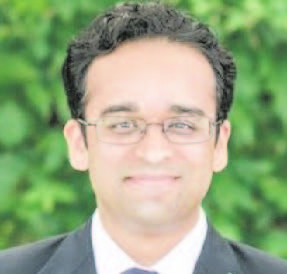
  • Trump sends Indian-American Vishal J Amin’s name to Senate for ‘IP Czar’

    Trump sends Indian-American Vishal J Amin’s name to Senate for ‘IP Czar’

    WASHINGTON (TIP): Indian-American Vishal J Amin’s name has been sent by President Donald Trump to the Senate for confirmation as America’s new ‘IP czar’ to coordinate the country’s law-enforcement strategy around copyright, patents and trademarks.

    If confirmed by the Senate, Vishal, who is currently Senior Counsel on House Judiciary Committee, would succeed Daniel Marti in the White House.

    Earlier this month, Trump had tapped him as the US’ new Intellectual Property Enforcement Coordinator –dubbed as ‘IP czar’ — to coordinate US law-enforcement strategy around copyright, patents and trademarks.

    Amin has served in the administration of former president George W Bush at the White House as Associate Director for Domestic Policy and at the US Department of Commerce as Special Assistant and Associate Director for Policy in the Office of the Secretary, the White House said.

    Vishal received his bachelor’s degree in neuroscience from Johns Hopkins University and his law degree from Washington University in St Louis.

    The Recording Industry Association of America welcomed his nomination.

    “The prompt appointment and consideration of this position is critical, and we commend President Trump for his choice. Vishal Amin is a smart, thoughtful leader and we look forward to working with him,” said Cary Sherman, chairman and CEO of the Recording Industry Association of America.


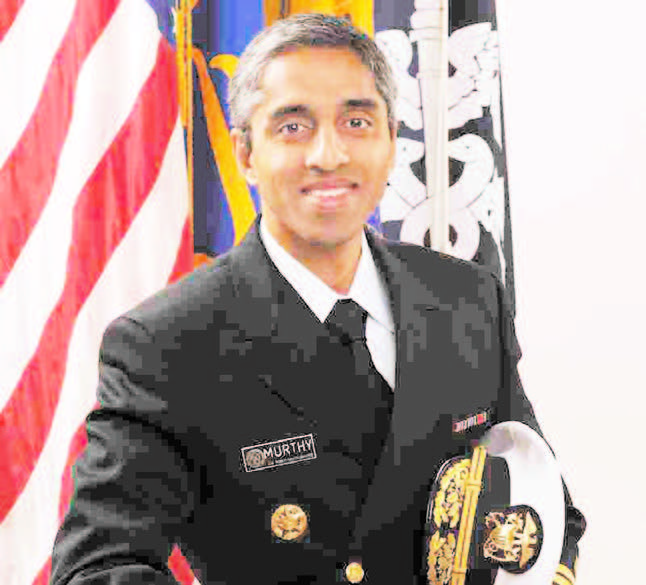
  • Dr. Vivek Murthy fired as America’s Top Doctor by Trump

    Dr. Vivek Murthy fired as America’s Top Doctor by Trump

    WASHINGTON (TIP): The Indian American Hero Dr. Vivek Murthy, America’s top doctor, was dismissed by Donald Trump’s administration on Friday, April 21, 2017 as the US Surgeon General.

    Dr. Vivek Murthy taking charge as the US Surgeon General cemented the reputation physicians of Indian origin have across America. President Obama made the right choice in naming a highly-qualified physician to serve as America’s surgeon general.

    The surgeon general, known as “America’s doctor,” represents the Health and Human Services Secretary and Assistant Secretary in addressing public health practice in the nation. Murthy, 39, was America’s youngest-ever top doctor, and he is also the first surgeon general of Indian-American descent. Dr. Vivek Murthy represents the next generation of Indian American physician. His ethics, quiet leadership style and impeccable credentials made him the smart choice for this position.

    Murthy was named America’s top doctor by President Barack Obama in 2014, making him the first Indian American ever named to the post, one among many growing achievement of a tiny but economically powerful ethnic community. In a very short span of time, Dr. Murthy had played key role in bringing to the forefront many crucial health issues confronting the nation. Dr. Murthy said, being picked for the job was a “uniquely American story” for the “grandson of a poor farmer from India.”

    It was not immediately clear why Murthy was relieved from duty, the New York Times said while noting that employees at the Department of Health and Human Services privately expressed surprise at his sudden departure. Murthy, the 19th Surgeon General, and the first Indian American to hold this post said in a Facebook Post that it was an honor and privilege to work for this prestigious position.

    “For the grandson of a poor farmer from India to be asked by the President to look out for the health of an entire nation was a humbling and uniquely American story. I will always be grateful to our country for welcoming my immigrant family nearly 40 years ago and giving me this opportunity to serve,” he said.

    In a post on Facebook, Murthy said. “For the grandson of a poor farmer from India to be asked by the President to look out for the health of an entire nation was a humbling and uniquely American story. I will always be grateful to our country for welcoming my immigrant family nearly 40 years ago and giving me this opportunity to serve,” he added.

    Murthy went on to recount his goals and achievements as surgeon general and said he “had hoped to do more to help our nation tackle its biggest health challenges, (but) I will be forever grateful for the opportunity to have served”. He says he was the ‘grandson of a poor farmer from India’.

    The US health and human services said in a statement on Friday he had been asked “to resign from his duties as surgeon general after assisting in a smooth transition into the new Trump Administration … (and stood) relieved of his duties”.

    Rear Admiral Sylvia Trent-Adams, a nurse by training and currently deputy surgeon general, was named to serve as the acting surgeon general and assume leadership of the US public health service commissioned corps.


  • IT firms may face layoffs due to US visa curbs: Report

    IT firms may face layoffs due to US visa curbs: Report

    NEW DELHI (TIP): With the US tightening the norms for H-1B visas under the President Donald Trump’s ‘Buy American, Hire American’ campaign, the Indian IT companies are bound to face disruptions by way of higher costs and even some laying off work force back home, and the rising rupee is aggravating the situation further for the technology export firms, an Assocham paper said.

    Nearly 86% of the H-1B visas issued for workers in the computer space go to Indians and this figure is now sure to be scaled down to about 60% or even less, it said.

    Remittances from the US would decline, hurting the balance of payment. World Bank data showed the US was the second largest source of remittance for India in 2015, behind Saudi Arabia, and about $10.96 billion, nearly 16% of the total inflows, were sent to India.

    As the cost pressure would increase, aggravated by rising rupee leading to lower realisations, the Indian IT firms may be forced to displace work force. “In that case, the chances of layoffs are real,” said Assocham secretary general DS Rawat.

    He said the IT industry apex organisations and the government need to work out a joint strategy to deal with the unfolding situation.

    Source: IANS

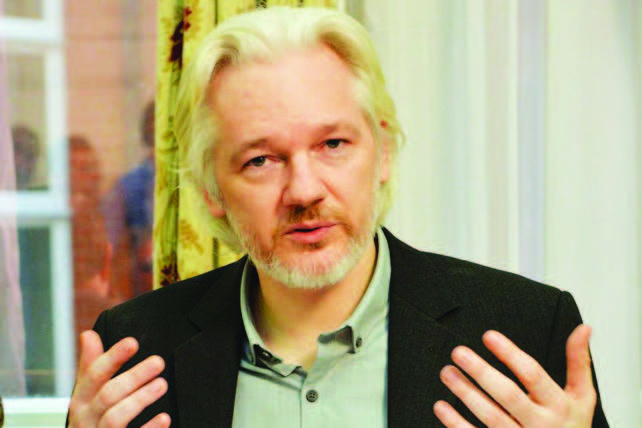
  • US Justice Department for Assange’s arrest

    US Justice Department for Assange’s arrest

    WASHINGTON (TIP): The arrest of WikiLeaks founder Julian Assange is a US “priority,” attorney general Jeff Sessions said April 20, as media reports indicated his office was preparing charges against the fugitive anti-hero.

    “We are going to step up our effort and already are stepping up our efforts on all leaks,” Sessions, America’s top cop, said at a news conference in response to a reporter’s question about a US priority to arrest Assange.

    The Justice Department chief said a rash of leaks of sensitive secrets appeared unprecedented.

    “This is a matter that’s gone beyond anything I’m aware of. We have professionals that have been in the security business of the United States for many years that are shocked by the number of leaks and some of them are quite serious,” he said.

    “Whenever a case can be made, we will seek to put some people in jail.”

    Prosecutors in recent weeks have been drafting a memo that looks at charges against Assange and members of WikiLeaks that possibly include conspiracy, theft of government property and violations of the Espionage Act, the Washington Post reported, citing unnamed US officials familiar with the matter.

    Several other media outlets also cited unnamed officials as saying US authorities were preparing charges against Assange. The Justice Department declined to comment on the reports.

    Assange, 45, has been holed up at the Ecuadoran embassy in London since 2012 trying to avoid extradition to Sweden where he faces a rape allegation that he denies.

    He fears Sweden would extradite him to the United States to face trial for leaking hundreds of thousands of secret US military and diplomatic documents that first gained attention in 2010.

    Assange’s case returned to the spotlight after WikiLeaks was accused of meddling in the US election last year by releasing a damaging trove of hacked emails from presidential candidate Hillary Clinton’s campaign and the Democratic party.

    US officials say the emails were hacked with the aid of the Russian government in its bid to influence the US election.

    Critics say their release late in the race helped to tip the November 8 election to Republican Donald Trump.

    Trump and his administration have put heat on WikiLeaks after it embarrassed the Central Intelligence Agency last month by releasing a large number of files and computer code from the spy agency’s top-secret hacking operations.

    The documents showed how the CIA exploits vulnerabilities in popular computer and networking hardware and software to gather intelligence.

    Supporters of WikiLeaks say it’s practicing the constitutional right of freedom of speech and the press.

    CIA Director Mike Pompeo last week branded WikiLeaks a “hostile intelligence service,” saying it threatens democratic nations and joins hands with dictators.

    Pompeo focused on the anti-secrecy group and other leakers of classified information like Edward Snowden as one of the key threats facing the United States.

    “WikiLeaks walks like a hostile intelligence service and talks like a hostile intelligence service. It has encouraged its followers to find jobs at CIA in order to obtain intelligence… And it overwhelmingly focuses on the United States, while seeking support from anti-democratic countries and organizations,” said Pompeo.

    “It is time to call out WikiLeaks for what it really is- a non-state hostile intelligence service often abetted by state actors like Russia.”

    The day before Pompeo spoke, Assange published an opinion piece in The Washington Post in which he said his group’s mission was the same as America’s most respected newspapers: “to publish newsworthy content.”

    “WikiLeaks’s sole interest is expressing constitutionally protected truths,” he said, professing “overwhelming admiration for both America and the idea of America.” (AP)

  • ‘Unchecked’ Iran could become another NKorea: US

    ‘Unchecked’ Iran could become another NKorea: US

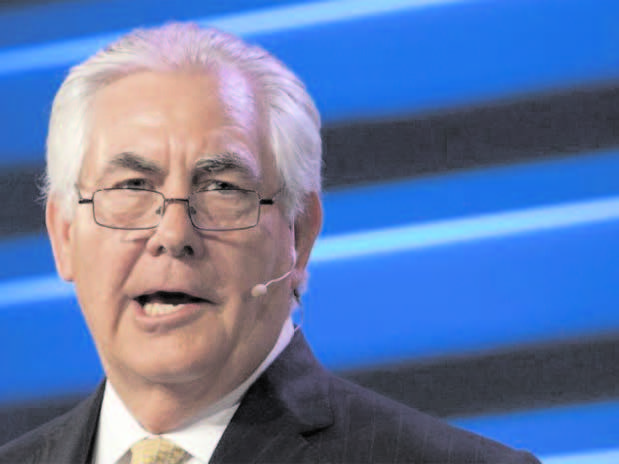
    WASHINGTON (TIP): US secretary of state Rex Tillerson has termed the Iran nuclear deal a failure and said an “unchecked” Tehran could become another North Korea, but stopped short of threatening to derail the landmark agreement.

    Tillerson said the US is conducting a comprehensive review of its Iran policy and added that the Obama-era nuclear deal only “delays” Tehran’s goal of becoming a nuclear state.

    “This deal represents the same failed approach of the past that brought us to the current imminent threat we face from North Korea. The Trump administration has no intention of passing the buck to a future administration on Iran,” he said at a hurriedly-convened press briefing.

    “Iran’s nuclear ambitions are a grave risk to international peace and security,” Tillerson said. His toughen stand on Iran yesterday came a day after the Trump administration notified the Congress that Tehran is complying with the 2015 nuclear deal negotiated by former president Barack Obama to limit the Islamic Republic’s nuclear ability. The administration said it has extended the sanctions relief to Iran in exchange for curbs on its nuclear programme.

    Iran has defended its nuclear programme as purely civilian and its supreme leader Ayatollah Khamenei warned in November that Tehran would retaliate if the US breached the nuclear agreement. Tillerson, seeking to reinforce the idea that the US is forcefully countering Iran’s destabilising behaviour in the Middle East, also described Tehran as a “leading state sponsor of terror”.

    “The evidence is clear: Iran’s provocative actions threaten the United States, the region and the world,” he said.

    “An unchecked Iran has the potential to travel the same path as North Korea and take the world along with it. The United States is keen to avoid a second piece of evidence that strategic patience is a failed approach.”

    Tillerson accused Iran of intensifying multiple conflicts including the one in Syria, undermining US interests in several countries, continuing to support attacks against Israel, and sponsoring cyber and terror attacks across the world. Tillerson’s comments were synonymous with Donald Trump’s rhetoric, who on many occasions -during his presidential campaign and afterwards – criticised the nuclear deal reached between Iran and the US, the UK, Russia, France, China and Germany.(AFP)

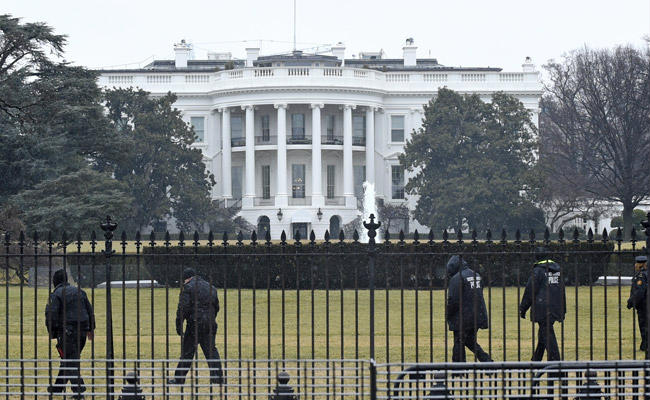
  • Famed White House sidewalk closed to public

    Famed White House sidewalk closed to public

    WASHINGTON (TIP): Bill Clinton wasn’t sure “whether it’s the finest public housing in America or the crown jewel of the American penal system.” In either case, the White House is becoming a little more distant from the people.

    The US Secret Service on Wednesday said it is ending public access to the sidewalk in front of the White House, a concrete stretch on which millions of tourists — including India’s prime minister Narendra Modi when he was a political journeyman — have stood to have their photographs taken. It is a Washington travelers’ ritual as old as…well, the invention of the camera.

    The sidewalk has been closed nightly from 11pm to 6am since 2015 and will now be off-limits around the clock, the Secret Service announced in a statement, saying the closure will “lessen the possibility of individuals illegally accessing the White House grounds.”

    The closure follows several recent incidents of incursions into the White House grounds by trespassers who have managed to scale the White House fence. Raising the height of the fence and putting sharp spikes on top of it has not deterred trespassers, so the Secret Service is extending the security perimeter.

    Visitors can still get themselves into the photo frame with the White House in the background from Lafayette Park across the street, but it won’t be same as leaning against the White House fence, within hailing distance of the President.

    Not just tourists even the American public has gradually been distanced from the White House over the years. Up until May 1995, traffic plied on Pennsylvania Avenue right in front of the White House, a road which once saw tramcars — and horse drawn carriages before that.

    The Oklahoma City truck bombing on April 20, 1995 by a white extremist which killed 160 people in a government building resulted in security agencies deciding to stop vehicular movement. The road stretch in front of White House was blocked, barricaded, and fortified, allowing only pedestrians. (TOI)

  • American industry leaders hammer Trump’s H-1B order

    American industry leaders hammer Trump’s H-1B order

    WASHINGTON (TIP): US President Donald Trump is getting hammered by critics for what they say is his dubious commitment to the “Buy American, Hire American” policy that he is promoting on faulty premise, even as his hardline nationalist supporters are in raptures that he is putting “America First.”

    From pointing out that the product line from his own companies are made abroad (including Made in India sports coats) to taunting that his properties, estates, and businesses employ a large number of immigrants, detractors eviscerated the US President for double standards after he went on a blue-collar road show on Tuesday to expound American First vision.

    He promoted it with an executive diktat aimed, among other things, at reforming the H1B visa program that has helped grow the Indian IT industry. (PTI)

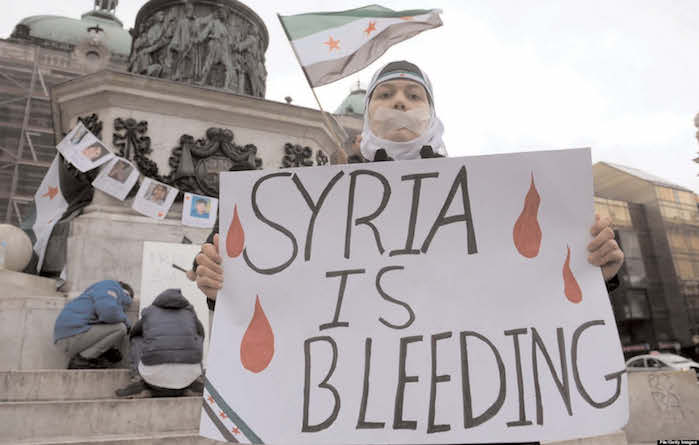
  • UN, Russia set for Syria meet without US

    UN, Russia set for Syria meet without US

    GENEVA (TIP): The UN’s Syria envoy said today that he will hold talks with Russian officials next week but without the US present after previous plans for a trilateral meeting were “postponed”.

    UN peace mediator Staffan de Mistura said his meeting with Russia’s deputy foreign minister Gennady Gatilov is set for Monday in Geneva.”The trilateral meeting is not off the table, it is simply being postponed”, de Mistura told reporters.

    Asked why US President Donald Trump’s representatives decided to skip the meeting, de Mistura said: “you should ask them, frankly.”

    Syrian regime supporter Moscow and opposition-backer Washington had been the key foreign powers shaping the UN’s Syria peace process.

    De Mistura has previously asked for more clarity from Trump’s administration on its vision for the Syria talks.

    US officials have in recent weeks voiced commitment to support a negotiated solution to the conflict.

    Monday’s sitdown with Gatilov “will be a very intense bilateral meeting”, de Mistura said. He also restated his desire to convene a sixth round of UN-backed talks involving Syrian rivals next month. The previous rounds have failed to produce concrete results. (AFP)


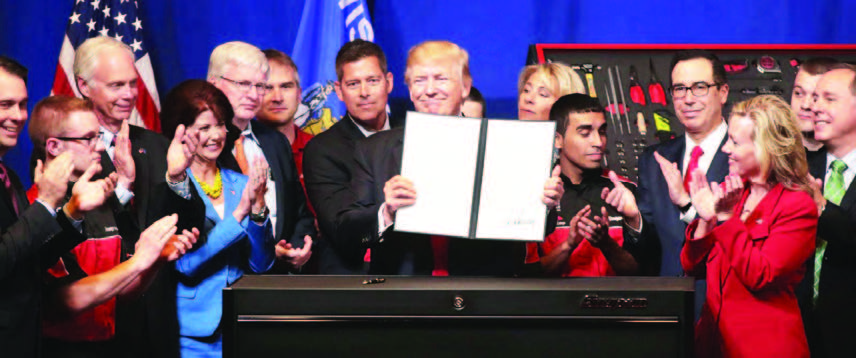
  • Trump signs executive order on H1B visa review

    Trump signs executive order on H1B visa review

    WASHINGTON (TIP): US President Donald Trump on Tuesday, April 18, ordered federal agencies to look at tightening the H1B visa program used to bring high-skilled foreign workers to the US, as he tries to carry out his campaign pledges to put “America First“.

    The EO also establishes certain Hire American standards, which are not necessarily limited to federal procurement or federally-funded projects. This primarily includes an overhaul of the “H1B” visa program to replace the lottery features of the program and to impose restrictions designed to preclude the H1B program from being a conduit for lower-cost labor at the expense of American workers.

    The latest action is part of Trump’s administration relentless series of tightening measures and is a major deterrent to Indian IT companies which send hundreds of software engineers to the US on H1B visas.

    The executive order doesn’t actually make any change in the policy as it stands today.

    This year there were 199,000 applications for the H1B visas even after the USCIS guidelines released April 3 clarifying that computer programmers will not be eligible for H1B visas by default.

    The Trump administration appears to be keen to scrap the lottery system, which is why it is insisting on a higher wage floor as a first eligibility criterion to apply for the visa. It may also set a minimum education criterion, skewering the hopes of many Indians who hope to gain entry into the US.

    H1B visas are intended for foreign nationals in occupations that generally require higher education, including science, engineering or computer programming. The government uses a lottery to award 65,000 visas every year and randomly distributes another 20,000 to graduate student workers.

    Critics say the lottery benefits outsourcing firms that flood the system with mass applications for visas for lower-paid information technology workers.

    “Right now, H1B visas are awarded in a totally random lottery and that’s wrong. Instead, they should be given to the most skilled and highest paid applicants and they should never, ever be used to replace Americans,” Trump said.

    At present, about 70 per cent of the 85,000 H1B visas issued annually go to Indians, with more than half of that to software professionals. The infotech industry adds around 10 per cent to India’s GDP.

    Senior officials gave few details on implementation of the order but Trump aides have expressed concern that most H1B visas are awarded for lower-paid jobs at outsourcing firms, many based in India, which they say takes work away from Americans.

    They seek a more merit-based way to give the visas to highly skilled workers.

    “Right now, widespread abuse in our immigration system is allowing American workers of all backgrounds to be replaced by workers brought in from other countries,” Trump said.

    Read the full EO at  https://www.whitehouse.gov/the-press-office/2017/04/18/presidential-executive-order-buy-american-and-hire-american? utm_source= email&utm_medium= email&utm_content=20170419_ADM_1600-Daily

  • Nikki Haley Gets Heckled at Global Women’s Summit Over Trump, Russia

    Nikki Haley Gets Heckled at Global Women’s Summit Over Trump, Russia

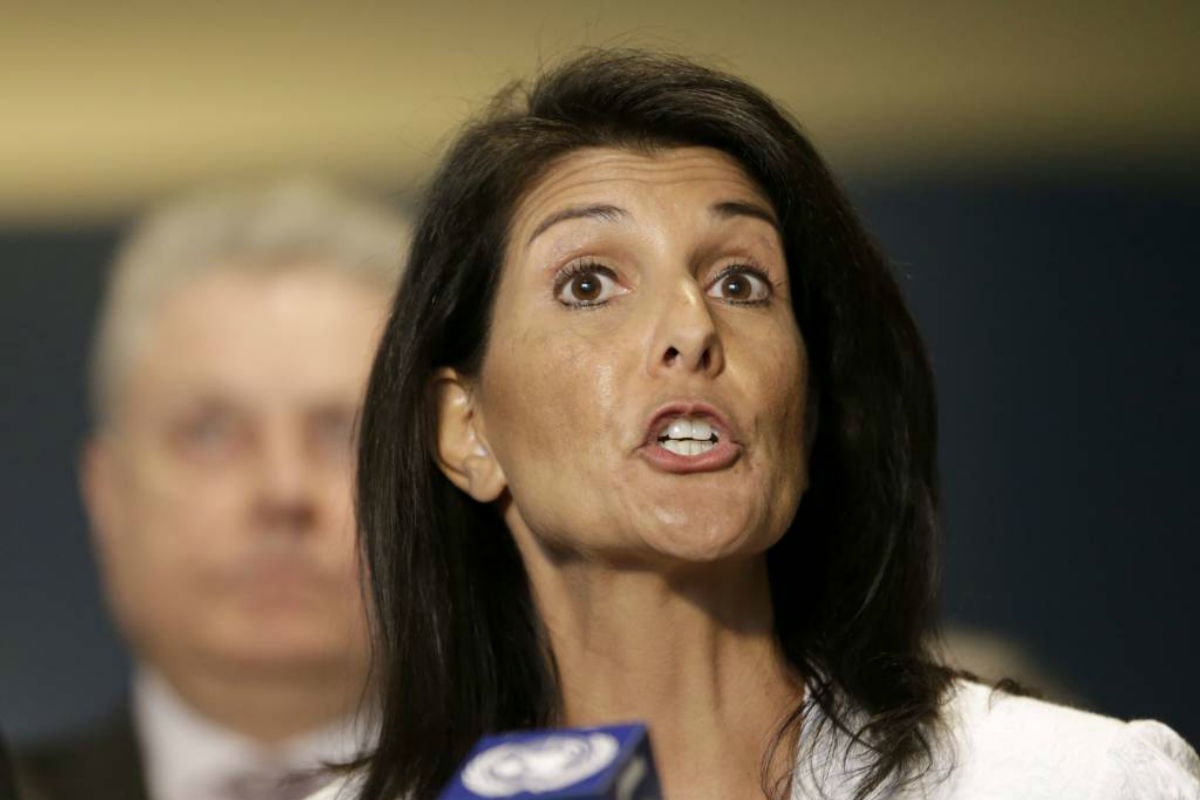
    NEW YORK (TIP): Nikki Haley, the tough-talking and blunt U.S. Ambassador to the UN, was heckled during an annual summit on women here as she spoke about President Donald Trump and Russia.

    The Indian American envoy was speaking April 5 at the ‘Women In The World’ summit, a premier annual gathering of influential women leaders, politicians and activists organized by media personality Tina Brown in association with the New York Times.

    As she was answering questions during the session titled ‘Trump’s Diplomat: Nikki Haley’ moderated by MSNBC anchor Greta Van Susteren, Haley was booed and heckled on several occasions. At one point, someone in the audience shouted,”what about refugees” while another asked, “when is the next panel.”

    During the nearly 22-minute session, a woman in the audience shouted, “when is the next panel,” to which the 45-year-old smiled and exclaimed “wow” as the audience tried to shush the heckler.

    She was heckled again when asked how America deals with some of the world leaders who are dictators.

    “You call them out when they do something wrong and you work with them when you can find ways to work with them,” Haley said.

    As some members of the audience shouted at her remarks, Haley said, “we have to express America’s values. We are always the moral conscience of the world,” to which someone from the audience shouted, “what about the refugees,” cutting off Haley. Haley went silent. Van Susteren paused, and then said, “Moving on.”

    At the end of the day’s program, Brown commended Haley for attending the event even as she got a “boisterous reception” and for remaining gracious as she was heckled.

    “We often complain and sneer and say Republicans never want to come on any kind of forum except Fox News or places where they can be asked questions that are soft,” Brown said, adding that Haley did not put on any pre-conditions and sat very “graciously” while the audience heckled.

    “She didn’t get agitated about it, and she’s in the middle of a lot of world crises. So, I feel that we should really applaud the fact that she did come.”

    Van Susteren asked Haley why the world has not heard much from Trump about Russia, a question that drew a thunderous applause from the audience.

    Haley said, “First keep in mind that I work for the Trump administration,” a response that generated boos and heckles from the audience and prompted Van Susteren to ask the audience to “hold on, hold on. We got to get people fix these problems.” Haley added that she has “hit Russia over the head more times than I can count. It’s because if they do something wrong we are going to call them out on it. If they want to help us defeat terrorism, fine.”

    “But the things they have done with Crimea and Ukraine, the things they have done with how they have covered up for (Syrian President Bashar) Assad, we are not going to give them a pass on.”

    Haley said she has had conversations with Trump “where he very much sees Russia as a problem and I think if you look at his actions, everybody wants to hear his words but look at his actions. The two things that Russia does not want to see the U.S. do is strengthen the military and expand energy and the president has done both of those.” She gave out a smile as her comments again drew prolonged boos from the audience.

    On the chemical weapons attack on a Syrian town, Haley said Russia blamed it on a container of chemical weapons that ISIS had.

    “There is no ounce of proof. They just make things up,” she said.

  • DRAINING THE SWAMP REQUIRES MORE THAN A SLOGAN: PREET BHARARA

    DRAINING THE SWAMP REQUIRES MORE THAN A SLOGAN: PREET BHARARA

    NEW YORK (TIP): In his first public appearance since being fired last month, former U.S. attorney of Manhattan Preet Bharara on Thursday, April 7, offered a brutal and sometimes humorous critique of President Donald Trump’s administration, saying that draining “the swamp” requires more than a “slogan.”

    “There is a swamp, a lot of the system is rigged and lots of your fellow Americans have been forgotten and have been left behind. Those are not alternative facts. That is not fake news,” Bharara said during an hour-long speech at the Cooper Union for the Advancement of Science and Art.

    “But I would respectfully submit you don’t drain a swamp with a slogan. You don’t drain it by replacing one set of partisans with another. You don’t replace muck with muck. To drain a swamp you need an Army Corps of Engineers, experts schooled in service and serious purpose, not do nothing, say anything neophyte opportunists who know a lot about how to bully and bluster but not so much about truth, justice and fairness.”

    Bharara, who was appointed by former president Barack Obama, was one of 46 U.S. attorneys asked by the Trump administration to resign last month. The order is not unusual at the beginning of a new administration.

    But in Bharara’s case it came as a surprise. Trump had asked him to stay after a meeting at Trump Tower in November and Bharara initially was unclear about whether the order to resign applied to him.

    “I was asked to resign. I refused. I insisted on being fired and so I was,” Bharara said Thursday. “I don’t understand why that was such a big deal. Especially to this White House. I had thought that was what Donald Trump was good at.”

    Asked why he was fired, Bharara said: “Beats the hell out of me.”

    During more than seven years on the job, Bharara built a reputation as an aggressive prosecutor willing to go after public officials from both political parties and Wall Street. Bharara indicted more than a dozen prominent New York politicians for malfeasance, including some Democrats, and pursued more than 70 insider trading cases. He won major convictions against terrorists, including the son-in-law of Osama bin Laden, Sulaiman Abu Ghaith.

    But Bharara also had his critics. Some accused him of overreach – he had to dismiss several insider trading cases after an appeals court ruling. Others complained he was not aggressive enough, noting that Bharara did not secure any convictions of big bank CEOs for financial-crisis-era misdeeds.

    Bharara has repeatedly dismissed speculation that he would eventually run for public office, a position he emphasized Thursday.

    “I DO NOT HAVE ANY PLANS TO ENTER POLITICS JUST LIKE I HAVE NO PLANS TO JOIN THE CIRCUS,” HE SAID, “AND I MEAN NO OFFENSE TO CIRCUS.”

  • U.S. may launch a preemptive strike against North Korea

    U.S. may launch a preemptive strike against North Korea

    WASHINGTON (TIP): The U.S. is prepared to launch a preemptive strike with conventional weapons against North Korea should officials become convinced that North Korea is about to follow through with a nuclear weapons test, multiple senior U.S. intelligence officials told NBC News.

    North Korea has warned that a “big event” is near, and U.S. officials say signs point to a nuclear test that could come as early as this weekend.

    The intelligence officials told NBC News that the U.S. has positioned two destroyers capable of shooting Tomahawk cruise missiles in the region, one just 300 miles from the North Korean nuclear test site. American heavy bombers are also positioned in Guam to attack North Korea should it be necessary, and earlier this week, the Pentagon announced that the USS Carl Vinson aircraft carrier strike group was being diverted to the area.

    The U.S. strike could include missiles and bombs, cyber and special operations on the ground.

    The danger of such an attack by the U.S. is that it could provoke the volatile and unpredictable North Korean regime to launch its own blistering attack on its southern neighbor.

    On Wednesday, April 12, North Korea said it would “hit the U.S. first” with a nuclear weapon should there be any signs of U.S. strikes.

    On Thursday, April 13, again, North Korea warned of a “merciless retaliatory strike” should the U.S. take any action.

    “By relentlessly bringing in a number of strategic nuclear assets to the Korean peninsula, the U.S. is gravely threatening the peace and safety and driving the situation to the brink of a nuclear war,” said North Korea’s statement.

    North Korea is not believed to have a deliverable long-range nuclear weapon, according to U.S. experts, nor does it yet possess an intercontinental missile.

    South Korea’s top diplomat said today that the U.S. would consult with Seoul before taking any serious measures. “U.S. officials, mindful of such concerns here, repeatedly reaffirmed that (the U.S.) will closely discuss with South Korea its North Korea-related measures,” Foreign Minister Yun Byung-se told a special parliamentary meeting. “In fact, the U.S. is working to reassure us that it will not, just in case that we might hold such concerns.”

    The U.S. is aware that simply preparing an attack, even if it will only be launched if there is an “imminent” North Korean action, increases the danger of provoking a large conflict.

    “It’s high stakes,” a senior intelligence official directly involved in the planning told NBC News. “We are trying to communicate our level of concern and the existence of many military options to dissuade the North first.”

    “It’s a feat that we’ve never achieved before but there is a new sense of resolve here,” the official said, referring to the White House.

    The threat of a preemptive strike comes on the same day the U.S. announced the use of its MOAB – or Mother of All Bombs – in Afghanistan, attacking underground facilities, and on the heels of U.S. missile strikes on a Syrian airbase last week, a strike that took place while President Trump was meeting with Chinese President Xi Jinping at Mar-a-Lago.

  • TRUMP BACKS AWAY FROM LABELING CHINA A CURRENCY MANIPULATOR

    TRUMP BACKS AWAY FROM LABELING CHINA A CURRENCY MANIPULATOR

    WASHINGTON (TIP): President Donald Trump said on Wednesday that his administration will not label China a currency manipulator, backing away from a campaign promise, even as he said the US dollar was “getting too strong” and would eventually hurt the economy.

    In an interview with The Wall Street Journal, Trump also said he would like to see US interest rates stay low, another comment at odds with what he had often said during the election campaign.

    A US Treasury spokesman confirmed that the Treasury Department’s semi-annual report on currency practices of major trading partners, due out later this week, will not name China a currency manipulator.

    The US dollar fell broadly on Trump’s comments on both the strong dollar and interest rates, while US Treasury yields fell on the interest rate comments, and Wall Street stocks slipped.

    Trump’s comments broke with a long-standing practice of both US Democratic and Republican administrations of refraining from commenting on policy set by the independent Federal Reserve. It is also highly unusual for a president to address the dollar’s value, which is a subject usually left to the US Treasury secretary.

    “They’re not currency manipulators,” Trump told the Journal about China. The statement is an about-face from Trump’s election campaign promises to slap that label on Beijing on the first day of his administration as part of his plan to reduce Chinese imports into the United States.

    The Wall Street Journal paraphrased Trump as saying that the reason he changed his mind on the currency issue was because China has not been manipulating its yuan for months and because taking the step now could jeopardize his talks with Beijing on confronting the threat from North Korea.

    Separately on Wednesday, at a joint news conference with NATO Secretary General Jens Stoltenberg, Trump said the United States was prepared to tackle the crisis surrounding North Korea without China if necessary.

    The United States last branded China a currency manipulator in 1994. Under US law, labeling a country as currency manipulator can trigger an investigation and negotiations on tariffs and trade.

    Senate Democratic leader Chuck Schumer said in a statement that Trump’s decision to break his campaign promise on China was “symptomatic of a lack of real, tough action on trade” against Beijing.

    “The best way to get China to cooperate with North Korea, is to be tough on them with trade, which is the number one thing China’s government cares about,” Schumer said.

    Trump open to reappointing Yellen as Fed chair

    Trump also told the Journal that he respected Federal Reserve Chair Janet Yellen and said she was “not toast” when her current term ends in 2018.

    That was also a turnaround from his frequent criticism of Yellen during his campaign, when he said she was keeping interest rates too low.

    At other times, however, Trump had said that low rates were good because higher rates would strengthen the dollar and hurt American exports and manufacturers.

    “I think our dollar is getting too strong, and partially that’s my fault because people have confidence in me. But that’s hurting – that will hurt ultimately,” Trump said on Wednesday.

    “It’s very, very hard to compete when you have a strong dollar and other countries are devaluing their currency,” Trump told the Journal.

    The dollar fell broadly Trump’s comments on the strong dollar and on his preference for low interest rates. It fell more than 1.0 percent against the yen, sinking below 110 yen for the first time since mid-November.

    “It’s hard to talk down your currency unless you’re going to talk down your interest rates and so obviously he’s trying to get Janet Yellen to play ball with him…”, said Robert Smith, president and chief investment officer at Sage Advisory Services in Texas.

    Trump’s comments about the Fed were his most explicit about the US central bank since he took office in January, and suggest a lower likelihood that he plans to try to push monetary policy in some unorthodox new direction. Source: Reuters

  • African-American attacks Nepali-Indian establishment pretending to be white supremacist

    African-American attacks Nepali-Indian establishment pretending to be white supremacist

    New York, April 11: A Bhutanese businessman is the victim of a false flag assault in Charlotte by an African-American man who made the attack on the man’s store appear to be the work of white supremacists.

    Hate Politics – A rash of racist attacks have broken out after Donald Trump’s victory

    North Carolina police arrested on Sunday the man allegedly seen on a surveillance video setting fire to the store on Thursday and leaving a note threatening to torture immigrants and refugees and signing it “White America”, The Charlotte Observer newspaper reported.

    The Central Market, described as Nepali-Indian establishment that sells South Asian food and gifts, is owned by Kamal Dhimel, a refugee from Bhutan.

    On Thursday night, the store’s front door was set on fire, a glass pane on the door was smashed with a stone and the note signed “White America” and warning that refugees and immigrant business owners would face torture “if they did not leave and go back to where they came from” was left there, according to police quoted by the newspaper.

    Investigators said a video surveillance of the incident showed a “black male suspect”, the Observer reported.

    African-American man Curtis Flournoy, 32, has been arrested and charged with ethnic intimidation, sending threatening letters, burning a business building and using incendiary material, according to the newspaper.

    Charlotte City Council member Dimple Ajmera told the Observer that she was frustrated to see the hate crime take place.

    “I’ll continue to work around the clock to make sure that all businesses and all the residences feel safe,” she added.

    Last month, Harnish Patel, an Indian-American businessman in Lancaster in neighbouring South Carolina state, was shot dead outside his home. There have been no arrests in the case.

    While attacks and threats against ethnic and religious minorities have always been a feature of America, activists and Democratic Party leaders have attributed recent incidents to President Donald Trump.


    RECENT RISE OF ATTCKS ON INDIAN AMERICANS

    In some places, including New York, false reports have been spread about raids on illegal immigrants to spook immigrant communities.

    In February, an Indian-American woman, Ekta Desai, was harassed on a New York-New Jersey metro train by an African-American man who threatened her using foul language and said she should “get out of here”.

    She uploaded the video of the harassment, but the Democratic New York city or state officials have not come forward to condemn it or take action against the man. US human rights organisations have not reacted to it either.

    In February, in a case directly attributed to white racism, Indian engineer Srinivas Kuchsbhotla was shot dead and Alok Madsani was injured in Kansas, after they were mistaken for Middle Easterners or Iranians.

    The alleged shooter, a white man, has been arrested and awaiting trial.

    Last month, a Sikh in Kent, Washington State, was shot and injured by a man who shouted at him, “Go back to your country”. Authorities are still looking for the shooter.

    In another case last month, an Indian woman Sasikala Narra, 38, and her six-year-old son, Anish, were stabbed to death in New Jersey.

  • Preet Bharara On Why He Was Fired: ‘Beats The Hell Out Of Me.’

    Preet Bharara On Why He Was Fired: ‘Beats The Hell Out Of Me.’

    New York: In his first public appearance since being fired last month, former U.S. attorney of Manhattan Preet Bharara on Thursday, April 7, offered a brutal and sometimes humorous critique of President Donald Trump’s administration, saying that draining “the swamp” requires more than a “slogan.”

    “There is a swamp, a lot of the system is rigged and lots of your fellow Americans have been forgotten and have been left behind. Those are not alternative facts. That is not fake news,” Bharara said during an hour-long speech at the Cooper Union for the Advancement of Science and Art.

    “But I would respectfully submit you don’t drain a swamp with a slogan. You don’t drain it by replacing one set of partisans with another. You don’t replace muck with muck. To drain a swamp you need an Army Corps of Engineers, experts schooled in service and serious purpose, not do nothing, say anything neophyte opportunists who know a lot about how to bully and bluster but not so much about truth, justice and fairness.”

    Bharara, who was appointed by former president Barack Obama, was one of 46 U.S. attorneys asked by the Trump administration to resign last month. The order is not unusual at the beginning of a new administration. But in Bharara’s case it came as a surprise. Trump had asked him to stay after a meeting at Trump Tower in November and Bharara initially was unclear about whether the order to resign applied to him.

    “I was asked to resign. I refused. I insisted on being fired and so I was,” Bharara said Thursday. “I don’t understand why that was such a big deal. Especially to this White House. I had thought that was what Donald Trump was good at.”

    Asked why he was fired, Bharara said: “Beats the hell out of me.”

    During more than seven years on the job, Bharara built a reputation as an aggressive prosecutor willing to go after public officials from both political parties and Wall Street. Bharara indicted more than a dozen prominent New York politicians for malfeasance, including some Democrats, and pursued more than 70 insider trading cases. He won major convictions against terrorists, including the son-in-law of Osama bin Laden, Sulaiman Abu Ghaith.

    But Bharara also had his critics. Some accused him of overreach – he had to dismiss several insider trading cases after an appeals court ruling. Others complained he was not aggressive enough, noting that Bharara did not secure any convictions of big bank CEOs for financial-crisis-era misdeeds.

    Bharara has repeatedly dismissed speculation that he would eventually run for public office, a position he emphasized Thursday.

    “I do not have any plans to enter politics just like I have no plans to join the circus,” he said, “and I mean no offense to circus.”

  • In Donald Trump’s United States, Indian Students Weigh Canada, Ireland

    In Donald Trump’s United States, Indian Students Weigh Canada, Ireland

    Rahul Kolli was all set to head to the U.S. for a Master’s degree in data science with admission to Michigan Technological University and a 2.7 million rupee ($42,000) student loan in place.

    Schools across the country have current students who are worried they won’t be allowed back into the U.S. if they leave, prospective students who may not be allowed in at all, and faculty who are from the banned countries and fear they will be denied re-entry if they try to visit sick family members or relatives outside the country. 

    Then Donald Trump was elected president and promised a crackdown on work visas that he says undercut salaries for Americans. Kolli has since changed tack and is instead going to the University of Dublin in Ireland, where he says the total cost would be half of what he’d budgeted for in the U.S. and where he plans to work after his studies.

    For 27-year-old SAP consultant Rohit Madhav, it’s recent attacks on people of Indian ethnicity in America that made his parents cautious about his higher-education plans. They’ve asked him to widen his search beyond the U.S. — to Canada, New Zealand and local institutions as well, he said.

    Such concerns are driving a decline in applications at some U.S. universities as Indians reconsider what has long been their first choice for overseas study, fueled by the success of immigrants like Sun Microsystems Inc. Co-Founder Vinod Khosla and Google Inc. Chief Executive Officer Sundar Pichai. Now, safety and doubts about a path to employment are being weighed instead as the Trump administration begins to reform the H-1B foreign worker visa program that’s used more by people from India than any other nationality.

    “The recent spate of racists attacks on Indians is fearsome,” said Mumbai-based Madhav, who plans to pursue a management degree and fund his studies with a loan. “If I stay back in the U.S. for work, then I can repay the loan amount in two-to-three years. But, if I come back to India for work then it may take me seven-to-eight years.”

    A path to employment is crucial for the many Indians who count on a mix of loans, scholarships and family savings to fund their overseas degrees. At a record 165,918, they formed the second-largest group of international students on U.S. campuses in 2015-16, according to a report from the Institute of International Education.

    Foreign students in the U.S. can do up to a year of practical training, extendable by those with qualifications in certain science, technology, engineering or math fields. More than three-quarters of Indians pursue such degrees, according to IIE, giving them a better chance of finding full-time jobs and getting one of a limited number of H-1B visas issued each year.

    During his presidential campaign, Trump called the H-1B a “cheap labor program.”

    His administration on March 31 issued guidelines requiring more information for computer programmers applying for H-1Bs to prove the jobs require advanced knowledge and experience. Lawmakers have also introduced several bills that would force broader reform.

    The visa program modifications “will be what will drive changes in the pattern of enrollment with international students in the United States,” Timothy Brunold, dean of admission at the University of Southern California, Los Angeles, said by phone March 6. “The question in our mind is very much next year or subsequent years. May be students will start looking elsewhere and planning in different directions due to the uncertainty.”

    Given the focus on skills, the greater impact to date has been on applications from India to undergraduate programs. Twenty-six percent of institutions in a recent poll reported a decline from India at that level, while 15 percent have seen a fall at the graduate level, according to a survey of more than 250 U.S. higher education providers by the American Association of Collegiate Registrars and Admissions Officers and partner organizations.

    Amid those declines, Canada seems the preferred alternative, said Vijay Sricharan, the Chennai-based business head at Manya Education Pvt. Ltd., which helps about 5,000 students secure admissions in foreign universities every year.

    The U.K. saw Indian student numbers drop by about half to 19,485 in 2014-15 from 2010-11, according to data compiled on IIE’s website, after tightening its post-study visa norms. In 2009, a series of attacks against Indian students in Australia saw numbers drop to 19,238 in 2010 from the previous year’s 26,398.

    Akshay Kumar Varanasi is in his final year of an engineering degree at the Indian Institute of Technology, Madras. An attack in Kansas — which left an Indian engineer dead and his friend wounded — has scared his parents, he said, though they “cannot say no to me going to the U.S.”

    A perception that the U.S. is becoming a racist country where Indians aren’t welcome would be a serious concern for campuses trying to attract international students, said Karan Gupta, who runs a student advisory service in Mumbai. There’s no indication of that now and one can’t judge the country by the acts of a few, he said.

    External Affairs Minister Sushma Swaraj noted in Parliament last month that American authorities have responded strongly to the attacks.

    For Gupta, whose Mumbai-based Karan Gupta Consulting advises close to 1,000 students a year, only those focused on working overseas are considering alternatives to the U.S. Ninety percent of his clients still plan to study there, he said.

    “Even if the policies do change, you can’t lose with a good education,” he said. “You can’t argue with getting into a Harvard or Cornell.”

  • Trump signs bill blocking online privacy regulation

    Trump signs bill blocking online privacy regulation

    WASHINGTON (TIP): After his press secretary blasted it as an example of rampant government overreach, President Donald Trump has signed a bill into law that could eventually allow internet providers to sell information about their customers’ browsing habits.

    The bill scraps a Federal Communications Commission online privacy regulation issued in October to give consumers more control over how companies like Comcast, AT&T and Verizon share that information.

    Critics have argued that the rule would stifle innovation and pick winners and losers among internet companies.

    The regulation was scheduled to take effect later this year, but Congress used its authority under the obscure Congressional Review Act to wipe it from the books.

    With a Republican president in the White House, the GOP-controlled Congress has turned to the 20-year-old law to scrap numerous regulations that Republicans say are costly, burdensome or excessive, many of which were finalized in the closing months of Democrat Barack Obama’s presidency.

    Internet companies like Google don’t have to ask their users for permission before tracking what sites they visit, a discrepancy that Republicans and industry group have blasted as both unfair to companies and confusing to consumers. White House press secretary Sean Spicer said last week that the president’s support for the bill was part of a larger effort “to fight Washington red tape that stifles American innovation, job creation and economic growth.” “The president pledged to reverse this type of federal overreach in which bureaucrats in Washington take the interest of one group of companies over the interest of others,” picking the winners and losers, he said.

    Supporters of the privacy measure argued that the company that sells an internet connection can see even more about consumers, such as every website they visit and whom they exchange emails with, information that would be particularly useful for advertisers and marketers.

    Undoing the regulation leaves people’s online information in a murky area. Experts say federal law still requires broadband providers to protect customer information but it doesn’t spell out how or what companies must do, which is what the online privacy rule aimed to do. The absence of clear privacy rules means companies that supply internet service, and who can monitor how consumers use it, can continue to mine that information for use in their own advertising businesses. Consumer advocates also worry that the companies will be a rich target for hackers.

    Ajit Pai, the agency chairman appointed by Trump, has said he wanted to roll back the broadband privacy rules. Pai and other Republicans want a different federal agency, the Federal Trade Commission, to police privacy for both broadband companies like AT&T and internet companies like Google.

    Broadband providers don’t fall under the trade commission’s jurisdiction, and advocates say that agency historically has been weaker than the communications commission.

    Trump signed three other bills yesterday, including one that eliminates a rule that prohibited the use of tactics like baiting and shooting bears from the air on the National Wildlife Refuges in Alaska (AP)

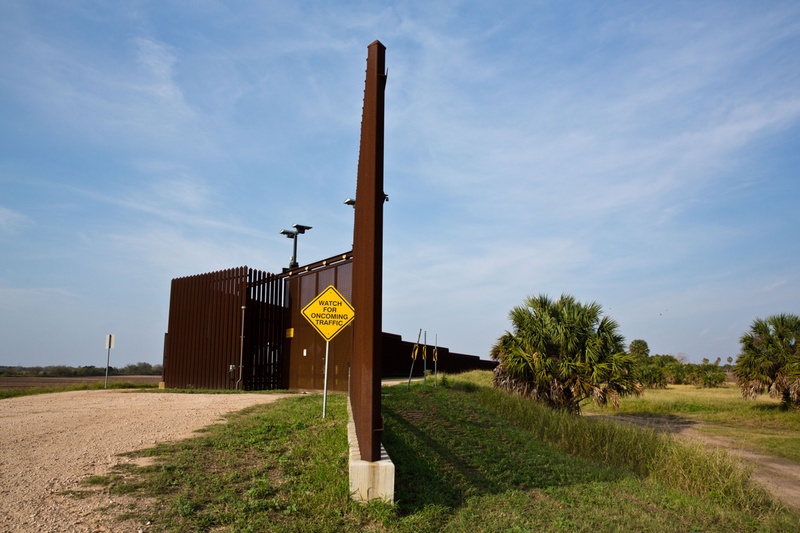
  • Border Security operations destabilize Texas Budget

    Border Security operations destabilize Texas Budget

    AUSTIN, TEXAS (TIP): As a budget shortfall in Texas threatens cuts to colleges and Medicaid, a costly border security operation is proving largely untouchable despite President Donald Trump’s promises to build a wall and the plunging number of people caught illegally entering the U.S., says an AP report.

    The report points out that a prolonged oil slump has left lawmakers about $6 billion short of the money needed to keep the status quo in Texas, which attracts about a million new residents every two years. But border security is one area where Republicans – who control state government – have all but refused to search for savings.

    During a key budget vote on Thursday, April 6, House Democrats proposed taking dollars earmarked for hundreds of state troopers on the Texas-Mexico border and National Guard patrols, and putting that money instead toward other programs they say are underfunded. One even proposed tacking onto a $218 billion spending bill a prohibition against using state funds on Trump’s border wall.

    But the proposals to scale back Texas’ $800 million border operation appeared largely symbolic during a marathon debate in the GOP-controlled Legislature.

    Illegal border crossings have plummeted in recent months. In March, authorities caught 12,193 people at the southern border – the lowest monthly figure in at least 17 years, and the second straight month that border arrests sharply dropped. Still, Republican officials from Texas Gov. Greg Abbott on down embrace Trump’s plans to build a wall, and the state is committing more money to border security efforts.

    “At the federal level, the money hasn’t been turned loose to apply the new resources that are needed to do what President Trump has said needs to be done, and what I agree needs to be done,” said Republican Rep. Matt Schaefer, a U.S. Navy reserve lieutenant from East Texas who is among the most far-right lawmakers in the Texas House. “This is going to take time. I don’t believe that we can stand down while the federal government steps up. And that’s going to be awhile.”

    The state is set to pass a new budget by June, and just about every part of Texas government is in line to take hit: Public universities are fighting a proposed $300 million cut, and one of Abbott’s biggest initiatives – bolstering pre-kindergarten – is also getting short shrift. More than $2 billion in proposed cost cuts to Medicaid is also on the table, and many state agencies are under a hiring freeze.

    The Senate spared border security from any cuts, and the House plan would also keep funding 50-hour workweeks on the border for nearly two dozen Texas Rangers and 250 troopers. The House only stopped short of purchasing new big-ticket defense items, such as more spy planes or armored boats to patrol the Rio Grande.

    State officials have defended the price tag by with data that include drug seizures and arrests, though critics question the numbers. Last year, an Associated Press review found that child support evaders and low-level felony drug arrests were among thousands of arrests being categorized as “high-threat criminals” along the border.

    Some think the real “Trump effect” was pushing fearful people to get to the U.S. before Trump took office. Border arrests in October, November and December increased by about a third compared to the same period in 2015, before falling this year.

    “A lot of Republican members want to be able to say they voted for money on the border to stop this perceived immigration problem,” said Rep. Chris Turner, who leads the House Democratic Caucus. “The data doesn’t support their arguments. A lot of us hoped there would be a lot less money would be put into border security. But politics is driving that decision.”

    (Source: AP)