Tag: Trump’s Policies

  • America Launches Missile Attack at Syrian Base after Chemical Weapons Attack kills 100

    America Launches Missile Attack at Syrian Base after Chemical Weapons Attack kills 100

    Piqued by Syria’s use of banned chemical weapons that killed at least 100 people, the U.S. military launched dozens of cruise missiles Thursday, April 6 night at a Syrian airfield

    Two U.S. warships in the Mediterranean Sea, the USS Ross and the USS Porter, fired 59 Tomahawk missiles intended for a single target -Shayrat Airfield in Homs province in western Syria, the Defense Department said. That’s the airfield from which the United States believes the government of Syrian President Bashar al-Assad fired the banned weapons.

    The Pentagon said people were not targeted, and there was no immediate word on casualties. U.S. officials told NBC News that aircraft and infrastructure at the site were hit, including the runway and gas fuel pumps.

    “Assad choked out the lives of helpless men, women and children,” President Donald Trump said in remarks from Mar-a-Lago, his family compound in Palm Beach, Florida.

    “It is in this vital national security interest of the United States to prevent and deter the spread and use of deadly chemical weapons,” said Trump, who called on other countries to end the bloodshed in Syria.

    NBC news reported that a White House official said that more than two dozen members of Congress were briefed by administration officials on the missile strike. Vice President Mike Pence returned to the White House after having gone home for dinner Thursday evening and monitored the events from the Situation Room, officials said.

    “We feel that the strike itself was proportional, because it was targeted at the facility that delivered this most recent chemical weapons attack,” Tillerson told reporters on Thursday night.

    “There was a thorough examination of a wide range of options, and I think the president made the correct choice and made the correct decision,” Tillerson said.

    Syrian television characterized the missile strike “as American aggression” Friday morning. But Ahrar Al Sham, the largest Syrian armed rebel group, told NBC News it “welcomes any U.S. intervention through surgical strikes that would deter the Assad regime capabilities to kill civilians and shorten the suffering of our people.”

    Navy Capt. Jeff Davis, a spokesman for the Defense Department, said initial assessments showed that the airfield was severely damaged, reducing Syria’s capability to deliver chemical weapons.

    Tillerson and Nikki Haley, the U.S. ambassador to the United Nations, have bluntly blamed Syria for the chemical weapons attack, whose victims included at least 25 children.

    “We have a very high level of confidence that the attacks were carried out by aircraft under the direction of Bashar al-Assad’s regime, and we also have very high confidence that the attacks involved the use of sarin nerve gas,” Tillerson said Thursday night.

    In a combative speech at the U.N. Security Council on Wednesday, Haley warned: “When the United Nations consistently fails in its duty to act collectively, there are times in the life of states that we are compelled to take our own action.”

    There was no immediate reaction to the missile strike from Russia, which Tillerson and Haley have accused of having turned a blind eye to Syria’s transgressions.

    Tillerson said there were no executive-level communications with Russian President Vladimir Putin before the missile strike. But he confirmed that U.S. officials had “multiple conversations” with the Russian government in accord with U.S.-Russian military “deconfliction” agreements.

    “We sought no approval from Moscow or at any other level within the Russian infrastructure,” Tillerson said. “This was simply following rules that we have put in place in agreement with the Russian military to deconflict. Because our target in this attack was not Russia.”

    Noting the 2013 U.N. arrangement under which Syria agreed to surrender its chemical weapons under the supervision of Russia, Tillerson said Thursday night: “Clearly, Russia has failed in its responsibility to deliver on that commitment from 2013. So, either Russia has been complicit or simply incompetent in its ability to deliver on that agreement.”

    McMaster said the missile strike wouldn’t have wiped out Assad’s “capacity to commit mass murder with chemical weapons.” But he said: “This was not a small strike. I mean, it was not a small strike. And I think what it does communicate is a big shift in Assad’s calculus – it should be, anyway.”

    (Source: NBC News)

    About the Missile Attack on Syria:

    * Fifty-nine Tomahawk missiles were fired from American destroyers in the eastern Mediterranean at Al Shayrat airfield in Syria, where officials said Mr. Assad’s chemical weapons attack this week originated.

    * Mr. Trump ordered the strike after two days of intense deliberations that involved two meetings of his top national security advisers, including one that Mr. Trump conducted from his Mar-a-Lago estate in Florida.

    * In announcing the strikes on Thursday evening, Mr. Trump called the chemical attack “very barbaric” and said his decision would “prevent and deter the spread and use of deadly chemical weapons.”

    * Administration officials described the missile strikes as a message to the world about Mr. Trump’s resolve and his commitment that the United States will no longer “turn away, turn a blind eye.”

    * The Russian military, which is active in Syria, was notified of the strikes in advance, though American officials did not personally inform President Vladimir V. Putin. In a briefing, Secretary of State Rex W. Tillerson criticized Moscow for failing to live up to its promise in 2013 to destroy all of Syria’s chemical weapons, calling Russia either “complicit” or “incompetent.”

  • US-China Summit: Chinese President Xi Jinping Arrives in the US

    US-China Summit: Chinese President Xi Jinping Arrives in the US

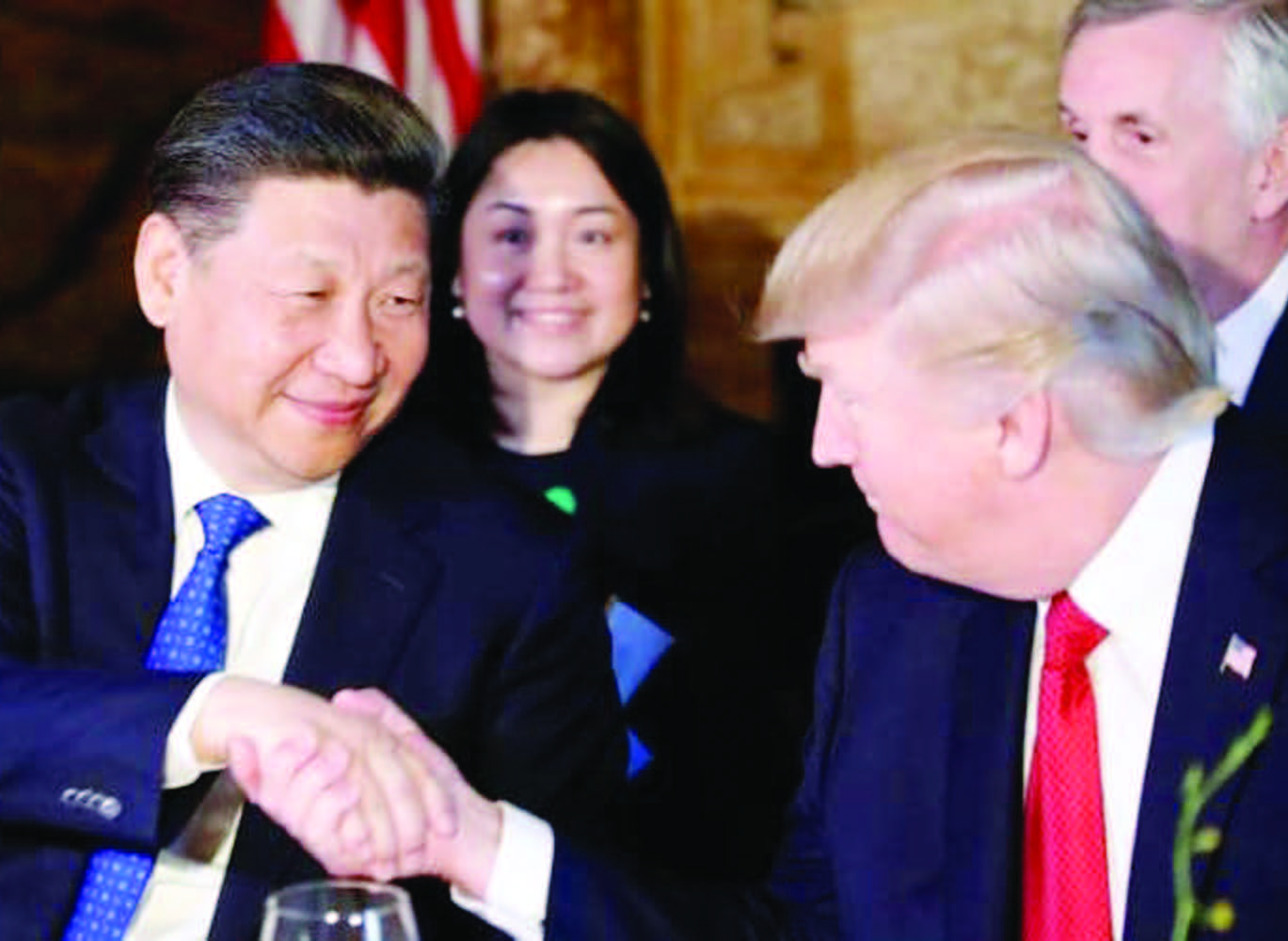
    MAR-A-LAGO, FL (TIP): US President Donald Trump and Chinese President Xi Jinping opened their high-stakes summit at Trump’s Florida beach resort on Thursday, April 6 evening, with the volatile situation in Syria where Syrian government troops used chemical gas which killed at least 100, an urgent threat of North Korea’s nuclear ambitions, and tensions over trade on the agenda for the first meeting between the leaders of the world’s two largest economies.

    President Trump pointed to the crisis in North Korea as a top priority in the meetings with Xi, telling reporters on Air Force One on his way to Florida on Thursday that he thinks China will “want to be stepping up” in trying to deter North Korea’s nuclear ambitions.

    Ahead of the dinner, Trump said he and Xi already had had a long discussion and had “developed a friendship,” and then joked, “I have gotten nothing, absolutely nothing.”

    The White House said the location was selected to give the two days of discussions a more relaxed feel. A number of Trump’s top advisers were in attendance, including his daughter, Ivanka Trump, and son-in-law, Jared Kushner.

    While Trump would not say what he wants China to do specifically with regard to North Korea, he suggested there was a link between “terrible” trade agreements the U.S. has made with China and Pyongyang’s provocations. He says the two issues “really do mix.”

    The president has said that if China doesn’t exert more pressure on North Korea, the U.S. will act alone.

  • Senate Republicans exercise Nuclear option to confirm Gorsuch

    Senate Republicans exercise Nuclear option to confirm Gorsuch

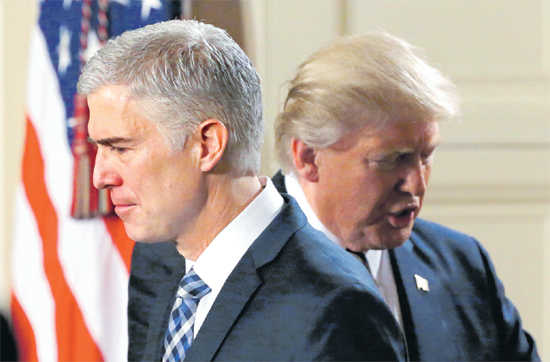
    WASHINGTON (TIP): Senate Majority Leader Mitch McConnell, R-Ky., set a new precedent in the Senate that will ease the confirmation for President Trump’s Supreme Court nominee Neil Gorsuch on Friday, after 30 more hours of debate on the floor.

    “This will be the first, and last, partisan filibuster of a Supreme Court justice,” said McConnell in a closing floor speech.

    Senate Democrats voted against ending debate on Gorsuch’s nomination on a near party-line vote, leaving Republicans shy the 60-vote hurdle required by Senate rules to move on to a final confirmation vote.

    Democrats opposed Gorsuch for a variety of reasons, including his conservative judicial philosophy, dissatisfaction with his answers during his confirmation hearings and a simmering resentment towards McConnell’s decision to block any consideration of President Obama’s nominee Merrick Garland last year.

    “We believe that what Republicans did to Merrick Garland was worse than a filibuster,” said Senate Minority Leader Charles Schumer, D-N.Y.

    So, McConnell then, as promised, used the power of his position and with all of his GOP colleagues lined up behind him, to essentially change the rules of the Senate – to lower that threshold on Supreme Court nominations to end debate from 60 to 51 votes. The change did not affect the legislative filibuster.

    McConnell made a point of order that ending debate on the nomination only requires a simple majority. The motion was not sustained by the chair because Senate rules required 60 votes, so McConnell then made a motion to overturn that ruling. And once that motion passed on a party-line vote, the Gorsuch nomination only needed 51 votes to clear the hurdle.

    That mild-sounding parliamentary maneuver has the most destructive nickname, “the nuclear option,” because it contains sweeping impact on the Senate, President Trump and all of his successors -and the nation as a whole.

    By essentially eliminating the filibuster for Supreme Court nominees – an extension of the 2013 nuclear option triggered by then-Senate Majority Leader Harry Reid, D-Nev., for all lower court and executive branch nominees – all presidential nominees will now face a far easier path navigating through the Senate confirmation process. It also could make it easier for presidents to appoint more overtly partisan justices to the Supreme Court. The change will also test the character of the Senate and the people who serve in it, and lay bare whether the upper chamber is slowly lurching towards becoming more like the majority-driven and reactionary House of Representatives, where the minority party has little substantive role.

    Opponents of easing the filibuster warn that the next and likely step is to eliminate the legislative filibuster, which allows any one senator to hold up a piece of legislation and requires a 60-vote threshold to break the logjam and move such a bill forward. Critics of the filibuster say the maneuver is abused and used so regularly that it has rendered the Senate incapable of acting on even routine legislative matters.

    The filibuster and the rights it gives to individual senators and the minority party are reasons why the Senate has long considered itself “the greatest deliberative body in the world.”

    But the use of filibusters and the polarization between the two parties have dramatically increased in the past two decades, making it harder and harder for the Senate to reach bipartisan consensus even on matters like the annual 12 spending bills.

    “Today’s vote is a cautionary tale about how unbridled partisan escalation can ultimately overwhelm our basic inclination to work together, and frustrate our efforts to pull back, blocking us from steering the ship of the Senate away from the rocks,” Schumer said.

  • Indian American Senator Harris Urges President Trump to Abandon ACA Repeal Efforts

    Indian American Senator Harris Urges President Trump to Abandon ACA Repeal Efforts

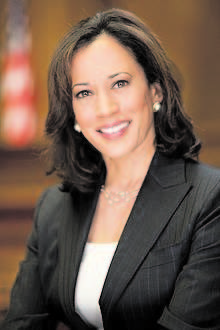
    WASHINGTON (TIP): U.S. Senator Kamala D. Harris joined colleagues in sending a letter to President Trump urging him and his administration to abandon their efforts to repeal the Affordable Care Act and undermine the United States health care system so they can work in a bipartisan fashion to improve the law and lower the costs of health care for all Americans.

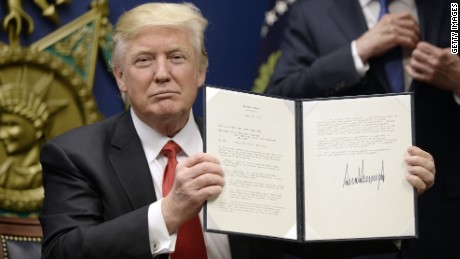
    The letter, signed by 44 Senate Democrats, also requests – as a first step – that the Trump Administration rescind the executive order signed on January 20th, 2017 which severely undermined the Affordable Care Act and sparked the efforts to unravel the law thereby undermining the health care system and increasing costs, hurting patients, providers and families. Senate Democrats also expressed concern with President Trump’s recent statement indicating it would be a good thing to make the ACA “explode”, despite the fact that would mean hurting millions of Americans.

    “Members of the Democratic caucus remain ready and willing to work with you on policies that would improve the stability of the individual insurance market. We ask that you begin the work of improving health care for millions of Americans by rescinding your January 20th executive order”, reads the letter.

    Earlier, Harris spoke on the floor of the Senate in opposition to the American Health Care Act on the anniversary of the signing of the Affordable Care Act.

  • Indian American Congressman Raja Krishnamoorthi Denounces Trump’s Executive Order Rolling Back American Commitment to Growing Green Technology Sector

    Indian American Congressman Raja Krishnamoorthi Denounces Trump’s Executive Order Rolling Back American Commitment to Growing Green Technology Sector

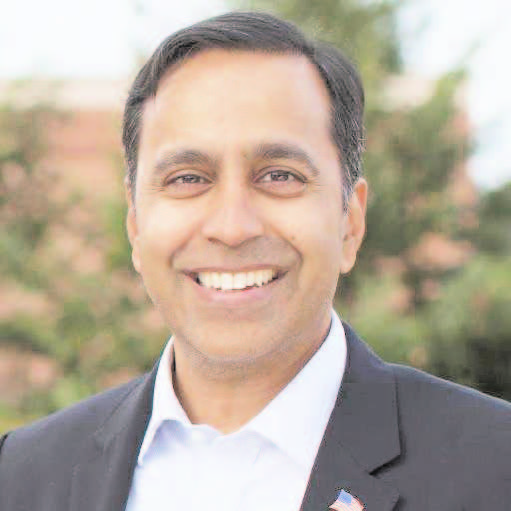
    WASHINGTON (TIP): Indian American Congressman Raja Krishnamoorthi denounced President Trump’s executive order eliminating President Obama’s climate-change protections as an attack on the growing green economy and as another example of the Trump administration’s effort to govern by decree. Krishnamoorthi is the author of the Executive Order Transparency Act, which would require executive orders to be posted to the White House website seventy-two hours in advance of signing, to reveal their contents. The Congressman also introduced H. Res. 85, a resolution in support of the United States continuing its Paris Agreement commitments to address climate change and develop clean energy.

    “Through this sudden and reckless order, the Trump administration has continued to cede American leadership in green technology while endangering our environment and ambushing our economy in the process,” Krishnamoorthi said.

    “The need to deal with climate change is imperative, but by doing so, we can also lead the world in the development of green technology. That is why I introduced a resolution specifically calling for our country to continue to address climate change and to embrace the new economic developments that come with it. Through rolling back these environmental protections, President Trump has allowed other nations to lead on this vital technology.”

    “I’ve also introduced legislation to push back against the White House’s efforts to ambush the country with radical overnight orders by requiring executive orders to be disclosed three days before their signing. By issuing this order so suddenly and without providing warning to the necessary Agencies, the administration has left clean energy and green technology firms to face a suddenly more hostile business environment for no discernible advantage”, he further added.

  • Computer Programmer not a specialty occupation? – USCIS will Investigate, Call for RFE’s

    Computer Programmer not a specialty occupation? – USCIS will Investigate, Call for RFE’s

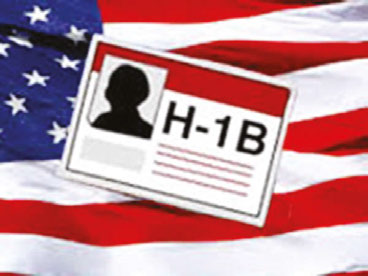
    USCIS released a policy memorandum on March 31, 2017, Recession of the December 22, 2000 “Guidance Memo on H-1B computer related positions” to clarify its approach on computer programmer position and whether it qualifies as a specialty occupation, with an immediate effect.

    The memo brings the position of computer programmers on the spot and cruises on the eligibility criteria. It specifies that a person may be employed as a computer programmer and may use information technology skills and knowledge to help an enterprise achieve its goal in the course of his/her job but it is not sufficient to establish the position as a specialty occupation. Hence, the petitioner now has an additional burden to establish that a particular position is one of the specialty occupation as defined by 8 CFR 214.2(h)(4)(ii).

    Entry or senior level position: The 2000-01 edition described all programmers as sharing a fundamental job duty, i.e. writing and testing computer code and any individual with only an associate degree may enter these occupations. But the Memo now settles that it is improper to conclude on the above information that an individual will qualify for a specialty occupation.

    Hence the memo concludes that a person may be employed as a computer programmer and may use information technology skills and knowledge to help an enterprise achieve its goals in the course of his/her job, but an additional evidence is required to establish the position of computer programmer is a specialty occupation.

    Impact of the memo: The memo came out with an immediate effect and hence will have a substantial impact on petitioners filing as computer programmer for the H-1B CAP FY2018. There will be more scrutiny and request for evidence for this category.

    U.S. Citizenship and Immigration Services (USCIS) also announced multiple measures to further deter and detect H-1B visa fraud and abuse on April 03, 2017.

    Beginning April 3rd, USCIS will take a more targeted approach when making site visits across the country to H-1B petitioners and the worksites of H-1B employees. USCIS will focus on:

    · Cases where USCIS cannot validate the employer’s basic business information through commercially available data;

    · H-1B-dependent employers (those who have a high ratio of H-1B workers as compared to U.S. workers, as defined by statute); and

    · Employers petitioning for H-1B workers who work off-site at another company or organization’s location.

    Targeted site visits will allow USCIS to focus resources where fraud and abuse of the H-1B program may be more likely to occur, and determine whether H-1B dependent employers are evading their obligation to make a good faith effort to recruit U.S. workers.

    USCIS will continue random and unannounced visits nationwide. These site visits are not meant to target nonimmigrant employees for any kind of criminal or administrative action but rather to identify employers who are abusing the system.

    Employers who abuse the H-1B visa program negatively affect U.S. workers, decreasing wages and job opportunities as they import more foreign workers. To further deter and detect abuse, USCIS has established an email address which will allow individuals (including both American workers and H-1B workers who suspect they or others may be the victim of H-1B fraud or abuse) to submit tips, alleged violations and other relevant information about potential H-1B fraud or abuse. Information submitted to the email address will be used for investigations and referrals to law enforcement agencies for potential prosecution.


  • Foreign Tech Workers On Edge As Donald Trump Cracks Down On H-1B Visa Program That Feeds Silicon Valley

    Foreign Tech Workers On Edge As Donald Trump Cracks Down On H-1B Visa Program That Feeds Silicon Valley

    The U.S. administration began to deliver on President Donald Trump’s campaign promise to crack down on a work visa program that channels thousands of skilled overseas workers to companies across the technology industry.

    Fed up with a program it says favors foreign workers at the expense of Americans, the Trump administration rolled out a trio of policy shifts. The U.S. Citizenship and Immigration Services agency on Friday made it harder for companies to bring overseas tech workers to the U.S. using the H-1B work visa.

    Lottery Opens For High Skilled H-1B Visas

    On Monday, April 3, as the H1-B lottery program for “high-skilled” worker visas opened with the 85,000 slots, the USCIS agency issued a memo laying out new measures to combat what it called “fraud and abuse” in the Program. The Justice Department further warned employers applying for the visas not to discriminate against U.S. workers.

    Nearly three-quarters of the visas are expected to go to Indian workers, as they have in recent years.

    “The Justice Department will not tolerate employers misusing the H-1B visa process to discriminate against U.S. workers,” said Acting Assistant Attorney General Tom Wheeler in a prepared statement. “U.S. workers should not be placed in a disfavored status, and the department is wholeheartedly committed to investigating and vigorously prosecuting these claims.”

    The department’s U.S. Citizenship and Immigration Services will make unannounced site visits to companies that have a high ratio of workers on H-1B visas, and those whose foreign workers are outsourced to another company.

    Seventy one percent of H-1B visa recipients came from India in 2015, according to a 2016 report by the U.S. Department of Homeland Security. China comes in second, accounting for nearly 10 percent of H-1B visa recipients.

    India’s dominance of the H-1B visa system is cemented by the country’s giant outsourcing firms that submit tens of thousands of applications, increasing their chances of winning the coveted temporary work visas.

    Among the top H-1B visa sponsors are Infosys, Tata Consultancy Services, Wipro, and Tech Mahindra Americas — Indian multinational corporations providing information technology and outsourcing services, according to Myvisajobs.com.

    The outsourcing firms are controversial because they are exempt from the federal requirement that they not displace American workers if they pay H-1B visa holders at least $60,000 a year. That threshold still falls below the market rate for American tech workers.

    American tech companies who use workers hired by these firms benefit from the cheaper labor, as well as the automatic loyalty engendered among workers who would otherwise lose their legal status.

    The H-1B visas last for three years, and can be renewed once. But workers applying for green cards can renew their visas indefinitely. There is currently a decade-long backlog of Indian green card applicants. Given the tremendous delay, companies have an incentive to hire workers from India, who critics say end up in a system of de facto “indentured servitude.”

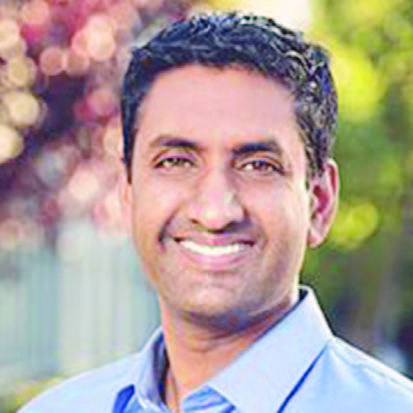
  • Ro Khanna’s take on Trump’s Budget Proposal – Its “Dumb” & “Inhumane”

    Ro Khanna’s take on Trump’s Budget Proposal – Its “Dumb” & “Inhumane”

    Washington:  Indian-American Congressman Ro Khanna has termed as “dumb” some of the budget proposals of US President Donald Trump and described the move to cut foreign aid as “inhumane”.

    Khanna, the first-time Democratic lawmaker elected to the House of Representatives from a Congressional District in California, hoped that the ruling Republican party, which has majority in both the House and the Senate, would work against passage of the budgetary proposals of Trump.

    “I am really concerned about the community block grants, the USD three billion cut. It is shocking to me given someone campaigned on America first, building American cities. Here USD three billion that goes to building American cities, transportation, infrastructure, job training.

    “I cannot think of a more a dumb proposal than frankly than cutting that. Hopefully the Republicans will push back on that,” he told TYT Politics news YouTube channel yesterday.

    Khanna said he is concerned that the Republicans may not push back on foreign aid, given that the White House has proposed a massive budgetary cut in it.

    “Gorge Bush, I disagreed with about everything Bush/Cheney did. The one thing he did that we should all give him credit for is he helped save people in Africa with HIV. We put billions of dollars in foreign aid to help people with the antiviral drugs and we are going to cut that. That is so inhumane. So I think defending the foreign aid budget, which is less than one per cent, which is going to humanitarian causes,” Khanna said.

    “One of the things that annoyed me so much about Trump’s speech was when he said, ‘Well, it is America’s national interest and America first, and all nations follow their self- interest’. I thought the whole idea about American exceptionalism is we are not all nations. Yeah, other nations just follow their national interest, we care about morality.

    We care about humanity. That is what makes America exceptional, so we should care about the moral case, about what we are going to do for other countries,” he said.

    Alleging that the Republicans want to dismantle the New Deal Coalition, Khanna said this is the reason why they are “so much allowance” to Trump.

    “You talk to members of Congress and they do not agree with everything he says even Republicans. They are as embarrassed. But why do they give him such a pass? Why are not they speaking out? It is because he is helping achieve their vision, which is the dismantling of the administrative state.

    The dismantling of the New Deal in a way that even Ronald Reagan did and so they are saying, ‘Okay, we are going to make the bargain with the devil’. He is giving us what we want. Let us ignore everything else,” he said.

    Commenting on the Democratic party’s defeat, he said the party leadership have to come out with an economic platform that would appeal to people in states like Michigan, Ohio, Arkansas, Kentucky and places that they lost.

    “We have got to be willing to take a risk on something bold. I think that is really where the frustration with the base is, is they see the same type of incrementalism. It is not just a messaging problem. It is not just okay with we use some different word, or George Lakoff, we have the wrong frame. It is a vision problem. It is a substance problem. They are hurting,” Khanna said.

    He said globalization has eviscerated in part the middle class, and the money has gone to corporate interest.

    “The money has gone to CEOs. They feel that their wages have stagnated since 1979 to today for most middle-class families. The cost of healthcare has gone up. The cost education has gone up. Why would not you be upset? Why would not you be angry? They do not see the Democratic Party having done anything for them,” he said.

    Khanna said there is a stagnation of ideas in the Democratic party and there is need for a new vision.

    “We need people who are going to put out the bold ideas for the Democrats, just like Paul Ryan and Newt Gingrich and others did for the Republicans. Barry Goldwater, Reagan, they moved the Republican Party. We need that same energy. I had said somewhat facetiously but I believe it, let us fire all the Democratic consultants. Put Robert Reich, Stephanie Kelton and Paul Krugman in a room and they do a hell of a better job coming up with their agenda,” he said.

    Responding to a question, Khanna said American democracy is extraordinary.

    “I think that American democracy is still extraordinary. My own story: I am of Hindu faith, parents immigrated, was born in Philadelphia, I am 40 years old, I represent a district which is the most economically successful district in the world with Apple and Google,” he said.

    “There is an openness to the American political system that is extraordinary for all its flaws. That is what I hope people will understand that they do not feel disenfranchised.

    If the Democratic Party is the vehicle, great. If that is not the vehicle, go protest, go run as a third-party, but be engaged,” Khanna added.

  • Moms, Dads, Students: Know Your Rights

    Moms, Dads, Students: Know Your Rights

    Too many of our public school students and their families are living in fear. They don’t know how new immigration policies coming from Washington might affect them. They worry about what might happen if Immigration and Customs Enforcement agents visited their school.

    NYCMayor
    @NYCMayor

    As your Mayor, I want to send a clear message: No matter where you come from or when you got here, ‎ the City of New York stands with you. I stand with you. This is your city.

    We want every principal and school safety agent to know how to respond if federal immigration officers come knocking. We want every student and every family to know their rights. That’s why we are sending out an updated policy to all of our schools and offering workshops to families.

    Our policy is clear. If ICE agents come to a school, they will be kept out of the building until the school staff can assess the situation with our lawyers and with support from the NYPD. ICE officers will not be given any information or allowed to enter any school unless absolutely required by law.

    Parents should remember that our schools do not collect information about students’ immigration status. For decades now it has been our policy not to ask for that info or keep records.

    For as long as we need to, the City will be offering workshops to inform parents about their rights and how they can get help in a crisis. We have more than 100 workshops slated to hit every borough with more to come.

    Wednesday, March 22, 6:30-8:00 pm
    NYC Health + Hospitals/Kings County
    689 New York Ave., Brooklyn (T-Building Auditorium, Enter on Clarkson)
    o Translation available in Haitian Creole

    Tuesday, March 28, 6:30-8:00 pm
    NYC Health + Hospitals/Harlem
    506 Lenox Ave, Manhattan, Room 3101
    o Translation available in French

    Wednesday, March 29, 6:30-8:00 pm
    NYC Health + Hospitals/Elmhurst
    79-01 Broadway, Elmhurst
    o Translation available in Hindi, Urdu, Bengali

    Any New Yorker who would like to speak with a lawyer about their immigration status can get high-quality, confidential and free services. For more information on workshops or legal services, please dial 311.

    If you want to see what is possible in this world, if you want to see human beings of all backgrounds and faiths living, learning and growing together, just visit our public schools. This ultimate city of immigrants educates more than 1.1 million students who speak more than 170 languages.

    We will do everything in our power to keep every single child in every single school safe, nurtured and free of fear.

    @NYCMayor

  • ICE is targeting ‘sanctuary cities’ with raids: Source

    ICE is targeting ‘sanctuary cities’ with raids: Source

    DALLAS (TIP): Immigration and Customs Enforcement has been targeting so-called “sanctuary cities” with increased enforcement operations in an effort to pressure those jurisdictions to cooperate with federal immigration agents, a senior US immigration official with direct knowledge of ongoing ICE actions told CNN.

    A sanctuary city is a broad term applied to states, cities and/or counties that have policies in place designed to limit cooperation or involvement in the enforcement of federal immigration operations. More than 100 US jurisdictions — among them New York, Los Angeles and Chicago — identify as such.

    High-ranking ICE officials have discussed in internal meetings carrying out more raids on those locations, said the source. This week, a federal judge in Texas seems to have confirmed that tactic. US Magistrate Judge Andrew Austin revealed during an immigration hearing Monday that a mid-February raid in the Austin metro area was done in retaliation for a local sheriff’s recent decision to limit her department’s cooperation with ICE.

    “There’s been questions about whether Austin is being targeted. We had a briefing…. that we could expect a big operation, agents coming in from out of town. There was going to be a specific operation, and it was at least related to us in that meeting that it was a result of the sheriff’s new policy that this was going to happen,” Austin says in audio of the proceedings provided by the court.

    The judge’s comments came as he questioned an ICE agent about a recent unrelated arrest.

    Austin said that in a late January meeting, local ICE officials told him and another federal judge that an upcoming enforcement operation was being done in direct response to Sheriff Sally Hernandez’s adoption of a sanctuary policy in Travis County.

    Earlier this year, Hernandez announced that beginning in February, her department would no longer honor ICE detainers unless the individual was arrested for murder, sexual assault or human trafficking, or a warrant had been issued. A detainer is a 48-hour hold request placed on suspected undocumented immigrants in local jails until federal agents can come in and take over the case.

    A showdown in Travis County, Texas: It is a significant shift in the county’s immigration enforcement policy that has put the newly elected Democratic sheriff at odds with pro-enforcement local and state officials, including the Texas Senate, which recently passed a bill that withholds state dollars from sanctuary cities and Gov. Greg Abbott, who cut $1.5 million in funding to the county.

    Days after Hernandez enacted the new measure, a series of immigration raids in Austin netted 51 arrests, fueling speculation that the city was being intentionally targeted. The judge’s comments in open court have further fanned those flames.

    “My understanding, what was told to us, is that one of the reasons that happened was because the meetings that had occurred between the (ICE) field office director and the sheriff didn’t go very well,” said Judge Austin during the hearing. CNN reached out to the judge, but he declined to comment further.

    Hernandez refused to comment because she was not present at the meeting between the judges and immigration agents.

    ICE categorically denied any suggestion that planned operations were specifically aimed at the sheriff’s county.

    “Rumors and reports that recent ICE operations are specifically targeting Travis County, Texas, apart from normal operations, are inaccurate,” read a statement from ICE, although it did go on to say that “more ICE operational activity is required to conduct at-large arrests in any law enforcement jurisdiction that fails to honor ICE immigration detainers.”

    Officials in several sanctuary cities began complaining that they may be getting intentionally targeted after a series of raids around the country in February resulted in almost 700 arrests, but ICE described these operations as routine and said they were planned during the previous administration.

    The senior immigration official pointed out that the raids overwhelmingly took place in sanctuary jurisdictions.

    Enforcement actions are not random, ICE says.

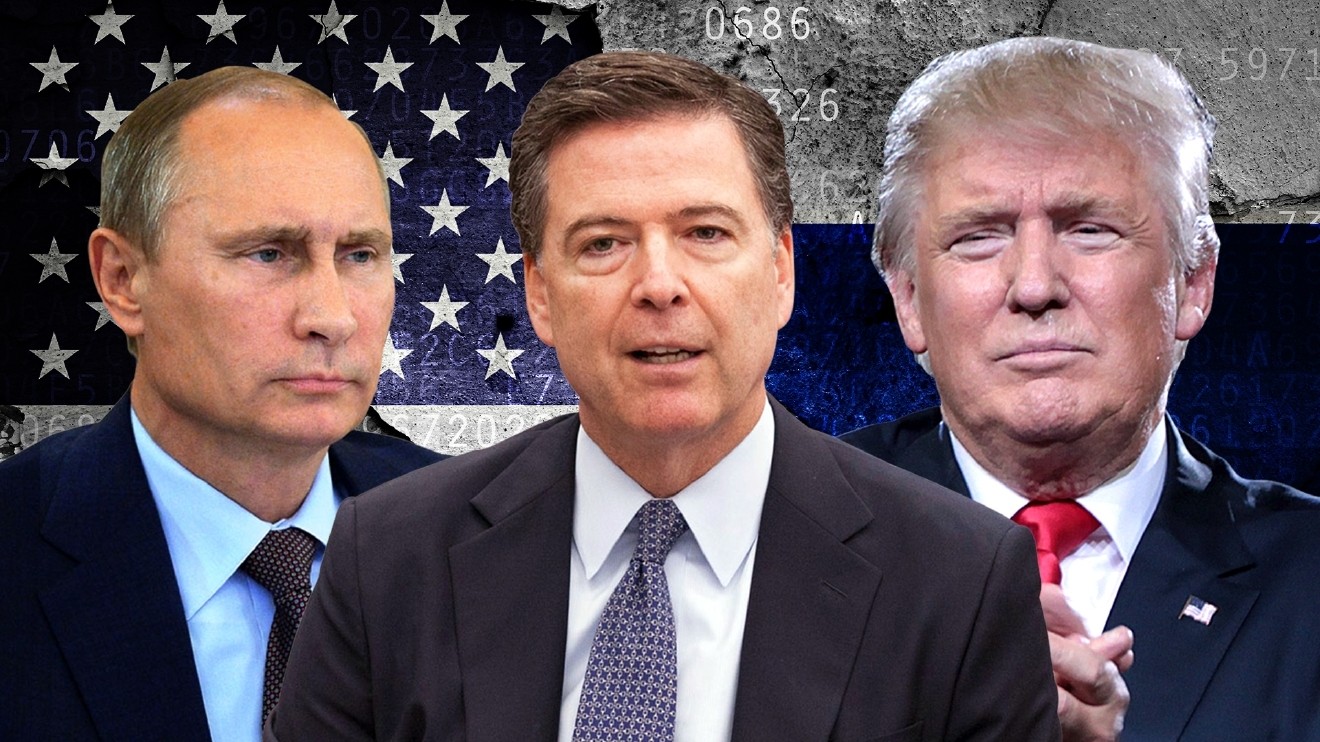
  • Trump-Russia investigation erodes the U.S. President’s credibility

    Trump-Russia investigation erodes the U.S. President’s credibility

    The first open hearing into the alleged links between the campaign of Donald Trump and unnamed parties associated with the Russian government kicked off this week, even as the President put out a series of social media posts that seemed to mischaracterize statements coming out of that hearing.

    Ground-shaking revelations have come from the grilling of FBI Director James Comey and NSA Director Michael Rogers by the House of Representatives’ Intelligence Committee. The first was from Mr. Comey, who confirmed that the FBI was investigating Russia’s efforts to interfere in the presidential election, including links between specific individuals associated with the Trump campaign and the Russian government. Last month Mr. Trump’s nominee for National Security Adviser, Michael Flynn, resigned from his post after it emerged that he had withheld information about being in contact with Russia’s Ambassador in Washington prior to Mr. Trump’s inauguration. This month, Attorney General Jeff Sessions recused himself from the probe into alleged Russian meddling when it came to light that he had met the Ambassador prior to the election. Yet he continues to head the institution charged with the inquiry. Mr. Comey revealed that the FBI investigation began in July 2016, when evidence emerged that the Democratic National Committee had been hacked by Russia-related entities and emails handed over to WikiLeaks.

    Even as the U.S. intelligence community scrambles to put together the pieces of the Trump-Moscow puzzle, it has, ironically, found itself in the crosshairs of exposure. Earlier this month WikiLeaks released a trove of confidential CIA documents, a series labelled “Vault 7”, which showed the Agency’s penetration of the security systems of household electronic devices that could then be used for covert surveillance. While such timed “leaks” are meant to target his political opponents, Mr. Trump’s own tweets are at odds with revelations in the House hearing. In early March, he accused former President Barack Obama of ordering wiretaps on Trump Tower – yet Mr. Comey said neither the FBI nor the Department of Justice had any information to support that allegation. Mr. Rogers dismissed the White House suggestion that Mr. Obama had asked British intelligence to spy on Mr. Trump, a claim the U.K. has denied. The last straw came when the U.S. President’s account tweeted, as the hearing proceeded, “The NSA and FBI tell Congress that Russia did not influence electoral process,” only to have this statement debunked by Mr. Comey at the hearing, live on TV. Mr. Trump’s tendency to resort to unsubstantiated, even misleading, claims to stall a probe into alleged collaboration with a foreign power is not helping his credibility, which is already low in the eyes of so many Americans.

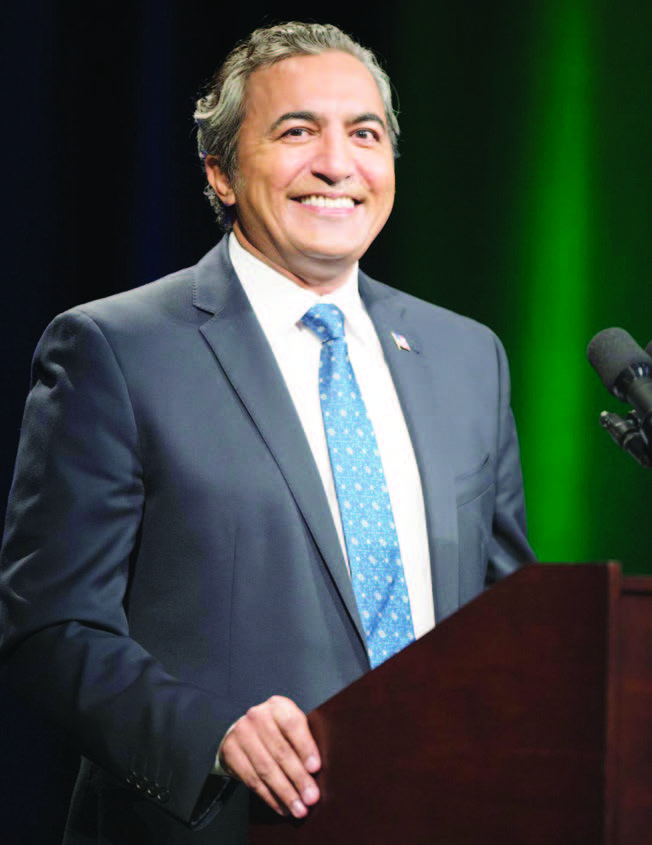
  • Don’t use hateful language: Indian American Congressman to Trump

    Don’t use hateful language: Indian American Congressman to Trump

    Worried about frequent hate crimes against Indian-origin people in the US, a senior Indian-American Congressman has urged President Donald Trump to refrain from using Islamophobic language that pits one group against another.

    “We’re certainly hearing that there’s some anxiety,” Indian-American Congressman Ami Bera, a three-term Democratic lawmaker from California told PTI.

    Now increasingly playing the role of mentorship to other aspiring Indian-American politicians and other elected leaders, Bera said it is important for community to speak out against such hate crimes.

    “It’s not reflective of who I believe we are as a country, we’re a nation of immigrants and I think the majority of Americans understand we’re a nation of immigrants,” he said.

    He is the senior most Indian-American lawmaker in the US House of Representatives which now has three other members from the community Ro Khanna, Raja Krishnamoorthi and Pramila Jayapal.

    Bera, 52, said he would like President Trump to speak out more forcefully against these hate crimes.

    “In fact, some of the hateful language that he used on the campaign trail I think has actually allowed some of the groups (involved in hate crimes) to come out of the shadows,” he said.

    “You’ve seen some of the high profile crimes, like what happened in Kansas, what happened in Washington State and South Carolina … Again, that’s not the country that I believe we are as America,” said Bera. Though the number might not be that big, but the community is now a vibrant part in the US, he said.

    “It’s the most affluent demographic in America. Many of the start-ups and the innovations that are occurring in America are coming out of the Indian-American community.”

    “Go to any State across this country, you have Indian American doctors, entrepreneurs, engineers working in fully integrated into the community. So, we are a part of the fabric of America. I think it’s important for the community to come together and let America know that this is not okay. It’s not who the US is,” he asserted.

    Urging Trump to stop tweeting, Bera said he would tell the US President to not use language that pits one group against another.

    “Certainly, he has used some Islamophobic language. The travel ban is the wrong direction because I think it’s targeting the specific group of individuals,” he said, adding that he is also worried a bit about America’s reputation taking a hit across the world.

    “I think it’s important for people like myself to speak out and make sure people around the world and places in India understand we’ve not changed what our values are, the people of America haven’t changed.”

    “Many of us believe the strength of America is this integration of different cultures, different religions, people coming together. That’s unique in the world and that’s something which has always made America a special place,” he said.

    (Source: PTI)

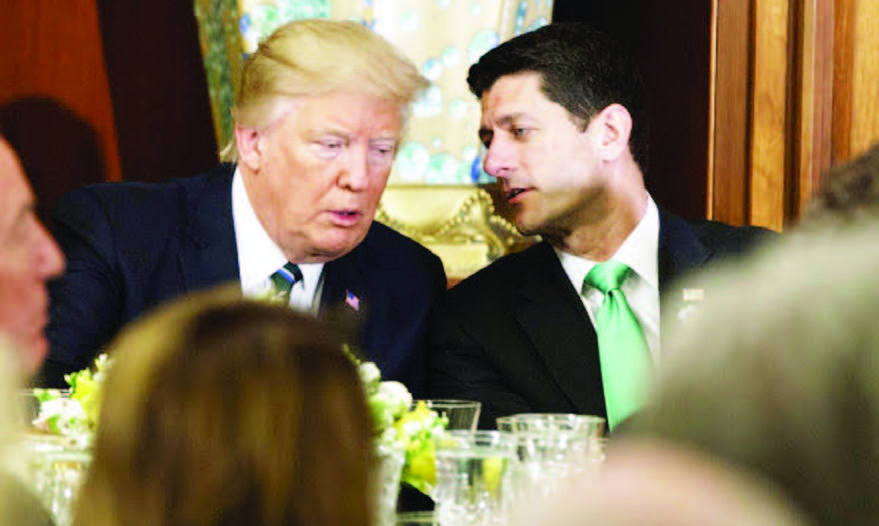
  • House vote to replace Obamacare postponed: Republicans don’t find yet the votes for their Health-Care Bill

    House vote to replace Obamacare postponed: Republicans don’t find yet the votes for their Health-Care Bill

    WASHINGTON (TIP): President Trump’s deal making expertise failed to convince many Republican Congressman that the Republican Healthcare Bill was any better than Obamacare. There has been a feverish activity in the Republican camp to muster enough support to pass the bill in the House on March 23. President Trump visited the Capitol, meeting with Congressmen, held a meeting with them in the White House to impress upon them how important it was to replace Obamacare with a Republican Healthcare. But, until late in the afternoon, the numbers required to pass the bill seemed to elude Speaker Ryan and President Trump.

    First, Speaker Ryan did not hold the proposed press conference, and later, it was announced that the vote on the healthcare bill was postponed.

    The announcement of the delay appeared to catch even the president unaware. Moments after the news broke, Trump told a group of truckers at the White House that the vote would still be held on Thursday. “We’ll see what happens,” he said. “It’s going to be a very close vote.” Earlier in the day, Press Secretary Sean Spicer was guaranteeing a victory. “It’s gonna pass. So, that’s it,” he told reporters.

    The move was an indication that a series of meetings Trump and Speaker Paul Ryan had with reluctant members in the party’s conservative and centrist wings had failed to achieve a consensus. Members of the House Freedom Caucus left a meeting with the president early in the afternoon saying there was “no deal” as they pushed Ryan to move the bill further to the right. And for Trump and Ryan, the delay dashed their hope of voting to dismantle the law on the seventh anniversary of its signing by former President Barack Obama.

    GOP leaders summoned all 237 Republicans to a 7 p.m. meeting in the Capitol to discuss possible changes to the American Health Care Act, and lawmakers said the party still hoped to hold procedural votes on the bill on Thursday night, with final passage on Friday. But even that plan was tentative, and tensions within the Republican conference were rising as the chances grew that the GOP would whiff on its longstanding promise to repeal and replace Obamacare.

    “The days of talking are over. It’s time to vote,” said Representative Bradley Byrne of Alabama, a strong supporter of the GOP plan. “The longer we wait, the worse our chances get.”

    Leadership officials were increasingly frustrated with the Freedom Caucus, which withheld its support even after winning Trump’s support for a change that would strip out Obamacare’s requirement that insurance plans cover maternity care, mental-health treatment, preventive services, and a host of other “essential health benefits” defined in the law. One leadership aide questioned whether Representative Mark Meadows of North Carolina, the group’s leader, could deliver its roughly three dozen votes after personally promising the president he would. A Meadows aide said the Freedom Caucus was pushing for even broader changes that would repeal the insurance regulations forbidding discrimination based on preexisting conditions and lifetime-coverage limits. But that is a non-starter for many House Republicans, and party leaders believe a bill that broad could not pass.

    Members like Byrne wanted the leaders to simply put the bill up for a vote, gambling that many of the rank-and-file lawmakers who have withheld their support wouldn’t dare let it go down in defeat in such dramatic fashion. “As a Republican, you’ve got one choice,” he said. “You either are going to vote with Donald Trump to repeal and replace Obamacare, or you’re going to vote with Nancy Pelosi to defeat the only bill to repeal and replace Obamacare. If you’re a Republican, that’s a pretty simple choice.”

    While the Freedom Caucus bargained for more conservative provisions, more moderate Republicans were peeling off the bill. Representatives Jaime Herrera Beutler of Washington state and Mark Amodei of Nevada declared their opposition on Thursday, and Trump planned to meet at the White House with the Tuesday Group, a coalition of moderates.

    Thursday’s push came after Ryan spent more than two hours Wednesday night meeting with more than a dozen members of the Tuesday Group and lawmakers representing swing districts. The pow-wow was inconclusive. The Republicans slipped out of the Capitol without speaking to reporters, and immediately after he left, Representative Charlie Dent of Pennsylvania, a co-chairman of the Tuesday Group, instructed his staff to release a statement formally opposing the leadership’s bill.

    “I believe this bill, in its current form, will lead to the loss of coverage and make insurance unaffordable for too many Americans, particularly for low-to-moderate income and older individuals,” Dent said. “We have an important opportunity to enact reforms that will result in real health-care transformation-bringing down costs and improving health outcomes. This legislation misses the mark.”

    The GOP bill, which would replace the ACA’s subsidies with less generous tax credits while repealing its insurance mandates, has run into opposition from across the political spectrum. Aside from the Chamber of Commerce, most industry groups have lined up against it. And despite the president’s hearty support, conservative activists and the billionaire Koch brothers say it falls far too short of a full repeal and have vowed to punish Republicans who support it.

    Late Thursday afternoon, the Congressional Budget Office released a revised estimate of the GOP bill’s cost after amendments were added earlier in the week. The nonpartisan scorekeeper found that the changes to Medicaid and tax policy would cost nearly $200 billion more over a decade than the original bill, but they would have little effect on insurance coverage or premiums. The CBO is still estimating that 24 million fewer people would have health insurance by 2026 and that average premiums would rise in the first couple years after the passage of the bill before falling by about 10 percent over a decade.

    Depending on how many lawmakers vote, Republicans can lose no more than 21 or 22 votes on their side and still achieve a majority. Democrats will vote en masse against the bill. Public whip counts put the defections at well over that number, but party leaders can still cross the threshold if they flip the group of conservative opponents led by Meadows. The bill would still need to pass the Senate, which would be an even more Herculean task for GOP leaders, considering they have a narrow, 52-48 seat majority and several Republicans have also declared the House plan unacceptable.

    Meanwhile, President Trump delivered an ultimatum to House Republicans on Thursday night: Vote to approve the measure to overhaul the nation’s health-care system on the House floor Friday, or reject it and the president will move on to his other legislative priorities.


  • USCIS suspends Premium Processing for All H-1B Petitions

    USCIS suspends Premium Processing for All H-1B Petitions

    Starting April 3, 2017, U.S. Citizenship and Immigration Services will temporarily suspend premium processing for all H-1B petitions, a statement issued by the USCIS stated. This suspension may last up to 6 months. While H-1B premium processing is suspended, petitioners will not be able to file Form I-907, Request for Premium Processing Service for a Form I-129, Petition for a Non-immigrant Worker which requests the H-1B nonimmigrant classification. We will notify the public before resuming premium processing for H-1B petitions.

    The premium processing service allows an applicant or his potential employer to pay $1,225 to receive a response to his petition within 15 days. If USCIS has not responded within 15 days, the fee is refunded, though the application still receives expedited processing, according to a bulletin issued by the agency March 3. H-1B visas are used by U.S. employers to temporarily employ foreign workers, most often from India, in specialty occupations.

    “This temporary suspension will help us to reduce overall H-1B processing times. By temporarily suspending premium processing, we will be able to process long-pending petitions, which we have currently been unable to process due to the high volume of incoming petitions and the significant surge in premium processing requests over the past few years; and prioritize adjudication of H-1B extension of status cases that are nearing the 240 day mark,” said the agency in a bulletin.

    USCIS has said the temporary suspension of premium processing could last as long as six months. The agency has said it will reject any form I-907 – request for premium processing – filed with an H-1B petition. If a check is issued to cover both applications, USCIS noted it will have to reject the H-1B application as well.

    “Since FY18 cap-subject H-1B petitions cannot be filed before April 3, this suspension will apply to all petitions filed for the FY18 H-1B regular cap and master’s advanced degree cap exemption (the ‘master’s cap’),” noted USCIS, adding that the suspension also applies to petitions that may be cap-exempt.

    H-1B petitioners can still expedite their applications if they meet one of the following criteria: a severe financial loss to company or  person;   an emergency situation; humanitarian reasons; a non-profit organization whose work benefits the cultural and social interests of the U.S., certain Defense Department situations; or USCIS errors. Such requests will be reviewed on a case-by-case basis. The temporary suspension does not apply to other non-immigrant classifications. The United States Citizenship and Immigration Services has ruled that Green Card holders and visa holders, like those on H-1B, L-1, J or F-1, H4 visa, and even those having an Employment Authorization Card (EAD) must carry legal documents papers when traveling in and out of the country and at all times within the United States, or face the risk of being fined or imprisoned, or even both.

    With a large-scale immigration crack-down on undocumented foreigners imminent after President Donald Trump’s new executive orders, it’s important for all documented residents in the US to keep proof of their legal status in the country.

    And for those in the pipeline for a Green Card, a misdemeanor charge could have terrible repercussions when it comes to being adjudicated for legal permanent resident status. The same applies for Green Card holders who wish to become US citizen.

    The United States Citizenship and Immigration Services rule states: ‘Every alien, eighteen years of age and over, shall at all times carry with him and have in his personal possession any certificate of alien registration or alien registration receipt card issued to him pursuant to subsection (d). Any alien who fails to comply with the provisions of this subsection shall be guilty of a misdemeanor and shall upon conviction for each offense be fined not to exceed $100 or be imprisoned not more than thirty days, or both.’

    Another sub-section of the rule says: ‘Notwithstanding any other provision of law, the Attorney General is authorized to require any alien to provide the alien’s social security account number for purposes of inclusion in any record of the alien maintained by the Attorney General or the Service.’

  • Case of the ‘stolen seat’: US Supreme Court Judge Gorsuch vs President Trump

    Case of the ‘stolen seat’: US Supreme Court Judge Gorsuch vs President Trump

    One of the first acts of the new President Donald Trump was to announce the nomination of Judge Gorsuch, described by one columnist as ‘Scalia:2’

    Upendra Baxi
    Upendra Baxi

    While the description may not quite hold true (as many distinguished Justices of SCOTUS have shown that constitutional reason does not always follow political reason), the bargaining in nomination by the President and the ensuing process in the Senate confirmation proceedings shows the strength of the distinctive American political belief that what matters is judicial political ideology, or orientation, says the author – Upendra Baxi.

    Those made more anxious by the Supreme Court’s decision invalidating the constitutional amendment and the law in the NJAC (National Judicial Appointment Commission) case may find no solace in the American constitutional alternative of the Senate confirmation method. Last year, a Republican 54-46 seat majority refused to consider President Obama’s nomination (upon Justice Scalia’s death) of Judge Merrick Garland for 293 days, lest it may swing the delicate balance of judicial vote towards a liberal direction. Senator Merkley (Oregon) was to describe the vacant seat on the SCOTUS (Supreme Court of the United States) as a ‘stolen seat’! It was, however, insisted that the Senate was within its rights to refuse to consider a nominee until the inauguration of a new President.

    One of the first acts of the new President Donald Trump was to announce the nomination of Judge Gorsuch, described by one columnist as ‘Scalia:2’!  While the description may not quite hold true (as many distinguished Justices of SCOTUS have shown that constitutional reason does not always follow political reason), the bargaining in nomination by the President and the ensuing process in the Senate confirmation proceedings shows the strength of the distinctive American political belief that what matters is judicial political ideology, or orientation.

    The Senate Judiciary Committee decides after hearings to send nominations to the full Senate for a final confirmation vote. The 11 Republican and nine Democratic Senators chaired by Republican Chuck Grassley will decide on Judge Gorsuch’s confirmation (scheduled beginning March 20, 2017). At issue, more than ever before the full Senate, is the use of a filibuster — roughly, a form of prolonged speaking which obstructs progress in a legislative assembly but is not regarded as technically contravening the required procedures.

    Overcoming filibuster requires a 60-vote super-majority. Because the Republicans hold 52 seats in the 100-seat chamber (and a further potential tie-breaking vote in Vice-President Mike Pence), the use of filibuster means blockade of the nomination. President Trump has urged the use of the ‘nuclear option’ abolishing the filibuster altogether. However, informed opinion suggests this as an unlikely move and empirical estimates place Gorsuch’s confirmation potential vote between roughly April 17 and May 11, 2017. It remains to be seen whether the ‘nuclear option’ is still invoked.

    While in theory a filibuster move is possible, in practice the judicial confirmation is the most likely result. Of course, the hearings will intensely engage aspects of Gorsuch’s record: especially his perspectives on women’s rights, his apperceived anti-trade union decisions, and disinclination to promote campaign finance reform. But Opponents argue fiercely that the elevation will jeopardize the independence of judiciary.

    Neil Gorsuch, at 49, is no doubt a distinguished Justice of the United States Court of Appeals for the Tenth Circuit. But he is often compared with Justice Antonin Scalia, whose death caused the vacancy now being filled. Gorsuch was part of an appellate panel, in the Hobby Lobby case, that ruled in favor of the owners of a chain of craft stores who entertained a moral objection to providing an insurance plan that covered contraception. This was a decision that partially undermined the Affordable Care Act, an Obama flagship legislation. A wider implication of this decision may affect future laws under the banner of religious freedom. In his concurring opinion, Gorsuch defended religious freedom which ‘doesn’t just apply to protect popular religious beliefs’: rather, most importantly, the task lies in ‘protecting unpopular religious beliefs, vindicating this nation’s long-held aspiration’ to ‘serve as a refuge of religious tolerance’. He argued that the Act would force businesses ‘to underwrite payments for drugs or devices that can have the effect of destroying a fertilized human egg’.

    Gorsuch has not so far directly ruled on abortion rights, but some suggest that he would militate against Roe v. Wade. And his adherence of ‘originalism’ (looking only at the text of the Constitution), so favorite of Justice Scalia, raises a spectra of a conservative agenda.

    As a former clerk to the Justice Anthony Kennedy, traditionally a swing voter on the court, the governance hope is that Justice Gorsuch will be able to sway Justice Kennedy, and even persuade him to retire (he is already 80) thus causing another apex vacancy.

    No doubt, Justice Gorsuch would be questioned closely about his views at the Senate hearings, especially by the Democratic Senators. The questions will extend to his views on gun control, racial discrimination, torture, and even on military matters such as decisions to invade foreign lands in the name of preserving democracy or fighting terror (the so-called policies of putting ‘boots on the ground’). Such grilling may not affect the outcome, not just because of political arithmetic but because justices do not respond to hypothetical questions. And very often what Justices say during confirmation hearings is not necessarily what they will do at the apex court in adjudicating constitutional disputes.

    But the Senate hearings will witness deep controversy on the independence of the judiciary. President Trump did not do full justice to his exalted constitutional position when he, in an infamous tweet, describes the ‘opinion of this so-called judge, which essentially takes law-enforcement away from our country, is ridiculous and will be overturned!’ And he went further: ‘What is our country coming to when a judge can halt a Homeland Security travel ban and anyone, even with bad intentions, can come into US?’ He also told his almost 24 million Twitter followers that he, ‘Just cannot believe a judge would put our country in such peril. If something happens blame him and court system. People pouring in. Bad!’ Apparently, the President overlooked that Judge Robart (who stayed his order) was an appointee of Republican President George W Bush and won Senate confirmation in 2004 by a vote of 99 to zero!

    Incidentally, it must be said no Indian political incumbent has gone so far as Trump despite deep differences over the supremacy of adjudicative power. There is a grudging respect, even political grace, in the Indian acceptance of robust judicial independence as a constitutional virtue.

    Justice Gorsuch is reported to have critiqued the action of the President as ‘disheartening and demoralizing’. He will most certainly be probed to enunciate further his perspectives on judicial independence, so far taken for granted in the US. The majority NJAC discourse of the Supreme Court of India may well be meaningful for the Supreme Court of the US.

    (The author is a jurist and a legal luminary)

  • Federal Judges Block President Trump’s Revised Executive Order on Travel Ban

    Federal Judges Block President Trump’s Revised Executive Order on Travel Ban

    WASHINGTON (TIP): Hours before it was to take effect, President Donald Trump’s revised travel ban was put on hold March 15 by a federal judge in Hawaii after hearing arguments that the executive order discriminates on the basis of nationality.

    District Judge Derrick Watson in Hawaii issued a temporary restraining order followed by District Judge Theodore Chuang in Maryland. Both judges attacked the executive order in part by analyzing intent. They found Trump’s actions were based on the motive of targeting Muslims, and they reached their conclusions by examining the record of what he and others connected to him had said. Both judges cited Trump’s statements about Muslims during the presidential campaign as part of their rulings.

    Rep. Tulsi Gabbard (HI-02) released a statement after U.S. District Court Judge Derrick Watson in Honolulu issued a nationwide stay temporarily preventing the Trump Administration’s travel ban from going into effect:

    “Hawaiʻi is a place where people with different ideas, backgrounds, religions, and ethnicities feel welcomed and respected. It’s only right that our Attorney General Doug Chin represent those values in working to stop this blanket travel ban from going into effect. This travel ban is bad policy, plain and simple.”

    The Justice Department said it will defend the new travel ban. “The Department of Justice strongly disagrees with the federal district court’s ruling, which is flawed both in reasoning and in scope. The President’s Executive Order falls squarely within his lawful authority in seeking to protect our Nation’s security, and the Department will continue to defend this Executive Order in the courts,” DOJ said in a statement.

  • JAPAN SAYS NO BARRIERS TO AUTO IMPORTS AFTER US FIRES TRADE SALVO

    JAPAN SAYS NO BARRIERS TO AUTO IMPORTS AFTER US FIRES TRADE SALVO

    TOKYO (TIP): Japan on Friday rejected U.S. demands for more access to Japan’s auto market, saying the government has already taken steps to eliminate tariffs and non-tariff barriers.

    The rebuff by the government’s top spokesman came in reply to a statement the U.S. government submitted to the World Trade Organization on Wednesday saying, “a variety of non-tariff barriers impede access to Japan’s automotive market.”

    The U.S. government also said Japan’s agriculture sector remains protected by “substantial” barriers, offering the clearest indication yet of where battle lines will be drawn in a new economic dialogue between the two countries.

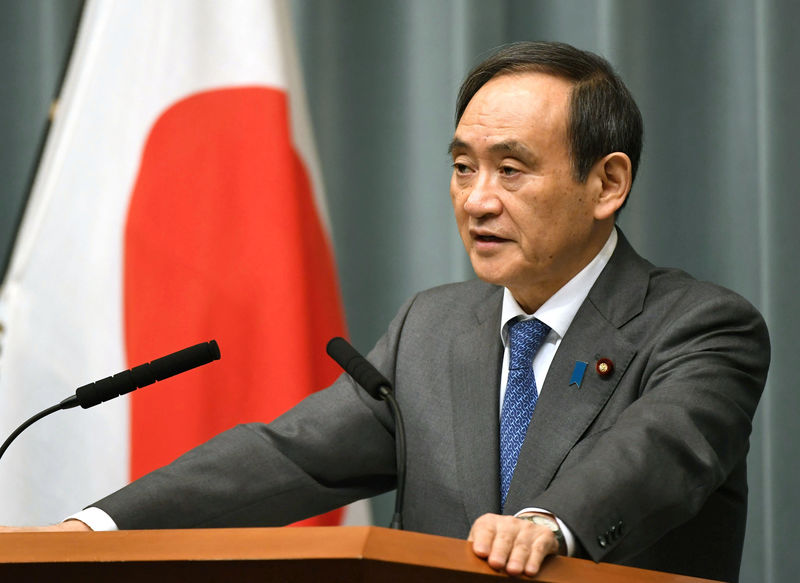
    “We do not impose import tariffs on cars, and we do not impose any non-tariff barriers,” Chief Cabinet Secretary Yoshihide Suga told reporters.

    “Our position is that Japan’s auto market is already open. This is something that will be settled in our bilateral dialogue.”

    In 2015 the U.S. government submitted a similar statement to the WTO as part of a regular review of Japan’s trade policies, but this year’s statement could carry more weight given the new U.S. administration’s emphasis on renegotiating trade deals.

    Japan’s Deputy Prime Minister Taro Aso and U.S. Vice President Mike Pence will chair a joint dialogue that could re-write economic ties between the world’s largest and third-largest economies.

    Japanese officials have indicated that they would prefer the talks focused on infrastructure, foreign direct investment and energy to avoid more thorny issues like autos and agriculture.

    Japanese media say the dialogue could start as early as next month, but the White House has made no official announcement.

    U.S. President Donald Trump rattled Japanese policymakers by criticising the small number of U.S. auto exports to Japan shortly after taking office in January.

    Trump has also clearly indicated that he prefers to curb free trade to protect U.S. jobs, raising fears of a return to trade friction that marred U.S.-Japan relations in the 1980s.

  • Canada allocates $650 Million for Global Reproductive Health

    Canada allocates $650 Million for Global Reproductive Health

    The money will help replace what President Trump cut when he took office

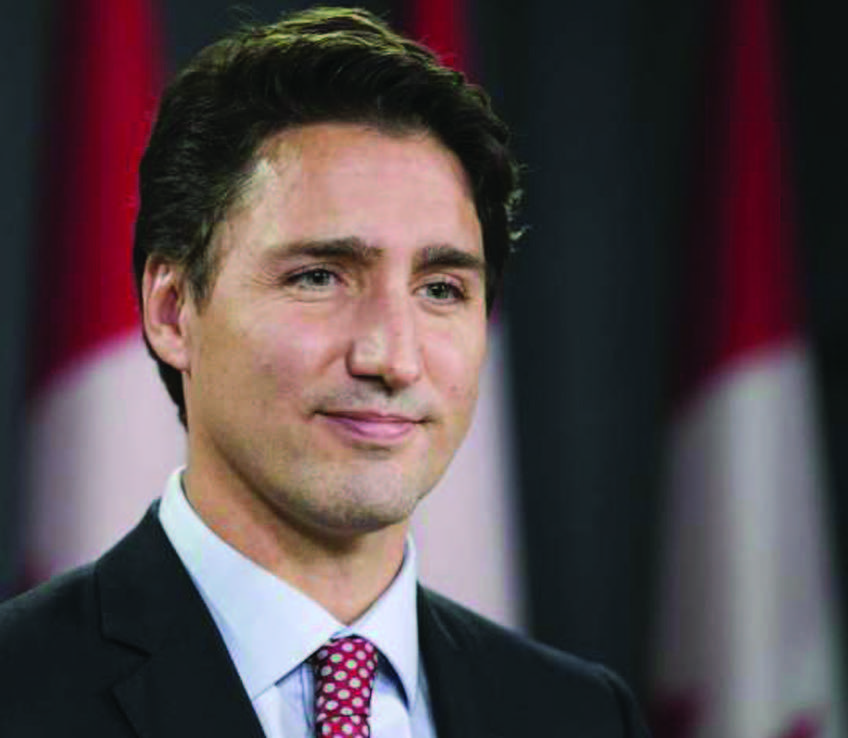
    OTTAWA (TIP): On International Women’s Day, March 8, Canadian prime minister Justin Trudeau announced Canada will contribute $650 million over the next three years to reproductive health and abortion-related services around the world, multiple outlets reported. The money will help fill a funding hole left when President Donald Trump signed the “global gag rule” on abortion, yanking funding from international health organizations that provide abortions or engage in abortion advocacy, even if they use their own funding for abortions, according to The Guardian.

    Trudeau pledged the money for sex education and reproductive health programs, including money set aside for the abortion-related services Trump defunded. The goal, Trudeau said, is to give women access to resources that give them control over family planning.

    “Like men, women should be able to choose when they want to start a family, how big their family should be, and who they want to start that family with,” Trudeau said in his announcement. “When women have equal power and equal weight and equal leadership influence, the kinds of decisions are better.”

    The global gag rule was introduced by Ronald Reagan in 1984, and every Republican since then has signed on. Trump signed the rule when he took office, and while that move was fairly routine for a conservative leader, Trump expanded the rule to restrict all global health funding, not just family-planning funding, including for those organizations whose primary focus isn’t family planning but which may mention abortion, according to Slate. The rule has the potential to strip $9.5 billion in funding from international health organizations, including$600 million in family-planning funding. Trudeau’s announcement targets the family-planning funding Trump stripped away, providing an alternate source of money for the organizations.

    By stripping family-planning funding, Trump is dealing a blow to reproductive health across the world, but since, according to Slate, he expanded the gag rule to include all health funding, even for those organizations whose focus is entirely different but which may mention abortion, he is endangering programs that do all kinds of things worldwide, including prevent HIV.

    Giving money to women’s health organizations, Trudeau said, will empower women and therefore make for a better world all around.

    “For far too many women and girls, unsafe abortions and lack of choices in reproductive health mean that they are either at risk, and at risk of death, or simply cannot contribute or achieve their potential through education, through involvement in their community, through a broad range of opportunities,” he said, according to CBC News. “It is important that as a world we recognize that empowering women, that respecting their rights, is fundamental to building a world in which everyone has a real and fair chance to succeed. “

  • Indian man’s house trashed with dog poop, racial messages

    Indian man’s house trashed with dog poop, racial messages

    PEYTON (TIP): An incident of possible hate crime has come to light in a US town where a house of an Indian man was trashed with eggs, dog poop and hate messages.

    The Federal Bureau of Investigation (FBI) is investigating the case which took place in Southern Colorado on February 6.

    Authorities believe it was the work of group of people because of the all the damage.

    According to reports in Denver media, hateful messages and racial slurs were sprawled all over the home of the Indian man.

    The homeowner said that around 50 papers were stuck everywhere on his door, window and car and added that the unidentified group had thrown at least like 40 eggs on his house.

    He further said that racial slur like ‘You brown or Indian shouldn’t be here,’ was also written outside the house.

    The homeowner says despite the hate, he was reminded of compassion. He says his neighbours came together and completely cleaned up the house for him.

    Earlier, an Indian engineer has been shot to dead in Kansas, U.S. in an alleged racial attack, after the gunman was heard shouting “get out of my country” – (ANI)

    Hate Crimes on the rise


  • President Trump condemns recent spike in hate related violence

    President Trump condemns recent spike in hate related violence

    WASHINGTON (TIP): Indians at home and Indian Americans anxiously awaiting condemnation of last week’s hate fueled shooting incident, in Kansas, that claimed the life of an Indian Engineer, had to settle for a perfunctory statement lumping it with the rise of threats and vandalism of Jewish centers.

    “Recent threats targeting Jewish community centers and vandalism of Jewish cemeteries, as well as last week’s shooting in Kansas City, remind us that while we may be a nation divided on policies, we are a country that stands united in condemning hate and evil in all its forms,” Trump said Tuesday night.

    Related Coverage

  • An Untrumpian Trump Asks Congress to End ‘Trivial Fights’ in his first Address to Congress

    An Untrumpian Trump Asks Congress to End ‘Trivial Fights’ in his first Address to Congress

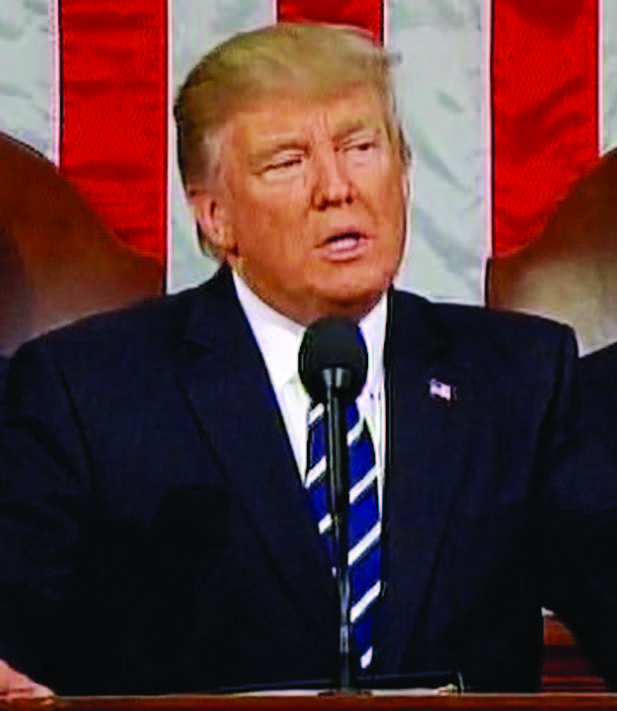
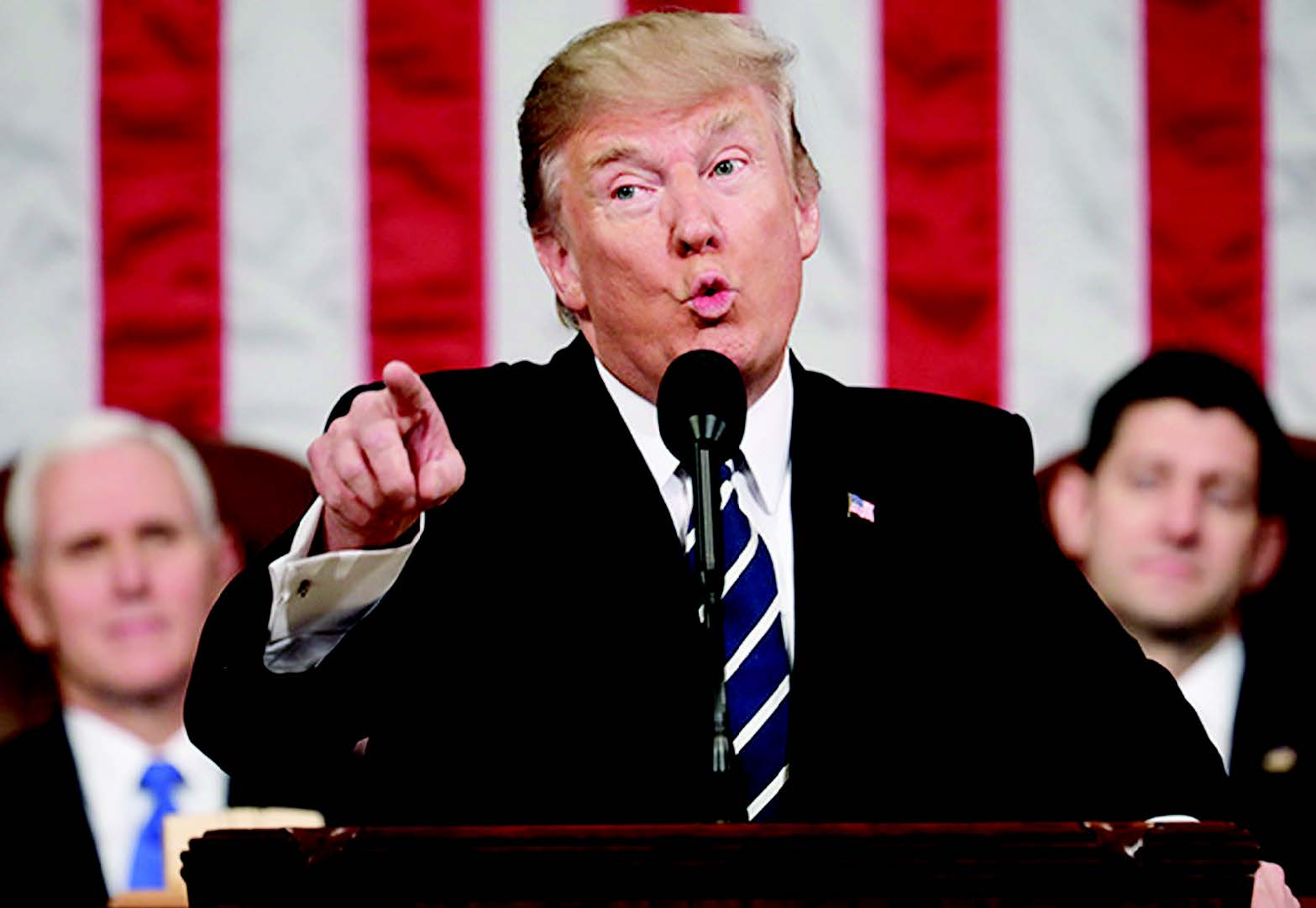
    It was not the Trump Americans have known who addressed the joint session of Congress on February 28 night, He disappointed many by being so untrumpian. It was a different Trump that night whocalled on Congress to work with him on overhauling health care, changing the tax code and rebuilding the nation’s infrastructure and military. Trump said that he was eager to reach across party lines and put aside “trivial fights” to help ordinary Americans.

    “I am asking all citizens to embrace this renewal of the American spirit. I am asking all members of Congress to join me in dreaming big, and bold, and daring things for our country,” Trump said.

    Trump also – for the first time – sketched out a new approach to immigration, suggesting that the nation adopt a “merit-based” immigration system.

    “It is a basic principle that those seeking to enter a country ought to be able to support themselves financially.” Trump said. “Yet, in America, we do not enforce this rule, straining the very public resources that our poorest citizens rely upon.” Congress should consider “switching away from this current system of lower-skilled immigration,” he said.

    Trump said he believes real immigration reform is possible, but such a dramatic shift in immigration priorities will be certain to meet staunch Democratic resistance.

    Trump promised a massive renewal of American jobs, infrastructure, and the military. The president wants a trillion-dollar infrastructure plan to rebuild the nation’s roads and create millions of jobs. “Millions lifted from welfare to work is not too much to expect,” Trump said, and “streets where mothers are safe from fear – schools where children learn in peace … are not too much to ask.”

    The President also laid down clear principles for the repeal and replacement of Obamacare. “Obamacare is collapsing –and we must act decisively to protect all Americans,” he said, “Action is not a choice — it is a necessity.”

    The President also signaled action on another key piece of his agenda — tax reform, promising “massive” relief for the middle classes and cuts in corporate tax.

    President Trump’s address has by and large received praise. While the Republicans went overboard at his address which some described as the best ever I decades, Democrats were dismissive. House democratic leader Nancy Pelosi observed that while he sounded well, his actions were contrary to what he said. It remains to be seen how sincere this president is about “cutting across the party lines” and taking all along to work for the welfare of all Americans.

  • Measured rhetoric: President Trump’s gaffe-less surprise

    Measured rhetoric: President Trump’s gaffe-less surprise

    US President Donald Trump sounded upbeat as he addressed a joint session of Congress for the first time. He condemned the murder of Srinivas Kuchibhotla, who was shot dead in Kansas by a white veteran, just as he deplored the vandalism of a Jewish cemetery. He spoke of a “new chapter of American greatness”, and said the country was seeing a “renewal of the American spirit”. In short, he sounded presidential-something not quite seen since he took over as the 45th President.

    Many of the campaign promises were, predictably, repeated. The rhetoric, too, was familiar. The speech was woefully devoid of specifics, but he did spell out his agenda in a gaffe-less and measured manner, without the shrillness that has often dominated his pronouncements. He managed to reassure NATO, even as he asked the member-countries to “meet financial obligations”. He promised a strengthened military. He spoke of his replacement for Obamacare and addressed concerns about coverage of pre-existing health conditions. Trump outlined a huge $1 trillion infrastructure package, and said that he would give “massive” tax relief to the middle class. As expected, he was tough on immigration, and promised to “demolish and destroy” the ISIS.

    It is clear that Trump’s mindset remains intact. Some details were fleshed out in the address; there was a wisp of nuance, on the immigration issue for instance; he refrained from attacking the Press this one time. However, what was most notable about President Trump’s address was not its content, but the moderate tone he adopted. It may be tempting to believe that the change in tone could be a case of the office asserting itself on the individual. Even if this is reading too much, in one performance, Trump’s address did manage to reassure the American people and the world at large that he was not a loony. A moment of relief.

    (Tribune, India)

  • Donald Trump reverses Barack Obama ban on private prisons

    Donald Trump reverses Barack Obama ban on private prisons

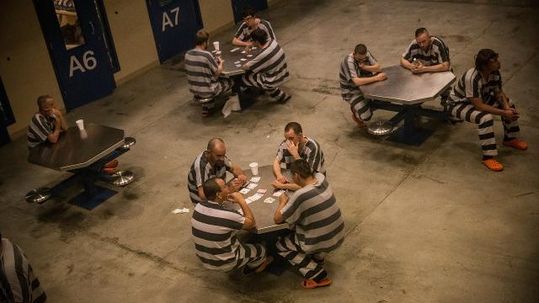
    WASHINGTON (TIP): President Donald Trump’s administration on Thursday reinstated the use of private prisons for federal inmates, saying commercial prison operators are needed for the correctional system’s “future needs.”

    Trump’s new attorney general, Jeff Sessions, officially rescinded the Barack Obama administration’s move last August to phase out the management of prisons by private companies, which Obama’s justice department had said proved to be inadequate, more dangerous and not cheaper than government-run prisons.

    Sessions said in an order that the move last year had reversed a longstanding policy at the Federal Bureau of Prisons to have private companies involved, “and impaired the bureau’s ability to meet the future needs of the federal correctional system.”

    The Obama move had only affected a small portion of the US prison system: 13 privately run prisons housing just over 22,000 people, or about 11 percent of the federal prison population. Most are foreign nationals, mainly Mexicans incarcerated for immigration violations.

    The Trump government has promised a crackdown on crime and illegal immigration, suggesting the prisons bureau could require greater holding capacity in a short time.

    The 13 prisons are run by three companies: CoreCivic (known until recently as Corrections Corporation of America), GEO Group and Management and Training Corporation.

    The announcement gave a strong after-hours boost to the stock of the two listed firms. Core Civic jumped 3.2 percent, while GEO Group added 1.0 percent.

    The move was expected and both companies’ stocks had already risen sharply after Trump’s election victory on November 8.

  • Donald Trump administration lifts transgender bathroom guidance

    Donald Trump administration lifts transgender bathroom guidance

    WASHINGTON (TIP): The Trump administration has ended federal protections for transgender students that instructed schools to allow them to use bathrooms and locker rooms matching their gender identities. Stepping into an emotional national debate, the administration yesterday came down on the side of states’ rights, lifting federal guidelines that had been issued by the Obama administration and characterized by Republicans as a legal overreach.

    Without the Obama directive, it will be up to states and school districts to interpret federal anti-discrimination law and determine whether students should have access to restrooms in accordance with their expressed gender identity and not just their biological sex. “This is an issue best solved at the state and local level,” Education Secretary Betsy DeVos said. “Schools, communities and families can find a” and in many cases have found solutions that protect all students.” In a letter to the nation’s schools, the Justice and Education departments said the earlier guidance “has given rise to significant litigation regarding school restrooms and locker rooms.” The agencies withdrew the guidance to “in order to further and more completely consider the legal issues involved.” Anti-bullying safeguards would not be affected by the change, according to the letter.

    “All schools must ensure that all students, including LGBT students, are able to learn and thrive in a safe environment,” it said. It was not clear what immediate impact the change would have on schools, as a federal judge in Texas put a temporary hold on the Obama guidance soon after it was issued after 13 states sued.

    Even without that hold, the guidance carried no force of law. But transgender rights advocates say it was useful and necessary to protect students from discrimination. Opponents argued it was federal overreach and violated the safety and privacy of other students.

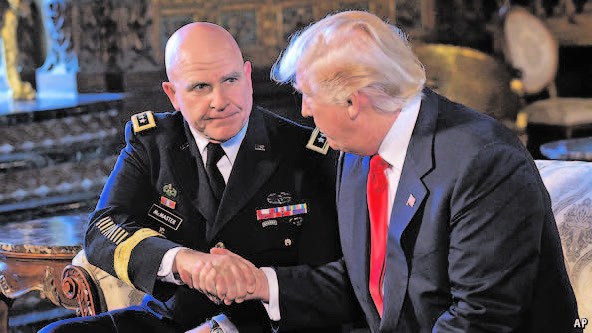
  • Meet Lt Gen McMaster, Trump’s New National Security Advisor

    Meet Lt Gen McMaster, Trump’s New National Security Advisor

    Herbert Raymond “H.R.” McMaster has been picked to serve as President DonaldTrump’s new national security adviser. The active duty 3-star Army general is expected to have a relatively easy confirmation process, as he is widely respected in Congress.

    Here are some interesting things to

    know about the new NSA

    1. Herbert Raymond McMaster, known as “H.R.,” graduated from the U.S. Military Academy at West Point in 1984. In the mid-1990s, he worked as an assistant professor of history there.
    2. He received a Ph.D. in U.S. history from the University of North Carolina at Chapel Hill. He turned his thesis into “Dereliction of Duty,” a 1997 book critical of the country’s leadership during the Vietnam War.
    3. McMaster is the first active-duty military officer in the national security adviser role since Gen. Colin Powell held the post during President Ronald Reagan’s tenure, and he will remain on active duty.
    4. McMaster was among Time magazine’s 100 most influential people in 2014.
    5. McMaster, served twice in Iraq, is a combat veteran who was awarded a Silver Star in the first Gulf War for his commanding of a tank during the Battle of 73 Easting.
    6. He was twice passed over for promotion to general before finally earning the rank; some say his outspokenness and questioning of authority led to the delay in his career advancement.
    7. He was a national security affairs fellow at the Hoover Institution at Stanford University from 2002 to 2003.
    8. McMaster was critical of the Vietnam War and wrote a well-known book in 1997, titled Dereliction of Duty: Lyndon Johnson, Robert McNamara, the Joint Chiefs of Staff, and the Lies that Led to Vietnam. He criticized the U.S. government for the Vietnam War and argued that the Joint Chiefs should have pushed back against President Lyndon B. Johnson.

    “We must address the question of responsibility for one of the greatest American foreign policy disasters of the twentieth century,” he wrote in the book.

    1. McMaster served as the director of the Army Capabilities Integration Center before being appointed the national security adviser, the Associated Press reported.

    Reactions on the choice

    Arizona Sen. John McCain, who has been critical of other aspects of Trump’s administration, called McMaster an “outstanding choice” and a “man of genuine intellect, character, and ability.”

    “I could not imagine a better, more capable national security team than the one we have right now,” said McCain, a veteran who was held for more than five years as a prisoner of war in Vietnam.

    “H.R. is the most bull-headed, nicest, smartest, most ego-free person I think I have ever met,” says retired Army Col. John Nagl, who has known and worked with McMaster for more than 20 years.

    “He is absolutely dedicated to taking care of America’s national interests,” adds Nagl. “Razor-sharp, and actually every once in a while even a little bit funny.”

    As a soldier, Nagl says McMaster is the most demanding trainer of forces, and “the best implementer of both tactics and strategy, and the best military leader, I think, of his generation.”

    House Permanent Select Committee on Intelligence Chairman Devin Nunes congratulated McMaster on his appointment.

    “With his history of questioning the status quo and infusing fresh thinking and new approaches into military affairs, Lt Gen McMaster will make a

    additionfine  to the Trump Administration’s national security team,” Nunes said.