Tag: Trump’s Policies

  • New Yorkers send a clear message – Activists drape Lady Liberty with ‘Refugees Welcome’ banner

    New Yorkers send a clear message – Activists drape Lady Liberty with ‘Refugees Welcome’ banner

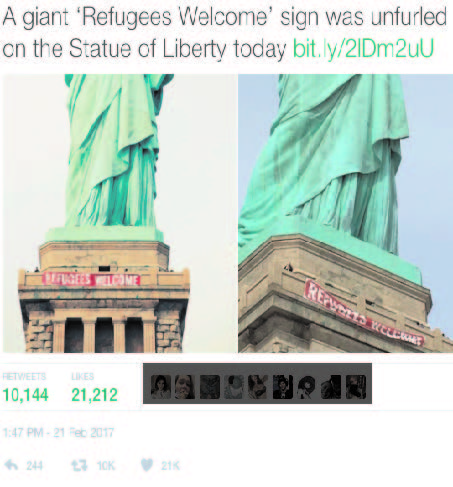
    NEW YORK (TIP): Activist scaled the Statue of Liberty and unfurled a red and white “Refugees Welcome” banner on Tuesday, just hours after the Department of Homeland Security unveiled its sweeping plan to deport undocumented immigrants across the U.S.

    The banner, which measured 3 feet by 20 feet in length, was unrolled and dangled from the statue’s observation deck, the National Park Service said.

    The sign was removed more than an hour later after it surfaced, the Associated Press reported, but not before images spread like wildfire on social media.

    According to CNN, an activist group called Alt Lady Liberty claimed responsibility for the banner. “Almost all Americans have descendants from somewhere else,” the group told CNN. “Immigrants and refugees make this country great. And turning away refugees, like we did to Anne Frank, does not make us great.”

  • Mass deportations? The Trump Administration goes after immigrants

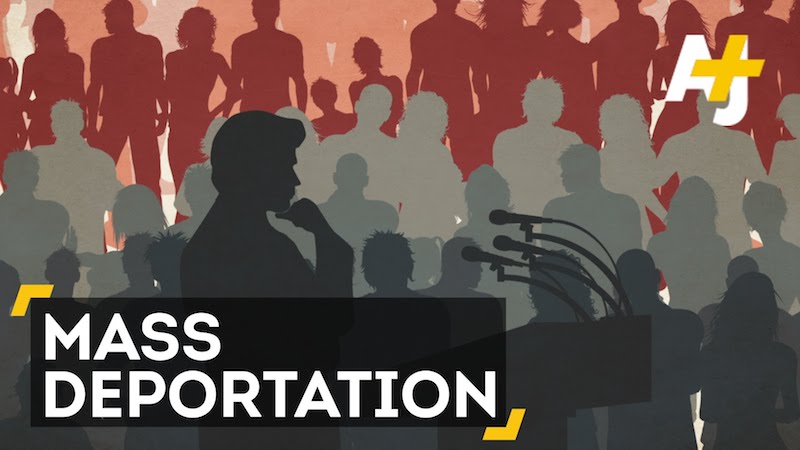
    Mass deportations? The Trump Administration goes after immigrants

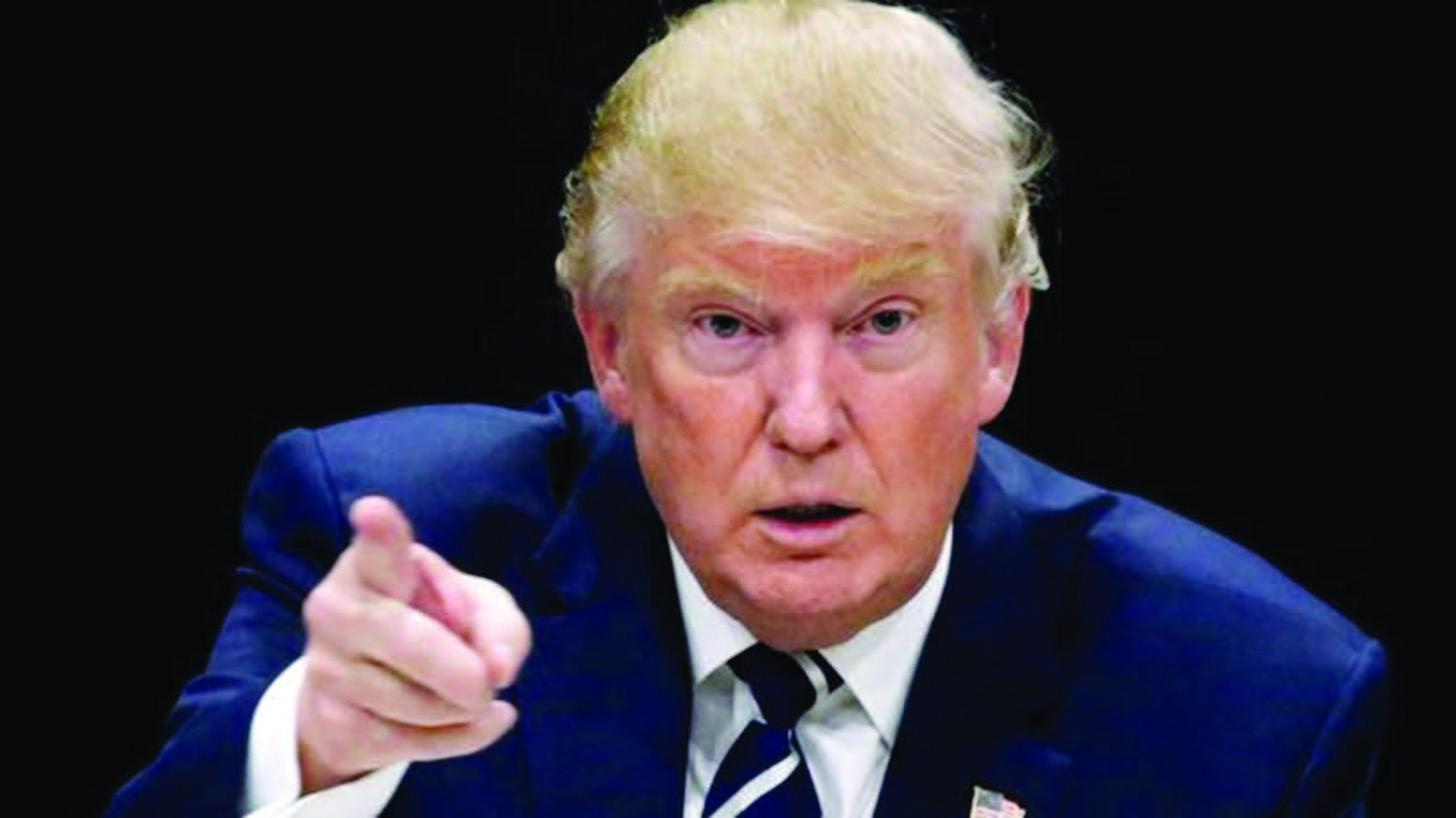
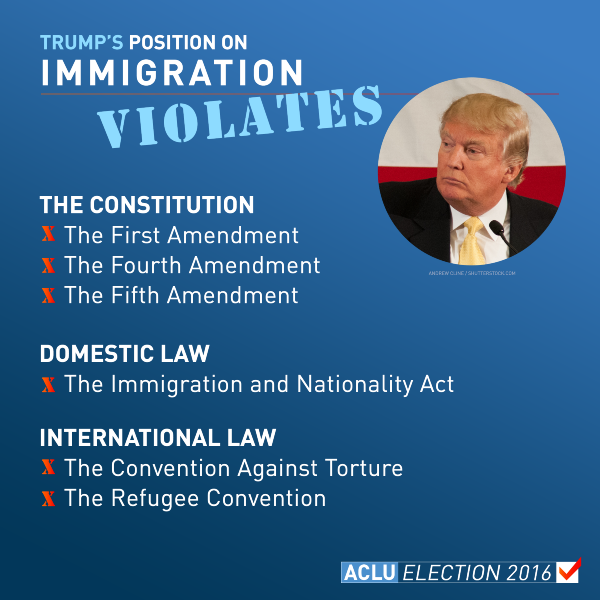
    Despite judicial rebuffs on his ban on immigrants, President DonaldTrump appears to be intent on waging war on the American society’s most vibrant elements: the immigrants. The Department of Homeland Security is reported to have put in place plans “for aggressive enforcement of immigration laws.”

    The only saving grace is that the new administration has denied reports that it intended to deploy National Guards to round up the undocumented immigrants in the United States. And, though the Trump administration has emphasized that it will keep intact President Obama’s protection program for “dreamers”, the overall message the immigrants across the board have heard from the Trump White House is one of intimidation and fear. Also, the potential asylum seekers stand discouraged and forewarned. America will no longer be the first choice of the prosecuted.

    If President Trump has his way, the United States would be spending huge resources on making life simply difficult for the current and potential immigrants. The Trump White House wants to empower agencies like the Immigration and Customs Enforcement, Custom and Border Protection, as well as to build up a wall along the southern border.

    On their part the administration officials insist that President Trump is simply asking for a vigorous enforcement of the existing laws and that the law-enforcement agencies will be targeting mostly “criminals” among the immigrants.

    These caveats notwithstanding, President Trump has succeeded in making each and every immigrant edgy, nervous and fearful. The American law-enforcement agencies are neither known for their professional detachment nor for their racial broadmindedness. The leadership of the law-enforcing agencies remains with those who belong to “the Trump class”, mostly subscribing to the ugly notions of white supremacy.

    The rest of the world has reacted adversely to these signals. But the new American President has made it clear that he is not going to allow himself to be distracted from those loony ideas and prejudices that in the first instance propelled him to the White House. Nor does he appear bothered at playing the bull in America’s ethnic china shop.

  • INDIAN-AMERICAN AUTHORS JOIN ANTI-TRAVEL BAN CHORUS

    INDIAN-AMERICAN AUTHORS JOIN ANTI-TRAVEL BAN CHORUS

    WASHINGTON (TIP): Indian-American authors Jhumpa Lahiri and Anish Kapoor joined scores of other writers to oppose the controversial travel ban by US President Donald Trump, asking him to “rescind” his last month’s executive order.

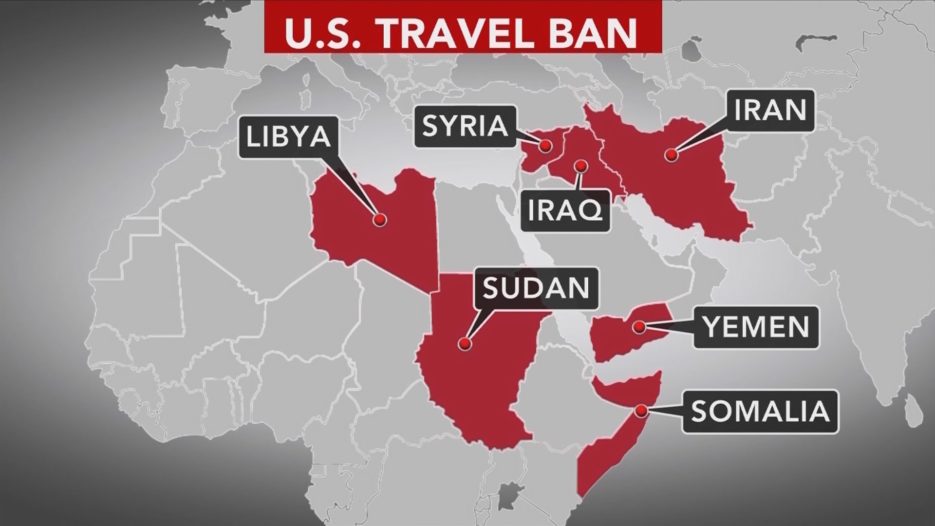
    “In barring people from seven predominantly Muslim countries from entering the US for 90 days, barring all refugees from entering the country for 120 days, and blocking migration from Syria indefinitely, your January Executive Order caused the chaos and hardship of families divided, lives disrupted, and law-abiding faced with handcuffs, detention, and deportation,” about 70 eminent American writers and artists wrote to Trump.

    They called on the US President to “rescind” his executive order of January 27, 2017, and refrain from introducing any alternative measure that similarly impairs freedom of movement and the global exchange of arts and ideas.

    In doing so, the executive order also hindered the free flow of artists and thinkers and did so at a time when vibrant, open intercultural dialogue is indispensable in the fight against terror and oppression, the writers and artists said in a letter dated February 21.

    Its restriction is inconsistent with the values of the US and the freedoms for which it stands, said the top US artists and writers under the banner of PEN America.

    Among those notable signatories to the letter include Chimamanda Adichie, Margaret Atwood, Rita Dove, Jonathan Franzen, Khaled Hosseini, Azar Nafisi and George Packer.

    According to the letter, the negative impact of the original Executive Order was felt immediately, creating stress and uncertainty for artists of global renown and disrupting major US cultural events.

    “Oscar-nominated director Asghar Farhadi, who is from Iran, expecting to be unable to travel to the Academy Awards ceremony in late February, announced that he will not attend,” it said.

    Syrian singer Omar Souleyman, who performed at the 2013 Nobel Peace Prize Concert in Oslo, Norway, may now be prevented from singing at Brooklyn’s World Music Institute in May, 2017.

    The ability of Adonis, an 87-year-old globally celebrated poet who is a French national of Syrian extraction, to attend the May, 2017 PEN World Voices Festival in New York remains in question, the letter noted.

  • Trump calls deportations a ‘Military Operation’, as DHS goes in for Mass Deportations & Raids

    Trump calls deportations a ‘Military Operation’, as DHS goes in for Mass Deportations & Raids

    Plans to bypass Immigration Courts and short-circuit ‘Due Process’

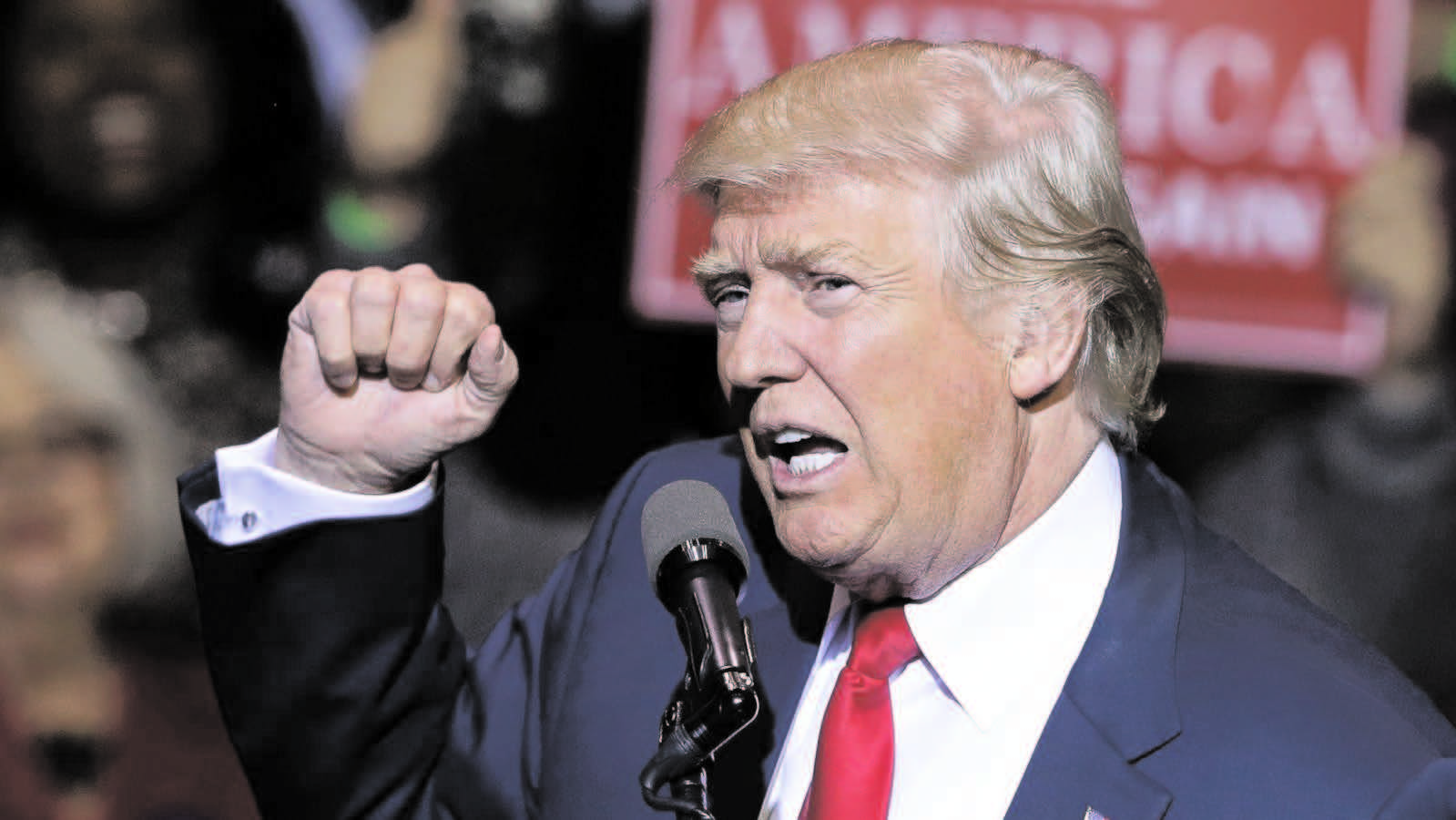
    President Donald Trump, meeting with business leaders at the White House on Thursday, February 23, described his administration’s moves to deport undocumented immigrants as a “military operation,” a rhetoric that runs counter to what his administration has previously said but is in consistence with Trumps Campaign promises.

    Trump has used a series of executive orders to chip away at the barriers to deportations and hire new law enforcement officials to spearhead the effort, using the Department of Homeland Security to live up to the President’s tough talk on undocumented immigration during the 2016 campaign.

    On Tuesday, February 21st, 2017 two (2) guidance memos were signed by Homeland Security Secretary John Kelly implementing the President’s Executive Orders on immigration enforcement. Although much attention has been focused on the building of the border wall, these new memos direct the Department of Homeland Security (DHS) to escalate immigration enforcement nationwide. The memos reveal that DHS intends to take a much more “enforcement-oriented” position with regard to U.S. Immigration law.

    INDIAN-AMERICANS AS PER UNOFFICIAL FIGURES ACCOUNT FOR NEARLY 300,000 ILLEGAL ALIENS.

    Nearly 300,000 Indian-Americans are likely to be impacted by the Trump administration’s sweeping plans that put the nation’s 11 million undocumented immigrants at risk of deportation.

    The Trump administration is releasing more on its plans to crack down on illegal immigration, enforcing the executive orders President Trump issued in late January. Those orders called for increased border security and stricter enforcement of immigration laws.

    “Everybody who is here illegally is subject to removal at any time,” Spicer said. “That is consistent with every country, not just ours. If you’re in this country in an illegal manner, that obviously there’s a provision that could ensure that you be removed.”

    “The Department no longer will exempt classes or categories of removable aliens from potential enforcement,” the Department of Homeland Security (DHS) said in an enforcement memo.

    “Department personnel have full authority to arrest or apprehend an alien whom an immigration officer has probable cause to believe is in violation of the immigration laws,” it said.

    According to the memo, the DHS Secretary has the authority to apply expedited removal provisions to aliens who have not been admitted or paroled into the US, who are inadmissible, and who have not been continuously physically present in the US for the two-year period immediately prior to the determination of their inadmissibility, so that such aliens are immediately removed unless the alien is an unaccompanied minor, intends to apply for asylum or has a fear of persecution or torture in their home country, or claims to have lawful immigration status.

    WHAT IS IN THE IMMIGRATION MEMOS?

    1. AN END TO LONG-STANDING PROTECTIONS FOR CHILDREN. DHS intends to strip many children arriving alone at our border of basic protections and to penalize their parents for seeking to reunite with their children in the United States. DHS will do this by narrowing the definition of “unaccompanied alien child” in order to limit those protections and by launching either civil or criminal enforcement against the parents.
    2. A MASSIVE EXPANSION OF DETENTION. The memos contemplate a massive expansion of detention, including a requirement that DHS officers detain nearly everyone they apprehend at or near the border. This detention space expansion-a boon to the private prison industry-means that children, families, and other vulnerable groups seeking protection in the United States will end up detained, at great financial and human cost.
    3. PROSECUTION PRIORITIES AND DISCRETION ARE GONE. The new memos rescind earlier policies on whom to prosecute and deport and whom to de-prioritize because they pose no threat to our communities. The new enforcement priorities are extremely broad, covering nearly all undocumented individuals in the United States. They even include individuals simply charged or suspected of having committed crimes.
    4. CREATION OF A DEPORTATION FORCE. The memos order the hiring of 5,000 additional Customs and Border Protection (CBP) agents and 10,000 additional Immigration and Customs Enforcement (ICE) agents. They direct a massive expansion of 287(g)-a provision that allows DHS to deputize State and Local law enforcement officers to perform the functions of immigration agents. The memos reinstate Secure Communities [terminating the Priority Enforcement Program (PEP)], which expand the ways in which local police collaborate with ICE.
    5. PLANS TO BYPASS IMMIGRATION COURTS AND SHORT-CIRCUIT DUE PROCESS. The memos indicate that many people in the interior of the country – not just those at the border – could be subject to expedited removal or expedited deportation without going before an immigration law judge, the details of which DHS said will be forthcoming in a notice in the Federal Register. This expansion of “expedited removal,” will allow the government to bypass the backlogged immigration courts in order to remove or deport people rapidly and with little-to-no due process.
    THE INDIAN PANORAMA URGES READERS TO CONSULT AN ATTORNEY IF THEY HAVE QUESTIONS OR NEED MORE INFORMATION ABOUT THE WAY THAT THE NEW U.S. IMMIGRATION AND NATIONALITY LAWS MAY IMPACT THEM, THEIR FAMILY, THEI FRIENDS, OR THEIR COLLEAGUES.
  • Mexico voices ‘Irritation’ to Trump envoys

    Mexico voices ‘Irritation’ to Trump envoys

    “No use of military force in immigration operations,” and “no, repeat, no mass deportations”: Secretary Kelly

    MEXICO CITY (TIP): In a first and carefully worded rebuke senior Mexican officials have expressed “worry and irritation” about US policies during a visit by two of President Donald Trump’s top envoys, who in turn seek to cool tempers after weeks of tension between the two neighbors.

    With a stern look while speaking to reporters on Thursday, February 23, after closed-door meetings with US Secretary of State Rex Tillerson and Homeland Security chief John Kelly, Videgaray said it is “a complex time” for Mexican-US relations.

    “There exists among Mexicans worry and irritation about what are perceived to be policies that could be harmful for the national interest and for Mexicans here and abroad,” Foreign Minister Luis Videgaray told a news conference on Thursday.

    The US government this week angered Mexico by saying it was seeking to deport many illegal immigrants to Mexico if they entered the United States from there, regardless of their nationality.

    The immigration guidelines are the latest point of tension between neighbors already tense over Trump’s vow to build a wall on the border and his attempts to browbeat Mexico into giving concessions on trade.

    Videgaray and President Enrique Pena Nieto have been criticized at home for being too willing to engage with Trump. However, relationships between the two countries have gone downhill in the past few weeks.

    Both sides on Thursday pledged further dialogue on migration, trade and security issues facing both nations.

    Kelly and Tillerson were much more measured in their words than either the Mexicans or Trump, who on Thursday said a military operation was being carried out to clear “bad dudes” from the United States.

    ‘No mass deportations’

    For their part, Kelly and Tillerson sought to cool tempers as they adopted a more measured tone than either the Mexicans or Trump, who on Thursday said a military operation was being carried out to clear “bad dudes” from the US.

    Kelly said there would be “no use of military force in immigration operations,” and “no, repeat, no mass deportations”.

    None of the US officials made direct references to the deportation of immigrants from third countries to Mexico, or to paying for the border wall planned by Trump, a red-flag issue for Mexico. Both sides at the Mexico City talks on Thursday pledged further dialogue on migration, trade and security issues facing both nations. Al Jazeera’s John Holman, reporting from Mexico City, said Mexico has been criticized as “timid” in confronting issues with the US in the past, but since Trump came into office it has grown “tougher”.

    “Usually, this is a quiet and cordial meeting. That’s how it has been for decades. But not under the administration of Donald Trump,” Holman said.


  • Trump’s Immigration Plans Could Impact 3 Lakh Indian-Americans

    Trump’s Immigration Plans Could Impact 3 Lakh Indian-Americans

    Washington:  Nearly 300,000 Indian-Americans are likely to be impacted by the Trump administration’s sweeping plans that put the nation’s 11 million undocumented immigrants at risk of deportation.

    The Trump administration is releasing more on its plans to crack down on illegal immigration, enforcing the executive orders President Trump issued in late January. Those orders called for increased border security and stricter enforcement of immigration laws.

    “Those people who are in this country and pose a threat to our public safety, or have committed a crime, will be the first to go,” White House spokesman Sean Spicer told reporters. “And we will be aggressively making sure that occurs. That is what the priority is.”

    “The Department no longer will exempt classes or categories of removable aliens from potential enforcement,” the Department of Homeland Security (DHS) said in an enforcement memo.

    “Department personnel have full authority to arrest or apprehend an alien whom an immigration officer has probable cause to believe is in violation of the immigration laws,” it said.

    The Department of Homeland Security has issued two enforcement memos, which among other things, tightens deportation of illegal immigrants.

    The emphasis is on criminal aliens, though, but opens up the door for others too.

    Indian-Americans as per unofficial figures account for nearly 300,000 illegal aliens.

    Homeland Security Outlines New Rules on Immigration

    According to the memo, the DHS Secretary has the authority to apply expedited removal provisions to aliens who have not been admitted or paroled into the US, who are inadmissible, and who have not been continuously physically present in the US for the two-year period immediately prior to the determination of their inadmissibility, so that such aliens are immediately removed unless the alien is an unaccompanied minor, intends to apply for asylum or has a fear of persecution or torture in their home country, or claims to have lawful immigration status.

    Immigrant rights advocates say the rules are written so broadly that they make anyone in the country illegally a target for deportation — potentially, as many as eight to 11 million people.

    The White House and DHS deny that the rules amount to a blueprint for mass deportation.

    While the new policies call for a “surge” in the deployment of immigration judges and other personnel, DHS officials said the agency is not planning mass deportations and that many of the new policies would take time to implement.

    “We don’t need a sense of panic necessarily in these communities,” one DHS official said in a conference call with reporters.

    Homeland Security officials said the policies would not affect Deferred Action for Childhood Arrivals #DACA, the Obama administration program that offered protection from deportation for so-called Dreamers who were brought to the U.S. illegally as children.

    The DHS wants to expand the use of so-called expedited removal, in which migrants do not appear before an immigration judge before being deported. Under the Obama administration, those expedited deportations had been limited to those in the country for two weeks or less, and within 100 miles of the border.

    DHS officials say they could seek to expand the use of expedited removal all over the country, for immigrants who have been in the U.S. for up to two years. Those rules have not yet been finalized.

    In addition, the policies call for an expansion of a federal program that enlists state and local police to enforce immigration laws.

    That partnership has come under fire from critics who allege that it has led to racial profiling. The federal government terminated one such agreement with Arizona’s Maricopa County Sheriff Joe Arpaio in 2011 after the Justice Department found that county officers unlawfully stopped and detained Latinos.

    On Tuesday, Feb 21, DHS called the program “a highly successful force multiplier.” Officials said local officers go through extensive training and that racial profiling would not be tolerated.

  • ‘Indian economy is resilient to global headwinds’: Dr. Raghavan Seetharaman

    ‘Indian economy is resilient to global headwinds’: Dr. Raghavan Seetharaman

    CHENNAI (TIP); The US ruling on cancellation of H-1B visa rules poses risk towards IT companies immigrants and offshore projects, expectation is that costs may escalate for these companies operating in US. Global growth is challenging, however Indian economy is resilient to global headwinds on account of the strong domestic fundamentals, said Dr Raghavan Seetharaman, CEO of Doha Bank in Qatar.

    The recent budget had given thrust on infrastructure, agriculture and aims to revive the growth of Indian economy. India exported $6 billion worth of drugs to the US in 2015 and restrictions on pharmaceutical imports and manufacturing abroad could impact the industry in India, he said.

    The Indian government has encouraged global investors to participate through FDI. The recent budget has stated that foreign investment promotion board will be abolished, which will improve ease of doing business.

    IMF has pegged India growth at 7.2 percent in 2017.India’s Current Account Deficit decreased from about 1 percent of GDP last year to 0.3 percent of GDP in first half of 2016-17. India has pegged fiscal deficit for 2017-18 at 3.2 percent and its Forex Reserves at $361 billion offer a comfortable cover for 12 months of imports thanks to better financial management by Narendra Modi government, he said.

    Contentious issues are coming between developed and developing world on global trade and investment. The lack of convergence between politics and economics could impact global growth. We’re entering a new stage of international global relations where national policies could shape how globalization eventually develops, he said.

    Dr. R. Seetharaman highlighted the opportunities for India arising from global developments. “After Brexit better trading opportunities with India than is possible as part of a 28-member EU. India has had a trade surplus with UK in the recent years. It is thus crucial for India to have a first mover advantage by executing a bilateral trade agreement with UK encompassing goods, services and technology.

    For UK, India is an attractive trade partner, given its high proportion of skilled working-age population and high growth rate. This strengthens the possibility of an FTA between UK and India and presents a significant opportunity for India’s financial and small and medium-sized enterprises (SME) sectors. European Union (EU) hopes to soon re-engage with India on negotiations regarding the proposed Free Trade Agreement (FTA), he said.

    Dr. R. Seetharaman said” India should also continue to strengthen bilateral relationships with GCC in trade and in other segments. GCC – India Bilateral trade is close to $100bn in 2015-16. In Feb 2016 India and the United Arab Emirates (UAE) signed a wide-ranging set of seven agreements, including on cyber security, infrastructure investment and insurance.

    GCC Sovereign Wealth funds can look forward to participate in India’s infrastructure development. UAE and India have agreed to collaborate closely to identify bottlenecks to trade and new areas of trade with the aim of increasing two way trade by 60 per cent in five years while significantly boosting investment. The new goal set by both sides is to boost trade by 60 per cent by 2020.Qatar and India can look beyond the buyer-seller relationship to include joint ventures, joint research and development and joint exploration. Indian can invest in the port sector of Qatar. Indian companies can participate in Qatar’s infrastructure development pertaining to FIF World Cup 2022.Qatar and India will enhance bilateral cooperation in the field of cyber security, including prevention of the use of cyberspace in support of terrorism and extremism.”

    The Institute of Directors hosted a Felicitation Function of Doha Bank CEO, Dr. R. Seetharaman on being recognized by the Government of India with the Pravasi Bharatiya Samman Award, the Highest Honor Conferred on Overseas Indians. The felicitation was held on Feb 10 at Hotel The Residency Tower Town Hall, Chennai, India.

    Justice Dr AR Lakshmanan, former Judge of Indian Supreme Court and former Chairman of Law Commission of India released a book on Dr Seetharaman titled “In search of truth” a biography on him in Tamil and first copies were received by Poet Laureate Vairamuthu, Judge of Madras High Court Justice PN Prakash and Lt.Gen JS Ahluwalia, President of Institute of Directors. The authors of the book- Prof Aranga Nedumaran and NC Mohandas of Kuwait -were also honored.

  • Indian Americans raise pitch against ‘travel ban’

    Indian Americans raise pitch against ‘travel ban’

    According to a study at California State University San Bernardino’s Center for Study for Hate and Extremism, the anti-Muslim hate crimes in the US rose sharply in 2015 to the highest levels since the aftermath of the September 11 terror attacks. The study also suggested that President Trump’s anti-Muslim rhetoric could have contributed to this backlash against American Muslims.

    And recently we saw the President going as far as severely restricting the entry of nationals of seven majority Muslim countries, causing a rash of protests across the country with various Indian communities taking part in it.

    The Sikh Center of Seattle is one such religious organization raising its voice against the so-called travel ban. Recently, the Center deputed Harjinder Singh Sandhawalia for a roundtable discussion of all faith leaders of the Seattle held in the Redmond city mosque. This meeting was hosted by the Muslim community of the area. It was in this meeting that Congresswoman Suzan DelBene said she had introduced a bill (HR 489) in the Congress to stop the order registering Muslims in the country. Sandhawalia was present in the discussion and called for protecting religious freedom of minority communities.

    Members of other Sikh communities have also joined hands in the protest marches being organized across the country. Ravinder Singh, CEO of the Khalsa Aid Foundation who has been involved in humanitarian work at the Syria border, has also condemned the decision in his tweets. ‘Donald #Trump only BANNING MUSLIMS from countries where he has ZERO business interest! Well done USA’ reads one of his tweets.

    With more American Indian communities joining the protests, the anti-Trump voices are now being amplified collectively across the country. A Punjabi community calling itself Punjabi Aunties took to streets holding placards written in Hindi and Punjabi. Swaroop Kaur, homemaker from Seattle, has been running a Vegan store for 22 years now. Swaroop finds this decision demeaning and hurting. “22 years in Seattle, will you Mr Trump, still call me an immigrant?” she questions.

    On the other hand, Jamie Quinn consultant physiotherapist at Swasthya Kendra Clinic, vehemently opposes the decision on the Internet. She writes, “It’s not about who is banned and who isn’t. This is a **** move towards several refugees who are just trying to escape war and for several students and working people who want to earn money for a good life in the USA. Aaj unko ban Kiya toh kal hume bhi kar sakte Hai (today they have banned them, tomorrow it could be us).”

    While on ground, protests gain momentum, social networking sites, FB pages being run by Indian communities staying in America are also garnering support from non-Indian communities: ‘Stop Donald Trump’, ‘Stand Againist Trump’, ‘Trump O Bar’, ‘Hindi Hai Hum’ are some of the pages that have been rallying support against the President’s order.

    Anita Vohra, a Google employee in San Francisco led a silent protest in her vicinity with other Google employees joining her.

  • ‘No work…no school’: Dallas among U.S. cities targeted for ‘Day Without Immigrants’ protests

    ‘No work…no school’: Dallas among U.S. cities targeted for ‘Day Without Immigrants’ protests

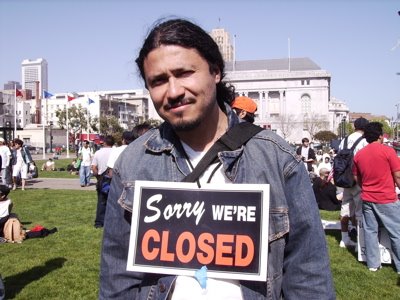
    DALLAS (TIP): Organizers in cities across the U.S. are telling immigrants to miss class, miss work and not shop on Thursday as a way to show the country how important they are to America’s economy and way of life.

    “A Day Without Immigrants” actions are planned in cities including Dallas, Austin, Philadelphia, Washington and Boston.

    The protest comes in response to President Donald Trump and his 1-month-old administration. The Republican president has pledged to increase deportation of immigrants living in the country illegally, build a wall along the Mexican border, and ban people from certain majority-Muslim countries from coming into the U.S. He also has blamed high unemployment on immigration.

    In Dallas-Fort Worth, activists encouraged immigrant parents to pull their children out of school as a show of solidarity.

    “I don’t work … no work … no school,” Dallas activist Carlos Quintanilla said on Facebook. “Today my people. This fight is all.”


    “Imagine if 30 stores closed for one day … how much taxes go to the government,” Juan Carlos Flores told NBC5. “It’s a major impact.”

    Employers and institutions in some cities were already expressing solidarity Wednesday with immigrant workers. Washington restaurateur John Andrade said he would close his businesses Thursday, and David Suro, owner of Tequilas Restaurant in Philadelphia and a Mexican immigrant, said he also planned to participate.

    The Davis Museum at Wellesley College in Massachusetts said it would remove or shroud all artwork created or given by immigrants to the museum through Feb. 21.

    Organizers in Philadelphia said they expect hundreds of workers and families to participate.

    “Our goal is to highlight the need for Philadelphia to expand policies that stop criminalizing communities of color,” said Erika Almiron, executive director of Juntos, a nonprofit group that works with the Latino immigrant community. “What would happen if massive raids did happen? What would the city look like?”

    Almiron said that while community groups have not seen an uptick in immigration raids in the city, residents are concerned about the possibility.

    Philadelphia Mayor Jim Kenney is among leaders in several cities nationwide who have vowed to maintain their “sanctuary city” status and decline to help federal law enforcement with deportation efforts.

    Many people who make the choice to skip work Thursday will not be paid in their absence, but social media posts encouraging participation stressed that the cause is worth the sacrifice.

  • H 1B visas help American firms remain competitive, says Indian envoy Navtej Sarna

    H 1B visas help American firms remain competitive, says Indian envoy Navtej Sarna

    H1-B visas, sought-after by Indian IT professionals, help make US firms competitive globally and contribute to generating jobs locally, India’s envoy has said amid reports the Trump administration plans to cut down the scheme.

    “The H1B scheme has been crucial in making US companies competitive globally in increasing their client base, in increasing their innovation. And it is the Indian tech industry, which has actually been creating jobs here (in the US),” Ambassador to the US Navtej Sarna told a news channel.

    “There are reports and analysis by very respected houses, which say that over 400,000 jobs have been directly and indirectly supported in the US,” he said, adding that Indian tech companies had invested USD 2 billion in four years and paid USD 20 billion in taxes.

    H1-B visa is a non-immigrant visa that allows American firms to employ foreign workers in speciality occupations that require theoretical or technical expertise. The tech companies depend on it to hire thousands of employees each year.

    “Out of every 100, H-1B visas have resulted in support to 183 jobs in the US. This is very important because nine out of the 15 top tech companies in India are American companies,” Sarna said.

    “This is a relationship which is symbiotic and which has a potential of becoming even stronger for both the countries,” he added.

    India is one of the top sources for international workers in the American tech industry, accounting for a major chunk of all H1-B visas. And any move by Trump, who has vowed to put an “America First” policy, will have an adverse impact in India.

    However, those demanding a revision of the policy say the program hurt American interests.

    In an op-ed piece in ‘Fortune’ magazine Senator Chuck Grassley, argued that the flaws in H1B program hurt American workers, American innovation, and even H1B workers, who are in many cases “benched” without work or pay for long periods.

    Grassley is Chairman of the Senate Judiciary Committee and co-author of H1-B and L1 Visa Reform Act of 2017.

    Earlier this year, he introduced the bipartisan legislation with Senator Dick Durbin to tackle these problems and return the program to its original intent: filling gaps in America’s skilled labor market.

    Schumer said his bill explicitly prohibits companies from replacing qualified American workers with H1-B workers. It also requires companies to post job openings and make good faith efforts to hire qualified American workers before seeking H1-B visas.

    “Companies would also be prohibited from laying off American workers 180 days prior to and following the hiring of an H1-B worker. These provisions ensure that qualified American workers are considered for jobs first,” he said.

    “To ensure that limited number of annual H1-B visas go to the best and brightest workers, our bill prioritizes petitions, starting with foreign nationals who received advance science and engineering degrees right here in the US,” he said.

  • Progressive Caucus condemns  arrest of Dreamer Daniel Ramirez

    Progressive Caucus condemns arrest of Dreamer Daniel Ramirez

    NEW YORK CITY (TIP): The New York City Council Progressive Caucus condemned the Trump administration’s continual affront to immigrant communities, most recently with the arrest of DACA recipient and DREAMer Daniel Ramierez Medina, who was arrested by ICE agents in the Seattle area and stripped of his DACA protections.

    The statement reads “We are alarmed and outraged at the President’s erratic and immoral approach to immigration which spreads fear in marginalized immigrant communities, and does not make our country any safer. The NYCC Progressive Caucus recognizes the wide contributions of immigrants to our city and to our nation, and the Caucus has long advocated for rights and protections of New Yorkers who are vulnerable due to documentation status. We urge ICE to free Daniel Ramirez Medina, and urge the Trump administration to cease its attack on immigrant communities”.

  • Trump’s H-1B Visa Bill spooks India’s IT companies

    Trump’s H-1B Visa Bill spooks India’s IT companies

    It may not be a good time to be a non-American in Trump’s America.

    India, the largest exporter of IT workforce to the US, could be jolted if the H-1B Visa Bill, which was tabled in the House of Representatives, becomes a law.

    The country’s biggest IT companies, TCS, Infosys, Wipro and others, that enjoy significant cost advantages by sending Indian engineers to the US, are likely to be hit if the minimum salary cap for H-1B visas is raised to $130,000 from its current $60,000.

    In anticipation of the eventuality, India’s top four IT company stocks plunged on the Bombay Stock Exchange today. Mashable India reached out to these companies but they declined comment.

    Meanwhile, NASSCOM, the industry body for software and services companies, was not pleased with the development. “The bill does not treat all IT service companies with H-1B visa holders equally, and the provisions are biased against H-1B dependent companies,” it said in a statement.

    “The bill does nothing to address the underlying shortage of STEM-skilled workers, which has led all companies to have a calibrated strategy of hiring locally and bridging the skills gap by bringing skilled workers on non-immigrant visas including H-1Bs,” it added.

    The US issued more than a million visas to Indians in 2016, which accounted for 70% of all H1B visas issued worldwide.

    India happens to be the largest receiver of H-1B visas in the world. The US issued more than a million visas to Indians in 2016, which accounted for 70% of all H1B visas issued worldwide, according to news reports.

    IT analysts reckon that the new law, if and when it passes, will have far-reaching implications not only on Indian companies but on the US economy as well since most US-based Fortune 500 organizations are “deeply invested and dependent” on Indian IT services providers.

    “Skilled foreign workers who come to work in the US by the route of H1-B visas don’t just directly supplement the US IT industry with specialized skillsets, they also contribute indirectly to other industries in the US. Often H1-B workers bring their families along and thereby bring additional business for other industries like real estate, banking, hospitality to name a few. The effects of this announcement will impact the GDP and the overall business economy and growth of US,” says Sanchit Vir Gogia, chief analyst at Greyhound Research

    While the final outcome of the Bill is yet to be known, NASSCOM said it will continue to engage with the US administration and legislators both directly and through the Government of India. The focus would be on highlighting the value contribution of India’s IT sector as a “net creator” of jobs in the US.

    FUN FACT: The CEOs of both Microsoft and Google are of Indian origin.

  • IMMIGRATION UNDER TRUMP ADMINISTRATION: EXECUTIVE ORDERS UNDER REVIEW

    IMMIGRATION UNDER TRUMP ADMINISTRATION: EXECUTIVE ORDERS UNDER REVIEW

    In less than a month in the Oval Office, President Trump has issued few Executive Orders (EO), each of which has potential to stir extreme vetting, racial profiling and deportations. We briefly discuss some of the EO below and their immediate impact.

    Protecting the Nation from Foreign Terrorist Entry Into The United States: This EO placed a 90-day ban on the issuance of US visas and to entry into the United States of any one who is a national of one of the seven “designated” countries – Iran, Iraq, Libya, Somalia, Sudan, Syria and Yemen, suspended the US Refugee Admission Program for 120 days (for Syrian refugees, the ban was indefinite), suspended visa interview waiver program and extensive review by Department of Homeland Security of any individual, from their country to determine their visa, admission or other immigration benefit and that they are not threat to security or public safety.

    Current Impact: The impact of this EO is currently neutered. The US District Judge James Robart granted Temporary Restraining Order on a “nationwide basis” and the Ninth Circuit unanimously refused to reinstate EO. If Supreme Court takes up the case, it will be a split decision and Ninth Circuit’s decision would stand. But is believed the Trump administration may reintroduce this EO with some changes in it. Nevertheless, this EO created climate of chaos and confusion and clearly showcased discrimination based on religion. We hope this stays on hold permanently.

    Enhancing Public Safety in the Interior of the United States: This EO directs the Executive departments and its agencies to employ all lawful means, to enforce the immigration laws of the United States. It sets aliens on priority who have criminal backgrounds, committed crimes, abused public taxpayer benefits or are a national security concern. Federal grants will not be given to sanctuary cities. The Department of Homeland Security will deputize state and local law enforcement officers to perform functions of federal immigration agents.

    Current Impact: This EO may cause greatest danger to the unauthorized immigrants. The local police will transform in to Immigration and Custom Enforcement (ICE) officers. The “enforcement priority” will effectively include all the unauthorized immigrants in the United States, irrespective of their criminal record. An instance of this was witnessed on February 14, 2017, when ICE agents near Seattle, WA, detained and threatened to deport a 23 years old immigrant who is currently under the DACA program with no criminal background. This arrest appears to be arbitrary and denial of administrative and constitutional rights. The past week also observed raids by ICE agents throughout the country and detaining people with criminal background.

    We are hopeful checks and balances are placed on the President’s power and the Government policies adhere to the American values!

  • TRUMP RAILS AT MEDIA FOR ITS REPORTING, REPEATING UMPTEENTH TIME CNN IS ‘FAKE MEDIA’

    TRUMP RAILS AT MEDIA FOR ITS REPORTING, REPEATING UMPTEENTH TIME CNN IS ‘FAKE MEDIA’

    The leaks are real. But the news about them is fake. The White House is a fine-tuned machine. Russia is a ruse.

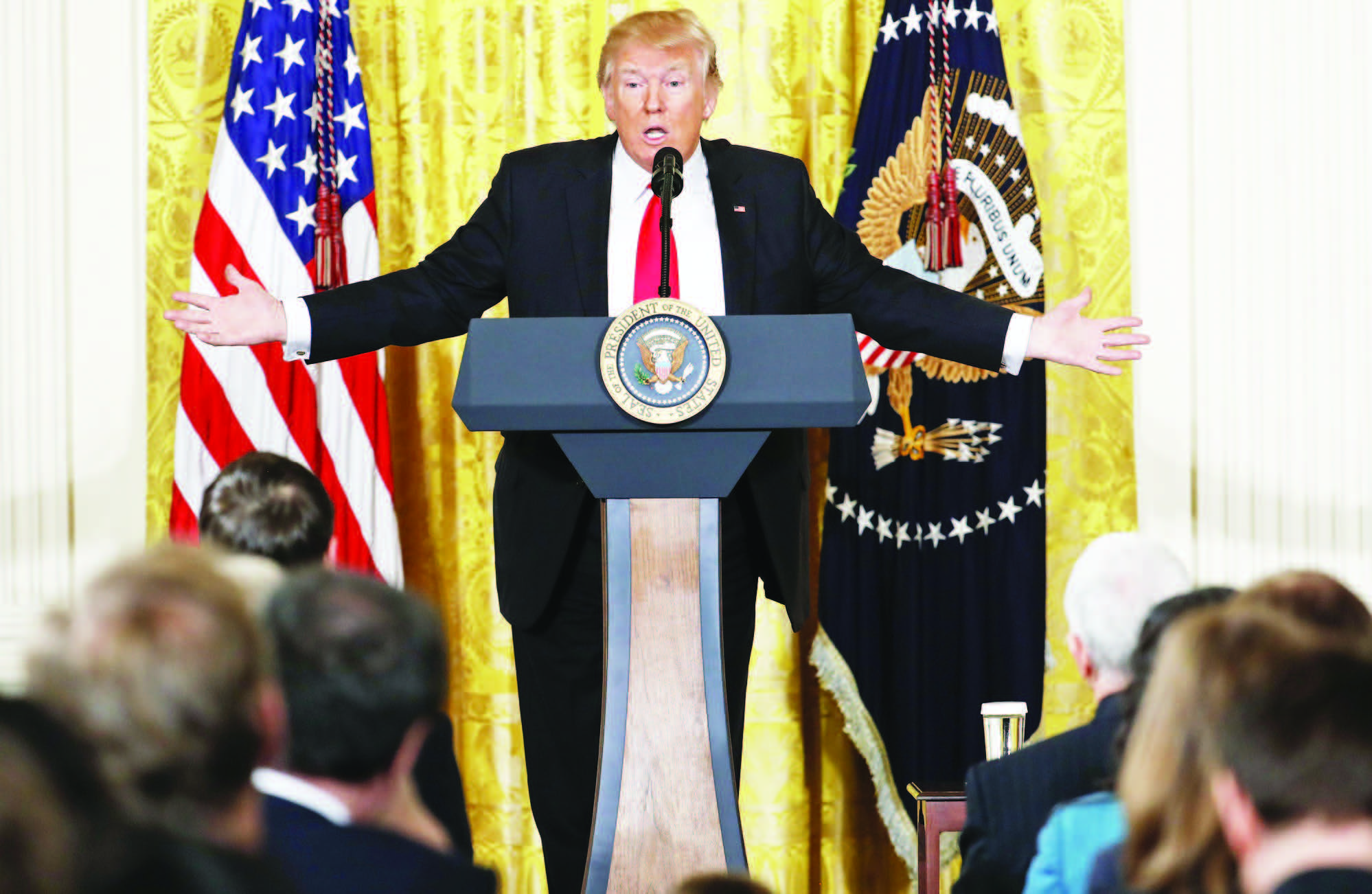
    It was a 90 minute show of bravado by a super performer. Trump bullied reporters, dismissed facts and then cracked a few caustic jokes – a combination that once made the candidate irresistible cable TV fodder. Now in office, he went even further, blaming the media for all but sinking his not-yet-launched attempt to “make a deal” with Moscow.

    For its stunning moments and memorable one-liners, Donald Trump’s first solo news conference as president has no rivals in recent memory. For all the trappings of the White House and traditions of the forum, his performance was one of a swaggering, blustery campaigner, armed with grievances and primed to unload on his favorite targets.

    That matters, Trump said in one of his many improvisational asides, because he’d been briefed and “I can tell you … nuclear holocaust would be like no other.

    This was his and his aides’ attempt to get the boss his groove back. Trump used the event to try to claw his young administration back from the brink after a defeat in court and the forced resignation of his top national security adviser.

    He taunted reporters and waved away their attempts to fact-check him in real time. He (incorrectly) touted his Electoral College total and repeatedly blasted his November opponent – somehow mentioning Hillary Clinton more than anyone else in his defense of his administration’s early days. He bragged that his White House is “a fine-tuned machine” and claimed “there has never been a presidency that has done so much in such a short period of time.”

    If only the news media would give him credit. Over and over, he accused the political press of being dishonest and suggested that any negative coverage of his administration was “fake news.” He unloaded a torrent of grievances while positioning himself as the stand-in for the everyman, who, he declared, hates and distrusts reporters as much as he does.

    “The press – the public doesn’t believe you people anymore. Now, maybe I had something to do with that. I don’t know. But they don’t believe you,” Trump charged. “But you’ve got to be at least a little bit fair, and that’s why the public sees it. They see it. They see it’s not fair. You take a look at some of your shows and you see the bias and the hatred.”

    It was a far cry from the “buck stops here” mantra popularized by Harry Truman and other presidents who believed that the ultimate responsibility for any White House struggles lay with the president himself. Trump was eager to assign blame elsewhere, ignoring the nation’s healthy economy and relative peace when he took office to say “to be honest, I inherited a mess, a mess, at home and abroad, a mess.”

    He mostly blamed the media for his woes, rebuffing suggestions that he was undermining confidence in the press or threatening the First Amendment by trying to convince the nation that “the press honestly is out of control.”

    “The press has become so dishonest that if we don’t talk about it, we are doing a tremendous disservice to the American people,” he said. “Tremendous disservice.”

    Never before has a president stood in the White House and so publicly maligned the press or attacked reporters by name, according to presidential historians. Not even Richard Nixon in the days of Watergate.

    But for Trump, it continued a defining theme and amplified his chief strategist Stephen Bannon’s decree that the media are “the opposition party.”

    Trump had put claims of press prejudice at the center of his campaign in an unprecedented way and earlier this month falsely accused the media of refusing to cover terrorist attacks across the world. Though Thursday’s news conference was a messy, fact-challenged affair, it may well have been cheered by Trump supporters across the country who had packed arenas last year to jeer reporters and chant “tell the truth” at the press pen.

    An Associated Press-GfK poll taken on the eve of the election revealed that 87 percent of Trump’s supporters saw the media as biased against him.

    Trump retains support among Republicans, and solid majorities of Americans say he is following through on his promises and is viewed as a strong leader, according to a Gallup survey. But his overall job approval rating is much lower than those of past presidents at the same point in their administrations. According to a Pew Research Center survey, 39 percent of Americans approve of his job performance while 56 percent disapprove.

    But he also made a point of complimenting a softball inquiry about the first lady as “a very nice question.” He teased CNN reporter Jim Acosta for having the same last name as his new pick for labor secretary – Alexander Acosta, whose appointment was ostensibly the reason for the news conference – and said he asked his staff to make sure the men weren’t related.

    He chided a Jewish reporter wearing a kippah for asking a question about anti-Semitism. He asked an African-American reporter whether she could help set up a meeting with the Congressional Black Caucus. He displayed a rare moment of introspection when he discussed his love for kids amid his “very, very hard” decision whether to potentially deport young immigrants who came to the United States illegally as children.

    But mostly it was Trump’s bravado on display, as when he incorrectly asserted that his Electoral College victory had been the largest of any president since Ronald Reagan – and then simply dismissed a reporter’s attempt to correct him.

    “Well, I don’t know, I was given that information,” said Trump. “But it was a very substantial victory, do you agree with that?”

  • US, Russia agree to boost military talks

    US, Russia agree to boost military talks

    WASHINGTON (TIP): The US and Russian militaries agreed to “enhance communications” after a meeting between their top commanders in Azerbaijan today (February16), the Pentagon said. Chairman of the US Joint Chiefs of Staff Joe Dunford and his Russian counterpart Valery Gerasimov discussed military relations between the two countries as well as security in Europe, the Middle East and elsewhere during their meeting in the capital Baku.

    The two sides “have undertaken efforts to improve operational safety of military activities in order to decrease the prospects for crisis and avoid the risk of unintended incidents,” the Pentagon said in a statement. “The leaders further agreed to enhance communications on such stabilizing measures.”

    The United States and Russia already maintain a permanent military communications line over their air operations in Syria to avoid incidents between their aircraft. The last face-to-face meeting between the two highest US and Russian military officers took place in January 2014 between Gerasimov and Dunford’s predecessor Martin Dempsey. The Baku meeting comes amid widespread speculation about the future of US-Russian relations following US President Donald Trump’s election.

  • Trump’s Next Executive Order on Immigration may cause H-4 Visa holders to lose work permit

    Trump’s Next Executive Order on Immigration may cause H-4 Visa holders to lose work permit

    Indian Americans overwhelmingly use H1-B or the work visa. Most recently, under Obama administration their spouses, who are on H-4 visa were allowed to work. However, things are changing with the new Trump administration at the healm and Republicans and some Democratic lawmakers consider that high-tech Indian workers are stealing away American jobs.

    The Trump administration, media reports suggest, has launched a sweeping overhaul of the nation’s immigration policies, especially on the H-4 visa holders — spouses of H-1B visa-holders.

    President Donald Trump said to be considering an executive order that would rescind employment authorization for H-4 visa holders, leaving 180,000 women, mostly from India, frantic about their ability to continue to work in the U.S.

    H-4 visas are given to the spouses of H-1B visa holders, highly-skilled foreign workers, the majority of whom are from India. Until 2015, H-4 visa holders – who often had skill levels comparable to their spouses – were not allowed to work. In 2015, U.S. Citizenship and Immigration Services announced that some H-4 visa holders, whose spouses were on track for permanent residency in the U.S., would be able to work.

    “Allowing the spouses of these visa holders to legally work in the United States makes perfect sense,” USCIS Director León Rodríguez said in February 2015. “It helps U.S. businesses keep their highly skilled workers by increasing the chances these workers will choose to stay in this country during the transition from temporary workers to permanent residents. It also provides more economic stability and better quality of life for the affected families.”

    At a press briefing on February 8th organized by New America Media, Sally Kinoshita, deputy director of the Immigrant Legal Resource Center, told reporters that a leaked memo from the Trump administration proposes to end work authorization for H-4 visa holders. “H-4s are vulnerable because the Department of Homeland Security extended work permits to them under the regulations in 2015 and this draft memo seeks to rescind those regulations,” she said.

    A leaked draft of an executive order titled “Protecting American jobs and workers by strengthening the integrity of foreign worker visa programs” appeared on the New York Times Web site Jan. 27. In the draft, Trump proposes sweeping changes to several highly-skilled foreign worker visa programs, including H-1B workers.

  • Ambani terms Donald Trump “a blessing in disguise for India”

    Ambani terms Donald Trump “a blessing in disguise for India”

    Donald Trump’s executive order on #TravelBAN may have left the US and the world shocked, but India’s richest businessman believes the new US president may be good for the world’s fastest-growing major economy.

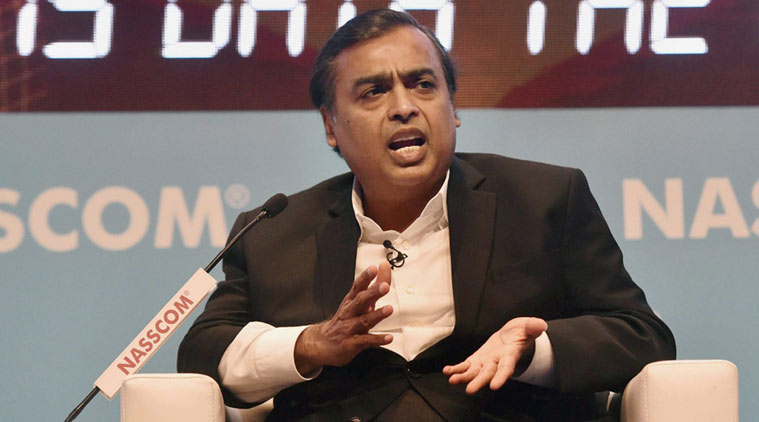
    “Actually, Trump might be a blessing in disguise. It (Trump’s appointment) will help Indian talent and Indian IT industry to focus on solving problems in India,” Reliance Industries chairman Mukesh Ambani said today (Feb. 16) and called for strengthening domestic capabilities..

    “The domestic market is huge and this provides an opportunity to improve people’s quality of life and to make sure industries are more productive,” added Ambani at an event organized by Indian IT industry lobby Nasscom.

    “We have a very big advantage in this new world of digitisation. It’s very very important to be open, to have partnerships and not be closed. That is really a strength we should build on, and continue to be open and never think whatever the world changes. The world might want to build walls around. I think it is very important for us not to be influenced by those developments, to make sure that we are always open, always connected,” he said.

    India’s $150-billion IT outsourcing sector has a massive exposure to the US and could be the most vulnerable to Trump’s protectionist stance. Outsourcing firms based in the country, which get over 65% of their revenue from the US, depend heavily on US work visas. Over the last couple of months, at least two bills to tighten norms for issuing the H-1B, the long-term work visa, have been proposed in the American congress.

    Around 9.5% of India’s GDP comes from the outsourcing industry, which employs nearly 3.7 million people. The proposed bills have battered the stocks of large companies like Infosys and Tata Consultancy Services.

  • Trump, China’s Xi Jinping speak for first time since inauguration

    Trump, China’s Xi Jinping speak for first time since inauguration

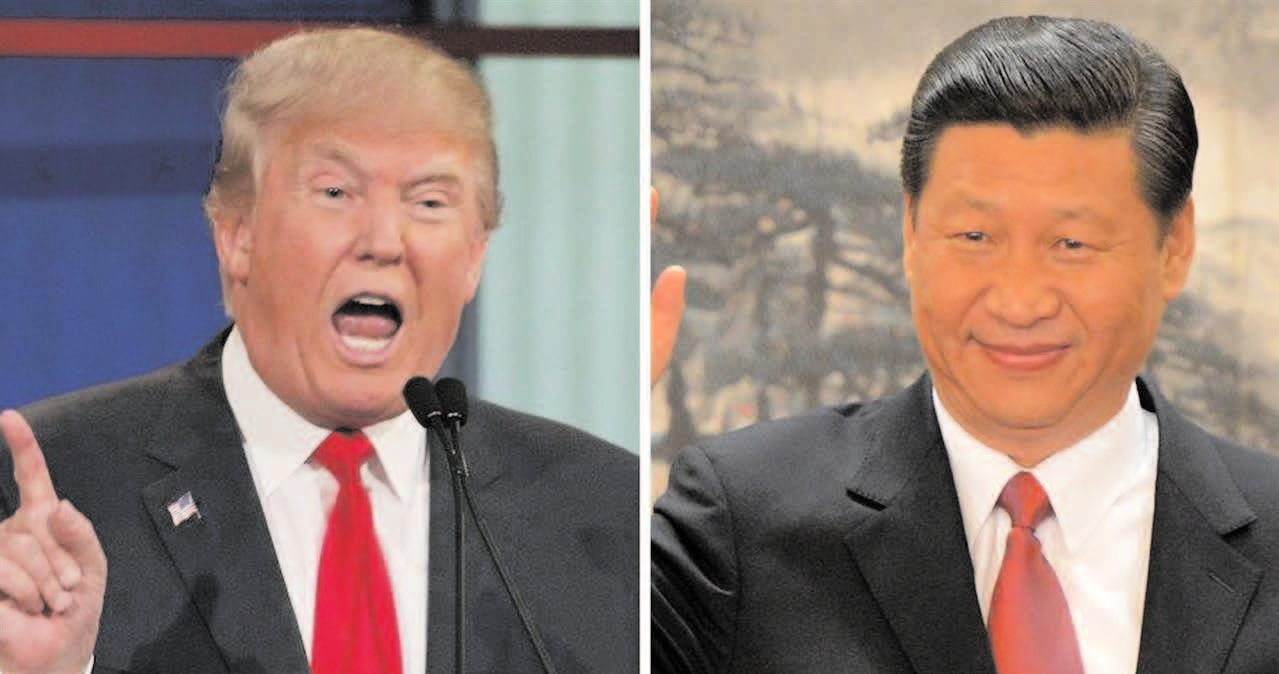
    WASHINGTON (TIP) – Since his election in November, President Trump has challenged Beijing over several issues and, most controversially, upended decades of diplomatic protocol by questioning the longstanding US policy towards Taiwan.

    In the call, the two leaders discussed “numerous topics,” and Trump committed to honoring the “One China” policy at Xi’s request.

    China views Taiwan as a renegade province and, since 1979, the US has acknowledged Beijing’s claim that Taiwan is part of China, with US-China relations governed by the set of protocols known as the “One China” policy.

    Prior to taking office, Trump had caused ructions in the US-Sino relationship by taking a phone call from Taiwan’s leader Tsai Ing-wen and, in a January interview in The Wall Street Journal, he said, “Everything is under negotiation, including ‘One China.’”

    Thursday’s call was described as “extremely cordial,” and the readout released by the White House said “representatives of the United States and China will engage in discussions and negotiations on various issues of mutual interest.” The two leaders also extended invitations to meet in their respective countries.