Tag: Trump’s Wall with Mexico

  • Trump deploys military to secure US-Mexico border to check ‘illegal migration’

    Trump deploys military to secure US-Mexico border to check ‘illegal migration’

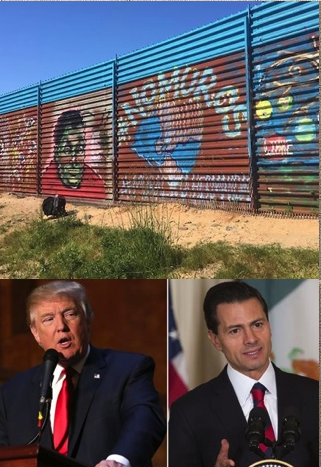
    President Enrique Peña Nieto of Mexico reacts sharply to Trump’s Threats

    WASHINGTON(TIP): President Donald Trump, April 5, signed an executive order directing the deployment of military along the US-Mexico border to fight illegal immigration, asserting that the situation had reached “a point of crisis.”

    The announcement came a day after Trump said he intended to deploy the National Guard to the US-Mexico border until his administration was able to deliver on his campaign promise to build a wall to bolster security.

    Given the importance to secure borders for national security, the National Guard, in coordination with governors, will remain in a support role until Congress takes the action necessary to close the loopholes, the White House said.

    Trump on Thursday told reporters aboard Air Force One that a large portion of the troops he is planning to deploy to the U.S.-Mexico border would stay there until the border wall was built. Around 2,000 to 4,000 National Guard troops will be deployed to the area, Trump said, similar to actions by Presidents George W. Bush and Barack Obama.

    “The situation at the border has now reached a point of crisis. The lawlessness that continues at our southern border is fundamentally incompatible with the safety, security, and sovereignty of the American people. My administration has no choice but to act,” Trump said in his memorandum to the Defense Secretary, Attorney general and the Secretary of Homeland Secretary.

    The threat is real, Homeland Security Secretary Kirstjen Nielsen told reporters at a White House news conference. “We continue to see unacceptable levels of illegal drugs, dangerous gang activity, trans-national criminal organizations and illegal immigration flow across our border,” she said.

    This threatens not only the safety of American communities and children, but also the very rule of law, on which, the country was founded. “It’s time to act. So, let’s talk a little bit about that today,” she said.

    “In an effort to prevent such a consequence, the President has directed that the Department of Defense and the Department of Homeland Security to work together with our governors to deploy the National Guard to our southwest border to assist the Border Patrol,” she said.

    Border Patrol recorded 37, 393 arrests on the southwest border in March, according to data released by US Customs and Border Protection (CBP).

    In the last 15 months, she said the Trump administration has taken major steps to methodically strengthen border security.

    “We began the first new border wall system construction in close to a decade, we modified our asylum system processing to more quickly adjudicate claims and we ended so-called temporary immigration program,” Nielson said.

    Ruing that the system rewards bad behavior, she said it does not punish law breakers. “It undermines our nation’s economic interests. Make no mistake, interdiction without the ability to promptly remove those without legitimate cause is not border security, it is not national security,” she asserted.

    “We will not allow illegal immigration levels to become the norm. More than 1,000 people a day, 300,000 a year, violating our sovereignty as a nation will never be acceptable to this president,” she said.

    Meanwhile, President Enrique Peña Nieto of Mexico blasted President Donald Trump in a video message on Thursday, April5, vowing that “nothing and no one stands above the dignity of Mexico” and adding that the U.S. president’s main gripes were Congress’s problem, not Mexico’s.

    “If your recent statements are the result of frustration due to domestic policy issues, to your laws or to your Congress, it is to them that you should turn to, not to Mexicans,” Peña Nieto said in the message, according to a translation provided by his office.

    (With inputs from PTI)

  • Trump’s first hundred days; Democratic voices have slowed presidential recklessness down

    Trump’s first hundred days; Democratic voices have slowed presidential recklessness down

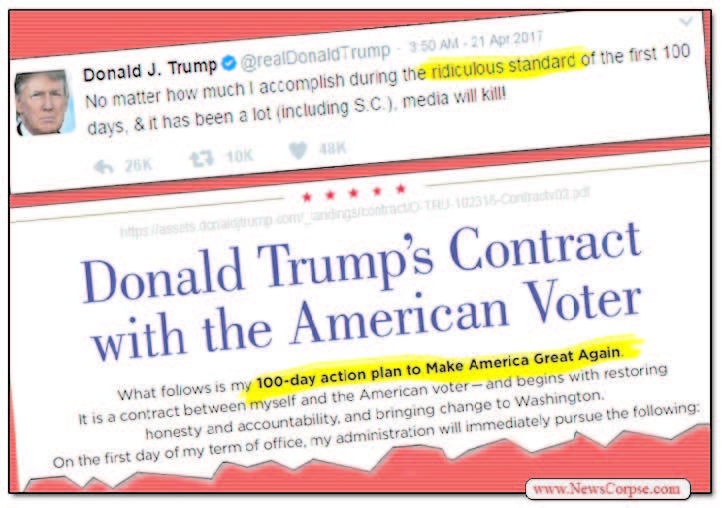
    The American presidency remains undoubtedly the most powerful office in the world. The man who sits in the Oval Office can mug anyone of his happiness. The relief, if any, of these first hundred days is Trump has not been allowed to be reckless. Institutional constraints, liberal pieties and a vigorous media have combined to subject him to the rites of scrutiny and accountability. And, this should be a matter of enormous satisfaction to democratic voices and forces even beyond the United States”, says the author – Harish Khare.

    April 29 is Donald Trump’s 100th day in the White House. When on November 8 last year he got himself elected to the office of President of the United States, the rest of the world wondered how could have the Americans opted for this man; how could America – the land of Harvard and Yale, Princeton and MIT, the New York Times, Washington Post, the New Yorker – elect a man who is gratuitously boorish, determinedly anti-intellectual, and just a greedy businessman, with no record whatsoever of any public service? Well, democracies do sometimes produce false and flawed results. Donald Trump assumed charge on January 20th this year. Has he dismantled and destroyed the United States as his detractors feared; or, has he created the kind of global chaos that the world capitals had apprehended?Perhaps the first hundred days may be too short a period to allow any definitive conclusions, but it is feasible to believe that the fears of an American meltdown were vastly exaggerated. The curative power of democracy has had its impact.

    Though Donald Trump won the Presidency in November 2016 he did not win the popular vote. Those who did not vote for him thought they had a right to deny him the kind of honeymoon the Presidents are normally granted. The first hundred days have been full of confrontation and cock-ups. Washington’s in-crowd resents him, as it resents anyone who is seen as an outsider, just as it had scorned the Jimmy Carters and the Bill Clintons. On his part, the cantankerous and quarrelsome Trump is not the one to turn the other cheek. He has, in fact, not passed up any chance to throw a brick through his rivals’ glass window.

    Trump is an aberration. The Americans’ sense of disappointment can be traced to the simple fact that these last eight years the United States and the world had got used to a substantive, and at times searing, presidential rhetoric. Nobody has yet accused Trump of eloquence. A distinct sense of shoddiness emanates from the fact that unlike his predecessor, who was often suspected of being too professorial, Donald Trump has positioned himself as a street brawler. And, he has lived up the part, using Twitter as a knuckle-duster, throwing 140-letter punches at rivals at home and abroad.

    Authority in Washington, as per the American constitutional arrangements, is a divided proposition. Presidential effectiveness invariably depends on the White House’s ability to work with different groups, build up consensus, lead a coalition almost on every issue; despite his self-belief as a wonderful deal-maker, Trump has yet to demonstrate the skills and the attitudes needed to work with other institutional players in Washington. Consequently, the others keep snipping at his heels; and, he is happy to bark back. The last hundred days have seen unhappy departures from good presidential manners. This constant brawling and an itch for confrontation have necessarily deprived the President of an aura of respectability.

    Democracies look for a sense of moral authenticity and gravitas in their leaders; there is an implicit need to have confidence in their leaders and to believe that they are being led by an exemplary personality of virtuosity and moral luster. Citizens need to respect their leaders. But Donald Trump refuses to climb on to the pedestal.

    Because he came to office tapping the resentments and frustrations of the American voters with the so-called elites and at the foreigners who had taken away jobs out of the United States, Trump feels he needs to keep his legions’ anger simmering. Unsurprisingly, his very first executive decisions were directed against the immigrants, at least the undocumented ones, but he found himself having to deal with judicial challenges. As if the sense of confrontation with the judicial branch was not enough, the President has thoughtlessly engaged the media in a hit-and-run campaign. All this has not helped the President garner any kind of respectability at home.

    The Americans remain unsure whether the President has satisfactorily insulated his office from his complicated and not-so-honorable business interests; they are definitely not amused that the Trump Family seems to be acquiring so much say in the day-to-day functioning of the presidency. The President remains unconcerned; perhaps his obduracy stems from the fact that he never had a political office before and therefore remains uneducated in the leader’s obligation to appreciate and respect public sensibilities.

    Because Trump has put in place a new culture of disruptive disagreement in the domestic discourse, it is bound to have implications in the United States’ relationship with the world. A President who is not respected at home finds it difficult to earn applause abroad. The domestic combativeness means that President Trump cannot be relied upon to provide and articulate any kind of ideological or political global leadership, an obligation that the American Presidents since Franklin D Roosevelt have invariably discharged.

    Trump came to the Oval Office after accusing the external forces – the Chinese, the Mexicans, the Europeans -of being unfair to the United States and being a cause, direct or indirect, of American economic decline. He promised protectionism and isolationism. He promised to stay at home, refusing to play the global sheriff; he declared himself unimmured of the so-called global architecture; his preference, he declared, would be for bilateral deals and duels.

    Much to the relief of the globalists on the east coast, he, as President, seems inclined to hew the conventional line. He has not stayed home. He has gone and dropped the mother of all bombs in Afghanistan; fired missiles at Syria because the Assad regime was being bad boys; and, this week sent his Vice-President to do a bit of macho-posturing against North Korea.

    The Chinese seem to have sorted Trump out. Demonstrating diplomatic dexterity, they have refused to be provoked but have expressed themselves strongly when it was felt necessary to do so; they have baffled him, practicing simultaneously confrontation, cooperation and cooption.

    The Europeans are no longer alarmed by Trump’s isolationism; he has found some merit in NATO. They realize that they have to put their own house in order and they are relieved that they do not have to deal with Trump’s disruption of the European project. The Russians, on the other hand, are happy to take him for a ride, too.

    The American presidency remains undoubtedly the most powerful office in the world. The man who sits in the Oval Office can mug anyone of his happiness. The relief, if any, of these first hundred days is Trump has not been allowed to be reckless. Institutional constraints, liberal pieties and a vigorous media have combined to subject him to the rites of scrutiny and accountability. And, this should be a matter of enormous satisfaction to democratic voices and forces even beyond the United States.

    (The author is editor-in – chief of Tribune group of publications)


  • Border Security operations destabilize Texas Budget

    Border Security operations destabilize Texas Budget

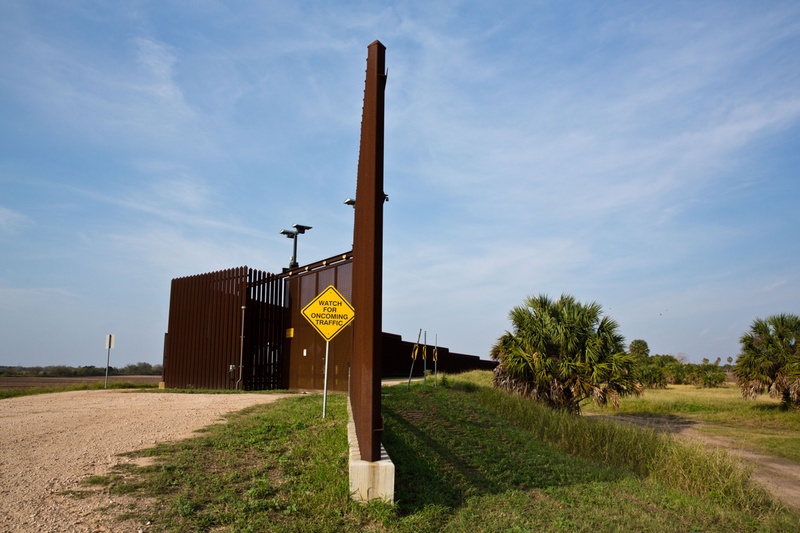
    AUSTIN, TEXAS (TIP): As a budget shortfall in Texas threatens cuts to colleges and Medicaid, a costly border security operation is proving largely untouchable despite President Donald Trump’s promises to build a wall and the plunging number of people caught illegally entering the U.S., says an AP report.

    The report points out that a prolonged oil slump has left lawmakers about $6 billion short of the money needed to keep the status quo in Texas, which attracts about a million new residents every two years. But border security is one area where Republicans – who control state government – have all but refused to search for savings.

    During a key budget vote on Thursday, April 6, House Democrats proposed taking dollars earmarked for hundreds of state troopers on the Texas-Mexico border and National Guard patrols, and putting that money instead toward other programs they say are underfunded. One even proposed tacking onto a $218 billion spending bill a prohibition against using state funds on Trump’s border wall.

    But the proposals to scale back Texas’ $800 million border operation appeared largely symbolic during a marathon debate in the GOP-controlled Legislature.

    Illegal border crossings have plummeted in recent months. In March, authorities caught 12,193 people at the southern border – the lowest monthly figure in at least 17 years, and the second straight month that border arrests sharply dropped. Still, Republican officials from Texas Gov. Greg Abbott on down embrace Trump’s plans to build a wall, and the state is committing more money to border security efforts.

    “At the federal level, the money hasn’t been turned loose to apply the new resources that are needed to do what President Trump has said needs to be done, and what I agree needs to be done,” said Republican Rep. Matt Schaefer, a U.S. Navy reserve lieutenant from East Texas who is among the most far-right lawmakers in the Texas House. “This is going to take time. I don’t believe that we can stand down while the federal government steps up. And that’s going to be awhile.”

    The state is set to pass a new budget by June, and just about every part of Texas government is in line to take hit: Public universities are fighting a proposed $300 million cut, and one of Abbott’s biggest initiatives – bolstering pre-kindergarten – is also getting short shrift. More than $2 billion in proposed cost cuts to Medicaid is also on the table, and many state agencies are under a hiring freeze.

    The Senate spared border security from any cuts, and the House plan would also keep funding 50-hour workweeks on the border for nearly two dozen Texas Rangers and 250 troopers. The House only stopped short of purchasing new big-ticket defense items, such as more spy planes or armored boats to patrol the Rio Grande.

    State officials have defended the price tag by with data that include drug seizures and arrests, though critics question the numbers. Last year, an Associated Press review found that child support evaders and low-level felony drug arrests were among thousands of arrests being categorized as “high-threat criminals” along the border.

    Some think the real “Trump effect” was pushing fearful people to get to the U.S. before Trump took office. Border arrests in October, November and December increased by about a third compared to the same period in 2015, before falling this year.

    “A lot of Republican members want to be able to say they voted for money on the border to stop this perceived immigration problem,” said Rep. Chris Turner, who leads the House Democratic Caucus. “The data doesn’t support their arguments. A lot of us hoped there would be a lot less money would be put into border security. But politics is driving that decision.”

    (Source: AP)

  • An Untrumpian Trump Asks Congress to End ‘Trivial Fights’ in his first Address to Congress

    An Untrumpian Trump Asks Congress to End ‘Trivial Fights’ in his first Address to Congress

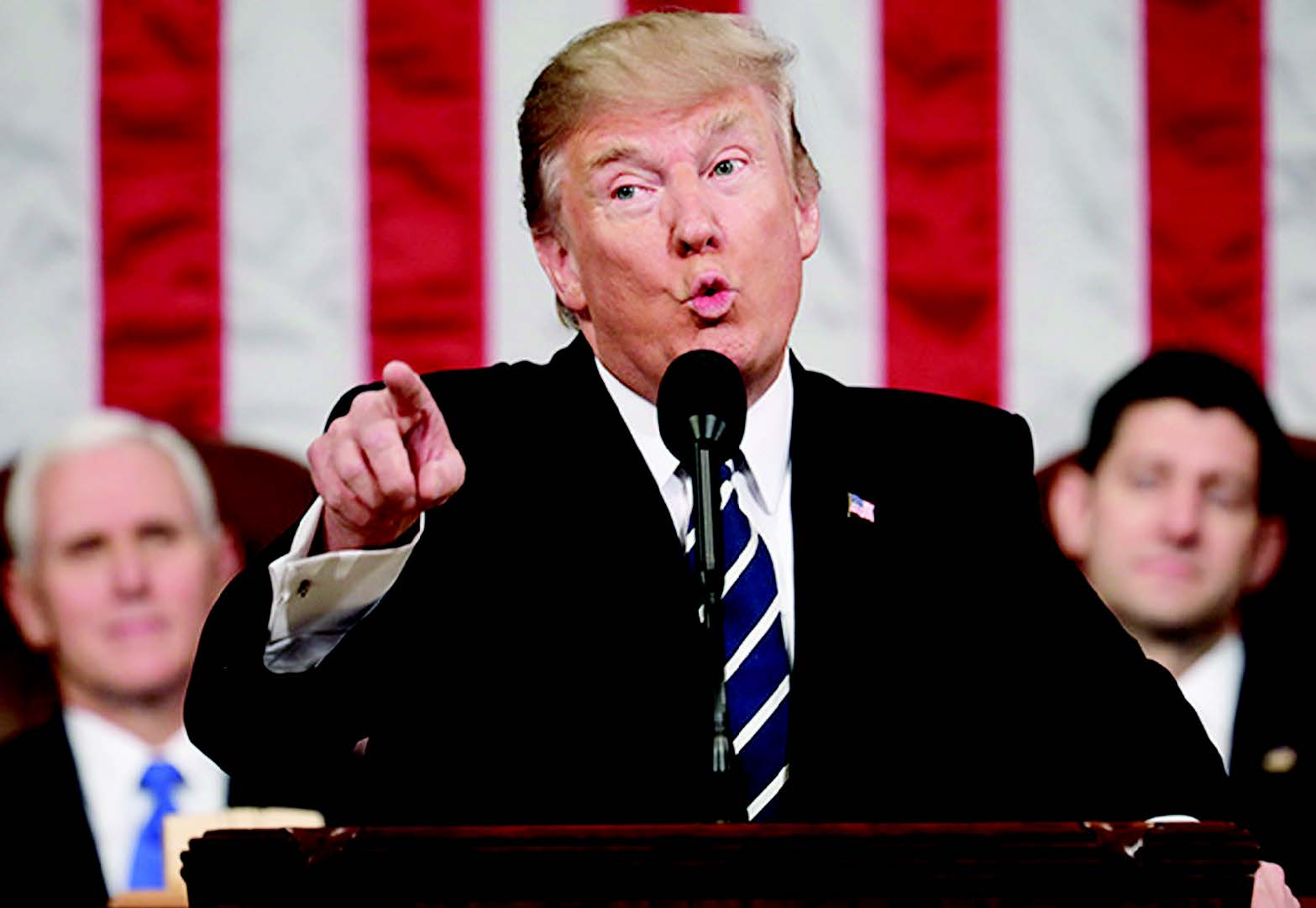
    It was not the Trump Americans have known who addressed the joint session of Congress on February 28 night, He disappointed many by being so untrumpian. It was a different Trump that night whocalled on Congress to work with him on overhauling health care, changing the tax code and rebuilding the nation’s infrastructure and military. Trump said that he was eager to reach across party lines and put aside “trivial fights” to help ordinary Americans.

    “I am asking all citizens to embrace this renewal of the American spirit. I am asking all members of Congress to join me in dreaming big, and bold, and daring things for our country,” Trump said.

    Trump also – for the first time – sketched out a new approach to immigration, suggesting that the nation adopt a “merit-based” immigration system.

    “It is a basic principle that those seeking to enter a country ought to be able to support themselves financially.” Trump said. “Yet, in America, we do not enforce this rule, straining the very public resources that our poorest citizens rely upon.” Congress should consider “switching away from this current system of lower-skilled immigration,” he said.

    Trump said he believes real immigration reform is possible, but such a dramatic shift in immigration priorities will be certain to meet staunch Democratic resistance.

    Trump promised a massive renewal of American jobs, infrastructure, and the military. The president wants a trillion-dollar infrastructure plan to rebuild the nation’s roads and create millions of jobs. “Millions lifted from welfare to work is not too much to expect,” Trump said, and “streets where mothers are safe from fear – schools where children learn in peace … are not too much to ask.”

    The President also laid down clear principles for the repeal and replacement of Obamacare. “Obamacare is collapsing –and we must act decisively to protect all Americans,” he said, “Action is not a choice — it is a necessity.”

    The President also signaled action on another key piece of his agenda — tax reform, promising “massive” relief for the middle classes and cuts in corporate tax.

    President Trump’s address has by and large received praise. While the Republicans went overboard at his address which some described as the best ever I decades, Democrats were dismissive. House democratic leader Nancy Pelosi observed that while he sounded well, his actions were contrary to what he said. It remains to be seen how sincere this president is about “cutting across the party lines” and taking all along to work for the welfare of all Americans.

  • Mass deportations? The Trump Administration goes after immigrants

    Mass deportations? The Trump Administration goes after immigrants

    Despite judicial rebuffs on his ban on immigrants, President DonaldTrump appears to be intent on waging war on the American society’s most vibrant elements: the immigrants. The Department of Homeland Security is reported to have put in place plans “for aggressive enforcement of immigration laws.”

    The only saving grace is that the new administration has denied reports that it intended to deploy National Guards to round up the undocumented immigrants in the United States. And, though the Trump administration has emphasized that it will keep intact President Obama’s protection program for “dreamers”, the overall message the immigrants across the board have heard from the Trump White House is one of intimidation and fear. Also, the potential asylum seekers stand discouraged and forewarned. America will no longer be the first choice of the prosecuted.

    If President Trump has his way, the United States would be spending huge resources on making life simply difficult for the current and potential immigrants. The Trump White House wants to empower agencies like the Immigration and Customs Enforcement, Custom and Border Protection, as well as to build up a wall along the southern border.

    On their part the administration officials insist that President Trump is simply asking for a vigorous enforcement of the existing laws and that the law-enforcement agencies will be targeting mostly “criminals” among the immigrants.

    These caveats notwithstanding, President Trump has succeeded in making each and every immigrant edgy, nervous and fearful. The American law-enforcement agencies are neither known for their professional detachment nor for their racial broadmindedness. The leadership of the law-enforcing agencies remains with those who belong to “the Trump class”, mostly subscribing to the ugly notions of white supremacy.

    The rest of the world has reacted adversely to these signals. But the new American President has made it clear that he is not going to allow himself to be distracted from those loony ideas and prejudices that in the first instance propelled him to the White House. Nor does he appear bothered at playing the bull in America’s ethnic china shop.

  • Mexico voices ‘Irritation’ to Trump envoys

    Mexico voices ‘Irritation’ to Trump envoys

    “No use of military force in immigration operations,” and “no, repeat, no mass deportations”: Secretary Kelly

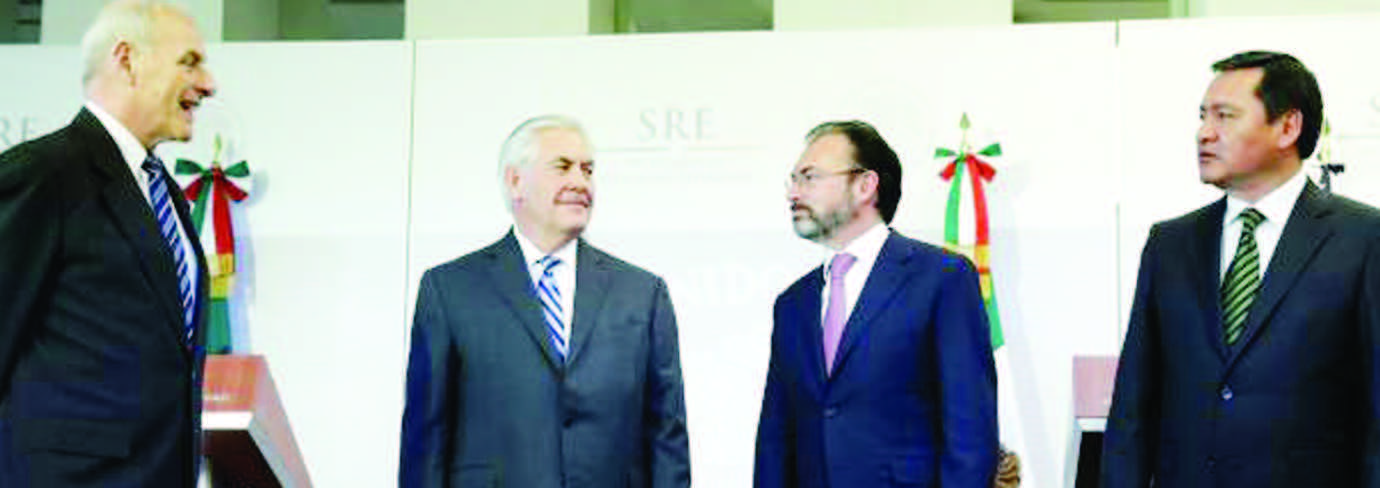
    MEXICO CITY (TIP): In a first and carefully worded rebuke senior Mexican officials have expressed “worry and irritation” about US policies during a visit by two of President Donald Trump’s top envoys, who in turn seek to cool tempers after weeks of tension between the two neighbors.

    With a stern look while speaking to reporters on Thursday, February 23, after closed-door meetings with US Secretary of State Rex Tillerson and Homeland Security chief John Kelly, Videgaray said it is “a complex time” for Mexican-US relations.

    “There exists among Mexicans worry and irritation about what are perceived to be policies that could be harmful for the national interest and for Mexicans here and abroad,” Foreign Minister Luis Videgaray told a news conference on Thursday.

    The US government this week angered Mexico by saying it was seeking to deport many illegal immigrants to Mexico if they entered the United States from there, regardless of their nationality.

    The immigration guidelines are the latest point of tension between neighbors already tense over Trump’s vow to build a wall on the border and his attempts to browbeat Mexico into giving concessions on trade.

    Videgaray and President Enrique Pena Nieto have been criticized at home for being too willing to engage with Trump. However, relationships between the two countries have gone downhill in the past few weeks.

    Both sides on Thursday pledged further dialogue on migration, trade and security issues facing both nations.

    Kelly and Tillerson were much more measured in their words than either the Mexicans or Trump, who on Thursday said a military operation was being carried out to clear “bad dudes” from the United States.

    ‘No mass deportations’

    For their part, Kelly and Tillerson sought to cool tempers as they adopted a more measured tone than either the Mexicans or Trump, who on Thursday said a military operation was being carried out to clear “bad dudes” from the US.

    Kelly said there would be “no use of military force in immigration operations,” and “no, repeat, no mass deportations”.

    None of the US officials made direct references to the deportation of immigrants from third countries to Mexico, or to paying for the border wall planned by Trump, a red-flag issue for Mexico. Both sides at the Mexico City talks on Thursday pledged further dialogue on migration, trade and security issues facing both nations. Al Jazeera’s John Holman, reporting from Mexico City, said Mexico has been criticized as “timid” in confronting issues with the US in the past, but since Trump came into office it has grown “tougher”.

    “Usually, this is a quiet and cordial meeting. That’s how it has been for decades. But not under the administration of Donald Trump,” Holman said.