Tag: Turkey

  • Several hurt in clashes at Turkey’s Brussels consulate

    Several hurt in clashes at Turkey’s Brussels consulate

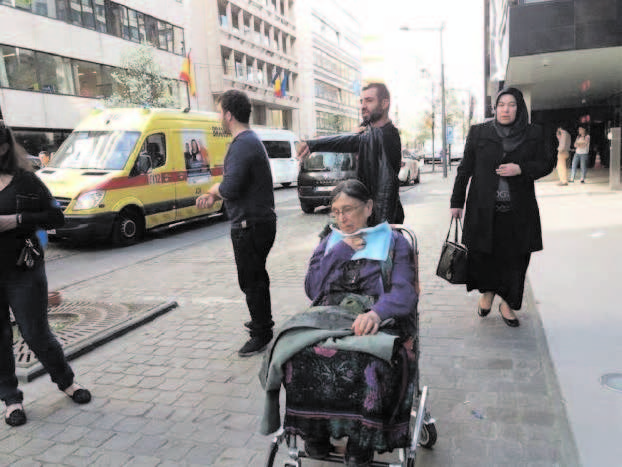
    BRUSSELS (TIP): Several people were injured and taken to hospital after supporters and opponents of the Turkish government clashed outside the country’s consulate in central Brussels on Thursday, Belgian police said.

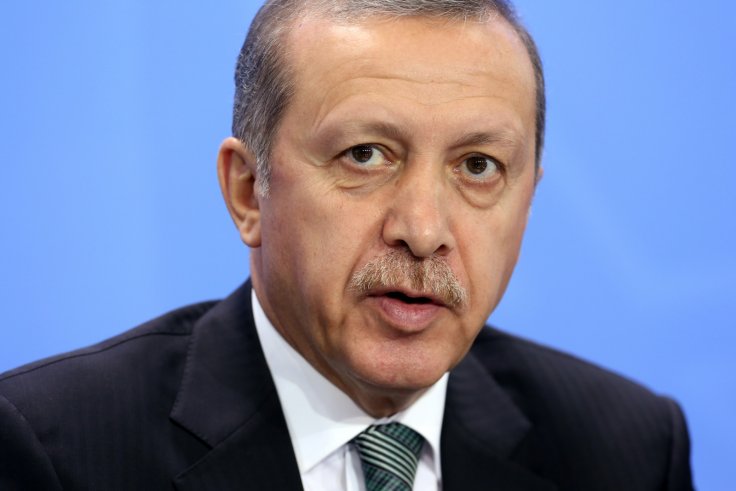
    Belgian Prime Minister Charles Michel condemned the violence, which he linked to a forthcoming referendum in Turkey on increasing the powers of President Tayyip Erdogan.

    “The Belgian government has absolute zero tolerance for any spillovers from the Turkish referendum. I condemn the riots at the embassy in Brussels,” he said on Twitter.

    A police spokeswoman said she could give no further details on the number of people hurt or the nature of their injuries. The Turkish mission to Brussels could not be immediately reached for comment.

    Ties between Turkey and European Union states have deteriorated in recent weeks over Turkish government attempts to rally support for Erdogan among expatriate Turks.

    Erdogan reacted with fury after Germany and the Netherlands – which, like Belgium, have big Turkish minorities – moved to restrict political rallies on their soil in the run-up to the April 16 referendum.

    Kurdish news agency Firat said the Thursday incident took place as people arrived at the consulate in Brussels to cast early ‘no’ votes in the referendum. Reuters was not able to confirm that independently. (Reuters)


  • War Clouds over Europe: Are We Prepared?

    War Clouds over Europe: Are We Prepared?

    “Europe is sitting on a time bomb and any small spark could ignite it. Remember that all conflicts in the last 2000 years have started in Europe and became ‘world’ conflicts. India has already given $10 billion or Rs 56,000 crore – nearly one per cent of GDP to help Europe. Not a single European paper or leader has thanked us openly. One can only hope that we need not give more of our GDP or become cannon fodder in Anglo-Saxon conflicts”, says the author – By Prof Vaidyanathan

    I wrote in 2013 about “Europe Going Down”

    Quote

    “The European economic and social crisis is becoming worse with each passing day. One business channel asked me in 2008 how long it might take to recover and I responded saying 40 quarters – they never came back to interview. But now I forecast it may never recover.

    Sri Aurobindo seems to have said that India will rise on the ashes of western civilization and it seems to be coming true. It is important to recognize that the dominance of the West has been there only for last 200 odd years. According to Angus Maddison’s pioneering OECD study, India and China had nearly 50 per cent of global GDP as late as the 1820s. Hence India and China are not emerging or rising powers. They are retrieving their original position. In 1990, the share of the G-7 in world GDP (on a purchasing power parity basis) was 51 per cent and that of emerging markets, 36 per cent. But in 2012, it is the reverse. So, the dominant west is a myth.

    Europe is facing three types of crisis – economic, demographic, civilizational and it is not in a position to come out of these. All three are not recent ones; they were developing over a period and are now culminating into a catastrophe.

    The Debt to GDP ratio of most of Europe is at unsustainable levels with our own Britain having above 500 per cent – I say our own since we are going to have to help them run their country sooner than later. There are three major constituents of debt – Government debt, corporate debt and household debt. Of the three, we find household debt has reached nearly 80 to 100 per cent of GDP in most of these countries. The reason is simple – unlike India, households in Europe and USA have forgotten one simple word – savings. They live on debt and are interned by debt.

    The situation is made worse by the unemployment situation. Youth unemployment has reached 55 per cent in Spain and hovering above 30 per cent in most of the other countries. Youth is defined as being between the ages of 16 to 24, unlike in India where even a 43-year-old is a ‘youth icon’. The overall unemployment is at more than 25 per cent in most countries and it is creating social turmoil.

    Along with this is the demographic crisis. The population of Europe during the First World War was nearly 25 per cent. Today it is around 11 per cent and is expected to become 3 per cent in another 20 years. This is mainly due to low reproductive rates and in some countries, is as low as 1 when 2.1 is considered as equilibrating rate. Europe will disappear from the world map unless migrants from Africa and Asia take it over. That is why Europe is being referred to as Eurobia and London as Londonistan.

    The root cause of the issue is the attempt in Europe to nationalize families and privatize business. Old age issue/health issues/ child care issues are all normal family activities that have been taken over by the state and the state is broke. Funded security schemes are facing crisis since not enough numbers are getting in to labor force due to low reproductive rates and unfundedsecurity system is in difficulty since taxes are not adequate due to low population growth.

    Coupled with economic and demographic crisis is the crisis of civilization in Europe. It has renounced the Church and has become secular. Church attendance has fallen significantly and churches have become tourist attractions rather than places of worship.

    Most of the migrants, particularly those doing ‘brown color work’ – like garbage removal, cleaning plates in restaurant, porter jobs, and grape-picking – are people from Mauritania/Somalia/ Algeria etc. and most are Muslims by faith. Due to a high degree of unemployment, there is resentment against migrants and this anger is turning into anger against Muslims. Added to this is the new front started by France in Mali to fight Islamic fundamentalists. Africa may become a new Vietnam for Europe.

    Europe is sitting on a time bomb and any small spark could ignite it. Remember that all conflicts in the last 2000 years have started in Europe and became ‘world’ conflicts. India has already given $10 billion or Rs 56,000 crore – nearly one per cent of GDP to help Europe. Not a single European paper or leader has thanked us openly. One can only hope that we need not give more of our GDP or become cannon fodder in Anglo-Saxon conflicts.”

    Unquote

    Again in 2016 about- How the idea of Europe is dead

    Quote

    “Brussels Airport attacks by Jihadists again bring to life challenge faced by Europe as we know. Europe of Mozart and Goethe and Schopenhauer and Sartre and Beethoven is dead.

    The cultured European having his wine and enjoying concerts and Opera is passé.

    Today Every European walks with his eyes turned on his back and ears listening to any changes.

    In small towns, new neighbors are looked at with suspicion and old neighbors are expected to behave. The sound of screeching cars at night makes them awake and sirens and cops are normal scene.

    The Radical Islam is not fighting Christianity -which anyhow is dead in Europe-but it is fighting the modernity. Islam is frightened of modernity destroying their religion and culture how so ever unacceptable it may be to European liberals. It is concerned about pre-marital sex/contraception/homosexuality/adultery/ “unprotected” women etc.

    Europe does not know how to handle it. The rise of rightwing forces -le Pen in France and PEGIDA in Germany-is going to lit the fires of newer European conflicts. Europe thought- a la Merkel- that they can buy peace with radical Islam by “requesting” them to integrate. But integrate with what? Integrate with “immoral” Europe where women are exhibited as “open meat” [in the words of the Australian Imam] who are “poisonous”

    Europe has seen Crusades and 100 years wars-between Christianity and Islam. But never has it had seen a conflict of this nature between “modernity” and Islam. The ongoing tussle in Turkey enlarges the conflict in the underbelly of Europe. Already Europe has 50% unemployment among youth groups and everyday 10000 are marching in the name of refugees. Remember some 200 years before entire Spain and up to the gates of Vienna it was Andalusia Empire and thousands of mosques were converted to Churches after Europe was “cleansed” of Islam.

    This time the Europe which is facing crisis is different. It is not the Pews and Stained glasses but concert halls and swimming pools and whole night parties opposed by Radicals.

    The issue is regarding life style and one likes it or not radical Islam is “Global moral policeman”. He knows the place of women in society and also the place of Europeans.

    Unfortunately, Europe has lost the will to fight and stand for whatever are its values. Its own idea of “freedom” is going to devour it when it is offered to Radical Islamists. Europe as we know is dead. Amen.”

    Unquote

    Merkel did a major mistake in opening the doors for the “refugees” and same with EU. The numbers are swelling and expectedly a million more waiting. One section of them would prefer Sharia and rule of Caliphate. Social tensions increasing and the forces which are anti-immigrant -more particularly anti-Muslim are on the rise. The new forces reject the current EU but may build a new EU based on different set of values. The meeting of all these forces like Le Pen/Greet wilders/AfD at Koblenz in Germany – where MSM was not allowed – Marine Le Pen claims ‘Anglo Saxon world waking up’ as Europe’s far-right parties meet after Trump inauguration. ‘Yesterday, a new America. Today – a new Europe,’ anti-Islam politician Geert Wilders tells cheering crowds.

    The conflict has given rise to war clouds over Europe between Global moral policeman “radical Islam” and “modern Europe”

    This war is going to be catastrophic if Turkey falls to radical Islam.

    Actually, the origins of the conflict can be traced to Globalization which rejected Westphalian idea of sovereignty of nations. Both Radical Islam and Global corporations/Hege funds embraced this rejection. Local populations were against globalization which affected them. This we will see in another article.

    This impending social strife and civil war in Europe will have implications for India.

    US will send troops to Europe to keep peace and arm twisting of India will start. Remember that India is largest contributor to “global peace keeping “role of UN.

    But India is never consulted about the conflict zones or location & the need for peace keeping. India must not get involved in “peace keeping” given its internal demographic composition. India must demand membership of UNSC before even considering any request.

    Saudi wants to finish Iran in the process and USA has been stupidly convinced that Iran is a major danger. Saudi is also member of -believe me- UN human rights council- and a major financier of Amnesty International. Let India remember that civilizational we have more in common with Iran than Saudis or their poodle terror central Pakistan.

    India has opportunity to scrap article 370 in J&K and allow all Indians to settle down in the valley. Each settler can be given Rs50 lakhs and a gun. Neither Trump nor Le Pen or AfD is going to bother about it. Within India except some TV warriors none would oppose it.

    Any war in European theatre will create huge number of our own Indian-refugees from ME and Europe into India. We need to be prepared for it

    There would be attempts by ISIs to recruit from India on a large scale by giving attractive stipends and Insurance to their families. India must crush such attempts with all its might.

    Indian businesses should be alert since most funds would pull out of India for war efforts in European theatre. Those businesses which have export/import links with US/Europe will be maximum affected unless their export products are useful for war.

    Of course, Sensex and Nifty will be affected since our markets are not linked to our economy but to US and Europe situation since market movements are decided by Foreign funds.

    India has to take a stand -howsoever painful-that this war is not our war but between desert cultures.

    We have been sucked into 1st and 2nd world war due to colonialism. Even though the colonial genes are still strong in our body polity -we must not put the boots of our soldiers on European soil under any pretext.

    It will not be a conventional war but a war between terrorists/snipers/belt bombers and right wing militia men of Europe and US.

    Left liberals as usual will be with belt bombers but alas they will be the first one to be swallowed by the Radical Islam.

    Breaking India forces can be crushed due to evolving global situation. Are we ready and do we have a plan?

    (The author is a professor of Finance at IIT, Bengaluru)

  • German Embassy, consular offices temporarily close in Turkey

    BERLIN (TIP): Germany has temporarily closed its embassy, all other consular offices and a school in Turkey, reportedly due to fears of a possible attack.

    Germany’s Bild newspaper reported today that the move was taken as a precaution after the Foreign Ministry learned of rumoured attacks on consular facilities in Turkey during the Eid al-Adha holiday week.

    The Foreign Ministry declined to comment on the Bild report, but confirmed that its embassy in Ankara and other consular offices were closed to the public during the holiday week of September 12-16.

    (AP)

  • Three killed in car bomb attack in Turkey’s southeast

    Three killed in car bomb attack in Turkey’s southeast

    DIYARBAKIR (TIP): Two officers and one civilian were killed when a car bomb exploded outside a police station near Turkey’s southeastern city of Diyarbakir on Monday, in an attack suspected to have been carried out by Kurdish militants, security sources said.

    Ambulances rushed to the scene, Dogan News Agency said. The area where the explosion hit is on a road between Diyarbakir and the district of Bismil, about 50 kilometres (31 miles) east, the security sources said.

    Footage on Turkey’s CNN Turk television showed the blast left the building’s concrete frame and twisted metal exposed with the windows entirely blown out and its roof partially collapsed. The explosion left a crater on the ground.

    Turkey’s southeast has seen some of the most intense fighting in decades after a ceasefire between the Turkish state and the outlawed Kurdistan Workers Party (PKK) collapsed in July 2015. Thousands of militants, security force members and civilians have since been killed in fighting across the region. (AP)

  • Turkey to release 38000 prisoners ‘to make room for coup plotters’

    Turkey to release 38000 prisoners ‘to make room for coup plotters’

    ANKARA (TIP): Turkey issued a decree on August 17 paving the way for the conditional release of 38,000 prisoners, the justice minister said, an apparent move to reduce its prison population to make space for thousands of people who have been arrested as part of an investigation into last month’s failed coup.

    The decree allows the release of inmates who have two years or less to serve of their prison terms and makes convicts who have served half of their prison term eligible for parole. Some prisoners are excluded from the measures: people convicted of murder, domestic violence, sexual abuse or terrorism and other crimes against the state.

    The measures would not apply for crimes committed after July 1, excluding any people later convicted of coup involvement.

    Justice Minister Bekir Bozdag said on his Twitter account the measure would lead to the release of some 38,000 people. He insisted it was not a pardon or an amnesty but a conditional release of prisoners.

    The government says the July 15 coup, which led to at least 270 deaths, was carried out by followers of the movement led by US-based Muslim cleric Fethullah Gulen who have infiltrated the military and other state institutions. Gulen has denied any prior knowledge or involvement in the coup but Turkey is demanding that the United States extradite him.

    The Turkish government declared a state of emergency and launched a massive crackdown on Gulen’s supporters in the aftermath of the coup. Some 35,000 people have been detained for questioning and more than 17,000 of them have been formally arrested to face trial, including soldiers, police, judges and journalists.

    Tens of thousands more people with suspected links to Gulen have been suspended or dismissed from their jobs in the judiciary, media, education, health care, military and local government.

    The government crackdown has raised concerns among European nations and human rights organizations, who have urged the Turkish government to show restraint. (AP)

  • Turkey talks tough with the EU

    Turkey talks tough with the EU

    Turkey’s European Union Affairs Minister, Omer Celik, has yet again said his country cannot overhaul its counter-terrorism laws in return for visa-free travel facilities for Turks. The much-derided quid pro quo forms part of the deal reached in March to stem the influx of Syrian refugees into Greece.

    Mr. Celik’s tough talk, coming in the wake of the failed coup in Turkey last month, will comfort nobody and surprise none. Many elements of the agreement between Brussels and Ankara on the deportation back to Turkey of large numbers of Syrian refugees who get to European shores already remains suspended de facto following the crushed rebellion, as noted by the UN High Commissioner for Refugees.

    This suspension is obviously of concern to the EU. For the March deal had led to a substantial reduction in the flow of migrants, falling from a daily average of about 1,700 prior to the agreement to as few as 48 by June, according to official figures. Mr. Celik’s reasoning against any relaxation of counter-terrorism provisions is that the exiled cleric, Fethullah Gulen, whose followers allegedly masterminded the coup attempt, is a terrorist in the eyes of Turkey’s government. Even assuming the allegations against the cleric are merited, the argument that protection against extremism can be enforced only through repression is a disingenuous one.

    Such an assertion at best gives a handle to the potent politics of anti-immigration that has fed into the already toxic atmosphere of Euroscepticism in parts of the 28-country bloc. Its most serious ramification was felt when Britain recently voted in a referendum to leave the EU, emboldening right-wing parties in France and the Netherlands.

    Against this backdrop, hard-line right-wing resistance against the grant of visa-free travel facilities for those holding Turkish passports was perhaps to be expected. The EU’s Schengen visa-free travel area, covering more than 20 countries, made it possible for migrants reaching European shores to move to destinations of their choice with ease. One of the fundamental principles of the bloc thus became a bone of contention among some of the founding-members and more recent entrants.

    Some among the latter began to barricade their borders, much to the chagrin of EU leaders. In the absence of a concerted approach to deal with the refugee crisis, the move to allow Turks to travel without visas was always going to be controversial. The EU continues to drag its feet over the issue. Turkey’s President Recep Tayyip Erdogan, long reviled by Europe for his authoritarian inclinations, is clearly in no mood to be deterred by pious sermons after the failed coup.

  • John Kerry to visit Turkey on August 21

    John Kerry to visit Turkey on August 21

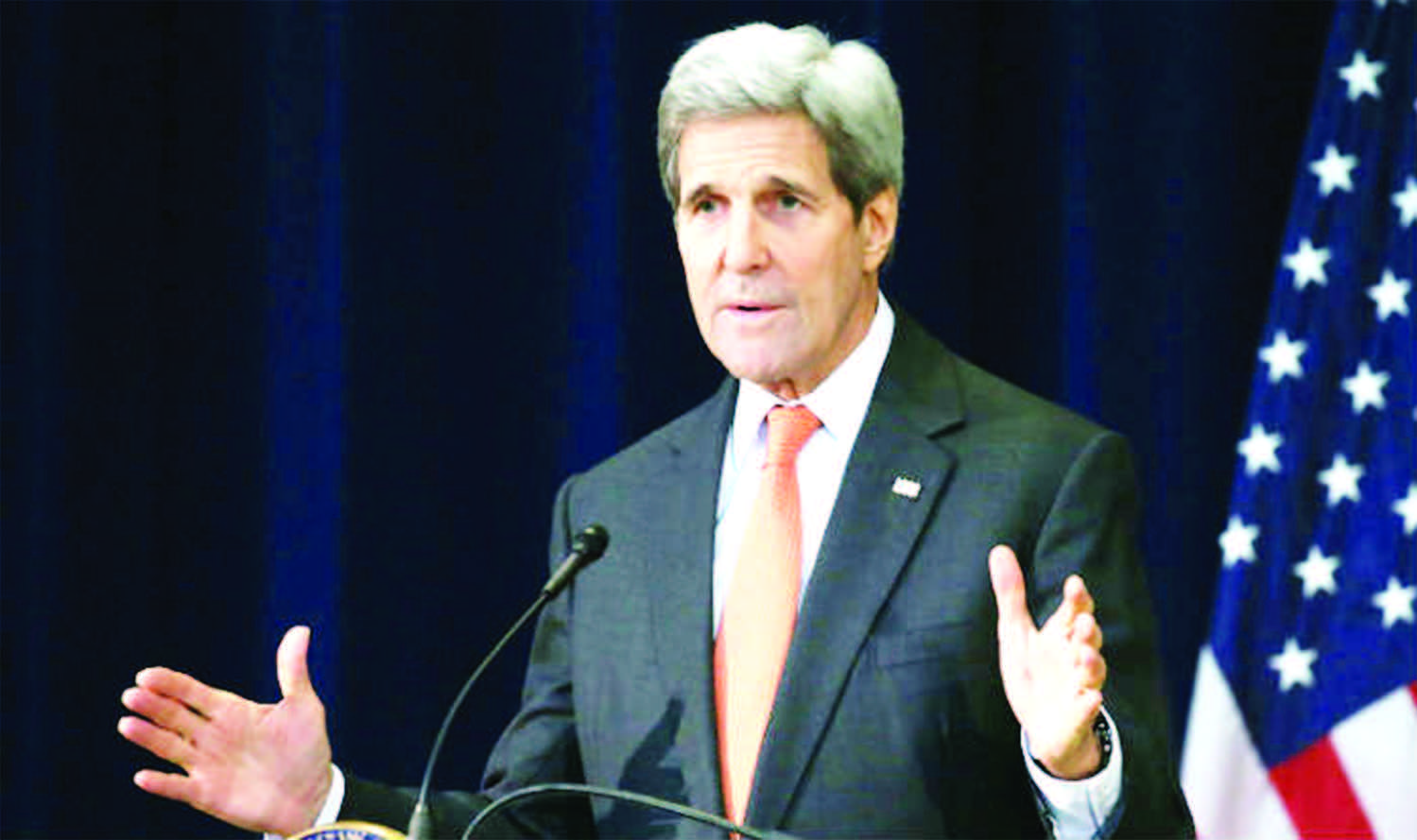
    ISTANBUL (TIP): Turkish President Recep Tayyip Erdogan said that US State Secretary John Kerry intends to visit this month, in what would be the first trip by a top Western dignitary since a failed putsch.

    Kerry’s visit, if confirmed, comes at a time of heightened tensions between Washington and Ankara in the wake of the attempted military takeover on July 15.

    Turkey has been furiously demanding the extradition of Pennsylvania-based Islamic preacher Fethullah Gulen, whom it accuses of masterminding the coup.

    The government has launched a crackdown in its wake that has seen over 60,000 people within the military, judiciary, civil service and education sector dismissed, detained or put under investigation.

    “I think their secretary of state is coming on the 21th (August),” Erdogan said yesterday in a live interview with state-run TRT television.

    Within the next two weeks, a delegation led by Turkey’s foreign and justice ministers would also travel to the US to explain Gulen’s alleged involvement in the coup bid, he added.

    US State Department spokesman Mark Toner declined to comment. An Istanbul court yesterday issued an arrest warrant for Gulen, accusing him of ordering the coup aimed at ousting Erdogan.

    Ankara has frequently called on the United States to extradite the Muslim cleric, sending two sets of documents to Washington as evidence of his involvement in the putsch attempt.

    Gulen strongly denies masterminding the coup and the movement he leads insists it is a charitable network promoting tolerant Islam. Kerry said on July 18 that Turkey must present “genuine evidence” and “not allegations” against Erdogan’s former ally for his extradition.

    The crisis in Turkey has erupted at a time when the Ankara-Washington relationship is as important as ever, with the United States needing Turkish help in the battle against Islamic State militants in Syria.

    US fighter jets have been using Turkey’s southern base of Incirlik as a crucial launch point for lethal raids against IS targets in neighbouring Syria. (PTI)

  • Dabur takes a small step in southern Africa

    Dabur takes a small step in southern Africa

    NEW DELHI (TIP): An acquisition worth a mere Rs 4,700 is rarely expected to give rich dividends, especially if it means venturing into a market as big as Rs 30,000 crore. However, home-grown fast-moving consumer goods firm Dabur is trying something similar.

    The company recently acquired a newly incorporated company in South Africa and is planning to set up a manufacturing unit in that country. The move would help it expand its presence in the southern parts of the African continent, sources said.

    Dabur India on Monday informed the BSE that it acquired Discaria Trading, registered in South Africa, for Rs 4,679 (1,000 South African Rand). Dabur’s wholly-owned subsidiary Dabur International acquired 100 per cent of Discaria, it informed the BSE.
    “Discaria Trading (Pvt.) Ltd. has been acquired to do the business of manufacturing and trading of cosmetics products in South Africa,” it said.

    Currently, Dabur has two manufacturing plants in the continent— one each in Nigeria and Egypt. The acquisition cost of the company, incorporated on March 30, 2015 to trade and manufacture cosmetic products, is lower than any such recent acquisition by Dabur. The real value of the company lays in its potential to become a gateway for Dabur in the crucial southern African markets.

    Earlier, Dabur made its first foreign acquisition by buying Hobi Kozmetik Group, a leading personal care products company in Turkey, for $69 Million (Rs 462 crore). In 2010, it also acquired Namaste Laboratories in the US for
    $100 million (Rs 670 crore).

    However, Dabur’s recent acquisition was aimed at setting up production units in South Africa, sources said. Dabur is also considering expanding its presence with its international personal care brand Namaste.

    The cosmetics markets in the southern parts of Africa – South Africa, Zimbabwe, Namibia and Mozambique – is estimated in excess of Rs 30,000 crore and is growing in double digits. Dabur currently gets a third of its Rs 8,454-crore revenue from foreign markets.

  • TURKISH MILITARY COUP LATEST: 60 dead and 150 injured as plot to overthrow Erdogan ‘FAILS’

    TURKISH MILITARY COUP LATEST: 60 dead and 150 injured as plot to overthrow Erdogan ‘FAILS’

    The attempted coup by the armed forces in Turkey has been foiled. The Turkish president, Recep Tayyip Erdogan communicated via social media to address the country. President Erdogan, an avowed enemy of social media who has frequently made Twitter and Facebook a target, addressed the country via a FaceTime video call that was shown on TV.

    He encouraged his supporters to take to the streets against the coup attempt. Erdogan, who had been holidaying on the coast when the coup was launched, flew into Istanbul.

    During the initial phases of the uprising by a section of the military, it was difficult or impossible to access social media for many users except by using a “virtual private network” to bypass local internet providers, local residents and monitoring groups said.

    Rebel soldiers in Ankara and Istanbul were still firing from the air early on Saturday, although fighter jets have taken off to deal with rogue military aircraft, Prime Minister Binali Yildirim said.

    Erdogan has comfortably been in power for well over a decade and has brought in a lot of reform to the Turkish establishment and society. The military sees itself as upholders of Kemalism, the form of democratic nationalism and secularism ushered in by founding father Mustafa Kemal Ataturk in 1923. Erdogan on the other hand is considered an Islamist and conservative.

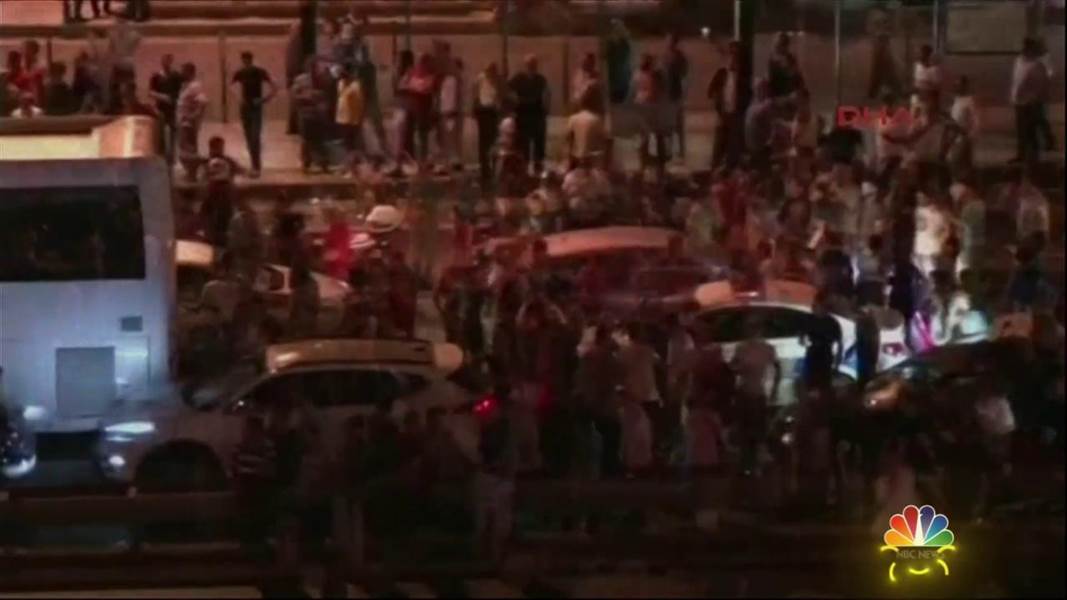
    People demonstrated outside Ataturk international airport during an attempted coup in Istanbul, Turkey.

    President Erdogan has said that a minority faction of military is behind the attempted coup. This is not the first attempted coup by the military in Turkey.

    President Recep Tayyip Erdogan branded the coup an act of “treason” and vowed to “harshly punish” those responsible, saying: “The ring leader who plotted all of this will pay the price in front of the nation.”

    He called the coup “a gift from God” because it will now allow him to purge the military of “members of this gang”.

    The Istanbul Police Chief has now said only 104 soldiers were involved in the coup and the ringleader has been named as Col Muharrem Kose, a former member of the Turkish Armed Forces.

    The 62-year-old President claims he narrowly escaped death when the hotel he was staying in in the coastal city of marmaris was hit by a bomb.

    A senior government minister said 42 people have been killed in Ankara and six others are dead in Istanbul – it is understood the total death toll has now risen to 60.

    At around 11pm local time shots were fired in the capital Ankara, where helicopters and military jets were flying overhead.

    Military vehicles blocked arterial roads around Ankara and stormed the buildings of major media outlets, including CNN.

    Some 17 police died when a military aircraft was shot down.

    Tanks are also said to have opened fire on the presidential building, while the parliament has been rocked by up to three bombs.

    A member of government said ministers were hiding in bunkers within the parliamentary building.

    Reports also suggest there has been a major explosion in the city while witnesses said missiles had been fired at the TRT media offices.

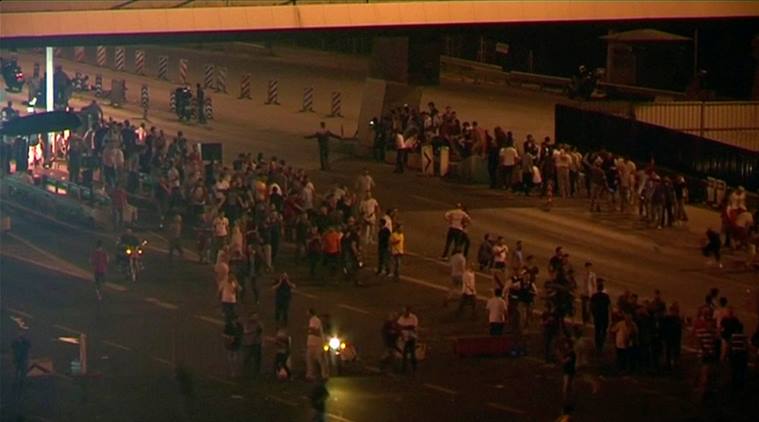
    Both of Istanbul’s bridges across the Bosphorus, the strait separating the European and Asian sides of the city, have been closed to traffic.

    Tanks also surrounded the entrance to Istanbul’s Ataturk International Airport, where gunfire has been heard, but it is understood the government is now in control of the airport.

    Flights in and out of the country are expected to resume in the coming hours after all Turkish airports were temporarily closed during the coup, sparking fears among British tourists that they would be trapped in the country.

    (With inputs from Reuters)

  • Turkey Coup

    Turkey Coup

    “In a nation, citizens proud to be Turks, that democratically elected their government, a military coup, even if patriotic in motive, is the ultimate insult of the people – to replace their choice of leadership.

    If the military feels that they are better, Turks, or anything else in any other nation, let them resign their military commission and face the voters’ judgment on a ballot – democracy’s judgment.

    Turkey is an important nation, not just on a Google map connecting the East with the West, but because it’s a bridge between cultures, continents and religions – and as America’s ally. That Turkey is a NATO member, makes the Coup even more offensive.

    As Kazakh president Nazarbeyev’s 21st century manifesto declared, in my words, “war on war,” any Coup anywhere is an offense against every nation under law.

    So, I humbly ask the patriotic but misguided Turkish soldiers to return to the barracks and defend Turkey’s sovereignty.”

  • Binali Yildirim set to be Turkey’s new prime minister

    Binali Yildirim set to be Turkey’s new prime minister

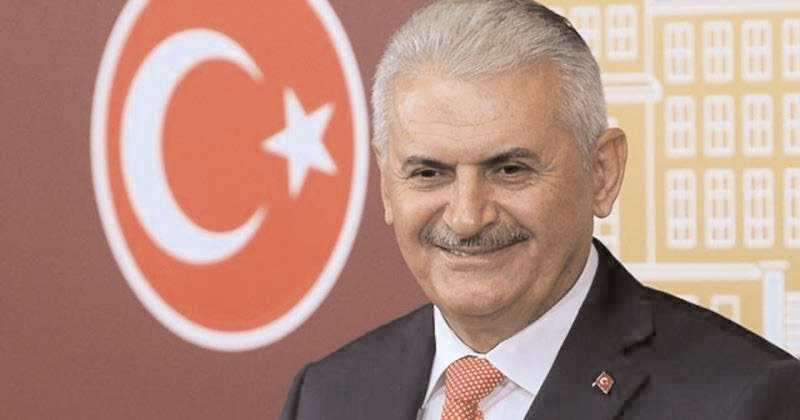
    ISTANBUL (TIP): Turkey’s governing party on Thursday formally tapped Binali Yildirim as its candidate to lead the party and become the country’s next premier.

    The spokesman of the ruling Justice and Development Party , Omer Celik, made the announcement, saying the lawmaker from Izmir was chosen “with great consensus”.

    Yildirim is Turkey’s minister of transport, maritime and communication as well as a founding member of the AKP. He will run unopposed for the party leadership at a special convention on Sunday in Ankara. Traditionally, the post of premier in Turkey goes to the leader of the largest party in parliament.

    The shake-up comes after Prime Minister Ahmet Davutoglu announced May 4 he was stepping down due to differences with President Recep Tayyip Erdogan . Analysts expect his successor to be more in tune with Erdogan, who is pushing for a constitutional overhaul that would concentrate greater powers in his hands. (AP)

  • Syrian rebels seize Islamic State stronghold, reports say

    Syrian rebels seize Islamic State stronghold, reports say

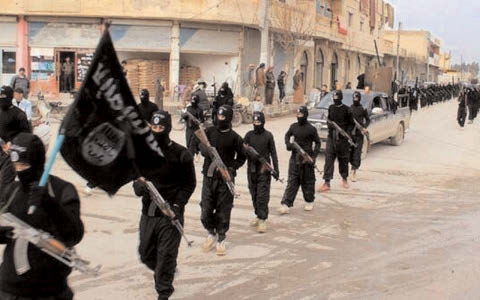
    AMMAN (JORDAN) (TIP) : Syrian rebel forces on Thursday took over a town near the Turkish border that had been the main stronghold of the jihadist group Islamic State (ISIS) in the northern Aleppo countryside, the Syrian Observatory for Human Rights and rebel sources said.

    The monitor said factions fighting under the banner of the Free Syrian Army (FSA), some supplied with arms by Turkey and other foreign backers, captured the town of al-Rai after fierce battles with the jihadists.

    “This is the beginning of the end of Daesh (Islamic State), those who have bet the FSA have been decimated are now proven wrong. It’s a victory for the Free Syrian Army,” said Abu Abdullah from the Nour al-Din al-Zinki brigade that participated in the assault on the heavily defended border town.

    “We will continue our path to al Raqqa and all the towns occupied by Daesh,” he said referring to Islamic State’s acronym in Arabic and its defacto capital.

    The rebels said their next step was advancing towards the Islamic State-held city of al-Bab, south of al-Rai and northeast of Aleppo.

    The recent gains by the mainly non-jihadist rebels is a boost to Turkey, which has sought to prevent Syrian Kurdish-led forces from expanding their stretch of territory along the border.

    It was the first retreat by the Islamic State jihadists since they made major advances in that area last May against rival insurgents and captured areas close to the Azaz border crossing with Turkey.

    Amaq news agency, which is linked to the militants, conceded that forces it described as “US- and Turkish-backed opposition brigades” had taken the town after days of intense “US bombing and Turkish artillery” fire.

    The news agency said al-Rai fell after heavy clashes and two suicide bombings that led to many casualties among Islamic State opponents.

    The Sunni militants have used suicide bombings to hold back offensives by the Syrian army and their allies by deploying small groups of fighters to disrupt supply lines.

  • EGYPTAIR HIJACKER REVEALS WHY HE TOOK OVER THE PLANE

    EGYPTAIR HIJACKER REVEALS WHY HE TOOK OVER THE PLANE

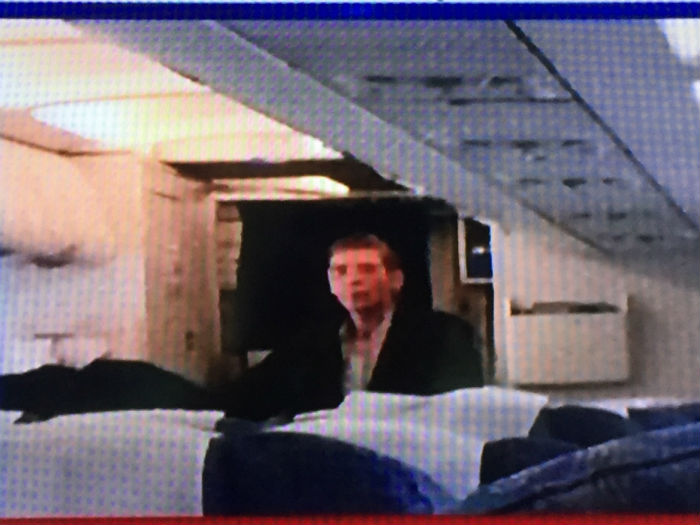
    CYPRUS (TIP)The man suspected of hijacking an EgyptAir flight and redirecting it to Cyprus has appeared in court and said he acted in a bid “to see his wife and children”.

    Seif Eldin Mustafa, 59, flashed “v” signs for victory as he left the court in Larnaca following a short hearing, where he was remanded in custody for eight days on suspicion of hijacking, abduction, threatening violence, terrorism-related offences and two counts related to possession of explosives.

    Police said the latter charges would relate to Mr Mustafa’s alleged claim that he had a bomb vest, even though Cypriot officials later said the “explosives” were in fact iPhone covers bound together with cloth.

    It has previously been reported that the hijacker made a range of demands after the plane from Alexandria landed at Larnaca airport with 72 passengers and crew on board.

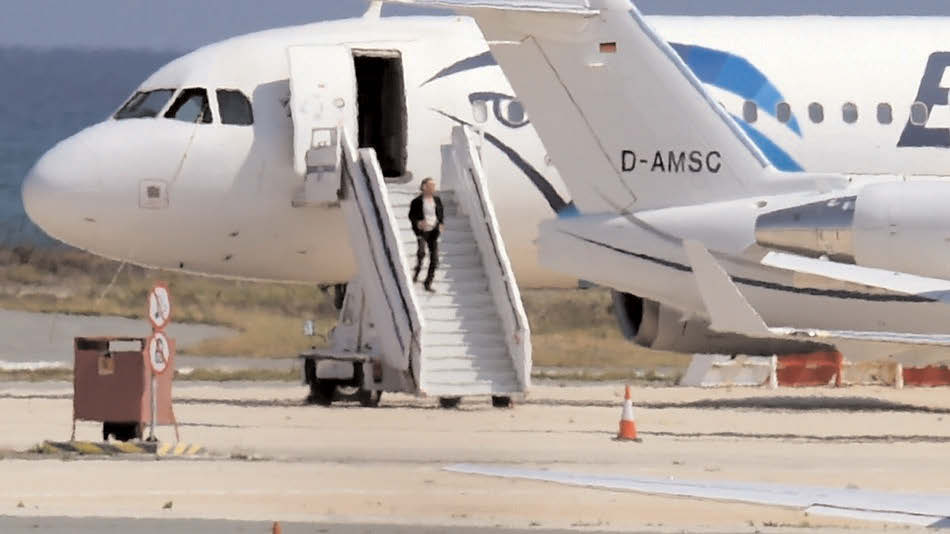
    After a six-hour stand-off, the suspect identified by Egyptian and Cypriot authorities as Mr Mustafa walked off the plane and handed himself in to police.

    In a statement to Cypriot police, Mr Mustafa said: “When someone hasn’t seen his family for 24 years and wants to see his wife and children, and the Egyptian government doesn’t allow it, what should one do?”

    The suspect allegedly commandeered the aircraft 15 minutes after takeoff from Alexandria. He approached a flight attendant and showed off the belt, attached to a remote control he held in his hand, investigating officer Andreas Lambrianou told the court.

    “The suspect asked all passengers and crew to hand in their passports, then gave two messages to a member of the crew, asking that the pilot be informed that he was a hijacker and wanted to land at an airport in Turkey, Greece or Cyprus, but preferably Cyprus,” Lambrianou said. “In a note, he stressed that if the airplane landed on Egyptian territory he would immediately blow the plane up.”

    In Cyprus, Mustafa dropped an envelope on the runway addressed to a Cypriot woman, later ascertained to be his ex-wife. In the letter, the suspect demanded the release of 63 female prisoners held in Egypt.

  • EgyptAir Hostage Drama Ends; Hijacker Arrested, Passengers Safe

    EgyptAir Hostage Drama Ends; Hijacker Arrested, Passengers Safe

    Authorities arrested the hijacker of an Egyptian airliner that was diverted to Cyprus today, after the plane’s passengers and crew were able to escape unharmed.

    The hijacker, who officials said was motivated by personal reasons and who had reportedly claimed to be wearing an explosives belt, was detained after several tense hours at Larnaca airport where the plane had landed.

    “The hijacker has just been arrested,” Cypriot government spokesman Nicos Christodoulides said on Twitter. No further details were immediately available.

    An AFP correspondent saw a man emerging from the aircraft, walking across the tarmac and then raising his hands to two awaiting counter-terrorism officers. They laid him on the ground and searched him for around two minutes before taking him away.

    Passengers and crew had earlier been seen leaving the aircraft, including one who climbed out of the cockpit window.

    “The passengers are safe and the crew is safe,” Egypt’s civil aviation minister Sherif Fathy said on state television minutes after Cyprus said the hijacker had been taken into custody.

    Egypt’s Prime Minister Sharif Ismail said in televised remarks that the alleged hijacker was an Egyptian and had demanded to speak to a European Union representative.

    Officials earlier said there was no link to “terrorism” in the incident and that the hijacker had demanded to see a Cypriot woman who was his estranged lover, with whom he had children.

    “This is not about terrorism. This is about the individual action of a person who is psychologically unstable,” said the Cypriot foreign ministry’s permanent secretary, Alexandros Zenon.

    The EgyptAir plane landed at the airport in the southern coastal city of Larnaca at 8:50 am (1120 IST), after the hijacker had contacted the control tower 20 minutes earlier to demand the diversion.

    Egyptian civil aviation said he had threatened to detonate an explosives belt on the Airbus A-320, which had been headed from the Mediterranean coastal city of Alexandria to Cairo.

    Most of the passengers were allowed to disembark after the plane landed, but a handful of crew and passengers had remained on board until shortly before the hijacker’s arrest.

    Fathy had told a press conference that the captain, a co-pilot, an air hostess and a security guard, along with three passengers, had remained on board after other passengers and crew were released.

    Fathy said there had been 55 passengers on board the plane and that the hijacker had demanded it land in either Turkey or Cyprus.

    The plane had been carrying 21 foreigners including eight Americans, four Dutch citizens, four Britons and a French citizen, an Egyptian civil aviation ministry statement said.

  • VERIZON’s Solidarity for Brussels – offers free calls and texts to Brussels

    VERIZON’s Solidarity for Brussels – offers free calls and texts to Brussels

    Verizon announced that customers in the U.S. can call and text numbers in Belgium free of charge for a number of days in the wake of terror attacks earlier today.

    A Verizon press release, March 22, said: “More than 170,000 Verizon employees worldwide extend condolences to all our friends and family in Brussels and Turkey. In this time of uncertainty, Verizon wants to support their customers affected by the Brussels and Turkey attacks and will offer free wireless and wireline calling from the U.S. to Belgium and Turkey.”

    Wireless users will incur no charges for texts or international long distance calls originating from the U.S. to Belgium on March 22 and 23, 2016, and from the U.S. to Turkey from March 19 and 20, 2016 (applicable taxes and surcharges will apply).

    Home wireline telephone customers will incur no charges to Belgium from their U.S. landlines on March 22 and 23, 2016, and from the U.S. to Turkey on March 19 and 20, 2016 (applicable taxes and surcharges will apply).

  • Battle vs ISIS, battle for the Middle East

    Battle vs ISIS, battle for the Middle East

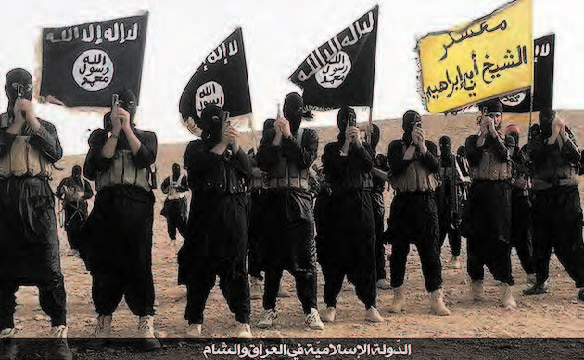
    ISIS or the Islamic State, also known as IS, ISIL or its Arab acronym, Da’esch, dominated the headlines for 2015. The year saw the terror group spread its hateful and vitriolic ideology beyond the borders of its “caliphate,” which encompasses large swathes of Iraq and Syria, as well as “provinces” in several Mideast and African countries.

    With millions of dollars in their pockets, and the Internet as their main channel to propagate evil, ISIS went “global” – with trained militants as well as radicalized individuals and groups carrying out the group’s mission to spread terror. Their targets ranged from a newspaper office, to a museum, from a concert hall to mosques, from military convoys to civilian planes. The toll: nearly a thousand people, from Paris to Beirut to San Bernardino.

    The spread of ISIS has further complicated the already twisted state of affairs in strife-torn Syria, already entering its fifth year in a civil war. World powers, in their attempt to untangle the mess and to gain influence in the region, bicker over which to tackle first: Bashar al-Assad, the iron-fisted dictator whose violent regime in many ways ignited the current conflict, or the terror group. Assad’s allies (namely Russia and Iran) are trying to have him stay put, while the US-led coalition wants him out.

    The year saw military movements from every side, with airstrikes targeting ISIS strongholds – and some say legitimate Syrian opposition groups. Countries around Syria and Iraq are also on their toes, with some nations such as Turkey serving as launch areas for military operations.

    Amid the mess, the peace process is still in the cards, despite several attempts to convene all sides in the past few months that yielded little results. Thanks to a landmark 18-month plan endorsed by the United Nations Security Council, the UN is preparing for another round of talks starting January 25, 2016.

  • Joe Biden to meet with leaders in Turkey in mid-January

    Joe Biden to meet with leaders in Turkey in mid-January

    WASHINGTON (TIP): Vice president Joe Biden will travel to Turkey next month amid the ongoing fight against the Islamic State group.

    Biden is adding a stop in Turkey to his previously announced trip to Davos, Switzerland, for the World Economic Forum the week of January 17. The White House says Biden will meet with Turkish President Recep Tayyip Erdogan and Prime Minister Ahmet Davutoglu.

    The US is pressing Turkey to do more to fight IS and tighten its border with Syria. Turkey has been a target of IS attacks, and on Wednesday detained two suspected IS militants believed to be planning suicide attacks.

    Biden is also working to tamp down a spat between Turkey and Iraq over Turkish troops staged at a training camp in northern Iraq.

    (AP)

  • Finding a Niche in the Emerging World Order

    Finding a Niche in the Emerging World Order

    Prime Minister Narendra Modi’s apparently impromptu visit to Lahore on Christmas day is readily explained by the need to contain the Taliban and ensure regional stability and connectivity in the ‘Heart of Asia’ after the US-led International Security Assistance Force withdraws next year. The visit follows growing realization in capitals across the region that mutual security interests must supersede Cold War alliances or ideological mindsets to avoid the fate of nations like Iraq and Syria. The Taliban and/or its mutants cannot be permitted to spread in the Afghan neighborhood, which includes Central Asia, Iran, Pakistan and India, an effort that calls for convergence between Kabul, Islamabad and New Delhi. One can discern the benign presence of Moscow and Beijing as both have huge stakes in a revitalized Asian economic boom independent of Western hegemony.

    Besides China’s Silk Road project, several multi-nation projects centre on Afghanistan, viz, the Turkmen railways, transmission lines, highways, oil pipelines and gas pipelines including the Turkmenistan-Afghanistan-Pakistan-India pipeline. India wants to join the Afghanistan-Pakistan trade and transit agreement so that Afghan products can directly enter India and its products reach Afghan and Central Asian markets.

    These mega-development prospects doubtless prompted Mr. Modi to engage with Pakistani Prime Minister Nawaz Sharif on the sidelines of the Paris climate conference in late November. Thereafter the National Security Advisors met in Bangkok and smoothened the way for External Affairs Minister Sushma Swaraj’s visit to Islamabad for the Heart of Asia-Istanbul Process conference on Afghanistan. India has huge stakes in the integration of Central Asia, East Asia and West Asia.Though not opposed, India does not expect a lasting peace to emerge from talks between the Afghan Government and Afghan Taliban groups. A better option is state-level engagement which Kabul too prefers. Hence, it is inconceivable that as he went through his Kabul engagements – inaugurating the India-built $90 million Parliament House, gifting three Mi-25 attack helicopters and 500 new scholarships for children of martyrs of Afghan security forces -Mr. Modi would not have discussed the Lahore stopover with President Ashraf Ghani and CEO Abdullah Abdullah. It seems equally likely he mentioned it to Russian President Vladimir Putin before departing from Moscow. It may be relevant to note that since Russia began bombing IS positions in Syria, Pakistan does not favor regime change in Damascus.

    Pakistan Tehreek-e-Insaaf party leader Imran Khan’s presence in India (possibly to deliver the Sharif family wedding invitation) and the mature welcome to Mr. Modi’s stopover by Pakistan political parties (as opposed to the Congress’s petty squabbling) suggests that the Pakistani polity may have achieved some degree of cohesion in tackling terrorism. The Peshawar school attack last year is a grim warning of the danger from non-state actors.

    Mr. Modi’s first state visit to Russia, as part of the 16th Annual Bilateral Summit, has revitalized India’s most tried and trusted friendship and sent a signal to the international community that President Putin cannot be downsized by Western machinations. Mr. Modi secured Mr. Putin’s backing for India’s permanent membership of the UN Security Council and reiterated the commitment of both nations to a multipolar world order. Both nations already cooperate in forums like Brics and the Shanghai Cooperation Organisation (where Russia helped in India’s full membership), the G20 and the East Asia Summit.

    Syria, Afghanistan and the common threat posed by terrorism figured in the talks, but the summit’s main takeaway was Russia’s big bang return to India’s defense and nuclear energy sectors. Mr. Modi’s Make in India project in the defense sector got a major boost with the deal to jointly manufacture 200 Kamov-226T light military helicopters.

    The real triumph is the acquisition of five S- 400 Triumf surface-to-air missile systems (and 6,000 missiles). Literally the ‘crown jewels’ of Russia’s defense capability, the S-400 can destroy aircraft that use stealth technology, other fighter aircraft, cruise missiles and tactical missiles from up to 400 kilometers away, as effectively demonstrated earlier this month when Russia deployed the system to protect its Hmeimim airbase in Syria after Turkey downed a Russian jet.

    This will give India the ability to engage multiple targets at long range and restore the strategic balance with China and Pakistan. With Prime Minister Modi reportedly budgeting $150 billion to upgrade India’s military, with the Navy planning to order three Russian frigate warships and a possible joint development of a fifth generation fighter aircraft, New Delhi could be Moscow’s salvation as the latter faces a second year of recession amid Western sanctions.

    With the Paris climate conference failing to yield a comprehensive deal, the burden of combating global warming with clean energy expectedly fell upon individual nations. Mr. Modi having previously identified nuclear energy as pollution-free, the two nations are moving ahead with plans to build at least 12 nuclear power plants in India with the highest safety standards in the world, over the next 20 years. Two plants are slated to come up in Andhra Pradesh under the Make in India program. A vibrant partnership, however, calls for deeper economic integration. The Indian Prime Minister hopes to take advantage of the US-led Western sanctions against Russia to meet the latter’s demand for dairy products, seafood, and other goods and to attract Russian cash-rich billionaires to invest in India’s infrastructure fund, since they are no longer welcome in the old European financial havens due to Mr. Putin’s resistance to Western geo-political agendas to dismember West Asian and African countries on the lines of the old Yugoslavia.

    Access to Russian capital for his Make in India campaign would empower Mr. Modi’s drive to build a strong indigenous manufacturing base to generate employment and export revenues. Given the sharp downturn in Russo-Turkey relations, Mr. Modi hopes that Russian tourists will flock to India (not just in Goa) and tasked the tiny Indian community in Russia to motivate Russian families to discover India.

    Another gain is Russia’s commitment to ship 10 million ton of oil annually to energy-starved India in the next 10 years. Both countries plan to intensity collaboration in developing space exploration, rocket manufacture and engine manufacture, nano-technology, metallurgy, optics and software sectors. In substance, the visit announced that the Asian quest to forge a rational world order has moved to a new level. Mr. Modi’s short and informal visits to Afghanistan and Pakistan may be read as an invitation to take a seat of honor at the evolving new world concert.

    (The author is a social development consultant and a columnist with The Pioneer, a leading newspaper of Delhi).

  • Putin rules out reconciliation with Turkey

    Putin rules out reconciliation with Turkey

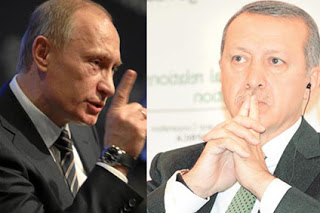
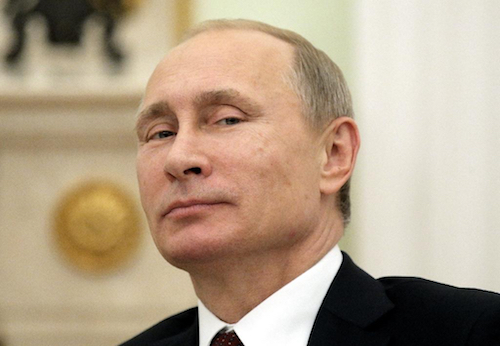
    MOSCOW (TIP): Russian President Vladimir Putin fired off an angry tirade against Turkey on Dec 17, ruling out any reconciliation with its leaders and accusing Ankara of shooting down a Russian warplane to impress the United States.

    In comments littered with crude language, Putin dismissed the possibility that the downing of the warplane over the Turkey-Syria border last month was an accident, calling it a “hostile act”. “We find it difficult if not impossible to come to an agreement with the current leadership of Turkey,” the Kremlin strongman said at his annual news conference. “On the state level, I don’t see any prospects of improving relations with the Turkish leadership,” he said of Turkish counterpart Recep Tayyip Erdogan. Ties between Russia and the NATO member have hit rock bottom since the November 24 incident, which led to deaths of two Russian military officers.

    Turkey has said the Russian jet strayed into its airspace and ignored repeated warnings, but Moscow insists it never left Syrian territory. Putin said he did not rule out that Ankara was acting with tacit approval from Washington, possibly so that the United States would look the other way to let Turkey “go onto Iraqi territory and occupy part of it”.

    “I don’t know if there was such a trade-off, maybe there was,” Putin said.

    “If somebody in the Turkish leadership decided to lick the Americans in one place… I don’t know, if they did the right thing,” he added. “Did they think we would run away now? Russia is not that kind of country,” Putin said, speaking of Moscow’s increased military presence in Syria.

    “If Turkey flew there all the time before, breaching Syrian airspace, well, let’s see how they fly now.”

    Turkey has voiced concern about Russian air raids in northern Syria because of the Turkmen minority in the area, a Turkic-speaking people who have had an uneasy relationship with the regime of President Bashar al-Assad.

    (AFP)

  • Assad Can Stay, for Now | US changes stance for peace

    Assad Can Stay, for Now | US changes stance for peace

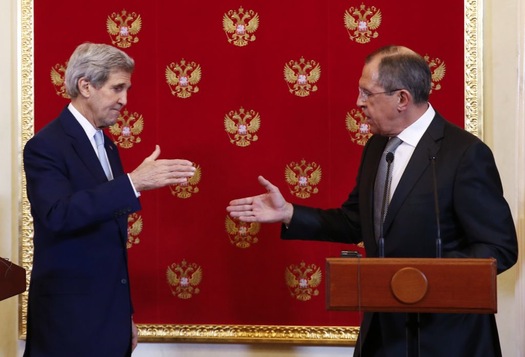
    WASHINGTON (TIP): U.S. Secretary of State John Kerry on Tuesday, December 15, accepted Russia’s long-standing demand that President Bashar Assad’s future be determined by his own people, as Washington and Moscow edged toward putting aside years of disagreement over how to end Syria’s civil war.

    Kerry announced this critical shift in Moscow where he met Russian President Vladimir Putin and Foreign Minister Sergey Lavrov to discuss the ongoing conflicts in Ukraine and Syria.

    “The United States and our partners are not seeking so-called regime change,” Kerry told reporters in the Russian capital after meeting President Vladimir Putin.

    This means Assad can stay in power for a bit longer if Russia and America cooperate together in overseeing the transition from Assad’s chaos to peace.

    A major international conference on Syria would take place later this week (Friday) in New York, Kerry announced.

    Assad is the very kind of “dictator” the US prides itself in fighting to remove. For the past four years, President Obama has called for Assad to step down. From Assad’s alleged use of chemical gas to barrel bombs to ISIS overtaking Syrian territory, Assad attracts a very diverse response from world leaders on how to achieve peace because the situation in Syria is so complex.

    But after a day of discussions with Assad’s key international backer, Kerry said the focus now is “not on our differences about what can or cannot be done immediately about Assad.” Rather, it is on facilitating a peace process in which “Syrians will be making decisions for the future of Syria.”

    Within the United States, where political debates are increasingly revolving around foreign policy — especially to do with Assad and ISIS — the presidential candidates (as well as politicians in general) find themselves equally divided on the Syrian solution. In fact, shifting positions on Assad seems to be the norm.

    The world is better off when Russia and the U.S. work together, Kerry added, calling Obama and Putin’s current cooperation a “sign of maturity.”

    “There is no policy of the United States, per se, to isolate Russia,” Kerry stressed.

    Below is a brief timeline of major American politicians on their stances regarding Assad and Syria, especially in relations to Putin and Russia.
    August 2011

    Secretary of State Hillary Clinton tells the press “it’s not going to be any news if the United States says, ‘Assad needs to go.’”

    A week later, US President Barack Obama announces for the first time — after weeks of political pressure — that Assad “must step down”.

    The American announcement happened in coordination with key allies’ announcements: Germany, France, and the UK, amongst others, also called for Assad’s departure from his presidency position around this time.

    February 2012

    Western powers reportedly ignore a Russian proposal to securely remove Assad from his position, as the US, French, and British leaders believe the Syrian president would not last much longer in power.

    September 2013

    President Obama addresses the nation, detailing the brutalities of the Assad regime and announces the US will strike Assad’s forces to deter the regime from the use of chemical weapons.
    The US and Russia then pushed for Syria to become party to the Chemical Weapons Convention, which banned the use of chemical and biological weaponry in warfare.

    November 2014

    President Obama states at the G20 press conference that “there’s no expectation that we are going to in some ways enter an alliance with Assad. He is not credible in that country.”

    The US president continues on to say that “we are looking for a political solution eventually within Syria that is inclusive of all the groups who live there — the Alawite, the Sunni, Christians. And at some point, the people of Syria and the various players involved, as well as the regional players — Turkey, Iran, Assad’s patrons like Russia — are going to have to engage in a political conversation.”

    August 2015

    Four years later, increased diplomacy between major powers — especially the US and Russia — start to cause US leaders to soften their “Assad must go” position.

    The New York Times quotes an unnamed senior American official as saying, “It’s encouraging, but we’re still a long ways off [on a solution for Assad].”

    September 2015

    Donald Trump tells Americans to let Russia take care of Assad and ISIS.

    “Let Syria and ISIS fight. Why do we care? Let ISIS and Syria fight. And let Russia, they’re in Syria already, let them fight ISIS. Look, I don’t want ISIS. ISIS is bad. They are evil. When they start doing with a head chopping … these are really bad dudes. … Let Russia take care of ISIS. How many places can we be? … Russia likes Assad seemingly a lot. Let them worry about ISIS. Let them fight it out.”

    October 2015

    Hillary Clinton, now a presidential candidate and no longer Secretary of State (since 2013), states removing Assad is America’s top priority, four years after she said it wouldn’t make US news.

    December 2015

    A month after the Paris attacks, a week after the San Bernardino attack, the day Los Angeles shut down its public schools due to a bomb threat, and the last Republican debate of the year before the holidays. Also the day Kerry meets Putin and Lavrov in Moscow.

    The Secretary of State officially reverses the position of the US on Assad, while Republican contenders for the 2016 election spar over what to do. The more memorable quotes are anti-Russian and anti-intervention.

    Donald Trump: “Spend the money [used in striking in the Middle East] in the US… It’s a tremendous disservice to humanity, and for what? [The Middle East is] a mess, [a] total and complete mess.”

    John Kasich: “In regard to Syria, understand that Assad is an ally of Iran who wants to extend that Shi’i radicalism all the way across the Middle East. He has to go. And for the Russians, frankly, it’s time to punch the Russians in the nose. They’ve gotten away with too much in this world, and we need to stand up against them, not just there, but also in Eastern Europe where they threaten some of our most precious allies.”

    Rand Paul: “We need to confront Russia from a position of strength.”

    Chris Christie: “Reckless was inviting Russia into Syria.”


    As of now, President Obama has yet to make an official statement confirming Kerry’s comments in Moscow. Kerry maintained that it is in the best interest for the world when Russia and the US cooperate, and that this cooperation is “a sign of maturity” between the two presidents.

    While it’s great for the US and Russia to be on slightly better terms again, time will only tell if this rekindling of relations will bring Assad to justice and peace to the Syrian people.

  • Swiss bank releases list of dormant accounts, 6 Indians among list

    Swiss bank releases list of dormant accounts, 6 Indians among list

    TIP NEWSWIRE: The names of at least six individuals with an Indian connection figure in the list of unclaimed bank accounts made public by Switzerland on Wednesday. Besides names and addresses, one entry also lists the date of birth and account number of an individual.

    The names are Bernet Rosmarie, Spencer Charlotte (German national) and Vachek Pierre (born January 1, 1908, bank account number 538452)—all with residences in Bombay (presently Mumbai), while Bahadur Chandra Singh is from Dehradun. A Dr Mohan Lal from Paris and one Kishore Lall also figure in the list.

    The list has over 2,600 accounts and safe deposit boxes and comprises only those accounts that has at least 500 Swiss francs and are unclaimed for at least 60 years. The value lying in the dormant accounts is estimated at 44 million Swiss franc (about Rs 300 crore).

    Daniela Flückiger, head of communication, Swiss Bankers Association (SBA), told HT, “We don’t have data for specific countries or account holders from specific countries. Neither do we have insights into the amount of money.”

    According to the Swiss Bankers Association, over 44 million Swiss francs ($44.5 million) is lying in different accounts, which are not managed for the past several decades since 1955. Also, close to 80 safety deposit boxes are still to be claimed by the owners.

    The association has created a separate website www.dormantaccounts.ch for people to check the names listed as dormant accounts.

    The SBA rules stipulate that the family members and legal heirs of these individuals will have time up to five years to lay claim for these accounts. This is the first time that Switzerland has published such a list that is aimed at giving their owners’ heirs a chance to claim the funds in these accounts.

    “If no legitimate party claims the assets that have been published within one year of publication, the banks must by law transfer the assets in question to the government,” SBA said.

    There are sizeable number of people from Switzerland, Germany, France, UK, US, Turkey, Austria and other countries. The list follows a new law in Switzerland that mandates publication of the names of the owners of very old dormant customer relationships on an annual basis starting 2015.

  • In taking economic war to Islamic State, US developing new tools

    In taking economic war to Islamic State, US developing new tools

    WASHINGTON (TIP): Since last month, US warplanes have struck Islamic State’s oil infrastructure in Syria in a stepped-up campaign of economic warfare that the United States estimates has cut the group’s black-market earnings from oil by about a third.

    In finding their targets, US military planners have relied in part on an unconventional source of intelligence: access to banking records that provide insight into which refineries and oil pumps are generating cash for the extremist group, current and former officials say.

    The intent is to choke off the Islamic State’s funding by tracking its remaining ties to the global financial system. By identifying money flowing to and from the group, US officials have been able to get a glimpse into how its black-market economy operates, people with knowledge of the effort have said.

    That in turn has influenced decisions about targeting for air strikes in an effort that began before Islamic State’s Nov. 13 attacks on Paris and has intensified since, they said. While Islamic State’s access to formal banking has been restricted, it retains some ties that US military and financial officials can use against it, the current and former officials said.

    “We have done a really good job of largely keeping the Islamic State out of the formal financial system,” said Matthew Levitt, who served as deputy assistant secretary for intelligence at the US Treasury in the George W. Bush administration. “But we haven’t been entirely successful, and that may not be a bad thing.”

    Reuters was unable to verify key aspects of the campaign, including when it started or exactly which facilities have been destroyed as a result. Two current officials who confirmed the operations in outline declined to comment on their details.

    It was unclear how US intelligence, Treasury, and military officials working on what the government calls “counter threat finance” operations have used banking records to identify lucrative Islamic State oil-related targets in Syria and whether that involved local banks.

    A report this year by the intergovernmental Financial Action Task Force found there were more than 20 Syrian financial institutions with operations in Islamic State territory. In Iraq, Treasury has worked with government officials to cut off bank branches in the group’s territory from the Iraqi and international financial systems.

    Gerald Roberts, section chief of the FBI’s terrorist financing operations section, said that Islamic State’s recruits from outside Syria often come with financial trails that officials tracking them can “exploit.”

    “We are seeing them using traditional banking systems,” he said at a banking conference last week in Washington, adding that young, tech-savvy Islamic State members are also familiar with virtual currencies such as Bitcoin.

    Islamic State, also known as IS, ISIS or ISIL, is sometimes forced to use commercial banks because the amounts involved are too large to move using other means, said Levitt.

    The US Treasury’s Financial Crimes Enforcement Network (FinCEN) uses a set of “business rules” to screen the roughly 55,000 reports it receives daily from financial institutions for signs of activity involving Islamic State, a spokesman said. He declined to describe the rules, but law enforcement sources say names, IP addresses, email addresses, and phone numbers are among the data that intelligence authorities try to match.

    The matches allow FinCEN “to connect the dots between seemingly unrelated individuals and entities,” the FinCEN spokesman said. At present, FinCEN finds about 1,200 matches suggesting possible Islamic State-linked financial activity each month, up from 800 in April, the spokesman said.

    Bank of America, JP Morgan and Wells Fargo declined to comment on whether they provided financial reports to the US government. Such reports are supplied confidentially.

    Citigroup, HSBC, and Standard Chartered did not immediately respond to requests for comment.

    “Tidal Wave II” The use of financial records linked to Islamic State is only one part of the intelligence-gathering exercise for air strikes in Syria that also includes methods such as aerial surveillance by drones, officials said.

    One former military official familiar with the process said that any financial intelligence collected by FinCEN would require “significant vetting” before the military acted on it.

    Earlier this month, US-led coalition planes struck 116 fuel trucks used to smuggle Islamic State oil 45 minutes after dropping leaflets warning drivers to flee, a Pentagon spokesman said. Coalition strikes destroyed another 283 Islamic State fuel trucks on Saturday, the Pentagon said.

    On November 8, a coalition air strike destroyed three oil refineries in Syria near the border with Turkey.

    US defense officials estimate that Islamic State, an adversary the United States calls the wealthiest terrorist group of its kind in history, was earning about $47 million per month from oil sales prior to October.

    That month, the US military launched an intensified effort to go after oil infrastructure, dubbed “Tidal Wave II,” named after the bombing campaign targeting Romanian oil fields in World War Two.

    The Pentagon estimates the strikes have reduced the Islamic State’s income from oil sales by about 30 percent, one US defense official with knowledge of the previously unreported estimate said. Reuters was unable to confirm this.

    The use of financial records in helping to pick US targets was first disclosed last week at the banking conference in Washington. At the conference, Kurt Gredzinski, the Counter Threat Finance Team Chief at US Special Operations Command, cited the importance of information provided by banks in the war against Islamic State.

  • Farha Sayeed  Redefines ‘Eggsperience’, ‘Eggcellence’, ‘Eggxotica’, and ‘Eggspressions’ using Faberge-styled exotic art

    Farha Sayeed Redefines ‘Eggsperience’, ‘Eggcellence’, ‘Eggxotica’, and ‘Eggspressions’ using Faberge-styled exotic art

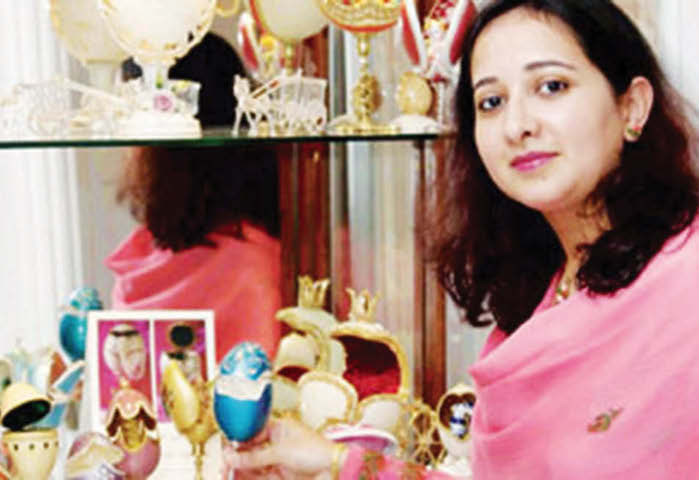
    CHICAGO (TIP): Farha Sayeed of Chicago has been bringing laurels through her love for an array of arts and crafts and her contributions to welfare of downtrodden, thereby emerging as a role model for women in the Indian Sub-continent.

    Farha has a passion for creating Faberge-styled exotic Objets d’Art from egg shells of Ostrich, Emu, Goose, Duck, Turkey, Guinea, and Hen.

    Faberge-styled exotic art 3These eggshells are intricately cut, carved, and ornamented, using pearls, beads, crystals, brocade, velvet, satin, golden laces, etc., and finally are mounted on beautiful silver and golden stands, making each end-product a customized masterpiece.

    Farha, thus, transforms a humble eggshell into a breathtakingly beautiful and precious piece of art, which can adorn even a palace with its elegance and beauty.

    An interesting aspect of Farha’s egg sculpting is her successful experimentation with the fusion of Indian and Islamic elements in this unique art form, which is otherwise Western.

    Farha’s collection of decorated eggs was first displayed by Art Lovers’ Group of a renowned Danish Pharmaceutical Company.

    This was followed by a series of full-fledged solo exhibitions titled “EGGSPERIENCE” in Copenhagen, “EGGCELLENCE” in Jeddah, “EGGXOTICA” in New Delhi, and “EGGSPRESSIONS” in Sana’a, to great appreciation. Farha also participated in the Annual Dallas Egg Show along with other international egg artists.

    Faberge-styled exotic art 1A member of International Egg Art Guild, Farha is considered as a pioneer in promoting Egg Art in India.

    Farha, in addition to pursuing her interest in varied art forms like Painting, Zardori Work, Soft-toy Making and Calligraphy, finds time for philanthropy too to ameliorate the lot of destitute women, orphans, and children of special needs.

    “I had a passion for arts and craft since my childhood; When I came across a new medium of eggshells it attracted me instantly. I thought I would challenge my creative imagination by testing my skills using a fragile surface”, said Farha.

    “Eggs reflect the origin of life. To me egg sculpting is a reflection of my self-expression and a way of looking at objects in a different perspective”, she added.

    When asked about her plans to exhibit her collections in the United States, she said “I am planning an exhibition in the coming Easter”.

    Farha is the spouse of India’s Consul General in Chicago, Dr. Ausaf Sayeed.

  • Putin swears to make Turkey regret plane downing

    Putin swears to make Turkey regret plane downing

    MOSCOW (TIP): Russian President Vladimir Putin, on December 3, vowed Turkey’s leadership would be made to regret the downing of one of Moscow’s warplanes as the top diplomats from both countries held their first high-level meeting since the incident.

    Moscow announced a halt to talks on a major gas pipeline with Nato member Ankara as Putin fired another salvo in their war of words, while Turkish leader Recep Tayyip Erdogan shot back by claiming he had “proof” Russia was involved in illegal oil trading with the Islamic State group.

    Turkey has become Moscow’s prime international sparring partner after it shot down a Russian jet on its border with Syria on November 24 — sparking fury and economic sanctions from the Kremlin. (PTI)

  • GLOBAL GOLD DEMAND HITS MORE THAN  TWO-YEAR HIGH IN Q3: WGC

    GLOBAL GOLD DEMAND HITS MORE THAN TWO-YEAR HIGH IN Q3: WGC

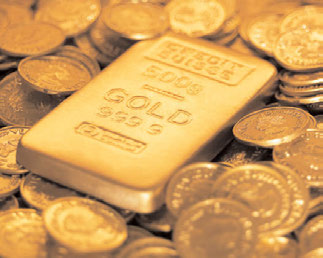
    LONDON (TIP): Global gold demand hit its highest in more than two years in the third quarter as July’s price drop boosted buying of jewellery, coins and bars, the World Gold Council said.

    Overall demand reached 1,121 tonnes in the last quarter, up 8 percent year on year to its highest since the second quarter of 2013. The rise was tempered by increased outflows from bullion-backed exchange-traded funds, however.

    Bar and coin buying more than tripled in the United States to a five-year high of 32.7 tonnes, and also rose 70 percent in China and 35 percent in Europe. That followed a more than 6 percent slide in spot gold prices in July, their biggest monthly drop in two years.

    “The price dip represented a buying opportunity for people to dive into the market and increase their gold exposure,” Alistair Hewitt, the World Gold Council’s (WGC) market intelligence manager, said.

    “The additional degree of uncertainty that has been imbued within people as a result of the financial crisis underpins people’s desire for gold bars and coins. When you have that as an underlying factor, and you see a price dip, that represents an opportunity for you to increase your gold holdings.”

    European demand was also lifted by concerns over Greece’s financial position and geopolitical tensions in eastern Europe, the WGC said. Chinese demand, meanwhile, was boosted by the devaluation of the yuan.

    Jewellery buying, the largest segment of demand, was buoyant in number one consumer India, which vies for that position with China. Consumption rose 15 percent in the last quarter to 211 tonnes, while Chinese jewellery demand climbed 4 percent to 203 tonnes.

    Buying fell in some smaller key markets such as Russia and Turkey, however. Turkish jewellery demand fell 29 percent to 12.1 tonnes, while Russian buying dropped 19 percent to 13.5 tonnes.

    However, outflows from gold ETFs –popular investment vehicles which issue securities backed by physical metal –increased by 24 tonnes year on year to 65.9 tonnes, helping to offset the rise in demand elsewhere.

    Central bank buying, while remaining firm, also retreated 4.5 tonnes to 175 tonnes in the third quarter.

    Supply edged up 1 percent, driven by fresh producer hedging, though both mine and recycling supply retreated.

    For the full year, the WGC is maintaining its forecast for global gold demand of 4,200-4,300 tonnes, close to last year’s four-year low of 4,217 tonnes, Hewitt said.

    Chinese demand is still expected to total 900-1,000 tonnes, though the WGC has downgraded its expectations for Indian demand from that level to 850-950 tonnes.

    “We have ongoing issues within the rural community with the monsoon. In the first half of the year it was quite clear that unseasonal rains had affected agricultural incomes, and (rural) demand was softer than expected,” Hewitt said. “We also have the factor of prices … increasing later on in the quarter.”