Tag: U.N.

  • U.N. top court orders Israel to open more land crossings for aid into Gaza

    U.N. top court orders Israel to open more land crossings for aid into Gaza

    THE HAGUE (TIP): The top United Nations court on March 28 ordered Israel to take measures including opening more land crossings to allow food, water, fuel and other supplies into Gaza to tackle crippling shortages in the war-ravaged enclave. The International Court of Justice issued two new so-called provisional measures in a case brought by South Africa accusing Israel of acts of genocide in its military campaign launched after the Oct. 7 attacks by Hamas. Israel stringently denies it is committing genocide and says its military campaign is self-defense.

    The order came after South Africa sought more provisional measures, including a ceasefire, citing starvation in Gaza. Israel urged the court not to issue new orders.
    In its legally binding order, the court told Israel to take “all necessary and effective measures to ensure, without delay, in full co-operation with the United Nations, the unhindered provision at scale by all concerned of urgently needed basic services and humanitarian assistance” including food, water, fuel and medical supplies.

    It also ordered Israel to immediately ensure “that its military does not commit acts which constitute a violation of any of the rights of the Palestinians in Gaza as a protected group under the Convention on the Prevention and Punishment of the Crime of Genocide, including by preventing, through any action, the delivery of urgently needed humanitarian assistance.”

    The court told Israel to report back in a month on its implementation of the orders.
    Israel’s Foreign Ministry had no immediate comment on the order.

    In a written response earlier this month to South Africa’s request for more measures, Israel said that claims by South Africa in its request were “wholly unfounded in fact and law, morally repugnant, and represent an abuse both of the Genocide Convention and of the Court itself.”

    The court said in its order that “Palestinians in Gaza are no longer facing only a risk of famine, as noted in the Order of 26 January 2024, but that famine is setting in, with at least 31 people, including 27 children, having already died of malnutrition and dehydration according to the United Nations Office for the Coordination of Humanitarian Affairs.” The world court said that earlier orders imposed on Israel after landmark hearings in South Africa’s case, “do not fully address the consequences arising from the changes in the situation” in Gaza.
    (Agencies)

  • Israeli troops fire tear gas at protesters along Lebanon border

    KFARCHOUBA (LEBANON) (TIP): Israeli soldiers fired tear gas to disperse scores of protesters who pelted the troops with stones along the border with Lebanon on June 9, leaving some Lebanese demonstrators and troops suffering breathing problems. The tension on the edge of the Lebanese border village of Kfarchouba began earlier this week over the Israeli military digging in the area that Lebanon claims.
    On Wednesday, a Lebanese villager tried to stop an Israeli bulldozer from digging a trench along the border. Once the villager’s legs were covered with sand as the bulldozer moved ahead, U.N. peacekeepers jumped in and convinced the driver to move back. Videos of the elderly man with his legs stuck in the sand dune went viral on social media.
    Israel ended an 18-year occupation of southern Lebanon when its troops withdrew from the area in May 2000.
    Friday’s protest took place on the edge of Kfarchouba hills, which Beirut says is Lebanese land occupied by Israel. Kfarchouba hills and the nearby Chebaa Farms, are areas captured by Israel during the 1967 Mideast War and claimed by Lebanon.
    On June 9, some of the protesters tried to break through a fence in the rugged area overlooked by an Israeli military post. Israeli forces fired tear gas to disperse them while Lebanese troops and U.N. peacekeepers later moved in and pushed the protesters back.
    “DO NOT CROSS THE BLUE LINE,” read a banner carried by a U.N. peacekeeper in Arabic, English and French, referring to the border drawn after Israel’s withdrawal in 2000. Israeli troops and several vehicles, including a heavily armoured Merkava tank, were seen in the area.
    Lebanese troops were on alert in the area and reinforcements were brought in.
    In a statement, the Israeli military said protesters tried to damage a border barrier and threw stones at Israeli soldiers in the area. The military said forces responded with “riot dispersal means,” which typically means tear gas or stun grenades. The military said it “would not allow any attempt to violate Israeli sovereignty.”
    Andrea Tenenti, a spokesman for the U.N. peacekeeping force United Nations Interim Force in Lebanon (UNIFIL), said peacekeepers are on the ground working to decrease tension in the area.
    “We have urged the parties to utilize our coordination mechanisms effectively to prevent misunderstandings, violations, and contribute to the preservation of stability in the area,” Tenenti said. (PTI)

  • Stop detaining and imprisoning journalists for doing their jobs: U.N. chief Guterres on World Press Freedom Day

    Stop detaining and imprisoning journalists for doing their jobs: U.N. chief Guterres on World Press Freedom Day

    World Press Freedom Day is observed annually on May 3

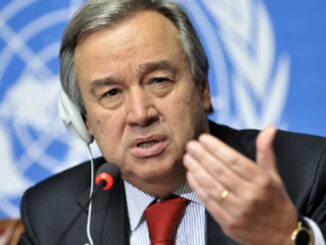
    UNITED NATIONS (TIP): U.N. Secretary-General Antonio Guterres on May 2 urged the international community to “speak with one voice” and call for stopping the detention and imprisonment of journalists for doing their jobs, as he sounded an alarm that freedom of the press is under attack in every corner of the world.
    Mr. Guterres underscored that “all our freedom” depends on press freedom.
    “Freedom of the press is the foundation of democracy and justice,” he said in his video message ahead of World Press Freedom Day 2023.
    World Press Freedom Day is observed annually on May 3.
    “On this and every World Press Freedom Day, the world must speak with one voice – Stop the threats and attacks. Stop detaining and imprisoning journalists for doing their jobs. Stop the lies and disinformation. Stop targeting truth and truth-tellers,” Guterres said in the message telecast in the UN General Assembly Hall here at a special event organized by UNESCO. Mr. Guterres voiced concern that in every corner of the world, freedom of the press is under attack. “Truth is threatened by disinformation and hate speech, seeking to blur the lines between fact and fiction, between science and conspiracy,” he said.
    He noted that at least 67 media workers were killed in 2022, an “unbelievable” 50 per cent increase over the previous years and nearly three-quarters of women journalists have experienced violence online and one in four have been threatened physically.
    “Journalists and media workers are directly targeted on and offline as they carry out their vital work. They are routinely harassed, intimidated, detained and imprisoned,” he said.
    The U.N. chief also added that the increased concentration of the media industry into the hands of a few, the financial collapse of scores of independent news organizations and the increase of national laws and regulations that stifle journalists are further expanding censorship and threatening freedom of expression.
    The event organized by UNESCO marks 30 years since the U.N. General Assembly’s decision proclaiming an international day for press freedom. This year’s theme for the Day is ‘Shaping a Future of Rights: Freedom of expression as a driver for all other human rights.’
    UNESCO Director-General Audrey Azoulay said hundreds of journalists globally have been attacked and imprisoned “just because they are doing their work. It is unacceptable.” She added that the level of impunity of crimes against journalists sends a “frightening” message and stressed that the security of journalists is a matter for society as a whole.
    Delivering the keynote address, Chairman and Publisher of The New York Times A.G. Sulzberger said that when the free press erodes in a society, “democratic erosion almost always follows.” He said all over the world, autocrats and those who aspire to join their ranks have used censorship, media repression and attacks on journalists to consolidate power. “That’s because gaining control of information is essential to gaining control of everything else.” He added that in countries where press freedoms were strong, including the United States, journalists now face systematic campaigns to undermine their credibility, followed by attacks on the legal
    protections that safeguard their work.
    In countries where press freedoms were already weak, journalists now face surging levels of violence, detention and harassment, he said adding that more journalists are being killed today for their work and the number of imprisoned journalists has reached a grim new record.
    “Spin a globe and you’ll find examples of these trends. In China, journalists are surveilled, intimidated and jailed…In Egypt, the government has used security services to buy up outlets and block uncooperative news sites…In India, authorities have raided newsrooms and treated journalists essentially as terrorists,” Sulzberger said.
    Referring to the situation in Russia, he said journalists who “dare to even acknowledge the war in Ukraine face long prison terms.” He called for the release of The Wall Street Journal reporter Evan Gershkovich, “who remains in Russian custody for sham charges.” Gershkovich was detained in March this year by Russian security services and is being held on an allegation of espionage.
    (Source: PTI)

  • India abstains in U.N. vote underscoring need for just, lasting peace in Ukraine

    India abstains in U.N. vote underscoring need for just, lasting peace in Ukraine

    • The resolution got 141 votes in favor and seven against; India was among the 32 countries that abstained

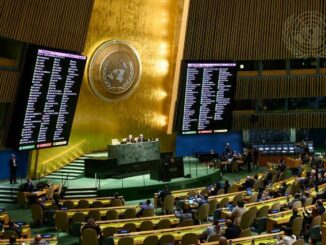
    UNITED NATIONS (TIP): India abstained in the U.N. General Assembly on February 23 on a resolution that underscored the need to reach as soon as possible a “comprehensive, just and lasting peace” in Ukraine in line with the principles of the U.N. Charter.

    The 193-member General Assembly adopted the draft resolution, put forward by Ukraine and its supporters, titled Principles of the Charter of the United Nations underlying a comprehensive, just and lasting peace in Ukraine. The resolution, which got 141 votes in favor and seven against, “underscores the need to reach, as soon as possible, a comprehensive, just and lasting peace in Ukraine in line with the principles of the Charter of the United Nations.” India was among the 32 countries that abstained.

    The resolution called upon member states and international organizations to redouble support for diplomatic efforts to achieve a comprehensive, just and lasting peace in Ukraine, consistent with the Charter.

    It reaffirmed its commitment to the sovereignty, independence, unity and territorial integrity of Ukraine within its internationally recognized borders, extending to its territorial waters and reiterated its demand that Russia immediately, completely and unconditionally withdraw all of its military forces from the territory of Ukraine within its internationally recognized borders, and calls for a cessation of hostilities. In the year since Russia’s February 24, 2022 invasion of Ukraine, several U.N. resolutions — in the General Assembly, Security Council and Human Rights Council, have condemned the invasion and underlined the commitment to the sovereignty, independence, unity and territorial integrity of Ukraine.

    India has abstained on the U.N. resolutions on Ukraine and consistently underlined the need to respect the U.N. Charter, international law and the sovereignty and territorial integrity of states.

    New Delhi has also urged that all efforts be made for an immediate cessation of hostilities and an urgent return to the path of dialogue and diplomacy.

    In September 2022, External Affairs Minister S. Jaishankar said in his address to the high-level U.N. General Assembly session that in this conflict, India is on the side of peace and dialogue and diplomacy.

    “As the Ukraine conflict continues to rage, we are often asked whose side are we on. And our answer, each time, is straight and honest. India is on the side of peace and will remain firmly there. We are on the side that respects the UN Charter and its founding principles. We are on the side that calls for dialogue and diplomacy as the only way out,” Jaishankar had said, adding that it is in the collective interest to work constructively, both within the United Nations and outside, in finding an early resolution to this conflict.

    India has also consistently underlined that in the conflict, the entire global South has suffered “substantial collateral damage” and developing countries are facing the brunt of the conflict’s consequences on food, fuel and fertilizer supplies.

    Jaishankar had said that India is on the side of those that are “struggling to make ends meet, even as they stare at the escalating costs of food, of fuel and fertilizers.” The UNGA resolution called for an immediate cessation of the attacks on the critical infrastructure of Ukraine and any deliberate attacks on civilian objects, including those that are residences, schools and hospitals.

    It urged all member states to cooperate in the spirit of solidarity to address the global impacts of the war on food security, energy, finance, the environment and nuclear security and safety and underscored that arrangements for a comprehensive, just and lasting peace in Ukraine should take into account these factors.


    U.N. Secretary-General Antonio Guterres told the emergency special session of the General Assembly that resumed on February 22 that Russia’s invasion of Ukraine is “an affront to our collective conscience” and said it is “high time” to step back from the brink.


    “The one-year mark of Russia’s invasion of Ukraine stands as a grim milestone — for the people of Ukraine and for the international community. That invasion is an affront to our collective conscience. It is a violation of the United Nations Charter and international law,” Mr. Guterres said adding that the invasion is having dramatic humanitarian and human rights consequences.

    In a strong message, Mr. Guterres said the war is fanning regional instability and fueling global tensions and divisions while diverting attention and resources from other crises and pressing global issues. “Meanwhile, we have heard implicit threats to use nuclear weapons. The so-called tactical use of nuclear weapons is utterly unacceptable. It is high time to step back from the brink,” he said.

    (Source: PTI)


  • U.N. demands Russia reverse Ukraine annexations, India abstains from vote

    U.N. demands Russia reverse Ukraine annexations, India abstains from vote

    UNITED NATIONS  (TIP): The U. N. General Assembly voted overwhelmingly Wednesday, October 12,  to condemn Russia’s “attempted illegal annexation” of four Ukrainian regions and demand its immediate reversal, a sign of strong global opposition to the seven-month war and Moscow’s attempt to grab its neighbor’s territory. The vote in the 193-member world body was 143-5 with 35 abstentions. It was the strongest support from the General Assembly for Ukraine and against Russia of the four resolutions it has approved since Russian troops invaded Ukraine on February 24. Ukraine’s U. N. ambassador, Sergiy Kyslytsya, called the vote “amazing” and “a historic moment.” U. S. Ambassador Linda Thomas-Greenfield said supporters were “holding our breaths” and called it “a monumental day.” European Union Ambassador Olof Skoog called it “a great success” that sends “a resounding message to Russia that they are and remain isolated.”

    U. S. President Joe Biden said in a statement that the vote demonstrated the world “is more united and more determined than ever to hold Russia accountable for its violations.” It is “a clear message” that “Russia cannot erase a sovereign state from the map” and it “cannot change borders by force,” he said. The Western-sponsored resolution was a response to Russia’s announced annexation last month of Ukraine’s Donetsk, Luhansk, Kherson and Zaporizhzhia regions. Moscow acted following Kremlin-orchestrated “referendums” that the Ukrainian government and the West have dismissed as sham votes conducted on occupied land amid warfare and displacement.

    Violation of U.N. Charter

    During two days of speeches at the assembly’s resumed emergency special session on Ukraine speaker after speaker accused Russia of violating key principles of the United Nations Charter — respect for the sovereignty and territorial integrity of all U. N. member nations.

    There was intense lobbying by supporters of the E. U.-facilitated resolution ahead of Wednesday’s vote. U, S. envoy Thomas-Greenfield told the assembly before the vote that when the United Nations was established on the ashes of World War II it was built on an idea — “that never again would one country be allowed to take another’s territory by force.” Afterward, she told reporters the vote means “that in the eyes of the world and the United Nations, Ukraine’s borders remain the same.” “The resolution also sends an enormously important signal to Moscow and to everyone: It does not matter if you as a nation are big or small, rich or poor, old or new. If you are a U. N. member state, your borders are your own and are protected by international law,” Ms. Thomas-Greenfield said. “They cannot be redrawn by anyone else by force.”

    Result beyond expectations

    A key issue for the resolution’s Western backers was how many countries would support it, and the result went beyond their most optimistic expectations. The General Assembly voted 141-5 with 35 abstentions March 2 to demand an immediate Russian ceasefire, withdrawal of all its troops and protection for all civilians. On March 24, it voted 140-5 with 38 abstentions on a resolution blaming Russia for Ukraine’s humanitarian crisis and urging an immediate ceasefire and protection for millions of civilians and the homes, schools and hospitals critical to their survival. But the assembly voted by a far smaller margin April 7 to suspend Russia from the U. N.’s Geneva-based Human Rights Council over allegations Russian soldiers in Ukraine engaged in rights violations that the United States and Ukraine have called war crimes. That vote was 93-24 with 58 abstentions. A 2014 resolution affirming Ukraine’s territorial integrity and declaring the referendum that led to Russia’s annexation of the Crimean Peninsula illegal was adopted by a vote of 100-11 with 58 abstentions.

    Among the surprise supporters of Wednesday’s resolution were the “yes” votes from Saudi Arabia, the United Arab Emirates and other members of the Gulf Cooperation Council as well as Brazil.

    Russia responds

    Russia’s U. N. ambassador, Vassily Nebenzia, had appealed to countries to vote against the resolution, calling it “a politicized and openly provocative document” and denouncing its sponsors as “unscrupulous Western blackmailers”. He expressed regret the vote was not by secret ballot, as Russia sought but the assembly rejected. Mr. Nebenzia reiterated Russia’s claims the referendums were valid, saying “the populations of these regions do not want to return to Ukraine.” The four countries that joined Russia in voting against the resolution were North Korea, Belarus, Syria and Nicaragua. Ukraine’s Kyslytsya expressed profound regret that the four countries made “the wrong choice against the U. N. Charter” and urged them to reconsider their commitment to the U. N.’s principles.

    India abstains

    Among the 35 countries that abstained, 19 were from Africa, including South Africa. China and India, the world’s two most populous countries, also abstained along with Pakistan and Cuba.

    The more powerful Security Council, whose resolutions are legally binding, has been stymied on taking action on Ukraine because of Russia’s veto power, which it used September 29 to block condemnation of Russia’s attempts to annex Ukrainian territory.

    Not legally binding

    By contrast, the General Assembly, where there are no vetoes, has now approved four resolutions criticizing Russia over Ukraine. Its votes reflect world opinion but are not legally binding.

    The resolution adopted Wednesday declares that Moscow’s actions violate Ukraine’s sovereignty and territorial integrity, are “inconsistent” with the principles of the U. N. Charter, and “have no validity under international law and do not form the basis for any alternation of the status of these regions of Ukraine”. It demands that Russia “immediately, completely and unconditionally withdraw all of its military forces from the territory of Ukraine within its internationally recognized borders”. And it supports “the de-escalation of the current situation and a peaceful resolution of the conflict through political dialogue, negotiation, mediation and other peaceful means” that respect Ukraine’s sovereignty, territorial integrity and internationally recognized borders.

    What the countries said

    Many countries among the more than 70 speakers urged a negotiated end to the war. The E. U.’s Skoog called the appeal for a peaceful solution “very important,” but stressed it must be based on Ukraine’s territorial integrity. During Wednesday’s debate there was strong support for the resolution. Australian Ambassador Mitch Fifield called Russia’s attempted annexation “illegal and a dangerous escalation” and urged all countries to oppose acts of aggression. Ambassador Fergal Mythen of Ireland said voters in the “sham” referendums in the four regions “faced intimidation by the Russian military and Russia’s illegitimately appointed authorities”.

    Cambodian Ambassador Sovann Ke didn’t indicate how he would vote but said that “the forcible annexation of regions from a sovereign country is a flagrant violation of the U. N. Charter and international laws, which is not acceptable” and urged that internationally respected borders “be fully respected.” In the voting, Cambodia supported the resolution.

    South Korea’s ambassador, Hwang Joonkook, gave unequivocal support “to the sovereignty, political independence and the territorial integrity of Ukraine.” He said his country’s “own painful experiences” after the 1950-53 Korean War “can testify that any attempt to divide a nation in any form or method is merely the beginning of lasting very serious troubles, rather than a solution”.

    North Korea backs Russia, slams the West

    On the other side of that divide, North Korean Ambassador Kim Song supported the “self-determination” of the people in the four regions annexed by Russia as a right protected in the U. N. Charter and said the results must be respected.

    He accused the United States and Western countries of “brutally” violating the sovereignty and territorial integrity of former Yugoslavia, Afghanistan, Iraq and Libya under “the pretext” of promoting international peace and security without ever having its actions called into question by the Security Council. He argued that U. S. interference in the internal affairs of countries is continuing in the 21st century.

    Syrian Ambassador Bassam Sabbagh accused the General Assembly of “being manipulated flagrantly by some Western countries for their own geopolitical interests” and urged countries to oppose efforts “to isolate Russia and to employ double standards”.

    (Agencies)

  • Noble intentions: On the U.N. and the Taliban

    The U.N. must ensure that the Taliban uphold human rights and give up terror tactics

    As India ended its month-long presidency of the U.N. Security Council this week, the government claimed a victory of sorts for chairing a session that resulted in the adoption of UNSC Resolution 2593, condemning terrorism and urging the Taliban to ensure human rights in Afghanistan. The government has said that the resolution — sponsored by the U.S., the U.K. and France — addressed key Indian concerns, calling for the Taliban to ensure safe evacuations of Afghans wishing to leave and not allowing Afghan soil to be used for terrorist activity. The passage of the resolution was timely, practically coinciding with the exit of the last U.S. troops from Kabul, and the Taliban’s declaration of complete victory. It also followed on three discussions held under India’s chairmanship that have set out the expectations from the new regime in Afghanistan: the importance of upholding rights; to push for an inclusive, negotiated political settlement for government, and condemning all acts of terror, including the recent attack on Kabul airport; preventing any future attacks, and combating of the presence of UN-designated entities. However, the resolution did not contain any consequential language that would give the UNSC’s stated intentions any real teeth, and appears to accept the Taliban regime as the default force in Afghanistan.

    While it is very early to consider more punitive action against the Taliban for violating their commitments by using the U.N. Charter’s “Chapter 7” mandate, that empowers the UNSC to maintain peace, it is disappointing that the India-chaired resolution does not contain language that would hold the new regime more accountable. The watered-down language was probably on account of severe opposition from Russia and China, who later decided to abstain. This divide in the P-5 nations will only prove to be counterproductive if the UNSC wants to remain “seized” of the situation, as the resolution affirms. It is hoped that the U.N. system acknowledges the powerful leverage it has in Afghanistan’s future and actualizes all mechanisms in its mandate to monitor the progress of government formation. A major tool is the India-chaired 1988 (Taliban) Sanctions Committee, due to meet soon, which needs to ensure that no designated leader of the Taliban and their associates are given recourse to funds, arms or travel permission unless they show a commitment to international principles. The renewal, on September 17, of the UN Assistance Mission in Afghanistan’s mandate is another lever. As a concerned neighbor of Afghanistan, one that could be drastically affected by an uptick in terrorism there, and a believer in the UN-led multilateral order, India still has a role in Afghan’s future. While it has decided to embark on talks with the Taliban in Doha, it must continue to play that role on the world stage.

    (The Hindu)