Tag: U.N. General Assembly

  • India abstains in U.N. vote underscoring need for just, lasting peace in Ukraine

    India abstains in U.N. vote underscoring need for just, lasting peace in Ukraine

    • The resolution got 141 votes in favor and seven against; India was among the 32 countries that abstained

    UNITED NATIONS (TIP): India abstained in the U.N. General Assembly on February 23 on a resolution that underscored the need to reach as soon as possible a “comprehensive, just and lasting peace” in Ukraine in line with the principles of the U.N. Charter.

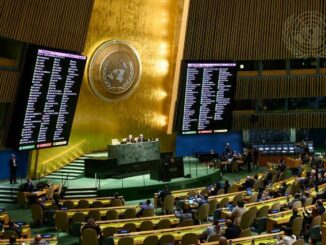
    The 193-member General Assembly adopted the draft resolution, put forward by Ukraine and its supporters, titled Principles of the Charter of the United Nations underlying a comprehensive, just and lasting peace in Ukraine. The resolution, which got 141 votes in favor and seven against, “underscores the need to reach, as soon as possible, a comprehensive, just and lasting peace in Ukraine in line with the principles of the Charter of the United Nations.” India was among the 32 countries that abstained.

    The resolution called upon member states and international organizations to redouble support for diplomatic efforts to achieve a comprehensive, just and lasting peace in Ukraine, consistent with the Charter.

    It reaffirmed its commitment to the sovereignty, independence, unity and territorial integrity of Ukraine within its internationally recognized borders, extending to its territorial waters and reiterated its demand that Russia immediately, completely and unconditionally withdraw all of its military forces from the territory of Ukraine within its internationally recognized borders, and calls for a cessation of hostilities. In the year since Russia’s February 24, 2022 invasion of Ukraine, several U.N. resolutions — in the General Assembly, Security Council and Human Rights Council, have condemned the invasion and underlined the commitment to the sovereignty, independence, unity and territorial integrity of Ukraine.

    India has abstained on the U.N. resolutions on Ukraine and consistently underlined the need to respect the U.N. Charter, international law and the sovereignty and territorial integrity of states.

    New Delhi has also urged that all efforts be made for an immediate cessation of hostilities and an urgent return to the path of dialogue and diplomacy.

    In September 2022, External Affairs Minister S. Jaishankar said in his address to the high-level U.N. General Assembly session that in this conflict, India is on the side of peace and dialogue and diplomacy.

    “As the Ukraine conflict continues to rage, we are often asked whose side are we on. And our answer, each time, is straight and honest. India is on the side of peace and will remain firmly there. We are on the side that respects the UN Charter and its founding principles. We are on the side that calls for dialogue and diplomacy as the only way out,” Jaishankar had said, adding that it is in the collective interest to work constructively, both within the United Nations and outside, in finding an early resolution to this conflict.

    India has also consistently underlined that in the conflict, the entire global South has suffered “substantial collateral damage” and developing countries are facing the brunt of the conflict’s consequences on food, fuel and fertilizer supplies.

    Jaishankar had said that India is on the side of those that are “struggling to make ends meet, even as they stare at the escalating costs of food, of fuel and fertilizers.” The UNGA resolution called for an immediate cessation of the attacks on the critical infrastructure of Ukraine and any deliberate attacks on civilian objects, including those that are residences, schools and hospitals.

    It urged all member states to cooperate in the spirit of solidarity to address the global impacts of the war on food security, energy, finance, the environment and nuclear security and safety and underscored that arrangements for a comprehensive, just and lasting peace in Ukraine should take into account these factors.


    U.N. Secretary-General Antonio Guterres told the emergency special session of the General Assembly that resumed on February 22 that Russia’s invasion of Ukraine is “an affront to our collective conscience” and said it is “high time” to step back from the brink.


    “The one-year mark of Russia’s invasion of Ukraine stands as a grim milestone — for the people of Ukraine and for the international community. That invasion is an affront to our collective conscience. It is a violation of the United Nations Charter and international law,” Mr. Guterres said adding that the invasion is having dramatic humanitarian and human rights consequences.

    In a strong message, Mr. Guterres said the war is fanning regional instability and fueling global tensions and divisions while diverting attention and resources from other crises and pressing global issues. “Meanwhile, we have heard implicit threats to use nuclear weapons. The so-called tactical use of nuclear weapons is utterly unacceptable. It is high time to step back from the brink,” he said.

    (Source: PTI)


  • Is Global ‘Democracy’ America’s Mission?

    Is Global ‘Democracy’ America’s Mission?

    By Patrick J. Buchanan

    “America’s founding mission was not democracy, nor any other ideology. It was what we declared it to be in the document our fathers agreed to at the Constitutional Convention of 1787:

    “We the People of the United States, in Order to form a more perfect Union, establish Justice, ensure domestic Tranquility, provide for the common defense, promote the general Welfare, and secure the Blessings of Liberty to ourselves and our Posterity, do ordain and establish this Constitution for the United States of America.” “Democracy” is not even mentioned in the Constitution or in the Bill of Rights.”

    To pursue global “democracy” is thus a formula for endless interventions in the internal affairs of other nations, endless conflicts and eventual war

    “Is “democracy” really America’s cause? Is “autocracy” really America’s great adversary in the battle for the future?   Not all autocrats, after all, are our enemies, nor are all democrats our reliable friends.”

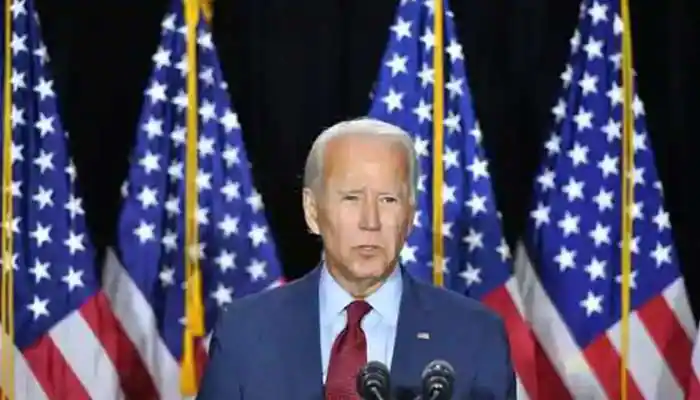
    “In the battle between democracy and autocracy, democracies are rising to the moment, and the world is clearly choosing the side of peace and security,” said President Joe Biden in his State of the Union address.

    “This is a real test. It’s going to take time.” Thus did Biden frame the struggle of our time as the U.S. leading the world’s democracies, the camp of the saints, against the world’s autocrats, the forces of darkness. But is “democracy” really America’s cause? Is “autocracy” really America’s great adversary in the battle for the future?

    Not all autocrats, after all, are our enemies, nor are all democrats our reliable friends.

    When Ukraine was invaded, the U.N. General Assembly voted on a resolution which “deplores in the strongest terms” Russia’s “aggression” against Ukraine. Among the 35 nations that abstained was India, the world’s largest democracy. Whose side is India on in the great struggle?

    Freedom House ranks Egypt, the United Arab Emirates, Bahrain, Qatar, Oman, Saudi Arabia and Jordan, all friends, partners and sometime allies of the United States, as “not free.”

    Have something to say about this column?

    Are we in a global struggle against all of these nations, all of these regimes, because all of them are autocracies?

    As for America’s own wars, democracy-versus-autocracy would seem to be a misguided way to describe any of them. In the Revolution, we were military allies from 1778 on with King Louis XVI of France, against Great Britain, the Mother of Parliaments. Our goal was not establishing a democracy, but our independence, separation, from the most democratic nation on earth.

    When we declared war on the kaiser’s Germany in April 1917, we allied ourselves with four of the greatest colonial empires on earth: the British, French, Russian and Japanese empires. When that Great War began, Germany’s Second Reich was a good deal more democratic than the czarist regime of Russia’s Nicholas II.

    In World War II, we allied with the world’s largest colonial empire, Great Britain, and the USSR of Joseph Stalin. Democracy was not the cause for which we went to war, but payback to Japan for the sneak attack on Pearl Harbor. Our most important ally in that Asian war was the Nationalist China of Generalissimo Chiang Kai-shek, no democrat.

    History, religion, race, culture, tribe and territory more often define the 100-plus nations of Africa, the Middle East and Asia than whether they are democracies or autocracies.

    During the Cold War, we collaborated openly with dictators — Rafael Trujillo in the Dominican Republic, Anastasio Somoza in Nicaragua, Chiang Kai-shek in China, Syngman Rhee in South Korea, Augusto Pinochet in Chile, Ferdinand Marcos in the Philippines, the shah of Iran, Ngo Dinh Diem, and a succession of generals after his assassination, in South Vietnam.

    If they stood with us against the Communists in the Cold War, we stood by them. “He may be a SOB, but he’s our SOB,” FDR said of Somoza.

    Communism was our ideological enemy, not autocracy. If you were an enemy of communism in the Cold War, autocrat or not, you were likely to be treated as a friend by the USA.

    If we make global “democracy” the measure of success in the great struggle of our time, our victory or defeat in that cause depends on political decisions and internal choices of scores of nations not our own.

    But when did the internal politics of other lands become either the business of the United States or the yardstick of our success as a nation?

    To make global democracy our goal in this century’s great “battle” is to allow America’s success or failure as a nation to be judged and measured by what other nations, not our own, succeed or fail in doing.

    America’s founding mission was not democracy, nor any other ideology. It was what we declared it to be in the document our fathers agreed to at the Constitutional Convention of 1787:

    “We the People of the United States, in Order to form a more perfect Union, establish Justice, ensure domestic Tranquility, provide for the common defense, promote the general Welfare, and secure the Blessings of Liberty to ourselves and our Posterity, do ordain and establish this Constitution for the United States of America.”

    “Democracy” is not even mentioned in the Constitution or in the Bill of Rights. If whether other nations are democratic or autocratic is the measure by which we judge America’s success, this must lead invariably to U.S. interference in the internal affairs of those nations not our own — to ensure success in the great struggle. To pursue global “democracy” is thus a formula for endless interventions in the internal affairs of other nations, endless conflicts and eventual war. The antidote is John Quincy Adams’ formulation:

    “(America) goes not abroad in search of monsters to destroy; she is the well-wisher to the freedom and independence of all; she is the champion and vindicator only of her own.”

    (The author is a political commentator, columnist, politician and broadcaster)