Ex-minister Deshmukh must explain why he did not object to the reinstatement of a tainted cop
By Julio Ribeiro
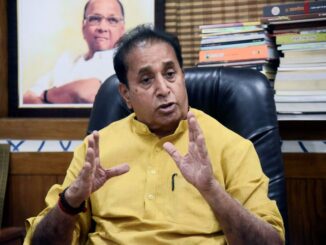
I was surprised to receive a book written by Maharashtra’s former Home Minister Anil Deshmukh. I had heard tales of how transfers of police personnel at all levels were effected through political pressure during his tenure. He faced stiff competition from an IPS officer (now retired), Param Bir Singh. The good name of the Mumbai city police came under threat while they were in office.
The Maha Vikas Aghadi (MVA) — comprising the Uddhav Thackeray-led Shiv Sena, the Nationalist Congress Party (NCP-Sharad Pawar) and the Congress — ruled Maharashtra from November 2019 to June 2022. The ruling alliance chose a wrong man as the Commissioner of Police (CP), Mumbai. Simultaneously, Pawar picked Deshmukh as the minister supervising the working of the police force. It was a deadly combination that was bound to cause an explosion sooner than later. And it did.
On February 25, 2021, a Scorpio car, laden with 20 gelatin sticks — but mercifully without a detonator — was found parked near Mukesh Ambani’s residence (Antilia) on Altamount Road, an upmarket residential area of the city. The car was traced to Mansukh Hiren, a friend of then CP Param Bir’s ‘blue-eyed boy’ Sachin Vaze, who was an assistant police inspector (API) in the Crime Branch. It was established by the Anti-Terrorism Squad (ATS) of the state police and the National Investigation Agency (NIA) that Vaze had been seen in that Scorpio on earlier occasions.
Another car, an Innova, belonging to the Crime Branch, was specially allotted to Vaze. That was also seen in the vicinity of the Ambani house at the same time. It was apparent that the Crime Branch’s intelligence unit, headed by Vaze, was involved in the planting of the Scorpio outside Ambani’s home for reasons that remain undisclosed to this date.
Vaze had been suspended as he was facing a murder charge. His visiting cards projected him as an ‘encounter specialist’; his associates in the private security business used to distribute these cards among potential customers. Vaze had served under inspector Pradeep Sharma, the doyen of ‘encounter specialists’, in the early years of his service in the police. Sharma and Vaze were in touch with each other and also with the IPS officer who has been targeted by Deshmukh in his book, Diary of a Home Minister.
The officer had been the CP of the neighboring city of Thane. His image in the eyes of Thane’s residents left much to be desired. His image in the eyes of his own men, whom he was chosen to lead, was even worse.
This officer had tried desperately for the Mumbai police chief’s post when his tenure as the Thane CP ended. Two excellent officers, DD Padsalgikar and SK Jaiswal, were sent back from Central deputation. The BJP-led Central Government had correctly assessed the risk of installing a wrong man as the chief of the Mumbai Police.
When the MVA government was sworn in and the Home portfolio was allotted to the NCP, Mumbai residents were saddled with a choice that puzzled them. How did the appointee avoid the eagle eye of Pawar? The officer himself let it be known that Pawar had interviewed him and advised him to not let down a much-respected force and sully its good name.
Deshmukh’s account of his post-Antilia relations with the CP is a defense of himself in the case registered against him by the CBI and then the NIA on the allegations made by his friend-turned-foe after the latter was removed from the top post. The minister was accused by the CP of summoning Vaze and demanding Rs 100 crore a month as his share of the illegal collections that Vaze was reportedly making from bar owners and others.
The former Home Minister does not explain in his book why and how the CP was chosen. He must answer that question because the decline in the police’s performance began from there. Further, he does not explain why he, as Home Minister, did not object to the reinstatement of Vaze in service despite the latter facing a murder charge. He also does not explain how a hands-on minister like him did not advise the CP to follow protocol procedures and ensure that Vaze reported to senior officers in the Crime Branch and not to the CP directly. The intelligence unit is supposed to be headed by a senior inspector. How was an API made the head of that important unit? Why did the CP summon the ACP in charge of the social services (SS) unit and tell him to involve Vaze in his work? The SS unit of the Crime Branch deals with the city’s brothels!
The discovery of explosives in a car near Ambani’s house was itself an indicator that things were going wrong for the city police. No API, even a swashbuckler like Vaze, could have dared to carry out such a project without the CP’s knowledge. If the latter insists that he knew nothing of the plan, that admission alone would disqualify him from holding high office.
The subsequent murder of Hiren conclusively showed that the menace of encounter specialists should be buried once and for all. That burial had been effected by Anami Roy, who was the CP two decades ago. City residents were breathing easier till Vaze was inducted into the Crime Branch and given powers that were well beyond his rank. Did the minister not know about the rumblings in the police because Vaze operated as the CP’s alter ego?
The almost unanimous opinion in Mumbai’s police force was that the Home Minister and the CP were in league. After the Scorpio fiasco, the latter got off the hook by teaming up with the BJP, then in the Opposition.
The image of Mumbai’s city police suffered considerably from the games that politicians played. And this is what should alarm the city’s residents. Deshmukh’s defense of the part he played in the episode, as reflected in his book, is as he intended it to be — his defense. The facts against the ex-CP that he has disclosed need to be tested also, but in a court of law.
(Julio Ribeiro is a Former Ambassador & DGP, Punjab)
In Indian electoral politics, alliances are formed on the basis of strengths rather than weaknesses of the participants. The aura of success surrounding Rahul’s Bharat Jodo Yatra is set to provide him with moral authority to play a pivotal role. In addition, in Sonia Gandhi, Rahul has a reserve bench of sorts; the former party chief can act as a line of communication with many non-NDA allies, including the Left, to keep the mahagathbandhan going.
This year, the Congress faces a litmus test in Karnataka, Madhya Pradesh, Rajasthan and Chhattisgarh. If it can win these states, the grand old party would emerge as a serious challenger for the 2024 General Election.
By Rashid Kidwai
There are many quotes that have been attributed to Mahatma Gandhi. In the Congress party office at 24, Akbar Road, one of them reads, “Kabhi kabhi hum apne virodhiyon ke karan aage badhte hain.” (At times, we move ahead due to our opponents). Then there is another one saying, “Pehle woh aap par dhyan nahin denge, phir who aap par hasenge, phir aapse ladengen, aur tab aap jeet jayenge.”(First they would not pay any attention to you, then they would mock you and then they would fight with you. You would win once these stages are completed).
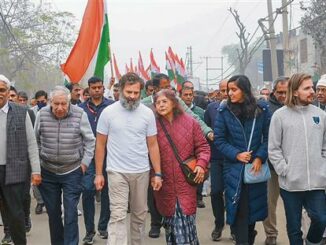
In the context of Rahul Gandhi’s ongoing abstract, yet arduous, Bharat Jodo Yatra, these quotes ring a bell, bringing some relevance and hope for the Congress leader.
There is a broader and growing consensus of sorts among Rahul’s detractors and well-wishers that finally, the Gandhi scion is showing signs of purpose, perseverance and hope in his political journey that began in 2004.
Politically, the yatra may or may not be a game-changer, but it has succeeded in establishing Rahul as a credible politician who can walk the talk, intermingle with the masses and get support from a range of politicians and celebrities — from MK Stalin, Aaditya Thackeray, Supriya Sule and Farooq Abdullah to Raghuram Rajan, AS Dulat, Swara Bhaskar and Kamal Haasan.
More importantly, the BJP’s stringent criticism, Union Health Minister Mansukh Mandaviya’s ‘appeal’ to suspend the yatra over Covid concerns, and the outrage over Rahul’s comments on China allegedly entering Indian territory have helped him become a singular dissenting voice.
When the yatra began from Kanyakumari, Rahul’s popularity ratings were at an all-time low. The Congress organization was in a shambles and the leadership issue was far from settled. While the yatra was on the Kerala-Karnataka border, Rajasthan Chief Minister Ashok Gehlot, at that time tipped to be the next AICC president, stunned friends and foes alike by showing defiance, a throwback to the bygone era of Devaraj Urs, Arjun Singh and other party chief ministers.
But throughout the Congress organizational election process, Rahul stayed away and focused on the yatra. The Assembly polls of Himachal Pradesh and Gujarat offered a mixed bag as the Congress went on to win HP. It was a surprise for those predicting the Congress’ death. The ‘corpse’ is, in fact, very much alive and kicking.
This year, the Congress faces a litmus test in Karnataka, Madhya Pradesh, Rajasthan and Chhattisgarh. If it can win these states, the grand old party would emerge as a serious challenger for the 2024 General Election.
We need to remember that the fortunes of the Congress and other non-BJP parties are closely linked to the 2024 Lok Sabha polls where the non-BJP, non-NDA Opposition and the Congress-UPA partners will have to target the ‘half of half’, i.e. half of the 272 Lok Sabha seats on their own — a challenging but not unmanageable number in the 2024 battle.
There are four crucial states of West Bengal, Bihar, Maharashtra and Karnataka where the BJP-NDA had done exceedingly well in 2019 but the subsequent political developments have unfolded a new scenario. In West Bengal, for example, the BJP had won 18 Lok Sabha seats out of 42, while in Bihar, the alliance with the JD(U) had resulted in its netting 39 out of 40 parliamentary seats. In Karnataka, the BJP had won 25 out of 28 seats, while in Maharashtra, the alliance with the undivided Shiv Sena had resulted in the NDA allies winning 42 out of 48 seats. Imagine a situation if the BJP’s strength from these four states gets reduced to half. A simple majority of 272 would become a distant dream and prospects of a khichdi government a reality.
The Congress, in order to be a contender, has to win 100 or more Lok Sabha seats from states such as Kerala, Chhattisgarh, Maharashtra, Rajasthan, Madhya Pradesh, Assam, Karnataka, Uttarakhand, Himachal Pradesh and a few others where the grand old party has been in direct contest with the BJP or traditionally has a strong presence.
Next year’s parliamentary polls are set to be contested in contrasting styles. If Team Modi is set to make full use of the Prime Minister’s personal ratings, big-ticket projects, Covid-19 handling in the context of the massive vaccination programme, achievements on the diplomatic front and reliance on emotive issues like the Ram Temple, the Congress and its potential allies are prepared to take the battle to the states where regional players are expected to hold sway.
So, if the parties led by Mamata Banerjee, Nitish Kumar, Uddhav Thackeray, Sharad Pawar, MK Stalin, Naveen Patnaik, HD Kumaraswamy, Chandrababu Naidu and Akhilesh Yadav together manage to hold on to a chunk of the parliamentary seats, the Congress has the task of doing well in most of the Hindi-belt states and the Northeast.
In Indian electoral politics, alliances are formed on the basis of strengths rather than weaknesses of the participants. The aura of success surrounding Rahul’s Bharat Jodo Yatra is set to provide him with moral authority to play a pivotal role. In addition, in Sonia Gandhi, Rahul has a reserve bench of sorts; the former party chief can act as a line of communication with many non-NDA allies, including the Left, to keep the mahagathbandhan going.
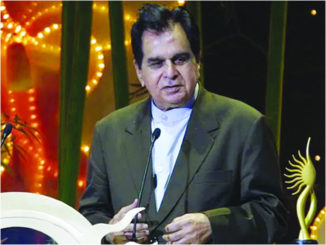
Cinema legend Dilip Kumar has passed away at the age of 98, following prolonged illness. He is survived by his wife, actor Saira Banu.
Immediately after the news broke out on Wednesday , July 7, morning, heartfelt tributes from all across the globe started pouring in, as Maharashtra Chief Minister Uddhav Thackeray announced a state funeral for the Bollywood legend.
Born Mohammed Yusuf Khan in 1922 in Peshawar, now in Pakistan, he became known to the world by the screen name of Dilip Kumar once he joined the Hindi film industry in the 1940s.The original king of tragedy who’s revered the world over for his iconic screen performances in films such as Devdas (1955), Naya Daur (1957), Mughal-e-Azam (1960), Ganga Jamuna (1961), Ram Aur Shayam (1967), Sagina Mahato (1970), Kranti (1981), Shakti (1982), Karma (1986), and Saudagar (1991) was laid to rest at the Juhu Qabrastan in Santacruz Mumbai. Dilip Sahab was draped in the tricolor, given a gun salute after which band of police personnel paid him their tribute. The funeral was completed with COVID restrictions in place as only family and close friends were allowed to attend it. Bollywood megastar Amitabh Bachchan was among the few B-town celebs who attended the funeral.
There was a time when young people hailing from good families couldn’t dream of taking up acting as a profession. For, the profession was looked down upon. But, Dilip Sahab not only brought dignity to the profession but also inspired numerous young men and women to follow his footsteps and become legendary figures in their own right. He was a method actor long before the movie stars in the West even knew what it actually meant to be a method actor. In fact, he was so deeply involved into his roles that he had to consult a psychologist who advised him to avoid doing serious roles to keep his sanity intact. That’s precisely why he had to turn down Pyaasa (1957).
But, he was able to soon turn the tide by successfully playing rather light hearted characters which allowed him to further diversify himself as a performer. He famously turned down David Lean’s offer to play Sherif Ali in Lawrence of Arabia (1962) in order to focus on his work in Hindi cinema. A truly consummate actor, Dilip Kumar took on Amitabh Bachchan at the height of his fame in ‘Shakti’ and yet again came out supreme, winning the Filmfare Award for Best Actor in 1983. He subsequently went on to play pivotal roles in films like Mashaal (1984), Karma (1986), and Saudagar (1991). The 1998 film Qila was his last film.
As a performer, Dilip Sahab was always ahead of his time and never backed down from new challenges. In the 1954 film titled ‘Amar’, he played the central character of a lawyer named Amarnath who is known for his sense of justice. Now, as per his father’s wish Amarnath agrees to marry Anju (essayed by Madhubala) who is a Western educated girl and quite open minded. But on one rainy night he gets enticed by a milkwoman’s beauty and is unable to stop himself from raping her. Try and imagine Dilip Kumar, a heartthrob of the nation, in a newly independent India of the early 1950s, raping a girl on the silver screen. Of course, the act of rape isn’t shown but merely implied symbolically via the shattering of the window pane.
Now, any other actor in his place would have refused to do the scene. It was really too much for the ’50s but Dilip Kumar seldom backed down from challenges. He went ahead with it once he was convinced that the story demanded it. Moreover, there would be repercussions for Amarnath which would ensure that the scene isn’t misinterpreted by the audiences. Clearly, even as early as the ’40s and ’50s, Dilip Sahab was a trailblazer who was constantly pushing the boundaries of acting and setting up new standards with each new performance. By the ’70s, he attained the stature of an acting institution that has continued to inspire generations of artists. His death truly marks the end of an era. For, there will never be another Dilip Kumar. To quote Amitabh Bachchan: “An epic era has drawn curtains… Never to happen again.”
(Murtaza Ali Khan is an Indian Film & TV Critic / Journalist who has been covering the world of entertainment for over 10 years. He tweets at @MurtazaCritic and can be mailed at: murtaza@apotpourriofvestiges.com. His video essays / commentaries can be watched on his YouTube Channel at: https://www.youtube.com/c/murtaza19alikhan).
Dilip Kumar only Indian actor to receive highest Pak honor
Dilip Kumar’s ancestral home, where he was born and spent his early days, recently made it to the news, for the Pakistani Government wished to buy it and turn it into a museum, along with Raj Kapoor’s ancestral property. The house, located in the Qissa Khawani Bazaar of Peshawar, Khyber Pakhtunkhwa, is more than 100 years old, and has been declared a national heritage of Pakistan. Raj Kapoor was not only Dilip Kumar’s contemporary. Their association goes back to living in neigbouring “havelis”, being schoolmates and studying in the same college (Khalsa College). And, evidently, it was Raj Kapoor who first told Dilip that he could be a star.
When Dilip’s father, Lala Ghulam Sarwar Khan, came to know of his career switch from fruit trader to film actor, Raj, as a true friend, came to his rescue and made his father, Prithviraj Kapoor, reason with him.
The only Indian actor to receive Pakistan’s highest civilian award, Nishan-e-Imtiaz in 1998, Dilip Kumar was later pressurised to return the honour during the 1999 Kargil war by then coalition government of Shiv Sena in Maharashtra.
He had thought that the protests outside his house would die down soon, but when they didn’t, he met then Prime Minister Atal Bihari Vajpayee, who intervened.
“There’s no doubt about Dilip’s patriotism and commitment to the nation. He has proved that time and again during his film career. He has received the award at an individual level. It’s his will to keep it or return it. No one can pressurise him,” Vajpayee had said.
It was revealed later that in a letter that Dilip Kumar wrote to arrange a meeting with Vajpayee, he mentioned that if returning the award was in the best interests of the nation, he would gladly do so.
Former Foreign Minister of Pakistan, Khurshid Mahmud Kasuri described Dilip as the “one who could bring India and Pakistan together” in his book titled “Neither a Hawk nor a Dove”.
Dilip’s picture greeting Abdul Ghaffar Khan, the independence activist, advocate of Hindu-Muslim unity, who was against partition, on his visit to India at Meenambakkam Airport, Chennai, bears witness of him being the figure of peace throughout his life. Source: TNS
The Mumbai Model has been praised by the honorable Supreme Court and many more people for which we are grateful. But my message to all the citizens of Maharashtra, stay home, step out only if need be, mask up, the battle isn’t over. The praise is only a sign for us to be brave and fight harder, and that is our ethos! As the first case of Covid hit Maharashtra in Pune, around March 9 last year, a containment zone was immediately formed around the home of the index case and the patient was traced, tested and isolated. At the Vidhan Sabha we had just presented our first budget as the MVA government. I remember walking into the conference hall where Chief Minister Uddhav Thackeray, Deputy Chief Minister (and Guardian Minister of Pune) Ajit Pawar, and Revenue Minister Balasaheb Thorat were on an emergency video call with the administration of Pune. They were joined by a group of senior ministers and bureaucrats. Covid-19 was then too new to be fully comprehended. There had been varying opinions of its strength against the Indian climatic conditions, our so called innate-immunity and other such misleading information. As Pune was being sealed, the conference ended, and we knew that these cases weren’t the last we’d see of Covid in Maharashtra. There were many more. Estimates ranged from 700 to mind-boggling figures. It was a pandemic as officially declared by the World Health Organisation.
We are very far from declaring any victory in this battle; we are still braving the second wave; we are preparing for the possibility of a third wave. Such battles respect no declaration of any win, only preparation, pro-activeness and continuous improvement.
Here, I enlist some measures undertaken by the Government of Maharashtra against Covid-19.
1) The Medical Task Force
The first thing Chief Minister Thackeray put together was a medical task force consisting of 11 doctors. They interact and problem-solve with many others within Maharashtra and around the world, guide the state’s policy on the medical response to Covid-19. The administration swears by the advice of the Task Force and all administrative decisions pertaining to Covid-19, especially those taken during the peak, are based on it. The Task Force meets once a week, but is available to every doctor and administrator 24/7.
2) Jumbo Centers and Triage Areas
In what came to be known as “Jumbo Centers”, makeshift hospitals sprung up across Maharashtra in less than a month. The first was at NSCI, Dome: a dearth of space for beds in an environment of ever-increasing patients led us to place beds here. This center, coupled with a couple of volunteer doctors, gave us a new prototype and then the BKC Centre came up with rapid speed. The Jumbo Centre for Mumbai was initiated, as I remember, by MMRDA Commissioner RA Rajiv, on the request of Chief Minister Uddhav Thackeray on the day that the first case in Pune was isolated. The Chief Minister’s logic was simple: looking at the inflow of international passengers into Mumbai, the cases wouldn’t stop, we would have to learn from around the world and prepare for more cases.
Each Jumbo Centre has a triage area, a concept institutionalized by the Task Force for most private hospitals as well. This serves as the holding space for all those patients who have Covid-like symptoms and are waiting for their reports from a lab. This is also where patients that come as emergencies can be kept overnight to stabilize before they are ascertained to be either Covid positive or negative. Nobody can turn away a patient before stabilizing her/him.
Jumbo Centers also have special areas to put on and take off PPEs. Every frontline worker’s safety is paramount. Similarly, there are passages for patient inflow and outflow as also escalation beds and step-down beds for recovery. The wards are further divided into non-oxygenated beds (30%) and oxygenated beds (70%) as the first ward for primary treatment. An escalation of the infection would lead a patient to either an HDU or an ICU, depending on the severity of the case. Most Jumbo Centers have labs to handle RT-PCR tests and to carry out blood work, making them self-sufficient. Among the early and important experiments at the Jumbo Centers was the introduction of oxygen concentrators. This came about in my conversation with the Deputy Mayor of London, Rajesh Agarwal, while seeking his opinion on ventilators and their operations to handle Covid-19, in the last week of March last year. We called for one the next week and it worked magic for us in Worli; then we straight away pushed for more across the state.
The Chief Minister’s instructions to create Jumbo Centers turned out to be a boon as in no time we increased from 400 isolation beds in Mumbai and Pune together, to more than 4,50,000 beds across the state.
Along with Jumbo Centers across Maharashtra, we now have thousands of private nursing homes, and halls and schools manned and run by private organizations, with bed capacity from 10 to 150 in various localities. Covid treatment at government and civic/local self-government hospitals and Jumbo Centers has been free from Day One. And the administration has taken precautions to ensure medicines are procured and available to patients at the right time.
3) Ward helplines and hospitals
One of the most successful models is that of the Mumbai ward helplines. At a certain time in Mumbai, we had a few people in the central command center test positive and in isolation, which caused a mini collapse in the system for a few hours. So evolved the protocol in Mumbai to decentralize ward war rooms in early June 2020. Municipal Commissioner Iqbal Singh Chahal decided to distribute the workload of a central helpline to each ward war room.
Each war room is managed by adequate staff with the ability to address people’s concerns, calm them done, convey bed allocation or escalate any emergency. These war rooms have helped us avoid chaos and collapse, and an active bed dashboard of their ward, and across Mumbai, have been very useful.
We saw that hospitals were getting booked for beds that the patients did not require, and ICUs were falling short. Some beds were being booked in advance by people not infected by Covid in the anticipation that one may need it. In the protocol of open/self-booking by people, there was no clarity over the bed status and patients occupied beds for longer than needed. It was then that the BMC swung into action and mandated that no public or private hospital could allocate beds by themselves to pre-booked or walk-in patients. Even today, the bed allocations in Mumbai are done only through the ward war room helplines, irrespective of who calls: a politician, a corporate executive or anyone else, we serve all equally and the best we can.
However, just like a bed cannot be allocated directly to anybody, no hospital can refuse a patient in an emergency, and has to stabilize the patient immediately in their triage area.
There are also helplines that track the health of covid positive patients in isolation and home isolation every day and some helplines that monitor the health of those passengers in institutional quarantine across Mumbai.
4) Tests
A BMC health worker takes swab sample of a passenger for COVID-19 test at a railway station in Mumbai (Photo : courtesy PTI)
With the inflow of the first cases of Covid-19, there was still confusion over the type of tests and who should do it and why. Initially, it was meant only for symptomatic cases with a doctor’s prescription. In no time, we realized that the tests had to be increased. In July 2020, RT-PCR tests were liberalized, and citizens were urged to get themselves tested at the first sign of a symptom or upon being in close contact of a Covid positive patient. No prescriptions or self-declarations were needed for RT-PCR tests.
Private labs sprung up and the tests kept increasing day by day, so did cases. Doctors in local clinics and mobile clinics also started temperature checks and tests for other symptoms. The members of the cabinet give importance to testing, transparent reporting and accountability in our data points, as this isn’t a game of perception management. It is about pandemic management. Clean data helps us to have computed models and lets data analysts predict the next peak/fall and our response to it.
5) Contact Tracing and Quarantine
This was one of the most effective mechanisms used early, however, it is largely possible only in a hard lockdown. For every Covid case, the administration traced almost 20 high-risk contacts that may have come in contact with the case in the past seven days. It was natural for many of them to turn positive. Today, many homes, buildings are sealed for quarantine measures for the safety of all when a Covid positive case is found. Even today, testing and quarantining is considered to be the single-highest priority for the state, including for international passengers quarantined at various hotels across Mumbai.
6) Lockdown
The Maharashtra Model implemented by Chief Minister Uddhav Thackeray has been that of giving adequate signals before actually heading into a lockdown. A mindset has to be created. After the very first case in Maharashtra in 2020, the state went into a calibrated lockdown, first closing schools, colleges, theatres and malls. Then, non-essential service private offices, and so on, escalating the nature of the lockdown till the day of the ‘Janta Curfew’ and when the national lockdown that was announced. This meant people were not in shock, they had been given time to adjust to the new restrictions. In lifting the lockdown by the end of 2020, a similar staggered pattern was used.
Even during lockdowns, agriculture and manufacturing industries, export import activities, financial offices, essential services and offices have been kept open, along with restaurants being allowed home delivery. The idea is to keep citizens safe at home, and thus break the chain of transmission, while helping the state to also advance its medical infrastructure.
There may be debates on lockdowns and curbs, but even today, with the inadequate vaccine supply, uncontrolled mingling and non-symptomatic cases being super-spreaders, it is the only way to control the infection. The transmission drops immediately. Our first job at hand is to safeguard citizens, this is tough call but protects them.
7) Disinfection drives
We asked each urban local body and rural local body to carry out mass disinfection drives in public places at least once a week. Internationally proven disinfectants are used, and, in many cities, public transport used by essential service providers, is sanitized at regular intervals.
Many elected representatives started disinfecting housing societies, colonies, slum societies, so all this became decentralized with each one taking up the responsibility of their own vicinity. However, even today, in cities like Mumbai, the BMC sanitizes the home and the floor of the person that has tested positive and seals the floor.
8) “Majhe Kutumb, Majhi Jababdari”
In September 2020, the state launched a massive data collection and analysis drive called “Majhe Kutumb, Majhi Jababdari” (My Family, My Responsibility) which led to most households being visited by state representatives who collected and collated health data. It also included a check on Covid symptoms, along with the data of any other health issue faced by the person. This gave us real-time insights into the true health of the state.
9) Vaccination
Covid vaccination (Photo / courtesy PTI)
The State Cabinet decided to vaccinate all citizens from 18-44, which was mandated by the Union Government to be the responsibility of the state, without anyone having to compulsorily pay for it. The Chief Minister and his cabinet had requested the Centre to allow universal vaccination, and thus the below 45 age group was deregulated and mandated to the State.
It is a matter of pride for the state that the citizens responded to the vaccination drive positively, making Maharashtra the leading state in the vaccination campaign. The state set a record of 500,000 persons vaccinated in a single day and we are ready to set new benchmarks soon.
Another innovative move for vaccinations has been to start drive-in centers for senior citizens and differently abled citizens. They can be driven to a vaccination center, given the jab without stepping out of the car or an autorickshaw and park near the observation areas, seated in the vehicle all the while. The non-availability of vaccines remains a matter of worry and thus we scramble for more vaccines each day.
However, we believe this shall be resolved as we continue to work with the union government and vaccine manufacturers who are permitted to supply directly to states.
The Way Ahead
While we focus on the vaccination drive, we must prepare for a possible third wave. Chief Minister Uddhav Thackeray indicated these preparations around mid-April, even as we were handling the second wave.
The state has begun to work on a medical response, civic response and a corporate response to the possible third wave.
The medical response includes creating more facilities with beds, ICUs, medicine and oxygen, but also focusing on the demography that hasn’t been affected by Covid as yet – children.
Civic response draws us to a calibrated reopening and what would Covid-appropriate behavior would mean for vaccinated people and the arrival of new strains or mutations.
Corporate response considers appropriate behavior in offices and industries to ensure that transmission, if at all, is at its bare minimal and the company doesn’t have to come to a halt each time a case is found in its staff.
(The author is a cabinet minister in the Maharashtra government. He holds the environment, tourism and protocol portfolios. He’s also the president of Yuva Sena, the Shiv Sena’s youth wing.)
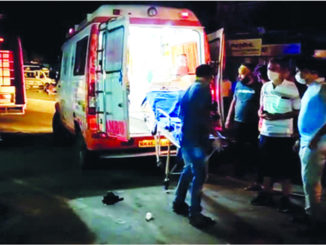
Virar (TIP): Thirteen coronavirus patients who were in the ICU have died in a fire at a hospital in Maharashtra’s Virar, about 70 km from state capital Mumbai. The fire broke out at around 3 am on April 23 in the ICU on the second floor of the four-storeyed Vijay Vallabh Hospital, an official said. “Around 90 patients were admitted to the hospital at the time of the incident,” Dilip Shah, CEO, Vijay Vallabh Hospital, told reporters. Distressing visuals showed people mourning their loved ones. Chaos unfolded soon after the incident as friends and family members gathered outside the hospital, waiting for an update about the patients. The incident comes as Maharashtra battles the second wave of coronavirus and an unprecedented surge in Covid infections. Over 67,000 fresh cases have been reported since yesterday. With a total caseload of over 40 lakh infections, Maharashtra is the worst-hit state in the country by the pandemic. Prime Minister Narendra Modi called the deaths in Palghar district’s Virar “tragic”. “Condolences to those who lost their loved ones. May the injured recover soon,” his office quoted him as saying in a tweet.
In a statement, Chief Minister Uddhav Thackeray’s office said he “has expressed sorrow” over the deaths. “He has directed that other patients undergoing treatment should not be harmed and should be relocated immediately. After learning about the fire, the Chief Minister himself has spoken to the concerned officials and asked them to first of all give priority to extinguishing the fire completely and ensure that treatment on other patients continues,” the official statement read. “The cause of the fire should be properly investigated. He also directed the administration to immediately inquire whether the fire safety was adequate and whether it was a private hospital,” it added. Speaking to reporters this morning, Maharashtra Health Minister Rajesh Tope said: “In today’s meeting with the Prime Minister, we will talk about oxygen, Remdesivir, adequate quantity of vaccines for the state…also the Virar fire incident, it is not national news.”
After he was interrupted by the reporter on the number of deaths in the fire, he said: “The state government will provide all financial assistance to all those affected.”
24 Covid patients ead as tanker leak disrupts oxygen supply in Nasik
Twenty-four COVID-19 patients died in Maharashtra’s Nashik on April 21 after an oxygen tanker leaked outside a hospital, disrupting supply to patients for around 30 minutes.
“As per current information, 24 people have died due to the interrupted supply of oxygen at the Zakir Hussain municipal hospital,” district collector Suraj Mandhare told NDTV.
All the victims were on ventilators and in need of constant oxygen supply. Zakir Hussain Hospital is a Covid-dedicated facility. Around 150 patients were either oxygen-dependent or on ventilators.
Visuals showed gas leaking from the tanker outside the hospital and dense white fumes covering the area rapidly.
Maharashtra Health Minister Rajesh Tope promised the government will look into the matter and conduct a thorough probe. “As per the information available with us, patients who were on ventilators at the hospital in Nashik have died. The leakage was spotted at the oxygen tank which was supplying oxygen to these patients. The interrupted supply could be linked to the deaths of the patients in the hospital,” Tope said.
Panic struck patients and their family members as the oxygen supply was stopped. Heart wrenching visuals showed families trying to help the patients as they gasped for breath.
Fire trucks were rushed to the spot to stop the leak. Videos showed water sprayed to control the leak; the firefighting team also wore protective gear.
Nagpur (TIP): Amidst a sharp spike in coronavirus cases in Maharashtra, Nagpur on Thursday became the first city in nine months to return to a state of complete lockdown. Maharashtra Chief Minister Uddhav Thackeray warned that such a step could be taken in other cities of the state as well. In New Delhi, NITI Aayog member Dr V K Paul described Maharashtra as a “significant worry”, and asked other states, especially those that are showing signs of resurgence including Delhi, not to take the virus “for granted”. The lockdown in Nagpur is for one week, between March 15 and March 21. Some essential activities, including a few industries, are partially exempt. “Nagpur has been witnessing an increase in Covid patients. Hence, it has been decided that all the areas under the jurisdiction of Nagpur Police Commissionerate will be under total lockdown between March 15 and 21,” Maharashtra Energy Minister Nitin Raut said in Nagpur on Thursday, March 11. “Except for 25 per cent attendance in government offices and industries, all other establishments and non-essential shops will remain closed for the period and police have been directed to ensure strict curfew in these areas,” he said. The last time a city was put under total lockdown was in June last year, when Chennai and three neighbouring districts had used this measure to curb the rise in cases. Restrictions had progressively been eased everywhere across the country after that. The decision to impose a lockdown came on a day Nagpur reported 2,150 new cases of coronavirus infections, the highest in five months. Maharashtra, which is in the midst of a big surge, recorded 14,317 new cases, the most since October 3. “There are states we have significant worry about. We are worried about Maharashtra. A strict lockdown is being imposed in Nagpur. It is a serious matter. It (the situation in Maharashtra) has two lessons for us – one, don’t take the virus for granted, and second, if we have to remain free of this virus, it is very important that containment, Covid-19 appropriate behaviour, as well vaccination has to be brought into facing this pandemic,” Dr Paul said. “I also want to bring in here a word of caution for Delhi and the neighbourhood – that it is seeing a rise in positivity. Be careful and watchful. We still have a huge population at risk. This pandemic is not yet over and we cannot lower our guard,” he said.
Source: Indian Express
Signup to our Newsletter!
Don’t miss out on all the happenings around the world