NEW YORK (TIP): Amid the ongoing Ukraine war, Jaipur Foot USA is looking at possibilities to hold limb fitment camps for needy soldiers and civilians injured in the conflict, a PTI report says.
Jaipur Foot USA Chairman Prem Bhandari along with Joint Secretary, Jaipur Foot USA Nishant Garg met the Consul General of Ukraine in New York Oleksii Holubov on Tuesday, May 4.
They also met New York City’s Commissioner for International Affairs Edward Mermelstein, Deputy Commissioner- Trade, Investment and Innovation for New York City Mayor’s Office for International Affairs Dilip Chauhan and General Counsel for the Mayor’s Office for International Affairs Sarah Friedman.
During the initial meeting, Bhandari raised the issue of the possibility of organizing Jaipur Foot camps to help soldiers and civilians injured in Ukraine war.
Bhandari said that given the current circumstances that may make holding camps in Ukraine difficult, the organization will explore options to hold a pilot project for such camps in countries neighboring Ukraine such as Poland.
To a question from The Indian Panorama, if the Jaipur Foot USA will provide their services to Russian soldiers and civilians, too, Mr. Bhandari said their organization believes in serving all people in need of their services.
To another question on whether or not the limbs will be provided at a cost or free, Mr. Bhandari said the limbs are provided absolutely free. “Since 1975, we have not charged even 10 cents”, Mr. Bhandari said.
The organization has been providing artificial limbs at zero cost to those in need, including children affected by armed conflicts.
He said he discussed the proposal with Padma Bhushan awardee D R Mehta, the founder and chief patron of Bhagwan Mahaveer Viklang Sahayata Samiti (BMVSS), the parent body of Jaipur Foot USA.
So far, over 1.90 million beneficiaries of BMVSS have been fitted/provided with Jaipur Foot limb, calipers, and aids and appliances in India as well as in 33 countries of Asia, Africa and Latin America, including through 85 international camps.
Bhandari said that in line with the Indian philosophy of Vasudhaiva Kutumbakam – the World is One Family – Jaipur Foot believes in this philosophy and inculcates it in its mission of helping those in need.
Jaipur Foot has zero per cent administrative cost, he said, adding that “BMVSS is a secular, non-religious, non-governmental, non-political, non-sectarian, non-regional and not for profit charitable organization set up to help the physically challenged, particularly the financially weak and underprivileged.”
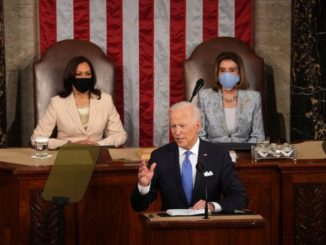
WASHINGTON , D.C. (TIP): Only a little more than a week ago, President Joe Biden’s first State of the Union address was focused largely inward, looking at the economic and public health woes besetting the U.S. But Russia’s invasion of Ukraine and the war that has ensued changed all that, says an AP Report. The speech and the war in Ukraine gave Biden both the platform and the urgent reason to talk about the fight between democracy and autocracy not as an abstraction but as an urgent reality.
Biden has repeatedly talked about the battle of between the values of liberal democracies and autocrats like Russian President Vladimir Putin as the greatest foreign policy test facing the world.
But Russia’s invasion of Ukraine — and the surprising unity that U.S. and European allies have shown in response — gave the president a chance to speak about the issue in a visceral way to a global audience. “In the battle between democracy and autocracy, democracies are rising to the moment, and the world is clearly choosing the side of peace and security,” Biden said “This is a real test. It’s going to take time. So let us continue to draw inspiration from the iron will of the Ukrainian people. “
He celebrated the West for coming together on hard-hitting sanctions that are “choking off Russia’s access to technology that will sap its economic strength and weaken its military for years to come” he announced news sanctions to close off U.S. air space to all Russian flights. and he paid tribute to Ukrainian people for “fighting back with pure courage.”
Biden found himself caught in the middle of culture wars for much of his first year in office. With his State of the Union, the president who has made his long career in politics living in the ideological middle — had moments where he sought to pivot to the center.
He dismissed those on the left of his party who have advocated for reducing funding of police in the midst of national reckoning on policing in Black communities. “We should all agree: The answer is not to defund the police. The answer is to fund the police with the resources and training they need to protect our communities.”
After months of Republicans beating him up on immigration, he allowed that “we need to secure the border and fix the immigration system.” But he also called on Republicans — and the American public — to look at the issue in a pragmatic way, alluding to the country’s worker shorter as the nation emerges for coronavirus pandemic.
“It’s not only the right thing to do — it’s the economically smart thing to do,” Biden said. Even as he appeals to the higher ideals of democracy, Biden believes that many Americans would process the war through prices at the pump instead of geopolitical risks.
It’s a jarring contrast in priorities as Ukrainians beg the U.S. and its allies for weapons to protect themselves, while the U.S. and Europe are focused first and foremost on energy costs in their own economies that are generally experiencing growth instead of an existential threat. “I’m taking robust action to make sure the pain of our sanctions is targeted at Russia’s economy — and I will use every tool at our disposal to protect American businesses and consumers,” Biden said as he announced the planned release of another 30 million barrels of oil from the U.S. petroleum reserve. Gasoline prices are averaging $3.61 a gallon, according to AAA. But most of that increase occurred over the past year, rather than the machinations of Russia. It’s a sign that Biden sees his own political fortunes resting on family budgets and reducing inflation, perhaps even more than a land war in Europe.
Biden almost said it — the motto that disappeared with his political agenda: “Build Back Better.” Or, BBB. West Virginia Sen. Joe Manchin, the decisive Democratic vote in the evenly split Senate, has pronounced BBB dead with nary a eulogy.
Biden in outlining his agenda said instead, “I call it building a better America.” So, what does that look like? It looks a lot like his prior agenda, except it’s been slimmed down.
Capping prescription drug prices stays in the mix. So do anti-climate change policies — which are now being portrayed as ways to lower energy costs for families. Financial support to limit childcare costs is still in, though the expanded child tax credit from the coronavirus relief package is out. Universal pre-kindergarten remains a priority, but the primary goal of all of these policies is no longer to win the future as Biden once claimed. It’s all about reducing inflation, the problem dogging Biden’s popularity in the here and now.
Biden said the country has moved beyond the pandemic, even if it still needs to stay vigilant against mutations. His big argument is that the country can’t change its past divides, though it must address the pandemic with a united front.
He noted that most of the country can now be mask-free. Most Americans are vaccinated, and more vaccines are available if needed. Schools are open and workers can return to offices. “COVID-19 need no longer control our lives,” said Biden, echoing statements he made last July 4 when the disease similarly appeared to be in the rear-view mirror.
The difference this time compared to the summer of 2020 is not only the increase in vaccinations but the lessons from the omicron and delta waves that caused infections and deaths to accelerate.
His remarks include variations on the word “job” more than a dozen times as it applied to people working. Inflation netted half a dozen mentions and forms of the word “price” in terms of costs charged were mentioned 10 times. “Pandemic” was mentioned eight times and COVID-19 appeared a dozen times.He tried to highlight partisan unity by deploying the phrase “Democrats and Republicans” three times. Russia’s invasion of Ukraine (20 mentions) supplanted China as a geopolitical rival, as China got just two mentions. And there was a clear villain: Putin was named 12 times. As Russian invasion of Ukraine grinds on, lawmakers showed their support for Ukrainians with their sartorial choices of blue and yellow. House Speaker Nancy Pelosi wore a blue suit adorned with a lapel pin of Ukraine and U.S. flags. Rep. Eric Swalwell made do with a blue scarf.
Sen. Mitt Romney of Utah, who appeared to have a large paper Ukraine flag pinned to his suit, had a bit of wardrobe malfunction. (His Ukraine flag fell off as he waded through the packed aisle to make his way to his seat.)
Many lawmakers — and guests — also had small Ukrainian flags. In a sign of support for the Ukrainian people, the First Lady Jill Biden has an embroidered appliqué of a sunflower, the national flower of Ukraine, sewn to the sleeve of her dress near her wrist.
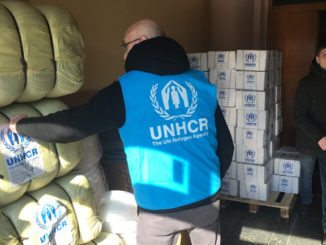
UNITED NATIONS (TIP): The United Nations and humanitarian partners, on March 1, launched coordinated emergency appeals for a combined US$1.7 billion to urgently deliver humanitarian support to people in Ukraine and refugees in neighboring countries. The escalation of conflict has triggered an immediate and steep rise in humanitarian needs as essential supplies and services are disrupted and civilians flee the fighting. The UN estimates that 12 million people inside Ukraine will need relief and protection, while more than 4 million Ukrainian refugees may need protection and assistance in neighboring countries in the coming months.
UN humanitarian chief Martin Griffiths said: “Families with small children are hunkered down in basements and subway stations or running for their lives to the terrifying sound of explosions and wailing sirens. Casualty numbers are rising fast. This is the darkest hour for the people of Ukraine. We need to ramp up our response now to protect the lives and dignity of ordinary Ukrainians. We must respond with compassion and solidarity.”
The Flash Appeal asks for US$1.1 billion to assist 6 million people inside Ukraine for an initial three months. The programme includes multipurpose cash assistance for the most vulnerable people, food assistance, water and sanitation, support to health care and education services, and shelter assistance to rebuild damaged homes. The plan also aims to deliver support to authorities to maintain and establish transit and reception centers for displaced people and prevent gender-based violence.
Aid groups will need safe and unimpeded access to all conflict-affected areas according to the core humanitarian principles of humanity, neutrality, impartiality and operational independence.
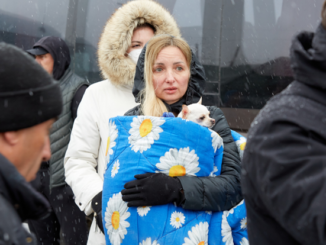
With more than half a million refugees having fled Ukraine to neighboring countries in the past five days alone, and many more expected, support is also required to meet the critical needs of those seeking protection outside the country.
The UN High Commissioner for Refugees, Filippo Grandi, said: “We are looking at what could become Europe’s largest refugee crisis this century. While we have seen tremendous solidarity and hospitality from neighboring countries in receiving refugees, including from local 2 communities and private citizens, much more support will be needed to assist and protect new arrivals.”
An inter-agency Regional Refugee Response Plan (RRP) for the Ukraine situation asks for a preliminary US$550.6 million to help refugees in Poland, the Republic of Moldova, Hungary, Romania and Slovakia, as well as in other countries in the region in order to help host countries provide shelter, emergency relief items, cash assistance, and mental health and psychosocial support to those who fled Ukraine, including people with specific needs, such as unaccompanied children.
By Alia El-Yassir, UN Women Regional Director for Europe and Central Asia
The military attack in Ukraine is undermining access to rights for all, and UN Women is deeply concerned about the rapidly mounting humanitarian crisis inside Ukraine and in the neighboring countries. We know that women and girls will be impacted differently and disproportionally, and we will seek to ensure that their specific needs are adequately met.
UN Women will use its expertise in Ukraine and neighboring countries to identify and respond to women and girls’ specific needs as they evolve. We will redirect our programming on the ground and share our gender expertise with the UN System and our humanitarian partners to help make humanitarian response plans and their implementation more gender responsive.
UN Women has been present in Ukraine since 2015, including with offices in the east. Even before the recent escalation, conflict raged in eastern Ukraine and women and girls were severely impacted. More than 1.5 million people – two-thirds women and children – were internally displaced and suffered from impeded access to healthcare, housing, and employment.
UN Women has been supporting social mobilization amongst women in the conflict-affected areas of eastern Ukraine, advancing their resilience, livelihoods and boosting their capacities and confidence, including by helping them to form self-help groups. We’ve also been working closely with civil society partners and women peacemakers, supporting them with their advocacy needs to ensure their voices are heard in decision-making on humanitarian aid provision, recovery, reconstruction and conflict resolution.
Since starting our work in Ukraine, the resilience of women and girls, as well as of other groups often left behind such as young people and members of the LGBTIQ community, have greatly impressed us and guided our efforts. We aim to continue to support the efforts of our partners, calling for their rights to be protected, including to benefit equally from aid and the allocation of resources, and to participate in decision making.
As the number of Ukrainians fleeing to neighboring countries rises, we will also engage in the refugee response there. With our field presence in Moldova, UN Women plans to conduct a rapid gender assessment. A similar needs assessment of Syrian women refugees in transit in the Western Balkans in 2015 laid bare the specific challenges facing women including, family separation, psychosocial stress and trauma, physical harm and injury, lack of access to sexual and reproductive health, exploitation and gender-based violence. Our work with Syrian refugees since 2015 and the internally displaced women of Ukraine has taught us good practices to help women and girls while they are in transit and as their displacement becomes more permanent. I join our Executive Director in her call to the international community “to keep women and girls at the center and to ensure that the humanitarian assistance planned and provided is gender-responsive.” I also echo statements by the UN SG and the High Commissioner for Human Rights who have called for an end to the military action which undermines human rights and humanitarian law. But no matter how the war evolves, we will continue to identify and respond to the needs of women and girls, ensuring their voices are heard, and work closely with our UN System and humanitarian partners, as well as women’s civil society organizations on the ground to help meet these needs.
(Originally published on UN Women’s Regional website for Europe and Central Asia)
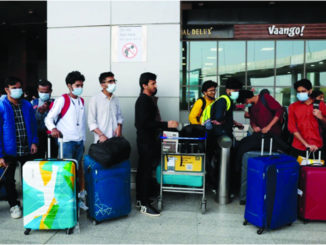
Family members of Indians trapped in Ukraine wait for their arrival at Delhi airport. (Photo: [Bilal Kuchay/Al Jazeera])
As soon as Chahat Yadav walked out of the airport and saw her family, she tossed away her luggage and ran towards them, crying inconsolably. Yadav’s father Narendra Kumar and other relatives had reached Delhi’s Indira Gandhi International Airport on Wednesday, March 2, to receive the second-year medical student studying in Ukraine’s Ternopil city. The relieved family could not hold back their emotions as they saw Yadav and huddled around her, hugging, kissing and in tears. Yadav was among nearly 200 Indian students who had just landed in New Delhi from Poland on Wednesday after trying for days to escape the Russian invasion of Ukraine that began last Thursday, forcing nearly 20,000 Indian students to flee the former Soviet nation. “The Ukraine military was only letting the Ukrainians and Europeans across the border,” Chahat told Al Jazeera as she held a bouquet of red flowers handed to those returning from Ukraine by Indian authorities at the airport. “But I don’t know why Indians were being stopped and pushed back,” the young student said, alleging many Indians were beaten by the Ukrainian forces as they tried to cross the border.
‘Sleepless nights’
When a Russian attack on Ukraine became imminent, Yadav’s father Kumar tried to book a ticket for her. But it was not easy with high demand and few flights. Kumar, who lives with his extended family in Gurugram on the outskirts of the Indian capital, bought an online ticket for Yadav for February 20 but the airline did not confirm the ticket. He later booked a transit flight to India via Qatar for February 23 at a steep cost of 50,000 rupees ($660). Yadav, who was double-vaccinated against coronavirus and was carrying her RT-PCR report along with her, was not allowed to board the flight to Qatar, Kumar said.
The problem: Yadav had taken an Indian-made Covaxin shot, which, Kumar said, was only “partially approved [by Qatar]”. “They refused to consider her RT-PCR report… A serology antibody test [was required] to board the flight,” he said.
When Russia invaded Ukraine the next day on February 24, Kumar said the thought of losing her daughter “gave him sleepless nights”.
“I would be lying if I said the thought of losing my daughter in Ukraine did not cross my mind. It happened several times and took away my sleep,” Kumar told Al Jazeera. “When I saw my daughter today, I couldn’t believe that she was finally back.”
Getting home was not easy for Yadav and other Indian students. On the evening of February 25, a day after Russian troops entered Ukraine, Chahat and her friends left Ternopil for Poland on a private bus they had hired for the trip.
They reached the Poland border around midnight, only to find a 35km line of vehicles desperate to leave the country. They had no choice but to cover the remaining distance on foot. Many students threw away some of their luggage to be able to make the journey.
They walked all night in bone-chilling cold and reached the border the next morning. But crossing into Poland was not easy, with thousands camped there. Yadav spent two nights at the border in sub-zero temperatures before she was allowed to cross.
‘Near-death experience’
Another medical student, Rajarshi Shyam, 21, reached Delhi on Wednesday. He had travelled from Ukraine’s Vinnytsia to Romania. “We faced problems at the border. It was very crowded. It was a near-death experience,” he told Al Jazeera.
Like Chahat, Rajarshi also had to walk for several kilometres on foot to reach the Romania border. He was also forced to dump some of his luggage, including his clothes, on the road.
Still, says Rajarshi, he was lucky to have crossed the border in his first attempt, unlike many of his friends who were either turned back or forced to spend days at the border.
Many Indian and African students have alleged facing racial discrimination and violence from Ukrainian officials at the borders.
Meanwhile, thousands of Indians remain stranded in Ukraine as Russia escalates its attack on cities such as Kharkiv, Ukraine’s second-largest, where many Indian students study medicine. -Source: Al Jazeera
No food, water: Over 600 students stranded in Ukraine city cry for help
Even as the Indian government has successfully evacuated thousands of citizens from war-torn Ukraine, over 600 students from the country stuck in the northeastern city of Sumy are crying for help. A student asserted that hope they will soon be evacuated as “continuous firing and bombing” by the Russian forces has left them completely terrified. They also complain of an acute shortage of food and water. Considering Sumy lies in the northeastern peninsula of Ukraine, it is difficult for the students to travel to the western border, from where they can reach neighbouring Poland, Hungary, Romania, Slovakia and Moldova, under the current circumstances.
Not a single Indian student has been evacuated from the Sumy State University, located close to the Russian border has been evacuated. “More than 600 Indian students are stuck here in Sumy university. The embassy has neither evacuated us nor given any assurance to that effect. Since the last five days, there has been continuous firing, shelling and bombing in the city,” Viraj Walde, who hails from Nagpur in Maharashtra, told news agency PTI.
“Before Russia’s invasion of Ukratine, temporary advisories were given to the students and the university informed us that those having exams can wait. Hence, we waited for the exams to start,” Walde added.
“But now, the students are terrified and their mental state is deteriorating. Food and drinking water supplies are depleting. Even the banks and ATMs are running out of cash,” he said.
Meanwhile, the Indian embassy has sent advisories asking them to use only the western border of Ukraine and reach the neighbouring countries of Poland, Hungary, Romania, Slovakia and Moldova. Since Sumy city is located in the north-eastern part of Ukraine, it is impossible for them to travel all the way to the western part of the country amidst the current situation.
“The border in Ukraine’s western part is located almost 1,500 kms away from Sumy, whereas the Russian border is just 50 kms away. The railway station in Sumy has also been closed due to bombing, and traveling via road is like committing suicide since Russian and Ukrainian forces are fighting against each other at such places,” he told PTI.
Signup to our Newsletter!
Don’t miss out on all the happenings around the world