NEW YORK (TIP): A March 25 Newsweek report has quoted the Turkish President Recep Tayyip Erdoğan as saying that Ukraine and Russia have reached an understanding on four of the six main topics of disagreement, including NATO, partial disarmament, collective security and Russian language, bringing the two warring countries a step closer to resolving the conflict.
Ragıp Soylu, Turkey bureau chief of Middle East Eye, reported the news in a tweet on Friday. However, there is still no agreement on Crimea and Donbas, two eastern areas of Ukraine that Russia sees as its own territory. In 2014, Russian troops annexed Crimea before claiming it as Russian land. Newsweek said it has contacted the ministries of foreign affairs of both Russia and Ukraine for comment on the peace talks. Turkey has been in contact with the negotiating teams from the two countries. The NATO member shares a maritime border with Ukraine and Russia in the Black Sea and has a strong relationship with both states. Although it has imposed some sanctions on Moscow since the war started on February 24, it has also offered to mediate the conflict. Erdogan was speaking at a press conference following the extraordinary summit of NATO leaders on Thursday and Friday.
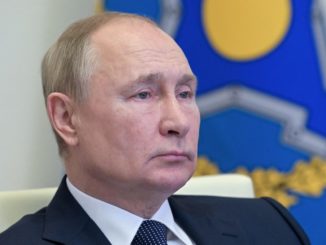
“We will continue our talks with both Mr. Putin and Mr. Zelensky from now on as well,” Erdoğan said, according to a statement from his office. “All our efforts aim to create an atmosphere of peace by bringing together the two leaders.”
“As is known, there is almost a consensus regarding such issues as NATO, disarmament, collective security and using Russian as official language in the technical infrastructure works during the ongoing process in Belarus,” Erdogan added. “However, there is the issue of Crimea and Donbas, which is impossible for Ukraine to consent to.”
The Turkish leader called Ukrainian leader Volodymyr Zelensky’s move on Monday to declare that Ukrainian compromises with Russia will be decided on by a referendum was “wise leadership.”
“Turkey’s strong support for Ukraine’s territorial integrity and sovereignty since 2014 is known by everyone. We have stated at every opportunity that we never have and never will recognize Crimea’s annexation, and we continue to do so,” Erdogan said.
“The destruction and humanitarian tragedy caused by the war are evident. The war-torn cities, hospitals, schools and houses that have nearly turned into wrecks, and weeping refugees, who packed all their assets in one suitcase, have all reminded us once again of the bitter face of wars.” Erdogan is due to tell Russian President Vladimir Putin: “Make an honorable exit in Ukraine and become an architect of peace,” Soylu reported. The Turkish president met with U.S. counterpart Joe Biden and other NATO leaders in Brussels on Thursday to discuss further sanctions on Russia and bolstering the alliance’s eastern flank. Biden will travel to a Polish town near the border of Ukraine later on Friday to show solidarity and show Western resolve against the Russian invasion.
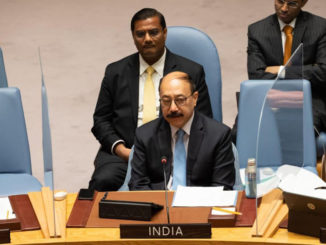
UNITED NATIONS (TIP): Speaking at a United Nations Security Council (UNSC) meeting on cooperation between the United Nations and the League of Arab States (LAS), Foreign Secretary Harsh Shringla said India and the Arab world share a “civilizational relationship”, as he welcomed the normalization of relations between countries in the region and reiterated India’s support for a two–state (i.e., Palestine and Israel) solution. Officials said the Foreign Secretary’s visit to the United Nations to attend the meeting was an indicator of the close relations India shares with the United Arab Emirates, given that the session about the U.N. cooperation with the League of Arab Nations is a “signature event” of the UAE ‘s presidency this month at the Security Council.
However, Mr. Shringla’s visit to New York amidst the ongoing war in Ukraine has fueled speculation that he would also take part in the discussions at the United Nations about the way forward in the crisis.
At the UNSC meeting on the LAS, Mr. Shringla called for greater policy alignment between the U.N. and the LAS, fostered by regular and frequent consultations. He also suggested comprehensive coordination at the field level and emphasized post–conflict peace building via reconstruction and economic development. Mr. Shringla suggested that all efforts ensure regional stability with a special focus on the welfare of women and minorities. “Both organizations must take concerted efforts to support the reactivation of the Middle East [West Asia] peace process in line with a two–state solution based on the internationally agreed framework and previous agreements between the parties,” Mr. Shringla said. “India welcomes the agreement for normalization of relations between countries in the region, which we believe will contribute to greater peace and stability in the region.” The UAE, along with several other Arab countries, began normalizing its relations with Israel, particularly with the signing of the Abraham Accords — a trilateral agreement among the U.S., the UAE and Israel, signed in 2020, during the administration of (former) U.S. President Donald Trump.
Even as the UNSC meeting was under way on Wednesday, a parallel session of the UNGA (a resumption of the Emergency Special Session from earlier in March) began. Ukraine introduced a draft resolution, proposed by France and Mexico, “Human Consequences of the Aggression Against Ukraine”, which holds Russia responsible for the crisis in Ukraine. Another draft UNGA resolution, sponsored by South Africa, a BRICS member–country, calls for “an immediate cessation of hostilities by all parties in the conflict”, without naming Russia.
New Delhi has received a large number of foreign leaders and delegations over the past week, and more are expected to follow, mostly from countries that are part of the sanctions regime against Russia, seeking to shift India’s position on the Russia–Ukraine issue. The Modi government has refused to support any resolution at the U.N. bodies that criticizesRussia and has suggested that it is considering a Russian offer of more oil at discounted prices.
Diplomatic sources confirmed that the surge in the number of visitors to Delhi by European and U.S. allies was mainly aimed at trying to ensure that the Modi government shifts its position on the Ukraine issue. NATO and the E.U. countries hope that New Delhi will consider voting in favor of at least one or both of the resolutions on the humanitarian situation before the UNGA.
“A vote in favor of one of the resolutions would be a sign that New Delhi is willing to shift its position,” said a diplomat, speaking on the condition of anonymity, adding that if India remains committed to the U.N. charter, territorial sovereignty principles and a need for a stop to the violence, it must also hold Russia to account for “being the aggressor”. A third resolution, sponsored by Russia, is in the works at the UNSC and faces widespread opposition for not referring to its invasion of Ukraine.
New Delhi (TIP)-The Ministry of External Affairs (MEA) on Thursday said Russia is not a major crude oil supplier for India and it “is always exploring all possibilities in the global energy markets” to bring home oil. The statement came amid reports that India is taking up Moscow’s offer of discounted crude oil and inching closer to setting up an alternative payments system to maintain its trade with Russia, even as the United States and its Western allies impose massive sanctions on the Kremlin for invading Ukraine. “We are always exploring all possibilities in global energy markets because of the situation of importing our oil requirements. I don’t think Russia has been a major supplier,” news agency ANI quoted MEA spokesperson Arindam Bagchi as saying. India is a major oil importer and as the war between Russia-Ukraine enters the fourth week, pressure on India to stop oil imports from Russia may increase with the West expected to slap another round of sanctions on Moscow. Speaking about the evacuation of Indians from war-torn Ukraine, the MEA spokesperson said India has brought back more than 22,500 of its citizens via alternative routes.
Kyiv/Lviv, Ukraine (TIP): Russian forces in Ukraine are blasting cities and killing civilians but no longer making progress on the ground, Western countries said on March 17, as a war Moscow was thought to have hoped to win within days entered its fourth week.
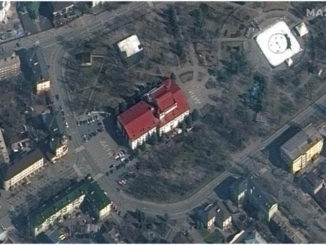
Ukraine said Russian forces had destroyed a theatre where women and children had been sheltering in the besieged southern port of Mariupol. An official in the Mariupol mayor’s office said a bomb shelter at the theatre had “withstood” and there were survivors, but details of casualties were still not known. Russia denied striking the theatre, which commercial satellite pictures showed had the word “children” marked out on the ground in front before it was blown up.
ViacheslavChaus, governor of Chernihiv, a northern city that has been intensely bombarded, said 53 civilians had been killed there in the past 24 hours. The toll could not be independently verified.
Although both sides have pointed to limited progress in peace talks this week, President Vladimir Putin, who ordered Russia’s invasion on Feb. 24, showed little sign of relenting. In a vituperative televised speech, he inveighed against “traitors and scum” at home who helped the West, and said the Russian people would spit them out like gnats.
Kyiv and its Western allies believe Russia launched the unprovoked war to subjugate a neighbour that Putin calls an artificial state carved out of Russia. Moscow says it is carrying out a “special operation” to disarm it and “denazify”. Heavily outnumbered Ukrainian forces have prevented Moscow from capturing any of Ukraine’s biggest cities so far despite the largest assault on a European state since World War Two. More than 3 million Ukrainians have fled and thousands of civilians and combatants have died.
‘STALLED ON ALL FRONTS’
Russia has assaulted Ukraine from four directions, sending two massive columns towards Kyiv from the northwest and northeast, pushing in from the east near the second biggest city Kharkiv, and spreading in from the south near Crimea.
But British military intelligence said in an update on Thursday that the invasion had “largely stalled on all fronts”, and Russian forces were suffering heavy losses from a staunch and well-coordinated Ukrainian resistance.
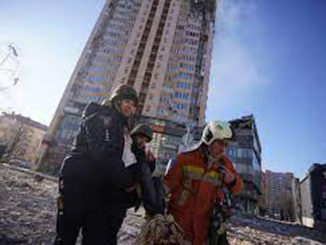
Northeastern and northwestern suburbs of Kyiv have been reduced to rubble by heavy fighting, but the capital itself has held firm, under a curfew and subjected to deadly nightly rocket attacks. At least one person was killed and three were wounded when a residential building was struck by a downed Russian missile, emergency services said on Thursday.
Amid the unrelenting fighting, both sides have spoken of progress at talks. Ukrainian officials have said they think Russia is running out of troops to keep fighting and could soon come to terms with its failure to topple the Ukrainian government. Moscow has said it is close to agreeing a formula that would keep Ukraine neutral, long one of its demands. Moscow said peace talks resumed on Thursday by videolink for a fourth straight day, discussing military, political and humanitarian issues. (Reuters)
Kyiv/Lviv (TIP): Russia’s foreign ministry said on March 17 that giving Ukraine air defence systems, as requested by Ukraine’s president in the U.S. Congress a day earlier, would be a destabilising factor that would not bring peace to the country.
Ukrainian President VolodymyrZelenskiy urged American lawmakers on Wednesday to do more to protect his country from Russia’s invasion, pushing for the imposition of a no-fly zone and asking for aircraft and defensive systems. “Such deliveries … would be a destabilising factor which will definitely not bring peace to Ukraine,” foreign ministry spokeswoman Maria Zakharova told a news briefing.
“In the long term, they could have much more dangerous consequences,” she added.
The United States and its allies want to avoid NATO being drawn into the Ukraine conflict, but they have supplied Kyiv with military aid since Russia invaded Ukraine on Feb. 24.
Moscow calls its offensive in Ukraine a “special operation” to destroy its southern neighbour’s military capabilities and capture what it regards as dangerous nationalists. Slovakia’s Prime Minister Eduard Heger on Sunday said NATO could discuss sending his country’s Soviet-made S-300 air defence system to Ukraine. Reuters
Kiev (TIP): Ukraine has legalisedcryptocurrency as the country received donations worth tens of millions of dollars from individuals and groups to help it fight the Russian invasion. Ukraine President VolodymyrZelensky has signed the law that creates conditions for further formation of the legal field in the market of virtual assets. The new market will be regulated by the National Commission on Securities and Stock Market. The signed law determines the legal status, classification and virtual assets ownership rights and determines the list of providers of virtual assets and conditions of their registration. Until now, the Ministry of Digital Transformation has been developing the legal framework in this area. “The Ministry of Digital Transformation is also actively working to amend the tax and civil codes of Ukraine to fully launch the virtual assets market,” the government said in a statement. The signing of the crypto law is an important step towards bringing the cryptocurrency sector out of the shadows and launching a legal market for virtual assets in Ukraine. (IANS)
Berlin (TIP): Invoking the fall of the Berlin Wall, Ukrainian President Volodymyr Zelenskyy on March 17 urged German Chancellor Olaf Scholz to tear down what he called a wall between “free and unfree” Europe and stop the war in Ukraine. Speaking to the Bundestag by video link, Zelenskyy appealed to Scholz to restore freedom to Ukraine, tapping Germany’s collective memory with reference to the historic 1948-1949 Berlin Airlift and the fall of the Berlin Wall in 1989.
Zelenskyy described a new wall “in the middle of Europe between freedom and unfreedom”, which he said Germany had helped build, isolating Ukraine with its business ties to Russia and its previous support for the Nord Stream 2 gas pipeline.
“And this wall is getting bigger with every bomb that falls on Ukraine, with every decision that is not taken,” he added. Germany last month halted the Nord Stream 2 Baltic Sea gas pipeline project, designed to double the flow of Russian gas directly to Germany. Recalling former U.S. president Ronald Reagan’s appeal to Mikhail Gorbachev, the last Soviet leader, to tear down the Berlin Wall, Zelenskyy told German lawmakers: “That’s what I say to you dear Chancellor Scholz: destroy this wall.” “Give Germany the leadership role that it has earned so that your descendants are proud of you. Support freedom, support Ukraine, stop this war, help us to stop this war,” he added.
Lawmakers in the Bundestag welcomed Zelenskyy with a standing ovation and the chamber’s vice president, Katrin Goering-Eckardt, told him: “Your country has chosen democracy, and that’s what (Russian President) Vladimir Putin fears.” She said Putin was trying to deny Ukraine’s right to exist, adding: “But he has already failed with that.” (Reuters)
WASHINGTON, D.C. (TIP): Observing that India walks a difficult middle ground on the Ukraine crisis, two Democratic lawmakers Wednesday urged India to condemn Russian military operations against Ukraine which they said have no place in the 21st century.
In a letter to India’s Ambassador to the US Taranjit Singh Sandhu, Congressman Ted W Lieu and Congressman Tom Malinowski said, ”Though we understand India’s relationship with Russia, we are disappointed with your government’s decision to abstain from the UN General Assembly’s March 2 vote.” They said Russia’s unprovoked invasion of Ukraine undermines the rules-based order, ”and by invading Ukraine, Russia is trying to destroy a set of rules that protect India as well”.
”India’s historic support for the UN Charter and the principles of territorial integrity gives us hope that India will join other democracies to support Ukrainian sovereignty in the face of Russian aggression,” the two Democratic lawmakers wrote.
They said they ”deeply value” the relationship between the United States and India. ”Ät the same time, we are disappointed that India has taken this approach in response to Russia’s actions.”
”We understand that India walks a difficult middle ground, but Russia’s actions have no place in the 21st century. Many countries who have relationships with Russia did the right thing and condemned the Russian government – they chose the right side of history and so should India,” they said. “We hope that India will move away from its current position that places blame on both sides and acknowledge that Russia is the aggressor in this conflict,” Lieu and Malinowski wrote in the letter dated March 16. The two lawmakers wrote a separate letter to Pakistan Ambassador to the US, Majeed Khan urging Islamabad to condemn the Russian invasion of Ukraine. ”We are disappointed with your government’s decision to abstain from the UN General Assembly’s March 2 vote. We are also disappointed that Prime Minister Imran Khan announced bilateral trade agreements with Russia following its invasion of Ukraine,” they said. ”The Prime Minister’s decision to proceed with his visit to Moscow, at a moment when the world was uniting in support of Ukraine, ran counter to the international community’s efforts to reaffirm Ukraine’s territorial integrity and call out Russia as the aggressor,” the two lawmakers wrote.
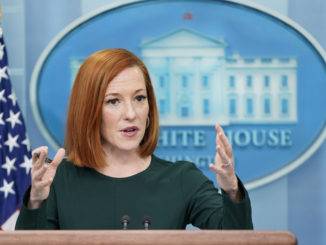
WASHINGTON, D.C. (TIP): The Biden administration is working to build a global coalition far beyond G7 and NATO partners, the White House has said. Some of the biggest countries like China, India, Brazil and Mexico are not part of America’s economic warfare against Russia, but that does not undermine the efforts of the Biden administration against Moscow, White House Press Secretary Jen Psaki told reporters on Monday, March 14. “Not just China, but some of the biggest countries in the world like India or Brazil, some countries in Latin America like Mexico, they are not part of this economic warfare against Russia. Is this something that undermines the effort from the White House and European countries?
“I would say it doesn’t undermine our efforts. We have been working to build a global coalition far beyond the G7 and our NATO partners and had a great deal of success in that. And every country has to decide where they want to stand, where they want to be as we look and the history books are written,” Psaki said during her daily news conference.
“As we have seen, the impact of the president’s leadership on the global stage and the economic consequences that have been put into place have led Russia and the Russian economy to be on the brink of collapse. And there’s no question that over time, that will have an impact,” she said in response to a question. China is unlikely to be very helpful to Russia during these economic sanctions, Psaki said.
“I think what we are looking at here, one is if China were to decide to be an economic provider or to take additional steps there to Russia, they only make up 15 to 20 per cent of the world’s economy. The G7 countries make up more than 50 per cent. So, there are a range of tools at our disposal and coordination with our European partners should we need to use them,” she said.
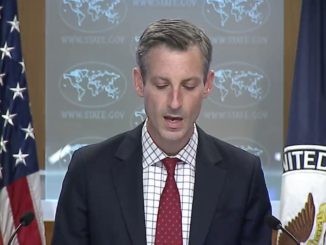
But this is an area that the United States is watching closely, Psaki said, asserting that there would be consequences for China if it provides military supply to Russia. At the Foggy Bottom headquarters of the State Department, its spokesperson Ned Price said the US was watching very closely the extent to which China or any country in the world provides materials, economic, financial, rhetorical or otherwise, to this war of choice that Russian President Vladimir Putin is waging against Ukraine and its people.
“And we have been very clear, both privately and publicly, with Beijing that there would be consequences for any such support,” Price told reporters. “Russia and China, when you combine their GDPs, it’s something like 25 per cent of global GDP. When you combine the GDP, the economic might of the United States, the European Union, our allies in the Indo-Pacific, our other allies and partners that have joined us, well over 50 per cent,” he said. “So, there is not a country out there that would be able to fully extricate Moscow from this. The only thing that could relieve the pressure, which could extricate, in a meaningful way, Moscow from the morass it has created for itself, is for Putin to change course, to de-escalate and to end the violence,” Price said.
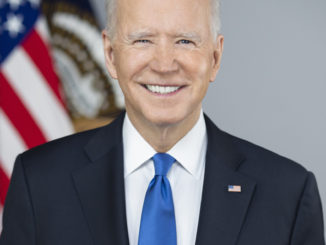
WASHINGTON, D.C. (TIP): US President Joe Biden Wednesday, March 16, called his Russian counterpart Vladimir Putin “a war criminal”, as Russia’s invasion of Ukraine continues with devastating consequences for civilians. “I think he (Putin) is a war criminal,” Biden told reporters at a White House event. He was responding to a question if Putin is a war criminal. In response to another question, he ruled out calling Putin. “No,” he said. Soon thereafter White House Press Secretary Jen Psaki said the president’s words speak for themselves.
“I think the President’s remarks speak for themselves. He was speaking from his heart and speaking from what we’ve seen on television, which are barbaric actions by a brutal dictator through his invasion of a foreign country,” she said. Earlier in the day, Biden announced another USD800 million security assistance to Ukraine taking the total to USD1 billion in less than a week.
“Putin is inflicting appalling, appalling devastation and horror on Ukraine, bombing apartment buildings, maternity wards, hospitals. I mean, it’s God awful. I was speaking about this with our commander behind me here, General Milley. I mean, it just is amazing. Yesterday, we saw reports that Russian forces were holding hundreds of doctors and patients hostage in the largest hospital in Mariupol,” he said. “These are atrocities. They’re an outrage to the world, and the world is united in our support for Ukraine and our determination to make Putin pay a very heavy price. America is leading this effort, together with our allies and partners, providing enormous levels of security and humanitarian assistance that we’re adding to today, and we’re going to continue to do more in the days and weeks ahead,” Biden said. The United States, its allies and partners, he said, are crippling Putin’s economy with punishing sanctions.
“That’s going to only grow more painful over time with the entire NATO and EU behind us, and many other countries. What’s at stake here are the principles that the United States and the United Nations and across the world stand for. It’s about freedom,” he said.
“It’s about the right of people to determine their own future. It’s about making sure Ukraine will never be a victory for Putin, no matter what advances he makes on the battlefield. The American people are answering President Zelenskyy’s call for more help, more weapons for Ukraine to defend itself, more tools to fight Russian aggression, and that’s what we’re doing,” he said.
The new security package to Ukraine includes 800 anti-aircraft systems to make sure the Ukrainian military can continue to stop the planes and helicopters that have been attacking their people and to defend their Ukrainian airspace, he said.
“At the request Of President Zelenskyy, we have identified and are helping Ukraine acquire additional longer range anti-aircraft systems and the munitions for those systems. Our new assistance package also includes 9,000 anti-armor systems. These are portable high accuracy shoulder mounted missiles that the Ukrainian forces have been using with great effect to destroy invading tanks and armored vehicles,” he said. It will include 7,000 small arms, machine guns, shotguns, grenade launchers, to equip the Ukrainians, including the brave women and men who are defending their cities as civilians and around the countryside as well, he added. The security assistance also includes drones. “We are not doing this alone. Our allies and partners have stepped up to provide significant shipments of security assistance and will continue to help facilitate these deliveries as well,” he said.
WASHINGTON, D.C. (TIP): The United States remains in touch with Indian leaders and continues to encourage them to work closely with it to stand up against the Russian invasion of Ukraine, the White House said Wednesday, March 16. “As you know, we remain in touch through a range of channels from our national security team with leaders in India and continue to encourage leaders to work closely with us to stand up against President Putin’s invasion of Ukraine,” White House Press Secretary Jen Psaki told reporters at her daily news conference. Over the past two weeks, the Biden administration has shown an understanding of India’s position on Russia given the complexity of its ties with Russia and over-dependence on Moscow for military and security needs.
During a Congressional hearing last week, Admiral John Christopher Aquilino, Commander of US Indo-Pacific Command, described India as a tremendous partner and said that the mil-to-mil relationship is probably at its highest point.
“From the US perspective, I think India is an absolutely essential partner as we think about our strategy in the Indo-Pacific, and both in terms of how we’re building coalition partners as well as dealing with potential adversaries.
“We recognize that India has a complicated history and relationship with Russia,” Ely Ratner, Assistant Secretary of Defense for Indo-Pacific Security Affairs, told members of the House Armed Services Committee during a separate hearing.
WASHINGTON, D.C. (TIP): The United States on Wednesday, March 16, welcomed an International Court of Justice order that asked Russia to immediately suspend its military operations in Ukraine. Describing it as a significant ruling, State Department Spokesperson Ned Price said that the ICJ “clearly and unequivocally” ordered Russia to immediately suspend its military operations. “The Russian Federation shall immediately suspend military operations that it commenced on 24 February on the territory of Ukraine,” presiding judge Joan Donoghue told the International Court of Justice, pending the final decision in the case.
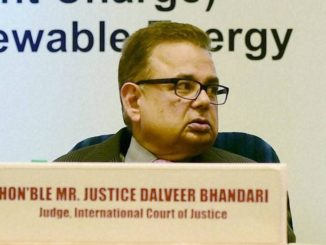
India’s judge, Justice Dalveer Bhandari, voted against Russia. The court order was supported by 13 judges while two voted against it. This includes Vice-President Kirill Gevorgian from Russia and Judge Xue Hanqin from China.
“We welcome the court order and call on the Russian Federation to comply with the order, immediately cease its military operations in Ukraine, and to establish unhindered humanitarian access in Ukraine,” Price said. In its ruling, the court – which plays a vital role in peaceful settlement of disputes under the UN Charter – stressed the need for States to act in conformity with their obligations under international law, including the laws of war, Price said. “And the Court expressed deep concern about the extreme vulnerability of the civilian population of Ukraine, the numerous civilian deaths and injuries that have resulted from the Kremlin’s actions, and the significant material damage, including the destruction of buildings and infrastructure,” he said.
The Court further noted its profound concern with the Russian government’s use of force and emphasized the Court’s acute awareness of “the extent of the human tragedy that is taking place in Ukraine as well as the “continuing loss of life and human suffering”.
The Court also observed that it did not possess any evidence substantiating Russia’s claims that genocide had been committed by Ukraine in the Donbas region, he said. Judge Xue Hanqin from China opposed the order.
Ukraine’s contention that the Russian Federation’s allegation of genocide against Ukraine is just “an excuse for Russia’s unlawful aggression” raises doubt that this is a genuine case about genocide,” she wrote in her dissent note. “It appears that the acts complained of by Ukraine namely Russia’s recognition of the independence of the Luhansk and Donetsk regions of Ukraine and Russia’s military operations in Ukraine cannot be directly addressed by the interpretation and application of the provisions of the Genocide Convention, as the issues they have raised are concerned with the questions of recognition and use of force in international law,” she said. Meanwhile, India’s Ministry of External Affairs on Thursday, March 17, said judges at the International Court of Justice vote in their individual capacity, a day after Indian judge Dalveer Bhandari voted against Russia at the United Nations’ highest court.
The impact of the Ukraine war on global interconnectedness is a cause for worry in the post-World War order
By Suhasini Haidar
Nearly three weeks into the Russian war on Ukraine, the cost to India is still to be counted. While some are focusing on how India’s refusal to criticize Russia’s actions, and the string of abstentions at the United Nations, would affect its relations with the West and its Quad partners (the United States, Australia and Japan), others are watching the economic costs that the unprecedented sanctions of the U.S. and the European Union will have on Indian trade, energy and defense purchases. However, the outcome that should worry New Delhi and other like-minded countries the most, apart from the devastating consequences for the Ukrainian nation, is the impact the Ukraine crisis is having on the global world order, which is fragmenting in every respect of global interconnectedness — in terms of international cooperation, security, military use, economic order, and even cultural ties.
The UN and Security Council
To begin with, the global order has broken down and events in Ukraine have exposed the United Nations and the Security Council for their complete ineffectiveness. Russia’s actions in Ukraine may, in terms of refusing to seek an international mandate, seem no different from the war by the United States in Iraq in 2003, Israel’s bombing of Lebanon in 2006 and the Saudi-coalition’s attacks of Yemen in 2015. But Ukraine is in fact a bigger blow to the post-World War order than any other. The direct missile strikes and bombing of Ukrainian cities every day, exacting both military and civilian casualties, and the creation of millions of refugees, run counter to every line of the UN Charter preamble, i.e., “to save succeeding generations from the scourge of war…”, “to practice tolerance and live together in peace with one another as good neighbors”, as well as Articles 1 and 2 of the ‘Purposes and Principles’ of the United Nations (Chapter 1).
The fact that Russian President Vladimir Putin broadcast his decision to “launch military operations” on Ukraine at the same time the Russian envoy to the United Nations was presiding over a UN Security Council discussion on the Ukraine crisis, speaks volumes for the respect the P-5 member felt for the proceedings. A vote of the international commons, or the UN General Assembly (UNGA), that decried Moscow’s actions, was brushed off in a way that was even easier than when the U.S. did when it lost the UNGA vote in 2017 over its decision to move the U.S. Embassy to Jerusalem.
Meanwhile, in their responses, other P-5 members such as the United States, the United Kingdom and France did not seek to strengthen the global order either, imposing sanctions unilaterally rather than attempting to bring them to the UN. Clearly, Russia would have vetoed any punitive measures, but that should not have stopped the attempt. Nor are the surge in weapons transfers to Ukraine a vote of confidence in the UN’s power to effect a truce.
Whither nuclear safeguards
The next point is Russian recklessness with regard to nuclear safety in a country that has suffered the worst impacts of poor safety and planning following the 1986 Chernobyl disaster (when Ukraine was part of the Soviet Union), which is a challenge to the global nuclear order. Russian military’s moves to target areas near Chernobyl and shell buildings near the Zaporizhzhia nuclear power plant ( also Europe’s largest), show an alarming nonchalance towards safeguards in place over several decades, after the U.S.’s detonation of atomic bombs over Hiroshima and Nagasaki in 1945 led to the establishment of the International Atomic Energy Agency (IAEA) in 1956. The world must also consider the cost to the nuclear non-proliferation regime’s credibility: Ukraine and Libya that willingly gave up nuclear programs have been invaded, while regimes such as Iran and North Korea can defy the global order because they have held on to their nuclear deterrents. There are also the covenants agreed upon during the global war on terrorism, which have been degraded, with the use of non-state actors in the Ukraine crisis. For years, pro-Russia armed militia operated in the Donbas regions, challenging the writ of the government in Kyiv. With the arrival of Russian troops, the Ukrainian President, Volodymyr Zelensky, has invited all foreign fighters who are volunteering to support his forces to the country. This seeks to mirror the “International Brigades” in the Spanish Civil War of the 1930s, comprising foreign volunteers from about 50 countries against forces of Spanish military ruler Francisco Franco.
However, the role of foreign fighters has taken on a more sinister meaning after 2001 and al Qaeda, when western recruits joined the Islamic State to fight Syrian President Assad’s forces. British Foreign Secretary Liz Truss’s recent statement that she would “absolutely support” British veterans and volunteers joining the Ukraine war against Russia has since been reversed by the British Foreign Office, and it is hoped that other countries around the world, including India, make firm efforts towards preventing such “non-state actors” from joining a foreign war.
Economic actions
Economic sanctions by the U.S., the U.K. and the European Union (EU) also point to a fragmentation of the global financial order. While analysts have pointed out that the sanctions announced so far do not include some of Russia’s biggest banks such as Sberbank and Gazprombank and energy agencies (in order to avoid the disruption of oil and gas from Russia), the intent to cut Russia out of all monetary and financial systems remains. From the eviction of Russia from SWIFT payments, to the cancellation of Mastercard, Visa, American Express and Paypal, to the sanctioning of specific Russian businesses and oligarchs and pressure on Western businesses (McDonalds, Coca-Cola, Pepsi, etc.) operating in Russia to shut down, the arbitrary and unilateral nature of western sanctions rub against the international financial order set up under the World Trade Organization (that replaced the General Agreement on Tariffs and Trade, or GATT).
The obvious fallout of this “economic cancel culture” will, without doubt, be a reaction — a pushback from Russia and an exploration of alternative trading arrangements with countries such as China, India and much of the Eastern Hemisphere which continue to trade with Moscow. For the S-400 missile defense deal, for example, New Delhi used a rupee-rouble mechanism and banks that were immunized from the U.S.’s CAATSA sanctions (or Countering America’s Adversaries Through Sanctions Act) for advance payments. Russian banks will now use the Chinese “UnionPay” for online transactions. Gradually, the world may see a “non-dollar” system emerge which would run banking, fintech and credit systems separately from the “dollar world”.
Isolation by culture
Finally, there is the western objective, to “isolate” Russia, socially and culturally, that rails against the global liberal order. While several governments including the U.S., the U.K. and Germany have persistently said that their quarrel is not with Russian citizens but with their leadership, it is clear that most of their actions will hurt the average Russian citizen. The EU’s ban of all Russian-owned, Russian-controlled or Russian-registered planes from EU airspace, and Aeroflot’s cancellation of international routes, will ensure that travel to and from Russia is severely curtailed. Some of this isolation of its citizens will work to the favor of an increasingly authoritarian Kremlin. Mr. Putin’s response to the banning of Russian channels in Europe and its allies has been to use the western media ban as a pretext to ban opposition-friendly Russian channels as well. The “isolation” extends to art and music: in the past two weeks the Munich Philharmonic fired its chief conductor and New York’s Metropolitan Opera let a Russian soprano, Anna Netrebko, go because they would not criticize the war. The Bolshoi Ballet’s performances in London and Madrid were similarly cancelled. The perils of this comprehensive boycott of Russia are not without historical precedent. Speaking to his Parliament this week, Mr. Zelensky invoked British Prime Minister Winston Churchill’s “Fight to the End” speech, delivered at the House of Commons in June 1940, to speak about Ukraine’s commitment to fight Russia. European onlookers would do well to also remember Churchill’s other famous speech, “The Sinews of Peace”, delivered in the United States in 1946, when he first referred to the “Iron curtain coming down” between Soviet Russia and Western Europe. “The safety of the world requires a new unity in Europe, from which no nation should be permanently outcast,” Churchill had warned, although his words went in vain, and the world suffered the consequences of the Cold War for the next four decades.
New Delhi needs to ponder
The events over the past two weeks, set in motion by Russia’s declaration of war on Ukraine, have no doubt reversed many of the ideas of 1945 and 1990, fragmenting the international order established with the UN, ushering in an era of deglobalization and bringing down another Iron Curtain. India’s abstentionist responses and its desire not to be critical of any of the actions taken by the big powers might keep Indians safe in the short term. But in the long term, it is only those nations that move proactively to uphold, strengthen and reinvent the global order that will make the world a safer place, even as this war that promises few winners rages on.
MOSCOW (TIP): Russia’s foreign ministry said on Thursday, March 17 that giving Ukraine air defense systems, as requested by Ukraine’s president in the U.S. Congress a day earlier, would be a destabilizing factor that would not bring peace to the country, a Reuters report says. Ukrainian President Volodymyr Zelenskiy urged American lawmakers on Wednesday, March 16, to do more to protect his country from Russia’s invasion, pushing for the imposition of a no-fly zone and asking for aircraft and defensive systems.
“Such deliveries … would be a destabilizing factor which will definitely not bring peace to Ukraine,” foreign ministry spokeswoman Maria Zakharova told a news briefing. “In the long term, they could have much more dangerous consequences,” she added.
The United States and its allies want to avoid NATO being drawn into the Ukraine conflict, but they have supplied Kyiv with military aid since Russia invaded Ukraine on Feb. 24. Moscow calls its offensive in Ukraine a “special operation” to destroy its southern neighbor’s military capabilities and capture what it regards as dangerous nationalists.Slovakia’s Prime Minister Eduard Heger on Sunday said NATO could discuss sending his country’s Soviet-made S-300 air defense system to Ukraine.
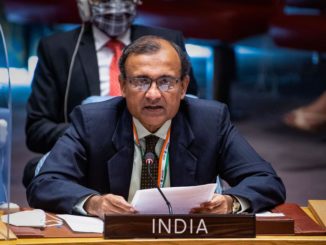
UNITED NATIONS (TIP): Amidst the ongoing crisis in Ukraine, the government has decided to extend the tenure of India’s envoy to the United Nations T.S. Tirumurti for three months. According to an announcement by the appointments committee of the Cabinet, Mr. Tirumurti, who was due to retire on March 31, will now remain in the position at the rank of Secretary to the government from April 1 to June 30, 2022. At least two officials aware of the decision said the extension was granted due to the government’s desire to keep a “steady hand” and “ensure continuity” in India’s presence at the United Nations Security Council during a crucial period with the Russian war in Ukraine, where India is completing its two-year tenure this year. Another official also cited a precedent, as India’s former UN envoy Hardeep Puri (now Union Minister for Petroleum and Housing) had been given a year’s extension by the previous UPA government led by then Prime Minister Manmohan Singh. At the time, India had completed a year in its two-year tenure at the UN Security Council (2011-2013), and Mr. Puri’s tenure was extended, so as to maintain continuity in India’s position at the UNSC. However, it is unclear why Mr. Tirumurti’s tenure has not been extended till December, when India’s current term at the UNSC will end. An official said the extension appeared to have been made in a “phased manner” and that a further extension could not be ruled out, if required.
Mr. Tirumurti, a 1985-batch IFS officer assumed the UN Permanent Representative post in May 2020 and has been a prominent voice on issues including the COVID-19 pandemic, the Taliban takeover in Afghanistan, Russian war in Ukraine, and more recently, for a strong speech criticizing a UN resolution adopting an “International day to combat Islamophobia”, which, he said, “elevated phobia against one religion” while ignoring other “non-Abrahamic” religions. In the past month, he has articulated India’s position on the Ukraine conflict, where despite considerable pressure from the U.S. and European allies, the government has refused to vote for any resolution criticizing Russia’s actions and abstained from three votes at the UNSC and two at the UN General Assembly on resolutions brought by them. In the next few days, the UNSC is also expected to vote on a resolution brought by Russia on humanitarian issues pertaining to Ukraine’s eastern provinces which are under Russian control, and India’s vote and the UN envoy’s Explanation of vote (EoV) will be watched closely.
During its present tenure at the UNSC, India has been asked to head two important committees, the Taliban Sanctions Committee and Counterterrorism Committee, which Mr. Tirumurti has chaired, and he also happened to be President of the UNSC in August 2021, during the Taliban takeover of Kabul, when an Indian-drafted UNSC resolution 2953 was adopted. India will again assume the rotating presidency of the UNSC for the month of December 2022.
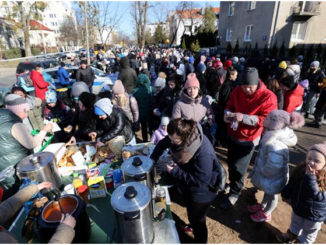
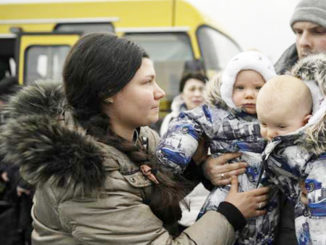
Berlin (TIP): Germans have offered up 300,000 private homes to house refugees from Ukraine following Russia’s invasion of the country, Germany’s interior ministry said on March 10. The ministry is cooperating with the non-profit gut.org AG and home rental company AirbnbInc’s non-profit arm Airbnb.org to assign refugees to housing offers, it said on March 10. More than 2.3 million people have fled from Ukraine since the invasion, according to the United Nations Refugee Agency (UNHCR). Most are women and children, as able-bodied men have been ordered by the Kyiv government to stay home to fight. As of Wednesday, just over 80,000 Ukrainian refugees had been registered in Germany, with more arriving every day. Many of them arrive in Berlin by train or bus, which has prompted the German capital to set up temporary accommodation at its shuttered Tegel airport to house up to 3,000 people. From there, refugees would be distributed to longer-term homes, in Berlin or elsewhere in Germany.
Lviv (TIP): Russia’s war in Ukraine entered the third week on March 10 with none of its stated objectives reached despite thousands of people killed, more than two million made refugees, and thousands forced to cower in besieged cities under relentless bombardment.
Ukraine said Russia was carrying out “genocide” by bombing a children’s hospital in the city of Mariupol. Russia said the reports were “fake news” as the building was a former maternity hospital that had long been taken over by troops.
Moscow’s stated objectives of crushing the Ukrainian military and ousting the pro-West elected government of President VolodymyrZelenskyy remained out of reach, with Zelenskyy unshaken and Western military aid pouring across the Polish and Romanian borders. The UK Defence Ministry said on Thursday that a large Russian column northwest of Kyiv had made little progress in over a week and was suffering continued losses. It added that as casualties mount, Russian President Vladimir Putin would have to draw from across the armed forces to replace the losses.
Putin has said the advance by his forces in Ukraine was going according to plan and to schedule. Russia calls its incursion a “special operation” to disarm its neighbour and dislodge leaders it calls “neo-Nazis.”
Western-led sanctions designed to cut the Russian economy and government from international financial markets were also beginning to bite, with the Russian share market and rouble plunging and ordinary Russians rushing to hoard cash.
‘Hospital bombed’
Zelenskyy accused Russia of carrying out “genocide” after Ukrainian officials said Russian aircraft bombed a children’s hospital on Wednesday, burying patients in rubble despite a ceasefire deal for people to flee Mariupol.
“What kind of country is this, the Russian Federation, which is afraid of hospitals, is afraid of maternity hospitals, and destroys them?” Zelenskyy said in a televised address late on Wednesday.
The attack, which authorities said injured women in labour and left children in the wreckage, underscored U.S. warnings that the biggest assault on a European state since 1945 could become increasingly attritional after Russia’s early failures.
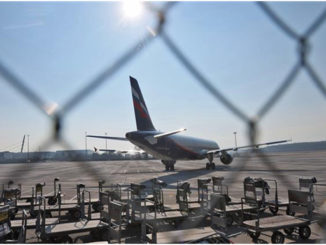
Zurich (TIP): Around a dozen Russian aircraft are stranded at Swiss airports by the closure of airspace in many European countries to punish Moscow for its invasion of Ukraine, Switzerland’s civil aviation authority estimated on March 9.
“I expect that it will be around a dozen aircraft in Switzerland,” a spokesperson for the Federal Office of Civil Aviation said. This included EuroAirport near Basel, which straddles the Swiss-French border.
There were two aircraft in Geneva, including an Aeroflot passenger jet, and none in Zurich, he said, adding that not all airports had responded to his survey. Swiss broadcaster SRF said its investigation had found private aircraft believed to belong to Russian oligarchs were on the ground at EuroAirport. It said one of the aircraft was believed to belong to Chelsea Football Club owner Roman Abramovich, and had flown to Basel from London at the end of February. Another was thought to belong to billionaire Viktor Vekselberg, it said.
Neither could be reached for immediate comment on the report. The airport declined comment.
Switzerland adopted European Union sanctions against Russia and closed its airspace to Russian aircraft and airlines on Feb 28. Abramovich and Vekselberg are not personally sanctioned in Switzerland but would still be affected by the airspace closure.
Russia’s super-rich oligarchs have been the focus of Western pressure following the invasion of Ukraine, due to their links to the Kremlin.
Moscow says its actions are a “special operation” aimed at disarming Ukraine and removing leaders it casts as dangerous. Reuters
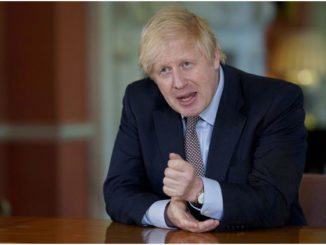
London (TIP): British Prime Minister Boris Johnson hosts Canadian Prime Minister Justin Trudeau and Dutch PM Mark Rutte at Downing Street in London on March 7, as the trio visit a Royal Air Force (RAF) base to meet members of the UK armed forces.
Downing Street said it marks the start of a week of “focused engagement” with world leaders to mobilise a global outcry at the “atrocities of Russian aggression” into practical support for Ukraine.
The three prime ministers will convene for separate bilateral meetings and a joint trilateral meeting to discuss the next steps to counter attacks ordered by Russian President Vladimir Putin on Ukrainian cities. “In the time since Russia’s illegal and brutal assault we have seen the world stand up tall in solidarity with the indomitable people of Ukraine,” said Johnson.
“UK aid is already reaching those who need it most, delivering essential supplies and medical support. While only Putin can fully end the suffering in Ukraine, today’s new funding will continue to help those facing the deteriorating humanitarian situation,” he said.
It comes as the UK said it has allocated an additional USD 100 million directly to the Ukrainian government budget to mitigate financial pressures created by Russia’s unprovoked and illegal invasion.
This grant could be used to support public sector salaries, allowing critical state functions to keep operating, as well as to support social safety nets and pensions for the Ukrainian people. The grant will be provided through the World Bank Multi-Donor Trust Fund, established last week to support the Ukrainian government.
It is said to be on top of the UK training 22,000 soldiers, supplying 2,000 anti-tank missiles, providing 100 million pounds for economic reform and energy independence, and providing 120 million pounds of humanitarian aid including 25 million pounds of match funding to the Disasters Emergency Committee (DEC) appeal.
The move comes as the UK Parliament is for a vote on Monday on the government’s amendments to the Economic Crime (Transparency and Enforcement) Bill, which fast-tracks action against Russian oligarchs close to the Kremlin and with UK assets.
The UK Foreign, Commonwealth and Development Office (FCDO) said that streamlining current legislation will allow the government to move faster and harder when sanctioning billionaires and businesses associated with the Russian government.
“These amendments give us the chance to bring even more crippling sanctions against Putin and his regime,” said UK Foreign Secretary Liz Truss. “The UK has already led the way by bringing in the largest and strongest package of sanctions in history in response to illegal and unprovoked Russian aggression against Ukraine,” she said.
The UK has imposed what it brands as the “largest sanctions package in history” on Russia for its invasion of Ukraine.
Most recently, this included a full asset freeze and travel ban imposed against AlisherUsmanov and Igor Shuvalov, two of Russia’s leading oligarchs with significant interests in the UK and close links to the Kremlin. The sanctions also cover Russian President Putin, Sergey Lavrov and more than 300 individuals and entities at the heart of Putin’s regime, and Belarus.(PTI)
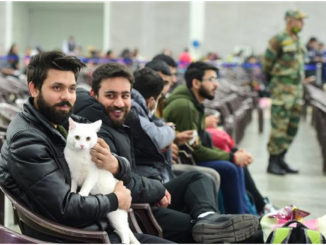
New Delhi (TIP)- Covering hundreds of miles across Ukraine by bus and rail to Poland, the last remaining batch of Indian students from Sumy are on their way home. India operated three flights on Thursday to bring the batch of about 600 students back with the first flight for first, second and third-year students. The second flight is for fourth and fifth-year students and the third for students with pets, fifth and sixth-year students and for any Indians who may have been left behind. They are expected to reach India in the early hours of Friday. The Indians had to change buses midway and were then offered a free train ride by the Ukrainians for the Poland border.
Meanwhile, Russian President Vladimir Putin remained defiant despite the US claiming that Moscow was in shock over the weight of sanctions. Putin said the sanctions would rebound against the West and Russia would solve its problems and emerge stronger.
“These sanctions would have been imposed in any case. There are some questions, problems and difficulties, but in the past we have overcome them and we will overcome them now. In the end, this will all lead to an increase in our independence, self-sufficiency and our sovereignty,” Putin added.
As of now, Ukraine has become a pawn between Russia and the West. The war over Ukraine is, furthermore, a reflection of the prevailing myopia of current leaders who seem doomed to repeat past follies.
Russia’s attack on Ukraine, which began from the third week of February, shows no sign of ending. It has, in the meantime, led to a humanitarian crisis of gigantic proportions. The number of refugees streaming into countries adjoining Ukraine has revived memories and images of the vast numbers who sought refuge in Europe following the wars in Syria, Iraq and North Africa at the turn of the century. No one would have anticipated that a similar situation would arise just a few years later in Europe. The number of refugees has already approached, and possibly even crossed, the two million mark; and this is apart from the several thousands who have been killed inside Ukraine. It is a vivid demonstration of the callousness of human nature, more so considering the underlying cause of the conflict. It is most surprising that nothing concrete is being done by powerful nations in Europe and across the world to try and end the conflict through a process of reconciliation and negotiation. What the conflict, though, has exposed is the irrelevance of the United Nations in dealing with situations of this kind — becoming in many ways a modern day variant of the ill-fated League of Nations created at the end of the First World War.
The primary concern of European nations and the United States appears to be the economic impact of the conflict — rather than the human costs involved – consequent on the ongoing war in Ukraine. The International Monetary Fund has already issued a warning of the serious global impact of the war, which includes a surge in energy and commodity prices, and being taken seriously by the U.S., almost all European nations and many countries across the globe. Leading western economists have been pontificating on the economic consequences of the war, and the ways and the means to reduce its impact. Similar concerns about the human costs of this unnecessary war are nowhere to be found. Least of all to be found are suggestions on how best to end the conflict, or at least bring about a truce to reduce the human toll that keeps steadily rising.
It may appear tendentious to think that there are leading elements in the West who believe that by waging a prolonged ‘sanctions war’ against Russia of the kind currently being pursued — rather than seeking a compromise by which to end the genocide in Ukraine — an option had become available to checkmate Russia, which under Russian President Vladimir Putin was posing a threat to the West. Russia deserves to be rightfully condemned for being in violation of the United Nations Charter and invading Ukraine.
There are, however, far more efficacious means to checkmate Russian moves than persisting with a prolonged period of ever widening economic sanctions aimed at crippling Russia’s economy. This may be an ideal way to achieve a ‘regime change’ in Moscow, getting citizens to rise against the regime due to the shortages and other restrictions imposed by a ‘sanctions’ regimen. It is, however, not the best way to end a conflict in the shortest possible time, and avert a greater human tragedy that a prolonged conflict entails. Sanctions, no doubt, do and will affect Russia and its economy, but it has had little impact on Russia’s war effort. Meanwhile, Ukraine, or more particularly the citizens and the residents of Ukraine, are innocent victims of the tussle between the West and Russia.
For the present, each new sanction only strengthens Russia’s determination to compel Ukraine to cut its links with the West. No country within the North Atlantic Treaty Organization (NATO), or even those outside it, is at present willing to send forces in support of Ukraine. Waiting for the eventual collapse of the Russian state while leaving Ukraine and its citizens to the not-so-tender mercies of the Russian juggernaut is tantamount to becoming an accessory to genocide. While concerns that the conflict in Ukraine may lead to a nuclear conflict do appear exaggerated, what is taking place is a tragedy of a kind that should not befall any nation.
There are, no doubt, certain special circumstances that make the problem inherently difficult and complicated. Ukraine, for instance, is not just another country as far as Russia is concerned. It was part of the erstwhile Soviet Union till 1991, and even at the time there were inherent tensions in the relationship. Ukraine in turn has long struggled with ethno-linguistic tensions encompassing western and central Ukraine and the Russian-speaking Eastern Ukraine. Western Ukraine is also largely Catholic while the east is largely Russian Orthodox. Even after its split from Russia in 1991, Ukraine has had problems in maintaining a semblance of neutrality between Russia and the West.
Aggravating the situation is the fact that Ukraine was, in a sense, a child of a series of ‘Color Revolutions’ that shook parts of the Russian Empire in 1991 — when Russian influence was at its lowest ebb after the Second World War. Matters got further aggravated when a pro-Russian President of Ukraine — who was elected in a relatively fair election — was ousted and had to flee the country. Following this, Russia intervened and annexed Crimea and took aggressive measures to reinforce Russian influence in Donetsk and Luhansk, regions of eastern Ukraine which have large Russian populations.
The ties between Russia and Ukraine are thus in a sense both historical and political. The declared ambition of NATO is to deter Soviet expansionism and, hence, any nation becoming a part of NATO is deemed by Russia to be anti-Russia. Russia has, from time to time, made it apparent that under no circumstances would it countenance NATO membership for Ukraine, and that this would be perceived as a hostile act towards Russia.
As of now, Ukraine has become a pawn between Russia and the West. The war over Ukraine is, furthermore, a reflection of the prevailing myopia of current leaders who seem doomed to repeat past follies. An extension of NATO by the inclusion of Ukraine at this time — a country with a complex history and polyglot composition — was hardly a compelling necessity at this juncture, but badly misreading the situation (for even as far back as 2007 at the Munich Security Conference where I was the Indian delegate, Mr. Putin had made it amply clear that ‘NATO extension… represents a serious provocation that reduces the level of mutual trust’). Since then, Mr. Putin has given no indication whatsoever of any change in his attitude on this issue.
This misreading of Mr. Putin’s personality has been a cardinal error, and Ukraine is paying a very heavy price. Ukraine’s President Volodymyr Zelensky, who openly flaunts his pro-West inclination, is hardly a match for President Putin in terms of strategy and tactics.
While Mr. Zelensky employs grandstanding as a strategy, Mr. Putin is a born fighter. Anyone who has had an opportunity to interact closely with Mr. Putin would never have attempted to challenge him in the manner that Mr. Zelensky has been doing these past few weeks. Currently, an unlikely hero to his fellow countrymen, he could well go down in history as someone who has caused the ruin of Ukraine. Had he had played his cards properly, he could have prevented the situation from reaching the present impasse and still maintained Ukraine’s independence. To say the least, this is extremely unfortunate for Ukraine, and much of the world as well. A change of tack is clearly called for. At this time, the cardinal objective should be to save human lives and the existence of Ukraine. Ukraine’s ambitions to join NATO, which are in any case a distant dream, need to be put on the back burner. For the present, any extension of NATO further to the east should be given up, and, instead, an effort made to rebuild some of the bridges that existed between Russia and the rest of Europe at the beginning of this century. Alongside this, the West should hit the ‘pause button’ on initiating ‘Color Revolutions’ which have led to more conflicts than peace in Europe or elsewhere. More than anything else, leaders of nations and countries need to understand and assimilate the lessons of history, to avoid the kind of critical mistakes that have been evident during the current Russia-Ukraine crisis and war.
(M.K. Narayanan is a former Director, Intelligence Bureau, a former National Security Adviser and a former Governor of West Bengal)
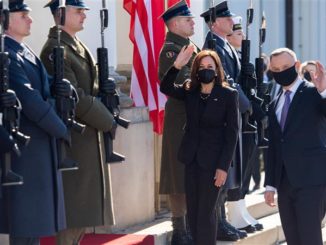
WARSAW (TIP): There should be an investigation into Russia’s conduct in the war in Ukraine, US Vice President Kamala Harris said on Thursday, March 10, during a visit to the Polish capital Warsaw, as she condemned what she said were “atrocities of unimaginable proportions”, says an AP report. There should be an investigation and we should all be watching. The eyes of the world are on this war and what Russia has done in terms of aggression and atrocities. Kamala Harris, US Vice President said. Speaking alongside Polish President Andrzej Duda at a press conference in Warsaw, where she is demonstrating US support for NATO’s eastern flank allies, Harris expressed outrage over the bombing Wednesday, March 9, of the maternity hospital and scenes of bloodied pregnant women being evacuated, as well as other attacks on civilians. She stopped short of directly accusing Russia of having committed war crimes. “Absolutely there should be an investigation and we should all be watching, and I have no question that the eyes of the world are on this war and what Russia has done in terms of this aggression and these atrocities,” she told a news conference. Russia calls its actions in Ukraine a special military operation to disarm its neighbor.
Formula One will no longer race in Russia after the sport terminated its contract with the promoter of the Russian Grand Prix, it said on Thursday, in response to the country’s invasion of neighbouring Ukraine. The event, which was set to move to a new track outside St Petersburg next year from its current Sochi Olympic park venue, had a contract until 2025. The sport announced the cancellation of the 2022 race, originally scheduled for Sept 25, last week. “Formula One can confirm it has terminated its contract with the Russian Grand Prix promoter meaning Russia will not have a race in the future,” a statement from the sport’s commercial rights holder, which decides the calendar, said. Formula One’s move to effectively pull out of Russia comes after the sport’s governing body, the FIA, on Tuesday condemned the country’s invasion of Ukraine but said Russian and Belarusian drivers could still take part in its competitions in a neutral capacity. British federation Motorsport UK on Wednesday banned Russian and Belarusian license holders from racing in the country.
BEIJING (TIP): A property downturn, slowing economy and war in Ukraine loom large over this week’s annual convening of China’s legislature, with policymakers expected to focus on shoring up faltering growth. The rubber-stamp parliament starting March 4 in Beijing gathers some 3,000 members of the National People’s Congress (NPC) for highly choreographed meetings over bills, budgets and personnel changes. The ruling Communist Party uses the opportunity to tout its achievements while also setting the country’s economic blueprint and GDP target for the year ahead. Much of the NPC’s agenda is unknown until during — or even after — the multi-day meeting, with many sessions taking place behind closed doors. But this year, concerns are bound to centre on the country’s sluggish economic growth, partly down to a crunch in the crucial property sector — which makes up as much as a quarter of national output. Stringent “zero-Covid” measures including harsh lockdowns and closed borders have also been a major blow to manufacturing hubs, tourist centres and port cities. Meanwhile, the Russian invasion of Ukraine has raised the prospect of spiking food and oil prices, with fears over supplies of crucial commodities from the region being affected. Commerce Minister Wang Wentao admitted to journalists this week that China’s economy faces “huge” pressure this year.
GDP and stability
Beijing traditionally announces its new economic growth target at Premier Li Keqiang’s annual “state of the nation” speech at the NPC, followed by his rare -but heavily stage-managed – press conference. China’s GDP growth slowed sharply in the final months of 2021 despite an earlier pandemic bounceback, as it grappled with tepid domestic demand and a property downturn. The country’s communist leaders have long based their legitimacy on the argument that their model of government represents economic growth and continuity for China’s massive population. But as much of the rest of the world now reopens, China is increasingly out of step, as continued Covid-19 restrictions weigh on consumer confidence. Maintaining stability will be crucial as the Communist Party gears up for a pivotal meeting this fall the -20th party congress -that is expected to easily secure President Xi Jinping a third term. In 2020, there was no GDP target set at all, and last year Li announced a modest goal of “above six percent”. Amid the unpredictability, analysts expect Beijing to announce a similarly open and attainable target this year. “We expect the growth target to be set at ‘above five percent’,” UOB economist Ho Woei Chen said in a recent report, adding that pace would match the past two years’ average of 5.1 percent. Iris Pang, ING’s chief economist for Greater China, expected the range could be higher after the country easily exceeded last year’s target. And infrastructure would probably form a key part of the government’s support for the economy, predicted ANZ Research senior China strategist Zhaopeng Xing. He expected “double-digit growth in infrastructure investment” in the first quarter, on top of tax cuts and the central bank’s earlier interest rate cuts. (AFP)
Moscow (TIP): Companies and investors across the world faced Russian dilemmas on March 4 as they weighed up an offer from Moscow to fast-track their exits from the country and allow them to hand over holdings to local managers until they return. The options offered by First Deputy Prime Minister Andrei Belousov came one week since Russia’s invasion of Ukraine and a day after French bank SocieteGenerale warned that it could be stripped of its Russian operations, which sent a chill through companies seeking to stay put in the country. Belousov outlined three alternatives for foreign firms. “The company continues to work fully in Russia,” he said in a statement. “Foreign shareholders transfer their share to be managed by Russian partners and can return to the market later,” he added, and: “The company permanently terminates operations in Russia, closes production and dismisses employees.” No route comes without risks. Those staying on could face a backlash in Western markets where the public have rallied to Ukraine’s cause, those transferring shares could be handing over the keys with few guarantees, while those quitting may face a big loss at best, or might have to sell for a nominal sum. Russia’s invasion has prompted the United States and Europe to impose sweeping sanctions, affecting everything from global payments systems to a range of hi-tech products, which make doing business in Russia increasingly complex and precarious. For ordinary Russians, it means deep economic pain. Some multinationals such as energy majors BP and Shell have already said they are quitting, while others have held off signing off from Russia for now. TotalEnergies has said it would stay but would not invest more. IKEA announced plans to close stores on Thursday but said it would pay its 15,000 Russian staff for at least three months.Italian tyre maker Pirelli said on Friday it was constantly monitoring developments through a specially constituted “crisis committee”, adding it did not expect to halt either of its two Russian plants. Its rival, Finland’s NokianTyres, said last week it was shifting production of some product lines out of Russia. But there are no easy fixes even for those looking for the exit, when there are limited trading counterparties. (Reuters)
Signup to our Newsletter!
Don’t miss out on all the happenings around the world