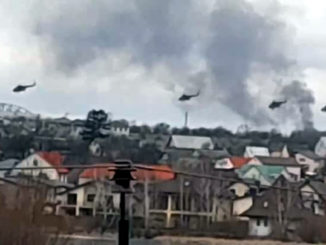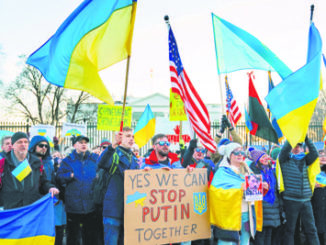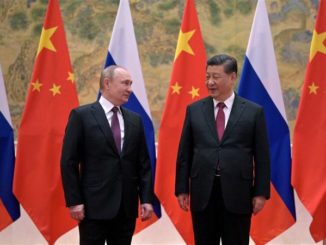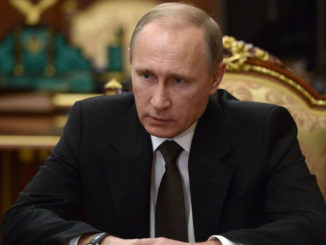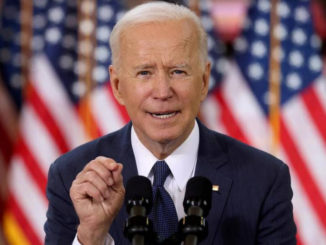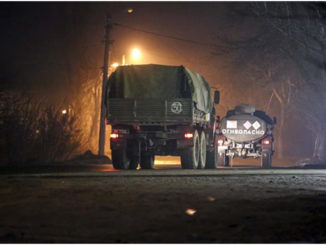
Beijing (TIP): China could invade Taiwan after seeing the West’s response to Russia’s brutal war in Ukraine, a leading historian has warned, Daily Mail reported. Professor of European studies at the Oxford University, Timothy Garton Ash, said that Xi Jinping taking over the island militarily would be a ‘worst case scenario’, the report said. The political writer claimed that the Communist leader will be thinking: “If comrade Vladimir (Putin) can get away with it in Ukraine, maybe I’ll have a go.” He also warned Putin’s ‘minimal aim’ is to bring a new iron curtain down over eastern Europe because he wants to create a new empire, Daily Mail reported. Ash’s warnings came a day after Taiwan’s air force scrambled its fighter planes to warn away nine Chinese aircraft in its air defence zone. At the same time, Putin’s forces continued to sweep across Ukraine and reached the outskirts of Kiev by Friday morning. Ash said the devastating conflict – which has already seen hundreds slaughtered – is just the beginning of Russia’s plans. He told BBC Question Time: “He (Putin) has effectively already invaded Belarus, which is just next to Ukraine. Because he put all his forces in there and they’re there for as long as he wants them to be there. “So I think the minimal aim of Vladimir Putin is to create a new iron curtain down the Eastern frontier of NATO so that countries like Belarus, Ukraine, Moldova and Georgia will be stuck in the Russian empire whether they like it or not,” as per the report.
An order that does not accommodate Russia’s concerns through genuine negotiation cannot be stable in the long term
By P.S. Raghavan
“It is too early to say what Mr. Putin’s endgame is, and how costly this adventure will be, in terms of lives and destruction, as well as in its political and economic impact. Without justifying the manner in which Russia has chosen to “right” the perceived “wrongs”, it has to be said that this crisis results from a broken security architecture in Europe. A sustainable security order has to reflect current realities: it cannot be simply an outgrowth of the Cold War order, and it has to be driven from within. Also, a European order that does not accommodate Russia’s concerns through genuine negotiation cannot be stable in the long term. France’s President Emmanuel Macron has been making this point forcefully, arguing for Europe to regain its strategic autonomy. He has called NATO “brain-dead” and said that Europe, as a “geopolitical power” should control its own destiny, regaining “military sovereignty” and re-opening a dialogue with Russia, managing the misgivings of post-Soviet countries.”
The commencement of Russian military action in Ukraine brings down the curtain on the first act of a bizarre drama that has been playing out over the past eight months. At the heart of it is the instability in the post-Cold War security order.
The first act began with a meeting between U.S. President Biden and Russia’s President Vladmir Putin in June last year, promising to reverse seven years of relentless U.S.-Russia acrimony. Mr. Biden’s decision to reach out to Mr. Putin signaled a U.S. geopolitical rebalancing, seeking a modus vivendi with Russia and disengagement from conflicts in Europe and West Asia, to enable a sharper U.S. focus on domestic challenges and the external challenge from its principal strategic adversary, China.
These were Putin’s terms: Mr. Putin saw this reengagement as an opportunity to revive Russia’s flagging economy and expand its freedom of political action globally. However, he wanted this engagement on equal terms. Russia would cooperate in this geopolitical rebalancing if its concerns are met, so that it does not constantly have to counter moves to probe its territorial integrity and constrain its external influence – which is how Russia sees the strategic posture of the North Atlantic Treaty Organization (NATO) and U.S. policies. Russia has repeatedly articulated its grievances: that NATO’s expansion violated promises made prior to the breakup of the Soviet Union; that Ukraine’s accession to NATO would cross Russia’s red lines; and that NATO’s strategic posture poses a continuing security threat to Russia. NATO’s expansion as a politico-military alliance, even after the dissolution of the Soviet Union and the Warsaw Pact, was at the U.S.’s initiative. It was intended to temper European ambitions for strategic autonomy from the sole superpower and to counter Russia’s resurgence. Recent experience shows it may not be succeeding in either goal.
NATO’s weakened glue: NATO countries today span a geography of uneven economic development and a diversity of political traditions and historical consciousness. Moreover, the original glue that held NATO together — ideological solidarity (free world against communist expansion) and an existential military threat — dissolved with the collapse of communism and the Warsaw Pact. There is no ideology to oppose and threat perceptions vary, depending on geographical location and historical experience. This heterogeneity means a diversity of interests. American leadership has normally succeeded in papering over differences, but the growing ambitions of countries is making this increasingly difficult. The current crisis in Ukraine has illustrated the divisions and exposed the limitations of the U.S.’s ability to bridge them. The irony is that the divisions are of the U.S.’s making. Its pressure on NATO in 2008 to recognize Ukraine’s membership aspirations and its encouragement for a change of government in Kyiv in 2014, provoked the Russian annexation of Crimea. The subsequent armed separatist movement in eastern Ukraine (Donbas) led to the Minsk accords of 2014-15, which provided for a special status for this region within Ukraine.
Ukraine considers this an unfair outcome, and the U.S. has supported its efforts to reinterpret the accords to its advantage. While some European countries supported this line, France and Germany — which brokered these agreements — have periodically tried to progress implementation, in the effort to break the impasse and resume normal engagement with Russia, which serves their economic interests.
In recent months, the U.S. signaled that it would support the full implementation of the Minsk accords, but apparently found it difficult to shake the entrenched interests sufficiently to make it happen. This may have finally convinced Mr. Putin that his concerns would not be met through negotiations.
Energy security: U.S. interests have also divided NATO on energy security. For Germany, the Nord Stream 2 (NS2) Russia-Germany gas pipeline is the cheapest source of gas for its industry. Others deem it a geopolitical project, increasing European dependence on Russian energy. This argument masks self-serving interests. Ukraine fears the diminution of gas transit revenues, and also that if its importance for gas transit declines, so will Europe’s support in its disputes with Russia. The U.S.’s “geopolitical” argument against NS2 dovetails neatly with its commercial interest in exporting LNG to Europe, reinforced by U.S. legislation for sanctions against companies building gas pipelines from Russia. Increasing LNG exports to Europe is explicitly stated as a motivation for the sanctions. European countries that oppose NS2 are ramping up their LNG import infrastructure to increase imports from the U.S.
The manner in which NATO countries implement the promised harsh sanctions against Russia will demonstrate whether, how much and for how long, this crisis will keep them united.
It is too early to say what Mr. Putin’s endgame is, and how costly this adventure will be, in terms of lives and destruction, as well as in its political and economic impact. Without justifying the manner in which Russia has chosen to “right” the perceived “wrongs”, it has to be said that this crisis results from a broken security architecture in Europe. A sustainable security order has to reflect current realities: it cannot be simply an outgrowth of the Cold War order, and it has to be driven from within. Also, a European order that does not accommodate Russia’s concerns through genuine negotiation cannot be stable in the long term. France’s President Emmanuel Macron has been making this point forcefully, arguing for Europe to regain its strategic autonomy. He has called NATO “brain-dead” and said that Europe, as a “geopolitical power” should control its own destiny, regaining “military sovereignty” and re-opening a dialogue with Russia, managing the misgivings of post-Soviet countries.
Outlook for India: India has to brace itself for some immediate challenges flowing from the Russian actions. It will have to balance the pressure from one strategic partner to condemn the violation of international law, with that from another to understand its legitimate concerns. We were there in 2014 and managed the pressures. As Russia-West confrontation sharpens further, the U.S. Administration’s intensified engagement in Europe will inevitably dilute its focus on the Indo-Pacific, causing India to make some tactical calibration of actions in its neighborhood. Geopolitics, however, is a long game, and the larger context of the U.S.-China rivalry could, at some point in the not-too-distant future, reopen the question of how Russia fits into the European security order.
(The author is a former Ambassador to Russia and former Chairman of the National Security Advisory Board)
WASHINGTON, D.C. (TIP): Russian President Vladimir Putin on Monday, February 21, signed decrees to recognize Ukraine’s regions of “Donetsk and Luhansk People’s Republics” as “independent”, escalating the tension in the region and increasing fears of Moscow’s invasion of Ukraine. He also ordered Russian troops into eastern Ukraine in what the Kremlin called a “peacekeeping” mission in the Moscow-backed regions.
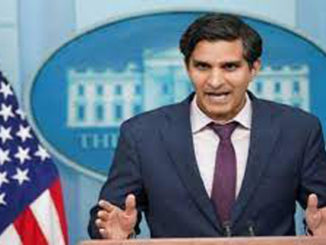
Singh, who is Deputy National Security Advisor for international economics and Deputy Director of the National Economic Council, made his second appearance in the White House Press Room in a matter of days.
White House Press Secretary Jen Psaki said that he is “back by popular demand” given the key role Singh is playing in this Russia policy of the administration. “Russia’s long previewed invasion of Ukraine has begun and so too has our response. Today, the president (Joe Biden) responded swiftly and in lockstep with allies and partners. The speed and coordination were historic… It took weeks and months to mount a decisive response,” Singh told reporters in his opening remarks.
Singh said that after consultations overnight with Germany, Russia’s Nord Stream 2 natural gas pipeline will not become operational.
That is a USD 11 billion investment in a prized gas pipeline controlled by Russia that will now go to waste, and it sacrifices what would have been a cash cow for Russia’s coffers, he said.
It is not just about the money, this decision will relieve Russia’s geostrategic chokehold over Europe through its supply of gas, and it’s a major turning point in the world’s energy independence from Russia. “Second, we’ve demonstrated the potency of our financial sanctions and make no mistake, this is only the sharp edge of the pain we can inflict.
The standoff between Russia and US-Europe over Ukraine has come at an inopportune time for India. As a UN Security Council (UNSC) member, India is contributing to ensuring peace, security and stability in the world. This role has opportunities for enhancement due to the inability of the permanent five (P5) to act in unison. In the case of Ukraine, the P5 are threatening to go to war with each other, with the UK, US, France on one side, and Russia supported by China on the other. This takes matters totally out of the hands of the UNSC, making it redundant. The Ukraine crisis is curtailing Indian role in the UNSC. New Delhi is doing its best to remain relevant. India is developing relations with the EU and other European countries. This initiative leads India to support the Normandy process and the Minsk agreement, which are European efforts to engage Russia on Ukraine. India would prefer the European way of dealing with Russia than the tough posture which the US wants NATO to adopt. European countries will toe the US line if war erupts. That reduces the efficacy of India’s European initiative presently. India is calling for diplomacy as that will defuse the tension and also give India more leeway.The Russian posture on Ukraine and the reaction to it, strengthened the Sino-Russian partnership. The Xi-Putin summit at the Beijing Winter Olympics lent firmness and robustness to that relationship. China is challenging India, has overthrown extant agreements and increased its military threat. This does not augur well. For long, India depended on Russia for strategic partnership. It still largely depends on Russia for military hardware. While the defense relationship is mutually beneficial, the Sino-Russian axis curtails the Russian ability and intent to support India as in the past.
Russia’s confrontation with NATO will lead to rigorously imposed sanctions. India has delicately negotiated to stay out of CAATSA (Countering America’s Adversaries Through Sanctions Act) with the purchase of S-400 Triumf missile systems which may not work when a war-like situation prevails. Countries like Germany have stark choices on economic issues, and India will be faced with similar choices on defense supplies from Russia with tougher sanctions that the US is ready to impose. India-Russia trade of about $9 billion annually is about 1% of India’s global trade. The significance is the impact on defense, energy, grain delivery and prices.
Curtailing of defense supplies will impact India’s ability to respond to China. The diversification of defense purchases that India achieved would come into play but without the competitive pricing and transfer of technology of Russian equipment.
Strategically, Russia will not attempt to restrain China. In exchange for Chinese support for Russian intent in Ukraine, they would concur with Chinese initiatives in the Indo-Pacific. Russia’s nuanced divergence on India could melt away if the Ukraine crises blows up as both NATO and Russia seek clear Indian support which India hesitates to provide.
The Ukraine crisis brings Russia and China closer and diverts the attention of Western powers towards Ukraine. The Europeans would have a lesser appetite for the Indo-Pacific once they are embroiled in European matters. France held its Indo-Pacific conference right after the Munich Security Conference this month. They wish to continue to deal with the region while engaged with Russia as well. However, the EU member countries do not have diverse abilities and their Indo-Pacific polices are likely to be on hold till the Russian challenge is settled. At present, US naval forces are at strength in the South China Sea and the broader Indo-Pacific as Taiwan is at stake. They will need allies Japan and AUKUS to play a role. They could well call upon India to act in the Indo-Pacific even if India is not directly involved in an operation around Taiwan.
This is not different from what India is doing in the Indo-Pacific at present, but India expects support for its position with China on the border issue, as was discussed at the Quad foreign ministers’ meeting in Australia recently. Indian activity, in the midst of the Ukraine crisis, may not be ignored by China and Russia.
India’s energy security is a matter of worry as there is already a $20 per barrel increase in the price of oil over the estimates used by the Economic Survey 2022. This impacts India’s growth story. Russia is a significant oil producer and the Ukraine crisis and sanctions on Russia would destabilize the oil market. This would gravely impact India’s development plans.
In 2021, India imported merely 1% of its oil and 0.2% of its gas from Russia. GAIL has a 20-year contract to import 2.5 million tons of LNG from Russia annually. It’s not the direct supply but the prices that will be impacted negatively. Thus, India’s repeated calls for peaceful resolution. The diversification of Indian energy supplies over time will perhaps protect supplies but not control prices.
Similarly, if the Ukraine crisis leads to Europe, particularly Germany, curtailing gas imports from Russia, it will bring other gas providers to strategically shift supplies to Europe impacting Asian economies. The gas prices nevertheless will rise. The pandemic has slowed down India’s investment in Mozambique in gas offtake and this needs to be hastened to diversify gas imports and stabilize gas pricing in India. There are nearly 25,000 Indians in Ukraine, mostly students. They have been advised to leave Ukraine as flights are still available. Indian mission families too are leaving. This is the correct advisory planned well ahead of a full-scale crisis. Students remain averse to depart when it is feasible, to avoid spending on high-priced tickets. They believe that the government will always step in to rescue them once a crisis unfolds. This attitude needs to change.
This is an inflection point for India as the Ukraine crisis challenges its ability to influence events in its favor, avoid an impact on its economy, without taking sides in a crisis of indirect interest to it. Such impacts of globalization need careful handling.
Giving paramount importance to its national interests, India has been sensibly walking a tightrope on the Ukraine crisis. Enjoying good relations with the US, Russia and the European Union (EU), New Delhi has done well to adopt a pragmatic approach that can stand it in good stead no matter how the situation develops from here on. India has been holding its ground despite relentless pressure to take sides. Rather than toeing the US line to hit out at Russia, India has been advocating ‘constructive diplomacy’ to resolve the imbroglio. External Affairs Minister S Jaishankar has rightly observed that the crisis has its roots in post-Soviet politics, the expansion of NATO and the dynamics between Russia and Europe.
Ukraine is banking on NATO membership and stronger ties with EU to stand up to its neighbor. Russian President Vladimir Putin wants Kyiv to recognize Russia’s sovereignty over Crimea, the Black Sea peninsula that Moscow annexed after seizing it from Ukraine in 2014, drop its bid to join NATO and partially demilitarize. However, these terms are not acceptable to Ukraine and the West, which considers the annexation of Crimea as a violation of international law.
Since 2014, around 14,000 people have been killed in fighting between Ukrainian forces and Russia-backed separatists in eastern Ukraine. Russia’s fears that it will be hemmed in by the US and its allies once Ukraine enters the NATO club, leading to greater instability in the region, are not unfounded. Though there is no dispute that Ukraine’s sovereignty and territorial integrity ought to be respected by one and all, Russia’s genuine apprehensions also must be allayed. Both nations, along with the international community, should go back to the Minsk Agreements of 2014-15 and give peace a chance by working out a mutually acceptable framework to end the hostilities. An immediate de-escalation of tensions, factoring in the security concerns of all countries concerned, is the need of the hour to prevent a war that can have far-reaching, disastrous consequences in geopolitical and geoeconomic terms.
Putin seems unwilling to engage diplomatically to address Russian security concerns
Russia’s unjustifiable incursion into Ukraine following weeks of military troop build-up on their shared border has drastically raised tensions in the region with broader ripple effects across the world, particularly for NATO countries and others with strategic connections to the two nations. Reports said that several Ukrainian cities, including capital Kyiv came under attack on Thursday morning, even as the UN Security Council held an emergency meeting to stop the invasion. U.S. President Joe Biden and the NATO and European Commission leadership vowed to impose “severe sanctions” on Russia. This round of sanctions will overlay prior economic penalties imposed on Russian entities and individuals close to the political leadership, and they are expected to include cutting off top Russian banks from the financial system, halting technology exports, and directly targeting the Russian President. Moscow can hardly be surprised at this backlash, for it has shown little sympathy toward the idea of engaging diplomatically on the Ukraine question to address Russian security concerns. Ever since Russia began amassing troops on the Ukrainian border, the U.S., NATO, and Europe have sought to press for diplomatic solutions. This includes direct U.S.-Russia negotiations, and French President Macron’s meeting with Mr. Putin.
While the sense of frustration in western capitals over Mr. Putin’s intractability and aggression are palpable, and the use of severe sanctions stemming from that is a strategic inevitability, it is unlikely that the prospect of escalating violence and a devastating toll on human life and property in Ukraine can be ruled out until Mr. Putin’s broader questions on NATO are answered. At the heart of his fears is the prospect of Ukraine joining NATO and NATO troops potentially stationed at the border with Russia. NATO’s historical record, of its penchant for expansionism, has likely fueled such insecurities. After the dissolution of the former Soviet Union, the Eastern European military alliance, NATO, and Russia in 1997 signed the “Founding Act” on mutual relations, cooperation, and security. Disregarding the spirit of this agreement, NATO quietly underwent five rounds of enlargement during the 1990s, pulling former Soviet Union countries into its orbit. Cooperative exchanges, communications hotlines, and Cold War fail-safes such as arms control verification have fallen by the wayside, even more since Russia’s annexation of Crimea in 2014. It may be the case that owing to Mr. Putin’s failure to develop Russia into an economic powerhouse that naturally attracted neighboring countries and international capital to itself partly explains Moscow’s deflection of attention to strategic questions relating to NATO and Russia’s territorial integrity. But unless western nations give assurances to Mr. Putin that NATO will not seek to relentlessly expand its footprint eastwards, Moscow will have little incentive to return to the negotiating table. But Russia and Mr. Putin must realize that war is not the means to peace and security.
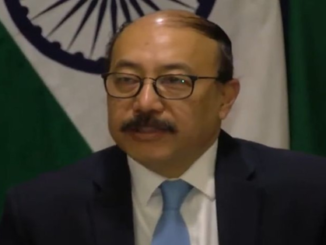
NEW DELHI (TIP): India on Thursday, February 24, assured its citizens stranded in Ukraine that it will take all possible steps to bring them back safe and sound. Foreign Secretary Harsh Vardhan Shringla said at a media briefing that the Indian embassy in Ukraine is extending all possible assistance to the Indians notwithstanding the complicated situation.
He said a meeting of the Cabinet Committee on Security (CCS), chaired by PM Narendra Modi, was underway on the Ukraine crisis.
Shringla said Modi conveyed at the CCS meeting that the topmost priority of the government is the safety and security of Indians and their evacuation from Ukraine.
The foreign secretary said around 4,000 Indian nationals out of 20,000 have already left Ukraine in the past few days.
“The situation on the ground is difficult and rapidly evolving,” he said. “I want to assure all Indian citizens including students in Ukraine that we will take all possible steps to bring you back safe and sound,” he said. Shringla said External Affairs Minister S Jaishankar will speak to foreign ministers of Romania, Slovakia, Poland and Hungary on the Ukraine crisis.
BEIJING/NEW YORK (TIP): Russian President Vladimir Putin said on Friday, February 25, that he was ready to hold “high-level negotiations” with Ukraine as he spoke with his Chinese counterpart Xi Jinping who stressed that both Moscow and Kyiv should resolve the raging crisis through talks.
Xi and Putin, regarded as allies and friends as China and Russia enlarged their strategic ties amid the strident US and EU push against them on a host of issues, held their talks on the phone around the same time as the Russian troops closed in on Kyiv, home to over three million people, with heavy bombardment raising fears of bloodshed.
The Russian side is ready to hold “high-level negotiations” with the Ukrainian side, the official Chinese media here quoted Putin as telling Xi. Around the same time, Ukrainian President Volodymyr Zelensky on Friday, February 25, reiterated his call for Russian President Putin to hold talks and stop the conflict.
“Fighting is going on all over Ukraine. Let’s sit down at the negotiating table,” Zelensky said, the Chinese state-run Xinhua news agency reported, citing a report from Interfax-Ukraine news agency.
Xi, whose government stonewalled criticism in the last few days for not condemning the Russian “invasion” of Ukraine, sought to play the role of a peacemaker by saying that China supports Russia and Ukraine to solve the issue through negotiation, the state-run CGTN reported. Noting that the recent situation in eastern Ukraine has changed dramatically, causing great concern in the international community, Xi told Putin that China’s position on the Ukraine issue was based on the merits of the matter concerned.
In an apparent criticism directed against the United States and the European Union, Xi urged all parties to completely abandon the Cold War mindset, respect and attach importance to each other’s legitimate security concerns and strive for a balanced, effective and sustainable European security mechanism through dialogue and negotiation.
Xi reiterated that China’s position of safeguarding the sovereignty and territorial integrity of all states and abiding by the purposes and principles of the UN Charter has been consistent. China is ready to work with all parties in the international community to promote common, comprehensive, cooperative and sustainable security and firmly uphold the UN-cantered international system and the international order underpinned by international law, he said.
Putin, for his part, introduced the historical context on the Ukraine issue as well as Russia’s position on launching the special military operation in eastern Ukraine.
The Russian President stressed that the United States and NATO have long ignored Moscow’s legitimate security concerns, repeatedly reneged on their commitments and kept pushing military deployments eastward, which challenged Russia’s strategic bottom line.
He also told Xi that the Russian side was ready to conduct “high-level negotiations” with the Ukrainian side.
During their phone conversation, Xi once again expressed his gratitude to Putin for coming to China to attend the opening ceremony of the 2022 Beijing Winter Olympics, which was boycotted by the leaders and diplomats of the US, the EU and their allies to highlight the allegations of human rights violations against Uygur Muslims in Xinjiang.
As Xi-Putin held talks, a Xinhua report said the Russian Defense Ministry announced that its airborne forces successfully conducted a landing operation at the Gostomel airfield outside Kiev, blocking the Ukrainian capital city from the west.
Ever since Putin announced the military operations in Ukraine on Thursday, China has walked a fine line, declining to condemn the military action while remaining silent over Moscow’s move to accord two separatist regions in eastern Ukraine, Donetsk and Luhansk as independent entities.
In his talks with Russian Foreign Minister Sergei Lavrov on Thursday, Chinese Foreign Minister Wang Yi said there was a complex and special historical context of the Ukraine issue and the Chinese side understands Russia’s legitimate security concerns.
Earlier, Chinese Foreign Ministry spokesman Wang Wenbin told a media briefing here on Friday that Beijing will make its own effort to push for political settlement of the Ukrainian issue. He said there was a sharp contrast between China’s approach and some other countries’ moves of creating and shifting the crisis, and trying to benefit from it, while responding to questions on White House spokesperson Jan Psaki’s assertion that it’s time for China to pick a side.
Wang Wenbin said China believed that the Ukraine issue has a complicated history and that the legitimate security concerns of all parties should be respected and the Cold War mentality should be completely abandoned.
Psaki said at a news briefing on Thursday that “this is really a moment for China, for any country, about what side of history they want to stand on here.”
The comprehensive settlement of the issue should be sought through dialogue and negotiations so as to form a balanced, effective and sustainable European security mechanism, Wang said, noting that China’s approach formed a sharp contrast with what some countries have been doing in trying to benefit from the crisis.
Wang said that the door to a peaceful settlement of the Ukraine issue has not been completely closed.
China hopes that relevant parties remain calm and rational and commit to peacefully resolving relevant issues through negotiations in accordance with the principles of the UN Charter, he said, noting that Beijing will continue to promote peace talks in its own way and welcomes and encourages all efforts for a diplomatic settlement.
He also played down the impact of the US and EU sanctions against Russia. Europe has imposed financial sanctions against Russia for its military operation against Ukraine.On the question of whether China is worried that not condemning Russia might undermine its relations with the EU, Wang said that he believed everyone was familiar with the results of the sanctions. Unilateral sanctions are never the fundamental and effective approach in solving problems and that they only result in severe difficulties to local economies and livelihoods, he said.
WASHINGTON, D.C. (TIP): With Russia exercising its veto, a draft resolution sponsored by the U.S. and Albania, condemning Russian aggression and calling for the country’s withdrawal from Ukraine, has failed to pass the United Nations Security Council (UNSC).
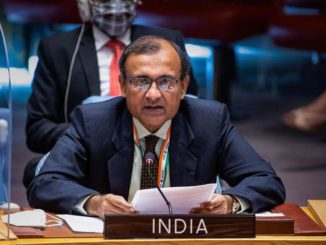
India, along with China and the UAE, abstained, while 11 members voted in favor of it. The U.S. vowed to take the issue to the General Assembly, where Russia does not have a veto. Government officials said India has been speaking to all parties including Russia and Ukraine to return to the negotiating table “By abstaining, India retained the option of reaching out to relevant sides in an effort to bridge the gap and find the middle ground with an aim to foster dialogue and diplomacy,” a source said.
The vote at the UNSC had to be postponed twice, for an hour at a time, as U.S. and Albanian diplomats, the “penholders” of the resolution, negotiated with other countries, trying to build a consensus for the draft.
However, according to officials who saw the draft, the original version was too strong, as it invoked UN Chapter VII, which authorizes the use of force against Russian troops in Ukraine. After several rounds of heated negotiations, the U.S. agreed to soften the resolution and drop the Chapter VII reference, which is believed to have ensured that China also abstained along with India and the UAE, while Russia was alone in voting against the resolution.
“Let us never forget that this is a war of choice. Russia’s choice,” Linda Thomas-Greenfield, the U.S.’s permanent representative (PR) to the United Nations told the Council. “To those who say all parties are culpable, I say that is a clear cop out. One country… one country is invading another,” she said, adding that countries who based their position on Russia having a historical relationship with Ukraine should think about whom that label would apply to next. “Vote ‘no’ or abstain if you do not uphold the charter and align yourselves with the aggressive and unprovoked actions of Russia,” she said.
Delivering India’s explanation of vote, PR T.S. Tirumurti said India was “deeply disturbed” by the developments and called for the “immediate cessation “of violence. Mr. Tirumurti said that the global order had been built on the UN Charter and the respect for the territorial integrity and sovereignty of states. He called on states to respect these principles and for dialogue to settle their differences.
During his speech, as with his other UNSC speeches relating to the Ukraine crisis, Mr. Tirumurti said India was “deeply concerned” about the welfare of Indians in the country. Ukraine’s PR Sergiy Kyslytsya took a shot at India on this count, when it was his turn to speak. “And I may say to some: It is exactly the safety of your nationals right now in Ukraine that you should be the first to vote to stop the war – to save your nationals in Ukraine. And not to think about whether you should or should not vote because of the safety for your nationals,” he said.
Mr. Kyslytsya said he was “saddened” that a “small handful of members” seemed to be “tolerating” the war.
China’s PR Zhang Jun backed diplomatic negotiations between the parties, saying, “Ukraine should become a bridge between the East and the West, not an outpost for confrontation between major powers.”
Russia’s U.N. Ambassador Vassily Nebenzia called the resolution not just anti-Russian but also anti-Ukrainian, saying the document (draft resolution) ran counter to the interests of Ukraine’s people as it sought to keep the existing government in power.
With reference to Russian President Vladimir Putin asking the Ukrainian army to depose its government, Mr. Kyslytsya, addressing his Russian counterpart in the Security Council Chamber, asked, “Are you crazy?”
In post-meeting remarks to the press, U.N. Secretary-General Atonio Guterres said the meeting’s objective had not been achieved.
“Today, that objective was not achieved. But we must never give up,” he said. “We must give peace another chance.”
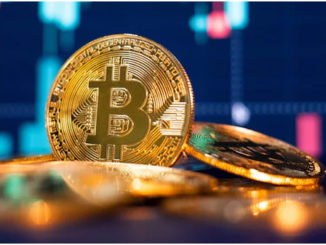
Cryptocurrencies dropped as Vladimir Putin decided to conduct military operations in eastern Ukraine, with Bitcoin slumping to a one-month low. The largest token fell as much as 7.4% to $34,783 after an initial Tass report on Russia’s decision. Second-ranked Ether declined as much as 8.7% to $2,390.61. Other coins like XRP, Cardano and Solana were down as well.
Bitcoin’s swings during the past weeks of escalating geopolitical tensions have served to undermine the argument that cryptocurrencies offer a hedge in times of trouble. The traditional safe haven gold, meanwhile, surged to the highest level since early 2021 on Thursday, February 24. “Risk assets continue to be weighed down by the Russia-Ukraine conflict and tensions. This includes Bitcoin and cryptocurrencies which are currently still very much viewed as a high-risk asset class,” said Vijay Ayyar, vice president of corporate development at Luno, a crypto platform. The next key level to watch for Bitcoin will be $28,000 to $29,000, he said. If that treshold gets breached, “we could be looking at much lower levels in the low $20,000s and below.”
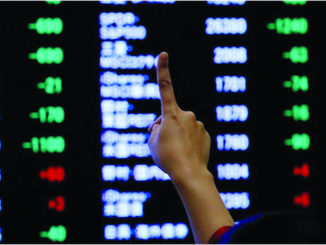
New Delhi (TIP)-Investors bailed out of risky assets, sending stocks crashing after Russian President Vladimir Putin’s troops invaded Ukraine. On Thursday, the exodus from stocks wiped out Rs1.3 lakh crore in investor wealth on Indian stock markets. But the bad news for stocks was a boon for safer assets such as gold and government bonds. Crude oil surged past the $100 mark amid expectations of tighter supply. India’s benchmark indices Sensex and Nifty tumbled, ending 4.72% and 4.78% lower respectively, one of the sharpest daily declines in nearly two years. The declines put the indices in correction territory—defined as a drop of at least 10% from a recent peak. The Sensex hit a record high of 62,245.43 on October 19. A near-6% decline was recorded on 4 May 2020 after the government extended the nationwide lockdown and a flare-up in US-China tensions. The Russian invasion has triggered the worst security crisis in Europe since World War II. The attack on Ukraine heightens the pressure on the global economy already reeling from Covid and galloping inflation. Investors fear the unfolding crisis will further increase raw material and energy costs. Sanctions against Russia by Western powers are likely to isolate the erstwhile superpower, a major producer of oil and commodities.
Global markets, too, saw deep corrections. Among Asian markets, the Hang Seng, Taiwan, Nikkei, Shanghai Composite, Jakarta Composite ended the day 1.48-3.21% lower. “The world can ill-afford further disruption in trade and commodities when Covid has already weakened sovereign balance sheets,” said Amar Ambani, head of institutional equities, Yes Securities.
Brent crude hit $105 a barrel, a level not seen since August 2014, adding to the worries.
S&P Global Platts Analytics said $100 oil aggravates pain as Asia’s top oil importers are dependent on imports for 70-100% of their needs. “High oil prices will dampen demand and undermine the fragile economic recovery,” said Lim Jit Yang, adviser for oil markets at S&P Global Platts Analytics.
The concerns are likely to remain elevated. “Crude could stay over $100 a barrel in the medium term unless Opec hikes output,” said Hetal Gandhi, director, Crisil Research. Opec members have failed to meet targets over the past three months.
Gold hit highest level in over a year. As Russia invaded Ukraine, gold prices skyrocketed to their highest level in more than a year.
In India, the gold price surged by Rs 1,400 , hitting the peak of Rs 51,750 per 10 gms in the early morning trade. This comes amid steep fall in the stock market with Sensex down by 1432.50 points and Nifty reporting a slump of 410.70 points at the time of opening. Several Asian stock markets also plunged in the aftermath of the Russian invasion.
The bullion has witnessed a spike amid the increasing standoff between Russia and the West. Economic experts say gold is now being historically seen as a hedge against major economic and geopolitical ructions.
Spot gold jumped as much as 2.1% to $1,949.03 an ounce, the highest level since January 2021, and traded at $1,939.55 at 1:08 p.m. in Singapore, news website Bloomberg reported. Source: HT
“President Joe Biden almost hourly promises, “We are not going to war in Ukraine.” Why would he then not readily rule out NATO membership for Ukraine, which would require us to do something Biden himself says we Americans, for our own survival, should never do: go to war with Russia?”
“Whatever we may think of Putin, he is no Stalin. He has not murdered millions or created a gulag archipelago. Nor is he “irrational,” as some pundits rail. He does not want a war with us, which would be worse than ruinous to us both. Putin is a Russian nationalist, patriot, traditionalist and a cold and ruthless realist looking out to preserve Russia as the great and respected power it once was and he believes it can be again.”
When Russia’s Vladimir Putin demanded that the U.S. rule out Ukraine as a future member of the NATO alliance, the U.S. archly replied: NATO has an open-door policy. Any nation, including Ukraine, may apply for membership and be admitted. We’re not changing that. In the Bucharest declaration of 2008, NATO had put Ukraine and Georgia, ever farther east in the Caucasus, on a path to membership in NATO and coverage under Article 5 of the treaty, which declares that an attack on any one member is an attack on all. Unable to get a satisfactory answer to his demand, Putin invaded and settled the issue. Neither Ukraine nor Georgia will become members of NATO. To prevent that, Russia will go to war, as Russia did last night.
Putin did exactly what he had warned us he would do. Whatever the character of the Russian president, now being hotly debated here in the USA, he has established his credibility. When Putin warns that he will do something, he does it. Thirty-six hours into this Russia-Ukraine war, potentially the worst in Europe since 1945, two questions need to be answered:
How did we get here? And where do we go from here?
How did we get to where Russia — believing its back is against a wall and the United States, by moving NATO ever closer, put it there — reached a point where it chose war with Ukraine rather than accepting the fate and future it believes the West has in store for Mother Russia?
Consider. Between 1989 and 1991, Mikhail Gorbachev let the Berlin Wall be pulled down, Germany be reunited and all the “captive nations” of Eastern Europe go free. Having collapsed the Soviet empire, Gorbachev allowed the Soviet Union to dissolve itself into 15 independent nations. Communism was allowed to expire as the ruling ideology of Russia, the land where Leninism and Bolshevism first took root in 1917. Gorbachev called off the Cold War in Europe by removing all of the causes on Moscow’s side of the historic divide. Putin, a former KGB colonel, came to power in 1999 after the disastrous decadelong rule of Boris Yeltsin, who ran Russia into the ground. In that year, 1999, Putin watched as America conducted a 78-day bombing campaign on Serbia, the Balkan nation that had historically been a protectorate of Mother Russia.
That year, also, three former Warsaw Pact nations, the Czech Republic, Hungary and Poland, were brought into NATO.
Against whom were these countries to be protected by U.S. arms and the NATO alliance, the question was fairly asked.
The question seemed to be answered fully in 2004, when Slovenia, Slovakia, Lithuania, Latvia, Estonia, Romania and Bulgaria were admitted into NATO, a grouping that included three former republics of the USSR itself, as well as three more former Warsaw Pact nations. Then, in 2008, came the Bucharest declaration that put Georgia and Ukraine, both bordering on Russia, on a path to NATO membership. Georgia, the same year, attacked its seceded province of South Ossetia, where Russian troops were acting as peacekeepers, killing some.
This triggered a Putin counterattack through the Roki Tunnel in North Ossetia that liberated South Ossetia and moved into Georgia all the way to Gori, the birthplace of Stalin. George W. Bush, who had pledged “to end tyranny in our world,” did nothing. After briefly occupying part of Georgia, the Russians departed but stayed as protectors of the South Ossetians.
The U.S. establishment has declared this to have been a Russian war of aggression, but an EU investigation blamed Georgian President Mikheil Saakashvili for starting the war.
In 2014, a democratically elected pro-Russian president of Ukraine, Viktor Yanukovych, was overthrown in Kyiv and replaced by a pro-Western regime. Rather than lose Sevastopol, Russia’s historic naval base in Crimea, Putin seized the peninsula and declared it Russian territory. Teddy Roosevelt stole Panama with similar remorse.
Which brings us to today.
Whatever we may think of Putin, he is no Stalin. He has not murdered millions or created a gulag archipelago.
Nor is he “irrational,” as some pundits rail. He does not want a war with us, which would be worse than ruinous to us both. Putin is a Russian nationalist, patriot, traditionalist and a cold and ruthless realist looking out to preserve Russia as the great and respected power it once was and he believes it can be again.
But it cannot be that if NATO expansion does not stop or if its sister state of Ukraine becomes part of a military alliance whose proudest boast is that it won the Cold War against the nation Putin has served all his life.
President Joe Biden almost hourly promises, “We are not going to war in Ukraine.” Why would he then not readily rule out NATO membership for Ukraine, which would require us to do something Biden himself says we Americans, for our own survival, should never do: go to war with Russia?
(The author is a former White House Communications Director. Visit Buchanan.org to read his articles and books)
WASHINGTON, D.C. (TIP): U.S. President Joe Biden also said he believes that Russia is preparing to take action on Ukraine, though he doesn’t think Putin has made a final decision
President Joe Biden said he believes Vladimir Putin doesn’t want full blown war in Ukraine and would pay a “dear price” if he moves forward with a military incursion. Mr. Biden, speaking at a news conference on January 19 to mark his one-year anniversary in office, also said he believes that Russia is preparing to take action on Ukraine, though he doesn’t think Putin has made a final decision. He suggested that he would limit Russia’s access to the international banking system if it did further invade Ukraine.
“I’m not so sure that he is certain what is he going to do,” Mr. Biden said. He added, “My guess is he will move in.” With critical talks approaching, the United States and Russia on Wednesday showed no sign either will relent from entrenched positions on Ukraine that have raised fears of a Russian invasion and a new war in Europe.
Speaking in Kyiv, U.S. Secretary of State Antony Blinken accused Russia of planning to reinforce the more than 1,00,000 troops it has deployed along the Ukrainian border and suggested that number could double “on relatively short order.” Mr. Blinken did not elaborate, but Russia has sent an unspecified number of troops from the country’s far east to its ally Belarus, which also shares a border with Ukraine, for major war games next month.
Ukraine, meanwhile, said it was prepared for the worst and would survive whatever difficulties come its way. The President urged the country not to panic.
Mr. Blinken’s visit to the Ukrainian capital came two days before he is to meet in Geneva with Russian Foreign Minister Sergey Lavrov. That follows a series of inconclusive talks last week that failed to ease rising tensions.
Russian military activity has been increasing in recent weeks, but the U.S. has not concluded whether President Vladimir Putin plans to invade or whether the show of force is intended to squeeze the security concessions without an actual conflict.
In Kyiv, Mr. Blinken reiterated Washington’s demands for Russia to de-escalate the situation by removing its forces from the border area, something that Moscow has flatly refused to do. And, Mr. Blinken said he wouldn’t give Russia the written response it expects to its demands when he and Mr. Lavrov meet in Geneva.
Meanwhile, a top Russian diplomat said Moscow would not back down from its insistence that the U.S. formally ban Ukraine from ever joining NATO and reduce its and the alliance’s military presence in Eastern Europe.
Deputy Foreign Minister Sergei Ryabkov said Moscow had no intention of invading Ukraine but that its demands for security guarantees were non-negotiable.
The U.S. and its allies have said the Russian demands are non-starters, that Russia knows they are, and that Mr. Putin is using them in part to create a pretext for invading Ukraine, which has strong ethnic and historical ties to Russia.
The former Soviet republic aspires to join the alliance, though has little hope of doing so in the foreseeable future.
Mr. Blinken urged Western nations to remain united in the face of Russian aggression. He also reassured Ukraine’s leader of NATO support while calling for Ukrainians to stand strong.
Mr. Blinken told Ukrainian President Volodymyr Zelenskyy that the U.S. and its allies were steadfast in backing his country and its democratic aspirations against Russian attempts to incite division and discord through “relentless aggression.” “Our strength depends on preserving our unity and that includes unity within Ukraine,” he told Mr. Zelenskyy. “I think one of Moscow’s long-standing goals has been to try to sow divisions between and within our countries, and quite simply we cannot and will not let them do that.” The Mr. Biden administration had said earlier it was providing an additional $200 million in defensive military aid to Ukraine. Mr. Blinken said more assistance is coming and that it would only increase should Russia invade.
Mr. Zelenskyy thanked Mr. Blinken for the aid, which was approved in late December but not confirmed until Wednesday. “This [military] support not only speaks to our strategic plans of Ukraine joining the alliance, but more importantly to the level of our military, our military supplies,” he said, referring to Kyiv’s desire to join NATO.
“Your visit is very important,” Mr. Zelenskyy said. “It underlines once again your powerful support of our independence and sovereignty.” Mr. Zelenskyy released a video address to the nation on Wednesday evening, urging Ukrainians not to panic over fears of a possible invasion. But he said the country has been living with the Russian threat for many years and should always be prepared for war. “Ukraine doesn’t want a war, but must always be prepared for it,” Mr. Zelenskyy said.
From Kyiv, Mr. Blinken plans a short trip to Berlin for talks with German and other European allies on Thursday before meeting with Lavrov.
On Wednesday, French President Emmanuel Macron called on the European Union to draw up a plan to ease tensions with Russia. “We should build it among Europeans, then share it with our allies in the framework of NATO, and then propose it for negotiation to Russia,” he said.
Washington and its allies have kept the door open to possible further talks on arms control and confidence-building measures to reduce the potential for hostilities.
Washington (TIP): The total number of global coronavirus cases has topped 104.8 million, while the deaths have surged to more than 2.28 million, according to the Johns Hopkins University.
In its latest update on Friday, Feb 5, morning, the University’s Center for Systems Science and Engineering (CSSE) revealed that the current global caseload and death toll stood at 104,832,983 and 2,281,608, respectively.
The US is the worst-hit country with the world’s highest number of cases and deaths at 26,673,780 and 455,657, respectively, according to the CSSE. India comes in second place in terms of cases at 10,790,183. The other countries with more than a million confirmed coronavirus cases are Brazil (9,396,293), the UK (3,903,706), Russia (3,874,830), France (3,310,496), Spain (2,913,425), Italy (2,597,446), Turkey (2,508,988), Germany (2,265,536), Colombia (2,135,412), Argentina (1,961,635), Mexico (1,886,245), Poland (1,533,511), South Africa (1,466,767), Iran (1,445,326), Ukraine (1,275,334), Peru (1,158,337), Indonesia (1,123,105), Czech Republic (1,013,352) and the Netherlands (1,007,268), the CSSE figures showed. Brazil currently accounts for the second highest number of Covid-19 fatalities at 228,795, followed by Mexico (161,240) on the third place and India (154,703) on the fourth. Meanwhile, the nations with a death toll above 20,000 are the UK (110,462), Italy (90,241), France (77,743), Russia (74,005), Spain (60,802), Germany (60,067), Iran (58,256), Colombia (55,131), Argentina (48,700), South Africa (45,605), Peru (41,538), Poland (38,344), Indonesia (31,001), Turkey (26,467), Ukraine (24,429), Belgium (21,216) and Canada (20,486).
WASHINGTON(TIP): President Donald Trump on Thursday, October 3 called on China to probe former Vice President Joe Biden, further escalating the impeachment fight.
“China should start an investigation into the Bidens,” Trump said in remarks to reporters outside the White House. Trump said he hadn’t directly asked Chinese President Xi Jinping to investigate Biden and his son Hunter but said it’s “certainly something we could start thinking about.”
Trump’s requests for Ukrainian President Volodymyr Zelenskiy to dig up dirt on Biden, as well as Giuliani’s conduct, are at the center of an intelligence community whistleblower complaint that sparked the House Democratic impeachment probe last week.
The president’s reference to China came unprompted in an unrelated question about the July 25 Ukraine call and moments after he was asked about trade negotiations with China to end a year-long trade war that has been a drag on both nation’s economies.
“I have a lot of options on China, but if they don’t do what we want, we have tremendous, tremendous power,” Trump said.
He later alleged without evidence that China had a “sweetheart deal” on trade with the US because of the Bidens.
“You know what they call that,” Trump said. “They call that a payoff.” Trump’s comments came as he publicly acknowledged that his message to Ukrainian President Volodymyr Zelenskiy and other officials was to investigate the 2020 Democratic presidential contender. Trump’s accusations of impropriety are unsupported by evidence.
“It’s a very simple answer,” Trump said of his call with Zelensky. “They should investigate the Bidens.”
Trump has sought to implicate Biden and his son in the kind of corruption that has long plagued Ukraine. Hunter Biden served on the board of a Ukrainian gas company at the same time his father was leading the Obama administration’s diplomatic dealings with Kyiv.
Though the timing raised concerns among anti-corruption advocates, there has been no evidence of wrongdoing by either the former vice president or his son.
Adam Schiff, the Democrat leading the impeachment probe, said there was a “real sense of urgency” to press forward. Trump fought back with language that would once have been inconceivable for a president, including his claim late Tuesday, October 1 on Twitter that this is “not an impeachment, it is a COUP”. Trump insists that he did nothing wrong in a phone call with Ukrainian leader Volodymyr Zelensky and got support from Russia’s President Vladimir Putin, who said he saw “nothing compromising” in the conversation.
(Source: Agencies)
Signup to our Newsletter!
Don’t miss out on all the happenings around the world