Tag: UN General Assembly

  • Bridge to nowhere: On India’s voice, Israel and the Palestinian cause

    India should be forceful in articulating its position on Gaza

    Two weeks after abstaining from a UN General Assembly (UNGA) resolution that called for a ceasefire in the Israeli strikes on Gaza, India voted in favor of five of six annual draft resolutions at the UNGA’s Fourth Committee that criticized Israel for increasing settlements in the Occupied Territories, was in favor of Palestinians’ right to homes and property, and supported the UN Refugee and Works Agency (UNRWA) operating in Gaza. The official explanation of the votes as “routine” affirmation of India’s traditional policy has only added to the confusion over the government’s stand on the crisis. Its Explanation of Vote in the original UNGA resolution in October said that India could not vote for a resolution that did not include an “explicit condemnation” of the October 7 attacks by Hamas. However, none of the six resolutions, including one in which India abstained, that discusses investigating Israel for rights violations, actually referred to the October 7 attacks. These were instead identical to resolutions that India had voted for before, and neither India nor any other country at the Fourth Committee deliberations proposed amendments. The Israeli envoy, in fact, demanded a rejection of the “anti-Israel” resolutions as they did not contain references to the current situation. Cuba argued that the resolutions were important to vote for, but that they also did not contain references to the more than 11,000 Palestinians killed, including 4,000 children, and the displaced (nearly a million). India did not propose amendments, nor did any Indian diplomat speak, although a lengthier explanation may be expected when the resolutions are put to a vote by the UNGA next month — by which time more of Gaza would have been flattened.

    At a time when every day counts, New Delhi appears unwilling to exert itself to making a difference. True, the government continues to hold its traditional stand on support for the Palestinian cause and a two-state solution (which it reaffirmed during the recent India-U.S. 2+2 Ministerial meeting), and that it “stands by” Israel, with “zero tolerance” for terror attacks. However, it has not joined the call for a ceasefire or explicitly asked for an end to the strikes on civilian targets, where Israel claims it is hunting for Hamas fighters and searching for hostages. Nor has it named Hamas for the terror attacks or changed Indian law, as the Israeli Ambassador to India called for, to designate Hamas as a terror group. More than a month after Israel’s reprisals began, the government must explain its position on the conflict, including where, if anywhere, India could play a role in alleviating the situation. The upcoming Voice of Global South and G-20 virtual summits may present the opportunity to articulate options for ending the violence, recovering Israeli hostages, as well as post-conflict scenarios for Gaza and Palestinians. India’s voice, once known for being forceful and balanced on such issues, must not be replaced by an expedient silence.

    (The Hindu)

  • Permanent UNSC membership for India — mirage or achievable?

    Permanent UNSC membership for India — mirage or achievable?

    By Prabhu Dayal
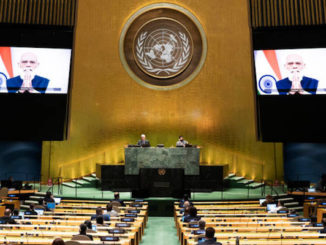
    • PM Narendra Modi advocated India’s inclusion among the permanent members of the UNSC during the 75th session of the UN General Assembly
    • The only increase in the membership of the Security Council came in 1965, when the number of non-permanent members was increased from six to 10
    • Any reform to the Security Council would require an amendment to the UN Charter

    There have been expressions of support for India’s candidature from four out of the five permanent members–USA, UK, Russia and France. But what about China? Given the nature of Sino-Indian relations, it is not surprising that Beijing does not support India’s case. China’s close friendship with Pakistan is a compounding factor in this regard.

    On September 26, Prime Minister Narendra Modi delivered a virtual address during the General Debate of the 75th session of the UN General Assembly in which he made an impassioned and forceful plea for India’s candidature for permanent membership of the UN Security Council. His speech was brilliant, but when he had finished I was still asking myself this question: Is India’s quest heading anywhere, or is it just a pipe dream?

    The composition of the Security Council was established in 1945. The victors of the Second World War shaped the UN Charter in their national interests, giving to themselves the veto power in the Security Council. Since then the geopolitical realities have changed drastically, but the Council has changed very little. The Prime Minister did well to stress this when he said that the world of 1945 was significantly different from today’s world; the global situation, sources-resources, problems-solutions; all were quite different. Keeping this in mind, he urged that “Reform in the responses, in the processes, and in the very character of the UN is the need of the hour”.

    This was not the first time in recent months that PM Modi had urged the need for UN reforms. It would be recalled that while speaking at the high-level dialogue of the U.N.’s Economic and Social Council (ECOSOC) on July 17 this year, he had said that “Only reformed multilateralism with a reformed United Nations at its center can meet the aspirations of humanity.”

    PM Modi put forward several arguments that make India’s case for permanent membership appear quite strong. Highlighting India’s achievements and role in 75 years of the United Nations, he called for reforms with “changing times” and India’s inclusion in the decision-making process within the global body. He mentioned that India is the largest democracy of the world, with more than 18% of the world population; it had sent its soldiers for about 50 peacekeeping missions; it is also the country that has lost the maximum number of soldiers in the course of establishing peace; even during these very difficult times of the Covid 19 pandemic, the pharma industry of India has sent essential medicines to more than 150 countries. In this context, PM Modi assured that India’s vaccine production and delivery capacity will help all humanity in fighting the COVID-19 crisis.

    Thus, articulating the role being played by India for lending a helping hand to other nations, and putting forward cogent arguments for India to be given a permanent membership of the UN, he asked the General Assembly a very pointed question: “For how long will India be kept out of the decision-making structures of the United Nations?”

    It may be recalled that the only increase in the membership of the Security Council occurred in 1965 when the non-permanent membership was increased from six to 10 members, thus increasing the total strength from 11 to 15 members; fifty-five years have elapsed since then. Thus, PM Modi was right on target when he pointed out that the United Nations in its present form is out of date: “The international community today is faced with a very important question: Whether the character of the institution, constituted in the prevailing circumstances of 1945, is relevant even today”?

    However, the challenges which lie in India’s path should not be underestimated. Any reform of the Security Council would require an amendment to the UN Charter. In this regard, it is useful to remember that Article 108 of the UN Charter states:

    ‘Amendments to the present Charter shall come into force for all Members of the United Nations when they have been adopted by a vote of two thirds of the members of the General Assembly and ratified in accordance with their respective constitutional processes by two thirds of the Members of the United Nations, including all the permanent members of the Security Council’.

    Thus, any reform of the Security Council not only requires the support of at least two-thirds of UN member states, but also all the permanent members of the UN Security Council must also agree to this as they have veto powers. Assuming that India can get the support of two-thirds of the members of the General Assembly, the question which arises is simply this: Will all the Security Council’s permanent members give their nod for adding India as a permanent member?

    India’s quest has to be viewed in a broader perspective. The need for Security Council reform has been actively discussed among the UN member states for quite some time. By 1992, Japan and Germany had become the second and third-largest financial contributors to the United Nations , and they started to demand a permanent seat; so too did Brazil (the world’s fifth largest country in terms of territory) and India (the largest democracy and the second largest country in terms of population) which had emerged not only as the most important countries within their regional groups but also key players in the emerging global scenario. These four countries formed an interest group which came to be known as the G-4.

    On the other hand, their regional rivals opposed the idea of G4 countries becoming permanent members. Italy, Pakistan, Argentina and South Korea formed an interest group, known as the ‘Uniting for Consensus’ (also nicknamed the ‘Coffee Club’) which later grew to around 40 members. The Coffee Club members are opposed to increasing the number of the Security Council’s permanent members while wanting an increase in the non-permanent members category.

    Simultaneously, the African countries also started to demand two permanent seats for themselves, arguing that historical injustices had been done to them, and also that much of the Council’s agenda related to their continent. All these developments have further complicated the situation.

    On their part, the G-4 countries have shown flexibility on the veto issue in their bid to get the United Nations reform process moving. In a joint statement on their behalf delivered by India’s Permanent Representative to the UN Ambassador Syed Akbaruddin at an inter-governmental negotiations meeting in March 2017, the G4 nations– India, Brazil, Germany and Japan–stated that while the new permanent members would in principle have the same responsibilities and obligations as the current permanent members, they shall not exercise the veto until a decision on the matter has been taken during a review. Despite this flexibility, there has not been any progress in regard to the G4 demands.

    There have been expressions of support for India’s candidature from four out of the five permanent members–USA, UK, Russia and France. But what about China? Given the nature of Sino-Indian relations, it is not surprising that Beijing does not support India’s case. China’s close friendship with Pakistan is a compounding factor in this regard.

    There are many who believe that in actual fact, all the P-5 countries have reservations about adding any other country including India to their privileged group. The support extended to India by the US, UK, Russia and France has to be viewed against the background of their being fully aware that in any case, the process of Security Council reform is making no headway whatsoever. Many analysts think that they only render lip service by way of support to India in order to derive political mileage as they are fully aware of the Chinese position. In other words, whether their support is genuine is a matter of debate, for it is extended whilst knowing full well that the Chinese will oppose India anyway.

    Meanwhile, China, the world’s biggest dictatorship sits on the high table as a permanent member of the UN Security Council while India, the world’s largest democracy has to be content with getting a seat on that table from time to time as a non-permanent member. We can raise our voice against this injustice, as Prime Minister Modi has done. However, one cannot say when the winds of change will actually reach the UN Security Council, for diplomacy, like politics is only the art of the possible.

    Prime Minister Modi said in his address: “Today, people of India are concerned whether this reform-process will ever reach its logical conclusion”. He asked:” How long would a country have to wait particularly when the transformational changes happening in that country affect a large part of the world?” His words had a ring of anguish as well as disappointment.

    As I reflect on Prime Minister Modi’s address at the UN, I cannot help reminding myself of a verse from the Rubaiyat of Omar Khayyam:

    “Could thou and I with fate conspire,

    To grasp this sorry scheme of things entire,

    Would we not shatter it to bits–and then

    Remold it nearer to the heart’s desire.”

    (The author is a career diplomat. He can be reached at prabhu_dayal70@hotmail.com)

    (Courtesy OPOYI)


  • India’s engagement with the United Nations- past, present, future

    India’s engagement with the United Nations- past, present, future

    By Asoke Mukerji

    Special article on the occasion of the  75th anniversary of the United Nations

    UN Member States agreed in June 2019 that the UN will mark its 75th anniversary with a one-day, high-level meeting of the UN General Assembly on Monday, 21 September 2020 on the theme, ‘The Future We Want, the UN We Need: Reaffirming our Collective Commitment to Multilateralism’.

    India was among 26 countries that participated in the January 1942 Conference of Allied Nations at the invitation of President Franklin Delano Roosevelt of the United States. The Conference issued a “Declaration by United Nations”, which committed its signatories to the objective of creating what we today call the United Nations (UN).

    India raises importance of Economic and Social Cooperation for UN, April 1945
    Sir. A. Ramaswami Mudaliar, Supply Member of the Governor General’s Executive Council, Leader of the Delegation from India, addresses the Third Plenary Session. T. V. Soong (China), on stage, Minister for Foreign Affairs and Chairman of the Delegation of the Republic of China presiding the Third Plenary Session, 25 April 1945, San Francisco.
    Photo / Courtesy UN

    The UN was conceptualized as a post-Second World War global governance structure, which would rest on three pillars: political, economic and human rights. The UN General Assembly (UNGA) would oversee the functioning of the political pillar of the UN, entrusted under the Charter to the UN Security Council (UNSC), while its socio-economic work, including upholding fundamental human rights and freedoms, would be handled by the Economic and Social Council (ECOSOC).

    The intention of the countries creating the UN was to both “secure” and to “sustain” the peace that would come once the Second World War ended.

    The San Francisco Conference, 25 April – 26 June 1945: India Signs the United Nations Charter
    Sir A. Ramaswami Mudaliar, Supply Member of the Governor-General’s Executive Council; Leader of the delegation from India, signing the UN Charter at a ceremony held at the Veterans’ War Memorial Building on 26 June 1945. Sir V.T. Krishamachari, standing behind him, also signed the Charter on behalf of India’s Princely States.
    Photo / Courtesy UN

    The first structures to “sustain” the peace were created in July 1944 when 44 countries participated in the UN Financial and Monetary Conference held at Bretton Woods in the United States. The International Monetary Fund (IMF) and International Bank for Reconstruction and Development (World Bank) were established to coordinate a supportive role for monetary and development policies.

    India played an active role in the negotiations at Bretton Woods. Sir C.D. Deshmukh and Sir R.K. Shanmukham Chetty, both of whom were to become Finance Ministers of independent India, were part of the Indian delegation. They are widely credited to have placed “poverty and development” into the mandate of the World Bank and secured for India permanent membership of the Executive Board of the IMF and World Bank because of her economic profile.

    Madame Pandit, First Woman President of the U.N. General Assembly, 1953
    The eighth session of the United Nations General Assembly elected Madam Vijaya Lakshmi Pandit, of India, as its first woman President. Madam Pandit is photographed here with U.N. Secretary – General Dag Hammarskjöld.
    Photo / Courtesy UN

    Between April and June 1945, India joined 49 other countries in negotiating the provisions of the San Francisco Treaty, known as the UN Charter. The leader of the Indian delegation Sir A. Ramaswami Mudaliar played a prominent role in chairing the discussions on economic and social issues to “sustain” the peace.

    Decolonization Resolution of UN General Assembly, 4 October 1960
    Leading statesmen from all over the world are attending the UN General Assembly. The historic Decolonization Resolution was adopted unanimously by the Assembly.
    Seen here, left to right, are: Gamal Abdel Nasser, President of the United Arab Republic; Dr. Sukarno, President of the Republic of Indonesia; Jawaharlal Nehru, Prime Minister of India; Dr. Kwame Nkrumah, President of the Republic of Ghana; and Mr. Saeb Salaam, President of the Council of Ministers of Lebanon.
    Photo / Courtesy UN

    The San Francisco Treaty (the UN Charter) was signed on 26 June 1945. India became the first country to be elected President of the ECOSOC in 1946. Under India’s presidency of the ECOSOC, several major initiatives were taken by the newly formed UN. These included the creation of regional UN bodies for coordinating socio-economic policies, such as the Economic and Social Commission for Asia and the Pacific (ESCAP). India was elected the first Executive Secretary of ESCAP from 1947-1956.

    Among the significant initiatives taken under India’s Presidency of the ECOSOC for upholding fundamental human rights and freedoms, three stand out. The first was non-discrimination. In 1946, India successfully inscribed the need to abolish the discrimination based on color against Indians in South Africa, a UN member-state. This metamorphosed into the wider Anti-Apartheid Movement, which culminated with the successful multi-racial elections in South Africa in April 1994 and the election of President Nelson Mandela, who led South Africa’s delegation to the UNGA in September 1994. The second was the outlawing of mass atrocity crimes.

    Security Council Holds First Summit-Level Meeting, 31 January 1992
    At a time of momentous change, the first summit-level meeting of the United Nations Security Council was held on 31 January 1992. The meeting reaffirmed the central role of the Security Council in maintaining world peace and upholding the principle of collective security as envisioned in the United Nations Charter. Attending the meeting were 13 Heads of State and Government, as well as two Foreign Ministers, representing the members of the Security Council.
    Shri P.V. Narasimha Rao, Prime Minister of India, addressed members of the Council.
    Photo / Courtesy UN

    India joined Cuba and Panama to co-sponsor the 1946 UNGA resolution mandating the negotiation of the UN Genocide Convention in 1948. The third was gender equality. India’s delegate Hansa Mehta, who became the first Vice Chancellor of MS University in Baroda, successfully replaced the words “all men” by “all human beings” to expand the scope of the first UN document on human rights (the Universal Declaration on Human Rights) in 1948. Article 1 of the UDHR reads: “All human beings are born free and equal in dignity and rights.”

    The principle of democracy in international relations, contained in the provision of one-country one-vote in Article 18 of the UN Charter, was given substance following the independence of India in August 1947. Along with leaders of other newly independent former colonial countries, India spearheaded the unanimous adoption in December 1960 of the historic Decolonization Resolution in the UNGA, opening the doors for scores of newly independent countries to join the UNGA.

    Prime Minister of India Addresses Summit on Sustainable Development, 25 September 2015
    Shri Narendra Modi, Prime Minister of India, addresses the United Nations summit for the adoption of Agenda 2030 on Sustainable Development.
    Photo / Courtesy UN

    This resulted in a prominent Indian role in two platforms within the UNGA. The first was the political grouping of 24 member-states that created the Non-Aligned Movement (NAM) in September 1961. Today the NAM has 122 member-states in the UNGA. The second was the creation of the Group of 77 (G-77) developing countries in 1964, which turned the focus on accelerated development priorities as the focus of the UN and its ECOSOC. In turn, this led to the convergence of development issues with the growing concerns on environmental protection, which is today encapsulated in the ambitious UN Agenda 2030 for Sustainable Development with its 17 Goals. The G-77 today has 134 out of the 193 member-states in the UNGA.

    Eradication of poverty, articulated by India at Bretton Woods in 1944, is the over-arching Goal of Agenda 2030, which counts as a major achievement of the UN after 1945.

    At the heart of India’s current and future engagement with the UN is the objective of “reformed multilateralism”. Essentially this means making the UN, its specialized agencies such as the World Health Organization (WHO), and sister institutions like the IMF, World Bank and World Trade Organization (WTO) more responsive to the challenges facing mankind.

    An anomaly in the UN Charter has allowed decision-making without democratic participation. This anomaly gives the five militarily dominant powers of June 1945 (the Republic of China, France, the United Kingdom, the United States and the Soviet Union) permanent non-elected membership (P5) in the UN Security Council, and the privilege of the “veto”. The veto provision allows any of the P5 to oppose proposed UNSC decisions without giving any reason at all. This is an anachronism in 2020, and primarily responsible for the UNSC’s ineffectiveness today in maintaining international peace and security,

    Since June 1945, the world has undergone a “surge to democracy”, illustrated by the membership of 193 member-states in the UNGA. As a British colony in June 1945, India had not been able to amend the UN Charter provision giving privileged powers to the P5. Those provisions had been agreed to before the San Francisco Conference by the United States, United Kingdom and Soviet Union at Yalta in February 1945. These privileges were extended to the Republic of China and France before the San Francisco Conference.

    The key to reforming multilateralism lies in ensuring the equal and effective participation of member-states in decisions and policies that have a global impact. In the political sphere, this means reforming the UN Security Council to make it effective in “securing” the peace, by replacing its anti-democratic “veto” provision with majority voting using the one-country one-vote principle of the UN Charter. In the socio-economic sphere, this means closer coordination to ensure that monetary, development and human rights policies can sustain development.

    To be effective, the scope of reformed multilateralism will have to expand beyond the narrow inter-governmental provisions of the UN Charter. It must also take cognizance of the rapid emergence of a digital world order. By including relevant stakeholders in global issues, including businesses, academia and civil society, reformed multilateralism would be able to provide a coherent and sustainable global response to global challenges. The UN is already moving towards such a “multi-stakeholder” structure through the implementation of the Agenda 2030 for Sustainable Development. This process needs to be reflected across the board to make the UN “fit for purpose”.

    (The author  is a former Indian diplomat and writer. He was Permanent Representative of India to the United Nations from April 2013 to December 2015)