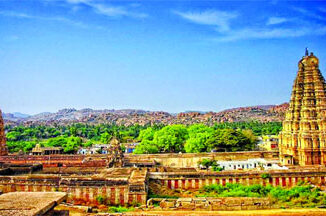
Hampi, the city of ruins, is a UNESCO World Heritage Site. Situated in the shadowed depth of hills and valleys in the state of Karnataka, this place is a historical delight for travellers. Surrounded by 500 ancient monuments, beautiful temples, bustling street markets, bastions, treasury building and captivating remains of Vijayanagar Empire, Hampi is a backpacker’s delight. Hampi is an open museum with 100+ locations to explore and a favourite way to see the city from the perspective of its history.
Hampi was the capital of the Vijayanagar empire around 1500 AD, and by some accounts, the second largest city in the world at that time. Over the next centuries it fell out of importance, and now you can explore the ruins of a lot of temples and other structures spread out over a vast area. The terrain around Hampi is as mysterious as the ruins itself – the city is surrounded by boulders of different sizes, and you can climb to the top of them with a little effort to get a stunning view of the entire city and the geography. It is located on the banks of the Tungabhadra River. Famous for its massive, beautifully carved temples, especially the Virupaksha Temple, dedicated to the patron deity of the empire. You can also find remains of the old aqueducts, canals and military barracks and stables here. Hampi was declared a UNESCO World Heritage site in 1986 and many efforts have been taken to restore the lost glory of the place – very limited (if any) modern establishments are allowed in the main area, which gives an authentic feel to the ruins.
Virupaksha Temple, Hampi
The Virupaksha temple (or Prasanna Virupaksha temple) is located on the banks of the Tungabhadra river at Hampi. Built during the 7th century, the beautiful architecture and history of the temple have made it a UNESCO World Heritage site. The temple is abode to one of the forms of Lord Shiva called Lord Virupaksha. While it is located at present-day Hampi, it was once a smaller shrine in the middle of the ancient and majestic Vijayanagara empire. You will find beautiful stone inscriptions dating back to the 7th century on the walls of the temple as proof of its rich heritage. Architecture-lovers and history-buffs, do visit the temple when you are in Hampi!
The temple has tall towers or gopurams acting as gateways to the inner sanctums, as is usually seen in temples of south Indian style architecture. The gopurams lead to many inner corridors and halls, all decorated with ornate stone-work. The sculptures depict mythological stories of numerous Gods and Goddesses. The main deity of the temple is Lord Virupaksha, but it is also abode to few other Hindu deities too. While many devotees visit the temple during festival seasons like the Car Festival, it is otherwise less crowded.
Vithala Temple
The most impressive structure in Hampi, the Vithala Temple dates back to the 16th century and is a truly splendid example of rich architecture. The famous stone chariot, which has become an iconic symbol of the architecture of Hampi, is located inside the premises of this temple.
The temple complex is spread over a huge area. The main gate has an impressive arch with carvings, and opens in a large courtyard which has the famous stone chariot in the center. The main temple is located just behind the chariot and has beautiful carvings. There are also several other smaller temples inside the courtyard, all of which are definitely worth a visit. The carvings on the walls/pillars of these structures depict various gods in different forms.
Lotus Palace
The Lotus Palace in Hampi is one of the most iconic landmarks in the town. Named so for the way the structure looks like a lotus in bloom, this palace was the designated area for the royal women of the Vijayanagara Empire and is found within the Zenana Enclosure. Known widely as one of the few edifices in Hampi that was not lost either to the Mughal raids of the town or to the ravages of time, the Lotus Mahal stands tall in its courtyard.
Yantrodharaka Hanuman Temple
On top of the Anjaneya Hill, at a distance of 2 kilometres from the Virupaksha Temple, the beautiful Yantradharaka Hanuman Temple also known as the Monkey Temple is present inside a cave. The temple being 500 years old is dedicated to Lord Hanuman. Sri Vyasaraja, who was the Rajaguru of the Vijayanagara Kingdom and a Dwaita philosopher, was the one to install the idol of Lord Hanuman in the temple. Being one of the most famous attractions of the Anjeyanadri Hill, the Monkey Temple is considered as a sacred spot for Hindus.
Hampi Bazaar
Also known as the Virupaksha Bazaar, the Hampi Bazaar is the place to go to pick up knick-knacks, souvenirs, cheap clothes and trinkets to remember your trip to Hampi by. Situated right in front of Virupaksha temple, hence its alternate name, this bazaar which stretches for over a kilometre long is one of the main landmarks of Hampi. From embroidered shawls, fibre handicrafts, to stone carvings, this is the place to pick up anything Hampi-related. The Hampi Utsav which happens every November is also a big tourist draw and should be noted.
Hippie Island
While most tourists stay to the south of Tungabhadra where most of the ruins are located, some prefer the north banks which have a vibrant hippie culture. Virapapur Gadde or Hippie Island is a small island situated across the Tungabhadra river. It takes 5 minutes to travel to the island via coracle or boat. The last boat for the island leaves at 5.30 pm. The backpacker’s delight, Hippie Island (Virupapur Gadde) is an epitome of scenic beauty and is known for laidback ambient and lodges. Source: Holidify.com
Tag: UNESCO World Heritage Site
-

Hampi: The abode of bygone ruins
-

Kudremukh: Close to the nature’s face
Popular and named after a mountainside that resembles a horse’s face, Kudremukh is famous for its biodiversity and scenic beauty. A popular hill-station among the Bangalore crowd, Kudremukh is actually a hill range in the Chikmagalur district of Karnataka. Kudremukh Peak is a paradise for trekkers and naturists alike, with its mountainous paths and floral and faunal diversity.
With its rolling meadows, grasslands and dense forests, this place is a biodiversity hotspot. Kudremukh is an enchanting place to visit, still retaining much of its natural beauty despite persistent threats from various sources to its ecology. Varaha Parvatha, another mountain range nearby at a height of 1458m above sea level is a part of the UNESCO World Heritage Site.
Kudremukh Peak Trek
At an altitude of 1894 m above sea level, the Kudremukh Peak is a paradise for trekkers and naturists alike, with its mountainous paths and floral and faunal diversity.
The scene from the peak is breathtaking with the view of the skies and clouds over the Arabian Sea. One of the unique characteristics of this trek is the myriad landscapes that it offers en route, ranging from tall bamboo shrubs and shola forests to gushing streams and rolling hills. The peak is located in the Kudremukh National Park which is rich in flora and fauna. Kudremukh along with its beauty of the Western Ghats and the surreal landscapes also offers various treks on the lush green hills of Western Ghats. The most famous and scenic trek of Kudremukh is the trek to Kudremukh peak. The trek takes you through the wildlife sanctuary of Kudremukh which is a habitat for tigers, leopards, wild dogs, deer among other species of fauna.
The trek begins from the small hamlet of Mullodi. The short distance of 9 km (one way) takes you at an altitude of 1,894 km above the sea level offering some of the most breathtaking views of the Western Ghats. From the beauty of the Western Ghats, various streams, and waterfalls and the aromatic coffee plantations you get to see all at one place. The most important attraction along with the Kudremukh peak is the Hanuman Gundi Falls, which falls on your way uphill to the highest peak. Located amidst the hilly terrain of Western Ghats, Hanuman Gundi falls is a beautiful water cascade of Kudremukh.
Kudremukh National Park
Located amidst mountains, Kudremukh National Park is popular for its scenic beauty. Designated the status of a national park in the year 1987, the 600-kilometre square area is one of the most well preserved national parks in the state. The Kudremukh National Park is jewelled with natural beauty, high rising peaks studded with a plethora of flora and fauna to picturesque trekking routes overseeing verdant grasslands, there is much to experience here! The wildlife protected area is the second-largest belonging to a tropical wet evergreen forest in the zone of the Western Ghats.
The area gains its name from the native language. Kudremukha translates to horse-face, referring to the highest mountain peak in the park which resembles the face of a horse from a particular side. It rises to a height of 1,894 meters (6,214 feet) and is the second highest peak in Karnataka. The area is the habitat of many endangered and endemic species of plants and animals, with mammals such as tigers, leopards and wild dogs as the primary predators of the region.
Primarily developed as an important iron-ore mining town, conservationists successfully campaigned against the adverse mining effects on the environment. Kudremukh and its lush green surroundings are a nature and wildlife lover’s paradise, serving you the best of Western Ghats in great detail.
Hanuman Gundi Falls
Gushing down from a height of more than 100 feet onto natural rocks, this calm and serene site is an attraction for those looking for a laidback day amongst nature’s beauty.
Kalasa
Kalasa, also known as the temple town is located in Chikkamagaluru district in Karnataka. The beautiful city lies on the banks of the Bhadra River. The reasons behind the birth of the place are both mythological and etymological. It is surrounded by rainforest and is a perfect place for a nature getaway. Being largely an agricultural economy this place depends on the River Bhadra for water. It plays fair with its name as Kalasa’s soil is blessed with great fertility which produces the best coffee and other herbs. Also, Kalasa is renowned for a shrine of Goddess Bhagavathi and a Varaha within a cave.
Kalasa is home to Sri Kalaseshwara Temple which is dedicated to Lord Shiva. It is also known as a temple town in Karnataka showcasing the architectural heritage of Southern India comprising of a variety of styles as well as design philosophies representing the rich culture of the land. Pilgrims from all over the region come down to the temple town to offer their prayers. Though it is considered as a pilgrimage spot, today it is also recognised as a tourist place. As it lies in the heart of Western Ghats, it enjoys a relatively pleasant climate throughout the year except for summers.
Gangamoola
Also known as the Varaha Parvatha, this mountain at a height of 1458m above sea level is a UNESCO World Heritage Site. The source of the Rivers Tunga, Bhadra and Nethravati lie here.
The main attractions here are the temple of Goddess Bhagavathi and a cave with a 6 feet tall image of Varaha. This are is mineral rich with magnetite-quartzite deposits. It is also a hotspot with more than 107 species of birds.
Source: Holidify -

Madhya Pradesh: The heart of Incredible India
Madhya Pradesh got its name because of its geographical position, being located in the centre of India. However, it’s tagline ‘The Heart of Incredible India’ has more to do with the fact that it houses facets of the whole of India into this state. From the historical monuments to modern amenities, culture, food and people- this state gives a taste of entire India packed within its geographical boundaries.
Madhya Pradesh is one of the few states that is surrounded by other states on all its sides. It lies in the plain regions of the country and occupies one of the oldest parts of the Indian Subcontinent which was once the land of the Gonds called the Gondwana. Every twelve years the grand fair of Kumbh Mela is organised here. Madhya Pradesh has some spectacular historical places in its region, of which a temple made of glass in Indore is quite famous. Ujjain, a sacred city for the Hindus, is a renowned place in the world as it is one of 12 Jyotirlingas in India. Madhya Pradesh is particularly famous for its Khajuraho temples which exhibit the erotic sculptures depicting the ancient India Kama Sutra text. The great Sanchi Stupa constructed during King Ashoka’s reign is situated here in Bhopal. The Bandhavgarh National Park which houses the Barasingha and the Tigers reserve is also located here.
Khajuraho
Khajuraho, a UNESCO World Heritage Site located in Madhya Pradesh, is known around the world for its stunning temples adorned by erotic and sensuous carvings. A small town located in the Bundelkhand region, Khajuraho is a brilliant example of Indian architecture and its culture back in the medieval period. The architecture of these Hindu and Jain temples depict the erotic forms of love, the carvings on the walls display passion in the most sensuous yet aesthetic ways. Built between 950 to 1050 AD the sheer confrontational nature of these carvings shows a stark paradox with the conventional Indian ideals about eroticism, leaving everybody spellbound.
Art in this small town is engrained in all of its structures and are a classic example of the finesse of India’s cultural and artistic heritage. The best part about Khajuraho is that although scores of plunderers tried to destroy the whole complex, they could never succeed, even though they managed to reduce the number of temples and caves to 25 from a staggering 85 at the time it was created.
Pachmarhi
Pachmarhi is the only hill station and is the highest point in Madhya Pradesh. Pachmarhi is also often known as “Satpura ki Rani” or the “Queen of the Satpura Range”. Situated at an altitude of 1,067 metres, the picturesque town is a part of UNESCO Biosphere Reserve, home to leopards and bison.
Five sandstone cut caves on the hilltop are believed to be the spot where Pandavas stayed in Pachmarhi during their exile, making it a popular spot among religious tourists. Being at an elevated height and surrounded by bewitching forests of the Satpuras with the streams and waterfalls, Pachmarhi is a perfect weekend getaway from the nearby cities of Madhya Pradesh and Maharashtra. Since the town was discovered and developed in modern times by Captain James Forsyth of the British Army, it houses charming churches built in colonial style architecture.
Gwalior
Gwalior is a historic city located in the state of Madhya Pradesh. Popular because of the hilltop fort, Gwalior is full of palaces and glorious temples giving this city a majestic charm which speaks volumes of its glorious past.
A historic city founded by king Surajesan, Gwalior is a city where India’s most eminent royalty once resided. Jai Vilas Pala has the largest carpet in the world which took almost 12 years to weave and two most massive chandeliers in the world that weight close to 3.5 tonnes.
The great Indian musician Tansen was born in Gwalior, and the tomb of Tansen is also an important place here. Every year, in November/December, a four-day Tansen Music festival is celebrated in the city where various classical musicians from all over the country perform on the stage near the tomb itself. Visit the various monuments and museums, eat the local delicacies like namkeen and go boating in Tighra Dam while you are in the city.
Bandhavgarh National Park
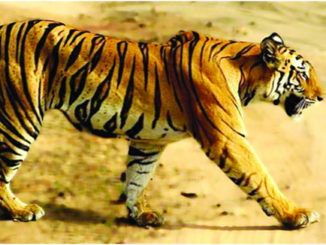
Formerly a hunting ground for the Maharajas of Rewa, the Bandhavgarh National Park is world-renowned as a tiger reserve and it is known to have the highest density of Bengal tigers in the world. The frequent sightings of royal tigers make this national park a must-visit for all wildlife enthusiasts. In 2012, around 44-49 tigers were living in the park. There are more than 22 species of mammals and 250 species of avifauna.
The park got its name from the Bandhavgarh fort situated at the height of 800 m high cliffs nearby. The fort is in ruins now, but an hour trek to the fort is worth it as it provides ample views of the surroundings. The jeep safaris are amongst the most popular activities taken by visitors.
Kanha National Park
Located in a central region of Madhya Pradesh, Kanha National Park is the largest National Park in central India and has been ranked as one of the best parks in Asia. Among the 22 species of large mammals, the royal Bengal tigers are one of the major attractions. One of the best tiger reserves in India, the present-day area stretches over the 940-kilometre square which is divided into two sanctuaries: Hallon and Banjar.
The park was established in the year 1955 and has since actively contributed to the preservation of many endangered species. The National Park was taken under the Project Tiger Reserve in 1974. Abundant in flora and fauna, the Kanha National Park houses one of the rarest species of deer- the Barasingha. It is known for the unique Barasingha conversation to save the species that were once on the verge of extinction. One of the most scenic wildlife reserves in Asia today, this National Park came to be known the world over through Rudyard Kipling’s book- The Jungle Book.
Kanha National Park is famous for its wildlife safaris and attracts tourists from all over the world. Other important animals in this park are leopards, wild dogs, wild cats, foxes, sloth bears, hyenas, langurs, wild boars and jackals. Reptiles including pythons, cobras, krait and other varieties of snakes are also found in this National Park.