Tag: United Nations

  • Pakistan’s bogus claims exposed by own media in disastrous day

    Pakistan’s bogus claims exposed by own media in disastrous day

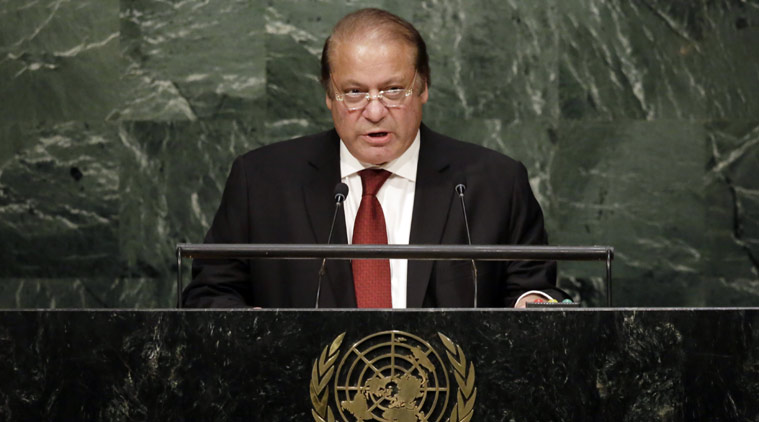
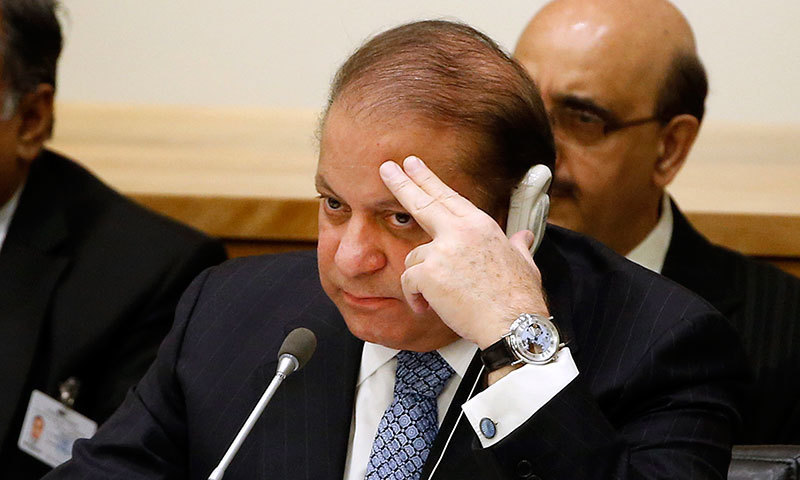
    WASHINGTON (TIP): She meant to say Nawaz Sharif’s ADDRESS before the UN General Assembly, but given all the tawdry drama surrounding it, ”actress” was indeed more appropriate.

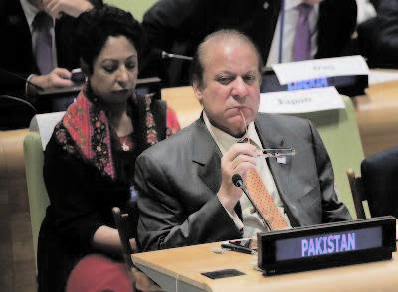
    An embarrassing flub on social media by Pakistan’s UN Envoy Maleeha Lodhi, after she tweeted ”Entering the UN for the PM’s ACTRESS to the GA” set the tone for a disastrous day for Pakistan in New York after it tried to up the stakes against India over the ”Kashmir issue.”

    It wasn’t the only boo-boo. Pakistani officials were publicly called out for bluffing about talks by the United Nations, United States, and its own, and only, ally China, as it tried to construct a phony narrative on the Kashmir issue.

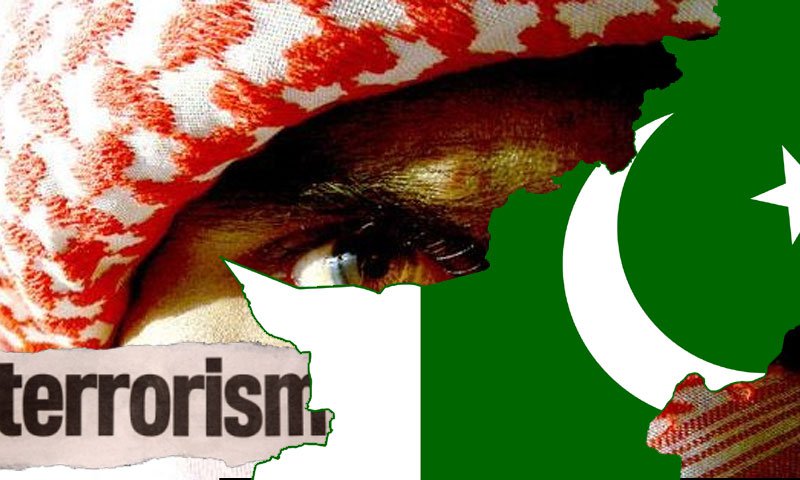
    It ended with a brutal take down by New Delhi, which sent a junior diplomat to call Pakistan a ”terrorist state” and other sulfurous insults seldom heard in the general assembly.

    Pakistan’s own media called out the country’s bluff by reporting that Prime Minister Nawaz Sharif media team ”concealed some important matters deliberately by issuing fragmentary handout about the meeting” with Secretary of State John Kerry.

    While a press release issued by the PM’s media team ”tried to give an impression that only the Kashmir issue was discussed in the meeting,” it turned out that Sharif was given an earful by Kerry, including asking Pakistan to stop giving safe havens to terrorists and to cap its nuclear arsenal.

    These remarks were censored by the largely plaint and often ISI media cell controlled Pakistani press.

    More snubs followed after China distanced itself from self-serving Pakistani claims about its support on the Kashmir issue. ”The issue of Kashmir is an issue leftover from history. Our stance on that is consistent.

    We hope that parties concerned will pursue a peaceful settlement through dialogue,” a Chinese spokesman said when asked about Pakistani claims, reported with overheated language about ”iron brother” forever to go with other popular formulations about ties being ”sweeter than honey, higher than mountains, deeper than oceans” etc.

    There were similar brush offs from the U.N Secretary General Ban ki Moon, who simply tweeted about ”Meeting P.M. H.E. Mr. Muhammad Nawaz Sharif, Prime Minister of the Islamic Republic of Pakistan” without confirming claims from the Pakistani side that he had expressed shock at situation in Kashmir etc., — claims meant ostensibly for domestic consumption in Pakistan.

    Sharif has brought along a huge media contingent from Pakistan who are briefed twice a day with fictional accounts of Pakistan’s grand success in UN, even as some independent (and rebellious) sections of the media are calling out the serial disappointments.

    Both Ban-ki Moon and President Obama did not make any reference to the so-called ”Kashmir issue” in their remarks and instead obliquely urged Islamabad to end its proxy wars and engage with India without resort to violence.

    Sharif may in fact have to return to Islamabad without meeting Obama (none was scheduled till the time of writing), and inasmuch as Pakistan thinks he is a lame duck president, its prospects don’t look particularly attractive under a Hillary Clinton administration or a Trump White House. Back home in Pakistan, the country’s defense minister Khawaja Asif, who has threatened to use tactical nuclear weapons on Pakistan’ s own soil if India captures Pakistani territory, continued to make a fool of himself.

  • Congress too slams Nawaz Sharif

    Congress too slams Nawaz Sharif

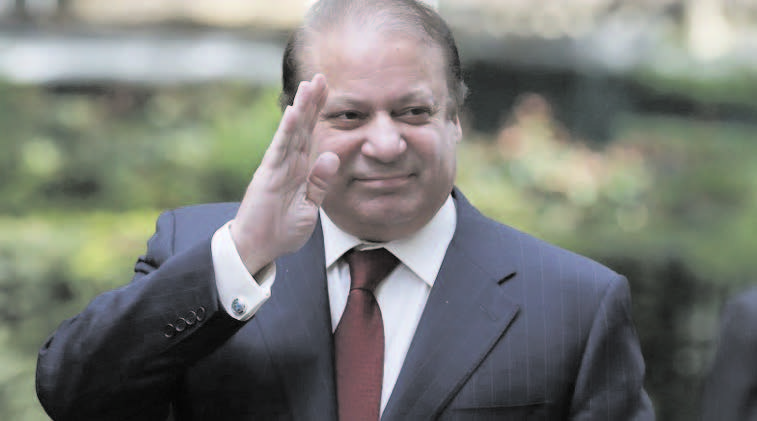
    #Congress too slammed Pakistan Prime Minister Nawaz Sharif for his Kashmir rant and glorifying terrorist Burhan Wani at the UN and said External Affairs Minister Sushma Swaraj should give a strong and a befitting reply when she addresses the world body on Monday.

    The main opposition party said the government should build a strong and factual case for India in front of the International community and wanted Prime Minister Narendra Modi to consult all political parties before deciding on “concrete and tangible steps” in the wake of the Pakistani onslaught.

    “Conspiratorial omission to Uri Attack in his speech is a public admission of guilt by Pakistan, of its direct involvement in this act of cowardice. There was nothing new in his address, except glorification of terrorists and extremism which Pakistan has adopted as ‘state policy’,” Congress’ chief spokesman Randeep Singh Surjewala said here.

    In “glorifying” a terrorist like Burhan Wani, a Hizbul Mujahideen commander who was killed in an encounter with security forces on July 8, Sharif only reiterated where his and his country’s sympathies and support lies, he added.

    “The international community must now understand fully that it is not only terrorists in Kashmir that Pakistan supports but its state policy is to provide an umbrella support and sustenance to all those who wreck havoc across the world, including in France, Bangladesh, USA,Britain and Belgium……,” he added.

    “We are confident that an already wary international community has seen through Pakistan’s vile designs”, he said.

    Surjewala ridiculed Sharif’s claim of an ‘intifada’ (uprising) in the Kashmir valley and said his “conspiratorial omission” to Uri Attack is a public admission of guilt.

    “In citing ‘intifada’ in Kashmir, Nawaz Sharif looks like that emperor who plays flute while his entire country, right from Khyber to Balochistan to Sindh is up in a violent intifada against his nation state,” the Congress leader said.

    Describing Pakistan as a ‘renegade state’ that has emerged as the ‘central processing unit’ (CPU) of global terror, he said in what has now become habitual, Sharif again invoked Kashmir at a multilateral forum, despite Pakistan being a signatory to the Shimla Accord.

  • NAWAZ SHARIF SPOKE LIKE SUPREME COMMANDER OF HIZBUL AT UNGA: BJP

    NAWAZ SHARIF SPOKE LIKE SUPREME COMMANDER OF HIZBUL AT UNGA: BJP

    NEW DELHI (TIP): The  BJP on September 22 (Thursday) demanded that Pakistan be declared a terrorist state, alleging that its Prime Minister Nawaz Sharif spoke like the “supreme commander” of Hizbul Mujahideen and openly campaigned for terrorists at UN General Assembly.

    The RSS also attacked Pakistan for committing atrocities in Baluchistan, Sindh and Pakistan-Occupied-Kashmir (PoK) and said its misadventure in Kashmir, where it is making Kashmiris kill their own people, will bring destruction to Pakistan.

    “Nawaz Sharif at the United Nations yesterday was at his pathetic best. He talked not like the supreme commander of Pakistan, but he talked like the supreme commander of Hizbul Mujahideen.

    “It clearly shows that there is no need for any further explanation. Pakistan should straight away be declared a terrorist state,” BJP general secretary Ram Madhav said.

    He said Sharif was openly campaigning for one of his terror commanders Burhan Wani of Hizbul Mujahideen.

    “It is so pathetic to see the Prime Minister of Pakistan campaigning for the cause of UN designated terror organization,” he said.

    Madhav also said that India has already given a befitting response to Pakistan at the diplomatic level and would respond accordingly to its Uri misadventure at various levels.

    RSS leader Indresh Kumar said thousands of people have been killed in Baluchistan, Sindh and Pakistan-Occupied Kashmir and lakhs have been displaced there and all this would prove costly for Pakistan.

    “Pakistan is trying to get Kashmiris killed by Kashmiris. Nawaz Sharif’s tune on Kashmir is not in sync and Pakistan’s misadventure in Kashmir will lead to its own destruction,” he told PTI.

    He said Baluchistan refused to be with Pakistan from the day it became independent and Nawaz Sharif should answer as to why they should not get independence.

    “Pakistan is suppressing people there and committing atrocities on them, with more than one lakh killed and 6 to 7 lakh displaced. Sindh is also demanding independence for many years now. Thousands have been killed there and many more thousands held captive and displaced.

  • Pakistan shows the door to Indian Media during Briefing in New York

    Pakistan shows the door to Indian Media during Briefing in New York

    NEW YORK – Indian media were not allowed to attend a Sept. 19 press briefing addressed by Pakistan Foreign Secretary Aizaz Ahmad Chaudhry in New York, and an Indian journalist of NDTV news channel was asked to leave the room, in an apparent outcome of simmering bilateral relations.

    “Iss Indian ko nikalo (remove this Indian),” were the words directed at Namrata Brar, a journalist with NDTV, and she was asked to leave the room at the Roosevelt Hotel, where the Pakistan Foreign Secretary was to address the media on the sidelines of the United Nations General Assembly, NDTV reported.

    No Indian was allowed to attend the briefing, the news channel reported.

    Pakistan’s Prime Minister Nawaz Sharif also avoided Indian journalists during his trip to New York to attend the UN meet.

    Bilateral tensions between the two countries has escalated over the Kashmir issue, especially with Pakistan seen to openly back the separatist-fueled unrest in the valley and raising the issue of alleged human rights violations at the international forum.

    The incident also comes after the Sept. 18 terror attack on the Uri army base camp in Jammu and Kashmir which claimed the lives of 18 soldiers.

  • India calls Pakistan a terrorist state in furious Right of Reply at UN

    India calls Pakistan a terrorist state in furious Right of Reply at UN

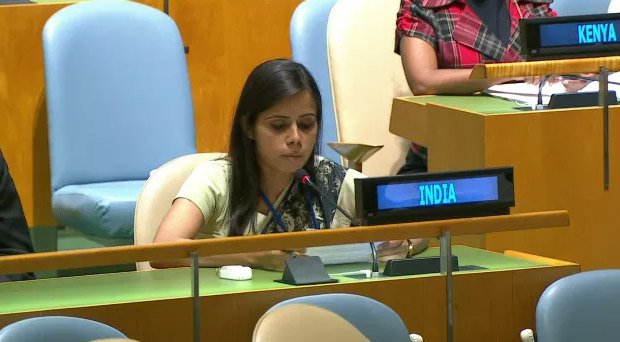
    WASHINGTON: Replying to Nawaz Sharif’s statement at the General Debate of 71st UNGA,  India’s First Secretary Eenam Gambhir (Follow her on Twitter @ Eenam Gambhir @eenamg)  directly took on Pakistan calling it a terrorist state and a global epicenter of terrorism.

    “The worst violation of human rights is terrorism. When practiced as an instrument of state policy it is a war crime,” said Gambir in India’s right of reply to Prime Minister Nawaz Sharif’s speech, in which he had raised the human rights situation in Jammu and Kashmir.

    Gambhir’s response to what she described as Pakistan’s “long tirade” about the situation in J and K, expressed earlier in a speech by the country’s prime minister Nawaz Sharif, was short, furious, and unprecedented in its intensity and descriptions.

    It also indicated a new Indian resolve to have Pakistan formally designated a nuclear proliferating terrorist state based on Islamabad’s use of terrorism as state policy and evidence of its nurturing of terror groups.

    Reminding the UN of how so many terrorist attacks, including that on 9/11 in U.S., led to Pakistan, she said, “The land of Taxila, one of the greatest learning centres of ancient times, is now host to the Ivy League of terrorism.” There was a specific reference to the hunt for Osama bin Laden leading to Abbottabad, Pakistan, where he was found and killed next to a Pakistan military garrison. Several other major terrorists including Mullah Omar, Ramzi Yousef, and Khalid Shaikh Mohammed, not to speak of numerous foot soldiers, including last week’s New York bomber, have found refuge and inspiration in Pakistan.

    “It attracts aspirants and apprentices from all over the world. The effect of its toxic curriculum are felt across the globe,” Gambhir explained, as India for the first time brought to the world’s attention the fallout of Pakistan’s nurturing of terrorist groups that the U.N itself has recorded and proscribed.

    “It is ironical therefore that we have seen today the preaching of human rights and ostensible support for self-determination by a country which has established itself as the global epicentre of terrorism,” she added in a reference to Sharif’s remarks on Jammu and Kashmir.

    More humiliation followed as Gambhir also raised the issue of the international aid to Pakistan being diverted for terrorism, raising the possibility that New Delhi will now begin a campaign to cut off assistance on which Islamabad subsists.

    IMF Chief Christine Lagarde is expected to go to Pakistan shortly in what will be the first visit by a top executive in a decade as Pakistan’s economy spirals down.

    “What we see in Pakistan, Mr. President, is a terrorist state, which channelizes billions of dollars, much of it diverted from international aid, to training, financing and supporting terrorist groups as militant proxies against it neighbors,” the Indian Rep told the UN, many of whose members give aid that enables Pakistan to survive.

    “Terrorist entities and their leaders, including many designated by the UN, continue to roam its streets freely and operate with State support. With the approval of authorities, many terrorist organizations raise funds openly in flagrant violation of Pakistan’s international obligations,” Gambhir told them.

    India also took aim at the internal tensions in Pakistan, calling it a “country with a democracy deficit.”

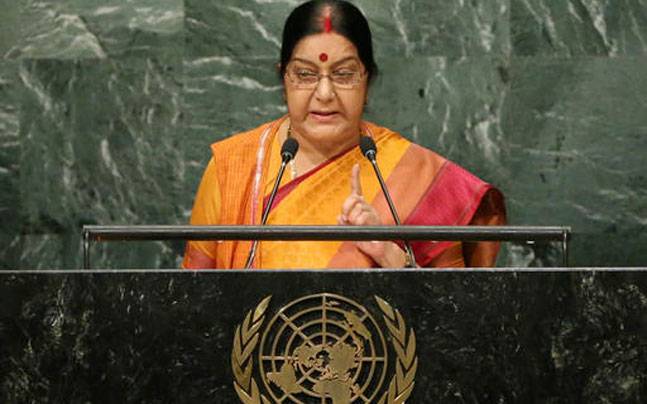
    “In fact it practices terrorism on its own people. It extends support to extremist groups, it suppresses minorities and women and denies basic human rights including through draconian laws,” Gambhir told UN delegates, in what is just a warm-up to External Affairs Minister Sushma Swaraj’s speech expected later in the week.

    In one short sentence, the Indian representative told the U.N, including many OIC and Arab monarchies and dictatorships that profess support to Pakistan on the Kashmir issue, but are also victims of terrorism: “As a democracy India is firmly resolved to protect all our citizens from all acts of terrorism in Jammu and Kashmir. We cannot and will not allow terrorism to prevail.”

    She also reminded them that India’s (and Pakistan’s) neighbors (which include Muslim-majority Afghanistan, Bangladesh, and Iran) suffer the consequence of Pakistan’s state-sponsored terrorism, even as its consequence had spread well beyond the region.

    Terrorists inspired, facilitated, and trained in Pakistan have struck throughout the world, including in New York, London, San Bernardino, and Brussels, among other cities.

    The Indian representative also ridiculed Sharif’s talk of nuclear restraint and peace, reminding the U.N that Pakistan’s “nuclear proliferation record is marked by deception and deceit.”

    Click here to read the statement made in its entirety (Courtesy –  Permanent Mission of India to the UN)

  • 2 Indians, 1 Indian-American Among 17 UN Young Leaders

    2 Indians, 1 Indian-American Among 17 UN Young Leaders

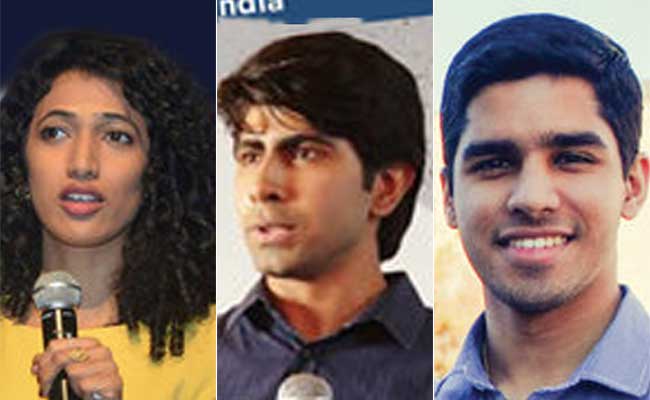
    Two Indians and an Indian American are among 17 people selected for the inaugural class of UN Young Leaders for Sustainable Development Goals for their leadership and contribution to end poverty, fight inequality and injustice, and tackle climate change by 2030.

    Trisha Shetty, 25, is the founder and CEO of ‘SheSays’, a platform she launched last year to educate, rehabilitate and empower women to take direct action against sexual assault in India.

    Ankit Kawatra, 24 founded ‘Feeding India’ in 2014 to address the issues of hunger and food waste, particularly by distributing excess food from weddings and parties to the needy.

    Indian-American Karan Jerath, 19, invented a ground- breaking, sub-sea wellhead capping device that contains oil spills at the source as a solution in the aftermath of the BP deepwater horizon oil spill – the largest marine oilspill in US history, near his home in Texas.

    UN Secretary-General Ban Ki-moon said the 17 young change-makers are a “testament to the ingenuity of youth and I congratulate them for their exceptional leadership and demonstrated commitment to the Sustainable Development Goals”. ‘SheSays’ uniquely provides tools and resources for women, including access to legal, medical and psychological support.

    “I decided to do something when I realised that I could go online to find information about restaurants, but for victims of sexual abuse, there was nothing,” Ms Shetty said.

    Ms Shetty and her team work with established institutions across the education, entertainment and healthcare sectors to build a network of support that recognises all levels of sexual abuse and provides the necessary means to fight it, according to a statement on the young leaders by the office of the UN Secretary-General’s envoy on Youth.

    So far, the organisation has successfully engaged more than 60,000 young people through educational workshops and Ms Shetty is now focussed on achieving the Sustainable Development Goal (SDG) of gender equality.

    Ms Kawatra’s organisation has a network of over 2,000 volunteers in 28 cities in India for rescuing and redistributing excess food to help feed people in need. The organisation has served over one million meals to date and aims to reach 100 million by 2020.

    Mr Kawatra, who quit his corporate job at 22, said he decided to focus on tackling food waste and hunger in India when at an Indian wedding he was “appalled” by the amount of food going waste in a country where 194 million are undernourished.

    The idea behind his organisation was to collect excess food from parties, events and weddings and re-distribute to people in need and it is now eyeing reaching zero hunger.

    Speaking at a UN event, Mr Kawatra said he was “honoured” to be selected as a UN Young Leader, a role which will give “me an opportunity to further advocate global development goals that need to be achieved for a better planet and also raise India’s concerns and social challenges all over the world”.

    Mr Jerath, a scientist and innovator, was born in India, raised in Malaysia and moved to the US at the age of 13. When the BP oil spill happened 30 minutes away from his home in Texas, Mr Jerath says he was determined to take action. “I realized that much smaller spills are happening on a daily basis and negatively affecting our oceans and environment. I had to find a solution,” he said.

    While still in high school, he invented a device that contains oil spills at the source. The patent-pending device can collect oil, gas and water gushing from a broken well on the seafloor, providing an effective, temporary solution in the case of an unforeseen subsea oil spill.

    For his invention, Mr Jerath won the ‘Young Scientist Award’ at the Intel International Science and Engineering Fair’s 2015 competition, and was selected as the youngest honoree on this year’s Forbes 30 Under 30 Energy list.

    Other leaders are Anthony Ford-Shubrook from the UK, a lifelong advocate for disability rights and access, Kenya’s Rita Kimani, co-founder of a social enterprise that connects unbanked and underserved smallholder farmers to credit, women’s rights activist Safaath Ahmed Zahir from Maldives.

    Shougat Nazbin Khan from Bangladesh who established a digital school for children from underprivileged communities in Bangladesh and Tunisian-Iraqi writer Samar Samir Mezghanni who has written over 100 short stories for children and published 14 books.

    The inaugural class, selected from over 18,000 nominations from 186 different countries, will support efforts to engage young people in the realisation of the SDGs and will have opportunities to engage in UN and partner-led projects.

    The initiative will also contribute to a brain trust of young leaders supporting initiatives related to the SDGs.

    The young leaders have been recognised for their leadership and contribution to the achievement of the 2030 Agenda for Sustainable Development, which includes a set of 17 Goals to end poverty, fight inequality and injustice, and tackle climate change by 2030.

    UN Secretary-General’s Envoy on Youth Ahmad Alhendawi unveiled the inaugural class of UN Young Leaders for the SDGs at the Social Good Summit in New York yesterday. The flagship initiative of the Office of the Secretary-General’s Envoy on Youth comes against a backdrop of increasing efforts by the UN to engage young people in its efforts to achieve the SDGs.

    “We are proud to announce this group of young global citizens who are already transforming their communities. At the same time, the selection process was an important reminder of the great potential and talent of so many young people around the world, who are making immense contributions to peace, development and the achievement of the Sustainable Development Goals,” Mr Alhendawi said.

    The Young Leaders Initiative is powered by the Office of the UN Secretary-General’s Envoy on Youth and is part of the Global Youth Partnership for Sustainable Development Goals, launched in 2015 and housed in the Envoy’s Office.

    From food to fashion to micro-finance, the UN Young Leaders for the SDGs, aged 19-30 years old, come from many different backgrounds, represent every region in the world and inspire all of us to achieve the goals.

  • UN holds first-ever summit on refugees and migrants

    UN holds first-ever summit on refugees and migrants

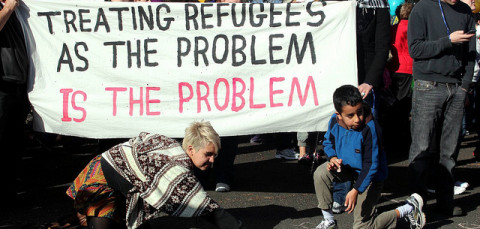
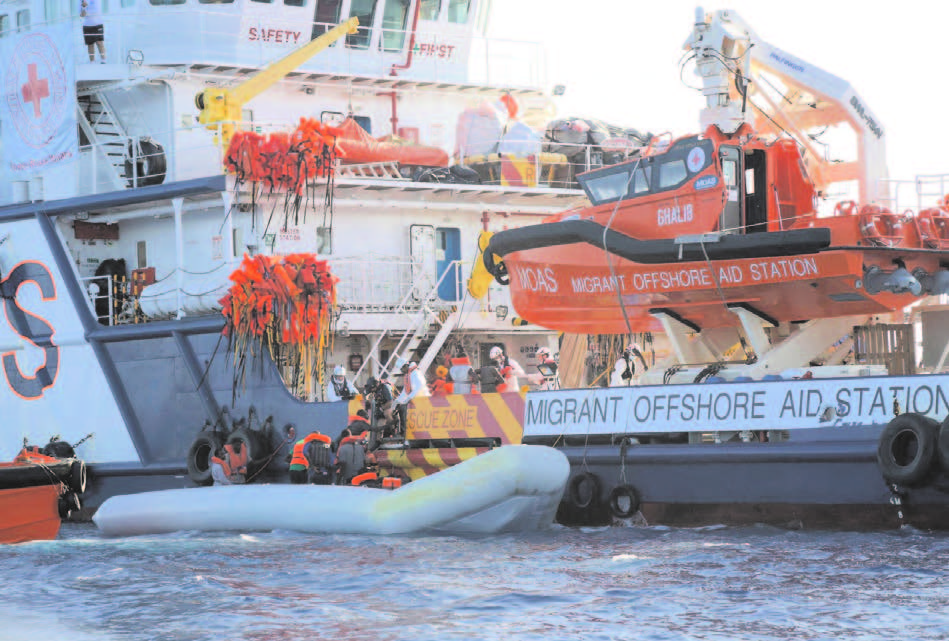
    UNITED NATIONS: The issue of what to do about the world’s 65.3 million displaced people takes center stage at the United Nations General Assembly when leaders from around the globe converge on New York for the first-ever summit on Addressing Large Movements of Refugees and Migrants.

    With more people forced to flee their homes than at any time since World War II, leaders and diplomats are expected to approve a document aimed at unifying the UN’s 193 member states behind a more coordinated approach that protects the human rights of refugees and migrants.

    “It’s very interesting because if we are able to translate that paper into a response in which many actors are going to participate, we will solve a lot of problems in emergency responses and in long-term refugee situations like the Syrian situation,” Fillipo Grandi, the UN’s High Commissioner for Refugees told reporters.

    That may prove an uphill struggle, however, as the document is not legally binding and comes at a time that refugees and migrants have become a divisive issue in Europe and the United States.

    A number of countries rejected an earlier draft of the agreement that called on nations to resettle 10 percent of the refugee population each year, something that has led a number of human rights groups to criticize the document as a missed opportunity.

    The US and a number of other countries also objected to language in the original draft that said children should never be detained, so the agreement now says children should seldom, if ever, be detained.

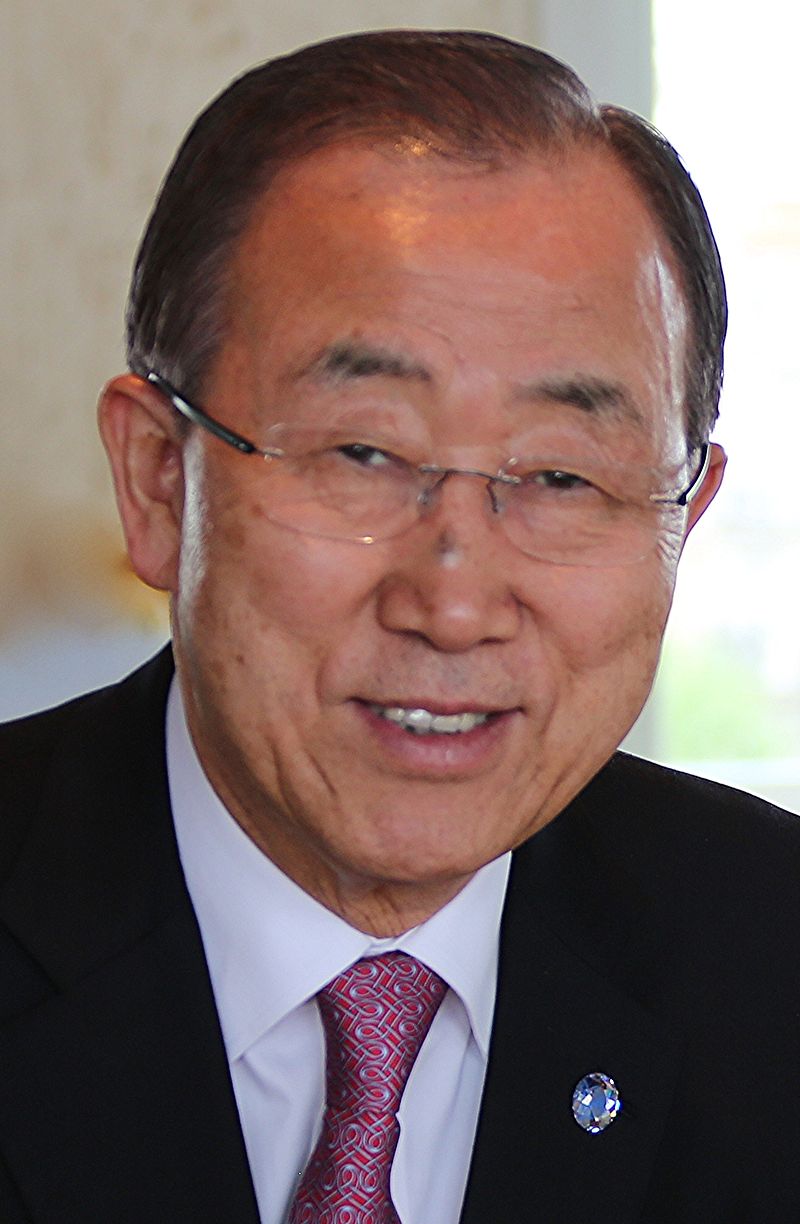
    Secretary-General Ban Ki-moon, whose report on refugees and migrants laid the basis for the summit document, said he was aware of the criticism from non-governmental groups.

    “While we all wish it could be a stronger outcome document … all 193 member states had to agree on their commitment. As you will see, my report was a strong one,” Ban said. “I hope that, as the two compacts are adopted over the coming year and a half, some stronger language and commitment and elements from the report will reappear in the course of this negotiation,”.

    First-ever summit on refugees and migrants: Facts

    When and where? The Summit is an all day event on Monday 19 September 2016 at the UNHQ in New York.

    Who is organizing? The High Level summit is being organized by the President of the General Assembly on behalf of Member States.

    In January 2016, the Secretary-General appointed a Special Adviser, Karen AbuZayd, to work with United Nations entities and undertake consultations with Member States and other relevant stakeholders in the lead up to the Summit.

    Participation The Summit will be attended by heads of state and government, Ministers, and leaders from the UN System, civil society, private sector, international organizations, academia, and beyond in alignment with the General Assembly resolution establishing the summit’s modalities.

    Background The UN General Assembly decided to convene a high-level plenary meeting on addressing large movements of refugees and migrants on the 19 September 2016 and requesting UN Secretary-General Ban Ki-moon to prepare a report with recommendations on the issue.

    – With inputs from www.refugeesmigrants.un.org

  • UN Secy Gen Ban Ki-moon condemns Uri attack

    UN Secy Gen Ban Ki-moon condemns Uri attack

    United Nations Secretary General Ban Ki-moon has condemned the terrorist attack on Uri in Jammu & Kashmir.

    The response comes in the middle of the 71st United Nations General Assembly (UNGA) at the UN headquarters in New York.

    A statement issued by the United Nations stated, “The Secretary-General condemns today’s militant attack in Uri, Jammu and Kashmir. He expresses his deepest sympathy and condolences to the families of the soldiers who lost their lives and to the Government of India. He wishes a speedy recovery to those injured. The Secretary-General hopes that the perpetrators of this crime will be identified and brought to justice.”

    smoke-rises-from-the-uri-brigade-camp-during-the-september-18-2016-terror-attackuri-attack-uri-terror-attack-uri-jawans-killed-uri-jawans-uri-jawansThe attack has claimed the lives of 18 soldiers and injured 19 others.

    The attack stared at 4:30 am September 18.


  • Obama to address UNGA on Tuesday

    Obama to address UNGA on Tuesday

    US President Barack Obama will address the UN General Assembly for the eighth and last time on Tuesday during which he will review some of the trends that have been shaping the international order for many years, his close aide has said.

    Obama leaves Washington DC for New York on Sunday morning for his last time attending the annual General Assembly Session as the US President.

    “I think with respect to the speech, what he will want to do is step back and review some of the progress thats been made over the last eight years, but also review some of the trends that have been shaping our international order for many years and that have led up to a really critical moment as the international community responds to a range of different crises,” Deputy National Security Advisor Ben Rhodes told reporters during a conference call.

    Giving a preview of his speech, Rhodes said Obama would likely offer his thoughts in this final forum to address the entire world about the types of approaches that they need to take as a national community to deal with a myriad of challenges.

    Obama will also talk about “how we can ensure that were continuing to promote sustainable and inclusive economic growth; how we are promoting the type of inclusive governance that both respects the rights of individuals around the world, but also facilitate to the many challenges that we face — governance obviously being a critical component of what is needed to deal with issues in the Middle East and North Africa — and then discuss the type of international cooperation were seeking to build,” Rhodes said.

    “I think Paris is a good model for that in that it involves nearly every country in the world stepping forward and making commitments to work together to deal with the global challenge. I think the President will discuss how we can apply international cooperation to deal with the many issues that are shaping this period in time,” Rhodes said.

  • 235,000 Libyan migrants ready to head to Italy: UN

    235,000 Libyan migrants ready to head to Italy: UN

    ROME (TIP): Some 235,000 migrants in Libya are ready to make the dangerous Mediterranean crossing to Italy as soon as the opportunity arises, UN envoy Martin Kobler said in an interview published September 15.

    According to Italy’s interior ministry, nearly 128,400 migrants have arrived via the Mediterranean since the start of the year — which is a five percent jump over the same period in 2015.

    “We have on our lists 235,000 migrants who are just waiting for a good opportunity to depart for Italy, and they will do it,” Kobler told Italian daily La Stampa.

    “Reinforcing security is the most important issue at the moment. If we have a strong and unified army… then the dangers of terrorism and human trafficking will cease,” he added.

    Libya’s UN-backed Government of National Accord based in Tripoli is struggling to assert its authority and has been facing staunch resistance from a rival administration based in the country’s remote east.

    Fighting for control of the nation’s oil assets has renewed fears of a civil war in Libya, which plunged into chaos after the 2011 uprising that toppled and killed dictator Moamer Kadhafi.

    Libya’s 1,770 kilometres (1,100 miles) of coastline have become a popular staging point for migrants seeking to reach Europe.

    Kobler also said the offensive to capture key oil ports by Field Marshal Khalifa Haftar, who supports the rival administration in the country’s east, was “very worrying.”

    “Libya is in need of dialogue, stability and unity. I have contacted general Haftar and I am ready to meet him in order to find a solution allowing for the creation of a single army,” he added.

  • High time to make #UNSC more Democratic & Representative: UN chief Ban Ki-moon

    High time to make #UNSC more Democratic & Representative: UN chief Ban Ki-moon

    UN chief Ban Ki-moon has said it is “high time” for the reform of Security Council for making it more “democratic and representative” as he appealed the member states to pay heed to the rapidly changing and “deteriorating” security challenges in the world.

    “When it comes to reform of the United Nations, particularly Security Council reform, I have been stating many times ? I dont know how many times, repeatedly ? that it is high time that the Security Council must be reformed and changed in a more democratic and representative way,” Ban told reporters here yesterday at a press conference ahead of the high-level General Assembly session that starts next week.

    “They have been meeting to negotiate this reform process for longer than two decades. Many proposals have been proposed, and they have been reviewed and discussed. Unfortunately, not a single issue has been able to see any convergence of opinions among the Member States,” he said.

    The UN Secretary General noted that each country and group brings their own proposals which have not been able to get the support from others.

    “So its important that the member states should look at this issue ? after a two-decades long consultation and negotiation process, its high time to discuss this matter,” Ban said.

    “As Im just about to leave my position, Im urging that they should reflect the voices and aspirations of the Member States and the rapidly changing, deteriorating security challenges of the international community really make it imperative that the Security Council should be changed,” he said.

    Ban said that the global challenges pertaining to refugees and migrants, climate change, and the war in Syria will be the major topics that will likely figure prominently in this years high-level week at the UN.

    “This years high-level week at the United Nations comes at a critical time,” Ban said, previewing activities that will take place at the annual session, when international attention is focused on the work underway at UN.

    World leaders are scheduled to address next weeks general debate and other events that will take place during the high-level segment of the General Assemblys 71st session.

    With the Secretary-Generals second five-year term expiring on December 31, this will be Bans last high-level week as the UN chief.

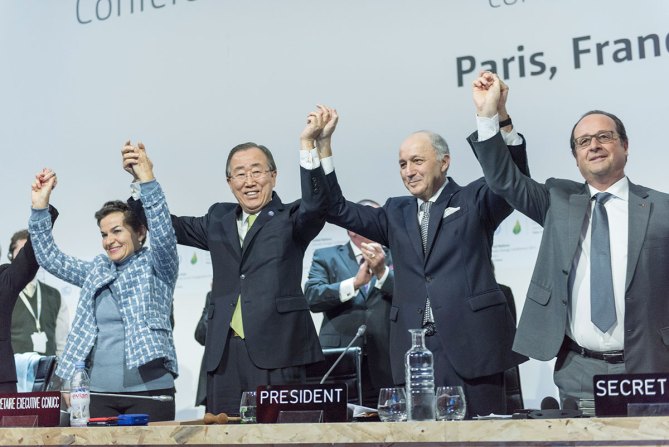
    Ban said he is pushing for the entry into force of the Paris Agreement on climate change before the end of this year.

    The worlds two largest emitters, China and the US, recently joined the accord.

    “Now we need just 28 more countries, representing 16 per cent of global emissions, to cross the necessary threshold,” he said, drawing attention to the September 21 special event at which countries can deposit their ratification instruments with the Secretary-General.

  • Taking the Paris process forward

    Taking the Paris process forward

    The ratification of the Paris Agreement on climate change by the United States and China, which together account for 38 per cent of global greenhouse

    gas emissions, provides much-needed momentum for the global compact to be in force beyond 2020. As UN Secretary-General Ban Ki-moon has emphasized, 26 countries have already acceded to the accord; to reach the target of 55 per cent emissions, 29 more must come on board.

    For the U.S., this is a landmark departure from its long-held position of not accepting a binding treaty like the Kyoto Protocol, where emerging economies heavily reliant on fossil fuels have no firm commitments.

    The Paris Agreement addressed this issue by stipulating voluntary but verifiable emissions reduction goals for all parties, within the principle of common but differentiated responsibilities that underpin the UN Framework Convention on Climate Change. Contrary to the belief that a requirement to cut GHGs will make economies less competitive, a major section of global industry and business has reaffirmed the potential for trillions of dollars in green investments flowing from the ratification of the Paris Agreement by the U.S. and China. This is a clear pointer for India, which is estimated to have the third highest individual country emissions as of 2014.

    There are distinct low-carbon pathways that India has outlined in its national plan submitted to the UNFCCC. Among these, the scaling up of renewable energy and non-fossil fuel sources to 40 per cent of installed power production capacity by 2030 is predicated on technology transfer and the availability of Green Climate Fund resources. Not much progress has been made in this area, and Minister of State for Environment Anil Madhav Dave confirmed recently that no contribution had been received from the Fund. Helping India lock in the right technologies in its growth trajectory is important for a global reduction in greenhouse gases. It is important for the U.S. to help accelerate this process in the area of power generation, following up on the assurances given by Secretary of State John Kerry during his recent visit on clean energy finance, technology, solar catalytic funding and help for power grid upgradation. New Delhi can, in parallel, do much more on domestic policy to achieve green and low energy intensive growth – such as taxing fossil fuels, managing emissions from waste better and making low-carbon buildings mandatory. India joined other G20 countries at Hangzhou to commit itself to addressing climate change through domestic policy measures. For that to happen, the Centre must initiate a serious discussion with the States on the national imperatives.

    (The Hindu)

  • Export of terror a threat to region: PM at ASEAN meet

    Export of terror a threat to region: PM at ASEAN meet

    VIENTIANE, LAOS (TIP): India’s Prime Minister Narendra Modi, in a veiled attack on Pakistan, raised the issue of terrorism at the East Asia Summit in Laos, September 8.

    Stating that most countries in the South Asian region were pursuing a peaceful path to economic prosperity, he said: “But, there is one country in India’s neighborhood whose competitive advantage rests solely in producing and exporting terrorism.” He added that it was crucial for countries to adopt an “isolate and sanction” attitude against Islamabad.

    “We need to target not only the terrorists, but also their entire supporting ecosystem,” Modi said, adding, “And, our strongest action should be reserved for those state actors who employ terrorism as an instrument of state policy.”

    “Rising export of terror, growing radicalization through ideology of hatred and spread of extreme violence define the landscape of common security threats to our societies. The threat is local, regional and transitional at the same time,” he said.

    India, of late, has been raising the issue of terrorism at international forums like the G20 and the East Asia Summit. The idea is to counter Pakistan which has been on the offensive as it is trying hard to internationalize the Kashmir issue globally and raise it at the level of the United Nations. At the G20 Summit, Modi had stated bluntly that there was one country in South Asia that was spreading terror. The clear reference to Pakistan was obvious.

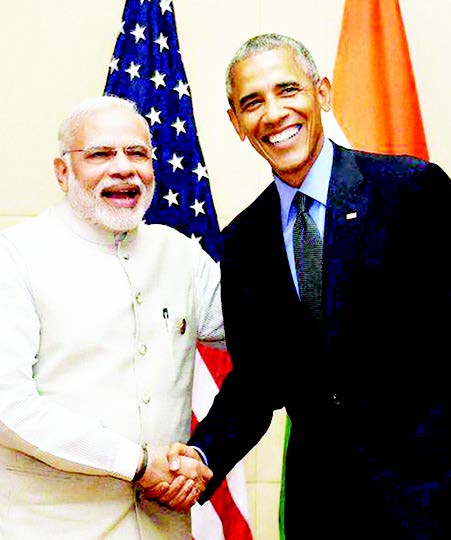
    Modi Meets Obama, discusses climate change

    Meanwhile, on the sidelines of the summit, Modi met United States President Barack Obama today. This was the eighth meeting between the two leaders and is probably the last one before Obama demits office. It is learnt that both leaders discussed climate change, energy co-operation and also reviewed progress on the Indo-US collaboration in nuclear energy, solar energy and innovation.

    President Obama is committed to the cause of climate change and it is one legacy that he wants to leave behind. Reports suggest that Modi informed Obama that India would adopt the Paris Agreement on climate change by year-end. However, there was no confirmation of it by India.

    (Read comment – Taking the Paris Process Forward)

  • India on path of becoming pivot for hi-tech manufacturing: UN

    India on path of becoming pivot for hi-tech manufacturing: UN

    India is on the path of becoming a “pivot” for high-tech world manufacturing even as global manufacturing growth is expected to remain low in 2016 due to weakened financial support for productive activities, a new UN report said.

    The quarterly World Manufacturing Production report, published by the UN Industrial Development Organisation (UNIDO) said world manufacturing output is expected to increase by only 2.8 per cent in 2016.

    However, in contrast to recent years, there will be no breakout from the low-growth trap in 2016.

    Growth performance was much higher in Asian economies, where manufacturing output rose by 6.5 per cent in the second quarter of 2016.

    “Indias manufacturing output, which achieved impressive growth rates in the last quarters, experienced a second slight decline in a row but the prospects for Indias manufacturing are conclusive, since India is on the path to becoming a pivot for high-tech world manufacturing,” the report said.

    According to the latest GDP data released in India, the manufacturing sector grew 9.1 per cent during April-June 2016, a slight decline from the 9.3 per cent clocked in January to March.

    UNIDO also warned that lower industrial growth rates pose a challenge for the implementation of Sustainable Development Goal (SDG) on promoting inclusive and sustainable industrialisation and foster innovation, as encapsulated by Goal 9, which also aims to significantly raise the share of manufacturing in the economies of developing countries.

    It further stated that manufacturing production is likely to rise by only 1.3 per cent in industrialised countries and by 4.7 per cent in developing ones.

    In terms of growth rates for countries, the growth rate performance of China, the worlds largest manufacturer, is likely to further decline from last years 7.1 per cent to 6.5 per cent this year.

    Russia and the US recorded marginal rises of one per cent and 0.3 per cent, respectively.

    In Europe, the uncertainty following the Brexit affected the growth rate performance in manufacturing in the second quarter of 2016, below one per cent for the first time since 2013.

    Developing economies maintained higher growth in the production of textiles, chemical products and fabricated metal products, while the growth performance of industrialised economies was higher in the pharmaceutical industry and in production of motor vehicles.

  • Bangladesh Executes 5th Islamist Party Leader for 1971 War

    Bangladesh Executes 5th Islamist Party Leader for 1971 War

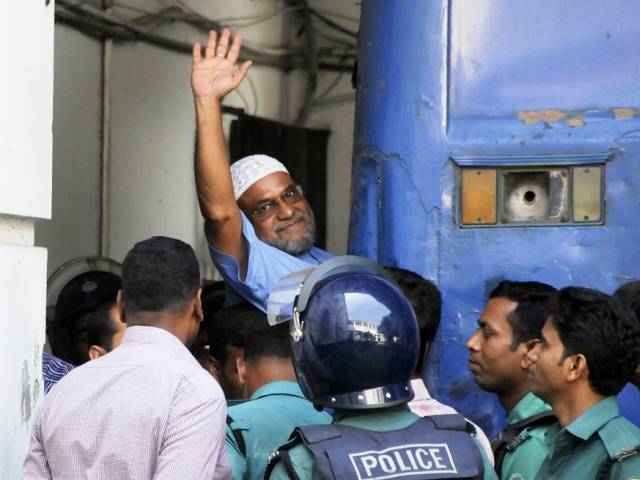
    NEW DELHI  — Bangladeshi authorities executed a top Islamist party leader convicted of war crimes involving the nation’s 1971 independence war against Pakistan, AP reports.

    Mir Quasem Ali, a leader of the Jamaat-e-Islami party, was hanged at 10:30 p.m. Sept. 3, hours after several dozen family members and relatives met him for the last time inside Kashimpur Central Jail near the capital, Dhaka, said Proshanto Kumar Bonik, a senior jail superintendent.

    “We are doing our necessary formalities now. We will send the body soon to the ancestral home in Manikganj district for burial,” Bonik said.

    Immediately after the execution, Home Minister Asaduzzaman Khan said security measures were put in place to prevent unrest by Ali’s supporters, including deployment of paramilitary border guards and additional police in Dhaka and other cities.

    The Jamaat-e-Islami party in a statement protested Ali’s execution and called for an eight-hour general strike beginning Monday morning.

    The execution took place a day after Ali refused to seek presidential clemency. The president had previously rejected appeals for clemency by other Islamist party leaders facing execution.

    On Aug. 30, the Supreme Court rejected a final appeal for reviewing Ali’s death sentence handed out by a special tribunal two years ago. After the ruling, the Jamaat-e-Islami party called for a daylong general strike across the country Aug. 31, but got little response.

    A special tribunal dealing with war crimes sentenced Ali to death in November 2014. The 63-year-old member of Jamaat-e-Islami’s highest policy-making body was found guilty on eight charges, two of which carried the death sentence, including the abduction and murder of a young man in a torture chamber. Ali was sentenced to 72 years in prison on the other charges.

    Ali built his fortune by establishing businesses from real estate to shipping to banking, and he was considered one of the party’s top financiers.

    He became the fifth Jamaat-e-Islami party leader to be executed since 2010, when Prime Minister Sheikh Hasina formed the special tribunal to try suspected war criminals. Also executed was a close aide of former Prime Minister Khaleda Zia from the main opposition Bangladesh Nationalist Party.

    Jamaat-e-Islami is a key partner of Zia’s Bangladesh Nationalist Party in the opposition against Hasina.

    Hasina’s government says Pakistani soldiers, aided by local collaborators, killed 3 million people and raped 200,000 women in the 1971 independence war.

    Jamaat-e-Islami, which had openly campaigned against independence, has denied committing atrocities.

    Hasina has called the special tribunal trials a long overdue effort to obtain justice for the victims of war crimes, four decades after Bangladesh split from Pakistan. Her government has rejected criticism from abroad that the trial process did not meet international standards.

    The international human rights group Amnesty International noted that the United Nations had raised questions about the fairness of the trials of Ali and other Islamist party leaders.

  • Philippines’ Duterte calls President Obama ‘son of a whore’

    Philippines’ Duterte calls President Obama ‘son of a whore’

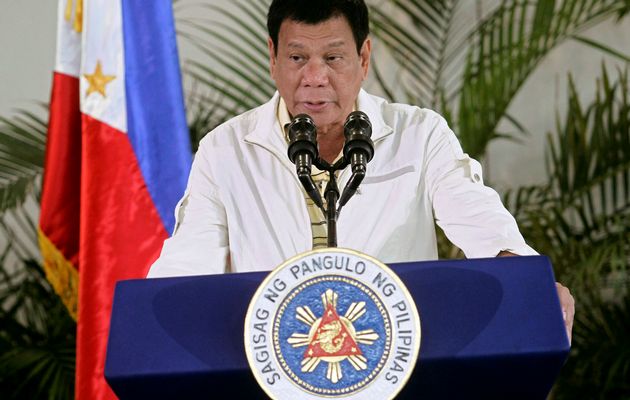
    Philippine President Rodrigo Duterte called Barack Obama a “son of a whore” on Monday, September 5, as he vowed not to be lectured by the US leader on human rights when they meet in Laos, where the Association of South-East Asian Nations summit is being held.

    The acid-tongued Duterte bristled at warnings he would face questioning by the US president over a war against drugs in the Philippines that has claimed more than 2,400 lives in just over two months.

    “You must be respectful. Do not just throw away questions and statements. Son of a whore, I will curse you in that forum,” Duterte told a news conference shortly before flying to Laos to attend a summit.

    “We will be wallowing in the mud like pigs if you do that to me.”

    Duterte was due to hold a bilateral meeting with Obama on Tuesday afternoon on the sidelines of a gathering of global leaders hosted by the Association of Southeast Asian Nations (ASEAN) in Vientiane, the Lao capital.

    But shortly after Duterte spoke, Obama appeared to cast doubt on whether such a meeting could take place.

    Calling Duterte “a colourful guy”, the US president said he has asked his staff to find out whether a meeting would be useful.

    “I always want to make sure if I’m having a meeting that it’s actually productive and we’re getting something done,” he told reporters.

    Speaking on the sidelines of the G20 summit in the Chinese city of Hangzhou, Obama said Washington recognised that drugs were a significant problem for the Philippines. But he insisted that he would not shy away from raising concerns about the way the issue was being handled under the new administration.

    “The issue of how we approach fighting crime and drug trafficking is a serious one for all of us. We’ve got to do it the right way,” he said.

    “Undoubtedly, if and when we have a meeting, this is something that’s going to be brought up. And my expectation, my hope is that it could be dealt with constructively.”

    Duterte has angrily rejected criticism from the Catholic Church, human rights groups, legislators and the United Nations.

    And he vowed Monday the bloodbath would continue as he pursued his goal of eradicating illegal narcotics in the Philippines.

    He has also branded Pope Francis and the US ambassador to Manila sons of whores.

    Duterte tells Obama ‘son of a whore’ remark wasn’t personal

    After Philippine president’s aides try to limit damage, saying he’d been addressing a reporter, he threatens to eat Islamist militias alive

    The president of the Philippines, Rodrigo Duterte, has expressed regret for calling Barack Obama a “son of a whore” – a remark that led to the US leader cancelling their meeting during a regional summit in Laos.

    In a statement read by his spokesman, Duterte said the remark was not intended as a personal insult. “While the immediate cause was my strong comments to certain press questions that elicited concern and distress, we also regret that it came across as a personal attack on the US president,” Ernesto Abella quoted Duterte as saying.

  • PoK would’ve been ours if left to us: Indian Air Force chief

    PoK would’ve been ours if left to us: Indian Air Force chief

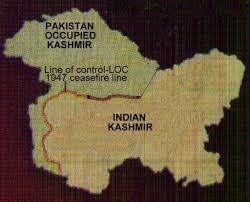
    NEW DELHI (TIP): Air Chief Marshal Arup Raha today indicated that Pakistan-occupied Kashmir (PoK) would have been India’s had the country gone for a military solution rather than taking a “moral high ground”. He rued that air power was not fully utilised by the Indian Government till the 1971 India-Pakistan war.

    Recalling the post-1947 era when hordes of raiders, supported by the Pakistan government and military, tried to overrun Jammu and Kashmir, he said  it was IAF’s transport planes that had helped soldiers and equipment to reach the battleground.

    “At that time we went to the United Nations for a peaceful solution. But the problem persists and Pakistan-occupied Kashmir remains a thorn in our flesh even today,” Raha said.

    PoK has recently witnessed violent protests. Prime Minister Narendra Modi, in his Independence Day speech, had spoken of rights violations in PoK and Balochistan.

    “We have been reluctant in use of power, specially aerospace power. Air power in deterring our adversaries, or deterring a conflict and when involved in a conflict, which we have been drawn into several times in the past, we did not apply ourselves adequately in achieving the end state after the conflict,” the IAF Chief said while speaking at a seminar here.

    He said India’s security environment had been vitiated and that aerospace power would be required to deter a conflict in the region as well as ensure peace. “We have been governed by high ideals and we did not follow a very pragmatic approach, to my mind, to security needs. To that extent, we did ignore the role of the military power to maintain a conducive environment,” Raha said. The IAF Chief said the only time when air power was fully utilised was during the 1971 war. “But the situation has changed. We are ready to use air power to defend ourselves and deter a conflict,” he added.

  • Setting out for New Friends

    Setting out for New Friends

    A Modi doctrine on Pakistan is now visible after two years of Pakistan policy vacillations. It basically has old elements which are newly interpreted.

    First is ‘zero tolerance to terror’, which even the Vajpayee government espoused. The Congress in opposition ridiculed it, arguing that a dialogue with Pakistan could not be made so contingent as that would give terrorists veto on the normalization process.

    In power, the Congress discovered that dialogue and terror could indeed not subsist if the attack caused widespread loss. Neither of the two governments, however, could devise a counter-strategy to deter future attacks. This was because military options ran into the nuclear conundrum i.e. retaliation could lead to nuclear holocaust. The Vajpayee government retaliated when Parliament was attacked in December 2001 by mass troop mobilization. The Manmohan Singh regime cancelled parleys after coordinated train bombings in Mumbai, a copy of similar strikes in London and Madrid, caused massive carnage. Dialogue was resumed only when a new counter-terrorism mechanism was established.

    The Modi government is trying to break out of this catch-22 situation by lowering the threshold of terror tolerance. The Pathankot attack did not cause significant loss of life or assets. But because the planning and abetting was traced to Pakistan, the arrest and prosecution of perpetrators was made an additional precondition to dialogue.
    Second, is the new approach to the Hurriyat. It is to have no role in India-Pakistan parleys. Again, past Indian governments have scowled at Pakistan using the Hurriyat as a co-interlocutor. Now, any blatant contact with the Hurriyat during India-Pakistan parleys would be a deal breaker.

    India reasons that Pakistan cannot determine the representatives of J&K people when they have elected the government of the state.

    Why should not India have the serving Chief Minister in attendance when talking to Pakistan instead of, or in addition to, the Hurriyat?

    Third, is the Modi government’s alacrity in bringing on record, what was whispered in the past, regarding Sino-Pak activities in Gilgit-Baltistan. This would now be on the agenda of talks with both countries, particularly when China itself has conceded in the past in Article 6 of the 1963 Sino-Pakistan border agreement that all understandings were subject to settlement of the Kashmir issue between India and Pakistan.

    The doctrine got the Prime Minister’s imprimatur in his Red Fort Independence Day speech. It played well domestically, with social media in a tizzy over the new assertiveness. But there are international ramifications for which the government is calibrating its diplomacy. Besides UN Secretary General Ban Ki-moon, who has to issue homilies on peace and security, even the US is beginning to lean on India. The Organization of Islamic Conference (OIC) is getting proactive and Pakistan is unleashing a major diplomatic offensive by dispatching two dozen envoys to plead its case over Kashmir. Pakistan senses an opportunity with the widespread protests in the Valley and the approaching session of the UN General Assembly in September.

    But both nations have domestic imperatives too. In Pakistan, despite the chief of army staff, Gen Raheel Sharif, announcing retirement when his three-year term ends in November, speculation is rife about an extension. PM Nawaz Sharif would prefer a new appointee as the incumbent has developed an overpowering persona. A strong pitch on Kashmir helps Sharif regain legitimacy that his long medical absence and lackluster performance has dented. The Obama administration may favor a transition too, as the US appears tired of the Pakistan army’s role in Afghanistan. Newly anointed Taliban leader Mullah Mansour’s killing by a US drone and the US urging India to give military assistance to Afghanistan convey a policy shift, transitory though it may be.

    The Modi government likewise faces crucial elections in Punjab, with extreme anti-incumbency and UP, where the BJP must score to justify having won there a quarter of its total seats in Parliament. Then, come the elections in Gujarat, which paved Modi’s path to Delhi. What if the Patel agitation, Dalit ire and ineffective successors to Modi cost BJP its ‘model’ state? It is thus not the polls in magazines today, but in states tomorrow that will determine his political standing. Some well-heeled ambassadors in town are quizzing Indian analysts if fueling tension with Pakistan is not a precursor to actual hostilities.

    The Modi government’s twin strategy thus is to woo select Muslim nations to counter Pakistani offensive as well as to bolster Muslim votes in UP. Newly drafted Minister of State MJ Akbar spent a week in Lebanon, Syria and Iraq, including a pilgrimage to the shrine of Hussain at Karbala. Besides the outreach to the Shia crescent that Iran dominates, the BJP eyes the Shia vote in UP, realizing that Sunnis will largely vote to defeat them. But the UN Security Council has begun examining the use of chemical weapons by the Assad regime in Syria. Akbar may have bitten more than India can diplomatically chew.

    Punjab was also covered when Akbar sought help to locate three dozen-odd, mostly Punjabi/Sikh, workers from around Mosul. Minister Sushma Swaraj has been for two years assuring their families that they were alive when the disarray of the IS and military pressure on them makes it highly unlikely that those non-Sunni stragglers can be alive among them. However, in Punjab, it covers the Akali/BJP flanks. Akbar also elicited support from Syria on India’s Kashmir position. ‘Secular’ Muslim nations are a rarity in today’s world.

    President Abdel Fattah el-Sisi of Egypt is another leader holding out against the Muslim Brotherhood and radical Islam. He began his India visit on August 31. For decades, President Hosni Mubarak was unable to visit and receive an honor conferred by India. But Egypt, the heart and mind of the Arab world, is today worth cultivating again. Many nations stand ready to reconfigure around the idea of religious tolerance and cohabitation, much as once the non-aligned movement cohered around the belief in strategic independence and post-colonial South-South inter-dependence.

    But the new outreach to ‘secular’ Muslim nations can only work if Modi aligns his domestic politics with his foreign policy. Merely milking the latter for domestic electoral reasons would be short-sighted and alienate both new and old friends.

    (The author, KC Singh, is a former Secretary, Ministry of External Affairs)

  • Two out of 5 kids are out of school: UNICEF

    Two out of 5 kids are out of school: UNICEF

    UNITED NATIONS (TIP): UNICEF has issued a new data analysis that shows in the 10 countries with the highest out-of-school rates, 40 per cent of children – 18 million – are not accessing primary education.

    The analysis comes at a time when millions of children around the world are preparing to go back to school.

    In the top 10 countries with the highest rates of children missing out on primary education, nearly 2 in every 5 children – 18 million – are out of school, UNICEF said

    Liberia is home to the highest proportion of out-of-school children with nearly two-thirds of primary-aged children not accessing school. The second highest is South Sudan, where 59 per cent of children are missing out on their right to a primary education and 1 in 3 schools is closed due to conflict.

    Afghanistan (46 per cent), Sudan (45 per cent), Niger (38 per cent) and Nigeria (34 per cent) also feature in the top 10 countries with the highest primary out-of-school rates, painting a clear picture of how humanitarian emergencies and protracted crises are forcing children out of school.

    The UNICEF data analysis, which comes as millions of children return to school this month, highlights the extent of an education crisis affecting countries already blighted by conflict, prolonged periods of drought, flash floods, earthquakes and high rates of extreme poverty.

    UNICEF fears that without education, a generation of children living in countries affected by conflict, natural disasters and extreme poverty will grow up without the skills they need to contribute to their countries and economies, exacerbating the already desperate situation for millions of children and their families.

    Education continues to be one of the least funded sectors in humanitarian appeals. In 2015, humanitarian agencies received only 31 per cent of their education funding needs, down from 66 per cent a decade ago. Despite a 126 per cent increase in education requirements since 2005, funding increased by just 4 per cent. Moreover, education systems equipped to cope with protracted crises cannot be built on the foundations of short-term – and unpredictable – appeals.

    During the World Humanitarian Summit, held in May 2016, a new global funding platform, Education Cannot Wait, was launched to bridge the gap between humanitarian interventions during crises and long-term development afterwards, through predictable funding.

    Though not one of the top 10 countries with the highest rates of out-of-school children, Syria is home to 2.1 million school-age children (5-17) who are not in school. An additional 600,000 Syrian children living as refugees in the surrounding region are also out of school.

    Recent, reliable data from countries including Somalia and Libya are not available either from administrative or survey sources partly due to the continuing conflicts.

    “For countries affected by conflict, school equips children with the knowledge and skills they need to rebuild their communities once the crisis is over, and in the short-term it provides them with the stability and structure required to cope with trauma. Schools can also protect children from the trauma and physical dangers around them. When children are not in school, they are at an increased danger of abuse, exploitation and recruitment into armed groups,” said UNICEF Chief of Education Jo Bourne.

  • President – Elect of the United Nations General assembly to visit India

    President – Elect of the United Nations General assembly to visit India

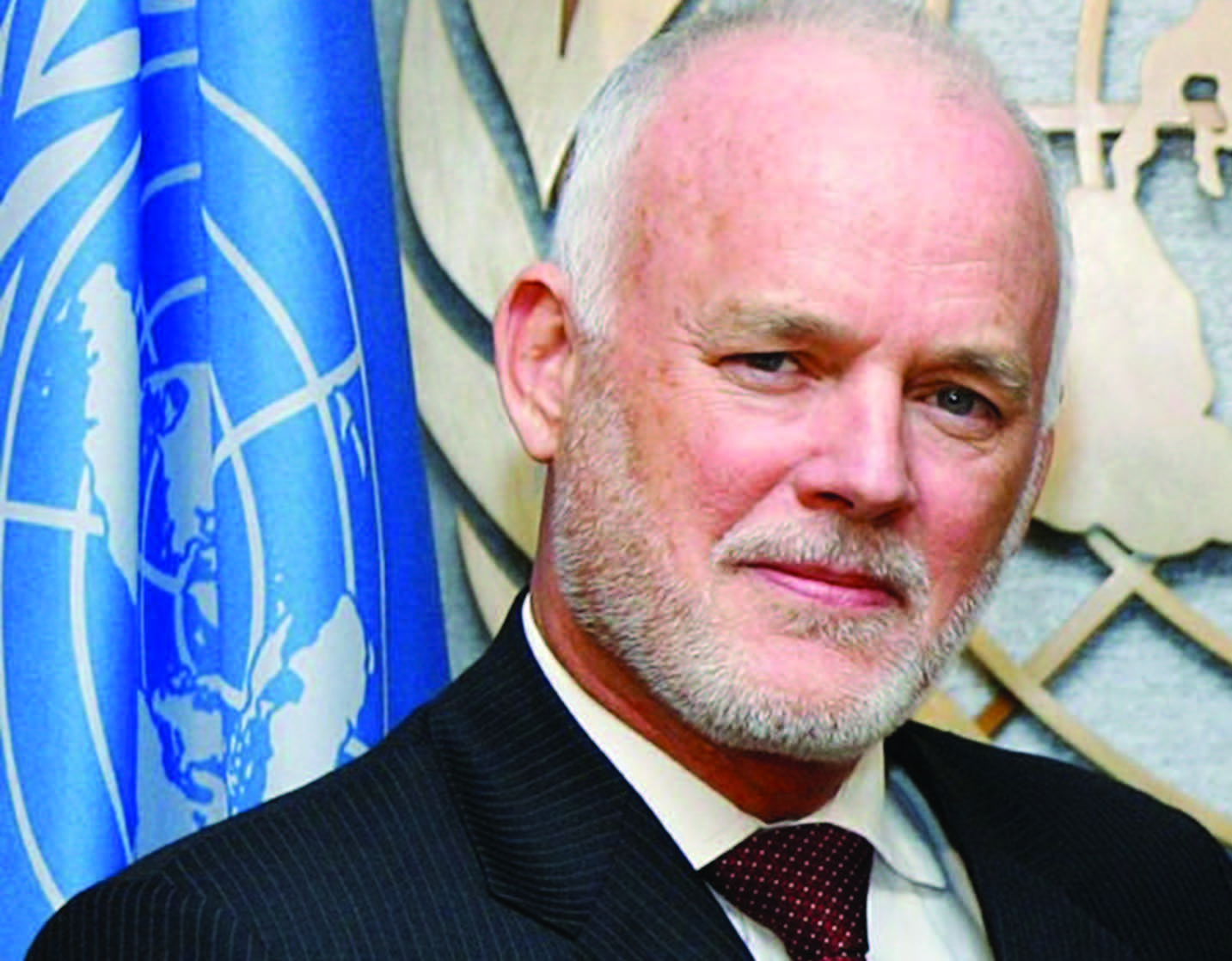
    UNITED NATIONS (TIP): The President-elect of the 71st session of the United Nations General Assembly, Ambassador Peter Thomson, will visit China later this week and India early next week.

    Ambassador Thomson will spend Friday 26 August attending official meetings in Beijing. It is expected the President-elect will meet with Chinese Premier Li Keqiang, State Councillor Yang Jiechi and Minister of Foreign Affairs Wang Yi.

    On Monday 29 August the President-elect will be in New Delhi for official meetings with the Indian Government. It is planned that he will meet with India’s Prime Minister Narendra Modi, External Affairs Minister Sushma Swaraj and Secretary for External Relations, Sujata Mehta.

    Ambassador Thomson said: “Coming from the Asia-Pacific nation of Fiji, I am pleased to have this opportunity to visit the two biggest countries in the regional group to which I belong. I look forward to the high-level talks I will be having with the Governments of China and India. My main interest will be to discuss how the United Nations can assist and accelerate the implementation of the 2030 Agenda for Sustainable Development.”

    The President-elect will be accompanied by the Office of the President of the General Assembly’s Chef de Cabinet Ambassador Tomas Anker Christensen and Senior Adviser Meena Syed. For the Beijing visit, Wen Li, Senior Adviser to the Office of the President of the General Assembly, will also accompany the President-elect.

  • Former RBI Deputy Governor Rakesh Mohan Named Senior Fellow At Yale Institute

    Former RBI Deputy Governor Rakesh Mohan Named Senior Fellow At Yale Institute

    NEW YORK: Top economist and RBI’s former deputy governor Rakesh Mohan has been named senior fellow at the prestigious Yale University’s institute for global affairs.

    Mr Mohan will join the 2016-2017 class of 15 Senior Fellows at The Yale Jackson Institute for Global Affairs. Senior Fellows are leading practitioners in various fields of international affairs who spend a year or semester at Yale teaching courses and mentoring students.

    At Jackson, Mr Mohan will teach courses on central banking and the Indian economy, the institute said in a statement.

    The institute described Mr Mohan as one of India’s “senior-most economic policymakers” and an expert on central banking, monetary policy, infrastructure and urban affairs.

    Most recently he was executive director at the International Monetary Fund in Washington, representing India, Sri Lanka, Bangladesh and Bhutan, and chairman of the Indian government’s National Transport Development Policy Committee.

    Reserve Bank of India’s deputy governor Urjit Patel has been appointed as the next Governor of the central bank after Mr Rajan demits office on September 4. However, Mr Mohan was reportedly among the front-runners to bag the coveted job.

    Mr Mohan has previously taught at Yale as Professor in the Practice of International Economics of Finance at its School of Management. He has also been a past Senior Fellow at the Jackson Institute.

    As deputy governor of India’s central bank from September 2002 to October 2004 and July 2005 to June 2009, he was in charge of monetary policy, financial markets, economic research and statistics.

    In addition to serving in various posts for the Indian government, including representing India at a variety of international forums such G20, Mr Mohan has worked for the World Bank and headed prestigious research institutes. He is also a Non Resident Senior Research Fellow of Stanford Centre for International Development, Stanford University, and Distinguished Fellow of Brookings India.

    Mr Mohan holds a B Sc in Electrical Engineering from Imperial College, University of London, a BA from Yale University and a PhD in Economics from Princeton.

    During the period October 31, 2004, to July 2, 2005, he was Secretary, Department of Economic Affairs. He has held several positions in the Indian government and was Chief Economic Advisor in 2001-02.

    The other senior fellows include Blair Miller, who leads impact investing for the office of Ray Chambers, the UN Secretary-General’s Special Envoy for Malaria, where they are developing a large scale impact investment fund for emerging markets and Ambassador Dennis Ross, former special assistant to President Barack Obama and National Security Council senior director for the Central Region.

    The new fellows will be joining returning fellows — Director of the Financial Stability Department at the Central Bank of Iceland Sigridur Benediktsdottir, former CEO of the Clinton Foundation Eric Braverman, New York Times op-ed columnist David Brooks, former US Deputy Permanent Representative to the United Nations Ambassador Rosemary DiCarlo, former Ambassador to Syria Ambassador Robert Ford, former International President of Doctors Without Borders Unni Karunakara and former Chairman of Morgan Stanley Asia Steve Roach.

    The Jackson Institute for Global Affairs promotes education and scholarship on global affairs at Yale.

    It serves the entire university through courses and core teaching programmes in global affairs, career counselling, and public lectures, according to the institute’s website.

  • Launch of “The Garden of Love- Light Poems of Sri Chinmoy”

    Launch of “The Garden of Love- Light Poems of Sri Chinmoy”

    NEW YORK CITY (TIP): Breadth and depth, newness and eternity will color this year’s Sri Chinmoy Poetry Festival, to be held Saturday, August 20, at 8 p.m. at the Sri Chinmoy Aspiration-Ground Meditation Garden in New York. A highlight will be the international launch of Sri Chinmoy’s fully bilingual publication The Garden of Love-Light Poems (Premaloker Kanan), which will include 140 of Sri Chinmoy’s original Bengali poems captured in both Bengali and Western script, coupled with his own English translations.

    Festival Director Ranjana K. Ghose notes in her foreword to the volume: “The Garden of Love-Light Poems of Sri Chinmoy is a work of immortal vintage poems. We find herein some of Sri Chinmoy’s earliest poetry and yet the epiphanies within are dawning ever anew, within the self and within mankind.”

    A keynote speaker at the Festival will be Ambassador Anwarul Chowdhury, the former United Nations Under-Secretary-General, who will read poetry from the book. Acclaimed singer Debashree Bhattacharya, joined by flutist Premik Russell Tubbs and keyboardist Parichayaka Hammerl, will perform selections of the haunting music which Sri Chinmoy composed to all poems in the book. The evening will be filled with both music and poetry, including performances by the London-based music group “Temple-Song-Hearts”.

    Rounding out the major presentations for the evening, Professor Neelima Shukla-Bhatt, Director of the South Asian Studies Program at Wellesley College, will relate Sri Chinmoy’s poetry to that of the 15th century poet Narasinha Mehta of Gujarat, particularly the lyric which became Gandhi’s favorite hymn. Professor Bhatt’s research includes expressions of devotion through poetry and song, and on cultural forms and resources that tie people together across boundaries.

    The international launch of The Garden of Love-Light Poems follows the launch held at the World Literature Centre (Bishwo Shahitto Kendra) in Dhaka earlier this year. That launch was presided over by Professor Anisuzzaman, who has received the Bangla Academy Award and the Ananada Purashkar for his work in the field of Bengali literature. He recited the following poem from the volume at that event:

    Not word, but work:
    This sweet message awakens strength
    In our heart.
    Inside work remains hidden
    The fragrance of flowers.
    Let work be the language of our heart
    And our proclamation.
    Our only aim is progress,
    Not victory and failure.
    — Sri Chinmoy
    The Sri Chinmoy Poetry Festival is an annual event, held in New York since 2009. For more information: Nayana Hein: 347-773-8369; Nishtha Baum: 347-968-9417

  • A.R. Rahman honored with “Tamil Ratna Award”

    A.R. Rahman honored with “Tamil Ratna Award”

    NEW YORK (TIP): New York based America Tamil Sangam presented its highest honor -Tamil Ratna Award – on maestro AR Rahman at the United Nations General Assembly Hall on Monday, August 15, thehistoric day of India’s Independence seventy years ago.

    Rahman gave a sparkling musical performance in aid of Sankara Nethralaya to commemorate the birth centenary of Dr M S Subbulakshmi.

    Presenting the award Dr Prakash M Swamy, president of the Sangam said the twice Oscar and Golden Globe winner is always an embodiment of peace, humbleness and charity The previous awardees include Bharathi Raja. the ace Tamil movie director, dancer Kamala Lakshman, Dr Srinivasa Varadhan,Abel laureate and Dr Prasad Srinivasan first Indian Assemblyman from Connecticut and Dr Valavanur Subramaniam, world renowned cardio thoracic surgeon.

    “It was an historic occasion for global Tamils to have him perform at the United Nations General Assembly Hall”, said Dr. Swamy.

    Executive committee members- Verra Kumar, Calai Chandra, John Joseph, Koshy Oomen, Nivetha Arasan and Soumya Murthi attended the event at the United Nations headquarters in New York.

  • UN to investigate peacekeepers’ response to South Sudan hotel attack

    UN to investigate peacekeepers’ response to South Sudan hotel attack

    UNITED NATIONS (TIP): United Nations Secretary-General Ban Ki-moon launched an investigation on August 16 into accusations peacekeepers in South Sudan failed to respond properly to an attack on a Juba hotel by uniformed men who killed a journalist and raped several civilians.

    Ban was “alarmed” by the initial findings of a UN fact-finding mission into the attack on the Hotel Terrain on July 11 during an outbreak of fighting between troops loyal to President Salva Kiir and those backing former Vice President Riek Machar. The secretary-general was “concerned about allegations that UNMISS (the UN peacekeeping mission in South Sudan) did not respond appropriately to prevent this and other grave cases of sexual violence committed in Juba,” Ban’s spokesperson said.

    Ban has launched an independent special investigation to determine the circumstances surrounding the incidents and evaluate the overall response by the UN peacekeeping mission, the spokesperson said in a statement. US Ambassador to the United Nations, Samantha Power, said on Monday, “We are deeply concerned that United Nations peacekeepers were apparently either incapable of or unwilling to respond to calls for help.” (Reuters)

  • UN chief says he’d like a woman to be next secretary-general

    UN chief says he’d like a woman to be next secretary-general

    UNITED NATIONS (TIP): Secretary-General Ban Ki-moon says he would personally like to see a woman lead the United Nations for the first time since it was established more than 70 years ago.

    As he nears the end of his second five-year term on Dec. 31, Ban said that “it’s high time now” for a female secretary-general after eight men at the helm of the world organization.

    There are currently 11 candidates vying to succeed Ban, six men and five women.

    But he stressed that the decision isn’t up to him, it’s up to the 15-member Security Council which must recommend a candidate to the 193-member General Assembly for its approval.

    Sitting onstage in Los Angeles last Wednesday with US Rep. Ed Royce, a California Republican who chairs the House Foreign Affairs Committee, Ban stressed that women comprise half the world’s population and should be empowered and “given equal opportunities.”

    “We have many distinguished and eminent women leaders in national governments or other organizations or even business communities, political communities, and cultural and every aspect of our life,” he said a day later in an Associated Press interview. “There’s no reason why not in the United Nations.”

    “So that’s my humble suggestion, but that’s up to member states,” Ban said in the AP interview last Thursday during a visit to the home of 99-year-old Libba Patterson in Novato where he spent his first days in the United States as an 18-year-old student from South Korea.

    The Security Council has held two informal polls in which 12 candidates participated, and in each the highest-ranked woman was in third place, a disappointment to many. Former Portuguese Prime Minister Antonio Guterres, a former UN refugee chief, topped both polls.

    In the first “straw” poll Irina Bokova of Bulgaria, who heads the UN Educational, Scientific and Cultural Organization, came in third but in the second she dropped to fifth. In the second poll Argentina’s Foreign Minister Susana Malcorra, who was Ban’s former chief of staff, moved up to third. Former Croatian Foreign Minister Vesna Pusic, who placed last in the first poll, dropped out of the race.

    The three other women candidates are New Zealand’s former prime minister Helen Clark, Christiana Figueres of Costa Rica, and former Moldovan Foreign Minister Natalia Gherman,

    The Security Council has scheduled another “straw” poll on Aug 29 and at least one, and possibly two, are expected to be held in September.

    Ban spoke of the qualities he thinks are important for “any secretary-general, he or she.”

    The prospective secretary-general should have “a clear vision for the world of the future” and “strong integrity and commitment” to make progress toward peace and promote development and human rights, he said.

    His successor should also have “strong compassionate and visionary leadership” and be able to articulate the importance of human dignity for vulnerable groups including women and girls, the disabled and “people in homosexual orientations and minority groups,” Ban said. “If not the United Nations, who will take care of those people?,” he asked. (AP)