Tag: United Nations

  • Refugees face new diversion as Hungary prepares to seal Croatia border

    Refugees face new diversion as Hungary prepares to seal Croatia border

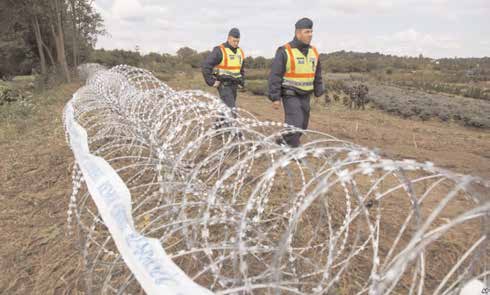
    ZAKANY, HUNGARY (TIP): A small gap in coils of newly laid razor wire is all that remains of the Zakany-Botovo border crossing between Hungary and fellow European Union member Croatia, as Budapest prepares to close off another route for refugees flocking to Europe.

    Heavy machinery is clearing trees and a 3-metre-high fence is taking shape along the line of the razor wire.

    The border, still traversed by thousands of refugees daily en route to Austria and Germany, could be sealed in a matter of minutes, potentially diverting the refugees into tiny Slovenia or stranding them in Croatia, where authorities are struggling with the scale of the influx.

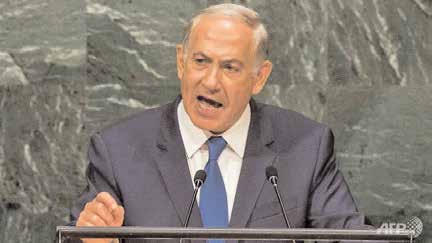
    Prime Minister Viktor Orban, who has already thrown up a fence to shut down the refugee route over Hungary’s southern border with Serbia, said last week the closure was imminent, and speculation is rife that it might follow his return from the United Nations General Assembly in New York on Thursday.

    Border crossings have been fitted with gates of steel and concrete.

    At the Zakany train station, military armored personnel carriers guard a train car, one side of which has been covered in razor wire in what appears to be a replica of the wagon used to close the main refugee route from Serbia.

    The closure of that stretch of Hungary’s border saw violent clashes between police firing tear gas and water cannon and young, male refugees lobbing stones and smashed concrete.

    The European Union is moving ahead with a plan, opposed by Hungary and several other eastern, ex-Communist members of the bloc, to distribute 120,000 refugees, many of them Syrians, between its members.

    But that is just a portion of this year’s influx of refugees, which the U.N. refugee agency said on Thursday may reach 700,000 and possibly more in 2016, in the greatest movement of people in Europe since World War Two.

    Orban, one of Europe’s most vociferous opponents of immigration, says he need not wait for the fence to be completed before he orders the crossings closed. Razor wire would suffice.

    Fast-flowing river

    “We need not wait for the completion of the second layer to order the closure of the green border,” he told a news conference last week.

    “We cannot wait for an as-yet-unborn common European policy. Once everyone understands what the Hungarian intention is and they can prepare that the Serbian-Hungarian border status quo will extend to the Croatian-Hungarian border, we will put those rules in effect to enforce EU laws on border crossing.”

    The razor wire runs the length of Hungary’s border with Croatia, including along sections that follow the Drava river, a fast-flowing artery that some refugees may be tempted to swim.

    Unlike Hungary, Croatia is not a member of Europe’s Schengen zone of passport-free travel.

    Relations between the two countries have soured considerably since the refugees began flowing into Croatia after Hungary shut down their route from Serbia, reflecting the discord and recrimination running through the European Union.

    Closing the Croatia-Hungary border crossings may force Croatia to transport more refugees into Slovenia, a former Yugoslav republic of 2 million people that says it can manage an influx of 10,000 per day.

    It will likely lead to a backlog at Croatia’s eastern frontier with Serbia, crossed by thousands every day in sometimes chaotic and desperate scenes. Croatian officials have declined to comment on what might happen if or when Hungary seals the border.

    For now, the flow from Croatia into Hungary and on to Austria is unbroken, efficient even.

    Police, ambulance crews and aid workers await trainloads of refugees on the Croatian side, handing them bread, water, canned fish and an apple each before they stride across the bridge over the Drava. Lines of refugees snake through riverside shrubs to a gap in the razor wire, where Hungarian police officers and a waiting train greet them.

    Anil Safia, an 18-year-old boxer from Afghanistan, devoured the bread and fish.

    “I’m sorry I have to eat while I talk,” he told a reporter, “but I have not had anything for a day and I need to maintain my weight, you know.”

  • The Context of the Cease-Fire Decision in the 1965 India-Pakistan War

    The Context of the Cease-Fire Decision in the 1965 India-Pakistan War

    By declaring a ceasefire with effect from 3.30 a.m. on 23 September 1965, did India miss an opportunity to attain decisive victory over Pakistan? Yes, according to the existing narrative, which attributes the ceasefire decision solely to the advice tendered in this regard by General J. N. Chaudhuri, the then Chief of the Army Staff and Chairman of the Chiefs of Staff Committee. In this account, Prime Minister Lal Bahadur Shastri was willing to consider extending the war “for some days” if the Indian Army could attain “a spectacular victory” in that timeframe.1 But Chaudhuri advised Shastri to agree to an immediate ceasefire because he was under the ‘false’ impression that the war effort could no longer be sustained given that “most of India’s frontline ammunition had been used up and there had been considerable tank losses also.”2 The reality was, however, quite different. By 22 September, the Indian Army had used up only 14 per cent of its frontline ammunition and it possessed “twice the number” of tanks than the Pakistan Army.3 In contrast, the Pakistan Army is believed to have been “short of supplies” and “running out of ammunition” by then.4 And a high attrition rate was “daily reducing the number of operational aircraft available” to the Pakistan Air Force.5 As argued by K. Subrahmanyam, under these circumstances, if India had continued the war “for another week, Pakistan would have been forced to surrender.”6

    There are, however, four problems with this narrative. First, it is based on the erroneous claim that the Indian Army possessed twice the number of tanks than the Pakistan Army at the end of the war. Second, it rests on the unverified assumption that the Pakistan Army’s ammunition and spare parts would not have lasted for more than a few days after 22 September. Third, the narrative fails to comprehend the context of the conversation between Shastri and Chaudhuri about extending the war for some more days. And finally, it fails to take into account military and diplomatic factors that actually determined the Cabinet’s ceasefire decision, some of which Chaudhuri himself highlighted in a written assessment he shared with Defence Minister Y. B. Chavan.

    Tank Strengths of India and Pakistan at the end of the War

    The official history of the war produced by the History Division of the Ministry of Defence claims that the Indian Army possessed twice the number of tanks than the Pakistan Army at the end of the war.7 It cites two sources in support of this claim: first, an interview given to its authors on 13 April 1988 by L. P. Singh, Home Secretary during the war; and, second, a letter sent to them on 12 April 1990 by K. Subrahmanyam, Deputy Secretary (Budget and Planning) in the Ministry of Defence during the war. It is not known what data source L. P. Singh and Subrahmanyam used to arrive at their conclusion. But their data source definitely could not have been the one used by the authors of the official history. If Singh and Subrahmanyam had used the same data source as the authors of the official history, they would not have been able to conclude that the Indian Army possessed twice the number of tanks the Pakistan Army did at the end of the war.

    The official history provides two sets of specific numbers that help to derive the actual number of tanks possessed by the Indian and Pakistan Armies at the end of the war. One, it provides the actual number of tanks the two armies possessed on September 1, the day the war began. And two, it provides the number of tanks that each army lost during the course of the war. Subtracting the number of tanks each army lost during the war from the total number of tanks each possessed on September 1 would give the net number of tanks each possessed at the end of the war.

    According to the official history, as on 1 September 1965, the Indian Army possessed 720 tanks and the Pakistan Army 765 tanks. That is, the Pakistan Army possessed 45 tanks more than the Indian Army on the day the war began. The official history’s source for these figures is Lt. Col. Bhupinder Singh’s book Role of Tanks in India-Pakistan War. Bhupinder Singh, in turn, had taken these figures from the 1965-66 edition of the Military Balance published by the London-based International Institute for Strategic Studies.8 During the course of the war, the Indian Army lost 128 tanks according to the official history, which cites a statement made to this effect by Defence Minister Chavan on 25 September 1965.9 Subtracting these 128 tanks lost from the pre-war strength of 720 gives a net figure of 592 tanks for the Indian Army at the end of the war.

    As for the Pakistan Army’s tank losses during the course of the war, the official history provides two figures, one the Indian estimate and the other the Pakistani estimate. The Indian estimate is that the Pakistan Army lost 200 tanks during the war. And the Pakistani estimate is that the Pakistan Army lost 165 tanks during the war. Subtracting the Indian estimate of 200 Pakistani tanks lost from the pre-war tank strength of 765 tanks gives a net figure of 565 tanks for the Pakistan Army at the end of the war. And subtracting the Pakistani estimate of 165 tanks lost from the pre-war strength of 765 tanks gives a net figure of 600 tanks for the Pakistan Army at the end of the war.

    In sum, at the end of the war, the Indian Army possessed 592 tanks; and the Pakistan Army possessed either 565 tanks or 600 tanks. In other words, the Indian Army possessed either 27 tanks more than the Pakistan Army or it possessed eight tanks less than the Pakistan Army. These numbers derived from the data cited in the official history itself discredit the claim that the Indian Army possessed twice the number of tanks than the Pakistan Army at the end of the war.

    That, in turn, calls into question the contention that the Indian Army would have been able to attain a spectacular victory if the war had been extended by a few more days. For, on 20 September, 1 Armoured Division, which had been “staked to turn the tide of the war” in India’s favour, had assumed the defensive and began to engage in refit and recoupment. And it did so after twice failing to capture the crucial town of Chawinda.10 By this time, moreover, it was being opposed not only by Pakistan Army’s 6 Armoured Division but also by a substantial portion of Pakistan’s 1 Armoured Division which had been moved from Khem Karan to the Sialkot front. Further, the two opposing Corps on this front, both named I Corps, were by then evenly matched in their non-armoured component, with seven brigades each.11 Under these circumstances of marked numerical inferiority in armoured strength and evenly matched infantry numbers, it would have been extremely difficult for the Indian Army’s I Corps and 1 Armoured Division to effect a break through the entrenched Pakistani defences or even batter them down through sheer attrition especially in a timeframe of a few days. In effect, a swift and spectacular victory would have been impossible if the war had been extended only by a few days or a week.

    Pakistan Army’s Materiel Situation

    The second problem with the existing narrative is its unverified assumption that the Pakistan Army was on the verge of running out of ammunition and spare parts. According to K. Subrahmanyam, it was US policy to provide six weeks’ worth of ammunition at war wastage reserves (WWR) to countries receiving American military aid. Further, such WWR of ammunition was provided at US rates, “which were lower than our rates”; Subrahmanyam does not, however, specify by how much or by what factor US WWR of ammunition were lower than “our rates”. This US policy applied to Pakistan as well, whose armed forces were equipped principally with American weapons and equipment during the 1950s and early 1960s.12

    The 1965 War began on 1 September with the Pakistani offensive in Chhamb, and ended on the early morning of 23 September. That is, it lasted 22 days or three weeks and one day. That means that the Pakistan Army would have used up three weeks’ worth of ammunition and spares. In effect, it would have possessed another three weeks’ worth of war wastage reserves. Such a conclusion is not difficult to arrive at. India, according to Subrahmanyam, had war wastage reserves worth 90 days at that time. And, as the official history of the war notes, the Indian Army had used up only 14 per cent of frontline ammunition at the end of 22 days of war. There is no reason to assume that the other party to this war, the Pakistan Army, consumed far greater quantities of ammunition; although the WWR, consisting of equipment and ammunition, is only a figure for planning and the actual expenditure of ammunition or loss of equipment varies depending upon intensity of engagement in battle(s). During war time the stocks from WWR are utilised to replenish the expenditure of ammunition or equipment getting destroyed or damaged beyond immediate repairs, during the battle. Of course, provision of Pakistan’s WWR would have been at US rates – not Indian rates – but in the absence of any indication about the exact differential between these two rates and actual expenditure, it is impossible to come to a definite conclusion that the Pakistan Army would have run out of ammunition if the war had continued for some more days or a week.

    Context of the Shastri-Chaudhuri Conversation

    The third inadequacy of the narrative that India could have attained a decisive victory is the inability of its advocates to comprehend the context of the Shastri-Chaudhuri conversation. In his interview to the authors of the official history, L. P. Singh stated that “towards the end of the war” Shastri asked Chaudhuri “whether India could win a spectacular victory if the war was prolonged for some days”, to which Chaudhuri responded that the army has already used up most of its frontline ammunition and had suffered considerable tank losses as well.13 In effect, by highlighting what turned out to be a non-existent ammunition shortage, Chaudhuri provided Shastri an indirect answer, namely, that “a spectacular victory” was no longer possible in “some days” given this deficiency. In the light of the subsequent revelation that the army had used up only 14 per cent of its frontline ammunition, analysts have exclusively focused upon Chaudhuri’s error, his fearfully cautious nature, and his tendency to act in an arbitrary and imperious manner.14 But what has been missed in these analyses is the context of the Shastri-Chaudhuri conversation.

    That context lies in the discussions that took place on 13 and 14 September 1965 in the Emergency Committee of the Cabinet (ECC). On these two days, the ECC was debating the pros and cons of agreeing to a ceasefire with effect from 6.30 p.m. on 14 September, which was being urged by the United Nations Secretary General, U Thant, who was actually present in Delhi between 12 and 15 September. The ECC stood divided on the question of whether to accept or reject U Thant’s plea, and the Security Council’s demand, for an early ceasefire. Acutely concerned about the impact of the war on the economy, Prime Minister Shastri, Finance Minister T. T. Krishnamachari and Food Minister C. Subramaniam were all in favour of agreeing to a ceasefire on the basis of the UN Security Council Resolution of 6 September. But they were strongly opposed by Defence Minister Chavan, who was not only reflecting his own views but also that of the leadership of the armed forces. Further, Selig Harrison, the then South Asia Bureau chief of The Washington Post, had reported at that time that Chaudhuri actually “urged” the ECC “to avoid a cessation of hostilities” at that point in time because the army was “on the verge of a decisive victory in the Punjab and should be allowed to inflict the maximum damage on Pakistani power.”15

    Shastri and other members of the ECC had to convince Chaudhuri to relent from his opposition to the government accepting an immediate ceasefire. The argument that they employed for this purpose went as follows: even if India accepted a ceasefire, Pakistan was probably not likely to do so; consequently, the war could well continue; and that would afford an opportunity for the army to attain its decisive, spectacular, victory, even as the government earned diplomatic points among world opinion by contrasting its own earnestness for peace with Pakistan’s attachment to war. It is on the basis of this understanding – that the war would probably continue and India would gain both diplomatically and militarily – that Chaudhuri accepted Shastri’s and the ECC’s decision to convey to the UN Secretary General India’s consent to the ceasefire.16

    Thereupon, Shastri wrote to U Thant on 14 September accepting the latter’s ceasefire proposal with effect from 6.30 a.m. on 16 September, provided Pakistan also agreed to do so. In this letter, Shastri also noted that military operations will continue against existing or future armed infiltrators from Pakistan and that the Security Council needs to make a distinction between Pakistan the aggressor and India the victim of aggression.17 When U Thant pointed out that these latter statements amounted to conditions for the ceasefire to come into effect, Shastri, with the concurrence of the ECC, sent “a more agreeable” follow-up letter to the UN Secretary General on 15 September.18 In this follow-up letter, after noting that he did not ask U Thant to give any undertaking on the issues of Pakistan’s aggression and armed Pakistani infiltrators, Shastri reaffirmed his “willingness, as communicated yesterday, to order a simple cease-fire and cessation of hostilities as proposed by you, as soon as you are able to confirm to me that the Government of Pakistan has agreed to do so as well.”19 But a ceasefire did not come into effect on 16 September and the war continued for another week because Pakistan insisted upon a precondition: that the ceasefire be accompanied by concrete steps that would “lead to a final settlement of the Kashmir dispute.”20

    What these events demonstrate is that the political leadership had taken a considered decision to accept an unconditional ceasefire with effect from 16 September. In the process, Shastri and his colleagues in the ECC had to convince Chaudhuri to relent from his strong opposition to that decision. Given this reality, it is inconceivable that only a week later Shastri seriously contemplated an extension of the war beyond 22 September, especially when neither the military nor diplomatic situation had improved in any significant way and when it was also clear that Pakistan will “ultimately agree to the ceasefire” without insisting upon any precondition this time around.21

    These developments help explain the manner in which Shastri phrased his question to Chaudhuri a week later: “whether India could win a spectacular victory if the war was prolonged for some days”? It is quite conceivable that Chaudhuri’s vehement opposition to the ceasefire decision and his assertion that the army was on the verge of a decisive victory at the ECC meetings on 13 and 14 September made a strong impression upon Shastri. After all, as Chief of the Army Staff and Chairman, Chiefs of Staff Committee, Chaudhuri represented the views of the entire military establishment. The very fact that the appropriateness of the ceasefire decision is still being discussed 50 years later in military circles attests to the enduring views that the armed forces have held in this regard. Consequently, before conveying to the United Nations his willingness to order a ceasefire that will bring the war to an end, Shastri may have felt compelled to ask Chaudhuri whether the decisive, spectacular, victory, which the army chief had earlier asserted was within reach, could still be attained if the war were to be extended for some days beyond 22 September.

    While it is not known when exactly Shastri posed this question to Chaudhuri, Chavan’s diary throws light on how and when the ceasefire decision was actually arrived at. The decision was made on the evening of 20 September at a meeting that Shastri held with Chavan, Chaudhuri and P.V.R. Rao, in which the Prime Minister’s Secretary L.K. Jha also participated. Chavan’s diary entry for that date states: “After some preliminary discussion about the military point of view, it was agreed that Prime Minister should send to U Thant … (a message) confirming our willingness to order simple ceasefire if Pakistan is agreeable.”22 In effect, the decision was taken by the Prime Minister on 20 September in consultation with the top leaders of the defence establishment – Defence Minister, Army Chief who was also Chairman, Chiefs of Staff Committee, and Defence Secretary. It was only subsequently, on 21 September, that the ECC endorsed the Prime Minister’s prior decision to accept the ceasefire “without much discussion”.23

    But what explains the difference between Chaudhuri’s initial opposition to a ceasefire and the erroneous excuse he offered for accepting the ceasefire a week later? Chaudhuri had expressed his strong opposition to a ceasefire on 13 and 14 September and asserted that the army was on the verge of a decisive victory because he believed that the armoured offensive in the Sialkot Sector, which was then underway, would turn the tide of war in India’s favour. I Corps’ objective was to secure Pakistani territory up to the Marala-Ravi Link Canal, thus driving a wedge between Sialkot and Lahore fronts, and in the process considerably attrite Pakistani forces. 1 Armoured Division had already captured Phillora on 11 September and in the process had inflicted heavy attrition on Pakistani armour. And on the morning of 14 September it began its advance against Chawinda. The capture of Chawinda would have severed a crucial rail link between Sialkot and Lahore and maintained the momentum of the forward advance towards the Marala-Ravi Link Canal. But fierce Pakistani resistance and misunderstandings between Indian commanders prevented Chawinda’s capture despite two successive attempts, the first on 14 September by 1 Armoured Division and the second on 19 September by 6 Mountain Division. Thereupon, 1 Armoured Division, which had by then lost 70 tanks through damage or destruction, assumed the defensive and began the process of refitting and recouping. In effect, as Harbakhsh Singh notes, the war on the Sialkot front had reached “a virtual stalemate”.24 By this time, moreover, the war on the Lahore front had settled down to a series of relatively minor actions that could not fundamentally change the frontline.

    4 Mountain Division failed to retake Khem Karan. While 7 Infantry Division managed to improve its position slightly, it could not fully mop up Pakistani pockets or destroy the bridges on the Ichhogil. The only major success was the capture of Dograi by 15 Infantry Division, but that came on 22 September, two days after the ceasefire decision had already been taken.25

    In the light of this turn of events, Chaudhuri could no longer assert to the Prime Minister that the army would be able to attain a spectacular victory if the war were to be extended by some more days beyond 22 September. Perhaps, in the light of his previous assertion about attaining a decisive victory within a few days, he felt compelled to offer the excuse that the army had used up most of its frontline ammunition and suffered considerable tank losses. As D. K. Palit notes, this was an “off-the-cuff answer” that Chaudhuri delivered without, as was his habit, verifying it first with his staff.26 But whatever Chaudhuri’s motive or fault or actual belief for providing the answer that he did, the fact of the matter is that the Indian Army was simply not in a position at that point in time to attain a spectacular victory in a matter of a few days or a week.

    Military and Diplomatic Factors that Influenced the Ceasefire Decision

    Finally, what has been missed through this exclusive focus upon Chaudhuri’s ‘erroneous’ belief about the army’s materiél position are other military and diplomatic factors that compelled the government to accept an early ceasefire. That the ceasefire decision did not solely hinge on Chaudhuri’s advice and incorrect statement about ammunition stocks, but was instead a function of other diplomatic and military factors, is evident from a written assessment that Chaudhuri himself had prepared and shared with Defence Minister Chavan on the morning of 20 September. As noted earlier, the Prime Minister took the ceasefire decision in consultation with the leaders of the defence establishment that very evening.

    During the morning meeting on 20 September, Chavan asked the three Chiefs of Staff about “their view” on the government agreeing to a ceasefire given that the UN Security Council was “expected” to pass another resolution that day demanding an immediate termination of hostilities. Chaudhuri responded that he had “prepared an assessment from (the) military point of view”, and after the morning meeting he “came back alone” to share this assessment with Chavan.  The “thesis” of Chaudhuri’s assessment, as briefly recorded by Chavan in his diary, was that India had achieved both its war objectives: defeating Pakistan’s attempt to conquer Jammu & Kashmir, and inflicting damage on Pakistan’s “war potential and military machine”. Since India was “on top of the situation” militarily, the army would support the government’s decision to agree to a ceasefire. Further, the resulting “respite … will be good to put things right as far as supplies were concerned.” In addition, the assessment highlighted two other factors that necessitated a ceasefire. First, India stood “completely isolated” in the diplomatic arena. Second, rejecting a ceasefire would also be “unwise” from the long-term military point of view because of the China factor. China, the assessment noted, is keen to ensure that the India-Pakistan war continued so that it can “fish in the troubled waters”. After recording this gist of Chaudhuri’s assessment on the ceasefire in his diary, Chavan noted: “I think it is good that the military and political thinking was moving in the same direction.”27

    In this assessment, Chaudhuri refers to the opportunity that the ceasefire would provide to replenish war supplies, although he does not expressly state whether most supplies had been used up. More importantly, he highlights two other factors that had a considerable bearing on the government’s calculations: the prospect of China initiating hostilities against India, and India’s diplomatic isolation and the international diplomatic pressure that was being exerted upon it to agree to an early ceasefire.

    The prospect of China initiating hostilities became evident as early as 7 September, when it issued a statement contending that India’s expansion of the “local conflict … in Kashmir into a general conflict” constituted “a grave threat to peace in this part of Asia.” Further, in an apparent attempt to lay the ground for a Chinese military intervention, the statement asserted that “India’s aggression against any one of its neighbours concerns all of its neighbours”.28 The very next day, on 8 September, China sent an ultimatum demanding that India either “dismantle” certain “military structures”, “withdraw” its armed forces from the border and “stop all its acts of aggression and provocation against China” or else “bear responsibility for all the consequences arising therefrom.”29 After a week-long lull, another ultimatum followed on 16 September demanding that India either “dismantle” 56 military works along the Sikkim border, “immediately stop all its intrusions” into Chinese territory, and “pledge to refrain from any more harassing raids across the boundary” or “bear full responsibility for all the grave consequences arising therefrom.”30 On the very next day, 17 September, Chinese troops began to move closer to the border in the Sikkim and Ladakh Sectors.31 And, three days later, on 20 September, Chinese troops fired upon Indian positions at several places along the border including Nathu La.32

    Although Indian leaders discounted a large-scale Chinese attack, they did think that China might initiate limited military action in order to divert India’s attention from the war against Pakistan. They believed that a Chinese attack could occur either through Chumbi Valley or more worryingly through the Karakoram Pass “in vicinity of Kargil” with a view to cutting off the Srinagar-Leh road”.33 Seriously concerned about such a possibility, the prime minister’s secretary, L. K. Jha, made a request to the US Ambassador in Delhi, Chester Bowles, that secret consultations be commenced between Indian and American military personnel with a view to “speed up” US military assistance in the event of a Chinese attack. But the United States expressed its unwillingness to initiate any such “contingency planning” given President Lyndon Johnson’s decision “to avoid commitment of any sort”.34

    China’s entry into the war, however limited its military intervention might have been, would have made it impossible for India to fully focus on the war with Pakistan. Continuing the war with Pakistan under these circumstances may not have yielded any appreciable advantages. In addition, China would have had an opportunity to once again “bruise India’s morale” or even pose a challenge to the Indian military presence in Ladakh.35 Under these circumstances, the ceasefire decision became impossible to postpone.

    Another factor that made the ceasefire decision impossible to postpone was lack of diplomatic support for India’s position in the international arena as well as the enormous diplomatic pressure that was being exerted, particularly by all the major powers in unison, to terminate the hostilities.

    The Soviet Union adopted a position of studied neutrality. Premier Alexie Kosygin repeatedly urged Shastri and Ayub Khan to cease hostilities and even offered to mediate between them. Further, for the first time since the United Nations was formed, the Soviet Union voted along with the United States in favour of three successive Security Council resolutions calling for an immediate ceasefire. What drove Soviet policy was concern about its communist rival, China, exploiting the India-Pakistan war to acquire a prominent role in South Asia.

    Preventing China from entering the war and denying it an opportunity to do so was also an important factor in US policy. For this purpose, even as it privately warned China against intervening in the India-Pakistan war, the United States worked with the Soviet Union to pass successive UN Security Council resolutions that contained explicit language about the undesirability of third-party military intervention. At the same time, to deny China an opportunity to intervene, the United States, along with the United Kingdom, suspended all economic and military assistance to India and Pakistan in order to compel them to end the war. In addition, the United States also began to exert subtle pressure on both countries by
    “dribbling” out food aid “slowly”.36 That this subtle pressure did register is evident from Indian Ambassador B. K. Nehru’s question to US Undersecretary of State George Ball as to “why you are trying to starve us out?37

    India could not even obtain diplomatic support from its non-aligned friends such as Egypt and Yugoslavia. These and several other countries in Asia and Africa also urged an early ceasefire.38 In effect, India stood isolated diplomatically and faced enormous international diplomatic pressure, a circumstance that had a major impact on the ceasefire decision.

    Conclusion

    For 25 years since the compilation of the official history and the series of books published in the 1990s, a simplistic narrative has dominated the debate on the decision to agree to a ceasefire. But this narrative is not only based on one erroneous claim and another unverified assumption, but it also fails to take into account the stalemate on the war front as well as other military and diplomatic factors that ultimately influenced the ceasefire decision. As a result, myth had usurped the place of history and the context in which that history unfolded. The history is that the ceasefire decision was influenced not by Chaudhuri’s ‘erroneous’ belief that the army had run out of ammunition but by the combination of the absence of the prospect of a swift victory, concerns about Chinese military intervention and its consequences, and concerted diplomatic pressure from the major powers.

    Views expressed are of the author and do not necessarily reflect the views of the IDSA or of the Government of India.


    1 Shastri’s poser to Chaudhuri sometime “towards the end of the war”. This was recalled on 13 April 1988 by L. P. Singh (Home Secretary during the war) in an interview with the official historians of the 1965 War. Cited in B. C. Chakravorty, History of the Indo-Pak War, 1965, Chapter 12, pp. 333-34, 339. This account has subsequently been published as S. N. Prasad and U. P. Thapliyal, The India-Pakistan War of 1965: A History (New Delhi & Dehra Dun: Ministry of Defence, Government of India & Natraj Publishers, 2011), p. 314.

    2 Chaudhuri’s response to Shastri’s poser, recalled on 13 April 1988 by L. P. Singh. Cited in Chakravorty, History of the Indo-Pak War, 1965, Chapter 12, pp. 333-34; Prasad and Thapliyal, India-Pakistan War of 1965, p. 314.

    3 Chakravorty, History of the Indo-Pak War, 1965, Chapter 12, p. 334; Prasad and Thapliyal, India-Pakistan War of 1965, p. 315.

    4 Russell Brines, The Indo-Pakistani Conflict (London: Pall Mall Press, 1968), p. 346; Altaf Gohar, Ayub Khan: Pakistan’s First Military Ruler (Karachi: Oxford University Press, 1996), p. 237.

    5 Asghar Khan, The First Round: Indo-Pakistan War 1965 (Ghaziabad: Vikas Publishing House, 1979 Indian edn.), p. 98.

    6 K. Subrahmanyam, “Guilt Gen of ’65,” Indian Express, 12 June 2005.

    7 Chakravorty, History of the Indo-Pak War, 1965, Chapter 12, pp. 334, 339. See Endnote 15 on page 339.

    8 Chakravorty, History of the Indo-Pak War, 1965, Chapter 1, p. 10; Prasad and Thapliyal, India-Pakistan War of 1965, p. 10; Bhupinder Singh, 1965 War: Role of Tanks in India-Pakistan War(Patiala: B. C. Publishers, 1982), pp. 20-21.

    9 Chakravorty, History of the Indo-Pak War, 1965, Chapter 12, pp. 333, 339. Prasad and Thapliyal, India-Pakistan War of 1965, pp. 312, 316.

    10 Prasad and Thapliyal, India-Pakistan War of 1965, pp. 187-221; Harbakhsh Singh, War Despatches: Indo-Pak Conflict 1965 (New Delhi: Lancer International, 1991), p. 158.

    11 Prasad and Thapliyal, India-Pakistan War of 1965, pp. 188-90.

    12 Subrahmanyam, “Guilt Gen of ’65”.

    13 Chakravorty, History of the Indo-Pak War, 1965, Chapter 12, pp. 333, 339; Prasad and U. P. Thapliyal, India-Pakistan War of 1965, p. 314.

    14 K. Subrahmanyam, “Guilty Gen of ’65”; Chakravorty, History of the Indo-Pak War, 1965, Chapter 12, p. 334; D. K. Palit, War in High Himalaya: The Indian Army in Crisis, 1962 (New Delhi: Lancer International, 1991), pp. 401-28.

    15 Selig S. Harrison reported on this episode in The Washington Post on 14 and 15 September 1965. Cited in Brines, Indo-Pakistani Conflict, pp. 367, 464.

    16 Brines, Indo-Pakistani Conflict, p. 367.

    17 Text of Shastri’s letter to U Thant dated 14 September 1965, reprinted as “Offer to Ceasefire,” in Selected Speeches of Lal Bahadur Shastri: June 11, 1964 to January 10, 1966 (New Delhi: Publications Division, Ministry of Information and Broadcasting, Government of India, 2007 reprint), pp. 334-35.

    18 In his diary entry for 15 September, Chavan noted that the ECC “decided after some discussion to reply in a more agreeable way” to U Thant. R. D. Pradhan, Debacle to Resurgence: Y. B. Chavan – Defence Minister 1962-66 (New Delhi: Atlantic Publishers & Distributors, 2013), p. 273.

    19 Cited in Brines, Indo-Pakistani Conflict, p. 368.

    20 Brines, Indo-Pakistani Conflict, pp. 368-69.

    21 Quoted phrase from Chavan’s entry in his diary on 21 September. Pradhan, Debacle to Resurgence, p. 307.

    22 Chavan’s diary entry on 20 September. Pradhan, Debacle to Resurgence, p. 306.

    23 Chavan’s diary entry on 21 September. Pradhan, Debacle to Resurgence, p. 307.

    24 Harbakhsh Singh, War Despatches, pp. 158, 122; Prasad and Thapliyal, India-Pakistan War of 1965, pp. 187-221.

    25 Harbakhsh Singh, War Despatches, pp. 112-21.

    26 Palit, War in High Himalaya, p. 427.

    27 Pradhan, Debacle to Resurgence, pp. 285-86. All quotations in this paragraph are from this source.

    28 “Statement of the Government of the People’s Republic of China, 7 September 1965,” reprinted as Appendix I in White Paper No. XII: Notes, Memoranda and Letters Exchanged Between The Government of India and China, January 1965-February 1966 (New Delhi: Ministry of External Affairs, Government of India, 1966), pp. 134-35.

    29 “Note given by the Ministry of Foreign Affairs, Peking, to the Embassy of India in China, 8 September, 1965,” reprinted in White Paper No. XII, pp. 38-39.

    30 “Note given by the Ministry of Foreign Affairs, Peking, to the Embassy of India in China, 16 September, 1965,” reprinted in White Paper No. XII, pp. 42-44.

    31 Srivastava, Lal Bahadur Shastri, p. 279.

    32 Pradhan, Debacle to Resurgence, p. 290; Defence Minister’s diary entry of 21 September 1965.

    33 B. K. Nehru, Indian Ambassador in Washington, to George Ball, US Undersecretary of State. See “Telegram From the Department of State to the Embassy in India,” 19 September 1965, Document 216, Foreign Relations of the United States, 1964-1968: Volume XXV, South Asia; Srivastava, Lal Bahadur Shastri, pp. 275-76.

    34 “Telegram From the Embassy in India to the Department of State,” 18 September 1965, Document 211, Foreign Relations of the United States, 1964-1968: Volume XXV.

    35 Srivastava, Lal Bahadur Shastri, p. 276.

    36 “Memorandum From Robert Komer of the National Security Council Staff to the President’s Special Assistant for National Security Affairs (Bundy),” Document 203, Foreign Relations of the United States, 1964–1968, Volume XXV.

    37 “Telegram From the Department of State to the Embassy in India,” 19 September 1965, Document 216, Foreign Relations of the United States, 1964-1968: Volume XXV.

    38 For an overview of the international diplomatic efforts to bring about a ceasefire and the positions adopted by the major powers, see Brines, Indo-Pakistani Conflict, pp. 353-81.

  • ERODING CIVIL RIGHTS!  Is India’s Democracy in Danger?

    ERODING CIVIL RIGHTS! Is India’s Democracy in Danger?

    Our country is facing the destruction of the very idea of India as a great, multi-religious, multi-cultural civilization. We are facing the gravest danger we have faced since independence. Our freedom is not merely under threat, it is being ‘openly attacked’, says Nayantara Sahgal, niece of India’s first Prime Minister Jawaharlal Nehru, whose latest work, “Nehru’s India: Essays on the Maker of a Nation”, has just been released.

    What is happening to the body politic of India in the short time since Shri Narendra Modi assumed power?  Are the institutions of democratic strength and stability for six decades, which were built under the stewardship of eminent statesmen like Jawaharlal Nehru and B.R. Ambedkar proving to be weak and vulnerable?

    If we listen to various pundits, there is a serious cause for concern to India’s vast democracy. Although the BJP government has come to power with only 31 per cent of the vote share, the Sangh Parivar with its misguided agenda and regressive policies has determined to transform India into its own liking. With civil society under threats and intimidation, the media’s eagerness to establish approval, and the survival mode of the opposition parties, the saffron brigade is not wasting any time.

    On the eve of Shri Modi’s second visit to the United States, there is certainly a shift in the mood within the Diaspora as regards the intent and purposes of the BJP government. A letter signed by 124 members of faculty  from leading Universities in USA questions the Prime Minister on well-publicized episodes of censorship and harassment in his critical policies; bans and restrictions on NGOs; ongoing violations of religious freedom; and a steady impingement on the independence of the judiciary.

    The letter also talked about foreign scholars who have been denied entry in to India to attend International conferences, and the ongoing interference with the governance of top Indian Universities and academic institutions. It mentioned under-qualified or incompetent key appointments made to Indian Council of Historical research, the Film and Television Institute of India and the National Book Trust. In conclusion, the statement expressed serious concern for the political future of the country if these trends are allowed to continue.

    In an interview with Times of India, Nobel Laureate  Amartya Sen said, ” Government must understand that winning a Lok Sabha election does not give you permission to undermine the autonomy of academic institutions, or for that matter, the courts or the upper house of Parliament. Academic freedom is based on the government understanding the limits of its formal power as opposed to its actual power and what they are expected to do: they are expected to listen to the voice of the professoriate and the voice of the people in the University”.

    Whether it is banning the documentary ‘India’s Daughter”; offloading Ms. Priya Pillai, a Green Peace activist from her flight to London, while she was on her way to address British Parliamentarians; banning the processing, selling or eating of the red meat in Maharashtra and in 4 other BJP-ruled states; the Rashtriya Swayamsevak Sangh (RSS) is stamping history with their regressive policies and divisive agenda.

    The BJP Government so far has banned 69 Non-Governmental Organizations from receiving foreign funding, branding them as anti-national and accusing them of working at the behest of foreign governments. It includes organizations like Ford Foundation and Caritas International that provided much-needed help to communities in rural India in an effort to end poverty promote justice and restore dignity to a neglected segment of the population.

    Ms. Teesta Setavald, a long-time critic of Mr. Modi on his handling of the 2002 Gujarat riots that killed more than 1000 people in Gujarat is currently being investigated by CBI. According to a New York Times report, the prosecutor branded her ‘a threat to India’s national security, so dangerous that she should be locked up while Modi’s Government investigates whether it was legal for her to accept funding from Ford Foundation’.

    For the first time since it took charge, the NDA government has issued show-cause notices to ABP news, NDTV and Aaj Talk alleging that these three private channels showed disrespect to the judiciary in their coverage of the hanging of Mumbai blast convict Yakub Memon, asking them to explain within 15 days why action should not be taken against them for broadcasting such content.

    These should not be regarded as isolated incidents but rather as a  part of a grand strategy to intimidate civil society, and silence the media in order to advance the saffron agenda. All these incidents point to a growing intolerance to dissent, and the very concept of freedom that may ultimately prove fatal to the democratic and pluralistic framework that was created out of the visionary leadership of the founding fathers of modern India.

    Asked to explain what prompted him to be a signatory on the faculty statement against Narendra Modi’s “Digital India Campaign”, Richard A. Falk, Professor Emeritus of Law at Princeton University said the following: “I and others on the list have questions about Narendra Modi’s record on religious tolerance, freedom of religion, and freedom of expression. Some of those who signed the letter have also been subject to a campaign of harassment from Hindu nationalist followers, which raises particular worries about academic freedom. “Digital India” as an initiative has enormous potential to affect positive social change, but it simultaneously poses dangers for abuse under the Modi administration that can make use of digitization to target members of minority communities or those who are critical of its policies. It is my impression that the Modi government has been particularly sensitive to criticism and unfriendly to critics, making our concern more credible”.

    Mr. Falk’s statement sounds prophetic, as at the time of writing this article Mr. John Dayal, a member of the National Integration Council and Secretary General of All India Catholic Union and a foremost Human Rights defender was being hounded with abusive and threatening tweets along with his personal details. The abuses are also directed at the Catholic-Christian minority and are aimed at disturbing communal harmony. The country has just witnessed the murders of three well-known rationalists -Narendra Dabholkar, Govind Pansare and M.M. Kalburgi allegedly by religious extremists. These elements appear to be serious in their nefarious undertaking.

    As the Indian entrepreneurs in the Silicon Valley are gearing up to give a grand reception to the Prime Minister, I hope they would also be cognizant of the fact that the freedom they enjoy here in the United States should empower them to enhance freedom elsewhere. As Mahatma Gandhi once said “Commerce (Business) without morality (ethics) and science without humanity could prove to be detrimental to everyone’s long term interests!”

    (The author is a former Chief Technology Officer of the United Nations)

  • UN says 850,000 to cross sea to Europe in 2015 and 2016

    GENEVA (TIP): At least 850,000 people are expected to cross the Mediterranean seeking refuge in Europe this year and next, the United Nations said on Sept 9, giving estimates that already look conservative. The UN refugee agency UNHCR called for more cohesive asylum policies to deal with the growing numbers. Many are refugees from Syria, driven to make the voyage by intensified fighting there and worsening conditions for refugees in surrounding countries due to funding shortfalls in aid programmes, UNHCR said. “In 2015, UNHCR anticipates that approximately 400,000 new arrivals will seek international protection in Europe via the Mediterranean. In 2016 this number could reach 450,000 or more,” it said in an appeal document.

    Spokesman William Spindler said the prediction for this year was close to being fulfilled, with 366,000 having already made the voyage. The total will depend on whether migrants stop attempting the journey as the weather gets colder and the seas more perilous. So far, the numbers do not appear to have slowed down as the colder months approach, with many appearing spurred on by Germany’s announcement that it will ease the rules for Syrians seeking refuge who first reach the European Union through other countries.

  • A Free Concert in Tribute to Sri Chinmoy

    A Free Concert in Tribute to Sri Chinmoy

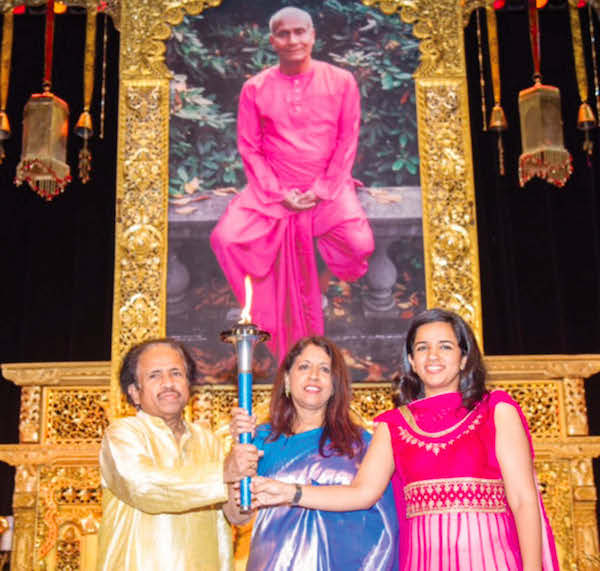
    NEW YORK CITY (TIP): Dr. L. Subramaniam, India’s acclaimed violinist, composer and conductor and Sri Chinmoy Centre International together offered a free Manhattan concert in tribute to Sri Chinmoy on August 29 at the Baruch Performing Arts Center. Performing with Dr. Subramaniam was his wife Kavita Krishnamurthy Subramaniam.

    Kavita is a much recorded, platinum playback artist, often referred to as the “Melody Queen” of India. She said, “a few years ago I met Sri Chinmoy in New York and the happiest moment in my life is when Sri Chinmoy blessed me”. Their daughter Bindu Subramaniam and son Ambi Subramaniam also performed.

    L. Subramaniam has earned international respect and acclaim for his virtuosic techniques and distinctive style. Dr. Subramaniam met with and performed for Sri Chinmoy on a number of occasions, and the two greatly admired and respected one another.

    Sri Chinmoy prolifically expressed his spiritual life through music, poetry and the visual arts. Born in Bengal, India in 1931, he made his home in New York in 1964. During his frequent travels worldwide, Sri Chinmoy emphasized the importance of meditation, music and inner peace.

    Upon hearing about an exhibition of Sri Chinmoy’s “Paintings for World-Harmony” at the United Nations in 2008, L. Subramaniam commented,

    “I am delighted to know that Sri Chinmoy’s paintings are being exhibited at the UN. Sri Chinmoy himself was an embodiment of peace and harmony and it is a fitting tribute to such a realized soul.”

    The previous day on August 28 another free concert took place at the same location. Russia’s popular and leading star Boris (Purushottama) Grebenshikov was outstanding. He offered a special song to honor Sri Chinmoy. Audience not only enjoyed Krishna Das’s Kirtan but participated and sang with him. Sri Chinmoy Bhajan singers brought with them heavenly joy. Other Sri Chinmoy International groups brought peace and happiness through their meditative music.

    Additional information can be found at www.Songsofthesoul.com

  • UN chief sacks CAR mission head over sex abuse claims

    UNITED NATIONS (TIP): UN Secretary-General Ban Ki-moon has fired his mission chief in the Central African Republic amid “disturbing allegations” of sexual abuse, even as he reposed “full confidence” in the Indian diplomat Atul Khare, his senior-most peacekeeping official in the country.

    Babacar Gaye, 64, of Senegal “tendered his resignation at my request,” Ban told reporters here yesterday.

    “I cannot put into words how anguished, angered and ashamed I am by recurrent reports over the years of sexual exploitation and abuse by UN forces,” he said.

    The unprecedented move by Ban followed fresh accusations that a peacekeeping soldier had raped a 12-year-old girl.

    The allegations have also raised questions over the responsibility of UN’s peacekeeping and field support wings, one of which is headed by Khare.

    “The Secretary-General has full confidence in (UN peacekeeping head Herve) Ladsous, the peacekeeping department, and, of course, Khare, the head of the Department of Field [Support].

    “Both DPKO [Department of Peacekeeping Operations] and DFS [Department of Field Support] are dedicated to ensuring the highest level of standards and accountability among personnel,” Ban’s spokesperson Stephane Dujarric said.

    Khare, 55, was appointed head of the Department of Field Support, in January this year.

    Deployed in early 2014, the UN Multidimensional Integrated Stabilization Mission (MINUSCA) in the CAR, is currently aiming to defuse sectarian tensions across the country, but it has been plagued by a series of sexual abuse allegations.

    More than two years of civil war and violence have displaced thousands of people amid ongoing clashes between the mainly Muslim Seleka alliance and anti-Balaka militia, which are mostly Christian.

    The UN estimates that some 450,000 people remain displaced inside the country while thousands of others have sought asylum across the borders.

  • INTERNATIONAL YOUTH DAY

    INTERNATIONAL YOUTH DAY

    International Youth Day (IYD) is the brainchild of the United Nations, and was first celebrated on 12th August 2000, after the UN General Assembly passed a resolution accepting the recommendation made by the World Conference of Ministers Responsible for Youth in Lisbon in 1998. The UN uses celebrations like these to draw public awareness to problems surrounding a particular global demographic and, IYD focuses on the youth, their issues and their contributions.

    The UN offers resources like promotional material, ideas for events, training material etc. through its subsidiary agencies as well as its website, for independent entities world over to celebrate the day. They also declare a theme for the year that communicates the scope, direction, and objectives of the year’s youth initiatives, such “Change Our World” for IYD 2011. The UN Secretary General Ban Ki-Moon has said “Youth should be given a chance to take an active part in the decision-making of local, national and global levels.” All persons between the ages of 15 and 24 qualify as the youth, and according to 2010 statistic, they constitute 18% of the global population, with 87% of international youth residing in developing countries.

    International Youth Day focuses on the rights of these young people to have full access to education, adequate healthcare, employment opportunities, financial services and full participation in public life. In a climate of economic uncertainty, it is all the more important for countries to invest in opportunities for their youth to learn, earn and grow so that the common future lies in good hands. In 1985, the World Program of Action for Youth was set up to define a policy framework and guidelines for national action and international support to improve the situation of young people. It is just one of the many extensive efforts of the United Nations to help member states reach out to their youth. Along with ensuring their rights, an equally important goal of IYD is to shape the youth not just as a passive beneficiary of development efforts, but as a force for positive social change. They are a source of innovation, creativity, energy and foresight, and member states must use all means possible to foster and harness the power of the youth. These are the ideals of International Youth Day.

    It is celebrated through events, seminars and programs from an international to a local level. Anyone can organize an event. Recommendations also include talking to local politicians and business-owners, so that the government, corporate and development sectors can work together for the advancement of society. Initiatives have also focused youth attention on particular issues like HIV/AIDS, and recent data from UNAIDS indicates that HIV prevalence has dropped by more than 25% among young people in 15 out of 21 countries most affected by HIV. The youth is leading the change, and International Youth Day ensures that they have the ability, skill, motivation and recognition to continue to do so.

    The theme of International Youth Day 2015 is “Youth Civic Engagement.” The engagement and participation of youth is essential to achieve sustainable human development. Yet often the opportunities for youth to engage politically, economically and socially are low or non-existent.

    More efforts are needed to raise awareness about the importance of youth civic engagement and its benefits to the individual and to society, including for sustainable development as well as resilience and wellbeing. The International Youth Day 2015 campaign aims at promoting civic engagement and participation of youth in politics and public life, so that young people can be empowered and bring a full contribution to society, development and peace.

    The Inter-Agency Network on Youth Development, led by the co-chairs, DESA and UNDP, is running an online campaign in the lead up to International Youth Day 12 August 2015. The campaign will open up a space for young people to share their stories and ideas on civic engagement activities. Young people will be able to share their message by submitting a photograph that relates to the theme, by tweeting ideas and opinions on the theme using #YouthDay, or by organizing an International Youth Day Event.

  • 10 foreign portfolio investors (FPIs) in India hold US$ 28 billion investments

    10 foreign portfolio investors (FPIs) in India hold US$ 28 billion investments

    TIP (Secondary Research): Europacific Growth Fund, the largest foreign portfolio investor (FPI) in India was born seven years before liberalisation ushered foreign investment into Indian equity markets. Today, it holds $131 billion in assets under management; 6.4 per cent of that is invested in Indian equities.

    Prime Database recently carried out an exercise to identify the 10 largest FPIs in India — through an examination of 1,447 listed Indian companies’ disclosure of the names of their foreign investors to stock exchange — and it turned out these FPIs together held Rs 1.79 lakh crore in Indian equities.

    FPIs hold a major chunk of the non-promoter stake in Indian companies but can be notoriously difficult to pin down. Unlike domestic mutual funds, there is no freely available ranking in terms of the size for foreign funds investing in India. Listed entities disclose the names of shareholders owning more than one per cent in them.

    The biggest FPI in terms of disclosed shareholding (above one per cent) is the Europacific Growth Fund. Among others on the list of the 10 biggest are sovereign and pension funds from Singapore and Norway, some familiar names like Franklin Templeton Investment Funds, and Morgan Stanley Asia (Singapore), besides Dodge & Cox International Stock Fund, First State Asia-Pacific Leaders Fund, Aberdeen Global Indian Equity, the Oppenheimer Developing Markets Fund and Copthall Mauritius Investment. These FPIs together hold shares equivalent to half the equity assets of the entire Indian mutual fund sector.

    While the actual number might be significantly higher, Prime’s analysis estimates Europacific’s holding in Indian equities at Rs 42,530 crore. An analysis of the fund’s own documents shows this could be around Rs 54,000 crore.

    So, the top 10 FPIs’ actual holding could be significantly higher than the Rs 1.79 lakh crore disclosed to bourses. This also means the ranking should be considered indicative, since FPIs holding company shares through participatory notes (P-notes) and the cases where holdings are less than one per cent are not required to disclose their names to stock exchanges.

    Europacific Growth Fund belongs to the US-based Capital Research and Management Company. For Europacific, India is the biggest emerging market destination and fourth-largest overall — after Japan, the UK and France — according to its disclosures at the end of June. As much as 87.5 per cent of its investments are outside the US.

    The fund managers’ commentary in Europacific’s annual report released in March this year might explain why they allocated more money to India than China.

    It noted India and China shared similar growth trends, including the rise of the middle-class. However, India’s demographics were better than China’s. The median age in India was 27, noted the report, while United Nations data showed the median age in China was around a decade higher.

    Jonathan Knowles, the Singapore-based fund manager of the Europacific Growth Fund, believes the rising middle class in India would drive consumption, leading to a rise in credit penetration, explaining the fund’s preference for financial stocks, especially private-sector banking names. “These banks have been taking share from public banks in India year after year,” said Knowles.

    Financial stocks are also high on the list of India’s second-largest FPI, the $38-billion Oppenheimer Developing Markets Fund. Led by Justin Leverenz, who has been overseeing the asset management since 2007, the fund invests 14.8 per cent of its total assets in India, second only to China, which received 19.4 per cent of its total investments as of June 2015.

    HDFC Bank, ICICI Bank, and HDFC are among the popular investment names in these funds.
    Pranav Haldea, Managing Director at Prime Database pointed out that the trend towards financials can be seen amongst all foreign investors.

    “Amongst sectors, the maximum exposure as on 30th June, 2015 was in Banks (Rs. 3.44 lakh crore) followed by IT Software (Rs.2.59 lakh crore). The sector which has seen the maximum increase in FII holdings in the last one year was also the Banking sector (from Rs.2.83 lakh crore to Rs.3.44 lakh crore),” he said as part of an emailed statement.

    The third largest fund is the Government of Singapore which invests about Rs 24,192 crore as of June 2015.
    FPIs were net buyers by Rs.1.11 lakh crore in FY15. They have been net buyers by Rs.7927 crore so far this year, shows data from depositories. FPIs held a total of Rs.20.51 lakh crore in Indian equities at the end of June. FPIs with exposure of over one% in Indian equities constitute nearly one-fourth of all FPIs with investments worth Rs 4.69 lakh crore.

  • India to beat China in population after 7 years

    New Delhi (TIP): India would retain its “demographic dividend” for the next 85 years and a steady rise in the population will make India surpass China by 2022 to become the world’s most populated nation, says a United Nations report.

    Currently, China’s population is approximately 1.38 billion compared to India’s 1.31 billion. By 2022, both are likely to have approximately 1.4 billion people, after which India’s headcount will grow while China is likely to experience a drop.

    The bulk of India’s population would be young and productive, providing the nation with what is known as demographic dividend.

    At the moment, more than 60 per cent Indians are in the economically productive age group of 15-59. It would continue till around 2050 and reduce to just above 50 per cent by 2100, says the report titled World Population Prospects: The 2015 Revision.

  • World pays Tribute to India’s ‘People’s President’

    World pays Tribute to India’s ‘People’s President’

    [vc_row full_width=”” parallax=”” parallax_image=”” el_class=”aboutme_content”][vc_column width=”1/3″][vc_single_image image=”44867″ alignment=”center” style=”vc_box_outline_circle_2″ border_color=”grey” img_link_large=”” img_link_target=”_self” img_size=”large” el_class=”aboutme_image”][vc_column_text]

    India loses a shining star of learning

    By Zafar Iqbal

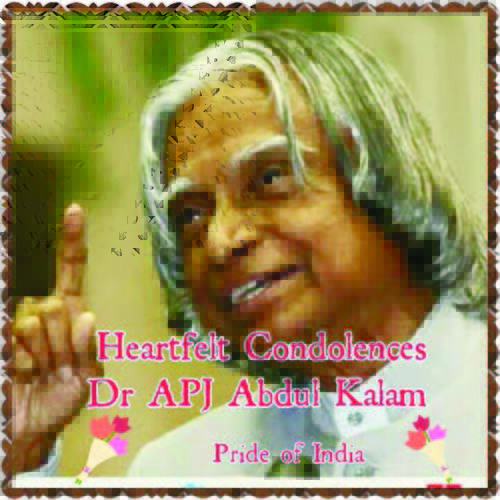
    The GOPIO-Metropolitan Washington is very sad to learn of the passing away of Professor A. P. J. Abdul Kalam. It expresses heartfelt condolences on the demise of President Kalam.

    Dr. Kalam-an extraordinary visionary and embodiment of the new India, and former President of India (2002- 2007) was affectionately known as the People’s President. He loved being a professor and sharing his knowledge with students. While delivering a lecture on “Livable Planet Earth’” at the Indian Institute of Management Shillong, he suffered a severe heart attack at around 6:30 p.m. local time. He was rushed to the Bethany Hospital in a critical condition; despite efforts to revive him, he died of cardiac arrest at 7:45 p.m. Monday, July 27, 2015. He was born on 15th October 1931 in Rameswaram, Tamil Nadu.

    Dr. Kalam was honored with many national and international awards, including Bharat Ratna–the highest civilian honor bestowed upon by the Government of India. Kalam’s 79th birthday was recognized as World Student Day by the United Nations. He has also received honorary doctorates from 40 universities from all over the world. He is considered the main architect of India’s nuclear program. He also contributed in the development of a low cost coronary stent, named the “Kalam-Raju Stent” with cardiologist Soma Raju and rugged tablet computer for health care in rural areas, which was named the “Kalam-Raju Tablet.”  An author of more than 20 technical books, he has left a legacy that will keep his contributions remembered for a long time.[/vc_column_text][/vc_column][vc_column width=”2/3″][vc_column_text]

    Dr. APJ Abdul Kalam was a President of Uncritical Devotion

    By Stephen Gill

    Dr. APJ Abdul Kalam, 11th president of India, collapsed while delivering a speech at a seminar of Indian Institute of Management in Shillong, India. He died of cardiac arrest at Bethany Hospital in the capital of Meghalaya province on July 27, 2015 in the evening.

    He was born in a poor Muslim family of a boatman in a rural area of Tamilnadu, South India. It was his education and hard work which led him to success. He was selected by the BJP Government in 2002 to be the president of India not because of his politics but because of his achievements as a missile scientist. He wrote inspirational poems for children, and led a simple life. It is clear that he was a child of the multicultural nature of Indian heritage.

    Dr. Kalam will be remembered for his life of a harmonious marriage between art and knowledge. His ceaseless struggle in the narrow alleys of the bumpy orbits of bigotries to raise a stage for the goddess of peace to dance has set an example. This is an uncommon phenomenon at least in India, where he

    cultivated a crop of the palpitation of human groans and a glory that is the essence of more than five thousand years old culture. He was respected by the majority as well as by the minority groups. He was easily approachable by the youth.

    He is rightly known as “people’s president.” At this time, when India needs a citizen of uncritical devotion, the legacy of Dr. APJ Abdul Kalam shall remain alive for a long, long time.

    (Stephen Gill is a celebrated poet and writer, based in Canada)

    [/vc_column_text][vc_separator color=”black” align=”align_center” border_width=”3″][vc_column_text]

    India has lost a priceless jewel

    The kind of man he was, who loved India with an intense passion, beyond measure, will never be born again.

    By Shahnaz Husain

    It seems like the end of an era……Dr Abdul Kalam, President of India, from 2002 till 2007, also known as the Missile Man, is no more. India has lost yet another precious jewel, who dedicated his life to his country. We all know how he rose from a simple childhood to be one of India’s greatest minds and occupy the highest position of President of India……and yet, he never lost his humility.

    Shahnaz Husain receives Padma Shri from  President Kalam
    Shahnaz Husain receives Padma Shri from President Kalam

    The news of his passing evoked memories of the times I had met him. What struck me most was his simplicity. I remember the day when I received the Padma Shri Award from President Abdul Kalam at the Rashtrapati Bhavan. It was an added honour for me to receive it from the Missile Man. He congratulated me for the work I was doing in my effort to popularise India’s ancient Ayurvedic heritage. He said, “You are doing great work but you must document it.” The next time when I met him was at Rashtrapati Bhavan, when he was kind enough to launch my book, “Absolute Beauty.” Surprisingly, he remembered and said “Have you started documenting your work?”

    Dr. Kalam was so right when he said, “You have to dream before your dreams can come true.” He also said, “Excellence is a continuous process and not an accident.” These struck a real chord within me, because I know how true and profound his sayings are. They will inspire generations to come.

    Indeed, Dr. Abdul Kalam will always be remembered for his phenomenal mind and also as a great human being. The void he has left in the world of science and in our hearts will never be filled. Today, let us celebrate his love for India and his humble brilliance.[/vc_column_text][/vc_column][/vc_row][vc_row full_width=”” parallax=”” parallax_image=””][vc_column width=”2/3″][vc_separator color=”black” align=”align_center” border_width=”3″][vc_column_text]

    Down the Memory Lane

    By Prof. I.S. Saluja

    In March, 2008, Dr. APJ Abdul Kalam visited New York. The PIO & NRI Community of Greater New York  was exultant and keen to see him, speak with him and honor him, in whatever way they could. I was one of them. I spoke with Lal Motwani, who had organized a function to honor Dr. Kalam, to get me a few minutes with one of the  best known  scientists of India. The most popular epithet that  stuck Dr. Kalam was “the Missile Man of India”.

    Well, Lal did not disappoint me. I began with my questions and Dr. Kalam, as quick as a missile, answered them. When I asked him about his idea of “India by 2020”, he seemed to travel far, probably in to future, having his vision of India in 2020, and then turned to me and said, “It means perfect vision; 20/20 is the best vision”.

    It was a long talk. He talked about his passion for teaching. H said he always wanted to return to teaching after his term as President. He spoke at length about his experiments in education in Tamil Nadu which had given miraculous results, with the consequence that not only the  illiteracy rate went down but also young people aspired to go in for college and university education. He said he had faith in the youth of India. While he said that he added, rather proudly, that India was a nation of the young people and they are going to transform the country. The power of education and the strength of the young people were the two subjects that he emphasized on in my meeting with him . I did carry then the   interview with him in The Indian Panorama, and with a couple of pictures, too but it makes me sad that I do not have a trace of it, since the computer crashed and all went with it.

    I do not have the report that I published when he was honored by the PIO and NRI community at the Hindu Temple in Flushing, a favorite  place with Indian Americans for holding cultural and social events. But from the cover of a souvenir then published, I arrived at the correct date which  was March 25.
    [/vc_column_text][/vc_column][vc_column width=”1/3″][vc_column_text]

    Here are some pictures from the event which have been provided by Lal Motwani who was  at the helm in organizing the reception to honor Dr. Kalam in New York on March 25, 2008.

    Down the Memory Lane[/vc_column_text][/vc_column][/vc_row][vc_row full_width=”” parallax=”” parallax_image=””][vc_column width=”1/1″][vc_empty_space height=”32px”][vc_text_separator title_align=”separator_align_center” align=”align_center” color=”grey” title=”Tribute” border_width=”3″][td_block_big_grid_4 td_grid_style=”td-grid-style-1″ tag_slug=”APJ Abdul Kalam”][/vc_column][/vc_row]

  • Given the Time, India can be a Regional Security Provider

    Given the Time, India can be a Regional Security Provider

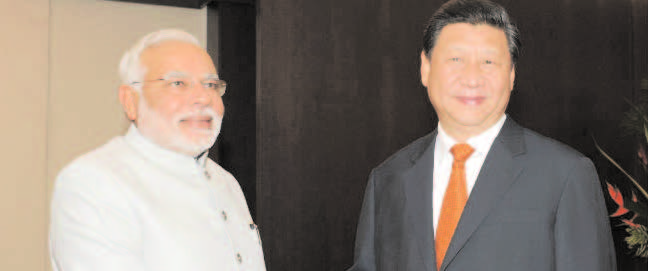
    Despite the cordial meetings between PM Modi and President Xi’s and their  photo ops on the sidelines of the BRICS and SCO summits, India has been drawing the red line with China on its concerns. Official briefings have disclosed clear communiques from India on the issue of China blocking India’s move in the United Nations to question Pakistan on the release of 26/11 attack mastermind Zaki-ur Rehman Lakhvi as well as China’s economic corridor in PoK.

    Only last month the news of Chinese submarines docking in Karachi, had rattled New Delhi. Almost a deja-vu reaction to the Chinese subs making an appearance in Sri Lanka last year. China’s statements that the Indian Ocean is not India’s backyard have only added to Indian anxiety. Not surprisingly, visits in June with US Defense Secretary Ashton Carter, who arrived at an Indian naval base, followed by a trilateral with Australia and Japan on regional security issues have focused on adventurism in the Indian Ocean Region and aggression in the South China Sea.

    There is a growing clamor for India to take up the role of a regional security provider in Asia in the wake of what is being termed as Chinese expansionism. Its was not surprising that both -the renewed India – US Defense Framework Agreement and trilateral discussions, put a strong emphasis on maritime security, and strengthening of India’s defense capabilities to fulfill this ambition. It is a  role that India is eager to take up but, in reality, has a long way to go to achieve in terms of resources and capacity.

    PM Modi’s administration has succeeded in renewing expectations from India, with his first year in office dedicated to revamping the look east policy to act east. The fundamental shift is India’s willingness to work with the U.S. and Asia-Pacific countries on regional security coalitions and shedding of timidity to call China out.

    However, while New Delhi has walked the tightrope to ensure that its strategic choices are not perceived as binary (between the US and China), it is imperative to underline that India’s resource build up is still a work in progress and jumping the gun in terms of expectations will not bode well for India’s long term vision.

    So , beyond the hype it is important to assess how India conceptualizes its own role in Asian security. What roles does it envisage for itself ? The answer perhaps lies in understanding the larger blueprint within which India is calibrating its strategy.

    Conceptually, India’s strategic approach has been rooted in three broad trends : One, revitalizing India’s strategic partnerships with major powers and being recognized as an able contributor to Asian security. Two, reclaiming the south Asian neighborhood to boost India’s role as a regional power. And three, a renewed thrust on economic diplomacy independent of strategic compulsions.

    No longer wanting to sit on the fence, India is looking to play a role in shaping the regional architecture, by increasing economic integration,
    (ASEAN, EAS, RCEP etc), building strategic partnerships and deepening defense cooperation (US, Japan, Vietnam, ASEAN, Australia) with a special emphasis on maritime security. But is all of this easier said than done?

    Realistically, the grand posturing aside, this is a tall order considering the challenges India faces. For one, many a skeptic will tell you that if India can’t even manage its own neighborhood how can it claim to extend its influence in the Asia Pacific?

    An uneasy neighborhood with constant complaints of neglect and lack of leadership from India have been an open secret. Despite PM Modi’s recent efforts, Chinese entrenchment in South Asia – from the ‘One Belt One Road’ initiative to the deepening military ties, is a glaring reality. While this is no zero game of influence, reclaiming the neighborhood would be a pre-requisite to India’s ambitions of a larger role in the great game for Asia. This is no easy task.

    A re-energized look east policy, can only take off if the gaping lacuna in the development of North East India and almost absent physical connectivity with East Asia are fixed. A reputation of slow delivery on projects and the mismatch of political aspirations and resource capacity to deliver are hard truths India has to face up to. The ‘Make in India’ campaign is looking to reverse this but the plans will need time to fructify.

    Even the much celebrated relationship with the US has fallen victim in the past to a lack of momentum and strategic mistrust. Maintaining robust Indo-US ties is imperative to give India a foot in the door of Asian geopolitics. Joint collaborations in defense and technology have to really come through for India to live up to the hype. Till then expectations will only burden India.

    As India gradually rises to its role as a regional balancer in Asia, it is important for India to tell the world to give it time to set its own house in order. New Delhi still has a long way to go in assuring these states of its reliability, not only as an economic and political partner but also as a provider of regional security. The political will is clear, it is time for the commitments to come through. Till then managing China, while building up India’s capacity is the way forward. The hype can wait.

    Shruti PandalaiAuthor | Shruti Pandalai (The author is a Research Analyst & OSD Outreach with Institute for Defence Studies and Analyses. She can be reached at shrutipandalai@gmail.com)
  • Philippines warns China flouting UN maritime laws

    Philippines warns China flouting UN maritime laws

    THE HAGUE (TIP): The Philippines has appealed to an international tribunal to declare China’s claims to most of the South China Sea illegal, warning the integrity of United Nations’ maritime laws is at stake.

    In opening comments to the tribunal in the Hague on yesterday, foreign secretary Albert del Rosario said the Philippines had sought judicial intervention because China’s behaviour had become increasingly “aggressive” and negotiations had proved futile.

    Del Rosario said the UN’s Convention on the Law of the Sea, which the Philippines and China have both ratified, should be used to resolve their bitter territorial dispute.

    “The case before you is of the utmost importance to the Philippines, to the region, and to the world,” del Rosario told the tribunal.

    “In our view, it is also of utmost significance to the integrity of the convention, and to the very fabric of the legal order of the seas and oceans.”

    China insists it has sovereign rights to nearly all of the South China Sea, a strategically vital waterway with shipping lanes through which about a third of all the world’s traded oil passes.

    Its claim, based on ancient Chinese maps, reaches close to the coasts of its southern neighbours. The Philippines, Vietnam, Malaysia, Brunei and Taiwan also have claims to parts of the sea, which have for decades made it a potential military flashpoint.

    Tensions have risen sharply in recent years as a rising China has sought to stake its claims more assertively.

    Following a stand-off between Chinese ships and the weak Filipino Navy in 2012, China took control of a rich fishing ground called Scarborough Shoal that is within the Philippines’ exclusive economic zone.

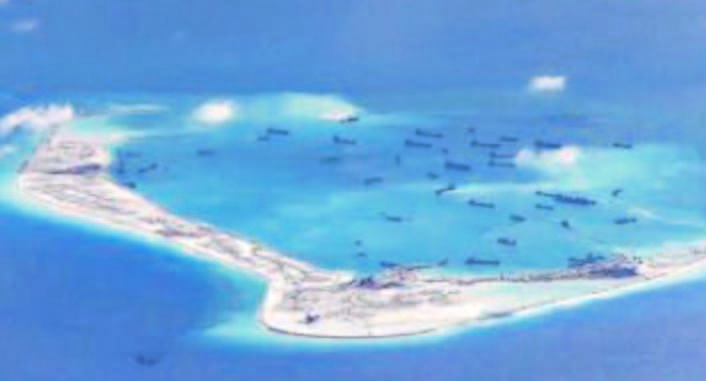
    China has also undertaken giant reclamation activities that have raised fears it will use artificial islands to build new military outposts close to the Philippines and other claimants.

    China has rejected all criticism over its actions, insisting it has undisputed sovereign rights to the sea. However del Rosario told the tribunal in the Hague that China’s argument of claiming the sea based on “historic rights” was without foundation.

    “The so-called nine dash line (based on an old map used by China) has no basis whatsoever under international law,” he said.

  • Swaraj meets Chinese counterpart, raises Lakhvi issue

    Swaraj meets Chinese counterpart, raises Lakhvi issue

    NEW DELHI (TIP): External Affairs Minister Sushma Swaraj on June 25 raised with her Chinese counterpart Wang Yi China’s blocking of India’s move in the UN for action against Pakistan over 26/11 mastermind Zaki-ur-Rehman Lakhvi’s release, saying it was at “variance” with progress in ties.

    In the meeting held on the sidelines of an international donors conference in Kathmandu, Swaraj told the Chinese Foreign Minister that Lakhvi was “no ordinary terrorist” as he masterminded the Mumbai terror attack in which more than 166 people were killed.”The External Affairs Minister raised the issue of Zaki-ur-Rehman Lakhvi on the stand China has taken on this matter in the United Nations 1267 committee. She said both India and China have been victims of terrorism and therefore there should be no distinction made between good terrorists and bad terrorists,” External Affairs Ministry Spokesperson Vikas Swarup said.

    “She said China’s stand on the matter appears to be at variance with the excellent progress otherwise being achieved in India-China bilateral relationship,” Swarup said.

    He said Wang assured Swaraj that China opposes all forms of terrorism and that he will look into the matter.

    “He (Wang) assured that there was no reason why India and China could not cooperate more closely on anti-terrorism efforts,” Swarup said.

    At a meeting of the UN Sanctions Committee, India had sought action against Pakistan for release of Lakhvi in the 26/11 trial in violation of a UN resolution but the Chinese representatives blocked the move on grounds that New Delhi did not provide sufficient information.

    Lakhvi, the mastermind of the 26/11 terror attack, was released from a Pakistani jail in April. The UN Sanctions Committee met at India’s request last week.In a letter to the current Chair of the UN Sanctions Committee Jim McLay, India’s Permanent Representative to the UN Asoke Mukherjee last month had said Lakhvi’s release by a Pakistani court was in violation of the 1267 UN resolution dealing with designated entities and individuals.

    The sanctions measures apply to designated individuals and entities associated with terror groups including al-Qaeda and LeT, wherever located.

  • Nepal to hold donor conference on post-quake reconstruction

    KATHMANDU (TIP): External Affairs Minister Sushma Swaraj will be among a host of leaders who will attend an international donor conference here for reconstruction efforts following the devastating earthquake that hit Nepal in April.

    The International Conference on Nepal’s Reconstruction (ICNR) 2015 is scheduled to take place here on June 25 to raise international assistance for rebuilding the country ravaged by the April 25 earthquake and its aftershocks.

    Besides Swaraj, foreign ministers from China and Norway, finance ministers from Bhutan and Bangladesh and disaster management minister from Sri Lanka have confirmed their participation in the international conference, Nepalese finance minister Ram Shara Mahat said today.

    Nepal had initially invited PM Narendra Modi to attend the conference. President of the Manila-based Asian Development Bank, vice-president of the World Bank, president of Japan International Technical Cooperation (JAICA), commissioner of the European Union and the UN deputy general secretary of the United Nations have also confirmed their participation.

  • Secret police detentions of activists on the rise in Egypt

    Secret police detentions of activists on the rise in Egypt

    CAIRO (TIP): The knock on the door came just before midnight, a group of plainclothes police demanding that 29-year-old Fatma el-Sayed, an activist with one of Egypt’s secular opposition groups, come with them. Her father pleaded to accompany her, but they took her away, alone.

    For the next four days, el-Sayed was kept in a cell in the security agency headquarters in her home town of Alexandria — off official records, essentially disappeared into Egypt’s labyrinth of detention facilities. She was interrogated without a lawyer and denied the injections she needed after recent surgery.

    “They tried to extract information from me,” she said — about fellow activists in the opposition group April 6, about the group’s call for a protest against the high cost of living, about any coordination with the Muslim Brotherhood.

    “I gave them nothing,” she said.

    Egyptian security agencies are increasingly detaining activists and students in secret, snatching them from homes or the street and holding them without official record of their arrest, as their families scramble to find them, activists and lawyers say.

    Activists have tracked more than 160 such suspected disappearances in police custody during the past two months — a sign of the renewed unchecked power of security agencies. It is a return to past practices under autocratic leader Hosni Mubarak, when detainees were held, sometimes for years, without trial under notorious emergency laws in effect for decades and lifted after his 2011 ouster.

    El-Sayed was lucky. After four days, police filed a record of her arrest and released her on bail. She has been charged with membership in April 6, a leading force in the anti-Mubarak uprising that is now banned. Other missing activists have reappeared days or even weeks later when police finally filed arrest reports.

    But the whereabouts of most remains unknown. Activists and lawyers fear they are abused during interrogation.

    At least one of the missing turned up dead. Islam Ateto was taken by security agents in May as he left a classroom at a Cairo university, according to student unions. Soon after, police announced that Ateto was killed in a gunbattle with security forces in the desert, alleging he was wanted for the assassination of a police officer.

    Government officials, including Prime Minister Ibrahim Mahlab, have repeatedly denied there are any extra-legal detainees in Egypt, saying those in custody are held either on a prosecutor’s order or were arrested during the act of a crime. With the recent spike in reports of missing detainees, government officials have largely ignored calls for an explanation. Repeated requests by The Associated Press to the spokesman for the Interior Ministry received no response. A senior security official dismissed allegations of disappearances and questioned how it could be proven that security agents took anyone away.

    However, another official said secret interrogations and detention were sometimes necessary when state security or intelligence agencies are pursuing terror cells that threaten national security. Both officials spoke on condition of anonymity because they were not permitted to speak to the media. The government has repeatedly touted its “war on terrorism” — a reference to its battle against Islamic militants carrying out stepped-up attacks and to a crackdown on Islamists following the military’s July 2013 ouster of Islamist President Mohammed Morsi. With the clampdown, many activists have gone into hiding, complicating efforts to determine who has been detained.

    When grilled by the father of a missing woman on a private television station last week, Interior Ministry spokesman Abu Bakr Abdel-Karim insisted that if she had been arrested, “legal procedures must have been followed.” The woman, Esraa el-Taweel, a 23-year old freelance photojournalist, was reported by her family to have been snatched on June 1 from a street in downtown Cairo, along with two male friends. Later, inmates got word to relatives that they had seen the two friends in a prison.

    El-Taweel finally surfaced Wednesday, when a visitor spotted her at a women’s prison near Cairo. On Thursday, she was brought for questioning before State Security prosecutors, who usually deal with terrorism cases, the first official acknowledgement of her detention.

    Lawyers say Islamists were frequently the targets of secret detentions over the past two years, and now the practice is increasingly being used against more secular activists.

    One activist group, Freedom for the Brave, has documented more than 160 cases since April. Of those, 66 have resurfaced.

    The Egyptian Coordination of Rights and Freedoms, a group of lawyers tracking missing suspected Brotherhood members, has recorded more than 210 cases as of May; one person has been missing since 2013.

    The London-based Human Rights Monitor recorded 31 cases of disappearance in May alone, in addition to 13 others from the two previous months. The group reported the cases to the U.N Working Group on Enforced Disappearance, which usually follows up on such reports.

    The National Human Rights Council, whose members are appointed by the state, has submitted 71 reported cases of missing people to the Interior Ministry and prosecutors’ office, said council member Nasser Amin. “In Egypt, there are plenty of cases of illegal detention,” a crime punishable by up to seven years in prison, he said. The council is working to determine if any missing cases reach the level of “enforced disappearance,” a crime against humanity under international law that involves a long period of disappearance, proof of an active government role and an exhaustive investigation to find the missing person. Amin said the United Nations has designated 13 cases of people missing since the turmoil in 2011 as likely enforced disappearances and has sought an explanation from the Egyptian government.

  • Let us Celebrate Yoga

    Prime Minister of India , Narendra Modi  is known to be deeply steeped in the Hindu tradition. Imbibing pristine Hindu values early on in his life through his association with Rashtriya Swayamsevak Sangh (RSS) , Modi well understands the significance  of traditional values  and  the importance of culture.

    Ever since he came in to politics, and more particularly, on the national political scene, India has witnessed  a clear inclination on the part of the government to promote  the tradition and values of the age old Hindu culture. Modi’s concern is pretty obvious the way changes are sought to be brought about in the domain of education and culture.

    Moving on to Yoga, a distinct mark of Hindu way of life  from olden times, Yoga has always  been placed on a high pedestal and considered to have  a formative and curative power. In the words of one of the earliest and the greatest practitioners of Yoga, B.K.S. Iyengar, “Yoga means union – the union of body with consciousness, and consciousness with the soul. Yoga cultivates the way of maintaining a balanced attitude in day to day life, and endows skill in the performance of one’s actions”.

    Yoga is health giving- an aspect of Yoga which is the most popular one. And it is this aspect which more or less gets emphasized and proves attractive to people.

    Thus, on the suggestion of Prime Minister of India, during his address to the UN General Assembly in October, 2014 , 177 member  nations  of the United Nations adopted unanimously a resolution to observe June 21 as International Day of Yoga.

    It is heartening to know that an old science of India has received such overwhelming  support among the nations of the world who are now all set to celebrate the day this coming Sunday.

    On the purely material side, Yoga holds promise of a multi-billion dollar business. A Yogi Harbhajan not only created  a large following in the US but also made a lot of money through Yoga. One can expect great job opportunities for thousands of yoga instructors and gurus who would  reach over to distant parts of the world, and like Yogi Harbhajan, create their own empires. One can expect these people to bring to India a lot of foreign exchange. Yoga then would be a sound business proposition and Prime Minister Modi understands business well, as he himself has claimed.

    Let us celebrate, them, with all enthusiasm and zeal, the first International Day of Yoga, this coming Sunday, June 21, 2015.

  • UN appeals for $497 million of humanitarian aid for Iraq

    BRUSSELS (TIP): The United Nations launched an appeal on Thursday for half a billion dollars in international aid to help tackle a worsening humanitarian crisis in Iraq triggered by the conflict with Islamic State militants.

    Lise Grande, the UN humanitarian coordinator for Iraq, launched the appeal in Brussels, and said the United Nations would be forced to slash or shut down more than half its aid operations in Iraq without an immediate injection of new funds.

    The world body said it was asking donors for $497 million to pay for shelter, food and water over the next six months for 5.6 million people displaced or affected by violence between Iraqi government forces and Islamic State.

    “The crisis in Iraq is one of the most complex and volatile anywhere in the world,” Grande said in a statement.

    A sharp cutback in the humanitarian aid effort due to lack of funding would have catastrophic implications, she said.

    Three million people have been displaced within Iraq since the beginning of last year.

    A renewed Islamic State offensive in western Iraq has displaced tens of thousands of people over the past month.

    In an interview with Reuters in Erbil on Monday, Grande forecast a “summer of discontent”.

    “We know that in the next couple of months the humanitarian situation is only going to get worse. Right now our biggest problem is financing. We’re running out of money,” she said. Emergency kits provided to people fleeing violence are running low, food rations have been reduced, and 77 health clinics are at risk of closing by the end of June if no funding comes through, Grande said.

  • A way with the world

    A way with the world

    The Prime Minister, Narendra Modi, scored most in foreign policy in his first year in power. No one anticipated Modi’s natural flair for diplomacy, to which he has brought imagination and self-assurance. Modi has been more emphatic than his predecessors in giving improvement of relations with neighbors greater priority. He invited all the SAARC leaders to his swearing-in, to signal that the decisive election victory of a supposedly nationalist party did not denote a more muscular policy towards neighbors. On the contrary, India would take the lead in working for shared regional peace and prosperity.

    Bhutan, the only neighbor that has not politically resisted building ties of mutual benefit, was the first country he visited in June, 2014. He handled his August 2014 visit to Nepal with sensitivity and finesse, and followed it up with exceptional leadership in providing immediate earthquake relief to Nepal in May, 2015. In obtaining Parliament’s approval of the land boundary agreement with Bangladesh in May, 2015, Modi showed his determined leadership again.

    He did falter with Pakistan, seemingly unsure about whether he should wait for it to change its conduct before engaging it, or engage it nevertheless in the hope that its conduct will change for the better in future. He announced foreign-secretary-level talks during Nawaz Sharif’s visit to Delhi, but cancelled them precipitately. He ordered a robust response to Pakistan’s cease-fire violations, yet sent the foreign secretary to Islamabad in March, 2015, on an unproductive SAARC Yatra. Relations with Pakistan remain in flux. In Afghanistan, President Ashraf Ghani’s tilt towards Pakistan and China has challenged the viability of India’s Afghanistan policy. Ghani’s delayed visit to India in April 2015 did not materially alter the scenario for us, but India has kept its cool.

    Modi’s foreign policy premise, that countries give priority today to economics over politics, has been tested in his China policy, which received a course correction. After courting China economically, Modi had to establish a new balance between politics and economics. President Xi’s visit to India in September, 2014, was marred by the serious border incident in Ladakh. Modi showed a sterner side of his diplomacy by expressing serious concern over repeated border incidents and calling for resuming the stalled process of clarifying the Line of Actual Control. During his China visit in May, Modi was even more forthright by asking China to reconsider its policies, take a strategic and long-term view of our relations and address “the issues that lead to hesitation and doubts, even distrust, in our relationship”. He showed firmness in excluding from the joint statement any reference to China’s One Road One Belt initiative or to security in the Asia-Pacific region. The last minute decision to grant e-visas was puzzling, especially as the stapled visa issue remains unresolved. The economic results of his visit were less than expected, with no concrete progress on reducing the huge trade deficit and providing Indian products more market access in China. The 26 “agreements” signed in Shanghai were mostly non-binding MoUs involving the private sector and included the financing of private Indian companies by Chinese banks to facilitate orders for Chinese equipment.

    Modi’s visit to Seychelles, Mauritius and Sri Lanka in March, 2015, signified heightened attention to our critical interests in the Indian Ocean area. Modi was the first Indian prime minister to visit Seychelles in 33 years. His visit to countries in China’s periphery in May, 2015, was important for bilateral and geopolitical reasons. During his visit to South Korea the bilateral relationship was upgraded to a “special strategic partnership’, but Korea nevertheless did not support India’s permanent membership of the United Nations Security Council. Modi’s visit to Mongolia was the first by an Indian prime minister to a country whose position is geopolitically strategic from our point of view.

    Belying expectations, Modi moved decisively towards the United States of America on assuming office. He set an ambitious all-round agenda of boosting the relationship during his September, 2014, visit to Washington. In an imaginative move, he invited Obama to be the chief guest at our Republic Day on January 26, 2015. To boost the strategic partnership with the US, he forged a “breakthrough understanding” on the nuclear liability issue and for tracking arrangements for US-supplied nuclear material. Progress on the defense front was less than expected with four low-technology “pathfinder” projects agreed under the defense technology and trade initiative. The important US-India joint strategic vision for the Asia-Pacific and Indian Ocean region, issued as a stand-alone document, high-lighted the growing strategic convergences between the two countries, with China in view. A special feature of Modi’s September, 2014, US visit was his dramatic outreach to the Indian community, which has since then become a pattern in his visits abroad, whether in Australia, Canada or Beijing. No other prime minister has wooed the Indian communities abroad as Modi has done.

    President Putin’s visit to India in December, 2014, was used to underline politically that Russia remains India’s key strategic partner. Modi was effusive in stating that with Russia we have a “friendship of unmatched mutual confidence, trust and goodwill” and a “Strategic Partnership that is incomparable in content”. He was careful to convey the important message that even as India’s options for defense cooperation had widened today, “Russia will remain our most important defense partner”. Civilian nuclear cooperation with Russia got a boost with the agreement that Russia will build “at least” ten more reactors in India beyond the existing two at Kudankulam. All this was necessary to balance the strengthened strategic understanding with the US and its allies.

    Modi bolstered further our vital relations with Japan, which remains a partner of choice for India. Shinzo Abe announced $35 billion of public and private investment in India during Modi’s visit to Japan in September 2014, besides an agreement to upgrade defense relations.

    Modi’s visit to France and Germany in April, 2015, recognized Europe’s all-round importance to India and was timely. He rightly boosted the strategic partnership with France by ensuring concrete progress in the key areas of defense and nuclear cooperation by announcing the outright purchase of 36 Rafale jets and the MoU between AREVA and L&T for manufacturing high-technology reactor equipment in India. Modi’s bilateral visit to Canada in April, 2015, was the first by an Indian prime minister in 45 years. Bilateral relations were elevated to a strategic partnership and an important agreement signed for long-term supply of uranium to India.

    Relations with the Islamic world received less than required attention during the year, although the Qatar Emir visited India in March, 2015, and the political investment we made earlier in Saudi Arabia aided in obtaining its cooperation to extract our people from Yemen. Gadkari went to Iran in May, 2015, to sign the important agreement on Chabahar. Modi did well to avoid any entanglement in the Saudi-Iran and Shia-Sunni rivalry in West Asia. He met the prime minister of Israel, Benjamin Netanyahu, on the sidelines of the UN general assembly meeting in September, last year, to mark the strength of India-Israel ties. So, Modi’s handling of India’s foreign policy in his first year is impressive. He has put India on the map of the world with his self-confidence and his faith in the nation’s future.

  • India is home to the highest number of hungry people in the world

    India is home to the highest number of hungry people in the world

    India is home to the highest number of hungry people in the world, at 194 million, surpassing China, according to United Nations annual hunger report.

    At the global level, the corresponding figure dropped to 795 million in 2014-15, from 1 billion in 1990-92, with East Asia led by China accounting for most of the reductions, UN body Food and Agriculture Organisation (FAO) said in its report titled ‘The State of Food Insecurity in the World 2015’.

    India too saw a reduction between 1990 and 2015, it added.
    In 1990-92, those who were starved of food in India numbered 210.1 million, which came down to 194.6 million in 2014-15.

    “India has made great strides in reducing the proportion of food insecure persons in the overall population, but according to FAO, it still has over 194 million hungry persons. India’s numerous social programmes are expected to continue to fight hunger and poverty,” the report stated.

    However, China stood out as the reduction in the number of hungry people was much higher than in India, which came down to 133.8 million in 2014-15 from 289 million in 1990-92.

    “A majority – 72 out of 129 – of the countries monitored by FAO have achieved the Millennium Development Goal target of halving the prevalence of undernourishment by 2015, with developing regions as a whole missing the target by a small margin,” the report said.

    In addition, 29 countries have managed to meet the more ambitious goal of the World Food Summit in 1996 where governments had committed to halve the absolute number of undernourished by 2015.

    Talking of noticeable progress, the report made a specific mention of Latin America and the Caribbean, southeast and central Asia as well as some parts of Africa.

    The overall analysis suggested that inclusive economic growth, agricultural investments and social protection, along with political stability, can eradicate hunger, the UN report added.

  • 4 militants die in attack in upscale area of Afghan capital

    KABUL (TIP): An all-night siege in an upscale neighborhood of Afghanistan’s capital ended in the early hours of Wednesday morning with the deaths of four heavily armed attackers, though no civilians or security personnel were injured or killed, an Afghan official said. Deputy interior minister Mohammad Ayub Salangi said that weapons had been seized, including a rocket-propelled grenade launcher, three automatic rifles and a hand grenade. Using his official Twitter account, Salangi said there were “no civilian or military casualties.”

    The siege ended after 5 am in a sustained barrage of automatic weapons fire and a series of huge explosions that resounded across the Wazir Akbar Khan district of downtown Kabul, home to many embassies and foreign firms.

    Salangi had said earlier that the target of the attack appeared to be a guesthouse, but he gave no further details.

    The Taliban claimed responsibility for the attack in tweets on a recognized Twitter account. They referred to the target as “belonging to the occupiers,” reiterating the insurgents’ message that foreign installations are specific targets in the Afghan capital. The attack came amid intensified fighting across many parts of Afghanistan since the insurgents launched their annual warm weather offensive a month ago. A Taliban attack on a guesthouse in another part of the capital earlier this month left 14 people dead, including nine foreigners.

    The United Nations already has documented a record high number of civilian casualties — 974 killed and 1,963 injured —in the first four months of 2015, a 16 percent increase over the same period last year. The siege began late Tuesday, with heavy explosions accompanying sporadic automatic weapon fire, and sounded to be focused on the Rabbani Guesthouse, which is favored by foreigners as the area is in the heart of the diplomatic district and close to the airport. Police and a paramilitary Crisis Response Unit surrounded the area, blocked roads, took up positions on rooftops and parked armored personnel vehicles in the streets around the guesthouse. Police officers smashed lights throughout the neighborhood to cover their movements. For about five hours, gunfire and explosions were sporadic, before a lull lasting more than an hour ended with a dawn volley of sustained gunfire and huge explosions that sent clouds of black smoke into the sky.

  • Taliban kill 14, mostly foreigners, in Kabul guesthouse siege

    Taliban kill 14, mostly foreigners, in Kabul guesthouse siege

    KABUL (TIP): Fourteen people, most of them foreigners, were killed in a Taliban attack on a Kabul guesthouse that trapped dozens attending a concert and triggered an hours-long standoff with Afghan forces, officials said on May 14.

    Four Indians, two Pakistanis, an American, an Italian and a British-Afghan dual national were among those killed in the overnight siege on the Park Palace, which was about to host a performance by a well-known Afghan singer.

    The Taliban claimed responsibility for the seven-hour assault, which triggered explosions and bursts of gunfire. It came as Afghan forces face their first fighting season against the insurgents without the full support of US-led foreign combat troops.

    “An attack against civilians gathered for a cultural event in the Park Palace hotel in Kabul killed 14 civilians and injured several others,” the United Nations Assistance Mission in Afghanistan (UNAMA) said in a statement.

    Kabul police chief Abdul Rahman Rahimi earlier said five people including foreigners and Afghans were killed in the attack, but deaths confirmed by overseas governments saw the toll of foreigners rise.

    “Fifty-four people were rescued by security forces,” Rahimi added, after a large number of armed personnel swooped on the guesthouse, located in an up-market district and popular with international aid agency workers.

    An Indian foreign ministry official said that “unfortunately four Indians have died in the attack as per the information we have so far”.

    Prime Minister Narendra Modi had spoken with Afghan President Ashraf Ghani to offer his condolences, saying “we are one when it comes to fighting terror”.

    US embassy spokeswoman Monica Cummings said: “Our thoughts are with the families of the victims at this time.”

    The Pakistani embassy said two of its nationals were killed and the British embassy confirmed the death of a British-Afghan dual national, adding in a statement that “the next of kin have been informed and we are providing consular assistance”.

    The Taliban, which has stepped up assaults on government and foreign targets, said that the attack was carried out by a single gunman and “planned carefully to target the party in which important people and Americans were attending”.

    The attack was also claimed by the Taliban-allied Haqqani network that is believed to be based out of the porous Afghanistan-Pakistan border region.

  • INDIA TO TURN UP HEAT ON PAK FOR ACTION AGAINST WANTED TERRORISTS

    NEW DELHI (TIP): After being left red faced over the fiasco on Dawood Ibrahim with Home Minister Rajnath Singh forced to explain in Parliament that his Ministry had no doubt that the don was in Pakistan, the government has decided to ratchet up legal pressure on Pakistan on other most-wanted terrorists.

    Senior Home Ministry officials have told ET that a Letter Rogatory (LR) will be sent soon to Pakistan to ask about the “location” of Indian Mujahedeen (IM) top leader Riyaz Bhatkal as India believes he is hiding in Karachi, and “confirmation” of the Pakistani identity of IM’s chief bomb-maker Zia-ur-Rehman alias Waqas who was arrested by the Delhi Police last year. The government has also decided to approach the United Nations Security Council to obtain UN sanctions against the Hizbul Mujahedeen chief Syed Salahuddin, who is based in Pakistan-Occupied Kashmir (PoK), and declare him an international terrorist under UN Security Council Resolution 1267 of the Al-Qaida Sanctions Committee. India’s case before the UN is that Salahuddin had headed the United Jehad Council which is related to the Al-Qaeda. Dawood was listed by the UN similarly in 2003 for his association with Al-Qaeda.

    The LR regarding Riyaz Bhatkal and Waqas will be sent through a court in a case of the National Investigation Agency (NIA) regarding the Dilsukhnagar blasts in Hyderabad in 2013 in which both are named as an accused, ministry officials said.

  • Strategic Autonomy as an Indian Foreign Policy Option

    Strategic Autonomy as an Indian Foreign Policy Option

    [quote_right]For a large country like India, which has the potential of becoming a big power in the future, strategic autonomy is a compelling choice. By virtue of its demographic, geographic, economic and military size, India must lead, but does not have yet the comprehensive national power to do so. It cannot subordinate itself to the policies and interests of another country, however powerful, as its political tradition and the functioning of its democracy will not allow this. India may not be strong enough to lead, but it is sufficiently strong not to be led”, says the author.[/quote_right]

    In the joint statement issued during the Indian prime minister’s visit to France in April, the two sides reaffirmed “their independence and strategic autonomy” in joint efforts to tackle global challenges. In the French case, as a member of NATO it is not so clear what strategic autonomy might mean, but in our case it would essentially mean independence in making strategic foreign policy decisions, and, consequently, rejecting any alliance relationship. It would imply the freedom to choose partnerships as suits our national interest and be able to forge productive relationships with countries that may be strategic adversaries among themselves.

    In practical terms, this means that India can improve relations with the United States of America and China while maintaining close ties with Russia. It can forge stronger ties with Japan and still seek a more stable relationship with China. It can forge strong ties with Israel and maintain very productive ties with the Arab world, including backing the Palestinians in the United Nations. It means that India can have strategic partnerships with several countries, as is the case at present with the US, France, Germany, the United Kingdom, the European Union, Russia, China, Japan, Brazil, Saudi Arabia, Australia, Canada, Kazakhstan, Afghanistan, Vietnam, Iran and the like.

    It means that India can be a member of BRICS and the RIC dialogues, as well as IBSA, which exclude the West, and also forge closer political, economic and military ties with the Western countries. Our strategic autonomy is being expressed in other ways too. India is a democracy and believes that its spread favors its interests, but it is against the imposition of democracy by force on any country. If the spread of democracy is in India’s strategic interest, using force to spread it is against its strategic interest too, as is shown by the use of force to bring about democratic changes in West Asia by destroying secular authoritarian regimes and replacing them with Islamic authoritarian regimes. Likewise, India believes in respect for human rights, but is against the use of the human rights agenda to further the geo-political interests of particular countries, essentially Western, on a selective basis.

    For a large country like India, which has the potential of becoming a big power in the future, strategic autonomy is a compelling choice. By virtue of its demographic, geographic, economic and military size, India must lead, but does not have yet the comprehensive national power to do so. It cannot subordinate itself to the policies and interests of another country, however powerful, as its political tradition and the functioning of its democracy will not allow this. India may not be strong enough to lead, but it is sufficiently strong not to be led.

    India preserved its strategic autonomy even in the face of severe technology sanctions from the West on nuclear and missile issues. It preserved it by not signing the non-proliferation treaty and continuing its missile program. By going overtly nuclear in 1998, India once again exercised its strategic autonomy faced with attempts to close the doors permanently on its nuclear program by the permanent extension of the NPT and the comprehensive nuclear test ban treaty and fissile material cutoff treaty initiatives.

    In some quarters in India and abroad, the idea of strategic autonomy is contested as another manifestation of India’s non-aligned mindset, its propensity to sit on the fence, and avoid taking sides and assuming responsibility for upholding the present international order as a rising power should. These critics want India to join the US camp more firmly to realize its great power ambitions. These arguments ignore the reality that while the US has been crucial to China’s economic rise, China has been sitting on the fence for many years, even as a permanent member of the UN security council. Far from sacrificing its strategic autonomy, it has become a strategic challenger of the US.

    To be clear, the US government has officially stated its respect for India’s position on preserving its strategic autonomy, and denies any expectation that India would establish an alliance kind of relationship with it. It is looking for greater convergence in the foreign policies of the two countries, which is being realized.

    During Narendra Modi’s visit to the US in September, 2014, and Barack Obama’s visit to India in January this year, a strategic understanding on Asia Pacific and Indian Ocean issues, encapsulated in the January 2015 joint strategic vision for the Asia Pacific and the Indian Ocean has emerged. This document suggests a shift in India’s strategic thinking, with a more public position against Chinese maritime threat and a willingness to join the US in promoting partnerships in the region.

    Modi chose a striking formulation in his joint press conference with Obama in September when he said that the US was intrinsic to our Look East and Link West policies, which would suggest a growing role for the US in our foreign policy thinking. During Obama’s January visit, the joint statement noted that India’s Act East policy and the US rebalance to Asia provided opportunities for India, the US and other Asia-Pacific countries to work closely to strengthen regional ties. This was the first time that India implicitly endorsed the US rebalance towards Asia and connected our Act East policy to it.

    Rather than interpreting it as watering down our strategic autonomy, one can see it as strengthening it. So far, India has been hesitant to be seen drawing too close strategically to the US because of Chinese sensitivities. China watches closely what it sees are US efforts to rope India into its bid to contain China. At the same time, China continues its policies to strengthen its strategic posture in India’s neighborhood and in the Indian Ocean at India’s expense, besides aggressively claiming Indian territory.

    By strengthening relations with the US (which is strategically an Asian power), Japan and Vietnam, and, at the same time, seeking Chinese investments and maintaining a high-level dialogue with it, India is emulating what China does with India, which is to seek to build overall ties as much as possible on the economic front, disavow any negative anti-India element in its policies in our neighborhood, but pursue, simultaneously, strategic policies intended to contain India’s power in its neighborhood and delay its regional extension to Asia.

    In discussing the scope of our strategic autonomy, one should recognize that the strength of US-China ties, especially economic and financial, far exceeds that of India-US ties. India has to be careful, therefore, in how far it wants to go with the US with a view to improving its bargaining power with China. The other point to consider is the US-Pakistan equation. The US has just announced $1 billion of military aid to Pakistan; its position on the Taliban is against our strategic interests in Afghanistan; its stand on Pakistan’s sponsorship of terrorism against us is not robust enough.

    To conclude, strategic autonomy for India means that it would like to rely as far as possible on its own judgment on international issues, balance its relations with all major countries, forge partnerships with individual powers and take foreign-policy positions based on pragmatism and self-interest, and not any alliance or group compulsion.

    (The author is former foreign secretary of India. He can be reached at sibalkanwal@gmail.com)

  • Unborn Children and their Constitutional Rights

    Unborn Children and their Constitutional Rights

    A 33-year-old Indian-American woman Purvi Patel has recently been sentenced to 30 years in prison in Indiana for feticide and child maltreatment. The verdict makes Patel the first woman in the U.S. to be charged, convicted and sentenced for “feticide” for ending her own pregnancy, according to the group National Advocates for Pregnant Women (“NAPW”). (The Washington Post April 1, 2015). Writing for The Guardian, columnist Jessica Valenti states, “We may never know what really happened in Patel’s case. She has repeatedly said that she had a miscarriage which, if true, means that the state is sending a woman to jail for not having a healthy pregnancy outcome. But even if Patel did procure and take drugs to end her pregnancy, are we really prepared to send women to jail for decades if they have abortions? Even illegal ones?” (The Hindustan Times April 4, 2015).

    On April 18, 2014, Alabama Supreme Court reaffirmed in Sarah Janie Hicks v. State of Alabama that the word “child” includes “unborn child”. In 2009, Sarah Hicks was charged with using cocaine while pregnant. As per court documents, her child tested positive for cocaine “at the time of his birth”. “Children in the womb should have the same legal standing as other children”, the Supreme Court of Alabama ruled. According to Justice Tom Parker, who wrote the majority decision, “It is impossible for an unborn child to be a separate and distinct person at a particular point in time in one respect and not to be a separate and distinct person at the same point in time but in another respect. Because an unborn child has an inalienable right to life from its earliest stages of development, it is entitled not only to a life free from the harmful effects of chemicals at all stages of development but also to life itself at all stages of development…….”

    These cases (such as Purvi’s and Hick’s) reopen the question of Pro-Choice (Woman’s Right to Choose) v. Pro Life (i.e.; whether unborn children have constitutional rights in the USA) that has been debated in the political arena of this country for long. In Roe v. Wade, (93 S.Ct. 705 (1973) Justice Blackmun, writing for majority concluded, “That the word ‘person,’ as used in the Fourteenth Amendment, does not include the unborn.” However, U.S. legal encyclopedia, states:

    “Biologically speaking, the life of a human being begins at the moment of conception in the mother’s womb, and as a general rule of construction in the law, a legal personality is imputed to an unborn child for all purposes which would be beneficial to the infant after its birth.” (42 Am. Jur. 2d, “Infants,” sec. 2.) In 2004, Congress enacted, and President Bush signed, the Unborn Victims of Violence Act, which recognizes the “child in utero” as a legal victim if he or she is injured or killed during the commission of any of existing federal crimes of violence. One of the provisions in the pending (before House-Judiciary Committee) H.R. 36 – Pain-Capable Unborn Child Protection Act, states, “By 8 weeks after fertilization, the unborn child reacts to touch. After 20 weeks, the unborn child reacts to stimuli” In Planned Parenthood v. Casey, (505 U.S. 833 (1992) Chief Justice William Rehnquist in his dissenting note stated, “Roe continues to exist, but only in the way a storefront on a western movie set exists: a mere façade to give the illusion of reality.” The courts agree that the unborn child in the path of an automobile is as much a person in the street as its mother, and should be equally protected under the law. Most courts have allowed recovery, even though the injury occurred during the early weeks of pregnancy, when the child was neither viable nor quick. “Viability, of course, does not affect the question of the legal existence of the unborn, and therefore of the defendant’s duty and it is a most unsatisfactory criterion, since it is a relative matter, depending on the health of the mother and child and many other matters in addition to the state of development”. (Prosser and Keaton on Torts, 2nd ed., sec. 36 (1955).

    Many jurisdictions, including U.S., actively warn against the consumption of alcoholic beverages by pregnant women due to its association with Fetal Alcohol Syndrome. In Whitner v. State, 328 S.C. 1, 492 S.E.2d 777 (1997), Cornelia Whitner was charged and sentenced to a charge of criminal child neglect, by Supreme Court of South Carolina, after she was discovered to have used cocaine while pregnant. In 2004, Melissa Ann Rowland of Salt Lake City, Utah was charged with murder in 2004 after her refusal to undergo a caesarean section resulted in one of the two in her twin pregnancy being stillborn. (Sage, Alexandria, April 29, 2004, “Utah C-Section Mom Gets Probation.” CBS News). Medical science recognizes that an unborn child is in existence from the moment of conception. The work of Edwards with test-tube babies has repeatedly proved that human life begins when, after the ovum is fertilized, the new combined cell mass begins to divide. (Jasper Williams, M.D.) According to A. W. Liley, M.D., “Biologically, at no stage can we subscribe to the view that the foetus is a mere appendage of the mother. Genetically, mother and baby are separate individuals from conception.” And according to Micheline Mathews-Roth, M.D., “It is scientifically correct to say that an individual human life begins at conception, when the egg and sperm join to form the zygote, and that this developing human always is a member of our species in all stages of its life.” (Constitutional Personhood of the Unborn Child by Robert C. Cetrulo) United Nations has also recognized pre-natal rights. “The child, by reason of his physical and mental immaturity, needs special safeguards and care, including appropriate legal protection, before as well as after birth.”(United Nations Declaration of the Rights of the Child” as quoted by Robert C. Cetrulo in ‘Constitutional Personhood of the Unborn Child’)

    Jeremiah 1:5 quotes God saying, “Before I formed you in the womb I knew you.”  In Sarah Janie Hicks v. State of Alabama, Chief Justice Moore argued that natural rights come from God, not from the government. A child unborn at the time of the death of its parent has also been considered a “child” of the decedent in determining beneficiaries of an award in a wrongful death action or other tort cases in the U.S. The Declaration of Independence affirms that all men are created equal, that they are endowed by their Creator with certain unalienable Rights that among these are Life & Liberty…” As the U.S. Constitution does not provide limitations upon the “right to life”, therefore, an unborn child enjoys same constitutional right as any other person in this country, the right that is enunciated so strongly in the Declaration of Independence. Even in the state of New York that is considered as one of the most progressive states in the country, known as ‘The Abortion Capital of America’, there are consequences of illegal abortion. (New York Penal Code §125.05, §125.20, §125.40-60; and Pub. Health §4164).

  • Gunmen storm Afghan police station as mine clearers abducted

    KANDAHAR, AFGHANISTAN (TIP): Insurgents armed with guns and explosives attacked a police station in Afghanistan’s southern city of Lashkar Gar, wounding two officers and a civilian as gunmen elsewhere kidnapped at least a dozen mine clearers, authorities said.

    Nabi Jan Malakhail, the police chief of Helmand province, said at least two insurgents were inside the police station, fighting late on Sunday with police who had the building surrounded. One suicide bomber had blown himself up outside the station to allow the others in, he said. Helmand province is a stronghold of the Taliban, who have been fighting the Kabul government for more than a decade.

    Meanwhile, gunmen kidnapped at least a dozen Afghan mine clearers in the eastern province of Paktia, said Gen. Zelmai Oryakhail, the provincial police chief. He said the clearers had been working without police or soldiers protecting them at their own request.

    No group immediately claimed either attack.

    The attacks come a day after a suicide bomber in Jalalabad killed at least 35 people and wounded around 125. President Ashraf Ghani attributed the attack to the Islamic State group, without revealing the source of his information.

    Also Sunday, the United Nations said that Afghanistan’s women were being failed by the country’s justice system as most complaints of domestic violence were dealt with through mediation rather than prosecution.

    In a new report, it said that only 5 percent of surveyed domestic violence cases were resolved through the judicial system, resulting in criminal prosecution and punishment for perpetrators.

    The UN’s Assistant Secretary General for Human Rights, Ivan Simonovic, said women often choose mediation to resolve complaints of violence, partly because they lack faith in the justice system.