Tag: United Nations

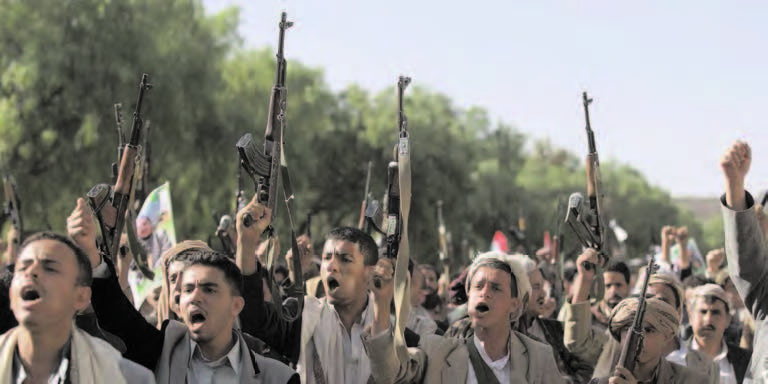
  • ‘Yemen is in flames’, says UN chief Ban Ki-moon, calls for immediate ceasefire

    ‘Yemen is in flames’, says UN chief Ban Ki-moon, calls for immediate ceasefire

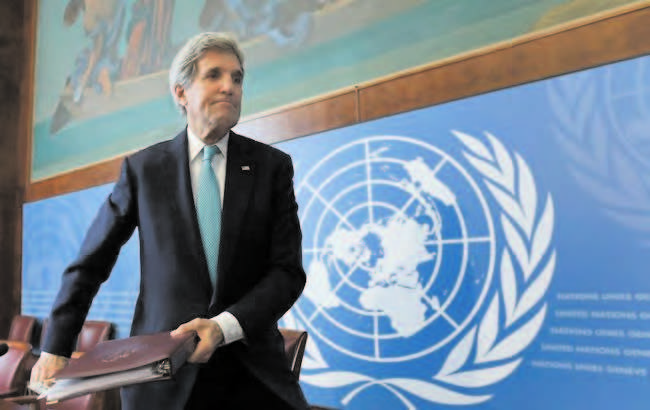
    WASHINGTON (TIP): United Nations Secretary-General Ban Ki-moon called April 16 for an immediate cease-fire in Yemen to spur peace talks and get lifesaving aid into the impoverished Middle East nation.

    The UN chief addressed “the many fateful challenges” the world confronts, from 50 million refugees and displaced people – the largest number since World War II – to the urgent problem of climate change in a speech at the National Press Club.

    “Millions of people face hatred and persecution, billions suffer from hunger and exploitation,” he said. “The United Nations has appealed for $16 billion to cover humanitarian relief for this year – almost five times what we needed a decade ago.”

    Ban announced he will visit the Vatican later this month to meet with Pope Francis and discuss “common concerns,” including the encyclical on the environment that the pontiff plans to issue in the months ahead.

    He said he has invited the pope, President Barack Obama and all other world leaders to the United Nations in September to adopt new UN goals for 2030 to protect the environment, combat poverty and promote human rights and economic development that doesn’t contribute to climate change.

    Surveying the crisis-ridden state of the world and the “many fateful challenges on our plate,” Ban pointed to the ever-worsening “nightmare” in Syria, now in its fifth year, and said his envoy Staffan de Mistura will be holding a series of talks in Geneva to see if anyone is “truly serious” about engaging in meaningful negotiations to end the conflict.

    He made a special plea for Palestinians in the Yarmouk refugee camp caught between the Syrian government’s “military machine … and the brutality of extremist groups.”

    Ban said Yemen is “in flames,” and U.N.-brokered talks offered “the best way out of a drawn-out war with terrifying implications for regional stability.” He made no mention of Wednesday’s announcement that his special envoy for Yemen, Jamal Benomar, was stepping down.

    Ban said the UN is working on a plan of action, which will be launched in autumn, to fight violent extremism by the Islamic State group, Boko Haram and al-Qaida-linked groups such as al-Shabab in Somalia.

    On Nigeria, he expressed hope that the country’s new government, led by President-elect Muhammadu Buhari, can promote “a return to normalcy” and rescue schoolchildren kidnapped and mistreated by Boko Haram. In South Sudan, where a civil war continues despite cease-fires, Ban said U.N. bases are sheltering 115,000 people, “a landmark in our efforts to protect civilians.”

    The UN chief welcomed the framework agreement between six major powers and Iran to rein in its nuclear program and said the U.N. would do its best to help implement a comprehensive agreement once it is finalized.

    “This breakthrough can also create space for efforts to address the many other serious security challenges in the region,” he said.

    Earlier on April 16, Thursday, Ban met with U.S. Defense Secretary Ashton Carter and members of the Senate Foreign Relations Committee.

  • China jails journalist accused of leaking state secrets for 7 years

    BEIJING (TIP): A Chinese court has sentenced a journalist accused of leaking an internal Communist Party document to a foreign website to seven years in prison, her lawyer said on Friday, a ruling that reflects the sensitivity surrounding the party’s inner workings.

    Gao Yu, 71, who was tried behind closed doors in Beijing last November, was convicted on a charge of providing state secrets to foreign contacts, her lawyer, Mo Shaoping, said.

    Rights activists have condemned Gao’s detention and trial, saying it indicates a widening crackdown on dissent. The United States called on China to release Gao at the United Nations Human Rights Council session in Geneva last month. Mo said Gao had indicated as she was leaving the courtroom that she would appeal against the decision. “As defending counsel, I do not approve of the judgment. I feel the court has not sufficiently respected the facts and evidence in issuing this mistaken sentence,” Mo told Reuters by telephone.

    Gao was detained on accusations she had leaked a party document, which warned senior members against “seven mistaken ideologies”, including the “universal values” of human rights, according to Gao’s other lawyer, Shang Baojun. The State Council Information Office, the Cabinet’s media arm, did not respond to a request for comment.

    Gao, who was detained last May, was accused of passing the document to Ho Pin, head of Mirror Books, Shang said. Ho told Reuters from New York that Gao did not pass him the document. The maximum sentence for leaking state secrets is life imprisonment. However, prosecutors recommended a sentence of 5-10 years based on the level of sensitivity of the secrets Gao was accused of leaking, Shang said.

  • Bringing Yemen’s tragedy to an end – Need for a fair Shia-Sunni deal

    The civil war in Yemen, exacerbated by the intervention of outside powers, is poised at a delicate stage which could impinge on the larger picture of the Middle East’s future trajectory. The truth is that the poorest country in the region lies along several fault lines.

    They are the Shia-Sunni schism in the Muslim world, the rivalry between Saudi Arabia and Iran, the interest of outside powers such as the United States and the major European trading nations and the broader state of US-Russian relations. Despite its appeals, the United Nations is, for the present, a spectator, rather than an effective actor.

    The military intervention of Saudi Arabia and its Gulf allies by launching air strikes on Houthi rebels in Yemen, who are aided by Iran and are in the process of capturing the better part of the country, has complicated the picture. In a sense, it was inevitable because Riyadh could hardly stand aside even as a Shia sect set about conquering a Sunni majority country. The Saudis are now demanding the surrender of the Houthis before stopping their bombing runs.

    The United States is helping the Saudis by providing logistical and other technical assistance, a delicate dance for US Secretary of State John Kerry. He decries Iranian help to the Houthis. Tehran denies even as he eyes a landmark deal with Iran on its nuclear program. Pakistan, on its part, is facing a cruel dilemma in accepting the Saudi demand to join the intervention against the backdrop of its substantial Shia population at home.

    For Pakistan, the dilemma is of a state beholden to Riyadh for its generous subsidies. A contingent of Pakistani troops is permanently stationed in Saudi Arabia in part payment for Saudi goodies. Prime Minister Nawaz Sharif himself is beholden to the Saudis for saving him from possible execution in the days of Gen Pervez Musharraf rule, first giving him refuge and then re-injecting him into the Pakistani political scene.

    Grave as the dilemmas for Pakistan are, the larger picture is more menacing because of the fault lines. The most salient is the Saudi-Iranian contest in the Middle East in which Tehran is seeking to spread its wings through fortuitous circumstances and its own activism. Thanks to the American invasion of Iraq, the latter, with its Shia majority, ultimately fell into its lap. Iran is well placed in Lebanon with its allied Hezbollah movement in a confessional division of political factions.

    Bahrain remains a tempting target because it is ruled by a Sunni monarch underpinned by Saudi power over a Shia majority. Saudi apprehension over the proposed nuclear deal with Iran, shared by Israel, is that it would give Tehran greater opportunities to strengthen its regional role.

    As if the picture were not complicated enough, the growth of Sunni extremists, first in the form of Al-Qaida and its affiliates, then their evolution into ISIS and ultimately into a caliphate holding territory in the shape of the Islamic State (IS), is a fact of life. Americans have reluctantly returned to the region by undertaking bombing runs on the IS and are ironically on the same side as Iran in trying to attain this goal.

    How then is the world, or the major powers, to unscramble the mess because of the very nature of the crises? If relations between the United States and Russia were not as frigid as they are over Ukraine and other issues, they could have joined hands to bring about at least a temporary ceasefire in Yemen. After all, in the five plus one (UN Security Council permanent members plus Germany) format of talks on Iran’s nuclear program, Russia was a participant. But the prevailing animosities in what was once the Big Two make the going tough.

    Individuals and circumstances have contributed to creating the Yemen crisis. Mr. Ali Abdullah Saleh, the long-time dictator, was eased out of office with the help of Gulf monarchies in the wake of the short-lived Arab Spring in 2011. He was nursing his wounds while keeping his powder dry and still had ambitions – for son, if not for himself. He chose to ally with the Houthis while still retaining the loyalty of sections of the country’s armed forces.

    Houthis, who traditionally control the north of the country, were ready to revolt against the Sanaa dispensation presided over by an unimpressive Sunni imposed by Saudis. They felt their interests were being sacrificed and, thanks to Saleh’s support, they had the strength to overrun the capital and even try to take over Aden, the principal city of South Sudan.

    The nature of the strikes being what it is, there are reports of increasing civilian casualties. Although some humanitarian aid has now got in and India, among other countries, has managed to evacuate most of its citizens, international demands are growing by the day to stop the bombing runs and seek a political solution.

    Houthis, being a minority, cannot hope to rule Yemen. Yet, given the military prowess they have demonstrated, they will insist on a fair share of the national cake in any future framework agreement. Saudi Arabia shares a long border with Yemen and will not tolerate a Shia-dominated dispensation despite the earlier long rule of Mr. Saleh, himself a Houthi.

    For its part, Iran has already suggested that the Saudi-led action is a “mistake” and the United States is seeking to maintain a balance between the hoped-for nuclear deal with Iran and warnings to Tehran to refrain from aiding the Houthis. Ultimately, the problem will land in the lap of the United Nations, but the question is how much longer the process will take and how long the regional contestants will drag their feet before a truce is called.

    The scale of the fighting and deaths is leading to growing demands for a ceasefire. The Saudis have made their point that there cannot be a Shia-dominated dispensation along its shared border. But a compromise must include a fair sharing of power with Houthis.

  • 519 dead in two weeks of Yemen fighting: UN

    UNITED NATIONS (TIP): Some 519 people have been killed and nearly 1,700 injured in two weeks of fighting in Yemen, the UN aid chief has said, raising alarm over the fate of civilians.

    Valerie Amos yesterday said she was “extremely concerned” for the safety of civilians trapped in the fierce fighting and appealed to armed factions to do their utmost to protect ordinary Yemenis.

    The violence has sharply escalated in Yemen following a Saudi-led air campaign launched on March 26 to stop an advance by Shia Huthi rebels that forced President Abedrabbo Mansour Hadi to flee to Saudi Arabia.

    Aid groups have expressed alarm over the mounting toll of civilian casualties following an air strike on a camp for displaced people and the bombing of a dairy. Dozens were killed in both attacks.

    “Those engaged in fighting must ensure that hospitals, schools, camps for refugees and those internally displaced and civilian infrastructure, especially in populated areas, are not targeted or used for military purposes,” Amos said in a statement.

    The UN children’s agency this week said at least 62 children had been killed and 30 injured over the past week in Yemen, and that more of them were being recruited as child soldiers.

    Tens of thousands of people have fled their homes, some making the perilous journey by sea to Djibouti and Somalia, Amos said.

    UN aid agencies are working with the Yemen Red Crescent to deliver emergency health kits and generators so that civilians can have clean water, food and blankets, she added.

    UN secretary-general Ban Ki-moon this week reminded all sides to uphold international humanitarian law and protect civilians.

    The United Nations is backing Hadi as Yemen’s legitimate leader in the face of the Huthi uprising that has plunged the poor Arab state deeper into chaos.

    The Huthis seized power in the capital Sanaa in February and last month advanced on the port city of Aden, Hadi’s stronghold, where they seized the presidential palace on April 2.

  • Family Abductions: Is there a solution?

    Family Abductions: Is there a solution?

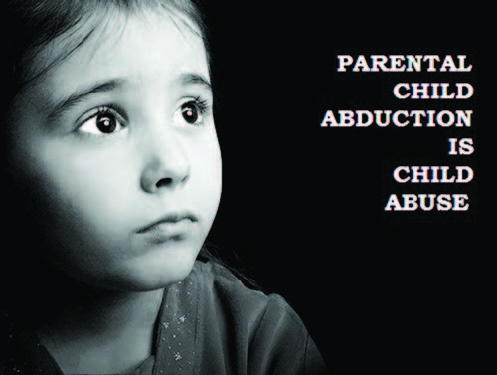
    International parental child abduction (IPCA) and the illegal retention of children abroad are criminal offences according to both US federal law and the United Nations Convention on the Rights of the Child (UNCRC).

    194 countries of the world including India but excluding the US, Somalia and South Sudan, have ratified the UNCRC, which legally binds their governments to use legislative and administrative measures to combat IPCA and illegal child retention. All Governments who have ratified this legally binding treaty are accountable to the international community.

    India ratified the UNCRC in 1992 and re-committed to it several times over the last 2 decades.

    Yet, today over a 1000 children a year are abducted out of the US by one of their parents, and the numbers are on the rise.

    India is the #3 top destination for IPCA.

    You can search everywhere on the Internet, just don’t expect to find any recent numbers or reports on IPCA cases. The US State Department stopped reporting these statistics after 2013.

    The US allows 1000s of children to exit US borders everyday without requiring the traveling parent to provide a letter of consent from the non-traveling parent. Once a child is abducted they rarely come back, and if they do, the psychological damage has already been done. https://www.psychologytoday.com/blog/buddy-system/201011/parental-child-abduction-and-its-impact

    India lets the abducted children in, and then the Indian Judicial system facilitates their illegal retention.

    These traumatized children remain in India for years while a long cross-border custody battle ensues between their feuding parents.

    Meanwhile an innocent child has lost their childhood for ever.

    Finally after the passage of a few years and several court dates, the Indian courts usually pass an order that the child remain in India under permanent sole custody of the abducting parent, since they have now already lived in India for so long that it would be against the best interests of the child to displace them from their new home!

    There is an unfortunate American woman of Indian origin, Bindu Philips, who was a New Jersey stay-at-home mother to her twin boys. Her 8 year old sons have been illegally retained in India by her abusive husband for 6 years now. She has not seen them in years. Her father has been fighting a losing custody battle on her behalf in India. http://bringseanhome.org/tag/bindu-philips/

    Left-behind parents like myself on average spend $100,000 in legal expenses in both the US and India- and we STILL don’t get our kids back.

    Here is a link to the chain of events that a left-behind parent can expect once a child is abducted to India, which I have outlined above. http://lifetimechild.com

    Is there any hope for a solution? The answer to this question depends on first finding the root of the problem.

    A number of organizations and communities of left- behind parents have now joined hands – BOKHome, BAKHome, IStand Parents Network amongst others.

    We have been doing our own research as to what are the underlying problems and what could be the possible solutions.

    Ironically, we found through our research that the laws against international parental child abduction and the illegal retention of children abroad are already in existence in both the USA and India. However, governmental agencies seem inexplicably reluctant to accept that these laws exist and to ensure that these laws are enforced.

    In the US: The US Department of State says that their hands are tied, although they promise they are doing everything they can. However, for over 2 decades they have failed so spectacularly to follow through with their own commitments that it appears now that maybe they simply don’t care. Not even the most simple, effective and totally free measures to prevent IPCA have been undertaken to date.

    There are even parents who claim that the US DoS has not only been unhelpful but have in fact aided in some abductions and re-abductions.

    I can get you in touch with one such American father who recently sued the U.S. State Department Office of Children’s issues- the case has gone up to the level of the US Federal court system now. His story is a heart-breaking story of how corruption still exists in the USA and how it has destroyed his life.

    In March, 2000 the US State Department committed to developing an interagency database of the cases of IPCA so that they could share data with the NCMEC, the Department of Justice, after it had been noted that the State Department was still “solving” cases whereas the abducted child was retrieved a month earlier by the FBI.

    This interagency database was supposed to be up and running in August 2000. 15 years later, it still does not exist.

    In India: IPCA is a crime in India, but the US DoS warns abducting parents clearly on its website “Parental child abduction is not a crime in India.”

    http://travel.state.gov/content/childabduction/english/count ry/india.html

    Left-behind parents have found unrelenting Congressional support and momentum for our cause in Congressman Chris Smith. He championed the Goldman Act which was enacted in 8/14, which gives the US Department of State more authority and also makes it accountable.

    https://www.govtrack.us/congress/bills/113/hr3212

    He recently questioned US Secretary of State John Kerry on Bindu Philips’ case. http://www.thehindu.com/news/kerry-quizzed-on-child-abductions-to-india/article6942102.ece

    4 Organizations of left-behind parents participated in a 3 day conference in Washington DC late last month, called the International Parents’ Conference, Embassy Walk & Congressional Lobby Day on March 25-26, 2015.

    http://www.istandparentnetwork.com/

    The highlight of this event was the OPEN Congressional

    http://childrenatborders.org/news-and-comments/

    Subcommittee hearing on 3/25/15.

    Our children need a voice.

  • SMART MOVES – Modi Government on US & China

    SMART MOVES – Modi Government on US & China

    [vc_row][vc_column][vc_column_text]

    “The Modi government will face the test of managing closer strategic relations with the US, which are in part directed against China, and forging closer ties with China that go against this strategic thrust, besides the reality that China has actually stronger ties with the US than it can ever have with India, though the underlying tensions between the two are of an altogether different order than between India and the US.”


    [/vc_column_text][/vc_column][/vc_row][vc_row][vc_column width=”1/2″][vc_column_text]

    [quote_box_center]China[/quote_box_center] 

    Prime Minister Modi has been quick to court both US and China. His first overtures were to China, prompted no doubt by his several visits there as Chief Minister of Gujarat, Chinese investments in his home state and his general admiration for China’s economic achievements. Beyond this personal element, many in the government and corporate sectors in India believe that our politically contentious issues with China, especially the unresolved border issue, should be held in abeyance and that economic cooperation with that country should be expanded, as India can gain much from China’s phenomenal rise and the expertise it has developed in specific sectors, especially in infrastructure. It is also believed that China, which is now sitting over $4 trillion of foreign exchange reserves, has huge surplus resources to invest and India should actively tap them for its own developmental needs. In this there is continuity in thinking and policy from the previous government, with Modi, as is his wont, giving it a strong personal imprint.

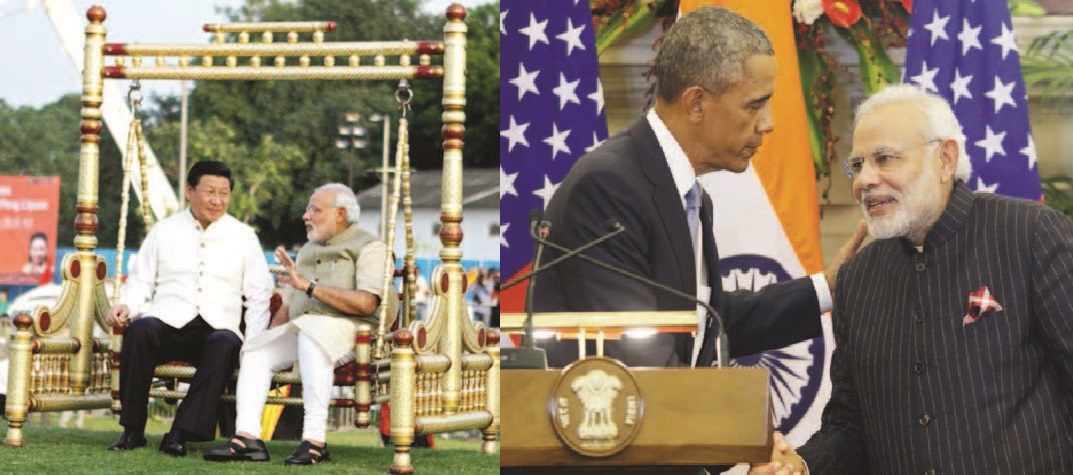
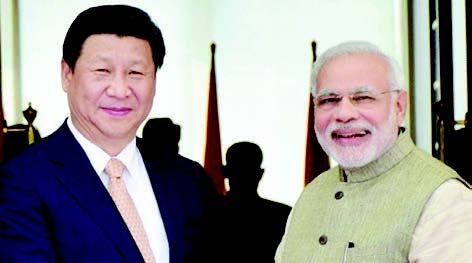
    The first foreign dignitary to be received by Modi after he became Prime Minister was the Chinese Foreign Minister, representing the Chinese President. This was followed by up by his unusually long conversation on the telephone with the Chinese Prime Minister. Our Vice-President was sent to Beijing to celebrate the 60th anniversary of the Panchsheel Agreement even though China has blatantly violated this agreement and India’s high level diplomatic endorsement of it only bolsters Chinese diplomacy, especially in the context of China-created tensions in the South China and East China Seas. Modi had occasion to meet President Xi Jinxing in July at the BRICS summit in July 2014, and this was followed up by the Chinese President’s state visit to India in September 2014, during which the Prime Minister made unprecedented personal gestures to him in an informal setting in Ahmedabad.

    The dramatics of Modi’s outreach to the Chinese aside, his objectives in strengthening economic ties with China, essentially imply a consolidation of the approach followed in the last decade or so, with some course correction here and there. In this period, China made very significant headway in our power and telecom sectors, disregarding obvious security concerns associated with China’s cyber capabilities and the links of Chinese companies to the Chinese military establishment. Many of our top companies have tapped Chinese banks and financial institutions for funds, and this has produced a pro-Chinese corporate lobby in our country. This lobby will obviously highlight the advantages of economic engagement over security concerns. The previous Prime Minister followed the approach of emphasizing shared interests with China rather than highlighting differences. The position his government took on the Depsang incident in May 2013 showed his inclination to temporize rather than confront. Externally, he took the line, which Chinese leaders repeated, that the world is big enough for India and China to grow, suggesting that he did not see potential conflict with China for access to global markets and resources. Under him, India’s participation in the triangular Russia-India-China format (RIC) and the BRICS format continued, with India-originated proposal for a BRICS Development Bank eventually materializing. Indian concerns about the imbalance in trade were voiced, but without any action by China to redress the situation. India sought more access to the Chinese domestic market for our competitive IT and pharmaceutical products, as well as agricultural commodities, without success. Concerns about cheap Chinese products flooding the India market and wiping out parts of our small-scale sector were voiced now and then, but without any notable remedial steps. The Strategic Economic Dialogue set up with China, which focused primarily on the railway sector and potential Chinese investments in India, did not produce tangible results.

    The Manmohan Singh government, despite China’s aggressive claims on Arunachal Pradesh and lack of progress in talks between the Special Representatives on the boundary issue as well as concerns about China’s strategic threats to our security flowing from its policies in our neighborhood, especially towards Pakistan and Sri Lanka, declared a strategic and cooperative partnership with that country. During Manmohan Singh’s visit to China in September 2013, we signed on to some contestable formulations, as, for example, the two sides committing themselves to taking a positive view of and supporting each other’s friendship with other countries, and even more surprisingly, to support each other enhancing friendly relations with their common neighbors for mutual benefit and win-win results. This wipes off on paper our concerns about Chinese policies in our neighborhood. We supported the BCIM (Bangladesh, China, India, Myanmar) Economic Corridor, including people to people exchanges, overlooking Chinese claims on Arunachal Pradesh and the dangers of giving the Chinese access to our northeast at people to people level. The agreement to carry out civil nuclear cooperation with China was surprising, as this makes our objections to China-Pakistan nuclear ties politically illogical. We also agreed to enhance bilateral cooperation on maritime security, which serves to legitimize China’s presence in the Indian Ocean when China’s penetration into this zone poses a strategic threat to us.

    As a mark of continuity under the Modi government, during President Xi Jinxing’s September 2014 visit to India, the two sides agreed to further consolidate their Strategic and Cooperative Partnership, recognized that their developments goals are interlinked and that their respective growth processes are mutually reinforcing. They agreed to make this developmental partnership a core component of their Strategic and Cooperative Partnership. The India-China Strategic Economic Dialogue was tasked to explore industrial investment and infrastructure development.

    To address the issue of the yawning trade imbalance, measures in the field of pharmaceuticals, IT, agro-products were identified and a Five-Year Development Program for economic and Trade Cooperation to deepen and balance bilateral trade engagement was signed. Pursuant to discussions during the tenure of the previous government, the Chinese announced the establishment of two industrial parks in India, one in Gujarat and the other in Maharashtra, and the “Endeavour to realize” an investment of US $ 20 billion in the next five years in various industrial and infrastructure development projects in India, with production and supply chain linkages also in view. In the railway sector, the two sides the two sides agreed to identify the technical inputs required to increase speed on the existing railway line from Chennai to Mysore via Bangalore, with the Chinese side agreeing to provide training in heavy haul for 100 Indian railway officials and cooperating in redevelopment of existing railway stations and establishment of a railway university in India. The Indian side agreed to actively consider cooperating with the Chinese on a High Speed Rail project. In the area of financial cooperation, the Indian side approved in principle the request of the Bank of China to open a branch in Mumbai.

    The Modi government has agreed to continue defense contacts, besides holding the first round of the maritime cooperation dialogue this year, even though by engaging India in this area it disarms our objections to its increasing presence in the Indian Ocean area, besides drawing negative attention away from its policies in the South China Sea as well as projecting itself as a country committed to maritime cooperation with reasonable partners. The joint statement issued during Xi Jinxing’s visit omitted any mention of developments in western Pacific, though it contained an anodyne formulation on Asia-Pacific. This becomes relevant in view of the statements on Asia-pacific and the Indian Ocean region issued during President Obama’s visit to India in January 2015.

    Our support, even if tepid, continues for the BCIM Economic Corridor. On our Security Council permanent membership, China continues its equivocal position, stating that it “understands and supports India’s aspiration to play a greater role in the United Nations including in the Security Council”. It is careful not to pronounce support for India’s “permanent membership”. During Foreign Minister Sushma Swaraj’s visit to China for the RIC Foreign Ministers meeting, China has maintained its equivocation, although the press has wrongly presented the formulation as an advance. China is openly opposed to Japan’s candidature in view of the sharp deterioration of their ties. In India’s case, it avoids creating a political hurdle to improved ties by openly opposing India’s candidature. “A greater role” could well mean a formula of immediately re-electable non-permanent members, of the kind being proposed by a former UN Secretary General and others.

    On counter-terrorism lip service is being paid to cooperation. On Climate Change, the two countries support the principle of “equity, common but differentiated responsibilities and respective capabilities”, although the US-China agreement on emission reduction targets has created a gap in Indian and Chinese positions, with the Modi government deciding to delink itself from China in international discussions to follow.

    In diplomacy, once concessions or mistakes are made, retrieval is very difficult unless a crisis supervenes. The Modi government, for reasons that are not too clear, repeated the intention of the two countries to carry out bilateral cooperation in civil nuclear energy in line with their respective international commitments, which has the unfortunate implication of India circumscribing its own headroom to object to the China-Pakistan nuclear nexus, besides the nuance introduced that China is observing its international commitments in engaging in such cooperation. The calculation that this might make China more amenable to support India’s NSG membership may well prove to be a mistaken one. Surprisingly, stepping back from the Manmohan government’s refusal towards the end to make one-sided statements in support of China’s sovereignty over Tibet when China continues to make claims on Indian territory, the new government yielded to the Chinese ruse in making us thank the “Tibetan Autonomous Region of the People’s Republic of China” as well as the Chinese Ministry of Foreign Affairs – as if both are independent of the Chinese government- for facilitating the Kailash Mansarovar Yatra and opening the new route through Nathu La, even though this is not the  most rational route because it involves a far longer journey, made easier of course by much better infrastructure. On receiving the flood season hydrological date the Chinese have stuck to their minimalist position.

    On the sensitive border issue, the disconnect between the joint statement which repeats the usual cliches and the serious incident in Chumar coinciding with Xi’s visit was obvious. China’s double game of reaching out to India- with greater confidence now as the gap between it and India has greatly widened and it has begun to believe that India now needs China for its growth and development goals- and staging a provocation at the time of a high level visit, continues. This is a way to remind India of its vulnerability and the likely cost of challenging China’s interests, unmindful that its conduct stokes the already high levels of India’s distrust of that country. It went to Modi’s credit that he raised the border issue frontally with XI Jinping at their joint press conference, expressing “our serious concern over repeated incidents along the border” and asking that the understanding to maintain peace and tranquility on the border “should be strictly observed”. He rightly called for resuming the stalled process of clarifying the Line of Actual Control (LAC). While this more confident approach towards China is to be lauded, we are unable to persuade China to be less obdurate on the border issue because we are signaling our willingness to embrace it nonetheless virtually in all other areas.

    That Modi mentioned “India’s concerns relating to China’s visa policy and Trans Border Rivers” while standing alongside Xi Jinping at the joint press conference indicated a refreshing change from the past in terms of a more open expression of India’s concerns. With regard to Bangladesh-China-India-Myanmar Economic Corridor that China is pushing hard, Modi rightly added a caveat by declaring that “our efforts to rebuild physical connectivity in the region would also require a peaceful, stable and cooperative environment”. He also did not back another pet proposal of Xi: the Maritime Silk Road, which is a re-packaged version of the notorious “string of pearls” strategy, as the joint statement omits any mention of it.

    Even as Modi has been making his overall interest in forging stronger ties with China clear, he has not shied away from allusions to Chinese expansionism, not only on Indian soil but also during his visit to Japan. After President Obama’s visit to India and the joint statements on South China Sea and Asia-Pacific issued on the occasion which can be construed as directed at China, Foreign Minister Sushma Swaraj’s recent visit there acquired more than normal interest in watching out for indications of China’s reaction. Her call on Xi Jinping was projected, quite wrongly, as going beyond normal protocol, when in actual fact the Chinese Foreign Minister gets access to the highest levels in India during visits. Swaraj seems to have pushed for an early resolution of the border issue, with out-of-the-box thinking between the two strong leaders that lead their respective countries today. Turning the Chinese formulation on its head, she called for leaving a resolved border issue for future generations.

    That China has no intention to look at any out-of-the-box solution- unless India is willing to make a concession under cover of “original thinking”- has been made clear by the vehemence of its reaction to Modi’s recent visit to Arunachal Pradesh to inaugurate two development projects on the anniversary of the state’s formation in 1987. It has fulminated over the Modi visit over two days, summoning the Indian Ambassador to lodge a protest, inventing Tibetan names for sub-divisions within Arunachal Pradesh to mark the point that this area has been under Tibetan administrative control historically. The Chinese Vice-Foreign Minister arrogantly told our Ambassador that Modi’s visit undermined “China’s territorial sovereignty, right and interests” and “violates the consensus to appropriately handle the border issue.” China is making clear that it considers Arunachal Pradesh not “disputed territory” but China’s sovereign territory. It is also inventing a non-existent “consensus” that Indian leaders will not visit Arunachal Pradesh to respect China’s position. There is a parallel between China’s position on the Senkakus where it accuses the Japanese government to change the status quo and inviting a Chinese reaction, and its latest broadside against India. This intemperate Chinese reaction casts a shadow on Modi’s planned visit to China in May and next round of talks between the Special Representatives (SRs) on the boundary question. If without a strong riposte these planned visits go ahead we would have allowed the Chinese to shift the ground on the outstanding border issue even more in their favor. It would be advisable for our Defense Minister to visit Tawang before Modi’s visit. A very categorical enunciation of our position that goes beyond previous formulations should be made by the Indian side. The Chinese position makes the SR talks pointless, as the terms of reference China is laying down cannot be agreed to by our side.

    [/vc_column_text][/vc_column][vc_column width=”1/2″][vc_column_text]

    [quote_box_center]UNITED STATES[/quote_box_center] 

    Prime Minister Modi, contrary to expectations, moved rapidly and decisively towards the US on assuming office. He confounded political analysts by putting aside his personal pique at having been denied a visa to visit the US for nine years for violating the US law on religious freedoms, the only individual to be sanctioned under this law. The first foreign visit by Modi to be announced was that to the US. Clearly, he believes that strong relations with the US gives India greater strategic space in foreign affairs and that its support is crucial for his developmental plans for India.

    To assess the Modi government’s policies towards the US, the results of his visit to Washington in September 2014 and that of Obama to India in January 2015 need to be analyzed, keeping in mind the approach of the previous government and the element of continuity and change that can be discerned.

    The joint statement issued during his US visit set out the future agenda of the relationship, with some goals clearly unachievable, but the ambitions of the two countries were underscored nonetheless. It was stated that both sides will facilitate actions to increase trade five-fold, implying US-China trade levels, which is not achievable in any realistic time-frame. They pledged to establish an Indo-US Investment Initiative and an Infrastructure Collaboration Platform to develop and finance infrastructure. An agreement on the Investment Initiative was signed in Washington prior to Obama’s visit to India, but bringing about capital reforms in India, which the Initiative aims at, is not something that can be realized quickly. India wants foreign investment in infrastructure and would want to tap into US capabilities in this broad sector, but the US is not in the game of developing industrial corridors like Japan or competitively building highways, ports or airports. Cooperation in the railway sector was identified, but it can only be in some specific technologies because this is the field in which Japan and China are competing for opportunities in India, whether by way of implementing high speed freight corridors or building high speed train networks in the country. India offered to the U.S. industry lead partnership in developing three smart cities, even if the concept of smart cities is not entirely clear. Some preliminary steps seem to have been taken by US companies to implement the concept. The decision to establish an annual high-level Intellectual Property (IP) Working Group with appropriate decision-making and technical-level meetings as part of this Forum was done at US insistence as IPR issues are high on the US agenda in the context of contentious issues that have arisen between the US companies and the Indian government on patent protection, compulsory licensing and local manufacturing content requirements.

    In his joint press briefing with Obama, Modi raised IT related issues, pressing Obama’s support  “for continued openness and ease of access for Indian services companies in the US market”, without obtaining a reaction from  the latter then or later when Obama visited India. On the food subsidy versus trade facilitation stand off in the WTO, Modi maintained his position firmly and compelling the US to accept a compromise. Modi’s firmness on an issue of vital political importance to India showed that he could stand up to US pressure if the country’s interest so demanded. He welcomed “the US defense companies to participate in developing the Indian defense industry”, without singling out any of the several co-development and co-production projects offered by the US as part of the Defense Technology and Trade Initiative (DTTI). Clearly, it was too early to conclude discussions on the US proposals before his September visit.

    The more broad based reference in the joint statement to India and the US intending to expand defense cooperation to bolster national, regional and global security was, on the contrary, rather bold and ambitious, the import of which became clearer during Obama’s January visit. While bolstering such cooperation for national security makes sense, regional security cannot be advanced together by both countries so long as the US continues to give military aid to Pakistan, which it is doing even now by issuing presidential waivers to overcome the provisions of the Kerry-Lugar legislation that requires Pakistan to act verifiably against terrorist groups on its soil before the aid can be released. As regards India-US defense cooperation bolstering global security, securing the sea lanes of communication in the Indian Ocean and the Asia-Pacific region is the obvious context. It was decided to renew for 10 years more the 2005 Framework for US-India Defense Relations, with defense teams of the two countries directed to “develop plans” for more ambitious programs, including enhanced technology partnerships for India’s Navy, including assessing possible areas of technology cooperation.

    The US reiterated its commitment to support India’s membership of the four technology control regimes: the Nuclear Suppliers Group (NSG), the Missile Technology Control Regime (MTCR), the Wassenaar Agreement and the Australia Group, with Obama noting that India met MTCR requirements and is ready for NSG membership, but without setting any time-tables. An actual push by the US in favor of India’s membership has been lacking because of issues of nuclear liability and administrative arrangements have remained unresolved until now and the US has wanted to use their resolution as a leverage. US support for India’s membership of these export control organizations was reiterated during Obama’s January visit, but how quickly the US will move remains unclear even after the political resolution of outstanding nuclear issues.

    The US at one time described India as a lynchpin of its pivot or rebalance towards Asia. The underlying motivation behind the pivot and US interest in drawing India into this strategy is China, though this is not stated publicly in such open terms. India has been cautious about the US pivot towards Asia as its capacity and willingness to “contain” Chinese power has been doubted because of the huge financial and commercial interdependence forged between the two countries. India seeks stable and economically productive relations with China and has wanted to avoid the risk of being used by the US to serve its China strategy that raises uncertainties in the mind of even the US allies in Asia. However, under the Modi government, India has become more affirmative in its statements about the situation in the western Pacific and the commonalities of interests between India and the US and other countries in the Indo-Pacific region. The government has decided to “Act East”, to strengthen strategic ties with Japan and Australia, as well as Vietnam, conduct more military exercises bilaterally with the US armed forces as well as naval exercises trilaterally with Japan. Modi has spoken publicly about greater India-US convergences in the Asia-Pacific region, to the point of calling the US  intrinsic to India’s Act East and Link West policies, a bold formulation in its geopolitical connotations never used before that suggested that India now viewed the US as being almost central to its foreign policy initiatives in both directions.

    On  geopolitical issues, India showed strategic boldness in the formulations that figured in the September joint statement. These laid the ground for more robust demonstration of strategic convergences between the two countries during Obama’s visit later. The reference in September to the great convergence on “peace and stability in the Asia Pacific region” was significant in terms of China’s growing assertiveness there. The joint statement spoke of a commitment to work more closely with other Asia Pacific countries, including through joint exercises, pointing implicitly to Japan and Australia, and even Vietnam. In this context, the decision to explore holding the trilateral India-US-Japan dialogue at Foreign Minister’s level- a proposition that figured also in the India-Japan joint statement during Modi’s visit there- was significant as it suggested an upgrading of the trilateral relationship at the political level, again with China in view.

    On the issue of terrorism and religious extremism, India and the US have rhetorical convergence  and some useful cooperation in specific counter-terrorism issues, but, on the whole, our concerns are  inadequately met because US regional interests are not fully aligned with those of India. The September joint statement called for the dismantling of safe havens for terrorist and criminal networks and disruption of all financial and tactical support for networks such as Al Qaeda, Lashkar-e-Taiba, Jaish-e-Mohammad, the D-company and the Haqqanis, but the Taliban were conspicuously omitted from the list. In any case, such statements against Pakistan-based terrorist groups have been made before but are ignored  by Pakistan in the absence of any real US pressure on it to curb Hafiz Saeed or credibly try Lakhvi despite repeated joint calls for bringing those responsible for the Mumbai terrorist massacre to justice.

    We had a paragraph on Iran in the joint statement in Washington, clearly at US insistence, which the Iranians would have noted with some displeasure. The Modi government is also willing to accommodate the US on Iran within acceptable limits. While the US supports India’s permanent membership of the UN Security Council, the support remains on paper as the US is not politically ready to promote the expansion of the Council.

    At Washington, India and the US agreed on an enhanced strategic partnership on climate change issues, and we committed ourselves to working with the US to make the UN Conference on Climate Change in Paris in December this year a success. This carried the risk of giving a handle to the US to ratchet up pressure to obtain some emission reduction commitments from India, encouraged  diplomatically by the US-China agreement.

    The unusually strong personal element in Modi’s diplomacy towards the US came apparent when during his Washington visit he invited Obama to be the chief guest at our Republic Day on January 26, 2015- a bold and imaginative move characteristic of his style of functioning. That this unprecedented invitation was made was surprising in itself, as was its acceptance by Obama at such short notice. Modi and Obama evidently struck a good personal equation, with the earlier alienation supplanted by empathy. Obama made the unprecedented gesture of accompanying Modi to the Martin Luther King Memorial in Washington, perhaps taking a leaf from the personal gestures made  to Modi in Japan by Prime Minister Abe.

    On the occasion of Obama’s January visit, Modi has moved decisively, if somewhat controversially, on the nuclear front, as this was the critical diplomatic moment to work for a breakthrough to underline India’s commitment to the strategic relationship with the US, which is the way that US commentators have looked at this issue. While in opposition the BJP had opposed the India-US nuclear agreement, introduced liability clauses that became a major hurdle in implementing the commitment to procure US supplied nuclear reactors for producing 10,000 MWs of power, and had even spoken of seeking a revision of the agreement whenever it came to power. During Obama’s  visit, the “breakthrough understandings” on the nuclear liability issue and that of administrative arrangements to track US supplied nuclear material or third party material passing through US supplied reactors, became the highlight of its success, with Modi himself calling nuclear cooperation issues as central to India-US ties. The supplier liability issue seems to have resolved at the level of the two governments by India’s decision to set up an insurance pool to cover supplier liability, as well as a written clarification through a Memorandum of Law on the applicability of Section 46 only to operators and not suppliers. On the national tracking issue the nature of the understanding has left some questions unanswered; it would appear that we have accepted monitoring beyond IAEA safeguards as required under the US law. However, the larger question of the commercial viability of US supplied reactors remains, a point that Modi alluded to in joint press conference. On the whole, whatever the ambiguities and shortfalls, transferring the subject away from government to company level to eliminate  the negative politics surrounding the subject is not an unwelcome development.

    For the US, defense cooperation has been another touchstone for the US to measure India’s willingness to deepen the strategic partnership. While the significant progress expected to be announced under the DTTI during Obama’s visit did not materialize, some advance was made with the announcement of four “pathfinder” projects involving minor technologies, with cooperation in the area of aircraft engines and aircraft carrier technologies to be explored later. The government has already chosen for price reasons the Israeli missile over the Javelin that was part of the several proposals made to India under the DTTI. As expected, the India-US Defense Framework Agreement of 2005 was extended for another 10 years, without disclosing the new text. It is believed  that India is now more open to discussions on the three foundational agreements that the US considers necessary for transfer of high defense technologies to India.

    The US-India Joint Strategic Vision for the Asia-Pacific and Indian Ocean Region signed during the visit is a major document which in the eyes of some reflects India’s move away from the shibboleths of the past associated with nonalignment and the obsession with strategic autonomy. Issuing a separate document was intended to highlight the growing strategic convergences between the two countries, with full awareness of how this might be interpreted by some countries, notably China. It affirms the “importance of safeguarding maritime security and ensuring freedom of navigation and overflight throughout the region , especially in the South China Sea”, while calling also on all parties to avoid the threat or use of force and pursue resolution of territorial and maritime disputes through all peaceful means in accordance with international law, including the Law of the Sea Convention. It speaks, in addition, of India and the US investing in making trilateral countries with third countries in the region, with Japan and Australia clearly in mind. This is a direct message addressed to China, reflecting less inhibition on India’s part both to pronounce on the subject and do it jointly with the US, irrespective of Chinese sensibilities. Some Chinese commentary has criticized this effort by the US to make India part of its containment strategy, without taking cognizance of how India views China’s maritime strategy in the Indian Ocean involving its strategic investments in Sri Lanka, Maldives, Pakistan and other countries. In the joint statement issued during  Obama’s visit, the two sides noted that India’s Act East Policy and the US rebalance to Asia provided opportunities to the two countries to work closely to strengthen regional ties, in what amounted to an indirect endorsement of the US pivot to Asia.

    Obama’s visit also demonstrated the consolidation of the good personal rapport established between him and Shri Modi, with embraces and first name familiarity- possibly overdone on Modi’s part- walk in the park and talk over tea, all of which boosted the prime minister’s personal stature as a man comfortable and confident in his dealings with the world’s most powerful leader on the basis of equality. This personal rapport should assist in greater White House oversight over the Administration’s policies towards India, which experience shows greatly benefits the bilateral relationship.

    Counter-terrorism is always highlighted as an expanding area of India-US cooperation because of shared threats. The joint statement in Delhi spoke dramatically of making the US-India partnership in this area a “defining” relationship for the 21st century. Does this mean that the US will share actionable intelligence on terrorist threats to us emanating from Pakistani soil? This is doubtful. The continued omission of the Afghan Taliban from the list of entities India and the US will work against is disquieting, as it indicates US determination to engage the Taliban, even when it knows that it is Pakistan’s only instrument to exert influence on developments in Afghanistan at India’s cost. The subsequent refusal of the US spokesperson to characterize the Taliban as a terrorist organization and preferring to call it an armed insurgency has only served to confirm this.

    On trade, investment and IPR issues, the two sides will continue their engagement with the impulse given to the overall relationship by the Obama-Modi exchanges. On a high standard Bilateral Investment Treaty the two sides will
    “assess the prospects for moving forward”, which indicates the hard work ahead. On the tantalization agreement the two will “hold a discussion on the elements requires in both countries to pursue” it, a language that is conspicuously non-committal. On IPRs there will be enhanced engagement in 2015 under the High Level Working Group.

    On climate change, we reiterated again the decision to work together this year to achieve a successful agreement at the UN conference in Paris, even when our respective positions are opposed on the core issue of India making specific emission reduction commitments. While stating  that neither the US nor the US-China agreement put any pressure on India, Modi spoke in his joint press conference about pressure on all countries to take steps for the sake of posterity. While  finessing the issue with high-sounding phraseology, he has left the door open for practical compromises with the US.

    As a general point, hyping-up our relations with the US is not wise as it reduces our political space to criticize its actions when we disagree. The previous government made this mistake and the Modi government is not being careful enough in this regard. Obama’s objectionable lecture to us at Siri Fort on religious freedom and his pointed reference to Article 25 of our Constitution, illustrates this. He showed unpardonable ignorance of Indian history and Hindu religious traditions in asking us to “look beyond any differences in religion” because “nowhere in the world is it going to more necessary for that foundational value to be upheld” than in India. To say that “India will succeed so long as it is not splintered around religious lines” was a wilful exaggeration of the import of some recent incidents  and amounted to playing the anti-Hindutva card by a foreign leader prompted by local Christian and “secular” lobbies. Reminding us of three national cinema and sport icons belonging only to minority religions- when their mass adulation is unconnected to their faith- was to actually encourage religiously fissured thinking in our society. On return to Washington Obama pursued his offensive line of exaggerating incidents of religious intolerance in India. On cue, a sanctimonious editorial also appeared in the New York Times. The government could not attack Obama for his insidious parting kick at Siri Fort so as not to dim the halo of a successful visit and therefore pretended that it was not directed at the Modi team. The opposition, instead of deprecating Obama’s remarks, chose to politically exploit them against Modi, as did some Obama-adoring Indians unencumbered by notions of self-respect.

    While giving gratuitous lessons on religious tolerance to the wrong country Obama announced $1 billion civil and military support to Pakistan that splintered from a united India because of religious intolerance in 1947 and has been decimating its minorities since. Obama has also invited the Chinese president to visit the US on a state visit this year, to balance his visit to India and the “strategic convergences” reached there on the Asia-Pacific region. Obama’s claim that the US can be India’s “best partner” remains to be tested as many contradictions in US policy towards India still exist.

    The Modi government will face the test of managing closer strategic relations with the US, which are in part directed against China, and forging closer ties with China that go against this strategic thrust, besides the reality that China has actually stronger ties with the US than it can ever have with India, though the underlying tensions between the two are of an altogether different order than between India and the US.

    [/vc_column_text][/vc_column][/vc_row]

  • US asks Pakistan to keep its pledge on Mumbai attacks

    US asks Pakistan to keep its pledge on Mumbai attacks

    WASHINGTON (TIP): As a Pakistani court ordered the release of an alleged mastermind of the Mumbai terrorist attack, the US asked Pakistan to follow through on its pledge to bring its perpetrators and sponsors to justice, says an agency report.

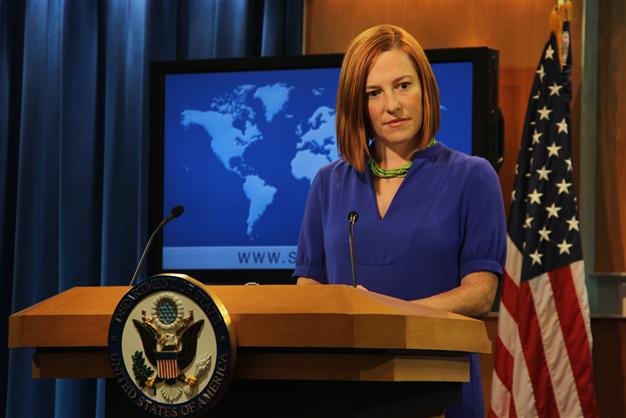
    The US was “monitoring reports that an Islamabad High Court judge suspended detention orders for the alleged Mumbai attack mastermind” Zakiur Rehman Lakhvi, State Department spokesperson Jen Psaki told reporters Friday, March 13.

    “The Government of Pakistan has pledged its cooperation in bringing the perpetrators, financiers and sponsors of the Mumbai terrorist attacks to justice, and we urge Pakistan to follow through on that commitment,” she said.

    “Pakistan is a critical partner in a fight against terrorism,” Psaki said.

    While the US “can’t speculate on the outcome of an ongoing legal process in Pakistan” she said according to their information Lakhvi remained in prison for now.

    “Well, for now, let me also reiterate he remains in prison. Obviously, there’s a range of ways that we share information. I’m not going to speak to that from the podium,” Psaki said.

    Asked how the Islamabad court’s order for the release of Lakhvi would impact ongoing talks between India and Pakistan, she said: “Well, certainly, we support ongoing dialogue. I’m not going to speak to how it will impact talks between two other countries.”

    The spokesperson did not have a comment on reports that Pakistan had summoned an Indian diplomat to protest over India’s inaction on 2007 Samjhauta Express bombing in which more than 50 Pakistanis were burnt alive saying she didn’t “have any information on this.”

    India Friday, March 13, summoned the Pakistan envoy in New Delhi to convey its outrage over the Islamabad court’s order saying the release of a person designated as international terrorist by the United Nations will pose a threat that cannot be ignored.

    Lakhvi is accused of masterminding the November 26, 2008 Mumbai terror attacks in which 166 people, including six Americans, were killed and over 600 wounded.


  • Talks under way on ending UN sanctions on Iran

    Talks under way on ending UN sanctions on Iran

    UNITED NATIONS (TIP) : Major world powers have begun talks about a United Nations Security Council resolution to lift UN sanctions on Iran if a nuclear agreement is struck with Tehran, a step that could make it harder for the US Congress to undo a deal, Western officials said.

    The talks between Britain, China, France, Russia and the United States -the five permanent members of the Security Council – plus Germany and Iran, are taking place ahead of difficult negotiations that resume next week over constricting Iran’s nuclear ability.

    Some eight UN resolutions – four of them imposing sanctions – ban Iran from uranium enrichment and other sensitive atomic work and bar it from buying and selling atomic technology and anything linked to ballistic missiles. There is also a UN arms embargo.

    Iran sees their removal as crucial as UN measures are a legal basis for more stringent US and European Union measures to be enforced. The US and EU often cite violations of the UN ban on enrichment and other sensitive nuclear work as justification for imposing additional penalties on Iran.

    US Secretary of State John Kerry told Congress on Wednesday that an Iran nuclear deal would not be legally binding, meaning future US presidents could decide not to implement it. That point was emphasized in an open letter by 47 Republican senators sent on Monday to Iran’s leaders asserting any deal could be discarded once President Barack Obama leaves office in January 2017.

    But a Security Council resolution on a nuclear deal with Iran could be legally binding, say Western diplomatic officials. That could complicate and possibly undercut future attempts by Republicans in Washington to unravel an agreement.

    Iran and the six powers are aiming to complete the framework of a nuclear deal by the end of March, and achieve a full agreement by June 30, to curb Iran’s most sensitive nuclear activities for at least 10 years in exchange for a gradual end to all sanctions on the Islamic Republic.

    So far, those talks have focused on separate US and European Union sanctions on Iran’s energy and financial sectors, which Tehran desperately wants removed. The sanctions question is a sticking point in the talks that resume next week in Lausanne, Switzerland, between Iran and the six powers.

    But Western officials involved in the negotiations said they are also discussing elements to include in a draft resolution for the 15-nation Security Council to begin easing UN nuclear-related sanctions that have been in place since December 2006.

  • Arun Singh appointed India’s ambassador to U.S.

    Arun Singh appointed India’s ambassador to U.S.

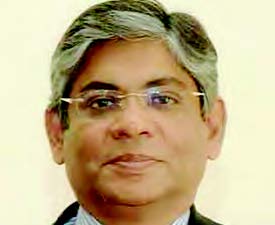
    NEW DELHI (TIP): Arun Kumar Singh, a 1979 batch Indian Foreign Service officer, has been named ambassador to the United States in place of S Jaishankar, who took over as foreign secretary on January 28.

    Singh joined the Indian Foreign Service in 1979 after completing his Master’s Degree in Economics from Delhi University and had a two-year teaching stint at the university.

    Fifty-nine year old Singh is presently the India Ambassador to France. He also served at India’s Permanent Mission to the United Nations Office, New York, in 1993-1997 as Counselor and handled multilateral social and economic negotiations. He served in the Indian Mission at Moscow as Counselor/Minister in 1997-2000.

    His various foreign postings include being the Deputy Chief of Mission at the Embassy of India, Washington DC from October 2008 to April 2013.

  • UN lauds India’s improved disaster risk management

    UN lauds India’s improved disaster risk management

    UNITED NATIONS (TIP): Lauding India’s improved disaster risk management and accuracy of its meteorological department, the UN has said timely warnings on cyclones have helped “dramatically” reduce mortality during natural calamities.

    The global assessment report on disaster risk reduction released by the United Nations said that the accuracy of forecasts made by the Indian Meteorological Department has greatly improved over the years.

    It cited the 2013 cyclone Phailin that hit Odisha, saying “in a significant improvement” from previous years, warnings were disseminated four days before the cyclone made landfall.

    “The cyclone made landfall in a pre-electoral period, meaning that both the national and state governments deployed all available resources to ensure that the disaster was well managed and its impacts minimised,” the report said.

    Comparing the casualty figure of 9,843 in the 1999 super-cyclone that had hit Odisha, the report said no more than 47 people died during Phailin.

    “This dramatic reduction in disaster mortality has been attributed to improvements in disaster risk management effected by the Odisha State Government,” it said.

    The report further said that the case of Odisha is indicative of a trend in which improving development conditions and strengthened disaster management lead to dramatically reduced mortality, at least in those events for which warning is possible.

    The report said that success stories from countries like Bangladesh, Chile, India, the Philippines in their disaster preparedness “show that timely and effective warning and communication coupled with risk information and a prepared population significantly reduces mortality.” 

    According to the report, an annual global investment of six billion dollars in disaster risk management strategies would generate total benefits in terms of risk reduction of 360 billion dollars.

    “For many countries, that small additional investment could make a crucial difference in achieving the national and international goals of ending poverty, improving health and education and ensuring sustainable and equitable growth,” the report says.

    While countries are devoting resources to disaster management, the report stresses that more needs to be done to foster a culture of prevention and incorporate disaster risk reduction into the post-2015 development agenda.

    The report also noted that the cost of disasters worldwide has reached an average of USD 250 billion to USD 300 billion every year, urging countries to increase their commitments to strengthen their population’s resilience.

    The report, produced by the UN Office for Disaster Risk Reduction, stresses that the economic losses caused by disasters are also hindering countries’ paths to achieve sustainable development, making risk reduction central to social, economic and environmental progress.

    “If we do not address risk reduction, future losses from disaster will increase and this will impact countries’ capacity to invest money in other areas such as health and education. If we do not take the necessary measures now, it will be difficult to achieve development, let alone sustainable development,” said UN secretary general’s special representative on disaster risk reduction Margareta Wahlstrom.

    “The report is a wake-up call for countries to increase their commitment to invest in smart solutions to strengthen resilience to disasters,” Wahlstrom said, adding that they will have an opportunity to do so at the third conference on disaster risk reduction taking place in less than two weeks in Sendai, Japan.

    At the conference, countries will adopt a framework to success the hyogo framework for action.

    Born in 2005 out of the world conference on disaster reduction, the framework is a 10-year plan, the first to detail the work that is required from all different sectors and actors to reduce disaster losses.

    The report added that in many countries, climate change is magnifying risks and increasing the cost of disasters.

  • UN WOMEN AND UNFPA CONDEMN THE BRUTAL MURDER OF ÖZGECAN ASLAN

    NEW YORK (TIP): Violence against women and girls is a grave violation of human rights and it can only be put to an end by addressing its root causes -gender inequality and discrimination against women. UN Women and the United Nations Population Fund
    (UNFPA) promote zero tolerance towards violence against women and girls and call for the effective implementation of the Council of Europe Convention on preventing and combating violence against women and domestic violence, the Istanbul Convention – a ground-breaking international agreement that Turkey ratified in 2012.

    We, as UN Women’s and UNFPA’s Representatives to Turkey, condemn the horrendous murder of Özgecan Aslan and join in solidarity with the thousands of women and men who have taken to the streets across Turkey to say “No” to violence against women and girls. We recognize the considerable progress Turkey has made with regard to the legislation to combat violence against women and commend the Turkish Government for its leadership in promoting the Istanbul Convention, including by being the first government to sign it. The Istanbul Convention is in line with the global standards set out in the UN Convention on Elimination of All Forms of Discrimination against Women (CEDAW) and can be an effective tool in making the world a safer place for women and girls, if implemented.

    It is nonetheless concerning that notwithstanding the progress in Turkish legislation and institutional structuring, recent data on violence against women shows insignificant improvement since 2008 and violence against women is still pervasive with two out of every five women in Turkey exposed to sexual and physical violence. Violence against women has serious consequences for the victims but it also negatively affects families, the community and the country at large. Preventing violence against women can save lives and prevent human suffering. We therefore welcome the Prime Ministers condemning of the murder of Ozgecan Aslan and the announcement that a new National Action Plan to combat violence against women and girls will be developed.

    The Beijing Platform for Action, approved by 189 governments in Beijing 20 years ago, calls for effective prevention strategies that address the root causes of gender inequality so that women and men be equally valued in the society and can exercise equal rights. It calls for better services for women survivors of violence and for effective legislation that protects women from domestic violence and other forms of gender-based violence, including sexual harassment and rape, and for the effective persecution and punishment of the perpetrators.

    All members of society, in particular men and boys, can help to reach the goal of creating a society free from all forms of violence against women and domestic violence. Each and every one of us can help to challenge gender stereotypes, harmful traditional practices and discrimination against women. It is only by achieving absolute gender equality that violence against women can be prevented.

    Ingibjorg Gisladottir Zahidul Huque

    UN Women Representative to UNFPA Representative for Turkey and Turkey and Regional Director Country Director for Armenia, Azerbaijan and for Europe and Central Asia Georgia

    (Press Release )

  • China backs bigger role for India, Brazil at UNSC

    China backs bigger role for India, Brazil at UNSC

    BEIJING (TIP): China said it respects the aspirations of India and Brazil to play bigger roles at the UN Security Council, while keeping mum on Japan’s candidature.

    About the Indian and Brazilian applications to become permanent members, China respects the willingness of the two countries to play a bigger role in the UN body, Foreign Ministry spokesperson Hua Chunying said.

    Hua, however, told reporters that Beijing would like to reach a “broadest consensus through diplomatic means” on UNSC reform.

    She was replying to a question whether Beijing backs Brazil to become a permanent member of the UNSC in the backdrop of China and Russia supporting India’s candidature at a recent Russia, India, China (RIC) foreign ministers meeting here.

    The joint statement after the meeting attended by External Affairs Minister Sushma Swaraj said: “Foreign Ministers of China and Russia reiterated the importance they attached to the status of India in international affairs and supported its aspiration to play a greater role in the United Nations.”

    Hua said China pays high attention to the desire of Brazil to play bigger role in the UNSC.

    India along with Brazil, Germany and Japan together staked their claims for permanent membership of the UNSC as part of a larger reform of the United Nations.

    While China has backed India for a bigger role at the UN, it has expressed reservations in the past over Japan becoming a permanent member in view of the political and historical issues between the two countries.

    China-Japan ties have deteriorated following a row over the Senkaku Islands in the East China Sea, and also over some history-related issues.

    In December 2013, Japanese Prime Minister Shinzo Abe visited the Yasukuni Shrine — which honours not only the nation’s 2.5 million war dead but also 14 Class-A war criminals from World War II.

  • House leader: Pope Francis to address Congress on September 24

    House leader: Pope Francis to address Congress on September 24

    WASHINGTON (TIP): Pope Francis will address a joint meeting of the US House and Senate on Sept. 24, becoming the first pontiff to do so, House Speaker John Boehner said on February 5.


    “We’re humbled that the Holy Father has accepted our invitation and certainly look forward to receiving his message on behalf of the American people,” Boehner, a Republican, told reporters.


    Boehner is Roman Catholic and extended the invitation for the pope to speak to lawmakers.


    During his planned trip next fall, Francis is also expected to visit the White House as well as speak at the United Nations in New York and participate in a massive Catholic rally for families in Philadelphia.


    It will be his first visit to the United States in a papacy that began two years ago.


    “In a time of global upheaval, the Holy Father’s message of compassion and human dignity has moved people of all faiths and backgrounds,” Boehner said in a written statement released as he spoke to reporters. “His teachings, prayers, and very example bring us back to the blessings of simple things and our obligations to one another.” 


    Pope Benedict XVI visited Washington during a trip to the U.S. in 2008, celebrating Mass at Nationals Stadium.

  • Meet Padma Shri Dr. Dattatreya Nori – Featured Indian American

    Meet Padma Shri Dr. Dattatreya Nori – Featured Indian American

    NEW YORK (TIP): Dr. Dattatreya Nori, an internationally renowned Oncologist is a recipient of one of India’s highest civil awards, “Padma Shri”. The award was announced on the eve of India’s Republic Day, January 26, 2015.

    Government of India recognizes excellence and contributions of Indians within  India and abroad every year on the eve of Republic Day.

    Dr. Nori, Professor and Executive Vice Chairman of the Radiation  Oncology Department at the New York- Presbyterian Hospital/Weill Cornell Medical College in New-York City is passionately committed to help the less fortunate.

    Meet Padma Shri Dr. Dattatreya Nori, the renowned Oncologist

    Man does not live by bread alone. What else does one need depends on the thinking of the person.

    To Dr. Dattatreyudu Nori, it is a touch of spirituality that lends strength to him as a medical professional. A derivative of the spirituality that he possesses and practices is the desire to serve and help the less fortunate in society. In Dr. Nori one sees  a glorious combination of material success and spiritual excellence.

    Dattatreya Nori2

    Dr. Nori’s professional excellence and humanitarian approach have endeared him in both USA and India, the country of his origin. Here he is seen sharing lighter moments with President of USA Barack Obama. Dr. Dattatreyudu Nori M.D., FACR, FACRO, is Professor and Executive Vice Chairman of the Radiation Oncology Department at The NewYork-Presbyterian Hospital/Weill Cornell Medical College in New York City. In addition, Dr. Nori is Chairman of Radiation Oncology at The New York Hospital Medical Center of Queens. He is also the Director of the Cancer Center at the New York Hospital Queens, in which capacity he heads that organization’s cancer program. Dr. Nori completed his undergraduate training at Kurnool Medical College and received his postgraduate medical degree from Osmania University in India. He then joined the staff of Memorial Sloan-Kettering Cancer Center in New York City, where he became Chief of the Brachytherapy Service before accepting the current position as Chairman of Radiation Oncology at Cornell.


    Dr. Dattatreyudu Nori, Professor and Executive Vice Chairman of the Radiation Oncology Department at the New York – Presbyterian Hospital / Weill Cornell Medical College in New York City is passionately committed to help the less fortunate. In recognition of  his professional excellence and tremendous contribution, Government of India, on 66th Republic Day of India on the January 26, 2015,  honored Dr. Nori with “Padma Shri”, one of the highest civilian awards of the country.  We, at The Indian Panorama, congratulate Dr. Nori on getting the prestigious award and wish him many more honors in times to come.

    Dr. Nori has an international reputation as a pioneer and authority in radiation oncology and brachytherapy. He was instrumental in introducing the current techniques and clinical concepts of High Dose Rate Brachytherapy for gynecological, genitourinary, thoracic and head and neck tumors. His research also included efforts to improve the outcome for patients with prostate cancer, lung cancer, pancreas, breast and other cancers. Dr. Nori has served as principal investigator for numerous clinical trails sponsored by the National Cancer Institute and has received several national and international awards for his contributions to cancer research, including the Distinguished Alumnus Award of the Memorial Sloan-Kettering Cancer Center Alumni Society. He has been called “a recognized leader in his specialty” by the prestigious New England Journal of Medicine. 

    Dr. Nori served in the American Cancer Society in various positions including Chairmanship of the Professional Education Committee. The American Cancer Society honored him with their highest prestigious award “Tribute to Life” for his accomplishments in cancer research.


    Dattatreya Nori4
    Dr. Nori inaugurated the Brachytherapy Department of Indo-American Cancer Institute

    Dr. Nori has trained more than 150 residents and fellows, some of whom have become Chairman of academic departments in the U.S. Dr. Nori is a Fellow in the American College of Radiology, Fellow in the American College of Radiation Oncology, past President of the American Brachytherapy Society, and a current member of several national and international oncology societies. He is also an Associate Editor of three oncology journals as well as a Visiting Professor to many universities in the U.S. and abroad. He has published three books and more than 200 scientific articles. He has given several prestigious lectureships such as the Probstein Oncology lecture at Washington University in St. Louis. He received a Gold Medal from the Indian Medical Association for his contributions to cancer research and training Indian physicians in the U.S. He also received the Excelsior Award from the Network of Indian Professionals in the United States and many Indian Organizations in the U.S., such as the Nargis Dutt Cancer Foundation and the Federation of Indian Associations have honored him for his contributions to cancer research.

    Dattatreya Nori3 Dattatreya Nori5Dr. Nori has provided technical and scientific help to many cancer centers in India, South America and Israel, and he is also the Founding Member of the Indo-American Cancer Institute for Women and Children, a state-of-the art 250 bed cancer and research institute located in Hyderabad, A.P. which was inaugurated by the Prime Minister of India in 2001. In addition, Dr. Nori is a Consultant to the United Nations International Atomic Energy Agency, advising on the formulation of guidelines for the treatment of cancer in developing countries. In a recent survey conducted by the reputable Castle Connolly Medical Ltd and published in America’s Top Doctors, Dr. Nori has been selected as one of the top doctors in America. In this survey, more than 250,000 leading doctors were asked to name the nation’s best physicians in various specialties -those “to whom you would send members of your family”. The most important criterion for physician selection was excellence in patient care, education, residency, board certification, fellowships, professional reputation, research, hospital affiliation, academic stature and medical school faculty appointment and experience. In a more recent survey done by the most popular woman’s magazine in the U.S., The Ladies’ Home Journal, Dr. Nori has also been named as one of the top doctors in America for the treatment of cancers in women. Dr. Nori was also honored by Senator Jon Corgine, Chairman of the Democratic Senatorial Committee and by Council Speaker Gifford Milller for his contributions to cancer research.

    Dattatreya Nori8 Dattatreya Nori7 Dattatreya Nori6Dr. Nori continues to be active as clinician, teacher, researcher and administrator of two large Radiation Oncology Departments and the Cancer Center at New York Hospital Queens.

    As I write his profile here in New York Dr. Nori is away to India  where he is  addressing  a Global Health Summit in Kochi from January 2 to 5. Dr. Nori is there to talk about prevention of Cervical cancer in India. He is there to give out the message that it can be prevented in India just as well as it is prevented in USA. Dr. Nori is a visiting professor to many universities across the globe and is frequently traveling.


    In India, which is his country of origin, he has helped set up a number of hospitals. One  such hospital – Indo American Cancer Hospital  with 500 beds is state of the art cancer hospital in Hyderabad. It was founded in 2002 and was inaugurated by the then Prime Minister of India Mr. Atal Behari Vajpayee.


    Dr. Nori lives with his wife Subhadra in Scarsdale, New York. His wife is a physician, academician and chairperson of the Department of Rehabilitation at Jacobi Medical Center affiliated with Albert Einstein College of Medicine in New York. His son, Sateesh and daughter-in- law Joy, are both attorneys and his daughter, Priya and son-in-law Himanshu, are both physicians.


  • Ban appoints Khare as under-secretary-general

    Ban appoints Khare as under-secretary-general

    UNITED NATIONS (TIP): UN Secretary-General Ban Ki-moon Wednesday, January 7, appointed a veteran Indian diplomat and UN official, Atul Khare, as the Under-Secretary-General for Field Support, making him one of the two highest-ranking Indians at the UN.

    Khare will join Vijay Nambiar, the Secretary-General’s Special Representative for Myanmar, on the world body’s Senior Management Group.

    He succeeds Ameerah Haq of Bangladesh as head of the UN Department of Field Support, which backs up the extensive network of peacekeeping and political field missions.

    India’s UN Mission welcomed his appointment and said it “has full confidence that Dr. Khare will discharge the important responsibilities entrusted to him with complete distinction.”

    In earlier UN assignments, Khare was chosen to head the Change Management Team tasked with finding ways to reform the organization’s operations and improve efficiency. He has been the assistant secretary-general for peacekeeping operations and the Secretary-General’s special representative for Timor-Leste.

    A medical doctor by training, Khare graduated from the All India Institute of Medical Sciences before joining the Indian Foreign Service in 1984. He also has a master’s degree in management from the University of Southern Queensland.

    During his Indian diplomatic career, Khare obtained experience in many troubled spots in Africa where the UN has extensive involvement. As the Charge d’affaires of the Indian embassy in Senegal he was concurrently accredited to Mali, Mauritania, Gambia, Guinea Bissau and Cape Verde.

    He also served as the Deputy High Commissioner in Mauritius, a Counsellor at India’s UN Mission, the director of the External Affairs Ministry’s UN Division, and the Director of the Nehru Centre in London. He also did a stint as the Chef de Cabinet of the Foreign Secretary .

  • Post-elections, what J &K needs

    Post-elections, what J &K needs

    The announcement of the election results has justifiably generated enormous excitement, both in the state as also the rest of the country, since the formation of a coalition government is proving to be a daunting proposition. With a turnout of 65 per cent-the highest in two decades-the people have voted overwhelmingly for change. It is a loud cry for basic amenities, people-sensitive governance, development, more jobs and justice. The results have been fragmented. In the 87-member House, the People’s Democratic Party is the largest with 28 seats. The National Conference, expectedly headed for a drubbing, has done better with 15. Its former coalition partner, the Congress, has escaped being fully singed and retains 12. Smaller parties and independents, having won seven seats, are now much sought after for support in forming a stable coalition. It is the BJP, the second largest party (25 seats), that has emerged as the belle of the ball.

    Having been inconsequential for long in the fractious politics of the Valley, the BJP, without even winning a single seat, has occupied political mind-space there, and emerged as a major player in the politics of the state. Its unsuccessful forays across the Pir Panjal range augur well for the democratic health of the state as all the ideological impulses of the political spectrum would now find traction. But on the flip side, it is the polarization of the Hindu vote in Jammu and the counter-polarization in Kashmir, to keep the BJP at bay, which has resulted in a vote palpably on religious and regional lines. Here lies the danger to the internal coherence of the sensitive border state, said to be a microcosm of India as an idea.

    Leaving the acrimony of electioneering behind, this is perhaps not the time to reheat the bubbling curry of recriminations in the state. Prime Minister Narendra Modi and the new coalition government would need to understand the looming dangers of fragmentation, and grapple with the highly complex challenges the state faces. For J&K is central to India’s vision of a truly secular, diversified and decentralized Union. It has consumed enormous political, economic, diplomatic and military resources, and remains to this day one of our national security pre-occupations. Post-elections, Narendra Modi and Mufti Mohammad Sayeed-in the event he heads the coalition – would have been cast in historic moulds. Modi must rise above his party’s Hindutva agenda, being pursued elsewhere in the country, and fulfill his promised commitment to Bharat Ratna Atal Bihari Vajpayee’s vision of “Insaniyat, Jamhooriat and Kashmiryat” to build a future for the youth of the state. The Mufti’s statesman-like and sagacious political attributes would help provide the psychological-emotional ‘healing touch’ for the much-needed youth engagement.

    Externally, India would have no truck with major powers taking initiatives to help address the Kashmir issue. Nor for that matter would it countenance the United Nations. The problem can only be resolved bilaterally by India and Pakistan. This track remains blocked. For even after the recent barbaric and heart-rending Peshawar school killings, it is unlikely that Pakistan would end its terror doublespeak any time soon.

    As Nida Fazli laments:
    Khoon ke napaak yeh dhabey Khuda se’ kaise chupaoge’ Masoomon ki kabron’ par chad kar Kaun se ‘jannat jaoge’?
    It is the internal New Delhi-

    Srinagar/Jammu/Leh pathway that offers myriad opportunities. First, in Kashmir, over a quarter of a century, the sense of alienation, notably among youth, runs deep. Their move from victimhood to grievance to resistance, with possible temptations of armed fighting is discernible. Afzal Guru’s hanging and the shoddy handling of the episode exacerbated the angst. Prime Minister Modi would need to encourage and empower regional sentiments and voices, and help provide political space rather than dilute regional identity. This is an important consideration to achieve greater cohesiveness of the three regions and dilute the consequential impact of religious identities and regional orientations affirmed by the vote.

    Secondly, equitable development of the three regions and promotion of a deep inter-regional (in effect, inter-faith) dialogue would dilute belligerence, and bridge the gap between Srinagar, Jammu and Leh. Simultaneously, layers upon layers of mutual inter-dependence, in a rising economic trajectory, would help create countervailing resilience against disruptive trends.

    Lastly, Wahabi-Salafi impulses have generated trends of religious radicalization among youth and its offshoot of willingness to take up arms, fanned by social media networking. This challenge is best met politically. Also the state’s inherently tolerant society, its elders, and community leaders, would need to draw upon the wellsprings of the sub-continent’s famed Sufi Islam which still envelops Kashmir, like the rest of India. Significantly, over 71 per cent of those elected are known to be committed to inclusive, secular and pluralistic sentiment.

    The important issues of Article 370, Armed Forces Special Powers Act
    (AFSPA) and return of Kashmiri Pandits need imaginative and creative handling. It would be instructive to recall that J&K is the only Part B state that negotiated its membership with the Indian Union, leading to its special status, legally sanctified by Article 370 of the Indian Constitution. It is a special identity marker the Kashmiris deeply cherish, and it would be unwise to seek to revoke it.

    As to AFSPA, people see it as one of the anti-democratic draconian statutes in force for decades along with the Disturbed Area Act and the Public Safety Act. Yet if the Army has to perform under tough conditions and circumstances, such powers are necessary for effective counter-terrorism operations. The answer perhaps lies in a discerning and gradual lifting of AFSPA from select areas, in consultation with the Army, along with stricter adherence to the guidelines, rules of engagement and standard operating procedures.

    The return of the hapless Kashmiri Pandit community, circumstantially clawed out from their geo-cultural moorings, has wide-ranging support in the Valley. But their proposed housing in ghetto-like conclaves would fly in the face of Kashmir’s inclusive and secular credentials, and give rise to a feeling of ‘otherness’. A dribble rather than mass flow needs to be encouraged through provision of liberal financial assistance, attractive employment packages and improved living conditions. Such initiatives would serve to create a congenial environment for the dignified return of a proud community that has for millennia been the cultural pivot of Kashmir.

  • ASSERTION OF SELF IS KEY TO FEMININE POWER: NIRUPAMA RAO

    ASSERTION OF SELF IS KEY TO FEMININE POWER: NIRUPAMA RAO

    NEW YORK CITY (TIP): The Consulate General of India, New York hosted its tenth Media India Lecture Series with a lecture “On Women who lead” by Nirupama Rao on December 16 at the Consulate Ballroom. She spoke about three leading ladies of India who brought ‘elemental changes’ in society -Hansa Mehta, Vijaya Lakshami Pandit, and Kamaladevi Chattopadhyay. Rao outlined how these three fought for social justice and demonstrated the power of women.

    FEMININE POWER NIRUPAMA RAO
    Consul General of India in New York Ambassador Dnyaneshwar M Mulay makes opening remarks

    Hansa Mehta represented India on the Nuclear Sub-Committee on the status of women in 1946. As the Indian delegate on the UN Human Rights Commission in 1947-48, she was responsible for changing the language of the Universal Declaration of Human Rights from “all men are created equal” to all human beings, highlighting the need for gender equality. She later went on to become the vice chairman of the Human Rights Commission of the United Nations in 1950. She was also a member of the Executive Board of UNESCO.

    Vijaya Lakshami Pandit was the first Indian woman to hold a cabinet post. Following India’s independence she entered the diplomatic service and became India’s ambassador to the Soviet Union, the United States and Mexico), and Spain. Between 1946 and 1968, she headed the Indian delegation to the United Nations. In 1953, she became the first woman President of the United Nations General Assembly.

    Kamaladevi Chattopadhyay is most remembered for her contribution to the Indian independence movement; for being the driving force behind the renaissance of Indian handicrafts, handlooms, and theatre in independent India; and for upliftment of the socio-economic standard of Indian women by pioneering the co-operative movement.

    Nirupma Rao said she had learnt from them many important lessons of her life .

    Prof. Manu Bhagavan of the department of History at Hunter College CUNY moderated a post lecture conversation with Rao where she shared her personal experiences as an Indian diplomat.

    Earlier Consul General Ambassador Dnyaneshwar M Mulay in his introductory remarks reiterated that the Consulate will continue to make every effort for the promotion of Indian intellectual heritage, Art and Culture through various cultural events and the Media India Lecture-Series, established in March 2014, with an objective to enlighten young students, mainstream American media and the American people as a whole, about India’s global image, identity, aspirations, role and projection in the contemporary world.

  • Belgium seeks to have potato fries declared cultural heritage

    Belgium seeks to have potato fries declared cultural heritage

    BELGIUM (TIP): There are few things people agree on in linguistically divided Belgium, but an effort to get Belgian potato fries recognized as global cultural heritage and put it on a par with Peking opera and the Argentinian tango may get unequivocal support. Belgian fries are traditionally sold, in a paper cone, in a “fritkot”, generally a shack or trailer. There are some 5,000 of these in Belgium, making them 10 times more common, per capita, than McDonald’s restaurants in the United States.

    To become recognized by the United Nations’ cultural arm Unesco, they need to be endorsed by a minister of culture, and Belgium has three of them. The government of the Dutch speaking region of Flanders recognized Belgian fries as an integral part of national culture this year, and the French- and Germanspeaking communities are expected to debate the issue next year. UNAFRI, the national association of fritkot owners, which started the drive, says the unpolished establishments are uniquely Belgian, combining the country’s embrace of chaos with a dislike of corporate uniformity. “A cone of potato chips is Belgium in miniature.

    What’s astounding is that this way of thinking is the same, notwithstanding the different communities and regions,” said spokesman Bernard Lefevre. Many tourists join the locals in the long queues at popular Brussels fritkots such as Frit Flagey and Maison Antoine. “Before I came here, one of the only things I knew about Belgium was that they liked their fries, so I think they are pretty much there already,” said Rachael Webb, a visitor from Ottawa, Canada, holding a cone of fries

  • INDIA LIKELY TO IMPROVE ECONOMIC GROWTH TO 6.3% IN 2016: UN

    INDIA LIKELY TO IMPROVE ECONOMIC GROWTH TO 6.3% IN 2016: UN

    UNITED NATIONS: India’s economic growth is expected to improve to 6.3 per cent in 2016 with the country leading economic recovery in South Asia, according to a United Nations report. The UN World Economic Situation and Prospects 2015 (WESP) report, launched here on Wednesday, also said India is likely to make progress in implementing economic policy reforms and help provide support to business and consumer confidence.

    It said global economic growth is forecast to continue increasing over the next two years, despite legacies from the financial crisis continuing to weigh on growth, and the emergence of new challenges, including geopolitical conflicts such as in Ukraine, and the Ebola outbreak in West Africa. The global economy is expected to grow 3.1 per cent in 2015 and 3.3 per cent in 2016, compared with an estimated growth of 2.6 per cent for 2014, when the pace of expansion has been moderate and uneven.

    It said India, which is estimated to record a 5.4 per cent economic growth in 2014, will see GDP growth improving to 5.9 per cent next year and 6.3 per cent in 2016. Economic growth in South Asia is also set to gradually pick up from an estimated 4.9 per cent in 2014 to 5.4 per cent in 2015 and 5.7 per cent in 2016. “While the recovery will be led by India, which accounts for about 70 per cent of regional output, other economies such as Bangladesh and Iran are also projected to see stronger growth in the forecast period,” the report said.

    The about six per cent growth projected for India in 2016 will be the highest since the 2008-2011 period when it had grown at about 7.3 per cent. Economic growth had slowed to 4.7 per cent in 2012, according to the UN report. During 2014, East Asia, including China, managed to register relatively robust growth, while India led South Asia to a moderate strengthening. Developing countries as a group are expected to grow at 4.8 per cent in 2015 and 5.1 per cent in 2016, up from the 4.3 per cent estimated for 2014.

    The report added that along with robust external demand, growth is expected to be underpinned by a moderate strengthening of domestic consumption and investment as countries benefit from improved macroeconomic conditions. “Several countries, notably India, are likely to make progress in implementing economic policy reforms, thus providing support to business and consumer confidence,” it said.

  • Aligarh Alumni Association of Washington DC organizes 40th Anniversary Mushaira

    Aligarh Alumni Association of Washington DC organizes 40th Anniversary Mushaira

    Dr. Syed Amir and Dr. Zafar Iqbal

    WASHINGTON (TIP): The tradition of Mushairas, organized by the Aligarh Alumni Association of Washington DC (AAA), was started in 1975 initially with local poets from North America. The first international mushaira was held in 1982 with participation of poets from India and Pakistan. It has now evolved into annual literary festivals eagerly awaited by members of South Asian community of Metropolitan Washington area. During the last 40 years, well-known poets from the Subcontinent and Europe have participated in AAA mushairas.

    50
    Singing Tarana

    They include: Ahmad Faraz, Akhtar Shumar, Ali Sardar Jafri, Amjad Islam Amjad, Anwar Masood, Ashok Narain, Azhar Inayeti, Bano Arshad, Basheer Badar, Dilawar Figaar, Fahmida Riyaz, Faiz Ahmad Faiz, Gulzar Dehelvi, Habib Hashmi, Habib Jaalib, Hasan Kamaal, Himayat Ali Shaer, Ifthikhar Arif, Inamulhuq Javaid, Jameeluddin Aali, Javaid Akhtar, Jazib Qureishi, Kaifi Azmi, Kaleem Ajiz, Khamkhwah Hyderabadi, Khumar Barabankwi, Khushbeir Singh Shaad, Majrooh Sultanpuri, Makhmoor Saeedi, Malikzada Manzoor Ahmad, Meraj Faizabadi, Mohsin Ehsan, Nawaz Deobandi, Nazeer Baqri, Nida Fazli, Nikhat Iftikar, Parveen Shakir, Peerzada Qasim, Rahat Indori, Rahi Masson Raza, Rasheeda Ayan, Rehana Roohi, Sadaf Mirza, Sadaf Mirza, Saghar Khayyami, Saleem Kausar, Shaher Yaar, Shanul Haque Haqqi, Shiv Kumar Nizam, Tahir Faraz, Tariq Sabzwari,Wali Aasi,Waseem Bareilvi,Wasi Shah, Zafar Gorakhpuri, Zahid Fakhri, Zahida Zaidi, and Zubair Rizvi.


    51
    Prof. Gopichand Narang speaks


    In order to provide more time to poets coming from abraod, the number of poets invited from North America is kept small. A few of them who have participated in AAA mushairas are: A. Abdullah, AbdurRahman Siddiqui, Abidullah Ghazi, Ali Meenai, Ashfaq Hussain, Aziz Qureshi, Baqar Zaidi, Haneef Akhgar, Humaira Rahman, Ishrat Afrin, Khalid Irfan, Mona Shahab, MuniburRahman, Naseem Syed, Nasreen Syed, Nayyar Jahan, Raees Warsi, Razi Raziuddin, Sabiha Saba, Salman Akhtar, Salman Farooqui, Satyapal Anand, Shahida Kazmi, Shahla Naqvi, Shoeb Kidwai, and Zakia Ghazal. This year’s Mushaira held on September 27, 2014, at the Universities of Shady Grove was a landmark event as it celebrated the AAA’s founding four decades earlier. Dr. Abdullah, a senior Aligarian and a prominent literary figure in the area, coordinated the event. He and a team of dedicated volunteers invested many hours and much effort in organizing the event, inviting the poets, facilitating their travel and lodging arrangements.

    52
    Volunteers who managed the show

    The Association was fortunate in that several popular and renowned poets from Indian and Pakistan, besides some well-known poets from North America, agreed to participate in this 40th year celebration of mushaira tradition in Washington. Guest poets who travelled from overseas to participate in this year’s mushaira were: Imdad Hussaini, Naseer Turabi, and Noreen Talat Arooba from Pakistan. Iqbal Ashhar, Manzar Bhopali, Popular Meruthi, and Rashmi Sanan came from India. Host poets were Aziz Qureshi, Razi Raziuddin, Sabiha Saba, and Shahzaad Rizvi. Mr. Javed Akhtar had accepted the invitation, and his participation was eagerly awaited. Unfortunately, he had to undergo major surgery and was not permitted to continue his travel by his doctors in London.

    Professor Gopichand Narang, the venerable and illustrious Urdu writer, scholar and literary critique presided over the Mushaira. The proceedings opened by a recitation of the Aligarh Tarana by a group mostly comprising Aligarh Muslim University alumni, led by Mr. Masood Farshori, current secretary of the AAA. Dr. Fazal Khan, current president of the AAA, in his prepared remarks welcomed the guests and chronicled the progress of the Assocaition over four decades. He stressed that “For a long time, the AAA has been dedicated to achieving two objectives: (a) preservation of our cultural, literary and artistic heritage in our new homeland, and (b) extension of help to disadvantaged students at AMU who needed it to pursue their education.


    53
    54


    I am pleased to report that we continue to make impressive progress to achieve these goals,” he added. Dr. Abdullah in his introductory remarks recounted the services of Professor Narang to Urdu language, enrichment of its literature and promotion of scholarly research and learning in India. He also recited the long list of literary and national awards and honors conferred upon Professor Narang in India and abroad. Professor Narang in his short presidential address, delivered in his colorful captivating style, debunked the false notion that Urdu was the language of Muslims only. He argued that it was born and brought up in India, and exquisitely showcases the joint culture and shared values of Muslims and Hindus developed over centuries.

    In particular, Mushairas and Qawallis, he noted, were entirely Indian in their genealogy and unknown outside the subcontinent. It was one of the best mushaira organized in Washington area attended by captive audience, said veteran poets Naseer Turabi, Manzar Bhopali, and Popular Meruthi, Similar views were expressed by a number of people who attended this event. Congratulatory messages came from Ambassador Taranjit Singh Sandhu, DCM, Embassy of India, Hon. N. K. Mishra, Minister (Pers. & Community Affairs), Embassy of India, Hon. Mr. Mohammad Ziauddin, Ambassador of Bangladesh, and Mr. Nadeem Hotiana, Press Attaché’, Embassy of Pakistan. They could not attend the event as they had to be at United Nations Meeting in New York.

    As per mushaira tradition, in the beginning of mushaira hostpoets Aziz Qureshi, Razi Raziuddin, Sabiha Saba, and Shahzaad Rizvi recited their kalaam. Samples of poetry recited at the mushaira by guest poets are as follows:

    Bhala meri shanakht ko kaun mane gaa Hamari aadhi qavahi to muatbar bhi nahiN Khud se jo baat chhupai shaher meIn kaise phail gai Yaa deenvareN bol paRiN ya logon ka andaza ha Nreen Talat Arooba

    Tum apne dil meiN koi ranjish na paal rakhna ChhoTi si zindagi hai phir kiya malaal rakhna Ajnabi ban ke jeene ka hunar seekh lena Apni pahchaan badalte rahe tanha tanha
    Rashmi Saanan

    MeiN hooN jis haal meiN Aey mere sanam rahne de Tegh mut de, mere hathoN me qalam rahne de MaiN to shayer hoon Mera dil hain Bahut hi nazuk MaiN paTakhe se hi mur jaooN gaa bum rahen de Popular Meeruthi

    Bikhero Zulf to badal bhi chha hi jae gaa Tum aao to sahi savan bhi aa hi hae gaa Kitni bhari paR gaee ujle din par raat ko Pooche huns se, kaa hai tumhari jaat Imdad Hussaini

    Husn duniya ki har eik shai mein bahut hai lekin Koee aisa nahiN jo uski ada tak pahonche Tumhare vaade ka qad bhi tumhare jaisa hai Kabhi jo naap ke dekho to kam nikalta hai Manzar Bhopali

    Na jaane kitne chiraghoN ko mil gaee shuhrat Eik aftaab ke be-waqt Doob jane se Urdu hai mera naam main Khusrau ki paheli Main Meer ki humraaz hooN Ghalib ki saheli Iqbal Ashhar

    RaahoN k eek raah who mere ghar ki raah Thahre kisi jagah wo tabiyat nahiN rahi Yeh dil hai ya koi afsos ki surahi hai Yeh chashm o lub haiN ki hasrat bhari hai piyaloN mein Naseer Turabi
    .

  • Message of UN Women Executive Director on the International Day for the Elimination of Violence against Women

    Message of UN Women Executive Director on the International Day for the Elimination of Violence against Women

    UNITED NATIONS (TIP): Every year, on the International Day for the Elimination of Violence against Women (November 25), we are reminded how every day, women and girls experience violence in their lives. Women are beaten in their homes, harassed on the streets, bullied on the internet. Globally, one in three women will experience physical or sexual violence at some point in her life. More often than not, violence against women is committed by an intimate partner. Of all women killed in 2012, almost half died at the hands of a partner or family member.

    It is no exaggeration that the overall greatest threat to women’s lives is men, and often the men they love. Yet we know how violence against women can be eliminated. In 1995, close to 20 years ago, 189 governments came together in Beijing. They adopted a Platform for Action that spelled out key strategies to end violence against women, empower women, and achieve gender equality. This includes effective prevention strategies that address the root causes of gender inequality. This includes better services for women surviving violence, such as hotlines, shelters, legal advice, access to justice, counselling, police protection, and health services.

    This includes more accurate reporting rates, better data collection, and strengthened analyses of risk and prevalence factors. This includes greater support for women’s organizations, which are often on the frontline of the response. This includes having more men and boys standing up against violence, denouncing it, and stopping it. Male leaders, including traditional and religious leaders,must show the way. UN Women has launched HeForShe, a global campaign to engage men and boys as advocates and agents of change for the achievement of gender equality and women’s rights.We need men who believe in gender equality to take action now. A global review of progress and gaps in implementing the Beijing Platform for Action is underway.

    Preliminary data show that many countries have introduced laws to prohibit, criminalize, and prevent violence against women. Yet implementation and enforcement of these laws are inadequate. Reporting of violence remains low and impunity for perpetrators remains high. Not enough resources are targeted at provision of quality services and effective prevention strategies. Next year, after the endpoint of the Millennium Development Goals, a new roadmap for development will be adopted by the international community. Ending violence against women and girls must have a central place in this new framework. The promises from 20 years ago are still valid today. Together we must make 2015 the year that marks the beginning of the end of gender inequality. Now is the time for action.

  • Lok Sabha Speaker Sumitra Mahajan calls for early Reforms to UNSC

    Lok Sabha Speaker Sumitra Mahajan calls for early Reforms to UNSC

    UNITED NATIONS (TIP): “The Security Council is, undoubtedly, one of the most important institutions of global governance,” Sumitra Mahajan, speaker of Lok Sabha, the lower house of India’s parliament, stated. “If its legitimacy is in doubt then so would be the legitimacy of the United Nations. And, in fact, of the notion of global governance itself.” Mahajan was speaking Tuesday, November 18, at a session of the Preparatory Committee for the Fourth World Conference of Speakers of Parliaments on the subject of key challenges to world peace and democracy.

    She pointed out that the Council’s composition was based on UN’s structure in 1945 and she asked in a series of rhetorical questions to drive her point home, “Is that composition still representative of the international community? The United Nations then had 51 members. The figure now is 193.” At the founding of the UN, there were only three African members, including South African apartheid regime, Mahajan pointed out. “Today it has 54,” she said.


    3
    The delegates at the Fourth World Conference of Speakers of Parliaments. Sumitra Mahajan is seated fourth from the right.


    “How many permanent members of the Security Council are from Africa?” After a briefing by Liechtenstein Ambassador Christian Wenaweser on the work of the Accountability, Coherence and Transparency Group, which brings together 22 nations working on UN reform, Mahajan said she would like to know what it proposes to do to “bring more legitimacy to the permanent membership of the Council.” Pressing the case for changing the composition of the Council, she asked, “While improvement in working methods, or a code of conduct on use of the veto, are important, can they substitute for reform of the composition? Can improvement in working methods legitimize a structure that is not legitimate? To say that is anachronistic is only an understatement.”

    In 2010 during the 65th Anniversary of the United Nations, world leaders had committed themselves to the early reform of the Council. She asked, “When would early be?” Although the membership of the Council was increased from 11 to 15 in 1965 with addition of four elected members, permanent membership continues to be restricted to the original five who wield veto powers. In any expansion of the permanent membership, India, Germany, Brazil, Japan and an African nation would be the top contenders.

  • Farhan Akhtar announced as UN Women’s Goodwill Ambassador for South Asia

    Farhan Akhtar announced as UN Women’s Goodwill Ambassador for South Asia

    Actor calls on men and boys to join the UN Women’s HeForShe initiative, and mobilize for gender equality

    NEW YORK (TIP): UN Women, the United Nations organization dedicated to gender equality and women’s empowerment, announced, Thursday, November 13, the appointment of actor-filmmaker-singer Farhan Akhtar as its South Asia Goodwill Ambassador. Farhan is the first man to be chosen as a Goodwill Ambassador in the organization’s history. An accomplished and well-respected actorfilmmaker- singer, Farhan Akhtar has not only made his presence felt in the Indian film industry with his versatility, but has represented the voice of numerous concerned men on the important issue of gender equality and violence against women and girls in India through his Men Against Rape and Discrimination (MARD) campaign.

    Farhan will dedicate his efforts as UN Women’s Goodwill Ambassador for South Asia towards the empowerment of women and girls, and will serve as an advocate for UN Women’s newly launched HeForShe initiative in advocating for gender equality and women’s empowerment. “We are pleased and honored to have Farhan as our Goodwill Ambassador for South Asia, for we believe his work and values represent the core values of UN Women,” stated UN Women Executive Director and Under-Secretary-General Phumzile Mlambo-Ngcuka. “Farhan started his own campaign, MARD – Men Against Rape and Discrimination – that aims to sensitize men and create awareness about the safety of women. That kind of engagement is essential. We need creative and committed men like Farhan to push the gender equality and women’s empowerment agenda.

    I am convinced that Farhan’s passion and conviction for the cause will galvanize a multiplier effect and reach the hearts and minds of men and boys in South Asia and beyond,” added Ms. Mlambo-Ngcuka. The MARD campaign has successfully encouraged many actors to join this campaign and spread awareness. Corporations like Google have also engaged with the initiative to empower women through Internet literacy. “I am honored to serve UN Women as the Goodwill Ambassador for South Asia,” said Mr. Akhtar. “This gives me and our MARD initiative an added impetus to work together towards a more gender equal India and world.

    I am a supporter of UN Women’s HeForShe campaign and the role men and boys can play in stopping crime against women and girls, and working towards gender equality. Through this new partnership I want to call on all men and boys to be a catalyst for change and, through our actions, create a value system to end gender disparity.” Mr. Akhtar’s appointment coincides with the visit of UN Women’s top official to India. Earlier in the week she met with the President of India and senior ministers of the new government, and participated in the 2nd Global MenEngage Symposium, which brought together more than 400 NGOs working on gender justice in New Delhi.

    The visit to India comes as UN Women’s global initiative Beijing+20 “Empowering Women, Empowering Humanity: Picture It” is reigniting a global conversation on gender equality and women’s rights in the lead up to the 20th anniversary of the historic 1995 Beijing Conference, which produced what is considered the most comprehensive women’s rights agenda, the Beijing Platform for Action. UN Women’s other Goodwill Ambassadors include British actor Emma Watson, Academy Award winner Nicole Kidman and HRH Princess Bajrakitiyabha Mahidol of Thailand.

    UN Women is the UN organization dedicated to gender equality and the empowerment of women. A global champion for women and girls, UN Women was established to accelerate progress on meeting their needs worldwide. For more information, visitwww.unwomen.org. UN Women, 220 East 42nd Street, New York, NY 10017, New York. Tel: +1 646 781-4400. Fax: +1 646 781-4496. HeForShe is a solidarity movement which calls upon men and boys to stand up against the persisting inequalities faced by women and girls globally. The campaign strengthens the support for women’s rights as human rights by enlisting the support of men and exhorting them to put themselves forward as advocates for gender equality. For more information, visit http://www.heforshe.org/

  • ANGELINA JOLIE INTERESTED IN POLITICS

    ANGELINA JOLIE INTERESTED IN POLITICS

    Actress Angelina Jolie says her humanitarian works has furthered her interest in politics. The Oscar-winning actress talked about her interest in politics in an interview with Vanity Fair magazine, reports femalefirst.co.uk. “When you work as a humanitarian, you are conscious that politics have to be considered. Because if you really want to make an extreme change, then you have a responsibility,” she said. Asked about pursuing a career in politics, the United Nations Goodwill Ambassador said: “I am open.” However, the 38-year-old actress believes her acting career may hinder her aspirations. “But I honestly don’t know in what role I would be more useful – I am conscious of what I do for a living, and that (could) make it less possible,” she added.

  • As nature of conflicts change, UN Women urges swifter action to protect targets of violence

    As nature of conflicts change, UN Women urges swifter action to protect targets of violence

    NEW YORK (TIP):With the worst levels of displacement since the Second World War, UN Women Executive Director Phumzile Mlambo- Ngcuka , October 28, at the UN Security Council called upon UN Member States to address the violent extremism that is on the rise and threatens the lives and futures of women and girls worldwide. Presenting the UN Secretary-General’s Report on women, peace and security, she emphasized a shift in the nature of conflict, from Iraq to Mali, whereby women and girls are being specifically targeted by extremists.Ms. Mlambo-Ngcuka further called attention to the fact that displacement is exacerbating conflicts and is compounded by the number of ongoing crisis situations, including in Afghanistan, Central African Republic, South Sudan and others.

    She highlighted the need to accelerate efforts to achieve gender equality, saying “…empowered women are the best hope for sustainable development, following conflict.” The crises in Afghanistan, Syria, and Somalia created more than half of the 10.7 million persons displaced by conflict or persecution in 2013. The theme for this year’s Security Council Open Debate therefore focused on the situation of women refugees and displaced persons around the world.

    Next October, the Security Council will conduct a High-level Review of the women, peace and security agenda. In his message to the Council, the UN Secretary- General welcomed the Global Study on the implementation of resolution 1325, led by a high-profile Advisory Group, which will inform next year’s Security Council debate. 2015 marks the 15th anniversary of the adoption of resolution 1325, the 20th anniversary of the Beijing Declaration and Platform for Action, and the start of a new global development agenda building on the Millennium Development Goals.