Tag: United Nations

  • US Senate confirms Indian-American Puneet Talwar for key state department post

    US Senate confirms Indian-American Puneet Talwar for key state department post

    WASHINGTON (TIP): Puneet Talwar has been confirmed by the US Senate to a key diplomatic position, becoming the second Indian-American to join the state department. Talwar, who was a key aide of President Barack Obama on the Middle East, would now serve as the assistant secretary of state for political-military affairs.

    He was confirmed on thursday by voice vote. In September last year Obama nominated Talwar, who played a key role on negotiations with Iran, to this top diplomatic position in the state department. After being sworn-in, Talwar would be the second Indian- American serving as assistant secretary in the state department after Nisha Desai Biswal, who is the assistant secretary of state for South and Central Asia.

    Talwar would provide policy direction in the areas of international security, security assistance, military operations, defence strategy and plans, and defence trade. The Bureau of Political-Military Affairs is the department of state’s principal link to the department of defence. Since 2009, Talwar has been a special assistant to the US President and senior director for Iran, Iraq, and the Gulf States on the White House National Security Staff.

    Prior to this, Talwar served as a senior professional staff member on the Committee on Foreign Relations of the US Senate (SFRC) from 2001 to 2009 and from 1997 to 1999, and was the chief adviser on the Middle East to then senator Joseph R Biden in his capacity as the chairman of the Senate Foreign Relations Committee. He served as a member of the department of state’s policy planning staff from 1999 to 2001. From 1992 to 1995, he served as a foreign policy adviser to Representative Thomas C Sawyer, and from 1990 to 1992 as an official with the United Nations. Talwar received a BS from Cornell University and an MA from Columbia University’s School of International and Public Affairs.

  • Suicide attack kills 16 in north Afghanistan

    Suicide attack kills 16 in north Afghanistan

    MAZAR-I-SHARIF (AFGHANISTAN) (TIP): A suicide bomber killed at least 16 people at a crowded market in northern Afghanistan on Tuesday, officials said, despite a tightening of security for presidential elections less than three weeks away.

    There was no immediate claim of responsibility for the attack in Maimanah city, the capital of remote Faryab province which borders Turkmenistan and has a mixed population of Uzbek, Turkmen and Pashtun ethnic groups. A week ago Taliban insurgent leaders vowed to target the presidential election, urging their fighters to attack polling staff, voters and security forces before the April 5 vote to choose a successor to Hamid Karzai.

    “It was a suicide bombing in the middle of Maimanah city during the Tuesday bazaar,” provincial governor Mohammadullah Batash told AFP. “The blast happened on the main roundabout, which was very crowded. The bomber used a three-wheeler packed with explosives,” he added. Abdul Ali Haleem, the provincial health director, said 16 people had died and 40 were treated for injuries, among them a pregnant woman and two children aged six and seven.

    Northern Afghanistan is generally more peaceful than the south and east but Islamist insurgents, rival militias and criminal gangs are active in some districts. Six Afghan employees of the aid group ACTED working on rural development projects were shot dead in Faryab in December by suspected Taliban gunmen. The United Nations envoy to Kabul warned on Monday that election-related violence was on the rise in Afghanistan, where NATO combat troops are withdrawing after 13 years of fighting a fierce Islamist insurgency.

    “Security will have a major impact on these polls,” Jan Kubis said in an address to the UN Security Council in New York, adding he was “gravely disturbed” by the Taliban threat to unleash “a campaign of terror”. Previous Afghan elections have been badly marred by violence, with 31 civilians and 26 soldiers and police killed on polling day alone in 2009 as the Islamist militants demonstrated their opposition to the US-backed polls.

  • Indictment dismissed

    Indictment dismissed

    Court hands out a ‘diplomatic’ victory

    The dismissal of a case filed against the former acting Indian Counsel-General in New York by a federal judge in New York will be widely seen as the vindication of the Indian stand on the issue. The US judge said that Devyani Khobragade, whose arrest and stripsearch by the US authorities had triggered an India-US standoff, was covered by the provisions of diplomatic immunity and thus could not be prosecuted.

    India had consistently maintained that the diplomat enjoyed immunity. The US position that as a consular officer, she has limited immunity, has, however, not been overturned by the court, since the judgment is based on the immunity that the officer was granted as a member of the Indian mission to the United Nations.

    While the judge has dismissed the case, the federal prosecutors can still file another case against Khobragade, who they accuse of misstating facts on the application to request for a work visa for her maid and of lying about the amount of the pay she would get. Khobragade, however, maintains that the maid was trying to blackmail her.

    Others point out to how US officials helped the maid’s family in fleeing India. Even as they evaluate the case, the prosecutors are aware that the officer is no longer in the US, and the hamhanded way in which she was charged and arrested led to unprecedented damage to Indo-US relations. India and the US have worked hard in the interim to improve relations. Now that the court has removed a major irritant, the US may well consider not raising the issue again.

    Diplomatic relations are built on reciprocity, and the last few months have shown the negative side of this principle as the US Embassy found some protective concrete barriers removed, and its diplomats found themselves without a number of privileges that were previously accorded to them. It is time to move on, and to allow this incident to become a footnote in the continuing stream of Indo-US engagement.

  • Attacks in Baghdad area kill 21 people

    Attacks in Baghdad area kill 21 people

    BAGHDAD (TIP):
    Bombings mainly targeting Shiite areas of Baghdad and attacks on security force checkpoints in and around the capital killed at least 21 people Wednesday, officials said. Iraq has been hit by a year-long surge in bloodshed that has reached levels not seen since 2008, driven by widespread discontent among its Sunni Arab minority and the bloody civil war in neighbouring Syria. And Baghdad is hit by near-daily bombings and shootings. Wednesday’s seven car bombs and two roadside bombs, which struck six different areas of Baghdad, killed at least 14 people and wounded more than 70 people, the officials said. One of the car bombs exploded near the University of Technology in the Karrada district of central Baghdad, killing three people and wounding at least 10.

    “The terrorist was planning to blow up the car on the main road near the university,” but security forces do not allow cars to stop there so he instead left it on a side street, a police officer at the scene said. An AFP journalist saw the charred remains of the car, and said two cars and several nearby homes were damaged by the blast. While there was no immediate claim of responsibility for the attacks, Sunni jihadists often target members of Iraq’s Shiite Muslim majority, whom they consider to be apostates. Gunmen later attacked three checkpoints in Baghdad while a roadside bomb exploded near a fourth in Tarmiyah, north of the capital, killing at least four police and three soldiers.

    Gunmen also attacked a bus northeast of the city of Baquba, killing an Indian man and wounding four others. The violence came a day after two suicide bombers attacked the city council headquarters in Samarra, north of Baghdad, and took employees hostage. A third bomber detonated an explosivesrigged vehicle after police and anti-al-Qaida militiamen arrived at the scene, while the two inside blew themselves up after exchanging fire with security forces. The violence, which showcased the impunity with which militants can strike even targets that should be highly secure, killed six people and wounded 46. Powerful militant group the Islamic State of Iraq and the Levant ( ISIL), which operates in both Iraq and Syria, claimed the attack in a statement posted on the Honein jihadist forum.

    The statement said that “three lions of the Islamic State” attacked the building, “killed its guards and executed its members, and took complete control of the council.” Militants have carried out similar assaults elsewhere in Salaheddin province, north of Baghdad, and battled security forces for control of the Sulaiman Bek area, killing dozens of people. The government also faces a more than two-month crisis in Anbar province, west of Baghdad, where it has lost the city of Fallujah as well as shifting parts of provincial capital Ramadi to anti-government militants.

    This is the first time anti-government forces have exercised such open control in major cities since the peak of the deadly violence that followed the US-led invasion of 2003. More than 370,000 people may have been displaced by the violence in Anbar during the latest crisis, according to the United Nations. Violence in Iraq has killed more than 1,800 people since January 1, according to AFP figures based on security and medical sources.

  • Stories in India defame the United States

    Stories in India defame the United States

    Devyani Khobragade and her pending motion to dismiss charges based upon UN letter

    How Devyani was arrested and Richard family was evacuated to United States, with prior pending legal proceedings in India affecting them, remain quite disturbing. Any immigrationfraud upon India by the Richard family’s exiting-paperwork and those who assisted them is fair area of inquiry and action.

    However, the recent stories, such as Times Now’s “US Lies Nailed,” based upon an explicitly non-binding “informal” opinion by UN Legal Office, in answer to a member state’s inquiry, defames the United States even as Judge Scheindlin, pursuant to binding precedent, must deny Devyani’s prearrest full immunity claim.

    It’s axiomatic that as one cannot be married to two people at the same time, similarly a diplomat is credentialed either as a Deputy Consul General with an A-visa or as an “Advisor” or “counselor” of PMI to the United Nations with a G-visa. If Devyani’s UN “blue” colored “advisor” card issued in August 2013 had been followed up with a then-request to the US State Department for a change in status for Devyani, from CGI to PMI and a resulting visa-change from “A” to “G” had occurred, then Devyani could not have been arrested in December 2013 as she would have enjoyed full diplomatic immunity rather than mere official acts-transactional immunity as a DCG.

    It ill serves the proud people of India to be misled by Devyani’s legal team, who are obviously lost in a legal wilderness. It ill serves us to see USA Preet Bharara defamed due to a defendant’s legal incomprehension of obvious facts and binding law. The United States’ State Department declaration about the A or G visa status of Devyani will be dispositive in dealing with the pending immunity-based dismissal motion in court, as the United States is the “receiving state” and it’s visa-category issuance is binding.

    Indeed, if Devyani had a “G” visa since August 2013, then why did she have to wait for getting it in early January 2014, allowing her to return to India and her family and FM Khurshid honorably discharge his commitment “to bring the lady back” after successful 5 multistep negotiations with the United States: we will grant a G-visa and it’s full immunity; we will then ask India to waive it; India will decline; we will then ask India to recall her; and Devyani will leave United States.

    While there may be other legitimate grounds to challenge the criminal charges filed against Devyani and seek their dismissal, the currently pending motion is akin to requesting a man to get pregnant – something even a highly learned and respected Judge Scheindlin cannot order. Whatever India does, it should do judiciously to address the Devyani issue and it’s troubling fact pattern, consistent with sovereignty, warm bilateral relations, and an understanding of actual law, not legal miscomprehensions of US law aided and abetted by a willing lawyer. It is beyond the cavil, let alone bilateral warmth, that the criminal charges ought not have been considered, let alone filed. But, now that they are, it ill serves Devyani to operate under false impression of US law and file impotent motions to dismiss.”

  • Iran, six big powers seek to agree on basis for final nuclear deal

    Iran, six big powers seek to agree on basis for final nuclear deal

    VIENNA (TIP): Six world powers and Iran appeared to make some progress at a second day of talks in Vienna on Wednesday to hammer out an agenda for reaching an ambitious final settlement to the decade-old standoff over Tehran’s nuclear programme. The United States, Russia, China, Britain, France and Germany want a long-term agreement on the permissible scope of Iran’s nuclear activities to lay to rest concerns that they could be put to developing atomic bombs.

    Tehran’s priority is a complete removal of damaging economic sanctions against it. The negotiations will probably extend at least over several months, and could help defuse many years of hostility between energy-exporting Iran and the West, ease the danger of a new war in the Middle East, transform the regional power balance and open up major business opportunities for Western firms. Both sides were relatively upbeat about the first meeting. “The talks are going surprisingly well. There haven’t been any real problems so far,” a senior Western diplomat said.

    A European diplomat said Iran and the world powers were “committed to negotiating in good faith” and that they had discussed the schedule for future meetings and other issues. had detailed discussions on some of the key issues which would have to be part of a comprehensive settlement,” the diplomat added. A senior Iranian official, Hamid Baidinejad, told Reuters: “Talks were positive and generally (were about) the framework for the agenda for further talks.” The talks had originally been expected to run for as long as three full days but might be adjourned as early as Thursday morning due to the crisis in Ukraine, according to Western diplomats.

    European Union foreign policy chief Catherine Ashton, who coordinates official contacts with Iran on behalf of the six, was due to attend an extraordinary meeting of EU foreign ministers in Brussels on Ukraine on Thursday afternoon. Ashton’s deputy Helga Schmid chaired the Vienna talks during the day with Iranian Deputy Foreign Minister Abbas Araqchi, flanked by senior diplomats from the six powers. Separately, Ashton met Iranian Foreign Minister Mohammad Javad Zarif. The powers have yet to spell out their precise demands of Iran. But Western officials have signalled they want Tehran to cap enrichment of uranium at a low fissile concentration, limit research and development of new nuclear equipment, decommission a substantial portion of its centrifuges used to refine uranium, and allow more intrusive U.N. nuclear inspections.

    Such steps, they believe, would help extend the time Iran would need to make enough fissile material for a bomb and make such a move easier to detect before it became a fait accompli. Tehran says its programme is peaceful and has no military aims. Graham Allison, director of Harvard University’s Belfer Center, said the aim should be to deny Iran an “exercisable nuclear weapons option”. “Our essential requirement is that the timeline between an Iranian decision to seek a bomb and success in building it is long enough, and an Iranian move in that direction is clear enough, that the United States or Israel have sufficient time to intervene to prevent Iran’s succeeding,” he said.

    COMPLEX PROCESS AHEAD
    Highlighting wide differences over expectations in the talks, Araqchi was cited by Iran’s English-language Press TV state television on Tuesday as saying that any dismantling of Iranian nuclear installations would not be up for negotiation. The talks could also stumble over the future of Iran’s facilities in Arak, an unfinished heavy-water reactor that Western states worry could yield plutonium for bombs, and the Fordow uranium enrichment plant, which was built deep underground to ward off any threat of air strikes. “Iran’s nuclear sites will continue their activities like before,” the official IRNA news agency quoted Iranian Atomic Energy Organisation spokesman Behrouz Kamalvandi saying.

    During a decade of on-and-off dialogue with world powers, Iran has rejected Western allegations that it has been seeking the means to build nuclear weapons. It says it is enriching uranium only for electricity generation and medical purposes. As part of a final deal, Iran expects the United States, the European Union and the United Nations to lift painful economic sanctions on the oil-dependent economy. But Western governments will be wary of giving up their leverage too soon. Ahead of the talks, a senior US official said getting to a deal would be a “complicated, difficult and lengthy process”.

    On the eve of the Vienna round, both sides played down anticipation of early progress, with Iran’s clerical supreme leader, Ayatollah Ali Khamenei, saying he was not optimistic – but also not opposed to negotiations. The six powers hope to get a deal done by late July, when an interim accord struck in November expires. That agreement, made possible by the election of relative moderate President Hassan Rouhani on a platform of relieving Iran’s international isolation by engaging constructively with its adversaries, obliged Tehran to suspend higher-level enrichment in return for some relief from economic sanctions. Zarif, also quoted by Press TV on Tuesday, sounded an optimistic note. “It is really possible to make an agreement because of a simple overriding fact and that is that we have no other option.”

  • UN seeks foreign probe of Sri Lanka war crimes: Report

    UN seeks foreign probe of Sri Lanka war crimes: Report

    COLOMBO (TIP): The United Nations’ human rights chief has recommended an international investigation into war crimes committed in Sri Lanka during the final stages of its Tamil separatist conflict, a report said on Sunday.

    The local Sunday Times newspaper in Sri Lanka said Navi Pillay has asked the UN Human Rights Council (UNHRC) to set up independent probe, saying that Colombo “consistently failed to establish the truth” and ensure accountability for the atrocities, despite repeated calls.

    “Establish an international inquiry mechanism to further investigate the alleged violations of international human rights and humanitarian law and monitor any domestic accountability process,” the Sunday Times quoted Pillay as saying. The newspaper quoted from Pillay’s report to next month’s UNHRC sessions in Geneva, an advance copy of which had been given to Colombo for its observations.

    It accused Sri Lanka of failing to probe rights abuses and continuing to violate democratic freedoms. There was no immediate comment from the Sri Lankan foreign ministry, but Colombo has repeatedly said that its troops did not commit any war crimes.

    However, it has asked for more time to ensure ethnic reconciliation between majority Sinhalese and minority ethnic Tamils. Pillay’s recommendations noted fresh emerging evidence of what took place during the final stages of the ethnic war that ended in May 2009 with the crushing of the top leadership of the Liberation Tigers of Tamil Eelam (LTTE) in a no-holds-barred offensive.

  • Congressman Crowley Honored for His Work on Behalf of Indian American Community

    Congressman Crowley Honored for His Work on Behalf of Indian American Community

    Jackson Heights Indian Merchants’ Association, Queens community members laud Crowley’s leadership, policy victories on Indian American, Sikh issues

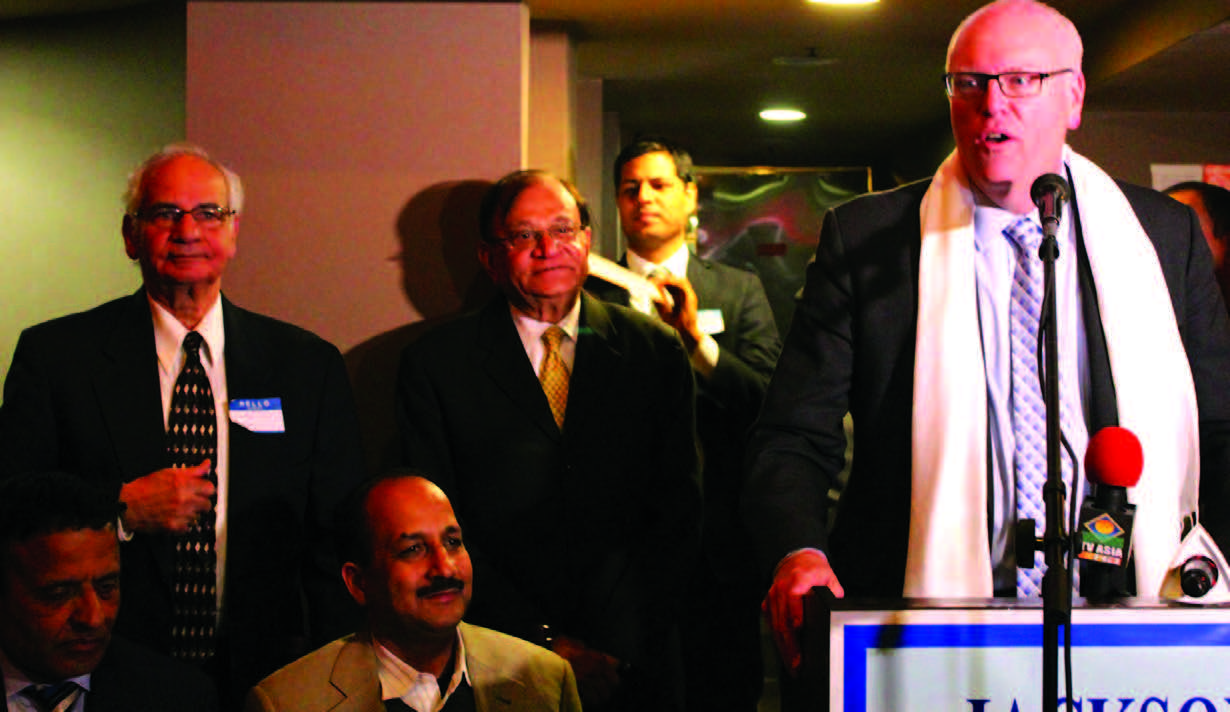
    NEW YORK (TIP): Rep. Joe Crowley (DQueens, the Bronx), Vice Chair of the Democratic Caucus, was honored by the Jackson Heights Indian Merchants’ Association and broader Queens Indian American community for his efforts on behalf of Sikh Americans and the greater Indian American community, in Jackson Heights on Thursday, January 30.

    Crowley was recognized by the community leaders that included, among others, the JHIMA officials- Shiv Dass, Jaswinder Singh, Subhash Kapadia, Nitin Vora and Mohinder Verma-, and community leaders that included Ravi Batra, Pritam Singh Gilzian and Darshan Singh Bagga, among others, for his successful efforts to convince the federal government to begin collecting data on hate crimes committed against Sikh-Americans and Hindu-Americans; in the U.S. Congress in October 2013; and his ongoing work to end the presumptive ban on Sikhs serving in the U.S. military.

    3Crowley is flanked by Deepak Bhardwaj (JHIMA Board of Director) to his right, and Jaswinder Singh (Chairman, JHIMA) to his left. Others seen in the picture are Pritam Singh Gilzian, Former President of Gurdwara Baba Makhan Shah Lobana and President of Richmond Hill Punjabi Merchants’ Association (extreme left) and Darshan Singh Bagga, Sikh community leader, with association with a number of organizations (extreme right)

    “I am humbled to be recognized by Shiv Dass and the Jackson Heights Indian Merchants Association, members of the Queens Sikh community, and the greater Indian-American community in Queens,” said Rep. Crowley, who serves as the cochair of the Congressional Caucus on India and Indian-Americans in the U.S. House of Representatives.

    “The Indian-American community is an integral part of Queens and our city, contributing to our economic success and enriching our culture. I am proud to have fought for and won concrete victories on behalf of the community and I will continue to do so.” Nearly 100 community members and leaders from New York’s Sikh-American and the broader Indian-American community attended the event.

    4Crowley joins Jackson Heights Indian Merchants Association members and members of the Sikh
    community.

    Over the past two years, Crowley has been at the forefront of a major effort in Congress to convince the U.S. Department of Justice (DOJ) and Federal Bureau of Investigation (FBI) to begin collecting data on hate crimes committed against Sikh- Americans and Hindu-Americans – introducing legislation and sending multiple letters to DOJ and FBI.

    In July 2013, then-FBI Director Robert Mueller announced that the bureau would begin to implement this program. Crowley is leading the call on the U.S. military to end its presumptive ban on Sikh articles of faith, including turbans and beard. He is spearheading a bipartisan letter requesting that the U.S. Armed Forces update their appearance regulations to allow Sikh Americans to serve while abiding by their articles of faith.

    In October 2013, Crowley led his colleagues in creating the first-ever Congressional Diwali celebration. The event brought together members of Congress, prominent Indian leaders, and members of the Indian-American community to build a greater understanding of differing cultural backgrounds and increase understanding and tolerance.

    5Council Member Daniel Dromm with JHIMA members and community members
    “I’m so pleased the FBI is going to begin tracking hate crimes against Sikhs and Hindus, because that is the first step toward preventing the crimes in the first place. But, there is much, much more we need to do. One of my top priorities is ensuring that Sikh Americans can serve in our nation’s military – we took some steps forward on this issue last week but there is more that must be done.

    I also think it is high time that India become a permanent member of the United Nations Security Council – and I am going to be focusing my efforts on that,” added Crowley. On the occasion, a few community members were honored by Crowley for rendering useful services to the community.

    They included Jaswider Singh and Deepak Bhardwaj of Apna Bazar; Mahindra Patel and Harshit Patel of Patel Bros. ; Srinivas Ranga of New York Life; Daniel Thomas of Thomson Travels, and Neeta Bhasin of ASB Communications who brought Diwali to Times Square in 2013. Those who were recognized included Pritam Singh Gilzian and Harbaksh Singh Tahli, editor of Shaane- Panjab weekly Punjabi newspaper.

    Politicians present included State Senator Toby Stavisky, Council Member Daniel Dromm, and Queens Borough Deputy President Leroy Comrie. Mohinder Verma, who has been serving in the capacity of Secretary of the association for almost 35 years, the longest period any Indian has served an organization in a responsible position, and Harshit Chugh thanked the gathering and ensured all had a good fill before leaving.

  • South Sudan to try rebel leaders, risking ceasefire

    South Sudan to try rebel leaders, risking ceasefire

    JUBA (TIP): South Sudan released seven rebel detainees January 30 but vowed to put on trial key leaders accused of launching weeks of fighting, a move likely to threaten a fragile ceasefire.

    The sides implemented the ceasefire last Friday, but combat has only eased, not ended, with reports of continuing clashes and a worsening humanitarian crisis that has left thousands dead and forced almost 800,000 to flee their homes. Four leaders remain in custody in South Sudan, facing trial for attempting to topple President Salva Kiir after fighting broke out in the capital Juba on December 15.

    Kiir accused his sacked deputy Riek Machar and other former officials of fomenting a coup against his government. Eleven ex-officials were arrested, while Machar — who denied any coup plot — fled. Fighting quickly spread across the country. Aid groups say up to 10,000 people have been killed in the conflict, although many fear more may have died. United Nations aid chief Valerie Amos wrapped up a three-day visit Wednesday to the war-torn country, where she saw the results of over six weeks of bloodshed, with horrific atrocities reported to have been committed by both sides.

    “The future of South Sudan rests on all the people being able to work together,” she said, after a tour in which she saw food stores looted of tonnes of food aid, in devastated towns where workers were still burying those recently killed in the fighting. The fighting has seen waves of brutal revenge attacks, as fighters and ethnic militia use the violence to loot and settle old scores. South Sudan’s Justice Minister Paulino Wanawila said Tuesday that the four men in detention will face trial while three others, including Machar, will face justice if caught.

    “If someone violates the law you don’t go and torture that person, you prosecute that person according to the law,” he said. ‘Things may get worse before they get better’ But the release of all the prisoners has been a key demand of the rebels, and Kenya’s foreign ministry said it was “still negotiating for the release of the remaining four.” The United States urged Juba to free the remaining detainees to help boost political reconciliation, as it welcomed the releases as an “important step towards an inclusive political dialogue”. John Luk Jok, a former justice minister, spoke on behalf of those released, who appeared in apparent good health.

    “We don’t feel bitter, we only feel sad that the crisis in our country is happening just after our independence,” he said. “We don’t see our president as our enemy.” Many fear the conflict has slid out of the control of political leaders, with ethnic violence and revenge attacks between the Dinka people of Kiir and the Nuer of Machar, the country’s two largest groups. Over 76,000 civilians are still sheltering inside UN peacekeeping bases. Government and opposition rebels are still fighting for control in key areas, with the United Nations calling the situation “fragile”.

  • 250 million school age kids can’t read: Report

    250 million school age kids can’t read: Report

    UNITED NATIONS (TIP): A report commissioned by the UN education agency says at least 250 million of the world’s 650 million primary school age children are unable to read, write or do basic mathematics.

    The report launched Wednesday found that 130 million are in primary school but have not achieved the minimum benchmarks for learning, and almost 120 million have spent little or no time in a classroom.

    The report for Unesco, the UN Educational, Scientific and Cultural Organization, by an independent research team said investing in teachers is key. In about a third of countries, it said, less than 75 percent of primary school teachers are trained according to national standards. “While more children are in school, it’s been at the cost of quality,” Unesco’s UN representative Vibeke Jensen said.

  • Permanent Mission of India hosts Republic Day reception with GA President John Ashe

    Permanent Mission of India hosts Republic Day reception with GA President John Ashe

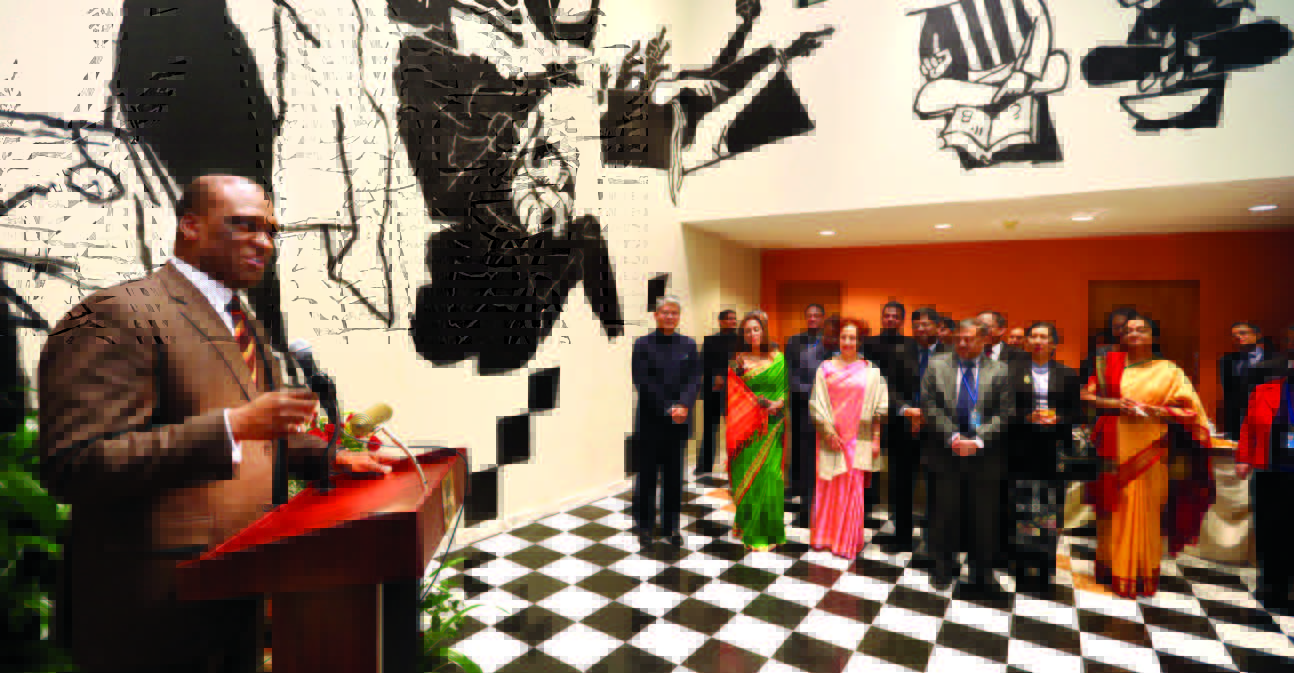
    NEW YORK, NY (TIP): The Permanent Mission of India to the United Nations hosted the traditional Republic Day reception on Thursday, January 23, with President of the General Assembly John Ashe.

    Permanent Representative Ambassador Asoke Mukerji, who was hosting his first Republic Day celebration, received with his wife Vanita Mukerji, over 100 guests, a mix of diplomats from the UN and Indian-American community. Ambassador Asoke Mukerji lovingly addressed Honorable President of the General Assembly John Ashe as the son-in-law of India and welcomed the couple warmly.

    John Ashe who arrived with his Indian wife Anilla Cherian expressed his best wishes to all Indians for the upcoming Republic Day “I am extremely pleased to be here to celebrate India’s 65th year of being Republic. I am married to an Indian so I have fair idea about India. Every time I get big for my shoes, my wife reminds me that I come from a country which is probably the size of a village in India,” he added.

    John W. Ashe comes from Antigua and Barbuda which has a population of 90,156 (July 2013). Mr. Mukerji stressed that on India’s 65th year at being a republic, cooperation is the key to making progress. “We all are participants in maintaining and developing modern international relations. This is the key to building a modern India. We must address all our issues with the agenda of development. We must rededicate ourselves in cooperating and collaborating with our international friends. Our issues can only be addressed if we all come together in a spirit of cooperation” said Mr. Mukerji. The Republic Day celebrations started with playing of the Indian national anthem.

  • Seven dead in tit-for-tat killings in Central African Republic

    Seven dead in tit-for-tat killings in Central African Republic

    BANGUI (TIP): Seven people died in inter-religious attacks and reprisal killings in Central African Republic’s capital Bangui on January 22, a human rights campaigner said, underlining the challenge the new interim president faces in restoring peace.

    The local Red Cross said it also found another 11 corpses, most burnt beyond recognition. Close to one million people, or a quarter of the population, have been displaced in the former French colony by clashes that began when mostly Muslim Seleka rebels seized power in a coup in March.

    Christian self-defence groups known as ” anti-balaka” (anti-machete) have since taken up arms against them, and the United Nations estimates that tit-for-tat violence has claimed more than 2,000 lives. Wednesday’s violence erupted after Seleka fighters left a military base looking for food and shot and killed two Christians, Human Rights Watch (HRW) said. In reprisal, “the youth from the neighbourhood went to the prison and took out five Seleka detainees and killed them,” Peter Bouckaert, an HRW researcher in Bangui, told Reuters.

    The other 11 bodies were found behind a military camp in another part of the city. Antoine Mbao Bogo, president of the Central African Red Cross Society, said nine of the bodies collected in the mostly Muslim northern neighbourhood of PK11 had been set on fire. “They were not buried, they were dumped on the ground,” he told Reuters by telephone. He added that the Red Cross had collected 87 bodies in the past five days across the country. The figure did not include the seven people killed on Wednesday.

    Out of control
    The arrival of a 1,600-strong French military mission and another 5,000 African Union peacekeepers has so far failed to stop the violence in Central African Republic. A source with the French force said on Wednesday its soldiers were involved in overnight clashes after coming under attack from unidentified gunmen. This week the European Union said it would send 500 soldiers to support international troops already on the ground. And the United States said on Wednesday it was giving an additional $30 million to help ease the country’s crippling humanitarian crisis.

    Interim President Catherine Samba-Panza, the mayor of Bangui, was appointed as leader on Monday and is due to formally take office on Thursday. She replaced former interim President Michel Djotodia, a former Seleka leader who stepped down on January 10 amid intense international pressure. Samba-Panza has pledged to meet with armed groups in an effort to restore order. However, ending the cycle of violence will not be easy. HRW researcher Bouckaert witnessed hundreds of Christians attack and embark on a looting spree in the mainly Muslim PK13 neighbourhood on Wednesday. Rwandan peacekeepers, newly arrived in the country, were forced to intervene to protect around 30 Muslim civilians surrounded by the mob until they were evacuated by French soldiers.

  • Permanent Mission of India hosts Republic Day reception with GA President John Ashe

    Permanent Mission of India hosts Republic Day reception with GA President John Ashe

    NEW YORK, NY (TIP): The Permanent Mission of India to the United Nations hosted the traditional Republic Day reception on Thursday, January 23, with President of the General Assembly John Ashe.

    Permanent Representative Ambassador Asoke Mukerji, who was hosting his first Republic Day celebration, received with his wife Vanita Mukerji, over 100 guests, a mix of diplomats from the UN and Indian-American community. Ambassador Asoke Mukerji lovingly addressed Honorable President of the General Assembly John Ashe as the sonin- law of India and welcomed the couple warmly.

    John Ashe who arrived with his Indian wife Anilla Cherian expressed his best wishes to all Indians for the upcoming Republic Day “I am extremely pleased to be here to celebrate India’s 65th year of being Republic. I am married to an Indian so I have fair idea about India. Every time I get big for my shoes, my wife reminds me that I come from a country which is probably the size of a village in India,” he added.

    John W. Ashe comes from Antigua and Barbuda which has a population of 90,156 (July 2013). Mr. Mukerji stressed that on India’s 65th year at being a republic, cooperation is the key to making progress. “We all are participants in maintaining and developing modern international relations. This is the key to building a modern India. We must address all our issues with the agenda of development. We must rededicate ourselves in cooperating and collaborating with our international friends. Our issues can only be addressed if we all come together in a spirit of cooperation” said Mr. Mukerji. The Republic Day celebrations started with playing of the Indian national anthem.

  • FOREIGN RELATIONS OF INDIA

    FOREIGN RELATIONS OF INDIA

    India has formal diplomatic relations with most nations; it is the world’s second most populous country, the world’s mostpopulous democracy and one of the fastest growing major economies. With the world’s seventh largest military expenditure, ninth largest economy by nominal rates and third largest by purchasing power parity, India is a regional power, a nascent great power and a potential superpower.

    India’s growing international influence gives it a prominent voice in global affairs. The Economist magazine argues, however, that underinvestment in diplomacy and a lack of strategic vision have minimised India’s influence in the world. India is a newly industrialised country, it has a long history of collaboration with several countries and is considered one of the leaders of the developing world along with China, Brazil, Russia and South Africa (the BRICS countries). India was one of the founding members of several international organisations, most notably the United Nations, the Asian Development Bank, G20 industrial nations and the founder of the Non-aligned movement.


    32
    India has often represented the interests of developing countries at various international platforms. Shown here is Prime Minister Manmohan Singh with Dmitry Medvedev, Hu Jintao and Luiz Inácio Lula da Silva during BRIC summit

    India has also played an important and influential role in other international organisations like East Asia Summit, World Trade Organisation, International Monetary Fund (IMF), G8+5 and IBSA Dialogue Forum. Regionally, India is a part of SAARC and BIMSTEC. India has taken part in several UN peacekeeping missions and in 2007, it was the secondlargest troop contributor to the United Nations.[12] India is currently seeking a permanent seat in the UN Security Council, along with the G4 nations. India’s relations with the world have evolved since the British Raj (1857–1947), when the British Empire monopolised external and defence relations. When India gained independence in 1947, few Indians had experience in making or conducting foreign policy. However, the country’s oldest political party, the Indian National Congress, had established a small foreign department in 1925 to make overseas contacts and to publicise its freedom struggle.

    From the late 1920s on, Jawaharlal Nehru, who had a longstanding interest in world affairs among independence leaders, formulated the Congress stance on international issues. As a member of the interim government in 1946, Nehru articulated India’s approach to the world. India’s international influence varied over the years after independence. Indian prestige and moral authority were high in the 1950s and facilitated the acquisition of developmental assistance from both East and West. Although the prestige stemmed from India’s nonaligned stance, the nation was unable to prevent Cold War politics from becoming intertwined with interstate relations in South Asia.


    33

    In the 1960s and 1970s India’s international position among developed and developing countries faded in the course of wars with China and Pakistan, disputes with other countries in South Asia, and India’s attempt to balance Pakistan’s support from the United States and China by signing the Indo- Soviet Treaty of Friendship and Cooperation in August 1971. Although India obtained substantial Soviet military and economic aid, which helped to strengthen the nation, India’s influence was undercut regionally and internationally by the perception that its friendship with the Soviet Union prevented a more forthright condemnation of the Soviet presence in Afghanistan. In the late 1980s, India improved relations with the United States, other developed countries, and China while continuing close ties with the Soviet Union. Relations with its South Asian neighbours, especially Pakistan, Sri Lanka, and Nepal, occupied much of the energies of the Ministry of External Affairs.

    In the 1990s, India’s economic problems and the demise of the bipolar world political system forced India to reassess its foreign policy and adjust its foreign relations. Previous policies proved inadequate to cope with the serious domestic and international problems facing India. The end of the Cold War gutted the core meaning of nonalignment and left Indian foreign policy without significant direction. The hard, pragmatic considerations of the early 1990s were still viewed within the nonaligned framework of the past, but the disintegration of the Soviet Union removed much of India’s international leverage, for which relations with Russia and the other post-Soviet states could not compensate. After the dissolution of the Soviet Union, India improved its relations with the United States, Canada, France, Japan and Germany. In 1992, India established formal diplomatic relations with Israel and this relationship grew during the tenures of the Bharatiya Janata Party (BJP) government and the subsequent UPA (United Progressive Alliance) governments.

    In the mid-1990s, India attracted the world attention towards the Pakistan-backed terrorism in Kashmir. The Kargil War resulted in a major diplomatic victory for India. The United States and European Union recognised the fact that Pakistani military had illegally infiltrated into Indian territory and pressured Pakistan to withdraw from Kargil. Several anti-India militant groups based in Pakistan were labeled as terrorist groups by the United States and European Union. India has often represented the interests of developing countries at various international platforms. Shown here are Prime Minister Manmohan Singh with Dmitry Medvedev, Hu Jintao and Luiz Inácio Lula da Silva during BRIC summit in June, 2009. In 1998, India tested nuclear weapons for the second time which resulted in several US, Japanese and European sanctions on India.

    India’s then-defence minister, George Fernandes, said that India’s nuclear programme was necessary as it provided a deterrence to potential Chinese nuclear threat. Most of the sanctions imposed on India were removed by 2001. After the 11 September attacks in 2001, Indian intelligence agencies provided the U.S. with significant information on Al-Qaeda and related groups’ activities in Pakistan and Afghanistan. India’s extensive contribution to the War on Terror, coupled with a surge in its economy, has helped India’s diplomatic relations with several countries. Over the past three years, India has held numerous joint military exercises with U.S. and European nations that have resulted in a strengthened U.S.-India and E.U.-India bilateral relationship. India’s bilateral trade with Europe and United States has more than doubled in the last five years.

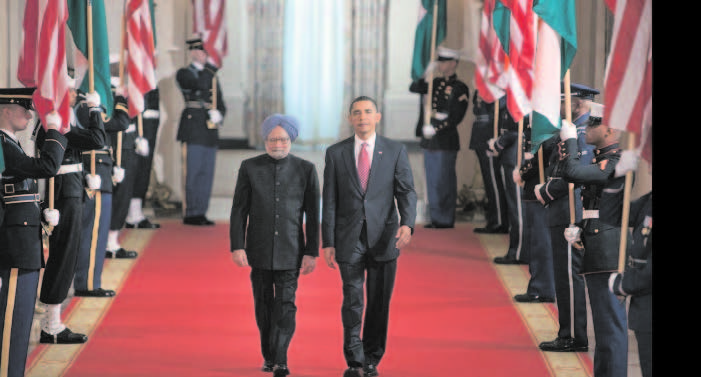
    India has been pushing for reforms in the UN and WTO with mixed results. India’s candidature for a permanent seat at the UN Security Council is currently backed by several countries including France, Russia,[50] the United Germany, Japan, Brazil, Australia and UAE. In 2004, the United States signed a nuclear co-operation agreement with India even though the latter is not a part of the Nuclear Non- Proliferation Treaty. The US argued that India’s strong nuclear non-proliferation record made it an exception, however this has not persuaded other Nuclear Suppliers Group members to sign similar deals with India. During a state visit to India in November 2010, US president Barack Obama announced US support for India’s bid for permanent membership to UN Security Council as well as India’s entry to Nuclear Suppliers Group, Wassenaar Arrangement, Australia Group and Missile Technology Control Regime.

  • Sheikh Hasina sworn in for 3rd time as Bangladesh PM

    Sheikh Hasina sworn in for 3rd time as Bangladesh PM

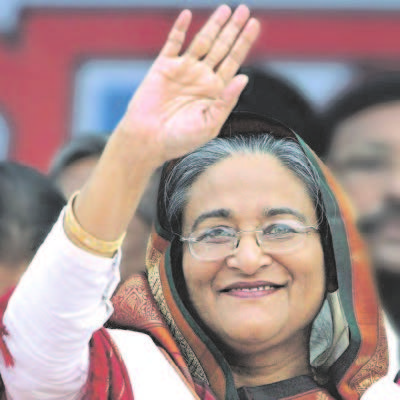
    DHAKA (TIP): Sheikh Hasina was sworn in on Sunday for her second straight term as Bangladesh’s prime minister and third overall, following one of the most violent elections in the country’s history. Hasina took the oath of office a week after her Awami League party won an election marred by street fighting, low turnout and an opposition boycott that made the results a foregone conclusion. President Abdul Hamid also swore in 29 cabinet ministers and 19 deputies. The election was one of the deadliest since Bangladesh’s 1971 independence, as an opposition alliance led by Khaleda Zia, former prime minister and Hasina’s archrival, attempted to derail the vote by calling weeks of strikes and blockades. At least 18 people died in election day violence, and more than 100 polling centers were set on fire. Since last February, at least 300 people have died in political violence.

    Zia, leader of the opposition Bangladesh Nationalist Party, or BNP, was absent from the swearing-in ceremony at the presidential house in the capital, Dhaka. Many western diplomats attended the ceremony despite a call from the United Nations, the United States and the European Union for an inclusive election. The election boycott by Zia’s party means Hasina’s new government will have no strong opposition in parliament. The BNP has vowed to continue trying to force Hasina to step down and allow a caretaker government to oversee a new election in which the opposition party would take part.

    After she was sworn in, Hasina, who also served as prime minister from 1996-2001, said she would work to uphold democracy and would not hesitate to take any measures if a consensus was reached. The political gridlock plunges Bangladesh deeper into turmoil and economic stagnation. The country also is struggling to reinvigorate its $20 billion garment industry, which has been hit by a series of horrifying disasters including a factory collapse last April that killed more than 1,100 workers.

  • Pakistan’s teenage

    Pakistan’s teenage

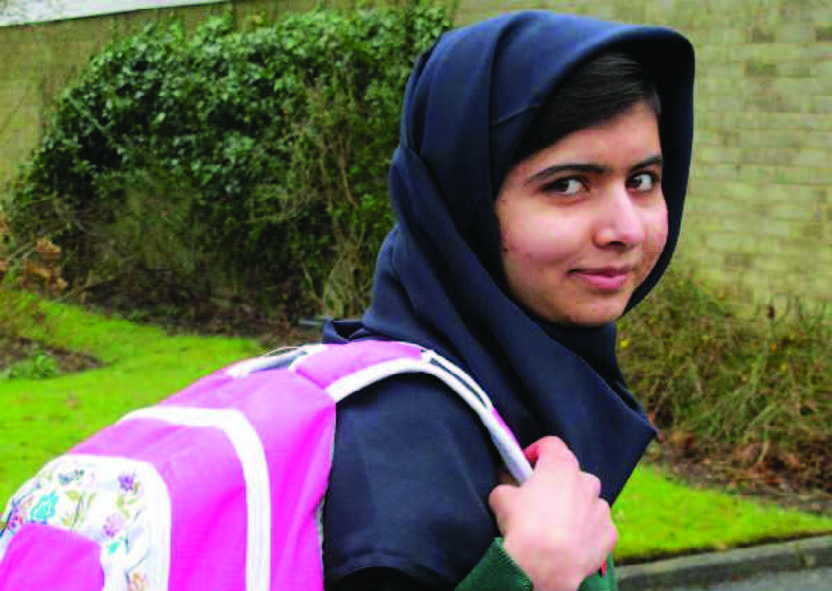
    Pakistan’s teenage activist Malala Yousufzai stole the headlines throughout the year. On July 12, she spoke at the United Nations where she stressed access worldwide access to education. She also received various awards.

  • South Asian Community Outreach (SACO’S) Interfaith Holiday Celebration focuses on Unity

    South Asian Community Outreach (SACO’S) Interfaith Holiday Celebration focuses on Unity

    Kajol Bishnoi
    EDISON, NJ (TIP):
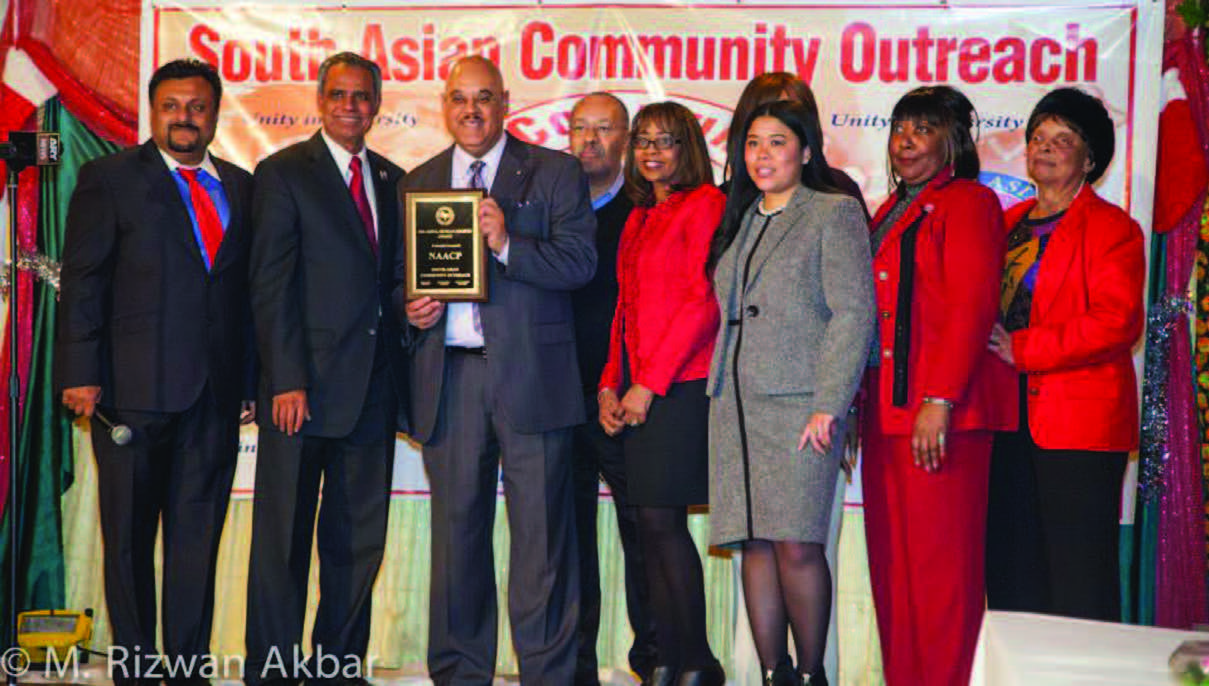
    South Asian Community Outreach (SACO) has a tradition of forging strong relations between the growing South Asian community and the community at large. And the organization’s recent interfaith holiday celebration on December 19th, honored the multicultural values that make United States a great nation. Founder of the organization, Sam Khan, said , “We were proud to have representatives from Christian, Jewish, Hindu, Muslim, Sikh and Jain faiths. At the same time we have also honored several individuals and organizations who shared the vision of SACO to foster unity within the community.

    Ultimately, we hope the efforts of SACO will promote greater understanding of multiple cultures and religions that form the mosaic of our society. Earlier this year SACO took the initiative to organize its own Independence Day program, the first one by South Asians, along with the Annual 9/11 vigil.”

    “The purpose of this Interfaith Holiday party is for our community to come together to honor those who share our values of community service and are working for the good of humanity”, said Sam. U.S. Rep. Frank Pallone, D-N.J., 6th District, Assemblyman Upendra Chivukula D-17th District, and township Chaplain Rabbi Bernhard Rosenberg were among those honored. Chivukula received the Leadership and Service Award because he holds the distinction of being the first-ever South Asian to serve in the State legislature.

    Pallone received the Mahatma Gandhi Peace Award for his work within the South Asian community since 1988. “I would like to extend my sincere appreciation for bestowing upon me the Mahatma Gandhi Peace Award,” Pallone said in a statement.


    8
    Saco Core Team

    “I am humbled to be the recipient of such an honor.” Spiritual leader of townshipbased Congregation Beth El, Rosenberg was honored for services in raising awareness about the Holocaust, genocide and racism. Other honorees included the local branch of the NAACP, which received the Martin Luther King Jr. Human Rights Award, and the Kiwanis Club of Edison, which took home the Service Impact Award. Tom Lankey, New Edison Mayor, was also honored at the Event. Community Service Awards went to Art Speaks for Autism, which raises funds and awareness to combat autism and support families affected by it.


    9
    Lions Club. (L to R): Sam Khan, Mahesh Chitnis, Raj Mukherji,
    Narayan Sreeniwas, Kajol Bishnoi

    TV Asia, the first South Asian television channel in North America, Sudhir Parikh, a renowned local medical practitioner and publisher of newspapers, Sharanjit Singh Thind, Nassau County Commissioner of Human Rights, Atma Singh & Satish Poondi, community leaders Mahesh Chitnis (DVG of Edison Visionary Lions Club) , Mukul Bishnoi (CEO & Founder of Rudraksham International) , Nilesh Dasondi of Sterling System, and Sneh & Satish Mehtani of Moghul Group were also honored..


    10
    Jewel of India Fashion show by Juhi Jagiasi

    Participating dignitaries included Assemblywoman-elect Nancy Pinkin, D-18th District, Assemblyman-elect Raj Mukherji, D-33rd District, Edison Mayor Antonia Ricigliano, Franklin Mayor Brian Levine and state Senator-elect Peter Barnes, D-18th District. Event highlights included “Jewel of India Fashion show” by Juhi Jagiasi and the musical performance of Saregama Champs Ali Sher and Asad Abbas. Nearly all-major religions were represented and more the 500 attendees took part in the celebration. SACO Announced the First South Asian Peace Conference 2014, which will be held in the United Nations Building. Delegations from South Asian communities will be attending the conference. The mission of the conference is to bring unity among South Asian Americans living in the United States and promote the idea of peace and sharing of culture and heritage.

  • Christmas Celebrated around the World

    Christmas Celebrated around the World

    NEW YORK (TIP):
    Christmas Eve was marked by festivities and preparations around the world today. The faithful prepared for midnight services in places both traditional and unusual. At the Vatican, worshipers filled Saint Peter’s Basilica for Pope Francis’s first Christmas midnight mass as pontiff. Thousands more gathered outside in St. Peter’s Square. He was assisted by more than 300 cardinals, bishops and priests. In his homily, Pope Francis urged people to lead humble lives. “If our heart is closed, if we are dominated by pride, deceit, and the constant pursuit of self interest, then darkness falls within and around us,” he said.

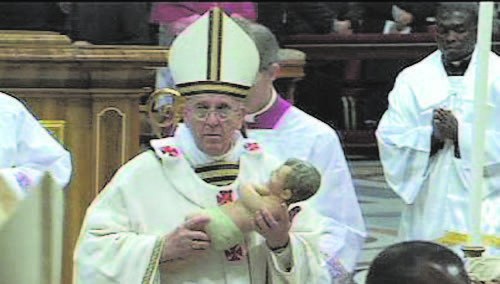
    In a break with tradition, Pope Francis himself performed a task usually given to an aide. He carried a figurine of the baby Jesus to the altar at the start of the mass. The statue of Jesus was then placed in the manger of a life-size nativity scene behind the altar. Pope Francis offered a Christmas wish for a better world, praying for protection for Christians under attack, battered women and trafficked children, peace in the Middle East and Africa, and dignity for refugees fleeing misery and conflict around the globe. Francis delivered the traditional ”Urbi et Orbi” (Latin for ”to the city and to the world”) speech from the central balcony of St. Peter’s Basilica to 70,000 cheering tourists, pilgrims and Romans in the square below.

    He said he was joining all those hoping ”for a better world.” In his first Christmas message since being elected pontiff in March, he asked for all to share in the song of Christmas angels, ”for every man or woman … who hopes for a better world, who cares for others,” humbly. Among places ravaged by conflict, Francis singled out Syria, which saw its third Christmas during civil war; South Sudan; the Central African Republic; Nigeria; and Iraq. In Iraq on Wednesday, militants targeted Christians in two attacks, including a bomb that exploded near a church during Christmas Mass in Baghdad.

    The separate bombings killed dozens of people. The Vatican has been trying to raise concern in the world for persecution and attacks on Christians in parts of the Middle East and Africa. ”Lord of life, protect all who are persecuted in your name,” Francis said. pope also prayed that God ”bless the land where you chose to come into the world and grant a favorable outcome to the peace talks between Israelis and Palestinians.” Francis then explained his concept of peace. ”True peace is not a balancing of opposing forces. It’s not a lovely facade which conceals conflicts and divisions,” the pope said. ”Peace calls for daily commitment,” Francis said, reading the pages of his speech.

    Francis also spoke about the lives of everyday people, especially those struggling for a better life. In Bethlehem, parades filled the streets, as Christian pilgrims and tourists from around the world poured into Manger Square, considered the birthplace of Jesus. Decorations and holiday lights adorned the West Bank for the evening’s celebrations. And in Afghanistan, U.S. troops in Kabul marked the 13th Christmas Eve for American forces in Afghanistan with candles and hymns. In India which has a sizeable Christian population, Christmas was celebrated with zeal and enthusiasm.

    The faithful attended midnight mass in churches while a general atmosphere of celebration was witnessed in all major cities. Santa Claus has been a major attraction, as always. In the Philippines, survivors of last month’s catastrophic typhoon erected giant Christmas lanterns across the devastation in Tacloban. People in other towns sang and danced to holiday songs as they remembered lost loved ones.

    Devyani Khobragade had…
    December 12 for allegedly presenting fraudulent documents to the United States State Department in support of a visa application for an Indian national employed as a babysitter at housekeeper at Khobragade’s home in Manhattan? As it now turns out, diplomat Devyani Khobragade was accredited as an advisor to the Permanent Mission of India to the UN, allowing her full immunity from personal arrest or detention, when she was picked up from her children’s school by US authorities. India Government sources said Khobragade was accredited advisor to the Indian mission to the UN on August 26, 2013 to help the mission with work related to the General Assembly, and her accreditation was valid until December 31.

    The sources claimed the Convention on the Privileges and Immunities of the United Nations Article 4 Section 11A specifies “immunities from personal arrest or detention and from the seizure of their personal baggage” of all representatives of members to the United Nations. Section 16 of the same Article specifies that the expression “Representative” shall be deemed to include all delegates, deputy delegates, advisors, technical experts and secretaries of delegations. She was accredited as advisor on August 26 and was transferred to the permanent mission after the arrest and is currently holding the position of counselor. Because she was attached to the permanent mission only temporarily (until December 31), the State Department was not required to issue its own identity card and it is possible that they may not have known about Khobragade’s status.

    Sources said this was all the more reason for the State Department to have informed India about the move to arrest Khobragade. As the diplomat was working as acting consul general, the US ought to have notified India about her arrest under the Vienna Convention on Consular Relations. The MEA joint secretary who handles the US desk, Vikram Doraiswamy, was in that country on the day Khobragade was arrested, but he wasn’t informed about it. The alacrity with which the US “evacuated” Khobragade’s domestic help Sangeeta Richard’s family, two days before the diplomat’s arrest, rattled New Delhi. Bharara later justified this in a statement saying the Justice Department was “compelled” to make sure that victim, witnesses and their families “are safe and secure while cases are pending”.

    As the case now unravels fast, several US officials, especially those who handled Khobragade’s arrest,may have opened themselves to claims for damages and liability. The government has also discovered that the amount of $4,500 quoted by Bharara as salary promised to Sangeeta by Khobragade was actually just a mention of the employer’s salary on the help’s visa application form. The State Department’s own guidelines on diplomatic and consular immunity emphasize that law enforcement officials need to be sensitive because short-term official visitors from other States to the United Nations or to international conferences convened by the UN may enjoy full diplomatic immunity equivalent to that afforded to diplomatic agents.

    “Owing to the temporary nature of their visit, such officials will normally not have the usual official identity documents recognizable in the United States. Law enforcement officials (particularly in New York) should be sensitive to the existence of this situation and always coordinate with the US authorities indicated in the list of Useful Phone Numbers if confronted with an apparent offender appearing to fall into this category’,” it states. A diplomat’s daughter, Krittika Biswas, had last year filed a lawsuit in a NYC court seeking $1.5 million as damages for her wrongful arrest.

    Ambassador Dr. S.Jaishankar…
    Rao who has since retired. Dr. Jaishankar comes to Washington, DC with more than three decades of diplomatic experience. Joining the Indian Foreign Service in 1977, Dr. Jaishankar has represented India’s interests and fostered friendly working relationships in countries around the world. Dr. Jaishankar’s first postings abroad were as Third and Second Secretary (Political) at the Embassy of India in Moscow from 1979 to 1981. From 1981 to 1985, he served as Under Secretary (Americas) and Policy Planning in the Ministry of External Affairs.

    He then spent three years from 1985 to 1988 as First Secretary handling political affairs at the Indian Embassy in Washington, DC, followed by two years as First Secretary and Political Advisor to the Indian Peace Keeping Force (IPKF) in Sri Lanka. In 1990, Dr. Jaishankar became Commercial Counsellor in Budapest. After three years in that position, he returned to India where he served first as Director of East Europe Division of the Ministry of External Affairs, and then as Press Secretary for the President of India. Following this service in India, Dr. Jaishankar went abroad again – to Tokyo in 1996 as Deputy Chief of Mission. In the year 2000, he was appointed the Ambassador of India to Czech Republic and served in Prague till 2004.

    Upon completing his time as Ambassador in Prague, Dr. Jaishankar returned once again to India, where he led the Americas Division in the Ministry of External Affairs. After three years heading the division, he again left India in 2007 to serve as High Commissioner to Singapore for two years. Most recently, Dr. Jaishankar was the Ambassador of India to China from 2009 to 2013. Dr. Jaishankar holds a Ph.D. and M.Phil in International Relations and a M.A. in Political Science. He is a member of the International Institute for Strategic Studies in London. Dr. Jaishankar is married to Kyoko Jaishankar and has two sons and a daughter.

  • India, Pak DGMOs agree on new peace mechanism along border

    India, Pak DGMOs agree on new peace mechanism along border

    ATTARI (TIP): After a year of hostility along the border in Jammu and Kashmir, India and Pakistan agreed to have in place new mechanisms to ensure peace and tranquility along the border. A decision to this effect was taken at a three-hour meeting between the Director Generals of Military Operations (DGMOs) of the two countries on the Pakistan side of the Wagah-Attari border today. The meeting, which was convened to draw up a “peace protocol” for the two armies, discussed ways to put in place additional mechanisms to ensure that the 2003 ceasefire in J&K was honoured.

    The ceasefire along the 198-km section of the International Border and the 749-km Line of Control (LoC) in J&K has been breached several times over the years. Indian Army’s DGMO Lt General Vinod Bhatia termed the meeting with his Pakistani counterpart Maj General Amir Riaz as “cordial, constructive and fruitful”. The two military officers discussed ceasefire violations. “We are looking forward to sustaining ceasefire and have decided to strengthen existing mechanisms for holding the ceasefire,” General Bhatia told mediapersons after the meeting. Major General Riaz walked up to the zero line along with the Indian officer as courtesy. The two delegations also had lunch with menu picked from shared culinary history of the two nations. On whether the matter of killing of five Indian soldiers was taken up during the meeting, Lt General Bhatia said: “We have discussed issues and we are moving forward.” The new mechanisms include two additional flag meetings at the level of Brigadier of either side in operational areas along the LoC.

    The number of points for flag meetings will remain unchanged. A joint statement issued later said: “A consensus was developed to make hotline contact between the two DGMOs more effective and result-oriented. It was also decided to inform each other if any innocent civilian inadvertently crosses the LoC in order to ensure his/her early return.” The Indian side had taken along figures of the 195 ceasefire violations that had taken place during 2013. The aim was to substantiate the fact that there was an attempt by Pakistani troops to counter any upcoming event in India by resorting to cross-border firing in Jammu and Kashmir. The dates showed increased activity ahead of major events, including political, sporting and cultural, in India.

    Sources said the Pakistan DGMO reiterated his country’s old stand of allowing United Nationsappointed observers along the LoC to monitor peace. The Indian side turned down the request and the matter was not raised again. The United Nations Military Observers Group in India and Pakistan (UNMOGIP) was set up in 1949 following the Karachi agreement and New Delhi believed it had become redundant following the 1972 Simla Agreement, which talked about “bilateral resolution of all pending issues”. The meeting was an outcome of talks between Prime Ministers Manmohan Singh and Nawaz Sharif in New York in September at the height of tension triggered by the LoC flare-ups.

  • Lord, Forgive them, for they know not what they do

    Lord, Forgive them, for they know not what they do

    Ignorance of law is no excuse. And ignoring the law is also no excuse. What has now come to the fore in the case of Indian diplomat Devyani Khobragade is that she had full immunity at the time of her arrest on December 12. She should not have been arrested. But she was. And in blatant violation of Geneva Convention on the Privileges and Immunities of the United Nations. Article 4 Section 11A specifies “immunities from personal arrest or detention and from the seizure of their personal baggage” of all representatives of members to the United Nations.

    At the time Devyani was arrested, she was an Advisor to the Permanent Mission of India to the United Nations. And in that capacity she enjoyed full immunity. Section 16 of the same Article specifies that the expression “Representative” shall be deemed to include all delegates, deputy delegates, advisors, technical experts and secretaries of delegations. She was accredited as advisor on August 26 and was transferred to the permanent mission after the arrest and is currently holding the position of counselor. Will Preet Bharara who presided over the hauling up of the Indian diplomat now say he did not know the law or he will say he did not know Devyani was not only the Deputy Consul General at the Indian Consulate but also had a position with the UN? Your ignorance either way has cost the two friendly nations a lot. Yes, a lot.

    What will you say now, Mr. Bharara? Will you own up and feel sorry? But that’s not going to help. Neither will it restore the wronged lady’s honor, nor it will assuage the hurt feelings of a nation and it will also not help restore the warmth of relationship and trust between two friendly countries. Again, another lapse on the part of prosecution has come to light. The amount of $4,500 quoted by Bharara as salary promised to Sangeeta by Khobragade was actually just a mention of the employer’s salary on the help’s visa application form. Here is how the flub could have occurred. Sangeeta Richard was required to submit a form DS-160, along with her visa application and a screenshot of the actual online application here. The application seeks the applicant’s work/education/training information. It asks for the present employer’s name and then asks for month salary in local currency. Who’s month salary? The obvious answer is the visa applicant’s monthly salary. But here is where Sangeeta Richard put in her employer Devyani Khobragade’s monthly salary, which is approximately $ 4500 per month, whereas she should have put in $ 1560 per month – the negotiated $ 9.95 per hour for a 40-hour work-week which works out to $ 390 per week x 4 weeks = $1560.

    Devani’s attorney Daniel Arshack is right when he said, “It is clear that Mark Smith, the Diplomatic Security Services agent who handled the investigation and arrest of Dr Khobragade and who drew up and swore to the accuracy of the formal complaint in this case, simply made an error in reading the DS 160 form which supported the visa application for the domestic worker, Sangeeta Richard. He erroneously and disastrously believed that the $4,500/month salary entry on the form was Ms Richard’s expected salary when, in fact, it was clearly a reporting of the base salary to be earned by the employer, Dr Khobragade, in the United States”. Will Mark Smith be able to defend himself or Preet Bharara? The more vital question is: will the US administration be able to defend the incompetent prosecutors? Let us end the legal squabbles and try to get back the niceties lost because of the ignorant and erring prosecutors. I sincerely hope the saner elements on both the sides hear me.

  • Devyani Khobragade had full immunity when arrested: claim India government sources

    Devyani Khobragade had full immunity when arrested: claim India government sources

    NEW YORK (TIP): Did US attorney Preet Bharara overlook or chose deliberately to ignore the fact that Devyani Khobragade enjoyed full immunity when she was arrested on Thursday, December 12 for allegedly presenting fraudulent documents to the United States State Department in support of a visa application for an Indian national employed as a babysitter at housekeeper at Khobragade’s home in Manhattan? As it now turns out, diplomat Devyani Khobragade was accredited as an advisor to the Permanent Mission of India to the UN, allowing her full immunity from personal arrest or detention, when she was picked up from her children’s school by US authorities.

    India Government sources said Khobragade was accredited advisor to the Indian mission to the UN on August 26, 2013 to help the mission with work related to the General Assembly, and her accreditation was valid until December 31. The sources claimed the Convention on the Privileges and Immunities of the United Nations Article 4 Section 11A specifies “immunities from personal arrest or detention and from the seizure of their personal baggage” of all representatives of members to the United Nations. Section 16 of the same Article specifies that the expression “Representative” shall be deemed to include all delegates, deputy delegates, advisors, technical experts and secretaries of delegations. She was accredited as advisor on August 26 and was transferred to the permanent mission after the arrest and is currently holding the position of counselor.

    Because she was attached to the permanent mission only temporarily (until December 31), the State Department was not required to issue its own identity card and it is possible that they may not have known about Khobragade’s status. Sources said this was all the more reason for the State Department to have informed India about the move to arrest Khobragade. As the diplomat was working as acting consul general, the US ought to have notified India about her arrest under the Vienna Convention on Consular Relations. The MEA joint secretary who handles the US desk, Vikram Doraiswamy, was in that country on the day Khobragade was arrested, but he wasn’t informed about it. The alacrity with which the US “evacuated” Khobragade’s domestic help Sangeeta Richard’s family, two days before the diplomat’s arrest, rattled New Delhi. Bharara later justified this in a statement saying the Justice Department was “compelled” to make sure that victim, witnesses and their families “are safe and secure while cases are pending”. As the case now unravels fast, several US officials, especially those who handled Khobragade’s arrest, may have opened themselves to claims for damages and liability.

    The government has also discovered that the amount of $4,500 quoted by Bharara as salary promised to Sangeeta by Khobragade was actually just a mention of the employer’s salary on the help’s visa application form. The State Department’s own guidelines on diplomatic and consular immunity emphasize that law enforcement officials need to be sensitive because short-term official visitors from other States to the United Nations or to international conferences convened by the UN may enjoy full diplomatic immunity equivalent to that afforded to diplomatic agents. “Owing to the temporary nature of their visit, such officials will normally not have the usual official identity documents recognizable in the United States. Law enforcement officials (particularly in New York) should be sensitive to the existence of this situation and always coordinate with the US authorities indicated in the list of Useful Phone Numbers if confronted with an apparent offender appearing to fall into this category’,” it states. A diplomat’s daughter, Krittika Biswas, had last year filed a lawsuit in a NYC court seeking $1.5 million as damages for her wrongful arrest.

  • INDIA CONTRIBUTES US$ 1 million to UN Women

    INDIA CONTRIBUTES US$ 1 million to UN Women

    NEW YORK (TIP): Ambassador Asoke K Mukerji, Permanent Representative of India to the UN handed over, December 6, a check for US$ 1 million towards Government of India’s contribution to the core voluntary budget of UN Women (United Nations Entity for Gender Equality and the Empowerment of Women) for the financial year 2013- 2014. This contribution constitutes the fourth installment of India’s multi-year pledge to provide five million US dollars as core predictable funding to UN Women’s resources, and takes our existing contribution to US$ 4 million to UN Women, so far.

    The check was received on behalf of UN Women, by H.E. Ms. Phumzile Mlambo-Ngcuka, Under Secretary General and Executive Director of UN Women. On this occasion, Ambassador Mukerji also reaffirmed the Government of India’s steadfast commitment to the goals of gender equality, the empowerment of women and gender mainstreaming, as enshrined in the mandate of UN Women. He also encouraged UN Women to focus on increasing the use of ICT and new technologies for empowerment of women. India was one of the founding members of the Executive Board of the UN Women.

  • Ambassador Manjeev Singh Puri bids adieu to PMI

    Ambassador Manjeev Singh Puri bids adieu to PMI

    NEW YORK (TIP): Deputy Permanent Representative of India to the United Nations for more than four years, Ambassador Manjeev Singh Puri has been appointed Ambassador to Belgium. Puri who belongs to the 1982 batch of the Indian Foreign Service will also hold the position of Indian Ambassador to the Council of the European Union and The European Commission.

    Hordes of friends and colleagues attended his farewell party hosted by the PMI on December 12. Diplomats of various ranking and countries toasted to his successful innings and wished him an even brighter success. Speaking of his departure from PMI, Ambassador Asoke Mukerjee said, “His absence at the PMI will be a loss for us. He has been a pillar of strength and support for India at the UN. Having said that, I am extremely happy that he is going as the Indian Ambassador to the European Union in Brussels. We are also happy that Ambassador Bishnoi will take his place as DPR now. With his experience and understanding of the UN, I am confident he will fill the gap more than we can expect”.


    7

    Hardeep Singh Puri, the former Permanent Representative of India to the UN added, “Manjeev is leaving New York after what can only be described as an outstanding contribution during an eventful period. He was a part of us when we prepared for elections at the Security Council. He was a pillar of strength when we were on the Security Council. I wish him all the very best and I’m sure he will do an equally brilliant job at Brussels”. “Ambassador Manjeev Singh Puri has done India proud. It surely is a loss for us. But Brussels will gain immensely from a bilateral Ambassador like Mr. Puri,” said Manhattan attorney Ravi Batra. Ambassador Usmain Sarki, Deputy Permanent Representative of Nigeria also wished the departing Ambassador the very best. “Manjeev is a wonderful, friend, a colleague, a brother. We have worked very closely together. Above all, he was an excellent diplomat for India. So we will miss him very much.” Ambassador Puri replaces Ambassador Dinkar Khullar at India’s Mission in the European Union.

  • Pakistan’s ‘ghost schools’ threaten next generation

    Pakistan’s ‘ghost schools’ threaten next generation

    CHANCHER REDHAR , PAKISTAN (TIP): In a decrepit white-walled classroom in southern Pakistan, Bushra valiantly struggles to keep discipline as a dozen girls run and scream around her.With no teacher for the past eight months, the 10-year-old has been forced to step in. “I teach them lessons from the Koran, I teach them Sindhi, I teach them to count onetwo, I teach them the alphabet A-B-C-D,” said Bushra, wearing a traditional nose stud and a scarf around her head. She says she dreams of becoming a doctor and learning about computers. But her academic ambitions risk being scuppered after her own teacher fled. Authorities have not appointed a new one, making Bushra’s situation typical for a student at one of Pakistan’s 7,000 so-called “ghost schools”, where no formal classes can be taught.

    These abandoned pupils are part of a growing education crisis in the country where, according to the United Nations, over five million children do not attend primary school. “The last teacher told us she would stop coming if we did not pay for her transportation to the village,” said Salim Samoon, who has seven granddaughters at the school catering for the roughly 600 residents of Chancher Redhar, a village two hours drive from Karachi in the south of Pakistan. “But we have no money and the authorities have not appointed a new teacher,” he said. The southern village is far from the notoriously conservative parts of northwest Pakistan near the Afghan border, where Taliban attacks against public schools are commonplace. Schoolgirl Malala Yousafzai become an international symbol of the right to education for all after surviving a 2012 Taliban attack in which she was shot in the head. But the damage caused by “ghost schools” across Pakistan, such as the one in Chancher Redhar, is self-inflicted and potentially greater: a new generation of children growing up without an education, either because the schools have been abandoned, destroyed, or because teachers are not turning up.

    “Maybe the media highlights the bombings of schools more because it is visible. But this is a more dangerous problem,” said Rahmatullah Balal of the NGO Ailaan Alif, who has published a ranking of districts in terms of the quality of education available. According to his ranking, the district of Thatta, home to Bushra and her classmates, lies in 140th position out of a total of 144, behind Taliban hideouts in the northwest. Teachers paid to stay home Alerted last year to the problem of “ghost schools,” the Supreme Court of Pakistan asked provinces to scrutinise institutions that took students and were officially regarded as schools. The results, released in late November, where shocking. “In most of the basic teaching units of the district, the situation is very alarming,” the report said. “Most of these schools are teaching institutions only in name, but virtually no student is being admitted there to seek education and the teaching staff is taking salary at home.” Along with teachers who received salary but did not teach, other schools failed to appoint teachers, were appropriated by wealthy landowners, or had budget irregularities, such as “paid-for” computers which never arrived. “The government and bureaucrats have no willingness to solve the problem,” said Balal.

    “The money that the government gives to the school is consumed by bureaucrats. The budget might tell you what the money has been used for in the schools, but you don’t see it get spent and then the money is gone.” He says school funds are split “50-50” between feudal lords and bureaucrats, partly to ensure that there is no threat to the feudal lords’ power base by seeing the poor receive education. ‘Admit to the problem’ Those politicians who are actively trying to raise the issue say that it is not a priority for the government. “We have to invest in our education because it is the only way to get progress,” said Humera Alwani of the Pakistan Peoples Party. “You have to admit to a problem before you can correct it,” she said. The existence of “ghost schools” also removes incentive for poor families to ensure their children get an education. Instead, many see more value in sending them to work in the fields or bazaars. “I do not like this school, this is why I do not go,” said Arbab, not yet a teenager. “I go to fetch and buy water, and then I sell it.” Local residents worry another generation will grow up without the skills they need. “These kids of ours, they don’t know anything. They don’t know the meaning of their names, they don’t know the basics, they know nothing,” said Kazoo Samoon, a villager in Chancher Redhar. “My other daughter grew up without an education and now these children will grow up without any education.”

  • Mexico finds stolen radioactive material amid dirty bomb fear

    Mexico finds stolen radioactive material amid dirty bomb fear

    VIENNA/MEXICO CITY (TIP): Mexican police have found dangerous radioactive medical material stolen by thieves that the United Nations said could provide an ingredient for a “dirty bomb,” the country’s national nuclear safety commission CNSNS said on Wednesday. The truck was found on Wednesday close to where it was stolen outside Mexico City. The thieves removed the radioactive material from a protective case, exposing them to dangerous levels of radiation then dumped it less than a mile away.

    The truck was stolen on Monday while it was taking cobalt-60 from a hospital in the northern city of Tijuana to a radioactive waste-storage center, Mexican officials and the UN agency said earlier. “Both the container and the radioactive source have been located,” said Mardonio Jimenez Rojas, an official at the commission, told Reuters. “The radioactive source was removed from its container and was found a kilometer away.” “The thieves were exposed to radiation,” he added, saying those exposed to the material could die. Experts were working on how to secure the radioactive material in a protective container, he said.

    The vehicle was seized when the driver stopped at a gas station in the town of Temascalapa, 35 km (22 miles) northeast of Mexico City. Truck hijacking is common in Mexico and the theft occurred in the State of Mexico, which is not a drug cartel stronghold. “Our suspicion is that they had no idea what they had stolen. This is a area where robberies are common,” Fernando Hidalgo, spokesman for the Hidalgo state prosecutor, said earlier. Mexico’s national nuclear safety commission published photographs of the cargo as it was being prepared for shipment, showing a reinforced case containing the medical device, which holds the radioactive material and which looks like part of a car axle.

    The box is marked with the hospital’s name and “radioactive materials.” Apart from peaceful medical and industrial applications, experts say, cobalt-60 can also be used in a dirty bomb in which conventional explosives disperse radiation from a radioactive source. The International Atomic Energy Agency, which has stepped up calls on member states to tighten security to prevent nuclear and radioactive materials from falling into the wrong hands, made no mention of any such risk in its statement on Wednesday. The IAEA also did not give details on how much radioactive material was in the vehicle when it was seized.

    Inside a teletherapy device, cobalt-60 is used to treat cancer. “At the time the truck was stolen, the (radioactive) source was properly shielded. However, the source could be extremely dangerous to a person if removed from the shielding, or if it was damaged,” the IAEA said in a statement. Cobalt-60, the most common radioactive isotope of the metal, has many applications in industry and in radiotherapy in hospitals. It is also used for industrial radiography to detect structural flaws in metal parts, according to the U.S. Environmental Protection Agency. The EPA said exposure to gamma radiation from cobalt-60 results in an increased risk of cancer.

    Dirty bomb could cause ‘mass panic’ In 2000, three people died in Thailand after a cobalt-60 teletherapy unit was sold as scrap metal and ended up on a junkyard. About 1,870 people living nearby were exposed to “some elevated level of radiation,” according to an IAEA publication. About the same time in Mexico, homes built with metal rods that had been contaminated by stolen cobalt were destroyed, a spokesman for the attorney general’s office said. “Cobalt-60 has figured in several serious accidents, some of them fatal,” said nuclear expert Mark Hibbs of the Carnegie Endowment for International Peace thinktank.

    “If dispersed, cobalt-60 or other radioactive source material could cause radiation poisoning locally.” More than 100 incidents of thefts and other unauthorised activities involving nuclear and radioactive material are reported to the IAEA annually, the U.N. agency said this year. It is rare, however, that it makes any such incident public. Because radioactive material is regarded as less hard to find and the device easier to make, experts say a dirty bomb is a more likely threat than a nuclear bomb in a terrorist attack.

    Experts say a dirty bomb carries more potential to terrorise than cause a large loss of life. At a nuclear security summit in 2012, IAEA Director General Yukiya Amano specifically singled out cobalt-60 among radioactive sources that could be used for such bombs. “A dirty bomb detonated in a major city could cause mass panic, as well as serious economic and environmental consequences,” Amano said, according to a copy of his speech.