Tag: United Nations

  • Federation Of Indian Associations NY/NJ/CT (FIA) Is Not A Representative Organization Of Indian Americans

    Federation Of Indian Associations NY/NJ/CT (FIA) Is Not A Representative Organization Of Indian Americans

    “The organization that claims to organize the India Day Parade is far from being Indian in character. Look at the people in FIA Trust and Executive. See the list of Trustees and Executive Members on FIA website www.fianynjct.org. You will find they all are, with the exception of one or two, from one community and one state of India. Is this organization truly representative of Indians and India?” asks the author.

    Federation of Indian Associations (FIA) came into being in 1977 after changing the name of umbrella organization “Joint Committee of Indian Organizations” founded in 1975, under the leadership of Rajan Ghosh. The main goal of this organization was to celebrate India’s Independence and Republic days in Tristate area by bringing under one roof Indian students organizations: India Club of New York University, India Club of Columbia University and Association of Indians in America, The Bharathi Society of America and the Tagore Society of America.

    A laudable step to celebrate and project united India. The Global Organization of People of Indian Origin (GOPIO) Founder, Thomas Abraham, a Christian from Kerala, was elected First President of FIA in 1977 and continued till 1981 when in March that year Sureshwar Prasad Singh took over and initiated the first India Day Parade in 1982 in New York . He was succeeded by H. C. Chandershekar for the 1982-83 term. Sudha Acharya took over for the term 1983-84 and introduced Bollywood to the Parade.

    It was the first time that a Bollywood actor- Sunil Dutt- was invited as the Grand Marshal of the Parade and from then on it became a tradition to have a Bollywood actor as Parade’s Grand Marshal. Sudha Acharya was also instrumental in bringing 17 more organizations under FIA. With the Presidency of Ram Gadhvi in 1985, the hold on FIA of people from one religion and one region started getting stronger.

    With the arrival on scene of the present Chairman, Ramesh Patel in mid 80’s, this group consolidated its position further and came to have absolute control of FIA. By now the organization which aimed at bringing together Indian American students associations and various regional organizations and communities to celebrate India’s Independence and Republic days had lost its focus. The degeneration of FIA had set in Also, the objective of showcasing Indian culture has been lost sight of.

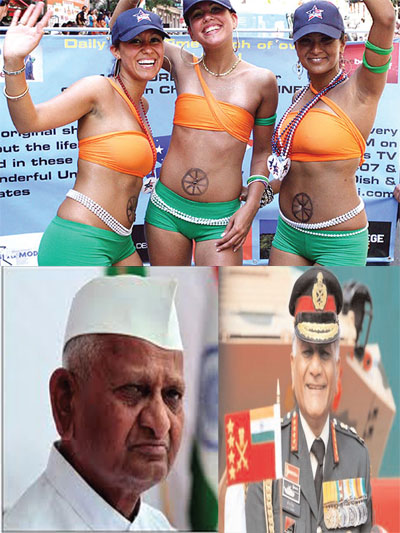
    Vulgar displays became the favorite projections of “the Indian culture”. (See picture of cheerleaders in tricolor bikinis on top). Display of Indian history and depiction of Indian freedom movement have clearly not been the themes with the coterie of 20 to 30 people from one community and from one state of India. The rot further set in with the entertainment industry people, keen on promoting their personal business, having Bollywood actors as Grand Marshals.

    Two of the trustees -Yashpal Soi and Kanu Chauhan- have been pillars of entertainment industry for the last many decades and they have been at the helm of arranging Bollywood actors. What a lowly way to achieve a level of self aggrandizement! The organization that claims to organize the India Day Parade is far from being Indian in character. Look at the people in FIA Trust and Executive. See the list of Trustees and Executive Members on FIA website www.fianynjct.org. You will find they all are, with the exception of one or two, from one community and one state of India.

    Is this organization truly representative of Indians and India? A Not-for -Profit organization is expected to value democracy and transparency. In the case of FIA, both democratic temper and values, and transparency are absent. A coterie of 20 to 30 persons from one community and one region of India, under the tutelage of Ramesh Patel, the Chairman of FIA, who has been donning various colors at different times, has been clutching , what should be the people’s organization, in their jaws and fangs.

    This in the cradle of democracy, the United States of America! This in the land of the people who prize democracy and liberty the most! This in the land of the Lady of Liberty! This in the land of Martin Luther King, Jr. who drew inspiration from Father of the Indian Nation, Mohandas Karamchand Gandhi, whom we revere as Bapu and as Mahatma Gandhi! All this is being done by the sons of the land of Gandhi! What a shame! Money talks.

    Money walks. Who knows it better than Ramesh Patel? It is with the patronage of government of India, donations from people and sponsorships manly from Indian banks, organizations and businesses that the FIA India Day parade walks and talks. But the organizers have scant respect for government of India representatives here.

    Not long ago, it was widely reported in the media how Ambassador Hardeep S. Puri, the then Permanent Representative of India to the United Nations and the then Consul General of India in New York, Ambassador Prabhu Dayal were humiliated and not allowed to join the Grand Marshall in the front row during the parade. The Indian Panorama had, in particular, taken umbrage and raised the issue of humiliation of government of India at India Day Parade, and condemned the FIA.

    As for transparency in functioning and financial wheeling dealing of FIA, it is a matter that needs to be looked in to by IRS and concerned US administration agencies. There are many a skeleton in the FIA cupboard which will tumble out once its doors are opened. It is for the donors, sponsors and government of India institutions who dole out large sums for the glory of India to ask the organizers how the money was being spent. We, on our own, do not mind coming up with the financial misadventures of FIA.

    FIA has its own share and burden of criminals, some proven, some under cloud. We will not name any who has not been proved guilty. But we will let our readers know who have already been through criminal proceedings. Without going in to smaller matters which can be ignored, we will name at least two cases. One of Nirav Mehta, who was President of FIA in the year 2010 and was a Trustee until a few months ago. He was a proclaimed offender in India against whom there was a red corner notice.

    He knows it. Ramesh Patel knew about it. Government of India outpost in New York knows about it. Another, more recent case is of Sarvesh Kumar Dharayan, Chair of the Reception Committee of FIA 2013 who was arrested from his home in New Jersey on July 17, in a multi-million fraud, and charged with one count of conspiracy to commit honest services fraud, which carries a maximum term of 20 years in prison, one count of conspiracy to violate the Travel Act, which carries a maximum term of five years in prison and one count of conspiracy to commit money laundering, which carries a maximum term of 20 years in prison.

    FIA has been having such illustrious people at the helm of affairs. And to keep company with such illustrious people, we are having another few illustrious people from India at FIA Parade on August 18, 2013. Do we not feel wronged when a champion against corruption decides to come to this parade organized by not so clean an organization? Anna Hazare should know he is no ordinary person, that all his activities are being watched and interpreted by billions who love and admire him as another Gandhi.

    He should know the high hopes people of Indian origin the world over have from him. He will only be promoting corruption and strengthening the unjust coterie by coming to India Day Parade in New York. The worthy retired General of Indian army, V.K. Singh, one hopes, has not forgotten the strict protocol that he has been following in his long military career.

    Before you accept an invitation, know where you are going. Before meeting a person, know who you are meting with. The least that this newspaper expects of him is that he turns his back on FIA India Day Parade in New York and never again accepts an invitation from such an organization. For the people from entertainment industry, from the hot and the most sought after siren of Bollywood, Vidya Balan, to the South Indian film world “supreme star” Sarath Kumar and “Queen of Indian TV” Radhika Sharat Kumar, I would say, “New York welcomes you. You are here to make money and showcase your talent.

    You are here to entertain and in return win applause which will add up to your personal satisfaction, popularity and rating. I will not ask you not to show up because I will not like to snatch a person’s means of sustenance. Good luck to you!” But all who have been invited in the name of Bharat Mata must know where they are, in whose company they are, and what the intentions of the people behind FIA are.

    Congratulations on the 66th anniversary of Independence of India, the largest democracy of the world, in the land of the oldest democracy of the world! Jai Hind!

  • 67th Independence Day Of India Celebrated At The Permanent Mission Of India To The UN

    67th Independence Day Of India Celebrated At The Permanent Mission Of India To The UN

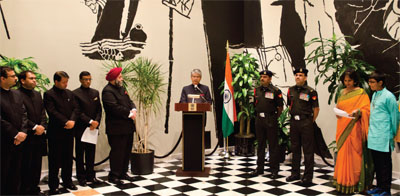
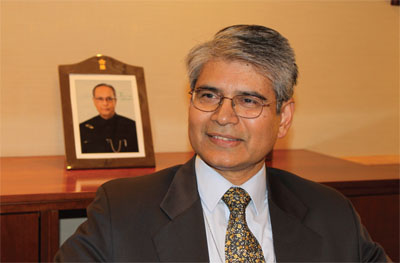
    Permanent Mission of India to the United Nations celebrated the 67th Independence Day of India. H.E. Ambassador Asoke Kumar Mukerji, Permanent Representative of India to UN hoisted the national flag at the Permanent Mission premises and readout salient excerpts from Hon’ble President’s address to the nation.

    The brief and impressive ceremony saw a well attended turn out of over 150 guests including senior Indian officials of the United Nations, Indian Army and Police officers on deputation to the UN, in addition to officials from PMI and the Consulate General of India, New York and their families.

  • Egypt Violence: World Leaders Concerned;UN Urges ‘Restraint’

    Egypt Violence: World Leaders Concerned;UN Urges ‘Restraint’

    NEW YORK (TIP): The ever increasing violence in Egypt which has claimed hundreds of lives and is threatening a bloody civil war in the country has shaken world leaders and the United Nations. The Argentine president of the United Nations Security Council urged all parties in the crisis in Egypt to exercise “maximum restraint” on Thursday, following an emergency meeting in New York.

    Argentine Ambassador Maria Cristina Perceval said that the Council’s 15 member states had regretted the loss of life in Cairo, called for an end to the violence and spoke of the need to advance “national reconciliation”. The meeting was requested by France, Britain and Australia a day after nearly 600 people were killed when security forces moved to clear camps of supporters of ousted Islamist president Mohamed Morsi.

    France and Britain are permanent members of the Security Council and Australia is one of the 15 countries currently represented. Argentina currently presides over the Council. Perceval said its members shared “a common desire” to stop the unrest. U.N. Secretary-General Ban Ki-moon condemned the violence and urged calm and restraint on both sides.

    He made no direct criticism of the military leadership or the protesters who had refused to disperse on their own but said he was “well aware that the vast majority of the Egyptian people, weary of disruptions to normal life caused by demonstrations and counterdemonstrations, want their country to go forward peacefully in an Egyptian-led process towards prosperity and democracy.” UN rights chief Navi Pillay has urged a wide-ranging probe.

    A disturbed President Obama announced that the United States had canceled longstanding joint military exercises with the Egyptian Army set for next month, using one of his few obvious forms of leverage to rebuke Egypt’s military-backed government for its brutal crackdown on supporters of the ousted president, Mohamed Morsi. Earlier, U.S. Secretary of State John Kerry termed Egypt violence as “deplorable”.

    “The United States strongly condemns the use of violence against protesters in Egypt,” White House spokesman Josh Earnest said in a statement. “We have repeatedly called on the Egyptian military and security forces to show restraint and for the government to respect the universal rights of its citizens, just as we have urged protesters to demonstrate peacefully.”

    The U.S. opposed the one-month state of emergency imposed by the Egyptian government, he added. Britain, Germany, France and Italy also criticized the use of force and called on both sides to stand down from their dangerous face-off and return to meaningful dialogue to defuse Egypt’s political stand-off.

  • US Senate Approves Samantha Power As New UN Ambassador

    US Senate Approves Samantha Power As New UN Ambassador

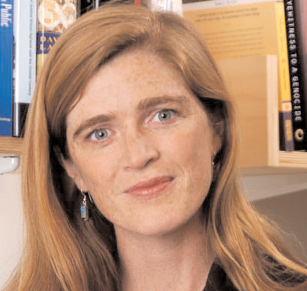
    WASHINGTON (TIP): The US Senate easily confirmed President Barack Obama’s selection for ambassador to the United Nations on August 1. The Irish-born Samantha Power, a former Obama foreign policy adviser and outspoken human rights advocate, moves into the job formerly held by Susan Rice, who is now Obama’s national security adviser. “As a long-time champion of human rights and dignity, she will be a fierce advocate for universal rights, fundamental freedoms and US national interests,” Obama said in a statement.

    Power, a one-time journalist who has a Harvard Law School degree, has reported from many of the world’s trouble spots. She won a 2003 Pulitzer Prize for a book on the meek US response to many 20th century atrocities, including those in Rwanda and Bosnia in the 1990s. She has long backed intervention — including military force — to halt human rights violations. Power’s past outspokenness has included her 2002 call for a “mammoth protection force” to prevent Middle East violence, from which she has distanced herself.

    Two weeks ago, Venezuela said it was calling off efforts to restore normal relations with the US after Power said at her Senate confirmation hearing that the South American country was guilty of a “crackdown on civil society.” She also called the UN’s inaction to end the large-scale killing in Syria’s civil war “a disgrace that history will judge harshly.” In 2008, she resigned as an adviser to Obama’s presidential campaign after calling then-rival Hillary Rodham Clinton a “monster.”

  • Indian Journalism At Ground Zero

    Indian Journalism At Ground Zero

    Those opposing Justice Katju’s suggestion of minimum qualifications for journalists are out of touch with reality, argues the author.
    Some years ago, the journalism entrance test at a career development institute in Mumbai had this objective-type question: Kofi Annan is (a) a Nigerian footballer(b) lead singer of a Sierra Leone pop group (c) a Sri Lankan delicacy (d)Secretary-General of the United Nations. The 100-odd candidates who appeared for the test were graduates with a sprinkling of post graduates. For nearly 25 of them, Kofi Annan was a Sri Lankan delicacy.

    At a TV Bachelor of Mass Media (BMM) university examination, where students were asked to identify and comment on a recent war which had divided the United States of America, more than a dozen students, obviously from the same college, elaborated on the “Vitamin War.” Another TV BMM class was learning the basics of book reviews. The teacher was shocked when the 40 plus students admitted that none of them had ever read a book outside their prescribed course of studies.

    The BMM course, where students could opt for journalism or advertising in their final year, had proved to be extremely popular. For 11 years I taught almost all subjects at many of Mumbai’s best colleges. Earlier, I taught journalism at some of the best institutions offering PG diploma courses in the subject. It was an exhilarating but often despairing experience. I was still an active journalist and often wrote on the need to improve standards at the BMM level.

    Now, the irrepressible Press Council of India (PCI) Chairman Markandey Katju, has spoken clearly on the same issue. It is shocking that his comments are being attacked fiercely by (of all people) senior journalists. The PCI Chairman also appointed a committee to suggest qualifications for those who wanted to be journalists. He pointed out that though journalism schools operated in India, many of them were of poor quality.

    Then and now

    A senior journalist like Vinod Mehta admitted he had a poor academic record but that did not prevent him from becoming what he is today. Mr. Mehta dabbled in advertising before becoming a journalist. That was decades ago. Today, a non-graduate would not be accepted in any journalism school nor get a job except perhaps in shady, third-rate publications. More important, journalism has become a highly skilled profession needing not only education but also expertise. Yes, in the “good, old days,” young men, mostly from the South, landed in Bombay with copies of their SSC examination and shorthand and typewriting diplomas.

    They quickly got jobs as stenographers, clerks and, if nothing else was available, joined the Free Press Journal daily because of their “superior” knowledge of English. Many of them learnt on their jobs and became outstanding journalists but nothing much was expected from the profession. Life was simple, journalism was not asked to handle the myriad problems of life. Mr. Katju argued that if other professions like medicine, law and management required adequate training, why not journalism.

    Dickens created two immortal medical students in The Pickwick Papers, Bob Sawyer and Benjamin Allen (Sam Weller called them “Junior Sawbones”), who relied on “bleeding” to cure all ailments and relished talking about it. Could they have functioned in the modern era? That was why it was shocking that professionals like Vinod Mehta and Barkha Dutt dismissed Mr. Katju’s comments with such contempt. Yes, learning on the job is fine, but how? A cub reporter assigned to cover a major event would not know how and where to begin or end.

    On the desk, can an untrained sub-editor cut a long story to its required length, provide subheads and give a suitable, catchy heading? Will the journalists who made snide comments on the Katju remarks appoint young people without previous experience in their publications or channels? How proud is Ms Dutt of the interview techniques of the modern TV reporters who thrust a microphone near the mouth of a woman who has just been assaulted and exclaim breathlessly, “Aap ko kaise lagta tha?” Or the ones assembled at Mumbai’s Lilavati Hospital when Amitabh Bachchan was admitted for some illness who came out with brilliant “Breaking News”: “Amitabh Bachchan ate khichdi” or “Amitabh Bachchan had orange juice”? Didn’t our TV editors find all this embarrassing?

    Live on TV
    There was a time in print journalism when editors prided themselves on their “intellectual superiority” and cared only for their weekly edit page pontification which they believed changed the world. For them, the rest of the paper did not exist. The same is happening in today’s TV journalism, where anchors seem to care only about their daily shouting matches, gift-wrapped as “discussions,” where they seldom allow panelists to speak or bother about how the rest of the news is presented.

    I would argue that formal training should be given not only to newcomers but also to senior editors and anchors on how to speak calmly, eliminate their bias, treat panelists with less contempt and perhaps go back to school to learn basic courtesy and good manners. Their present attitude does not reflect their public school education or Oxbridge/Columbia School of Journalism background. Once this is done, they could think of educating and training their juniors.

    In the classroom
    Meanwhile, journalism schools must improve. Mumbai University granted affiliation to dozens upon dozens of BMM and BMS departments without caring to examine whether they had any kind of infrastructure, like library facilities, classrooms and qualified teachers. After a couple of years, the university, in its wisdom, abolished entrance tests and decided that applicants to these courses should be admitted on the strength of their standard 12 marks, completely ignoring the fact that the cramming habits of and inflated marks awarded by junior colleges are not enough to judge the different needs of a journalism course.

    Teaching was another farce. With trained senior journalists unwilling to devote their time, teachers with no background or interest in journalism were roped in. Of course, some of them took pains to study topics like regional journalism and managed. But others were disasters. One such faculty member asked me how I taught reporting. “How many times did you put on disguises?” he asked in all earnestness! The ultimate depressive moment came with the fact that most students were least bothered with current affairs; not even to the extent of reading at least one newspaper regularly.

    Nor did they watch TV news shows. “Projects” were cut and paste jobs from the net. Students who found financial journalism “difficult” and who could not even differentiate between surplus and deficit, turned in immaculate 3,000 word projects with quotes from leading economists. The net was the source. The college authorities often pressurized the teachers including the visiting faculty to give high marks to project work so that their students would figure in the university merit list.

    Our stars in elite journalism who blamed Mr. Katju for speaking out of turn hardly know what is going on in most journalism schools. How can they? The average student who is keen to learn journalism is left in the lurch. If the media world refuses to listen to men like Mr. Katju, the deterioration in existing standards will continue.

  • PM Manmohan Singh To Visit US In September, To Strengthen Ties

    PM Manmohan Singh To Visit US In September, To Strengthen Ties

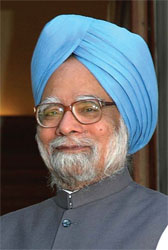
    NEW DELHI (TIP): Prime Minister Manmohan Singh will participate in the United Nations General Assembly(UNGA) in New York in the month of September but the highlight of his visit will be his bilateral meeting with President Barack Obama in Washington DC. The US has finally confirmed the dates for PM Manmohan Singh’s visit from September 25 to 30, government sources said.

    The confirmation of the dates has come as a huge relief for the Indian side as south block wanted the bilateral meeting to take place during Singh’s visit for United Nations General Assembly. This is what Indian officials had conveyed to US after Obama invited Singh for what is going to be their second bilateral meeting in US capital. The meeting in September, they said, would spare PM the trouble of traveling to the US for the second time in quick succession as his participation in UNGA was certain.

    As secretary of state John Kerry said during his visit to India in June, India and U.S. are looking to finalize a commercial agreement between NPCIL and Westinghouse for a nuclear reactor in Gujarat. If the 2 countries can circumvent India’s contentious nuclear liability law and conclude negotiations by then, it would be the main takeaway from Singh’s meeting with Obama.

    Both sides are trying hard to fight the gloom enveloping the ties between them and realize that one way of doing this is by encashing the civil nuclear agreement. Talking about the significance of Obama’s invite to Singh, foreign minister Salman Khurshid had said earlier that it is only befitting Singh’s reputation as having nurtured the India-US relations that he visit the US in the final year of UPA II.

  • Politicization Of Criminals

    Politicization Of Criminals

    Need for a preventive remedy.
    “I am more disturbed by the second judgment holding valid Section 62(5) of the Representation of the People Act, 1951, which prohibits any person from voting if he is confined to prison even on a petty offence or is in the lawful custody of the police (say being a slum dweller, a poor rickshaw driver, and thus unable to obtain bail) while permitting rich accused persons like those involved in the Colgate and telecom scandals if on bail, but denying the trade union workers like those of Maruti the right not only to contest an election but also the right to vote because the anti-labor state colludes to keep them in jail…”, says the former Chief Justice of High Court of Delhi.

    A recent judgment of the Supreme Court holding that Section 8(4) of the Representation of the People Act, 1951, which exempts a sitting legislator from vacating the seat if convicted of offences under sub sections (1), (2) and (3) of Section 8 (which prohibit a person from contesting elections to the legislatures) till his appeal is decided, is ultra vires of the Constitution.

    Surprisingly, there is less panic and opposition to the judgment than one would have expected – evidently because the judgment exempts from its applicability the existing legislators – thus the present members of Parliament and state legislatures going to the polls this year are not really affected. The two-judge Bench side-stepped a five- judge decision in the Prabhakar case which had categorically held that the two categories, one of persons who are not legislators and the other who are legislators, “is based on a wellestablished nexus with a public purpose”.

    The two situations are different – in the latter course the vacation of a seat affects the House. As it is, the courts on their own have developed a universal practice of permitting the convicted member only to mark his presence to prevent his disqualification but forbidding him to take part in the proceedings or vote till his appeal is decided. So for all practical purposes a convicted MLA plays no part in the deliberations of the legislature.

    This interpretation by the Supreme Court would have serious consequences for opposition human rights activists, trade unionists and political activists, who are so indiscriminately and partisanly prosecuted under various security laws or even when holding bandhs and demonstrations. In such a situation automatic vacation of the seat of a sitting legislator would empower the ruling party with an arbitrary unanalyzed power.

    Consider the enormity of injustice to the elected legislator,who had no conviction at the time of getting elected, but getting convicted during his term would automatically have his seat vacated, notwithstanding that his conviction may be set aside in appeal shortly thereafter; but by then another person would have been elected, thus causing irreparable damage to the career of the political activist.

    The court recognizes the anomaly but opines that the legislator can ask for a stay of conviction by the appellate court and, if granted, he can continue. With respect, is this not leaving to the uncertainty of different reactions by judges prompting the cynical comment in English law that what is justice is measured by the length of the Chancellor’s foot.

    I am afraid this process is so discretionary and would vary with individual decisions by different judges – hardly a satisfactory alternative to Section 8(4) of the Act, which had at least a practical object to see that the electorate choice is not nullified by an adverse decision of the trial court without giving an opportunity of it being corrected in appeal which is his statutory right.

    In order to avoid further delay (which is really the villain) it could be legislated that the seat would stand vacated if the first appeal fails – no further appeals or revision before the courts will prevent the seat from being vacated. It could also be provided that the appeal by a sitting convicted legislator will be mandatorily decided within three months.

    This alternative has the merit of removing criminality from elections and also the prevention of irreparable harm and injustice to the elected legislator. No, I am not underestimating the danger of criminalization of politics – personally I would call it politicization of criminals because previously criminals helped candidates win, now criminals compete to become legislators themselves – a horrible undemocratic situation endangering clean democracy. A recent survey shows that at present 162 out of the 545 Lok Sabha members and 1,258 out of the 4032 sitting MLAs have themselves declared that criminal cases are pending against them.

    And this in spite of the warning given by the Vice President, Mr. Hamid Ansari, as far back as 2004: “Exactly 23% of MPs elected in 2004 had criminal cases registered against them – over half of these cases could lead to imprisonment of five years or more. The situation is worse in the case of MLAs… Are we not progressing?” My opposition to the extreme interpretation by the Supreme Court resulting in a validly elected legislator losing his seat should not be interpreted as in any way minimizing the danger of criminality in our legislatures.

    Rather the contrary. I feel that a more satisfactory mechanism to halt the politicization of criminals is to have a law, long advocated by the P.U.C.L., that if six months before the polling date, a person has been chargesheeted by a court, he /she would stand debarred from contesting the forthcoming election. This time-frame would give the person concerned sufficient time to have the charge sheet quashed by an appellate court, thus negating the doubtful defense put forth by political parties of false cases being lodged against political rivals on the eve of the nomination date.

    I am more disturbed by the second judgment holding valid Section 62(5) of the Representation of the People Act, 1951, which prohibits any person from voting if he is confined to prison even on a petty offence or is in the lawful custody of the police (say being a slum dweller, a poor rickshaw driver, and thus unable to obtain bail) while permitting rich accused persons like those involved in the Coalgate and telecom scandals if on bail, but denying the trade union workers like those of Maruti the right not only to contest an election but also the right to vote because the anti-labor state colludes to keep them in jail – would this not (against their better sense) provoke an ordinary simpleton citizen to tend to agree with Charles Dicken’s favorite Character Bumble when he said, “If law supposes that – the law is an ass – an idiot”, echoing in the same strain what provoked George Chapmen (1559-1634) to say:

    “I am ashamed, the law is such an ass.” In the U.K. the right to vote is only denied if a person is convicted and sentenced to 12 months. In Israel even a convicted person in jail is allowed to vote. The United Nations as far back as 1955 resolved “that unconvicted prisoners are presumed to be innocent and shall be treated as such”.

    Also why is it that the political parties, which are so upset at the latest Supreme Court ruling, are mysteriously silent and inactive at not amending the election rules to give the voters the right of negative voting, by carrying out the unanimous recommendation of the Election Commissions to the Central Government so as to provide an extra button of negative voting in the electronic voting machine? Are they afraid of facing the searing answer of the electorate in the voting machine of “None of the above”?

  • Ethnic-Based Violence Highlights Need For Greater Dialogue: UN OFFICIAL

    Ethnic-Based Violence Highlights Need For Greater Dialogue: UN OFFICIAL

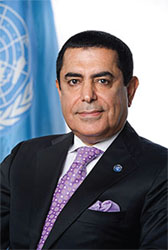
    NEW YORK (TIP): Deeply concerned about the increasing number of acts of violence worldwide based on ethnicity and religion, a senior United Nations official has called for addressing the root causes of such violence and promoting dialogue and tolerance. “Such acts develop into incitement to hatred, racism, and xenophobia that often lead to national, regional and international instability,” Nassir Abdulaziz Al-Nasser, the High Representative for the Alliance of Civilizations said.

    “These acts are contrary to the values the Alliance of Civilizations is striving to promote such as cultural diversity, inclusiveness, religious tolerance and meaningful dialogue in accordance with the UN Charter.” Al-Nasser urged concerned religious and political leaders to address the root causes of ethnic and religious violence and uphold the rule of law, as well as engage in preventive diplomacy efforts with the aim of ensuring peace and security, protecting human rights and strengthening efforts leading to sustainable development.

    “The High Representative reiterates the importance of building bridges between ethnic groups to create an environment conducive to reconciliation, peace and prosperity for all,” he said. Launched in 2005 through the initiative of Spain and Turkey, and under the auspices of the UN, the Alliance seeks to promote better cross-cultural relations worldwide.

  • Joe Biden Bats For More Skilled Visas

    Joe Biden Bats For More Skilled Visas

    MUMBAI (TIP): US is considering increasing the number of temporary visas and availability of Green Cards to highly skilled Indians, Joe Biden, the first US vice-president to visit India in three decades, said in his address to India Inc in the financial capital on Jukly 24. Biden, who sought a greater cooperation between the two countries to boost trade and investments five-fold, acknowledged the contribution of Indian expatriates to America’s growth story.

    “The US has benefited due to Indian human capital,” said Biden. He pointed out that Indians received more skilledworker visas to the United States than any other country in the world. “And the legislation our Congress is considering increases the number of temporary visas and Green Cards availability for highly skilled Indians to come work in the United States,” the 47th vice-president of US said while addressing the industry gathering at theBombay Stock Exchange.

    In a 40-minute speech which was interspersed with lighter moments, Biden said, “Our bilateral trade has increased five-fold to touch $100 billion in the last 13 years. We see tremendous opportunity and there is no reason that if our countries make the right choices, trade cannot grow five-fold or more,” he said. Making a strong case for India to further open up its economy in a serious bid to attract more foreign investment, Biden, said, “A young Indian woman graduating from IIT-Bombay who wants to start the next Tata Motors should be able to buy the best technology and parts, wherever in the world they come from — as her competitors around the world are able to do.”

    However, Biden said, a lot more is needed to remove trade barriers. “We still have a lot of work to do on a wide range of issues, including limit in FDI, inconsistent tax system, barriers to market access, civil nuclear cooperation, bilateral investment treaty and policies protecting innovations,” said Biden.

    Biden later addressed India Inc at the Taj Mahal hotel too in south Mumbai. While assuring US support for India’s candidacy for a permanent seat at the United Nations Security Council (UNSC), Biden said, “That’s why yesterday, on behalf of the President Obama, I invited Prime Minister Singh to make a visit to Washington at the end of September.” India has been vying for a permanent seat in UNSC along with Japan, Brazil and Germany.

    On India’s military needs, Biden pointed out how cargo aircraft C-130s that US had sold to India were now saving the lives of flood victims in Uttarakhand. Biden also called by a greater cooperation between India, China and US. “We are three big nations — China, India and the United States — with our own perspectives. We have significant common interests. All three of us and the entire region would benefit if we coordinated more closely,” said Biden.

  • Insurgents Kill 8 Laborers, Afghan Officials Say

    Insurgents Kill 8 Laborers, Afghan Officials Say

    KABUL (TIP): Insurgents pulled over a minivan with eight young laborers on their way to work at a US base in eastern Afghanistan on july 18, forced them out and then shot them dead, officials said. The killings near Forward Operating Base Shank, a US base in Logar province, were the latest in a militant campaign of intimidation against Afghans working for the government or the international coalition.

    The attack took place just after dawn near Puli Alam, the provincial capital. “They were eight ordinary laborers going to work at that base. They were day laborers,” said Logar deputy police chief Raeis Khan Abdul Rahimzai. “This is very hard to believe. It is an inhuman and un- Muslim act against innocent people.” He said the eight were heading for temporary day jobs at the base and were not part of the facility’s local staff.

    The gunmen let the driver of the minivan go and did not harm him, Rahimzai said. Provincial spokesman Din Mohammad Darwesh said there were four gunmen on motorcycles who pulled over the minivan. “They just took them out of the car and shot them. They are all in their late teens and early 20’s,” Darwish said.

    Both officials said it was unclear if the incident could have been in reprisal for a coalition airstrike that killed 18 Taliban fighters in another part of the province on Wednesday. Logar, located just south of Kabul, has seen a sharp increase in insurgent activity this year, The Afghan army last week carried out a large operation against insurgents operating in the province.

    The Taliban have said they will not stop fighting during the holy month of Ramzan, which began last week, and will instead step up their attacks. About 1,000 Afghan civilians have been killed and more than 2,000 wounded in the first half of the year, according to the United Nations. That marked a 24 per cent increase in casualties compared to the same period last year.

  • They Thought Bullets Would Silence Us…

    They Thought Bullets Would Silence Us…

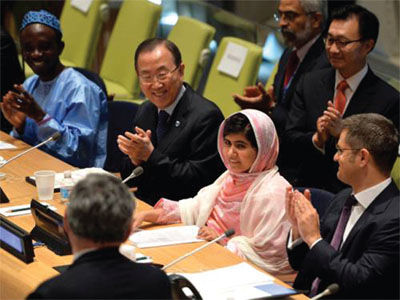
    On Friday, July 12, the United Nations Assembly listened spellbound to 16-year-old Malala, who was shot by the Talibans in Pakistan for attending school. Malala urged the governments to ensure free and compulsory education. Excerpts from her speech
    HONORABLE UN Secretary General Mr. Ban Ki-moon, respected president of the General Assembly Vuk Jeremic, honorable UN envoy for global education Mr. Gordon Brown, respected elders and my dear brothers and sisters: Assalamu alaikum(peace be upon you). Today is it an honor for me to be speaking again after a long time. Being here with such honorable people is a great moment in my life and it is an honor for me that today I am wearing a shawl of the late Benazir Bhutto.

    I don’t know where to begin my speech. I don’t know what people would be expecting me to say, but first of all thank you to God for whom we all are equal and thank you to every person who has prayed for my fast recovery and new life. I cannot believe how much love people have shown me. I have received thousands of good-wish cards and gifts from all over the world. Thank you to all of them.

    Thank you to the children whose innocent words encouraged me. Thank you to my elders whose prayers strengthened me. I would like to thank my nurses, doctors and the staff of the hospitals in Pakistan and the UK and the UAE government who have helped me to get better and recover my strength. I fully support UN Secretary General Ban Ki-moon in his Global Education First Initiative and the work of UN Special Envoy for Global Education Gordon Brown and the respectful president of the UN General Assembly Vuk Jeremic.

    I thank them for the leadership they continue to give. They continue to inspire all of us to action. Dear brothers and sisters, do remember one thing: Malala Day is not my day. Today is the day of every woman, every boy and every girl who have raised their voice for their rights. There are hundreds of human rights activists and social workers who are not only speaking for their rights, but who are struggling to achieve their goal of peace, education and equality.

    Thousands of people have been killed by the terrorists and millions have been injured. I am just one of them. So here I stand, one girl among many. I speak not for myself, but so those without a voice can be heard. Those who have fought for their rights. Their right to live in peace. Their right to be treated with dignity. Their right to equality of opportunity. Their right to be educated. Dear friends, on 9 October 2012, the Taliban shot me on the left side of my forehead.

    They shot my friends, too. They thought that the bullets would silence us, but they failed. And out of that silence came thousands of voices. The terrorists thought they would change my aims and stop my ambitions. But nothing changed in my life except this: weakness, fear and hopelessness died. Strength, power and courage was born. I am the same Malala. My ambitions are the same. My hopes are the same.

    And my dreams are the same. Dear sisters and brothers, I am not against anyone. Neither am I here to speak in terms of personal revenge against the Taliban or any other terrorist group. I am here to speak for the right of education for every child. I want education for the sons and daughters of the Taliban and all the terrorists and extremists. I do not even hate the Talib who shot me.

    Even if there was a gun in my hand and he was standing in front of me, I would not shoot him. This is the compassion I have learned from Mohamed, the prophet of mercy, Jesus Christ and Lord Buddha. This the legacy of change I have inherited from Martin Luther King, Nelson Mandela and Mohammed Ali Jinnah. This is the philosophy of nonviolence that I have learned from Gandhi, Bacha Khan and Mother Teresa.

    And this is the forgiveness that I have learned from my father and from my mother. This is what my soul is telling me: be peaceful and love everyone. Dear sisters and brothers, we realize the importance of light when we see darkness. We realize the importance of our voice when we are silenced. In the same way, when we were in Swat, the north of Pakistan, we realized the importance of pens and books when we saw the guns.

    The wise saying, “The pen is mightier than the sword.” It is true. The extremists are afraid of books and pens. The power of education frightens them. They are afraid of women. The power of the voice of women frightens them. This is why they killed 14 innocent students in the recent attack in Quetta. And that is why they kill female teachers. That is why they are blasting schools every day because they were and they are afraid of change and equality that we will bring to our society.

    And I remember that there was a boy in our school who was asked by a journalist: “Why are the Taliban against education?” He answered very simply by pointing to his book, he said: “A Talib doesn’t know what is written inside this book.” They think that God is a tiny, little conservative being who would point guns at people’s heads just for going to school.

    These terrorists are misusing the name of Islam for their own personal benefit. Pakistan is a peace-loving, democratic country. Pashtuns want education for their daughters and sons. Islam is a religion of peace, humanity and brotherhood. It is the duty and responsibility to get education for each child, that is what it says. Peace is a necessity for education.

    In many parts of the world, especially Pakistan and Afghanistan, terrorism, war and conflicts stop children from going to schools.We are really tired of these wars.Women and children are suffering in many ways in many parts of the world. In India, innocent and poor children are victims of child labor. Many schools have been destroyed in Nigeria. People in Afghanistan have been affected by extremism.

    Young girls have to do domestic child labor and are forced to get married at an early age. Poverty, ignorance, injustice, racism and the deprivation of basic rights are the main problems, faced by both men and women. Today, I am focusing on women’s rights and girls’ education because they are suffering the most. There was a time when women activists asked men to stand up for their rights.

    But this time we will do it by ourselves. I am not telling men to step away from speaking for women’s rights, but I am focusing on women to be independent and fight for themselves. So dear sisters and brothers, now it’s time to speak up. So today, we call upon the world leaders to change their strategic policies in favor of peace and prosperity.We call upon the world leaders that all of these deals must protect women and children’s rights.

    A deal that goes against the rights of women is unacceptable. We call upon all governments to ensure free, compulsory education all over the world for every child.We call upon all the governments to fight against terrorism and violence. To protect children from brutality and harm.We call upon the developed nations to support the expansion of education opportunities for girls in the developing world.

    We call upon all communities to be tolerant, to reject prejudice based on caste, creed, sect, color, religion or agenda to ensure freedom and equality for women so they can flourish.We cannot all succeed when half of us are held back.We call upon our sisters around the world to be brave, to embrace the strength within themselves and realize their full potential.

    Dear brothers and sisters, we want schools and education for every child’s bright future. We will continue our journey to our destination of peace and education. No one can stop us.We will speak up for our rights and we will bring change to our voice.We believe in the power and the strength of our words.

    Our words can change the whole world because we are all together, united for the cause of education. And if we want to achieve our goal, then let us empower ourselves with the weapon of knowledge and let us shield ourselves with unity and togetherness. Dear brothers and sisters, we must not forget that millions of people are suffering from poverty and injustice and ignorance.We must not forget that millions of children are out of their schools.

    We must not forget that our sisters and brothers are waiting for a bright, peaceful future. So let us wage a glorious struggle against illiteracy, poverty and terrorism, let us pick up our books and our pens, they are the most powerful weapons. One child, one teacher, one book and one pen can change the world. Education is the only solution. Education first. Thank you.

    The most courageous girl in the world Former UK Prime Minister Gordon Brown hailed Malala Yousafzai as “the most courageous girl in the world” as the Pakistani schoolgirl who was attacked by the Taliban last year called on world governments to provide free compulsory education for every child in a speech at the United Nations headquarters in New York.

    The address, timed to coincide with her 16th birthday, drew a standing ovation at a special Youth Assembly held in the presence of Mr. Brown, who is the UN’s special envoy for education, and the body’s Secretary- General, Ban Ki-moon, who declared it “Malala day”. Ms Yousafzai, who was shot in the head in October in Pakistan’s Swat Valley after attracting the ire of the Taliban for raising a voice against its attacks on girls’ education, also presented Mr. Ban with a petition signed by 4 million people asking for help to deliver education to all children.

    The speech came as Save the Children released a report based on research by UNESCO revealing that almost 50 million children living in war zones do not attend school at all, and that attacks on education are on the rise, largely due to the conflict in Syria. Justin Forsyth, Save the Children’s chief executive, said of Malala: “She was speaking for the nearly 50 million children around the world who are currently being denied the opportunity of an education because of conflict.”

    He added that the world “should listen” to Malala, who was nearly killed in last year’s attack. Few, however, managed to watch Ms Yousafzai in Pakistan. Only two of the county’s many news channels showed the speech live. The most-watched broadcaster, Geo News, showed portions of the speech later, while other channels all stuck to normal programming. Moreover, Pakistanis are currently unable to see videos on YouTube, because of an ongoing court ban.

    The speech did not get much attention in the days leading up to the event. In Pakistan, she is seen as a hero by many, especially those who oppose the Taliban’s campaign of violence. But for others she has been turned into an object of controversy, shrouded in conspiracy theories wildly alleging that she was “a CIA agent” and that her shooting was “staged”.

    These theories have had alarmingly wide purchase among young Pakistanis on the internet. The hostility to the schoolgirl, some observers say, is a measure of the pitch of anti-Americanism in Pakistan, where even the faintest association with the US is attacked.

  • UN Women Partners with Geena Davis on firstever Global Gender in Film Research Study

    UN Women Partners with Geena Davis on firstever Global Gender in Film Research Study

    NEW YORK, NY (TIP): UN Women is partnering with the Geena Davis Institute on Gender in Media on a global study to analyze the depiction and representation of female characters in family films. The Geena Davis Institute on Gender in Media, with support from The Rockefeller Foundation, has commissioned the study from Associate Professor Stacy Smith of the Annenberg School for Communication and Journalism at the University of Southern California. It will examine the top-grossing international movies in Australia, China, France, Germany, India, Italy, Japan, Russia, Spain and the United Kingdom.

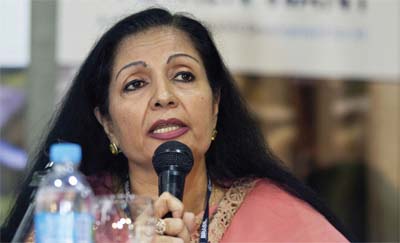
    It is the first such study ever undertaken. “There is no doubt that gender stereotypes in the media are influential sociopsychological factors in how women and girls are perceived. They also influence their self-esteem and relationships between the sexes,” said Lakshmi Puri, Acting Head of UN Women. “We cannot let the negative depiction of women and girls erode the hard gains that have been made on gender equality and women’s empowerment. We hope that the study will address factors that positively impact the perception of women in society, positive role models of women and girls and men and boys, and the value of respectful relationships that can foster and benefit from women’s empowerment,” she added.

    While research into the consequences of media exposure is complex, there is a general consensus among health professionals, researchers and educators that high levels of media exposure to negative imagery are related to negative outcomes for children and adults. These outcomes include effects in the areas of academic performance, body image, early sexual behavior, and social and cultural behaviors and beliefs. These effects may also affect future life and occupational choices for women.

    Previous research by the Geena Davis Institute on Gender in Media revealed that gender parity still does not exist on-screen. In family films, only 28.3 per cent of all speaking characters were female. This translates into 2.53 males to every one female. Not only are girls and women underrepresented on-screen, but many are depicted in a stereotypical and sexualized light. Occupationally, few women held positions of power on screen. Only 3.4 per cent of business leader characters and 4.5 per cent of high-level politicians were female. “By virtue of the dearth of female characters of substance in the media kids see, we are in effect teaching our children that women and girls don’t take up half of the space in the world.

    We’re teaching them to see that boys are doing the important and interesting things in society,” said Academy- Award -winner Geena Davis, the leading advocate for positive change in gender portrayals in the entertainment industry. “Media images have an enormous impact on children’s self-esteem and aspirations. This is why we decided to launch a global gender in media study: if girls see it, they can be it.” “The Rockefeller Foundation is pleased to support this important study that is sure to bring a discerning eye to the ways girls and women are portrayed and perceived,” said Rockefeller Foundation Associate Director, International Development, Sundaa Bridgett-Jones.

    “We hope the findings will be a clear call to resist the culture of casual stereotypes that so negatively impact global achievements in gender equality.” The Geena Davis Institute on Gender in Media will present the findings of the study during the 2nd Global Symposium on Gender in Media in fall 2014. UN Women is the UN organization dedicated to gender equality and the empowerment of women. A global champion for women and girls, UN Women was established to accelerate progress on meeting their needs worldwide. For more information, visit www.unwomen.org. UN Women, 220 East 42nd Street, New York, NY 10017, New York. Tel: +1 646 781-4400.

  • Pew Survey On Attitudes Towards Homosexuality Released

    Pew Survey On Attitudes Towards Homosexuality Released

    UNITED NATIONS (TIP): “Should Society Accept Homosexuality?” A global Pew Research Centre survey was released June 4, finding a wide variety of regional opinion on the question. Pew found that generally more positive attitudes were observed amongst younger people, and that in countries where a gender gap was observed, women tended to be more accepting than men. The survey polled nearly forty thousand people in 39 countries, asking questions about religion, age and gender.

    Senior Researcher at Pew Global Attitudes Juliana Menasce Horowitz observed, “What is surprising is the level of global polarization that we see on this subject. We have been collecting public opinion data all over the world on various issues, and I can’t think of any questions or subjects where we see such large percentages on one side in a group of countries and equally high percentages on the other side in other parts of the world.” The most tolerant responses to the question were predominantly secular and affluent, and either Latin American and Western.

    The least tolerant were found to be the 13 Middle Eastern and African nations polled. The strongest support came from Spain where 88 per cent of respondents answered “Yes” to the question. The study found a strong relationship between a country’s religiosity and its opinion on homosexuality. In countries where religiosity was low, attitudes were mostly positive. This was measured by three factors; whether they believe faith in god to be a necessity for morality; whether or not they say that religion is important in their lives; and whether they pray every day.

    This trend excluded Russia and China where religiosity was found to be low, but only around 20 percent answered “Yes” on the question of whether homosexuality should be accepted in society. In 2012, Russia’s top court upheld a ban on gay pride marches for the next 100 years in Moscow. On the other hand religiosity was measured to be high in the Philippines and attitudes were positive, with 73 per cent of respondents answering “Yes.”

    The results of the survey have been published at a time when many countries are debating same-sex marriage, France in particular having conducted its first official ceremony last week, and the UK preparing to pass a law soon. There are currently fifteen countries worldwide in which there is legal recognition of same-sex marriages.

  • Pakistan, Afghanistan Trade Accusations At UN Over Extremist Havens

    Pakistan, Afghanistan Trade Accusations At UN Over Extremist Havens

    UNITED NATIONS (TIP): Afghanistan and Pakistan traded accusations in the UN Security Council on June 20 over the whereabouts of Islamist extremists on their porous border as the United Nations described increased tensions between the neighbors as “unfortunate and dangerous.” Afghanistan’s UN envoy, Zahir Tanin, told a council debate on the situation in Afghanistan that “terrorist sanctuaries continue to exist on Pakistan’s soil and some elements continue to use terrorism as an instrument of foreign policy.”

    Pakistan’s UN ambassador, Masood Khan, said “terrorists operate on both sides of the porous border” and many attacks against Pakistan were planned on Afghan soil. He said aggressive policing and border surveillance were needed. “I reject most emphatically Ambassador Tanin’s argument – root, trunk and branch – that terrorist sanctuaries exist in Pakistan and some elements continue to use terrorism as an instrument of foreign policy,” Khan told the council.

    He told Reuters in an interview afterward that Tanin had been “ill-advised” to raise the border issues at the Security Council as Kabul and Islamabad were already talking through other channels. Khan blamed Afghan President Hamid Karzai for stoking tensions. “When President Karzai meets our leadership, he’s most gracious, engaging, he’s a statesman. But when he talks to the media, he says things which inflame sentiment and that’s most unhelpful and destabilizing,” Khan said.

    “We have given very restrained responses.” Pakistan’s role in the 12-year-old war in Afghanistan has been ambiguous – it is a US ally but has a long history of supporting the Taliban in Afghanistan in a bid to counter the influence of its regional rival India. Pakistan’s military played a key role in convincing Afghan Taliban leaders to hold talks with the United States, US and Pakistani officials said, but Afghan anger at fanfare over the opening of the Taliban’s Qatar office this week has since delayed preliminary discussions.

    “We were talking to multiple interlocutors behind the scenes and we have been asking them to participate in these talks, (telling them) that we think the war should come to an end,” Khan told Reuters. ‘Succeed or fail together’ US-backed Afghan forces toppled the Taliban in late 2001 for refusing to hand over al-Qaida leader Osama bin Laden after the Sept. 11, 2001, attacks on the United States. Pakistan helped the Taliban take power in Afghanistan in the 1990s and is facing a Taliban insurgency itself.

    The Pakistani Taliban, known as the Tehreek-e-Taliban, is a separate entity from the Afghan Taliban, though allied with them. “Stability and sanctity of Pakistan- Afghanistan border is a shared responsibility. Robust deployment of Pakistani troops on our side is meant to interdict terrorists and criminals,” Khan told the council. “This must be matched from the other side.” A spate of cross-border shelling incidents by the Pakistani military, who said they were targeting Taliban insurgents, has killed dozens of Afghan civilians in the past couple of years.

    “We are very concerned with ongoing border shelling,” Tanin told the council. “This constitutes a serious threat to Afghan sovereignty and the prospect of friendly relations between the two countries.” UN special envoy to Afghanistan, Jan Kubis, told the Security Council that the heightened tensions between Afghanistan and Pakistan were a serious concern, especially at this stage of Afghanistan’s development.

    “Such tensions are unfortunate and dangerous,” he said. The NATO command in Kabul on Tuesday handed over lead security responsibility to Afghan government forces across the country and most foreign troops are due to withdraw from the country by the end of 2014.

  • PMI Organizes Function to mark International Day of United Nations Peacekeepers I.S.

    PMI Organizes Function to mark International Day of United Nations Peacekeepers I.S.

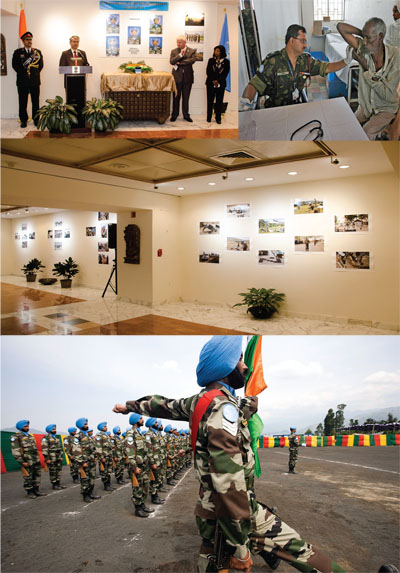
    NEW YORK, NEW YORK (TIP): The Permanent Mission of India to the United Nations organized on May 29, a function to commemorate the 10th anniversary of the International Day of United Nations Peacekeepers. It was in 2002 that the United Nations General Assembly had designated by its Resolution 57/129 of 11 December, 2002, May 29 as the International Day of United Nations Peacekeepers. The special function was attended by Under-Secretary- General, DPKO, Ambassador Hervè Ladsous and Under- Secretary-General, DFS, Ms. Ameerah Haq along with members of the diplomatic community, representatives of the media and civil society.

    Speaking on the occasion, India’s Permanent Representative Ambassador Asoke Mukerji recalled India’s role in UN peacekeeping since 1953. He reiterated India’s commitment to supporting the United Nations in this important area of its activities. The Permanent Representative paid special tribute to the five Indian peacekeepers from the 6 MAHAR who lost their lives in an armed ambush on 9 April 2013 in South Sudan, while escorting a UN convoy of staff and civilians.

    Others who spoke on the occasion included Under-Secretary- General, DPKO, Ambassador Hervè Ladsous and Under- Secretary-General, DFS, Ms. Ameerah Haq. Both recalled the enormous contribution of India to United Nations Peace Keeping and expressed their appreciation of the government of India and the peacekeepers to various peacekeeping missions over the years.

    As part of the event, a photo exhibition was organized by the Permanent Mission of India at its premises. The photos, many of them of rare archival nature, showcased the historical origins of India’s UN peacekeeping participation and scenes from the various areas of operation where Indian peacekeepers have been deployed over the past 60 years. The contribution of Indian peacekeepers to helping civilian populations, especially women and children, and the role of the first ever Indian-all Female Formed Police Unit in the Mission in Liberia, were highlighted in the exhibition.

  • Indian American Community Organizations Welcome The New Consul General

    Indian American Community Organizations Welcome The New Consul General

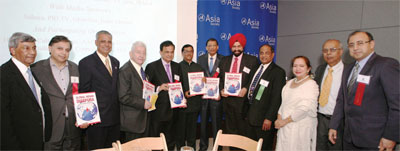
    NEW YORK, NY (TIP): The Global Organization of People of Indian Origin (GOPIO), in collaboration with several community organizations and groups in the New York/New Jersey/Connecticut tri-state area, held a well attended and highly successful welcome reception and dinner in New York for incoming Indian Consul General Dnyaneshwar Mulay. The event was held on April 26, 2013 at the Asia Society in New York and provided a unique opportunity to welcome, meet and greet the new Consul General. The Indian Consul General in New York is a high profile position in the largest city in USA amongst the highest concentration of Non- Resident Indians (NRIs) and Persons of Indian Origin (PIOs), and host to numerous visits on a regular basis by prominent officials of the Government of India for meetings with US officials, the United Nations and the Indian- American community on issues of interest to NRIs and PIOs. The welcome reception and dinner was a combined community event, organized by GOPIO in partnership with GOPIO Chapters of New York, New Jersey and Connecticut; GOPIO Health, Cultural, Youth,Women’s & Business Councils; Life Members; GOPIO News Team. The event was co-sponsored by various prominent community organizations and companies, with support from media groups and others as co-sponsors. Sponsors include: Indian American Chamber of Commerce – USA, Tulsi Restaurant, Asia Society, Bharat Travel, Kingfisher, Parikh Media, HH-Resorts, Peter Advani, TV Asia, Society of Indian American Architects & Engineers of America (SIAEA); Media- Sponsors: Sahara, PIO TV, GloboSat, India Abroad; and participating organizations: Hyderbadi Cultural Assoc, Association of American Physicians of Indian origin (AAPI), Indian Dental Assoc, Indian Jewish Council IJC), National Federation of Indian Associations (NFIA), Association of Indians in America (SAIA); attending organizations: TelugU Association, Bengali Association, Gujarati Association, and several others. Also in attendance were Ambassador of Trinidad & Tobago to USA, Dr. Neil Parsan; Ambassador of Mauritius to United Nations Milan Meeterban; former Ambassador of Suriname to United Nations, Krishna Nandoe; Deputy Speaker of New Jersey Assembly Upendra Chivukula; New York City Councilwoman, Leticia James; John Bartlett, Jr, Freeholder of Passaic County in New Jersey. Event coordinator was J. Nami Kaur, Secretary of GOPIO International, ably assisted by Mridul Pathak, GOPIO’s Director of Diaspora Development. Other members of the organizing team included: Anita Bhat, Dr Asha Samant, Ashook Ramsaran, Jaswant Mody, Lal Motwani, Patsy Leopold, Quddus Mohammed, Dr. Renuka Misra, Sangeeta Ahuja, Dr. Thomas Abraham. Following a video biography highlighting Ambassador Mulay’s career and his impressive accomplishments, GOPIO International president Ashook Ramsaran made the formal welcome, stating that, “the Indian American community of the New York/New Jersey/Connecticut area is a significant population of NRIs and PIOs, very progressive, quite supportive – and also very vocal on matters of interest and concern”. Ramsaran added that, “we bid you a warm welcome with open hearts and open arms, with confidence that you will achieve much success during your tenure as Consul General if India in New York”. Ambassador Mulay thanked GOPIO and the community organizations for the warm and overwhelming welcome. In his remarks, he stated that, “huge opportunities exist for the Indian Diaspora in connecting India and the USA. India requires massive investments, is looking for technologies, continuously expanding education sector and health services and looks forward to proactive contributions of Diaspora in its developmental aspirations”. He added that, “the Government of India has taken enormous measures for promoting the wellbeing of the diaspora and connecting them with India. Since the setting up of the Ministry of Overseas Indian Affairs Ministry several special steps have been taken and a number of schemes introduced”. “Global Indian Diaspora – GOPIO Making an Impact” a comprehensive publication authorized by GOPIO, was presented to Amb Mulay as part of the New York release during the program. In addition, GOPIO’s founding life member and former secretary general Dr Jagat Motwani presented his latest book “India Reborn: Bharat Mahan, As Perceived by Westerners, Gandhi, Nehru, Tagore & Others” to Amb Mulay. GOPIO’s founding president, Dr. Thomas Abraham, spoke about GOPIO and its long history of serving the interests of the diaspora on a global scale. Prominent community leaders and supporters also welcomed Amb Mulay, extending good wishes and support: Dr. Sudhir Parikh (Parikh Media); H. R. Shah (TV Asia); Norman Solovay (Indian American Chamber of Commerce – USA); Upendra Chivukula (Deputy Speaker of New Jersey Assembly); and others. GOPIO presented to Ambassador Mulay a “Memorandum of critical issues and suggestions from the Indian American community of the New York/New Jersey/Connecticut area”. These issues include recommendation for improved communication with the Indian-American community, including more responsiveness to telephone calls placed to consulate and staff for regularly needed consular services; recommendation to provide answers on a timely basis to more FAQs on current issues on website, email advisory. Examples: OCI card, Passport Surrender procedures and fees; recommendation to set up a community feedback system on matters of interest and concern via community and consulate meetings, interactive forum, interviews on television and print, outreach to Indian- American community and other ethnic groups; posting a “calendar of events” which can be readily viewed for advance planning purposes; holding or collaborating on seminars on current critical issues such as youth, health, inter-generation, inter-ethnic, etc. – as well notable events such as Gadar Centennial Commemoration in USA. Media, however, was not invited to the event. (Based on a press release issued by Dr. Thomas Abraham)

  • India’s Ability To Articulate Has Always Been Very High ASOKE K. MUKERJI

    India’s Ability To Articulate Has Always Been Very High ASOKE K. MUKERJI

    Q. Can you tell us a few high and low points of your career in Foreign Service so far?

    I joined the Indian Foreign Service 35 years ago. We were young then. We didn’t realize how the would changed right after the Cold War. Whatever we have achieved after that was a collective effort. The Indian Foreign Service was a small team during those years. For me personally dealing with a part of the consequences of the Cold War was when I was posted in Russia. This was right after Russia broke into 15 independent countries. Five of those countries were directly in my charge. I was the only English-speaking diplomat in Central Asia. I had to establish the foundations of political and economic relations with each of these countries. This meant we had to pave way to negotiating treaties from the scratch. This was rather unusual for us because India inherited most of the treaties during 1947. But doing that part of my job was one of the most satisfying phases of my career. It was a real learning experience. Another moment of satisfaction was when I got the opportunity to work with the World Trade Organization (WTO). This was a body that not only negotiated our trade relations legally but also protected the economic and commercial interest of each participating region. WTO had a body within which was called the Dispute Settlement body. I represented India in 11 disputes that were heard by the court. This was an equally satisfying experience. We won some cases, we did lose my cases but that is how it goes in the court of law. When I was working in UAE as the Consul General, we pioneered the set up of a mechanism, which involved the community, the public sector and the government. This was called the Indian Community Welfare. I chaired the committee. We were able to reach out to 1 million Indian passport holders who live and work in those parts of UAE. Today, our government has taken that model and established it many missions across the world. Also in 2005, I was sent to Kazakhstan as Ambassador. Our main purpose was to get oil for ONGC. Even recently the President of Kazakhstan reiterated that to be able to draw a negotiation without any hassles of tenders or disputes is surely an achievement. This was possible only due to a transparent government-to-government dialogue. Each assignment has rewards. Of course, there are shortcomings too. But it is the reward that stays with you and you remember when you look back.

    Q. Can you also tell us a bit about the challenges that you faced during your service?

    Well, there have been many weak points but the one sole challenge for any diplomat is the way the world is changing. It is not only changing to something entirely new but it is also fast paced. So you need to keep up with it. You can never say that I know everything. You have to keep educating yourself. Yet, this kind of education does not come through books and periodicals. You get educated these days by meeting people, participating in events and attending informative seminars. I do all of them and I am very fond of learning in this manner. One of the challenges for us in the Foreign Service is how the world is adept at technology. The technological advancement is ever changing and cannot be contained. Everything is pursued through technology, be it communicating with your elected representatives, banking on mobiles or communication in general. For any Foreign Service or a diplomat technological advancement plays an important role. This can also affect diplomacy. Before coming here, I was involved in India’s cyber dialogue with many other countries. Each of these dialogues was about education as it is a completely new sector.

    Q. Do you see such similar challenges in your time as the Permanent Representative of India to the UN?

    Certainly. We have always felt that the changes that take place in the world must be reflected in the United Nations. Whether it was disarmament in 1950s or terrorism right now, we need to as a mission in the UN participate in a way that the international community responds to these challenges. All of us know about our views on the Security Council reforms. We are hopeful that the process that has been initiated and has faced 9 rounds of discussion, it will lead to reforms in Security Council. It is very difficult to implement reforms, if you do not have the tools to implement them. Tools are as important as the objective that is put forward. Implementation requires carrying the consensus of all member states towards a common objective. So if you have a common consensus among all participating countries, the chances are that implementing the objective will be easy. If you have objectives that are set outside the international community and are forced to be carried through UN, then chances of implementing these objectives are lower.

    Q. Where are we as far as Security Council reforms are concerned?

    I think we are significantly further down the road to reforming the SC. Initially even the idea of reforming the SC was not accepted. We have moved from that to a process of discussing groups. Within the groups and participating countries that have discussed this matter, there is now a larger consensus about reforms in SC. The next stage is how we put all these reforms into a document. Then we need to discuss this document and then how to execute the suggested reforms. We are currently at that stage. It has taken us 9 rounds of discussions to reach here. Of course, there are still several groups that have not consented to reforms maybe because they have not analyzed the benefits of these reforms in their own regions.

    Q. Can you hypothesize a time frame within which these reforms could be executed?

    Apart from the political will for reforms, we have to also keep in mind of the procedures of the UN through which the reforms are implemented. We have to focus on the reforms of the UN procedures as well. These were created at the end of World War Two. They have evolved in their own way. The time frame cannot be set in only one process.

    Q. Can you shed some light on how diplomacy can work in today’s age of spiraling conflicts around the world?

    Diplomacy is one side of the coin. The other side has traditionally been war. In the last 20 to 30 years there has not been wars but instabilities. Instability may not have been caused by states, but even non-state influencers like viruses, pandemics, etc. The way we achieve diplomacy cannot be conventional methods of stopping war anymore, but also in understanding that our issues of instabilities are not conventional and thereby our methods can’t be the same either. Today we are dealing with issues like poverty, terrorism, gender, cyber attacks and such issues. These are newer issues for diplomacy. That is why we must take a wider approach on how to do our job. Our biggest strength in Indian Foreign Service today is that we have large number of technically proficient members. This is certainly an advantage that we did not have during our time of Foreign Service. So we need to adopt newer means to combat today’s instabilities.

    Q. Diplomacy is straightjacket post. How would you like to win more admiration for India? How would you be able to take other nations along and meet the agenda that India has manifested and make it successful?

    I start from a very strong foundation. When we were elected to Security Council elections we had 187 votes out of 190. That itself is a manifestation of the regard in which India is held in the International community. How do we carry forward this momentum? I think the answer is in conveying the message and in emphasizing in the substance of your message. If we show that the challenges to the international community are challenges to everybody and that there is no one who is immune from it, then you make sure that there are more friends than foes. India’s ability to articulate has always been very high. We are a knowledge-based society. If we maintain this tradition, I don’t see why we cannot carry everyone along with us.

  • More Than 6,500 Indians Languish In Foreign Jails

    More Than 6,500 Indians Languish In Foreign Jails

    CHENNAI (TIP): More than 6,500 Indians are living an uncertain life in prisons in 80 foreign countries, half of them in three Gulf countries. The Gulf countries have the largest number of Indian prisoners, with 1,691 in Kuwait, 1,161 in Saudi Arabia and 1,012 in the UAE. Among the neighbours, Pakistan holds 253 Indians in its prisons, China has 157 of them and Sri Lanka 63. Languishing in the Nepal prisons are 377 Indians. Italy, a country that recently raised a huge uproar demanding special guest house and home-made food for its two citizens arrested on charges of killing two Indian fishermen off the Kerala coast, has 121 Indian citizens in its prisons. The United Kingdom has 426 Indian inmates in their jails, thanks to a fast growing migration of skilled and unskilled labourers.

    There are 155 Indians in the US prisons. The statistics, obtained through RTI by Kochi-based NGO Human Rights Defense Forum, shows 6,569 Indians are in foreign prisons. On Indian prisoners in 30 countries, the ministry of external affairs said it had ‘nil report.’ The RTI reply also says “this figure keeps changing,” and gives no details about the prisoners or the charges against them. In 2007, it was reported that the number of Indian prisoners abroad had come down from 6,730 in 2005 to around 6,000. The RTI reply given by the ministry last month shows the number has gone up again. T P Sreenivasan, former ambassador of India to the United Nations, said ordinary crimes, drug trafficking and domestic violence land Indians in jails in European countries.

    “But a large number of prisoners in the Gulf countries are arrested for badly formulated contracts, illegal stay and migration,” he said. In Malaysia (187 Indian prisoners) and Singapore (156), most of the Indians have been arrested for immigration violations and a few for criminal cases like drug trafficking. In Pakistan, Bangladesh and Sri Lanka, most of the arrests are made on charges of violation of immigration laws. Sreenivasan said different factors, including delay in ensuring justice, communication between the local government and the Indian offices abroad play a major role in the number and duration of detentions.

  • Begging becomes business in Pakistan

    Begging becomes business in Pakistan

    RAWALPINDI (TIP): The sight of children, the disabled and disadvantaged begging at all hours of the day and night in Pakistan is a grim, constant reminder of the millions who live in abject poverty. Yet malnourished members of the underclass have to collect not just enough spare change to feed them, but to pay off police and gang bosses. Investigators say begging has turned into an organised business with mafia controlling key locations where they deploy their own lackeys or lease out ground to others on a daily, weekly or monthly basis. Some can even make more than a labourer who toils in scorching temperatures, digging or carrying cement and bricks at building sites for $6 a day.

    Mukhtiar, about 12 years old who gave only one name, is already a veteran beggar in the Saddar shopping area of Rawalpindi, the headquarters of Pakistan’s military and the sprawling twin city of the leafy capital Islamabad. Most clam up when asked if they work in groups. At first Mukhtiar denied, and then later admitted that he had to pay a cut to “thekedars” — or gang ring leaders — and sometime also to the cops. “Whenever I beg at main crossings, traffic lights or markets, I have to pay a small cut, sometimes 20-50 rupees or even 100 to the thekedar, otherwise they will beat me and expel from the area,” Mukhtiar said. Begging is punishable by up to three years in Pakistan, but police and lawyers say convictions are rare. In 2011, the Lahore High Court ruled that the government should strictly enforce laws to discourage “professional beggary,” set up homes for the destitute and improve charity disbursements. “Most beggars, if arrested, get bail. Judges also take into consideration the lack of welfare homes for destitute people and the result is that once released, offenders again start begging,” lawyer Mohammad Tayyab said.

    But Pakistan’s largest charity, the Edhi Foundation, said it offers no specific support network for beggars because there are too many. Faisal Edhi, a foundation staff member, told AFP that police sometimes round them up and bring them to their shelters. “Sometimes they bring up to 1,500 beggars a day, we cannot keep them in such a big number,” Edhi said. “Begging has become a profession now,” he added.

    Sakina Bibi, 32, a mother of five begging in Rawalpindi, says she does so to support her family and an addict husband who does not work. “Two years ago I was working as a housemaid, but I had a really bad experience and was wrongfully accused by my employers of stealing money, which I did not. “Being a maid is very difficult here, you have to work for almost 12 hours and if anything goes missing from house you are suspected,” Bibi said. She is the daughter of poor peasants. She never went to school, so begging is the only way she says she can earn money to feed her children. “I can make 300-400 rupees ($3-4) a day, but sometimes it is just 60-70 rupees,” she said. In Rawalpindi, the Child Protection and Welfare Bureau says it rescues child beggars, keeps them in a shelter and traces their parents or guardians, who then have to promise in court that they will take care of them.

    Parents whose children are found begging can end up in jail for three to five years and be fined $50 to $500, Bureau official Waseem Abbas said. “There are also organised gangs who deploy child beggars in lucrative spots like bus stops, traffic signals and markets and many raids have been conducted against them in the past,” he added. Economists say they have no data on numbers, age or average income.

    “There are gangs which are operating in different cities and they use orphans and run away children to beg in crowded places,” economic analyst Kaiser Bengali told AFP. But he said most beggars were in genuine need — the products of unemployment and Pakistan’s lack of a social security system. “You can see very old people, who can barely walk or see, begging on the roads of Karachi and other cities, because they have no family or old homes to take care of them,” he added.

    According to the United Nations, around 49 percent of the estimated 180 million population of Pakistan live in poverty. Private philanthropy is huge with charity one of the five pillars of Islam. The independent Pakistan Centre for Philanthropy says around 70 billion rupees ($700 million) is donated annually, mostly straight into the hands of individuals to alleviate immediate hardship or to religious organisations. Islamabad police claim to have launched a crackdown, but Haroon Yahya, a senior police official in Rawalpindi, says arrests are pointless. “It has become so lucrative that they do not care about arrest or imprisonment for a month,” Yahya said. “Most of them are now working in groups and protect each other. Police have busted many gangs, but after some time they again regroup,” he said.

  • Sudha Raghunathan enthralls audience in NY

    Sudha Raghunathan enthralls audience in NY

    NEW YORK (TIP): The Cleveland Aradhana committee and Jana Seva hosted the Morning Raga fund raiser concert featuring Padma Shri Sudha Ragunathan and six other renowned artists in New York last week. Jana Seva is a New York-based nonprofit organization that aims to construct homes for orphans and destitute children in India so that these hapless children get the best education they deserve and contribute to the development of India. The first such center is being opened in Mullai, Jolarpet in Tamil Nadu.

    It is also panning to support veda patasalas (schools of excellence in the study of Vedas) to help preserve the rich and valuable heritage and support Goshalas to preserve sacred cows and prevent its slaughter. The non-profit will also promote the concept of seva among the willing and able youth and offer an avenue for them to volunteer their services to the poor and the needy in India, according to L. Shanti Kumar, a leading CPA in Long Island and founder of Jana Seva.

    Sudha Raghunathan, a star among Carnatic musicians in India, was joined in the concert by Amit Heri, the lead guitarist, Keith Peters on bass guitar, Tiruvarur Vaidyanathan on mridangam, Raghavendra Rao on violin, Arun Kumar on drums and Guru Prasad on ghatam.

    The passion, experience and golden voice of Sudha Raghunathan blending with the dexterity of Amit Heri on the lead guitar and the musical creativity of other leading accompanists created an eclectic fusion of modern and classical music. The concert helped Sudha to have a conversation with her rasikas through the music who have drawn from various nationalities and age groups.

    The fusion ensemble was something unique to the Carnatic music lovers of tri-state who are used to the traditional ragam, thanam and pallavi concerts. Sudha started the concert with a sloka followed by the kriti on Lord Ganesha – Maha Ganapathim Manasa Swarami in raag Nattai. She then sang Maathe in dharu varnam in the raga Khamas and followed it up with India Funk in raag abhogi that kept the audience tapping their feet.

    She transported her fans to a new world when she sang the traditional number Thaaye Yashodha in raag thodi and after intermission sang the very popular Kannada song – Krshna nee begane baro – and then the popular Telugu number Brahmam okate.

    Sudha sang Peace which was Amit’s composition in raag Hamsadhwani and enthralled the fans with the ever-popular English note and ended the concert with Seetha Kalyana Vaibhogame, Bhagyadhalakshmi and Kurai Onrum Illai kanna composed by Chakravarthi Rajagopalachari and sung by M S Subbulakshmi at the United Nations in 1967. She completed the three-hour concert with the thillana of Dr. Mangalampalli Balamurali Krishna in the raag Brindavani.

    Sudha has a distinctly stunning voice with which she has ignited musical imagination and spirit across languages, frontiers and ideologies.

    Her deep relish for tradition and mystical old world charm is cloyingly addictive. As the heir apparent of her guru the legendary M L Vasanthakumari, Sudha has succeeded in holding aloft her guru’s banner while simultaneously imbuing her style with her own innovations such as The Morning Raga.

    She was invited to sing Vande Mataram at the Central Hall of Parliament in New Delhi in 2000 to commemorate the 50th anniversary of Republic of India. She was honored by the Government of India with Padma Shri for her contribution to Indian music.

    One of India’s biggest names in jazz fusion music, Amit has shared and worked with numerous internationally renowned artists including Charlie Mariano, Robert Miles, Angelique Kidjo, George Brooks, Matt Garrison and Zakir Hussain. Born into a family of percussionists, Tiruvarur Vaidyanathan was initiated into mridangam at the age of six and now he is one of the top percussionists playing for legends such as Dr M Bala Murali Krishna, K J Yesudas, Dr. N. Ramani and those seniors such as late M L Vasanthakumari, Maharajapuram Santhanam, D.K. Pattammal and K V Narayanaswamy. His playing style is characterized by melodic richness, technical dexterity and balanced use of left and right sides. Keith Peters is the best base guitarist in India today and Chennai-based Peters is a veteran of over five thousand live gigs and played over thousand songs.

    He worked with composers such as A R Rahman. Raghavendra Rao is the disciple of violin maestro T N Krishnan and has toured all over the world with top musicians. Arun Kumar ventured into the world of drums at the age of seven and plays on the western drums and morsing. Guru Prasad is the son of legendary gatam vidwan T H Vikku Vinayakram and has accompanied all the leading Carnatic singers.

  • New York Tamils felicitate Ramjhi

    New York Tamils felicitate Ramjhi

    NEW YORK (TIP): Innovative musician of Chennai Ramakrishnan Subramaniam popularly known as Abaswaram Ramjhi who helped enthuse thousands of children in learning Carnatic music was felicitated for his service to music at a function held in New York on April 6. Ramjhi was invited by Cleveland Thaygaraja Aradhana committee that recently concluded its annual music celebrations and was honored by Indian Ambassador to the US Nirupama Rao for his contribution to Indian music. He was in New York on his way back to India. In the year 2000 – Issai Mazhalai, a musical extravaganza featuring children was launched by Ramjhi as India’s first music group capable of performing Carnatic, film and devotional music.

    The group was invited to perform at Rashtrapathi Bhavan at the invitation of President Dr. A. P. J. Abdul Kalam in Oct 2004. The group has so far performed over 2000 concerts in India and overseas. The children have sung in several films for all leading music directors and composers such as A.R. Rahman, Vidhyasagar, Ilaya Raja to name a few in all the Indian languages Those children who joined the group at the time of inauguration 13 years ago have now grown into their teens and are very popular playback singers in the film industry. Today over 1200 children learn Classical Music from the Issai Mazhalai Training schools in 16 centers with the help of dedicated music teachers. Ramjhi was given the Samaikya Bharath Gaurav Satkar award by The Bharath Integration Committee at Vizag in 2006; Kala Seva Bharathi award by Bharath Kalachar in 2006; Guru Seva award by the Kanchi Kamakoti Peetam 2006; The Acharya Award by M/S Call Teachers -2007; Acharya Rathna Award by Austere Media 2010 and Sangeetha Kala Vipanchee from Dr. M. Balamuralikrishna in 2010. He started his media career as an announcer and an anchor and produced and presented hundreds of popular programs, right from his school days.

    The best was a 204 week-long show called Cibaca Geetha Maalai, a Tamil version of the show presented by Ameen Sayani in Hindi as Binaca Geet Mala. He wrote and produced two Tamil feature films “Uruvangal Maralam” and “Viswanathan Velai Venum”. The first movie had all the top South Indian stars in the cast such as Sivaji Ganesan, Rajinikanth, Kamal Haasan, Jaishanker, Y.G.Mahendra, Suhasini Manirathnam, S.Ve. Shekhar to name a few He is the son of legendary film director K. Subrahmanyam considered the doyen of the Tamil Film Industry and S. D. Subbalakshmi, a leading film actress and musician.

    His sister is internationally renowned Bharatanatyam dancer Padma Bhushan Dr. Padma Subrahmanyam and he is married to Shobhaa Ramji, an International Reiki Grandmaster and grand daughter of H. M. Reddy who made the first Indian Talkie Film “Aalam Aara.” At a function held at Madras Woodlands in New Hyde Park, leading community leaders praised the service of Ramjhi to Indian music. Dr Arul Veerappan, vice president of New York Tamil Sangam, Gayathri Murali Rajan, treasurer of New York Tamil Sangam, John Joseph, president of Tamil Nadu chapter of Indian National Overseas Congress (INOC)-USA, Venkatachalam Krishnan, director of partnerships at United Nations, G. Padmanabhan, manager of Hindu Temple Society of North America and others felicitated Ramjhi. He was presented with a title “Issai Mazhalai Vinjani.” Prakash M Swamy, president of New York Tamil Sangam and founder of Shri Vari Foundation, welcomed the gathering.

  • Bhullar’s Death Sentence-International NGO’s File “Urgent Appeal” With United Nations

    Bhullar’s Death Sentence-International NGO’s File “Urgent Appeal” With United Nations

    NEW YORK (TIP): Seeking United Nations intervention, international human rights NGOs have approached UN’s Special Rapporteur on Torture after the denial of commutation plea by the Supreme Court of death row convict Devenderpal Singh Bhullar. The urgent appeal to Honorable Juan Méndez UN Special Rapporteur on Torture seeking immediate intervention, has been jointly filed by “Sikhs For Justice” (SFJ) a US based advocacy group, “Canadian Sikh Coalition” (CSC), a Canada based NGO and “Movement Against Atrocities and Repression” (MAAR) a Swiss NGO.

  • Essar Energy joins UN corporate responsibility project

    Essar Energy joins UN corporate responsibility project

    MUMBAI (TIP): Essar Energy has announced that it has become a signatory to the United Nations Global Compact (UNGC), which is a voluntary corporate responsibility initiative, with over 10,000 corporate participants and other stakeholders from over 130 countries.

    The UNGC is also a strategic policy measure for businesses that are committed to aligning their operations and strategies with ten universally accepted principles in the areas of human rights, labour, environment and anticorruption. The company, in a press release, said that it is committed to adopting a globally recognised policy framework, for the development, implementation and disclosure of environmental, social and governance policies and practices.

  • Sri Chinmoy: Dreamer of World Oneness

    Sri Chinmoy: Dreamer of World Oneness

    On April 13, 1964 Sri Chinmoy came to New York. Since then he tirelessly dedicated his life for the world peace and to the fulfillment of the unlimited potential of the human spirit. A prolific author, poet, artist and musician, an avid athlete, a respected spiritual leader and a devoted humanitarian, Sri Chinmoy- who left is body in 2007- continues to inspire and encourage countless people around the world through his creative endeavors, through innovative peace activities, and through the example of his own life.

    In about 1600 books of essays, poetry, short stories and answers to the spiritual questions Sri Chinmoy conveys the richness and diversity of the quest for peace and selfdiscovery. Sri Chinmoy offered hundreds of inspiring talks at the world’s most prestigious universities. Sri Chinmoy composed more than 21,000 spiritual songs which in their lyrics and melodies explore the length and breadth of the aspiring human experience. In more than 700 Peace Concerts around the world he expressed humanities aspiration for inner and outer peace. Sri Chinmoy performed on a dozen or more instruments in concert.

    Sri Chinmoy created a vast outpouring of art. His paintings continues to give people joy and inspiration at galleries worldwide. He named it “Fountain Art” to signify the art flowing from the source. He also drew a very large number of peace-bird drawings which symbolize the peace and freedom of the soul.

    Through all his activities he was conveying the message of Oneness of humanity. Sri Chinmoy came from his native India to New York following an inner command. In the spring of 1970, at the invitation of then United Nation’s Secretary-General U Thant, Sri Chinmoy began conducting twice-weekly Peace Meditation for UN delegates and staff. Sri Chinmoy: The Peace Meditation at the United Nations, as the group is known. This group sponsors a series of programs, lectures and concerts to promote world peace. The aim of UN and the aim of spirituality are one and the same. That is “Oneness”.

    When UN was criticized for its ineffectiveness, Sri Chinmoy said, “Now it is a small plant, but in future it will grow into a big tree and protect the world. We expect everything from the child, but we forget that the child has to grow”. He was very optimistic about the future, he further said,” The United Nations is playing the most important role in seeking to establish world harmony, world peace, world oneness, world perfection and God satisfaction.” Coincidently April 13 is the Birth-day of America’s founding father Thomas Jefferson who was instrumental in writing the Declaration of Independence which is the guiding force to the American nation. Jefferson’s vision and divinity played a very important role in American and world history with its positive aspect and Sri Chinmoy has a great respect for Thomas Jefferson.

    Sri Chinmoy wanted to take the concept of the United States further to oneness world. At a time when inter-religious strife seems insurmountable, the simplicity and power of Sri Chinmoy’s message of oneness amongst the faiths is very relevant. Sri Chinmoy dedicated his life to building bridges among faiths. Sri Chinmoy’s dedication to fostering peace in the aspiring heart of humanity continues through the work of Sri Chinmoy Meditation Centers in more than 60 countries.

    These centers around the world are composed of individuals who seek to cultivate peace, harmony and goodwill. On April 13 many students from these centers come to New York for Meditation, Peace Concerts and other world peace related activities.

    Here is a quote from Sri Chinmoy:
    ” There shall come a time when this world of ours will be flooded with peace. Who is going to bring about this radical change? It will be you – you and your sisters and brothers, who are an extension of your reality existence. It will be you and your oneness-heart which is spread throughout the length and breadth of the world.

  • UN tourism conference to be held in Hyderabad

    UN tourism conference to be held in Hyderabad

    NEW DELHI (TIP): United Nations World Tourism Organisation (UNWTO) commission’s conference on sustainable tourism development and 25th joint meeting of the UNWTO commission for East Asia, Pacific and South Asia will be held in Hyderabad from April 12. Announcing this, Union Tourism Minister K. Chiranjeevi said the need of the hour is not the tourism growth alone but development of tourism in a sustainable manner. He said in this meeting international experts, delegates from the member countries of the UNWTO Commissions for South Asia and East Asia and Pacific, UNWTO, various state governments of India and tourism industry will participate.

    During the conference exchange of ideas will take place on the way forward to develop tourism in a sustainable manner. Asserting that India has been working with UNWTO closely for the cause of developing nations, Chiranjeevi said: “Our initiative at the international level to host the two events, no doubt, will go a long way in highlighting India’s role in promoting global and regional tourism in sustainable manner for the economic growth, employment generation and social integration”. He further said South Asian region has rich and varied tourism products to attract visitors from the world over – with heritage and culture dating back to thousands of years, architectural and natural marvels, an unmatched bio-diversity and home to almost all the world religions. ‘In spite of rich heritage, the market share of South Asia in World Tourist Arrivals is only 1.3 percent – which is a cause of concern. On a positive note the average annual growth in international tourist arrivals to the region during the period 2005 to 2011 has been 7.2 percent as compared to the world annual average growth of 3.5 percent during the same period,’ he added. Chiranjeevi further said the 25th meeting of the UNWTO Joint Commission will bring together tourism authorities from 27 member countries and two associate members and give them an opportunity to review the tourism performance of the two regions and deliberate upon measures and policies to be adopted for future.