Tag: Urjit Patel

  • House panel summons RBI’s Urjit Patel over note ban after Manmohan’s prod

    House panel summons RBI’s Urjit Patel over note ban after Manmohan’s prod

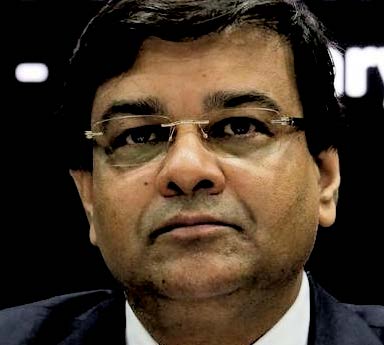
    NEW DELHI (TIP): Reserve Bank of India (RBI) governor Urjit Patel has been asked by a parliamentary panel to appear before it again on May 25 over the demonetization issue after former prime minister Manmohan Singh prevailed over BJP MPs in the panel to call him.

    Sources said the decision to summon Patel was made at the insistence of Singh, a former RBI governor himself, who had earlier come to Patel’s rescue in the last meeting in January. When Patel was confronted with tough questions from parliamentarians – including queries on the exact amount of demonetized currencies deposited during the 50-day window and the time by when normalcy would return to the banking system – Singh had intervened, saying that the governor’s institution should be respected. The former PM said that Patel didn’t have to answer all questions.

    Singh is one of the members of the panel, headed by Congress leader Veerappa Moily.

    At the last meeting in January, Patel failed to provide any figure for how many banned notes had been deposited into the banking system and he did not provide clarity on when the cash situation would become normal.

  • RBI GUV SEES RISKS FROM BREXIT, US POLLS

    RBI GUV SEES RISKS FROM BREXIT, US POLLS

    MUMBAI (TIP): RBI governor Urjit Patel has highlighted the new challenge facing the Brics bloc in the form of political risk in the West. The governor said that potential black swan events such as the Brexit vote, the US Presidential election and political realignment in Europe towards the fringes — left or right — will affect policies of Brics nations. Against the backdrop of easy money and low interest rates in developed markets and current account deficits and low surpluses among Brics nations, Patel said that the bloc appeared to lack absorptive capacity.

    “This is incongruous in the context of ultra-low cost of overseas finance, especially in mature markets, and the ability of large pools of footloose capital to seek returns,” said Patel. Speaking at a Brics seminar in Mumbai, Patel said that at a time when both trade and industry are stalling and there are extreme bouts of turbulence in financial markets, the Brics nations offer to the world a vast pool of opportunities in terms of sectors, companies and people. The governor pointed out that the five Brics countries with a growth rate of 5.1% this year overshadow not just the 3.1% for the world but also the 4.2% for emerging market economies in general. “The Brics economies are either expected to post current account deficits or reduce surpluses, thereby providing vital support to global aggregate demand. The investment-GDP ratio ranges from 19% in Brazil to 45% in China, attesting to the strong appetite for creating new avenues of aggregate demand,” said Patel.

  • RBI LETS BANKS ISSUE MASALA BONDS, TO ACCEPT CORPORATE BONDS IN LAF

    RBI LETS BANKS ISSUE MASALA BONDS, TO ACCEPT CORPORATE BONDS IN LAF

    MUMBAI (TIP): Reserve Bank on Thursday announced a slew of changes in fixed income and currency markets such as allowing lenders to issue ‘masala bonds’ and to accept corporate bonds under the liquidity adjustment facility (LAF).

    “These measures are intended to further deepen market development, enhance participation, facilitate greater market liquidity and improve communication,” an RBI release said.

    To encourage overseas rupee bonds market, banks are being permitted to issue rupee-denominated bonds overseas (masala bonds) for their capital requirements and for financing infrastructure and affordable housing.

    Currently, masala bonds can be issued only by corporates and non-banking lenders like, HFCs and large NBFCs. Masala bonds are instruments through which Indian entities can raise funds by accessing overseas capital markets, while the bond Investors hold the currency risk.

    These will constitute for additional tier-I and tier-II capital for the lenders, it said, adding such overseas bonds can also be issued to finance infrastructure and affordable housing under a current dispensation which applies for foreign currency bond raising.

    It can be noted that so far two Indian corporates — HDFC and NTPC — have made use of this facility to raise over Rs 5,000 crore, but the segment was not open to banks.

    The RBI will be seeking amendments to enable the central bank to accept corporate bonds under the LAF which is used to bridge temporary liquidity issues by lenders, it said.

    Outgoing Governor Raghuram Rajan had earlier said RBI would be announcing a series of measures aimed at bonds and currency markets by end of the month. Rajan, whose tenure ends on September 4, is likely to handover charge to Governor designate Urjit Patel on September 6.

    Stating the absence of an overarching ceiling on total borrowing by a corporate entity from the banking system has resulted in banks collectively having very high exposures to some of the large corporates, the RBI will be coming out with draft guidelines on the ‘large exposure framework’, it said.

    To give an impetus to the corporate bonds market, RBI has also decided to expand limit of partial credit enhancement (PCE) provided by banks.

    “The aggregate PCE that may be provided by the financial system for a given bond issue will be increased from the present 20 per cent to 50 per cent of the bond issue size subject to the PCE provided by any single bank not exceeding 20 per cent of the bond issue size and the extant exposure limits,” the RBI said.

    RBI has constituted a working group to review the guidelines for hedging of commodity price risks by resident investors in the overseas markets.

  • Former RBI Deputy Governor Rakesh Mohan Named Senior Fellow At Yale Institute

    Former RBI Deputy Governor Rakesh Mohan Named Senior Fellow At Yale Institute

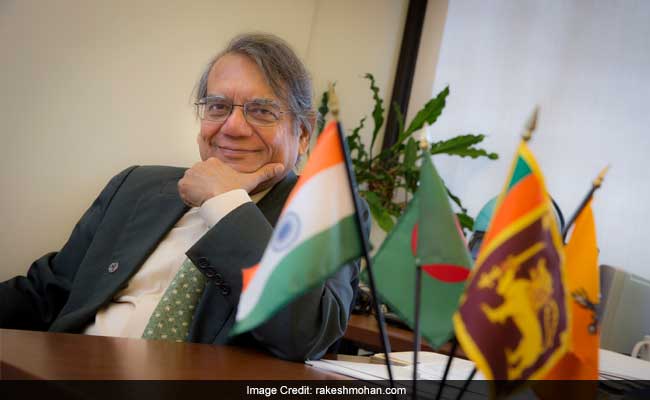
    NEW YORK: Top economist and RBI’s former deputy governor Rakesh Mohan has been named senior fellow at the prestigious Yale University’s institute for global affairs.

    Mr Mohan will join the 2016-2017 class of 15 Senior Fellows at The Yale Jackson Institute for Global Affairs. Senior Fellows are leading practitioners in various fields of international affairs who spend a year or semester at Yale teaching courses and mentoring students.

    At Jackson, Mr Mohan will teach courses on central banking and the Indian economy, the institute said in a statement.

    The institute described Mr Mohan as one of India’s “senior-most economic policymakers” and an expert on central banking, monetary policy, infrastructure and urban affairs.

    Most recently he was executive director at the International Monetary Fund in Washington, representing India, Sri Lanka, Bangladesh and Bhutan, and chairman of the Indian government’s National Transport Development Policy Committee.

    Reserve Bank of India’s deputy governor Urjit Patel has been appointed as the next Governor of the central bank after Mr Rajan demits office on September 4. However, Mr Mohan was reportedly among the front-runners to bag the coveted job.

    Mr Mohan has previously taught at Yale as Professor in the Practice of International Economics of Finance at its School of Management. He has also been a past Senior Fellow at the Jackson Institute.

    As deputy governor of India’s central bank from September 2002 to October 2004 and July 2005 to June 2009, he was in charge of monetary policy, financial markets, economic research and statistics.

    In addition to serving in various posts for the Indian government, including representing India at a variety of international forums such G20, Mr Mohan has worked for the World Bank and headed prestigious research institutes. He is also a Non Resident Senior Research Fellow of Stanford Centre for International Development, Stanford University, and Distinguished Fellow of Brookings India.

    Mr Mohan holds a B Sc in Electrical Engineering from Imperial College, University of London, a BA from Yale University and a PhD in Economics from Princeton.

    During the period October 31, 2004, to July 2, 2005, he was Secretary, Department of Economic Affairs. He has held several positions in the Indian government and was Chief Economic Advisor in 2001-02.

    The other senior fellows include Blair Miller, who leads impact investing for the office of Ray Chambers, the UN Secretary-General’s Special Envoy for Malaria, where they are developing a large scale impact investment fund for emerging markets and Ambassador Dennis Ross, former special assistant to President Barack Obama and National Security Council senior director for the Central Region.

    The new fellows will be joining returning fellows — Director of the Financial Stability Department at the Central Bank of Iceland Sigridur Benediktsdottir, former CEO of the Clinton Foundation Eric Braverman, New York Times op-ed columnist David Brooks, former US Deputy Permanent Representative to the United Nations Ambassador Rosemary DiCarlo, former Ambassador to Syria Ambassador Robert Ford, former International President of Doctors Without Borders Unni Karunakara and former Chairman of Morgan Stanley Asia Steve Roach.

    The Jackson Institute for Global Affairs promotes education and scholarship on global affairs at Yale.

    It serves the entire university through courses and core teaching programmes in global affairs, career counselling, and public lectures, according to the institute’s website.

  • RBI GOVERNOR TO KEEP FINAL SAY ON INTEREST RATES

    RBI GOVERNOR TO KEEP FINAL SAY ON INTEREST RATES

    NEW DELHI (TIP): After months of debate, the finance ministry and the Reserve Bank of India seem to be converging on the proposed monetary policy committee (MPC), which will have equal representation from both sides, with the governor having the deciding vote on interest rates.

    Sources said the plan is to have a six-member panel — with three members being nominated by the government and an equal number coming from RBI.

    While the RBI governor will have the casting vote, the deputy governor and executive director dealing with monetary policy will be the members.

    In case of the government nominees, the finance ministry will decide on who would be nominated.

    The move to form a monetary policy committee (MPC), with the RBI governor having the deciding vote on interest rates, is set to be endorsed by the cabinet. It comes after a bitter debate over the constitution of the committee that will replace the existing system where the RBI is the sole authority on interest rates although the governor consults a technical committee.

    Under the new mechanism — a part of which has already been implemented —the Centre and the central bank would agree to an inflation target and RBI would then move the policy rates accordingly based on the recommendations of the proposed monetary policy committee. Currently, the target is 4% inflation with a possible movement of 2% either way.

    There have been various suggestions on how the committee should be structured. The Financial Sector Legislative Reforms Commission had suggested a seven-member committee with the governor as the chairman, an RBI executive director, three members from the government and two to be jointly decided by the Centre and RBI.

    Then, a committee headed by RBI deputy governor Urjit Patel had recommended a five member panel with three central bank officials and two two external members, who were to be appointed by the governor and D-G. The governor was to get a casting vote in case of a tie.

    A few months ago, a draft report was put out on the finance ministry website which suggested a seven-member committee with four members to be nominated by the government and three coming from RBI, with the governor getting a casting vote. The report was widely criticized and the government said that it was not its draft.

  • Rbi Questions 3 Banks On Money Laundering Allegations

    Rbi Questions 3 Banks On Money Laundering Allegations

    MUMBAI (TIP): The Reserve Bank of India on March 14 asked ICICI Bank, HDFC Bank and Axis Bank for information on allegations that they were helping customers convert black money into white as a standard service. Earlier in the day, investigative website Cobrapost, which made this sensational charge, said such illegal conversions, called money laundering, are being done with the full knowledge of the senior managements of the three banks. RBI deputy governor Urjit Patel said: “We have been in touch with the banks and have asked for information on the matter.” The apex bank is expected to follow this up with a formal notice soon.

    Reacting to the allegations, the three banks announced their own investigations into the matter. “ICICI Group conducts its business with the highest level of compliance to legal and regulatory requirements. All employees of the group are trained and required to adhere strictly to the group code of conduct, including anti-money laundering and know your customer norms.” the ICICI Bank spokesperson said. HDFC Bank and Axis Bank also issued similar statements. The Cobrapost report said its undercover correspondent approached executives of the three banks across the country over five months – in many cases as a walk-in customer – pretending to work for a fictitious politician who wanted to launder money. All the methods suggested by the executives were in violation of RBI guidelines.

    Reacting to the news, shares of these banks fell sharply on Thursday morning but soon regained lost ground and ended the day with gains on the stock markets.