Tag: US

  • United States on the Way to Becoming an Oligarchic State

    United States on the Way to Becoming an Oligarchic State

    By Prof. Indrajit S Saluja
    By Prof. Indrajit S Saluja

    Over the past several decades, there has been growing concern among political analysts, economists, and the public at large about the shifting dynamics of governance in the United States. The country, long heralded as the bastion of democracy, appears to be transitioning into an oligarchic state – nation where power is concentrated in the hands of a wealthy few. This transformation is being driven by the intertwining of economic and political power, with billionaire businessmen exercising unprecedented control over both spheres.

    The United States has witnessed a dramatic rise in economic inequality. According to a 2023 report by Oxfam, the top 1% of Americans now control approximately 34% of the nation’s wealth, while the bottom 50% collectively own just 2.5%. Billionaires like Elon Musk, Jeff Bezos, and Warren Buffett not only dominate the economy but also exert considerable influence over public policy. Their vast financial resources enable them to lobby for legislation that protects their interests, often at the expense of the broader public.

    One illustrative example is the 2017 Tax Cuts and Jobs Act, which significantly reduced corporate tax rates from 35% to 21%. While proponents argued that these cuts would stimulate economic growth, the primary beneficiaries were large corporations and the ultra-wealthy. An analysis by the Institute on Taxation and Economic Policy found that the richest 5% of Americans reaped the bulk of the benefits, while middle- and low-income households saw minimal relief.

    Moreover, the wealth of billionaires has skyrocketed during times of crisis. During the COVID-19 pandemic, U.S. billionaires saw their collective wealth increase by over $1 trillion between March 2020 and March 2021, even as millions of Americans lost their jobs and struggled to make ends meet. This stark contrast underscores the growing chasm between the economic elite and the rest of the population.

    The influence of billionaires is not limited to the economic realm; it has increasingly permeated the political landscape. Billionaire-backed super PACs (political action committees) and dark money groups have become critical players in elections, effectively allowing the ultra-wealthy to shape political outcomes. The 2010 Citizens United v. FEC Supreme Court decision, which allowed unlimited corporate and individual spending in elections, has further entrenched this power dynamic.

    For instance, in the 2020 election cycle, billionaire Sheldon Adelson and his wife Miriam contributed over $218 million to Republican candidates and causes. On the Democratic side, Michael Bloomberg spent nearly $1 billion of his own fortune on his presidential campaign and to support Democratic candidates. This trend raises questions about whether elected officials are accountable to their constituents or to the deep-pocketed donors who fund their campaigns.

    The revolving door between business and government further blurs the line between public service and private interests. High-ranking officials often transition seamlessly between corporate boardrooms and government offices, ensuring that policies remain favorable to the business elite. The appointment of former Goldman Sachs executives to key positions in government during multiple administrations exemplifies this phenomenon.The recent actions of the president-elect have amplified concerns about the United States’ drift toward oligarchy. By signaling a preference for appointing family members, friends, and loyalists to high-ranking government positions, the president-elect appears to prioritize personal loyalty over merit and public service.

    One controversial example is the nomination of a relative as an ambassador, raising questions about the qualifications and motivations behind such appointments. Similarly, the nomination of the president-elect’s son’s girlfriend to another ambassadorship has drawn widespread criticism. These actions are reminiscent of oligarchic governance, where power is concentrated within a small, interconnected group, rather than being distributed based on democratic principles.

    The potential consequences of such appointments are far-reaching. They risk undermining public trust in institutions, fostering cronyism, and diminishing the effectiveness of governance. When key positions are filled based on loyalty rather than expertise, the government’s ability to address complex challenges and serve the public interest is compromised.

    The United States’ trajectory toward oligarchy is not without precedent. The Gilded Age of the late 19th and early 20th centuries was characterized by extreme wealth concentration and the outsized influence of industrial magnates like John D. Rockefeller, Andrew Carnegie, and J.P. Morgan. These “robber barons” wielded immense economic and political power, often at the expense of workers and consumers.

    However, the Progressive Era that followed brought significant reforms, including antitrust laws, labor protections, and campaign finance regulations, aimed at curbing the excesses of oligarchy. These measures helped restore a degree of balance to the American political and economic systems.

    Today, many of these safeguards have been eroded or rendered ineffective. The weakening of campaign finance laws, the rollback of antitrust enforcement, and the decline of labor unions have all contributed to the resurgence of oligarchic tendencies. As a result, the United States risks repeating the mistakes of the past.

    The United States is not alone in grappling with the challenges of oligarchic influence. Countries like Russia and China are often cited as modern examples of oligarchies, where economic elites wield significant control over political decision-making. In Russia, for instance, a small group of oligarchs has benefited from close ties to the Kremlin, while in China, the Communist Party maintains tight control over both the economy and political apparatus.

    However, what sets the United States apart is its historical commitment to democratic ideals and its reputation as a global leader in promoting democracy. The erosion of these principles risks undermining the country’s moral authority and standing on the world stage.

    To prevent the United States from becoming a full-fledged oligarchy, urgent action is needed to restore the balance of power. Several key reforms could help address the underlying issues:

    Campaign Finance Reform: Reversing the Citizens United decision and implementing stricter limits on campaign contributions would reduce the influence of money in politics.

    Antitrust Enforcement: Strengthening antitrust laws and breaking up monopolies would curb the economic power of large corporations and promote competition.

    Tax Reform: Implementing a more progressive tax system and closing loopholes that benefit the ultra-wealthy would help reduce economic inequality.

    Strengthening Labor Protections: Reinvigorating labor unions and ensuring fair wages and working conditions would empower workers and reduce disparities.

    Ethics and Transparency: Enforcing stricter ethics rules and increasing transparency in government appointments would help rebuild public trust in institutions.

    The United States stands at a crossroads. The concentration of economic and political power in the hands of a wealthy few threatens to undermine the democratic principles upon which the nation was founded. While the challenges are formidable, history offers hope that meaningful reform is possible. By addressing the root causes of oligarchic influence, the United States can reaffirm its commitment to democracy and ensure that power truly resides with the people.

    (Prof. Indrajit S Saluja is editor, The Indian Panorama)

  • Trump’s mocking of Justin Trudeau spurs an animated debate about the future of US-Canada relations

    Trump’s mocking of Justin Trudeau spurs an animated debate about the future of US-Canada relations

    By Prabhjot Singh

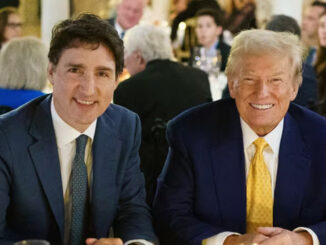
    TORONTO (TIP): Continuous mocking by US President-Elect Donald Trump of Canadian Prime Minister Justin Trudeau has set in motion an animated debate over the future of US-Canada relations.

    Since the last week of November when Donald Trump joked for the first time to suggest in a lighter vein at a dinner meeting he held with Justin Trudeau that why not Canada become the 51st State, he has repeated his joke several times, the last of which was revealed through his December 10 on his Truth Social Platform.

    Politicians and social scientists are wondering at the intent of his continuous “mocking”.

    “It was a pleasure to have dinner the other night with Governor Justin Trudeau of the Great State of Canada,” said Donald Trump in his December 10 post on his Truth Social platform. He went on to add that “he is looking forward to seeing the ‘Governor’ again to continue their in-depth discussion about tariffs and trade. “The results of which will be truly spectacular for all!” added the U.S. President-elect.

    Donald Trump had in a subsequent Meet the Press programme organised by a major media channel on December 8 said “If we’re going to subsidize them, let them become a state [of the U.S.],” while jokingly threatening that the U.S. should stop “subsidizing” Canada. His repeated comments have evoked mixed reactions from Canadian politicians and social scientists.

    The latest post describing Justin Trudeau as a “governor” went public hours after Justin Trudeau spoke at a Halifax Chamber of Commerce event. Justin Trudeau was quoted as saying that Canada would retaliate against the 25 per cent tariffs threatened by Trump.

    It was Donald Trump who set the ball rolling with his Truth Social post on November 25 declaring his intent to impose tariffs on Canada and Mexico if they refuse to tighten their border security. Donald Trump was referring to large-scale infiltration into the US of “illegal aliens” from both Canada and Mexico besides the smuggling of drugs, including Fentanyl. Though the Canadian Prime Minister maintained that smuggling of both illegal immigrants and Fentanyl from Canada was inconsequential compared to the figures of Mexico and promised to strengthen the borders to effectively control the smuggling, the US President-elect mocked him.

    After his November 25 announcement threatening to impose a 25 per cent duty on all imports from Canada and Mexico, Justin Trudeau accompanied by a delegation, including a member of his Cabinet, flew to Florida to meet him at his private Mar-a-Lago club to discuss trade and border security. This is when Trump reportedly joked for the first time about Trudeau becoming the governor of a 51st U.S. state if the Canadian economy cannot survive despite its trade surplus with the United States.

    “Let us not kid ourselves in any way, shape or form: 25% tariffs on everything going to the United States would be devastating for the Canadian economy,” Trudeau said. He added that Canada will “respond to unfair tariffs in several ways, and we’re still looking at the right ways to respond, but our responses to the unfair steel and aluminium tariffs were what ended up lifting those tariffs last time.”

    After the recent post, some members of the Liberal caucus, including Cabinet ministers, were questioned by the media about the continuous tirade, though jokingly, launched by Donald Trump.

    “I am so proud of our country. I am so proud of the true north, strong and free,” said Deputy Prime Minister Chrystia Freeland during a press conference in Ottawa. “I also want to say to Canadians that our government is determined to defend the national interest.”

    Freeland would not comment on whether she takes Trump seriously on comments of making Canada a U.S. state. “That is a question really for the president-elect,” she said.

    Another Cabinet Minister to comment on the recent developments was Transport Minister and President of the Treasury Board, Anita Anand.

    While talking to media persons, she said “We have to continue to remember that Canada is a sovereign country.” Truth Social should not be used as a source for public policy, remarked Immigration Minister, Marc Miller.

    Health Minister Mark Holland said, “We cannot react to everything, we need to focus on being mature as a country and taking responsibility for the things for which we have control.”
    (Prabhjot Singh is a Toronto, Canada-based senior journalist. He can be reached at prabhjot416@gmail.com)

  • The Right-Wing Surge: Analyzing the Republican Triumph Over Democrats in the U.S. Presidential Election

    The Right-Wing Surge: Analyzing the Republican Triumph Over Democrats in the U.S. Presidential Election

    In this election, Trump’s victory can be seen as not merely a political win but a cultural one. His “America First” rhetoric, promise to protect religious liberties, and stance on issues like abortion and LGBTQ rights resonate strongly with the conservative Christian base. Additionally, his direct style and willingness to challenge established norms appeal to those who feel sidelined by the mainstream political establishment.

    By Prof. Indrajit S Saluja
    By Prof. Indrajit S Saluja

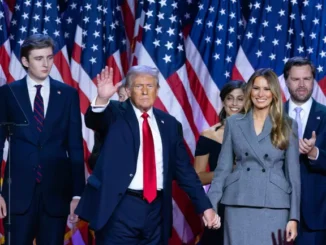
    The recent U.S. presidential election delivered an unexpected blow to the Democratic Party, with the Republicans securing a sweeping victory. Not only did they reclaim the presidency, but they also seized the Senate majority, consolidating power across branches and sending a shockwave through Democratic ranks. Many observers and Democrats alike are asking: how did this happen? While the incumbency factor might provide a surface-level explanation, as Trump’s loss to Biden previously demonstrated, the roots of this seismic shift go far deeper. Beyond simple cycles of political turnover, this victory signifies a profound shift towards right-wing ideology that is resonating globally.

    The Incumbency Cycle: An Incomplete Explanation

    On the surface, it’s easy to attribute this electoral result to the incumbency cycle. Since recent elections have shown a pattern where candidates challenging the incumbent party have a slight advantage, it seems plausible that the pendulum was bound to swing back to the Republicans. Trump’s previous loss to Biden and Hillary Clinton’s loss to Trump were often chalked up to this natural ebb and flow in American politics. However, viewing the result merely as an example of political rotation overlooks the deeper forces at play that have increasingly driven voters toward right-wing policies.

    The Rise of Right-Wing Ideologies: A Global Phenomenon

    To fully understand this shift, it’s essential to place it within a broader global trend. The rise of right-wing ideologies, often deeply intertwined with religious and nationalist values, has been gaining momentum across continents. This trend is not unique to the United States. Across Europe, the Middle East, and Asia, there has been a notable surge in right-wing movements, fueled by economic anxiety, a backlash against liberal values, and a growing preference for policies rooted in faith and tradition.

    Europe: In countries such as Hungary, Poland, and Italy, nationalist and conservative parties have gained traction by appealing to a sense of traditional values and resisting what they perceive as the encroachment of liberal, globalist ideals. Parties advocating stricter immigration policies, emphasizing Christian heritage, and promoting traditional family structures have achieved significant victories.

    Asia: India’s political landscape has similarly seen a strong right-wing shift, with Prime Minister Narendra Modi’s Bharatiya Janata Party (BJP) embracing Hindu nationalist rhetoric and policies. The appeal to Hindu fundamentalism has mobilized large portions of the population who view this as a reaffirmation of cultural identity in a rapidly globalizing world.

    The Middle East: In predominantly Islamic countries, conservative movements emphasizing fundamentalist interpretations of Islam have risen to prominence, with parties and factions often drawing support from citizens who see these ideals as foundational to their national and cultural identity.

    The global trend suggests that voters increasingly gravitate towards leaders and parties that promote cultural and religious heritage, sovereignty, and a promise to protect traditional values.

    The Role of Faith in U.S. Politics: The Trump Phenomenon

    One of the defining characteristics of Trump’s support base has been its alignment with Christian values, particularly among evangelical Christians and rural Americans. For this demographic, Trump represented a leader who not only defended but celebrated their identity and values, positioning himself as a bulwark against what many of his supporters view as an encroaching secular, liberal agenda.

    In this election, Trump’s victory can be seen as not merely a political win but a cultural one. His “America First” rhetoric, promise to protect religious liberties, and stance on issues like abortion and LGBTQ rights resonate strongly with the conservative Christian base. Additionally, his direct style and willingness to challenge established norms appeal to those who feel sidelined by the mainstream political establishment.

    The power of Trumpism lies in its commitment to consolidate power within the executive branch, focusing authority and decision-making with the president, and aligning policies with Christian values. Trump’s approach, often aggressive and polarizing, has garnered fierce loyalty among his followers, who view him as a defender of their faith and identity.

    The Wealthy and Feudal Elements in Right-Wing Politics

    Another dimension of Trumpism, and indeed of many right-wing movements globally, is the alignment with wealth and feudal or elite structures. Policies that favor the wealthy, reduce corporate taxes, and cut down on social welfare have been central to the Trump agenda. This is reflective of a broader trend within right-wing politics that favors a return to more hierarchical social structures, with limited intervention in wealth redistribution and a preference for private over public solutions.

    Historically, right-wing ideologies have often championed the cause of wealthy elites, as they are viewed as the protectors of national stability, economic growth, and cultural heritage. In the U.S., the Trump administration’s tax cuts for corporations, deregulation initiatives, and business-friendly policies align with this framework, positioning the wealthy and economically powerful as central to the nation’s strength.

    This pattern of elite-driven right-wing governance is visible across the world. Whether it is the oligarchs in Russia, the monarchy in Saudi Arabia, or the business-friendly policies in India, the fusion of right-wing ideology with wealth and elite structures is a notable global trend.

    Religion, Identity, and Nationalism: The Heart of Right-Wing Movements

    While wealth and elite influence play a significant role, the deeper driver of right-wing momentum globally is often the question of identity. Religion, for instance, serves as a powerful force in defining identity and mobilizing political support. Right-wing leaders, including Trump, Modi, and others, have tapped into a sense of national identity that is intrinsically tied to religious values, offering voters a sense of belonging and protection against perceived threats.

    In the U.S., Trump has successfully channeled this by presenting himself as a champion of “real” American values, often with an overt nod to Christian beliefs. His messaging resonates particularly in rural America, where communities often feel alienated from the urban, liberal policies emanating from Washington, D.C. Trump’s appeal is rooted in this idea of defending an American way of life that feels under siege, with religion and traditional values at its core.

    The Implications for American Democracy

    As right-wing forces continue to gain ground in the U.S., one of the pressing questions is what this means for the future of American democracy. Trump’s victory could signify a shift toward a governance style that centralizes power in the executive branch, challenging the traditional checks and balances of the American system. Additionally, the increasing sway of religious and nationalist elements could lead to policy changes that impact not only social issues but also the nature of American democracy itself.

    While Trump’s victory represents a triumph for his base, it also raises questions about inclusivity, tolerance, and the protection of minority rights within the American political system. Right-wing ideologies often prioritize majoritarian values, which can create tensions in a diverse democracy where inclusivity and equal representation are foundational principles.

    Looking Forward: A Global Movement with Local Consequences

    The Republican victory in the U.S. presidential election, therefore, is not an isolated phenomenon. It is part of a broader global movement that sees right-wing ideology gaining strength by tapping into cultural, religious, and nationalistic sentiments. This shift suggests that American democracy, much like other democratic systems worldwide, is entering a new phase, one where right-wing policies and values hold significant sway.

    As the U.S. navigates this new landscape, the world watches closely, aware that these changes reflect a global shift towards conservatism and right-wing governance. How the U.S. balances these forces with the principles of democracy, inclusivity, and tolerance will be a defining challenge in the years to come. The victory of Trumpism is not just a political win; it represents a broader ideological shift with far-reaching implications for the “greatest democracy in the world.”

    (The author is Chief Editor of The Indian Panorama. He can be reached at salujaindra@gmail.com)

  • Get ahead of the tax deadline; act now to file, pay or request an extension

    Get ahead of the tax deadline; act now to file, pay or request an extension

    April 2, 2024

    WASHINGTON, D.C. (TIP): With the April 15 tax deadline approaching, the IRS reminds taxpayers there is still time to file their federal income tax return electronically and request direct deposit.

    Filing electronically reduces tax return errors as tax software does the calculations, flags common errors and prompts taxpayers for missing information. Most people qualify for electronic filing at no cost and, when they choose direct deposit, receive their refund within 21 days.

    Free electronic filing options

    Taxpayers with income of $79,000 or less in 2023 can use IRS Free File guided tax software now through Oct 15. IRS Free Fillable forms, a part of this program, is available at no cost to taxpayers of any income level and provides electronic forms for people to fill out and e-file themselves.

    IRS Direct File is now open to all eligible taxpayers in 12 pilot states to decide if it is the right option for them to file their 2023 federal tax returns online, for free, directly with the IRS. Go to the Direct File website for more information about Direct File pilot eligibility and the 12 participating states.

    Through a network of community partnerships, the Volunteer Income Tax Assistance (VITA) and Tax Counseling for the Elderly (TCE) programs offer free tax return preparation to eligible people in the community by IRS certified volunteers.

    MilTax, a Department of Defense program, generally offers free return preparation and electronic filing software for federal income tax returns and up to three state income tax returns for all military members, and some veterans, with no income limit.

    Use ‘Where’s My Refund?’ to check refund status

    The Where’s My Refund? tool will normally show a refund status within 24 hours after e-filing a 2023 tax return, three to four days after e-filing a 2021 or 2022 return and four weeks after filing a tax return by mail. To use the tool, taxpayers need their Social Security number, filing status and exact refund amount. Taxpayers can also check ‘Where’s My Refund?’ by downloading our free mobile app, IRS2Go, from an iPhone or Android device. The tool updates once a day, so people don’t need to check more often.

    Taxpayers that owe on their tax return

    IRS reminds people they can avoid paying interest and some penalties by filing their tax return and, if they have a balance due, paying the total amount due by the tax deadline of Monday, April 15. For residents of Maine or Massachusetts, the tax deadline is Wednesday, April 17, due to Patriot’s Day and Emancipation Day holidays.

    Payment options for individuals to pay in full

    The IRS offers various options for taxpayers who are making tax payments:

    Direct Pay – Make a payment directly from a checking or savings account without any fees or registration.

    Pay with debit card, credit card or digital wallet – Make a payment directly from a debit card, credit card or digital wallet. Processing fees are paid to the payment processors. The IRS doesn’t receive any fees for these payments. Authorized card processors and phone numbers are available at IRS.gov/payments.

    Electronic Federal Tax Payment System (EFTPS) –This free service gives taxpayers a safe, convenient way to pay individual and business taxes by phone or online. To enroll and for more information, taxpayers can call 800-555-4477 or visit eftps.gov. Electronic funds withdrawal – Taxpayers can file and pay electronically from their bank account when using tax preparation software or a tax professional. This option is free and only available when electronically filing a tax return.

    Check or money order –Payments made by check or money order should be made payable to the “United States Treasury.”

    Cash – Make a cash payment through a retail partner and other methods. The IRS urges taxpayers choosing this option to start early because it involves a four-step process. Details, including answers to frequently asked questions, are at IRS.gov/paywithcash.

    Payment options for individuals unable to pay their taxes in full

    Taxpayers that are unable to pay in full by the tax deadline, should pay what they can now and apply for an online payment plan. They can receive an immediate response of payment plan acceptance or denial without calling or writing to the IRS. Online payment plan options include:

    Short-term payment plan –The total balance owed is less than $100,000 in combined tax, penalties and interest. Additional time of up to 180 days to pay the balance in full.

    Long-term payment plan – The total balance owed is less than $50,000 in combined tax, penalties and interest. Pay in monthly payments for up to 72 months. Payments may be set up using direct debit (automatic bank withdraw) which eliminates the need to send in a payment each month, saving postage costs and reducing the chance of default. For balances between $25,000 and $50,000, direct debit is required.

    Though interest and late-payment penalties continue to accrue on any unpaid taxes after April 15, the failure to pay penalty is cut in half while an installment agreement is in effect. Find more information about the costs of payment plans on the IRS’ Additional Information on Payment Plans webpage.

    Unable to file by the April 15 deadline?

    Individuals unable to file their tax return by the tax deadline can apply for a tax-filing extension in the following ways:

    Individual tax filers, regardless of income, can electronically request an automatic tax-filing extension through IRS Free File by filing a Form 4868, Application for Automatic Extension of Time to File U.S. Individual Income Tax Return.

    Make an electronic payment using Direct Pay, debit card, credit card or digital wallet and indicate the payment is for an extension.

    Mail Form 4868 by the tax deadline.

    Things people should know when requesting a tax-filing extension:

    Tax-filing extension requests are due by the tax deadline date, and it does not give an extension of time to pay the taxes.

    Avoid some penalties by estimating and paying the tax due by the tax deadline.

    Special rules for tax deadlines and automatic tax-filing extensions may apply for taxpayers serving in a combat zone or qualified hazardous duty areas, living outside the United States, and people living in certain disaster areas. They may not need to submit a tax-filing extension; however, people should check to see if they qualify before the tax deadline.

    Use IRS.gov for the quickest and easiest information

    Taxpayers can visit IRS.gov 24 hours a day for answers to tax questions, more tips and resources by visiting the Let Us Help You page.

  • A first: US company lands craft on moon

    A first: US company lands craft on moon

    WASHINGTON, D.C. (TIP): A private American company has scripted history by landing the first commercial spacecraft on the Moon as well as the first US vehicle on the Earth’s only natural satellite in more than 50 years, joining earlier feats by India, Russia, the US and China.

    Built by Intuitive Machines, the lander — named Odysseus — touched down on the moon at 6.23 pm ET on Thursday, February 22, making it the first American spacecraft on the Moon since the Apollo 17 mission in 1972. “Today, for the first time in half a century, America has returned to the Moon,” Bill Nelson, NASA Administrator said. The lander will have seven days before darkness descends on the landing site, preventing the spacecraft’s solar panels from gathering energy from sunlight and bringing freezing temperatures, ABC News reported.
    (Source: PTI)

  • Unsafe in the US : Five Indian students dead in five weeks

    The fabled American dream is turning out be a nightmare for one Indian student after another. Syed Mazahir Ali was chased and attacked by unidentified men near his house in Chicago on February 4. The incident has left Ali, who moved to the US from Hyderabad about six months ago, traumatized. The attack comes less than three weeks after another student, Vivek Saini, who had recently received an MBA degree, was hammered to death by a homeless drug addict in Lithonia (Georgia). Sameer Kamath of Purdue University, Indiana, was found dead this week; according to the authorities, he died from a self-inflicted gunshot wound. Another Purdue student, Neel Acharya, was confirmed dead days after being reported missing, while Akul Dhawan, an 18-year-old who was studying at the University of Illinois Urbana-Champaign, was found dead last month. The death of Shreyas Reddy (19) was reported last week.

    The succession of tragic incidents has raised concerns about the safety and security of Indian students in America. These youngsters, whose parents have spent huge sums of money to send them to the US, are being targeted by petty criminals and drug users/traffickers. There are reports that stress caused by the lack of employment opportunities is pushing some of them to the brink — they are taking drugs or trying to end their lives.

    The worrisome situation calls for greater efforts by the Indian community and diplomatic staff in America to reach out to the students and help them cope with myriad problems. They also need to build pressure on law enforcement agencies to probe the cases in a time-bound manner. Exemplary action against the culprits, including those in uniform, can send out a strong message of zero tolerance to crime. Last year’s Seattle incident, in which a police officer made insensitive remarks over the death of university student Jaahnavi Kandula, showed that the rot ran deep. The US media, which is quick to highlight any kind of hate crime in India, needs to give due attention to the plight of Indian students.
    (Tribune, India)

  • The Indian Panorama Chief Editor interviews Ambassador Binaya S Pradhan

    The Indian Panorama Chief Editor interviews Ambassador Binaya S Pradhan

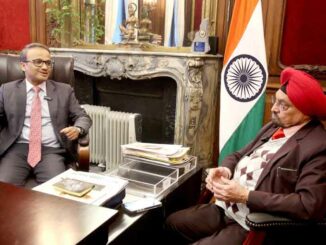
    NEW YORK CITY (TIP): Ambassador Binaya S Pradhan, who took over as the Consul General of India at New York on January 15, 2024 gave an interview to The Indian Panorama on the 4th day at work, on January 19.

    In the 45-minute interview, Ambassador Pradhan shared his thoughts on diverse issue, from consular services to strengthening bonds within the Indian Diaspora, to promoting ties between India and the US at different levels which included trade and commerce, culture, co-operation in various other fields. Ambassador Pradhan showed a keen interest in paying special attention to the Indian youth and the Indian women here.

    The Indian Panorama will carry the interview in the Republic Day special edition on January 26. The video of the interview will also be made available on The Indian Panorama website www.theindianpanorama.news

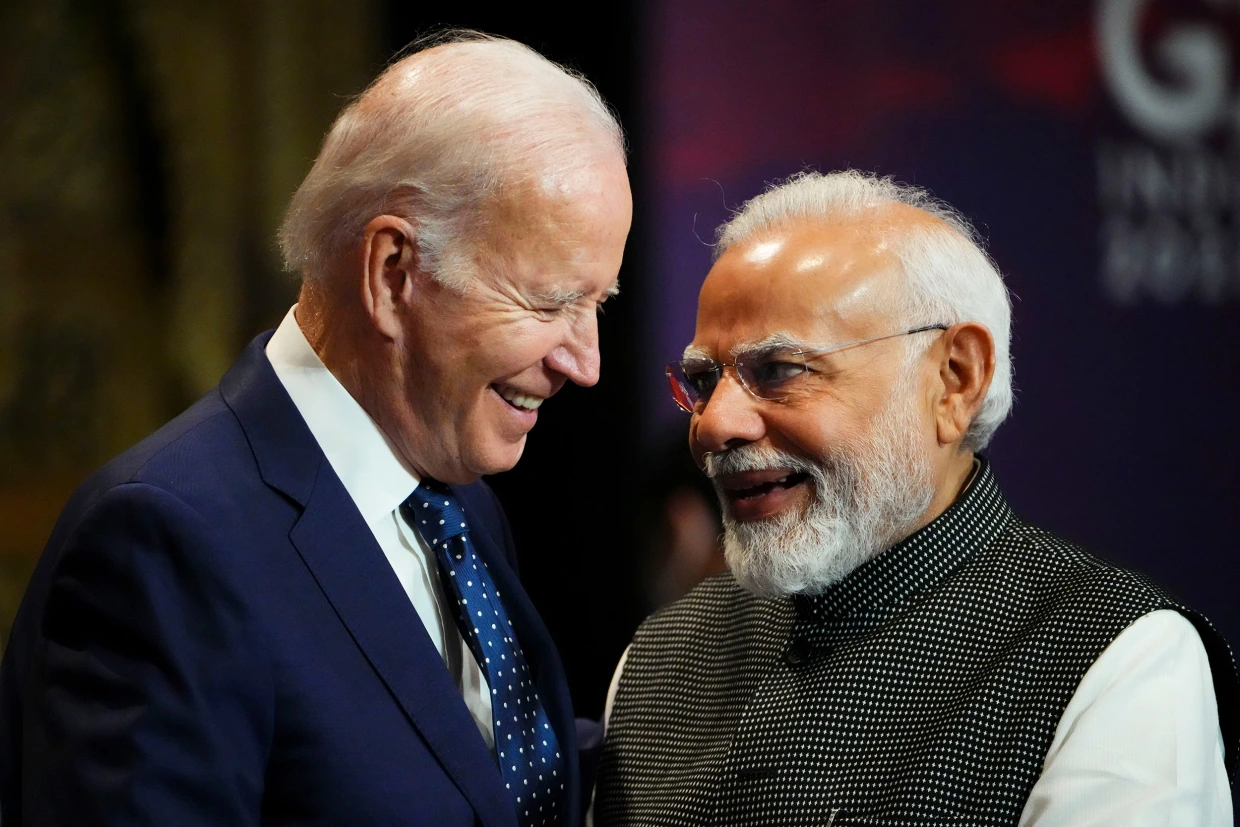
  • Prime Minister Modi’s  historic state visit to US will strengthen ties between the two democracies

    Prime Minister Modi’s  historic state visit to US will strengthen ties between the two democracies

    Modi in his  address to the joint meeting of the US Congress will speak about his vison for India’s future and  the global challenges US and India face

    I.S. Saluja

    NEW YORK (TIP): A warm welcome awaits  Prime Minister Narendra Modi on his historic state visit to the United States from June 21 to 24 at the invitation of President Joe Biden. It would be Modi’s sixth visit to the US since he became Prime Minister in 2014, but his first official state visit, a rare honor extended to only two Indian leaders before him — President S Radhakrishnan in June 1963 and Prime Minister Manmohan Singh in November 2009.

    Modi will also be making history when he addresses a joint meeting of the US Congress on June 23 — one of the highest honors Washington affords to foreign dignitaries — for the second time in seven years. It will make him only the third world leader, outside of Israel, to do so. House Speaker Kevin McCarthy, Senate Majority Leader Chuck Schumer, Senate Republican Leader Mitch McConnell, and House Democratic Leader Hakeem Jeffries have invited Modi “to share your vision for India’s future and speak to the global challenges our countries both faces.

    Modi will fly into Washington on June 21 after attending the International Yoga Day celebrations on the north lawns of the UN complex in New York. The official visit will begin with the Bidens hosting a state dinner for Modi on June 22.

    According to the White House Historical Association, this would be the 11th state dinner that a US President is hosting for an Indian leader, but in the last 75 years, only Radhakrishnan and Manmohan Singh have been accorded the honor of an official state visit.

    Over the next two days, the two leaders would spend several hours together, beginning with a welcome ceremony on the South Lawns of the White House on the morning of June 22 attended by several thousand Indian Americans.

    This is expected to be one of the biggest White House welcome ceremonies, with the exception of the 2008 papal visit when, according to record, more than 13,500 people attended.

    More than 1,500 Indian Americans are reported to be planning to come to Washington from the New York and New Jersey areas. Over 500 Indian Americans each are coming from states like California, Illinois, Texas, Georgia and Florida.

    After the welcome ceremony, which would be addressed by the two leaders, Biden and Modi are then expected to walk towards the Oval Office for a one-on-one talk followed by a delegation-level meeting in the Cabinet meeting room.

    Vice President Kamala Harris would host the Prime Minister for lunch on June 23 at the Foggy Bottom headquarters of the State Department, which is being co-hosted by the Secretary of State Antony Blinken and the Second Gentleman. The two leaders are likely to deliver remarks during the luncheon. In between, several Cabinet ministers in the Biden administration and key leaders are likely to call on the Prime Minister for meetings. Interaction with the diaspora and the business community is one of the hallmarks of the Prime Ministers’ overseas trips, which is expected to consume most of the day’s proceedings on June 23. Modi will also address CEOs of top US companies at John F Kennedy Centre in Washington.

    Leading community organization Indiaspora and the US-India Strategic Partnership Forum (USISPF) are jointly hosting a speech by Modi on “We The People: Celebrating the US-India Partnership” at Ronald Reagan Center in Washington on June 23.

    A reception at the Hall of Nations Terrace (Kennedy Center) will follow the Prime Minister’s address.

    More than 600 community members are planning to gather at Freedom Plaza in front of the Willard Intercontinental in Washington located near the White House where the PM will be staying during his visit.

    (With inputs from agencies)

  • South Korea, US troops hold large live-fire drills near border with North Korea

    SEOUL (TIP): The South Korean and U.S. militaries conducted large live-fire drills near the border with North Korea on May 25, despite North Korea’s warning that it won’t tolerate what it calls an invasion rehearsal on its doorstep. The drills, the first of five rounds of live-fire exercises through mid-June, mark 70 years since the establishment of the military alliance between Seoul and Washington. North Korea typically reacts to such major South Korean-U.S. exercises with missile and other weapons tests.
    Since the start of 2022, North Korea has test-launched more than 100 missiles, but none since it fired a solid-fuel intercontinental ballistic missile in mid-April.
    It says the tests are a response to expanded military drills between the U.S. and South Korea, but observers say North Korea aims to advance its weapons development and then wrest greater concessions from its rivals in eventual diplomacy. The U.S.-South Korean firing exercises, called “Combined annihilation firepower drills,” are the biggest of their kind. (AP)

  • NINE INDIAN ORIGIN PERSONS RECEIVED PRESITIGIOUS GOPIO AWARD

    NINE INDIAN ORIGIN PERSONS RECEIVED PRESITIGIOUS GOPIO AWARD

    GOPIO Virginia released a Souvenir on the occasion. President Jay Bhandari is second from the left.
    A captivating dance performance
    David Bulova presenting a Proclamation to Jay Bhandari

    VIRGINIA (TIP): April 30 was our lucky day. GOPIO Virginia celebrated its 14th Anniversary and Award ceremony. Virginia Senators David Marsden and Chap Petersen and 43rd Speaker Eileen Filer Corn presented Prestigious award of Excellence to Nine members of Indian American who have significant achievements in the field of Education, Medicine, Science & Technology, Philanthropy, Arts & culture, Choreography and Community Service. The event was houseful and guest of Honors include Senators and Delegates from Virginia, Dev. Marsden, Chap Petersen, Eileen Filler- Corn, David Bulova, Holly Siebold and Fairfax County Chairman of Supervisors Jeff McKay. Several dignitaries from Diverse Asian, Hispanic, and American community leaders were also present. The program was sold out and Houseful.
    The following people of Indian Origin were given these awards by Virginia Senators David Marsden and Chap Petersen and speaker Eileen filer Corn –

    • Dr. Michael Rao President Virginia Commonwealth University in Education
    • Dr. Siva Subramaniam Emeritus Professor George Town University
    • Rahul Gupta Director of National Drug Policy Control (White House) in Public Service
    • Sant Gupta in Science & Technology
    • 5 Mayur Shah in Philanthropy
    • Vatsala Mehra (Arts & Culture) Gazal singer
    • Navin k KC (Arts & Culture) in Choreography
    • Rajeev Bhambri in Journalism
    • Mayur Modi in Community Service

      A view of the gathering

    The program began with Ganesh Vandana and US and Indian Anthem, President of GOPIO Virginia President Jay Bhandari in his remark, Welcome all Invited guest, and audience. And highlighted GOPIO Vision, Mission and activities. He mentioned that many people of Indian Origin are holding high positions in US and extremely accomplished and demonstrated innovations and leadership in almost every field. They have significantly contributed for building strong relationship between India and the USA towards economic, social, educational, and cultural progress of both these great nations. He congratulates All Awardees for receiving this year’s Prestigious GOPIO awards of Excellence in their field of expertise.
    After the award presentation a Cultural program comprising of Classical & Bollywood Dances and live music performance by singer and composers. The program ended with a 100 vegetarian 5 course dinner. The program was emceed by Dr. Ram Gupta and Mital Jain. Vote of thanks was given by Rohini Khera

  • US Q1 growth slows to 1.1%, inflation rises

    US economic growth slowed to 1.1 percent in the first quarter of this year, the Commerce Department said on Thursday, as the possibility of a mild recession increases. The figure came in below economists’ expectations of 2 per cent growth, while core personal consumption expenditure for the first quarter rose by 4.9 per cent, versus economists’ projections of 4.7 per cent growth.
    The economy grew by 2.6 per cent in the fourth quarter of last year.
    The first-quarter GDP figure “reflected increases in consumer spending, exports, federal government spending,” along with some forms of investment, the Commerce Department said in a statement.
    Economic activity has been easing as the US central bank has rapidly raised the benchmark lending rate to tackle stubborn inflation, while the full fallout from recent financial sector unrest — following the failures of three midsized lenders last month — has yet to be seen. Inflation and consumer spending figures could well keep the Federal Reserve on track to raise interest rates by a quarter of a percentage point next week. First Republic Bank’s continuing struggles, however, do raise the possibility that the central bank could pause.
    “Inflation remains stubborn, and along with the continued strength in the labor market, it should keep the Fed on pace for a May and potentially a June rate hike,” said Cliff Hodge of Cornerstone Wealth.

  • March 3 New York & Dallas E-Edition

    [vc_row][vc_column][vc_custom_heading text=”E-Edition” font_container=”tag:h2|text_align:center” google_fonts=”font_family:Istok%20Web%3Aregular%2Citalic%2C700%2C700italic|font_style:700%20bold%20regular%3A700%3Anormal” link=”url:https%3A%2F%2Fwww.theindianpanorama.news%2Fwp-content%2Fuploads%2F2023%2F03%2FMar-3-9-2023-Issue.pdf”][vc_single_image image=”139361″ img_size=”full” alignment=”center” onclick=”custom_link” link=”https://www.theindianpanorama.news/wp-content/uploads/2023/03/Mar-3-9-2023-Issue.pdf”][vc_row_inner][vc_column_inner width=”2/3″][vc_custom_heading text=”Lead Stories This Week” link=”url:https%3A%2F%2Fwww.theindianpanorama.news%2F”][vc_wp_posts number=”5″ show_date=”1″][/vc_column_inner][vc_column_inner width=”1/3″][vc_single_image image=”117093″ img_size=”medium” alignment=”center” onclick=”custom_link” link=”https://www.theindianpanorama.news/advertising-media-kit-portal-indian-panorama/”][vc_single_image image=”117094″ img_size=”medium” alignment=”center” onclick=”custom_link” link=”https://www.theindianpanorama.news/advertising-media-kit-portal-indian-panorama/”][/vc_column_inner][/vc_row_inner][/vc_column][/vc_row]

  • Chinese eye in sky

    • ‘Spy balloon’ underlines need for constant alertness

    Days after a US Air Force fighter jet shot down a Chinese surveillance balloon — which the US claimed was a ‘spy balloon’ — off the South Carolina coast, it has been reported that China operates a fleet of such balloons and has targeted several countries, including India and Japan, in the past. A US media report, quoting several unnamed defense and intelligence officials, alleged that the spy balloon project has been operating for several years, and ‘has collected information on military assets in countries and areas of emerging strategic interest to China including Japan, India, Vietnam, Taiwan and the Philippines’. Senior US officials are reported to have briefed ‘nearly 150 foreign diplomats across 40 embassies’ in the US and Beijing, explaining its action of shooting down the balloon, presenting reasons why it was not a ‘civilian’ weather balloon, as China claimed, but an intelligence-gathering device.

    It seems counterintuitive to use an apparently low-tech method such as a balloon for intelligence-gathering when high-resolution satellite images of the earth’s surface are easily available, but such debates are best left to techint experts. Also, China keeping a spying eye on its neighbors and adversaries is not a significant point — it’s a fact that all countries engage in intelligence-gathering, or spying, even if not one would admit it publicly. What is really remarkable about the Chinese balloon is that if it were indeed spying, it was doing so in a very brazen manner; and if it indeed was a ‘civilian airship’ intended for ‘meteorological research’, China’s secretiveness about it is quite inexplicable.

    One takeaway for India from this episode is that it must keep its eyes open — it’s not quite a new lesson but the reinforcement of one, because China’s increased aggressiveness at the borders during the last few years has already underlined the need for India to always keep its guard up. For the countries that are concerned over China’s hegemonistic ambitions, it is imperative to share technology and intelligence in order to not be outsmarted and outmaneuvered in geopolitical games.

    (Tribune, India)

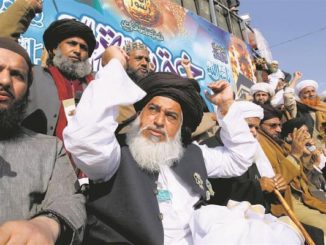
  • Sectarian strife in Pakistan

    Sectarian strife in Pakistan

    By G Parthasarathy

    Deobandi and Bareilvi alignments a challenge to governance and peace

     India has done well to establish a back channel for talks with Pakistan’s military. A major result has been the signing of an agreement for a ceasefire across the LoC in J&K.

    The two major schools of Islam, which emerged in the 19th century in the territories of present-day India, have traditionally been described as Deobandi and Bareilvi. The sects emerged from the efforts of many Muslim clerics and thinkers who fled from Delhi following their persecution by the British after the Mughal rule ended. Deobandi practices were widely adopted in Pakistan’s Khyber Pakhtunkhwa province, and by virtually all Pashtuns in Afghanistan. The Deobandis thus established a firm foothold amongst the Pashtun population in both Pakistan and Afghanistan. Most importantly, while the Bareilvis remained content with their influence in the subcontinent, the Deobandis reached out to people in the Arabian Peninsula in the 19th century. This was an initiative that has paid rich dividends through Saudi financial backing of Deobandi organizations.

    Thanks to the FATF and actions by the US and its allies, Pakistan is being squeezed to end support to such groups.

    The most far-reaching decision by India’s Deobandi leaders was to make common cause with the secular ideals of India, while supporting the struggle led by Mahatma Gandhi for India’s independence. The main center for study and learning of the Deobandi school of Islam was and remains the Darul Uloom, located at Deoband in UP. While sections of the Bareilvi leadership initially shared the views of their Deobandi compatriots, those mainly living in Pakistan, eventually chose to support the Partition. On November 3, 2009, Jamiat-i-Ulama-i-Hind, a group of Deobandi scholars, dedicated to the welfare of Muslims in India, met at Deoband and condemned suicide bombings and attacks targeting innocent civilians. This amounted to direct criticism of Pakistan’s propensity to use terrorism as an instrument of state policy.

    The Bareilvi population in Pakistan’s Punjab province soon found that it had little political space to operate in. The military extended support to groups like the Lashkar-e-Taiba (LeT), the Jaish-e-Mohammed (JeM) and the Afghan Taliban that worked jointly with the military establishment. While the JeM organized the attack on the Indian Parliament in 2001, the 2008 Mumbai terrorist attack was masterminded by the LeT. Moreover, the ISI midwifed the close relations of these groups with the Taliban in Afghanistan. The Bareilvis were soon finding that despite their influence and political support in Pakistani Punjab, they were losing political relevance in Pakistan. Ever since the Soviet invasion of Afghanistan, the Pashtuns, who are predominantly Deobandi, dominated the attention and patronage of the ISI, and, indeed, in the world. The Taliban also have what they believe to be Deobandi credentials and collaborate closely with Wahhabi-oriented groups like the LeT and the JeM.

    Pashtun Deobandis in Pakistan’s northwest and in southern Afghanistan became natural allies of Gen Zia-ul-Haq, after he overthrew and hanged ex-PM Zulfiqar Ali Bhutto. General Zia brought in a new phase of ‘Islamization’ of politics and developed close relations with radical Islamic elements in Pakistan, most notably the Jamaat-e-Islami in Punjab and Sind, and the Pashtun Deobandis in the north. The Soviet Union then made the folly of invading Afghanistan, enabling the US to join Pakistan in waging a Saudi-backed, Deobandi-oriented jihad against the Soviet forces. Wahhabi-oriented organizations in Pakistan joined this jihad. The ISI developed links with the Jamaat-e-Islami in J&K and used this Deobandi-oriented force to facilitate its jihad in J&K.

    Given Bareilvi practices of virtually worshipping the Prophet, Saudi Arabia treats them as heretics. According to Najam Sethi, the Editor of Pakistan’s Friday Times, the Bareilvis in Pakistan, and particularly in the majority Punjab province, have responded to critics by actions ‘borne of the religious passion to defend and uphold the Prophet of Islam, from blasphemy by Muslims and non-Muslims alike, at home and abroad’. This led to the establishment of a politically oriented, militant organization called the Tehriq-e-Labaik, which soon swept across towns and villages, preaching religious intolerance in Pakistan’s military-dominated Punjab.

    The first victim was a Punjabi Hindu woman, Asia Noreen, popularly known as Asia Bibi, who was convicted and sentenced to death for allegedly making blasphemous comments. She was arbitrarily handed the death sentence by hanging — a verdict that was overturned by the Supreme Court in 2011. She, thereafter, immediately fled to Canada.

    The Tehriq-e-Labaik attained notoriety, when one of its members, a security guard, assassinated the Governor of Punjab, Salman Taseer, for supporting Asia Bibi. The guard was treated like a revolutionary hero by the outfit. It now has substantial political clout in the Punjab province. It virtually brought Punjab to a standstill during recent demonstrations to demand the expulsion of the French ambassador, because of alleged disrespect shown in France to the Prophet.

    Thanks to the threats of sanctions by the Financial Action Task Force and strong actions by the US and its European allies, Pakistan is being squeezed to end support to such groups. Pakistan is also realizing that faith alone cannot hold a nation together, especially in the face of sectarian differences. Neither the Tehriq-e-Taliban, which is now waging a low-intensity conflict within Pakistan, or even the Taliban leadership in Afghanistan has ever recognized the Durand Line as an international border.

    India has done well to establish a back channel for talks with Pakistan’s military. A major result has been the signing of an agreement for a ceasefire across the LoC in J&K. Pakistan’s mercurial PM, Imran Khan, meanwhile, has rejected a proposal to import Indian agricultural products, which he had initiated and approved earlier. He certainly does not enjoy global popularity. The world has noted that it was General Bajwa who first met Crown Prince Salman in Saudi Arabia, before the Crown Prince gave an audience to Imran Khan last week. US President Biden is yet to meet or speak to Imran Khan.

    (The author is Chancellor, Jammu Central University & former High Commissioner to Pakistan)

  • The Biden-Kamala era

    India needs to sidestep the eddies

    The most-used words in Joe Biden’s inaugural speech were ‘America, American and Americans’ and ‘nation, people and democracy’. The message to heal a badly split America, its apogee reached in the mob assault on the Capitol barely a fortnight back, is understandably Biden’s top-most priority. But apart from some intense navel-gazing, Biden also declared that ‘America is back’. Hopefully, this will not be an America that under Trump was nickel-and-diming even close allies. India was robbed of zero-duty access to over Rs 40,000 crore worth of exports to the US and PM Modi mocked for high import duty on Harley Davidson motorcycles. Though India has been a bipartisan success story so far, this is more because the US still has to make further ingress into its markets and defense sectors. But like all of Washington’s other partners, India will be hoping the Biden-Kamala team will usher in predictability and sensitivity to the needs of others. Unlike in the Obama administration, the Left has a firm hook into the White House this time. Several of Biden’s appointees are instinctively ranged against ill-liberalist and majoritarian tendencies. Trump’s free pass to the Modi government on the CAA, lynchings and the communal riots was facilitated due to New Delhi’s enthusiastic over-identification with Washington’s China-baiting in the Indo-Pacific. With Kamala Harris as Vice-President, human rights issues will not get overlooked. The farmers’ agitation will be the latest on the list. The Modi government has to instead get the US more interested in non-military areas of cooperation that have been marked by friction and apathy. The shifting of supply chains away from China ought to start with pharmaceuticals and move on to other areas of high dependency. In the military field, India and the US must move to higher-level strategic discussions that lead to a division of labor in the Indian Ocean. India will also need elbow room in its foreign choices — to source oil from Iran and Venezuela and defense platforms from Russia. The Modi government will need to sidestep eddies to carve out a more meaningful relationship with the new US administration in the post-Covid, post-Galwan Valley world.

    (Tribune, India)

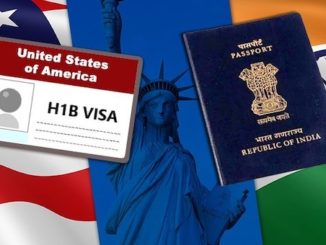
  • US proposes not to issue business visas for H-1B specialty occupations

    US proposes not to issue business visas for H-1B specialty occupations

    WASHINGTON (TIP) The Trump administration on Wednesday, October 21 announced a rule that will likely curb US companies’ use of skilled foreign workers, particularly in the tech industry, which officials said was necessary to protect American jobs amid mass unemployment triggered by the coronavirus pandemic.

    The joint rule from the US Department of Labor and Department of Homeland Security will significantly increase the minimum wages companies must pay to workers enrolled in the H-1B visa program. It also will narrow the definition of “specialty occupations” eligible for H-1B visas.

    The rule, which takes effect in early December, will likely face criticism from trade groups such as the US Chamber of Commerce, who say the H-1B program is necessary because of a shortage of skilled American workers.

    More than two-thirds of H-1B visa holders come from India, and they are disproportionately employed by tech firms, according to government statistics.

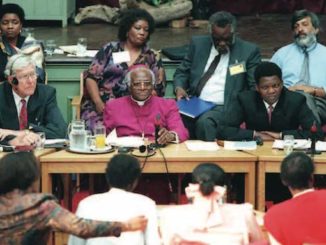
  • The best way to respond to our history of racism:  A Truth and Reconciliation Commission

    The best way to respond to our history of racism: A Truth and Reconciliation Commission

    To create lasting change in the United States, we must do more than reform the police. We must reconcile with our history — with race and with racism. And to do that, there is no better model to guide us than South Africa’s

    By Olúfẹ́mi Táíwò

    The killings of George Floyd, Ahmaud Arbery, Breonna Taylor and Rayshard Brooks are the latest in a continuing pattern of violence inflicted by state agents and citizens, mostly white, against Americans of African descent. Their deaths have stoked strong denunciations and calls for justice and change, to do something, anything, to put an end to such incidents

    But to date, there has been very little interest in real change from the highest levels of political leadership. Through executive order, the president has issued modest police reforms, and congressional legislation has already stalled. To create lasting change in the United States, we must do more than reform the police. We must reconcile with our history — with race and with racism. And to do that, there is no better model to guide us than South Africa’s.

    We are at a fork in the road of the kind that made South Africa, during the last days of apartheid, opt for the Truth and Reconciliation Commission model as the preferred path to a new society. South Africa chose to enter into the record the ugly history of deprivation, violence and denial of humanity of black people perpetrated by the white-dominated state and other groups within it, so that no one could reasonably disavow what happened or claim ignorance of what was done in their name and to their benefit.

    Every state agent who sought forgiveness from the commission had to give a full account of the crimes they committed as state agents in granular detail and identify their victims’ names, educating the population about how low their society had sunk while apartheid lasted. That is how the truth played out; South Africa now has a full record of this history, for not only South Africans but all who desire access.

    This same process is what the United States needs in order to confront the truth about what it did to black people throughout its history.

    The United States has faced many past forks in the road. At its inception, the country could have gone full steam ahead in building the utopia promised by its founding fathers. Instead, it chose slavery. It had another turning point at the conclusion of the Civil War when it chose white reconciliation at the expense of full citizenship for black compatriots. There was yet another opportunity at the conclusion of the Jim Crow era; again, the United States elided full citizenship for black Americans by taking the easy path of trying to institute progress through litigation that is constantly being challenged and reversed.

    At every step, the United States refused to acknowledge the wrong inflicted on its black citizens. But the nation is once again at a decision point.

    We are dealing with a mind-set — including among nonwhite immigrants — that was constructed in a time of slavery and used to justify the dehumanization of black Americans. Black Americans and we, their immigrant cousins, are never routinely considered to have a place in America’s space. Our citizenship has never been full nor taken for granted: it is always asterisked. This mind-set must be the subject of a national conversation.

    We needed an amendment to the Constitution to secure our citizenship even when we were born on U.S. soil and nonblack immigrants were routinely admitted. We had to have our equality with others litigated in courts. We had to have our right to live anywhere we want and can afford restated and guaranteed by additional legislation and court judgments. We have had our right to vote unimpeded periodically subject to renewal by Congress. And we must continue to suffer the indignities of having our fellow citizens act as if only we have problems.

    Over the past century, other societies realized they had wronged segments of their populace either through racial discrimination, genocide or military misrule. They accepted that they had fallen short of what kind of society they desired to be, and that they had to reconcile with the undeserving victims of their deeds. Reconciliation required acknowledging and atoning for the wrong done — asking for their victims’ forgiveness while resolving never to repeat the wrongs and working to restore their victims to full humanity as fellow citizens.

    The United States and South Africa share similar histories of denying the humanity of black people. In South Africa, there is collective sharing of the burden of what the country did to its black citizens and understanding that black South Africans deserve to be made whole if South Africa is to become the nation of its modern founders’ dreams. South Africa is a long way from realizing this dream, and the reluctance of white South Africa to reciprocate the generosity of the black majority is scandalous. But the foundation laid by the truth remains an indispensable starting point.

    To become the perfect union its founders intended, the United States must make its black citizens whole, without legal equivocations or constitutional hair-splitting. That is the ultimate argument for a Truth and Reconciliation Commission in our land. It is the precondition for a different future.

    (Olúfẹ́mi Táíwò is professor and chair of the Africana Studies and Research Center at Cornell University)

    (Source: The Washington Post)

  • COVID-19 death toll in US could hit 2,00,000-mark by September: Indian-American professor

    COVID-19 death toll in US could hit 2,00,000-mark by September: Indian-American professor

    NEW YORK (TIP): The total death toll in the US from the novel coronavirus pandemic could hit the grim figure of 2,00,000 by September and expecting a dramatic decrease in COVID-19 cases in the country will be a “wishful thinking”, an eminent Indian-American professor has warned.

    Ashish Jha, the head of Harvard’s Global Health Institute, told CNN on Wednesday, June 10,  that he is not trying to “scare” people to stay at home rather urged everyone to wear masks, adhere to the social distancing rules and called for ramping up testing and tracing infrastructure.

    “Anybody who’s expecting a dramatic decrease in cases is almost surely engaging in wishful thinking. And if it (COVID numbers) stays just flat for the next three months, we’re going to hit 200,000 deaths sometime in September and that is just awful,” Jha said.

    Jha said the 200,000 death toll is “not just a guess”. Currently 800-1,000 people are dying daily in America from the virus and all data suggest that the situation is going to get worse.

    “We’re gonna have increases, but even if we assume that it’s going to be flat all summer, that nothing is going to get worse… even if we pick that low number of 800 a day, that is 25,000 (deaths) a month in three and a half months. We’re going to add another 88,000 people and we will hit 200,000 sometime in September,” Jha said.

    The United States is by far the hardest-hit country in the global pandemic, in terms of both confirmed infections and deaths.

    According to data by the Johns Hopkins University, the number of coronavirus cases in the US currently is nearly two million and about 112,900 people have died in the country, the most in the world.

    When asked about an improvement in states like New York, which had been the epicenter of the COVID19 pandemic in the US, Jha said while coronavirus cases are declining in New York, New Jersey, Connecticut and Massachusetts, the numbers are increasing in states such as Arizona, Florida, Texas, North and South Carolina while the country as a whole is “pretty flat.” He said people should take measures as that will help suppress the virus and ensure people could get back outside safely but he voiced concern that this was not the situation in reality.

    “We’re not doing that and so we’re going to unfortunately have another 25,000 deaths a month until September, and then it’ll keep going. It’s not going to magically disappear. We’ve got a turn around. This is not the future I want,” he said.

    Jha said he had expected the situation to improve in the summer months but on the contrary the numbers have continued to rise even in the warm weather.

    “Summer was supposed to be our better months–warmer weather, people outside, a little less transmission. This is not the time (summer) I was expecting a lot more cases. We’re seeing a lot more cases, especially in states like Arizona where the numbers look really scary,” he said.

    Jha added that he was “hopeful” that maybe the summer months would “give us more of a break. I think I may have been too optimistic on that.”

    (Source: PTI)

  • A chill in U.S.-China relations

    A chill in U.S.-China relations

    A binary choice between the U.S. and China is likely to test India’s capacity to maintain strategic and decisional autonomy

    By Vijay Gokhale
    Both sides are acutely aware how closely their economies are tied together: from farm to factory, the U.S. is heavily dependent on supply chains in China and the Chinese have been unable to break free of the dollar. If Mr. Trump’s wish is to disentangle China’s supply chains, Mr. Xi is equally determined to escape from the U.S. ‘chokehold’ on technology. To what extent the de-coupling is possible is yet to be determined, but one thing is inevitable, India will become part of the collateral damage.”

    A slew of recent announcements on China by U.S. President Donald Trump is a clear indication that the competition between the U.S. and China is likely to sharpen in the post-COVID world. On May 29, the Trump administration said it would revoke Hong Kong’s special trade status under U.S. law. The administration also passed an order limiting the entry of certain Chinese graduate students and researchers who may have ties to the People’s Liberation Army. The U.S. President has also ordered financial regulators to closely examine Chinese firms listed in U.S. stock markets, and warned those that do not comply with U.S. laws could be delisted.

    Complicit in China’s rise

    Americans have had a strange fascination for China ever since the early 1900s when Protestant missionaries decided that it was God’s work to bring salvation to the Chinese. Books like The Good Earth by Pearl S. Buck and Red Star Over China by Edgar Snow in the 1930s romanticized the country. Even after the Chinese communists seized power, the Americans hoped to cohabit with Mao Zedong in a world under U.S. hegemony. The Chinese allowed them to believe this and extracted their price. U.S. President Richard Nixon gave China the international acceptability it craved in return for being admitted to Mao’s presence in 1972; President Jimmy Carter terminated diplomatic relations with Taiwan in order to normalize relations with China in 1978; President George H.W. Bush washed away the sins of Tiananmen in 1989 for ephemeral geopolitical gain; and Bill Clinton, who as a presidential candidate had criticized Bush for indulging the Chinese, proceeded as President to usher the country into the World Trade Organization at the expense of American business. All American administrations since the 1960s have been complicit in China’s rise in the unrealized hope that it will become a ‘responsible stakeholder’ under Pax Americana.

    Disguising its real purpose

    The Chinese are hard-nosed and unsentimental about the U.S. They have always pursued America with a selfish purpose, albeit couched in high principle. They have spoken words that the Americans wanted to hear — anti-Soviet rhetoric during the Cold War and market principles thereafter — to disguise their real purpose of thwarting U.S. hegemony. Ever since Cold Warrior John Foster Dulles spoke in 1958 of weaning China and other “satellites” away from the Soviets through regime change, known as “peaceful evolution”, every Chinese leader from Chairman Mao to President Xi Jinping has been clear-eyed that the U.S. represents an existential threat to the continued supremacy of the communist regime. Mao put it best, when he told high-ranking leaders in November 1959, that the “U.S. is attempting to carry out its aggression and expansion with a much more deceptive tactic… In other words, it wants to keep its order and change our system.” (Memoirs, Chinese leader Bo Yibo). The collapse of the Soviet Union only reinforced this view and strengthened China’s resolve to resist by creating its own parallel universe. China is building an alternate trading system (the Belt and Road Initiative); a multilateral banking system under its control (Asian Infrastructure Investment Bank, New Development Bank); its own global positioning system (BeiDou); digital payment platforms (WeChat Pay and Alipay); a world-class digital network (Huawei 5G); cutting-edge technological processes in sunrise industries; and a modern military force. It is doing this under the noses of the Americans and some of it with the financial and technological resources of the West.

    Voices of caution have been few and far between, among them political scientist John Mearsheimer, who wrote in 2005 that the rise of China would not be peaceful at all, but the world chose to believe General Secretary of the Communist Party of China Hu Jintao’s assurances about “peaceful rise”. When satellite evidence showed that China was building military installations in the South China Sea, China’s Southeast Asian neighbors and the U.S. preferred to believe assurances to the contrary given by Mr. Xi on the lawns of the White House in 2015.

    It is only under Mr. Trump that the Americans are finally acknowledging the uneasy fact that the Chinese are not graven in their image. He has called China out on trade practices. He has called China out on 5G. It was Mr. Trump’s 2017 National Security Strategy document that, perhaps for the first time, clubbed China along with Russia as a challenge to American power, influence and interests. His recent China-specific restrictions on trade and legal migration are, possibly, only the beginning of a serious re-adjustment.

    A full-spectrum debate on China is now raging across the U.S. Former White House Chief of Staff Steve Bannon declared that the U.S. is already at war with China. Others like diplomat Richard  Haass and former president of the World Bank, Robert Zoellick, warn that a new Cold War will be a mistake. Scholar Julian Gewirtz, in his brilliant essay, ‘The Chinese Reassessment of Interdependence’, talks about a similar process under way in Beijing. Both sides are acutely aware how closely their economies are tied together: from farm to factory, the U.S. is heavily dependent on supply chains in China and the Chinese have been unable to break free of the dollar. If Mr. Trump’s wish is to disentangle China’s supply chains, Mr. Xi is equally determined to escape from the U.S. ‘chokehold’ on technology. To what extent the de-coupling is possible is yet to be determined, but one thing is inevitable, India will become part of the collateral damage.

    The Hong Kong question

    Will Hong Kong become a game-changer in the post-COVID world? China’s decision to enact the new national security law for Hong Kong has been condemned in unison by the U.S. and its Western allies as an assault on human freedoms. Why is this significant? The points of divergence, even dispute, between them have so far been in the material realm. With Hong Kong, the U.S.-China rivalry may, possibly, be entering the ideological domain. For some time now there are reports about Chinese interference in the internal affairs of democracies. Countries in the West have tackled this individually, always mindful of not jeopardizing their trade with China. Hong Kong may be different. It is not only a bastion for Western capitalism in the East, but more importantly the torchbearer of Western democratic ideals. Think of it as a sort of Statue of Liberty; it holds aloft the torch of freedom and democracy for all those who pass through Hong Kong en route to China. This is an assault on beliefs, so to speak.

    This comes on the back of not unreasonable demands that China should come clean on its errors of omission in the early days of COVID-19, when greater transparency and quicker action might have prevented, or at least mitigated, the pandemic. In the months ahead, more information may become public, from sources inside China itself, about the shortcomings of the regime, that will further fuel a debate on the superiority of the Chinese Model as an alternative to democracy. Will this form the ideological underpinning for the birth of a new Cold War? That will depend on who wins in Washington in November; on whether profit will again trump politics in Europe; and on how skillfully the Wolf Warriors of China can manipulate global public opinion. The lines are beginning to be drawn between the Americans on the one side and China on the other. A binary choice is likely to test to the limit India’s capacity to maintain strategic and decisional autonomy.

    (The author is a former Foreign Secretary of India and a former Ambassador to China)

  • US  Defense  Secretary  opposes Trump move on troops to quell protests

    US Defense Secretary opposes Trump move on troops to quell protests

    WASHINGTON (TIP): US Defense Secretary Mark Esper said on Wednesday he does not support invoking the Insurrection Act to deploy active-duty forces to quell civil unrest for now, despite President Donald Trump’s threats to militarize America’s response to mass protests.

    Trump said this week he could use military forces in states that fail to crack down on sometimes violent protests over the killing of George Floyd, an unarmed black man, at the hands of a white police officer in Minneapolis.

    “The option to use active-duty forces in a law enforcement role should only be used as a matter of last resort and only in the most urgent and dire of situations. We are not in one of those situations now,” Esper told a news briefing.

    “I do not support invoking the Insurrection Act.” Former Defense Secretary Jim Mattis, who had long refused to criticize a sitting president explicitly, on Wednesday accused Trump of trying to divide America and roundly denounced a militarization of the U.S. response to civil unrest.

    Esper’s news conference did not go over well with either the president or his top aides, an administration official said, speaking on the condition of anonymity.

    To deploy the military on US soil for law enforcement purposes, Trump would need to invoke the 1807 Insurrection Act — something last done in 1992 in response to the Rodney King riots in Los Angeles.

    The military has pre-positioned 1,600 active duty forces on the outskirts of Washington, D.C., to deploy if needed.

    A US official said that the Army on Wednesday, June 3,  had been told of a decision to send some of the active duty troops back to their home base, but Esper reversed course following a meeting at the White House and discussions at the Pentagon.

    Esper said he regretted using the term “battlespace” this week to describe areas gripped by protests.

    “In retrospect, I would use different wording so as not to distract from the more important matters at hand or allow some to suggest that we are militarizing the issue,” he said.

    Trump’s threats to deploy active duty troops—even in states that oppose its use to address civil unrest—has stirred alarm within the US military and in Congress, where a top Republican warned it could easily make troops “political pawns.”

    Esper said he was unaware that he would be part of Trump’s politically charged photo opportunity on Monday, when law enforcement forcibly cleared a park outside the White House of peaceful protesters so that the president could take a picture in front of a church holding a Bible.

    Mattis, a retired Marine general who denies political ambitions, also took a swipe at current U.S. military leadership for participating in the Monday photo-op and criticized use of the word “battlespace” by Esper and Army General Mark Milley, chairman of the Joint Chiefs of Staff.

    In his press conference earlier, Esper acknowledged the difficulty of deploying the military without entering the political fray.

    “I work very hard to keep the department out of politics, which is very hard these days as we move closer and closer to an election,” Esper said.

    Retired Navy Admiral Mike Mullen, the former chairman of the Joint Chiefs of Staff, said he was “sickened” to see how law enforcement—including the National Guard—had cleared the area and warned against over-use of the US military.

    “Our fellow citizens are not the enemy, and must never become so,” Mullen wrote.

    (With inputs from Reuters)


  • China stealing US research on COVID-19: Pompeo

    China stealing US research on COVID-19: Pompeo

    WASHINGTON (TIP): U.S. Secretary of State Mike Pompeo on Thursday accused China of “stealing” U.S. intellectual property and data related to COVID-19 research.

    Mr. Pompeo’s allegations came a day after the FBI and the Department of Homeland Security claimed that organizations conducting research into COVID-19 may be targeted by computer hackers linked to the Chinese government.

    The U.S. condemns attempts by cyber actors and non-traditional collectors affiliated with People’s Republic of China (PRC) to steal U.S. intellectual property and data related to COVID-19 research, Mr. Pompeo said in a statement.

    The United States calls on China to cease this malicious activity, Mr. Pompeo said, adding that the potential theft of this information jeopardizes the delivery of secure, effective, and efficient treatment options.

    China on Thursday termed as slanderous the U.S. accusation that hackers backed by Beijing may be attempting to steal COVID-19 related research and vaccine materials and said that “smearing and scapegoating” others will not make the deadly virus go away.

    Chinese Foreign Ministry spokesman Zhao Lijian said U.S. officials are shifting the blame on Beijing as they struggled to handle the coronavirus pandemic back home.

    The U.S. claims have added fuel to tensions between the two nations, which are engaged in a war of words over the origin of the coronavirus that has killed over 300,000 people globally. Mr. Pompeo alleged that China’s behavior in cyberspace is an extension of its counterproductive actions throughout the COVID-19 pandemic.

    Mr. Pompeo in the strongly-worded statement said while the U.S. and its allies and partners are coordinating a collective, transparent response to save lives, “China continues to silence scientists, journalists, and citizens, and to spread disinformation, which has exacerbated the dangers of this health crisis.

    The FBI said that it is “investigating the targeting and compromise of U.S. organizations conducting COVID-19-related research by China-affiliated cyber actors and non-traditional collectors.”

    “These actors have been observed attempting to identify and illicitly obtain valuable intellectual property (IP) and public health data related to vaccines, treatments, and testing from networks and personnel affiliated with COVID-19-related research,” the FBI said.

    The potential theft of this information jeopardizes the delivery of secure, effective, and efficient treatment options, it said.

    Meanwhile, President Trump, annoyed with China’s handling of the pandemic, has ruled out renegotiating a trade deal with China.

    “The Chinese said somewhere that they would like to renegotiate the (trade) deal. We are not going to renegotiate,” Mr. Trump told Fox Business News on Thursday, May 14.

    “Look, I’m not happy about anything having to do with that particular subject (China) right now. Everything I said turned out to be right. You look at other countries they charge us tariffs to do business and we are not allowed to charge them,” he said.

    Responding to a question, Mr. Trump said the Chinese have always stolen Intellectual Property (IP) from the U.S. “They were never called (out). Now they are being called out,” he said.

    “We can stop them; they are going to try doing it. I mean you could also stop doing business with them, that is one thing. Look, we have lost a fortune dealing with China. We have rebuilt China,” he said.

    The President said he does not want to speak to Chinese President Xi Jinping right now. “I have a very good relationship, but I just — right now I don’t want to speak to him,” he said.

    (Source: Agencies)

  • Indian-American attorney Ravi Batra accuses China of creating COVID-19 in a Lab; Urges Trump to Seek Compensation from China

    Indian-American attorney Ravi Batra accuses China of creating COVID-19 in a Lab; Urges Trump to Seek Compensation from China

            Ravi Batra

    NEW YORK (TIP): Alleging that coronavirus was genetically-engineered in a Wuhan lab, an Indian-American survivor of the deadly virus has urged President Donald Trump to seek compensation from China, running into trillions of dollars, for the thousands of deaths and harming the American economy.

    “The unleashing of global death and suffering with the   coronavirus, a plague upon all of us, is worse than Pearl Harbor, and given its deception, and later, cover-up, lack any semblance of Honor,” Indian-American attorney Ravi Batra said in a letter to the president.

    “On the established rules of law, China is at least guilty of negligence in proximately causing a world pandemic, where nearly two million people have suffered its pain and suffering, and nearly 122,000 souls have lost their lives and left their families damaged and fractured,” he said in a letter dated April 14.

    China owes us civil compensation – at least for negligence – a fair and reasonable amount, “which I recommend match our standard for 9/11, but no less than $USD1 million dollars for every American who tested positive for Coronavirus, $5 million for every American who died, and $100,000 for every American who has to be ‘locked down’,” he said.

    “I recommend, given the cover-up, which exacerbated the injury, pain and suffering globally, as well as avoidable deaths, that China’s ownership of debts in every country – for example the USD1.2T in China’s ownership of our T-Bills – be cancelled,” Batra said.

    In his letter, Batra charged China with hiding the actual source of coronavirus.

    The Indian Panorama was sent a copy of the open letter addressed to President  Donald J. Trump, Speaker Nancy Pelosi and Senate Majority Leader  Addison Mitchell McConnell, Jr. with copies to Sen. Chuck Schumer, Leader Kevin McCarthy, Chairman Eliot L. Engel, Ranker McCall, Chair Carolyn B. Maloney, Ranker Jim Jordan, Chairman-Senator Risch, Ranker-Senator Bob Menandez, Secretary Pompeo, Secretary Esper, Gov. Andrew Cuomo, Mayor Bill de Blasio, and A.G. Tish James.

    Here is the text of the letter.

    Honorable Messrs Trump, Pelosi, and McConnell:

    Let me begin with three obvious facts: first, the Chinese civilization is a great one, with many superlative contribution to humanity, including, empire building, martial arts, gun powder, tea, and perhaps, best of all, Confucius (who famously said: May you live in boring times); second, I am a Blessed survivor of Coronavirus, that at 104.3 fever, when I was on fire for 2-3 days, I was at the surreal edge between live and death, where I could calmly talk to God to allow me to live so I may serve and protect my family and serve the Greater Good. In my personal and intimate experience, I labeled Covid19 as a Trojan Horse, as it obviously has a very friendly “handshake” with every host’s auto immune system to gain entry, before turning to destroy one’s Walls of Troy; and third, today the known global Covid19 cases are 1,945,055, with 121,897 global deaths, total US cases of 584,073 with 23,700 deaths, and New York, our epicenter, nearly 11,000 New Yorker have died. As a disclaimer, I am an American first, a registered Democrat second, and I voted for Donald J. Trump in 2016. I applaud the President for standing up to China’s unfair trade with us, and I am most troubled with her 24/7 global efforts to gain military and economic superiority on land, air, water and space, well beyond OBOR, and her continuing and enhanced misbehavior in South China Sea. Finally, yesterday, I specifically tweeted to dear Amb. Zhang Jun, China’s PR, and to her bilateral Ambassador Cui – as “fairness, respect and personal honor requires me to invite you to respond to my Tweets I’ve made re China, WHO and Covid19.” Unlike, on April 4, 2020, when PR Zhang and I respectfully conversed on Twitter, albeit, about the serious need for China to disclose the “Raw Truth” about Covid19, China’s distinguished diplomats incredulously maintained “radio silence,” when being forthcoming was what was required – both as a duty, and as reciprocal honor.

    Recently, on April 9, 2020, House Oversight and Reform’s Ranker Jim Jordon, and his colleagues, sent a gentle letter to Dr. Tedros Adhanom Ghebreyesus, DG, of the WHO. I join in said letter, albeit, I would not have been so gentle to a dishonest fiduciary, whose misconduct proximately caused the world’s public health to lay in ruins and the world’s economies were set adrift from both fiscal and monetary policies.

    WHO breached its fiduciary-forensic duties owed to the world, as it dishonestly enjoyed being China’s lap dog and purposefully issued false statements and delayed declaring a pandemic so as to create a confusing record for nations’ leaders, reasonably causing miscalculation. I had in days prior to Rep. Jordan’s letter, called for an amendment to the UN Charter, to do away with the moth-balled Trusteeship Council and to replace it with a new Public Health UNSC, but named “UN Pandemic Council,” with 12 Permanent Members and 9 or 13 Rotating Members, charged with Responsibility to Protect, a sovereignty-piercing power, and have OPCW, as well as a reconstituted WHO, albeit, re-named, and then report to it. I am happy to say, Philippines Foreign Minister, dear Teddy Locsin has publicly – on Twitter – approved my proposal, and other nations’ Permanent Representatives have expressed interest in also supporting such a change to surgically remove the corruption-cancer and establish “clean margins” for honest fiduciary-forensics to protect the global Public Health.

    It is a curious fact, that where-ever we have cut back in our contributions at the UN and her “organs,” China for merely giving UN the funding-shortfall we created, has become the “cherry on top” of all such organs. This is wrong, and an insult to our mammoth contributions still being contributed, but, incredulously, taken for granted. The WHO ought to be defrocked and defunded, while its function – only vital if the forensics are done consistent to high fiduciary duties – and then, it too, as reconstituted, report to the new proposed UN Pandemic Council.

    The role and function of the United Nations is vital and important as ever, as the UNSC, charged with preventing WWIII has handsomely succeeded, even as the weeds of local and regional wars have mushroomed. UN is celebrating its 75th Anniversary. Perfect time for some “spring-cleaning,” and re-calibration to achieve necessary reforms to better effectuate the high ideals of the UN Charter. It is, after all, a paraphrased amalgam of our Declaration of Independence and our cherished Constitution, to help form a more perfect world.

                    Wuhan Seafood Market

     Coronavirus – as a matter of biochemistry (see, “1st documentary movie on the origins of CCP virus – Tracking Down the Origin of the Wuhan Coronavirus” (The 1st Documentary) http://youtu.be/Gdd7dtDaYmM).

    I rely upon this cited evidence, see below, as it credibly shows, and I credit it, that the “story of the Wuhan Seafood Market” is a pretext and an elegant cover-up, which is exposed as such with biochemistry: China denied there was any “human-to-human” transmission. Well, we know that to be a Big Lie, as we are all under a Lockdown to prevent “community spread,” i.e. human-to-human transmission. Jon Cohen wrote in the Journal Science,  “Wuhan seafood market may not be the source of novel virus spreading globally.” In a paper entitled, The clinical features of patients with 2019 novel coronavirus in Wuhan, China, published in The Lancet, whose first author Huang Chaolin, Deputy Director of Jin Yin-Tan Hospital, and Dr. Sean Lin, who said:

    1. Symptom onset of the First Patient is on December 1, [2019] had NO relation to the Huanan Seafood market;
    2. No epidemiological link was found between the first patient and later cases;

    III. On December 10, [2019], there were 3 more cases, 2 cases of the 3 cases had NO relation to the Huanan Seafood Market;

    1. Since December 15 [2019], a cluster of cases with a history of seafood market exposure have been reported;
    2. NO one sells BATS at the Wuhanan Seafood Market and NO BATS have been found.

    Judy A. Mikovits PhD, Molecular Biologist, Former Director of Lab of Antiviral Mechanisms NCI said: There were no bats, and the idea of the spread so fast through the population is highly unlikely and improbable.

    There were 99 confirmed cases at Jin Yin-Tan Hospital, of which 50 had NO exposure to Wuhanan Seafood Market.

    45 of the 425 confirmed cases before January 22 [2020], had NO contact with the Wuhanan Seafood market, albeit, the secondary source of a virus appears to be mushrooming and over-shadowing (cover-up) the original breach of the original virus.

    Daniel Lucey, an epidemiologist at the University of Georgetown said the First case would have been infected by the virus already in November [2019] – if not earlier because there is an incubation time between infection and symptoms surfacing. [Means Wuhanan Seafood Market is a secondary source, not the primary source, and as a result of “community spread,” at best, or a separate virus introduced to cover up the earlier one, at worst].

    Gordan Chang, Asian Affairs Expert, and columnist, said: We know that Beijing for six (6) weeks in December [2019] and January [2020] suppressed information, before acknowledging on January 20th, and they then started a campaign of suppression of information, and on January 26th created a panel, and it was very heavy with propaganda officials. Indeed, the vice chairman of the group is the Communist Party’s propaganda czar. The Communist Party Group imposed a false  diagnostic criteria, starting with – must have contact with Wuhanan Seafood market, knowing a solid one-third of the cases had ZERO contact with Wuhanan Seafood Market. Thank God, they didn’t impose a Bat-Bite requirement for their investigation. Hence, it was the start of an organized cover-up, and to mislead the world as to what China was really up to.

    Gen. Robert Spalding, Senior Fellow Hudson Institute, and former NSC Senior Strategy Director, was in China when SARS happened. Same playbook.

    Critical Evidence – The Mysterious Gene Sequence (from the 1st Documentary):

    The coronavirus, aka “2019-n-CoV” – has a 100% amino acid similarity in the nsp7 and E proteins with “Bat-SL-CoVZC45″ and “Bat-SL-CoVZXC21, but worst of all, the “2019-n-CoV” – has a reversed-engineered and grafted-on in a lab of the natural-to-bats “receptor-binding” domain structure, the “mushrooms” on the surface, of the “SARS-CoV” – i.e. a transplantation of the Spike Glycoprotein(S), the natural “mushroom” on the surface of “SARS-CoV” is in a lab genetically added/spliced/grafted onto o “2019-n-CoV” – which I have, from personal experience, called a Trojan Horse to have a friendly “handshake,” is in fact accurate biochemically – as the “receptor-binding” unlocks the human cell, and enters the human body much easier! The SARS’ “Bat-SL-CoVZc45″ and “Bat-SL-CoVZXC21″ – with its natural Bat-based “mushrooms” on the surface – did not enter humans.

    CDC’s Error: Curiously, the CDC.Gov site publishes the January 29, 2020 article in The Lancet – which gets into the genome characteristics of the subject coronavirus, aka “2019-n-coV” aka “2019-nCov,” at

    (https://www.cdc.gov/coronavirus/2019-ncov/downloads/genomic-characterization-of-2019-nCoV-Lancet-1-29-2020.pdf ), which states the predicate findings, as

    “The ten genome sequences of 2019-nCoV obtained from the nine patients were extremely similar, exhibiting more than 99·98% sequence identity. Notably, 2019-nCoV was closely related (with 88% identity) to two bat-derived severe acute respiratory syndrome (SARS)-like coronaviruses, bat-SL-CoVZC45 and bat-SL-CoVZXC21, collected in 2018 in Zhoushan, eastern China, but were more distant from SARS-CoV (about 79%) and MERS-CoV (about 50%). Phylogenetic analysis revealed that 2019-nCoV fell within the subgenus Sarbecovirus of the genus Betacoronavirus, with a relatively long branch length to its closest relatives bat-SL-CoVZC45 and bat-SL-CoVZXC21, and was genetically distinct from SARS-CoV. Notably, homology modelling revealed that 2019-nCoV had a similar receptor-binding domain structure to that of SARS-CoV, despite amino acid variation at some key residues.”

    Despite finding that 2019-n-CoV had these “receptor-binding,” which is not natural, but was reverse engineered, like the WHO misleading the world, issued an “interpretation” that ignores the non-natural addition of these Spike Glycoprotein to Coronavirus!

    Edgar Allan Poe: Purloined Letter

     I well recall the famous American mystery writer, Edgar Allan Poe, who in his “Purloined Letter” – has the subject letter hiding in “plain sight” in a letter box on the desk, while everyone is looking for secret compartments. Here, the first case had NO exposure to Wuhanan Seafood Market, and there are NO bats at said market. Hence, Wuhanan is secondary source, after community spread, and can be ignored and discarded as a “cover up.” The actual and original source of the coronavirus is therefore elsewhere. That is an undeniable fact, well capable of meeting even the criminal standard of proof – “beyond a reasonable doubt.” I, therefore charge China with hiding the actual source of coronavirus, and ignore the fraudulent assertion by the Chinese Communist Party Propaganda Czar that Wuhanan Seafood Market, with zero Bats, has any value to getting to the source, or finding the most precious item right now across the world: the most effective vaccine to this plague from China. China, it appears, is following an old playbook it developed in SARS outbreak 

    The question, then arises: where, oh where, did Coronavirus come from?

    The answer, given the reverse-engineered receptor-binding, my “Trojan Horse” element, which makes this virus so contagious, since it took a natural element in the two SARS virus, and spliced it on to Covid19 to unlock human auto-immune system/defense.

    Why did China allow its citizens to travel the world after November 2019, when she knew there were coroanvirus (with artificial receptor-binding) cases, which had nothing to do with Wuhanan Seafood Market? Was this negligence? Was this intentional? I cannot prove intent, but negligence, is overwhelming.

    China had a duty to tell the WHO, and the world (not, do a “hit & run”):

    The International Health Regulations (2005) are internationally binding rules upon member-states, which obligate them in handling public health issues, especially, for highly transmissible diseases. Ironically, they were adopted after the 2003 SARS outbreak in China – and then too, China was criticized for not promptly disclosing – what I have demanded – the “Raw Truth.” These rules are enforced by the WHO, China’s Lap Dog, and thru the ICJ. Among the Rules violated by China include, WHO’s Article 6 (Not notifying WHO of a Public Health Emergency – in November 2019), article 7 (Un-timely information-sharing during an emergency), Article 64 (not providing timely epidemiological reports – the core violation, given China’s active cover-up, and even substituting Wuhanan Seafood Market as a false source), and finally, violating the anti-corruption regulation, Article 37 (seeking to influence the WHO DG Dr. Ghebreysus, and staff – WHO has played well as a lap dog, and hence, China has violated this Article).

    Pearl Harbor – FDR: “A Day That Will Live in Infamy” – when Kamikaze Pilots of the Imperial Forces of Japan hit us on December 7, 1941 in a sneak attack, but in broad daylight, their attack started at 7:55 am and lasted till 9:00am, a little over an hour, causing, according to the National Park Service, 1998 Navy personnel, 109 Marines, 233 Army personnel and 48 civilians killed at Pearl Harbor on December 7th, 1941; a total of 2388 Americans killed. Still, the Japanese airmen were enemy combatants, and died in service to their Emperor – until General Douglas MacArthur had him abdicate divinity on the deck of the USS Missouri. Here, however, China used – negligently or heaven forbid, intentionally, her everyday unwitting citizen-tourists and businessmen, contaminated with Coronavirus, to spread the deadly and lab-engineered plague of death and destruction, and then covered it up and went ‘radio silent.” China is criminally guilty at least of a “Hit and Run.” If our Government was to find out that we were Pearl Harbored, even more sneakily than on December 7, 941, then China must lose her UNSC Permanent Seat, and give the world $100 Trillion in reparations, and disband her military.

    Rule of Law in our Rules-based world – The Standard of Proof and Permitted Inferences: I honor the established standard of proof, and permitted inference – Civilly, when only compensation is due, the standard is “mere preponderance of the evidence,” and a “negative inference’ is charged, when a party who ought to speak up or produce documents, but doesn’t, such party is presumed to be hiding “inculpatory” evidence of said party’s guilt. My near 10-day Tweets in seeking to honesty crack the Coronavirus case – based upon reliable evidence – and a specific tweet, predicated upon fairness, respect and personal honor,  to Ambassadors Zhang and Cui, including, even a tagging of “@China_mfa,” sadly, did not cause a tsunami of facts and documents showing China’s innocence to come my way today.

    Instead, China has “closed” and “covered up” tighter than a drum used in parades. This behavior violates a core “duty” to speak up, let alone help find the best Coronvirus vaccine. Accordingly, on the established rules of law, China is at least guilty of negligence in proximately causing a world pandemic, where nearly 2 million people have suffered it’s pain and suffering, and nearly 122,000 souls have lost their lives and left their families damaged and fractured. A simple example: a trucking delivery service has two trucks, one that is a flat-bed, and the other, which is a closed truck-container. The Owner directs the driver to use the flat-bed truck, load it up with boxes, and then strap them down tightly. The driver, on the road, hits a few bumps, does a few hard brakes, and the next thing you know, as he is going around a turn his load becomes loose and shoots across the highway. The cars behind while trying to avoid being “shot at” by the bouncing boxes, crash into each other or the road divider, many suffering injuries, and some even dying. A lawfully negligent driver would stop his truck, get out, and try to help, or at least call 911 for ambulance and police. China didn’t do that. China kept driving, and when asked, told falsehoods to deceive. Hence, under established laws, China is at least guilty of a “Hit & Run,” which is a crime.

    Additional facts: China has cancelled approximately 8 million cell phones in the last 3-4 months – each Chinese citizen is authenticated by their government by their cell phone. Unless you are dead, you don’t cancel your cell phone. This suggests that China’s coronavirus death toll far exceeds its official number of a mere 3,300. Since President trump has sought to impose fair trade between us, China’s FDI in the United States has dropped from over $45 Billion to just over $5 Billion. This shrinking footprint suggests evasion of expected sanctions for bad acts.

    Recommendations and Conclusions to POTUS and U.S. Congress:

    1. China owes us civil compensation – at least for negligence, which has been proven the legal standard – in a fair and reasonable amount, which I recommend match our standard for 9/11, but no less than $1 million dollars for every American who tested positive for Coronavirus, $5 million for every American who died, and $100,000 for every American who has to be “locked down.” Every other nation can negotiate – using our good offices of Secretary Pompeo – for their fair and reasonable settlement;
    1. China owes criminal “hit & run” sanctions: I recommend, given the cover-up, which exacerbated the injury, pain and suffering globally, as well as avoidable deaths, that China’s ownership of debts in every country – for example the $1.2T in China’s ownership of our T-Bills – be cancelled. As a further example, it means Sri Lanka’s $9 B debt is cancelled, and she gets her largest port back. Furthermore, China must vacate Mischief Reef, and stop all aggression, such as blocking “freedom of navigation,” or just a few days ago, ramming a Vietnamese fishing boat, with eight fishermen fishing in Vietnamese waters. This outlaw behavior coupled with aggressive and active attempts to buy military enhancing capacities must stop.

    As I respectfully told China’s distinguished Foreign Minster Wang three years ago in 2017 at the UNGA, China is inviting a Little War now, or a Big War later – and I prefer a Little War now. He responded, “No War; No War.”. The unleashing of global death and suffering with the coronavirus, a plague upon all of us, is worse than Pearl Harbor, and given its deception, and later, cover-up, lack any semblance of Honor.

    Respectfully,

    /s/

    Ravi Batra”

     (Ravi Batra is an attorney based in New York. He can be reached  at ravi@ravibatralaw.com)

  • Indian-American body launches initiative for underprivileged communities in India during Covid-19

    The American India Foundation (AIF) said it will use its existing “service delivery platforms” comprising frontline health workers, teachers, community mobilisers and local self-governments to contribute to the COVID-19 preparedness and response and strengthen India’s healthcare system.

    WASHINGTON (TIP): An Indian-American non-profit body has launched an initiative to serve and protect underprivileged communities in India against the coronavirus pandemic, as well as to help them emerge strongly through the resulting social and economic crisis.

    The American India Foundation (AIF), which was founded in 2001 in the aftermath of the devastating Gujarat earthquake, on Friday said it will use its existing “service delivery platforms” comprising frontline health workers, teachers, community mobilisers and local self-governments to contribute to the COVID-19 preparedness and response and strengthen India’s healthcare system. 

    “We believe that India’s poor, who have limited access to the right information, healthcare and are predominantly employed or self-employed in the unorganized sector, are expected to bear a disproportionate brunt of the economic fallout of this unprecedented health emergency,” AIF Chief Executive Officer Nishant Pandey said, launching the intervention framework for COVID-19 response. 

    “In the medium to long term, the impact of job losses, disruption in children’s education and social isolation might turn out to be greater than those from the health emergency,” he said, adding that the organization will try to ensure that the communities with the greatest needs are not affected the hardest during this crisis. 

    The AIF’s intervention framework for COVID-19 response includes behavior change communication, promoting community preparedness and building long-term resilience of communities. 

    The AIF has earlier worked in the relief needs and reconstruction efforts in several catastrophes in India, including the 2001 Bhuj earthquake, 2004 Tsunami, 2008 Bihar flood, 2013 Uttarakhand flood, 2014 Kashmir flood, 2015 Chennai flood and 2018 Kerala flood. 

  • Former New York City Mayor Mike Bloomberg Announces Run for President

    Former New York City Mayor Mike Bloomberg Announces Run for President

    NEW YORK(TIP): Former New York City Mayor and media mogul Michael Bloomberg officially announced today, November 24, 2019 that he was running as a Democrat in the 2020 presidential election.

    In a statement and a video released today Bloomberg took aim at President Donald Trump, a fellow wealthy New York-made businessman.

    In a widely released statement, Bloomberg took aim at President Donald Trump and urged voters to embark on “rebuilding America.”

    “I’m running for president to defeat Donald Trump and rebuild America,” the statement read. “We cannot afford four more years of President Trump’s reckless and unethical actions. He represents an existential threat to our country and our values. If he wins another term in office, we may never recover from the damage. The stakes could not be higher. We must win this election. And we must begin rebuilding America. I believe my unique set of experiences in business, government, and philanthropy will enable me to win and lead.

    In his first ad for his campaign, Bloomberg is painted as a champion of working Americans and the middle class, and despite his $52 billion net worth, he emphasizes how different he is from Trump, a fellow New York-made business magnate.

    The ad highlights 77-year-old Bloomberg’s middle-class upbringing in Medford, Massachusetts, before the narrator said he “had to work his way through college” and built Bloomberg LP from “a single room to a global entity” before going on to lead job creation and development across New York City in the wake of September 11 in three terms as mayor.

    Bloomberg has had a closely watched few weeks since it was reported he was contemplating a run and raised eyebrows across the Democratic field when it was reported he was planning to launch a $100 million TV ad campaign.

    The billionaire has already had a turbulent few weeks since news broke that he was contemplating entering the race.

    Last week, he appeared to take a campaign-trail style approach to publicly admitting fault and apologizing for the controversial “stop and frisk” policy practiced by his police force that a federal judge later ruled in 2013 violated the constitutional rights of racial minorities, though the former mayor had often defended the practice even after he left office.

    Previous reports that Bloomberg was launching a $100 million TV ad campaign in several key primary states raised eyebrows as it marks the single biggest ad buy in American campaign history. Fellow 2020 contenders Sen. Bernie Sanders and Sen. Elizabeth Warren publicly admonished the news.

    Bloomberg’s statements that he will not accept donations and will self-fund his campaign stands in stark contrast to most of the crowded Democratic field’s donor-driven funding.

    The news had been anticipated since Bloomberg filed paperwork be in the Democratic primary in Arkansas and Alabama earlier this month.

    Unlike Trump, Bloomberg appears to be poised to release his tax returns, as he routinely did while serving as mayor after initially refusing.

    (Source: Agencies)

  • US concerned about status of minorities in Pak: Ambassador

    US concerned about status of minorities in Pak: Ambassador

    WASHINGTON(TIP): The United States is concerned about the status of minorities in Pakistan, particularly the harshness of its persecution atmosphere and the number of people getting killed, US Ambassador at Large for International Religious Freedom Samuel Brownback said on Thursday.

    “We are concerned about Pakistan because of the harshness of the persecution atmosphere and the number of people getting killed or the inability of the Ahmadi Muslims to function in the country because they – the Pakistanis – won’t let them register as Muslims,” Brownback told a news conference here.

    “So, we’re looking at what we can do in that space,” he added.

    Responding to a question, Brownback said the administration had been working with a number of development organizations to ask them to consider if they could help religious minorities in countries, particularly where they are persecuted.

    “We do help certain groups, like we’ll have particular programs targeted towards women in some countries or the handicapped. I’ve asked a number of them to see if there is a chance” to help and support religious minorities, he said.

    (Source: PTI)