Tag: US President Joe Biden

  • India US cooperation will serve the global good, says joint statement

    India US cooperation will serve the global good, says joint statement

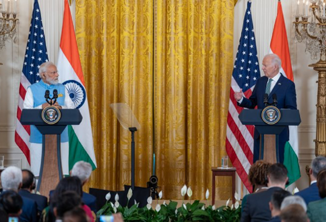
    WASHINGTON, D.C. (TIP): Affirming a vision of the US and India as among the closest partners, Prime Minister Narendra Modi and President Joe Biden on Thursday, June 22,  said that the diverse partnership between the two nations will serve the global good.

    The US-India Comprehensive Global and Strategic Partnership are anchored in a new level of trust and mutual understanding and enriched by the warm bonds of family and friendship that inextricably link the two countries together, said a joint statement issued by the White House after the talks between Prime Minister and the President in the Oval Office and the Cabinet meeting room.

    “Together, we will build an even stronger, diverse US-India partnership that will advance the aspirations of our people for a bright and prosperous future grounded in respect for human rights, and shared principles of democracy, freedom, and the rule of law,” said the joint statement.

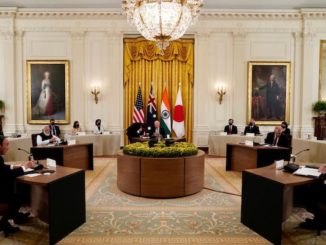
    “Our cooperation will serve the global good as we work through a range of multilateral and regional groupings – particularly the Quad– to contribute toward a free, open, inclusive, and resilient Indo-Pacific. No corner of human enterprise is untouched by the partnership between our two great countries, which spans the seas to the stars,” said the statement.

    Upbeat about the relationship, Prime Minister Modi told reporters during a news conference that now even the sky is not the limit.

    “In fact, in short for India and America partnership, even this — even the sky is not the limit. Friends, the most important pillar of our relations is our people-to-people ties,” he said.

    “Two of the world’s largest democracies, India and America can together make an important contribution to global peace stability and prosperity. I’m confident that based on these values, we will be able to fulfil the expectations and aspirations of not only the people of our two countries but of the entire world,” he said.

    Affirming that technology will play the defining role in deepening our partnership, the joint statement said the leaders hailed the inauguration of the initiative on Critical and Emerging Technology (iCET) in January 2023 as a major milestone in US-India relations.

    “They called on our governments, businesses, and academic institutions to realize their shared vision for the strategic technology partnership. The leaders recommitted the United States and India to fostering an open, accessible, and secure technology ecosystem, based on mutual confidence and trust that reinforces our shared values and democratic institutions,” it said.

    Observing that the US-India Major Defense Partnership has emerged as a pillar of global peace and security, the statement said that through joint exercises, strengthening of defense industrial cooperation, the annual “2+2” Ministerial Dialogue, and other consultative mechanisms, the two countries have made substantial progress in building an advanced and comprehensive defense partnership in which the militaries coordinate closely across all domains.

    “The leaders appreciated the strong military-to-military ties, mutual logistics support, and efforts to streamline implementation of foundational agreements. They noted that information sharing and placement of Liaison Officers in each other’s military organizations will spur joint service cooperation.

    They also reiterated their resolve to strengthen maritime security cooperation, including through enhanced underwater domain awareness. The leaders welcomed the launch of dialogues in new defense domains including space and Artificial intelligence, which will enhance capacity building, knowledge, and expertise, said the joint statement.

    As climate action and clean energy leaders, the United States and India share a common and ambitious vision to rapidly deploy clean energy at scale, build economic prosperity, and help achieve global climate goals.

    “They recognize the critical role of the US Inflation Reduction Act and India’s ambitious production-linked incentives scheme for cutting-edge clean and renewable technologies. The leaders highlighted the U.S.-India Climate and Clean Energy Agenda 2030 Partnership and Strategic Clean Energy Partnership (SCEP) as reflective of this commitment,” said the joint statement.

    As global partners, the United States and India affirmed that the rules-based international order must be respected.

    They emphasized that the contemporary global order has been built on principles of the UN Charter, international law, and respect for the sovereignty and territorial integrity of states, the joint statement said.

    As two of the world’s largest democratic economies, the United States and India are indispensable partners in advancing global prosperity and a free, fair, and rules-based economic order, the joint statement said. Biden highlighted the impactful participation of Modi in the G7 Hiroshima Summit and looks forward to the G20 Summit in September in New Delhi.

    He applauded India’s leadership in its ongoing G20 Presidency, which has brought renewed focus on strengthening multilateral institutions and international cooperation to tackle global challenges such as climate change, pandemics, fragility and conflict, along with work to accelerate the achievement of the UN Sustainable Development Goals, and lay the foundation for strong, sustainable, balanced, and inclusive growth, said the joint statement.

    Joint Statement from the United States and India

    June 22, 2023

    1. President Joseph R. Biden, Jr. and Prime Minister Narendra Modi today affirmed a vision of the United States and India as among the closest partners in the world – a partnership of democracies looking into the 21st century with hope, ambition, and confidence. The U.S.-India Comprehensive Global and Strategic Partnership is anchored in a new level of trust and mutual understanding and enriched by the warm bonds of family and friendship that inextricably link our countries together.  Together, we will build an even stronger, diverse U.S.-India partnership that will advance the aspirations of our people for a bright and prosperous future grounded in respect for human rights, and shared principles of democracy, freedom, and the rule of law.  Our cooperation will serve the global good as we work through a range of multilateral and regional groupings – particularly the Quad– to contribute toward a free, open, inclusive, and resilient Indo-Pacific.  No corner of human enterprise is untouched by the partnership between our two great countries, which spans the seas to the stars.

    Charting a Technology Partnership for the Future

    1. President Biden and Prime Minister Modi affirm that technology will play the defining role in deepening our partnership. The leaders hailed the inauguration of the Initiative on Critical and Emerging Technology (iCET) in January 2023 as a major milestone in U.S.-India relations.  They called on our governments, businesses, and academic institutions to realize their shared vision for the strategic technology partnership.  The leaders recommitted the United States and India to fostering an open, accessible, and secure technology ecosystem, based on mutual confidence and trust that reinforces our shared values and democratic institutions.
    2. President Biden and Prime Minister Modi set a course to reach new frontiers across all sectors of space cooperation. The leaders applauded our growing cooperation on earth and space science, and space technologies. They welcomed the decision of NASA and ISRO to develop a strategic framework for human spaceflight cooperation by the end of 2023.The leaders hailed the announcement by NASA to provide advanced training to Indian astronauts at the Johnson Space Center in Houston, Texas, with a goal of mounting a joint effort to the International Space Station in 2024.The leaders celebrated the delivery of the NASA-ISRO Synthetic Aperture Radar (NISAR) satellite to ISRO’s U.R. Rao Satellite Centre in Bengaluru, India, and looked forward to NISAR’s 2024 launch from India.  Welcoming India’s Space Policy – 2023, the leaders called for enhanced commercial collaboration between the U.S. and Indian private sectors in the entire value chain of the space economy and to address export controls and facilitate technology transfer. President Biden deeply appreciated India’s signing of the Artemis Accords, which advance a common vision of space exploration for the benefit of all humankind.
    3. President Biden and Prime Minister Modi committed their administrations to promoting policies and adapting regulations that facilitate greater technology sharing, co-development, and co-production opportunities between U.S. and Indian industry, government, and academic institutions. The leaders welcomed the launch of the interagency-led Strategic Trade Dialogue in June2023 and directed both sides to undertake regular efforts to address export controls, explore ways of enhancing high technology commerce, and facilitate technology transfer between the two countries.
    4. President Biden and Prime Minister Modi hailed the signing of an MoU on Semiconductor Supply Chain and Innovation Partnership as a significant step in the coordination of our countries’ semiconductor incentive programs. This will promote commercial opportunities, research, talent, and skill development.  The leaders welcomed an announcement by Micron Technology, Inc., to invest up to $825 million to build a new semiconductor assembly and test facility in India with support from the Indian government.  The combined investment valued at $2.75 billion would create up to 5,000 new direct and 15,000 community jobs opportunities in the next five years.  The leaders also welcomed Lam Research’s proposal to train 60,000 Indian engineers through its Semiverse Solution virtual fabrication platform to accelerate India’s semiconductor education and workforce development goals, and an announcement by Applied Materials, Inc., to invest $400 million to establish a collaborative engineering center in India.
    5. President Biden and Prime Minister Modi share a vision of creating secure and trusted telecommunications, resilient supply chains, and enabling global digital inclusion. To fulfill this vision, the leaders launched two Joint Task Forces on advanced telecommunications, focused on Open RAN and research and development in 5G/6G technologies. Public-private cooperation between vendors and operators will be led by India’s Bharat 6G Alliance and the U.S. Next G Alliance.  We are partnering on Open RAN field trials and rollouts, including scaled deployments, in both countries with operators and vendors of both markets, backed by U.S. International Development Finance Corporation (DFC) financing.  The leaders welcomed participation of Indian companies in the U.S. Rip and Replace Program.  They endorsed an ambitious vision for 6G networks, including standards cooperation, facilitating access to chipsets for system development, and establishing joint research and development projects.  President Biden and Prime Minister Modi also stressed the need to put in place a “Trusted Network/Trusted Sources” bilateral framework.
    6. President Biden and Prime Minister Modi welcomed the establishment of a joint Indo-U.S. Quantum Coordination Mechanism to facilitate collaboration among industry, academia, and government, and our work toward a comprehensive Quantum Information Science and Technology agreement. The United States welcomes India’s participation in the Quantum Entanglement Exchange and in the Quantum Economic Development Consortium to facilitate expert and commercial exchanges with leading, like-minded quantum nations.  The United States and India will sustain and grow quantum training and exchange programs and work to reduce barriers to U.S.-India research collaboration.  The leaders welcomed the launch of a $2million grant program under the U.S.-India Science and Technology Endowment fund for the joint development and commercialization of Artificial Intelligence (AI) and quantum technologies and encouraged public-private collaborations to develop high performance computing (HPC) facilities in India.  President Biden also reiterated his government’s commitment to work with U.S. Congress to lower barriers to U.S. exports to India of HPC technology and source code.   The U.S. side pledged to make its best efforts in support of India’s Center for Development of Advanced Computing (C-DAC) joining the U.S. Accelerated Data Analytics and Computing (ADAC) Institute.
    7. The leaders welcomed 35 innovative joint research collaborations in emerging technologies funded by the U.S. National Science Foundation (NSF) and the Indian Department of Science and Technology (DST). Under a new implementation arrangement between NSF and DST, both sides will fund joint research projects in computer and information science and engineering, cyber physical systems, and secure and trustworthy cyberspace. Furthermore, NSF and India’s Ministry of Electronics and Information Technology will bring fresh funding for joint projects in applied research areas such as semiconductors, next generation communication, cyber security, sustainability and green technologies and intelligent transportation systems.
    8. Both President Biden and Prime Minister Modi acknowledge the profound opportunities and significant risks associated with AI. Accordingly, they committed to develop joint and international collaboration on trustworthy and responsible AI, including generative AI, to advance AI education and workforce initiatives, promote commercial opportunities, and mitigate against discrimination and bias. The United States also supports India’s leadership as Chair of the Global Partnership on AI.  The leaders applauded Google’s intent to continue investing through its $10 billion India Digitization Fund, including in early-stage Indian startups.  Through its AI Research Center in India, Google is building models to support over 100 Indian languages.
    9. President Biden and Prime Minister Modi hailed our deepening bilateral cooperation on cutting-edge scientific infrastructure, including a $140 million in-kind contribution from the Indian Department of Atomic Energy (DAE) to the U.S. Department of Energy’s (DOE’s) Fermi National Laboratory toward collaborative development of the Proton Improvement Plan-II Accelerator, for the Long Baseline Neutrino Facility — the first and largest international research facility on U.S. soil. They also welcomed the commencement of construction of a Laser Interferometer Gravitational-Wave Observatory (LIGO) in India.  The leaders called on their administrations to extend these partnerships to advanced biotechnology and biomanufacturing, and enhance biosafety and biosecurity innovation, practices, and norms.

    Powering a Next Generation Defense Partnership

    1. The U.S.-India Major Defense Partnership has emerged as a pillar of global peace and security. Through  joint exercises, strengthening of defense industrial cooperation, the annual “2+2” Ministerial Dialogue, and other consultative mechanisms, we have made substantial progress in building an advanced and comprehensive defense partnership in which our militaries coordinate closely across all domains.  The leaders appreciated the strong military-to-military ties, mutual logistics support, and efforts to streamline implementation of foundational agreements.  They noted that information sharing and placement of Liaison Officers in each other’s military organizations will spur joint service cooperation.  They also reiterated their resolve to strengthen maritime security cooperation, including through enhanced underwater domain awareness. The leaders welcomed the launch of dialogues in new defense domains including space and AI, which will enhance capacity building, knowledge, and expertise.
    2. Expressing their desire to accelerate defense industrial cooperation, the leaders welcomed the adoption of a Defense Industrial Cooperation Roadmap, which will provide policy direction to defense industries and enable co-production of advanced defense systems and collaborative research, testing, and prototyping of projects. Both sides are committed to addressing any regulatory barriers to defense industrial cooperation.  The leaders also noted the decision of India’s Ministry of Defense and the U.S. Department of Defense to commence negotiations for concluding a Security of Supply arrangement and initiate discussions about Reciprocal Defense Procurement agreement.
    3. President Biden and Prime Minister Modi hailed the landmark signing of an MoU between General Electric and Hindustan Aeronautics Limited for the manufacture of GE F-414 jet engines in India, for the Hindustan Aeronautics Limited Light Combat Aircraft Mk 2. This trailblazing initiative to manufacture F-414 engines in India will enable greater transfer of U.S. jet engine technology than ever before.  The leaders committed their governments to working collaboratively and expeditiously to support the advancement of this unprecedented co-production and technology transfer proposal.
    4. President Biden and Prime Minister Modi also welcomed India’s emergence as a hub for maintenance and repair for forward deployed U.S. Navy assets and the conclusion of Master Ship Repair Agreements with Indian shipyards.  This will allow the U.S. Navy to expedite the contracting process for mid-voyage and emergent repair.  As envisaged in the Defense Industrial Roadmap, both countries agree to work together for the creation of logistic, repair, and maintenance infrastructure for aircrafts and vessels in India.
    5. The leaders welcomed the setting up and launch of the U.S.-India Defense Acceleration Ecosystem (INDUS-X). As a network of universities, startups, industry and think tanks, INDUS-X will facilitate joint defense technology innovation, and co-production of advanced defense technology between the respective industries of the two countries. The U.S. Department of Defense’s Space Force has signed its first International Cooperative Research and Development Agreement with Indian start-up 114 AI and 3rdiTech. Both companies will work with General Atomics to co-develop components using cutting edge technologies in AI and semiconductors respectively.
    6. President Biden and Prime Minister Modi welcomed India’s plans to procure General Atomics MQ-9B HALE UAVs. The MQ-9Bs, which will be assembled in India, will enhance the ISR capabilities of India’s armed forces across domains. As part of this plan, General Atomics will also establish a Comprehensive Global MRO facility in India to support of India’s long-term goals to boost indigenous defense capabilities.

    Catalyzing the Clean Energy Transition

    1. As climate action and clean energy leaders, the United States and India share a common and ambitious vision to rapidly deploy clean energy at scale, build economic prosperity, and help achieve global climate goals. They recognize the critical role of the U.S. Inflation Reduction Act and India’s ambitious production-linked incentives scheme for cutting-edge clean and renewable technologies.  The leaders highlighted the U.S.-India Climate and Clean Energy Agenda 2030 Partnership and Strategic Clean Energy Partnership (SCEP) as reflective of this commitment.  The leaders welcomed joint efforts to develop and deploy energy storage technologies, including through the establishment of a new task force under SCEP. The leaders welcomed the launch of the U.S.-India New and Emerging Renewable Energy Technologies Action Platform, which will accelerate cooperation in green hydrogen, offshore and onshore wind, and other emerging technologies. They will collaborate to achieve their respective national goals to reduce the cost of green/clean hydrogen under India’s National Green Hydrogen Mission and the U.S. Hydrogen Energy Earthshot.  The United States welcomed India’s decision to co-lead the multilateral Hydrogen Breakthrough Agenda. The leaders called for the development of joint efforts in carbon capture, utilization, and storage, given their role in reducing emissions.  The leaders welcomed India’s VSK Energy LLC’s announcement to invest up to $1.5 billion to develop a new, vertically integrated solar panel manufacturing operation in the United States and India’s JSW Steel USA’s plans to invest $120 million at its Mingo Junction, Ohio, steel plant to better serve growing markets in the renewable energy and infrastructure sectors.
    2. President Biden and Prime Minister Modi underscored the importance of decarbonizing the transportation sector, including by accelerating the deployment of zero emissions vehicles, continued collaboration to promote public and private financing for electric transportation, and the development of biofuels, including sustainable aviation fuels. To this end, the leaders lauded the creation and development of the Global Biofuels Alliance, which will be launched in July 2023, with the United States as a founding member.  Both leaders welcomed the signing of an MOU under which the U.S. Agency for International Development will support Indian Railways’ ambitious target to become a “net-zero” carbon emitter by 2030.The United States and India also announced plans to create a payment security mechanism that will facilitate the deployment of 10,000 made-in-India electric buses in India, augmenting India’s focused efforts in reducing greenhouse gas emissions, improving public health, and diversifying the global supply chain.
    3. India and the United States committed to create innovative investment platforms that will effectively lower the cost of capital and attract international private finance at scale to accelerate the deployment of greenfield renewable energy, battery storage, and emerging green technology projects in India. The United States and India will endeavor to develop a first-of-its kind, multibillion-dollar investment platform aimed at providing catalytic capital and de-risking support for such projects.
    4. President Biden and Prime Minister Modi reaffirmed their support for the mission of the International Energy Agency (IEA), and President Biden pledged to continue working with the Government of India, IEA members, the IEA Secretariat, and other relevant stakeholders toward IEA membership for India in accordance with the provisions of the Agreement on an International Energy Program.
    5. President Biden and Prime Minister Modi affirmed the intention of the two governments, as trusted partners, to work together to ensure that our respective markets are well-supplied with the essential critical minerals needed to achieve our climate, economic and strategic technology cooperation goals. The leaders pledged to hasten bilateral collaboration to secure resilient critical minerals supply chains through enhanced technical assistance and greater commercial cooperation, and exploration of additional joint frameworks as necessary.  The United States enthusiastically welcomes India as the newest partner in the Mineral Security Partnership (MSP), to accelerate the development of diverse and sustainable critical energy minerals supply chains globally while agreeing to the principles of the MSP including environmental, social, and governance standards.  The leaders lauded the announcement of India’s Epsilon Carbon Limited’s plans toinvest $650 million in a U.S. greenfield electric vehicle battery component factory.
    6. President Biden and Prime Minister Modi underscored the important role nuclear energy plays in global decarbonization efforts and affirmed nuclear energy as a necessary resource to meet our nations’ climate, energy transition, and energy security needs. The leaders noted ongoing negotiations between the Nuclear Power Corporation of India Limited (NPCIL) and Westinghouse Electric Company (WEC) for the construction of six nuclear reactors in India.  They welcomed intensified consultations between the U.S. DOE and India’s DAE for facilitating opportunities for WEC to develop a techno-commercial offer for the Kovvada nuclear project. They also noted the ongoing discussion on developing next generation small modular reactor technologies in a collaborative mode for the domestic market as well as for export. The United States reaffirms its support for India’s membership in the Nuclear Suppliers Group and commits to continue engagement with likeminded partners to advance this goal.
    7. The leaders recognize that addressing sustainable consumption and production is a key component to achieving the development, environment and climate ambitions of the 2030 Agenda for Sustainable Development and the SDGs. In this regard, President Biden welcomed Prime Minister Modi’s Lifestyle for Environment initiative (LiFE) as a successful national model to address the impacts of climate change, biodiversity loss, desertification and land degradation, and resolved to work together to implement the G20 High Level Principles on Lifestyles for Sustainable Development.

    Deepening Strategic Convergence

    1. As global partners, the United States and India affirm that the rules-based international order must be respected. They emphasized that the contemporary global order has been built on principles of the UN Charter, international law, and respect for sovereignty and territorial integrity of states.
    2. President Biden and Prime Minister Modi expressed their deep concern over the conflict in Ukraine and mourned its terrible and tragic humanitarian consequences. The leaders underscored the serious and growing impacts of the war on the global economic system, including on food, fuel and energy security, and critical supply chains.  They called for greater efforts to mitigate the consequences of the war, especially in the developing world.   Both countries further pledge to render continuing humanitarian assistance to the people of Ukraine.  They called for respect for international law, principles of the UN charter, and territorial integrity and sovereignty.  Both countries concurred on the importance of post-conflict reconstruction in Ukraine.
    3. The United States and India reaffirmed their resolve to counter any attempts to unilaterally subvert the multilateral system. The leaders underscored the need to strengthen and reform the multilateral system so it may better reflect contemporary realities. In this context both sides remain committed to a comprehensive UN reform agenda, including through expansion in permanent and non-permanent categories of membership of the UN Security Council. Sharing the view that global governance must be more inclusive and representative, President Biden reiterated U.S. support for India’s permanent membership on a reformed UN Security Council(UNSC).  In this context, President Biden welcomed India’s candidature as a non-permanent member of the UNSC for the 2028-29 term, in view of India’s significant contributions to the UN system and commitment to multilateralism, as well as its active and constructive engagement in the Inter-Governmental Negotiations process on Security Council reforms, with an overall objective of making the UNSC more effective, representative, and credible.
    4. President Biden and Prime Minister Modi recommitted themselves to empowering the Quad as a partnership for global good. The two leaders welcomed the progress made at the Hiroshima Summit last month among the four maritime democracies to further advance a positive and constructive agenda for peace and prosperity in the Indo-Pacific.  The leaders welcomed progress on the Indo-Pacific Partnership for Maritime Domain Awareness, through which Quad partners are providing maritime domain data across the Indian Ocean, Southeast Asia, and the Pacific regions. The Quad to be hosted in India in 2024 would be another opportunity to continue the dialogue and consolidate cooperation.  The leaders committed to continue working in partnership with regional platforms such as the Indian Ocean Rim Association, Indo-Pacific Oceans Initiative, and ASEAN to achieve shared aspirations and address shared challenges in the Indo-Pacific Region.  Prime Minister Modi welcomed the United States joining the Indo-Pacific Oceans Initiative and President Biden welcomed India’s continued participation as an observer in the Partners in the Blue Pacific.  28.      The leaders also welcomed the depth and pace of enhanced consultations between the two governments on regional issues including South Asia, the Indo-Pacific and East Asia and looked forward to our governments holding an inaugural Indian Ocean Dialogue in 2023.
    5. President Biden and Prime Minister Modi reiterated their enduring commitment to a free, open, inclusive, peaceful, and prosperous India-Pacific region with respect for territorial integrity and sovereignty, and international law. Both leaders expressed concern over coercive actions and rising tensions, and strongly oppose destabilizing or unilateral actions that seek to change the status quo by force. Both sides emphasized the importance of adherence to international law, particularly as reflected in the United Nations Convention on the Law of the Sea (UNCLOS), and the maintenance of freedom of navigation and overflight, in addressing challenges to the maritime rules-based order, including in the East and South China Seas.
    6. The leaders expressed deep concern about the deteriorating situation in Myanmar, and called for the release of all those arbitrarily detained, the establishment of constructive dialogue, and the transition of Myanmar toward an inclusive federal democratic system.
    7. The leaders also condemned the destabilizing ballistic missile launches of the Democratic People’s Republic of Korea (DPRK), which violate relevant UN Security Council resolutions and pose a grave threat to international peace and security. They reaffirmed their commitment to the complete denuclearization of the Korean Peninsula and urged DPRK to comply with its obligations under these resolutions and engage in substantive dialogue.  They stressed the importance of addressing the concerns regarding DPRK’s proliferation linkages related to weapons of mass destruction, their means of delivery, and related items in the region and beyond.
    8. The United States and India stand together to counter global terrorism and unequivocally condemn terrorism and violent extremism in all its forms and manifestations. President Biden and Prime Minister Modi reiterated the call for concerted action against all UN-listed terrorist groups including Al-Qa’ida, ISIS/Daesh, Lashkar e-Tayyiba (LeT), Jaish-e-Mohammad (JeM), and Hizb-ul-Mujhahideen.  They strongly condemned cross-border terrorism, the use of terrorist proxies and called on Pakistan to take immediate action to ensure that no territory under its control is used for launching terrorist attacks.  They called for the perpetrators of the 26/11 Mumbai and Pathankot attacks to be brought to justice. They noted with concern the increasing global use of unmanned aerial vehicles (UAVs), drones and information and communication technologies for terrorist purposes and reaffirmed the importance of working together to combat such misuse. They welcomed the cooperation between our two governments on counterterrorism designations and homeland security cooperation, including in intelligence sharing and law enforcement cooperation, and called upon the Financial Action Task Force to undertake further work identifying how to improve global implementation of its standards to combat money laundering and the financing of terrorism.
    9. The leaders reiterated their strong support for a peaceful, secure, and stable Afghanistan. They discussed the current humanitarian situation and concurred on the need to continue to provide immediate humanitarian assistance to the people of Afghanistan. The leaders urged the Taliban to abide by UNSC Resolution 2593 which demands that Afghan territory should never be used to threaten or attack any country, shelter or train terrorists, or plan or finance terrorist attacks. Committing to continue close consultations on the situation in Afghanistan, the leaders emphasized the importance of formation of an inclusive political structure and called on the Taliban to respect the human rights of all Afghans, including women and girls, and to respect freedom of movement.
    10. President Biden and Prime Minister Modi looked forward to strengthening a long-term strategic partnership between the I2U2 countries of India, Israel, United Arab Emirates, and the United States to leverage markets to build more innovative, inclusive, and science-based solutions to enhance food and energy security, improve movement of people and goods across hemispheres, and increase sustainability and resilience.
    11. President Biden and Prime Minister Modi reaffirmed their countries’ commitment to an open, secure, inclusive, safe, interoperable, and reliable Internet, and to continuing cooperation on a range of cybersecurity issues, including preventing and responding to cyber threats, promoting cybersecurity education and awareness and measures to build resilient cyber infrastructure. Both the United States and India are committed to sharing information about cyber threats and vulnerabilities, and to working together to investigate and respond to cyber incidents.
    12. The United States and India reaffirm and embrace their shared values of freedom, democracy, human rights, inclusion, pluralism, and equal opportunities for all citizens. Both countries have a tradition of recognizing the diversity represented in their nations and celebrating the contributions of all their citizens.  They reasserted that democracy, freedom, and rule of law are the shared values that anchor global peace and sustainable development. In keeping with the spirit of leaving no one behind, both leaders committed to working towards ensuring that fruits of economic growth and well-being reach the underprivileged. They also committed to pursue programs and initiatives that would facilitate women-led development, and enable all women and girls to live free from gender-based violence and abuse. President Biden underscored his appreciation for India’s participation in the Summit for Democracy process, and for efforts made by India toward sharing knowledge, technical expertise, and experiences with electoral management bodies of other democracies. The leaders also welcomed the re-launch of the Global Issues Forum, which would hold its next meeting at an appropriate time.

    Propelling Global Growth

    1. As two of the world’s largest democratic economies, the United States and India are indispensable partners in advancing global prosperity and a free, fair, and rules-based economic order. President Biden highlighted the impactful participation of Prime Minister Modi in the G7 Hiroshima Summit and looks forward to the G20 Summit in September in New Delhi. He applauded India’s leadership in its ongoing G20 Presidency, which has brought renewed focus on strengthening multilateral institutions and international cooperation to tackle global challenges such as climate change, pandemics, fragility and conflict, along with work to accelerate achievement of the UN Sustainable Development Goals, and lay the foundation for strong, sustainable, balanced, and inclusive growth.
    2. President Biden and Prime Minister Modi are united in their determination to use the G20 to deliver on shared priorities for the G20 Leaders’ Summit, including improving the sovereign debt restructuring process; advancing the multilateral development bank evolution agenda, including mobilizing new concessional financing at the World Bank to support all developing countries; and raising the level of ambition on mobilizing private sector investment for quality, sustainable, and resilient infrastructure, including through the Partnership for Global Infrastructure and Investment. The United States looks forward to hosting the G20 presidency in 2026, nearly two decades after the first full-scale G20 Leaders’ Summit in Pittsburgh.
    3. The United States and India recognize the potential of Digital Public Infrastructure (DPI) approaches for enabling open and inclusive digital economies. President Biden and Prime Minister Modi intend to work together to provide global leadership for the implementation of DPI to promote inclusive development, competitive markets, and protect individual rights.  In this regard, the United States and India will explore how to partner together and align our efforts to advance the development and deployment of robust DPIs, including appropriate safeguards to protect, privacy, data security and intellectual property.  They will explore developing a U.S.-India Global Digital Development Partnership, which would bring together technology and resources from both countries to enable development and deployment of DPIs in developing countries.
    4. The leaders are committed to pursuing ambitious efforts to strengthen Multilateral Development Banks (MDBs) to address shared global challenges of the 21st century. In this regard, they emphasized the need for comprehensive efforts by MDBs to evolve their vision, incentive structure, operational approaches and financial capacity so that they are better equipped to address a wide range of SDGs and trans-boundary challenges including climate change, pandemics, conflicts and fragility. Recognizing multilateral efforts in this area, the leaders acknowledged the ongoing work under the Indian presidency of the G20 on strengthening MDBs including the report of the G20 Expert Group on Strengthening MDBs. By the G20 Leaders’ Summit in New Delhi, the United States and India will work together to secure G20 commitment to create a major new dedicated pool of funds at the World Bank to deploy concessional lending for global challenges, and to enhance support for crisis response in International Development Association recipient countries.
    5. The leaders reaffirmed that the Indo-Pacific Economic Framework (IPEF) is an important pillar of our collective and collaborative efforts to build resilience in our supply chains, harness transformations in clean energy, and accelerate progress of our economies through anti-corruption efforts, efficient tax administrative practices, and capacity building measures. The leaders welcomed the substantial conclusion of negotiations on the proposed IPEF Supply Chain Agreement and committed to working with other partners expeditiously to conclude negotiations of the agreements under the clean economy and fair economy pillars to deliver concrete benefits that enhance the economic competitiveness and prosperity of countries in the Indo-Pacific. President Biden invited India to attend the APEC Summit in San Francisco in November 2023 as a guest of the host.
    6. The U.S.-India trade and investment partnership is an engine for global growth, with bilateral trade exceeding $191 billion in 2022, nearly doubling from 2014. The leaders applauded the reconvening of the U.S.-India Commercial Dialogue and CEO Forum in March in New Delhi.  They encouraged respective industries to take action on the recommendations from the CEOs for greater engagement and technical cooperation to build resilient supply chains for emerging technologies, clean energy technologies, and pharmaceuticals; promote an innovative digital economy; lower barriers to trade and investment; harmonize standards and regulations wherever feasible; and  work towards skilling our workforces.  The leaders support continued active engagement between the U.S. Treasury Department and the Indian Ministry of Finance under the Economic and Financial Partnership dialogue.  They encouraged the U.S. Federal Insurance Office and the Insurance Regulatory and Development Authority of India to advance areas of mutual interest in the insurance sector under their existing MoU framework.
    7. The United States and India have also taken steps toward deepening bilateral cooperation to strengthen our economic relationship, including trade ties. Underscoring the willingness and trust of both countries in resolving trade issues, the leaders welcomed the resolution of six outstanding WTO disputes between the two countries through mutually agreed solutions as well as their understandings on market access related to certain products of significance to the bilateral trade relationship. They also looked forward to reconvening the India-U.S. Trade Policy Forum before the end of 2023 to further enhance the bilateral trade relationship by addressing trade concerns and identifying further areas for engagement. India highlighted its interest in the restoration of its status under the U.S. Generalized System of Preferences program, which could be considered in relation to eligibility criteria determined by the U.S. Congress.  The leaders supported intensifying the work to advance progress on issues related to the eligibility criteria. Prime Minister Modi also expressed India’s interest towards being recognized as a Trade Agreements Act-designated country by the United States to further enhance the integration of both economies and to further promote trade and investment between two countries.  In this regard, the leaders welcomed the initiation of discussions between both sides at an official level on issues related to bilateral government procurement.
    8. The leaders welcomed focused efforts under the re-launched U.S.-India Commercial Dialogue to expand cooperation in the areas of Talent, Innovation, and Inclusive Growth. President Biden expressed appreciation for the significant workforce development efforts undertaken by several of the Indian companies taking part in the U.S.-India CEO Forum to upskill more than 250,000 employees and promote STEM learning within local communities across the United States.  Both leaders applauded the concept of an “Innovation Handshake” under the Commercial Dialogue that will lift up and connect the two sides’ dynamic startup ecosystems, address specific regulatory hurdles to cooperation, and promote further innovation and job growth, particularly in emerging technologies.  The Innovation Handshake demonstrates the resolve on both sides to further bolster their shared vision of an elevated strategic technology partnership, leveraging the strength and ingenuity of their respective private sectors to identify new innovations and match them with industry requirements across the priority sectors identified under the iCET framework.
    9. Recognizing the essential role that micro, small and medium-sized enterprises (MSMEs) play in advancing inclusive growth, expanding exports, and boosting employment across our respective cities, towns, and rural areas, the leaders welcomed plans under the Commercial Dialogue to organize a forum to promote the role and scope of MSMEs in bilateral trade and a digital commerce showcase to strengthen the engagement of women-owned and rural enterprises in particular. They commended the work of the U.S. Small Business Administration and the Indian Ministry of Micro, Small and Medium Enterprises, which are pursuing increased cooperation and intend to formalize their work through a MoU to support entrepreneurs and MSMEs.
    10. President Biden and Prime Minister Modi again welcomed Air India’s historic agreement with Boeing to acquire more than 200 American-made aircraft. This purchase will support more than one million American jobs across 44 states and contribute to ongoing efforts to modernize the civil aviation sector in India.  Boeing has announced a $100 million investment on infrastructure and programs to train pilots in India, supporting India’s need for 31,000 new pilots over the next 20 years. The leaders also welcomed Boeing’s announcement of its completion of a C-17 aftermarket support facility for MRO and a new parts logistics center in India to capture future synergies between defense and civil aviation.

    Empowering Future Generations and Protecting the Health of our People

    1. President Biden and Prime Minister hailed the growing bilateral education partnership between the United States and India. Indian students are on pace to soon become the largest foreign student community in the United States, with an increase of nearly 20 percent in Indian students studying in the United States last year alone.  The leaders welcomed the establishment of a new Joint Task Force of the Association of American Universities and leading Indian educational institutions, including the Indian Institutes of Technology, and the nomination of councils on each side, and noted their interim recommendations for expanding research and university partnerships between the two countries.  They also welcomed the establishment of Indo-U.S. Global Challenge Institutes to spark deeper research partnerships and people-to-people exchanges between a range of diverse institutions in the U.S. and India in semiconductors, sustainable agriculture, clean energy, health and pandemic preparedness, and emerging technologies.
    2. The leaders welcomed an announcement by the U.S. Department of State that it would launch a pilot to adjudicate domestic renewals of certain petition-based temporary work visas later this year, including for Indian nationals, with the intent to implement this for an expanded pool of H1B and L visa holders in 2024 and eventually broadening the program to include other eligible categories.
    3. The leaders affirmed that the movement of professional and skilled workers, students, investors and business travelers between the countries contributes immensely to enhancing bilateral economic and technological partnership. While acknowledging the important steps taken to augment processing of visa applications, they noted the pressing need to further expedite this process. The leaders also directed officials to identify additional mechanisms to facilitate travel for business, tourism, and professional and technical exchanges between the two countries.
    4. Concomitant with the rapid growth in our strategic partnership and demand for travel, both sides intend to open new consulates in each other’s countries. The United States intends to initiate the process to open two new consulates in India in the cities of Bengaluru and Ahmedabad. India will take steps to operationalize its new consulate in Seattle later this year, and open two new consulates at jointly identified locations in the United States.
    5. The leaders recognized the role of asocial security totalization agreement in protecting the interests of cross border workers and reaffirmed the intent to continue ongoing discussions concerning the elements required in both countries to enter into a bilateral social security totalization agreement.
    6. President Biden and Prime Minister Modi celebrate the historic and active collaboration across the full expanse of our respective health sectors. They welcomed the opportunity for deeper collaboration to secure pharmaceutical supply chains. The leaders encouraged their administrations to continue their strong collaboration on pandemic preparedness, supported by epidemiology training; laboratory strengthening and point of entry surveillance, and food safety and regulation.  The leaders applauded collaborations between research institutes of both countries on affordable cancer technology programs, including for the development of AI enabled diagnostic and prognosis prediction tools, and on diabetes research.  The leaders committed to holding a U.S.-India Cancer Dialogue, hosted by President Biden’s Cancer Moonshot, to bring experts together from both countries to identify concrete areas of collaboration to accelerate the rate of progress against cancer. They also called for expanded collaboration on digital health platforms including responsible use of cutting-edge technologies like AI, and to explore cooperation in research and the use of traditional medicine. President Biden lauded Prime Minister Modi’s plan to eliminate tuberculosis in India by 2025, five years ahead of the target set by the UN’s sustainable development goals, hailing it as a big step forward that will inspire other countries to action.
    7. President Biden and Prime Minister Modi welcomed the opportunity for deeper collaboration to secure, de-risk, and strengthen pharmaceutical supply chains, with a focus on active pharmaceutical ingredients, key starting materials, and key vaccine input materials. They also underscored the need for strengthening global collaboration network on research and development in medical countermeasures, vaccines, therapeutics and diagnostics to promote access to safe, effective, and innovative medical products in an affordable manner.
    8. President Biden and Prime Minister Modi committed to work toward a broader and deeper bilateral drug policy framework for the 21st century. Under this framework, both countries aspire to expand cooperation and collaboration to disrupt the illicit production and international trafficking of illicit drugs, including synthetic drugs, such as fentanyl and Amphetamine Type Stimulants and illicit use of their Precursors. Toward this end, they committed to a holistic public health partnership to prevent and treat illicit drug use, address workforce shortages and skilling requirements, and showcase a secure, resilient, reliable and growing pharmaceutical supply chain as a model for the world.
    9. Prime Minister Modi conveyed his deep appreciation for the repatriation of antiquities to India by the United States. Both sides expressed strong interest in working quickly toward a Cultural Property Agreement, which would help to prevent illegal trafficking of cultural property from India and enhance cooperation on the protection and lawful exchange of cultural property.
    10. The Leaders welcomed the establishment of the Tamil Studies Chair at the University of Houston and reinstating the Vivekananda Chair at the University of Chicago to further research and teaching of India’s history and culture.
    11. Prime Minister Modi looked forward to the visit of President Biden to the G20 Leaders’ Summit in New Delhi in September 2023.
    12. Taken together, the leaders today affirmed that this document, in its breadth and depth, represents the most expansive and comprehensive vision for progress in the history of our bilateral relationship.  Still, our ambitions are to reach ever greater heights, and we commit both our governments and our peoples to this endeavor, now and into the future.

    (With inputs from PTI)


  • Biden’s Kyiv visit

    Hardening of battle lines ominous for the world

    The strategic visit by US President Joe Biden to Kyiv, days before the first anniversary of the Russian war on Ukraine, has only hardened the battle lines and made it obvious that America is in no mood to facilitate an early resolution of Europe’s biggest conflict since World War II. Even as Biden and Ukrainian President Volodymyr Zelenskyy walked together to a cathedral, the US State Department announced an additional $460-million aid to Ukraine, including artillery ammunition, anti-armor systems and air defense radars worth $450 million and the rest for energy infrastructure. Ukraine is set to receive large supplies of western weaponry over the next few months in an attempt to sharpen its counteroffensive, leaving no room for doubt that this war is not going to end anytime soon.

    Biden is busy doing chest-thumping and saber-rattling on European soil; in his opinion, Russian President Vladimir Putin was ‘dead wrong’ in presuming that ‘Ukraine was weak and the West was divided.’ A defiant Putin has reaffirmed that sanctions-hit Moscow is ready for the long haul, even as he has accused the US-led West of stoking a global war to destroy Russia. Biden’s overzealousness has also given China, a key Russian ally, ample fodder to take potshots at the US. Beijing has urged ‘certain countries’ to immediately stop fueling the fire. Not to be left behind, Zelenskyy has warned that a world war would break out if China supports Russia militarily against Ukraine.

    Given the geopolitical complications, the volatile situation is inevitably going to worsen. It is clearly evident to the international community that the US is no peacemaker and can never be one. Indeed, it was America’s overreach for NATO’s eastern expansion that provoked Russia and led to the invasion of Ukraine a year ago. Countries such as India, the current G20 president, need to play a proactive role in bringing both sides to the negotiating table and calling out the nations that are hell bent on prolonging this mutually destructive war and jeopardizing world peace.

    (Tribune, India)

  • Quad makes pragmatic push to cement ties

    Quad makes pragmatic push to cement ties

    By Gurjit Singh

    “Though Biden wants Quad to look at Russia’s Ukraine invasion and North Korea’s nuclear threats, he views the Quad partnership of four major democracies in the Indo-Pacific as vital to challenge China’s growing influence in the region. The balance among these threats varies between the Quad partners.

    The Quad Summit held in Tokyo on Tuesday; May 24 was the fourth such occasion in the past two years. The four leaders met at a virtual summit in March 2021 followed by the first-ever physical summit in September 2021 in Washington DC. Thereafter, in March 2022, another virtual meeting took place, and the Tokyo physical summit of 2022 shows the quick turnaround time for Quad summits since the Biden administration took over.

    Prime Minister Narendra Modi and US President Joe Biden are seniormost among the Quad leaders, while Japanese Prime Minister Fumio Kishida is a more recent entrant. Australian Prime Minister Anthony Albanese participated in the summit soon after his election victory.

    A salient difference between the Quad summits of 2021 and 2022 is the context. Undoubtedly, the Quad assimilated to pose a challenge to China’s hegemonic intent in the Indo-Pacific. The US pivot to Asia was inadequate and required the support of like-minded and willing countries like India, Japan and Australia. While Japan and Australia are US allies, India is an important strategic partner.

    The summits of 2021 reduced the rhetoric on security and strategy and focused more on functional cooperation, particularly targeting ASEAN, whose centrality was trumpeted. It became evident that to challenge China, the main arena was the South China Sea, where China made serious inroads into fulfilling their strategic ambitions and winning over ASEAN countries with large economic cooperation. Japan was a major economic partner of ASEAN, but by itself could not match the strategic economic outreach of China and thus the Quad adjusted its positions. Since ASEAN prefers not to take sides between China and the USA, the readjustment of Quad’s public position was to bring alignment with ASEAN concerns.

    The 2021 summits focused on Covid, better health security and the Quad vaccine initiative; they also looked at the Quad Infrastructure Coordination Group, climate issues, hydrogen, education and people-to-people exchanges. Critical and emerging technology remains an important area where there is serious competition with China which leads to cybersecurity.

    The March 2022 summit convened after the Ukraine crisis, whose broader implications were discussed. The US remains keen to aggregate the Quad to provide strategic and humanitarian support to Ukraine, the same way that are planned for the Indo-Pacific. India remains lukewarm to this. The Ukraine crisis, portraying Russia as enemy number one, has the potential of derailing the concerted challenge to China in the Indo-Pacific. For India, it is not Russia but China, which is the main threat. The Indo-Pacific policies which the Quad pursues ought to remain focused on China and should cover Russia only if Russia becomes more active in this region. The convening of the fourth Quad summit in Tokyo, came on the back of the US showing more interest in the region, despite the Ukraine crisis. Biden hosted a summit with the ASEAN leaders on May 12-13 and then proceeded on a tour of South Korea, where he met the new President Yoon Suk-yeol,  and the Prime Minister of Japan. The intent was to deepen security cooperation with both and encourage them to impose further sanctions on Russia amid the Ukraine war.

    Though Biden wants Quad to look at Russia’s Ukraine invasion and North Korea’s nuclear threats, he views the Quad partnership of four major democracies in the Indo-Pacific as vital to challenge China’s growing influence in the region. The balance among these threats varies between the Quad partners.

    There are four, among many things that the Quad is coordinating on, in which India has a direct interest. To deal with Covid, the Quad vaccine initiative has already agreed to manufacturing facilities in India. There is another group dealing with decarbonized green shipping lines in the Indo-Pacific, which will use hydrogen as fuel. India with its new hydrogen policy is keen to get this technology and perhaps be a manufacturing base for hydrogen.

    Thirdly, the Quad infrastructure coordination group is looking at quality infrastructure in the region. This is again an area of Indian interest, as through this India can enhance its profile in its neighborhood. The fourth important group deals with critical technologies and cybersecurity. India has an interest in both, particularly in setting up semiconductor production in the country, to become part of an independent supply chain and not remain dependent on China-based supplies. Cybersecurity is an area of extreme importance for India. The Quad cybersecurity and semiconductor initiatives are good outcomes from the summit.

    The six major takeaways from this summit are: (i) The Indo-Pacific Partnership for Maritime Domain Awareness, which brings commitment for a faster, wider and accurate maritime awareness of almost real-time maritime movement in regional waters; (ii) Quad will seek more than $50 billion of infrastructure assistance and investment in the Indo-Pacific, over the next five years. This will keep debt stress in firm view to differentiate from the BRI; (iii) The Quad Climate Change Adaptation and Mitigation Package (Q-CHAMP) with mitigation and adaptation as its two themes was launched. Q-CHAMP includes ongoing activities under the Quad Climate Working Group on green shipping and ports aiming for a shared green corridor framework and others. Its coverage includes new cooperation in clean fuel ammonia, carbon recycling, cooperation and capacity-building support to advance high-integrity carbon markets; (iv) The Quad will increase interoperability and security through the signature of a new Memorandum of Cooperation on 5G Supplier Diversification and Open RAN (radio access networks); (v) The Common Statement of Principles on Critical Technology Supply Chains, launched at the summit, advances Quad cooperation on semiconductors and other critical technologies, providing a cooperative foundation for resilience against various risks; (vi) The Indo-Pacific Economic Framework (IPEF) has brought 13 countries together to discuss an economic future together. This is the first time India is an economic arrangement in the Indo-Pacific. It included all RCEP countries except China, Cambodia, Laos and Myanmar and adds India and the USA. Its success is that it gets seven ASEAN countries to join the consultations process.

    The Quad is on the right track and is getting better at implementing its ideas and securing adherents as well as acceptability. That is the way to challenge China’s hegemony in the region.

    (The author is a former ambassador)

  • Biden: Quad plan to make 1 bn Covid vaccines in India on track

    Biden: Quad plan to make 1 bn Covid vaccines in India on track

    September 24, 2021

    TIP Special Correspondent

    WASHINGTON (TIP): The first in-person summit of Quad nations opened in Washington on Friday, September24, with PM Narendra Modi hoping that it would be a force for global good by ensuring prosperity and peace in the Indo-Pacific and the world.

    The summit, hosted by US President Joe Biden at the White House, saw all four leaders noting that the grouping had made excellent progress since its first summit held virtually six months ago.

    None of the leaders mentioned China in their opening statements though some spoke of an Indo-Pacific free of coercion. Known to forget names, Biden introduced PM Modi as “my friend from India” just as he had referred to Australian PM Scott Morrison as “my friend from Down Under” while announcing AUKUS security treaty a week ago. PM Modi noted that the four countries had come together for the first time in 2004 to extend support to the Indo-Pacific region that had been hit by tsunami.

    “Today, the world is grappling with the pandemic and we are meeting once again as Quad and working for humanity,” he said, observing that the Quad initiative to produce one billion vaccines in India would greatly help countries in the Indo-Pacific region.

    The Quad, he hoped, would move forward to find answers to wide-ranging issues such as supply chains, global security, climate action, Covid response and technology.

    Biden described Quad as a group of democratic partners, sharing the same world view and a common vision of the future, coming together to take on key challenges. “`We are making excellent progress,” he said while announcing fellowships for students from Quad countries to pursue advanced degrees in STEM and said the plan to manufacture one billion vaccines in India was on track.

    The four major democracies of the world, he declared, “know how to get things done and are up to the challenge”.

    Australian Prime Minister Scott Morrison said a trusted and secure cyberspace and addressing supply chain problems should be Quad’s priorities. Its collective strength, he hoped, would lead to an Indo-Pacific where disputes were settled peacefully in accordance with international law.

    Japanese Prime Minister Yoshihide Suga wanted Quad to discuss new areas, such as infrastructure and clean energy and promote people-to-people exchanges in science and technology.

    Visit www.theindianpanorama.news  for more stories on PM Modi’s US visit

  • “Open Letter” -US President Joe Biden-  Covid 19 Tsunami ravages India

    “Open Letter” -US President Joe Biden- Covid 19 Tsunami ravages India

    APRIL 13, 2021

    RAVl@RAVILAW.COM

    FAX: 212-545-0967

    H.E. Joseph R. Biden, Jr.

    President of the United States of America

    H.E. Nancy Pelosi

    Speaker, U.S. House of Representatives

    H.E. Chuck Schumer Majority Leader, U.S. Senate

    Re: 1 Year after My April 14, 2020 “Open Letter” – M/0 Novel Coronavirus  Aka Covid 19 Aka “2019-n-CoV” or “2019-nCo V” – Compensation Is Due from China; and lf We Were Pearl Harbored, Then Reparations too.

    Honorable President Biden, Speaker Pelosi, and Majority Leader Schumer:

    As an un-conflicted American, I love and admire the Chinese culture; always have, and find Confucius wiser as I age. With God’s Grace I and my family survived Covid 19 on or about March 29, 2020. Treating this Virus as a cancer case that I needed to crack, and after learning biochemistry and epidemiology during an intense effort, I did so, and a year ago, on April 14, 2020, I wrote a 6-pagc “Open Letter” to then-President Trump, Speaker Pelosi and then-Senate Majority Leader (“OL”; copy enclosed, with uniform spelling of “Wuhan”), and for POTUS,emai led it to a former Marine: Deputy NSA Matt Pottinger at 8:31pm. In the OL, I had the science, the facts, and recommendations, including, bringing our “supply chains” home. The next day, April 15, 2020, about l p.m. the United States opened a preliminary investigation into inter alia the origin ofSARS-CoV2 from PLA-run Wuhan Virology Lab, and the motives of CCP China in causing its global-spread without sounding a pandemic-alarm directly or thru theWHO. Iremain grateful for the start of the April 15, 2020 ‘”all hands on deck” Investigation.

    It remains an open secret that my analysis was and is correct, and that this is a lab-created Frankenstein that transplanted the “Spike Glycoprotein(S)” (“Spike”) from Bats – a unique feature in bats, as they are either “cold” or “warm” blooded, and still, awarm Bat can procreate with a cold Bat due to the “Spike.” OL at 3. I called “Covidl 9,” aka “WuhanVirus,” a Trojan Horse, asits Spike feature does not cause our immune system to sound an alarm upon infection (and the T-cells remain asleep).Disturbingly, CCP has not turned over, to this day, the genome of Patient Zero who was admitted in Wuhan hospital on or about December 1, 2019, while a different protein string-virus was released on or about December 31, 2019 at the Wuhan Wet Market. The animal farms about a 1000 miles away from Wuhan, did not experience a Covid19 outbreak, thereby decimating the  WHO’s coddled-team’s report, after a 3-hour chaperoned  visit to the Wuhan Virology lab, falsely asserting a virus jumpfrom an animal to a human.

    WHO dishonored its high fiduciary obligations, and did not promptly alert the leaders of every nation that a pandemic was afoot and ask to lock-down CCP’s China. President Trump said  we were fighting an invisible enemy. I disagree; the cascading events in just the South China Sea – from creating Mischief  Reef, to sinking of Filipino  Fishing  boats with Fishermen  to their death, to sinking Vietnamese Fishing boats, to the recent squatting of 245 Chinese Militia ships, lashed together to appear as part of “9-Dashcs” in Philippines’  Exclusive  Economic  Zone – are in violation of inter aha the UN Convention on  the Law of the Sea (“UNCLOS”).  The  Virus is surely invisible, but this string of protein, despite its lab-based default programing, has no animus towards us and docs not benefit by causing death and destruction – and by my last count, our needlessly dead well exceed  our losses at Pearl Harbor.  A substantial  question  arises: is Covid19 a biowarfare agent? The death and destruction we have suffered suggests a motivated animus, which is a human phenomena that renders us unworthy in the eyes of God.

    Despite Truth-in-Labeling laws, CCP has succeeded in blocking this Virus from being origin­ labeled by deeming it racist. Our misguided citizens criminally attacking innocent law-abiding Asian-Americans has provided cover, while shaming us as a nation that celebrates diversity, and staining E Pluribus Unum. Our shameful chapter of interning innocent and loyal Japanese­ Americans during WWII, when we did no such thing to German-Americans while fighting Nazi Germany, is a lesson we need to learn perpetually, exactly, as Kristallnacht teaches: remember always. It is a singularly important ingredient in our effort to form a more perfect union – a point recently well made by Secretary Blinken in Anchorage.

    I write to seek from you dear and respected President Biden, given your distinguished tenure and natural God-given abilities – a clear American policy – both as to our injury from Covidl 9 and holding the sending-nation reasonably responsible (turnover all biomedical information, indemnify our losses, etc), and to restore global peace and security, byavoiding a war if we can. Indeed, pre-Covid 19, troubled by the years-long effort by China to create Mischief Reef into a military base, in September 2017, I had a respectful conversation with China’s distinguished FM Wang Yi, which in sum and substance, I explained the above facts and said, you are inviting a little war now or a big war later, and since l don’t like wars, I prefer a little war now. Minister Wang, with concern, immediately responded: No war! No war!, and left toend this conversation.

    Diplomacy is always needed, even to arrange a surrender to end a war. It has been reported that President Xi, whom I consider to be at least as much an exceptional mastermind as Chainnan Mao was, if not more, has asked his diplomatic corps to unsheathe their swords to be Wolf Warriors – a fi.mction or definition that defies diplomacy, even as it weaponizes it. Given that backdrop, we, as hosts at Captain Hook Hotel in Anchorage on March 18, 2021 – instead of a protocol-based public welcome, private candid talks, and a public press conference at the end – started with our honest expressions in public. In a moment that evokes – albeit, in part – a declaration of independence [sadly, from usJ, CCP’s Foreign Affairs Chief Yang Jiechi effortlessly responded in public, what I believe was intended for private talks. We areat the cusp of a modern day Gordian Knot.

    While f take note of William Stanton’s recent April 9, 2021 piece on “Agents of Influence,” I particularly take note of former NSA H.R. McMaster’s May 2020 piece in The Atlantic, entitled “How China Sees the World,” f freely admit that it was our then-President Nixon who opened the world for China and granted CCP a permanent seat on the UNSC. Whether we have a rules-based or law-based system of sovereigns co-existing in the comity of nations, we ought not be in the position of having to  pick  between  the ever-reasonable and well-calibrated go-along and get­ along Neville Chamberlain or Winston Churchill as being necessary to maintain our cherished freedoms and never surrender our sovereignty. Methinks, a new joint Yalta and Brentwood Conference is needed, before over-due structural  reforms  can occur,  and global  peace and security re-harnessed, without endless regional wars.

    Mr. President, you and I have had several meaningful exchanges, including, in the White House, and most relevantly,  in the UN’s Hall of Flags in Fall 2015 – when I urged you to run in 2016, as  an election you were born for – to revive the American  Dream. The American Dream  belongs more to everyday Americans, than Wall Streeters, custodians of international money and achiever of maximum profit, as it was everyday  Americans in 1814 who during heavy  bombardment  of Fort McHenry, kept our Flag high by paying the ultimate sacrifice repeatedly, and caused Francis Scott Key to pen our Star Spangled Banner. Please let it wave high, and free, in this 21sL Century.

    If I can assist, as you wished of me during our substantive talk in the Hall of Flags, as a citizen­ patriot, devastated by January 6Lh more than by 9/11, I would be happy to re-find diplomacy’s respect-based ability to “round the edges” andfashion justice-based remedies that arc equitable – as the Jesuits teach us everything must be. Sometimes, davening with theright Minyan helps to be better able to tum swords into ploughshares. As Honor and WWIII walk into the ring to face off, thetime is now for your leadership to make foreign policy into domestic policy – just as your infrastructure plan is our OBOR/BRI within our borders. Retail solutions will not work in the East or in the West; but, wholesale solutions will turnadversaries into allies. God Bless you, and continue to Bless these united States of America – I prefer“unit“the verb.

    Encl: April 14, 2020 Open Letter

    CC: Leader Addison  Mitchell  McConnell  Jr.,  Leader  Kevin  McCm1H  ,  HFAC  Chairman Greg W. Meeks, Ranker McCall, Cha i C aro lyn B. Maloney, Ra, er Jim Jordan, SFRC Chairman  Bob  Menandez,  Ranker Ri  checretary Anthony Bli     en Secretary Lloyd J. Austin III, NSA Jake Sullivan.

    \041321-POTUS46-Chin11-Coronavirus-Compensation-Reparations041420

  • Indian-Origin Raj Panjabi  is Global Coordinator for Biden’s Malaria Initiative

    Indian-Origin Raj Panjabi is Global Coordinator for Biden’s Malaria Initiative

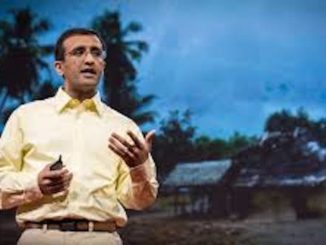
    WASHINGTON (TIP): US President Joe Biden has appointed Indian-origin Raj Panjabi to lead his Malaria Initiative, which is mainly in African and Asian countries.

    “After being sworn in this morning, I’m honored to share that I’ve been appointed by” Joe Biden as the president’s Malaria Coordinator to lead the US president’s Malaria Initiative, Raj Panjabi said on twitter. “I’m grateful for this chance to serve,” he added.

    Born in Liberia, Raj Panjabi and his family fled the county during its civil war and arrived in the United States as refugees in the 1990s.

    My family and I arrived in America 30 years ago after fleeing civil war in Liberia. A community of Americans rallied around my family to help us build back our lives. It’s an honor to serve the country that helped build back my own life as part of the Biden-Harris Administration.

    “In the face of unprecedented crises, I am humbled by the challenges our country and our world faces to build back better. But as I have learned in America: we are not defined by the conditions we face; we are defined by how we respond,” Raj Panjabi said in a series of tweets.

    As a doctor and public health professional who has cared for patients alongside the staff of the President’s Malaria Initiative and its partners USAID and Center for Disease Control, Raj Panjabi said: “I’ve been inspired by how they’ve responded to fight malaria, one of the oldest and deadliest pandemics, and saved lives around the world.”

    He said this mission is personal for him. “My grandparents and parents were infected with malaria while living in India. As a child in Liberia, I fell sick with malaria, and as a doctor serving in Africa, I have seen this disease take too many lives,” he said.

    “I’ve seen how” the Malaria Initiative and its partners have responded with resolve in the countries where it operates.

    “I’ve seen the relief on the faces of parents whose children survived malaria because they were treated with medicines and by health workers backed by its support,” he said.

    Raj Panjabi fled Liberia during the country’s civil war at age nine, becoming a refugee in the US. He returned to Liberia as a medical student and in 2007, co-founded Last Mile Health. He has served as an assistant professor of medicine at the Harvard Medical School, an associate physician at the Brigham and Women’s Hospital and the CEO and co-founder of Last Mile Health, according to his profile on LinkedIn.

    Raj Panjabi and the Last Mile Health team played a key role in the 2013-16 West Africa Ebola epidemic, helping train over a thousand frontline and community health workers and support the government of Liberia to lead its national Ebola Operations Centre. Raj Panjabi delivered testimony on the Ebola epidemic at the US Senate Foreign Relations Subcommittee.

    In response to COVID-19, he led Last Mile Health to support governments in Africa to train frontline health workers. He served as the advisor to former president Ellen Johnson Sirleaf in her role as the co-chair of the Independent Panel for Pandemic Preparedness and Response at the World Health Organization (WHO). Raj Panjabi has cared for patients with COVID and urgent care needs.

    He is a graduate of the University of North Carolina School of Medicine, trained in internal medicine and primary care at Massachusetts General Hospital and Harvard Medical School, and received a master’s degree in public health in epidemiology from Johns Hopkins. He has served as a faculty member at the Harvard Kennedy School.