Tag: US Presidential debate 2020

  • Biden wins, according to polls sponsored by the mainstream media; Trafalgar poll predicts Trump will win

    Biden wins, according to polls sponsored by the mainstream media; Trafalgar poll predicts Trump will win

    By Ven Parameswaran

    There are only 12 days to the Presidential election on November 3, 2020.  Everyone is interested in knowing who has better chances to win – President Trump or former Vice President Biden.    This discussion and speculation will keep on going till the election.

    All the TV networks including Fox, CBS, ABC, NBC, CNN and the mainstream media including NYT and Washington Post and the polls sponsored by them have been predicting Biden will win by a comfortable margin.  How can one believe them?  They predicted in 2016 that Hillary Clinton would win.But Trump defeated Clinton by 306 electoral votes, though Clinton won the popular vote by 2%.

    Therefore, the decision will be made by the voters in battleground states of Florida, North Carolina, Arizona, Pennsylvania, Ohio, Michigan, and Wisconsin.    In 2016, Trump’s major victory against Clinton was in Pennsylvania, Wisconsin, Ohio, and Michigan.    He won with a narrow margin of 77,000 votes combined from these four states.    According to my calculations Trump has good chances to win New Hampshire, Nevada, and Minnesota this year.

    The upstart Trafalgar does not see 2020 the same way everyone else does.  Trafalgar’s strategist Robert Cahaly was born in Georgia and got involved in politics going door-to-door as a kid.  He started a political consulting firm with some others in the late 1990s.  Around 2008, he says, they realized that the polling they were getting was not very good, so they started doing their own.  He says they got good, accurate results in the races they were working.

    In the 2016 primaries, they started putting out some of their own polls.  “Our polls ended up being the best ones in South Carolina and Georgia, “ Cahaly says.  “So we started studying what it was that made those so different.”

    Then there was the breakthrough in the 2016 general election.  “We ended up having an incredible year,” he says.  “I mean, we got Pennsylvania right.  We got Michigan right.  We had the best poll in five of the battleground states in 2016.  And I actually predicted 306 to 232 on the electoral college.  And we went from doing a little bit of polling on the side to that (being) our primary business in about 24 hours.  And since then, that is what we have been doing.”

    As a general matter, he discounts national polls.  First, because the race for the presidency is won state by state, not on the basis of the national vote.  Second, because all the methodological difficulties involved in getting a balanced, representative sample in a state poll of 1,000 people are magnified in a national survey.  It is easily skewable at that point, and you start making assumptions.

    So how does he see the 2020 race? Fundamentally, as a motivation race, rather than a persuasion race, with perhaps 1.5 per cent, at most, of the electorate UNDECIDED in battleground states.

    The likeliest Trump electoral path to victory involves winning the battlegrounds of North Carolina, Georgia, Florida, Arizona, and either Michigan or Pennsylvania among the former Blue Wall states (assuming he does not lose states such as Iowa or Ohio).

    THIS IS CAHALY’S BREAKDOWN:  He believes Trump will win North Carolina and Florida and discount’s Biden’s chances in Georgia because the Republican-base vote is too big there (the same is true in Texas).

    As for Arizona, “I think Trump has the lead,” Cahaly says.  “I think Republican Senator Martha McSally has some ground to make up.  I see her about 5 points behind Trump, but I think Trump will probably win the state.  And win it by a couple of points or more.  And if he wins it big enough, McSally has a shot.”

    Trump is not there yet in Pennsylvania, according to Cahaly. “Right now, we have got him down in Pennsylvania,” he says, “I think if it were held today, the Undecides would break toward Trump and there would be some hidden vote.

    In Michigan, Trafalgar has Trump ahead.  “I think he will win Michigan, “ Cahaly says, citing fear of the Democratic economic agenda.

    Overall, Cahaly sees another Trump win.  “If it all happened right now,” he maintains, “my best guess would be an Electoral College victory in the high to 270s, low 280s.”

    THERE IT IS.  AMONG POLLSTERS, YOU HEARD IT FROM ROBERT CAHALY FIRST, AND PERHAPS EXCLUSIVELY—A POSITION HE HAS BEEN IN BEFORE.

    I must point out that the second Presidential debate scheduled for 22nd October can have an impact.

    Do not forget Trump has been most unpredictable.  President Obama said Trump won’t run, won’t be nominated and cannot win against Hillary Clinton.   Nobody expected Trump would defeat nine veteran governors and 5 senators in the Primaries.  Trump proved everyone wrong by defeating the most popular Hillary Clinton.  There are more women voters than men voters.

    Trump is generating more enthusiasm than Biden.  The working class of America cannot forget Trump brought the unemployment to 3.4%, a 50-year record.   Four organizations have nominated Trump for Nobel Peace Prize based on foreign policy achievements, especially peace in the Middle East.

    THE GALLUP POLL ASKED THE AMERICANS: Are you better off today than four years ago?  56% said they are better off.  This is the most favorable poll for Trump.The question was coined by President Ronald Reagan during the Presidential debate.

    (Ven Parameswaran, Chairman, Asian American Republican Committee (founded 1988), lives in Scarsdale, NY. He can be reached at vpwaren@gmail.com)


  • Finally, a substantive and informative debate

    Finally, a substantive and informative debate

    By Gary Abernathy

    NBC’s Kristen Welker maintains order for final presidential debate

    As always, the “winner” of Thursday’s debate will be largely a matter of partisan opinion. The undisputed winner was journalism. After too many missteps in the Trump era when the media has fallen short of past standards, Welker did a good job of returning some respect to the profession.

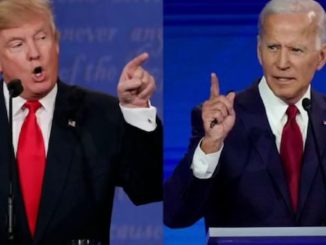
     The debate Thursday night between President Trump and former vice president Joe Biden was so substantive and informative it sometimes bordered on boring, reflecting a level of gravitas we need more of in politics today.

    Trump, of course, can be counted on to bring at least a minimum level of bombast. He has a knack for enlivening things even when it seems safe to nod off. He was determined to inject into this nationwide broadcast claims about the business dealings of Hunter Biden, including allegations that the elder Biden was aware of — and involved in — his son’s business dealings (something Joe Biden has denied).

    Whether Trump laid a glove on Biden isn’t yet clear, but it was to moderator Kristen Welker’s credit that, even if she didn’t invoke Hunter Biden herself, she also didn’t try to stop Trump from doing so. Biden responded mostly by trying to change the subject to Trump’s foreign dealings. Eventually, Biden will need to answer in more detail questions about his son’s foreign business arrangements, and his attempt to blame Russia for these allegations is all but certain to seem obviously nonsensical.

    Over an hour and a half, the debate also covered the pandemic, health care in general, foreign business dealings, the economy, immigration, race relations, climate change, energy and leadership. Viewers were able to hear the stark and substantial differences between the candidates.

    On the more than 500 children separated from their parents at the border, Biden did a good job making the emotional case for the tragedy of such circumstances. But Trump was effective in explaining efforts being made to reunite children and parents and the care that children are receiving in the meantime. And when Trump charged that the Obama administration initially supplied the notorious “cages” that housed children, Biden never answered Trump’s repeated question: “Who built the cages, Joe?”

    On how governors have handled covid-19, Biden scored with his comment that he doesn’t look at states “in the way [Trump] does, blue states, red states,” saying that to him, “they’re all the United States.” Trump’s upbeat outlook on covid-19 may strike some as too rosy, but it stood in contrast to Biden’s “dark winter” and suggestion that Americans are learning not to live with the virus but “to die with it.” Voters tend to prefer optimism to defeatism. And Biden’s late-in-the-game admission, under pressure from Trump, that he would transition the country away from the oil industry might haunt him.

    Trump was good Thursday evening, and probably not just because of the debate sponsors’ decision to mute microphones if necessary to allow for uninterrupted answers. The president took a different approach to this debate than he did to the first one, which was a disaster for him. Trump’s performance Thursday encapsulated what makes him frustrating for those who want him to succeed. This is the version of Trump many of his supporters want to see more often — smart, informed and even presidential. Sadly, he doesn’t show up often enough.

    As moderator, NBC’s Welker offered a master class in handling the two candidates. It stood in sharp contrast to last week’s examples of what not to do at the competing town halls that replaced the canceled second debate.

    Last week, Trump was aggressively — some might say rudely — grilled by NBC’s Savannah Guthrie, who turned what was intended to be an audience-driven event into a one-on-one debate. Bizarrely, Guthrie spent an inordinate amount of time pressing Trump on QAnon, a fringe conspiracy movement most Americans aren’t focused on as an election issue. In the event’s opening minutes, she also demanded that Trump denounce white-supremacy groups, a favorite media topic no matter how many times Trump repudiates them.

    On ABC, meanwhile, Biden was treated like an old friend dropping by for drinks. Moderator George Stephanopoulos never broached reporting in the New York Post and other outlets on emails purportedly obtained from a laptop belonging to Hunter Biden. Stephanopoulos only mildly pressed Biden on whether he would pack the Supreme Court, settling for a “noncommittal committal” that Biden would answer the question before Election Day — depending on how the Amy Coney Barrett nomination turned out.

    These set the stage for how Welker would moderate Thursday’s face-off. She was respectful and tough in equal measure for both candidates, allowing them to make their points but always returning to the topics she wanted addressed. Focusing on the agenda, she put both candidates on the spot. For instance, she hit Trump hard on the allegations of racism frequently leveled against him, but she also pressed Biden on negative consequences of the 1994 crime bill he oversaw as chairman of the Senate Judiciary Committee. And so it went throughout the night, fair and balanced.

    As always, the “winner” of Thursday’s debate will be largely a matter of partisan opinion. The undisputed winner was journalism. After too many missteps in the Trump era when the media has fallen short of past standards, Welker did a good job of returning some respect to the profession.

    (Gary Abernathy is contributing Columnist with Washington Post)

    (Source: Washington Post)


  • U.S. presidential elections: Biden significantly ahead in opinion polls

    U.S. presidential elections: Biden significantly ahead in opinion polls

    Days before the U.S. presidential election, opinion polls show that democratic nominee Joe Biden is significantly ahead of incumbent Donald Trump in the race for the White House. While Biden appeals to a broad variety of people cutting across age, race and gender lines, Trump holds an edge among white, male, older and under-educated voters.

    Poll favorite

    According to data from multiple opinion polls, aggregated by fivethirtyeight.com, a U.S.- based news website, Biden had a 10.7%-point lead over Trump in national polls as of October 17. In March, the gap was narrower (4%-6% points). It widened in June (6%-9.5% points) and increased further in October (8%-10.5% points).

    According to a study by the Pew Research Center, views on Trump are central to voting choices — both among his supporters and Biden’s. In October, 63% of Biden’s supporters said their choice was more a vote “against Trump”. Also, 71% of Trump’s supporters said their choice was more a vote “for Trump”.

    Overall acceptance

    Overall, Biden enjoys significant acceptance across gender, race, age and education lines. However, Trump holds a slight advantage over Biden in certain sections of the population. Charts show the % of voters who would vote for Biden/Trump if the presidential election was to be held today*. Among both men and women, Biden was favored by the majority, though the gap was narrow among men.

    Pew surveyed 11,929 adults, including 10,543 registered voters, during the last week of Sept. and the first week of Oct. 2020.

    (Agencies)


  • The final debate, a Pandora’s Box of  Accusations and Lies

    The final debate, a Pandora’s Box of Accusations and Lies

    “I am the least racist person in this room”, Trump claimed.

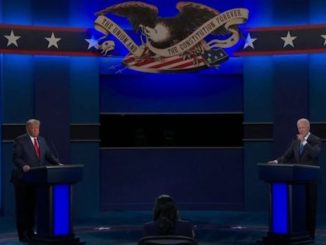
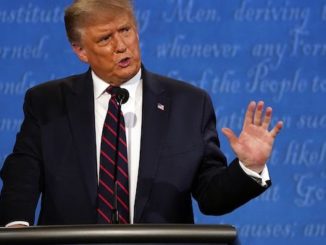
    NEW YORK (TIP): The October 22 debate between President Donald  Trump and Vice President Joe Biden may be characterized as a friendly verbal duel between the two. President Trump, heeding the counsel  of his advisors did manage to overcome his impulse to attack left and right, and  appear aggressive. He was assertive though,  with all his  unfounded  accusations and claims, but the saving grace was an absence of Trumpian aggression. He did try to provoke Biden by repeatedly referring to the latter’s and his son Hunter Biden’s shady financial deals with countries like Ukraine, Russia and China.

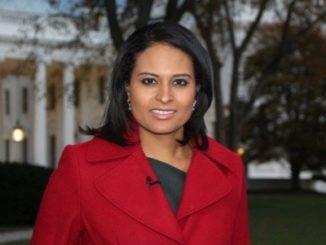
    Debate Moderator NBC White House Correspondent Kristen Welker chose 6 topics for the debate which included Coronavirus, American Families, Race in America, Climate Change , National Security, and Leadership.

    U.S. President Donald Trump defended his approach to the coronavirus outbreak and claimed the worst of the pandemic was in the past.

    Democrat Joe Biden renewed his attacks on U.S. President Donald Trump’s handling of the coronavirus pandemic while Trump leveled unfounded corruption accusations at Biden and his family.

    Trump  appeared to be straight lying with regard to his claim that the Coronavirus vaccine will be ready in weeks. When Moderator Kristen Welker asked him if he was guaranteeing that the vaccine will be ready “in weeks”, he said “NO”, and tried to explain away that many companies were almost there. And, on demand from Welker, he named a few companies , adding there were many others engaged in developing the vaccine.

    But even when the subject was the pandemic, Trump was foreshadowing what was to come, which was his onslaught of hazy accusations about Biden’s son Hunter and his foreign financial entanglements which have sprouted into Biden family entanglements, which Trump couldn’t really explain and didn’t really have his facts straight on and which are wholly unproven if not outright disproved. But still, Trump carried on with this story line through the foreign policy conversation — with a slight detour to fracking — and on through health care where he looks forward to the complete dismantling of the Affordable Care Act but still has yet to pull the big, beautiful Republican health care plan out of his hat.

    Biden spent much of this time declaring himself innocent of any foreign wrongdoing and reminding Trump that he was, in fact, not running against Rep. Alexandria Ocasio-Cortez (D-N.Y.) or Sen. Bernie Sanders (I-Vt.) or any of the Democratic governors who have gotten under Trump’s skin. “He thinks he’s running against someone else. He’s running against Joe Biden,” said Joe Biden.

    One of the final topics of discussion was race and it was, as always, the most nerve-racking. What white supremacist group will the president refuse to disavow? What racist retweet will he refuse to acknowledge? What horrible thing will the president say and then declare himself misunderstood? Welker asked each candidate to speak directly to Black Americans who feel compelled to give their children “the talk” in which they snatch away their innocence and explain how they must interact with police officers with a combination of fear and self-preservation. Do you empathize with those families?,  Welker asked.

    Biden spoke first and looked into the camera as he both outlined his understanding of “the talk” and what it means to have to deliver it. Trump couldn’t keep his gaze directed at the viewers. His eyes darted from the moderator to Biden and back again. As the conversation moved on to the Black Lives Matter movement and systemic racism, the president bragged about his funding of historically Black colleges and universities and his support of criminal justice reform. “I am the least racist person in this room,” he declared. But what does he say to those who believe he throws fuel on the fires of racial animosity and hatred? “I don’t know what to say.” And perhaps that was his most honest moment of the night.

    In closing, Welker asked each man to imagine his Inauguration Day speech. What might he say to those Americans who didn’t vote for him? How would he bind up the country? Trump spoke of money. “Success is going to bring us together,” he said. Trump believes that all things are transactional and when enough money is offered, anything, anyone can be bought. Black Americans can buy themselves out of racism. Women can buy themselves gender parity. The country can buy back its disintegrating reputation as humane and just.

    Biden’s inaugural speech would not ignore the economy. But it would also recognize that some things simply do not have a price. “I’m going to make sure you’re represented,” he said. “I’m going to choose hope over fear.”

    It should be said to the credit of Kristen Welker that she was in total control of the debate, unlike Chris Wallace who was moderator for the first debate on September 29 , when he had often to raise his voice many a time to bring about order.

    (With inputs from agencies)


  • Trump’s ‘filthy’ comment on India dismays strategists

    Trump’s ‘filthy’ comment on India dismays strategists

    ‘Look at India, it’s filthy,’ the US President said in the Oct 22 presidential debate

    NEW DELHI / NEW YORK (TIP): After not figuring in the first presidential debate between US President Donald Trump and former Vice President Joe Biden, India did crop up in the second edition but not in the manner proponents of a much closer Indo-US strategic relations would have wished for.

    “Look at China. How filthy it is. Look at Russia. Look at India, it’s filthy. The air is filthy,’’ said Trump in a remark that cut several strategic analysts to the bone. On the other hand, the US has the “lowest number in carbon emissions”, he claimed.

    Several questioned on social media the need for Trump to make an unsavory reference to India when they were expecting Indo-US ties to turn the strategic corner during the forthcoming visit of two top American cabinet ministers to India. They also wondered if Trump had this view of India why did he pay a return stadium-visit to Ahmedabad barely six months after being hosted in a Houston stadium by PM Narendra Modi.

    Biden did not mention India.

    Trump was responding to debate moderator Kristen Welker’s question on how he would simultaneously combat climate change and support job growth.

    The debate was expected to feature India and the wider neighborhood. During the first debate, the two candidates did not speak much on the American foreign policy, especially in the Asia Pacific, which seems to be the focus of the current administration.

    One reason for the cursory references to foreign policy is also because one debate was cancelled after Trump refused to participate in an on-line format.

    Welker had chosen six topics for in-depth discussions. Three of them were domestic issues while the other three – climate change, leadership and national security – had foreign policy ramifications.

    Trump, however, was consistent in his observations in blaming the three countries. In the first debate on September 29, he had said, “China sends up real dirt into the air. Russia does, India does — they all do.’’

    (Source: The Tribune)

  • Untitled post 101509

    Donald Trump says no to virtual debate with Joe Biden


    WASHINGTON (TIP): The Commission on Presidential Debates said Mr. Trump and Mr. Biden will appear from remote locations, while voters and the moderator will ask them questions from the original debate site in Miami.

    President Donald Trump vowed Thursday, October 8, not to participate in next week’s debate with Democratic presidential nominee Joe Biden after organizers announced it will take place virtually because of the president’s diagnosis of COVID-19.

    “I’m not going to do a virtual debate,” Mr. Trump told Fox Business News, moments after the nonpartisan Commission on Presidential Debates announced the changes.

    The shakeup comes a week before Mr. Trump and Mr. Biden were set to square off for the second presidential debate in Miami. Mr. Biden’s campaign insisted its candidate was ready to move forward, but the future of the event is now in serious doubt.

    The Commission on Presidential Debates made the decision unilaterally, citing the need “to protect the health and safety of all involved with the second presidential debate.”

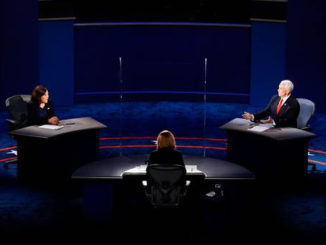
    When Republican Mike Pence and Democrat Kamala Harris squared off for their only vice-presidential debate in Salt Lake City on Wednesday, October 7 night, they shared a stage but were separated by plexiglass to prevent the spread of the virus.

    Mr. Trump’s campaign said the president would do a rally instead of the debate.

    “For the swamp creatures at the Presidential Debate Commission to now rush to Joe Biden’s defense by unilaterally canceling an in-person debate is pathetic,” Bill Stepien, Trump campaign manager said in a statement. “The safety of all involved can easily be achieved without canceling a chance for voters to see both candidates go head to head. We’ll pass on this sad excuse to bail out Joe Biden and do a rally instead.”

    Trump was hospitalized for three days but is now back at the White House recovering. He has vowed to return to the campaign trail soon. Still, the commission’s move is yet another indication that the presidential election is being dominated by the virus – defying the president’s months long attempts to underplay it and declare that the country was ready to move on.

    Trump is thought to be trailing in key battleground states. Even before his COVID-19 diagnosis, he was widely criticized for his chaotic performance during last week’s first presidential debate in Cleveland. Next week’s debate, and a third one set for the following week in Nashville, would have been a chance for him to attempt to reset the election and potentially change its trajectory.

    Biden aides argued that Mr. Trump’s pulling out could be a boon to their candidate. Given reactions to the chaotic first debate, they believe most voters, especially undecided voters, will see the president as avoiding a second debate out of his own interests, not because he dislikes the format.

    “Vice President Biden looks forward to speaking directly to the American people,” deputy Biden campaign manager Kate Bedingfield said in a statement.

    Mr. Biden said earlier in the week that he was “looking forward to being able to debate him” but added “we’re going to have to follow very strict guidelines.” He said he and Mr. Trump “shouldn’t have a debate” as long as the president remains COVID positive.

    The Commission on Presidential Debates announced early Thursday the candidates would “participate from separate remote locations” while the participants and moderator remain in Miami, it said. Moments later, Mr. Trump vowed to skip the event entirely.

    Mr. Trump was diagnosed with the coronavirus a week ago, but in a Tuesday, October 6 tweet said he looked forward to debating Biden a second time, “It will be great!” he tweeted.

    Mr. Trump was still contagious with the virus when he was discharged from Walter Reed National Military Medical Center on Monday, but his doctors have not provided any detailed update on his status. According to the Centers for Disease Control and Prevention, those with mild to moderate symptoms of COVID-19 can be contagious for as many as – and should isolate for at least – 10 days.

    It’s not the first debate in which the candidates are not in the same room. In 1960, the third presidential debate between Richard Nixon and John F. Kennedy was broadcast with the two candidates on opposite coasts.

    Reports have come in, at the time of filing this story that Trump has obtained a certification from a doctor that he would be fit to resume normal work from Saturday, October 10.

    (Agencies)

  • Another lackluster, albeit civil debate between Vice Presidential Candidates

    Another lackluster, albeit civil debate between Vice Presidential Candidates

    Prof. Indrajit S. Saluja

    WASHINGTON (TIP): The debate between two skilled debaters- vice presidential candidates Mike Pence and Kamala Harris presented a pleasing picture of a civil discourse despite of Pence drawing extra time to make his statements and often interrupting Kamal Harris who politely pointed out to Pence that she was speaking. There was no lack of civility, but surely a lack of honest and truthful claims and counterclaims. Their debate on October 7 was far easier to watch than last week’s chaotic presidential debate.

    Both Pence and Harris engaged in mild overstatement and rhetorical flourishes at times. That’s normal in politics. Harris, for example, exaggerated the job losses that President Trump’s trade war with China has caused. But Pence was far more dishonest. At several points, he seemed to want to run on a record that didn’t exist.

    CNN provided a “partial list” of false and misleading statements made by Pence during the debate.

    “On day one, Joe Biden is going to raise your taxes,” Pence said. This is false: Biden has proposed tax increases only on households making more than $400,000 a year.

    Pence said he and Trump had a plan to “protect pre-existing conditions for every American.” The administration has repeatedly attempted to take health insurance away from Americans, and the number of uninsured people has risen during Trump’s presidency.

    Pence claimed that Trump had “suspended all travel from China.” He did not. Although Trump claimed to have done so, hundreds of thousands of people traveled from China to the U.S. after the coronavirus appeared.

    Pence said the Trump administration would “continue to listen to the science” on climate change. The administration has defied or ignored the views of scientists on climate change.

    Pence said Biden would “ban fracking.” Biden would not.

    Pence said Trump revered members of the military. In 2015, Trump publicly mocked John McCain because he had been a prisoner during the Vietnam War. More recently, Trump has described Americans soldiers killed in war as “losers” and “suckers,” The Atlantic has reported.

    Pence said voting by mail created “a massive opportunity for voter fraud.” This contradicts all of the available evidence and history about mail voting.

    Pence said he and Trump have “always” told the American people the truth.

    The most disappointing aspect of Pence’s performance is that he has deep disagreements with Harris and Biden that don’t depend on distortions. It’s entirely possible to make a fact-based case against higher taxes on the rich; or widely available abortions; or high levels of immigration; or new restrictions on police.

    But that is not what Pence did.

    A strong moment for each candidate: Harris’s opening remarks, taking the administration to task for the terrible toll of the coronavirus on the U.S.; Pence’s celebrating the Trump administration’s turn to a more hawkish approach to China, which has since become a bipartisan consensus.

    Speaking time: Despite the vice president’s repeated interruptions, the two debaters spoke for nearly identical amounts of time over all: almost 36 minutes and 30 seconds.

    Questions unanswered: Harris refused to answer Pence’s direct question about whether Democrats would expand the number of justices on the Supreme Court. Pence didn’t answer when the moderator asked him why America’s pandemic death toll is disproportionate to its population and what he would do if Trump refused to accept the election results.

    Post-debate instant polls: 59 percent thought Harris won, 38 percent thought Pence won, CNN’s poll found.

    On the lighter died, there was an uninvited guest: A fly that landed on Pence’s head for more than two minutes became a star on social media.

    (With inputs from CNN)


  • Battleground States hold the Key to Victory -US Election 2020

    Battleground States hold the Key to Victory -US Election 2020

    By Ven Parameswaran

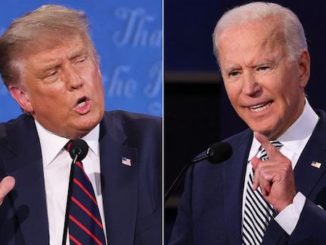
    The first Presidential debate on September 29 was watched by 73 million people.   Trump is a gambler, and not just because he owned casinos.  He ran one of the biggest gambles of his life in the debate, and whether it pays off now is very uncertain.    The President’s ultra-aggressive performance in the first presidential debate—aggressive to the point where moderator Chris Wallace had to ask him three times to simply let challenger Joe Biden answer a question—can’t have been an accident.  It was an effort by a candidate behind in the polls to shake up the race by driving home his principal line of attack: that Biden is too weak to be the president of America.

    Trump chose not simply to say that his opponent is too weak, or too old, or too afraid of his party’s left wing, but rather to try to demonstrate it before a world-wide audience by attacking and belittling him.  The subliminal message: If you can’t stand up to me, how can you stand up to the leader of China, or those perpetrating violence in the streets of Portland?

    And perhaps it worked.  Nobody who watched was left in any doubt about the core argument of Trump’s campaign, which is in large measure about the assertion that his foe is not up to the demanding job of sitting behind the Resolute Desk.

    Biden did,  at times , seem taken aback by the relentless ferocity of the onslaught—and if the plan was to get the challenger to overreact by calling the president a “clown,” well, that did happen at one point.  This is what those who call Trump undisciplined don’t entirely grasp:  He is very disciplined in driving home his main message, and will do so again and again, without remorse or apology, as he did Tuesday night.

    It is important to recall how Trump used almost the same technique in defeating 16 Republican candidates in 2016 and Hillary Clinton.  He succeeded in burying Bush and Clinton dynasties, against all odds, including vehement opposition of the mainstream media, continuous investigations, impeachment he has won.  Therefore, it is possible his strategy to defeat Biden could work.

    Trump was able to impress the audience that he was for law and order and strong economy.  He also took credit for appointing 200 judges and 3 Supreme Court judges in his first term (third appointment is in process).

    There was little likable about the presidential persona that came across in the debate stage.  Maybe that does not matter as much as it used to in politics.  Trump has demonstrated that people don’t have to like him to support him.  A common refrain among Trump voters, in fact, is that he is rough and tough, but that they see that as part of his strength.  Yes, they say, he is a bully, but he is our bully.

    Trump’s main strategy is to attract new voters from the uneducated working class located in the battleground states.  If so, his aggressive performance in the debate should help him achieve his goals.  Rush Limbaugh, most popular talk radio host has praised Trump’s debate performance.    As mentioned in my previous dispatches, Trump is not appealing to the elites.

    If Trump knew how to get elected as President in 2016, his strategy to get reelected could succeed.

    (Ven Parameswaran, Chairman, Asian American Republican Committee (founded 1988) lives in Scarsdale, NY.  H can be reached at vpwaren@gmail.com)