‘Westinghouse, chemical weapons watchdog OPCW and FIFA were targeted’
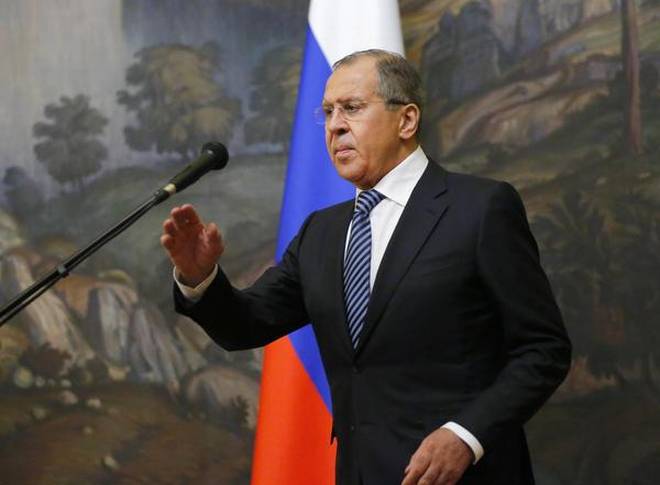
WASHINGTON (TIP): The U.S. Justice Department on Thursday, October 4, indicted seven agents of Russia’s GRU military intelligence agency as part of a joint crackdown with allies Britain and the Netherlands on a series of major hacking plots attributed to Moscow.
The U.S. indictments were announced as Dutch security services said they had thwarted a Russian attack on the global chemical weapons watchdog, the OPCW, and after Britain blamed the GRU for plots that notably targeted the U.S. Democratic Party and world sport’s anti-doping authority
John Demers, U.S. Assistant Attorney General for National Security, confirmed that known attack targets included the OPCW, sports bodies including FIFA and the World Anti-doping Agency (WADA), as well as U.S. nuclear energy company Westinghouse.
“Nations like Russia and others that engage in malicious and norm-shattering cyber and influence activities should understand the continuing and steadfast resolve of the United States and its allies to prevent, disrupt and deter such unaccountable conduct,” Mr. Demers told a news conference.
“The defendants in this case should know that justice is very patient, its reach is long, and its memory is even longer,” he said.
The indictments include charges of money laundering, using virtual currencies like bitcoin, wire fraud and identify theft.
Mr. Demers said the operations “involved sophisticated, persistent and unauthorized access into the victims’ computer networks for the purpose of stealing private or otherwise sensitive information.”
While the latest case did not arise from Robert Mueller’s probe into Russian election meddling, it overlaps with it — including the identity of the individuals charged, Mr. Demers said.
In July, Mr. Mueller indicted 12 GRU officers, accusing them of interfering in the U.S. polls in 2016.
Canada confirmed on Thursday it believes itself to have been targeted by Russian cyber attacks, citing breaches at its center for ethics in sports and at the Montreal-based WADA.
Cyber aggressor
“The government of Canada assesses with high confidence that the Russian military’s intelligence arm, the GRU, was responsible” for these cyber attacks, the foreign ministry said in a statement.
Meanwhile, Britain’s National Cyber Security Centre (NCSC) termed Russia’s GRU a pernicious cyber aggressor.
GRU, Britain said, was almost certainly behind the BadRabbit and World Anti-Doping Agency attacks of 2017, the hack of the Democratic National Committee (DNC) in 2016 and the theft of emails from a U.K.-based TV station in 2015.
“The GRUs actions are reckless and indiscriminate: they try to undermine and interfere in elections in other countries,” said British Foreign Secretary Jeremy Hunt.
Though less well known than the Soviet Union’s once mighty KGB, Russia’s military intelligence service played a major role in some of the biggest events of the past century, from the Cuban missile crisis to the annexation of Crimea.
Though commonly known by the acronym GRU, which stands for the Main Intelligence Directorate, its name was formally changed in 2010 to the Main Directorate of the General Staff (or just GU). Its old acronym — GRU —is still more widely used.
WASHINGTON(TIP): The US has said it will impose fresh sanctions on Russia after determining it used nerve agent against a former Russian double agent living in the UK.
Sergei Skripal and his daughter Yulia were left seriously ill after being poisoned with Novichok in Salisbury in March, though they have now recovered.
A UK investigation blamed Russia for the attack, but the Kremlin has strongly denied any involvement.
Russia has criticized the new sanctions as “draconian”.
In a statement released on Wednesday, August 8, the US State Department confirmed it was implementing measures against Russia over the incident.
Spokeswoman Heather Nauert said it had been determined that the country “has used chemical or biological weapons in violation of international law or has used lethal chemical or biological weapons against its own nationals”.
“The strong international response to the use of a chemical weapon on the streets of Salisbury sends an unequivocal message to Russia that its provocative, reckless behavior will not go unchallenged,” a UK Foreign Office statement said.
The Russian embassy in the US hit back on Thursday morning, criticizing what it called “far-fetched accusations” from the US that Russia was behind the attack.
Russia had become “accustomed to not hearing any facts or evidence”, it said, adding: “We continue to strongly stand for an open and transparent investigation of the crime committed in Salisbury.”
The new sanctions will take effect on or around 22 August and relate to the exports of sensitive electronic components and other technologies.
The State Department said “more draconian” sanctions will follow within 90 days if Russia fails to give reliable assurances it will no longer use chemical weapons and allow on-site inspections by the United Nations.
An official said it was only the third time that the US had determined a country had used chemical or biological weapons against its own nationals.
Previous occasions were against Syria and against North Korea for the assassination of Kim Jong-nam, the half-brother of leader Kim Jong-un, who died when highly toxic VX nerve agent was rubbed on his face at Kuala Lumpur airport.
Are these the only US sanctions against Russia?
No. In June the US imposed sanctions on five Russian companies and three Russian individuals in response to alleged Russian cyber-attacks on the US.
All are prohibited from any transactions involving the US financial system.
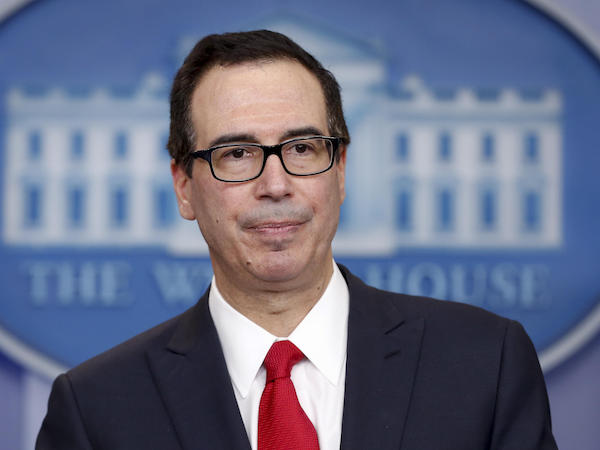
Treasury Secretary Steven Mnuchin said the measures were to counter “malicious actors” working to “increase Russia’s offensive cyber-capabilities”.
After pressure from Republican members of Congress, the State Department has determined Moscow broke international law by using a military grade chemical weapon on the Skripals.
While the US expelled some five dozen diplomats shortly after the poisoning, the administration stopped short of making a formal determination that Russia had broken international law.
But Congress has been pushing for such a decision and now the state department has confirmed Russia’s actions contravened 1991 US legislation on the use of chemical weapons. That breach automatically triggers the imposition of sanctions and places requirements on Russia to avert further restrictions in three months’ time.
Those requirements could include opening up sites in Russia for inspection – a move Moscow would probably resist.
So far President Donald Trump has been silent on this latest move – which could well derail his attempts to develop a new, warmer relationship with Vladimir Putin.
Following the incident, the British government said the military-grade nerve agent Novichok, of a type developed by Russia, had been used in the attack.
Relations between Russia and the West hit a new low. More than 20 countries expelled Russian envoys in solidarity with the UK, including the US. Washington ordered 60 diplomats to leave and closed the Russian consulate general in Seattle.
Three months after the Salisbury attack, two other people fell ill at a house in Amesbury, about eight miles from the city. Dawn Sturgess later died while her partner, Charlie Rowley, spent three weeks recovering in hospital.
After tests, scientists at the UK’s military research lab, Porton Down, found the couple had also been exposed to Novichok.
Mr Rowley told ITV News he had earlier found a sealed bottle of perfume and given it to Ms Sturgess, who sprayed the substance on her wrists.
“Will some Republicans in Congress prove that they have spine by coming forward to initiate the process of impeachment of Trump? Any effort on the part of Democrats will get nowhere, because they are in a minority in both the House of Representatives and the Senate. The initiative should come from Republicans. They owe it to their country to act before it is too late. And they owe it to the Constitution which they are sworn to “support and defend … against all enemies, foreign and domestic.”
President Donald Trump has already committed crimes that are impeachable under the U.S. Constitution. Apolitical Americans are demanding that he be impeached right away. Are there Republicans with spine in U.S. Congress who will initiate the process of impeachment without wasting any more time? They don’t have to wait until special counsel Robert S. Mueller III completes his investigation into Russia’s meddling in the 2016 presidential election and into the alleged collusion between the Trump campaign and Russia during that election.
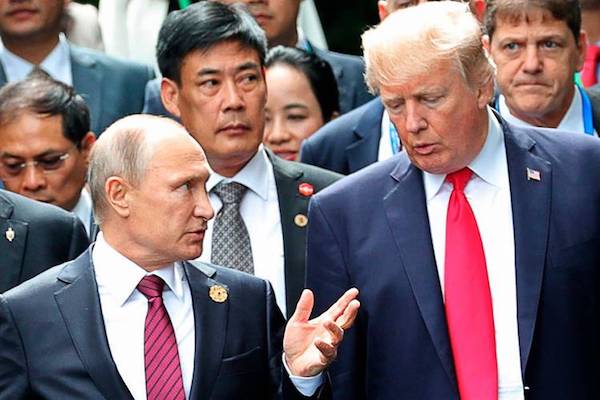
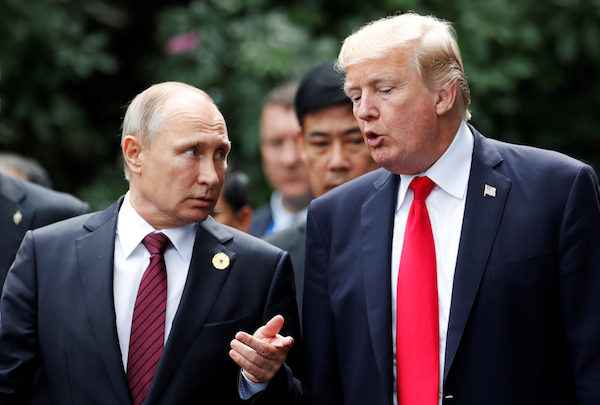
The demand for Trump’s impeachment became louder in the wake of his disgraceful performance at the joint press conference with Russian President Vladimir V. Putin, in Helsinki, Finland, on July 16, 2018. Most Americans were appalled to see the president of their country fawning before the Russian dictator, who is also a murderous thug. They bowed their heads in shame when they heard the president challenge the findings of the intelligence community of his own country, in the presence of the man who has been implicated in those findings. Nothing comparable to that has ever happened in the history of their country, they all say.
The press conference followed a secret one-on-one meeting of the two leaders, with only two translators present. Except for some stooges of Trump, all Americans had expected him to cancel the hastily arranged meeting, because, only a week earlier, the Mueller investigation referred to above had taken a critical turn: It had indicted 12 officers of the GRU, Russia’s military intelligence service, for their role in their country’s attack on America’s electoral system. The 29-page indictment detailed how these officers, at the behest of their president, hacked into the computers of over 300 people working for Democratic Party candidate Hillary Clinton and of the Democratic Party itself; stole thousands of emails and other documents; and used them to prepare anti-Clinton propaganda material. They opened fake social-media accounts to release the material to the public. (At this writing, Facebook, the social-media site that has the widest reach in the U.S., has announced the closing of 32 fake accounts and their respective web pages, on suspicion of being linked to Russians. The fake accounts were opened to disrupt the mid-term election that will take place in three months.) President Trump, who has been ridiculing the Mueller investigation as a “witch hunt” and the allegations of Russian interference in the 2016 election as a “hoax,” paid no heed to the indictment and went ahead with the planned summit with his favorite Russian dictator.
Putin could not have asked for a better warm-up to the summit than the Twitter message Trump issued on the morning of the summit. In that message, he blamed the years of tension with Russia on the “foolishness and stupidity” of his own country, as well as the “Rigged Witch Hunt,” meaning the Mueller investigation. Americans are anxious to know what the two leaders discussed at their one-on-one secret meeting. What little they know so far came to them in dribs and drabs from the government-controlled Russian press, not from the free press of their own country. The free press of America, which is the envy of the rest of the world, is being attacked by Trump day in and day out. It puts out only “fake news,” he keeps saying, to the delight of Putin and his ilk. Does Mr. Trump know that an attack on the free press is an attack on the First Amendment rights enshrined in the Constitution, which he has sworn to “preserve, protect and defend.” The time will come when he will be made to pay a heavy price for this deplorable behavior. But the words he uttered at the press conference that followed the Helsinki meet and the way he conducted himself in the presence of the man, who ordered the attack on the democratic foundation of his own country, annexed Crimea, is supporting rebels in Ukraine and defending the murderous Assad regime in Syria, and has poisoned his opponents both at home and abroad, call for action right now.
Standing next to that man, Trump challenged the conclusion of the Justice Department, the intelligence community and both houses of the legislature of his own country. Their conclusion was that Russia had attacked the United States during the 2016 presidential election. The attack, which took the form of hacking into the digital devices used in the election, was called cyberattack. It was an attack on the very democratic foundation on which the country is built. As such, it was an attack on the country itself. Despite the irrefutable evidence of the attack contained in the indictment, Trump repeated his ridicule that the Mueller investigation was a “witch hunt,” this time in the presence of the man who necessitated it.
Putin, as was expected, denied that his country had anything to do with the hacking. But he did admit, in his answer to a reporter’s question, that he wanted Trump, and not his Democratic opponent Hillary Clinton, to win the election. The reason for his preference, he added, was that Trump had “talked about bringing the U.S.-Russia relationship back to normal.” To a follow-up question, put to Trump, as to whom he trusted more, Putin or his own intelligence community, Trump gave this reply: “I have confidence in both parties. I have great confidence in my intelligence people, but I will tell you that President Putin was extremely strong and powerful in his denial today.”
That response, and his responses to many other questions, drew strong protests not only from Democrats, but from some Republicans as well. Some even characterized some of his words “treasonous” and called for his impeachment. Let’s examine whether those words rise to the level of treason.
“Treason” Under the U.S. Constitution
Under the U.S. Constitution, “Treason against the United States shall consist only in levying War against them, or in adhering to their Enemies, giving them Aid or Comfort.”
Russia is the enemy and it has been waging war against the U.S. for some time now. As stated above, it is a new kind of war, something unheard of at the time the U.S. Constitution was written. The term used to refer to it is “cyberwar.” If it can be established that cyberwar falls within the purview of war as defined in the Constitution, President Trump’s performance in Helsinki was treasonous, and the demand for his impeachment is justified. He called Putin’s denial of the cyberwar “powerful;” praised him as a “good competitor,” hastening to add that “the word competitor is a compliment;” and denigrated his own country as “foolish” for allowing its relationship with Russia to deteriorate.
There was also a moment when he uttered something which even his lackeys back home found loathsome. He did it when Putin offered, while responding to a reporter’s question, to allow the Mueller team to interview the 12 Russians indicted by the special counsel, in exchange for allowing Russian investigators to interview Bill Browder and those close to him. Mr. Browder, a billionaire, born in the U.S. but now a British citizen (which fact Putin didn’t seem to know), has been at the top of the list of Putin’s foreign enemies for 10 years. Trump welcomed what Putin said as “an incredible offer.” If words like these don’t give comfort to an enemy, what will? The charge of treason leveled against Trump is a valid one.
How did Bill Browder make the list of Putin’s enemies? Browder himself has answered the question in an article, titled “Viewpoint: The View from the Top of Putin’s Enemies List,” published in the July 30, 2018, issue of TIME magazine: “Putin almost never utters the names of his enemies – except for mine, which lately seems to be very much on his mind. Why? Because I am the person responsible for lobbying the Obama Administration to pass the Magnitsky Act in 2012. The law allows the U.S. to freeze the assets and withhold the visas of people who are violating human rights in Russia. The act was named for my lawyer Sergei Magnitsky, who was murdered in a Moscow jail in 2009 after uncovering a massive $230 million Russian government corruption scheme – one we have since traced to Putin’s cronies.”
Since the passage of the Magnitsky Act, Russia has been reeling from the punishing sanctions imposed on it by the Obama administration, and re-imposed by the Trump administration after a great deal of arm-twisting by both Democrats and Republicans. Several European allies of the U.S. have expressed solidarity with it by passing their own versions of the Magnitsky Act and imposing sanctions on Russia. Many other countries around the world are also in the process of taking similar steps. No wonder Putin detests Bill Browder. Browder’s TIMES article also gives a clue to why Trump did not have a word of a word of criticism for Putin and was obsequious toward him throughout the news conference.
Trump’s Links to Russian Oligarchs
Rumors have been rife that Donald Trump’s business activities in Russia were bankrolled by Russian oligarchs. Some of them could as well be “Putin’s cronies” that Browder referred to in his article. The fear of his questionable dealings with those cronies being exposed may be the reason behind Trump’s persistent refusal to release his tax returns. The same fear may be what stands in the way of his confronting Putin for the election meddling. That also explains his tirade against the Mueller investigation which, among other things, has been looking into Trump’s business activities in Russia.
We will know more about those activities and about Trump’s links to Russian oligarchs as the trial of his former campaign chairman, Paul Manafort, progresses. The trial, in a federal court in Alexandria, Virginia, has entered its second day as I write this. This is the first trial stemming from Mueller’s Russia probe, though the crimes Manafort is charged with have nothing to do with the Russian meddling in the U.S. election. He is charged with tax evasion and bank fraud. The 32 charges he is facing arose largely from his work as a political consultant in Ukraine.
The star prosecution witness in the case is Rick Gates, Manafort’s longtime partner in the political consultancy work, who had also worked as number two person in Trump’s presidential campaign, when Manafort was its chairman. He stayed on with the campaign even after Manafort was removed from it over his work in Ukraine. While Manafort decided to fight the charges against him, Gates pleaded guilty and offered to cooperate with the investigation. He is now one of the 35 prosecution witnesses.
Manafort’s main client in Ukraine was Viktor F. Yanukovych, the pro-Russian politician whom he helped to become president of Ukraine in 2010. Since his removal from power in February 2014, Yanukovych has been living in exile in Russia. Manafort also worked for some pro-Russian, pro-Yanukovych Ukrainian oligarchs. Payments for his work came through bank accounts in Cypress. Manafort’s defense team says that they were opened by the Ukrainian oligarchs who were his clients. Ukrainian oligarchs’ links to Russian oligarchs are well-documented. The possibility of some of them being linked to Donald Trump cannot be ruled out. Since the Manafort trial began, Trump has been going berserk. He and his attorney, Rudolph Giuliani, have intensified their tirade against the Mueller investigation. Trump has even asked attorney general Jeff Sessions to call off the investigation.
Russia’s Offer of “Dirt” on Hillary Clinton
The media was abuzz throughout last with a new revelation on the controversial meeting Donald Trump Jr. had with a Russian lawyer, at Trump Tower, New York, in June 2016. The lawyer, Natalia Veselnitskaya, reportedly has strong ties to the Kremlin. The meeting was held in pursuance of an email Trump Jr. received from Veselnitskaya, offering some “dirt” on Hillary Clinton. The dirt was supposedly gathered by Russian intelligence. The meeting was attended by high-ranking officials of the Trump campaign, including chairman Manafort.
Donald Trump had said all along that he knew nothing about the meeting, held at his own New York residence, which was also his campaign headquarters at the time. Michael Cohen, his longtime personal lawyer, confidant and fixer, who fell out with him recently, threw a bombshell last week, saying that Trump was lying. He had prior knowledge of the meeting, Cohen said. If Cohen has concrete evidence to prove it, the Mueller investigation will be a step closer to proving that the Trump campaign did collude with Russia.
Among the numerous documents confiscated during the FBI raid, in April, on Cohen’s apartment in Manhattan were dozens of tapes containing recorded conversations between him and Trump. It was through the airing of one such tape that another lie of Trump’s got exposed. It pertained to his affair with Karen McDougal, a former Playboy model, and payment to her of $150,000 as hush money to buy her silence about the affair. Until the tape, containing Trump’s conversation with his then-attorney Cohen about how to pay the money, was aired, Trump had kept denying that he had any affair with Ms. McDougal.
The McDougal story broke out in the wake of the controversy stirred by another Trump lie about his affair with another woman. The woman involved in this was is a pornographic film actress known as Stormy Daniels. The hush money paid to her was $130,000. Here again, the middleman was Michael Cohen. How Cohen raised the money to pay the porn star and what made her break the silence about the affair and expose another Trumpian lie were juicy topics of gossip in the media as well as in political circles. Though the controversy did not derail Trump’s presidential campaign and, later, his presidency, he is not out of the woods yet. Stormy Daniels has taken the matter to court. Michael Avenatti, the attorney who represents her, also represents three other women who claim to have had affairs with Trump. All three, Avenatti said, were paid “hush money” before the 2016 election. We will hear more juicy stories when those cases go on trial.
Trump was shocked that that his own personal attorney had been secretly taping his conversations with him. He is also afraid that having been a longtime associate, Cohen may spill the beans on many more of his personal, business and political activities during his testimony in the case that will soon come up in the federal court in New York. Investigators are examining Cohen’s role in the payment of hush money to women during the 2016 campaign and whether campaign finance laws were violated. More than anyone else, Cohen knows that he could be implicated in many questionable activities Trump was involved in as a real estate tycoon. So, his offer to cooperate with the investigators is understandable.
A panic-stricken Trump has launched a Twitter tirade against the Mueller investigation. He is very much aware of the disastrous consequences of what Cohen may reveal to the authorities. His tirade against the investigation has now taken the form of a character assassination campaign against special counsel Mueller himself. His personal attorney now is Rudolf Giuliani, a former New York mayor and himself a federal prosecutor once. Giuliani has been making himself a laughingstock by saying stupid and contradictory things in defense of his client. The latest stupid thing he said is that even if there was collusion between the Trump campaign and Russia, collusion is not a crime. I leave it to legal experts to tutor him on that. What he and his client don’t seem to realize is that their attacks on the special counsel could be construed as obstruction of justice.
Conclusion
I can go and on to stress the point that the demand for impeachment of President Trump is a well-founded one. Apart from treason, which we discussed above, “bribery and other high crimes and misdemeanors” are also grounds for impeachment under the Constitution. We already discussed some of the activities and utterances of Trump that fit one or more of those categories. By the time the Muller team completes its work, we will surely learn of many more of the Trumpian activities and utterances that reach the level of impeachability. Remember, we are talking about a man who, according to The Washington Post, utters 6.5 lies a day, on average. He doesn’t know when he lies that some of them could be perjurious, which is another ground for impeachment.
If the Congress is serious about impeaching Trump, it doesn’t have to wait until the Russia probe is completed. It already has ample bases to initiate the process. Alas, it won’t happen as long as the composition of the Congress is what it is. It is Republican-controlled, and most Republicans are too timid to stand up to Trump. His modus operandi is such that even a mafia don could learn a lesson or two from him. He has been running the country as if it were part of his sprawling business empire.
Will some Republicans in Congress prove that they have spine by coming forward to initiate the process of impeachment of Trump? Any effort on the part of Democrats will get nowhere, because they are in a minority in both the House of Representatives and the Senate. The initiative should come from Republicans. They owe it to their country to act before it is too late. And they owe it to the Constitution which they are sworn to “support and defend … against all enemies, foreign and domestic.”
(The author is editor and publisher of The East-West Inquirer. He can be reached at prabha@eastwestinquirer.com)
Donald Trump did enough, and more, to mess up his meeting with Vladimir Putin
A summit between the leaders of the world’s strongest nuclear powers, which fought the Cold War for decades, is an opportunity to discuss areas of shared interest, find ways to dial down mutual tensions and work together to address global issues. But well before Donald Trump and Vladimir Putin sat down for their first formal summit meeting, in Helsinki, there were concerns that it would be overshadowed by allegations of Russian interference in the 2016 U.S. presidential election. The uproar in Washington over Mr. Trump’s remarks on the Russian meddling scandal — with even accusations of treason — and his subsequent U-turn suggest that such concerns were valid. Mr. Trump could have certainly managed the summit better by addressing genuine concerns in the U.S. over allegations of Russia’s election meddling. Days earlier, the U.S. Justice Department indicted 12 Russian intelligence officials for hacking and leaking emails of top Democrats. It therefore seemed surreal when the President accepted the Russian version over that of his own intelligence agencies and the Justice Department. Away from the controversy, the closed-door meeting between the leaders can be evaluated only on the progress made on a number of contentious issues before both.
The new Strategic Arms Reduction Treaty (START) is set to expire in 2021 and Russia has shown interest in extending it. For a consensus, high-level talks between the U.S. and Russia are needed. From the crisis in Ukraine to the civil war in Syria, Russia-U.S. cooperation is vital to finding lasting solutions. The Iran nuclear deal, for which Mr. Putin and Barack Obama worked together despite differences, is in a shambles. Most of these issues, including the threat posed by nuclear weapons and intercontinental ballistic missiles, were discussed at the summit. But it’s not clear whether the talks will lead to any significant change in policies. Since the Ukraine crisis, the West has tried different methods, including sanctions and pressure tactics, to isolate Russia and change its behavior. But those methods have proved largely unsuccessful as Russia is now a far more ambitious foreign policy power with an enhanced presence in Eastern Europe and West Asia — even if its sanctions-hit economy is struggling. Instead of continuing a policy that has failed and ratcheted up global tensions, the Western alliance should junk its Cold War mentality and engage with Russia; Russia, in turn, will have to shed its rogue attitude and be more open and stable in its dealings. The stakes are high, and the bitterness of the past should not hinder U.S.-Russia relations. That should have been the message from Helsinki.
Will discuss Syria, Ukraine and “many other subjects”: Trump
WASHINGTON/MOSCOW(TIP): US President Donald Trump and Russian President Vladimir Putin will hold a summit in Helsinki on July 16, the White House and the Kremlin announced Thursday, June 28.
The brief statement issued in Moscow said the two presidents will discuss bilateral issues and international relations.
The announcement comes a day after Trump’s National Security Adviser John Bolton held talks with Russian officials in Moscow to lay the groundwork for the summit.
“I’ve said it from day one, getting along with Russia and with China and with everybody is a very good thing,” Trump said Wednesday. “It’s good for the world. It’s good for us. It’s good for everybody.”
He said they would discuss Syria, Ukraine and “many other subjects.”
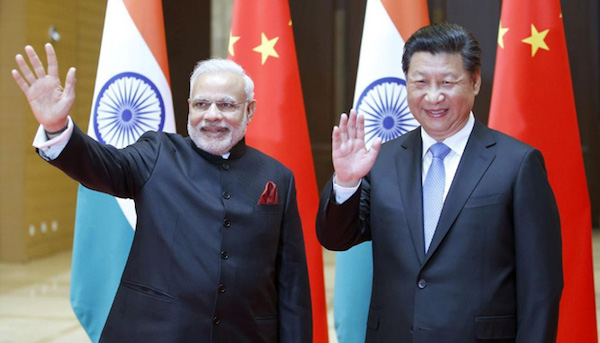
Prime Minister Narendra Modi goes to China on April 27, against the background of turbulence in global geopolitics and some domestic disquiet about “softening” of India’s China policy.
The international backdrop is worrying in many respects. The face-off between the U.S. (and its allies) and Russia is arguably worse than during the Cold War. They confront each other, through proxy forces, in three active conflict zones — Ukraine, Syria and Afghanistan. The recent U.S.-French-British missile strikes in Syria were a stark reminder. It now emerges that prior communication to the Russians had ensured that equipment, personnel and civilians had been evacuated in advance. However, such deconfliction arrangements seem to be episodic, and there is a lurking danger that miscalculation or brinkmanship might spark off a direct conflict at a local level.
Edgy confrontation
Sanctions — particularly the new U.S. legislation, CAATSA (Countering America’s Adversaries Through Sanctions Act), under which it can impose sanctions on any company which engages with Russia in the defense or energy sector — impart a sharper edge to the confrontation. This weapon was not wielded in anything like this form in the Cold War; its impact could be far more devastating in today’s globalized world. Recent American sanctions on major Russian multinationals, whose stocks are internationally traded, widened the target beyond Russian oligarchs to a larger body of shareholders within and outside Russia.
As the U.S. ratchets up pressure on Russia, it has donned kid gloves in dealing with China, as indicated by U.S. President Donald Trump’s tweets. A recent tweet appreciates Chinese President Xi Jinping’s “kind words on tariffs and automobile barriers” and “his enlightenment on intellectual property and technology transfers”.
Trade issues
While India is being asked to address its trade surplus of about $25 billion with the U.S., Mr. Trump asked China (in a tweet last month) to reduce its massive trade surplus of about $375 billion with the U.S. by just $1 billion! He probably meant $100 billion, as has been suggested by his Administration, but it is worth noting that in 2017 alone, the U.S.’s trade imbalance rose by about $28 billion. America’s decision to withdraw from the Trans-Pacific Partnership (TPP), a free trade grouping excluding China, effectively benefited China.
India itself, running a trade deficit of over $50 billion with China, is in difficult negotiations on the Regional Comprehensive Economic Partnership (RCEP), a free trade grouping that includes China, ASEAN (Association of Southeast Asian Nations), Japan, Korea, Australia and New Zealand.
Unpredictable U.S.
The unpredictability of U.S. foreign policy is driving even its closest allies to hedge their options. Japanese Prime Minister Shinzō Abe and Mr. Xi are to exchange visits in the near future — a significant breakthrough in relations between two strategic rivals, who were on the verge of a military confrontation about five years ago. Japan (like India) is concerned about China’s assertiveness in its neighborhood and the geopolitical implications of its Belt and Road Initiative (BRI).
Yet, having failed to persuade Mr. Trump (with whom he claims excellent personal chemistry) to rethink U.S. withdrawal from the TPP and uncertain about the consistency of U.S. policy in the region, Mr. Abe sees benefit in sustaining a dialogue with China, whose positive response reflects its own desire to keep in touch with a U.S. ally, in the face of conflicting U.S. signals on trade and security policies.
The sharpening of U.S.-Russia acrimony has complicated India’s relations with both countries. Besides pressure to address the India-U.S. trade imbalance, India has been warned that its defense and energy links with Russia could attract U.S. sanctions under CAATSA — a development which could have a major impact on our defense preparedness. Russia’s intensifying defense cooperation with China and its actions in Afghanistan and with Pakistan are areas on which serious and delicate high-level India-Russia dialogue is being pursued.
Mutual interest in serenity
This is the backdrop to the current “reset” in India-China relations. With a strengthening Russia-China axis and with the U.S. taking its eye off China to deal with Russia, it is prudent for India to maintain a harmonious dialogue with China, even as we deal with the wrinkles in our relations with the other two great powers. China’s motivation in extending the olive branch may be similar: to maintain serenity in relations while it deals with its other challenges.
This is not to say that India should not stand firm on its core interests, political, economic or strategic. We cannot overlook Chinese designs in our neighborhood — from Doklam to the China-Pakistan Economic Corridor (CPEC), Nepal, Bangladesh, Sri Lanka and the Maldives — or ignore the larger geopolitical threat posed by the land and sea corridors of the BRI. It is just that circumstances may have opened up some space for furthering mutual interests, without compromising on our other interests.
Countries do not publicly admit adverse asymmetries in relations, but their policymakers have to factor them into their policies and actions. Of course, even countries in adverse asymmetric relationships have levers which can and should be used to further their vital interests. In most cases, this is best done through quiet dialogue instead of public airing of differences, which hardens attitudes.
Importance of messaging
It is a valid point that the public messaging on this change in tone of the India-China relationship could have been better. The course of India-China relations in the past couple of years had created a public narrative of bilateral frictions over CPEC, Doklam, our Nuclear Suppliers Group membership and other issues, on which India had to take strong public positions. The transformation in the international environment, creating opportunities for non-confrontational dialogue, could perhaps have been better explained. Foreign policy can be pursued far more effectively when it is supported by public perceptions.
The reality is that India has to maintain a pragmatic balance in its relations with the three major powers, remaining conscious of the fact that elements of these relations will be continuously impacted by the dynamic flux of today’s global geopolitics.
The Prime Minister’s visit to China should be seen in this context.
(The author, a former diplomat, is Convener of the National Security Advisory Board)
MOSCOW (TIP): Russian Foreign Minister Sergei Lavrov said on Thursday, March 29, that Moscow would expel 60 U.S. diplomats and close its consulate in Saint Petersburg in a tit-for-tat expulsion over the poisoning of ex-double agent Sergei Skripal.
Mr. Lavrov said the U.S. ambassador had been informed of “retaliatory measures”, saying that “they include the expulsion of the equivalent number of diplomats and our decision to withdraw permission for the functioning of the U.S. consulate general in Saint Petersburg”.
Washington earlier ordered the expulsion of 60 diplomats and shut down the Russian consulate general in Seattle.
Mr. Lavrov added that Russia would also issue tit-for-tat responses to the other countries that have expelled diplomats in a mass show of support for Britain which has blamed Moscow for the poisoning of ex-spy Sergei Skripal and his daughter Yulia with a nerve agent in the city of Salisbury.
“As for the other countries it’s also all symmetrical measures as to the number of people who will be leaving Russia from diplomatic missions, and that’s all so far,” Mr. Lavrov said.
He added that Russia was reacting to “absolutely unacceptable actions that are taken against us under very harsh pressure from the United States and Britain under the pretext of the so-called Skripal case.”
He accused London of “forcing everyone to follow an anti-Russian course.”
He said Britain had informed Moscow of the state of health of Yulia Skripal on Thursday and that Russia had asked again for access to her as a citizen.
Mr. Lavrov vowed at the briefing in Moscow that “we want to establish the truth” over the poisoning and accused Britain of “making mockery of international law.”
He said that Russia had asked for a meeting with the executive council of the Organisation for the Prohibition of Chemical Weapons on Tuesday to ask questions to “establish the truth.”
“We are counting on our Western partners not evading an honest conversation,” Mr. Lavrov said.
“Do you see a correlation in getting the innocent Hindus to develop anti-Muslims sentiments through the communal riots, leading into to complete takeover of the Uttar Pradesh? The likes of which were done here in the United States. Did Russia pay for those riots through the Sangh Parivar organizations to weaken the Indian Democracy? Both Modi and Trump have a special affection for Putin; and both of them want to emulate Putin”, says the author.
Deepa Seetharam, a reporter from Wall Street Journal called me and asked if I spoke in a rally at White House in September 2016? I said no, and then she reminded me that my name was a listed as a speaker.
Seetharam wrote in WSJ’s October 30, 2017, publication, “Representatives from the Facebook page “United Muslims of America” asked Mike Ghouse, an interfaith activist, to speak at a Sept. 3, 2016, event in Washington, D.C. billed as “a peaceful rally, to make mosques and their neighborhood safe!”
The group sent Mr. Ghouse placards they intended to use that included anti-Trump messages, causing him to back out, he said. “I said they should be more pluralistic, more inclusive because there’s no need to attack Trump,” Mr. Ghouse said. “They wouldn’t, so I didn’t go.” Obviously, I did not speak there either.
“Some events stoked public discord. At the rally in front of the Islamic center in Houston, about a dozen protesters gathered, some waving confederate flags or holding a sign that said “#WhiteLivesMatter,” according to video footage.”
Russians had an elaborate plan of pitting one American against the other, their end goal was to weaken democracies and create discord within each nation – their logic was; for Russia to shine, other countries have to be weakened, and Russia will stand out as the strongest nation in the world with a strong man running the nation. Putin is the Czar under his skin.
CNN reports that “80 times Trump talked about Putin.” Indeed, “Throughout the 2016 presidential campaign, Donald Trump consistently broke from political orthodoxy in his effusive praise of Russian President Vladimir Putin. His glowing statements on Putin have become central in stoking the suspicion that he and his campaign were somehow connected to Russian interference in the election.”
Narendra Modi in Russia praises President Vladimir Putin’s family for sacrificing lives for the country. Modi praises Putin’s effort in convening 1st Tiger conservation Summit.
Both Modi and Trump think Putin is awesome, someone to be modeled after, as they want to dictate to the public.
Senator John McCain said in an interview that Putin is determined to prove to the world that Democracies don’t work. Indeed, that is what the fascists think about democracies – they get their devoted slaves to do whatever they want – attacking others as Sikularist and calling the news that goes against them as fake news. It’s amazing how many people buy that stuff in India and the United States.
Both Modi and Trump have resorted to divide and rule policies; they are determined to pit one Indian against the other in case of Modi, and one American against the other by Trump.
Russians staged “Anti-Trump rallies’ in the name of American Muslims. Perhaps, that may be the reason Trump is so anti-Muslim. Some of the rallies were held against Hillary to give the impression that it is the work of public, and some were devised against Trump just to make it look real.
What happens in India? Manohar Joshi writes in the Wire, “The fact that communal violence is rising in India is not hidden. Even the government acknowledges that there has been a steady uptick in communal incidents. In response to a question in parliament on Tuesday (February 6), minister of state Hansraj Ahir disclosed that as many as 111 people were killed and nearly 2,500 injured in 822 communal incidents in 2017, as compared to 751 incidents in 2016 that took the life of 97 people and 703 in 2016 when 86 were killed.”
Did the Russians stage these events? Did they pay these men to stage communal riots and murder people?
The fake encounters set up by the Gujarat police earned further support for BJP from an average innocent Hindu. Of course, Musharraf’s Kargil invasion strengthened the hold of BJP in power.
Putin failed in France and Germany but succeeded in Austria, India,United States and other nations.
Most Indians will resist the idea of an investigation; they simply do not want to believe that the Indian Elections may have been rigged. They are afraid of even exploring the possibilities. If they have lost their loved ones, they would want to know if Russia is paying the goons to create chaos. Is Yogi Adityanath paid agent of Russia? The purpose of the investigation is to find the truths if they are clean, that would be good news. What if they were not? Should they continue in governing India and continue to pit one Indian against the other?
Do you see a correlation in getting the innocent Hindus to develop anti-Muslims sentiments through the communal riots, leading into to complete takeover of the Uttar Pradesh? The likes of which were done here in the United States. Did Russia pay for those riots through the Sangh Parivar organizations to weaken the Indian Democracy? Both Modi and Trump have a special affection for Putin; both of them want to emulate Putin.
Neither Trump nor Modi was expecting to win; all the surveys, reports and polls indicated the win for Congress in India and Democrats in America. Both the men were surprised with the win, let alone land-slide wins.
The Russians publicized or financed at least 60 events – on all sides of most polarizing issues – before and after the 2016 election. What about India’s 2014 election?
Is it worth investigating Russian hand in the mess that is created in India? Should we save the nation from divisive men? These men will come and go in one or two terms, but it is the common men and women in India that will bear the brunt of their karma.
(The author is an Indian-American committed to building cohesive societies and offers pluralistic solutions on issues of the day. As we learn to respect the “otherness” of others and accept the God-given uniqueness of each one of us, conflicts will fade and solutions emerge. He is the president of the Center for Pluralism in Washington, DC.)
COMMENTS
Dr. Ghouse’s article invited a quick reaction from a reader. Here is the unedited comment of Desh D Kapoor (desh.kapoor@gmail.com) received at 11.07 A.M., a few minutes after the article was published.
“This is just a piece of trashy writing based on nothing but conjectures and hyperbole! Amazed. In fact, if at all, with Cambridge Analytics (firm that helped Trump) working for Congress, 2019 will be where Foreign meddling (Mani Shankar Aiyar’s home meeting with Pakistani officials – a Trump Tower moment?!) will be tested.
“In fact, Modi has NEVER appealed on religious basis. Even the honest Pakistani commentators say that clearly (check Najam Sethi’s analysis post 2014). But how do you stop the ideologically compromised Indian Muslim commentators who would rather use religion for their own purpose than for the good of the community! Reminded of the Tata Nano move, where Mamata created issues and Modi brought that in to Gujarat. The villages near the plant were predominantly Muslim. And within 4-5 years, their land prices went up 25 times making everyone a millionaire. When indiscriminate development happens – there is no color. But who can explain to the ideologically compromised who still hold Mamata as the paragon of virtues as she keeps everyone poor.
So excuse me, but this Machiavellian piece is not even worth the paper it was probably published on.”
********
We received a rejoinder from Dr. Ghouse at 12.30 P.M. nearly an hour and a half after Mr. Desh D. Kapoor’s comment, which is being published here, without being edited.
Desh,
“I wrote the essay as an Indian, and not as a Muslim. I wish you learn to hold on to your communalism and see the validity of the argument.
“Thank God, none of your relatives or mine were killed by the extremists in Muzaffar Nagar and other riots, but you should be human enough to have empathy for those whose families have suffered. If Russia had paid the goons to lynch and harass fellow Indians, then don’t you think it should be investigated? Are you against finding the truth?
“The success of a nation hinges on its two solid feet; economic prosperity which brings sab ka Vikas, not just mitron ka Vikas, and the other is sab ka saath, every Indian should feel included – that is a cohesive India, where no Indian feels excluded or lives in apprehension. Both the economy and social fabric must remain intact, one will not happen without the other, otherwise what we will witness would a langda India and ultimately everyone will suffer. Injustice to one is injustice to all.
“Mani Shankar Aiyar’s meeting at his home has been clarified, you still give it a religious color to it and Modi was too eager to paint it for electoral gains.
“A true patriot is the one who criticizes the government incessantly to keep them on the toes, on the other hand, if you toe the line of the government and kiss-ass of the leaders, you are not serving the nation.
“We need to rise about the pettiness and start looking to every Indian as an Indian and be patriotic Indians who think of making India and all her people successful and included.”
Mike Ghouse
Mr. Desh D Kapoor commented at1.04 P.M. 02/19/ 2018. (Unedited)
“Mike, excuse me, but I don’t give you the right to create your own Halos and abuse others. From where I see, you are always talking as a Muslim and not as an Indian. Further, I don’t see you as a secular at all. I think this self-congratulatory stuff should end if you even want to hold any dialog. Just like ‘Allah is the ONLY God…” Or “Jesus is the ONLY Savior..” are a non-starter to any useful discussion and inherently Supremacist in ethos – your fetish for constructing your own halo and calling other communal is damning for any dialog and shows your real self. So, time to stop the tricks!
“Like I said, I have never ever seen Modi say anything even remotely communal. If you have any evidence, then talk. On the other hand, AIMIM, Congress, Samajwadi and Trinamool folks are rabidly communal.
“And that leads me to another point – criticizing someone’s Muslim appeasement is not communal. To be an apologist for Jihad and acting as apologist for communal people in India is inherently Hinduphobic.
“It is this realization that has led to the awakening in India. What you see in the US, is also something similar. Where the rabid apologists for Islamism in the US left are being trashed all over. The problem in the US is a little different – because the challenge to Islamic Supremacism (which is what you represent however you may try to camouflage) is actually now coming from the White Supremacists, because left has chosen to back one end of Supremacism (between White/Christian Supremacism and Islamic Supremacism).
“In India, most folks who feign Secularism like John Dayal and Taslim Rehmani – are either Christian fanatics (check his hinduphobic testimonies in US) or Islamic fanatics (check how Rehmani declares “We ruled over Hindus for 1000 years”). And, most common laymen who were not into any religious debate are now waking up to the war of boiling the frog slowly.
“So, nice try, Mike. but you cannot construct your own Halo and wear it.”
Dr. Mike Ghouse at 2.27 P.M. 02/19/2018 replied to Mr.Deepak. (Unedited)
“Desh,
“Here you go again, you are “assuming’ this, ” Just like ‘Allah is the ONLY God…” Or “Jesus is the ONLY Savior.”
“You also made an assumption I support ” AIMIM, Congress, Samajwadi and Trinamool folks are rabidly communal.” I don’t, they are indeed communal, except the Congress which has a few rats in it, but the party as such is secular.
“BJP, on the other hand, is very communal – of the 400 plus candidates they gave tickets to run as their member, there may be one or two Muslims. They found a way to dupe innocent Indians – play the religion card, they fooled once, but could not do it again, but they staged communal riots, ghar wapasi and other tricks to pit one Indian against the other. You are a journalist, track down the history – the communal riots have occurred with the clear presence of RSS in the town, where they are not, there are fewer clashes.
“Let me be clear – the problem is not with Hinduism or Islam, Hindus or Muslims, it is the extremist positions that BJP has taken with their fascist political ideology – they want to force what you eat and what you believe down the throats.
“Modi’s fake reference to Pakistan collusion was communal politics, he generated ill-will among Hindus by the way he presented Mani Shankar Aiyar’s meeting
Modi wore every headgear wherever he went but clearly refused to wear a cap given by a Muslim.
“Would you agree that a cohesive India is what we need to work for – that requires that everyone minds his own business, and every Indian would be free to breathe, eat, drink, wear and believe whatever he or she wants to. Is that the India you want?
“Mike Ghouse”
Mr. Desh D. Kapoor countered at 2.47 P.M. 02/19/2018 . (Unedited)
“Mike, Again – lots of assumptions and lots of “I am Good- You are bad” attitude.
I never said that you support those parties. I said they are communal because they practice appeasement and their politics is purely casteist and communal.
There is no reason to believe that BJP is communal. Looking at candidates purely from religious angle is a sickness and something that plays along with Jinnah’s idea of Equal representation which caused partition. So, not looking at representatives from their religious affiliation is the right and secular way.
Ghar Wapasi is Communal and Conversions / Evangelism is Secular? Really?!! like i said stop the tricks, please.
RSS and riots: I have read about the riots pretty carefully and I don’t know of a single evidence to say that RSS started any riot.
ban on Beef is a law that BJP did NOT create. It was and you are trying to say that someone should not follow the law? Are you for lawlessness? I think you need to clear your stand please.
Reference to Pakistan for Collusion by Congress – was “Communal politics”?!! Wow, Really?!! So you equate Pakistani with Indian Muslims? From how I and most people saw it was – Pakistan means PAKISTAN.. the COUNTRY! Period! You see how your slip shows through? :)
“I want a cohesive India. But like MLK Jr said “I want White man to be my brother, not Brother in law”. From where most Hindus see now – Kalma and the Creed are at the root of Communal violence in India and around the world. Change the supremacism and peace will follow. if you try to hood-wink and play such tricks and play vote bank politics (how many Muslims candidate type), then the vote bank of today will go against that politics.
“I want an India where development is indiscriminate and blind to the religion or caste. Where transformation is at the grass root. And that is where Modi is working on. So, I will back him to back the India that is the future of the world. Not one of Congress or pseudo-Seculars who see Muslim communalism in references to Pakistan. Amazed honestly!!!”
The Indian Panorama invites readers to participate in the debate.
Russia’s expulsion of U.S. mission staff could lock the two countries into a retaliatory spiral.
Russian President Vladimir Putin’s decision to cut the U.S. diplomatic presence in the country by 755 signals a serious escalation in tensions between the two superpowers. His move came three days after the U.S. Senate passed a sanctions Bill targeting Moscow and allies. The scale of the cut is unprecedented and is comparable to the shutdown of the American diplomatic mission in Russia after the 1917 Bolshevik revolution. The decision also signals that Mr. Putin, who had pinned hopes on the Donald Trump administration to improve ties, is losing heart about such a reset. When Barack Obama expelled Russian diplomats in the last leg of his presidency over Moscow’s alleged interference in the presidential election, Mr. Putin did not retaliate, apparently hoping to strike a new beginning with the incoming administration. During his campaign, Mr. Trump himself had expressed interest in building stronger ties with Moscow. But despite Mr. Trump’s overtures, the U.S. establishment has continued to take a hardline position towards Moscow. While the investigation into the allegations of Russia’s election-time interference is still under way, Congress went ahead preparing the sanctions Bill. Passed by both Houses of Congress with a near-total majority, the Bill also seeks to limit Mr. Trump’s ability to suspend or lift sanctions on Russia. After the White House said the President would sign the Bill, Moscow retaliated.
The new sanctions will add to Russia’s economic troubles at a time it is already battling sanctions imposed by Europe and the U.S., and dealing with a commodities meltdown. Mr. Putin could impose counter-sanctions, but the chances of winning a trade war with the world’s largest economy are slim. Hence, Russia’s formal declaration of a diplomatic war to show that it can hurt America’s geopolitical interests elsewhere. Whenever Russia and the U.S. joined hands to address the world’s pressing problems in recent years, there were results. The Iran nuclear deal is one example. The Trump administration’s willingness to work with the Russians in Syria has also helped calm parts of the war-ravaged country. The ceasefire brokered by Moscow and Washington between the Syrian regime and rebels in July is still holding, raising hopes for a sustainable political solution to the crisis. Besides, if the U.S. wants to address the North Korean nuclear crisis diplomatically, which is perhaps the biggest foreign policy challenge before the Trump administration today, it could do with Russia’s help. Russia is also crucial to stabilizing Afghanistan, where it is reportedly arming the Taliban. But instead of expanding their cooperation and addressing these challenges as responsible global leaders, the nuclear-armed powers seem to have fallen into the old Cold War-era spiral of irrational mutual hostility.
(The Hindu)
Signup to our Newsletter!
Don’t miss out on all the happenings around the world