Tag: Uttarakhand

  • PROGRESS BLOW TO GUJARAT

    PROGRESS BLOW TO GUJARAT

    Human indicators put state that brags about growth behind Tripura and Sikkim

    NEW DELHI (TIP): A new development index has identified Gujarat as a less developed state, while ranking Odisha and Bihar along with eight others as “least developed” and Goa and Kerala among the seven “relatively developed” states. A panel headed by Raghuram Rajan, now the RBI governor, which submitted its report to finance minister P Chidambaram, also recommended a fresh approach to devolution of funds to states and moved away from the special category classification to devise three categories – least developed, less developed and relatively developed. According to the index, there are 10 least developed states, 11 less developed and seven relatively developed states in the country. The slotting of Gujarat, which has attracted attention due to its development model, in the “less developed” category is likely to escalate the already bitter political debate on the ‘Gujarat model of development’.

    The other states in this category are Manipur, West Bengal, Nagaland, Andhra Pradesh, Jammu and Kashmir, Mizoram, Tripura, Karnataka, Sikkim and Himachal Pradesh. The least developed states include, apart from Odisha and Bihar, Madhya Pradesh, Chhattisgarh, Jharkhand, Arunachal Pradesh, Assam, Meghalaya, Uttar Pradesh and Rajasthan. The relatively developed states according to the index are Haryana, Uttarakhand, Maharashtra, Punjab, Tamil Nadu, Kerala and Goa. The panel has developed a multidimensional index of backwardness based on monthly per capita consumption expenditure, education, health, household amenities, poverty rate, female literacy, percent of SC-ST population, urbanisation rate, financial inclusion and connectivity.

    The panel said less developed states rank higher on the index and would get larger allocations based on the need criteria. “The committee has proposed a general method for allocating funds from the Centre to the states based on both a state’s development needs as well as its development performance,” Chidambaram told reporters. “The committee has recommended that each state may get a fixed basic allocation of 0.3% of overall funds, to which will be added its share stemming from need and performance to get its overall share,” Chidambaram said. The panel was set up after persistent demand from Bihar CM Nitish Kumar who insisted a the special category status to help access more funds for its development. This sparked off a demand from several other states such Odisha for the special category state status. While the new index will ensure more funds for Bihar from the central kitty, it has stopped short of conferring the “special category” tag on the state, Shaibal Gupta, seen as Nitish’s nominee on the panel to submit a 10-page dissent note.

    However on Thursday, Nitish concealed his disappointment, if any, to celebrate the recommendation as a triumph even as BJP taunted him for failing to have his way despite cozying up to Congress. “It is a very decent report. For example under this index Odisha is at the bottom of the list and then Bihar. Therefore it recognizes that Odisha, Bihar, Madhya Pradesh are among the most backward states of India. That is I think the demand,” Chidambaram said. “The demand of these states is please recognize the fact that for a variety of reasons we are the most backward states. I think this index captures the degree of backwardness and acknowledges that Bihar is among the most backward states of India. Special category is the present categorisation. Now they are moving away from that,” finance minister said while detailing the recommendations of the panel.

    “This is not an answer to all the demands of the states. This is meant only to be a way forward on how to devolve funds to the more backwards states and areas of India. He said the index better captures the stage of development in a state, how backward it is or how relatively less backward it is and is a good measure for planning and devolution of funds. “Because some states are small very limited resources it is necessary to have a threshold below which the devolution of funds does not fall. So the committee has recommended that each one of the states will get a basic allocation of 0.3%,” Chidambaram said. The finance minister said that the report will be examined by various stakeholders before being implemented. “It will not be in the current year. It has to go through the examination process and will be implemented in an appropriate time in the next financial year.

    To which funds this should be applied a decision will be taken,” Chidambaram said. The report said that the National Development Council had accorded the status of special category state to eleven out of 28 states. They were based on a number of characteristics such as hilly and difficult terrain, low population density and or sizeable share of tribal population, strategic location along the borders with neighbouring countries, economic and infrastructural backwardness and non-viable nature of state finances. State under this category have a low resource base and are not in a position to mobilise resources for their developmental needs even though the per capita income of some of these states is relatively high, the report said.

  • 4 Cong states go ahead with food security plans

    4 Cong states go ahead with food security plans

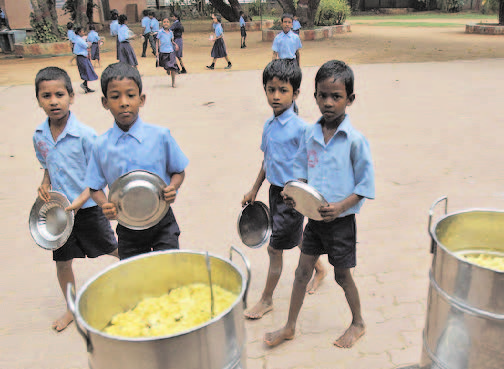
    CHANDIGARH (TIP): The UPA’s much touted Food Security Scheme aimed at ensuring that “no Indian goes to bed hungry” was simultaneously rolled out in four Congress-ruled states in North India. Congress president Sonia Gandhi rolled out the scheme in New Delhi, while Haryana Chief Minister Bhupinder Singh Hooda launched a customised scheme, covering nearly half the state’s population, at a special function in Panipat. Unveiling the scheme by handing over food grain packets and Aadharbased smart cards to 12 women beneficiaries in the Capital, Sonia Gandhi said: “We made the (food security) scheme so that nobody remains hungry in the country and no one’s child sleeps hungry. Giving food security in such a large scale is unparalleled in the world.” The other two states that announced the implementation of similar schemes today were Uttarakhand and Rajasthan.

    Rice, wheat and other foodgrain would be provided to the needy under these schemes The rolling out the schemes coincided with the 70th birth anniversary of former Prime Minister Rajiv Gandhi. Himachal Pradesh was also scheduled to launch the scheme today, but it decided to postpone it by a week till the discussion on the Food Security Bill got over in Parliament. In Delhi, around 73.5 lakh people out of a population of 1.68 crore would benefit from the scheme. In the first phase, all Below Poverty Line (BPL) families, Above Poverty Line (APL) families and Jhughi Ration Card (JRC) holders would benefit, beside beneficiaries under the Antodaya Anna Yojna (AAY). It has also been decided to include homeless, daily wage-earners, ragpickers, people living in resettlement colonies and slum clusters under the scheme.

    In Haryana, nearly half of the state’s population would benefit from the two schemes that have been rolled out simultaneously. Chief Minister Hooda said the scheme was simultaneously launched in every district of the state by the minister in charge for the particular district. Initially, 90.28 lakh people from rural areas and 36.21 lakh people from towns and cities will benefit. The beneficiaries are those that fall under the Antodaya Anna Yojana (AAY), the Central Below Poverty Line (CBPL) and the State Below Poverty Line (SBPL). Haryana and Delhi were among the first states to clear such schemes and have implemented these ahead of passing of the Food Security Bill in Parliament. Haryana has also started a “Dal- Roti Scheme”. An announcement to this effect was made by Hooda today. Under this scheme, 12.4 lakh BPL families will get 2.5 kg dal at Rs 20 per kg. The scheme is currently held up due to a litigation in the high court. Hooda said the AAY beneficiaries would get 35 kg foodgrain every month at the rate of Rs 2 per kg whereas priority households would be given 5 kg foodgrain per person per month at the rate of Rs 2 per kg. Around 126.49 lakh people would be covered under the newly rolled out scheme in the state, Hooda said. Around 70 %of India’s population would be targeted under the Food Security Bill.

  • UP Accounts For Over 80% Of Illegal Arrests In India

    UP Accounts For Over 80% Of Illegal Arrests In India

    NEW DELHI (TIP): Uttar Pradesh’s high-handedness is not just reflected in the arbitrary transfer of officers such as Durga Sakthi Nagpal and slapping of bogus cases against dissenters (as in the case of Dalit scholar Kanwal Bharti), it can also be seen in the massive number of illegal arrests made by the UP police.

    According to National Human Rights Commission data, UP records an overwhelming majority of illegal arrests in the country, accounting for more than 80% of all such cases. In fact, it tips its nearest competitor, Delhi, by over 3,000% almost year after year. In the past three years (April 2010 to July 2013), UP accounted for 3,397 illegal arrests out of 3,950 such cases recorded across India by NHRC.

    The count for the rest of the 27 states and seven union territories put together was just 553. “What do you expect from a state where many politicians themselves are criminals? How do you expect them to have any respect for law and order or human rights?” says Colin Gonsalves of Human Rights Law Network.

    From April 2012 to March 2013, NHRC recorded 703 cases of illegal arrests in all. As many as 589 of these were against the UP police. UP accounts for 161 of 192 illegal arrests in ’13 Its closest rivals in this dubious distinction, Uttarakhand and Delhi, were way behind with 14 cases each. Data for this period shows only two other states where the number of illegal arrests had crossed double figures — Karnataka (12) and Andhra Pradesh (10).

    In 2013 too (April 1 to July 20), UP accounted for 161 such cases of the total of 192 recorded by NHRC in the entire country. Its closest rival, Delhi, was again was behind with only five cases.

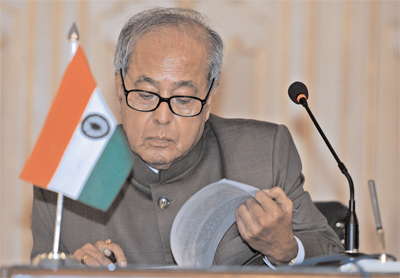
  • President Pranab Mukherjee Addresses The Nation

    President Pranab Mukherjee Addresses The Nation

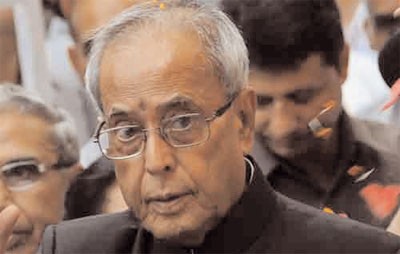
    In his address to the nation on the eve of 67th Independence Day, President Pranab Mukherjee expressed serious concern over the way Parliament and legislatures function and said corruption has become a major challenge. Noting the “widespread cynicism and disillusionment” with governance and functioning of institutions, the President said elections next year is an opportunity to elect a stable government that will ensure security and economic development.

    Following is the text of the President of India, Shri Pranab Mukherjee’s address to the Nation on the eve of the 67th Independence Day: “Fellow citizens: On the eve of the 66th anniversary of our Independence, I extend warm greetings to you and to all Indians around the world. My thoughts turn first towards the Father of our Nation, Mahatma Gandhi, who shaped our liberation struggle and the martyrs who made supreme sacrifice for the freedom of our country and great patriots whose relentless struggle liberated our motherland from the colonial rule of nearly two hundred years.

    Gandhiji sought freedom from both foreign rule as well as the indigenous social chains that had imprisoned our society for long. He launched every Indian on a path of selfbelief and hope for a better future. Gandhiji promised Swaraj- self-rule based on tolerance and self-restraint. He promised freedom from want and deprivation. For nearly seven decades now we have been masters of our destiny.

    This is then the moment to ask: are we heading in the right direction? Gandhiji’s vision cannot be turned into reality if we spurn the very values that were compulsory to his cause: sincerity of effort, honesty of purpose and sacrifice for the larger good. Our founding fathers created the first oasis in the desert of a colonized world nourished by democracy.

    Democracy is much more than the right to vote every five years; its essence is the aspirations of the masses; its spirit must influence the responsibilities of the leaders and duties of the citizens every day. Democracy breathes through a vibrant Parliament, an independent judiciary, a responsible media, a vigilant civil society, and a bureaucracy committed to integrity and hard work. It survives through accountability, not profligacy. And yet we have allowed unbridled personal enrichment, selfindulgence, intolerance, discourtesy in behavior and disrespect for authority to erode our work culture.

    The biggest impact of the decay in the moral fiber of our society is on the hopes and aspirations of the young and the poor. Mahatma Gandhi had advised us to avoid, and I quote, “politics without principles, wealth without work, pleasure without conscience, knowledge without character, commerce without morality, science without humanity, and worship without sacrifice”, (unquote). We have to pay heed to his advice as we work towards building a modern democracy.

    The ideals of patriotism, compassion, tolerance, selfrestraint, honesty, discipline and respect for women have to be converted into a living force. Fellow citizens: Institutions are a mirror of national character. Today we see widespread cynicism and disillusionment with the governance and functioning of institutions in our country. Our legislatures look more like combat arenas, rather than fora that legislate. Corruption has become a major challenge.

    The precious resources of the nation are being wasted through indolence and indifference. It is sapping the dynamism of our society. We need to correct this regression. Our Constitution provides a delicate balance of power between various institutions of the State. This balance has to be maintained. We need a Parliament that debates, discusses and decides. We need a judiciary that gives justice without delays. We need leadership that is committed to the nation and those values that made us a great civilization.

    We need a state that inspires confidence among people in its ability to surmount challenges before us. We need a media and citizens who, even as they claim their rights, are equally committed to their responsibilities. Fellow citizens: A re-ordering of the society can be brought about through the educational system. We cannot aspire to be a world class power without a single world class university. History records that we were the cynosure of the world once.

    Takshashila, Nalanda, Vikramashila, Valabhi, Somapura and Odantapuri comprised the ancient university system that dominated the world for eighteen hundred years beginning Sixth Century BC. They were a magnet for the finest minds and scholars in the world. We must seek to regain that space. A university is the banyan tree whose roots lie in basic education, in a vast network of schools that build the intellectual prowess of our communities; we have to invest in every part of this knowledge tree, from seed, root and branch to the highest leaf.

    Fellow Citizens: There is a direct relationship between a successful democracy and a successful economy, for we are a people-driven nation. People serve their interests best when they participate in decision- making at the level of panchayat and other forms of local government. We have to rapidly empower the local bodies with functions, functionaries and finances to improve their performance. Faster growth has given us the resources, but larger outlays have not translated into better outcomes. Without inclusive governance, we cannot achieve inclusive growth.

    For a developing country of more than 1.2 billion people, the debate between growth and redistribution is vital. While growth builds the scope for redistribution, redistribution sustains growth over time. Both are equally important. A disproportionate emphasis on any one, at the expense of the other, can have adverse consequences for the nation. Fellow citizens: At the dawn of our Independence, we lit the glowing lamp of modernity and equitable economic growth.

    To keep this lamp aflame, our highest priority has to be the elimination of poverty. Though a declining trend in the poverty rate is clearly visible, our fight against this scourge is far from over. India has the talent, ability and the resources to overcome this challenge. Reforms that have enabled us to come this far have to be pursued at all levels of governance. Favorable demographic changes over the next two decades can pay us handsome dividends.

    It requires industrial transformation and rapid creation of employment opportunities. It also requires an orderly urbanization process. Several initiatives taken by the Government in the recent past including the New Manufacturing Policy, the renewal of urban infrastructure and the ambitious skill training programme will need close monitoring in the coming years. We have given our citizens entitlements backed by legal guarantees in terms of right to employment, education, food and information.

    We now have to ensure that these entitlements lead to real empowerment for the people. We need robust delivery mechanisms to make these legislations work. New benchmarks of efficient public service delivery and accountability have to be established. The Direct Benefits Transfer Scheme, launched earlier this year, will bring in greater transparency, enhance efficiency and eliminate wastage of precious resources. Fellow citizens: 13. In our race for development, we must be careful not to disturb the balance between man and nature. The consequences of such imbalance can be disastrous.

    My heartfelt condolences to the many who lost their lives, and the innumerable who suffered in Uttarakhand; and my salutations to those brave personnel of our security and armed forces, government and NGOs who did so much to alleviate suffering. This tragedy owes as much to the avarice of human nature as to the rage of Mother Nature. This was nature’s wake-up call. And it is time to wake up. Fellow citizens: We have seen in the recent past grave challenges to our security, internal as well as external. The barbaric face of Maoist violence in Chhattisgarh led to a loss of many innocent lives.

    Despite India’s consistent efforts to build friendly relations with neighbours, there have been tensions on the border and repeated violations of the Ceasefire on the Line of Control, leading to tragic loss of lives. Our commitment to peace is unfailing but even our patience has limits. All steps necessary to ensure internal security and protect the territorial integrity of the nation will be taken. I applaud the courage and heroism of our security and armed forces who maintain eternal vigilance and pay homage to those who have made the supreme sacrifice of the most precious gift of life in the service of the motherland.

    There will be a general election in our country before I have the privilege of addressing you again on the eve of our next independence day. This great festival of democracy, is an opportunity for us to elect a stable government which will ensure security and economic development. Every election must become a crucial milestone in our nation’s journey towards greater social harmony, peace and prosperity.

    Let me conclude by quoting from the great classic Bhagvad Gita where the Teacher propounds his views and then says, and I quote, “ÿatha icchasi tatha kuru” “even as you choose, so you do. I do not wish to impose my views on you. I have presented to you what I think is right. Now it is for your conscience, for your judgment, for your mind to decide what is right.” (unquote) On your decisions rests the future of our democracy.

  • Anup Jalota Performs For Uttarakhand

    Anup Jalota Performs For Uttarakhand

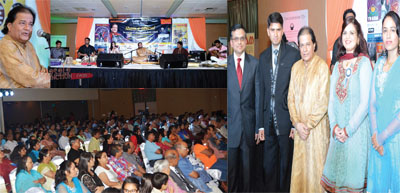
    EDISON, NJ (TIP): Ghazal singer Anup Jalota recently performed at Edison Hotel in Edison, NJ to help raise funds for the benefit of the victims of Uttarakhand Floods. An amount of $7,500 was raised during the show which was organized by Indian Events International in Association with Uttaranchal Association of North America and a number of New Jersey based businesses. Pritam Dimri and Bhupender Bohra briefed the audience about the tragedy in Uttarakhand hills through a video presentation.

    They along with Anup Uniyal & Nitin Bhatt represented UANA and received the service award presented to UANA by Indian Events LLC. They thanked Kajol Bishnoi and Mukul Bishnoi for coordinating the show with support from Surinder Kumar and Anu Kumari of Suhag Jewelers. Jalota mesmerized the audience with rendition of Ghazals and Bhajans, such as, ‘Chand Angadiyan le raha hai’ & ‘Tere shahar ka mausam’ and Bhajans like ‘Aisi Lagi Lagan’. The audience burst into laughter when Jalota diverted from singing to cracking a few jokes during the show.

    According to Kajol Bishnoi of Indian Events, the largest amount of contribution-$2500.00 came from B. B. Joshi, Chief Executive of Bank of India. Jalota presented a special recognition plaque to Joshi on the occasion. He also presented special achievement awards to Mukul Bishnoi of Rudraksham International and Surinder Kumar and Anu Kumari, owners of Suhag Jewelers. Rudraksham Intl specializes in authentic Rudraksha, Astrological Gems and Sphatik (Natural Crystal). Suhag Jewelers is well known for their 22K Gold Jewelry and Diamonds located on Oak Tree Road, Iselin, NJ.

    A member of the audience said, “Anup Jalota is a renowned singer and a very generous person. We are so happy to associate him with our fund raising effort.” Anup Jalota has been honored as the “Bhajan Samrat” of India and has wowed audiences in over 5,000 shows. He is known for his versatility and artistic talent. Very talented musicians, such as Bashir Khan playing Bulbul Tarang, Amjad Ali Kawa on Tabla, Bobby Rozario on Guitar and female vocalist Preeti Seth, accompanied him.

    The organizers and promoters of the show thanked Sanjiv Pandya of Radio Zindagi for anchoring the show along with sponsors Aman Tel, Mausam Restaurant for providing food at the show, Fern ‘N’ Décor for decorating the stage, MoneyDart, HAB, Volga, Apna Bazar, B4U Music, TV Asia and Rhythm Asia. 1. Ms. Kajol Bishnoi & Anup Uniyal presented the Checks to UANA President Ajay Adhikari during the annual Convention of UANA in Maryland (July 26th, 27th) in the presence of 350 people.

    As per Adhikari, funds collected will be utilized for a number of services in flood ravaged Uttarakhand. The UANA will distribute medicines and provide medical help, provide drinking water to remote and affected areas, buy and send blankets, send tents to the area where all the houses are destroyed, help re-build schools and local buildings, and send solar lanterns where electricity is not available.

    All this will be done with the help of direct contacts, local panchayats, school principals and local NGO’s. UANA team will also visit sites and affected areas from time to time to see the progress in the affected areas. UANA will not send cash or any form of money. It will buy whatever is required and pay for the materials.

  • Joe Biden Bats For More Skilled Visas

    Joe Biden Bats For More Skilled Visas

    MUMBAI (TIP): US is considering increasing the number of temporary visas and availability of Green Cards to highly skilled Indians, Joe Biden, the first US vice-president to visit India in three decades, said in his address to India Inc in the financial capital on Jukly 24. Biden, who sought a greater cooperation between the two countries to boost trade and investments five-fold, acknowledged the contribution of Indian expatriates to America’s growth story.

    “The US has benefited due to Indian human capital,” said Biden. He pointed out that Indians received more skilledworker visas to the United States than any other country in the world. “And the legislation our Congress is considering increases the number of temporary visas and Green Cards availability for highly skilled Indians to come work in the United States,” the 47th vice-president of US said while addressing the industry gathering at theBombay Stock Exchange.

    In a 40-minute speech which was interspersed with lighter moments, Biden said, “Our bilateral trade has increased five-fold to touch $100 billion in the last 13 years. We see tremendous opportunity and there is no reason that if our countries make the right choices, trade cannot grow five-fold or more,” he said. Making a strong case for India to further open up its economy in a serious bid to attract more foreign investment, Biden, said, “A young Indian woman graduating from IIT-Bombay who wants to start the next Tata Motors should be able to buy the best technology and parts, wherever in the world they come from — as her competitors around the world are able to do.”

    However, Biden said, a lot more is needed to remove trade barriers. “We still have a lot of work to do on a wide range of issues, including limit in FDI, inconsistent tax system, barriers to market access, civil nuclear cooperation, bilateral investment treaty and policies protecting innovations,” said Biden.

    Biden later addressed India Inc at the Taj Mahal hotel too in south Mumbai. While assuring US support for India’s candidacy for a permanent seat at the United Nations Security Council (UNSC), Biden said, “That’s why yesterday, on behalf of the President Obama, I invited Prime Minister Singh to make a visit to Washington at the end of September.” India has been vying for a permanent seat in UNSC along with Japan, Brazil and Germany.

    On India’s military needs, Biden pointed out how cargo aircraft C-130s that US had sold to India were now saving the lives of flood victims in Uttarakhand. Biden also called by a greater cooperation between India, China and US. “We are three big nations — China, India and the United States — with our own perspectives. We have significant common interests. All three of us and the entire region would benefit if we coordinated more closely,” said Biden.

  • Ministry Of Tourism To Give Us$ 16.5 Milion To Rebuild Tourist Infrastructure In Uttarakhand

    Ministry Of Tourism To Give Us$ 16.5 Milion To Rebuild Tourist Infrastructure In Uttarakhand

    NEW DELHI (TIP): India’s Minister of Tourism Mr. K Chiranjeevi has sanctioned a special financial package of US$ 16.5 million (Rs. 1000 million) for restoration and reconstruction of the affected Government tourist facilities in Uttarakhand. This will be in addition to the Central Financial Assistance of about US$ 15.6 million already sanctioned during the current financial year for developing tourism infrastructure in the State.

    Uttarakhand has recently witnessed an unprecedented natural calamity that has caused colossal damage to both life and infrastructure in the State. The State Government has been advised to assess the destroyed and damaged tourist amenities and conveniences and come back with the requirement of funds for rebuilding the infrastructure. On examination of the demand, Ministry of Tourism will sanction funds.

    The funds sanctioned in the relief package will be utilized for restoration and reconstruction of tourist infrastructure across the State with a special focus on tourist facilities along yatra route which will be used for providing shelter to the disaster hit pilgrims and tourists.

  • Erosion Of Public Faith

    Erosion Of Public Faith

    “It is a sad commentary on politicians”. The nation’s problem is how to reignite the spirit of confidence and idealism. Alas, no political party, even in the states, comes up to that standard. Whether the next election throws up such people is in the realm of conjecture. Persons like me are still optimistic that India would return to the path of values which it took after winning Independence”, says the author.
    In the penultimate year of nearly onedecade rule by Prime Minister Manmohan Singh’s government, I find the biggest casualty is the people’s confidence in political parties, particularly the ruling Congress. In fact, the public is so exasperated that it has come to believe that dishonesty and politics are synonymous and those who have come to politics have done so only to make money.

    I was aghast to find that many wellplaced people have not contributed to the Prime Minister’s Relief Fund because they suspect that the money given for the Uttarakhand victims would be used by the Congress in elections. I can understand the argument that the assistance is mismanaged, but the suspicion about the PM’s Fund should awaken the rulers to the extent that the people have lost faith in them.

    The scandals like the 2G Spectrum regarding the mobiles and the allotment of coal blocks to unknown persons have, no doubt, damaged the credibility of the Congress. But the inference that those in positions, to whichever party they belong, are all corrupt is a sad commentary on politicians. Consequently, there is a question mark against any report or probe conducted by the government. Even a judicial verdict is taken with a pinch of salt.

    The fault is not that of the people, but the manner in which the affairs have been conducted since the seventies. Very little has been done to restore confidence. In fact, official machinery is in disarray. Take the case of Ishrat Jahan encounter. The Home Ministry at the Centre and the state government had taken the stand that Ishrat, along with her three accomplices, were terrorists who were killed in an encounter with the police suspecting them to have a plan to assassinate Gujarat Chief Minister Narendra Modi.

    The Central Bureau of Investigation (CBI) said that it was a coldblooded murder. The agency found no evidence to involve Pakistan and Lashkar-e-Toiba which the Intelligence Bureau (IB) had done. Who does the public believe? Both the CBI and the IB are parts of the same government. The public is further confused because the CBI has alleged that Ishrat and her accomplices were picked up from different places and shot dead.

    The weapons they had on them were allegedly planted by the police and none of these had been used for days. Assume that Ishrat and the others were terrorists. Does the police force have the right to kill them without proving in a law court that they were terrorists? If this rule is to apply, the killers of Mrs. Indira Gandhi and Rajiv Gandhi should have been shot dead in encounters instead of proceedings even in the Supreme Court.

    We should not have spent crores of rupees on the trial of Mohammad Kasab, who was hanged, and done away with him for the attacks on Mumbai. The food security law which will subsidies food for 65 per cent of the population is a prey to suspicion. The government is to be blamed for introducing the measure through an ordinance when the Parliament session was only three weeks away (It has now been postponed to August after the ordinance).

    Most political parties are in favor of the food Bill but want a legitimate discussion in Parliament before it is enacted. The Congress prefers the route of ordinance on the plea that political parties, particularly the BJP, have not allowed Parliament to function. This is true. But the ordinance too has to be passed by Parliament. For that a consensus would be required. Why couldn’t the government bring about it before the ordinance? There is something in the allegation that the Congress eyes are fixed on the parliamentary elections which are due in May 2014.

    It is possible that the polls may take place in November or December. Such are the suspicions which have nullified the food security ordinance which would enable roughly 850 million people of limited means to buy rice at Rs. 3, wheat at Rs. 2 and bajra for Rs 1a kg. The case of the CBI’s autonomy is yet another example worth dwelling on. People have no faith in the supervision by the three retired High Court judges. The suspicion is that the government would appoint pliable judges. Since the CBI will be under the government, any measure it takes fails to evoke faith.

    The other main political party, the BJP, is suspect because it is selling the Modi thesis of Hindutva. The latest is the building of the Ram temple at the site where the Babri Masjid stood before its demolition. The party should realize that the religious card cannot be played again and again. The demand for a temple and a uniform civil code is supposed to be part of development, a camouflage for Hindutva.

    The party is as much engaged in power politics as the Congress is. That the leftist parties have social justice and federalism on their agenda is to the liking of a preponderant majority. To their admiration, a convention of the leftist parties in Delhi last week reiterated the two points. Indeed, the Manmohan Singh government has made the rich richer and has made a mockery of political autonomy.

    Yet the CPI (M) was found wanting during its rule of 15 years in West Bengal. The Sachar Committee has said that the Muslim community in the state was the most backward in education (only 2.7 per cent). The CPI supported the authoritarian rule of Indira Gandhi during the Emergency. The Janata Dal (United) evokes hope to be a third alternative because its chief, Sharad Yadav, has said that his party will fight totalitarianism of communists and communalism of the BJP.

    Bihar Chief Minister Nitish Kumar has shown in his rule that a government can rise above gimmicks. Rightly Nitish Kumar has asked for the National Investigation Agency to probe the Bodh Gaya bomb blasts. The nation’s problem is how to reignite the spirit of confidence and idealism. Alas, no political party, even in the states, comes up to that standard.

    Whether the next election throws up such people is in the realm of conjecture. Persons like me are still optimistic that India would return to the path of values which it took after winning Independence.

  • Rescue operation over in Badrinath

    Rescue operation over in Badrinath

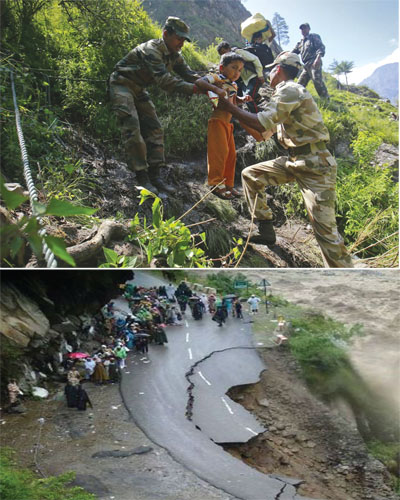
    Dehradun (TIP): The mammoth multi-agency rescue operations to evacuate all stranded pilgrims and tourists in the flood-ravaged Uttarakhand concluded on July 3 with a group of 155 persons being evacuated from Badrinath. In all, around 1.1 lakh people — stranded due to flash floods and landslides after monsoon rains pounded the hill state on June 15 — were evacuated by joint teams of the Army, Indian Air Force, Indo-Tibetan Border Police (ITBP) and National Disaster Response Force (NDRF). “A total of 155 persons were evacuated today from Badrinath. Now for all intent and purpose, the evacuation of stranded pilgrims and tourists in Badrinath is complete. Now some locals remain there and they would be airlifted tomorrow,” said Chief Secretary Subash Kumar. Kumar said the state government has intensified operations to air-drop food packets in the areas that still remain cut off. “In Rudraprayag, copters made 31 sorties and 1,100 food packets were dropped,” he said. The Chief Secretary said sorties were undertaken in Munsiyari and Dharchula districts of Pithoragarh for air-lifting stranded locals.

  • Rescue operation over in Badrinath

    Rescue operation over in Badrinath

    Dehradun (TIP): The mammoth multi-agency rescue operations to evacuate all stranded pilgrims and tourists in the flood-ravaged Uttarakhand concluded on July 3 with a group of 155 persons being evacuated from Badrinath. In all, around 1.1 lakh people — stranded due to flash floods and landslides after monsoon rains pounded the hill state on June 15 — were evacuated by joint teams of the Army, Indian Air Force, Indo-Tibetan Border Police (ITBP) and National Disaster Response Force (NDRF). “A total of 155 persons were evacuated today from Badrinath. Now for all intent and purpose, the evacuation of stranded pilgrims and tourists in Badrinath is complete.

    Now some locals remain there and they would be airlifted tomorrow,” said Chief Secretary Subash Kumar. Kumar said the state government has intensified operations to air-drop food packets in the areas that still remain cut off. “In Rudraprayag, copters made 31 sorties and 1,100 food packets were dropped,” he said. The Chief Secretary said sorties were undertaken in Munsiyari and Dharchula districts of Pithoragarh for air-lifting stranded locals.

  • Rs 195 Crore Package To Rebuild Char Dham Circuit

    Rs 195 Crore Package To Rebuild Char Dham Circuit

    Dehradun (TIP): A Rs195 crore package was announced by the government on June 28 for reconstruction of the ‘Char Dham’ pilgrimage circuit, which was badly affected by the Uttarakhand rain disaster. Tourism minister K. Chiranjeevi said the fund will be spent for renovation and reconstruction of the sacred pilgrimage sites of Kedarnath, Badrinath, Gangotri and Yamunotri, and its surrounding areas and the roads connecting it.

    Chiranjeevi told reporters here that the Uttarakhand government will utilise the fund according to its requirements. ‘Char Dham’ is an important Hindu pilgrimage circuit in the Himalayas located in the Garhwal region of Uttarakhand. The circuit receives large number of visitors in an average pilgrimage season, which starts from last week of April till October- November. The season is heaviest in the two-month period before the monsoon, which normally starts in July.

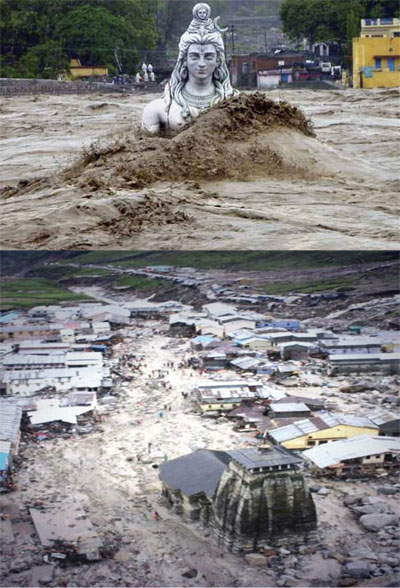
    The 15-16 June rains and floods have affected the ‘Char Dham’ circuit very badly, with the Kedarnath temple bearing the brunt of the disaster, leading to the death of many in the temple premises as well as its surrounding areas. The ‘Char Dham’ circuit roads continue to be snapped following the rains and floods.

  • In Devastated Uttarakhand, Claims Of Rape And Robberyj

    In Devastated Uttarakhand, Claims Of Rape And Robberyj

    DEHRADUN (TIP): The police are in denial mode, but locals said rape, loot and killing of Uttarakhand disaster victims at Kedar Valley did happen. Victims too claimed to have been at the mercy of criminals of all hues. Locals said they helped the Ukhimath police arrest three men and recover R4lakh from them. But the police did not register any case against them, nor did they say where they were taken to. Most top police officers in Rudraprayag district remained incommunicado.

    Swatantra Verma, a victim from Raipur in Chhattisgarh, said he traded everything he had to prevent four persons from molested his daughter in the Jangalchatti area near Rambara. “They approached us on June 18 offering to take us to a safer location. Their attitude changed after it turned dark. No sooner did we reach Jangalchatti around 10pm than they pounced on my daughter,” he said. His wife Shalini said the experience was worse than the natural calamity they had escaped from. A similar incident happened with a group of pilgrims from Gujarat.

    They too had to hand over their belonging to criminals to save themselves. Gujarat principal secretary and disaster management commissioner PK Parmar said he didn’t receive any specific complaint of rape from Gujarat pilgrims but he had heard about women disrobed and harassed in Kedar Valley. There were also reports of miscreants chopping off body parts of corpses in front of the survivors. Police, however, said there were no criminal activities.

    “We haven’t received any complaint of loot or rape from anywhere. On the other hand, some 1,200 persons were screened at Rudrparyag area as a precautionary measure,” said RS Meena, IG (law and order). West Bengal transport minister Madan Mitra and state planning and development minister Rachhpal Singh alleged muleteers raped several pilgrims.

  • Rebuilding Lives Of Survivors The Biggest Challenge

    Rebuilding Lives Of Survivors The Biggest Challenge

    JOSHIMATH (TIP): As the helicopter weaves through the mountains along the Alaknanda valley to this roadhead to Badrinath, what you see can shake the stoutest heart. Village after village lies in ruins. Broken roads, damaged buildings, some of them houses, some shops or schools or infirmaries, twisted electric poles, scattered debris: it is a picture of total devastation.

    “Two years back, I took voluntary retirement to settle down in my village. I built a guesthouse here from my savings. This one disaster has taken away everything. My village house has been destroyed too and I am forced to live here in the relief camp,” said Prawesh Rana, a resident of Joshimath. Rana’s story is repeated, with minor variations, again and again. It adds up to a frightening reality of shattered lives — of people who have lost their everything, their homes, life’s savings and even the hope of finding income in the medium term.

    Helping these people rebuild their lives is easily the biggest challenge for the state government – in fact, for the whole country. The figures themselves give an idea of the daunting task ahead. Over 2,000 villages have been damaged by the flash floods (the degree of damage varies), said Bhaskaranand, in charge of disaster management and rehabilitation in the state. About 1,500 roads have been washed away and 150 bridges are damaged.

    The worst affected are the tourist towns of Kedarnath, Rudraprayag, Uttarkashi, Joshimath and Tehri Garhwal. Agriculture is hard here. And after the floods, the top soil has been washed away. Making these terraced tracts fit for agriculture will take time. The time to sow rajma and potatoes is now. But given the disruption, both in terms of infrastructure and land, this season is likely to be a washout.

    For most people here the religious tourism to the Char Dham is a crucial source of livelihood. This year’s as good as lost, but the prospects of tourists returning in the next few years are very dim. With the fear factor looming large, without hotels or inns, people expect the number of pilgrims to drop sharply. Then there’s something that everyone fears: could this calamity have shaken the believer’s faith in the Char Dham yatra, even if for a few years? After all, stories will spread how people came in here with great devotion and met horrendous suffering.

    Kanti Singh, one of the survivors, said: “In Kedarnath, at least 67 villages have been washed away. Over the last few years, hundreds of guest houses, hotels and transport businesses had mushroomed there to cater to the needs of the pilgrims. The nature’s wrath has instilled fear in them and shaken their faith for the deity.” Situated in Chamoli district of Uttarakhand, Joshimath is a gateway to pilgrim centre Badrinath and more recently, it has become an attraction for several Himalayan mountain climbing expeditions and trekking trails.

    Seeing the tourism boom, many people like Rana had invested in hotels, the transport business and restaurants. According to Udit Ghildiyal, director of the Himalayan Institute for Environment, Ecology and Development, natural disasters have happened here in the past too, the most recent being in August 2012 when flash floods washed away several bridges and houses in Uttarkashi district. “But this one is huge. All the tourist towns, the backbone of Uttarakhand’s economy, have been devastated and we have gone back several years,” he said.

    Ghildiyal said that farmers in Uttarakhand have land holding of about 200 square yards on average which isn’t enough for sustenance. “Most people here are dependent on tourism and related business for their livelihood. The government and the army is providing food and medical aid to those affected now but this effort must continue as the tragedy is far from over,” he added. Harsil in Uttarkashi is famous for apples. The crop is ready but is getting wasted as it cannot be transported due to poor road connectivity in the aftermath of the flood.

    Many villages are also reporting high incidence of water-borne diseases like diarrhoea. “As of now, there are relief camps nearby where the doctors are available.We also get food from the army and other organisations. What will happen after the evacuations are over?” wonders Swatantra Upadhya, one of the patients getting IV fluid at the relief camp in Gauchar.

    Mountain mayhem

    June 16-17 | Torrential rains break 88- year-old record. Cloudbursts wreak havoc in Uttarakhand with rivers swelling beyond capacity. Mounds of earth crash into homes, topple trees and buildings. Dehradun records 220 mm of rain. Over 1 lakh pilgrims, including cricketer Harbhajan Singh on a visit to Hemkund Sahib, trapped in Uttarakhand. Three ITBP battalions stationed in state’ upper reaches begin rescue work. Himachal too affected.

    State CM, on poll tour, stuck in Kinnaur June 18 | Torrential rains continue. Raging Alaknanda and Bhagirathi engulf scores of hotels. Roads in Kedarnath washed away. Complete communication breakdown. Hundreds of dead bodies found around Kedarnath temple. IAF, Army, NDRF, BRO pressed into rescue work with ITBP. 10 choppers in service, yet air support inadequate June 19 | Rains ease up leaving trail of disaster. Thousands feared dead. IAF doubles number of choppers. Over 10,000 rescued. IAF makes air evacuation, ITBP opens roads June 20 | 45 choppers, 10,000 rescue workers in action.

    Over 15,000 evacuated by air and road. ITBP opens trek routes, builds rope bridges. Army, ITBP, NDRF commandos reach inaccessible areas: Rambada, Junglechatti in Kedarnath Valley June 21 | About 16,000 rescued. Forces in Rambada, Junglechetti. New helipads built. More roads opened, bridges built June 22 | Weather turns bad impeding rescue. Death toll crosses 1,000, hundreds of bodies found in Rambada, Junglechatti. Makeshift bridges built by forces break down. Armed forces increase number of choppers to 60. 10,000 rescued June 23 | Close to 12,000 evacuated. Kedarnath valley almost cleared.

    Death toll now feared to be 5,000 June 24 | Mass cremation of bodies planned. Rains hamper rescue work, armed forces clocked in over 1,000 flying hours. Worst over June 25 | In tragic chopper accident 20 IAF, ITBP and NDRF personnel — the first to reach Kedarnath for rescue — lose their lives June 26 | Focus shifts to locals as over 600 villages are found to be completely cut off. Mass cremation starts with 30 bodies cremated.

    Forces pull out of Kedarnath valley. June 27 | Forces begin pulling out from most areas. NDRF send a special team to extricate bodies from debris. Total 69 cremated since June 26 June 28 | Few sorties due to bad weather. 1,237 wait in Badrinath region for evacuation

  • One barefoot step, a giant administrative leap

    One barefoot step, a giant administrative leap

    As the world observed U.N. Public Service Day on June 23, it was hard to miss the perfect storm brewing across the globe. Disenchantment with public service delivery has engulfed Brazil, Greece, Turkey and South Africa. Closer home, the disaster in Uttarakhand has highlighted the potential of public service to make or mar thousands of lives. Critically, public management is seen as failing the disadvantaged, especially those who have no choice but to resign to its inadequacies.

    In response to trenchant criticism, the global development discourse has focused on devising numerous policies, structures and strategies. But, inevitably, the front line, institutional mechanism has not received the kind of analytical attention it warrants. Across the world, public organizations are typically characterized by rigid weberian structures with minimal space for individual innovation or creativity. Governance frameworks exhibit command and control characterized by top-down leadership and delegation upwards.

    Employees are adept at both overly respecting and exercising power, suppressing values of self in deference to those of the system. Not surprisingly, World Bank studies show that public service reform programs are the most intractable. The recurrent challenge is to bring about changes in people and system performance.

    Harvard’s Frauke de Weijer associates these failures with treating such socio-human resource challenges as mere technical ones to be tamed by procedures and bureaucratic structures. Essentially, preoccupations with form need to be replaced by an understanding that development is predicated on an uninhibited rejection of the status quo – that is, understanding development as a change endeavor focused on facilitating those at the bottom of the pyramid towards higher satisfaction levels.

    What this means is that change should necessarily begin at the bottom, the site of frequent interaction between citizens and the monolithic state. It is the experience of this interface that determines the quality of the service and how citizens subsequently view the state. This front line actuality epitomizes the concept of Barefoot Bureaucracy – a construct that is bureaucratic in its regulatory behavior yet barefoot in its proximity with the citizen and their shared socio-cultural and economic milieu.

    Barefoot bureaucracies reflect this personality paradox in the wide gamut of their choice, ranging from the whimsical bureaucratic gatekeeping in routine implementation, to yeoman barefoot service during disasters. In a world of scarce resources, who is granted access to free medicines, the water tap or the destitute pension? These are the many moral judgments they make everyday. Yet, there is potential in this paradox.

    Research has shown that successful public organizations are characterized by unusual dedication of ground-level employees to their jobs, with a strong sense of mission, purpose and the capacity to build relationships based on trust and ownership with communities. Globally, public services are under intense pressure to improve performance. While many structural reforms have been tried, barefoot bureaucracy has been consistently bypassed.

    Undeniably, sustained development can only be achieved by triggering the value creating potential at the bottom of the public service environment. Global policymakers should repose faith in these subalterns and reap the benefit of silent evolutionary change. With just mundane means they can generate spectacular ends. The tiger will change its stripes.

  • Indian American Appeals For Help To Uttarakhand

    Indian American Appeals For Help To Uttarakhand

    JERSEY CITY, NJ (TIP): A local businessman and community leader Atma Singh who is also the President of Indian Congress Party, USA, has appealed to Indian American organizations and individuals to generously donate for relief work in flood ravaged Uttarakhand. He has, in particular, appealed to the Federation of Indian Associations and other organizations in New Jersey and New York states that organize India Day Parade to cut down on their expenses on Parades and divert the funds to Uttarakhand which needs huge sums to provide immediate succor to hundreds of thousands of its residents.

    The recent floods in the northern state of India caused massive damage to a large number of villages and resulted in the loss of nearly 10,00 lives, with more than 4600 people still missing. Damage to bridges and roads left over 70,000 pilgrims and tourists trapped in various places in inclement weather and without food and water for days together. Many said after their rescue they were unsure of whether or not they will survive. As of 28 June 2013, hundreds are said to be still stranded.

    The Indian Air Force, the Army and paramilitary troops have evacuated more than 1,00,000 people from the flood hit areas in the last 12 days or so. The destruction caused by the unprecedented floods in Uttarakhand has been massive and widespread. It will take long, given the difficult terrain, to rebuild the damaged infrastructure and to rehabilitate the displaced people.

  • Uttarakhand Floods: Rescue Op In Last Leg; 2000 Still Stuck

    Uttarakhand Floods: Rescue Op In Last Leg; 2000 Still Stuck

    DEHRADUN (TIP): Rescue operations in Uttarakhand have reached final stages and the government hopes to complete all evacuations by June 30. But the challenge remains. There are still 2000 people who are stranded in the upper reaches of the state. Many pilgrims in Badrinath are being rescued by a newly constructed foot track in Govindghat valley. “Only the Army has been helping. It has been such a difficult journey. Now with the new foot walk, finally it looks like there is hope,” said one of the stranded people.

    Officials said constructing roads will take some more time, primarily because of bad weather. “Jindal Group has sent three helicopters and we are rescuing people in Joshimath. The most difficult obstacle is the weather, when we have to wait for it to settle down before flying out. I have rescued more than a thousand people here,” said SK Jana, a civil pilot. The road from Joshimath to Govindghat has also been restored and pilgrims are being evacuated on foot.

    In Kedarnath, mass cremation of bodies is still continuing. But food supplies are quickly running out in some villages that are completely cut off. After rescuing all stranded pilgrims and tourists, the challenge will be to rebuild many of the areas and the Rural Development Ministry has doubled the allocation of housing units in Uttarakhand Indira Awas Yojna by adding another 14,000 units. While they rush to complete the rescue operations, authorities are also worried about the rising levels of the Bhagirathi river.

    Worried residents of Uttarkashi are being evacuated and many can often be seen standing on roof tops of their houses as they watch the fierce river gush into their properties. Local officials said they are keeping a close watch on the water level. “We are calling workers to set up stones to control water inflow. It seems that the small temple on the way is reducing the pace of water. Nearby houses have been evacuated. We will see what else can be done to control these floods,” said KK Singh, Sub-Divisional Magistrate, Uttarkashi.

    But with 2,000 people left to be evacuated from places including Badrinath and Harsil, the defence forces have deployed around 50 helicopters and over 8,000 troops in flood-hit Uttarakhand. The IAF has deployed 37 choppers along with 13 helicopters of the Army. Together, they have flown 84 sorties in the last 24 hours for evacuating the stranded pilgrims in the state, a Defence Ministry release said. The armed forces have been successful in bringing out over 650 people from the pilgrimage town of Badrinath and Harsil in the last 24 hours, it said.

    In the operations which started on June 17, the two forces have deployed over 60 choppers which have flown 2,518 sorties and overall evacuated around 46,000 people from the higher reaches of the state. Meanwhile, IAF Chief Air Chief Marshal NAK Browne received the bodies of the five IAF personnel who were killed in a helicopter crash on Tuesday. The Air Force also carried out a mission using its ALH Dhruv choppers in Gaurikund to bring the bodies from the crash site for postmortem and for DNA analysis at Dehradun.

    Wing Commander Daryll Castellino, Flight Lieutenants Tapan Kapoor and K Praveen, Junior Warrant Officer AK Singh and Sergeant Sudhakar Yadav were among the 20 people who lost their lives in the chopper crash. The mortal remains of Wing Commander Castelino arrived in Mumbai on Saturday. The Indian Air Force will also fly the remains of Flight Lieutenant Praveen, Junior Warrant Officer Singh and Sargent Yadav to Madurai, Fursatganj and Gorakhpur respectively.

  • Uttarakhand: Netas, Babus Try To Get Kin Rescued First

    Uttarakhand: Netas, Babus Try To Get Kin Rescued First

    NEW DELHI: Apart from bad weather and difficult terrain, rescue teams in Uttarakhand are also troubled by calls from influential people to rescue their kin first. Sources in the agencies engaged in rescue work said on an average, over 50 such calls were received every day from politicians, bureaucrats and other government officials even though their kin were not caught in an emergency situation. “Most of these people are trapped in Badrinath, Yamunotri and Gangotri where hardly any damage has happened.

    These places have merely been cut off but there are enough supplies and people can survive for days,” an officer overseeing rescue work in Uttarakhand said. Being peak pilgrimage season, families of several politicians and bureaucrats too have been on a visit to the Char Dham and have been trapped at various places. As they have connections and can reach senior officials in the home department or directly in the forces, there is pressure to rescue them first.

    “We are receiving messages that such and such person is staying in a particular room in a certain hotel at Badrinath or Yamunotri and needs to rescued urgently. If you are in a hotel room, getting food and sleep, why do you need to be rescued urgently? We can understand the panic among family members caught in such situations, but there are people dying in Kedarnath valley with no food, water or shelter. They are our priority,” the officer said. Sources said rescue agencies have been politely declining many, trying to make them understand the situation.

    “While many understand, others try to pull strings but we are dealing with it,” another officer said, adding that kin of certain politicians had to be evacuated on priority basis due to pressure from above. Forces say they are trying to help whoever they can if they come to know of their trouble. “This is not to say that people from influential families must not approach us if they are really in trouble.

    But if I have a request of looking for an 80-year-old woman who can’t walk and has been separated from her family competing with that of a person living in a hotel, where should I direct my resources,” the officer asked. He added that calls from influential people were adding to the stress of personnel engaged in rescue work.

  • Thousands Feared Dead In Rain-Ravaged Uttarakhand

    Thousands Feared Dead In Rain-Ravaged Uttarakhand

    NEW DELHI (TIP): Nature’s fury continued unabated amid fears of the death toll rising rainravaged Uttarakhand as many pilgrims staying in 90 rest houses may have been washed away in flash flood even as rescue operations were stepped up. The the Uttarakhand State Disaster Mitigation and Management Centre in its report to the union ministry said casualties in the affected areas may run into thousands as about 90 guest houses with pilgrims were swept away in the flash floods.

    But official death toll still stands at 150. With the weather clearing up, rescue operation were stepped up. Chief Minister Vijay Bahuguna while seeking funds to help the affected people, said many kilometers of roads have been washed away in Uttarakhand due to the flash floods. The chief minister said many bridges, houses, water lines, canals, check dams, electricity lines, power houses and other public and private property had been severely damaged.

    He said the Chardam pilgrimage, which includes the shrines at Kedarnath and Badrinath, had been severely hit. He appealed to people and voluntary organizations to contribute to relief efforts in the wake of the devastation caused by heavy rains, landslides, cloud bursts and floods.

    Meanwhile, an official of the Badrinath- Kedarnath Temple Committee said that pilgrimage to the shrines of Kedarnath and Badrinath in Uttarakhand cannot resume for three years due to extensive damage caused by heavy rains and floods. Officials of the two shrines say the two places have been so badly devastated that there was nothing “but mud, devastation and death” around the highly revered temples visited by millions.

    “What we are seeing is very painful and unbelievable,” he said. “We don’t expect the Char Dham Yatra to resume in the next three years.” KEDARNATH SHRINE SAFE, EVERYTHING ELSE DESTROYED The ancient Kedarnath shrine has survived the devastating floods in Uttarakhand but virtually everything around it has been destroyed, an official of the temple committee said. “Call it a miracle but the Nandi statue and the other idols in the temple are intact,” the official said.

    “In fact, those pilgrims who were in the temple during the tragedy also survived. “But the destruction all around the temple has been terrible,” said the official, adding that the real death toll in the floods and cloudburst of the weekend would be much more than the officially stated 150. But he admitted that the temple had suffered some damage. The official said there was no trace of a large number of pilgrims who were either headed to or returning from the shrine, built by Adi Shankara around 1,000 years ago.

    He said Ram Bada, located about seven kilometres from the temple, had been destroyed. So was the case with Gaurikund where there was a parking lot and a rest house. “There were an estimated 5,000 people at Ram Bada when a cloudburst took place,” he said. “The shops and houses around Kedarnath temple have been either destroyed or severely damaged,” said the official. “From the reports we are getting, I don’t think the Kedarnath pilgrimage can restart for two to three years,” he added. According to the official, 1,000 to 2,000 pilgrims were rescued from the temple region Wednesday.

    “The rescue operations are still going on.” 1,446 people rescued from flooded areas A total of 1,446 people were rescued by the NDRF from areas affected by floods caused by torrential rains in various places of north India, including Uttarakhand, a disaster management official said Thursday. “While 443 people were rescued in Uttarakhand, NDRF teams rescued 930 people from Haryana out of which 844 from Karnal and 86 from Yamuna Nagar.

    Fifty were rescued from Reckong Peo in Kinnaur district in Himachal Pradesh and 23 in Uttar Pradesh,” a National Disaster Response Force (NDRF) official said in a statement. Twenty-nine teams of the NDRF have been deployed in various flood hit area of Uttarakhand, Himachal Pradesh, Uttar Pradesh, Haryana, West Bengal and Assam for relief operations.

    “The water levels have decreased, relief operations are continuing,” the statement added. Apart from NDRF, men and staff of the Indo-Tibetan Border Police (ITBP) and the army are carrying over the rescue operations particularly in Uttarakhand, the worst hit by heavy rains. Home Minister Sushilkumar Shinde has put the number of people stranded in Uttarakhand at some 62,000.

  • Trinamool In Chit Fund Muddle Over Saradha Links

    Trinamool In Chit Fund Muddle Over Saradha Links

    KOLKATA (TIP): The chit-fund mess threatens to blow up in the face of Trinamool Congress even as it battles public outrage over the murder of a police officer in Garden Reach and the vandalism of Presidency University. Four FIRs have been filed against Sudipta Sen, chairman and MD of the Saradha Group, which proudly flaunted TrinamoolRajyaSabha MP KunalGhosh as its Group Media CEO. Ghosh couldn’t be reached over phone and Sen has been missing ever since Saradha Printing and Publishing Pvt Ltd issued closure notices on its newspapers and infotainment channels (including Tara Muzik, Tara News, Channel 10, Bengal Post, Seven Sisters Post and Bengali daily Sakalbela), rendering over a thousand jobless on the eve of Poila Boisakh. Chief minister Mamata Banerjee said on April 18 that all efforts are on to arrest Sen. “He is somewhere in north India,” Mamata said at Writers’ Buildings, sparking speculation that he may have already been detained.

    Two of the FIRs against Sen were filed in Kolkata and one each in Agartala and Guwahati. There is also a court complaint against him by advertising firm Selvel. Trinamool general secretary Mukul Roy is desperately trying to find private financiers for the closed Saradha Group media businesses. Failure is not an option for Roy because the chit fund row may do more damage to Trinamool than the outrage over the Presidency vandalism that has pushed the party on the back foot. The party is also in the spotlight because all the Saradha Group news channels and dailies had a distinct pro- Trinamool stand. Media was only a part of Sen’s flourishing empire, some of them allegedly relating to chit funds and multilevel marketing involving thousands of marketing agents and lakhs of depositors. The agents, facing heat back home, have been trooping to Trinamool Bhawan.

    Nearly 200 of them landed up announced on Wednesday evening, leaving party leaders scrambling. After a noisy demonstration, a few of them were allowed to meet Roy and industries minister Partha Chatterjee. With the company failing to meet its promised returns, the number of FIRs can shoot through the roof. The Trinamool is rattled — it cannot afford another public outcry less than four days before Parliament resumes. It has launched a desperate firefight. Tara’s general manager (finance) Indrajit Roy told TOI from Delhi, “The plans to resurrect the (closed) companies are being guided by the chief minister and MP Mukul Roy. The problem is that Sudipta Sen cannot be reached.

    Unless he signs on the dotted line, nothing can happen.” There was a buzz all day that police in Dehradun and Salt Lake have taken action against Sen and a senior vice-president of the group but this could not be confirmed. Uttarakhand DGP Satyavrat Bansal told TOI, “I confirm that no one by the name of Sudipta Sen has been arrested or detained in Dehradun or elsewhere in the state.” There were reports that a complaint had been filed against Ghosh, too, but Bidhannagar police commissioner Rajeev Kumar denied this.

    The employees of Tara TV Network got a mail on April 15 that their services had been terminated. The employees of Tara, a 13-year-old company, decided to go public with their protests. There was no further intimation from the management but for Ghosh’s sporadic social media posts, through which he informed about his resignation from the group and the takeover of Channel 10 by Rice Group (an education and infotech company). Another of his posts said that Sakalbela, too, will have a new buyer but details were not available. It is widely believed a similar proposition is being worked out for Tara as well. For Bengal Post, though, there is no such information.

  • Coca-Cola to set up Rs 600 crore plant near Dehradun

    Coca-Cola to set up Rs 600 crore plant near Dehradun

    DEHRADUN (TIP): Uttarakhand government on Wednesday oversaw the signing of a Memorandum Of Understanding between State Industrial and Infrastructure Development Corporation of Uttarakhand Ltd (SIDCUL) and Hindustan Coca-Cola Beverages Pvt Ltd (HCCBPL).

    The MOU was signed to set up Rs 600 crore manufacturing plant in Dehradun’s Vikas Nagar Tehsil. The manufacturing plant will be spread over 60 acres producing non-alcoholic carbonated beverages, juices, fruit-based drinks and packages of drinking water. The MOU was signed between SIDCUL’s managing director Rakesh Sharma and HCCBPL’s executive director Shukla Wasan. Chief minister Bahuguna was present at the event and said that the government has already allotted land for setting up the manufacturing plant.

    HCCBPL will invest Rs 6000 crore to establish the plant in two phases, he added. Bahuguna further added that this deal will attract more business houses and mega companies to invest in state. He said that the government launched SIDCULphase 2 to attract investment for development of Uttarakhand and that several there is considerable interest in the state as the crime rate is low. “We hope to attract more investment in state in the days to come,” he said. HCCBPL vice-president Patrick George handed over a check of Rs 1.60 crore as earnest money and processing charges to Bahuguna.

  • President Pranab Mukherjee May Turn Down 5 More Mercy Pleas

    President Pranab Mukherjee May Turn Down 5 More Mercy Pleas

    NEW DELHI (TIP): The Union homeministry is learnt to have recommendedrejection of mercy petitions in five morecases as it seeks to speedily dispose of allthe cases of death row convicts pendingwith it.Seeking to have a swift closure on thecases of those who have filed mercy pleasagainst capital punishment awarded tothem, the ministry has sent all the pendingfiles to President Pranab Mukherjee for afinal call.Sources said that seven cases involvingthe fate of nine people have been sent to thePresident, with the ministryrecommending rejection of the mercy pleasin five cases. It has and left the tworemaining ones open for commutation ofdeath sentence to life imprisonment withthe rider that the life term means jail forthe entire life of the convict and not just 20years or 14 years in prison.

    The President had sent the files to Unionhome minister Sushilkumar Shinde onOctober 30 for his review and opinion.Shinde sent the files back within 100 daysin a major shift from the pattern wheredecisions on mercy petitions wereindefinitely delayed with files shuttlingbetween the home ministry and theRashtrapati Bhavan.Though the case-wise recommendationsfor convicts were not known as both thehome ministry and Rashtrapati Bhavancontinue to remain tightlipped on mercypetition files, the seven cases relate tomultiple murders, including one in which arape convict out on bail killed five membersof the victim’s family.

    While two files were sent to RashtrapatiBhavan on February 9 (the day ParliamentHouse attack case convict Afzal Guru washanged), the remaining five files weredispatched last month.The mercy files, which have beenpending for years while moving to and frobetween Rashtrapati Bhavan and the homeministry, saw unprecedented movement oflate, resulting in two quick hangings(Ajmal Kasab and Afzal Guru) within lessthan three months. Mukherjee had rejectedthe mercy plea of Kasab on November 5,and Guru on February 3.The files, which are now with PresidentMukherjee, include the longest pendingcase of Gurmeet Singh of Uttar Pradesh,who was convicted for killing 13 membersof a family on August 17, 1986.

    The otherscases are of Suresh and Ramji, also fromUP, who were convicted for killing fivemembers of their brother’s family andDharampal from Haryana, who hadmurdered five members of the family of agirl he had raped in 1993. He had murderedthe family while on bail in the rape case.The other cases are of Sonia, daughter ofa former Haryana MLA, and her husbandSanjeev, who drugged and killed eight ofher family in Hisar in 2001, including herparents. Sunder Singh from Uttarakhand isconvicted for rape and murder on June 30,1989, Jafar Ali from Uttar Pradesh who wasconvicted for killing wife and five daughterin 2002 and Praveen Kumar of Karnataka,convicted for killing four members of afamily on February 23, 1994.

    Mukherjee has so far disposed of mercypetitions of eight death row convicts in fivecases.The President has also rejected themercy petitions of Saibanna NingappaNatikar (Karnataka: convicted for killingwife and daughter) and mercy petitions ofslain forest brigand Veerappan’s associatesGnanaprakash, Simon, ‘Meesai’ Madaianand Pilavendran, who were sentenced todeath for killing 22 police personnel in 1993.However, the mercy petition of Atbir(Delhi), who was convicted for murder ofhis step-mother, step-sister and step-brotherover property, was commuted to lifeimprisonment by the President.

    Strained mercy:
    1,455 persons awarded death penaltyin India from 2001 to 2011Sentences for 4,321 persons werecommuted from death penalty to lifeimprisonment during the same period.Highest number of death penalty wasimposed in Uttar Pradesh (370)followed by Bihar (132), Maharashtra(125), Karnataka and Tamil Nadu (95each), Madhya Pradesh (87),Jharkhand (81), West Bengal (79),Delhi (71), Gujarat (57), Rajasthan (38),Kerala (34), Odisha (33), Haryana (31),Assam (21), Jammu & Kashmir (20),Punjab (19), Chhattisgarh (18),Uttarakhand (16), Andhra Pradesh (8),Meghalaya (6), Chandigarh and Daman& Diu (4 each), Manipur and HimachalPradesh (3 each), Tripura andPondicherry (2 each) and Goa (1)No death penalty imposed inArunachal Pradesh, Mizoram,Nagaland and Sikkim and UnionTerritories of Andaman & NicobarIslands, Dadra & Nagar Haveli andLakshadweepSentences of 4,321 persons werecommuted from death penalty to lifeimprisonment in the country during2001-11.

  • No one wants power plants, but everyone wants bijli: SC

    No one wants power plants, but everyone wants bijli: SC

    NEW DELHI (TIP): Seeking to draw the line on litigation against power projects, the Supreme Court expressed unhappiness over resulting delays and cost escalations while dismissing a plea challenging a hydroelectric project on the Alaknanda river in Uttarakhand.

    The court observed that it is ironical that while power projects face opposition from the moment they appear on a drawing board, every citizen wants uninterrupted power supply. The court’s views will come as a relief to the government that has been facing sustained protests from activists and a section of environmentalists who have used legal devices and organized agitations against projects like the Kudankulam nuclear power plant. Dismissing a petition challenging the Vishnugad- Pipalkoti hydro-electric project, a bench of Justices H L Dattu and Ranjan Gogoi said: “The moment a power project is to start, litigation is filed in court. If initially the project cost is Rs 1,000 crore, it escalates to Rs 10,000 crore over the years and tax-payers money is wasted.” Environmentalist Vimal Bhai had challenged the validity of the clearance for Vishnugad-Pipalkoti project. In September 2, 2009, the state government approved diversion of 80.507 hectares of government forest land for the project and on June 3, 2011, stage-I clearance under the forest (conservation) act was granted project by the Union ministry of environment and forest ( MoEF).

    Petitioner’s counsel Anitha Shenoy based her arguments on the sustainable development principle oftcited by the court itself and said when guidelines are not followed properly, stage-I clearance should be quashed. The bench, however, found no force behind the argument that the project lacks a cumulative impact assessment. “We really wonder what people in this country say. They say we don’t want hydroelectric plant or a nuclear power plant, but everybody wants bijli (electricity),” the bench said, The petitioner had earlier moved the National Green Tribunal, which found no fault in the clearance given to the project which is designed to be a 65 metre tall diversion dam, being developed by Tehri Hydro Development Corporation.

  • 37-Year-Old Woman Is AIIMS First Full Body Donor

    37-Year-Old Woman Is AIIMS First Full Body Donor

    NEW DELHI (TIP): A 37-year-old woman from Uttarakhand who suffered irreversible brain damage in a haemorrhagic attack has become the first whole body donor at All India Institute of Medical Sciences this year. While her heart, liver and two kidneys have been used for transplant into needy patients, other organs like the cornea and bones are preserved for future use, Arti Vij, chief of the Organ Retrieval and Banking Organisation at the institute, said. She added, “Chandrakanta Rawat was admitted to AIIMS on January 2. She was declared brain dead by a team of doctors two days later. Her husband gave the consent for retrieval of the organs.” Vij said while the deceased’s heart was used for transplant at the institute itself, her two kidneys were sent to Sir Ganga Ram Hospital and the liver was used for transplant at the Institute of Liver and Biliary Sciences in Vasant Kunj.

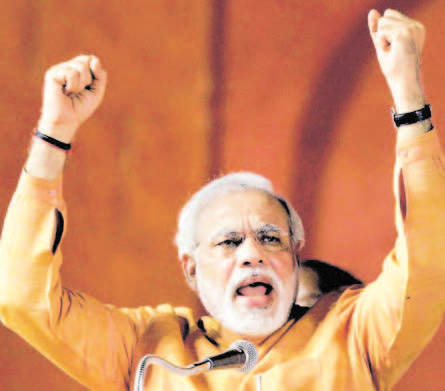
  • Don’t expect Modi to be BJP’s next PM candidate: Swaminathan S Anklesaria Aiyar

    Don’t expect Modi to be BJP’s next PM candidate: Swaminathan S Anklesaria Aiyar

    It is a fantastic achievement that he has won the third election in a row with an increased majority and higher vote share. Does this mean that he is the next prime ministerial candidate? I am afraid, absolutely no. Do not just look at the result in Gujarat, look at the result in Himachal. Narendra Modi went to campaign for the party in Himachal Pradesh. In Himachal Pradesh, you had a party which had been doing about 8% GDP growth, good social indicators, doing quite well. Modi went and campaigned out there and it was a complete flop show.

    Earlier this year, there were state elections in Uttar Pradesh, Punjab and Uttarakhand where Modi was asked to campaign. He refused to do it. He was busy with Sadbhavana Programme. So we do not know what impact Modi would have done. However, while the BJP did badly in Uttar Pradesh, it won along with the Akali Dal in Punjab and it only lost in Uttarakhand. Overall, it was not a bad performance of the BJP, minus Modi. Now that has to be compared with what the performance of Himachal Pradesh with Modi was and that was a total flop show. So I would say the big thing that comes out is that the moment Mr Modi goes outside Gujarat, his midas touch disappears and if this is the case, what are his credentials as a national leader?

  • Former Prime Minister Inder Kumar Gujral Passes Away at 92

    Former Prime Minister Inder Kumar Gujral Passes Away at 92

    Govt declares 7-day national mourning | Prez, PM, top leaders express grief
    NEW DELHI (TIP): Former Prime Minister Inder Kumar Gujral, who headed a Congress-supported coalition government in 1997-98, died at a hospital in Gurgaon November 30 afternoon following a brief illness. He was 92. Gujral was hospitalized on November 19 after a lung infection. He had been put on ventilator as his condition had deteriorated. He had been on dialysis for a year. Gujral is survived by his sons, Naresh, an Akali Dal MP in Rajya Sabha, and Vishal, two grand-daughters and a grandson. His brother is noted artist Satish Gujral and he has three sisters. His wife Shiela had died last year. Gujral’s body was taken from hospital to his official residence, 5 Janpath, where it will be kept for the public to pay their respects till noon.

    The Government has declared a seven-day state mourning throughout India and cancelled all functions till December 6. Gujral was born to Avtar Narain and Pushpa Gujral at Jhelum in undivided Punjab on December 4, 1919. He belonged to a family of freedom fighters and participated in the freedom struggle. Educated at DAV College, Hailey College of Commerce and Forman Christian College, Lahore (Pakistan), Gujral was sworn in as the 12th Prime Minister of India on April 21, 1997. Known for his Left-leaning yet liberal ways, Gujral was very close to Indira Gandhi at one point of time. He became a member of the Rajya Sabha in April 1964 and was part of the “powerful coterie” around Indira that helped her become Prime Minister in 1966 following Lal Bahadur Shastri’s death.

    He became the Information and Broadcasting Minister in 1975 during the time of permit-quota raj when the I&B Minister could virtually control the supply of newsprint. Television, other than Doordarshan, was non-existent. Gujral was tasked to manage the much-criticized job of press censorship during Emergency. Before becoming PM, Gujral was External Affairs and Water Resources Minister. He also served as India’s Ambassador to the USSR. He was a Rajya Sabha member twice between 1964 and 1976 and a member of the Lok Sabha from 1989 to 1991. With Lalu Prasad’s help, he became a member of Rajya Sabha in 1992 after his election from Patna Lok Sabha constituency was countermanded. He was re-elected to the Lok Sabha in 1998 from Jalandhar as an Independent with Akali Dal’s help.

    The equation between the Gujral family and Akalis changed forever. PS Badal was so happy at the militancy-period loan waiver given by Gujral as PM that it blossomed into a personal friendship. During his tenure as PM, Gujral recommended President’s Rule in UP in 1997, which the then President KR Narayanan refused to sign. He propounded the “Gujral Doctrine” of five principles for maintaining good relations with the neighboring countries. That became the hallmark of his policy with countries in South Asia, especially Pakistan.

    Tributes
    I personally have lost a friend of long standing, whose wisdom, idealism and deep concern for social equity left a reat impression on me and whose counsel and opinion I often sought and valued greatly. – Manmohan Singh,Prime Minister

    Ability, sagacity and deep understanding of national and international affairs coupled with genuine warmth made him widely admired and respected. – Sonia Gandhi,Congress president

    Gujral was a versatile politician and a thinker who served the nation in various capacities with utmost dedication and sincerity. – Nitin Gadkari, BJP president

    Gujral was a good administrator who strove for the uplift of the poor. My heartfelt sympathies to his family members. – Shivraj V Patil, UT Administrator

    Gujral was a seasoned parliamentarian. My heartfelt sympathies to the members of the bereaved family. – Bhupinder Singh Hooda, Haryana CM

    Gujral’s demise is a great loss for the country. The void created by his death will be difficult to fill. – Vijay Bahuguna, Uttarakhand CM

    He was a nice human being, a gentleman to the core and a good friend. He was the PM when I was given peerage in 1996. He called me up to congratulate me and suggested that I be called ‘Lord Paul of Jalandhar’ as he knew I was born in
    Jalandhar. – Lord Swraj Paul

    Gujral was a real statesman who took active part in the Indian Freedom Struggle and was imprisoned for taking part in the Quit India Movement. His contribution as PM and External Affairs Minister will always be remembered. – PK Dhumal, Himachal Pradesh CM

    He was a veteran statesman who served the nation with distinction as Ambassador to the USSR, as a Union Minister and
    finally as the Prime Minister. – Pawan Kumar Bansal, Union Minister of Railways

    Gujral was an eminent statesman, a distinguished parliamentarian and above all, a great human being. – Farooq Abdullah, Union Minister for Renewable Energy

    Gujral was a true son of the soil as he was instrumental in waiving the longpending debt of Punjab during his stint as
    Prime Minister. He had deep regard and passion for Punjabi culture, language and literature. He was a true votary of Punjab, Punjabi and Punjabiat.