Tag: Vasudhaiva Kutumbakam

  • Poll rhetoric threatens India’s plurality

    Poll rhetoric threatens India’s plurality

    The country’s ability to sustain a vibrant democracy is in danger of being lost forever

    “Election rhetoric must remain within the limits of civilized discourse. The pursuit of political power cannot be without ethical markers, for that will take us on a dangerous road of national and social fragmentation. I write this with a sense of deep concern about our country, whose ability to accommodate incredible diversity and sustain a vibrant democracy has been our pride and the envy of the world. It is this most precious of assets, honed over the centuries, which is in danger of being lost forever. This is a treasure which a future Vishvaguru may be unable to resurrect.”

    By Shyam Saran

    India’s compelling reality is its immense diversity. No political dispensation, no matter how powerful and ideologically driven it may be, can succeed in putting a monochromatic frame over this. Ours is a shared culture, but the emphasis lies on the aspect of sharing, not of adhering. It’s a crossroads culture, created through the assimilation of influences India was exposed to through the millennia. It lay at the intersecting point of the caravan routes from Central Asia, stretching into the West Asia and to the Mediterranean, and the maritime sea routes connecting it to both the eastern and western flanks of the Indian Ocean. Just as Indian religious and political thought, languages and art and architecture flowed out to these geographies outwards from the subcontinent, so, too, did corresponding influences from the latter spread across India. This has bequeathed to Indian culture and to the temperament of its people an innate cosmopolitanism, which makes Indians one of the most adaptable people in the world. We have been the original global citizens of the world.

    It is a matter of pride that the country has been able to conduct elections on an unprecedented scale every five years and that there has been a smooth & uneventful transfer of power.

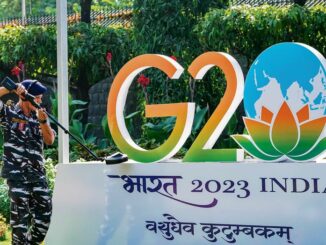
    When India hosted the G20 summit in September 2023, it was most appropriate to have Vasudhaiva Kutumbakam (the whole world is one family) as its defining motto. But to embrace the whole world, one must begin with embracing the people of one’s own country. This is also the reason why the Preamble to the Constitution lays as much stress on fraternity as it does on liberty and equality. Fraternity is particularly important for a diverse country like India. It creates a sense of affinity that transcends differences in caste, creed or religion and in the ways of living. It is fraternity which is the true basis of nationhood. Of belonging to a common cause and engaged in the pursuit of a shared national mission.

    The framers of the Constitution recognized that Indian nationalism would have to be built on acknowledging rather than suppressing the multiple identities of its people. And yet, in the final analysis, they did not quite trust the people of India to successfully balance their separate identities with an overarching concept of equal citizenship. In its final shape, its subsequent amendments and in laws passed by the legislature, the Constitution enabled the coercive power of the state to be progressively strengthened at the expense of the citizen. The state became selective in allowing some assertions of separate identities but in seeking to suppress others, the touchstone being what best served political interests of the moment. Suppression of some identities would be justified on the grounds of a threat to national unity. Others may be promoted and even legitimized to ostensibly advance national unity. The state is able to use its control and influence over the media and information channels to demonize some communities but ennoble others. Political rhetoric, then, aligns with the strategy of the moment. Such rhetoric often takes on a hysterical pitch, which drowns out all reasoned arguments.

    In a democracy, the holding of free and fair elections is indispensable but not sufficient. An independent media and a vibrant civil society provide the means to safeguard the ordinary citizen against transgressions by the state. They hold the state accountable on behalf of the citizens and constitute an alternative channel of information for the people. This is also the role played by a powerful and independent judiciary. In history, it has often been the case that the national security and national unity arguments have been used as powerful labels to de-legitimize independent institutions and dissenting voices and, eventually, political competition.

    India is midway through its 18th General Election. It is a matter of pride that the country has been able to successfully conduct these elections on an unprecedented scale every five years and that there has been a smooth and uneventful transfer of political power without violence or challenge. An independent Election Commission makes certain that all political parties and politicians play by the rules when seeking votes during their election campaigns. It is expected to make sure that candidates do not use religion, caste or creed to mobilize votes, but it is not always successful, and sometimes it is allegedly selective in imposing penalties. But during the ongoing elections, the rhetoric indulged in by certain political parties and leaders has crossed all limits. There has been a most vulgar and scurrilous attack against our Muslim citizens and charges of ‘anti-national’ activities have been repeatedly flung at political rivals. There is a thick fog of deliberate misinformation and outright lies designed to mislead and confuse voters. We profess Vasudhaiva Kutumbakam and yet indulge in openly creating dangerous fissures in our fragile social fabric. I have said this before and will repeat it: an overarching national unity cannot be constructed on a Hindu-Muslim binary.

    It is easy to dismiss the offensive and threatening statements made against India’s Muslims as election rhetoric, which will dissipate once the polls are over, but this is not true. The hurt and pervasive fear they have inflicted will simmer long after the elections conclude. Words once spoken cannot be retracted. The damage is done. As Rahim has said in one of his most celebrated couplets:

    Rahiman jihwa bawari; Kah gai sarag paatal

    Aapu toh kahi bhitar rahi; Jooti khaat kapaal. 

    (My wayward tongue has said all that lies between heaven and hell. It has said what it wanted and retreated, but it is my head which is receiving painful blows as a consequence).

    Election rhetoric must remain within the limits of civilized discourse. The pursuit of political power cannot be without ethical markers, for that will take us on a dangerous road of national and social fragmentation. I write this with a sense of deep concern about our country, whose ability to accommodate incredible diversity and sustain a vibrant democracy has been our pride and the envy of the world. It is this most precious of assets, honed over the centuries, which is in danger of being lost forever. This is a treasure which a future Vishvaguru may be unable to resurrect.

    (The author is a former Foreign Secretary of India)

  • Embassy of  India in Guatemala celebrates Holi

    Embassy of India in Guatemala celebrates Holi

    Hundreds of Indians and Guatemalans participate enthusiastically

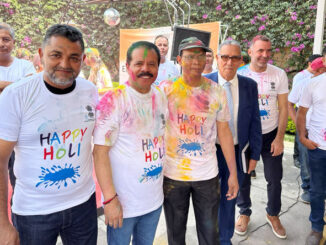
    GUATEMALA CITY (TIP): On March 24th, the Embassy of India in Guatemala vibrantly celebrated the festival of Holi at its chancery premises, uniting members of the Indian community, local dignitaries, officials from the Ministry of Foreign Affairs, Mayors, representatives of the diplomatic community, and friends of India. Approximately 700 participants attended the event. The event, graced by the esteemed presence of Mayor Juan Fernando Lopez of Xela as the chief guest, symbolized the joyous spirit of camaraderie and cultural exchange.

    Holi, known as the festival of colors, holds deep significance in Indian culture, symbolizing the triumph of good over evil and the advent of spring. Celebrating Holi overseas not only promotes cultural diversity but also forges stronger international connections by showcasing India’s rich cultural heritage to the global audience. Indian Embassy in Guatemala has played a pivotal role in actively promoting the celebration of the Holi festival in the Central American region. Last year, Holi celebrations in San Salvador drew approximately 5000 guests, while around 500 guests participated in the festivities in Guatemala. Guatemalans have enthusiastically embraced the Holi festival, evidenced by its increased turnout at recent events serving as a bridge between Indian and Guatemalan traditions, fostering mutual understanding and appreciation. India’s philosophy of “Vasudhaiva Kutumbakam” (the world is one family) resonates with the spirit of cultural exchange embodied in Holi celebrations abroad. The Embassy of India, under the leadership of Ambassador Dr Manoj Kumar Mohapatra, has initiated various programs to promote Indian culture in Guatemala, El Salvador and Honduras. This includes systematic efforts to showcase Indian cultural events locally. Such initiatives involve supporting international Yoga Day, Diwali Festival, visit of Indian dance troupes, cultural exchanges, and engaging with the Indian diaspora to propagate Indian festivals in their local communities. Through such endeavors, the Indian Embassy aims to deepen cultural ties, elevate Indian traditions in the Central American region, and stimulate tourism during festive seasons.

    Ambassador Dr. Manoj Kumar Mohapatra underscored the profound significance of cultural exchange and the enduring bonds shared between India and Guatemala.
    Ambassador Dr. Manoj Kumar Mohapatra underscored the profound significance of cultural exchange and the enduring bonds shared between India and Guatemala.

    During the celebration, Ambassador Dr. Manoj Kumar Mohapatra underscored the profound significance of cultural exchange and the enduring bonds shared between India and Guatemala. His remarks delved into the essence of Indian culture, emphasizing the festival of Holi as a vibrant symbol of unity and inclusivity that transcends barriers of language and nationality. He emphasized how Holi brings people together, fostering a sense of community and camaraderie among attendees from diverse backgrounds. Ambassador Mohapatra also took the opportunity to highlight the notable achievements in bilateral and trade relations between India and Guatemala over the past year. He emphasized the strides taken by both countries in strengthening their partnership and fostering mutual cooperation in various sectors. Expressing his gratitude to the audience for their enthusiastic participation in the celebration, Ambassador Mohapatra assured them of the embassy’s commitment to further enhancing cultural exchanges and fostering deeper connections between India and Guatemala. He concluded by promising to celebrate future festivals, including Holi, on an even grander scale, underscoring the embassy’s dedication to promoting cultural harmony and friendship between the two nations.

    Mayor Juan Fernando Lopez expressed his delight at attending the colorful Holi celebration and insights of his recent visit to India
    Mayor Juan Fernando Lopez expressed his delight at attending the colorful Holi celebration and insights of his recent visit to India

    During his address at the Holi festival, Mayor Juan Fernando Lopez expressed his delight at attending the colorful celebration for the first time. He remarked on the vibrant and unique nature of the event, highlighting how it brought together people from diverse backgrounds in a joyous display of unity and cultural exchange. He emphasized the significance of events like Holi in fostering greater understanding and appreciation of India’s rich cultural heritage among the Guatemalan community. He lauded the festival’s ability to transcend cultural boundaries and unite people through its message of love, harmony, and inclusivity. Furthermore, Mayor Lopez underscored the importance of such cultural exchanges in strengthening bilateral ties between India and Guatemala. He expressed his hope that the Holi festival would serve as a catalyst for deeper engagement and cooperation between the two nations, paving the way for greater cultural exchange and mutual understanding in the future. Seizing the opportunity, Mayor Lopez expressed his heartfelt gratitude to Ambassador Mohapatra and the Government of India for their pivotal role in spearheading five significant infrastructure projects in Xela. He enthusiastically recounted his recent visit to India to oversee the progress of these initiatives, emphasizing how impressed he was with India’s development and achievements. He shared his experiences visiting various landmarks in Delhi, Haridwar, Chennai, and Mumbai. He fondly reminisced about the captivating beauty of the Taj Mahal and the rich historical heritage of Jaipur during his visit. He also mentioned attending the Shivratri festival, where he immersed himself in the spiritual essence of India.

    Attendees delighting in Bollywood dance performances during the festival.
    Attendees delighting in Bollywood dance performances during the festival.

    Guests were treated to a memorable experience filled with vibrant dance performances, traditional Indian cuisines served by Little India and Curry & Kebab restaurants, and the joyous tradition of playing with colors. The lively atmosphere was further enhanced by a photobooth sponsored by M/s 24X7 Guatemala, where guests delighted in capturing moments of shared laughter and camaraderie. Adding to the festive spirit, custom-designed Holi t-shirts provided by M/s Pradilsha added a touch of flair and unity to the occasion, symbolizing the colorful tapestry of India’s cultural diversity.

    The event saw enthusiastic participation from Indian community, local dignitaries, officials from the Ministry of Foreign Affairs, Mayors, representatives of the diplomatic community, and friends of India.
    The event saw enthusiastic participation from Indian community, local dignitaries, officials from the Ministry of Foreign Affairs, Mayors, representatives of the diplomatic community, and friends of India.

    Overall, the Holi celebration at the Embassy of India in Guatemala served as a testament to the power of cultural exchange in fostering international understanding and unity. Through vibrant festivities and heartfelt camaraderie, attendees experienced the beauty of India’s cultural traditions and the warmth of its hospitality, leaving them with cherished memories of a joyous celebration.

    (Based on a press release issued by Ramesh Khulbey)

  • Making diaspora invest in India a challenge

    Making diaspora invest in India a challenge

    “The unresolved issue with the NRIs is that the Indian government just does not know what it can do with them. The government wants their money, no doubt, and they are indeed sending money home, which accounts for 3 per cent of India’s GDP, according to the World Bank. The BJP’s foreign policy notion that the NRIs are its soldiers abroad to spread national glory is at best a delusion. And it could become a dangerous one if Indians abroad are seen as ‘fifth columnists’. Most NRIs have no interest in Indian politics nor are they motivated to push India’s case across the world. A time has to come when Indians need not migrate to other countries for better opportunities.”

    The NRIs remittances are higher than the foreign direct investment (FDI) that India is able to attract. The NRI remittances to India were $89.4 billion in 2021 and $100 billion in 2022.

    By Parsa Venkateshwar Rao Jr.

    The Bharatiya Janata Party (BJP), in its pursuit of overzealous nationalism, has looked upon the Indian diaspora across the world as an extension of India, politically as well as culturally. During the tenure of the then Prime Minister Atal Bihari Vajpayee, an attempt was made to woo overseas Indians, with the PM making it a point to interact with the Indians abroad rather than with other citizens of the host country. It was in 2002 that the first Pravasi Bharatiya Divas event was held in New Delhi.

    Prime Minister Narendra Modi intensified the outreach to the NRIs by addressing rallies in Madison Square Garden (New York) and then in Sydney after his party’s historic win in the 2014 Lok Sabha elections. But despite the enthusiasm to cultivate the NRI constituency in the past two decades, there is uncertainty and confusion over how to tap the potential of the NRIs to strengthen India at the global level or even at home.

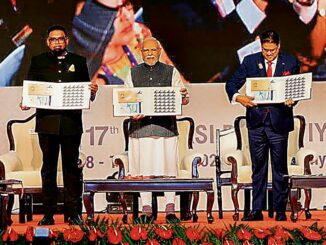
    The 17th Pravasi Bharatiya Divas event, held in Indore from January 8 to 10, reflected the confusion. The Indian government does not seem to be keen that the Indians living abroad should come back and help in the development of the country with the knowledge and expertise they have acquired abroad. It only wants that the NRIs invest in India. But it is in many ways a non sequitur.

    Indians settled abroad, whether in the Gulf countries, the UK, the US, Canada, Australia or Singapore, have been sending money home to their families. But they have not thought that it is profitable to do business in India or invest in India. Even today, the NRIs remittances are higher than the foreign direct investment (FDI) that India is able to attract. The NRI remittances to India were $89.4 billion in 2021 and $100 billion in 2022, higher than what the Chinese and Filipino emigrants send to their home countries.

    So, at successive conventions of the Pravasi Bharatiya Divas, the country’s leaders of the day give rhetorical messages to the few thousand delegates who attend the event. And this year seems to have been no different. PM Modi, Finance Minister Nirmala Sitharaman and Education and Entrepreneurship Minister Dharmendra Pradhan delivered homilies and the unintended ironies were there for all to see. PM Modi, in his inaugural speech on January 8, said, “In Pravasi Bhartiyas, we see myriad images of Vasudhaiva Kutumbakam and Ek Bharat Shreshtha Bharat,” and “Pravasi Bhartiyas echo the voice of a powerful and capable India.”

    Pradhan said, “We all agree that once upon a time India was a ‘Vishwaguru’, not in terms of military power but in terms of intellect.” And then he turned to the government’s programme of creating a skilled network in the country. He told the NRIs that India has a skilled workforce of 500 million. Sitharaman, echoing PM Modi’s statement of how cheap India’s Mars mission was, said, “The cost of the Chandrayaan, which goes to the moon, is far less than that of a Hollywood film.” And citing a NASSCOM (National Association of Software and Service Companies) report, she said Indian IT companies hired 2 lakh Americans at an average salary of $1,06,360 in 2021.

    These statements can only confuse NRIs. The government wants to woo them by telling them how good India has become since they left the country and what an attractive investment destination it is now. Surely, the NRIs would want to test the government’s claims on the ground and it will be reflected in the investment decisions they will make in the future.

    But there is also the fact that though Indians in the US are sending home more money than those in the Gulf countries, as was the case earlier, the Indian-Americans are less likely to return home and even start businesses in India. The Indians in Gulf countries will come back at some point of time because as yet there is no possibility of becoming citizens in those countries. In contrast, more Indians are getting the coveted Green Card in the US and they are more likely to become citizens there. Secondly, there are more billionaires in India than among the NRIs. Steel magnate Laxmi Narayan Mittal and metal magnate Anil Agarwal are among the exceptions. The NRIs in the US are prosperous but they are not super-rich yet. They do not have surplus capital to pump into India like Meta’s Mark Zuckerberg or Amazon’s Jeff Bezos.

    It is, however, true that more and more Indians in western countries are becoming part of the political mainstream of their adopted countries, and they are reaching positions of influence and power. Whether it is Indian-origin leaders such as US Vice-President Kamala Harris, British Prime Minister Rishi Sunak, President of Guyana Mohamed Irfaan Ali or President of Suriname Chandrikapersad Santokhi (the last two were special guests at the Pravasi Bharatiya Divas event in Indore), they owe nothing to India, and there is nothing that India can do to support or strengthen them. India is not the imperial power that the Modi government would imagine itself to be.

    The unresolved issue with the NRIs is that the Indian government just does not know what it can do with them. The government wants their money, no doubt, and they are indeed sending money home, which accounts for 3 per cent of India’s GDP, according to the World Bank. The BJP’s foreign policy notion that the NRIs are its soldiers abroad to spread national glory is at best a delusion. And it could become a dangerous one if Indians abroad are seen as ‘fifth columnists’. Most NRIs have no interest in Indian politics nor are they motivated to push India’s case across the world. A time has to come when Indians need not migrate to other countries for better opportunities.

    (The author is a senior journalist)