Tag: Vivek Katju

  • Can India harm Pakistan by restricting Indus waters?

    Can India harm Pakistan by restricting Indus waters?

    A full account of how much water India is losing because of the Indus treaty should be made public by the government

    “The IWT was negotiated with the help of the World Bank. The process took nine years. India generously gave Pakistan waters of the Indus, Jhelum and Chenab (called the western rivers in the treaty). It only retained the right to use a small portion of their waters for irrigation and run-of-the-river power generation. India retained full use of the Ravi, Sutlej and Beas. That meant that its “share” of the waters of the Indus Rivers System (IRS) remained only 20 per cent; the rest was given up to Pakistan.”

    By Vivek Katju

    During an interaction with students of IIT-Madras on January 2, External Affairs Minister S Jaishankar turned his attention to India’s “bad neighbor to the west”. He made the valid point that India had the right to defend its people against a country which perpetrated terrorism “deliberately, persistently and unrepentantly”.

    He went on to emphasize that it was up to India to decide how it would “exercise that right”. He recalled that “many years ago”, India had, as a measure of goodwill, agreed to a “water-sharing arrangement” with the western neighbor. However, as Pakistan had been involved in terrorism against India over the decades, it could not ask for sharing of waters. Jaishankar was essentially reiterating Prime Minister Narendra Modi’s point that “blood and water cannot flow together”.

    Both Modi’s and Jaishankar’s comments relate to the river waters that flow from India to Pakistan. Both are general expressions of anger and dismay against Pakistan’s pursuit of cross-border terrorism. However, they lack specificity and precision. They also do not take into account to what extent India can control the rivers that flow from India to Pakistan.

    The “water-sharing arrangement” is the India-Pakistan Indus Waters Treaty (IWT) of 1960. Pakistan had from the outset raised the apprehension that India had the capacity to deny it water. This is because the rivers that sustained life in Pakistan — Indus, Jhelum, Chenab, Ravi, Beas and Sutlej — flowed through India and Pakistan-occupied Kashmir (PoK) before entering its territory.

    Pakistan’s fears were unfounded because in the case of the Indus, Jhelum and to a large extent Chenab, India simply could not, wholly or substantially, hold back their waters. That was true then and it is so now as well. India could stop the waters of the Ravi, Beas and Sutlej from flowing into Pakistan, but they hold only 20 per cent of the waters of these six rivers taken together. Hence, Pakistan’s real desire was that India should not impede the flow of the Indus, Jhelum and Chenab. The waters issue was also used in Pakistan to fuel anti-India sentiment.

    The IWT was negotiated with the help of the World Bank. The process took nine years. India generously gave Pakistan waters of the Indus, Jhelum and Chenab (called the western rivers in the treaty). It only retained the right to use a small portion of their waters for irrigation and run-of-the-river power generation. India retained full use of the Ravi, Sutlej and Beas. That meant that its “share” of the waters of the Indus Rivers System (IRS) remained only 20 per cent; the rest was given up to Pakistan.

    India has held the IWT in abeyance since the Pahalgam terror attack in April last year. Earlier, in September-October 2024, there were reports that India had asked Pakistan for a renegotiation of the treaty because the situation concerning the use of waters and the generation of power had changed since 1960. Pakistan had responded by suggesting that the matter be raised in the India-Pakistan Indus Waters Commission under the IWT. India had rejected this approach. It wanted a Pakistani commitment for renegotiating the treaty. Now, this has become academic because India has held the treaty in abeyance. Pakistan has warned that restricting the flow of water into its territory would be “an act of war”, but it’s unlikely that the threat would prevent India from undertaking actions to use the IRS’s waters where it can for the benefit of its people.

    The terrain through which the Indus flows in India before it enters PoK is such that a large dam cannot be constructed. Certainly, its waters cannot be diverted meaningfully in Ladakh or elsewhere. Large dams cannot be constructed on the Jhelum too. But its waters can be used for navigation, and limited irrigation possibilities exist.

    Pakistan prevented the construction of the Tulbul Navigation Project for decades. Now it can be completed. The IWT has always been unpopular in J&K because it circumscribes the use of the erstwhile state’s rivers. The Chenab can be utilized for power generation and perhaps its water can be diverted for irrigation, but dams with large pondages cannot be constructed because of the terrain. And, the eastern rivers are with India in any case.

    All in all, it is difficult to foresee how India can utilize the waters of the western rivers in large measure beyond what is already provided in the IWT. Hence, can India really trouble Pakistan through restricting the flow of river waters? Perhaps not. In any event, a full account of how much water India is losing because of the IWT should be made public by the government.

    Pakistan has followed an obstructive approach to the IWT and desperately wants it to continue. The reasons are two-fold. First: it does not wish to lose even a small quantity of water because it has become a water-scarce country. Pakistan’s water management has been terrible, but it does not wish to acknowledge this fact. Second: Pakistan does not want India to ever disrupt the flow of water, especially during the agricultural season, because that may negatively impact crop yields.

    Pakistan has agreed to discuss the IWT modification, although under the Indus Waters Commission, because it may feel that India would not agree to use the mechanism for these discussions.

    However, there is a section in Pakistan which wants to engage India in sub-surface water management. This section believes that India and Pakistan share aquifers and that their joint management would benefit Pakistan. They would like the IWT to extend to sub-surface waters too. India should never agree to expand the scope of cooperation to sub-soil water in view of Pakistan’s obstructionism in IWT management.

    India is both an upper riparian state and a lower one, as in the case of the Brahmaputra. This reinforces the need for the government to provide greater clarity to the comments Modi and Jaishankar have made on sharing of waters. People deserve not to be confused on vital issues such as water.
    (Vivek Katju is a retired Indian Foreign Service officer.)

  • Has India been blindsided by Donald Trump?

    Has India been blindsided by Donald Trump?

    External Affairs Minister S Jaishankar is currently facing the greatest test of his career

    Why did India go so wrong in assessing that Trump 2.0 would be so inflexible on trade issues? After all, the Ministry of External Affairs and the External Affairs Minister would have had the opportunity of early feedback of what Trump and his key aides thought on trade and foreign policy, including when Jaishankar attended Trump’s inaugural in January and was a key member of Prime Minister Modi’s visit to Washington in February.”

    By Vivek Katju

    At a question-and-answer session that followed the delivery of the Ramnath Goenka lecture on November 17, 2019, External Affairs Minister S Jaishankar was asked about the problems in India-US trade relations, amidst ties that were moving forward. The Minister observed that India alone was not facing challenges in dealing with the US, and went on to add, “I think frankly in our case that is vastly overstated.”

    The Minister was right. Many countries, indeed, were facing difficulties in dealing with Trump, even at the time in his earlier avatar. In the current context, his comment is vastly ironic.

    Certainly, Jaishankar occupies a special place in the history of India-US relations. Not just because he is India’s External Affairs Minister, but also because in the annals of the Indian Foreign Service, few have had his kind of experience dealing with the subject. Today, though, as the application of 50 per cent US tariffs kicks in, the question is, ‘Could India have foreseen what was going to happen?’

    As a person given to reflection, and in light of his vast experience as a former ambassador to the US as well as to China, besides having served in Russia as a junior diplomat, many expect a clear-eyed response from my former colleague, Jaishankar. At a difficult time like the present in India’s foreign policy, would it be fair to ask, “Why has India been blindsided by Trump 2.0?”

    At the time in 2019, as part of his aforesaid Q & A following the Ramnath Goenka lecture, Jaishankar had observed that “trade frictions” often took place between trading partners. Surprisingly, he went on to claim that, in India, problems are sometimes exaggerated “beyond belief”, because people want to show how bad things are. He went on to express “reasonable confidence” that difficulties in trade would not impact other areas of India-US ties. As we all know, the situation is vastly different today. As of now, however, Jaishankar has only said that lines of communication between India and the US have not been cut. This is neither here nor there.

    The 2019 Q & A begs the question: Why did India go so wrong in assessing that Trump 2.0 would be so inflexible on trade issues? After all, the Ministry of External Affairs and the External Affairs Minister would have had the opportunity of early feedback of what Trump and his key aides thought on trade and foreign policy, including when Jaishankar attended Trump’s inaugural in January and was a key member of Prime Minister Modi’s visit to Washington in February.

    Did he and India not gauge the Trump administration’s mood at the time? The larger question is when the Modi government saw the clash coming and what it has done so far to assuage the most powerful leader in the world, Donald Trump.

    There is no question of India succumbing to the US President’s pressures on matters of vital economic and commercial significance. Clearly, agriculture and dairy come in these categories. That Trump is applying double standards on the purchase of Russian oil by exempting China is true, but the question that remains is, how does India propose to deal with this matter.

    There is bipartisan support for India in the US Congress. In the past, US industry was invoked at crucial moments to overcome obstacles in India-US ties. Moreover, no Indian ruling dispensation has put so much store on the Indian diaspora as this one has. How is the Modi government planning to invoke the three ‘brahmastras’ in its quiver?

    Trump seems obsessed with claiming that he had mediated a ceasefire between India-Pakistani armed hostilities in May and had even, potentially, averted a nuclear catastrophe. He is certainly not the first US leader to have intervened in India-Pakistan armed action, although the others were discreet because of Indian sensitivities. India has correctly taken the position that the pause in Operation Sindoor was its own decision, taken after the Pakistani DGMO approached his Indian counterpart. While maintaining this position, did the Modi government attempt to find a formulation, which while preserving India’s position would have, at least, partially satisfied Trump?

    The essence of diplomacy lies in finding such formulations. This is especially when conversations were going on between India and the US (as well as among other countries) during Operation Sindoor, as Jaishankar has himself said. It is not contradictory to firmly don the cloak of nationalism and yet find diplomatic ways to assuage even an obsessed leader like Trump.

    One can only hope that Jaishankar with his vast experience of handling the US will be able to close the chasm that has developed. Certainly, he is currently facing the greatest test of his career; crisp one-liners or long-winded clarifications about the justness of India’s position (which, of course, it is) will not do!

    (Vivek Katju is a former Secretary, Ministry of External Affairs)

  • When Parliament should have spoken as one

    When Parliament should have spoken as one

    A unanimous resolution should have been adopted by both Houses against Pak terror. It would have been a signal of India’s unity on terror.

    By Vivek Katju

    Was it too much to hope that after all the political point-scoring on the Pahalgam attack and Operation Sindoor was done, a unanimous resolution would have been adopted by both Houses of Parliament against Pakistani terror? A resolution would have been a natural corollary to the sending out of the seven all-party delegations to show that India stood together after the Pahalgam attack and had endorsed the government’s kinetic action.

    It would have also been a potent signal to the international community that the unity displayed by India’s political class on Pakistani terror was not ephemeral but a reflection of national determination. Alas, the thought of a resolution did not even cross the minds of our leaders, whether in government or opposition; such is our current polarized polity.

    Consequently, the special parliamentary discussion did not rise above party politics. It became mainly an exercise in political declamation, of levelling accusations and counter-accusations, of evasion and silence. Of course, Parliament is quintessentially a political platform, but it is also the highest constitutional forum for serious debate to forge a national strategic consensus on security issues. This discussion gave a chance to leaders for an intense, constructive probing of these vital matters.

    Some strategic concerns were raised by the opposition — such as the nature of Sino-Pak nexus and its impact on India’s defense. Instead of responding positively, the ruling dispensation decided to regurgitate all the mistakes made by the Nehru-Gandhis. Thus, these issues were lost in an avalanche of rhetoric, which was only occasionally punctuated by some important diplomatic and strategic points. Perhaps, the most significant were made by PM Modi on India’s position on the Indus Waters Treaty. The operationalization of India’s intentions will not be easy for the rivers allotted to Pakistan under the treaty, except for the Chenab.

    It was legitimate for the Opposition to ask questions relating to the security and intelligence aspects of the attack. After all, the terrorists freely roamed the Baisaran valley on April 22 for over an hour, killing 26 men at will. The government did not respond to these queries but took credit for the elimination, just a day before the discussion, of three of the Pakistani perpetrators. The security forces did a good job in killing these men, but the questions on the absence of security will not go away with their avoidance by the rulers.

    The government also maintained a stony silence on the global narrative that India had lost aerial platforms on the first day of Operation Sindoor. The Opposition pressed in vain for it to come clean. The government could have chosen to adopt the valid position taken by the Indian military that despite some initial losses, it was able to decisively find pathways through Pakistani aerial defenses to strike nine of its airbases. Clearly, Modi sought to bypass the question when, in somewhat colorful language, he reported how abjectly the Pakistani Director General of Military Operations (DGMO) asked his Indian counterpart to end hostilities. This may appeal to a section of the ruling dispensation’s faithful, but would not put to rest the global narrative that India did not gain a decisive military edge over Pakistan in Op Sindoor. Modi’s revelation that India neutralized Pakistan’s aerial attack on May 9-10 was useful, but would it contribute to correcting international perceptions on Operation Sindoor?

    The government avoided direct refutation of US President Donald Trump’s claims of mediating between India and Pakistan. External Affairs Minister S Jaishankar clarified that there was no conversation between Trump and Modi from April 22 to June 17. That, of course, proves nothing. Modi asserted, “No world leader had asked India to pause Operation Sindoor.” While no country may have specifically used such a formulation, in all their conversations with their Indian counterparts, the representatives of major powers were wanting armed India-Pakistan hostilities, which began with Operation Sindoor, to end.

    What India needs to conclusively establish is that an unacceptable terrorist attack by one nuclear state on another is the first step on the escalatory ladder; hence, Pakistan must strike out the use of terror against India from its security doctrine. Regrettably, this most important strategic point was not unequivocally stated by any ruling dispensation speaker. It was equally important for the Opposition to have endorsed it. But that would have required backroom discussions to be held prior to the debate on the message that should go out to the nation and world from the Parliamentary debate. Obviously, no such conversation took place.


    Jaishankar said this about India’s future approaches towards Pakistan: “There is now a new normal. The new normal has five points: One, terrorists will not be treated as proxies. Two, cross-border terrorism will get an appropriate response. Three, terror and talks are not possible together. There will only be talks on terror. Four, not yielding to nuclear blackmail. And finally, terror and good neighborliness cannot coexist. Blood and water cannot flow together.”

    Apart from a few sections of the political class who favor that the doors of dialogue with Pakistan should not be shut, the points mentioned by Jaishankar enjoy wide acceptance with the Indian people. A parliamentary resolution containing these issues, with an appropriate part regarding India’s desire for good ties with Pakistan but that it needs to abandon terrorism, would have found acceptance with all sections of Parliament. That is what should have emerged from these discussions. It would have carried global credibility. But that needs a political leadership, which despite political bickering, is in conversation on major national issues. That seems absent today.

    (Vivek Katju is a retired diplomat)

  • Deported by error: Garcia case and its echoes in India

    Deported by error: Garcia case and its echoes in India

    Nowadays, there are heart-rending cases of young persons of both countries who cross the India-Pakistan border inadvertently and spend years in prison unless compassionate border security officials do not refer their cases to the police but quietly return them to the other side. But such compassion is rare.

    By Vivek Katju

    The ongoing Abrego Garcia deportation case in America illustrates the helplessness of individuals who sink into the quicksands of bureaucracy and/or disputes between state organs for no fault of their own. The fate of persons who inadvertently get caught in the meshes of adversarial inter-state relations is, perhaps, worse. I know of some of these Kafkaesque situations involving Indians. This case revived these memories. But first, a brief assessment of the implications of the Garcia case for Trump’s America.

    At 16, Garcia from El Salvadore entered the US illegally in 2011. He later married a US national. An immigration court ruled in 2019 that he could not be deported from the US. That decision stands. Yet, the US immigration authorities deported him to El Salvador, where he was imprisoned. Garcia’s wife approached the Federal District Court of Maryland. The US authorities admitted in court hearings that Garcia’s deportation was because of an “administrative error.” The court ordered that he be brought back immediately.

    The Trump administration went to the Supreme Court, arguing that Garcia was a member of MS-13, a designated foreign terrorist gang, and his return to the US would constitute a public safety threat. Ignoring this aspect, the Supreme Court ordered that the government should “facilitate” Garcia’s return and keep the District Court informed of its actions. It also directed the District Court to respect that foreign policy was in the government’s domain.

    The Trump administration has no intention of seeking Garcia’s return. Indeed, El Salvador’s President Nayib Bukele, after meeting Trump in Washington on April 13, told reporters that he had no intention to release Garcia. The District Court is soldiering on, but it is likely to succeed. The fact is that Trump is destroying the institutional balance which is the foundation of the US system.

    Now, to two Indian cases of persons who faced unforgiving bureaucracies determined to uphold national interest!

    In the early 1990s, a Belgian nun called the Indian Mission in Islamabad from Lahore that two young Indians were in her church. The Mission told her to send them to Islamabad. They were received on arrival and debriefed. At the same time, the Pakistani Foreign Ministry was informed because they would have monitored the call from Lahore. The two boys said that they were sailors employed in the UAE. Their vessel had sunk off the Iranian coast. They were rescued and put in an Iranian detention center. One day, they were pushed across the border into Pakistan. They managed to reach Quetta and took a train to Lahore. One of them was from Goa and the other from Bihar.

    The Pakistani Foreign Office directed that they be sent to a police station, where they were arrested, charged and imprisoned for two years. The Pakistani newspapers reported that two R&AW agents had been arrested!

    The Goa boy’s mother lived in Mumbai and visited the Ministry of External Affairs occasionally to seek its intervention for his early release. My colleagues treated her with empathy. I spoke to the Pakistan DHC, pressing that they were innocent boys deserving sympathy. He found their story unbelievable. After serving their sentences, they were released. The mother brought her son to Delhi to meet us because she told him that the MEA had been a great support. What the son told me was this.

    In addition to the two, three more were rescued from the vessel by the Iranians and all five boys were pushed into Pakistan. All five reached Lahore and got into two tongas, which got separated. The two in one tonga went to a church for help; the Goanese was a Christian. The Pakistani priest there panicked and called the nun.

    I asked him about what happened to the other three. After some reluctance, he said “Sir, they went to Karachi by train and being sailors, went to a seamen’s association’s office near the port. They related their story to its office-bearers who believed them. They were put on a boat bound for Mumbai and are now living safely there.”

    He also told me that the Pakistani sailors had taken an oath from them that they would not contact any Indian official just as they had not informed any Pakistani official.

    I pleaded with him to inform one of them that I would like to meet the three. He said that he would pass on the message. The three never broke their oath!

    The second case is that of an Indian who was one of Abu Dhabi ruler Sheikh Zayed’s drivers. The Director of the ruler’s office called me and asked why he was being denied a visa. This was 1980 and I was at our embassy in Abu Dhabi. The driver, who was in his sixties, came to see me and related his story.

    He said that he reached Dubai in 1945 from Kerala. Some years later, he fell ill and was being taken on a dhow to Kerala, but as his condition worsened, the dhow dropped him in Karachi. He was hospitalized and when he recovered, he wanted to go home quickly, but he had no identity papers. He was advised by some locals that he should get Pakistani papers and an Indian visa for that was the quickest way for him to get home. He did.

    In Kerala he got married, threw away his Pakistani passport, got an Indian one and returned alone to Dubai. After a few years, he returned to India on his Indian passport, but a neighbor told the police that he had earlier come on a Pakistani passport. He was taken into custody and deported to Dubai. For over two decades, he had not been able to go to India while his family remained there.

    He ended his story by telling me: “I don’t want to die here. I want to be buried in my homeland.” The Indian authorities never agreed, as far as I know, to his return.

    Nowadays, there are heart-rending cases of young persons of both countries who cross the India-Pakistan border inadvertently and spend years in prison unless compassionate border security officials do not refer their cases to the police but quietly return them to the other side. But such compassion is rare.

    (The author is a Former Secretary, Ministry of External Affairs)

  • Close ranks to fortify the republic

    Close ranks to fortify the republic

    The collective will of people is needed to safeguard India’s interests

    “A deviation from this basic constitutional proposition will damage India’s capability to successfully navigate the enormous strategic challenges that are growing because of the technological changes underway in a turbulent global environment. The regional situation, too, presents difficulties that can be ignored only at the peril of hurting national interests. And, for India, the key country connecting its regional and global challenges is China.”

    By Vivek Katju

    With the onset of the year in which the Indian republic will celebrate 75 years of its establishment, the fervent hope of the majority of its citizens is for social peace and harmony. This can only be achieved if there is a realization that the path to right the ‘wrongs of history’ lies through cementing a common nationhood that is respectful of the traditions and faiths of all Indians. That acceptance and respect are also the premise and promise of the republic’s foundational principle, so eloquently expressed in the Constitution.

    A deviation from this basic constitutional proposition will damage India’s capability to successfully navigate the enormous strategic challenges that are growing because of the technological changes underway in a turbulent global environment. The regional situation, too, presents difficulties that can be ignored only at the peril of hurting national interests. And, for India, the key country connecting its regional and global challenges is China.

    China’s threat goes far beyond the border issue. A process of ‘normalizing’ the relationship, which was acutely impaired by China’s actions in eastern Ladakh in the summer of 2020, may now have begun. The Ministry of External Affairs’ readout of the Narendra Modi-Xi Jinping meeting on the sidelines of the BRICS summit in October last year noted, “The two leaders affirmed that stable, predictable and amicable bilateral relations between India and China, as two neighbors and the two largest nations on earth, will have a positive impact on regional and global peace and prosperity. It will also contribute to a multipolar Asia and a multipolar world”. However, whatever China may agree to during formal summit-level meetings, it is working for, at least, a bipolar world order and is assiduously seeking a unipolar Asia in which its power and influence prevail. And, the backbone of both these quests lies not only in its economic success and growing military power but also its undoubted and deep advances in the areas of science and high technology.

    In 2018, Tim Cook, CEO of Apple, had said, “The popular conception is that companies come to China because of low labor costs. I’m not sure what part of China they go to, but the truth is that China stopped being the low-labor-cost country years ago. And that is not the reason to come to China from a supply point of view. The reason is because of the skill, and the quantity of skill in one location and the type of skill…” He went on to say that the products that were Apple’s requirement needed advanced tooling capable of working with state-of-the-art material. He added, “That tooling skill is very deep here. In the US, you could have a meeting of tooling engineers and I’m not sure we could fill the room. In China, you could fill multiple football fields…”

    That was over six years ago. China’s drive to develop human capital in the areas of frontier manufacturing continues relentlessly. It is, however, not satisfied with becoming the factory of the world. It is now seeking to reach US and Western European levels in design and innovation in large frontier technology sectors, including artificial intelligence (AI).

    Till recently, it was commonly and correctly believed that in AI, the US excelled in ‘technical innovation’ while Chinese companies were competent at ‘application innovation’. There was generally a gap of one or two years before the application occurred. However, the Chinese are now realizing that there is a fundamental difference between ‘technical innovation’ and thereafter applying it. Hence, Chinese companies like DeepSeek have come up; they are going rapidly ahead in ‘technical innovation’. They do not wish to be followers anymore. This will pose a challenge to US supremacy in AI, which is destined to change the world. The US will pose impediments in China’s path, but will it succeed? It is difficult to predict how deep and extensive will be the transformation of individual lives and international power equations, but it is certain that this will happen, and that too early.

    Where does India stand in all this and other frontier and emerging areas of science and technology (S&T)? The truth is that while India’s economic growth has led it to become the fifth largest global economy, there is a wide and perhaps growing gap in S&T not only with the West but also with China. Jawaharlal Nehru was acutely aware that European domination of the world, beginning with the 18th and 19th centuries that led to all the horrors of colonialism in Asia, Africa and South America, had occurred because of its Industrial Revolution. Hence, his determination that India should catch up in S&T, both in terms of human capital and industrialization. In this context, it is good to become aware of the advances Indians had made in S&T in ancient times and convey that to the world, but is that really the path to becoming a strong and powerful country — a genuine pole in a multipolar world?

    The answer is obvious. All the digging out of glories from our ancient past, which was ravaged by invaders, will not help us meet the challenges of today. They may satisfy emotional urges of certain sections of the people, and their long-standing feelings of hurt and anguish may be addressed too, but they will not address the strategic threat that the country faces from China. In the current year and beyond, China’s involvement in India’s immediate neighborhood will only increase. Its intrusion in India’s western neighborhood, substantial for decades, will continue. The situation in Bangladesh is ripe for its pernicious intervention and it will increase its presence in the Indian Ocean Region.

    In such circumstances, it is the collective will of cohesive people — shedding prejudices, not dwelling on the past but taking India forward to become a leader in S&T innovation and applications and strong in defense — that is needed to safeguard India’s interests.
    (The author is a former Ambassador)

  • Don’t let mobs give India a bad name

    Don’t let mobs give India a bad name

    Gujarat University incident turns the spotlight on the safety of foreign students

    “Academic institutions with foreign students have to be especially vigilant that the inevitable tensions between them, if they are in sizeable numbers, and local students are kept in check. The ICCR too must act with greater concern on this issue too. The organization’s task is to project Indian culture abroad and showcase the richness of its tolerant traditions. The ruling dispensation has been eager to portray India as the mother of democracy. It is essential to show that there is no discrimination on the grounds of faith or race against anyone in India. It is only then that the message of India’s democratic traditions and its oft-quoted motto — Vasudhaiva Kutumbakam — would carry credibility with foreign students.”

    By Vivek Katju

    The five foreign students who were injured in a mob attack on their hostel on March 16 were, according to media reports, Indian Council of Cultural Relations (ICCR) scholarship holders. They were Muslims, including some from neighboring countries, and were offering namaz. The assailants objected to their doing it on the hostel premises and asked them to go to a mosque. Hot words were exchanged and the mob not only attacked the students but also ransacked their rooms and damaged some of their vehicles. Two of the injured students had to be hospitalized.

    Such incidents can prompt nations and groups inimical to this country to intensify their anti-India campaign.

    On March 17, a spokesperson for the Ministry of External Affairs (MEA) took to social media platform X (formerly Twitter). He said: “An incident of violence took place at Gujarat University in Ahmedabad yesterday. The state government is taking strict action against the perpetrators. Two foreign students were injured. One of them has been discharged from the hospital after receiving medical attention. The MEA is in touch with the Gujarat Government.”

    Clearly, the MEA was unwilling to refer to the ‘perpetrators’ even though visuals of the incident and comments of foreign students in the hostel concerned were being circulated on social media. This unnecessary caution would hardly fulfil the ICCR’s objective that the scholarships are “an important vehicle of outreach and create goodwill about India…” and that “each ICCR scholar is India’s goodwill ambassador abroad”. It is doubtful if many of the 300 ICCR scholarship holders studying at Gujarat University would subscribe to these aims of the ICCR after this incident. It is noteworthy that there are around 7,000 ICCR scholars in India. According to the media, of these, 1,100 are in Gujarat, including those at Gujarat University.

    The Vice-Chancellor of the university, Neerja Gupta, visited the hostel almost 12 hours after the attack. Perhaps she was advised by the police and the university administration not to be there immediately after the night-time incident. It is not known if any senior faculty or administration members arrived to give an assurance of safety to the foreign students. Gupta has now formed a Foreign Student Advisory Committee. She has stated that namaz was not the main issue and that there was a need for foreign students to become culturally oriented. She needs to clarify if it was wrong on the part of the foreign students to offer namaz in their hostel. She would no doubt be aware that Muslims all over the world become more conscious of their religious obligations during the month of Ramzan, which began in India last week. It is also pertinent to ask whether foreign Muslim students offered namaz in their hostels in previous years or was this the first time that they did so.

    The Gujarat Police have apprehended five perpetrators and formed teams to nab others. There is an urgent need to investigate the case thoroughly and take action against the guilty so that nations and groups inimical to this country do not spread the message that India is no longer safe for foreign Muslim students. Anti-India forces are busy spreading the word that India is in the grip of Islamophobia. Such incidents and the ambivalent comments such as those of the V-C and the MEA can be used by these parties to intensify their anti-India campaign.

    In the context of this incident, it is necessary to mention that India once again abstained from supporting a resolution in the United Nations General Assembly (UNGA) on Islamophobia, moved by Pakistan and other Islamic countries. This resolution was adopted on the UNGA-designated day against Islamophobia last year. India had abstained because it felt that no religion should be singled out and the UNGA should adopt a resolution against phobias pertaining to any religion. The current resolution built on the one adopted last year and asked the UN Secretary General to appoint a special envoy to combat Islamophobia. India explained its abstention on the same lines as last year.

    There can be no quarrel with the Indian argument that the world should not be divided into religious camps, but the fact is that India’s abstention may be co-related with the Gujarat University incident; hence, there is a need for greater efforts in this matter by all concerned — MEA, ICCR, the Gujarat University authorities and the law enforcement agencies of Gujarat. India has interests in the Islamic world and it should not allow the feeling to spread that it is difficult for Muslims in India or those from abroad to observe their religious obligations in the country.

    Academic institutions with foreign students have to be especially vigilant that the inevitable tensions between them, if they are in sizeable numbers, and local students are kept in check. The ICCR too must act with greater concern on this issue too. The organization’s task is to project Indian culture abroad and showcase the richness of its tolerant traditions. The ruling dispensation has been eager to portray India as the mother of democracy. It is essential to show that there is no discrimination on the grounds of faith or race against anyone in India. It is only then that the message of India’s democratic traditions and its oft-quoted motto — Vasudhaiva Kutumbakam — would carry credibility with foreign students.

    The Indian government puts great emphasis on the country’s soft power. India especially stresses that if the world were to follow the principles of harmony and peace which evolved in India in ancient times, it would become a better place. Certainly, the mob attack on foreign students offering namaz in a university was not in keeping with the soft power which India seeks to project.

    What is noteworthy is that political leaders have generally avoided commenting on the matter, even as Kerala Governor Arif Mohammed Khan said such incidents indicated that people of the country were still not fully aware of its traditions and cultural heritage. What does that say about our polity and society?
    (The author is a former Secretary, Ministry of External Affairs, Government of India)

  • More to marmalade than meets the eye

    More to marmalade than meets the eye

    The Congress needs a recipe to connect with the masses and revive its fortunes

    “Rahul’s Bharat Jodo Yatra has contributed to doing away with his ‘Pappu’ image. By any standards, it was an enormous feat of physical stamina and he stuck to his ideological message right through. It is difficult for his political rivals to call a person who has walked such a long distance as ‘Pappu.’ One can almost hear village elders and others who may be great admirers of Prime Minister Narendra Modi admit, “Chhora chala toh hai.” The fact that the Congress lost the Assembly elections in the Hindi heartland states has more to do with the great structural weaknesses in the party rather than Rahul’s image. Image matters in politics and, therefore, it is essential for Rahul not to convey that ultimately he is a ‘south Delhi’ boy — as the marmalade video does.”

    By Vivek Katju

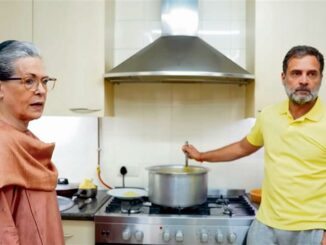
    I begin  with an admission. I like orange marmalade a lot ever since I got used to its bittersweet flavor. The New Year’s Eve video of Sonia and Rahul Gandhi making marmalade in their kitchen, obviously from Chinese oranges from their garden, brought back memories of the marmalade made by my late mother-in-law from kinnows and oranges. Well-known foreign brands of Seville orange marmalade could never compare with those made by her. Since there is no possibility that I will ever have the opportunity to spread on a toast the marmalade whose recipe was given by Priyanka Gandhi, I will continue to consider my mother-in-law’s marmalade as the best. Just one more word on marmalade: Rahul calls it a jam. That is a sacrilege of sorts as marmalades are essentially jellies.

    Despite all the efforts being made by Opposition parties through the INDIA bloc, it is apparent that the BJP under Modi is ahead in the electoral race.

    But the Sonia-Rahul video was much more than mother and son bonding over making marmalade. Anything that they post on social media has a political purpose. Their political adversaries will use the video to emphasize the elitist nature of the family. This is because most Indians would never have heard about marmalade, leave alone tasting it. It is, therefore, intriguing that Sonia and Rahul did not take this into account before posting the video. The fact that Sonia said she could not wait to have ‘arhar ki daal and chawal’ on returning from abroad will not detract from the elitism evident in the video.

    It would have been a better communication strategy for the Gandhis to speak about marmalade in Hindi. Perhaps they could have said: “Yeh ek kism ka murabba hai jo ki narangi ya kinnow se banaya ja sakta hai.” And that farmers who grow oranges, kinnows and other suitable citrus fruit can try it out. That would have made the video less baffling to the ordinary Indian. However, there is a more fundamental issue.

    Just when it appears that Rahul is making efforts to ‘jodo’ (connect) himself and his ideology with the vast majority of the Indian people, he does something which, howsoever small and inconsequential it may be in the larger scheme of things, degrades his initiative. Thus, in this case, why couldn’t Sonia and Rahul think of making gajar ka halwa, which north Indians, at least, can readily relate to? The carrots may not have been from their garden; nevertheless, that would have sent out a mother-son bonding message. And, if they wanted to do something a little exotic with carrots, they could have made carrot murabba. Surely, Indira Gandhi would have initiated Sonia into the goodness of gajar ka murabba. And they could have also dwelt on the nutritional value of amle ka murabba, which is made in early summer. It would have been best if they had made besan ke laddoo.

    Rahul’s Bharat Jodo Yatra has contributed to doing away with his ‘Pappu’ image. By any standards, it was an enormous feat of physical stamina and he stuck to his ideological message right through. It is difficult for his political rivals to call a person who has walked such a long distance as ‘Pappu.’ One can almost hear village elders and others who may be great admirers of Prime Minister Narendra Modi admit, “Chhora chala toh hai.” The fact that the Congress lost the Assembly elections in the Hindi heartland states has more to do with the great structural weaknesses in the party rather than Rahul’s image. Image matters in politics and, therefore, it is essential for Rahul not to convey that ultimately he is a ‘south Delhi’ boy — as the marmalade video does.

    As of now, despite all the efforts being made by the Opposition parties through the INDIA bloc, it is apparent that the BJP under Modi is ahead in the electoral race. Modi towers over the entire Opposition’s leaders. Besides, in the Hindi-speaking states and western India, unless some entirely unforeseen development occurs, it is a near certainty that the BJP will be victorious in the Lok Sabha election. The question is whether it will do as well as it did in 2019. It is too early to make that assessment.

    The fact is that the fortunes of the Congress cannot be revived unless it is able to make headway in Uttar Pradesh. It lost influence in UP more than three decades ago when its traditional voter base of high-caste Hindus, Scheduled Castes and Muslims abandoned it. Over the years, the Congress organization has become ineffective in the state. The problem is that the Gandhis, in the past two decades, have not focused sufficiently on UP. These two decades have also seen changes in the thinking of the Hindus in the Hindi heartland, including UP. It has moved towards reviving past glory and doing away with what they consider historical injustices. The Congress simply does not know how to respond to these changes with sustained clarity.

    Meanwhile, it is clear that the international community anticipates a Modi victory in the General Election. Had that not been so, a major country like France would not have accepted the invite to its President to be the chief guest at the Republic Day event, especially as it was publicly known that India’s first choice was US President Joe Biden. Biden’s presence in India four days after the Ayodhya ceremony would have been a great communication coup for Modi. The BJP would have used it to project Modi’s international profile, in addition to his position as India’s tallest leader. While French President Macron is a significant global leader, he is obviously not in the same league as Biden.

    (The author is a former Secretary, Ministry of External Affairs, India) 

  • Consul General of India at New York Randhir Kumar Jaiswal  has been appointed  Spokesperson of Ministry of External Affairs

    Consul General of India at New York Randhir Kumar Jaiswal  has been appointed  Spokesperson of Ministry of External Affairs

    • I.S. Saluja

    NEW YORK (TIP): Randhir Kumar Jaiswal, currently Consul General of India at New York,  will succeed the current MEA spokesperson, Arindam Bagchi, who has been appointed as the next Ambassador/Permanent Representative of India to the United Nations and other International Organizations in Geneva.

    A 1998 batch Indian Foreign Service (IFS)  officer, Mr. Jaiswal, during his diplomatic career spanning two decades, has served with distinction in various capacities within and outside India.

    In  India, he served in the external affairs ministry as  deputy secretary, looking after relations with the US and as joint secretary managing ties with countries in western Europe. In mid-2017, he was deputed to serve the President of India as the joint secretary responsible for international relations. His assignments abroad took him to Portugal, Cuba, South Africa and New York at  India’s permanent mission to the UN. He was appointed Consul General at  New York in July 2020. Mr. Jaiswal has also been part of the Indian delegation at climate change conferences.

    Speaking with The Indian Panorama, Mr. Jaiswal said he was very much excited to have been appointed to a challenging position and was looking forward to assuming the charge soon.

    During the three years that Mr. Jaiswal has been in New York as Consul General, he is credited with introducing systems within the Consulate to ensure ease for everyone seeking consular services. From cutting down  wait time to quick resolution of people’s problems,  he ensured people got satisfactory services. Also, he made the Consulate a welcoming place to all sections of people who organized various types of events aimed at promoting fraternity, cultural values, education, information, trade and commerce, etc.

    Mr. Jaiswal worked tirelessly across the ten States in his jurisdiction to introduce the best of India  and to promote better and  stronger  ties between Indian Americans and the non-Indian Americans in almost every sphere. His outreach to American lawmakers, intellectuals, professionals , businesses contributed a lot to a better understanding about India and promoted better relationship  between them and the Indian American community.  People are surely going to miss him. But, as they say, somebody’s loss is somebody’s gain.

  • Ukraine shadow set to loom large over G20 meet

    Ukraine shadow set to loom large over G20 meet

    Negotiators are falling back on ‘Plan B’, which banks on emphasizing India’s achievements during its presidency

    “While no G20 member is likely to challenge India’s version of a successful summit, the western press would take a rather different view. Its main interest will be the Ukraine war and the statements of western leaders on that war. They will also observe the approach taken by China — if President Xi Jinping participates in the summit, what he would say on Ukraine, and on his possible interaction with US President Joe Biden and other western leaders. It will also focus on the summit’s approaches to the concerns of developed economies. Naturally, if Russian President Vladimir Putin attends the summit, all attention will be on his presence and the reaction it evokes among his western peers. Thus, the yardstick by which the West will judge the summit will be radically different from the way India may like.”

    By Vivek Katju

    The G20 summit is scheduled to be held in Delhi in a little more than six weeks. There is no doubt that India has the capability to ensure flawless and successful logistics for the summit. The government has also held numerous meetings in different parts of the country on various subjects and themes covered by the G20. It adopted this novel and unprecedented approach to ensure that most parts of the country get a sense of participation in India’s presidency of the group, even though it is only rotational in nature.

    The G20 summit is one of the most important multilateral events ever hosted by India. This is because this group of 20 —19 countries and the European Union — “represents around 85 per cent of the global GDP, over 75 per cent of the global trade and about two-thirds of the world population”, as India’s website on the summit notes. Modi would naturally be keen to do everything possible to have a memorable summit. The question, though, is what will actually constitute a successful summit.

    While such a question is germane to every multilateral summit, it becomes essential to ask it regarding the G20 summit because of the deep global divisions generated by the Russia-Ukraine conflict. There will inevitably be special attention on India, as the host country, for generally it is the host’s responsibility to find a way through the contentions to forge a consensus outcome document. If India is unable to do so, will this detract from the success of the summit?

    This question is also relevant because all previous G20 summits resulted in consensus documents. A Bali Declaration emerged from the last summit held in Indonesia in November 2022, following which India took over the group’s leadership. The declaration contained a paragraph dealing with the Russia-Ukraine conflict. It was carefully crafted. It referred to the statements already made by G20 members at the United Nations Security Council and General Assembly. It noted that the UNGA deplored Russia’s aggression against Ukraine. It also mentioned that most G20 members ‘condemned’ the Russian aggression against Ukraine. Thus, the paragraph was, all in all, critical of Russia.

    In all meetings at ministerial and other levels held under India’s presidency on different subjects, Russia and China have refused to endorse the Bali Declaration paragraph on Ukraine. To deal with their objections, India adopted a policy to issue ‘Outcome Document and Chair’s Summary’ for each of these meetings. While the ‘Outcome Document’ portion of the meetings’ reports relate to the agreements reached on the subjects under consideration in these meetings, the ‘Chair’s Summary’ is on the Ukraine conflict.

    The ‘Chair’s Summary’ repeats the Bali Declaration paragraph on Ukraine with a footnote that Russia and China did not agree with it. This stratagem has worked because India has the cover provided by the Bali Declaration but that will not be available for the Delhi summit declaration. A subsequent summit is naturally not bound by the formulations of previous summits. Till now, the negotiations led by Indian officials have not closed the gap on this difficult issue. If India adopts the ‘Chair’s Summary’ route at the Delhi summit, it has to ensure that its formulation is largely acceptable to all members. It cannot fly solo; it entails the risk of crashing and can lead to charges that the summit has failed.

    Indian negotiators are aware of the problems that the Ukraine issue will create, though they will try their best to find a language that is acceptable to all members. This process, howsoever difficult, cannot be ignored and will have to be undertaken at the next Sherpas’ meeting. Meanwhile, Indian negotiators are falling back on what can only be considered as ‘Plan B’. This banks on emphasizing India’s achievements during its presidency, especially giving primacy and voice to issues concerning the welfare of the Global South. It also involves making developed countries pay attention to the pressing problems relating to the debt burden of the Global South. In addition, India is keen to show how digital power can be harnessed for speedy development. The crowning part of ‘Plan B’ is India’s advocacy for the African Union becoming a member of the G20. There is a good chance that it will succeed in this endeavor.

    Thus, even if no consensus is reached on the Ukraine crisis, India will emphasize that its G20 presidency and the summit have been successful because it has emerged as the leading advocate of the Global South. This will be attributed to Modi’s international stature and the great position India has come to acquire globally under his nine-year stewardship of the country.

    While no G20 member is likely to challenge India’s version of a successful summit, the western press would take a rather different view. Its main interest will be the Ukraine war and the statements of western leaders on that war. They will also observe the approach taken by China — if President Xi Jinping participates in the summit, what he would say on Ukraine, and on his possible interaction with US President Joe Biden and other western leaders. It will also focus on the summit’s approaches to the concerns of developed economies. Naturally, if Russian President Vladimir Putin attends the summit, all attention will be on his presence and the reaction it evokes among his western peers. Thus, the yardstick by which the West will judge the summit will be radically different from the way India may like.

    Back in 1983, the Non-Aligned Movement (NAM) summit in India was overshadowed by the Iran-Iraq war. No consensus was reached on the paragraph on the war and a Chair statement was attached to the political declaration. But that Chair statement was acceptable to all and under Indira Gandhi’s stewardship, the summit was an acknowledged success. But those were different times for Indian diplomacy.
    (The author is a Former Secretary, Ministry of External Affairs, Government of India)