Freedom of speech and its consequent dissent-and-control argument just took a whole new turn
“The RWB makes two points about media freedoms, both of them obvious, but which bear repeating. The first, that there is a direct relationship between freedom of speech and democracy. A feisty press flourishes around the cut and thrust of argument between the ruling party and the Opposition and especially revels in a David-Goliath situation, when a small but plucky Opposition won’t let a majoritarian ruling party rest.”
By Jyoti Malhotra
As we all wish each other a joyous new year, 2026, two bits of information cannot have escaped the mind’s eye. The first, that India has overtaken Japan to become the fourth largest economy in the world, a fact that should certainly push each of us towards a self-congratulatory pat on the shoulder even as we sing, in unison, all the stanzas of Vande Mataram — no matter the uneven data glares at you as you look a bit deeper, for example the rising coefficient of inequality.
The second bit of news, somewhat more worrying, is the staggering 14,875 instances of free speech violations recorded through 2025, including nine killings (eight journalists and one social media influencer), 117 arrests, including eight journalists, and 11,385 instances of Internet censorship.
This report, compiled by the Mumbai-based Free Speech Collective, is a sobering description of India’s free speech landscape. I’ve written about this in these columns before — which is, that Article 19, a fundamental right in the Constitution which guarantees freedom of speech and expression, gives with one hand but takes away with the other. So, for example, while Article 19(1)(a) grants citizens the right to freely express their thoughts, opinions and ideas via speech, writing, printing, visual representations or any other means, “reasonable restrictions can be imposed on this right” in the interest of sovereignty and integrity of India, public order, decency or morality etc.
Question is, who is to decide what is “public order”?
We know why these restrictions were placed in 1950 when the Constitution was born, when India was still emerging from the fires of the Partition. Over these past decades, some of those fires have been replaced by others, both real and make-believe. That’s why journalists have always been at the frontlines of courage, pushing establishments to reveal more and more information in the interest of the people. Isn’t that what democracy is about, anyway. Even Napoleon — or especially, Napoleon — knew that information is power.
Closer home, ruling parties have never shied away from controlling the narrative. The BJP is clearly the master of this universe. The Free Speech Collective in its report went on to add that in May 2025, the Centre asked X, the social media giant, to withhold over 8,000 accounts and another 2,354 in July. X also told the Karnataka High Court that it had received 29,118 requests from the government to remove content from January-June 2025 and had complied with 26,641.
Blocking orders from the Union Ministry of Information Technology, shutdowns and bans on apps have been rampant.
Nor are ruling parties in non-BJP-ruled states exempt from the temptation. The Ludhiana police have filed an FIR against 10 persons, of which nine are journalists, for posting “distorted and unverified content” about stories that Punjab Chief Minister Bhagwant Mann’s helicopter was being used when he was on an official visit to Japan and South Korea from December 1-10. It is not known who was using the official chopper. Instead of clarifying what is going on, the sledgehammer has fallen on social media influencers and YouTube news channels.
And then of course there was the unusual threat last year by Telugu Desam MLA Gummanur Jayaram who said he would make reporters sleep on train tracks if they published “false information” on him.
In fact, 2025 began with the news that the body of an independent journalist from Chhattisgarh, Mukesh Chandrakar, 33, was found in a septic tank in Bijapur. Mukesh would often report on the “violence from the Naxal heartland”, the Indian Express said, an indication of the threat from both sides of the fence.
Punjab’s journalists are familiar with that situation, during the terrorism years and after.
The World Press Freedom Index that is put together by the international NGO Reporters Without Borders (RWB) illustrates why India’s press freedoms teeter between the devil and the deep blue sea. The good news is that India’s media freedom rank has fallen from 159 (out of 180 countries) in 2024 to 151 in 2025. In South Asia, only Pakistan and Afghanistan fare worse. India, the world’s largest democracy, finds itself in the company of Saudi Arabia, Iraq, Sudan, Syria and North Korea — as well as Russia. (India’s fast friend, Vladimir Putin, has been in power in one way or another for the last 26 years.)
The RWB makes two points about media freedoms, both of them obvious, but which bear repeating. The first, that there is a direct relationship between freedom of speech and democracy. A feisty press flourishes around the cut and thrust of argument between the ruling party and the Opposition and especially revels in a David-Goliath situation, when a small but plucky Opposition won’t let a majoritarian ruling party rest.
The RWB’s second finding is that there is a direct relationship between media censorship and funding. That “serious funding cuts” are a real blow to the media economy, already grappling with the expansion of influence of tech giants like Facebook and Google — and now AI. It’s a no-brainer that the media is far freer in a market economy, which allows the diversification of its funding.
And then there’s AI. The X handle of the Punjab unit of the Aam Aadmi Party @AAPPunjab has broken new ground with an AI video that mimics — and criticizes — Opposition leaders, ending with Chief Minister Mann’s real persona “speaking for Punjab”. It’s not a cartoon. Congress leaders Charanjit Channi and Amrinder Raja Warring as well as Akali Dal leader Sukhbir Badal — almost — look like the way they do in real life. Worse, there are no disclaimers.
This deepfake mixing of truth with fiction is already familiar in the non-political space — we saw its use in media stories during Op Sindoor last year. But if political parties are also going to start employing AI video in the pursuit of influence, then it’s clear that not just the rules, the nature of the game is being fundamentally changed.
The task to separate truth from fiction in the free speech Lakshman Rekha just became tougher. The freedom of speech and its consequent dissent-and-control argument just took a whole new turn.
(Jyoti Malhotra is Editor-in-Chief of The Tribune group of newspapers. She has worked with India’s top newspapers, across print, TV and digital, both in English and Hindi media, and is a regular contributor on BBC Radio. Her X & Insta handles are @jomalhotra & email is jyoti.malhotra@tribunemail.com)
IOC USA Vice Chairman George Abraham has expressed strong dismay over the Modi government’s decision not to invite the Leader of the Opposition to the State dinner hosted for Russian President Vladimir Putin.
NEW YORK (TIP): George Abraham, Vice-Chairman of the Indian Overseas Congress (IOC), USA, has expressed strong dismay over the Modi government’s decision not to invite the Leader of the Opposition to the State dinner hosted for Russian President Vladimir Putin.
“There is little surprise anymore in how the Modi Administration continues to undermine the democratic traditions of our great country,” said Mr. Abraham, reacting to the exclusion of Rahul Gandhi and Mallikarjun Kharge, the respective Leaders of the Opposition in the Lok Sabha and Rajya Sabha. “This government is busy rewriting the script, upending long-standing conventions, and dismantling the vision laid down by the founding fathers of modern India.”
Mr. Abraham noted that it has been a well-established practice—followed even by leaders like Atal Bihari Vajpayee—that the Opposition Leader is part of official engagements with visiting foreign dignitaries. “The Indian National Congress is a national party with a substantial following. Even with all of the BJP’s political success, they have secured the votes of barely 40% of the electorate. The remaining majority represents diverse voices that also deserve respect and representation.
He further criticized the government’s growing disregard for democratic norms, citing the repeated passage of major legislation without adequate debate or review by parliamentary committees. “The recent theatrics around the ‘Vande Mataram’ debate perfectly illustrate the misplaced priorities of this administration—wasting parliamentary time while the nation grapples with pressing issues such as unemployment, inflation, and the urgent need for rural development.”
According to Abraham, the trajectory of the country makes it evident—even to casual observers—that the democratic ethos championed by Gandhi, Nehru, and Ambedkar is being eroded. “What we are witnessing is an authoritarian agenda that seeks to weaken institutions, intimidate the press, and promote crony capitalism under the guise of ultra-nationalism,” he said.
He concluded with a call for national introspection: “It is time for the nation to pause, self-examine, and return to the foundational principles that built our democracy—pluralism, transparency, and respect for dissent.”
This will be Russian President Vladimir Putin’s first visit to India since the Ukraine invasion in February 2022, underscoring its importance
“Putin’s visit is seen as significant for India’s foreign policy as it balances relations between Moscow and Washington. It is a strong signal of India’s strategic autonomy and its commitment to a long-standing, trusted relationship with Russia, even as the US has imposed tariffs on India over its continued purchase of Russian oil. Both nations coordinate regularly on international political issues and aim to build a just, multipolar world order. The visit is intended to deliver major outcomes and reinforce the relationship amid a changing global order and Western pressure on India regarding its trade with Russia.”
By Prabhu Dayal
Russian President Vladimir Putin’s forthcoming visit to India in early December 2025 is highly significant as it aims to reaffirm and strengthen the “special and privileged strategic partnership” amid a challenging global geopolitical landscape and increasing Western pressure on India. This visit, the 23rd annual summit, will be his first to India since the Ukraine invasion in February 2022, underscoring its importance. The visit is part of a long-standing tradition of annual summits between the two countries, which alternate locations between India and Russia.
Donald Trump’s aggressive policies and rhetoric have inadvertently pushed India to reaffirm and strengthen its longstanding strategic ties with Russia. Ultimately, the pressure campaign by the United States has proved to be a “self-goal”, reinforcing India’s resolve to pursue strategic autonomy and potentially strengthen its alignment with Russia.
Putin’s visit is seen as significant for India’s foreign policy as it balances relations between Moscow and Washington. It is a strong signal of India’s strategic autonomy and its commitment to a long-standing, trusted relationship with Russia, even as the US has imposed tariffs on India over its continued purchase of Russian oil. Both nations coordinate regularly on international political issues and aim to build a just, multipolar world order. The visit is intended to deliver major outcomes and reinforce the relationship amid a changing global order and Western pressure on India regarding its trade with Russia.
The visit is the culmination of extensive preparatory meetings, including External Affairs Minister S. Jaishankar’s recent visit to Moscow and discussions between Prime Minister Narendra Modi and Putin’s aide Nikolay Patrushev in New Delhi on November 18, in which they discussed strengthening collaboration in the maritime domain, including connectivity, port development, skill development, shipbuilding, the blue economy, and Arctic operations.
The leaders will discuss regional and global developments, including the Ukraine conflict and coordination within international bodies like the UN, BRICS, G20, and the Shanghai Cooperation Organisation (SCO), where both countries are members. Russia supports India’s demand for a permanent UN Security Council seat. A “vision” document is expected to be signed, laying out a roadmap for cooperation across various sectors including shipbuilding (such as “green shipbuilding” and ice-class vessels), space, agriculture, and infrastructure.
Defense remains a central pillar of cooperation, with discussions expected on critical projects like the joint development of a fifth-generation fighter jet, further S-400 missile system deliveries, and potentially the joint production of S-500 systems. The leaders plan to move forward with defense projects, including potential deals for fighter jets and missile defense systems. Despite India’s efforts to diversify its defense partners, Russia remains a critical supplier, accounting for a significant portion of India’s military inventory.
Discussions will also focus on boosting trade and investment, particularly in energy (oil, nuclear power), and addressing logistics and payment challenges. India and Russia have committed to boosting bilateral trade to a target of $100 billion by 2030 and exploring alternative payment solutions to circumvent Western sanctions. Key deals in oil exploration and supply, nuclear energy (e.g., increasing the number of reactors at the Kudankulam power station), and direct diamond sales are expected to be finalized.
The leaders will focus on resolving related issues such as logistics and payment mechanisms, potentially using local or third-country currencies. Both nations are looking to finalize new pacts and initiatives to boost economic ties, with a focus on diversifying trade beyond energy and addressing the existing trade deficit. Discussions are also underway for a Free Trade Agreement with the Eurasian Economic Union.
A bilateral mobility agreement is expected to be signed to facilitate legal migration and protect skilled Indian workers in Russia, which is experiencing a labor shortage. The agreement aims to establish a formal framework for legal migration, protect the rights of Indian workers in Russia, and facilitate the expansion of skilled Indian manpower in key Russian economic sectors. Russia is keen to attract skilled Indian workers in industries such as construction, textiles, engineering, electronics, and IT. The pact will offer new employment opportunities for skilled Indian professionals and ensure their legal protection and dignified employment in Russia.
In conclusion, Putin’s visit is a continuation of regular high-level exchanges and is driven by mutual strategic interests, with the goal of fostering a multi-polar order. The visit reinforces a “special and privileged strategic partnership” that has been a consistent factor of stability in international relations, allowing India to pursue its national interests on the global stage.
Ultimately, the visit is a test of India’s diplomatic skill in balancing its historic friendship with Russia and its evolving global partnerships, demonstrating its ability to engage with all major powers on its own pragmatic terms.
(Prabhu Dayal is a retired Indian diplomat and had previously served as Ambassador in Kuwait and Morocco and as Consul General in New York)
The Russian president suggests Ukraine be placed under ‘temporary administration’ of the United Nations as part of a peace deal
MOSCOW (TIP): Russian President Vladimir Putin said that Ukraine could be placed under a “temporary administration” as part of a peace process that could include help from North Korea and other Moscow allies, according to Russian state media.
Speaking to a group of servicemen in Russia’s northern port of Murmansk, Putin laid out several provisions for a peace process to end the three-year war launched by Moscow in February 2022, according to Russia’s state news agency, TASS.
Among Putin’s many suggestions was a call for new elections in Ukraine and the “signing of key accords” once the country is under international administration, TASS said.
“In principle, of course, a temporary administration could be introduced in Ukraine under the auspices of the UN, the United States, European countries and our partners,” Putin was quoted as saying.
“This would be in order to hold democratic elections and bring to power a capable government enjoying the trust of the people and then to start talks with them about a peace treaty,” Putin said.
“We are for resolving all these issues by peaceful means,” he said. “Yet, with removing the original causes that triggered the current situation,” he added.
Putin also said other countries should be involved in the peace process beyond the US and Russia, including Moscow’s treaty ally Pyongyang.
“This is not only the United States but also the People’s Republic of China, India, Brazil, South Africa, all BRICS countries,” Putin said.
“And many others, for example, including the Democratic People’s Republic of Korea,” he said, using North Korea’s official name.
Pyongyang has sent more than 3,000 new troops to join Russian forces fighting in Ukraine, according to South Korea’s military, topping the 11,000 sent last year, among which casualties are reported to have been catastrophic from the fighting with Ukraine’s army.
Putin also said he was ready to work with Europe, as well, although it was “acting inconsistently, constantly trying to fool us”.
“But it’s OK, we have gotten used to it already. I hope we will make no mistakes based on excessive trust to our so-called partners,” he said, according to TASS.
Praise was reserved for US President Donald Trump, who the Russian leader described as “sincerely wishing for the end of this conflict”.
Putin’s comments follow separate negotiations in Saudi Arabia’s Riyadh this week between Russian, Ukrainian and US officials aimed at securing a temporary ceasefire.
According to the US, Kyiv and Moscow agreed to halt military strikes on vessels in the Black Sea, but in the days since, they have both accused each other of not taking the peace talks seriously.
Following the deal, Ukraine accused Russia of launching an overnight drone attack on the city of Mykolaiv, which Ukrainian President Volodymyr Zelenskyy described as a “clear signal to the whole world that Moscow is not going to pursue real peace”.
Russia separately accused Ukraine of carrying out a drone attack on a gas storage facility and a power installation in Russian-held territory, in contravention of an agreement to not attack each other’s power facilities. Russian media said a second round of talks is due to resume in Riyadh in mid-April.
MOSCOW (TIP): Russian President Vladimir Putin praised Prime Minister Narendra Modi’s ‘Make in India’ initiative and expressed Russia’s readiness to establish manufacturing operations in India.
Speaking at the ‘Russia Calling Investment Forum’, Putin acknowledged India’s efforts to create a stable environment for economic growth. According to a statement from the Union Ministry of Commerce and Industry, Putin emphasized how these policies have significantly contributed to India’s development.He highlighted the role of the ‘Make in India’ initiative in boosting manufacturing and attracting foreign investment, underscoring its importance in strengthening India’s position in the global economy.
“We are ready to set up our manufacturing operations in India. The Indian Government, under PM Narendra Modi’s leadership, has created stable conditions, driven by a policy of putting India first. We believe that investing in India is profitable,” Putin said, as quoted in the ministry’s statement.
MOSCOW (TIP): President Vladimir Putin said Russia is ready to use nuclear weapons if there is a threat to Russian statehood, sovereignty or independence. Speaking in an interview with Russian state television released early on Wednesday, March 13, Putin said he hoped the US would avoid any escalation that could trigger a nuclear war but emphasized that Russia’s nuclear forces are ready for it. Asked if he had ever considered using battlefield nuclear weapons in Ukraine, Putin responded that there had been no need for that. He also voiced confidence that Moscow would achieve its goals in Ukraine and held the door open for talks, emphasizing that any deal would require firm guarantees from the West.
The US sold military hardware, services and technical data to its clients worth $153.7 bn in 2022, up from $103.4 bn the year before.
“With the deterioration of global security, particularly after the commencement of the Ukraine war, US arms sales have been on the rise. Last year, US defense companies reaped huge dividends selling their weapons and defense platforms to their clients in Asia, Europe and Africa. Latest data shows that 2022 saw an increase of $51.9 billion in the sale of weapons. Most of it is largely due to the Russia-Ukraine war, where the US is backing Ukraine.”
By Maroof Raza
Russian President Vladimir Putin made a candid admission at Sochi in June. He acknowledged that Moscow’s troops were experiencing a shortage of modern weapons and expressed hope that the country’s military industry would soon be able to meet their growing demand amid the Ukraine war. One of the critical reasons for the shortage is the global sanctions that have imposed curbs on the acquisition of sophisticated parts used in the production of a variety of weapons and their auxiliary systems. This has led to a shortfall of main battle tanks and ballistic missiles. Besides, using cruise missiles is a costly affair. Thus, the recent visit by North Korean leader Kim Jong Un to Russia attracted much attention. Apart from North Korea, Russia is getting help from Belarus, China and Iran in maintaining its ammunition stocks.
Manned and unmanned aircraft, missiles and electronic warfare equipment require modern, high-tech components such as microchips and ball bearings. Russia faces challenges in sourcing these components adequately from domestic suppliers and importing them — as it did before the present conflict — from North America and Europe due to the sanctions. Now, Russia is forced to replace imports of critical components with supplies from China or Malaysia, which do not match the quality standards of those from the West. Another significant reason for Moscow’s urgent need to go shopping for ammunition from sources other than the usual ones is the extensive and disproportionate use of artillery by the Russian military.
Swarms of Shahed 136 drones have been supplied to Moscow from Iran, and these have wreaked havoc on Ukrainian cities. China has repeatedly denied sending military equipment to Russia since Moscow’s all-out invasion of its neighboring country, even though the two nations signed a ‘no-limits’ partnership in February 2022. The US Secretary of State, Antony Blinken, warned China earlier this year that there would be ‘consequences’ if Beijing were to provide materiel support to Russia for its conflict in Ukraine.
Russia can also fall back on its ammunition stocks and older weapon systems from the Cold War era. Battlefield losses and Western sanctions have left the Russian military in a state of decline, but Moscow will still have enough firepower to extend the war in Ukraine, according to the Centre for Strategic and International Studies (CSIS). It gives stark numbers of Russian military losses — almost 10,000 units of key equipment, such as tanks, trucks, artillery pieces and aerial drones, according to one estimate.
But it also says that Russia can utilize Cold War-era and older stocks on the frontlines to make up in numbers what it may have lost in terms of technology. “The quality of the Russian military in terms of advanced equipment will likely decline, at least over the near term,” the CSIS report says. “Moscow is under pressure to adapt, often turning to less-reliable and costlier suppliers and supply routes, lower-quality imports, or trying to reproduce Western components internally. This is likely hampering the rate and quality of Russian defense production,” the report says.
It cautions that Ukraine and its Western supporters should not expect a swift resolution to the hostilities due to these supply issues. Russia still retains numerical advantages over Ukraine, the report adds, because it has large inventories in reserve. “Russia’s military capabilities still greatly outnumber those of Ukraine on most indicators of air, land and naval power,” the report says.
“While an accurate count of Moscow’s current military stocks is not available publicly, it has been roughly estimated that, as of February 2023, the total number of aircraft at the Kremlin’s disposal has been 13-15 times more than Kyiv’s. Russia has nearly seven to eight times more tanks and four times more armored fighting vehicles, while its naval fleet is 12-16 times larger than Ukraine’s,” it says. These numerical advantages will enable Moscow to run a war of attrition over the next year, throwing numbers on the battlefield until Ukraine, even with fewer losses, runs out of hardware, the report observes.
While Russia’s military-industrial complex is struggling, its US counterpart is reaping the benefits. This can be ascertained by a recent report published by the Congressional Research Service (CRS) titled, ‘US Security Assistance to Ukraine’. The United States has been a leading provider of security assistance to Ukraine, particularly since Russia launched its renewed and expanded invasion of Ukraine on February 24, 2022. From 2014, when Russia first invaded Ukraine, to August 22, 2023, the US has committed more than $46 billion in security assistance “to help Ukraine preserve its territorial integrity, secure its borders and improve interoperability with NATO”, according to the State Department.
With the deterioration of global security, particularly after the commencement of the Ukraine war, US arms sales have been on the rise. Last year, US defense companies reaped huge dividends selling their weapons and defense platforms to their clients in Asia, Europe and Africa. Latest data shows that 2022 saw an increase of $51.9 billion in the sale of weapons. Most of it is largely due to the Russia-Ukraine war, where the US is backing Ukraine.
Several European countries have started arming themselves as they perceive a threat from Russia. American defense companies are on a high. They have received new orders for military equipment as these nations strengthen their defenses. As the data shows, the US sold military hardware, services and technical data to its clients worth $153.7 billion in 2022, up from $103.4 billion the year before. The State Department data claims that the increase in the sale of defense products is attributed to the crisis in Ukraine, where the US government has authorized massive supplies. The Ukraine war has also caused huge insecurity among European nations like Germany, Poland and Spain, which have started arming their defense forces, fearing the unintended consequences of this long-drawn-out war could very well spill over to their borders.
(The author is a Strategic Affairs Analyst)
MOSCOW (TIP): Heaping praise on India, Russian President Vladimir Putin has said that the Indian leadership is “self-directed” and led by the country’s national interests, according to Reuters.
Speaking at an event, Putin alleged that the West is trying to cast everyone “who is not ready to blindly follow these Western elites as the enemy”. “At a certain point in time, they tried to do the same with India. Now they are flirting, of course. We all understand this very well. We feel and see the situation in Asia. Everything is clear. I want to say that the Indian leadership is self-directed. It is led by the national interests. I think that those attempts make no sense. But, they continue. They are trying to cast Arabs as the enemy. They are trying to be careful, but overall, that’s what it all boils down to,” Putin said.
The Russian President said countries such as India, Brazil and South Africa deserve more representation in the UN Security Council and added that the UN should be reformed but gradually, according to Reuters.
Calling India a “powerful country”, Putin said that it is growing stronger and stronger under the leadership of Prime Minister Narendra Modi, Russia-based RT News reported.
“…India, more than 1.5 billion of population, more than 7 per cent of economic growth…that’s a powerful country, mighty country. And it’s growing stronger and stronger under the leadership of Prime Minister Modi…,” Putin said, according to a video shared by RT News.
Earlier on Wednesday, Putin had called PM Modi a “very wise man”, adding that India is making great strides in development under his leadership, RT reported. Last month, too, he had praised PM Modi stating he was doing the “right thing” in promoting the Make in India program.
Moscow (TIP): Russian President Vladimir Putin on December 22 said Russia was aiming for a speedy end to the conflict in Ukraine and that fighting should end as soon as possible, reported The Sydney Morning Herald (SMH). “Our goal is… to end this conflict. We are striving for this and will continue to strive… so we will seek to make sure that it all ends, and the sooner, the better,” Putin told reporters.
Putin’s comments were met with scepticism by Ukraine and its allies. White House spokesman John Kirby said Putin had “shown absolutely zero indication that he’s willing to negotiate”, an end to the war that began with Russia’s invasion of Ukraine on February 24, reported SMH.
“Quite the contrary,” Kirby told reporters during an online briefing, adding, “Everything he (Putin) is doing on the ground and in the air bespeaks a man who wants to continue to visit violence upon the Ukrainian people (and) escalate the war.” Meanwhile, the Russian President said a speedy end to the conflict in Ukraine would inevitably involve a diplomatic solution.
Russia has persistently said it is open to negotiations. Still, Ukraine and its allies suspect it as Moscow’s ploy to buy time after a series of Russian defeats and retreats, reported SMH.
“I have said many times: the intensification of hostilities leads to unjustified losses,” Putin told reporters.
“All armed conflicts end one way or another with some negotiations on the diplomatic track,” he said, adding, “Sooner or later, any parties in a state of conflict sit down and make an agreement. The sooner this realisation comes to those who oppose us, the better. We have never given up on this.” Meanwhile, Ukrainian President Volodymyr Zelenskyy returned to Ukraine buoyed by the support shown by President Joe Biden on his trip to Washington, his first foreign journey since Russia invaded its neighbour. Notably, US Congress moved closer on Thursday to approve an additional USD 44.9 billion in the emergency military and economic assistance, part of a wider US government spending bill. That is on top of some USD 50 billion already sent to Ukraine this year, reported SMH.
The Biden administration announced another USD 1.85 billion in military aid for Ukraine, including the Patriot system. Zelenskyy told the Congress that US aid to his country was an investment in democracy and Patriot system was an important step in creating an air shield.
However, Putin played down the significance of the Patriot air defence system. He said it was ‘quite old’ and did not work like Russia’s S-300 system. “An antidote will always be found,” he said, boasting Russia would ‘crack’ the Patriots. “So those who do it are doing it in vain. It’s just prolonging the conflict, that’s all,” he said. (ANI)
NEW DELHI (TIP): Prime Minister Narendra Modi called up Russian President Vladimir Putin on Friday and said dialogue and diplomacy were the only solution to the conflict in Ukraine. They also touched on other areas of practical interaction such as mutual investment, energy, agriculture, transport and logistics.
At the request of PM Modi, Putin gave fundamental assessments of Russia’s line on the Ukrainian direction, said the Russian readout of the conversation. In the context of the ongoing conflict in Ukraine, the Prime Minister reiterated his call for dialogue and diplomacy as the only way forward, said the Indian side. The Ministry of External Affairs said the conversation was a follow-up of their Samarkand meeting in September and among other key areas, touched energy cooperation, trade and investments, and defense and security cooperation.
The sixth telephonic conversation of the year between the two leaders took place against the backdrop of PM Modi not holding the annual summit with Putin this year due to “domestic commitments”, according to a senior Russian diplomat. The readouts of both countries did not specifically touch on the prospects of an in-person meeting soon, but said they agreed to remain in regular touch. India, like several nations from the Global South, has so far defied western pressure to cut off ties with Russia.
The leaders expressed satisfaction with the high level of bilateral cooperation and underscored the importance of close coordination within the framework of international organizations, including the Indian presidencies of the G20 and the Shanghai Cooperation Organization. The PM briefed Putin on India’s ongoing G20 presidency, highlighting its priority area.
WASHINGTON,D.C. (TIP): Ukraine has recaptured swaths of territory in the east from occupying Russian forces in recent weeks, boosted by heavy weapons supplied by Western allies. U.S. President Joe Biden is warning his Russian counterpart Vladimir Putin against using chemical or tactical nuclear weapons in the wake of serious losses in his war in Ukraine. “Don’t. Don’t. Don’t,” Mr. Biden said, in an excerpt from an interview with CBS’ “60 Minutes” aired on Friday evening. Mr. Biden was responding to an interviewer’s question about the possibility of Mr. Putin, whose army is incurring heavy losses in the Ukraine counteroffensive this month, resorting to chemical or tactical nuclear weapons. “You would change the face of war unlike anything since World War II,” Mr. Biden said. “They will become more of a pariah in the world, more than they have ever been,” the U.S. leader added. Ukraine has recaptured swaths of territory in the east from occupying Russian forces in recent weeks, boosted by heavy weapons supplied by Western allies. And Moscow is facing fresh outrage from the West after the discovery of a mass grave outside the formerly Russian-occupied city of Izyum, where, Kyiv officials say, almost all of the exhumed bodies showed signs of torture.But Mr. Putin remained steadfast, saying his war against Russia’s Western-leaning neighbor was proceeding according to plan. “The plan is not subject to adjustment,” Mr. Putin said on Friday. “Our offensive operations in Donbas itself do not stop. They are going at a slow pace… The Russian army is occupying newer and newer territories.”
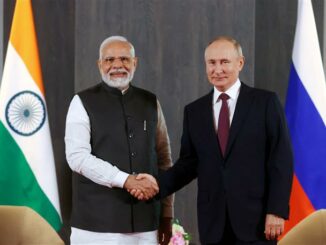
New Delhi (TIP)- Prime Minister Narendra Modi held talks with Russian President Vladimir Putin on the sidelines of the Shanghai Cooperation Organisation (SCO) summit in Samarkand and stated that this era is not of war but peace as the Ukraine war enters its ninth month. “Today’s era isn’t of war and I’ve spoken to you about it on the call. Today, we’ll get the opportunity to talk about how we can progress on the path of peace. India-Russia has stayed together with each other for several decades,” PM Modi told Vladimir Putin in a face-to-face meeting, the first since Russia invaded Ukraine in February. “We spoke on the phone several times about India-Russia bilateral relations and also on various issues. We should find ways to address the problems of food, fuel security & fertilizers. I want to thank Russia & Ukraine for helping us to evacuate our students from Ukraine,” PM Modi said.
Both leaders discussed bilateral, regional and other global issues on the sidelines of the SCO summit.
During the meeting, Russian President Vladimir Putin told PM Modi that Moscow will keep New Delhi informed about the developments in Ukraine.”I know about your position on the conflict in Ukraine and also about your concerns. We want all of this to end as soon as possible. We will keep you abreast of what is happening there,” Putin said. Putin also took time out to wish PM Modi who will be celebrating his birthday on Saturday, September 17.
“My dear friend, tomorrow you are about to celebrate your birthday. As per Russian tradition, we don’t say happy birthday in advance. But we wish you all the best and to our friendly nation, India. We wish prosperity to India under your leadership,” Vladimir Putin said.
No handshake, no smiles: PM Modi, Chinese President Xi Jinping share stage at SCO summit
Even as Prime Minister Narendra Modi called for improving connectivity at the Shanghai Cooperation Organisation (SCO) summit held in Uzbekistan’s Samarkand, he maintained a safe distance from Xi Jinping, the President of India’s northern neighbour China.
PM Modi and President Jinping shared the world stage for the first time after clashes in the Galwan Valley. The tension along the Indo-China border was evident from the distance that the two leaders maintained from each other at the summit. PM Modi is said to have missed the dinner meeting on Thursday evening and arrived just in time on Friday for the annual summit. During a photo-op, PM Modi and Chinese President Xi Jinping stood side by side but did not exchange smiles or shake hands.
PM Narendra Modi, Pakistan Prime Minister Shehbaz Shariff, Russian President Vladimir Putin, Chinese President Xi Jinping and other leaders attended the SCO and deliberated on the regional security situation and ways to enhance trade and connectivity at the annual summit of the grouping.
World leaders pay Tributes; “She defined an era”, says Biden
I.S. Saluja
LONDON (TIP): Queen Elizabeth II, Britain’s longest-reigning monarch and a symbol of stability in a turbulent era that saw the decline of the British empire and embarrassing dysfunction in her own family, died Thursday, September after 70 years on the throne. She was 96, an AP report said.
The palace announced she died at Balmoral Castle, her summer residence in Scotland, where members of the royal family had rushed to her side after her health took a turn for the worse.
A link to the almost-vanished generation that fought World War II, she was the only monarch most Britons have ever known. Her 73-year-old son Prince Charles automatically became king and will be known as King Charles III, it was announced. British monarchs in the past have selected new names upon taking the throne. Charles’ second wife, Camilla, will be known as the Queen Consort.
The BBC played the national anthem, “God Save the Queen,” over a portrait of Elizabeth in full regalia as her death was announced, and the flag over Buckingham Palace was lowered to half-staff as the second Elizabethan age came to a close.
The impact of her loss will be huge and unpredictable, both for the nation and for the monarchy, an institution she helped stabilize and modernize across decades of enormous social change and family scandals, but whose relevance in the 21st century has often been called into question.
The public’s abiding affection for the queen has helped sustain support for the monarchy during the scandals. Charles is nowhere near as popular. Since Feb. 6, 1952, Elizabeth reigned over a Britain that rebuilt from a destructive and financially exhausting war and lost its empire; joined the European Union and then left it; and made the painful transition into the 21st century.
She endured through 15 prime ministers, from Winston Churchill to Truss, becoming an institution and an icon — a reassuring presence even for those who ignored or loathed the monarchy.
She became less visible in her final years as age and frailty curtailed many public appearances. But she remained firmly in control of the monarchy and at the center of national life as Britain celebrated her Platinum Jubilee with days of parties and pageants in June.
That same month she became the second longest-reigning monarch in history, behind 17th-century French King Louis XIV, who took the throne at age 4. On Tuesday, she presided at a ceremony at Balmoral Castle to accept the resignation of Boris Johnson as prime minister and appoint Truss as his successor. When Elizabeth was 21, almost five years before she became queen, she promised the people of Britain and the Commonwealth that “my whole life, whether it be long or short, shall be devoted to your service.”
It was a promise she kept across more than seven decades. Despite Britain’s complex and often fraught ties with its former colonies, Elizabeth was widely respected and remained head of state of more than a dozen countries, from Canada to Tuvalu. She headed the 54-nation Commonwealth, built around Britain and its former colonies.
Married for more than 73 years to Prince Philip, who died in 2021 at age 99, Elizabeth was matriarch to a royal family whose troubles were a subject of global fascination — amplified by fictionalized accounts such as the TV series “The Crown.” She is survived by four children, eight grandchildren and 12 great-grandchildren.
Through countless public events, she probably met more people than anyone in history. Her image, which adorned stamps, coins and banknotes, was among the most reproduced in the world.
But her inner life and opinions remained mostly an enigma. Of her personality, the public saw relatively little. A horse owner, she rarely seemed happier than during the Royal Ascot racing week. She never tired of the companionship of her beloved Welsh corgi dogs.
Elizabeth Alexandra Mary Windsor was born in London on April 21, 1926, the first child of the Duke and Duchess of York. She was not born to be queen — her father’s elder brother, Prince Edward, was destined for the crown, to be followed by any children he had.
But in 1936, when she was 10, Edward VIII abdicated to marry twice-divorced American Wallis Simpson, and Elizabeth’s father became King George VI.
Princess Margaret recalled asking her sister whether this meant that Elizabeth would one day be queen. ”’Yes, I suppose it does,’” Margaret quoted Elizabeth as saying. “She didn’t mention it again.”
Elizabeth was barely in her teens when Britain went to war with Germany in 1939. While the king and queen stayed at Buckingham Palace during the Blitz and toured the bombed-out neighborhoods of London, Elizabeth and Margaret spent most of the war at Windsor Castle, west of the capital. Even there, 300 bombs fell in an adjacent park, and the princesses spent many nights in an underground shelter. She made her first public broadcast in 1940 when she was 14, sending a wartime message to children evacuated to the countryside or overseas.
“We children at home are full of cheerfulness and courage,” she said with a blend of stoicism and hope that would echo throughout her reign. “We are trying to do all we can to help out gallant soldiers, sailors and airmen. And we are trying, too, to bear our own share of the danger and sadness of war. We know, every one of us, that in the end all will be well.”
In 1945, after months of campaigning for her parents’ permission to do something for the war effort, the heir to the throne became Second Subaltern Elizabeth Alexandra Mary Windsor in the Auxiliary Territorial Service. She enthusiastically learned to drive and service heavy vehicles.
On the night the war ended in Europe, May 8, 1945, she and Margaret managed to mingle, unrecognized, with celebrating crowds in London — “swept along on a tide of happiness and relief,” as she told the BBC decades later, describing it as “one of the most memorable nights of my life.”
Queen Elizabeth II and husband Prince Philip at their wedding. (File photo)
At Westminster Abbey in November 1947 she married Royal Navy officer Philip Mountbatten, a prince of Greece and Denmark whom she had first met in 1939 when she was 13 and he 18. Postwar Britain was experiencing austerity and rationing, and so street decorations were limited, and no public holiday was declared. But the bride was allowed 100 extra ration coupons for her trousseau. The couple lived for a time in Malta, where Philip was stationed, and Elizabeth enjoyed an almost-normal life as a navy wife. The first of their four children, Prince Charles, was born in 1948. He was followed by Princess Anne in 1950, Prince Andrew in 1960, and Prince Edward in 1964. In 1952, George VI died at 56 after years of ill health. Elizabeth, on a visit to Kenya, was told that she was now queen. Her private secretary, Martin Charteris, later recalled finding the new monarch at her desk, “sitting erect, no tears, color up a little, fully accepting her destiny.”
“In a way, I didn’t have an apprenticeship,” Elizabeth reflected in a BBC documentary in 1992 that opened a rare view into her emotions. “My father died much too young, and so it was all a very sudden kind of taking on and making the best job you can.”
The young Queen Elizabeth II wearing a Tiara in this 1960 picture. (File photo)
Her coronation took place more than a year later, a grand spectacle at Westminster Abbey viewed by millions through the still-new medium of television. Prime Minister Winston Churchill’s first reaction to the king’s death was to complain that the new queen was “only a child,” but he was won over within days and eventually became an ardent admirer.
In Britain’s constitutional monarchy, the queen is head of state but has little direct power; in her official actions she does what the government orders. However, she was not without influence. The queen, officially the head of the Church of England, once reportedly commented that there was nothing she could do legally to block the appointment of a bishop, “but I can always say that I should like more information. That is an indication that the prime minister will not miss.”
The extent of the monarch’s political influence occasionally sparked speculation — but not much criticism while Elizabeth was alive. The views of Charles, who has expressed strong opinions on everything from architecture to the environment, might prove more contentious.
She was obliged to meet weekly with the prime minister, and they generally found her well-informed, inquisitive and up to date. The one possible exception was Margaret Thatcher, with whom her relations were said to be cool, if not frosty, though neither woman ever commented.
The queen’s views in those private meetings became a subject of intense speculation and fertile ground for dramatists like Peter Morgan, author of the play “The Audience” and the hit TV series “The Crown.” Those semi-fictionalized accounts were the product of an era of declining deference and rising celebrity, when the royal family’s troubles became public property.
And there were plenty of troubles within the family, an institution known as “The Firm.” In Elizabeth’s first years on the throne, Princess Margaret provoked a national controversy through her romance with a divorced man.
In what the queen called the “annus horribilis” of 1992, her daughter, Princess Anne, was divorced, Prince Charles and Princess Diana separated, and so did her son Prince Andrew and his wife, Sarah. That was also the year Windsor Castle, a residence she far preferred to Buckingham Palace, was seriously damaged by fire. The public split of Charles and Diana — “There were three of us in that marriage,” Diana said of her husband’s relationship with Camilla Parker Bowles — was followed by the shock of Diana’s death in a Paris car crash in 1997. For once, the queen appeared out of step with her people. Amid unprecedented public mourning, Elizabeth’s failure to make a public show of grief appeared to many to be unfeeling. After several days, she finally made a televised address to the nation. The dent in her popularity was brief. She was by now a sort of national grandmother, with a stern gaze and a twinkling smile. Despite being one of the world’s wealthiest people, Elizabeth had a reputation for frugality and common sense. She turned off lights in empty rooms, and didn’t flinch from strangling pheasants. A newspaper reporter who went undercover to work as a palace footman reinforced that down-to-earth image, capturing pictures of the royal Tupperware on the breakfast table and a rubber duck in the bath. Her sangfroid was not dented when a young man aimed a pistol at her and fired six blanks as she rode by on a horse in 1981, nor when she discovered a disturbed intruder sitting on her bed in Buckingham Palace in 1982.
The image of the queen as an exemplar of ordinary British decency was satirized by the magazine Private Eye, which called her Brenda, apparently because it sounded working-class. Anti-monarchists dubbed her “Mrs. Windsor.” But the republican cause gained limited traction while the queen was alive. On her Golden Jubilee in 2002, she said the country could “look back with measured pride on the history of the last 50 years.”
“It has been a pretty remarkable 50 years by any standards,” she said in a speech. “There have been ups and downs, but anyone who can remember what things were like after those six long years of war appreciates what immense changes have been achieved since then.”
A reassuring presence at home, she was also an emblem of Britain abroad — a form of soft power, consistently respected whatever the vagaries of the country’s political leaders on the world stage. It felt only fitting that she attended the opening of the 2012 London Olympics alongside another icon, James Bond. Through some movie magic, she appeared to parachute into the Olympic Stadium. In 2015, she overtook her great-great-grandmother Queen Victoria’s reign of 63 years, seven months and two days to become the longest-serving monarch in British history. She kept working into her 10th decade, though Prince Charles and his elder son, Prince William, increasingly took over the visits, ribbon-cuttings and investitures that form the bulk of royal duties.
The loss of Philip in 2021 was a heavy blow, as she poignantly sat alone at his funeral in the chapel at Windsor Castle because of coronavirus restrictions. And the family troubles continued. Her son Prince Andrew was entangled in the sordid tale of sex offender businessman Jeffrey Epstein, an American businessman who had been a friend. Andrew denied accusations that he had sex with one of the women who said she was trafficked by Epstein.
The queen’s grandson Prince Harry walked away from Britain and his royal duties after marrying American TV actress Meghan Markle, who is biracial, in 2018. He alleged in an interview that some in the family -– but pointedly not the queen -– had been less than welcoming to his wife.
She enjoyed robust health well into her 90s, although she used a cane in an appearance after Philip’s death. Months ago, she told guests at a reception “as you can see, I can’t move.” The palace, tight-lipped about details, said the queen was experiencing “episodic mobility issues.”
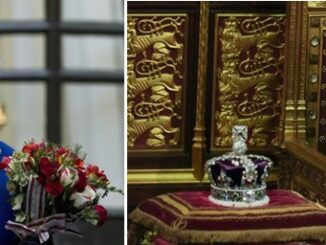
She held virtual meetings with diplomats and politicians from Windsor Castle, but public appearances grew rarer. Meanwhile, she took steps to prepare for the transition to come. In February, the queen announced that she wanted Camilla to be known as “Queen Consort” when “in the fullness of time” her son became king. It removed a question mark over the role of the woman some blamed for the breakup of Charles’ marriage to Princess Diana in the 1990s. May brought another symbolic moment, when she asked Charles to stand in for her and read the Queen’s Speech at the State Opening of Parliament, one of the monarch’s most central constitutional duties. Seven decades after World War II, Elizabeth was again at the center of the national mood amid the uncertainty and loss of COVID 19 — a disease she came through herself in February.
Queen Elizabeth II, smiles as she leaves a service of Thanksgiving to mark the Centenary of the Royal British Legion at Westminster Abbey, in London, Oct. 12, 2021. (File photo)
In April 2020 — with the country in lockdown and Prime Minister Boris Johnson hospitalized with the virus — she made a rare video address, urging people to stick together.
She summoned the spirit of World War II, that vital time in her life, and the nation’s, by echoing Vera Lynn’s wartime anthem “We’ll Meet Again.”
“We should take comfort that while we may have more still to endure, better days will return. We will be with our friends again. We will be with our families again. We will meet again,” she said.
World mourns Britain’s Queen Elizabeth II
Condolences poured in from around the world Thursday, September 8, after the death of Queen Elizabeth II, who became a global icon of calmness and fortitude through decades of political upheaval and social changes at home and abroad. Elizabeth had been on the throne since 1952, when the nation was still rebuilding from the destruction of World War II.
Canada’s Prime Minister Justin Trudeau saluted the Queen’s “wisdom, compassion and warmth.” (File photo)
In Canada, where the British monarch is the country’s head of state, Prime Minister Justin Trudeau saluted her “wisdom, compassion and warmth.” In India, once the “jewel in the crown” of the British empire, Prime Minister Narendra Modi tweeted: “She personified dignity and decency in public life. Pained by her demise.”
Elizabeth, who is Canada’s head of state, visited the country 22 times as monarch. U.S. President Joe Biden called her a “stateswoman of unmatched dignity and constancy who deepened the bedrock alliance between the United Kingdom and the United States.” In India, once a British colony, Prime Minister Narendra Modi called her “a stalwart of our times.” “She personified dignity and decency in public life,” Modi tweeted. “She lived history, she made history. And with her passing, she leaves a magnificent, inspirational legacy,” Israeli President Isaac Herzog said.
Russian President Vladimir Putin sent a telegram to Elizabeth’s eldest son, now known as King Charles III. “For many decades, Elizabeth II rightfully enjoyed the love and respect of her subjects, as well as authority on the world stage. I wish you courage and perseverance in the face of this heavy, irreparable loss.” At the United Nations, the Security Council stood in silent tribute at the start of a meeting on Ukraine. France’s U.N. Ambassador Nicolas De Riviere, the council president, sent condolences on behalf of its 15 members. Queen Elizabeth II presided “over a period of historic changes both for her country and the world,” he said. “Her life was devoted to the service of her country.” Caribbean leaders from Bermuda to Dominica and beyond mourned her death. “Her passing ends an iconic 70-year reign and is a profound loss for the commonwealth of nations and the world,” tweeted Roosevelt Skerrit, Dominica’s prime minister. Bermuda Premier David Burt noted that her reign “has spanned decades of such immense change for the United Kingdom and the world.” Former U.S. President Donald Trump said on his social media platform that Elizabeth “will always be remembered for her faithfulness to her country and her unwavering devotion to her fellow countrymen and women.”
“Melania and I will always cherish our time together with the queen, and never forget Her Majesty’s generous friendship, great wisdom, and wonderful sense of humor. What a grand and beautiful lady she was – there was nobody like her!”
In Washington, U.S. Sen. Tim Kaine recalled how Elizabeth had joked with him when she visited Virginia in 2007 while he was governor.
He asked the queen’s security detail whether he should offer the queen his arm while going up a steep set of Capitol steps. They assured him she’d be fine. But when she arrived a few weeks later, she looked at him and deadpanned, “they expect me to go up this?”
The remark momentarily flustered Kaine. “She was just pulling my leg. She just walked up just as fast as can be,” Kaine said. The queen’s visit came not long after a gunman at a Virginia university, Virginia Tech, killed dozens of people. The queen asked to meet with people from the university and well as grieving family members. “That really meant a lot,” Kaine said.
Elton John said in a tweet that she was “an inspiring presence to be around, and lead the country through some of our greatest, and darkest, moments.” The acclaimed musician reworked his hit “Candle in the Wind” as a tribute to Princess Diana when she died unexpectedly in 1997. In the UK, politicians united in tribute to queen as Britain mourned her death.
British Prime Minister Liz Truss in her statement regarding the death of Queen Elizabeth II outside Downing Street in London, Thursday, Sept. 8, 2022, said, “She was the very spirit of Great Britain – and that spirit will endure”.
British politicians across the political spectrum united in sorrow Thursday, September 8, at the death of Queen Elizabeth II, a passing that brought the country’s usually fractious politics to a halt.
The queen’s death at age 96 will be marked with 10 days of national mourning, culminating in a state funeral for the monarch. Essential government functions will continue, but much of the routine business of politics will be put on pause. Parliamentary business will give way to two days of tributes from lawmakers in the House of Commons on Friday and Saturday.
New Prime Minister Liz Truss, who was told of the news about 90 minutes before it was made public, said the country was “devastated” by the death of the monarch on Thursday, calling her “the rock on which modern Britain was built.” “We are now a modern, thriving, dynamic nation,” Truss said outside her 10 Downing St. residence in London. “Through thick and thin, Queen Elizabeth II provided us with the stability and the strength that we needed.
“She was the very spirit of Great Britain – and that spirit will endure,” Truss said. She ended her statement with words that no British leader has said for 70 years: “God save the king.”
In a statement, Charles called his mother’s death “a moment of the greatest sadness for me and all members of my family,” adding: “I know her loss will be deeply felt throughout the country, the Realms and the Commonwealth, and by countless people around the world.” The changing of the guard comes at a fraught moment for Britain, which has a brand-new prime minister and is grappling with an energy crisis, double-digit inflation, the war in Ukraine and the fallout from Brexit.
Prime Minister Liz Truss, appointed by the queen just 48 hours earlier, pronounced the country “devastated” and called Elizabeth “the rock on which modern Britain was built.”
British subjects outside Buckingham Palace wept when officials carried a notice confirming the queen’s death to the wrought-iron gates of the queen’s London home. Hundreds soon gathered in the rain, and mourners laid dozens of colorful bouquets at the gates.
“As a young person, this is a really huge moment,” said Romy McCarthy, 20. “It marks the end of an era, particularly as a woman. We had a woman who was in power as someone to look up to.” World leaders extended condolences and paid tribute to the queen.
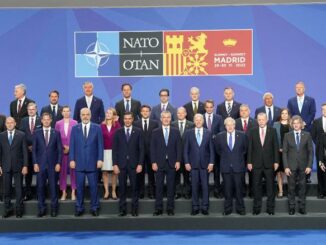
MADRID (TIP): NATO formalized its invitation to Sweden and Finland to join its alliance Wednesday, June 29, a historic expansion of the defense bloc that directly undercuts Russian President Vladimir Putin’s aims as his war in Ukraine grinds ahead, according to CNN. The group collectively decided to approve countries’ applications to join after Turkey dropped its objections Tuesday, paving the way for NATO’s most consequential enlargement in decades. “The accession of Finland and Sweden will make them safer, NATO stronger, and the Euro-Atlantic area more secure. The security of Finland and Sweden is of direct importance to the Alliance, including during the accession process,” the statement said.
The decision will now go to the 30 member states’ parliaments and legislatures for final ratification. NATO’s leaders said they expected the process to move quickly, allowing for an unprecedentedly swift accession and a show of unity against Putin. The leaders entered Wednesday’s talks propelled by a diplomatic victory after Turkey dropped its objections to the two nations joining NATO, setting the stage for the two longtime neutral countries to enter the defensive bloc. NATO chief Jens Stoltenberg called the formal invitation from the alliance to Sweden and Finland to join the defense bloc a “historic decision.”
“The agreement concluded last night by Turkey, Finland and Sweden paved the way for this decision,” the secretary general said in a news conference. He recounted how two rounds of talks were held by senior officials in Brussels under his auspices in the advance of Monday’s consequential meeting between Finnish President Sauli Niinistö, Swedish Prime Minister Magdalena Andersson and Turkish President Recep Tayyip Erdoğan. Turkey agreed on Tuesday to drop its objections to their membership bids, removing a major hurdle to them joining NATO.
The expansion vote, paired with substantial new commitments bolstering NATO’s force posture in Europe, combined to make this week’s summit in Madrid one of the most productive in recent memory. The outcome is exactly what Putin was hoping to fend off when he invaded Ukraine more than four months ago. “I said Putin’s looking for the Finlandization of Europe. He’s going to get the NATOization of Europe. And that is exactly what he didn’t want, but exactly what needs to be done to guarantee security for Europe. And I think it’s necessary,” US President Joe Biden said when he arrived at the summit site in Madrid. Biden and fellow NATO leaders assembled in the Spanish capital to unveil a significant strengthening of forces along the alliance’s eastern flank as Russia’s war in Ukraine shows no signs of slowing.
Speaking alongside Stoltenberg, Biden listed new troop movements, equipment shipments and military installations meant to demonstrate the importance of security in the face of Moscow’s aggression.
“The United States and our allies, we are going to step up — we are stepping up. We’re proving that NATO is more needed now than it ever has been and is as important as it ever has been,” Biden said.
He said the US would establish a permanent headquarters for the Fifth Army Corps in Poland, maintain an extra rotational brigade of 3,000 troops in Romania, enhance rotational deployments to the Baltic states, send two more F-35 fighter jet squadrons to the United Kingdom and station additional air defense and other capabilities in Germany and Italy.
“Together with our allies, we are going to make sure that NATO is ready to meet threats from all directions — across every domain, land, air and the sea,” Biden said.
The United States did not convey to Russia its plans to bolster its force posture in Europe ahead of time.
“There has been no communication with Moscow about these changes nor is there a requirement to do that,” John Kirby, the NSC coordinator for strategic communications, said after Biden announced the series of measures.
A second official told reporters the announcements did not violate any agreements between Russia and NATO, which stipulate parameters for positioning troops in Europe. “The decision to permanently forward station the Five Corps headquarters forward command post does not, you know, is consistent with that commitment and our understanding of the NATO Russia founding act,” said Celeste Wallander, United States assistant secretary of defense for international affairs.
Zelensky asks what Ukraine has to do to join NATO
Yet even if Putin’s aims have backfired and the conflict grinds on, momentum is favoring Russia at the moment. That has left Biden and fellow western leaders this week searching for ways to alter the trajectory of the war.
Despite enthusiasm at the summit for NATO’s two newest members, another leader — Ukraine’s President Volodymyr Zelensky — voiced frustration that his country’s NATO ambitions have been ignored, despite coming under siege by Russia.
Addressing the NATO summit in Madrid virtually, Zelensky asked rhetorically, “Has Ukraine not paid enough” to join the alliance and review its open-door policy. “Is our contribution to the defense of both Europe and the whole civilization still insufficient?” he asked. “What else is needed then?”
Ukraine has sought unsuccessfully to join NATO for years, hampered by concerns over provoking Russia and other issues related to its governance practices. Speaking after Zelensky’s address, Stoltenberg said the alliance welcomed the speech.
“Ukraine can count on us for as long as it takes,” Stoltenberg stressed to journalists. He commended Zelensky’s “leadership and courage” and called the Ukrainian leader “an inspiration to us all.”
Already this week, the US and European nations have slapped new rounds of sanctions on Moscow, banned new imports of its gold and agreed to limit the price of its oil. New rounds of security assistance, including a US-provided missile defense system, have been added to the queue of artillery and ammunition flowing in Ukraine.
Whether any of that is enough to fundamentally alter the way the war is going remains to be seen. Zelensky told leaders attending the G7 summit in Germany he wanted their help staging a major initiative to win the war by the end of the year.
Leaders worry the growing cost of the war, seen in rising gas and food prices, could lead to diminished support for Ukraine in the months ahead. A few have warned that fatigue is setting in, adding to the growing concerns that the alliance could fracture.
“When we agreed we were going to respond, we acknowledged there was going to be some costs to our people, our imposition of sanctions on Russia. But our people have stood together. They’ve stood up and they’ve stood strong,” Biden said Tuesday when he was meeting with King Felipe VI at the Royal Palace in Madrid. It was during that meeting Biden received word Turkey was dropping its objections to Finland and Sweden’s applications to join NATO, ending a months-long standoff with NATO’s most challenging member. In order to get the deal struck before the summit, Biden dangled the prospect of a formal bilateral meeting with Erdoğan in a phone call on Tuesday morning. The leaders will meet Wednesday to discuss the myriad issues that have caused the relationship between Washington and Ankara to sour over the past several years.
Biden also met jointly with Japan’s Prime Minister and South Korea’s President to focus on the threat from North Korea. Prime Minister Fumio Kishida and President Yoon Suk Yeol are invited guests of the NATO summit, but their countries’ ties have deteriorated recently amid disputes over wartime histories, making the joint meeting with Biden a rarity.
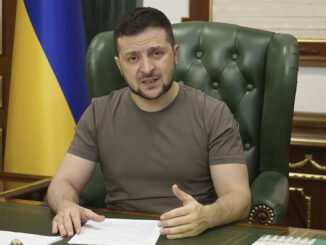
DAVOS (TIP) : Ukrainian President Volodymyr Zelenskyy said on Wednesday, May 25, that he was only willing to talk directly to Vladimir Putin and not via intermediators, according to AP. He said if the Russian President “understands reality, there is the possibility of finding a diplomatic way out of the conflict”. Speaking to an audience at the World Economic Forum in Davos, he also said Ukraine would fight until it recovered all of its territory. “Moscow should withdraw its troops back to the lines in place before Russia began its invasion on February 24. That might be a first step towards talks,” he said, adding Russia had been playing for time in its talks with Ukraine.
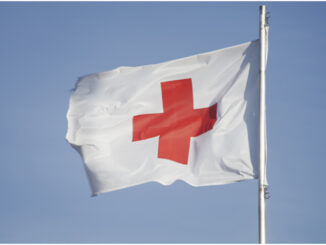
Geneva (TIP): The international Red Cross says it has been visiting prisoners of war on “all sides” since the start of the war between Russia and Ukraine almost three months ago. The International Committee of the Red Cross didn’t specify what “all sides” meant, but it is believed to mean Russian and Ukrainian government forces, as well as pro-Russian separatists who have been waging an armed struggle in eastern Ukraine against the Kyiv government since 2014. It could also include foreign fighters who might have been captured. A Red Cross statement Friday said the POW visits had enabled it to pass on information to hundreds of families about their loved ones.
The ICRC did not specify how many families had been informed about their relatives, or where the visits took place. It said only that the visits had taken place “in recent months.” The statement came a day after the humanitarian agency broke its silence about prisoners of war in the nearly three-month-long conflict, announcing it has registered “hundreds” of Ukrainian prisoners of war this week from the Azovstal steel plant in Mariupol who ended their defense against a weeks-long siege by Russian forces.
“Many more families need answers; the ICRC must have full access to POWs and civilian internees, wherever they are held, in order to provide those answers,” the Geneva-based organisation said. Some humanitarian law experts have questioned why the ICRC took so long to announce its POW visits, a key part of its mandate.
The ICRC often operates confidentially in its role to help protect civilians, prisoners of war and other noncombatants in conflicts, and ensure the respect of the rules of war. AP
Kyiv (TIP): Ukraine said on May 13 Russia had forcibly deported more than 210,000 children since its invasion on Feb. 24 and accused Moscow of wanting to make them Russian citizens. Human rights ombudswoman LyudmylaDenisova said the children were among 1.2 million Ukrainians who Kyiv says have been deported against their will.
Reuters could not independently verify the figure given by Denisova or her allegations, for which she did not provide supporting evidence. The Kremlin did not immediately respond to a Reuters request for comment on Denisova’s allegations concerning the deportation of large numbers of children and other Ukrainian nationals.
Moscow has denied intentionally targeting civilians since launching what it calls a special military operation in Ukraine and says it is offering humanitarian aid to those who want to leave Russia. “When our children are taken out, they destroy the national identity, deprive our country of the future,” Denisova said on national television.
“They teach our children there, in Russian, the history that (Russian President Vladimir) Putin has told everyone.” Russia has referred to “refugees” coming to Russia to escape fighting, particularly from the southern Ukrainian city of Mariupol, which is in Russian hands after weeks of siege and bombardment. The 1949 Geneva Conventions, which define international legal standards for humanitarian treatment in conflict, prohibit mass forcible transfers of civilians during a conflict to the territory of the occupying power, classifying it as a war crime. Reuters
Kyiv/Vilhivka (TIP): Ukrainian forces reported battlefield gains on May 11 in a counterattack that could signal a shift in the momentum of the war, while Kyiv shut gas flows on a route through Russian-held territory, raising the spectre of an energy crisis in Europe. Following days of advances north and east of the second largest city Kharkiv, Ukrainian forces were within just several kilometres of the Russian border on Wednesday morning, one Ukrainian military source said on condition on anonymity. Before the advance, Russian forces had been on the outskirts of Kharkiv, 40 km (25 miles) from the border.
The gains appear to be the fastest that Ukraine has achieved since it drove Russian troops away from Kyiv and out of the country’s north at the beginning of April. If sustained, it could let Ukrainian forces threaten supply lines for Russia’s main attack force, and even put rear logistics targets within Russia itself within striking range of Ukrainian artillery.
In Vilhivka, a village east of Kharkiv held by Ukrainian forces, the thump of near constant artillery and swoosh of multiple rocket launchers could be heard from fighting at the front, now pushed substantially further east, where Ukraine has been trying to capture villages on the banks of the Donets river and threaten Russian supply lines on the far side.
Further east, Ukrainian forces seemed to be in control of the village of Rubizhne, on the banks of the Donets.
“It is burned out, just like all Russian tanks,” a Ukrainian soldier told Reuters near Rubizhne next to the ruins of one Russian tank. “The weapons are helping a lot, the anti-tank ones.”
KHARKIV ADVANCE
Kyiv has so far confirmed few details about its advance through the Kharkiv region, maintaining secrecy about the positions of its own forces near the frontline while speaking in general terms about overall gains.
“We are having successes in the Kharkiv direction, where we are steadily pushing back the enemy and liberating population centres,” Brigadier General OleksiyHromov, Deputy Chief of the Main Operations Directorate of Ukraine’s General Staff told a briefing, providing no specifics.
President VolodymyrZelenskiy said successes were putting Ukraine’s second largest city – under constant bombardment since the war’s early days – beyond the range of Russian artillery. (Reuters)
Mariupol, Ukraine (TIP): A Russian spy chief on May 11 compared the US State Department to the World War II Nazi propaganda machine constructed by Joseph Goebbels, saying Washington had launched an anti-Russia messaging campaign across social media.
Sergei Naryshkin, head of Russia’s foreign intelligence agency (SVR), said the United States was encouraging the spreading of fake information on the popular Telegram messaging service in an attempt to “discredit” and “dehumanise Russia’s political and military leadership in the eyes of the Russian people”.
“Their actions have a lot in common with the traditions of the Third Reich’s ministry of public education and propaganda and its head Joseph Goebbels,” Naryshkin said in a statement published on the SVR website.
Naryshkin provided no evidence to support the claims of a US-backed information campaign. Russia regularly accuses the West of funding and supporting anti-Kremlin movements and has labelled dozens of independent human rights groups and media outlets in Russia “foreign agents” over recent years. (Reuters)
Kyiv (TIP): India on May 13 announced that its embassy in Ukraine would resume its operation from the Ukrainian capital Kyiv from May 17. The embassy was temporarily operating from Warsaw in Poland since mid-March.
“The Indian Embassy in Ukraine, which was temporarily operating out of Warsaw (Poland), would be resuming its operation in Kyiv with effect from May 17,” the Ministry of External Affairs said.
It said the embassy was temporarily relocated to Warsaw on March 13. The decision to resume operation of the embassy from Kyiv came amid decisions by several Western powers to reopen their missions in the Ukrainian capital.
India had decided to temporarily relocate the embassy to Poland in view of the rapidly deteriorating security situation in the war-torn country, including the Russian military offensive around Kyiv.
India relocated the embassy after bringing back over 20,000 of its nationals from across Ukraine under its evacuation mission ‘Operation Ganga’ that was launched on February 26 in the wake of the war in Ukraine. (PTI)
London (TIP): British Defence Secretary Ben Wallace said on April 28 it would be legitimate for Ukrainian forces to target Russian logistics to cripple their supply of food, fuel and munitions but they were unlikely to use British weapons to do so. Tensions between Britain and Russia increased this week when Moscow accused London of provoking Ukraine to strike targets inside Russia, saying there would be an immediate “proportional response” if it continued.
Wallace said under international law Ukraine had every right to defend itself.
“Part of defending itself in this type of invasion is obviously where Ukraine will go after the supply lines of the Russian army because without fuel and food and ammunition, the Russian army grinds to a halt and can no longer continue its invasion,” he told BBC TV.
Britain has been a vocal supporter of Ukraine since it came under attack in late February, sending aid and arms to help it repel its larger neighbour.
Wallace said Britain had sent artillery to Ukraine that was being used within Ukraine on Russian forces, but he added that it had not, and was unlikely, to send weapons that could be used for longer-range attacks.
He said that it was not clear if attacks seen in Russia in recent weeks had come from the Ukrainian state. He added that Ukraine did not have British weapons that could do that.
Ukrainian forces, he said, tend to use mobile launchers while the British army would deliver them from the air or sea.
“They currently don’t have British weapons that could do that, so it’s unlikely that it is our weapons,” he said. “We’re very unlikely to supply that to anyone simply because of the technology and also the scarcity we have of those capabilities.
So it is very unlikely.”
Wallace also denied that NATO was locked in a proxy war with Russia but said the West would provide increasing support to Ukraine if the Russian attacks continued. “Sometimes that will include planes and tanks,” he told Times Radio.
Russia on Wednesday reported a series of blasts in the south of the country and a fire at an ammunition depot.
Russia has repeatedly criticised Britain’s military support for Ukraine, accusing it of wanting to prolong the conflict to weaken Moscow.
Responding to a similar British statement on Tuesday which said Russian military targets inside Russia were fair game for Ukraine, Russian Foreign Ministry spokesperson Maria Zakharova suggested that British logic meant Russia was also theoretically entitled to strike targets in NATO countries like Britain if they were related to arms deliveries for Ukraine. Reuters
WASHINGTON, D.C. (TIP): A US Congress-constituted quasi-judicial body on Monday, April 25, recommended to the Biden Administration to designate India, China, Pakistan, Afghanistan and 11 other nations as “Country of Particular Concern” in the context of status of religious freedom. India has in the past said that the American body on international religious freedom has chosen to be guided only by its biases on a matter on which it has no locus standi.The recommendations of the US Commission for International Religious Freedom (USCIRF) are not binding on the US Government. Other countries recommended for this designation by the USCIRF in its annual report are Burma, Eritrea, Iran, Nigeria, North Korea, Russia, Saudi Arabia, Syria, Tajikistan, Turkmenistan, and Vietnam.
The USCRF had made a similar recommendation to the US government last year which was not accepted by the Biden Administration.India has previously rejected the reports by USCIRF.
“Our principled position remains that we see no locus standi for a foreign entity to pronounce on the state of our citizens’ constitutionally protected rights,” the ministry of external affairs had said in the past.
“We have a robust public discourse in India and constitutionally mandated institutions that guarantee protection of religious freedom and rule of law,” the MEA had said.
Among its recommendations last year, five countries — Afghanistan, India, Nigeria, Syria, and Vietnam – are not designated as Country of Particular Concern by the US Government.
“In 2021, religious freedom conditions in India significantly worsened. During the year, the Indian government escalated its promotion and enforcement of policies—including those promoting a Hindu-nationalist agenda—that negatively affect Muslims, Christians, Sikhs, Dalits, and other religious minorities,” USCIRF said.”The government continued to systemize its ideological vision of a Hindu state at both the national and state levels through the use of both existing and new laws and structural changes hostile to the country’s religious minorities,” it said.
Established by the US government in 1998 after the inaction of the International Religious Freedom Act, recommendations of USCIRF are non-binding on the state department. Traditionally, India does not recognize the view of USCIRF. For more than a decade, it has denied visas to members of the USCIRF.
Kyiv (TIP): Russian President Vladimir Putin ordered his forces not to storm the last remaining Ukrainian stronghold in the besieged city of Mariupol on April 21 but instead to block it “so that not even a fly comes through”. His defence minister, Sergei Shoigu, said the rest of the city beyond the sprawling Azovstal steel plant where Ukrainian forces were holed has been “liberated” – as Russian officials refer to areas of Ukraine they have seized. Putin hailed that as a “success”. But leaving the plant in Ukrainian hands robs the Russians of the ability to declare complete victory in Mariupol, which has seen some of the most dramatic fighting of the war and whose capture has both strategic and symbolic importance. The scale of suffering there has made it a worldwide focal point, and its definitive fall would deprive Ukraine of a vital port, complete a land bridge between Russia and the Crimean Peninsula, and free up Russian troops to move elsewhere in the Donbas.
Shoigu said the plant was “securely blocked”. Putin and Shoigu’s comments appeared to reflect a change in strategy in Mariupol, where the Russians previously seemed determined to take every last inch of the city. But it was not clear what it would mean in practical terms.
Ukrainian officials did not comment on the latest remarks, but earlier said four buses with civilians managed to escape from the city after several unsuccessful attempts. Thousands more remain the city, much of which has been reduced to a smoking ruin in a nearly two-month siege, with over 20,000 people feared dead.
Ukraine’s Deputy Prime Minister IrynaVereshchuk said another attempt to evacuate civilians from Mariupol would be made on Thursday – though it was not clear how the latest comments would affect that.
In Kyiv, Spain’s Prime Minister Pedro Sánchez and Denmark’s MetteFrederiksen became the latest European leaders to show support with a visit to the capital.
They were due to meet with President VolodymyrZelenskyy, who warned in a video address overnight that the Russians were not “abandoning their attempts to score at least some victory by launching a new, large-scale offensive”.
“The West stands together to support the Ukrainian people,” Frederiksen, the Danish prime minister, said in a statement. Meanwhile, the Kremlin said it submitted a draft of its demands for ending the war, and the West raced to supply Ukraine with heavier weapons to counter the Russians’ new drive to seize the industrial east. (AP)
Moscow (TIP): The Kremlin’s spokesman says Russia has presented Ukraine with a draft document outlining its demands as part of peace talks and is now awaiting a response from Kyiv. Dmitry Peskov told a conference call with reporters Wednesday that Russia has passed on a draft document containing “absolutely clear, elaborate wording” to Ukraine and now “the ball is in their court, we’re waiting for a response”.
Peskov didn’t give further details. He blamed Ukraine for the slow progress in negotiations, and claimed that Kyiv constantly deviates from previously confirmed agreements. “The dynamic of work on the Ukrainian side leaves much to be desired, the Ukrainians do not show a great inclination to intensify the negotiation process,” he said.
Ukraine presented Russia with its own draft last month in Istanbul, where the two sides held talks aimed at ending the conflict. It has been unclear how regularly the two sides have spoken to each other since then. The German government and military are rejecting an assertion by Ukraine’s ambassador that the country could spare armoured fighting vehicles and deliver them to Kyiv. Ambassador AndriyMelnyk, who has frequently criticized perceived German slowness on weapons deliveries and other issues, argued that Germany’s Bundeswehr uses about 100 Marder vehicles for training and they could be handed over to Ukraine immediately. (AP)
Moscow (TIP): Russia on April 20 said it had test-launched its Sarmat intercontinental ballistic missile, a new addition to its nuclear arsenal which President Vladimir Putin said would give Moscow’s enemies something to think about. Putin was shown on television being told by the military that the missile had been launched from Plesetsk in the country’s northwest and hit targets in the Kamchatka peninsula in the far-east. “The new complex has the highest tactical and technical characteristics and is capable of overcoming all modern means of anti-missile defence. It has no analogues in the world and won’t have for a long time to come,” Putin said.
“This truly unique weapon will strengthen the combat potential of our armed forces, reliably ensure Russia’s security from external threats and provide food for thought for those who, in the heat of frenzied aggressive rhetoric, try to threaten our country.”
The Sarmat is a new heavy Intercontinental Ballistic Missile which Russia is expected to deploy with 10 or more warheads on each missile, according to the US Congressional Research Service.
It has been under development for years and so its test-launch is not a surprise for the West, but it comes at a moment of extreme geopolitical tension due to Russia’s war in Ukraine. (Reuters)
Russia tests ‘peerless’ N-missile : Russia said on April 20 it had conducted the first test launch of its Sarmat intercontinental ballistic missile, a new addition to its nuclear arsenal which President Vladimir Putin said would give Moscow’s enemies something to think about.
Putin was shown on television being told by the military that the missile had been launched from Plesetsk and hit targets in the Kamchatka peninsula in the far east.
The Sarmat has been under development for years and so its test-launch is not a surprise for the West, but it comes at a moment of extreme geopolitical tension due to Russia’s eight-week-old war in Ukraine. “The new complex has the highest tactical and technical characteristics and is capable of overcoming all modern means of anti-missile defence. It has no analogues in the world and won’t have for a long time to come,” Putin said.
– Reuters
Signup to our Newsletter!
Don’t miss out on all the happenings around the world